Viewing Life through a Better Lens

After a recent eye exam, I spent about 5 hours in bright Arizona sunshine waiting for my dilated pupils to return to normal so I could have clear vision. I was definitely limited about what I could safely do in the meantime — driving home in rush hour traffic was definitely not an option.

That couple of hours of obscured vision proved to be a worthwhile analogy for the clouded view I had about myself, my emotions and the impact of my life experiences before I embraced mindfulness and meditation. Just like new contacts vastly improve my eyesight, mindfulness and meditation brought extraordinary clarity to my emotional triggers, well-worn behavioral patterns and healing to past painful experiences.

Its been four years now since I began learning and practicing mindfulness. I was determined to cultivate some healthier approaches to stress and my emotional triggers. My driving goal was to learn to respond rather than react when tensions ran high. Today I am not the same person I was when I started this “late in life” personal growth journey — and I am delighted to recognize the positive changes — most especially when I find myself not getting caught in old habits. The work was hard and sometimes brought me to tears, yet it was incredibly healing.

How fortuitous that I discovered Brene Brown and her inspirational Ted Talk on vulnerability about the same time I was knee deep in learning so much about myself through mindfulness. Brene’s talks really struck a chord with me because her stories were so relatable. It brought me great comfort to realize that I was not alone in this quest to get better at life — in a very genuine, big-hearted, authentic way.

I devoured most of Brene’s best selling books at the same time I was listening to mindfulness teachers like Pema Chodrun, Jon Kabat Zinn, Jack Kornfield, Tara Brach and Rick Hansen (just to name a few). For me, Brene’s research and her teachings dovetailed perfectly with the mindfulness tools. It made it easier to integrate my improved self awareness with practical tools for positive change — things like setting boundaries and speaking my truth without getting defensive. Not surprisingly, this took more than a little courage and a lot of frequent practice.

Through Brene’s books I became cognizant of the many ways I’d “armored up” throughout my life. I’d wrestled with self worth, conflict avoidance and trust issues for many years due to a very troubled, dysfunctional childhood. I definitely shied away from standing up for myself because the consequences were often more painful than if I had just stayed quiet. Mindfulness helped me to recognize my long-conditioned responses to conflict, manipulation and not being valued. It also shed a lot of light on the painful consequences that would often arise from my triggered reactions. I’d often shut down and stuff my emotions. That is not healthy and trust me, they just simmer and marinate for a long time. Eventually those emotions would surface and usually at the worst time when I needed my energy and compassion for more important things in life.

Brene’s definition of integrity really resonated with me and it was how I wanted to respond when I realized I was triggered. In her book Rising Strong, she describes integrity in action: choosing courage over comfort, choosing what is right over what is fast, fun or easy, and choosing to practice your values rather than just professing them. For me, courage was the hardest thing to tackle. Yet courage to set a boundary on unacceptable behavior from others was so empowering and often eliminated a lot of unnecessary conflict. I sure wish I had learned this much earlier in my life.

In fact, I look back over events in my life through the lens of mindfulness and meditation, and realize that if I’d had these tools earlier in life, I would have handled situations with more truth and grace — and saved a lot of pain for myself and those I love.

I have been blessed with a few good friends who were also working on personal growth a little later in life. Together we would share what we were learning from our various resources, our journal insights and current experiences. As our conversations got deeper, we developed a foundation of trust for sharing some of our most vulnerable stories. This is the “vault” Brene Brown refers to in her acronym BRAVING. It is having a few trusted friends that you can rely on to listen, with empathy and without judgment.

It is truly remarkable how beneficial it is to be able to share your vulnerable stories. There’s a sense of relief and release. I’ve experienced valuable healing thanks to these heart to heart conversations with a trusted friend. When a friend tells me she feels so much better after one of our conversations, I know exactly what she means. What a gift we give to each other. I’ve been so inspired by my friends too — these tender hearted, compassionate and strong women have persevered through so many things in life yet they remain unwavering in their values and their capacity to love.

What I have personally gained from getting to know myself very well and then talking through some tough stuff with trusted friends is a huge reduction in things that trigger me. And if I do find myself getting hooked, I can usually stop and ground myself. I remind myself to “drop my anchor into my core values” and take a deep calming breath. It feels so much better to respond with a clear head and my values, than to react with highly charged emotions.

About two years ago, one of my friends encouraged me to give meditation another chance. I was still working on curing myself of rumination and letting my racing thoughts distract me from being fully present. I committed to using the Headspace app for guided meditation. As I have shared in previous posts, it was a game changer for me. Headspace offers a collection of courses including personal growth, stress and anxiety, pain management, and life challenges. Each guided meditation offers a nugget of wisdom to focus on for that session and to carry with you throughout the day. Over time, I could sense that my ability to recognize I was distracted and bring myself fully back to the present moment was seeping into my everyday life. I discovered that I was naturally making eye contact with others much more often. What really caught my attention was that I could see the reaction in their face and body language when my eyes met theirs — it was awesome. Is there any better way to signal to someone that they have your full attention?

When you turn your full attention to a conversation or an observation, you gain details and insights you might otherwise miss. Years ago one of my business mentors told me that multi-tasking was not possible and I’ve come to realize that what he meant is that when you are trying to do more than one thing at a time, one of those things will get short-changed. This is so evident when you are staring at your phone and only partially listening to someone who wants (and deserves) your full attention.

Very recently, the Headspace app has been asking people to share their personal stories about how mediation with the app has impacted their lives. I have marveled at the positive changes people have experienced through meditation. Many were compelled to turn to meditation because they had hit a really big obstacle in life — life-threatening illness, loss of a loved one, divorce or broken relationships. People of all ages and from all over the globe are sharing their vulnerable low points and the healing benefits of meditation. I find something that I can relate to in almost every story that has been shared.

A key component of mindfulness and meditation is stopping the cycle of wishing things to be different and simply accepting things as they are — except that it isn’t quite so “simple”. It doesn’t mean we have to like it and it doesn’t mean that we aren’t heartbroken. One thing I have learned is to be patient and gentle with myself when I am wrestling with circumstances that can’t be changed. It is so important to allow yourself the time and space that you need to process heartfelt emotions. I’ve also learned that during this time of raw emotion and vulnerability, having someone who genuinely cares about me, who can sit with me and just listen is a source of great comfort.

This is one of the areas of my life where hindsight truly is 20/20. I spent far too many hours replaying events in my life that I wished could have been quite different. I wish I had known many years ago that I would have been better served to accept reality, use the time I spent ruminating and crying to process my emotions and ask what I had learned from the experience, and to respect myself enough to take accountability for my part and to set healthy boundaries.

Four years ago when I started embracing mindfulness and meditation, I knew I needed to get back to my true authentic self and I’d been off track for some time. I am so grateful for having fully invested in myself for perhaps the first time ever. Mindfulness teachers tell us that when we get to know ourselves better, we also get the added benefit of learning to know others better too. Brene Brown reminds us to be generous with others because they are probably doing the best they can with their own stories and their own emotions. I now find myself more curious than judgmental about others and it opens a new lens into understanding their behaviors and choices.

I’d be remiss if I didn’t share some of the very positive health benefits that I’m experiencing through mindfulness and meditation. With better tools to navigate life, stress and emotions, I find I am physically healthier and more resilient. I am sleeping incredibly well and have learned that a good night’s rest is a superpower for our bodies and brains. I am currently doing a 21 day mediation with Deepak Chopra and Oprah Winfrey on “Perfect Health”. What I am learning about the power of our thoughts and its effects on our health is astounding.

I was recently listening to a SuperSoul podcast where Jack Kornfield, mindfulness author and Buddhist practitioner, was sharing that as a young man he had a Harvard education but he did not have any education about emotional awareness and regulation. His own dysfunctional childhood left him with emotional scars, learned behavioral patterns and even some of the anger his dad brought to the family. He wanted to avoid all these pitfalls, but he had no tools to do it. Jack’s desire to balance his life with good skills for managing his emotions led him to become a leader in the mindfulness field. From my personal experience, I too wish that I had been taught that my stories didn’t define me and that there were invaluable tools for emotional awareness and regulation. I’m grateful to have found it late in life and I’m committed to helping others learn these invaluable tools as well — especially young people.

Suggested Resources:

www.ChopraCenterMeditation.com

www.rickhanson.net

www.soundstrue.org

Headspace app

Supersoul Podcasts by Oprah Winfrey (YouTube and Apple Podcasts)

When Things Fall Apart by Pema Chodrun

Any and all of Brene Brown’s best selling books

Inspiration and Revelation

For many years I have been a huge fan of inspirational quotes. Each morning they arrive in my email inbox and appear on a couple apps on my phone. It’s an uplifting way to jumpstart my day. Last year I made a commitment to learn more about the authors of those quotes. Frankly it blew my mind to realize that ancient philosophers. historic and modern day poets, Buddhist monks and a contemporary vulnerability researcher all were offering sage words of wisdom that stand the test of time. Even though our lives have evolved and expanded in so many ways, our basic human needs and desires remain unchanged.

I decided to listen to more inspirational podcasts, Ted talks, and interviews in 2019. As I absorbed the stories of adversities that people had overcome and the strength they found to overcome them, I was deeply touched by their courage and willingness to share their experiences. Some of the most beautiful songs, books, poetry, artwork and inspiring quotes have their roots in the toughest struggles of life.

As I learned more about the life experiences of these inspiring men and women, I found myself awestruck by just how long it must have taken to process, reflect and overcome their trials. Often as we listen to these upbeat energetic people smiling and oozing profound insights, we fail to understand that it may have taken years and an ocean of tears to get there.

Telling our stories is not an end in itself, but an attempt to release ourselves from them, to evolve and grow beyond them. We tell our stories to transform ourselves; to learn about our history and tell our experiences to transcend them; to use our stories to make a difference in our world; to broaden our perspective to see further than normal; to act beyond a story that may have imprisoned or enslaved us; to live more of our spiritual and earthly potential.” — Excerpt from Huffington Post Article “The Importance of Telling Our Stories” by Rachel Freed.

My late husband, Skip, always said “everyone has a story”. He possessed an extraordinary ability to sense other’s soft spots and to make them feel comfortable, respected and supported almost immediately. I have recently re-read some of his letters to me and was reminded that he too had a complex life story full of adversities and successes. His awareness of what others were facing, coupled with his own experiences, made him a very tender, compassionate, endearing man. You just felt safe and understood with Skip. You would never find a more engaged cheerleader for life than Skip — his passion was helping others achieve their potential (even if they couldn’t feel or see it at the time), Skip would often say that the best way to truly understand someone was to “walk in their shoes”. I’ve come to realize that Skip was naturally both an empathic and mindful man.

The reason I went back and re-read letters that Skip wrote to me was that I needed to go back and reflect on how I felt when he passed away. You see, I have two women in my life that I love very much and both lost their spouses suddenly. I was searching for meaningful ways to offer consolation, support and encouragement through what I knew firsthand was going to be an extraordinarily painful, heartfelt journey. I will remember always that they both will have the softest of spots in their hearts because of their profound losses.

Look around you and you will find people that are in some stage of processing struggles that life has thrown at them and sometimes that processing takes an incredibly long time. Even decades. I had my heart opened a little wider with Maya Angelou’s sage insights — “love heals the scars that life has put upon us.”

It was not lost on me that some of the most kind-hearted, compassionate and inspirational human beings are those that have suffered deeply, This is true of the well-known inspirers and it is equally true of our own friends and family members. My brother has always been a shining example of someone who has had much adversity yet rises above it, full of gratitude and joy. Just being around him lifts my spirits.

I also discovered how much my treasured friends had endured in their lives as we shared the deeper parts of our life stories. The most sacred moments in a long-time friendship is when you learn something new. It is truly an honor when a friend trusts you enough to share an experience that has left a scar on her heart. This is when Maya Angelou’s words really hit home — when your empathy and compassion enable you to feel your friend’s hurt and you can offer comfort by leaning in and really listening. You become a rainbow in someone else’s cloud. Sometimes those scars go back decades. What an incredible relief it is to be able to share it with someone who understands your soft spot and makes you feel safe. Through personal experience for myself and some of my closest friends, I can say that old scars can fade and pain can be released with a little tender loving care.

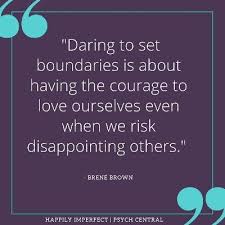
I have been deeply moved by the stories of inspiration from the people in my life and it certainly confirms Skip’s observation that “everybody has a story”. The more we listen to those stories with empathy and compassion, the deeper the roots of trust and friendship grow. Hearing what others have lived through and how they have managed to move forward in their lives is a strong testament to personal courage and the healing power of love. It seems fitting to end this post with an inspirational quote with some words of wisdom from Brene Brown:

Embracing a New Year…

A fresh new year and a brand new decade — how inspiring! There is something about a new year that invites both reflection and motivation.

Decades ago I would have been full of positivity with a list of goal-oriented resolutions in hand ready to charge full speed ahead — daring this new year to be better than the last. In this chapter of my life, I am a little wiser and acutely more aware that this coming new year will be chock full of many happenings that will be out of my control — experiences and events that I cannot even imagine today. New Year’s resolutions are less important to me now. What matters most is how I respond to the moments of my life in the coming year.

Mindfulness has really taught me the value of soaking up being fully present for the day to day moments of life. At the very least, I have become more aware of how easily we can be distracted — by our racing thoughts, our crazy phones, background noises and multi-tasking. As soon as we realize that we aren’t fully focused, we can turn our attention back — to that conversation with a friend, or a book we are reading to a child, or the rich colors of the sky at sunset. Being fully present and taking in all the goodness from these simple happy moments of life fills our reservoir and helps us become more resilient for the more challenging times in our lives.

Perhaps one of the greatest gifts we can bring to the turbulent moments of life is simply being calm. Keeping our emotions in check and not adding to an already stressful situation can be a source of great comfort to others and it aids in effective problem solving. I’ve discovered that some imagery helps me when I want to remain calm — I imagine I am dropping an anchor into deep calm waters. Last year gave me more than a few opportunities to really practice being calm in the heat of the moment, What I discovered was that I felt in control in spite of circumstances being challenging. Most importantly I was able to pay closer attention to what others needed to feel safe and protected. I was able to use my energy and resources to be truly helpful and more responsive. Life’s challenges didn’t change. Finding a calmer way to face them did.

Over the past few years, I have come to realize that most of my angst in life came when I was wrestling with wanting things to be different from what they were in reality. I’m finding more peace and a better quality of life by replacing old behavior patterns with valuable life tools — setting boundaries, not getting attached to specific outcomes, making decisions consciously based on my values, owning my feelings and giving myself space when I need it.

The benefits I’m reaping from these changes have been quite noticeable. I have more energy, I’m sleeping better and my feathers don’t ruffle as easily. I have a deepened awareness of how others are struggling with their own issues and greater empathy for them. I’m learning to simply sit with others and listen rather than rushing to try to fix things for them. Everyone needs to process their feelings and their experiences for themselves. The greatest gift we can offer others in their time of need is to be there while those tears fall.

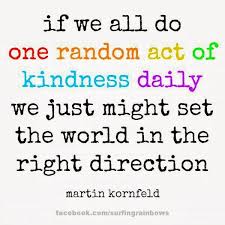
A few times over this past year, I have been the fortunate recipient of some incredibly kind and thoughtful gestures and often they appeared when I was feeling invisible or overwhelmed. What a heartwarming lift I got just when I needed it most! Those moments were not lost on me and they served as a strong reminder of the incredible difference we each can make in another’s life by showing kindness. Whether it is a stranger or someone you know well, extending a random act of kindness makes such a positive difference!

Happy New Year! May we all support each other in the best way possible through the trials and tribulations in 2020.

Small Moments, Big Steps

If you watch the face of a young child totally immersed in something that has captured his full attention, you can almost feel his sense of wonderment. That’s the beauty of being a small child — effortlessly they turn their complete attention to that moment, soaking up each detail with all of their senses.

But not even our little ones are immune to emotions and expectations that can quickly erode the most magical of moments. I confess to marveling at the ability of young children to accurately identify how they are feeling — “I’m frustrated, I’m angry, I’m all mixed up, I’m having a bad day”.

One day, I sat my befuddled 4 year old granddaughter on my lap and looked in her eyes full of big puddling tears as she mumbled, “I’m just frustrated.” I told her that I thought that was awesome that she knew she was frustrated. (That’s step one for all us when we want to diffuse our own disruptive emotions). Then I assured her that the feeling of frustration usually doesn’t last too long. (I let that sink in for a minute). I told her that she had a few things she could choose to do to stop feeling frustrated. Being a precocious 4 year old, she asked “Like what?”

“You could ask me for help. You could take a break from that puzzle. You could go outside and look at the pretty fall trees. Or you could read a book.”

She opted to ask me for help and soon we were giggling and making some progress on that puzzle. To my surprise, she said, “Gigi, I don’t feel frustrated anymore. It went away just like you said.”

Now I can’t let a good teaching moment go by, so I told her how proud I was that she realized she wasn’t frustrated anymore and how awesome it was that she was happy and enjoying her puzzle again.

About an hour later, my granddaughter and her younger brother were playing mountain climbers over a pile of boxes and pillows they had amassed. My little grandson got stuck and was visibly upset when he couldn’t free himself. With the sweetest little voice, my granddaughter said “Oh buddy, don’t be frustrated. Ask me to help you.” The student had become the teacher!

Perhaps one of the best lessons I can offer to my grandchildren is helping them to understand that strong negative emotions can dissipate pretty quickly if we pay attention — and that we can quickly turn our day around if we don’t let them linger and sabotage our fun.

Of course it’s much easier to do this when your strong emotions are coming from small life issues like puzzles, missed naps and spilled Cheerios.

Nonetheless, these small experiences are building blocks in emotional regulation and it will serve them well as they mature. I find it very rewarding to condense what I have been learning about mindfulness into digestible little nuggets for others, especially chidden. Heaven knows that life gives us many opportunities each and every day to practice what we are learning. Mastering these insights and tools early in life will definitely help our young ones to navigate life’s bigger challenges with more skill and grace later in life.

It’s a matter of trust

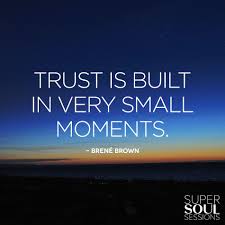
Earning someone’s trust is one of the most incredible gifts of human connection. It is not to be taken lightly because trust is the foundation of thriving, meaningful relationships. Long before we are old enough to understand the definition of trust, we instinctively know how it feels.

Recently I was inspired to listen once again to a Brene Brown SuperSoul presentation about the anatomy of trust.

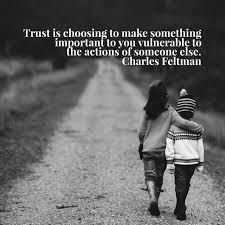
At the onset, Brene offered this powerful definition of trust from Charles Feltman:

If you just let that definition sink in, you not only begin to understand just how much is at stake when we need to trust another, you can feel it. Complete trust feels safe and secure no matter the circumstances.

Brene then provided Charles Feltman’s definition of distrust:

“What I have shared with you that is important to me — is not safe with you.”

It’s unfortunate that often when others need our trust the most, we fail to see how much they’ve exposed their vulnerability. Vulnerability is when we pull back the veil and honestly express what we are feeling. It feels risky and scary. It takes tremendous courage to open up about mistakes, weaknesses, fears or needs.

It is at that precise moment that we can begin to build trust — a safe harbor free from judgment, the comfort of a warm hug, a willingness to simply listen without interrupting and the promise of complete confidentiality. Choosing words and actions that genuinely convey ” “you and your feelings are safe with me.”

While it is fairly easy to look back on our own life experiences and see the times when others have failed to come through in a trustworthy way for us, can we also take stock of the times when we have not truly understood how our own actions impacted something sacred to others?

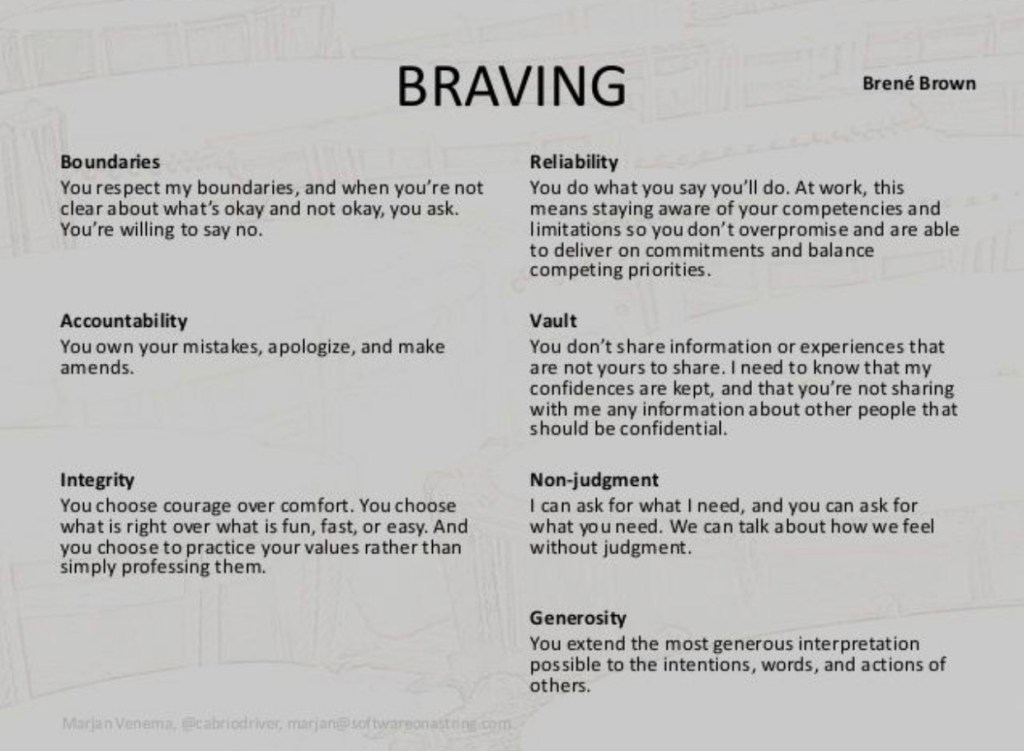
Brene Brown says that when we trust, we are braving connection with someone. She developed the acronym ‘BRAVING” to help us remember the elements that are the anatomy of trust: Boundaries, Reliability, Accountability, Vault, Integrity, Non-Judgment and Generosity.

Brene expounds on what each of these components really mean:

These straight forward definitions make it easier to articulate what we need in order to feel trust in a relationship.

Just as compelling is that these definitions provide us with a valuable way to check in with ourselves to ensure we are being trustworthy for another.

A few things I have learned about trust over these past few years have provided helpful insight. One is that I now recognize that it may take a very long time for me to “earn”” someone’s trust. And it may have little to do with me, but a lot to do with the lack of trust they have experienced in their lives. This reminds me to be patient in the process and to be consistent in my reliability, integrity, non-judgment, etc.

Another is that I only need a few truly “trustworthy” friends to be my buoys when the seas of my life get choppy. It is incredibly comforting to be able to call one of my “trust buddies” when I am struggling with something in my life that is breaking my heart and know beyond the shadow of a doubt that I am 100% safe with them.

What happens when trust is broken especially in times of big struggle when vulnerability is at its height? It adds another dimension of hurt and insecurity to someone who has little resilience and makes their difficulties more complex. As I studied Brene’s anatomy of trust, I became aware that a sincere apology along with making genuine amends would go a long way to bridge trust in these situations. At the very least, we should avoid judging others who are in struggle and definitely not share their personal stories.

As I was reflecting and researching about this matter of trust, I began to notice how often trust is referenced in our day to day world. Simon Sinek (author and organizational consultant) often talks about importance of trust in his motivational talks on leadership in the workplace. As I watched a recent NFL game, the announcers talked about how a distinguished player had lost trust in his organization over his health issues. Oprah’s guests on last Sunday’s Supersoul series, Dr. Dean and Anne Ornish (practitioners and authors of Lifestyle Medicine) talked about the importance of trust for intimacy and deeper connection in long term relationships. And of course, there is that blind trust that only a small child can exemplify as he leaps from the top of the playground set into his father’s strong arms.

One of the noteworthy remarks from Simon Sinek really resonated with me — he said that there are a lot of resources available to us for “self help” but that we should also be focused on helping others. The gift of trust would be a profound way to help others.

If I knew then what I know now….

Being an active participant in a Brene Brown Discussion Group has opened my heart and my perspective in the most profound way. Brene’s Discussion Group is incredibly diverse in ages, cultures, experiences and challenges. The honesty and vulnerability that people are willing to share with strangers underscores how much we need to be heard and supported especially when we are struggling. This group of people is committed to kindness and not passing judgment. For many it is a refuge — a safe and trusting place to take their stories.

As I hear these stories in our Discussion Group, my empathy runs deep. Throughout the many chapters of my own life, I have lived similar experiences that others share. And although I have healed and moved on, I can recall the deep pain and disconnection I felt during some of my toughest adversities. This meaningful Discussion Group helps fill that void of isolation and disconnection for people who are in the “arena”. The support of others serves as a foothold for many who need a boost to keep doing their personal growth work.

What has struck me so profoundly is that many of the personal growth changes that people are genuinely working on are the same — feeling worthy, needing to be heard, speaking their truth, setting boundaries, self awareness, etc.

And the reason we need to work on these life skills is that we were not taught them when we were younger. In fact many people struggle because the cycle of dysfunctional behavioral patterns got passed along from one generation to the next.

When I began my mindfulness journey 4 years ago, I had a strong desire to share what I was learning with younger people in hopes of offering them some valuable tools to lighten their life load. I kept wishing I had known about mindfulness when I was a young adult. When I discovered Brene Brown I wished that I’d known all that she teaches when I was a young mother of 3 with a career and a boatload of stressful life challenges. When I added meditation to my resources for personal growth, it dawned on me that this beneficial practice would have alleviated a lot of sticky attachments to draining emotions and would have enriched my life throughout all my decades.

What if I had entered parenthood armed with some rock solid healthy behavioral skills along with my personal values about how I would treat my innocent children?

I’ve shared before that I had a very dysfunctional childhood and that contributed to some of my learned behavioral patterns such as being an enabler and co-dependent, and possessing a strong desire to avoid conflict. I had some pretty strong ideas about what I did NOT want to do as a parent for my precious children. So I did my best to create a very safe, loving, trust-filled and playful environment for my children. While I succeeded at avoiding saying and doing the things that my parents did that hurt me or shut me down, I missed some things that are critically important to living a wholehearted life.

Because I did not have good coping skills for high conflict situations, I taught them to be conflict avoiders too. I’ve witnessed both withdrawal and angry outbursts from my children over the years. Admittedly I was guilty of showing both of those behaviors when they were growing up. I surely could have taught them from an early age how to process their emotions and not to react to them immediately. And I could have role modeled respectful, calm ways to achieve conflict resolution.

I instilled a strong work ethic in my children but did not teach them (or show them by example) boundaries and balance. I brought a lot of work home and often worked weekends all while donning the supermom cape to make up for it by being a Cub Scout leader, Sunday school teacher, and making homemade Halloween costumes to prove to myself (and others) that I could “do it all”. I was exhausted but I could check off all the boxes. Today I see my adult children putting in long hours at their careers and finding the work-life balance challenging with their young families. While I can impart some wisdom to them now, it would have been far better to have taught them from an early age about boundaries and balance. I realize now that although I was physically with them for much of the time, my mind was always racing with that endless to do list. Being fully present for life provides one of the best frameworks for both boundaries and balance.

Another area where I could have done a lot better as a parent is asking for help — and most importantly, being able to “receive” that help . I know that I had a lot of pride mixed with insecurities that prevented me from admitting when I was overwhelmed and subsequently asking for help. And all too often, I would refuse help that someone would offer to me because I felt that it revealed some kind of weakness in me. Of course I now realize that accepting help is not only beneficial for me (the receiver) but so rewarding to another person who genuinely wants to lend a helping hand.

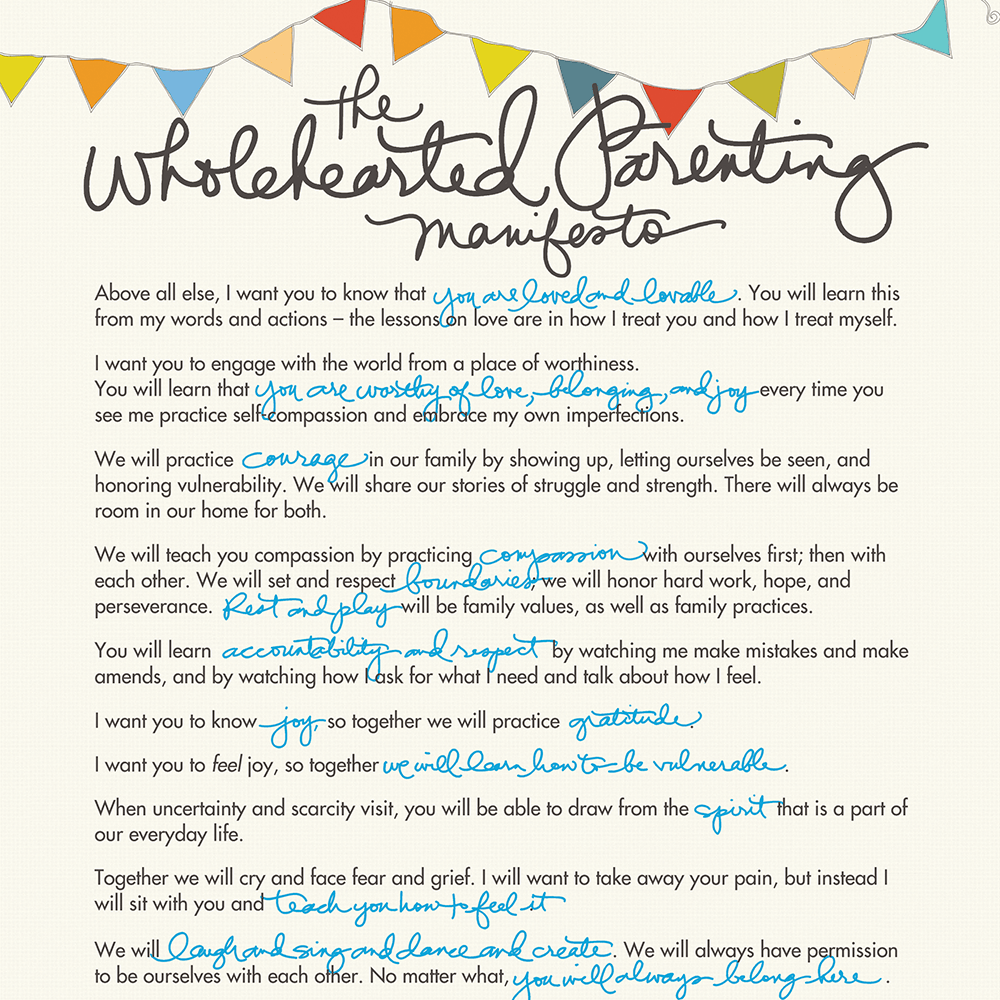
As I reflect on what I have learned in the past four years on my own personal growth journey and what I am now learning from my involvement in Brene’s Discussion Group, I find Brene’s Wholehearted Parenting Manifesto resonates with me deeply as a parent and a grandparent. If I knew then what I know now, I would have embraced my wholehearted parenting with broader, deeper skill sets.

Putting the Practice to Work

It was one of those days when everything just seemed to go sideways. We were all feeling the effects of moving day (actually more like moving week) and had little energy to deal with all the little problems that kept arising one after another. Turns out that this was going to be one of the best opportunities to put some mindfulness and better responses into full action.

It’s not surprising that family members weren’t fully cooperating about the best laid plans we’d made for a relaxing evening after a busy day of unpacking. Everyone was dealing with their own concoction of being tired, hungry and not quite feeling at ease in the new living space. In times like this, it is so easy to see that “tempest in a teapot” brewing.

What is not so easy is to keep ourselves from jumping into the fray, getting caught up in the negative energy of frustration and adding to the mess by losing our self control. And trust me, I have done that in the past and always felt awful afterwards. To be honest, I recall a very similar moving experience three years ago and I did lose my cool, embarrassing myself and hurting another’s feelings.

For me, it always helps to take a few deep breaths when tensions are rising. Initially there was a part of me that just wanted to join the fray and let everyone know that I was also tired, hungry and truthfully, feeling unappreciated. Fortunately I caught myself in time and took those few deep cleansing breaths. It was a testament to the benefits of ongoing meditation practice that helped me let thoughts pass and ground myself before I reacted to the circumstances.

Oh — the frustrations and lack of cooperation were still going on — but at least I had not added to it. That was a step in the right direction.

It wasn’t until I was ready for bed hours later that I realized that by not losing my patience and immediately reacting to my own thoughts in that heated moment, I’d actually downgraded my own emotions to the point where they didn’t urge me to act on them. That happened rather naturally. That was a big “aha” moment.

Something else I noticed as I reflected on the evening’s events was that I had a lot of empathy for other family members who had all their buttons pushed and said things they really didn’t mean. That enabled me to be more sympathetic to their situation and not to take personally what was being stated. This was another “aha” moment. In the past, I would have felt very hurt by snarky comments and innuendos directed at me and might have either shut down or got into a heated conversation trying to defend myself.

This lead to me being able to calmly and clearly articulate my personal boundary about acceptable behavior even in stressful situations. Setting boundaries is admittedly one of the harder growth initiatives that I work on. What I discovered was that because I had remained calm and kind throughout the challenges of the evening, not only was I empowered to state my boundary — I was also respected.

I began to see how all the pieces of the puzzle came together. By recognizing that I was tempted to jump on the frustration band wagon, I could ground myself with some deep breathing. That enabled me to avoid adding to the problems causing us stress. I diffused my own negative feelings in that moment so that I could focus on others. With empathy, I could look at others and sense how they were feeling on that stress-filled evening. I’ve been there many times as a young child, as a parent, a wife, and on my own. Moving is rarely easy. Being grounded and having empathy fortified me so that I was proactive in this situation and not reactive. From a place of strength, I could calmly articulate my personal boundary. I had used three valuable tools to successfully navigate a challenging situation — and avoided what could have culminated in a tense couple of days in the aftermath.

Its often noted that we do mediation not only for ourselves but for others too. When we are more self-aware and possess greater self-control, we bring our better selves to challenging situations.

Recently I had completed a meditation practice on “approaching conflict” on Headspace learning how to handle difficulties in a more skillful and compassionate way. One nugget of knowledge that really stuck with me was that when we get angry, we lose our kindness. Since kindness is a core value for me, I found myself very motivated to improve my reactions and responses in difficult situations. Who knew I would get that opportunity just a few days later? Life has a way of presenting us with learning experiences all the time.

Receiving Mode or Resistance Mode?

During a couples counseling session a few years ago, I was introduced to the book The Five Languages of Love. It is an insightful look into the ways each of us personalizes how we offer tangible evidence of our love to another through:

  • Words of Affirmation
  • Gifts
  • Acts of Service
  • Quality Time
  • Physical Touch

The premise was that we often are conveying our love and support to another in the way that we wish to receive love and support in return. But sometimes this causes conflicts because our partner may offer us gifts (bouquet of flowers or a pint of our favorite ice cream) when what we truly desire is an act of service (help with the mountain of laundry or fixing the leaking kitchen sink).

Even as I took the quiz to determine my predominant “love language” I was feeling a bit confused. It just seemed to me that in a healthy, strong and thriving relationship all of these 5 love languages get incorporated on a regular basis.

It is worth mentioning that this book is not just intended for couples but for all our relationships including children, grandchildren, parents, siblings, etc.

Certainly as a parent you can easily recognize that you offer all 5 of these love languages to your small child all throughout the day — it just comes naturally.

Now that I have some hindsight and mindfulness under my belt, I am wondering if there should have been emphasis on gratitude and an awareness of the love acts regardless of the style. And that got me to thinking about being in a “receiving mode” vs. a “resisting mode”.

When we have blinders on and are only focused on what (or how) we want someone to convey their love to us, we may be missing what they are already doing that is a true expression of their love and support. We are inadvertently resisting (and not even noticing) what someone else is lovingly doing for us and with us.

So what if we started to pay attention to those little expressions of love and became grateful for them? Gratitude is truly a game changer.

Gratitude helps us shift our attitude and perspective – it sets us up to be in receiving mode for lots of good things in life. Expressing our gratitude to those who contribute to our lives strengthens our connection. It enhances that easy flow of give and take in relationships.

From my personal experience, I know that when someone says “thank you or I really appreciate that” after I have folded a load of their laundry, ran an errand, or cared for their pet, it makes me feel valued and very inclined to pitch in again. (This encourages both giving and receiving mode)

However if my efforts go unnoticed or are criticized for not being done a certain way, I can find myself resentful and far less inclined to help out in the future. (This can trigger resistance mode)

This is where things can really go awry in relationships. Being in resistance mode contributes to negativity and resentfulness. It sets up a pattern where no matter how much someone might being doing for you, it is never enough, not the right thing, or never done to your satisfaction. People just stop trying.

A healthy dose of gratitude for someone’s efforts and intentions (even if they missed the mark) can have an impactful effect that yields a much better result for everyone. After all, here is another person willing to offer their time and energy to help you in some way — that alone is worthy of a “thank you”.

Watching my young grandchildren, I can see how they use all 5 love languages interchangeably every day. They gleefully offer a homemade card or sloppy kiss. They say “thank you” to a sibling for sharing a toy. They tell mom she is their best friend. They eagerly want to help fix dinner. They light up when dad builds legos with them for an hour. Kids are naturally attuned to gratitude and to receiving.

As I reflect on the five languages of love, I think any one of them could land softly on a heart. The key is to be aware that someone who loves you is genuinely “trying” and to be sure to tell them how grateful you are. When others feel valued and appreciated, they will strive to bring their personal best to the relationship — and they will be more inclined to see the best in others too.

The Recent “Aha” Moment

When I first began my mindfulness journey, I was completely worn out physically and emotionally and seeking peace — peace of mind, peaceful flow to my days and room to breathe. Looking back, I recall saying out loud that I just needed to preserve my energies and resilience for the really important moments in life. At that time, I was reacting and responding to anothers’ needs and dilemmas as though they were all 3 alarm fires on a very regular basis.

Many times, I was getting caught up in someone else’s stress, almost making it my own. Stress overload was really depleting my energy and clouding my ability to process with clarity. It was also affecting my health and my normally sunny disposition.

Often throughout my younger life I would power through the stressful, tough situations life would dole out and not surprisingly find myself completed depleted a few months later. I would either get so sick that I was forced to take a break, or I would lose my cool over a very minor situation and act way out of character for me. That would lead to feelings of embarrassment and regret.

Knowing that I could easily get caught up in another powering through cycle, I decided it was time to approach things differently. I no longer wanted to be robbed of my joy or sidetracked from my aspirations just to keep the peace — temporarily. I also needed to preserve my strength and resilience to address a health situation I was facing.

It was an eye opener for me to recognize that I always had possessed a lot of patience and I did have a natural resiliency but that I was compromising these gifts by my behaviors. My extraordinary patience prevented me from having boundaries with others and I relied heavily on my natural resiliency to pull me through tough times. But I was turning a blind eye to the fact that resiliency needs to be cultivated and nurtured in order to be replenished.

I had to take care of myself — and in a better, more self-aware way than I had ever done in the past.

If you’ve read my prior blog posts, you will know that I have done a lot of personal work through mindfulness and meditation to peel back the layers I had acquired through the years. Brene Brown was a great source of courage and inspiration through this process and it did require me looking directly at my life story and re-examining experiences that shaped my interactions and behaviors with others. I was so relieved to discover that these experiences did not change me at the core — they just caused me to put on a lot of armor to protect the authentic me.

I’ll share just one example to shed a little light on how I became such a patient harmonizer and rescuer of others. Like many people, I had a rather dysfunctional and unloving childhood. I felt a heavy burden to protect my younger brothers from the fighting and neglect, so I became a protector, a reconciler and consistent source of unconditional love and trust to them. I often paid a heavy price for this role but I was relieved that they were mostly spared. Is it any wonder that I went into my adult life pre-conditioned to avoid conflict and to be the consummate rescuer, safe in my comfort zone as a co-dependent.

Here’s the revelation I am excited to share about my transformation over these past few years. Precisely because I have learned so much about how I was sabotaging my own happiness and peace, I have evolved and grown back into my natural happy, buoyant, positive and resilient self. I have learned to set boundaries and to stand up for myself. I have learned how to support others but stop rescuing them from the consequences of their choices and behaviors. I have learned how to process my feelings in the heat of the moment and to give myself time to respond in a way that reflects my personal integrity. None of this came easy. I had to work and practice, research and practice, journal and practice, seek counsel and practice. The bottom line is it was incredibly empowering.

Most recently I had a long stretch where several of those bigger things in life got strung together and I found myself called into service to help others in a variety of ways. Some of it was fun and most enjoyable — like babysitting two of my young grandchildren for a 5 day stretch. Others tugged on my heartstrings — caring for a very sick family member and supporting a dear friend whose spouse passed away suddenly. And then there was travel made challenging due to delays and rude people, expensive car repairs and an unexpected painful root canal. It was my daughter who recognized that I remained calm, positive, energized and resilient through all of it and for weeks on end. She asked me how it was possible? My answer came easily — its because of the changes I made thanks to mindfulness and meditation. I shared with her that living a peaceful life, free of toxic draining people, and in control of my responses, has enabled me to fortify my foundation of calm, resilience and clarity.

I confess that I am so grateful that I could come through that period of time and feel so good physically and emotionally. The old me would have been exhausted and even sad. It was a big “aha” moment for me. All the work is really paying off in spades.

Brene Brown teaches us a lot about how heavy and dysfunctional all the armor we wear to protect our vulnerability truly is. She encourages each of us to really get to know ourselves so that we can take pride in our own worthiness and take the necessary steps to address old behavioral patterns that sabotage us.

It is my hope that by sharing my story and my experiences, I can help others who are striving for personal growth and more joy in their life. Everybody has a story, everyone of of us has been shaped by our experiences and relationships. We are not defined by this however, and we do have the power within us to rediscover our true selves and to bring our best selves to our families, friend and life experiences every day.

Moments of Joy

I love kickstarting my week with Oprah’s SuperSoul Sundays because I always feel uplifted by the stories of inspiration and rejuvenated by the soothing balm of caring humans striving to be their best selves and to help others do the same.

Today’s SuperSoul Sunday featured Shawn Achor who was both a student and ultimately a teacher of the most popular class at Harvard — the Happiness Class. He is also the author of four inspirational books including The Happiness Advantage and Before Happiness.

There were several key take-aways from today’s discussion that truly resonated with me. I could actually look at segments of my life and find myself nodding in agreement — a resounding YES — I have felt just like that at moments in my life. Once you recognize that you’ve actually experienced some of these rich moments in life that have filled you with joy and gratitude, you know in your heart it is possible to cultivate it more fully in life.

Here is one of those standout talking ;points from Shawn:

Happiness is the joy we feel striving toward our potential. It’s more critical to search for joy than happiness.

What really captured my attention about this remarkable observation is that I have always believed that enjoying the process is as significant as achieving a goal or finishing a project. When I am fully immersed and excited by learning something new, I feel a positive energy that keeps me motivated and engaged. I have experienced this in learning the game of. golf, in learning how to sew, and in my passion for gardening. As I put in the time to practice golf, to rip out a seam and start over, to carefully tend to my seedlings, I felt happy and rewarded by my progress. There were little nuggets of joy in each phase of my learning curve and my passion for these activities that I love just kept growing. When I accomplished my goal of bringing my golf handicap down, creating a magical Halloween costume, or harvesting a bowlful of tomatoes from what once was seedling, it was a true sense of accomplishment — and I felt a long lasting joy. I continue to thoroughly enjoy all of these fun activities and I derive a lot of joy and sustainable happiness in my life because of them.

During his interview with Oprah, Shawn noted that we can find joy even in the tough times in our life and again I found this to be relatable. I’ve invested a lot of my time and energy on mindfulness and meditation over the past few years and not only have I felt the positive changes personally, I know that these changes are noted by my family members and close friends. Others trust me to remain calm and resourceful when they are struggling. They count on me to listen and not dismiss their feelings. I feel a calm joy when I know that I have been a faithful rock for someone in need. I am grateful that I no longer let my own emotions or similar personal experiences get in the way of helping others in need. So, yes I did understand what Shawn was saying when he talked about joy in the context that it does not have to be all smiles and gaiety. There can be great joy in knowing that you have been a source of comfort. Many times this is one of the hardest things we do –” show up” for another in their darkest times.

Shawn encourages us to “practice” happiness in the same way that we practice getting better at other things in our life. Shawn acknowledges that we are all born with genes that pre-dispose us to depression, intelligence, creativity, introversion, etc. Yet we can make a choice to move away from our genes and our environment and make good decisions for a better quality of life.

He introduces us to the concept of Happiness Hygiene — creating a single positive change in our life that shows us that our behavior matters. One 2-minute habit for 21 days can be transformational. Here is his list of positive changes to adopt:

Begin each day by naming 3 things you are grateful for — they must be new ones every day!

Reflect on one meaningful experience that you had in the past 24 hours and take two minutes to write down every detail. (Rick Hansen tells us to hold our positive experiences for 17 seconds to get it to grow some roots in. our brains — this is another super meaningful way to change your trajectory of positivity.)

Write a 2 minute email, text or tweet praising or thanking someone you know. Want to boost this? — make a phone call, or tell them face to face!

15 minutes of fun mindful cardio activity — exercise trains your brain to believe that “my behavior matters”

Meditation — just two minutes of watching your breath go in and out daily can lead to improved accuracy, clarity and calm. (Shawn admits that with all our technology today, he finds himself struggling with attention deficit and mediation can be daunting because his mind races with so many thoughts. Yet just two minutes of quiet and focus on your breath makes a measurable difference.

My biggest takeaway from all of the invaluable information that Oprah and Shawn shared today is this : our behavior matters. When we put some effort into changing our happiness and our reactions, these notable changes create a positive ripple effect on others. Surrounding ourselves with people who are finding joy in the every day moments sounds really good to me.

Here’s the link to today’s SuperSoul Sunday episode: https://www.facebook.com/SuperSoulSunday/videos/449690152519728/