A Royal Wedding

The Royal Wedding of Prince Harry and Meghan Markle made history in so many meaningful ways — a rich blend of tradition and pageantry infused with energy, diversity and acceptance.  It is the power of love that creates the bridge between differences.  It is the heart warming celebration of a real life fairy tale that renews hope in us.

Prince Harry and Meghan Markle are so relatable because of the current issues they bring to the table through the events that have touched their young lives.   It is this shared human experience that unites us all.  It is a reminder that life’s adversities show no discrimination.

Young Prince Harry lost his beloved mother at the the tender age of 12.  He struggled for 20 years with mental health issues from his stuffed emotions related to her tragic death.

Prince Harry recognized he needed help and not only did he put in the work, he became a champion for the cause — breaking tradition and openly speaking out about his personal experience.    He created a major shift in shattering the stigma surrounding mental health issues.

Meghan puts a fresh perspective on the issues of race, empowerment for women and acceptance through her own life experiences.   Her parents divorced when she was a young girl and she is biracial.    Early in life, she found her voice to speak up about issues that genuinely mattered to her and she has become a strong advocate for women.

Neither Prince Harry nor Meghan Markle had perfect lives — and therein lies the shared human experience.  Each of us can find something in their stories that we relate to, that we understand and perhaps felt in our own lives.

Being thrown into a global spotlight, their personal stories and vulnerabilities were an open book for all of us to see.  They also have shown us their maturity, personal growth and shared desire to help others.

The Duke and Duchess of Sussex brought significant change to the monarchy with their wedding celebration and marriage.  It is proof positive of what is possible when we embrace change, respect each other and find resolutions for shared issues.

There is nothing like a real life fairy tale to rekindle hope, joy and love.

May-download_v10.jpg


The Value of Vulnerability

I had one of those “aha” moments recently while reflecting on a few of my close relationships that have really flourished over the past year.  These are several very different relationships with one very strong common denominator — vulnerability.  A willingness to share our vulnerability with each other has fostered our personal growth and mutual respect.

In those moments when experiences in our life are scary, dark or painful, when we are feeling most alone, confused or terrified — that is where is the greatest opportunity for true connection lies.

The really good stuff of relationships is often found in the murky, messy heartaches.    If you can be the one who shows up and walks into that dark space with your friend or loved one – and you just sit and listen, you will be a tremendous source of comfort.  What we need most when we are struggling or hurting is a safe place to show our vulnerability without judgment, criticism or even rescuing.

Brene Brown reminds us that vulnerability is not weakness.  When we are wiling to share our vulnerability, we face emotional risk, exposure and uncertainty.  She says it is our most accurate measure of courage — to let ourselves be seen and to be honest.

Unknown-3

So, when someone comes to you and shares their pain, just know that it took a tremendous amount of courage for that person to open up like that.  Most of the time, we are only going to turn to someone we wholeheartedly trust when we are feeling vulnerable.  Occasionally we just might open up to a stranger believing that if they don’t know us, they can’t judge us.  In the midst of conflict or struggle,  all those emotions and feelings are bound to erupt somewhere.   If you are the person someone turns to, then you have an incredible opportunity to forge a deeper connection and provide genuine support to someone in their moment of need.


This is where the second component of vulnerability comes into play and it is of paramount significance.    Brene Brown’s research revealed that at the core of vulnerability are shame, fear and our struggle for worthiness.   And even more importantly, it is the birthplace of joy, creativity, belonging and love.

Understanding this full spectrum of vulnerability enables us to be kinder and more compassionate to ourselves and ultimately to our friends and loved ones too.

Thich-Nhat-Hanh-quote-about-people

Unfortunately we often hijack the process of working through our tough emotions.  We may want to avoid those negative emotions so we look for ways to numb the pain.   The solution might be a couple of drinks or a pint of ice cream.  Another numbing technique is blaming — offload that pain and discomfort onto someone else.  Or we might choose to avoid them by stuffing them deep inside.


The downside of all this numbing of the negative emotions is that we simultaneously numb the good stuff — joy, gratitude and happiness.  Brene wisely points out that we cannot selectively numb only the tough emotions.


When we lose sight of gratitude, joy and happiness, it is really. hard to pull ourselves out of despair.   When life throws us for a loop, one of the greatest tools we possess to help us get back on track is gratitude.  Gratitude will ground us — reminding us of our strengths, our resources and those who support us.  Gratitude can be a huge calming factor in the face of chaos.  And it most definitely is a springboard for problem resolution.

It takes time and lots of it to fully process a hurtful or stressful experience.  We have to work through the tough emotions to get to the other side where we can restore our happiness and peace.   Recognizing that our vulnerability is truly courage and a source of strength can shift us from feeling inadequate to a deep sense of worthiness.

Many times when someone reaches out to us, they are struggling not only with a painful situation but also the feeling of disconnection.   It hits hard and magnifies the tough emotions when we feel isolated.  It is in those moments that we make the most significant impact for another human being.   When we  give our time — to sit and listen, to be genuinely empathic and kind — we are giving connection.

It’s ironic that in the past I thought I had to be a problem solver for others in order to ease their pain.  I hate to see people hurting and I’d do just about anything to dry the tears, right the wrong (even if it wasn’t my wrong to right), and bolster self-esteem.  Truth be told, it was merely temporary comfort (maybe even a soft form of numbing) and in the long run was not all that helpful.

The best thing we can do to help another when they are facing challenges and struggles is to help them empower themselves.  Well-meaning friends and relatives may have different opinions about what we should do, but ultimately we must make our own decisions.

As I reflect on the relationships that have flourished over this past year thanks to vulnerability, I realize that there is a strong sense of self-worth and satisfaction in each of us for what we have overcome. We’ve had the courage to be completely honest with each other and have shared our life stories with our whole heart.

We have a true sense of belonging and acceptance — and not in spite of our life stories — but because of them.  Our friendships are deeper and we share a lot more laughter these days.  We also know without a doubt that when the next struggle shows up,  we will be there for each other.   It’s hard for us to imagine that we cannot survive whatever life has to throw at us considering all the things we’ve collectively experienced.  Best of all, we are our authentic selves.

For More Information on Vulnerability and Connection, check out Brene Brown’s TED talks on You Tube and her books, including I Thought It was Just Me.  Brene Brown is a research professor at the University of Houston.  Check her out on brenebrown.com and on Facebook.


Time for Change

It’s been a while since I’ve blogged though there has been so much on my mind and in my heart to write about.   Over the past few months there have been many reminders of how quickly lives can change.  What concerns me is how quickly we forget the lessons learned and go back to living our lives the same old way.

I’ve been so inspired by the young students from Parkland who show such courage in voicing their needs, their fears, and their outcry for changes.  Let us not forget that they are still grieving and still reeling from the trauma of such a horrific tragedy.   They never expected to be fighting for gun control reforms as teenagers in high school.

Their vulnerability is as raw as it gets.  And they use it passionately as a launchpad for their growing movement for change.  They are not fearful of conflict, criticism or failure in their quest.  These high school students lived through their worst fears ever on Valentine’s Day.

They want — and they deserve — to be heard, to be valued and to feel safe (at school, at a concert, in a movie theatre, at home).

In the past month and a half,  these young people have grown in a multitude of ways and  matured far beyond their age.  They’ve become articulate, poised public speakers and impassioned change makers.   Their accomplishments in that very short timeframe are compelling.  Not only did they set goals, they implemented them:   Walkouts at schools across the country;   amassing social media followers around the globe;  and the national March for Our Lives occurring today.

What stands out with these Parkland students is that they want safety in schools for everyone — students, teachers, everyone in our schools – for the common good of all.

Brene Brown (Research professor at the University of Houston and author of three #1New York Times Bestsellers)  offers this insight about many of the problems our country is facing today:

“When we ignore fear and deny vulnerability, fear grows and metastasizes. We move away from a belief in common humanity and unifying change and move into blame and shame.”

These high school kids get that.  They are sharing their emotional horrific stories about that fateful day and urging us to take immediate action so no other child may ever have a  similar experience.   They care deeply about each other.  It matters — and it matters to all of us.

Here is another quote from Brene Brown that drives home our responsibility to come together and find meaningful solutions to a growing, complex problem in this country.

“If we are going to change what is happening in a meaningful way we’re going to need to intentionally be with people who are different from us. We’re going to have to sign up and join, and take a seat at the table. We’re going to have to learn how to listen, have hard conversations, look for joy, share pain, and be more curious than defensive, all while seeking moments of togetherness.”

It is often noted that children teach us so much about what is truly important in life.  The  Parkland students have wasted no time in reminding us that ignoring gun violence is no longer acceptable.

Unknown-7


Welcoming a New Year

There is something about a brand new year that I find so inspiring.  It is full of hope and possibilities, of wonderment and curiosity.   It is a crisp clean slate on which to write the next chapter of our story.   This year I have decided to do away with New Year’s resolutions and instead create a 2018 To Do List.    It’s a fresh perspective on an old tradition.

And speaking of perspective, I’m putting significant stock in some valuable lessons from this past year as I look at the horizon of this fresh new year.

594fd4022a914d3b47a4dc29c3a709ea--wellness-quotes-healthy-holistic-quotesMy daughter laughed when I told her that throughout many years, my New Year’s resolutions always started with “lose 10 pounds”.   The truth is that I would lose and then find that 10 pounds on and off throughout each and every year.

Being healthy is much more encompassing than what we weigh.  Friends and family members faced a variety of health issues over the past year.  I had a cancer scare myself in the spring.   It served as a reminder to be proactive in my overall health and well being.

There are many components to a comprehensive wellness program.  I’m a firm believer in the benefits of probiotics and quality supplements , the healing powers of restful sleep for brain and body, and how interval training slows the aging process.  Mindfulness and meditation are additionally beneficial for stress reduction and emotional regulation.

When we hold a positive self image in our minds for a few minutes each day, our bodies and brains eagerly join our team and assist us in reinforcing smarter choices to keep us on a healthy track.  Being mindful while exercising helps muscles work more efficiently.  The same is true for helping our bodies absorb nutrients in our food.

Staying active, making healthy food choices, getting quality sleep, and consuming more water are sustainable daily goals.  One of my favorite resources to keep me motivated is  Experience Life Magazine (experience life.com).

affirmation264

During 2017,  I was in constant amazement of the resiliency of others as they faced adversities including hurricanes, devastating wildfires, mass shootings, the loss of a beloved spouse or a serious health diagnosis.  So many people I care about were affected by life’s challenges last year.     We witnessed an outpouring of human connection as people came together to offer aid, support and comfort to those in need.

CDX26XwWgAAIhyi


No one would have anticipated what 2017 had in store for them last January.  Lives changed, goals and dreams were altered.  It is a reminder that there are no guarantees in life, second chances are rare, and the only constant is change.   I’ll spend more time strengthening valued relationships and expressing my gratitude and appreciation.


Perhaps my biggest revelation from 2017 was how freeing it was to let go of how I thought things were supposed to be or wished that they were – and learn to accept things as they are.    images-5

Recalling the Serenity Prayer, I began to focus on the “wisdom of knowing the difference between things I can change and the things that I cannot”.   When strong emotions are in play, it is often hard to recognize this striking difference, especially if it involves personal relationships.


6b9e55ceb70d54db8586ddf79317da5d--sobriety-recovery


We’ve all faced disappointments in life when things didn’t work out as we had envisioned.  We can get so caught up in ruminating, judging or blaming that we lose perspective.  Not to mention the fact that we squander precious time and energy on matters out of our control.

My personal boundaries for trust and respect have helped me maintain patience and broaden my perspective around things in life that I cannot change.

Here’s my motto for the coming year which is bound to be full of opportunities to practice “letting go”.

Learn-to-accept.png

Collective Energy is a SuperPower

I recently participated in the 5 Day of You Challenge through Collective Evolution , an organization that inspires change.  Their motto is “action is everything – both within us and in our communities.”  Collective Evolution is a popular alternative media outlet for people to engage in conscious content that expands our everyday way of thinking.

This global five day challenge was a motivational jumpstart for anyone wanting to live more consciously and introduced meditation, mindfulness and journaling as effective tools for self improvement.   We were also encouraged to envision what each of us could do to make meaningful positive contributions to humankind and challenged to begin taking daily small steps toward that common goal.

Members of the group came from all over the globe, were diverse in cultures, beliefs, ages and experiences.   Many posted photos of their homeland with detailed descriptions of their way of life.   We all found much common ground in our basic human needs regardless of our diversities,    It was that human connection and shared desire for positive change that united us.

Each day,  participants were encouraged to post about their experiences or thoughts on each challenge assignment.  What I found to be so heartwarming was how supportive this group of strangers was to others who openly shared their stories, their obstacles and their goals for personal growth.

While a large number of the participants were already working on better versions of themselves, there were many brave souls just starting out or starting again (some for umpteenth time).   Those people who were struggling and were courageous enough to admit it, received an outpouring of support and encouragement .  Quite often they received meaningful commentary from empathetic people who had faced similar life experiences.  944247ce2042c7a3462785ee2bf90e02--brené-brown-good-thoughts

It is rather remarkable that it can be easier to tell a complete stranger things that are so difficult to share with your closest friend or family member.

In this case, each member knew that they were part of a collective group that was committed to self-improvement and more conscious living.   Without judgment and criticism, participants could openly share their fear and struggles.  It was a safe place.

Just let that sink in for a moment — it was a safe place to be vulnerable — without judgment.

Unknown-5

When we go through life with suppressed feelings, insecurities and unspoken dreams,  a lot of emotional pressure builds up.  So being able to pour it all out and have others respond kindly and empathically provides tremendous relief.

In this group,  there was a groundswell of encouragement and enlightenment as people shared their own stories, often admitting how hard it was to get on the other side of a tough life experience or to commit to positive behavioral  changes.  Compassion and understanding were the stepping stones.  The focus was on helping.

Now here is where things got really interesting for me.  Many of you already know that I am a huge fan of  Brene Brown and her research on vulnerability and shame. Brene  encourages us to own our stories and to eventually share our stories but only with those who have earned the right to hear them.

QUOTES ON CONNECTION


I thought that this must mean, someone close to you, who really knows you, who has your best interests at heart.   Someone you know well and whom you can trust completely.


So how was it that all these strangers across the globe, of all ages and diverse cultural backgrounds, could so openly hear another’s story and compassionately extend encouragement and support?

Here are some valuable observations:

A lot of participants in the 5 Day Challenge are committed to making the world a better place and recognize that each of us can contribute something to the greater good.   Many participants have spent years working on their own improvements and have a strong desire to help others especially those who might have similar circumstances.  Businesses, non-profits, online sites and community outreach programs have all been born out of their life experiences coupled with a desire to give back and make a difference.    So in this regard, anyone who was struggling had the confidence to know that this was a very supportive collective group of people with a myriad of life trials and successes of their own.    Noteworthy:   This diverse collection of people became a fluid support group for survivors, strugglers and works-in-progress.  By its very nature, it was a safe place to bring up any issue.  People finding common ground with each other can break down barriers.

Another key factor is that a person in need actually took personal responsibility and recognized that they wanted to make positive life changes.  It may be why they signed up to participate in the 5 Day Challenge in the first place.     They  were willing to directly ask for help, or at the very least admit that they were having a difficult time getting started.    Noteworthy:   When someone asks for help, recognize that it took courage.  Make a difference by listening to learn rather than listening to respond.

Throughout the exchange of supportive posts, one person might point out something in another that they had not seen or recognized in themselves.    It might have been a positive small step forward, or an act of kindness to another.   Noteworthy:  Positive reinforcement is a powerful tool in helping someone to see their own self worth.   When someone is honestly working on positive life changes, help them see their progress — especially the baby steps.

My takeaways from this inspiring 5 Day Challenge was this:  Finding common ground is like glue for relationships.  Working toward a common goal is very unifying.   Judgment and criticism often arise from past history (with ourselves and with others).  Changes and healing will be fostered when we set aside judgment.  The best gift we can give someone (even ourselves) is acknowledging their progress.  Be a cheerleader and keep encouraging those changes that improve quality of life.  We all have the power to make a difference for others each and every day if you keep your heart and mind open.


images-11


What the world needs now

The past several months we have witnessed incredible devastation and loss of human lives due to hurricanes, earthquakes, wildfires, the tragic event in Las Vegas and the loss of U S. soldiers  So many people have suffered a myriad of physical, emotional and psychological traumas through their personal experiences with each of these events.  More than ever,  humankind needs us to be generous and not only with financial donations.  We need to be especially forthcoming with compassion and empathy, kindness and patience.

It’s hard to comprehend how many lives have significantly been impacted by all those events cited above.  It includes family members and friends, first responders, volunteers, hospital and emergency employees, power company employees, clean up crew members and so many more.  It’s a big ripple effect out into our communities, taking a physical,  emotional and psychological toll on each and every one.

I’ve heard some stories and accounts firsthand — it was heartbreaking to see the depth of emotional pain in another human being.  It will be a very long time for the grieving, the healing and the return to some sort of normalcy for so many people.

Over lunch with friends recently, we talked openly about our life experiences with the loss of loved ones, of battling cancers, and a myriad of life tragedies that happened in our families.  Then we talked about what helped each of us most as we put one foot in front of the other each day as we slowly rebuilt our lives.  Without fail, it was the kindness and compassion of another human being that made a heartfelt lasting impact in our journey.

What the world needs now is lots of kindness and compassion, more love and understanding.   When my grandmother was passing away, I recall saying to my uncle that “all we could do was pray” and he turned to face me.  A smile crossed his face as he took my hands into his and he said “Everything we can do is pray.”    He changed my whole perspective with just one word.


You may not realize that the time you spend just sitting and listening to another as they unload their hurt and sadness is priceless to them.  It is everything.

You may not be aware that your handwritten note of sympathy is read a dozen times a day by someone who just lost a spouse or a child.  It is a tribute to the person they love and mourn.

Looking into another’s eyes and acknowledging them is such a simple gesture yet it has more impact than you can imagine.  Trust me, they will feel that human connection.

Human connection, being fully present for another person, opening our hearts to the struggles that others are facing and being a safe place for them to share — these gifts are everything to someone in need.  Make time to be more aware as you go through your day and engage with others.

This Saturday is National Make a Difference Day.    How odd that we have such a day.   Shouldn’t every day be an opportunity to make a difference in someone’s life?

Just remember that what seems small to you just might be everything to someone else.


Vunerability

It takes a tremendous amount of courage to face our own vulnerabilities   Yet it is the only way to free our authentic self so we can be our absolute best.

ca724958af1fab4bbacac24f8b4d3183--brene-brown-quotes-courage-vulnerability-quotes-brene-brown


I’ve spent the past several years committed to mindfulness so that I could free myself from making the same mistakes over and over while wishing for a much different outcome.   Becoming aware of my self-imposed ineffective behavior patterns for dealing with conflict, resentments and disappointments was an eye opener — and often heartbreaking.  I had to face and own my life story.

It is exactly the place where Brene Brown encourages each of us to go.

Unknown-3


Before we can truly make strong positive human connections, Brene says we have to understand our own pain first.  It’s about getting up close and personal with our own vulnerabilities — and that takes blunt honesty and a boatload of courage.

It is our personal stories that shape us and keep our authentic selves at bay.   We develop coping mechanisms to deal with fear, shame and not being good enough.  We avoid conflicts, we stuff our hurts and disappointments, we get angry easily, we blame others.  And all the while, it just doesn’t feel good because we are not in alignment with our true selves.

images-9


During a recent Facebook live feed from her current book tour, Brene acknowledged that “anger is a catalyst for change.  It is also a terrible life companion.  Anger is too big a price to pay for our lives,”  she said.

I feel the same way about shame and fear.  All three of these emotions are often found in our life stories and in fact sometimes they are best friends to each other.

Once we can own our own stories and recognize where anger, fear or shame was the birthplace for our ineffective behavior patterns, we need to be kind and compassionate to ourselves.  Stuffing our emotions and letting our hurts marinate robs us of our joy.  Lashing out in anger isolates us from others and blocks problem resolution.  Avoiding conflict results in resentment, misunderstandings and low self-esteem.  Most importantly, we become disengaged from each other.  We lose our human connection.

QUOTES ON CONNECTION


I’ve been looking for the bridge between personal mindfulness and expanded connection  with others.  How do I take what I have learned from my mindfulness practices and build stronger, healthier, authentic relationships with people?

It starts with each of us gaining a deeper understanding of our own stories and taking responsibility for unproductive or destructive behaviors that we adopted because of our story.   We cannot let our stories deprive us of being the best version of ourselves each and every day.

And then we need to create that bridge to reach out to others — to listen to their stories, to show compassion and empathy,  to find some common ground and gain better understanding, to make amends, to seek compromise and solutions.

Not only is this relevant in our families and workplaces, it is increasingly important for our communities and country.

Brene Brown’s latest book, Braving the Wilderness, is chock full of relatable, tangible ideas for shifting us back to a much-needed human connection.   I encourage you to read her book and check out her live streams on Facebook.  She’s refreshing, inspiring and she’s providing leadership tools for anyone who wants to make a difference.


Breaking the Cycle

Perhaps one of the most valuable insights we can have about ourselves is the impact that our habitual behavioral patterns have on others.   Sometimes we unnecessarily set off an unwanted emotional chain reaction that changes the mood and energy of a situation in a negative way.

When we get triggered and fall back on conditioned reactive responses, we lose sight of the bigger picture and other’s reactions to our patterns.  Unknowingly, we have invited another to participate in our pattern.   If that person gets triggered and fires back in their own automatic response mode, suddenly we have a whirlwind of mixed emotions, conflict and a big energy drain.  Everyone ends up emotionally distanced from the immediate problem and its resolution.  We get caught in the cycle of poor behavioral habits.

our-actions-are-guaranteed-to-affect-others-because-we-are-not-alone-in-this-world-much-of-our-quote-1

If we tend to shut down in a conflict situation, we just bury our truest feelings and desires.  We deny our loved ones the chance to really understand what is important to us.

If we blow up and blame, we disregard taking personal responsibility.  We deny others the opportunity to learn about our deepest vulnerabilities.

Invariably we end up wasting a lot of precious time and energy that we can never get back.

Years of patterns like this can erode marriages, sibling relationships and friendships.  It is also something that children learn by example and why so many dysfunctional behavioral traits get “inherited” within families.

The best gift we can give to ourselves and our families is to recognize old patterns that are not serving us well and break the cycle.

Unknown-1


It takes serious work to get “mindful” about yourself and why you get triggered by certain things — and how you routinely (and mindlessly) respond to those triggers.  Be compassionate to yourself as you delve into your issues with unabashed honesty.

The real test for making positive changes in conditioned responses is when you find yourself in one of your familiar “triggered” moments.  You’ll have to hit the pause button on the old automatic reaction and take some calming breaths.   Reframe the situation so that you can respond in a better way than you usually do.  I’ll let you in on a little secret — just being calmer in your reaction will go a very long way towards a more positive approach.

It is especially beneficial to talk with your loved ones about the changes you are striving to make and why you are motivated to do so.  It creates an opportunity to break down barriers that you’ve put up in the past.  It’s an active demonstration that you are taking personal responsibility for ineffective behaviors.   Ask for their help and support.

Treat your personal energy as the valuable resource it is.   Use it wisely for things that matter.   Someday you will need to draw on your energy reservoir for something serious — and you will be glad that you didn’t waste it on something trivial.

The same is true for time — we don’t really know how much time we are each allotted in this life.   Hindsight really is 20/20 and looking back, you are sure to find moments where  a shift in your attitude or behavior could have totally turned an experience around.  The time you squandered on a silly argument or pouting could have been better spent appreciating the moment.

Unknown

Recently, I’ve been fortunate enough to witness some of these transformations occurring in families who recognized a change was in order.   What has become so noticeable is the shift in energy.  There is more positivity and a lightness in the home environment.  Couples are feeling like a team, working together toward a common goal rather than feeling like opponents in a boxing match.   There’s a lot more positive reinforcement given to each other when new attitudes and better approaches are taken.  Apologies and forgiveness are offered more readily when the inevitable slip up occurs.

IMG_6380

Most noteworthy is how the young children in these families are benefiting from the improvements and positive energy.   Children pick up on the emotional energy and will often act out to deflect something that feels uncomfortable to them.  These children are also learning good emotional coping skills, along with trust and mutual respect.


I’ve mentioned this in prior blogs, and it is worth noting again.  Pema Chodrun reminds us that when just one of us makes mindful changes, we make it easier for others to do the same.    When we make the commitment to do the work to better ourselves and change bad habits, we become good role models for our children and others.  That is some pretty powerful motivation for positive change.


Get a grip on what triggers you, get a deeper understanding of who you are and how you want to be treated, and


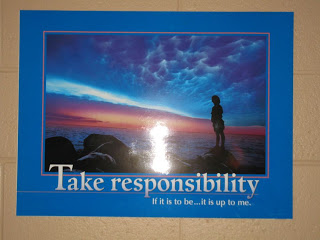
If it is to be, it’s up to me…

I sat across the table from a young woman in her mid-30’s watching her face radiate as she showed me photos of her delightful 6 year old daughter.  At first glance, you would never guess that this happy, confident mom had such a troubled past.  I was awestruck by her resilience and her ability to let go of the past.  She was fully steeped in the present moment and had deep gratitude for her present life.  She had a better dream for herself and she made it a reality.

Everyone has a story.  This young woman’s story had every plot twist imaginable.  Jane’s mother died of diabetes when she was just a teenager.  She became a surrogate mom to her three younger sisters and dad was overcome with grief and despair.  Not surprisingly, they all found someway to numb themselves from their loss.  For Jane it was heroin.  Heroin did not solve her problems or successfully numb her pain.  In fact, just the opposite occurred — she had more problems and her hurt was deepened as family and friends cast her aside because of the poor choices she was making.  She had a baby at 18 and had to give him to her dad to raise.  She continued as a nomad,  crashing on couches of people she barely knew, eating whatever food others would offer.  She was in such a dark place and in her words and she’d hit low spots often.  Until that day that she hit her own personal “rock bottom”.     I won’t share the private details of what happened to her that plunged her into “rock bottom”, but suffice it to say it was a real wake up call that shook her back into consciousness.   Her choices were affecting who she really was at the core of her soul and that became more painful than what life had been throwing at her.

After 8 years of heroin and running away (literally and figuratively), she took personal responsibility to change her life.

She is now in her mid-30’s with a beautiful daughter, reunited with her teenaged son, has a meaningful job she enjoys, an apartment, a car and a leadership role in her young adult group at church.

I was so captivated by her story of sadness, darkness, resilence and determination.  I asked her “what did you change about your life that set you on a good path and keeps you there?”

Her answer was profound.  “One by one, I put things into my life that I don’t want to lose.”

Take a moment to let that sink in.

For Jane, it started with a job.  She needed money to eat.  She got a job.  Next goal was an apartment so she saved and budgeted and she put a roof over her head.  She wanted to get her driver’s license back so she made that a priority and later, she bought a used car. These were building blocks for her independence and self worth.   As she told me her story, I could feel how much it meant to her to be able to hold a job, have an apartment of her own.  She created a safe, peaceful environment for herself where she could not only survive but thrive.  As she told me of each step, she emphasized — “I didn’t want to lose that job, I didn’t want to lose that apartment, I didn’t want to lose the car”.

Unknown


Eventually she fell in love, married and had a baby girl who is now 6.  Her face lights up as she flashes through the photos on her phone of her little artist, dancer and cuddler.

This is not a happily ever after fairy tale that ends here.  Far from it.  This is about a young woman who so dramatically shifted everything in her life that she has the resiliency and fortitude to capably handle the things that life throws at her.  She never loses sight of what is most precious to her.

Sadly, her marriage ended in divorce three years ago when he husband cheated on her.  Her precious daughter has special needs, and an addicted, dysfunctional sister leans on her heavily.

However, she does not lose her footing.  She has a remarkable capacity to “let go”.  She doesn’t have time to dwell on the past and she chooses to spend her energy caring for her daughter, doing a good job at work, taking care of herself.  She gets rejuvenated by her church, her faith and the good people she purposefully has in her life.  Jane gave herself the gift of self worth long ago.   It is what keeps her on such a good path now, even when life throws some pretty crappy stuff at her.

Jane has set boundaries so that all that she has worked for (and does not want to lose) isn’t jeopardized.  This has been one of the hardest steps for her, she confided.  And I have so much empathy for her around boundaries.   Jane does not view herself as a special, amazing person.  She is an everyday girl, just trying to be a better person that she was previously.   Although the personal work was hard, she believes in her heart that if she could do it, all alone without much support — then others should be able to overcome their addictions, dysfunctions and adversities too.  Especially if they have love and support from family and friends.

She has known a very special young man for a long time.  He has struggled with addiction and recovery three times already.  His mother is at a loss how to help him stay clean and get on a good life path.  Jane and his mother are very close — and it is obvious that Jane loves him and has for a long time.  She looks into his eyes and sees the good heart, the good man that he is at the core.   In her imagination, she can see him free from addiction and suffering — and the two of them laughing, loving and soaking up life.

And this is where the sticky part comes in.  Jane looks at herself and sees all that she has done to change her life for the better.  She did it alone.  Surely this young man, with lots of love, patience and support – with her as a good role model can readily turn his life around too.  Once she naively thought this was possible, but after experiencing his relapse time and again, she has gained deeper insight.

She now sees this relationship from both sides of the coin.  If her young man wants to make a lasting change in his life, he has to hit his own personal “rock bottom” and find his own motivation to start the process and keep it going every single day.

She holds steadfast to her personal promise and it has become a trustworthy boundary — she does not want to lose all that she worked so hard to gain.    She won’t jeopardize all that she has worked for personally trying to coax him into a better life.   She’s even adopted this philosophy for her sister, emphasizing that we alone are responsible for the choices we make in life.  “Get off the couch, sis….and make it happen.”

What impresses me so much about Jane is that she parted with a lot of painful baggage over recent years.   She is a lighter, happier, balanced woman as a result and she is setting a very good example for her daughter and her peers.

I’ve met with several young adults this week who are working on personal development due to depression, trauma, and self doubts.   These young people were visibly touched when I congratulated them on taking responsibility for changing their lives, for seeking meaningful help and sticking to it.   They shared that all too often they are challenged by people who think they can’t or won’t change.  Very few people offer encouragement or even recognize the baby steps that they have taken.

I witnessed a change in their facial expressions, body language, posture and tone of voice  when I offered compassion, a smile and a “well done”.   It felt like pouring cool water on a fragile wilting plant.

Pema Chodrun shares that if one person can connect with their authentic self — and has the capacity to open their mind beyond narrow-mindedness — it makes it that much easier for others.  She encourages each of us to find out what is at the root of our suffering and deescalate it.

When we have walked in another’s shoes, we have a greater appreciation for the challenges on their path.    So many young people are floundering in their efforts to feel safe, valued and part of community.   Human connection is sorely needed by all of us today.  Never underestimate the value of your empathy and encouragement.

Unknown-1


Charting a New Course


A couple of years ago I was in a state of deep confusion from the heartache and disappointment of a failed relationship.


Along my path to growing from the experience, I had a few navigational buoys guiding me:

  • A girlfriend offering insight into another friend’s MO when it came to relationships and the pattern that kept repeating itself ending in a string of short term flings
  • A counselor educating me on behavioral patterns and good mental health
  • An introduction to mindfulness and meditation from a caring, supportive friend
  • A treasured mentor who devoted a lot of time to listen while also challenging me
  • A lifelong friend who took me for a walk down memory lane reminding me of what I had accomplished personally and professionally in spite of past adversities

These navigational buoys were all interrelated and as I bounced along in the healing process, I’d bump into them time and again.  It became increasingly clear that I’d lost my compass in life when my beloved husband had passed away so suddenly.  That shock and that loss clouded my heart and my emotions for many years.

When it came to that failed relationship, I was well intentioned in my desire to bring that same joy and happiness that Skip and I had shared to another.   But I was in foggy emotional territory and couldn’t see our values were out of sync.   I was grasping to fill a big void in my life but not paying full attention.    It’s like eating junk food when you are starving.  You quickly satisfy the hunger but later you realize you don’t feel so good.

Motivated by the fact that I did not want to repeat an unhealthy relationship pattern, I made a commitment to really get to know someone very well  — and that someone was ME.

Unknown

I thought getting a Series 7 investment license was hard!  This endeavor has been one of the biggest challenges in my life.

Although I was gaining a lot insight from my counseling sessions,  it offered very little in the way of practical tools to make meaningful lasting changes to a lifetime of developed behavioral patterns and triggers.  And it did not address the effects that the sudden loss of my beloved spouse had on my emotional needs for safety and harmony.

My friend’s introduction to mindfulness was not simply a navigational buoy — it was an enormous lighthouse shedding light and understanding into that murky fog of self awareness.

I’ve been practicing mindfulness and meditation for over two years now and it’s brought about incredible positive changes in my life.  In fact, it has become such an integral part of my relationships and interactions with others that it even shows up in my dreams.  Recently I awoke in the early morning hours smiling at the boundaries I had set in a recurring dream and the resulting dramatic positive outcome.  One mentor told me that when you start dreaming it, you are really beginning to own it.

Jon-Kabat-Zinn

Looking back at that analogy of filling the void with junk food, mindfulness has been like a super healthy diet for my emotions and thoughts.  I became very aware that after battling cancer and the sudden loss of my spouse, I was highly sensitized to unnecessary conflicts and drama.  Ending a life-long pattern of rumination and lack of boundaries felt like dropping two dress sizes!

A very rich benefit derived from mindfulness is improved wisdom around my empathy for others.  You see, as I dug deep into my own life’s adversities and habitual patterns, I learned to treat myself like a treasured friend.  Lots of genuine compassion for myself became a soothing, healing balm.

It really opened my eyes to be more aware of buried emotional experiences in others.  While I have always been empathetic, I may have misjudged the motivation behind their behaviors or actions.  Mindfulness teaches us not to be judgmental, but to be curious.

My empathy for others is no longer just on a surface level, but reaches deeper.  I’m trying to become a better listener and to ask meaningful questions to help my understanding of another human being.

This is harder than you think — often we don’t really know what is at the root of our own discomfort or suffering.    If you journal, you might have some appreciation of how you sit down to right about one thing and suddenly find the page filled with 8 totally unrelated yet very relevant issues.  It takes a lot of time and hard work to peel off the layers.

I’ve always thought of myself as a resilient person able to rebound from trauma or adversity without turning bitter or negative.    Now I have a greater understanding of how my emotions and thoughts were genuinely impacted by some tough experiences.  That just might explain the large sack of rumination I used to carry with me all the time.

images-4

Rick Hanson, Ph.D (rickhanson.net) has a great lecture on “Being for Yourself” (you’ll find it under the “Listen” tab).  In it he encourages us to take personal responsibility for wholesome change.  I smile when he says “unpack your feelings – let in light and air”.    That image of letting in light and air just feels so good to me.

If you find that you have some areas where your emotions are out of sync with what you want from life, take the time to sit quietly and get curious.  You might be surprised with your discoveries.

“Nurturing your own development isn’t selfish. It’s actually a great gift to other people.”
Rick Hanson, Buddha’s Brain: The Practical Neuroscience of Happiness, Love, and Wisdom