

Have you ever considered just how much the stories that we tell ourselves shape and mold our lives? Not just on a daily basis but throughout our lifespan.
Our stories impact how we meet pivotal moments that can shift the trajectory of our lives. They can become stumbling blocks or lighted pathways, cautionary tales or calls to adventure, footholds or landslides.
This is a compelling reason why we are so drawn to movies and books based on Joseph Campbell’s “hero’s journey” framework: the protagonists sets out, has transformative adventures and returns home a better person for it all. Our own lives are a continual unfolding of many experiences that do transform us. How many times have you reinvented yourself? How many times did a life event change you?
The stories we tell ourselves when we are facing opportunities and challenges can open doors or slam them shut. If we can be more proactive and empowered in how we meet these transforming moments in our life, we will create an ever emerging main character in the stories we tell ourselves.
We evolve just like our favorite characters in a long running book or movie series. Take a few moments to realize how much Harry Potter or Dorothy from the Wizard of Oz grow in character development over the years of a continual book series or multiple remakes of a classic.
A writer spends an inordinate amount of time on character development. The story arc provides the framework for the character to face challenges, make important self discoveries and grow through the experience.
However the stories we usually tell ourselves do the opposite — they keep us gridlocked in limiting beliefs about ourselves. We reinforce old narratives rather than re-writing the script to encourage our own character development.
We have rich resource material that we can readily access to better support our life-long character development. We’ve just been looking at it and applying it in all the wrong ways for centuries. In my last blog post entitled “Better Scripts, Better Stories” I offered a strong visual image of a greenhouse library to fast-track a dynamic new way to think about our inner database of life lessons and lived experiences.
A powerful visual image can psychologically shift us faster than any written or spoken words. Don’t you feel this shift in your mind and body when you imagine wandering through a greenhouse library? Exploring our very own reference material in this new light shifts us from dread about rummaging through the past, to one of eagerness and curiosity instead.

Brene Brown has written for over two decades about how much we have armored up to go out and do battle with the world, defending and protecting ourselves at great personal cost. I like to think of her as one of our most courageous pioneers who was willing to do the really hard work of blazing a new trail for all of us – by cutting down the strangling vines and overgrown weeds that prevented us from accessing our own “secret garden” — our personal greenhouse library.
The fact that Brene touched a collective nerve with her viral Ted Talk decades ago about shame and vulnerability was a clear indication that we were all feeling weighted down by our protective armor and exhausted from dragging around emotional baggage.
The deeper Brene went into the weeds, the more it became evident that the root cause was a complete misunderstanding of the integral role our emotions play in the stories we tell ourselves. We’d been protecting ourselves from emotions instead of engaging them. It would be analogous to spending our whole lives wearing our outgrown clothes inside out.
Additionally, many of us get trapped in old stories because of the identity labels that were stuck to us. We were scaredy-cats, wallflowers, natural born athletes or brainiacs, winners or losers. When we were kids, it was a common mistake to apply the fundamental attribution error to “who we were”.
Fundamental attribution error is a cognitive bias that causes people to over-emphasize personality traits and under-estimate situational factors. As a result, a kid that runs late gets labeled as “lazy”, a child who struggles with emotional control gets labeled “too sensitive, unruly or bad”.
If ever we needed to “stop judging a book by its cover” — it is now. We are all prone to apply the fundamental attribution error to others and label them, which limits them in their character development. We even label ourselves — we identify as perfectionists, people pleasers, procrastinators, worry warts and air heads.
In our “greenhouse library”, we can stop judging a book by its cover and peel a limiting label. We can read between the lines of our old narratives and discover lessons we may have missed.
If Brene Brown was the one who pulled the weeds and unearthed the tap roots of our limiting stories, Ethan Kross just might be the one who takes us by the hand and helps us reframe the integral role emotions play in the stories we tell ourselves to shift us toward proactive character development.
Ethan Kross has titled his newest book “Shift” for good reason. He proclaims that we are at a collective inflection point – where integrating emotions is the transformational pivot we need most. Emotions are not something to be avoided and to guard against. Emotions are our internal guidance system — invaluable data points and highly personal information that are the drivers of good decisions and building blocks for our character development.
Emotions are not a bug or human design flaw. Emotions are a uniquely human, dynamic operating feature.
All this time we have been treating emotional intelligence as a pesky infestation – when in reality our emotions are pollinators.
Our emotions, combined with our backstories, lived experiences and life lessons become the “care instructions” for our individual personal growth. We can provide ourselves the right environment and nutrients to thrive and flourish.
Picture those little tags tucked into the soil of potted plant that tell you just what a particular plant needs in order to thrive. How much sunlight, a preferred temperature range, water, and room to grow so clearly defined on a tiny plastic instruction card.
Aren’t we all just like plants? Ask any parent of more than one child and they will quickly confirm that each child requires something a little different in order to be their most authentic selves.
Ethan Kross reveals to us in his book Shift that our beliefs are often what limits us from growing. We hold steadfast to beliefs that were planted in our minds as kids. But just like a greenhouse plant, we grew in spite of the pot we were in or an environment not suited to our needs. Most of our discomfort comes from being rootbound, starved for nutrients and improved conditions that match our unique requirements to thrive.
If you’ve ever weeded an overgrown garden or rescued a sad looking plant from the sale rack of your local nursery, then you are already quite familiar with just how rewarding and satisfying this work can be. This is the shift we want to make for ourselves too. Personal growth and self discovery work is similarly rewarding and doesn’t have to be so pain-staking.
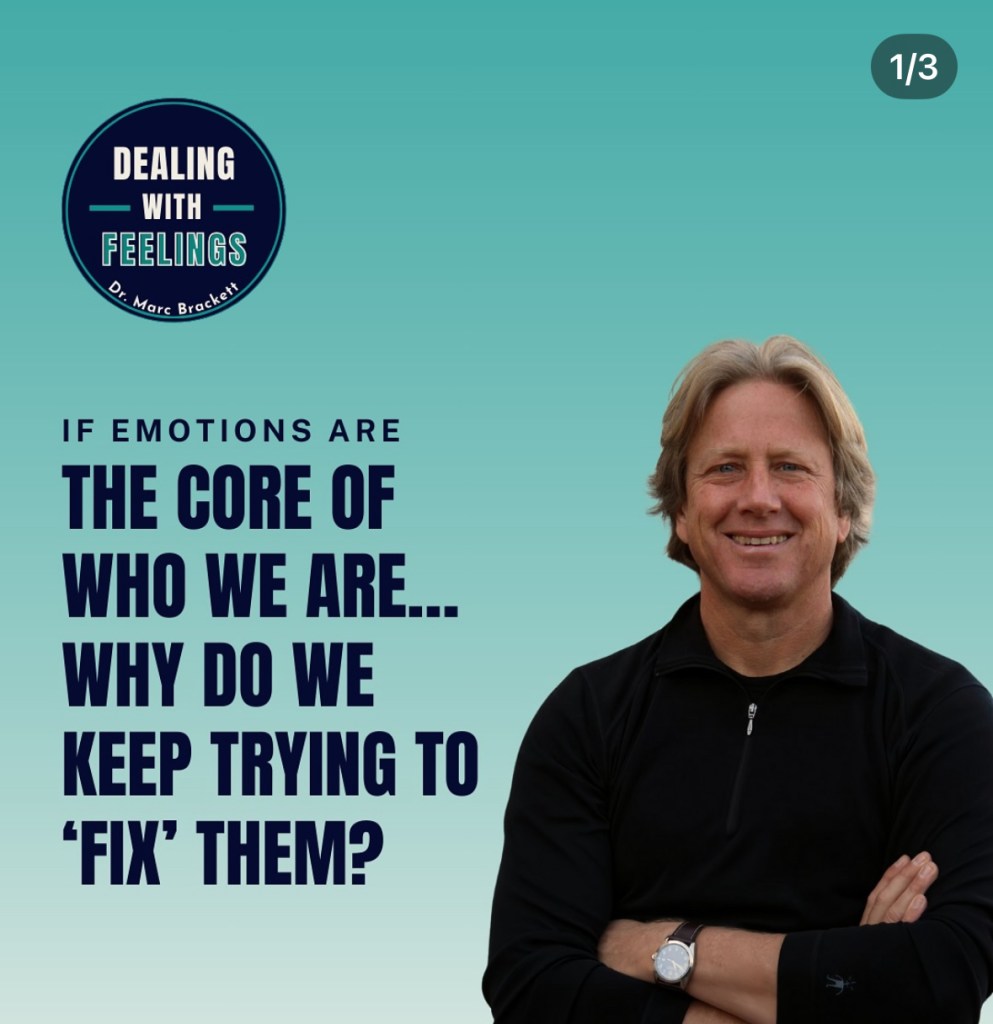
In a recent podcast conversation, Dr. Marc Brackett and Dacher Keltner, actively discussed the old mindset that we all had around emotions — we labeled them as good or bad, positive or negative. This made it even harder to change our belief system about the intrinsic value of every single one of our emotions. Dacher Keltner, a psychology professor at Berkley, is a phenomenal resource for shifting our beliefs about emotions like grief and sadness. He assures us that there is beauty and comfort in sadness. Dacher tells us that it is okay to feel embarrassed and angry. We have so much to learn from these rich emotions that connect us in a very deep way to what is most important.
Dacher Keltner wrote his inspirational book “Awe” when he was steeped in grief over the death of his beloved brother. It is a testament to all that he teaches about those emotions we once believed were better left alone and ignored. Dacher was also the scientific consultant for both “Inside Out” movies helping to teach us about biological and evolutionary origins of compassion, awe, love, empathy and emotional expression.
Once again, we are learning that our societal belief systems about emotions were rooted in labels and misunderstandings. We doubled down both individually and collectively — giving emotions a bad rap.
Open the Invitation:
Are you game for a transformational shift in the way you think about personal growth and self discovery? Can you imagine your backstory, past and present experiences, and life lessons as your personal “greenhouse library” of highly personalized reference material? Will you train your inner voice to be your compassionate, encouraging life coach (more like a best friend than inner critic)?
Most importantly, will you begin to use your emotional intelligence as your core operating system for navigating life? Treat your emotions as though they were the latest, greatest technological upgrade you could possibly download and install.
No more armor and emotional baggage weighting us down and limiting our character development.
We can tell ourselves much better stories – the kind we often read as kids that helped us dream bigger, imagine a life of our own design, and continuously, curiously making new discoveries about ourselves and the world around us.
RECOMMENDED RESOURCES:

https://www.youtube.com/watch?v=Q1ObQdCYY6I


 Inspired New Horizons