
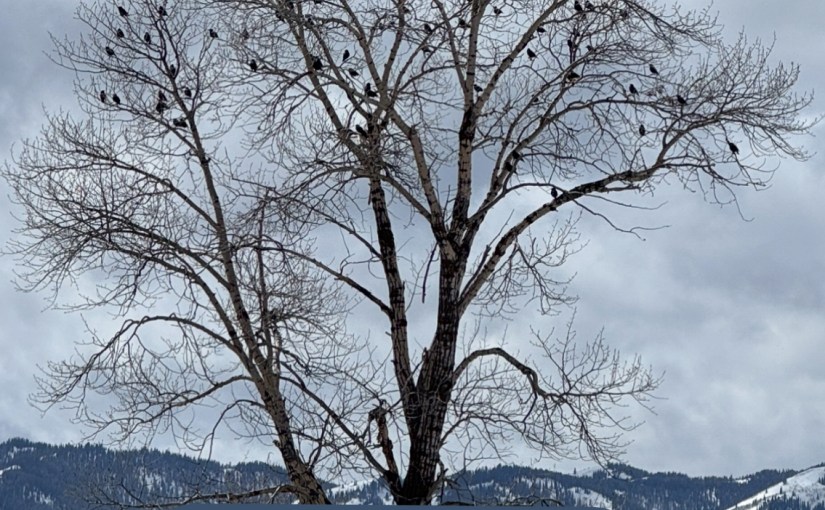
Have you shifted the image of your past experiences and lessons learned into that of your personal greenhouse library, chock full of invaluable reference material?
If so, you are ready to add a Coaching Tree and a Board of Advisors.

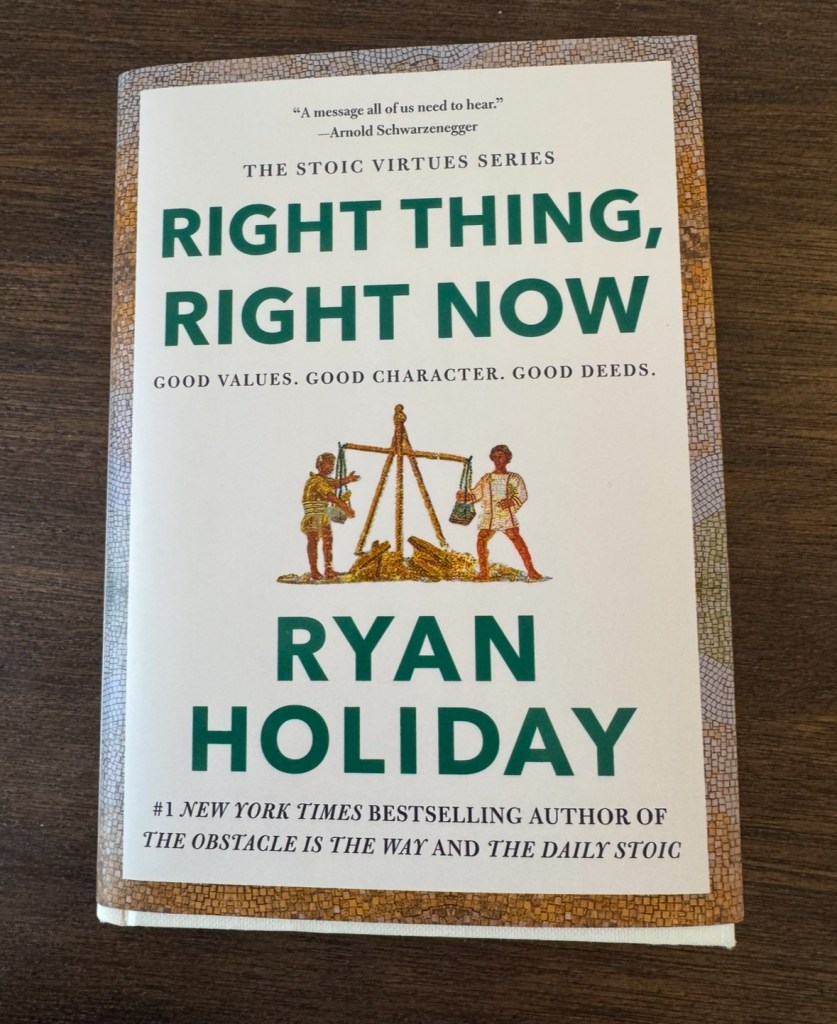
Ryan Holiday, author of the Daily Stoic, has long been a strong proponent of a coaching tree. In fact, he dedicates a chapter in his latest book, Right Thing, Right Now to this very concept. Ryan takes a powerful working model for a coaching tree from professional sports teams and adapts it for our personal use.
It is so easy for us to visualize all the branches of support that professional athletes have to help them be their best. We see them on the sidelines on game day – the head coach, assistant coaches, trainers and teammates. We may be less cognizant of the many others who support the athletes, but they have an integral role too. Physical therapists, nutritionists, sports psychologists and family members are all part of the coaching team that provides daily support to bring out a player’s best.
Professional coaches and athletes depend upon coaching trees to foster growth and excellence. The benefits go both ways — a good coach not only offers guidance and guardrails, he also learns from each player, their unique talents and potential and how they integrate what he teaches. These insights deepen his knowledge and hone his skills for working with other players.
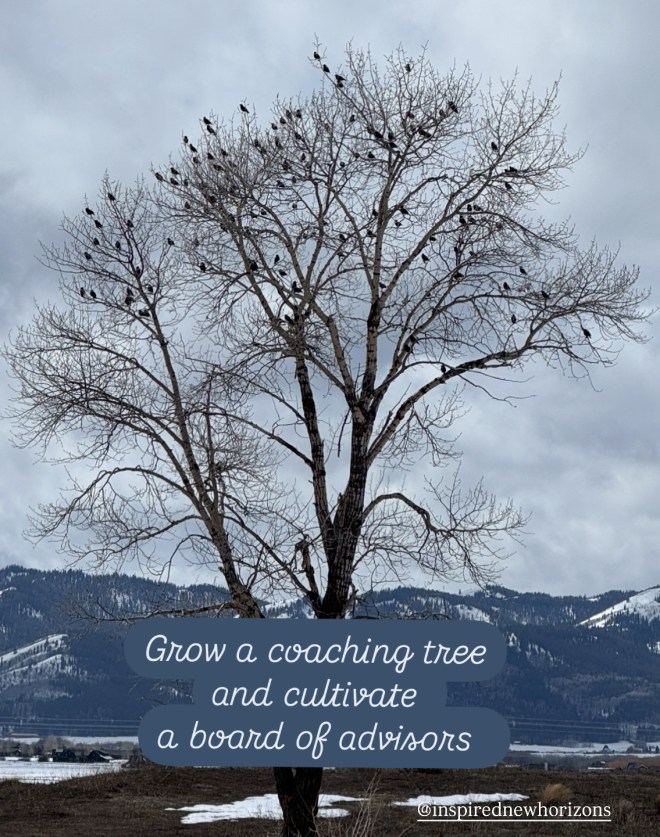
Think of the coach as the roots of a tree, growing deeper and stronger with each athlete and assistant coach he is developing. Then visualize how each player and assistant coach takes the knowledge, wisdom and discipline from the coach and branches out on their own. Now you have the concept and visuals image for a coaching tree.
Ryan Holiday recognizes the invaluable interplay that comes from a student/teacher relationship: learning and discovery go both ways. Adam Grant also knows this to be true — that the best way to learn something is to teach it.
When we create our own personal coaching tree, we amplify our potential for fast-tracking self discovery and personal growth. We practice our life and relationship skills, putting in the daily reps in diverse ways. We keep our core operating systems (our brains and bodies) well maintained and updated. Personal growth and self discovery are not a once and done process, but rather a continual lifetime of learning and growing — just like a tree.
Grow Your Own Coaching Tree:
Who has been a rock solid role model for you? Someone who actually practices what they preach, who leads by example?
Who have you turned to when you needed help with a specific situation — someone that you know has had a similar experience and somehow came through it stronger and more authentic as a result?
Who do you wish you could be more like – that one person that possesses signature strengths that you wish you had?
When we ask ourselves these types of questions, we begin to see that we are naturally drawn to certain people for specific attributes that we want to foster in our own lives. Just like pro athletes, we become an amalgamation of the people we admire and who inspire us. We become a well-rounded person by drawing on the diverse strengths of our favorite mentors, coaches and role models.
Ryan Holiday emphasizes that a coaching tree becomes an evergreen “give and take” organic process for personal growth and paying it forward. We take what we need from our role models and personalize it for us. We just don’t “copy and paste” what they do — we make it our own. As we become more skilled and practiced with these new attributes, others will come to us — and ask us for help. We pass on not only what we have learned from our mentors – but also how we personalized it. We “take” what we need for self improvement and we “give” tips and tools to others discover what works best for them.
Here’s a real life example and one that you will find relatable: A friend called me when she had some very difficult personal decisions to make for her spouse with a very serious health issue. She knew I had some real life experience with tough choices that require a delicate balance between practicality and big emotions. I became her sounding board, a grounded friend who could help her sort out the pieces and make the best decision for both herself and her husband’s long term special needs. This didn’t happen in a day — it was months and even years of long conversations, of listening and learning, of being honest about doubts and second guesses and lots of empathy, validation and reassurance that each choice was a building block for her making the right decisions each step of the way.
My friend grew in remarkable ways through this very difficult life challenge. She not only handled one of life’s most emotionally tender realities with grace, compassion and love, she learned a lot about herself along the way. She survived — and she thrived. Today she leads support groups, she offers wise, personalized counsel to others facing similar long term care situations, and she has championed changes in memory care facilities in her community.
Guess what she does for me and has been for years — she forwards my Daily Gummy of Wisdom to a her big circle of friends every single day, along with her own insights. She is paying it forward and causing a ripple effect that is making a meaningful difference for more people than we can ever know.
Spend some time reflecting on the people who have shaped your life, especially during times when you faced adversity, golden opportunities and pivotal moments. Who provided encouragement, saw your inner strengths and hidden potential; who listened, validated and reminded you of just how far you’ve come? These are prime examples of those you want perched in your coaching tree.
In his chapter entitled “Grow a Coaching Tree” Ryan Holiday offers this poignant insight: “Generosity is the seed of a great coaching tree.”
Brene Brown reminds us that we can be most generous when we recognize that just like us, others are doing the best they can with the information, tools and resources they have at that moment. Ryan invites us to remember our own challenging experiences and those who showed up at just the right time when we needed the most generous of interpretations — and the generosity of their wise guidance.
Be intentional and discerning as you grow your coaching tree.
Some Food for Thought:
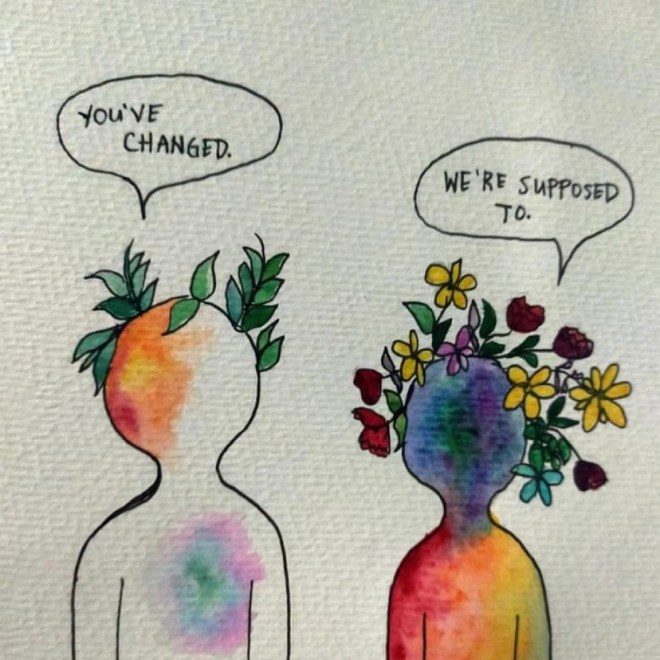
The coaching tree image helps us to see with greater clarity the work we have to do alone, the scaffolding we get from others to help us in this process — and how we can return the favor by helping others.
We have long been told that when we change, others change too.
This is not always viewed as positive however. People like us to stay the same because they believe they can accurately predict how we will behave and react – and they can make contingency plans to cope with what they have come to expect. These contingency plans are coping skills, protective armor and behavioral modifications.
As a result, when we change and make significant self improvements, others have to change their predictions about us. All those old tricks of the trade people once relied on to “meet you where you were” are no longer needed. In fact, others who still resort to shape shifting, conflict avoidance or cognitive dissonance may stunt the very growth we are pursuing.
Even when our self improvement changes make us easier to live with, it takes a long while for others to trust it. There’s a big gap between the old you and this new & improved version of you. It takes a leap of faith to bridge it — and yes, it requires other people to make some changes too.
This is precisely why we shouldn’t do this work in the dark.
We need all the help we can get when we are fostering personal growth and self awareness. Just as a young tree needs rich soil, sunlight, water and wind, we too need a few scoops of miracle grow and some scaffolding to help us get grounded and sprouted.
When we embark on self improvement and self discovery plans, we should tell our family and friends so it is not a secret. After all, we’d tell them if we were trying to cut back on daily desserts or wanted to stop drinking alcohol. Being open up our commitment to change, helps others support us in meaningful ways. It also helps them re-program their predictions about us. That’s a win-win.
Add a Board of Advisors:
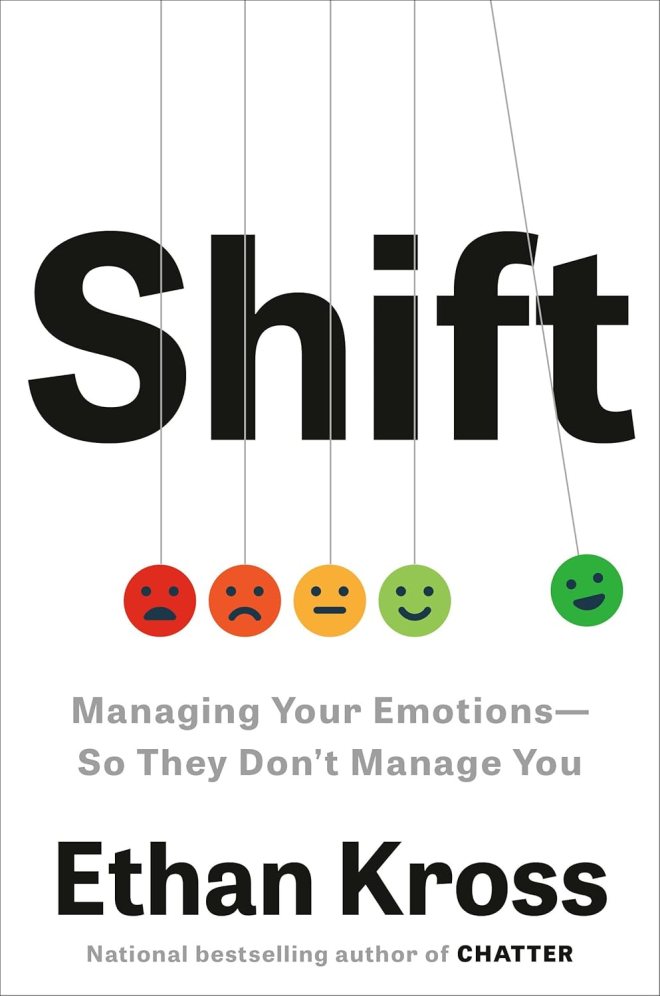
When we proactively seek help with the changes we want to make, we bring our intentions out into the light of day. Just like a tree cannot grow with the right conditions and nutrients, the same is true for us. We need a good support system. Ethan Kross, author of Shift, encourages us to create a board of advisors.
Just like a board of directors for a company or non-profit, we need some diversity in our personal board of advisors. While it is very helpful to have like-minded folks who are also committed to personal growth, Ethan reminds us there is no “one size fits all approach”. There are a plethora of resources, tools and modalities that can be personalized to match what works best for us — just like a physical fitness plan.
In a recent Happiness Lab podcast conversation with Dr. Laurie Santos, Ethan Kross shared the importance of having a personal board of directors to help us when we get stuck, noting that strong emotions and self doubts can derail us.
We need friends and family members who can help us get a fresh perspective, pull us out of a rumination cycle and reframe our situation. These are the folks that should be on our personal board of directors.
Who are you going to call? Not ghostbusters! You are going to call an emotional advisory board member.
We all get emotionally triggered – and sometimes in a very big way. It keeps us stuck and pulls us back into old reactionary patterns of behavior. Having that one friend who understands and validates us when we are triggered is the first line of defense. It takes a long time and lots of practice to lessen the tug of emotional triggers and it is also some of the most freeing work you’ll ever do. Enlist someone who has done this work and has great success. Put that person on your board of directors.
All too often, we get stuck in some one-track thinking. We know we need a different vantage point, but our own strong emotions or self doubts, just keep us gridlocked. Do you have a friend who is really good at reframing your current situation and helping you see what you are missing? Someone who flips a situation from negative to positive as though she had a magic wand? People who have deliberately worked on breaking free from the auto-pilot of our brain’s negative default mode are the best advisors for reframing and fresh perspectives. Who do you know readily views a situation from many different points of view? That’s person is a great candidate for your board of directors.
Have you ever asked yourself “What am I missing?” There are times when we are exhausted from all the effort we put in, but we come to the realization that we are not making any progress. In these situations, we may have a big blindspot and an accompanying lack of self awareness. So we find ourselves asking — “why does this keep happening to me or why can’t I catch a break?” Adam Grant offers sound advice for times like this: recruit a “disagreeable giver” for your board of directors.
A “disagreeable giver” is our challenge friend. Chances are you already have one of these people in your life — but you haven’t tapped into the gifts they offer. You may even find yourself resisting the good points they make.
“Disagreeable givers” respectfully and thoughtfully challenge our ideas and opinions – even (and especially) when it might be uncomfortable. Their goal is to help us see our blind spots and move us to better decision making. A caring challenge friend wants the best for us; they are often tired of seeing us so exhausted from our hamster wheel. Challenge friends are not afraid of having hard conversations; they know your life will get easier once you have a breakthrough. Fill that spot on your board of directors with a trustworthy challenge friend.
There will be times when we need a specialist for whatever life has thrown at us. Someone who has had a similar experience and is on the other side of it. It might be a health crisis, a divorce, the loss of a loved one or dealing with family estrangements. This is when we need someone on our board of advisors who has a working knowledge of the many complexities of a shared experience. What we get from people who “have been there” is what we would find in a support group. Yet it is even better because it is personalized empathy, care and healing.
When life hands you a deeply emotional adversity, be intentional about who can best help you. Recognize that you are fragile, your thinking is clouded, and you don’t have deep inner resources to draw on. You need someone who can go deep with you and not drown in your emotions. Who can help you weather this storm and keep you afloat til you are able to do it alone. That’s the specialist you want on your advisory board in the hard times.
There’s one more advisory board member you most definitely want to add — someone who makes you laugh, who loves to play, who brings a lightness and freshness with ease. Who brings out your inner child? Who is that one friend that makes you feel like a 7 year old – running with arms outstretched towards each other laughing with pure delight? Give that person a special seat on your advisory board. Call them often, go on adventures and collect joy.
Growing Your Team:
This may be the first time in our human evolution that we become intentional about the lifelong process of learning and growing. Over the past twenty years, bits and pieces of knowledge and wisdom were floating around, but hadn’t yet congealed into the solid, science-backed insights we now have.
Now we know that emotional intelligence is a uniquely human feature. But we didn’t know that it was a foundational component of our human operating system, so we didn’t integrate it. We floundered for far too long, misguided because our core GPS wasn’t installed. Emotions are data – they point us in the right direction and help us get more out of life.
We are now in a fascinating experimental stage – where we get to play around with the full installation of emotional intelligence and make incredible discoveries about ourselves and others.
Rather than fumbling around and feeling unsure about our growth spurts, our hidden potential and how we stunt our growth – we can build a coaching program. We will get the most out of these new science-based breakthroughs by growing a strong coaching tree and developing a personalized board of advisors.
We will fast track our new knowledge, tools and skills by learning from each other and building on each other’s insights.
By getting very intentional about the 5 people we spend the most time with and how we show up with each other, we can shift our families and circles of friends into a lifetime of healthier, more meaningful personal growth and self discovery.
NOTEWORTHY RESOURCES:

https://ryanholiday.net/this-is-the-accomplishment-that-matters-most/

https://www.youtube.com/watch?v=8T79PZvUUd4&t=69s



 Inspired New Horizons