Empathy – Essential and Endangered

One of the big discoveries on my personal growth journey has been that the more I get to really know myself, the more I have expanded my awareness of others. I often find myself wondering what others have experienced in their lives that impacts how they show up for themselves and their relationships. My deep dive into the enneagram has given me a greater perspective into the diversity of core needs we all have and the many ways we go about getting those needs met. Replacing frustrations or judgments about others with curiosity and an intention to truly understand them has enriched my relationships and fostered a deeper compassion for others.

Recently I’ve been reading Dr. Bruce Perry’s book, Born for Love, which he published in 2010. He was sounding the alarm for the “empathy poverty” that has become pervasive in our society. He and Maia Szalavitz co-authered the book, sharing detailed stories of children and adolescents whose childhood experiences impacted their quality of life, and contributed to dysfunctional emotional and mental health issues. Over and over in each of these insightful and heartwrenching stories, we learn the incredible value of empathy as the foundational glue for healthy, happy and meaningful relationships.

What struck me was that our collective empathy poverty has only gotten much worse over the last decade. What gives me hope is the growing number of people recognizing a need for change — in their own lives and also in the lives of others. The global pandemic, political divisiveness, racial and gender inequalities, climate changes– they’ve all served as wake up calls. This book — Born for Love — should be a primer for anyone who wants to expand their knowledge on the root causes of so many of the issues facing humanity today.

Transgenerational patterns keep us tethered to the past and often resistant to embracing necessary changes. Lack of knowledge about infant brain development, especially in the first few months, prevent us from educating new parents about the importance of a calm, loving and nurturing environment. Programs, education and tools are needed for infants and their families who are in high risk situations for abuse and neglect to protect and ensure healthy brain development. This is vital to developing resilience and healthy emotional and behavioral regulation in the future.

We chastise young children for misbehaving without the base knowledge of their inability to do so because their cortex isn’t fully developed – and won’t be til their late 20’s. We expect kids to sit still and pay attention without an awareness that the tapping of their foot or the juggling of their pencil is a stress regulator — and a parachute to keep their little brains engaged and open to learning. We send juveniles to jail and wonder why they don’t learn their lesson. No time is spent on understanding their personal life history, providing them with stability and relational support for meaningful rehabilitation. Instead, we often put them with hardened criminals where they learn to double down on already problematic behaviors.

We have the power to change long-standing systematic and transgenerational problems. But first we must understand the root causes and then develop programs and tools to break the cycle. Each and everyone of us can contribute to this process. Empathy is the driver for long overdue changes.

Empathy underlies virtually everything that makes society work—like trust, altruism, collaboration, love, charity. Failure to empathize is a key part of most social problems—crime, violence, war, racism, child abuse, and inequity, to name just a few.” 
― Bruce D. Perry, Born for Love: Why Empathy Is Essential–and Endangered

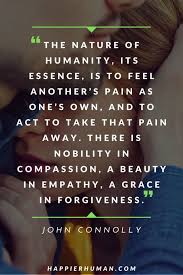
As I mentioned earlier, my self discovery and personal reflection work has made me keenly aware of how my own past experiences pre-disposed me to behave in certain ways when I was feeling misunderstood, disrespected or ignored. This self awareness work actually opened up a deeper compassion in me. In mindfulness practices, this is often referred to as “other” centered. While I’d like to believe that I was usually an empathic person by nature, there is no doubt that facing my own childhood experiences had a transformational influence on how I viewed others. Instead of focusing on their behaviors, patterns and projections, I found myself wanting to know what happened to them. What was the root cause that eroded trust, self-worth, self-confidence and resilience?

In some cases, I had a good working knowledge of the hardships, adversities or abandonment that had happened to people I love. My blind spots were just how these difficulties played out in their own behavioral patterns and armor to protect themselves from having a repeat experience. This is where the enneagram became such an invaluable resource. It was a big aha moment for me to realize that often it was fear or insecurity driving another’s anger, blaming or denial. It shifted everything about how I wanted to respond.

And how I wanted to respond was with patience, attentive listening, non-judgment and calmness.

My own “improved” self-awareness enabled me to see that others were simply operating on autopilot too — and using old behaviors to survive, navigate or soothe. My compassion for what they were truly feeling began to grow. My empathy deepened, knowing what it feels like to often make things worse by throwing up a smoke screen rather than getting to the heart of the matter.

This change in “responding differently” to others diffused all that emotional investment that often happens in relationships and especially in conflict. We are prone to take things too personally. If we just take a moment to pause and center ourselves, we can turn our full attention to the the other person and really listen. Being calm, giving eye contact, and holding space are incredible tools for letting someone know that we are paying attention and we care. When we are able to refrain from getting caught up in all that super-charged energy, waiting to pounce with a defensive response, the dynamic shifts. There is room for empathy to join in. Empathy can bring clarity to a situation.

I think we have all had the experience of passing judgment on someone and then quickly observing details that paint an entirely different picture than our initial reaction. We feel embarrassed for jumping to a snarky conclusion and we feel a warm wash of empathy come over us as we take in the new information, and change our perspective.

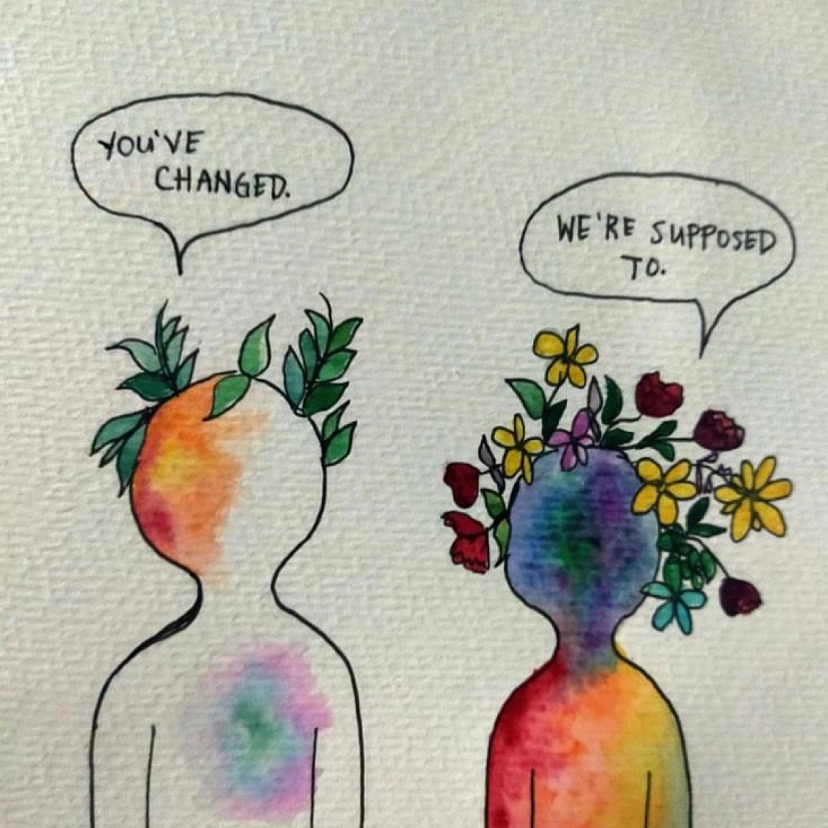
This is the power of empathy — it opens us up to receive new information, and invites us to change our minds. In fact, if we want to proactively cultivate empathy, we need to stretch out of our comfort zones, examine our biases, and move beyond our own worldview. Trade judgment for curiosity — ask good, meaningful open-ended questions and keep asking to gain even more clarity and perspective. Have difficult, respectful conversations. Read books – both fiction and non-fiction will expand creativity and spark greater curiosity. (I do hope I have inspired you to read Born For Love. )

We get opportunities each and every day to practice cultivating empathy. The more we do it, the easier it becomes. We can all contribute to helping empathy get off the “endangered” list. We are born for love and connection. Our children are counting on us and what we do today will shape their tomorrows.

“Will increasing empathy solve all the world’s problems? Of course not. But few of them can be solved without it.”  — Born for Love by Dr. Bruce Perry and Maia Szalavitz

RECOMMENDED RESOURCES:

Please take the less than 3 minutes to listen to Dr. Perry succinctly summarize the importance of undoing our relational and empathy impoverishment. Dr. Bruce Perry – Born for Love: Why empathy is essential and endangered: https://www.youtube.com/watch?v=rmn8uvSyJSo

Check out this recent Typology Podcast with Former Governor of Tennessee, Bill Haslam. His insights dovetail with the content of this blog post in a meaningful way.
https://www.youtube.com/watch?v=TLxl8gJqCto&t=2347s

This week, Former Governor of Tennessee, Bill Haslam returns to the show. This time we talk about his new book, The Promise and the Peril of Faith in the Public Square, turning his attention inward to matters of the soul since his term ended, and what he’s learning about himself as an Enneagram 3. Bill Haslam is the former two-term mayor of Knoxville, Tennessee, and former two-term governor of Tennessee, reelected in 2014 with the largest victory margin of any gubernatorial election in Tennessee history. During his tenure, Tennessee became the fastest improving state in the country in K-12 education and the first state to provide free community college or technical school for all of its citizens, in addition to adding 475,000 net new jobs. Haslam serves on the boards of Teach for America and Young Life. In the fall of 2019, Haslam became a visiting professor of political science at Vanderbilt University. He and his wife of thirty-eight years, Crissy, have three children and nine grandchildren.

GREATER GOOD SCIENCE CENTER For a More Empathetic World, People Have to Choose Empathy https://greatergood.berkeley.edu/article/item/for_a_more_empathic_world_people_have_to_choose_empathy

Roots of Empathy Organization – Building Caring, Peaceful and Civil Societies. https://us.rootsofempathy.org

Roots of Empathy develops empathy in children today so that they can build the world that they deserve. This organization has reached over one million children globally with school based programs, and they have research to prove impact. Roots of Empathy reduces aggression, increases sharing, caring and inclusion and promotes resilience, well-being and positive mental health.
Trailblazers, Teachers and Lamplighters

Have you ever experienced the Frequency Bias? You are thinking about buying a certain model of car and all of a sudden you noticed that model car everywhere — the freeway, the grocery store parking lot, ads on TV and your neighbor’s garage. The frequency bias is a way of describing what happens when something you are holding in your mind influences where your attention goes.

I’ve been experiencing the frequency bias a lot lately and it has ignited an excitement in me that has me feeling a bit like a little kid! What has me so fired up is a “growth mindset“.

When we practice growth mindset principles, we see possilbiity instead of limitation. Failure becomes a valuable opportunity for learning, and the success of others inspires us rather than discourages us. (http://www.renaissance.com)

The frequency bias that has captured my attention is a correlation between an expanding personal growth community and Joseph Campbell’s teachings of the Hero’s Journey. Joseph Campbell, a leading mythology expert and modern day philosopher, revealed how story has been passed down through centuries and cultures to help humanity evolve.

The Hero’s Journey is a common story template that involves a hero that goes on an adventure, learns a lesson, wins a victory with that newfound knowledge and returns home transformed. The hero in the story template offers a shining example of personal growth work. We witness the transformation as heroes confront their own inner barriers, discover inner resources and test themselves. They return victorious from their adventures and conquests with a strong desire to motivate others.

Here is the magic in Joseph Campbell’s insights: It is far better for us to have a story to look through than an explanation. The story is richer – it pulls us in, makes us feel all those strong emotions, connects us to the character through those emotions, trials and discoveries. When we cheer for the hero, we are also cheering for ourselves — for possibility. A moving story inspires us, reminds us of our shared humanity and expands our empathy.

How many hero’s journeys have you personally experienced in your lifetime?

How many times have you had a sudden jolt in your world that changed the course of your life? What did you discover about yourself in those times of great trial? How did you help others when you emerged?

Those who have become Trailblazers, Teachers and Lamplighters are no different than you or I. They just recognized that their hero’s journey was only complete when they came through their personal growth experiences with a transformation so needed, so worthy that they shared the rich details to provide a scaffolding for us. We have a responsibility to those brave, courageous heroes to assist in our collective evolution. We don’t have to get it right, we simply have to do it better.

Take a moment to reflect on the things you often take for granted that might not be possible had others not fought for change. It could be collectively significant such as voting or being able to have credit in your own name. It could be singularly significant such as a parent getting you and your siblings out of a toxic environment. It could be life-saving heart surgeries or cancer treatments not available to prior generations. We are all benefactors of all those who came before us and did hard things that paved the way for something better. Nothing about life is stagnant – we are changing moment to moment. The major thing that gets in our way is when we inadvertently or unconsciously stunt our personal growth.

Every minus is half of a plus……waiting for a stroke of vertical awareness. What awareness can you add to it so that you get a far bigger picture? –Alan Cohen, Author and cast member of the movie, Finding Joe

What I have been noticing with greater awareness is that my Frequency Bias is picking up the patterns that are evident in the Hero’s Journey, the growth mindset, and the expansion of the personal growth community. The components and benefits of all sound remarkably similar:

Joseph Campbell’s lessons from the Hero’s Journey include accepting the possibilities of the present; trusting yourself and doing what makes you feel most alive (following your bliss, discovering your passion); part of the journey is exploration, facing our fears; stretch yourself (put yourself in uncomfortable situations every 7 days); we grow the most from things we stretch the most; no one holds you back but yourself.

Research links the GROWTH MINDSET with many benefits, including: greater comfort with taking personal risks and striving for more stretching goals; higher motivation; enhanced brain development across wider ranges of tasks; lower stress, anxiety and depression; better relationships and higher performance levels. (www.skillsyouneed.com)

Mindfulness tools include meditation and deep breathing; engage in activities you are passionate about; bring your attention to the present moment; sit with and truly feel all your emotions; journal for self-reflection; practice active listening; become aware of habitual but ineffective behavioral patterns; avoid numbing emotions and experiences.

I’ve written about the upward trajectory and merging of all this meaningful work in prior posts. What I have been amazed to discover is how often I’m having conversations today that reveals just how much it is beginning to seep into regular conversations.

Just in the past two weeks, I have had chats with waiters, grocery clerks and strangers at the coffee shop about personal growth, hard conversations, mental health and managing anxiety. No mindless conversation about the weather and plans for the rest of the day. I get the sense that people are hungering to find a better path forward as we emerge from the pandemic. There is a buzzing kind of energy that feels like the universe nudging us to chart a new course.

Could all of this explain the growing fascination with mediation apps like Headspace and Calm? And why Brene Brown’s work is exploding way beyond her initial Ted Talk and first book, I Thought It Was Just Me? She’s now hosting two podcast platforms on Spotify and she’s published 7 books with another one currently in the works. What incredible timing for Oprah and Prince Harry to launch their documentary on mental health; and for Oprah and Dr. Bruce Perry to release their new book “What Happened to You.” Neuroscience is weaving its way into mainstream conversations and intersecting with mindfulness, meditation, mental health, anti-racism and childhood development.

It seems we are open to the invitation that humanity is extending. It is our collective Hero’s Journey. The Hero’s Journey has 3 basic parts — Separation, Initiation and Return.

The pandemic provided that separation in more ways than we could have ever imagined. The initiation had us all dealing with unforeseen trials, isolation, and obstacles to our previously normal life, and we all got pulled into caves for self-reflection and a reality check. And now…..the return as we emerge. The big question before us is how will we show up?

Enlightenment occurs when we take time out for serious self-reflection and we face the things that scare us the most. Sometimes those scary things are the equivalent of a monster under our childhood bed. Bring them out into the light, learn more, do some perspective taking. There’s no doubt that it takes courage to recognize that we have some blind spots, some unfounded fears. Stretching out of our comfort zone a little at a time shines some light under that dark bed and informs us. We have a plethora of high quality resources to help us — books, documentaries, podcasts, conversations with people whose views are different from our own.

Many of our most invaluable resources are the rich stories of our Trailblazers, Teachers and Lamplighters. What lessons can we take from their heroic journeys? How can we honor the forward progress that they made for our benefit? We are the gardeners of the future….what seeds are we planting? What weeds are we pulling?

I’m sharing two stories I have learned over the past year from Glennon Doyle and her book Untamed. I think these are relatable examples of love in action and a willingness to open minds in whole new directions. The gateway to these shifts in perspective was through the heart. In her book, Untamed, Glennon shares the story of her parents attending a church-inspired community meeting in rural Virginia in 2015 in response to the racial issues agitating America’s consciousness after the Charleston mass shooting. There were about a hundred white folks in attendance. A woman called the meeting to order and announced the decision to send care packages to the predominately black school across town. The group embraced with relief this “outward action”, performance instead of transformation. Glennon’s father was confused and frustrated. He stood up and said “I’m not here to make packages. I’m here to talk. I was raised in a racist Southern town. I was taught a lot of things about black people that I’ve been carrying in my mind and my heart for decades. I don’t want to pass this poison down to my grandkids’ generation. I want this stuff out of me, but I don’t know how to get it out. I think I’m saying that I’ve got racism in me, and I want to unlearn it.” Glennon paints the picture of her dad as a good man, dedicated to family and community…in other words he looks and acts just like most of us. But as she so wisely states “he dared to imagine that he played a role in our sick American family. He was ready to let burn his cherished identity of “good white person”. He was ready to stay in the room and turn himself inside out.” (excerpted from Untamed by Glennon Doyle, Chapter entitled “Racists”).

The second story is about Glennon’s mother. Not surprisingly, her mother was full of fear and concerns when she learned the shocking news from her daughter that she was in love with a woman. While it was no surprise that Glennon’s marriage to Craig was broken and a divorce was imminent, it was a lot for Glennon’s mother to absorb this new revelation. What Glennon realized was that her mother was reacting as most of us moms would naturally do — a strong desire to protect her beloved daughter from the onslaught of judgment, harassment and negativity that was sure to come her way. And that protective instinct overrode her mother’s ability to separate her emotions around that from how she really felt about Glennon and ultimately Abby. Her love for Glennon was never in question. Her support for Glennon was layered under all the fears. When the dust settled and the air cleared, Glennon’s mom not only embraced the joy and love so evident between Abby and Glennon, she became a committed activist for the LGBTQ community. Glennon readily admits that her mom is now more involved in this activism than even she is. I share these two stories as examples of awareness and transformation in two people that are in their later years, facing change in unexpected ways and evolving. In fact, they are sources of inspiration to me and others who view this chapter of life as an opportunity to live on purpose, with purpose to create a better world for our children and grandchildren.

Personal growth and humanitarian growth are inextricably linked. When we know ourselves better, we tap into that deep reservoir of wisdom and understanding. We aren’t meant to get it perfect, but we are encouraged to keep working to make it better.

RECOMMENDED RESOURCES:

Finding Joe Documentary on Joseph Campbell and the Hero’s Journey

https://www.youtube.com/watch?v=s8nFACrLxr0

My son and I are both reading this phenomenal book right now. It will open your eyes and your heart in unexpected ways ….hopefully it will break you open to greater understanding.


https://brenebrown.com/podcast/brene-with-dr-clint-smith-on-how-the-word-is-passed/
in 2010 Dr. Bruce Perry brought to our attention the Empathy Poverty. Fast forward to 2021 and so much of what he shared, we have lived in many iterations. This book is more relevant today than ever. The root cause of so many of society’s problems lie in childhood trauma and neglect. Another book that will teach you things you never imagined impacting our daily lives.

We Can Do Hard Things Podcast – with Glennon Doyle and her sister, Amanda

https://podcasts.apple.com/us/podcast/we-can-do-hard-things-with-glennon-doyle/id1564530722

Breaking the Chain

Over this past year, I gained a deeper understanding of the impact of childhood experiences from one generation to the next.

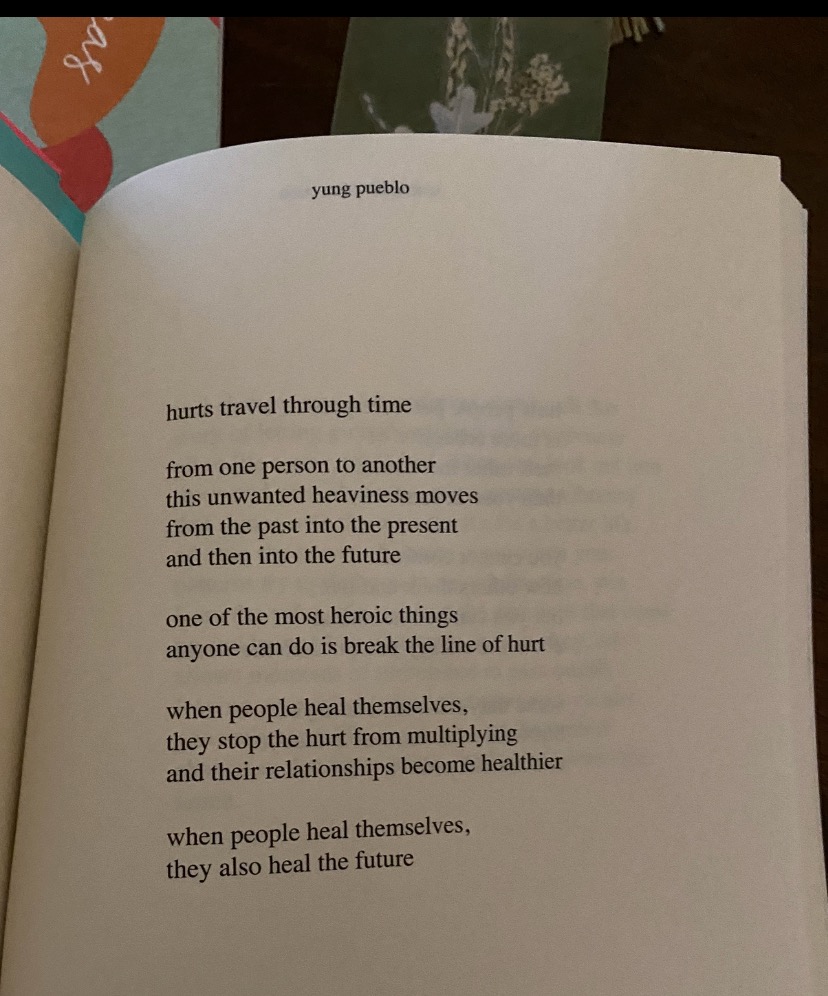
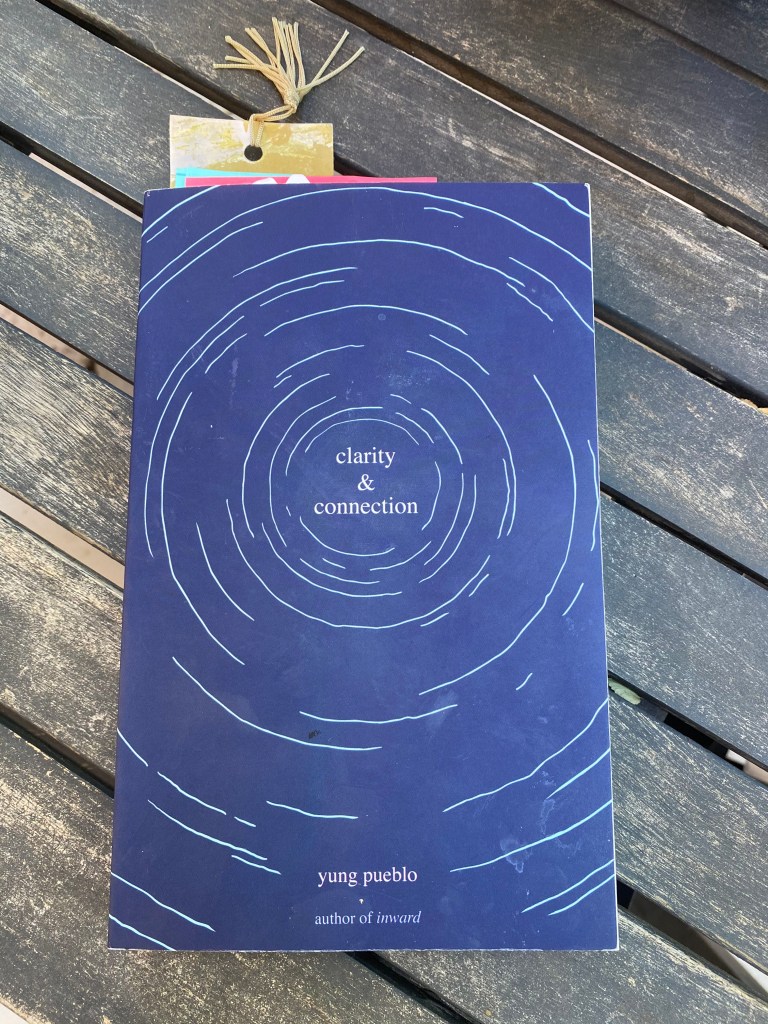
As I read this page from Clarity &. Connection by Yung Pueblo, I paused to reflect on just how true these words are. Often when I read a page in this book, I do find that I have lived exactly what Yung expresses.

I reflected on my mother whose parenting skills were sorely lacking and how that impacted me from a very young age. If you asked me at age 5 or 10 or even 15 what I wanted to be when I grew up my answer was always the same: “A good mother”.

Most people would just smile and think how sweet. However, a guidance counselor in middle school took it as a red flag. I spent more time in 7th grade in that counselor’s office than the classroom. I drew pictures of a house with a white picket fence, a big leafy tree with a tire swing, colorful flowers lining the path to the front door, three smiling kids and two happy parents, all holding hands. The guidance counselor would give me an odd smile that felt intrusive as he asked me vague questions and and gave me the ink blot test. Looking back, I am sure he knew I was leading a double life – the fantasy image that I drew on that paper and the harsh reality of a very dysfunctional family. He could also see my mother’s reaction when she stormed into his office to yank me out of there. I often wondered if he could hear her yelling at me when we got into the car. A few days later when I found myself back in his office, I was sure he did. Truth be told I was angry at him for putting me into this endless cycle of fearing the consequences of being back in his office while surreptitiously begging for his help, leaving clues on blank sheets of paper. Neither adult seemed to truly care about me. I was Olive Oyl between Popeye and Brutus. The tug of war was between them and my fate remained unchanged. A pattern that would play out in my life for decades.

So it was clear that from very early on I thought this whole mothering business could be handled much better. My framework for this was established with a long list of “what not to do” and it even included all the awful things my mother would repeatedly say that I vowed never to say to my own future children. Imagine my confused relief when I realized that other kids from seemingly functional homes had that same list. The big glitch in building a framework on “what not to do” is that it creates a very shaky foundation.

It set in motion a very complex webbing of reactive behavioral patterns intended to keep me and my brothers safe. I had an imaginary hope chest full of ideas on how to do things better when I was a mom. All those old reactive behavioral patterns became road blocks on my life journey. I can see that so clearly now — at 69 and on the other side of six years of self-discovery work.

Here’s the blueprint for all that generational heaviness that Yung Pueblo writes about — my mother had her own story. I know very little of it except that her own mother’s early death left her reeling and it must have happened shortly after I was born. She went to seances and fortune tellers, numbed her pain with alcohol, cigarettes and bad choices. My dad was overwhelmed by her and afraid of her. He was way out of his league in how to navigate it all. I remember being so angry with him for not protecting me and my brothers, but now I realize that he was every bit as frightened and stymied as we were. Both my parents were armoring up against their own fears and unprocessed trauma.

I grew up too fast, assuming adult responsibilities around the age of 10. Like many young kids, I believed I was the problem — that if I was better, we would somehow magically change into that happy family image I drew on paper for the guidance counselor. My behavioral patterns took root and I became a helper extraordinaire, a people pleaser and abundantly compliant. I took my lived experience, extracted the parts that hurt and vowed to do it differently. I began stuffing that imaginary hope chest with my own blueprint for being a good mom, wife and having a happy family.

I left home just a few days after graduating from high school. Actually, I bolted from home — in broad daylight, while my mom was at work. Packed my few belongings and moved into a third floor apartment on a peaceful street on the other side of town near a local college. I felt so free, in charge of my own destiny for the very first time. Just one little problem, I kept looking behind me (literally and figuratively) to see if trouble was looming. Like I said, it is very hard to build a solid foundation from shaky scaffolding. My mother gave me good reason to keep looking behind. She stole my car — my 1968 Mustang, in the middle of the night. I came out of my apartment in the morning to go to work and discovered my car was missing. She did this a few times, in spite of the fact that I thought I was so clever by parking it discreetly blocks away from my apartment. Those tentacles of childhood distrust just kept reaching out and tapping me on the shoulder.

At that time, I was working as a legal secretary in a law office for $70 a week. My boss was the most kind, sensible, empathic adult I’d met in a long while. He offered me a solution to the repeated stolen car dilemma, pro bono, and sent my mother some legal notice that put an end to her nonsense. It may have been the first time that I truly felt that someone had my back. I wonder if I conveyed to him just what that really meant to me.

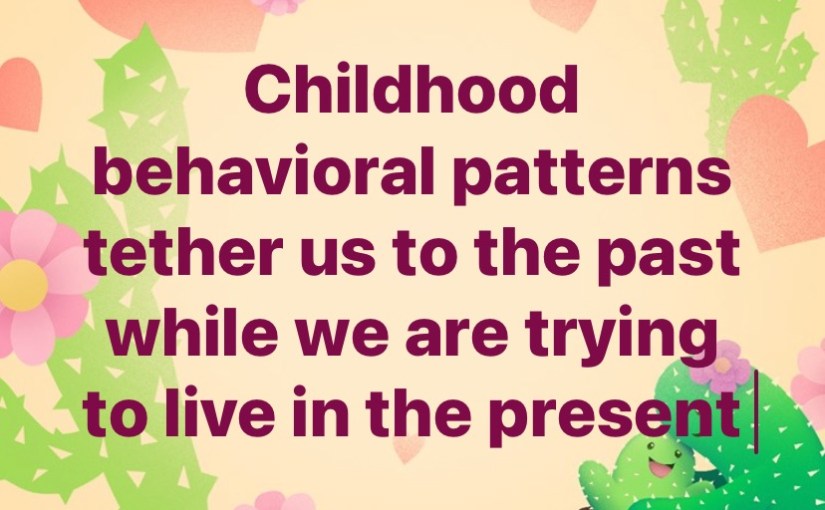
My hope chest blueprint was an attempt for me to be the exact opposite of my mother but because I was also looking over my shoulder, I could not really sink down deep into my own core values and fully embrace who I truly was. My learned behavioral patterns kept me tethered to a past full of uncertainty. I carried my parents armor and my own. There was no sure footing, no strong foundation.

That’s how many find ourselves moving forward into life, getting married and having kids — and bringing all our baggage into the new life we are trying to build. Even in the best of families, there are blind spots. I think my parents’ generation had a junk drawer and a skeleton closet. They hid discomfort, dysfunction and trauma. My generation was often taught to suppress our emotions –stop crying, get over it, pick yourself up by the bootstraps. Is it any wonder that generationally we struggle with emotional triggers?

When I married in my early 20’s, I naively believed that my “happily ever after” blueprint was destined to come to fruition. My first husband was the oldest of 5 in what surely looked like the TV version of family perfection. Dad dutifully off to work, while mom in a flowered apron baked and ironed, preening over her children and her gardens. It was only after we were married, and were living with his family for several months that I discovered there were serious cracks in this facade as well.

Looking back now, I can more clearly understand that many of our marital struggles were rooted in the behavioral patterns we both brought with us into a young marriage. Unfortunately, we doubled down on what once worked for us in times of stress. That in turn just entrenched the cycle of our pasts colliding creating that unwanted heaviness that Yung Pueblo describes. Naturally that meant that our three children were exposed to this newer version of the same old thing — and voila now they were developing their own reactive behavioral patterns. Three generations of armor getting heavier by the minute.

Over the past several years, I learned about the findings of Dr. Bruce Perry, a noted clinician, teacher and researcher in children’s mental health and neurosciences. His work on the impact of abuse, neglect and trauma on the developing brain has had meaningful impact around the globe. It became very evident to me that what happens to us in our early childhood years can have lifelong repercussions.

This is why I feel so strongly about the importance of caring for our mental health and emotional regulation. I wholeheartedly agree with Yung Pueblo that when people heal themselves, they heal the future.

Deep conversations with close friends has revealed that my story is not that remarkable. Many had similar experiences and have felt the effects of their learned childhood behavioral patterns throughout their adult lives. I’m hard-pressed to find a family tree that does not have entangled branches of dysfunction, depression, estrangement, insecurities and brokenness.

Take heart, however — We were also well-intentioned gardeners tending those family trees as best we could. We chose to do the opposite of what their parents did, we chose to love more deeply with an understanding it might hurt, we chose to soothe, comfort and nurture. The pendulum may have swung too far the other way. We burned ourselves out trying to do it all and keep everyone staying in the green on the happiness meter. We still lost our tempers, got resentful, exhausted and disconnected. We offered ice cream cones to our children when we should have pulled them in our laps and honored their feelings. We should have done the same for ourselves but we chose a glass of wine or a bag of chips.

My first marriage ended in divorce. We tried couples counseling before we threw in the towel, but like my guidance counselor experience I realize that we were unable to identify the root cause of our problems. So we just lobbed our resentments back and forth, paid the bill and went home to hit repeat. We did not break the cycle. I can look back now through clearer eyes and a wiser heart and see how our emotional armor and old behavioral patterns kept us entangled til we couldn’t actually live our best lives anymore. I also see how our three kids paid a dear price just as my personal counselor told me. She said that my kids might come back to me one day and ask why I did not leave sooner. When I made the decision to divorce, my sons were away at college and somewhat insulated from the months of anxious fallout, but my daughter was now Olive Oyl between Popeye and Brutus. Consider that my daughter was only 5 when I was diagnosed with breast cancer and 7 when she became my motivation to divorce to free us from a cycle of insecurities and unworthiness. Those events landed hard in the heart and mind of a young child.

Again, my story is not all unusual. And we have seen this play out throughout many generations. When my son was in the throes of his own divorce, I remember telling him that the long arduous decision making process had consequences for his young daughter and encouraged him and my daughter in law to co-parent from a space of awareness and love. I am relieved that they have done this well and continue to do so. For me personally, this is what Yung Pueblo means when he writes about healing the future. Learning from my mistakes, I share openly with my son and daughter in law. I am striving to help them navigate the challenges of raising a child in a co-parenting and ever-evolving family dynamic. No choosing sides and no ostracizing a child or making her feel “less than.” Raising a child is the hardest job we will ever do.

Embracing life’s realities and the brokenness that will inevitably occur in a caring, supportive, inclusive way is far better than saddling a child with our old emotional baggage. The best gift we can give a child is teaching them to honor their feelings. Holding them in our laps and listening, holding space for them to truly feel the depth of their emotions and feeling safe to do so. Teaching emotional awareness, emotional regulation and modeling it ourselves in daily life is how we heal the future. Do the work — in the present moment.

I had no idea when I dipped my toes into mindfulness 6 years ago what I would be gaining. While I was so focused on healing myself, I was then unaware how helpful it would be to my family and friends in the years to come. I knew that I wanted to get out of a situation that was draining me physically and emotionally so that I could be at my best for whatever life had in store for me in this last chapter of my life. That desire to be stronger, healthier and of clearer mind took me on a journey I could have never imagined. So often I told myself that I wished I had learned this all much earlier in my life, recognizing that it would have not only saved me a lot of heartache, but it may have also meant I did not inadvertently hurt others. There is a quote that says that life brings to you what you need the most — and what I needed the most was to heal from old trauma, drop the baggage and embrace equally my imperfections and my gifts. My discoveries and continued learning are supporting my efforts to help others learn this invaluable lesson much sooner in life.

I am so grateful that we live in a time where the stigma around mental health is falling away. I am so encouraged that counseling and therapies are taking a more holistic approach to mental health, bringing grounded research and more tools into the fold. I do believe that we need to be an advocate for our own mental health as much as we need to be advocates for our physical health.

I have looked back on my counseling sessions and see evidence where childhood experiences were begging to be brought out into the open, but were dismissed or simply missed. Had we all recognized that the warning signs were flashing, we could have done some of this meaningful healing work so much sooner. We may have saved good relationships that were tainted by our past.

Dr. Bruce Perry and Oprah recently released their book “What Happened to You?” If we each asked ourselves this question, and then took the time to go back and revisit our childhood with compassion and mature perspective, it would be an invaluable step in breaking the generational line of hurt.

OPRA

RECOMMENDED RESOURCES:

The chapters in this book offer a meaningful personal growth framework: Self-Awareness, Unbinding, The Love Between Us, Growing, A New Life