

Are you fascinated by this new concept where we can actually become “architects of our emotions and experiences”? This new approach is much more “hands on” when it comes to navigating life and sets us up for greater success to meet its ever-changing challenges and opportunities.
This is the 2nd in a three part series on becoming skillful architects of our experiences. Today we are going to learn about a multi-purpose diagnostic tool we can put into our architectural briefcase. But before we dive into learning what this dynamic tool is and how to use it, let’s do a quick review of the basic foundational tool from part 1 — our body budget.
In my last post, I shared how our body budget significantly impacts how we experience life. When we are well resourced, things go more smoothly for us. When we are running on empty, we create a lot of emotional turbulence. Surely, this was both eye-opening and pretty obvious.
When we are getting consistent deep sleep, eating nutritious food, staying hydrated and getting regular exercise, our brains determine that we are “fuel efficient”. We have the necessary internal resources to meet the moments in our lives with clear heads and the ability to be emotionally balanced. All we really need to do is pay attention to our brains and bodies just like we do the battery charges and wifi connections on our phones.
Author Ryan Holiday recently shared the HALT acronym to help us remember that our first line of defense when it comes to dealing with emotional turbulence is to assess our human “check engine” lights.
HALT stands for Hungry, Angry, Lonely or Tired. HALT is a simple and very effective tool to remind us that these four common conditions can derail our best efforts to stay in alignment with our values. When we are feeling emotional turbulence, a quick check in on our body budget can prevent us from getting in our own way.
For the record, this is also a great tool to share with children. When kids are acting out, we can pause to think about when they last ate, if they had a disrupted night of sleep or skipped a nap, or if they have been buzzing from one activity to the next without some quiet time or a brain break. Before we overreact to an unacceptable behavior, we can think about their “body budget” first and foremost. When we teach our kids to check in with themselves, we are equipping them with a foundational tool they can use for a lifetime.

Now let’s add a versatile new tool to our architectural briefcase. The multi-purpose tool that is a “must have” for skillful architects of experience is emotional granularity. This term may seem a little foreign but it’s easier to grasp if we think of emotional granularity the same way we think about the fine-grained distinctions in wood, textiles and even sandpaper.
Emotional Granularity:
The reason that emotional granularity has such a strong impact on our emotional experiences is because the true essence of our experience is in the details. That’s right, details matter.
We mistakenly believe that there is uniformity in common basic emotion such as happy, sad or mad. Nothing could be further from the truth — variation is the norm; not uniformity.
Bear with me here for a minute — and think about your own varied experiences of mad. You can be mad at yourself, mad at a circumstance, mad at another. You might be really mad about running late one day and not care at all the next. Sometimes your body budget is in deficit and you get mad a lot during the course of a day; other days, you are well resourced and unflappable. Do I see your heading nodding in agreement that “variation is the norm?”
If we limit ourselves to the three most commonly identified emotions – happy, sad or mad, we also limit our deeper understanding of what we are really feeling in the moment. When we can tease apart the details that accompany happy, sad or mad — that is when we get to the heart of the matter. This is the gift of emotional granularity – the finely tailored emotions that best reveal the heart of our experience.
Emotional granularity is an exploratory multi-purpose tool. It’s actually easier to use than we might think. We just need more practice and a bigger emotional vocabulary.
Start with why. Why are you mad?
Is it because you are frustrated, anxious and annoyed? Now, dig a little deeper to get to the fine grains of greater detail. Are you frustrated that something you are attempting to accomplish is taking longer than expected? Are you anxious because it is the third time this week you tried to finish a project? Are you annoyed that others aren’t respecting your need for uninterrupted time to focus?
Emotional granularity brings out the relevant details — in the accompanying emotions and the backstory of each.
The more finely-grained distinctions we can make, the more accurately we can parse what matters most, or recognize that there are multiple layers to one core issue. We may even be surprised to discover that we have competing emotions – and both are true. We can be happy for someone else and feel sad for ourselves; that’s paradox.
Emotional granularity moves us in the right direction for self awareness and effective problem solving with more clarity than we could ever access if we stop at “mad”.
The reason emotional granularity is a dynamic multi-purpose tool is that it helps us accurately express our feelings and experiences — AND it makes it easier for others to support us in constructive, beneficial ways.
We often hear that emotional intelligence is a key component for building a good life and meaningful relationships. Emotional intelligence is defined as our capacity to be aware of and control our emotions; and to handle interpersonal relationships with empathy and non-judgment.
Dr. Lisa Feldman Barrett emphasizes that the most invaluable asset for cultivating emotional intelligence is emotional granularity. The more finely tuned we can get about our emotions and experiences, the easier it is to regulate them and reframe our experiences.
Not only does this support our efforts in achieving better emotional clarity and regulation in real time, it actually updates our internal database for the future. Remember that our brains are prediction machines. When we are able to reframe and reorganize our internal database by being more skillful with our emotional responses, we will vastly improve the accuracy of our future predictions.
Yet another reason why emotional granularity is a dynamic, multi-purpose tool. It is a fast-tracked process of freeing us from old emotional triggers and outdated information from decades old past experiences. The better we get at using emotional granularity and becoming skillful architects of our experiences, the more traction we will have in building better habits and mature response patterns.
Emotional granularity helps us to level up. We get to know ourselves better through greater self-awareness. We become more skillful at unpacking multiple emotions that are interlaced with our current experiences. With this improved awareness and clarity, we don’t drain our body budget so quickly. We have greater access to self-compassion which turns on our parasympathetic nervous system which also positively supports our body budget. We get better at emotional regulation and it becomes easier to clearly express to others what we are experiencing and what we actually need in the moment. Not to mention the added bonus of automatically updating our brain’s complex interactive systems with invaluable, current and relevant data for future reference.
Have some fun with this new tool – explore the many emotions that you feel whenever you get that initial hit of a core emotion like mad, sad or happy. Become curious when you are with others when they are sad, mad or happy and ask questions to better understand all that they are feeling in the moment. Compare your findings with your friends and family. This is how we help ourselves and others super boost their emotional intelligence and become more skillful architects of their own experiences.

RECOMMENDED RESOURCES:
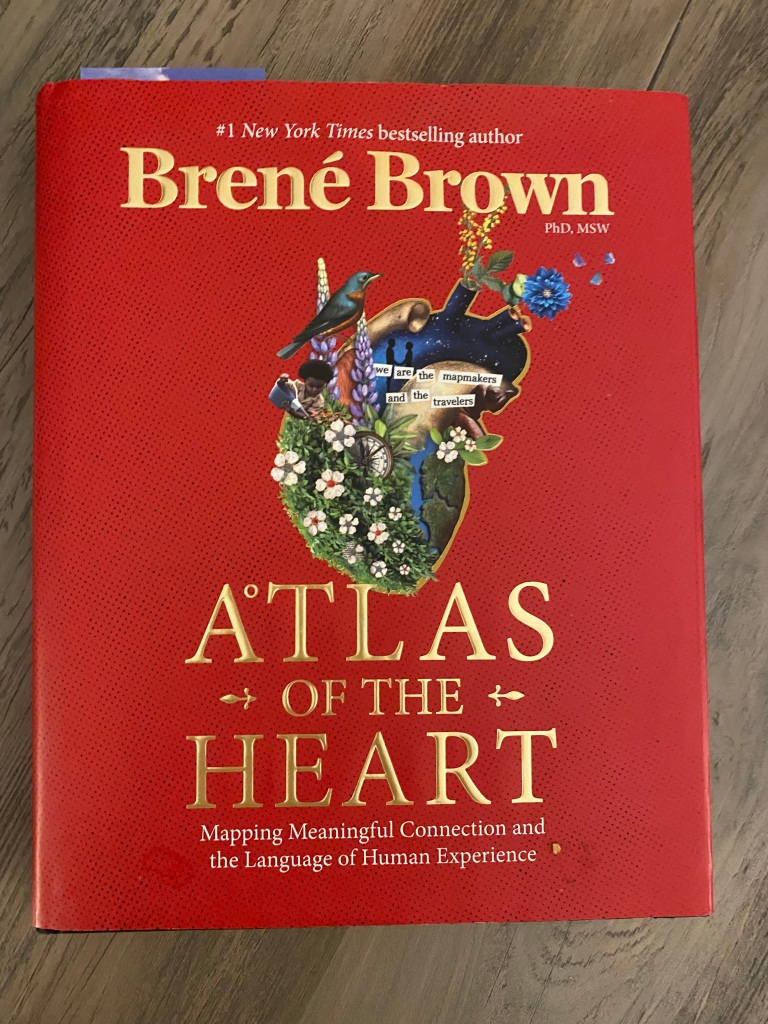
To help you expand your emotional vocabulary, read Brene Brown’s most recent book, Atlas of the Heart. Brene offers relatable stories and detailed definitions for 87 of our common emotions and experiences. Better yet, she has organized this invaluable resource by highlighting how we typically feel under certain circumstances. The chapters invite us step into “the places we go when….” When we compare, feel uncertain, when we are hurting or fall short.
Check out Dr. Marc Brackett’s newest app How We Feel. Dr. Brackett is the Director of the Yale Center for Emotional Intelligence and author of Permission to Feel. There are over 200 emotions to explore in the How We Feel app!

Click this link to go to the website https://howwefeel.org and learn more about the app and how you can use it to help you build your emotional awareness and vocabulary in real time.

 Inspired New Horizons