

I have been keenly observing how interactions and conversations have been shifting in profound ways over recent months. It is with great enthusiasm that I am sharing with friends, family and my book club about my experiences while traveling. From Uber drivers to seat mates on planes, hospitality staff, new neighbors and a helpful UPS business owner, more people are sincerely plugged in to self-awareness and personal development. It’s astounding how we’ve shifted from shallow “how’s the weather” conversations to more in-depth and meaningful ones where people are sharing their remarkable personal stories.
I can almost feel the needle and thread stitching together a new tapestry, weaving our own stories and experiences into the bigger picture of others. It feels good to have these rich conversations and to be learning so much.
Some of my most fascinating conversations have been occurring in the self help section of book stores. I’m drawn to book stores — whether it is my local independent one, Quail Ridge in Raleigh NC, or the one my family visited in Scottsdale on vacation, the Poisoned Pen. On a recently layover in Chicago, I hopped off the plane and went straight to Barbara’s Bookstore in the bustling terminal where I ended up having a 45 minute conversation about Outlive and Dr. Peter Attia.
If I had a nickel for every time someone mentioned Andrew Huberman and his podcast, I could fly across the country multiple times.
I confess that I make a beeline to the self help or parenting sections of book stores — eager to see if there is something new to learn and perhaps more enthused to see who is browsing those sections. It’s so uplifting to see young parents, grandparents, mid-lifers, couples and singles all choosing books to help them navigate wherever they are in life. A smile stretches across my face as I take in the transformation that has occurred in the self-help section of bookstores.
Inviting tables of colorful books with intriguing titles pull us in like magnets. To me, these books fit together like pieces of a complex, compelling puzzle. It is not at all surprising that subjects like parenting, mindset, awe, emotions, grief and longing, relationships, atomic habits, boundaries, longevity, purpose and neuroscience are all landing on the same table.
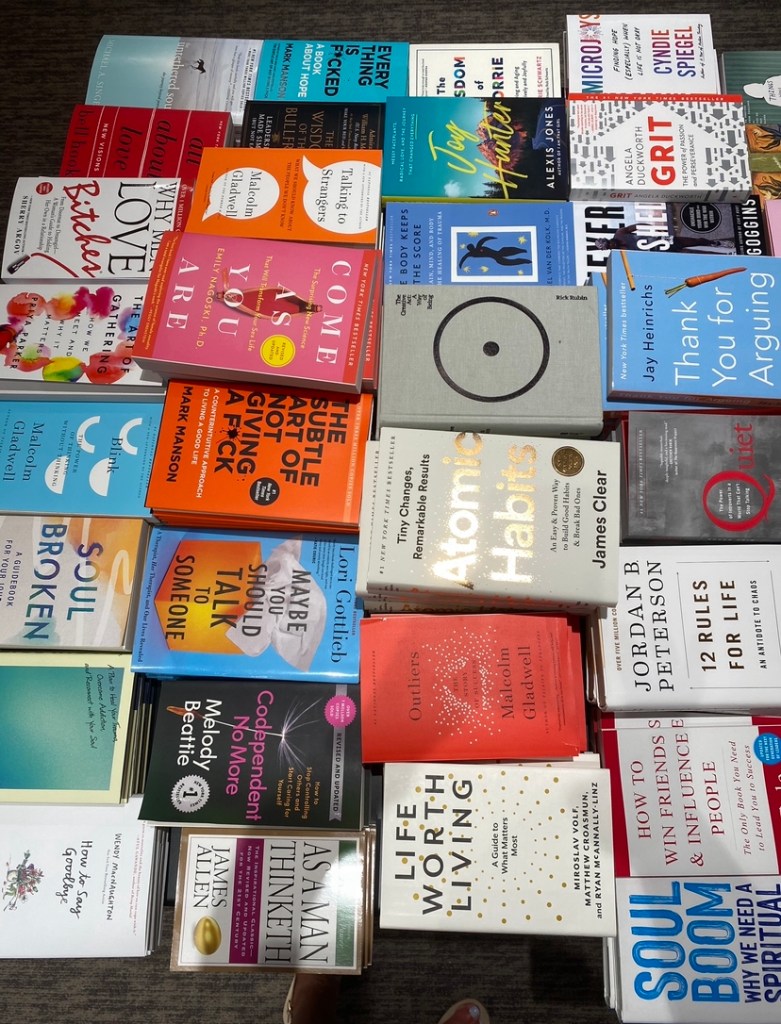
All of these varied subjects are intrinsically connected. We want better relationships — with our kids, our partners, our friends and extended family. We want to know ourselves better. Now we know that the work starts with us, that our emotional health is integral to our overall quality of life and that it needs the same attention as our physical health.
Just a few decades ago, many of these amazing books and resources were segregated; psychology, mental health, diets and exercise, how to guides, hard to understand neuroscience, Buddhist meditation. Then all these various modalities and fields began to intersect — and suddenly authors, researchers and podcasters were quoting each other’s work and having each other as guests. They began to “connect the dots” about our human need for connection. They began to see how all their independent work and findings were actually linked together.
It seems that “overnite” there has been a great convergence of all the individual pieces coming together to form one incredible, dynamic “big picture”.
The best part of our “overnite” awareness is that it is out in the open with all the personal growth and self discovery work that needs to be done. That is so evident in these amazing conversations I have been so fortunate to have with all kinds of people — in the bookstore, on the plane, at the coffee shop, in my writing classes and especially with my friends who are also on the journey.
I recall when I was struggling in my mid-40’s with what Brene Brown called the mid-life unraveling period, I would discreetly make my way to the self help section of Borders, scanning the book titles and the shoppers around me, tucking my book of choice under my arm. I would stand at the counter like a nervous adolescent girl buying tampons with an older teen boy as the checkout clerk. Judgment and shame washing over me. It felt like a public confessional that I did not have my life together.
Hooray for this major shift in acceptance that we all need help!
Today, the inviting and bulging self help section of bookstores often takes center stage. I listen to shoppers enthusiastically sharing with others what they’ve read, what they are working on with spouses, teens or toddlers and even themselves. We have normalized these conversations. Wow.
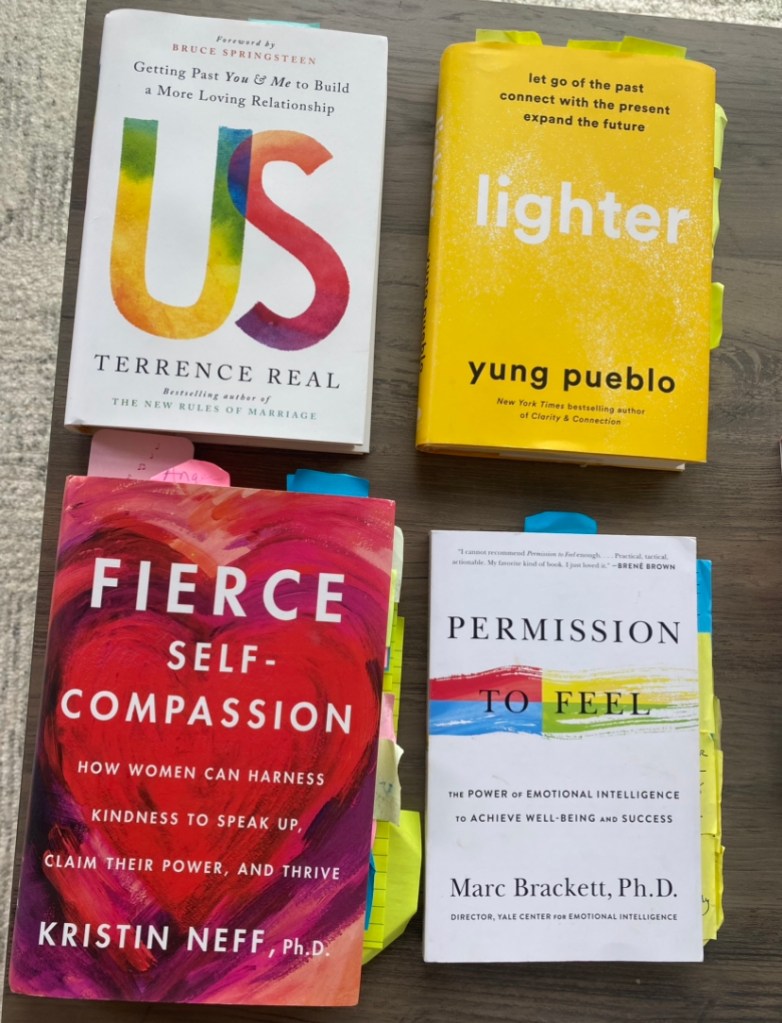
No one is slinking to the check out counter with their books, workbooks and journals discreetly tucked under their sweaters or shoulders. It’s almost a badge of honor to waltz up to the checkout line proudly displaying copies of Outlive by Dr. Peter Attia, Fierce Self Compassion by Kristin Neff, Lighter by yung pueblo or Set Boundaries, Find Peace by Nedra Tawwab. I’ve witnessed some of the most astounding conversations happening in the checkout line between customers as they swap stories, insights and book recommendations.
The seeds of our current emotion revolution and our emotional health have landed everywhere now. The subject comes up in business, leadership and innovation podcasts. It certainly comes up regularly for influencers like Adam Grant, Malcolm Gladwell, James Clear, Ryan Holiday, Dr. Peter Attia and Dr. Andrew Huberman. Yes, emotional health and doing our self-discovery work is now a mainstreamed topic of conversation. It is being folded in as the missing piece of our bigger puzzle.
The more we know, the more we grow.
When I first committed to a deep dive into my own personal growth, I was intrigued by Dr. Rick Hanson’s book Hardwiring Happiness, but I did have a hard time wrapping my head around understanding what he meant by “neurons that fire together, wire together.” While I loved the concept of neuroplasticity, I really didn’t have a solid foundation of understanding about the whole brain/body connection.
Today, we have ready access to understandable knowledge of how our brains and bodies operate, the role our nervous system plays and the importance of integrating our inner world of emotions and feelings with our executive functions of our brains. This core knowledge helps us parent better and teach our kids the emotional awareness and regulatory skills that we ourselves were never taught.
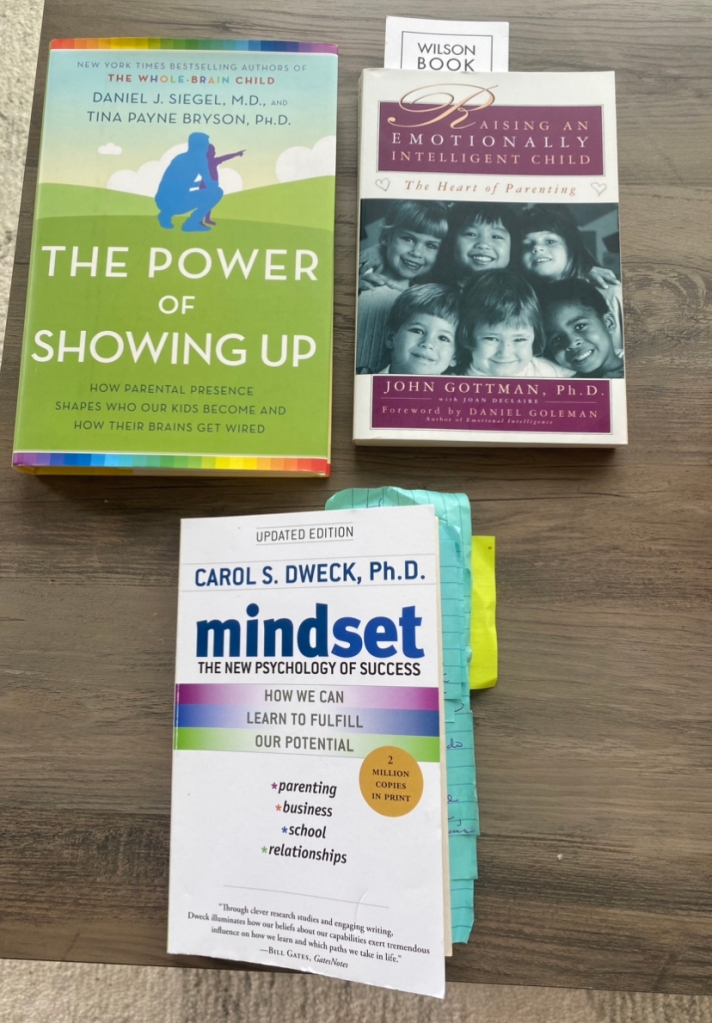
What we have before us is a collective effort to help us all live healthier, more satisfied, balanced lives. We are all playing an important role in this integral work when we are invested in our own emotional health and parenting with this upgraded, whole brain model. In her book, Mindset, Dr. Carol Dweck, shares with us that many of us grew up with a societal model of fixed mindset both at home and in school. Is it any wonder that we often then developed limiting beliefs about ourselves and became both the judged and the judgers. Dr. Dweck underscores that we can all work towards developing “growth” mindsets for ourselves and our children, but to recognize that we move toward a growth mindset by taking a journey.
As I travel and interact with others, it is very apparent that quite a few folks have decided to take that journey. We can help each other and in turn help ourselves by continuing to have these more connecting, meaningful conversations. By sharing our stories and experiences, we help others find common ground and encouragement. When we share our favorite resources with others, we help the researchers, authors, mentors and educators reach more people with their incredible work.
There is no denying that our emotional health is the cornerstone of our overall quality of life and meaningful connection with those we love. Unpacking our emotional baggage frees up a lot of space in our hearts and brains to move more fluidly through life, building resilience and enabling us to show up more authentically, more skillfully and much happier.
Let’s do this!
RECOMMENDED RESOURCES:
PODCASTS and BOOKS


https://podcasts.apple.com/us/podcast/huberman-lab/id1545953110


 Inspired New Horizons