A Slice of Life

Did you know that the phrase “a slice of life” is actually a storytelling technique? Who doesn’t love a good story? There’s magic in stories that we find so inviting and irresistible.

When someone walks in the front door and says “wait til you hear what just happened”, we drop what we are doing and are all ears. A good story captures our curiosity, interest and attention.

It is these little “slices of life” that we share with each other throughout the day that do wonders. When we hear these stories, we come to see how familiar and normal so much of daily life really is. Everyone has issues, makes mistakes, gets embarrassed, acts silly, falls short and rises to the occasion.

When we offer each other “a slice of life” we tap into our shared human experiences. We help each other make sense of things that currently aren’t making any sense. We offer lifelines, rays of hope and footholds to see us through our challenges. We celebrate the wins, the growth spurts and the mile markers.

Our shared stories help us normalize many of the common human experiences that unfold on a daily basis and help us feel less alone in what we are experiencing. It is all too easy to gaze out our windows into the lives of others and tell ourselves a story about how smooth their life seems to be going while ours is falling apart.

We shatter that false image though when we run into our neighbor at the grocery store and she shares a relatable story about being out of milk for the pancakes her kids were craving, even though she just went for groceries yesterday. Standing there with our arms full of bread, eggs and coffee cream, we laugh along with her because we are in a similar predicament. How unexpected to be offered a “slice of life” to go along with our purchases. What had been an exasperating quick trip to the local market had a silver lining. We leave a little better fortified for the rest of the day thanks to that simple exchange in the checkout line.

Ironic isn’t it – how we all feel like we are alone in the trials and tribulations of life? Yet a single, relatable story told to us by a stranger or a friend snaps us out of this hazy myth.

What the world needs now is more stories. Brene Brown told us this decades ago. She told us that data needs stories to bring it to life — otherwise it is just facts — charts and graphs. The real life stories add backstory, personal history and lived experiences to the sensationalized soundbites we get from the news. The raw facts come to life with stories. A slice of life beats a pie chart any day of the week.

I recall a lecture from an economics professor years ago who used slices of life to teach that statistics were not just numbers and graphs — they revealed insights into the people who drive (and are driven) by the economy. He told us to look behind the numbers for the human stories. His real life examples turned dry data into compelling relatable stories that made his teachings and our learning really stick. To this day, I still recall that lesson — and it is a big reason why Brene’s call for “more stories” really resonated with me.

Stories build bridges in a variety of ways. Stories can bridge the past and the present so that we can learn the lessons without having to go through it ourselves. Ryan Holiday, author of The Daily Stoic, is a strong proponent of learning from others through story – whether it is ancient or contemporary history, business wins and fails, or people who’ve overcome tragic adversity. Stories help us build a better framework for our own problems and opportunities. History that bridges the past and the present gives us a blueprint for the future.

Another way that stories build bridges is helping us to gain insight and understanding about societal norms that shaped prior generations beliefs, behaviors and actions. In his book, The Daily Laws, Robert Greene, puts a spotlight on this by reminding us that “People were experiencing their present moment within a context that made sense to them. You want to understand that from the inside out.

Robert Greene tells us that the optimum way to fully comprehend the past is to make it come to life, to re-create the spirit and conditions of the time, to tap into the subjective experience of the storyteller. We can use our imagination to take us back in time and feel what it might have been like to live in that time period. It’s quite likely that you will do this without a second thought when you watch a holiday movie such as A Christmas Carol, It’s A Wonderful Life, or even How the Grinch Stole Christmas.

When we are listening to a story, we are opening up our natural curiosity and our imagination. Without even being consciously aware, we are feeling parts of that story too. Storytelling shifts us from being judgmental and close minded to surrendering to the magic of story. We begin to make connections and discoveries through empathy, sensory perception and our own emotional responses.

Watch a grandparent telling a story to a grandchild and you will see this magic unfolding. Often the grandparent will get down on eye level with a child or draw them into their lap. The opening line is probably not “once upon a time”, but more like “let me tell you about a time I fell off my bike”.

There is an instantaneous connection over a common shared experience. When a grandparent tells a good story, they are weaving their own real life experience into that of their grandchild’s — and offering the wisdom that small child needs to feel better, to realize how common that bike fall really is, and to have faith that they’ll have a lifetime of skillful bike riding ahead of them. The loving grandparent has just offered a slice of life through the magic of a good story.

So what is this “magic” embedded in story? Why is storytelling such an effective technique for imparting wisdom, sharing life lessons and reframing age-old conundrums? The answer is that we humans are hard-wired for story. We use story to make sense of our experiences and to give those experiences meaning – and we do it from childhood all throughout our lifetime. The magic is how our brains get activated by a story.

When we listen to a story, multiple regions in our brains come online and light up. This allows us to “live” the story we are hearing through vivid imagery, emotional engagement and sensory perception. Hormones such as oxytocin are released so we become awash in empathy and relatability.

We also experience neural coupling, where our brain and that of the storyteller actually synchronize. This becomes the mirroring that we humans do for each other. Watch a mother and her baby and you see this neural coupling in action. We get the same mirroring effect during storytelling — we reflect back to each other what we are feeling and experiencing. It is a brain connection that also makes a heartfelt bodily connection.

Mirroring may sound like new-age neuroscience lingo — yet it is hardwired into us humans. It is a phenomenal tool for emotional regulation. A mother can up-regulate her fussy baby to a happy state using facial expressions and cheerful tone of voice. She can down-regulate her baby into a calm state before nap time with a soft-toned, soothing lullaby. We do this mirror processing without a conscious thought as we listen to the stories our children, spouses and friends tell us. It is a fluid process of reflecting back and forth, validating how someone feels and acknowledging that we understand. We might even share a similar story of our own. We create bonds of trust and acceptance through mirroring.

So now you know where the magic in storytelling is coming from — it is coming from our brains and bodies as we “synch” up and absorb the encompassing, rich context offered by the storyteller. It is a shared human experience.

Storytelling is one of the most effective ways to teach and learn. It is how ancestors passed knowledge about culture and heritage from one generation to the next. It is how wise sages impart wisdom through parables and fables — offering us a poignant “moral to the story”. Stories are how we preserve precious memories of loved ones we’ve lost and keep them alive in our hearts.

Perhaps most importantly, it is the small “slices of life” storytelling that really nourish us on a daily basis. When we are offered a slice of life, our brains get activated in the best possible ways. As we listen to our child tell the tale of a food fight in the school cafeteria, or our spouse unravel the details of tense work project – we are making neural connections and building bridges in our relationships. We are synching up! What an antidote to all the disconnect we get from having our faces in our devices.

We get micro doses of empathy, curiosity and fresh perspectives with each little “slice of life” we hear or tell. Our small stories help us see each other in all our technicolor glory — as we reflect back and forth, the normal realities we all face. Some days we are the windshield and some days we are the bug. Our colorful, animated, entertaining stories help us understand and relate to each other much better.

Brene Brown is right — we need more stories. We can bridge divides, build a better future and find acres of common ground through storytelling. Offer a slice of life to others whenever possible. And when someone offers you a slice of life, savor it!

NOTEWORTHY RESOURCES:
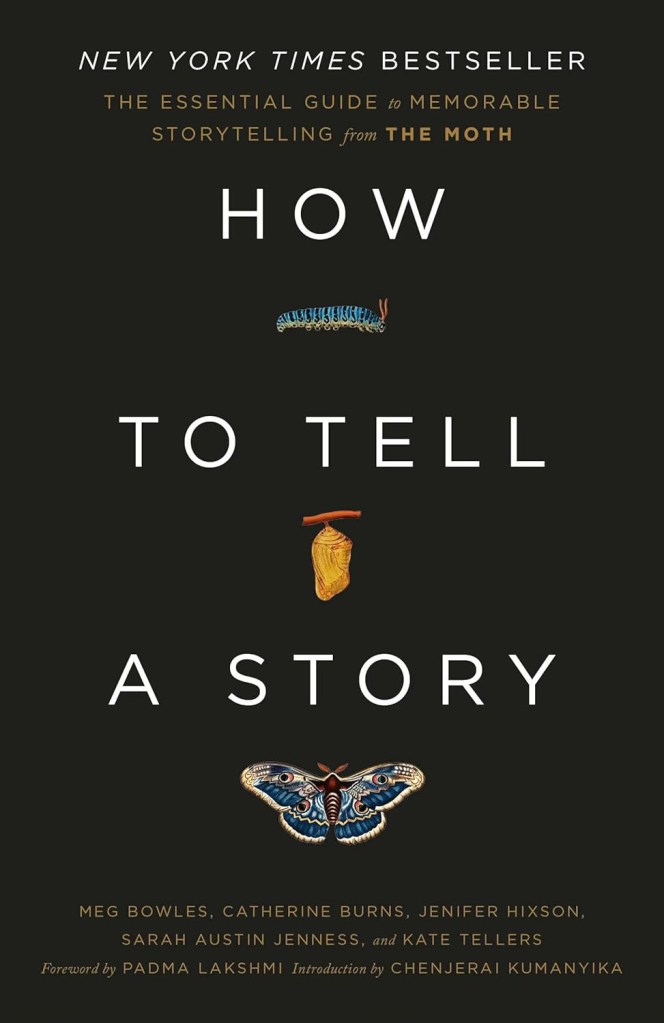
NEW YORK TIMES BESTSELLER • Now in paperback and featuring new material, the definitive guide to telling an unforgettable story in any setting, from the storytelling experts at The Moth

“From toasts to eulogies, from job interviews to social events, this book will help you with ideas, structure, delivery and more.”—CNN
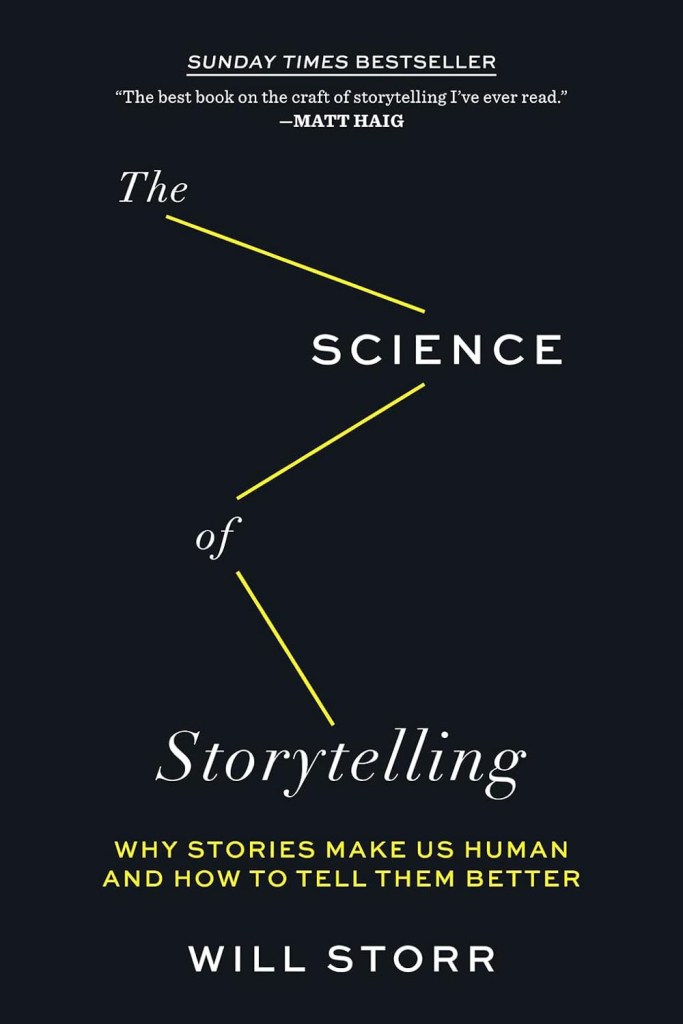
Award-winning writer and acclaimed teacher of creative writing Will Storr applies dazzling psychological research and cutting-edge neuroscience to our myths and archetypes to show how we can write better stories, revealing, among other things, how storytellers—and also our brains—create worlds by being attuned to moments of unexpected change.

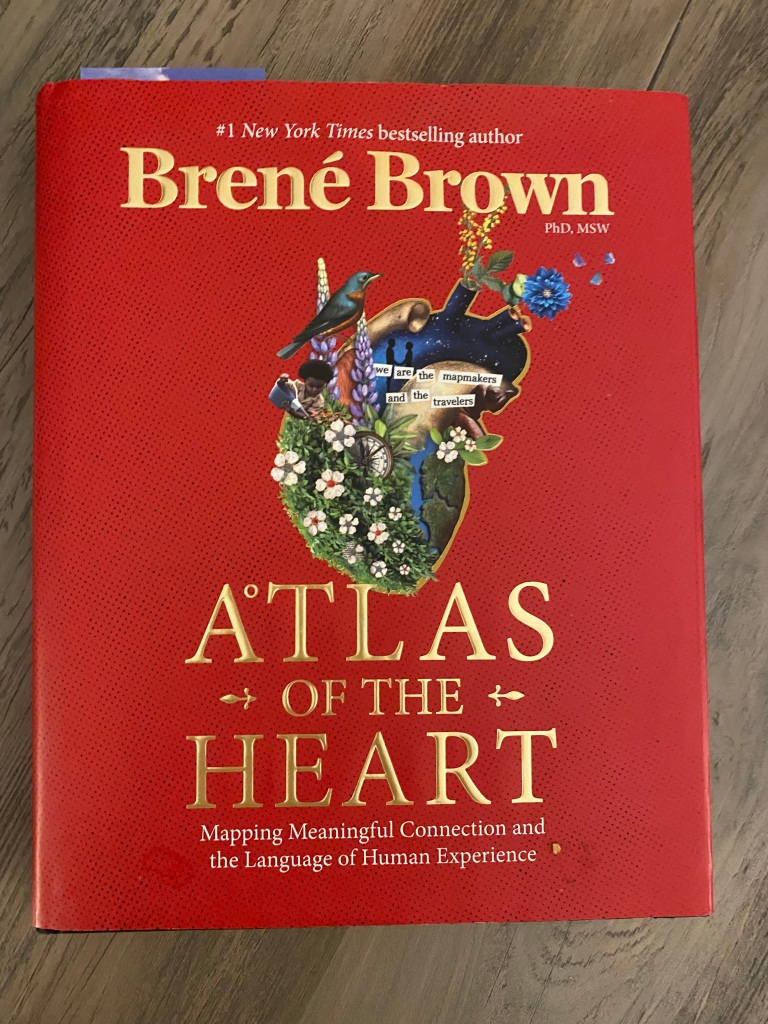
Brene Brown’s Reference book on 87 common emotions and experiences is the perfect resource for discovering “the places we go” and “the stories we tell ourselves” in everyday life.

Corks Rising

When I first started blogging about personal growth 8 years ago, I had a glass jar on my kitchen windowsill with a cork bobbing in water. It was my touchstone to remind myself that each of us plays an important role in lifting each other’s cork. We need help to stay afloat.

This morning, I read something in Hidden Potential by Adam Grant, that transported me back to that moment in time. It felt surreal and spine-tingling to be in two places at once. I was at the very beginning of my self discovery journey placing that cork in the jar –AND — I was also fully present in my apartment taking stock of just how far I have truly come on that personal growth journey. A smile stretched across my face as I took stock of how my own cork has risen over 8 years — and most importantly, how so many others’ corks have also risen.

At the onset of my personal growth journey, I felt alone in the work – one cork in a small glass jar. Today the massive ocean is full of corks and I am merely one of many. I could not be happier with the company I am keeping.

For over 20 years, Brene Brown has been planting seeds of the very work we are deeply steeped in today. She braved the wilderness back then, schlepping her first book from the trunk of her car and mustering courage to give a Ted Talk on shame and vulnerability. She did not have a crystal ball to guide her — she just followed her heart and her calling, blazing a path and planting seeds.

There is a Greek proverb that reminds us that wise men plant seeds of trees, the shade of which they will never sit under, bubbled up into my consciousness.

Brene Brown planted the seeds of human connection with an emphasis on vulnerability, the importance of our emotions, and the necessary healing work of addressing old generational patterns — and those seeds took root.

It has taken nearly two decades for the seeds to grow into the full awareness that we got a lot of things wrong about humanity, how the brain and body really work, and what is truly possible for our evolution on so many fronts.

I sat under the shade of the tree that Brene planted just yesterday. I listened to Scott Galloway and Rich Roll openly discuss vulnerability on Rich’s podcast. It was visceral to experience this refreshingly deep and honest conversation with two men in their fifties get real about their emotions and what they want for their sons and daughters.

Even more importantly, is the education and messaging that Rich Roll and Scott Galloway are collaborating on — the need for us all to take very seriously the crisis of loneliness, depression, social isolation and lack of human connection that is paralyzing our younger generations.

When I began my personal growth journey, I read Dr. Bruce Perry’s compelling book, Born for Love. In that book, he was sounding the alarm for our growing empathy poverty, but his voice was drowned out as our collective attention turned to the novelty of social media. We blatantly ignored the warning and gleefully plugged into social media and our devices, so certain that we’d find the connection we craved through technology.

Today, Jonathan Haidt draws a through line from the early 2010’s to today and holds up the reality of our human condition for us to see clearly. Our younger generations need to be unplugged and reconnected to reality. In his book, the Anxious Generation, he is carrying forward the message that Dr. Bruce Perry warned us of in Born for Love. Our growing lack of empathy, our self-imposed social isolation and addiction to devices, has created an epidemic of AI – artificial intimacy. It is Esther Perel who coined that term – Artificial Intimacy. She is the dynamic psychotherapist who fearlessly weeds out conflict between couples to help them discover that plot of ground begging for seeds of love, intimacy and connection to be planted.

We can no longer blatantly ignore what is hidden in plain sight. We must focus our attention, resources and real life support on our children.

Ask anyone who has ever hit rock bottom, and they will tell you that it was in their lowest place that they faced the truth that in order for meaningful change to happen, they had to dig deeper – and do the hard work of rebuilding.

This is where we all are today – collectively at rock bottom with an opportunity to nurture the seeds that have been planted over the past twenty years in psychology, behavioral science, neuroscience and modern medicine.

It is my strong belief that we have reached this breaking point because humans are hard-wired for connection and we do not thrive in continual chaos and uncertainty. If this dilemma were happening in the animal kingdom, our hearts would be breaking open as we watched adult animals leave their young unattended without teaching them any life skills. Their basic instincts would atrophy over time.

If you are familiar with epigenetics, then you may realize that for generations we have passed down unprocessed trauma and overloads of stress and anxiety. Dysfunctional generational patterns are the emotional inheritance that has never been unpacked. Old parenting models failed to install one of the key components of the human operating system — emotional intelligence. This combination is the one-two punch that delivers a compelling warning to us. Unpack the old emotional baggage, heal old traumas. The time has come. Our kids are on overload and they are drowning in cognitive dissonance.

The reality is that we have made this work of unpacking emotional baggage, healing old traumas and installing emotional intelligence so much harder than it needs to be. Psychology has shifted dramatically in the past decade with a focus on somatic healing and understanding how our brains actually work. Neuroscience fires up this better approach by highlighting the neuroplasticity of our brains and how we can re-wire healthier neural pathways in a relatively short amount of time.

As I wrote about in my last blog post, the creative coalescing of so many fields and modalities is helping us fast-track the triage that we need — and can no longer ignore. This creative coalescing is the little forest that has grown from the many seeds that have been planted over the past twenty years.

As many of you know, I am impassioned about teaching our kids all about their innate and integral emotional intelligence. I have a “Marie Kondo” approach to cleaning out generational baggage – let’s stop dragging it around, unpacked and continually weighing us down. Let’s travel more lightly through life and make new discoveries.

By the way, have you noticed how mainstreamed words like vulnerability, mindfulness, self-awareness and emotional intelligence have become? Little seeds have been planted over and over again by people like Brene Brown, Dr. Marc Brackett, Andrew Huberman, Kristin Neff, Dr. Lisa Feldman Barrett, Arthur C. Brooks, Dr. Becky Kennedy, Dr. Peter Attia — and a host of others. They are the corks that jumped into the sea of change and lifted us all up.

So many resources have cross-pollinated that little forest that began with a few seeds several decades ago. We are at the tipping point of a huge, positive human evolution. Just the other day, author Arthur C. Brooks told Ryan Holiday that we now have the neuroscience to prove all the wisdom of the ancient philosophers. His excitement and enthusiasm was contagious.

Here’s what I know — Brene Brown did not have a crystal ball twenty-five years ago, but she felt a nudge so strong she could not resist it. She poured herself into shame and vulnerability and stayed the course because it mattered. She networked the hell out of her platforms during Covid, lifting others up when we were most receptive to learning and discovering all kinds of new things – the missing parts we didn’t know we needed. Brene was planting seeds of awareness all throughout our dormant period.

I used to think that the law of attraction was mostly like wishful thinking — but through Brene I have learned that the law of attraction is sharing, networking and lifting each other up. That is the momentum that brings the changes and opportunities we want.

Michael O’Brien (@the.mindful.cyclist) was also a recent guest on the Rich Roll podcast. His recovery from a near-death cycling experience was the catalyst for his seminal shift that changed his perspective, mindset and actions. He expressed this profound wisdom:

“Things don’t happen for a reason. Things happen….and we give it meaning.” — Michael O’Brien

I am taking this profound wisdom to heart today. Things have been happening FOR us for nearly two decades and we can give it a transformational new meaning and pivotal new direction.

There has been a big clearing of the weeds that prevented us from seeing what was possible for us. Seeds were planted and cross pollinating was happening. mostly in the background.

The self help space got a little traction with mindfulness about a decade ago. It was a wake up call but we kept hitting the snooze button. We turned to devices and poor coping skills; social media was a siren call we falsely believed would bring us the connection we craved. Our attention became a commodity traded in futures markets.

Unfortunately our devices and social media stole our attention and mindfulness; it amplified our disconnection from real life. Highlight reels and filters gave us a very distorted picture of the beautiful complexity and realities of life.

What it also took from us was the fuel that runs our human engines – the neural energy and connectivity we get from being with each other. There is so much that neuroscience has to teach us about how the human brain and body works – how we jumpstart, co-regulate and scaffold each other. We know more about our incredible brains and how to care for them than we ever did before.

So, taking Michael O’Brien’s wisdom to heart, the meaning we can give to this moment is the discovery that we are better together, that human connectivity is integral to our physical, emotional and mental health, and our longevity.

We have the rare opportunity to lift up our kids out of their malaise with greater knowledge, tools and awareness than we have ever had before. We can have a dramatic, positive impact in short order if we meet this moment quite differently than we ever have before.

Do yourself a favor and click that link to read about Michael’s transformational life experience. Then listen to his deeper conversation with Rich on the Rich Roll Podcast.

Check out this episode of the Rich Roll Podcast with Prof G – Scott Galloway. At about 54 minutes in you will hear the 5 minute deep conversation about vulnerability and emotions. https://podcasts.apple.com/us/podcast/the-rich-roll-podcast/id582272991