Expanding our Emotional Vocabulary

Unpacking the multitude of mysteries around our human emotions could be a daunting task — and yet the more we really understand, the more intriguing it becomes. For starters, Brene Brown’s research revealed that most of us operate under the guise of three basic emotions — happy, sad and angry.

In her newest book, Atlas of the Heart, she unearths 87 emotions and experiences that are woven into the fabric of our lives, our relationships and how we make sense of our world. From 3 to 87 — imagine that! Now imagine what it might be like if we really understood the complex and nuanced landscape of each of those 87 emotions and emotional experiences. It literally changes everything — from self talk, to relationships, to parenting, to better understanding others.

Although Brene Brown is a decade and half younger than me, her childhood experiences and learned behavioral patterns mirror many of my own and those of my friends. For far too long now, prior generations were taught not to show –or even acknowledge — their emotions. Is it any wonder that we found a lot of creative, but unhelpful, ways to navigate rocky emotional terrain? This is especially true of negative emotions because it is human nature to avoid what hurts.

As Brene recently shared on The Happiness Kit podcast, “Many of us grew up with the belief that we are “thinking, doing” people who on occasion feel — and that can get us sidelined.”

The truth is our emotions play an instrumental role in the quality of our lives. What really sidelines us is not paying attention to our emotions. We can change the old belief system that feelings are best left unacknowledged. That meaningful work starts with us.

How empowering to really get to know our full range of emotions, to understand why some are stronger for us than for others. Building a more expansive vocabulary to help us articulate clearly what we are feeling could be a bridge to better communication and deeper understanding of ourselves and each other. Most importantly, we can teach younger generations to embrace their emotions, and to learn from them. No more hiding our true emotions and our authentic selves.

What happens when our language is not as expansive as our human experience. What does it mean when we have to shove an experience of despair or disappointment into one of these 3 buckets? (sic. happy, sad, angry) It cripples our ability to own and communicate our emotions. — Brene Brown, The Happiness Lab Podcast 1/2/2022

Brene highlights how neuroscience informs and supports her research and findings especially as it relates to how our bodies instinctively respond to our emotions. It is our personal history that often snags us and amplifies an emotion even decades later. We refer to this as being “triggered”.

Having better language to name our emotions can be a catalyst for loosening the grip of our emotional triggers and help us better respond biologically. Our bodies not only react to an emotion, if we label an emotion incorrectly, our bodies will respond to that too. Brene shares an example of how we often misuse the word “overwhelmed” and that sends an emergency message to our bodies to begin a major shut down. Once you understand what happens when the brain releases chemicals in direct response to your emotions, you will be motivated to learn more about emotional regulation.

About 4 -5 years ago, we started seeing how language doesn’t just communicate emotion, but it also shapes it. We are individually and collectively in trouble if we don’t have language.” –Brene Brown in her interview with Dr. Laurie Santos on The Happiness Lab Podcast, January 2, 2022

If you are familiar with Besser Van der Kolk’s book, The Body Keeps the Score, you will recognize the intrinsic value of helping our bodies process emotions, anxieties and trauma in a more immediate and healthier way.

Perhaps the most eye-opening discovery that Brene makes is how languages shapes our relationships. She admits that for many years, she believed that we just needed to get better at reading other’s emotions. At the conclusion of all her research for Atlas of the Heart, she now acknowledges that this is not possible.

One compelling reason is that so many emotions present the same way.

In Atlas of the Heart, Brene gives us not only language, but relatable definitions and real life examples for these 87 emotions and experiences. She explains the impactful differences in words that we often use interchangeably such as envy and jealously. She’s organized the book in chapters that help us recognize “The Places We Go When (fill in the blank with your own emotion)”. It is an incredible guide to understanding where we go in our bodies, our old narratives and our actions when emotions are in the driver’s seat.

Once we begin to realize all the ways we ourselves are impacted by our own emotions, we can gain greater empathy and patience with others.

While we can’t read emotion in people, we can get curious — and connect with them deeply – as opposed to diminishing, questioning or challenging the stories and the emotions they share with us.” — Brene Brown

Along with an expanded vocabulary for our wide array of emotions, Brene sheds much needed light on the reality that our emotions show up in layers. She offers these four B’s to help us understand these layers:

Biology — Emotions are called “feelings” because our body is the first responder — we FEEL emotion. Emotion is physiological — Where in your body are you feeling it and what are you feeling?

Biography – What did you grow up understanding, believing or learning about this feeling?

Behavior – How are you showing up when you are triggered by a strong emotion? Do you want to punch the wall, hide and cry, feel like you are coming out of your skin?

Backstory – What is your personal history and lived experiences? How do they impact your emotional responses in life?

I’ve been on my own self-discovery journey for over six years and it required a lot of unpacking of emotional baggage and entangling myself from behavioral patterns I developed as a young child to help me navigate an often confusing, disruptive environment. None of that was serving me well as I matured organically through life. I believe that we can all benefit from the game-changing research of Brene Brown and the field of neuroscience about emotions. It is time to bring our emotions to the forefront of our self-improvement work and get to know them intimately. They power our lives and have so much to teach us.

RECOMMENDED RESOURCES:

This January 2, 2022 episode of The Happiness Lab podcast is a great introduction for anyone who wants to hear directly from Brene what she offers to us in her newest book, Atlas of the Heart.

The Happiness Lab podcast is brought to you by Dr. Laurie Santos and this coming year she is focusing her attention on learning from our negative emotions with dynamic guests and relatable stories.
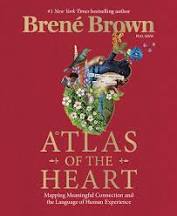
This will become one of your greatest reference guides in your home. It is a coffee table book — and will require lots of conversations over coffee to fully appreciate its value.

Getting to Know YOU….

Do you love really getting to know someone? Do you find yourself drawn to a new friend, eager to hear their story and gleefully discovering common interests, common ground? What stories do you tell your new friend about you?

I was thinking a. lot about Brene Brown sharing with us in Atlas of the Heart that we can all become better at being good stewards of stories. She guides us to become good listeners, to hold space and withhold judgment and to “accompany” others on their journeys rather than attempting to fix, rescue or dismiss.

As I reflected on Brene’s teachings, I wondered just how well we really know ourselves — are we good stewards of our own stories. Just maybe, we need to start there…..

I’m so grateful for my “marble jar” friends because I can go explore this idea of self-discovery and self-awareness with them on a deep and personal level. What fascinates me is that I have known several of these remarkable women for many years. I’ve known them to be big-hearted, resilient, hard-working good human beings. It is only recently that I have come to know the broken parts of their stories – and they are learning mine. My love and respect for them has grown exponentially as we pull back the curtains and take a deeper look at our lives honestly and face the truth about the places where we have room for transformation and growth.

Most of us are in our 60’s and 70’s. Why did it take us so long to do this inner work? How would our lives have been different had we known how our old narratives and lived experiences had impacted the way we showed up in the world? What were we teaching our children by osmosis when we armored up, shut down or shape-shifted to fit in?

As we unpack so much of our personal history, we begin to see more clearly why we get emotionally triggered by certain things. The more we open up to each other, the more common ground we find in behavioral patterns that we used to navigate our life situations. Most importantly, we gain a lot of clarity about how easy it is for all of us to get stuck on the broken shards of our past.

Each of my marble jar friends was independently working on self-improvement — and frankly had been for decades. Our nightstands and desks hold stacks of books from the “self help” section of Barnes and Noble, countless journals and post it notes with inspirational quotes. We all had found authors, inspirational speakers or podcasts that were pushing us along our path. Could it be that we were spending all those decades doing this work secretly, hoping that no one would notice that we felt flawed in some way, that we longed for life to flow a little easier?

I remember years ago sharing parts of my young harried, married life with girlfriends. We all commiserated about the juggling act of parenthood, jobs, marriage, housework and bills but we never really took a deep dive into our emotions. My generation was encouraged to suck it up, put your head down and plow through. We read magazine articles about the top 10 ways to “(fill in the blank)” — get organized, get in shape, get more done, clean your house in 15 minutes. There was often more gossip than genuine support when the wheels came off of life.

The “window dressing” of our lives that became prevalent with social media over the past decade only took us all down this rabbit hole a little further. We slowly were digressing away from revealing any of the messy parts of life and showcasing the highlight reel instead. The more we would compare our lives with others through the lens of social media, the more likely we were to keep the broken parts of our own lives to ourselves. Just maybe we were becoming isolated long before the pandemic struck.

I can almost laugh when I look back six years and realize that it was a pretty bold move for me to launch a blog on personal growth and be so candid about the messy life event that pulled the rug out from under me. This was not at all typical fodder that you’d scroll through on social media. Yet I had a found a little community through Mindfulness Magazine and knew I wasn’t alone. Often in life, when I’d hit rock bottom, I would try my best to be a good example for moving on. Helping others who were in similar situations helped me get through big challenges. Two of those past challenges were breast cancer and the sudden death of my beloved husband. Now my life challenge was getting to know myself on a much deeper level.

It was this blog and an online Brene Brown discussion group that forged a reconnection between me and two friends from my younger life. Today these two women are treasured trust buddies. We know more about each other know than we thought possible and we have each other’s backs — and hearts — through thick and thin. It turns out that we each could feel the “nudging” for self-discovery and personal growth. The realization that we were not alone in this feeling drew us to each other like a powerful magnet.

It may have been the very first time that any of us had done this deep exploratory inner work with a trusted friend. We’d gone to counselors, met with pastors and been to support groups. But to have a “dive buddy”, who was on the same quest — well, that was uncharted territory. The more we explored and unpacked, the more common ground we found. Not surprisingly, we also discovered that many of our behavioral patterns, triggers and vulnerabilities looked and felt exactly the same. We were not only willing, we knew it was necessary, to do this hard work.

Over the course of the past two years, these two treasured friends have introduced me to other women who are also longing for increased self-awareness and personal growth. Our circle of friends has become an invaluable network for transformation and self-development. Together we are discovering passions and purposes for this chapter of our lives. Oddly enough, it is the “work”, the hard work of breaking old patterns and healing old stories that keeps us so energized, engaged and eager.

The big reason for this is that we have bonded in ways that have deepened our friendship connection and swelled our hearts. Where we once felt alone, we have found others just like us — basically good people who have struggled, who wished to do better, who were weary of dragging around a lot of unnecessary emotional baggage. We are becoming good stewards of stories — our own and those of others.

It was friendship that opened the door and it was vulnerability that sat us down and gently persuaded us to share our stories. I give so much credit to Brene Brown’s body of work for providing us with the framework, the language and the courage to share our messy, broken stories. She always provided us with accessible, relatable real life stories of her own as the whiteboard for the rest of us. When we dumped out our stories, we could all begin to see the common ground we shared.

Ian Morgan Cron, enneagram expert and author of two incredible books — The Road Back to You and The Story of You, encourages us each to rewrite our stories — to let go of the old title that no longer serves us in learning, growing and evolving. It is with his wisdom and encouragement that I have begun to realize that all the broken pieces of our collective stories create the most beautiful stained glass window from which to view our lives anew.

I am witnessing the positive impacts that self-discovery and personal development have been having on me and my friends over the past few years. The better we have gotten to know ourselves, the more space we have created in our awareness, hearts and minds for learning from the stories of others. I can feel empathy and compassion growing.

I’ve shared many times in my posts over the years, how I will notice a theme that seems to overarch many of the resources I rely on. Currently that theme is “storytelling”. You may not be aware of how the “story you are telling yourself” is holding you back from being your most authentic self. Any work that you do to better understand yourself and your life story is the best investment of time and energy you can make.

Here’s to a Happy New Year — and to getting to know yourself and others better. If we all became good stewards of our stories, I believe we will make meaningful contributions to humanity.

RECOMMENDED RESOURCES:

The Enneagram – check out The Enneagram Institute online for a great introduction to this dynamic self-discovery tool. https://www.enneagraminstitute.com

Ian Cron’s Enneagram Podcast – Great discussions with diverse guests on how they use the Enneagram to enhance their lives.

I highly recommend a very recent episode of the Typology Podcast entitled The Enneagram and Shame. Dr. Curt Thompson, a noted psychiatrist, speaker and author offers deep insights into the way our shame triggers” show up and the neurobiological and physiological impact that they have on us. Brene Brown talks often of shame and how it can isolate us. This podcast offers real life examples of how ineffective behavior patterns we adopt to secure love and belonging often do just the open — pushing others away. This podcast was one of the most insightful explanations on shame I’ve heard. Here’s the YouTube link to this episode https://www.youtube.com/watch?v=6CSr1XKANOY

Relatable stories that will help you better understand not only your own enneagram type but those of your friends and loved ones.

This podcast features Dr. Rick Hanson, neuroscientist and mindfulness expert and his son Forrest as they explore the practical science of building inner strengths and emotional awareness. This “Break Your Old Patterns” episode is a great resource for self-awareness. https://www.rickhanson.net/being-well-podcast-break-your-old-patterns/

New Year, New Look

Call me a forever optimist, but there is just something about a brand new year that brings a sense of rejuvenation and hope to me. One of the reasons I am so uplifted is the bigger community I am feeling a part of — a community of people who are actively discussing personal development and embracing meaningful changes in their lives.

This collective positive energy and rich, deep conversations inspired me to revamp my blogging website and I am unveiling it today! It’s a brand new look with some major changes to my navigational menu. Gone are tabs that are no longer relevant and in their place are ones I believe better suit the evolving direction of my blog.

I have a renewed focus for my blog now. It’s my strong desire that it will become a resource for others — a place where they can discover helpful tools and teachers for their own self-awareness journeys. My new menu tabs include Noteworthy Resources, such as podcasts, books and Instagram influencers. Inspirational Quotes is another new tab. These are impactful quotes that guided me to start the personal growth journey and motivate me to stay committed to the ongoing work. Best of all, many of these inspirational quotes come from relatable peers who are deeply steeped in doing their own work.

When I first started Inspired New Horizons six years ago, my goal was to share with others what I was learning through my self-discovery journey with the intention that it might help others on their own path of personal growth. To be honest, I felt pretty alone in the process at that time. It was not a topic of regular conversation among most of my friends. My secondary goal with my blog was to keep myself committed and accountable to the inner work I was doing. I’m not only still doing that work six years later, it has become a part of my daily routine.

I credit Brene Brown and Glennon Doyle for the growing community that is keeping me so inspired these days. Glennon’s book Untamed unleashed a groundswell of women who began to look at their lives through very different lenses. Her “We Can Do Hard Things” podcast and her Facebook discussion groups opened up the floodgates of women wanting to share their stories and dig deeper into some serious personal development. Brene has been on fast-moving upward trajectory to get us to embrace our authentic selves and to shed ourselves of protective armor, numbing, debilitating behavioral patterns, and painful triggers. She calls for us to step into our vulnerability, courage and creativity and live a wholehearted life, rooted in grounded confidence.

Brene’s work has created several global discussion groups that I belong to, and honestly the conversations have been real, raw, meaningful and purposeful. All throughout the pandemic, I found ballast from the news and political chaos, in these discussions. I’ve made friends, gained followers for this blog and my Instagram posts, discovered incredible activists and had my faith in humanity restored. The diverse perspectives and heart-opening stories that are shared serves as a healthy reminder of the power of connection and empathy that Brene espouses.

I mentioned in a recent blog post entitled Becoming Part of Something Bigger how Brene’s latest book, Atlas of the Heart is an impactful reference book for anyone who is committed to personal development. She taps into the wisdom and research of so many of the teachers I’ve used over the past six years. This prompted me to make changes to my blog website to help others easily find these resources. It’s my hope that my personal stories will help others feel less alone when they peel back their own layers.

And this brings me to one of the most dramatic changes I have experienced and witnessed because of self-discovery and improved self-awareness. My close circle of friends these days is comprised of women with whom I can have deep, emotional conversations. No subject is off limits, no confidence will be betrayed, no judgment or dismissing of feelings. I have a beautiful jar of diverse, empassioned marble jar friends. My marble jar friends have revealed to me that they too now have the most remarkable collection of trust buddies. Somehow, over the past few years each of us has drawn to us the women we needed to help us excavate our histories, reframe them, and shine a light on all our potential and possibilities.

It is my hope that my blog posts will inspire others on their journey. I’m going to keep sharing my stories, the lessons I am learning and relearning, and the benefits that come from self-reflection and embracing change. I wrote a post entitled Awareness Activist some time ago — it is where I feel I make a meaningful contribution in this world. We cannot change what we are unaware of — and once we become aware, we can make better choices — for ourselves and others.

Wishing you Peace, Love, Joy and Hope in the coming New Year.

RECOMMENDED RESOURCE:

I’m offering only one resource to accompany this post today. The reason is that this podcast is so relevant for reflecting on the past year and our own past, as well as for looking forward and pondering what will best support and guide us. I think you’ll really enjoy this conversation with Dr. Rick Hanson and his son Forrest.

How to Get the Most Out of 2022 https://www.youtube.com/watch?v=2lz17LizwD8