Awareness Activist

It dawned on me with much surprise yesterday that I have become an activist — an awareness activist. It has been through my own personal experiences that I’ve come to realize how unconsciously we operate in our lives — and how we often blindly push away what it is we want the most.

At the core of what most of us desire is to be worthy – to be seen, heard and valued.

My research lately has turned toward estrangements. What started out as a personal mission to better understand the root cause of familial estrangements has expanded exponentially over the past week. It is almost as if the universe has given us a magnifying glass and a child-like plea to look closely.

I am a firm believer that stories help us to see things that we might miss otherwise. Great storytellers pull us into a space where we turn our attention to the main characters and often find a connection with some part of their vulnerabilities. It is my hope today that my story will do just that. There is no doubt in my mind that the overwhelming basic need to be seen, to be heard, to be valued is the root cause of much of our collective estrangement.

I am writing a book with my longest and best friend. In one of our chapters that we have titled “Second Hand Heartbreak”, we explore the many ways we have felt another’s pain as though it were our own. Though we were not the initial cause of that deep pain, we felt some responsibility for being their voice when they themselves were unable to speak up. The pain of heartbreak for one person gets multiplied when a “helper” jumps in and finds that they too are subsequently hurt because their appeals are also ignored or dismissed. It triggers a fractious dynamic that tears families and friendships apart….and yes, even a country.

The story I choose to share today is one that has been heavy on my heart for several years. It was the day that Colin Kaepernick took a knee for social injustice. He took that knee for others — for his own second hand heartbreak that called upon him to speak up for those who could not. He had a platform and he chose a non-violent way to call attention to an ongoing crisis — he was asking for help for a legitimate problem.

Looking back on that moment now…..does his chosen course of action for a humanitarian call for help seem benign?

It was a sliding door moment in our country’s family. We had two choices. We could have said, “tell me more”. We could have faced our truth, accepted the reality that changes were long overdue and pulled together a task force of capable leaders from many disciplines to shape a better future.

We lived the second choice — ridicule and ostracize the messenger, Colin Kaepernick. Then label a group of people and taunt them more. Challenge even diehard football fans to boycott their beloved traditions and support of their hometown teams. How many people got disenfranchised from so many things that mattered to them over this response to a request for help?

Lines were drawn in the sand from all sides….but no solutions were mapped out on the blank canvas of “Help, please.”

Collectively we used a lot of energy, time and resources on all the wrong things. What we fail to see when we are not paying attention, fully aware, is that many times a better choice costs far less and has a better return on investment. But the path to problem resolution is often slow, hard work and that doesn’t sell news, light up social media or keep an adrenaline rush at a feverous pitch. The truth is — we numb ourselves with these responses. I call it the “ostrich syndrome”. Sticking our heads in the sand does not mean the problem goes away — only that we choose to ignore it.

We cannot sweep reality under the carpet. One day the tables turn, the roles are reversed. The ones who previously dismissed an important crisis, now need to be seen and valued for their own issues. This is the root beginnings of double standards. Could it be that what stands in the way is the armor we use to protect ourselves from being hurt, being wrong or having to do the hard work to fix a complex problem?

We can all look around at situations in our own families, where people push away what they want the most. Often when they push too far, they lose the people, the love and the respect that want more than anything. Can you step back from a situation and really put yourself in another’s shoes? After all that we have experienced over the past few years, how would you react or respond today to Colin Kaepernick’s decision to “take a knee” for others?

I have seen Rumi being quoted so often over the past week and I believe there is a valid reason for this. All of us are feeling a bit broken right now, individually and collectively from a wave of unprecedented events. Let’s admit we have blind spots and let us bravely go forward with a renewed awareness of our shared humanity.

Recommended Resources:

I was so taken by this interview that Brene Brown did with Kevin Oakes on Cultural Renovation that it is was going to be my only offering with this post. It’s chock full of do-able action steps and that is what we need right now to get back on track is a healthy meaningful way. But then, I thought about something I had been saying over and over to myself this past week — The Pledge of Allegiance.

Dare to Lead Podcast – Brene Brown and Kevin Oakes https://brenebrown.com/podcast/brene-with-kevin-oakes-on-cultural-renovation/

From my Heart to Yours…

My post today is coming from my heart, my experiences and the stories others have shared in the past few days. It feels like both a public service announcement and a middle of the night phone call.

We are collectively swimming in a murky, choppy sea of events and emotions…..and we have been for nearly a year. Just when we think things will calm down enough for us to recoup, the sea becomes a tempest.

When we are already weary and stretched thin, our emotions get amplified and they multiply like rabbits.

My lifelong friend and I have been keeping each other afloat through this past year with one goal in mind — to be at our best so that we could help others navigate unprecedented times. Over the past few months, we have seen and heard just how exhausted and untethered our friends and family have been feeling. It is especially hard to handle normal life events in the throes of a pandemic and the country’s divisiveness.

When I was in my 30’s and 40’s, raising children, working full time, juggling all that life was throwing at me I used to describe that chaotic wild feeling like being in a canoe, trying to go upstream without a paddle. That image comes to me often when I am in conversation with friends and family right now.

Yesterday as I crawled out of bed, I found myself feeling like a balloon whose knot had just been undone — flying all about the room in a haphazard pattern and ultimately flat….deflated. I acknowledged that it was many emotions that I was feeling both for myself and others swirling in my head and heart. I have learned over these past five years that it is much more beneficial to acknowledge these emotions and to be with them than to dismiss them.

My “go to” remedies are hot tea and meditation. I did the meditation first. It was just as I expected — my thoughts were just like that balloon, flitting in and out, all demanding my focus. Clearly, this day was calling for something stronger — so, a double shot of meditation it was. I did drink the hot tea first — calming chamomile. The second meditation was better, much better. My first meditation was done while the intensity of my emotional swirl was strong. The tea break, the pauses I took….they were helpful in dialing back the intensity so I could take stock of all those emotions.

As the day unfolded, I was blessed with the opportunity to have deep, candid conversations with friends. It was not at all surprising to find that most of us were feeling “a little off”. What was surprising was to discover that a lot of old emotional baggage was beginning to surface — sometimes in the form of PTSD, sometimes in the form of now humorous memories.

While I think of myself as someone who has already peeled off a zillion layers of old emotional baggage and able to keep myself from “reacting” to triggers, it was a friend confiding about the events on the Capitol triggering PTSD for her that touched a similar nerve in me. I too had been feeling PTSD. Both of us sharing that with each other, in that moment when it was feeling so present — was cathartic — both a release of all those bottled up strong emotions and a comfort in knowing we were not alone.

For a brief moment, I thought how lucky we were to be able to “hold each other” in that present moment, safe from the eyes and judgment of the rest of the world, with a sense that it was just the two of us with such a secret. Later, upon deeper reflection, I became acutely aware that there are countless people who also are struggling with PTSD at this very moment — for reasons and experiences that are as innumerous as the individuals themselves. I am sharing this story for a compelling reason — someone you know may also be feeling PTSD. Be that safe place for them if you can.

My trust buddy and I have a lot of friends and family members right now who are dealing with serious life circumstances. A child in the hospital again for her rare disease, the sudden passing of of a loved one, an aging parent needing round the clock care, and COVID diagnoses affecting entire families. My neighbors could not be with their children for over three weeks and they missed spending Christmas together due to their own COVID experiences. Children fear that they may lose their parents or grandparents. My motivation for sharing these insights is to serve as a reminder that hard times continue to unfold every day. But they are even harder now. Be a helper, as Mr. Rogers would urge us to do. A small random act of kindness will be most appreciated. One of my lifelong favorite quotes is:

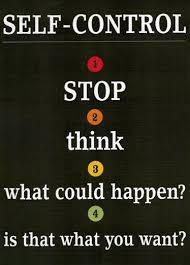
In the early evening, I was having a much needed decompressing conversation with my dear friend. She was reflecting on some old memories from her first job that sparked spontaneous laughter. (Note to self, laughter is good for the soul.) Her stories prompted me to share some of my own. Both of us were giddy with the incredulous antics of grown people. And then it dawned on us — that the common thread in our hilarious old memories was a lack of self control. We were pretty sure even the characters in our stories would have to agree that they acted without thinking and the results were anything but funny in that moment. What is now funny to my friend in her 60’s had her in near tears in her early twenties. These anecdotes shed a little light on the consequences to others when we act on impulse or react to intense emotions. A little self control will go along way in keeping the peace and our own integrity intact.

Just before I fell asleep last night, I was reflecting on the good role models I have had in my life. I often looked outside of my immediate family because of unstable, unhealthy dysfunction. Our childhood experiences often shape and guide us as we make our way into the world. I share this insight to raise awareness that our actions do speak louder than words. Our children are watching us. They are watching us in their own family dynamics and they are looking out on the rest of us too. Reflect upon the mentors you have had in your life. What attributes did they posses that inspired you to do your best, reach your potential and make wise choices? I remember this quote hanging on the door of one of my most cherished childhood mentors:

I have had countless conversations with people who are in struggle — and they did not bring the extra loads of stress and fear on themselves. They are experiencing the collateral damage that comes from the fallout of a world spinning out of control over this past year due to a series of unprecedented events. We could use some fortification. When you take stock of how you are feeling and reacting, it offers clues to what others are also experiencing. We need to help each other, now more than ever. Brew some tea and listen to James Taylor’s You’ve Got a Friend if you need a little jumpstart.

The Gift You Give Yourself

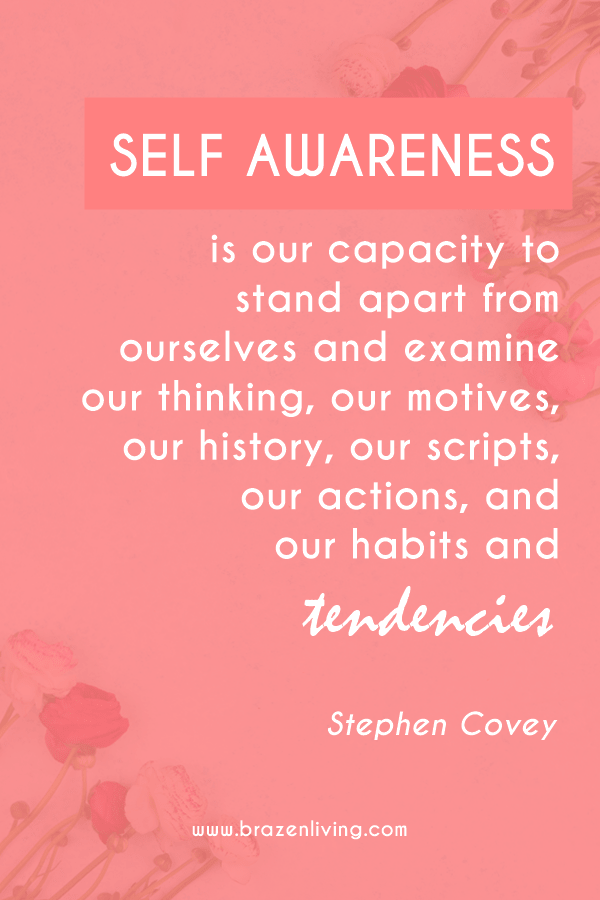
It is finally here — Day One of a brand new year. What makes a new year feel like a blank canvas where we get to choose what gets painted on to it? Is it a renewed hope that this new year will surely be less stressful and uncertain than last? Pulling a thread from my blog post Brand New Kind of Conditioning, it seems we should be prepared to go into this new year accepting that uncertainty will always be with us. However there will be many choices that will be entirely up to each of us individually to make over the course of the next 365 days. Our best resource for making wise choices is a gift that we give to ourselves — the gift of self-awareness.

I binge-watched the last season of the Crown recently and found myself intrigued when Queen Elizabeth was stunned by Margaret Thatcher’s pronouncement that her son was her favorite child. Queen Elizabeth did not think it was possible for her to have a favorite child. When Prince Philip turned to her and said “your lack of self awareness is surprising,” it set her on a quest to discover what he so clearly already knew. After spending time with each of her four children, she came to realize that she did in fact have a favorite. In subsequent episodes, you begin to see Queen Elizabeth’s self-awareness unfold in other areas of her life as well.

A similar scenario played out with the character Billie in the Netflix series Offspring. While it takes a few seasons of Billie repeating her same old behavioral patterns, she eventually hits rock bottom and does some serious self-discovery work. It’s easy to relate to Billie for all she wants is a life of her own and to feel valued for who she is. Just like we all do.

It’s easy to watch these shows and see so clearly where the characters are making a mess of things so unnecessarily. It is not so easy to recognize that we too might be falling into some of those same patterns. Very often, we are not consciously aware — just like Queen Elizabeth. For the record, Prince Philip had to go through his own self-awareness process when he hit a “late in life” crisis. It seems apparent that he thought it was a very worthwhile endeavor.

How often have you read a Facebook post by an 80 year old espousing wisdom on leading a more fulfilling life? Or heard a dear friend confide “I wish I had learned this when I was 30.” These are self-discovery insights. They may feel just like the the nudge that Phillip gave to Queen Elizabeth. That nudge is an invitation to get to know yourself well.

There are a plethora of tools to help you get started on this whole self discovery process. My personal favorite is the Enneagram. Ian Cron’s Book “The Road Back to You” is a great primer for anyone new to the Enneagram. Prepare to be surprised when you discover what your Enneagram type is — and how accurate it is! The best part about working with the Enneagram is that you will readily recognize where your blind spots are. Once you have that awareness, you’ll pay closer attention. As Maya Angelou said “When you know better, you do better.”

The next best resource (in my opinion) is a trusted friend. It is said that a truly trusted friend is like a mirror. A trusted friend will give you honest feedback without judgment. If you are fortunate enough to have such a friend, you will be helping each other increase self-awareness. From my personal experience, having a trust buddy who was willing to help me on my personal growth journey has proven to be one of the most significant relationships in my life. We help each other uncover what we need to work on, we listen when that work is hard, we celebrate when we witness transformation and we continue to hold each other accountable. My trust buddy is my anchor in life. We got tested in a many ways throughout the past year of pandemic and uncertainty. Not surprisingly, we also learned a lot more about ourselves in the process.

Some other resources are strength assessment tests, personality tests like Myers-Briggs, journaling and guided meditation. The Headspace app for meditation is an easy way to get started with guided meditation. Even if you can’t stop that racing mind right away, the nuggets of wisdom that Andy Puddicombe offers at the onset of the short practice will stay with you all day. That alone will increase your self-awareness.

When I got to know myself better, I started to make changes that brought significant benefits to me, my family and my friends. I no longer ruminate which has given me back oodles of time to focus on the present moment. I pay attention to my “warning signals” as Brene Brown calls them As an example, resentment usually means I have not set a boundary. I have learned to “not be attached to the outcome” and that allows me to be more flexible and open minded.

I continue to give myself the gift of getting to know myself better. I don’t think that ever stops. Neuroscientists tell us that we change with every conversation we have, the books we read, the news we watch — all of our experiences. When we have an increased self-awareness, we actually give ourselves the gift of staying in control and making good decisions. So while this brand spanking new year might have surprises and uncertainties in store for us, we still get to be in control of our choices of how we will respond.

Worth Checking Out:

Headspace https://www.headspace.com/?utm_source=google&utm_medium=cpc&utm_campaign=1919439341&utm_content=68065219102&utm_term=409649586657&headspace&gclid=CjwKCAiArbv_BRA8EiwAYGs23KF7Yw2BYK00GVvDz3ekzBOeIWJNVnZe3sWvSx8PIt3XQja__Yz-LBoCCmUQAvD_BwE

Creating the Mood

It is fascinating to learn about how malleable our brains really are. My big discovery recently was about how the daily ebb and flow of our emotions actually contribute to overall longer lasting good moods. Incredible findings are being made at the crossroads of neurobiology, neuroscience and the study of the roots of compassion, happiness and altruism.

My keen interest in neuroscience has reached a new level now that I’ve discovered dynamic researchers on the subject who are relatable, witty, and possess an engaging enthusiasm about their work. They share their complex findings in digestible, meaningful ways that helps us take better care of our brains. In the past, so much focus in clinical psychology was on anxiety, sadness and depression. Now there are studies being done on positive emotions and moods — and their major benefits for our mental health and overall quality of life.

A shining example of this research is the “Awe Walk”, which is a white paper published by Dr. Dacher Keltner and the Greater Good Science Center in Berkley. Participants in this study were given a few simple instructions and told to go outdoors once a week and look for something that felt like “awe” to them. From personal experience, I can tell you that a walk outdoors with a curious three year old will open your eyes to a myriad of small wonders that evoke a sense of awe. It was revealed in this study, that the participants who were 75 years old or older tended to be a little more anxious. Over time, with a regular weekly practice of taking the “Awe Walk”, these older participants gravitated toward that space where they were recognizing “awe” in their daily lives — the beauty of their partner’s face, how delectable their meal looked. They were cultivating both awareness and appreciation of the small things in life that felt good. In turn, their anxiety levels were reduced.

Dr. Keltner also collaborated with Pixar on the movie “Inside Out“. If you are familiar with the animated film, Inside Out, then you know that its focus was on our 5 basic emotions — Anger, fear, sadness, disgust and joy. Dr. Keltner describes these five as our core “fight or flight emotions”.

A deeper dive into the world of emotions by Dr. Keltner and his research team discovered that there are not just 5, but 20 distinct and fundamental emotions that we experience in our social lives. These twenty emotions are very much intertwined in all our relationships – with ourselves, at home, at work and in our communities.

Just when you think that is enough to digest, Dr. Rick Hanson added that our physical and attitudinal responses also get “mushed together” with our emotions as we go through our normal days. Our bodies just organically react to emotions we are feeling – a racing heart, a sinking feeling in the pit of the stomach, tingles down the spine or flush of heat on our cheeks. Unknowingly, we can be predisposed by our attitudes towards others to have very different emotions to a given situation just because of the people involved.

Dr. Hanson also points out that we move through our daily experiences in a fluid space of different emotional qualities in a very intimate way. We all experience a wide range of emotions each day and some are strong and some are just bland. Just for fun, track even a portion of your day, to get some real insight into your own emotional ranges.

I did that little experiment yesterday which included overly excited grandchildren FaceTiming me about Christmas, big chunks of solitude since I am home alone, two hours of watching football and rooting for my team with wild abandon, basking in the warmth of the sun in the late afternoon, having a spontaneous dance party in the kitchen while preparing my dinner and then reading about some heartbreaking news on a Facebook post. I confess that I was surprised at the data and marveling that what seemed like an overall benign kind of day was chock full of these 20+ emotions.

Dr. Hanson shared an insight that is significant and directly correlates with the Awe Walk research. As we go through our day, we have residues of our emotional experiences that sink in. He recalled the traditional saying that “your mind takes its shape from what it repeatedly rests upon“. The Awe Walk supports the evidence that ‘if you repeatedly experience moments of gratitude, authentic experiences of grit and resilience, confidence and open-heartedness, those accumulated positive residues become internalized in neurobiological ways.”

He went on to say over time, you will increasingly find yourself centered in a mood that reflects those positive traits. The link between our emotions and our general mood is in the “collecting” of those positive emotional residues that moves you into your preferred space of well being.

Dr. Keltner reinforced this when he said the challenge of life is to gravitate to the space that you desire.” How do you move into these spaces? “You practice, you get outside, you think about what you are grateful for.”

I love the simplicity of this prescription for cultivating positive, happy, resilient moods. Make it a daily practice to look for the awe and to be grateful. The more you stay present in the moment, the greater your chances of realizing your own personal awe and moments of gratitude. Tuck those moments in your heart and your neurobiology. Prepare to be amazed at what this practice will do for your overall well being.

RECOMMENDED RESOURCES:

Being Well Podcast with Dr. Dacher Keltner:

https://www.rickhanson.net/being-well-podcast-compassion-power-and-human-nature-with-dr-dacher-keltner/

Greater Good Science Center:

https://ggsc.berkeley.edu/?_ga=2.99230044.398964819.1608999802-1116506463.1608999802

Greater Good Magazine: The Science of a Meaningful Life

https://greatergood.berkeley.edu/?_ga=2.132729164.398964819.1608999802-1116506463.1608999802

The Marvels of Breathing

My first exposure to the calming powers of a few deep breaths was prenatal classes in 1976 as I was preparing for the birth of my first child. As it turns out, my son decided to arrive almost two months early and very quickly, so I didn’t have a full appreciation for the secret powers of deep cleansing breaths and slowing my heart rate. But I never forgot the lesson and often joked that I used the childbirth breathing method more for painful dentist appointments and getting my children to calm down when they got hurt than for birthing my 3 children.

In fact, my daughter will tell you that I would dispense this advice often to her throughout her childhood : “Take three deep calming breaths” — for everything from needing stitches, to taking her driver’s exam and surviving a breakup with a boyfriend. She just smiles these days when she sees me kneel down and begin to console my grandchild with the same age-old advice –“let’s take a few deep calm breaths together.

Recently, it dawned on me that I’d had another significant lesson about the marvels of breath control over 25 years ago in Cozumel. Sitting on the bow of a dive boat rocking gently in Caribbean crystal blue waters, a skilled and highly intuitive young divemaster prepared us for a multi-level dive. We’d drop in to about 35 feet of water and explore the sandy ocean floor, swaying seaweed filled with brightly colored tropical fish and breathtaking sculptures of coral reef formations. Then we would proceed to the wall, which starts at about 50 feet and plunges down to over 3,000 feet. We would hang out at about 75-80 feet, exploring the nooks and crevices of the wall for sea creatures. I recall gazing out into the expansive abyss of the ocean and seeing the largest grouper of my life slowly approaching. It was a spell binding and heart racing moment.

Part of the scuba diving gear is a Bouyancy Control Device (BCD) which is a snug vest that connects to the pressurized air tank. With a gentle squeeze of a small hand held pump on this BCD, you can add air to ascend and remove air to descend. Today however, our challenges to navigate tight spaces without harming coral reefs and ocean creatures, would require a more nuanced, skillful way to rise and fall as gently as the sea’s own currents. The lesson that day on the bow of the dive boat was how to use our breath, and not the BCD, to rise and fall as needed. Using our lungs to ascend and descend in tiny increments made us more nimble, conserved the air in our tanks and as it turned out, kept us more relaxed and alert on that most incredible, memorable dive. I think it is the reason that this memory remains so vivid after all this time. I believe I was more present on that dive than any other.

We got to practice using our lungs rather than BCD underwater on the shallow, sandy ocean floor. I was like a little kid as I would breathe in and hover just an inch above that sandy bottom. Then a deep slow inhale and I would rise as gently as a balloon in slow motion. I could hear the distinctively different sounds my own breath made as in inhaled and exhaled in a calm, rhythmic way.

A few days ago, I was doing a new meditation pack on my Headspace app and as I prepared, I closed my eyes and took a deep slow inhale. That Cozumel memory came floating right into my senses – I listened carefully to the sound of my inhale and exhale, I felt my body relax and my heart rate slow, I felt the expansion of breath is my lungs and how that made me feel light. Then the release of breath and the accompanying release of thought and tension — a soothing peace washing over me.

There are a few connections that I have subsequently made after this flashback. The first connection was pretty obvious. Whenever I am faced with something scary or contentious, I find myself just naturally anchoring myself with a big deep calming breath. Five years of meditation has made this an automatic response for me now. It is not just the physical act of taking a deep breath. It is the association that I make with it so naturally now — that taking a deep breath is my anchor to being grounded and calm.

I’ll give a shout out to Dr. Rick Hanson right here for teaching me that it is totally possible to rewire the brain and make these incredible positive associations my new natural response. Steady practice is the key and it is also part of my daily self care regimen.

The second big connection I made is that we do multi-level dives often in our lives. We can be hanging out in the shallow end of life’s pool, just enjoying a good book and a cup of coffee and then suddenly the phone rings and we get news that brings us to our knees. How we respond not only affects us but all of those around us too. On that multi-level dive in Cozumel, it was instilled in us to protect the fragile, innocent and incredibly beautiful undersea world that we were visiting. Reflecting on this has given me a greater awareness of how we should consider this lesson as we go about our lives and interact with others. Taking a deep calming breath is a great place to start.

Brand New Kind of Conditioning

In early March right at the onset of the pandemic, Brene Brown launched her Unlocking Us podcast series and gave us a name for what we were collectively experiencing – an FFT — Freaking First Time. It is one of the tools that she offers to us for dealing with change, especially unwanted change. The tool is – Name It. Brene gave us a very fitting name for our shared experience of overwhelming uncertainty —Freaking First Time.

Very recently, Brene went back to FFT’s — to revisit and revise the tools we can use to help us through FFT’s. We have now collectively lived through the pandemic FFT for 9 months, and even dealt with a few more FFT’s throughout 2020. What have we learned? What new information can help us? Can we do better in the future? Brene has added a key element to the 4 tools for dealing with FFT’s — getting into fit FFT condition. (Stick with me and I will share more about this at the end of my post.)

This recent podcast conversation resonated so deeply with me I could feel it in my bones. When I committed to some personal transformation five years ago, I was driven by a desire to be mentally sturdy, physically strong and emotionally grounded to meet whatever life would throw at me in my best possible ways. At the time, I could look on the horizon and see some obvious events — the birth of grandchildren and their mini-milestones, weddings and anniversaries, possible health issues, the reality of losing people I had loved all my life. What I could never have imagined was a global pandemic and subsequent quarantine.

At the onset of the pandemic, I recall feeling deep gratitude for making that commitment 5 years prior — and for sticking with it. I had a sense that I would be needed in ways I never imagined for family, friends and community. Though I was feeling up to the challenge, there was a strong inkling that I would be tested often. There were times over this past year when my family and friends felt like the tsunami-sized waves of events, emotions, crisis, weariness and information overload would just not stop. It seems we all ebbed and flowed at different times and that enabled us to stay afloat. For the record, all those “normal” events I had envisioned years ago did still happen — in spite of– and in sync with — a pandemic. Many of those normal life events were amplified in ways that made emotions run so much deeper than normal.

What served as both anchor and buoy for me over this past year was a renewed commitment to taking care of myself through mindfulness, meditation, and education. Fortunately for me, there was a plethora of incredible resources to tap into — books, podcasts, Zoom writing classes and book clubs, free meditation courses, enneagram workshops, great TV shows and documentaries. I have read more books and listened to more podcasts this year than in any other year of my life. If I were to measure my growth spurts, the chart would have to be tall, wide and deep to capture all of it.

There were a few remarkable observations that surfaced over this past year. The first observation was about the evolving transformation of “self-help”. What once was a small section in the bookstore has grown into a mainstream category of personal development that recognizes mental health and emotional regulation as significant as physical health and nutrition.

That lead me to my second observation. The career trajectory of my “go-to” teachers for personal development is on a fast track — and rising. ( Dr. Brene Brown, Ian Morgan Cron, Dr. Rick Hanson, Elizabeth Lesser just to name a few.) Some have become household names, using multiple platforms to expand their outreach and their influence including books, podcasts, online webinars, zoom conferences, and apps. Since we were mostly stuck at home and clamoring onto these platforms, their followings started to grow exponentially.

The most exciting element for me was to witness the intermeshing of so many different disciplines and fields of research into this growing category of personal well being. There is a thread weaving its way through neuroscience, mindfulness, psychology, meditation, the enneagram and Brene’s encompassing body of work in shame, vulnerability, courage and empathy. I often hear or read one of these respected resources quote and reference each other! This expansion of research and tools for mental health, psychological wellbeing and whole-hearted living is a groundbreaking game changer for humanity.

The big “aha” came as I witnessed the immersion occurring — all of these personal transformation resources are weaving their way into business, the arts, activism, civic and social entities, education and counseling. Just listen to some of the engaging, dynamic interviews on podcasts like Dare to Lead, Unlocking Us, Being Well, and Typology. The guests on these programs willingly share the connections they are discovering with the interlocking of personal development and business strategies. Listening to these stimulating conversations over the course of the quarantine, was the perfect antidote to the anxiety-inducing news stream. There are so many incredible people out there making it work, making a difference and willing to dive into really mess stuff to figure it all out. These podcast conversations always left me feeling better and stirred a desire to learn more. Across the board in all these diverse podcast subjects, there is an uplifting energy and impassioned curiosity that is driving fresh perspectives, innovation and meaningful, sustainable change.

This last observation is the one that really underscores just how much progress is being made in removing stigma around mental health and the “woo-woo” factor of meditation. The dynamic public conversations around so many diverse subjects are rich with self-awareness, groundedness, curiosity, hope — and the ability to laugh at one’s self. They are relatable and appealing — to everyone regardless of gender, age or ethnicity.

I now find myself regularly sharing podcast episodes with my sons, my son-in-law, my daughter and my friends. Trust me, when I first was listening to Ted Talks and mindful programs, none of my adult kids were even slightly interested in checking any of them out. At best I had two friends at that time that might have investigated the links. Now my kids tease me that I was woman ahead of my time.

The reason that I find all of these resources and their invaluable tools so relevant and so timely is that I firmly believe we will never return to our old normal. The reality is that life is uncertain and it’s unpredictable. Each of us can reflect on our personal experiences and admit that truth. Here is a passage from Jim Collins in his latest book, Beyond Entrepreneurship 2.0:

Historian, Edward T. O’Donnell, noted that History is the study of surprises. “This line captures the world in which we live. We’re living history — surprise after surprise after surprise and just when we think we’ve had all the big surprises for a while along comes another one.  If the first two decades of the 21st century have taught us anything it is that uncertainty is chronic, instability is permanent, disruption is common and we can neither predict nor govern events.  There will be no new normal.  They will only be a continuous series of not normal episodes, defying prediction and unforeseen by most of us until they happen.Jim Collins, renowned researcher, author and consultant on business management, corporate sustainability and growth.

So how can we best be prepared for whatever lies ahead, or for that matter what continues to unfold around us in this very moment? Jim Collins told Brene during his recent interview on Dare to Lead that her big contribution to all of us is that she gives us workable, meaningful tools to employ. She doesn’t just do the research and reveal all that she has discovered, she helps us break it down, work on it and do better.

What took my breath away when I listened to her podcast about getting in fit FFT condition was this big connection — she said and felt the same things I felt five years ago. She could feel the strong urge to live a life that prepared her for discomfort, awkwardness and discombobulation.

Here are the tools Brene offers for navigating Freaking First Times and the inevitable chronic uncertainty that unfolds in our individual lives and collectively:

  • Name It
  • Give It Perspective
  • Reality Check Expectations
  • Build in Rest and Recovery
  • Stay in Fit “FFT” Condition

In naming it, Brene is expanding on a tool used in meditation to help us reframe racing thoughts and the inevitable steaming locomotive that can get us off track. For me, it is about accepting reality. It also frees us to fully feel and honor whatever emotions are showing up.

By giving it perspective, we can see if we’ve overated something as a 10, when in reality it might only be a 2. Most of what we deal with is not permanent. She reminds us to reflect on our lives and say to ourselves -“I have evidence that I have made it through difficult times.”

Reality checking our expectations means “getting real” and avoid getting stuck in wanting things to be different or relying on wishful thinking.

Building in rest and recovery is a big one. Too often, we overload ourselves to the point of exhaustion. We even judge ourselves as lazy if we take some down time. Sleep is the very best thing we can do for our brain. Brene even goes so far as to say that sleep is self respect, a way of showing appreciation to our minds.

Get and stay in FFT condition is personal — and its up to each of us to determine what that means for us. Brene defines hers as a spiritual condition and it includes working out, meditation or prayer, alone time, connection with others and giving. Think of it as giving yourself the best conditions in which to thrive and develop resilience.

As always, I am going to share the links to some of my favorite podcasts, especially the ones that inspired this post. I continue to be encouraged with the individual personal development work so that many people are actively doing — and openly talking about in genuine, relatable conversations. It is our shared stories that foster healing and offer so much encouragement to others. Our connections and shared humanity is the glue that keeps us together and moving forward.

NOTEWORTHY PODCASTS:

Unlocking Us (Brene Brown) on Spotify

Dare To Lead (Brene Brown) on Spotify

Being Well (Rick and Forrest Hanson) on Spotify

Typology (Ian Morgan Cron) on YouTube

LATEST BOOK RECOMMENDATIONS:

Cassandra Speaks, authored by Elizabeth Lesser

Beyond Entrepreneurship 2.0, authored by Jim Collins

When the Heart Waits, authored by Sue Monk Kidd

LINKS TO PODCASTS THAT INSPIRED THIS BLOG POST:

JOY

The very word JOY brings a gentle smile to my face and makes my heart skip a beat. Such a tiny word evokes a cascade of uplifting, heartwarming adjectives and feelings. Joy — the most powerful guidepost for living our lives in harmony with our truest nature and authentic selves.

This time of year tends to make me reflective but I am now doing that with a fresh perspective. My personal growth journey has given me new insights enabling me to reflect on the past with wiser eyes wide open.

Sometimes I watch my adult children as they interact with their own children and it jogs an old memory when I was in that stage of my life. I feel a little like the Ghost of Christmas past when I can sense the old memory come to life. To my delight, I have discovered the magical power of joy during these walks down memory lane.

When I felt most buoyant, genuine and immersed in the joy of motherhood, I was also the closest to my truest self. I felt free and untethered, almost like a little kid myself. Laughter bubbled up in me and my kids simultaneously. When I felt the most deeply connected by the bond of mother and child, it was often in the quiet moments, when my little one would melt into my lap and eyelids would flutter heavy with sleep.

It is tempting to handpick only these playful, happy, gooey moments to reflect upon. However I have discovered the richer lessons are often in looking at the moments that went sideways. If I could solve that piece of life’s puzzle, then I might be able to offer some incredible parenting wisdom to my adult children today.

As I pondered digging a little deeper into what was going on in my life during those moments when I wasn’t bringing my best self to parenting, I found that the word JOY seemed to be weaving its way into my mind. It would be the theme of a podcast, it would appear numerous times in various articles and books I was reading. And of course, this time of year, Christmas carols sing of JOY in a myriad of ways.

Funny how the universe will drop into my lap the very key I need to unlock a mystery I’m striving to solve. Where was my JOY during those times in my life when things were hard, overwhelming or just simply lackluster?

Our JOY gets pushed aside from everyday distractions like our monkey mind full racing thoughts or the constant urge to engage with our phones. It gets diminished by the daily stressors of hungry, tired or bored kids; by the mountains of laundry, or stack of bills, by the uncertainty that the pandemic has blanketed us with this year.

I wanted to go a little deeper than that however. I wanted to take stock of how the bigger factors in my life affected my joy. All the self awareness work I have been doing over these past five years revealed the answers. And it left me with one simple and compelling question to ask myself when I feel something in my life going haywire. I cannot wait to share this nugget of wisdom with each of my adult children: “What is coming between me and. my joy?”

When I let the “shine blockers” in my life steal my joy, I was not bringing my best self to any aspect of my life. My first husband said something to me many years ago that literally knocked me for a loop. He told me “don’t be your usual sunny self”. His reason for this was that he was mad at someone about something rather unimportant and we were headed out to a party. Why should I change who I naturally am because of his issues? Yet this became an ongoing pattern in our marriage that after 20 years ended in divorce. I was a conflict avoider, a people pleaser and unable to set boundaries. It dawned on me that for 20 years, I diminished my joy to please someone else and in the process I lost touch with my true “sunny self” nature. It broke my heart a little to realize that although I think I was a pretty good mom, I wasn’t really my best mom self through those years of strain. JOY showed up intermittently. JOY should have been my frequent companion.

How can any of us be our JOYful selves if we are out of touch with our true selves and our own needs? Recently when I was watching my latest Netflix binge, Offspring, a thoughtful admirer of the main character Nina asked her point blank — “What do you want?” I find myself relating to Nina a lot because she is the family problem solver, and this question stopped her in her tracks. Her facial expression captured perfectly her utter inability to answer. When it takes a long time to answer that simple question, it is definitely time to find out what is blocking JOY.

Sometimes what blocks JOY is just the mundane routine duties of life. It gets monotonous and boring, yet it is necessary. Work, parenting, laundry, bills. This is why self care is so essential. It restores some balance, provides some space and is a place to check in with joy.

I also think it is paramount for busy young parents to take time for a life assessment from time to time. Ask what you need to be your best JOYFUL self in this chapter of your life. Honor the answer and discuss it with your partner, your parents. Who or what are the “shine blockers” and ask for help.

Sometimes we are our own “shine blockers”. Sometimes it is others in our lives who steal the joy. Sort it out and reconnect with JOY.

As I look back on the many chapters of my life, I can see so clearly the chunks of time when my old insecurities or ineffective behavioral patterns were my “shine blockers”. I am paying closer attention now and inviting JOY to lead the way as I navigate the messy, fun, hard and tender moments of life.

Thankful Reflections

My kitchen is filled to overflowing — with aromas of a roasting turkey and savory gravy, with the sounds of children giggling and the clanging of a box of legos being dumped in the middle of the kitchen floor, my eyes feasting on three generations — grandparents, parents and children. It is a hundred years ago and it is yesterday — such is the magic of time travel through our memories.

I find myself smiling on the outside and hugging myself on the inside today as I graciously acknowledge that today I am the elder generation — I am the grandmother who sits with the little ones and cuts paper turkeys from construction paper, while glue and colorful feathers fly across the table. My daughter is cooking and the smells of her delectable dishes fill the kitchen with a unique combination of smells and the memories those fragrant aromas evoke from the past. I watch my little grandson don a jacket and beanie and walk hand in hand with his dad out into the crisp morning air and I blink my eyes — that little guy looks just like my now 43 year old son at age 3.

For a woman who strives to be present for this moment, I give myself permission on this day of thanks to zig and zag through present moments and past memories. Perhaps it is what this day is really meant to give to us — a rare opportunity to steep ourselves in the goodness of today’s gifts, while giving thanks for the enriching memories of past Thanksgivings.

Today I have this rare insight that one day my own daughter will be me — the grandmother. She will watch her own daughter preparing the meal and she will be telling stories to her grandchildren about Thanksgiving memories.

The thread of life weaves its way through time, stringing together memories and present moments like a festive garland. Soak it in. Hold your memories tenderly and shower your present moments with heart filling awareness.

Happy, blessed Thanksgiving!

The Best Friend I Never Met

I’m dedicating this blog post to someone I have never met but who feels like a best friend. She’s the kind of person that puts you at ease almost immediately — in the most authentic way possible. She’s one of those rare people that just makes you want to become a better person for the time spent with her. Who is this remarkable woman? None other than Brene Brown.

I first discovered Brene about five years ago when I stumbled upon her book, The Gifts of Imperfection in the self-help section of Barnes and Noble. The way she wrote, the personal stories she shared just resonated with me — especially at that time when I was treading water in a tempest of vulnerability after a relationship break up. I must have listened a dozen times to her renowned 2005 Ted Talk on vulnerability.

Just a few months ago, Brene Brown celebrated the 10 year anniversary of The Gifts of Imperfection with a special edition that included an inspirational new forward and brand new tools for living a wholehearted life. As I re-read this awesome book, I reflected on how much I have transformed my relationship to myself and to life over these past few years. That got me to thinking about how Brene might be feeling as she looks back on her own personal and career growth since that 2005 Ted Talk.

It’s my guess that Brene never expected the soaring trajectory of her impassioned career. I can almost hear her raucous deep-hearted laugh filling the room when she ponders it. Early on she would say that the easiest way to get people to leave her alone on a plane was to tell them that she studied vulnerability and shame. Today her name is a household word. She hosts two dynamic podcasts (Dare to Lead and Unlocking Us), she has published numerous books, and she has a global following for her innovative Dare to Lead leadership programs.

Watching Brene take all that she was learning about vulnerability, courage and belonging — and really owning it herself was perhaps the most profound teaching that she shared. She was living proof of the transformational power of shedding what doesn’t work and embracing brave new responses to life. She leads us all by example. If you watch her 2005 Ted Talk and then watch her in a 2020 interview, you will see the dramatic, impactful shift in her confidence, her convictions and her enthusiasm.

Many of you know how strongly I feel about the importance of personal growth — it is ongoing work and it keeps us feeling a vital part of our ever evolving world. Change is the only constant — why not embrace it instead of resisting it? There is so much to be gained not only for ourselves but most importantly for others. And this is just where I find Brene’s life purpose path to be the most inspiring.

Brene started her vulnerability research. just six months prior to 9-11. I am sure that she never anticipated that in 2020, she would be a human force field for accepting a cascade of tough realities and forging a path through the uncertainties with open hearts, courage and the willingness to have incredibly hard conversations. Brene’s Unlocking Us podcast aired at the onset of the pandemic in March. From that first episode through the balance of the year, she held our hands and hearts when we were reeling from swirling, competing emotions. She grounded us and challenged us as an effective way to tap into our energy and use it for good. And just when we thought that she couldn’t get better, she did. She launched a second podcast series entitled Dare to Lead. I feel like Brene has literally ripped pages from Malcolm Gladwell’s books and brought them to center stage. She has guests on her two podcasts that are change agents for all the complex issues we face individually and collectively in our country.

Early in her career when she was being introduced to a large audience, she portrayed herself as a storyteller. Brene believes that the human story is the most compelling path to connection and belonging. It comes as no surprise that at the core, both of her podcasts have dynamic guests with personal stories that will take your breath away. When you hear compassionate and impassioned men and women speak from their hearts and their truth about their real life experiences, your perspective will be broadened. Brene delivers exactly what we could all use right now — a fresh perspective seasoned with laughter, pain, struggle and determination. Her podcasts have been the antidote to complacency and helplessness.

If you want to blow your mind about what strength and courage looks like — just remember that she started her career on a foundation of vulnerability.

In spite of all her success, what I most admire about Brene is that she remains true to the most authentic parts of herself. She owns her imperfections, she holds herself accountable and is not afraid to admit a mistake, she refrains from judging others and holds space for them to tell their story. To me, she is a grounded and genuine role model for living a wholehearted life by being her true self. She admits that she puts the work in every single day — she says, “I am not here to be right, I am here to get it right.”

I am ever grateful for Brene Brown and all that I have learned from her personally over these past five years as I too work on being a better, evolving version of my authentic self. With all that she has brought to the table in this most unusual year, I am deeply grateful for her gift of amplifying the transformational, inspirational stories of our fellow human beings in such a positive, energetic and conscientious way.

Check out the many dynamic resources at www. BreneBrown.com

Calm is a SuperPower

Last Thursday, on Election Day morning, my daughter commented on how so many people she knew were so anxious and distraught on that day. She looked at me and said “But not you, mom.” It is in moments like this that I am grateful for the wisdom that comes from 68 years of life. I reminded her that for decades, we have lived through political storms and changing administrations. Daily life goes on and it is that precious rhythm of raising children, going to work, and running a household that provides the ballast. We laughed because this whole year has been nothing but uncertainty and we are making it work. We can do hard things. We just don’t have to make them harder by over-stressing about things we have no control over.

One day I was showing my young grandchildren an Inspiring Land and Sea video on my Headspace app and when they saw the manatee floating so peacefully above the ocean floor, they laughed and said “That’s you, Gigi — so calm!” I sometimes tease them that one of my superpowers is staying calm, so their sweet reaction felt like an affirmation.

Cultivating a genuine calmness that I could rely upon didn’t happen overnight. I had to get to the bottom of what was getting in my way — like old triggers and racing thoughts. Patience is definitely a big component of calmness and while I once perceived my natural tendency to be patient as a gift, I came to realize my patience had a few snags. One was that I was prone to stuffing my emotions. And thanks to the Enneagram, I discovered that I was far too often focused on others and ignoring my own needs. So I had an overdeveloped level of patience with others and a pressure cooker of stuffed emotions simmering inside of me. A surefire recipe for disaster when it came to unwavering calm.

Self-discovery and awareness have freed me from those old pitfalls. Unfortunately there are no short-cuts or magic wands. Like most things worth pursuing, it takes commitment and a lot of practice. But I could feel those changes becoming easier over time and eventually I had a newfound core of calm — a reliable and trustworthy resource for myself.

My daughter recently shared with me that she is a benefactor of my calmness, my patience and my insights.. When she told me this, I recalled Pema Chodrun teaches that when we do the work to develop better responses to life, we not only help ourselves but we also have a positive impact on those around us. These confirmations are a testament to her teachings.

Five years ago, I began to pursue some meaningful personal changes so that I would be better prepared to handle whatever life had in store. I could never have imagined a year like 2020 has been. All I know is I am incredibly grateful for doing the work and reaping its many benefits in a year that doled out uncertainty with abandon.

Check out these dynamic resources for more inspiration:

This is Why We Practice — Mindfulness Magazine http://resources.magappzine.com/feeds/production/comboapp/451/media/99677/b494b6d3-c716-43f8-b57b-29da7f2ceeba.html

Give Them What They Want – Dr. Rick Hanson – Facebook Post https://www.facebook.com/rickhansonphd/posts/1795305393965469