Digging in & Getting to Work

The compelling metaphors of spring being a time of rebirth, new beginnings and growth are not lost on me. Every time I go for a walk in nature, I marvel at the seemingly slow process of a tiny bud pushing with all its might at the very tip of a fragile naked branch. Just a few days later, I discover that the tight bud has swelled and softened. And then later in the warmth of afternoon sunshine, voila — the bud has now unfurled and I see tiny green leaves.

Now the process begins again. The fragile pale green leaflets will grow over time and one day later this summer, they will actually provide shade for the ground cover that is the understory of this forest. In the fall, the seeds will drift downward and nestle into the soft compost beneath the understory – and next spring, those seeds will pop up and start the process anew.

I find myself wondering what has taken us so long to reframe our own personal growth in the same transformational way that we view springtime.

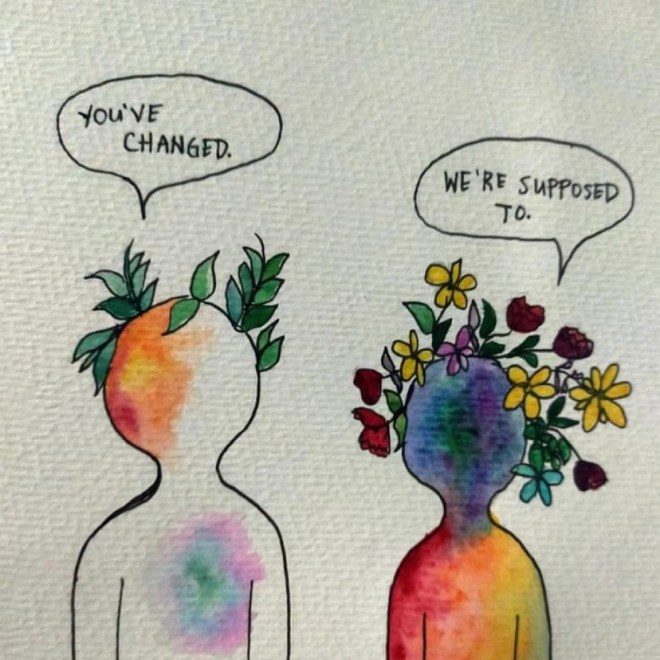
It is precisely why I have been encouraging us all to consider self discovery and personal growth in a dynamic new way. We are not only works in progress at every stage of our life, we are ever-growing, adapting and changing throughout our lifetimes. Much like the image of a majestic oak tree used to symbolize strength, stability, endurance and longevity, we too are ever growing.

Taking ownership of our personal growth over the course of our life changes everything. We no longer have to view our past history and adversities as impediments that uprooted us. We can more accurately see how the stories we have told ourselves about our lived experiences have often had a far greater impact on shaping us than the event itself.

As human beings, we are designed to make meaning out of the experiences in our lives. The root cause of our stunted personal growth is that we were only budding young authors during our most profound developmental stages – early childhood and adolescence.

We’ve heard it said over and over again: “change the narrative and it will change the way you see yourself.” This is one of the foundational principles that should be guiding our personal growth throughout our lifetimes. We need to become better storytellers and discerning meaning makers.

Many of the stories we tell ourselves have long roots going back to the first drafts we wrote when we were young. When we go back and revisit these stories with the intention of editing, updating and rewriting them, it is in essence pulling up the weeds and tangled vines — and revealing to ourselves just how much we’ve grown over time.

With a fresh perspective and a growth mindset, we can really dig in and get to work. We can become master gardeners for our self discovery and personal growth.

Re-imagining how we can repurpose what we have learned and discovered about ourselves over the years, helps us dig a little deeper into our raw material and use it wisely and with good intention.

Best selling authors frequently share that they “wrote the book they needed to read” or a well-known psychologist will confess that their “research” was actually “me-search.”

Taking a cue from these folks, we can begin to write the stories that shape us in the most transformational ways. We should not stay stuck in those old narratives that limit our potential.

When my kids were teenagers, I would often ask them “What have you learned from this experience?” They were not huge fans of this parenting tool, for it required them to stop and think about their choices and the subsequent outcomes. It felt like hard work and they much preferred to be grounded than breaking ground.

I didn’t realize it then — but what I was intuitively trying to do was get them to “think on their own” and be able to make better decisions in the future when faced with similar (but much more consequential) events.

What I knew from my own lived experiences as a 40 year old mom was that a lack of self-reflection usually led to breakdowns. What I wanted for my teenaged kids were more “break throughs” in their self awareness and sense of agency.

“What have you learned from this experience?” was a trowel; an invitation to dig a little deeper into what motivated them to make certain choices and to step back and see if the outcome matched their values. Did their choices and behaviors help them get where they wanted to go in life?

I have a confession – I did not see this simple question as the meaningful tool it truly is when I was a middle-aged mom of fast growing teenaged boys. I just knew they needed something from me that they could take into adulthood as a guidepost for building the life they wanted. The life I hoped they would have; one that was a little less bumpy than my own had been.

Finding our footing and being grounded in mid-life is a super power and not a punishment. But we can only be “grounded” in our values if we have in fact done some serious self-reflection.

For the record, grounding my teenaged boys would not have had the same impact as making them reflect on their own life lesson in real time – just ask Dr. Becky Kennedy.

Today, thanks to Arthur C. Brooks and his book “Build the Life You Want”, I now have a greater awareness of the incredible value of asking ourselves “what have we learned from this experience.” It is the trowel we need in our personal growth toolbox.

Arthur Brooks tells us that whenever something in your life has unraveled, pull out a journal and write down what’s happening and how you feel about it. Come back a week later and write down how you are feeling about it now after some time has passed. Are you able to see a silver lining yet? He tells us to revisit a breakdown in a month, in 6 months and even a year later. Was there a breakthrough?

That old adage “time will tell” rings very true when we take Arthur’s advice to heart. What have we learned from that one heartbreaking experience or major adversity that has enriched our life or opened our eyes in entirely new ways? How has it shaped us?

It is this self-reflection, done over time, that helps us with fundamental building blocks for building a life we truly want. We tell ourselves stories to make meaning of our experiences. But the first draft of our stories is often fraught with too many emotional cliff notes. These jagged first drafts keep us stuck in the painful parts of our stories.

We need time for each experience to fully develop, just like a photo taken with an instamatic camera. It is over time, with edits and re-writes that we grow into what life had to teach us through our experiences. Arthur’s simple journaling exercise is how we plot our changes and observe our development.

Personal growth and self discovery is a process. Of course the events in our life have impact and shape us in ways that we may not even realize. Some of our best lessons have a very long germination period. Getting curious about how we are growing is a fresh new perspective to adopt.

Anyone who loves gardening will tell you that patience is a virtue when it comes to planting seeds, nurturing them and providing the right environment for them to survive and then thrive. This organic growing process is the one we want to emulate for ourselves and our life experiences. We can be much more proactive and intentional about how life events impact our personal growth. It requires patience with ourselves as well as the process.

The beauty in this shift in how we approach our personal growth and self discovery is that we can begin at any time. We can start small and work our way deeper into our library of life experiences for more insight and enrichment later.

Choose just one recent event in your life that felt like you might be breaking ground for something new to emerge.

Maybe you stopped to realize that the same old approach to a recurring problem just isn’t working and you decided to change how you react and respond.

Were you facing a very difficult decision having to choose between two appealing opportunities? Were you able to feel your way intuitively into making the best choice for you at the time?

We get these little nudges for growth spurts almost daily. Anytime we can stop and do a little check-in about the stories we are telling ourselves, we are acting like skillful gardeners attending to our personal growth and self discovery.

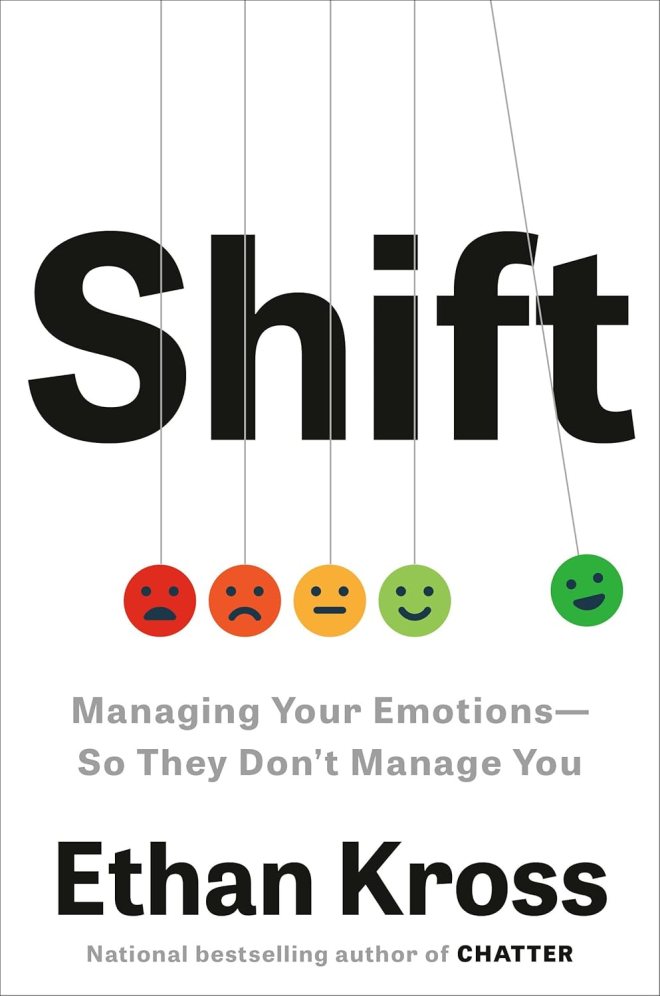
Ethan Kross, author of Shift, encourages us to ask family members and friends to help us see ourselves through their eyes.

My younger brother does this often for me when we talk about our childhood experiences. Where I see myself as a frightened ten year old, he saw me as a strong and courageous big sister who protected him. This fresh perspective helps me go back and edit a childhood experience with more context and nuance than I had access to as a kid.

Over the years, with his help, I have been able to see the tender shoots of my strengths pushing hard through a few childhood experiences, just the that tight little bud on my favorite tree. I was emerging; I just didn’t see it.

Dr. Becky Kennedy’s parenting book is also helpful in understanding what gets in our own way when it comes to relationships and emotions. All too often we believe what we were told as kids and have made behaviors part of our identity. This book will free you up to see all that is Good Inside of you too.
This book is a game-changer. Instead of telling someone that what they are feeling or experiencing is wrong or not appropriate (which leads to telling ourselves unhelpful stories), we simply validate their true experience.
What Marcus Learned from His Mother May 9, 2025 In this episode, Ryan Holiday shares insights from the global pandemic experience that reshaped his life in profound ways. It is the tail end of this episode where he asks thought provoking questions that will help you rewrite better stories for your own life. https://podcasts.apple.com/us/podcast/the-daily-stoic/id1430315931?i=1000706718469

A Coaching Tree & Board of Advisors

Have you shifted the image of your past experiences and lessons learned into that of your personal greenhouse library, chock full of invaluable reference material?

If so, you are ready to add a Coaching Tree and a Board of Advisors.

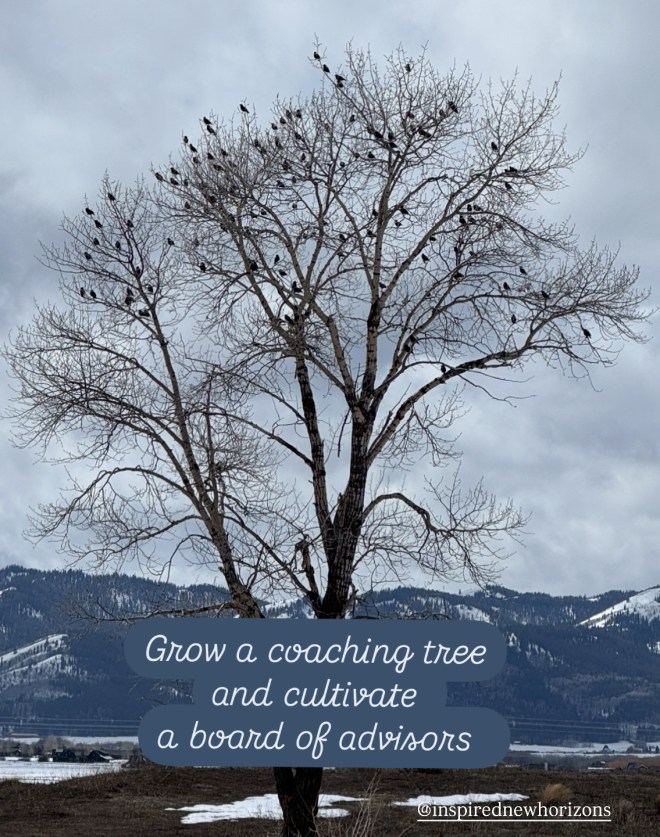
Ryan Holiday, author of the Daily Stoic, has long been a strong proponent of a coaching tree. In fact, he dedicates a chapter in his latest book, Right Thing, Right Now to this very concept. Ryan takes a powerful working model for a coaching tree from professional sports teams and adapts it for our personal use.

It is so easy for us to visualize all the branches of support that professional athletes have to help them be their best. We see them on the sidelines on game day – the head coach, assistant coaches, trainers and teammates. We may be less cognizant of the many others who support the athletes, but they have an integral role too. Physical therapists, nutritionists, sports psychologists and family members are all part of the coaching team that provides daily support to bring out a player’s best.

Professional coaches and athletes depend upon coaching trees to foster growth and excellence. The benefits go both ways — a good coach not only offers guidance and guardrails, he also learns from each player, their unique talents and potential and how they integrate what he teaches. These insights deepen his knowledge and hone his skills for working with other players.

Think of the coach as the roots of a tree, growing deeper and stronger with each athlete and assistant coach he is developing. Then visualize how each player and assistant coach takes the knowledge, wisdom and discipline from the coach and branches out on their own. Now you have the concept and visuals image for a coaching tree.

Ryan Holiday recognizes the invaluable interplay that comes from a student/teacher relationship: learning and discovery go both ways. Adam Grant also knows this to be true — that the best way to learn something is to teach it.

When we create our own personal coaching tree, we amplify our potential for fast-tracking self discovery and personal growth. We practice our life and relationship skills, putting in the daily reps in diverse ways. We keep our core operating systems (our brains and bodies) well maintained and updated. Personal growth and self discovery are not a once and done process, but rather a continual lifetime of learning and growing — just like a tree.

Who has been a rock solid role model for you? Someone who actually practices what they preach, who leads by example?

Who have you turned to when you needed help with a specific situation — someone that you know has had a similar experience and somehow came through it stronger and more authentic as a result?

Who do you wish you could be more like – that one person that possesses signature strengths that you wish you had?

When we ask ourselves these types of questions, we begin to see that we are naturally drawn to certain people for specific attributes that we want to foster in our own lives. Just like pro athletes, we become an amalgamation of the people we admire and who inspire us. We become a well-rounded person by drawing on the diverse strengths of our favorite mentors, coaches and role models.

Ryan Holiday emphasizes that a coaching tree becomes an evergreen “give and take” organic process for personal growth and paying it forward. We take what we need from our role models and personalize it for us. We just don’t “copy and paste” what they do — we make it our own. As we become more skilled and practiced with these new attributes, others will come to us — and ask us for help. We pass on not only what we have learned from our mentors – but also how we personalized it. We “take” what we need for self improvement and we “give” tips and tools to others discover what works best for them.

Here’s a real life example and one that you will find relatable: A friend called me when she had some very difficult personal decisions to make for her spouse with a very serious health issue. She knew I had some real life experience with tough choices that require a delicate balance between practicality and big emotions. I became her sounding board, a grounded friend who could help her sort out the pieces and make the best decision for both herself and her husband’s long term special needs. This didn’t happen in a day — it was months and even years of long conversations, of listening and learning, of being honest about doubts and second guesses and lots of empathy, validation and reassurance that each choice was a building block for her making the right decisions each step of the way.

My friend grew in remarkable ways through this very difficult life challenge. She not only handled one of life’s most emotionally tender realities with grace, compassion and love, she learned a lot about herself along the way. She survived — and she thrived. Today she leads support groups, she offers wise, personalized counsel to others facing similar long term care situations, and she has championed changes in memory care facilities in her community.

Guess what she does for me and has been for years — she forwards my Daily Gummy of Wisdom to a her big circle of friends every single day, along with her own insights. She is paying it forward and causing a ripple effect that is making a meaningful difference for more people than we can ever know.

Spend some time reflecting on the people who have shaped your life, especially during times when you faced adversity, golden opportunities and pivotal moments. Who provided encouragement, saw your inner strengths and hidden potential; who listened, validated and reminded you of just how far you’ve come? These are prime examples of those you want perched in your coaching tree.

Be intentional and discerning as you grow your coaching tree.

The coaching tree image helps us to see with greater clarity the work we have to do alone, the scaffolding we get from others to help us in this process — and how we can return the favor by helping others.

This is not always viewed as positive however. People like us to stay the same because they believe they can accurately predict how we will behave and react – and they can make contingency plans to cope with what they have come to expect. These contingency plans are coping skills, protective armor and behavioral modifications.

As a result, when we change and make significant self improvements, others have to change their predictions about us. All those old tricks of the trade people once relied on to “meet you where you were” are no longer needed. In fact, others who still resort to shape shifting, conflict avoidance or cognitive dissonance may stunt the very growth we are pursuing.

Even when our self improvement changes make us easier to live with, it takes a long while for others to trust it. There’s a big gap between the old you and this new & improved version of you. It takes a leap of faith to bridge it — and yes, it requires other people to make some changes too.

This is precisely why we shouldn’t do this work in the dark.

We need all the help we can get when we are fostering personal growth and self awareness. Just as a young tree needs rich soil, sunlight, water and wind, we too need a few scoops of miracle grow and some scaffolding to help us get grounded and sprouted.

When we embark on self improvement and self discovery plans, we should tell our family and friends so it is not a secret. After all, we’d tell them if we were trying to cut back on daily desserts or wanted to stop drinking alcohol. Being open up our commitment to change, helps others support us in meaningful ways. It also helps them re-program their predictions about us. That’s a win-win.

When we proactively seek help with the changes we want to make, we bring our intentions out into the light of day. Just like a tree cannot grow with the right conditions and nutrients, the same is true for us. We need a good support system. Ethan Kross, author of Shift, encourages us to create a board of advisors.

Just like a board of directors for a company or non-profit, we need some diversity in our personal board of advisors. While it is very helpful to have like-minded folks who are also committed to personal growth, Ethan reminds us there is no “one size fits all approach”. There are a plethora of resources, tools and modalities that can be personalized to match what works best for us — just like a physical fitness plan.

In a recent Happiness Lab podcast conversation with Dr. Laurie Santos, Ethan Kross shared the importance of having a personal board of directors to help us when we get stuck, noting that strong emotions and self doubts can derail us.

We need friends and family members who can help us get a fresh perspective, pull us out of a rumination cycle and reframe our situation. These are the folks that should be on our personal board of directors.

Who are you going to call? Not ghostbusters! You are going to call an emotional advisory board member.

We all get emotionally triggered – and sometimes in a very big way. It keeps us stuck and pulls us back into old reactionary patterns of behavior. Having that one friend who understands and validates us when we are triggered is the first line of defense. It takes a long time and lots of practice to lessen the tug of emotional triggers and it is also some of the most freeing work you’ll ever do. Enlist someone who has done this work and has great success. Put that person on your board of directors.

All too often, we get stuck in some one-track thinking. We know we need a different vantage point, but our own strong emotions or self doubts, just keep us gridlocked. Do you have a friend who is really good at reframing your current situation and helping you see what you are missing? Someone who flips a situation from negative to positive as though she had a magic wand? People who have deliberately worked on breaking free from the auto-pilot of our brain’s negative default mode are the best advisors for reframing and fresh perspectives. Who do you know readily views a situation from many different points of view? That’s person is a great candidate for your board of directors.

Have you ever asked yourself “What am I missing?” There are times when we are exhausted from all the effort we put in, but we come to the realization that we are not making any progress. In these situations, we may have a big blindspot and an accompanying lack of self awareness. So we find ourselves asking — “why does this keep happening to me or why can’t I catch a break?” Adam Grant offers sound advice for times like this: recruit a “disagreeable giver” for your board of directors.

A “disagreeable giver” is our challenge friend. Chances are you already have one of these people in your life — but you haven’t tapped into the gifts they offer. You may even find yourself resisting the good points they make.

“Disagreeable givers” respectfully and thoughtfully challenge our ideas and opinions – even (and especially) when it might be uncomfortable. Their goal is to help us see our blind spots and move us to better decision making. A caring challenge friend wants the best for us; they are often tired of seeing us so exhausted from our hamster wheel. Challenge friends are not afraid of having hard conversations; they know your life will get easier once you have a breakthrough. Fill that spot on your board of directors with a trustworthy challenge friend.

There will be times when we need a specialist for whatever life has thrown at us. Someone who has had a similar experience and is on the other side of it. It might be a health crisis, a divorce, the loss of a loved one or dealing with family estrangements. This is when we need someone on our board of advisors who has a working knowledge of the many complexities of a shared experience. What we get from people who “have been there” is what we would find in a support group. Yet it is even better because it is personalized empathy, care and healing.

When life hands you a deeply emotional adversity, be intentional about who can best help you. Recognize that you are fragile, your thinking is clouded, and you don’t have deep inner resources to draw on. You need someone who can go deep with you and not drown in your emotions. Who can help you weather this storm and keep you afloat til you are able to do it alone. That’s the specialist you want on your advisory board in the hard times.

There’s one more advisory board member you most definitely want to add — someone who makes you laugh, who loves to play, who brings a lightness and freshness with ease. Who brings out your inner child? Who is that one friend that makes you feel like a 7 year old – running with arms outstretched towards each other laughing with pure delight? Give that person a special seat on your advisory board. Call them often, go on adventures and collect joy.

This may be the first time in our human evolution that we become intentional about the lifelong process of learning and growing. Over the past twenty years, bits and pieces of knowledge and wisdom were floating around, but hadn’t yet congealed into the solid, science-backed insights we now have.

Now we know that emotional intelligence is a uniquely human feature. But we didn’t know that it was a foundational component of our human operating system, so we didn’t integrate it. We floundered for far too long, misguided because our core GPS wasn’t installed. Emotions are data – they point us in the right direction and help us get more out of life.

We are now in a fascinating experimental stage – where we get to play around with the full installation of emotional intelligence and make incredible discoveries about ourselves and others.

Rather than fumbling around and feeling unsure about our growth spurts, our hidden potential and how we stunt our growth – we can build a coaching program. We will get the most out of these new science-based breakthroughs by growing a strong coaching tree and developing a personalized board of advisors.

We will fast track our new knowledge, tools and skills by learning from each other and building on each other’s insights.

By getting very intentional about the 5 people we spend the most time with and how we show up with each other, we can shift our families and circles of friends into a lifetime of healthier, more meaningful personal growth and self discovery.

Ryan Holiday’s blog post This Is The Accomplishment That Matters Most:
https://ryanholiday.net/this-is-the-accomplishment-that-matters-most/
Check out this short video from Adam Grant about having a challenge network:
https://www.youtube.com/watch?v=8T79PZvUUd4&t=69s
Check out this episode with Ethan Kross: Harnessing the People Around Us to Feel Happier https://podcasts.apple.com/us/podcast/the-happiness-lab-with-dr-laurie-santos/id1474245040?i=1000697654175

Daily Supplements Make a Difference

Do you take daily supplements to support your physical health? Most of us do and we know that they make a meaningful contribution to overall wellbeing. It’s nearly impossible to get all of our vitamins and minerals from our food alone; thank goodness for supplements and the ease with which we can give our bodies and brains the boost they need.

The same is true for supplements that support our psychological, emotional, cognitive and relationship health — which is why I launched my Daily Gummy of Wisdom over a year ago. My commitment to publishing a Daily Gummy everyday was recently refueled by Ryan Holiday, author of the Daily Stoic. Ryan shared that reading a “page-a-day” book is an invaluable source of encouragement and support for our ongoing personal growth and self discovery.

Having that daily practice of reading a “page a day” of words of wisdom, insight and inspiration helps us to get our day off on the right foot – and can serve as a reminder of our intention to do a little better than we did the day before.

As James Clear, author of Atomic Habits, reminds us – it is the small, consistent practices we commit to each day that compound over time and yield remarkable transformational benefits. I can attest to the fact that reading several “page a day” books over the past few years has had a big impact on me in the most positive ways.

Over the past year, I have been delightfully surprised by the number of times that a reader would reach out to me and share how a Daily Gummy of Wisdom landed at just the right time for them. I have marveled at how many of the Daily Gummies were forwarded with personal commentary revealing just how relatable they are.

Today I am going to unpack what I am discovering as I put in to “daily practice” what I am deriving from my daily gummies of wisdom and insight.

A Daily Gummy About Boundaries:

I surely wish that I had learned about the many benefits of boundaries decades ago. What an indispensable tool for navigating relationships and experiences in a safe and practical way. Boundaries are just like the guardrails on a highway — they help us all navigate safely.

My “go to” approach in the past was to sugarcoat or disguise the fact that someone had crossed a line in our relationship. If I had been disrespected or a behavior was unacceptable, instead of addressing it directly, I would tell a story about a friend who was struggling with a similar issue. My blind hope was that the person who had overstepped a personal boundary with me would see themselves in that story and self-correct. Not only was this approach totally ineffective, it merely created a detour around an important issue. No one saw themselves in those stories. It was the equivalent of building an off ramp to nowhere.

The big pivot in setting and holding boundaries came to me when I learned that boundaries do not require the other person to do anything. I had been going about it all wrong. A boundary is the easiest way to let another person know what is acceptable to us and how we wish to be treated.

When others are having trouble being respectful or controlling their behavior, a boundary is how we say “I see you are having difficulty navigating this, let me help you with that.”

Brene Brown reminds us that “clear is kind”. Reframing a boundary as a clear and kind guardrail for relationships is a game changer. Being clear about unacceptable behavior and the action we will take if it occurs, puts us in the driver’s seat. We can navigate to a safer place and safeguard what matters most to us. It does not require the other person to do anything — but it does provide an on-ramp if they choose to take it.

Very few of us grew up learning about this invaluable tool. We were given ultimatums, threatened with a punishment, or told to go sit in isolation and figure things out by ourselves. Even today, many people believe that these outdated approaches are boundaries, but they are merely off ramps to nowhere. No one makes forward progress.

Boundaries are how we help ourselves and others build healthy relationships with mutual respect and clarity in how we communicate with each other. Clear is kind and consistency is strong reinforcement. That’s the materials that build healthy boundaries.

This Daily Gummy reinforces the ease with which we can help others navigate our relationships safely. Using clear and consistent boundaries is a much more productive way than skirting the real issue. Look for this Daily Gummy in your inbox on July 31, 2024.

A Daily Gummy about Perceived Weaknesses:

Anyone who is familiar with the Enneagram or a skills assessment personality test, will attest to the fact that we often view our weaknesses as fatal flaws. Imagine my relief when Adam Grant, author of Think Again, recently shared that we should “rethink” our attitude towards weaknesses. Adam’s research reveals that our weaknesses are often just overused strengths.

As a reformed people pleaser, I confess that my weakness was in fact a much over-used strength; one I learned very well in childhood. I was always told to “be the helper”. I was an over-achiever in the helper category, and by all means “over-used” the strength. The problem with helping too much is we make others feel incapable, can contribute to a chronic condition of learned helpless, or become enablers. It was through Ian Cron and his Typology podcast series that I discovered we can turn our weaknesses into strengths with healthy reframing. Reformed helpers can become coaches, mentors, cheerleaders and field guides for others.

Take some time to reflect on what you perceive as a “weakness” and see if you too can recognize that it might be an overused strength. If you are hyper-vigilant, you may take all the fun of spontaneity by doing a deep dive into risk assessment. If you are prone to perfection, you might wear yourself and others out with your attention to detail – when “good enough” might actually be perfect. If you perceive yourself as a fierce protector, you might actually be going to battle for someone who prefers to handle things on their own.

Some additional food for thought: It is not uncommon for us to assume that what appears to be a strength in others must be a weakness in us. We look around at others and compare ourselves — often wishing we could be a little more like a friend who seems forever fearless and takes big risks; or the one who is highly educated and speaks with authority in their field. Yet the reality is that our own perceived “weaknesses” might be hidden strengths in a variety of circumstances.

For most of my life, I was envious of friends who held very strong opinions and spoke with authority about those opinions. I believed that my inability to put a stake in a strong opinion was a weakness of mine. It was only in recent years that I came to appreciate the gift of being open-minded and innately curious. I thought my lack of ability to form and hold a strong opinion was a weakness; Malcolm Gladwell and Dr. Ellen Langer showed me a different perspective.

Malcolm Gladwell has long been a proponent of holding our opinions loosely. While he is comfortable with having an opinion he always adds the disclaimer — “for now” or “subject to change”. Malcolm has reflected on his own lived experiences as well as our collective ones and stands at the ready to pivot and re-assess — because change is the only constant. He often shares colorful stories of the many reasons he has changed his opinions or theories on things. He’s actually made a career out of it.

Dr. Ellen Langer, Harvard professor of psychology, and lifelong researcher of mindfulness, fully embraces her natural curiosity and ability to curate a plethora of opinions on any subject. In fact, she encourages us to greatly expand our own capacity to do the same. She considers this an update to our incredible brains and wants us to tap into its full creative capabilities. She invites us to practice becoming more open-minded by steeping ourselves in a variety of new experiences, having deep conversations with people who are different from us, read a new genre, discover new music or artists and challenge our own long-held opinions. I often envision Dr. Langer using a kaleidoscope as her lens on life.

So my takeaway from both Malcolm Gladwell and Dr. Ellen Langer was that my nature is not to form strong opinions – and that is more than okay. Viewing my “weakness” as a strength now enables me to engage in richer conversations with others who do hold strong opinions – for I have much to learn from listening to understand. Instead of being envious, I am now embracing curiosity and leaning in so as to cultivate the raw data my brain craves.

Watch for this Daily Gummy on weaknesses as overused strengths to drop on August 14, 2024.

We all unravel — sometimes it is a mid-life unraveling and other times it is a small, everyday of unraveling where we can’t seem to catch a break.

The unraveling that naturally occurs in life is yet another example of “I wish I knew then what I know now.” How different we might approach an unraveling if we were taught to pay attention to wear and tear in our lives, just as we are with our cars, our appliances, our clothes.

What if we were to reframe “unraveling” as a “revealing”? When we hit a breaking point or rock bottom, we take stock of what isn’t working in a much more realistic and accepting way. We can no longer ignore the places where we are coming apart at the seams. It becomes the time to mend our ways.

Perhaps one of the most transformational pivots about the psychological tool of reframing is how quickly it changes our perspective and allows us to see what had been long hidden in plain sight. What does the unraveling reveal to us? Now unraveling becomes a reset opportunity,

When we view an unraveling as a revealing exercise, we are able to meet these moments in our lives with greater courage; with more curiosity and less fear or shame. We can see the “wear and tear” we are putting on ourselves and our relationships with more honesty and clarity through the lens of self-reflection.

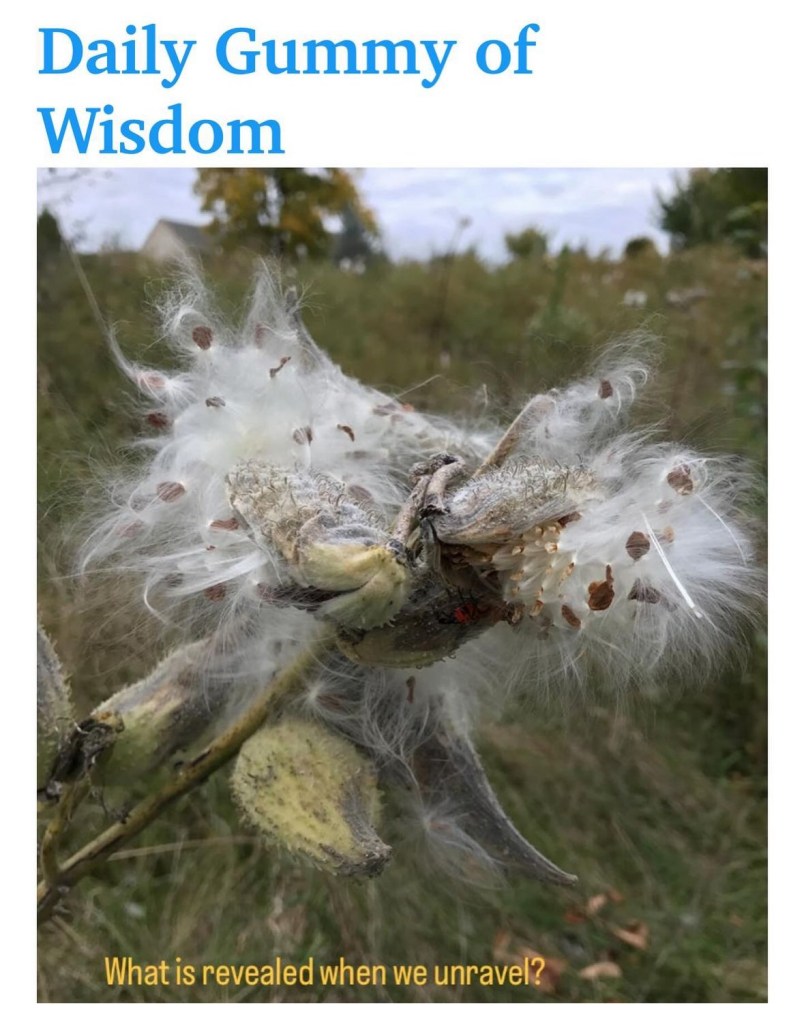
When we unravel, we do open up. Like it or not, it is the opening up to both reality AND possibility; it is as natural as this milkweed breaking open to reveal its seeds. Our own seeds of awareness move us toward acceptance of the places where we have room to grow or need improvement. We may need to ask some hard questions, but it is far better to do that than blindly wait for hard times.

We can become better at reevaluating our “unraveling” moments as a chance to discover what is being revealed to us when we recognize signs of wear and tear. We can also become more skillful at supporting others in their moments of unraveling. We can use the tool of reframing “coming apart at the seams or hitting rock bottom” to help others explore what is being revealed to them. We can become good listeners and strong support systems — for ourselves and each other.

This unraveling Daily Gummy was published on June 28, 2024. I heard from several friends how helpful this reframing concept was at that very moment. This is how the seeds of change not only get spread around – they get planted and watered as they are passed along.

Click this link to get the Daily Gummy delivered to your inbox:https://inspired-new-horizons.ck.page/3381cf137f