Life Lessons from the Sea

My teenaged daughter and I were aboard a dive boat anchored in the Caribbean blue waters of St. Thomas. As we double checked each other’s scuba gear, our fellow divers were clamoring to jump overboard, creating a frenzy of commotion and noisy, disruptive entry splashes we’d been advised not to make. Two compelling thoughts raced through my daughter’s head and she urged me to hurry up. A fear of missing out by not being first — and a concern about not being part of the bigger group — had snagged her attention.

One of our seasoned dive masters was assessing the chaos that had unnecessarily disturbed the calm beauty of this idyllic setting with chagrined disappointment. As I caught his eye, I turned to my daughter and said “Just wait. It will be more than worth it.”

Some divers descended to the ocean floor quickly while others bobbed on the surface, fighting small waves and themselves, making it harder to deflate their lungs and their buoyancy control vests so that they could calmly drift down by the anchor line. Too many people making too many unskillful moves causing silt and debris to cloud the once-clear ocean waters. 

Paired diving buddies got separated, visibility was obscured, and the dive masters were diverted from their preferred role of ocean exploring tour guides.  Now they had to pivot to become search and recovery teams for disoriented divers and missing gear.

My daughter and I waited a bit longer and then we quietly entered the crystal blue waters just as we had been instructed. As we ever so slowly descended into the ocean, we watched the silt do the same, sinking slowly back to the sandy bottom. We marveled at the rays of sunlight dancing through the now clearer waters illuminating the rich diversity of the coral reef and extensive array of colors in the parrotfish, spotted butterfly, tangs and angelfish. 

By this time, the other divers were nearly out of sight, just a fading trail of fins and bubbles off in the distance. Being patient paid off. My daughter and I explored in leisurely, pure delight as the wonders of this mystical undersea world poked their heads back out and returned to their daily routines now that the coast was clear.

We took our time, investigating nooks and crannies, paying attention to the tiniest of sea creatures and intricate textures of coral reef vegetation.  Our dive guide coaxed small neon violet and lemon yellow Royal Gramma fish from tube-shaped sponge coral.  I could hear my daughter giggling through her regulator.

Our dive guide taught us how to navigate through the reef using our lungs instead of relying solely on our compressed air tanks. We learned to gently rise and descend by using our own inhales and exhales, skillfully navigating without disturbing sand or sea life.  We even had a hovering contest to see who could get closest to the ocean floor without actually touching it.

When we returned to the dive boat, my daughter and I discovered that we actually had a longer dive than the rest and surprisingly, we also had the most air remaining in our tanks. The dive master explained to the group that we conserved the compressed air in our tanks by controlling our own breathing.  He made a point of telling them that their overly excited and sometimes frantic reactions at the start of their dive predisposed them to erratic breathing; so they relied more heavily on their air tanks than their lungs. 

Ironically, we were the last to enter the water, yet we had a longer dive time. However, it wasn’t just more time that made our dive experience so rich – it was being calm and fully present that drew us into discovery and expanded exploration. 

When all the divers were safely back on the boat, the dive masters invited everyone to share their experience and use a laminated chart to identify the colorful fish they had seen. As we listened, my daughter had a big realization. By hanging back and being patient, we hadn’t missed out at all. In fact, we had one of our most incredible diving experiences after all the dust had settled. She gave me a sly little wink.  There were so many life lessons embedded in this one magical, awe-filled deep sea dive.  

The first lesson that really stands out is how hard it is put into practice the actual training and skills in the “heat of the moment”. All the divers on that boat had to be open water certified in order to even participate in this excursion. They had passed both a written and under water test to earn their dive card. In addition, the charismatic dive masters reviewed in great detail the proper protocol for each dive before anyone entered the water. Nonetheless, all bets were off when the anchor was tossed overboard. Excitement, anxiousness and the strong desire to be first superseded the training and instructions.

This very same experience happens to most of us when we are put to the real life test of using better emotional regulation and relationship skills in the “heat of the moment”. It’s one thing to learn about new tools and quite another to remember to use them.  Ironic isn’t it? We have a strong desire to employ better tools and skills when we take a dive into those murky waters of emotional disregulation, disagreement or overwhelm but we can override our best intentions in a heartbeat.

The metaphorical lesson learned from the dive boat experience is that losing control and forgetting our skills can actually create more confusion and muddy up any chance of clearly understanding what is going on. It can also make things more challenging for others than they need to be as we cause unnecessary and distracting disturbances.

The neuroscience lesson is that when we get excited, anxious or overly stimulated, our brains decide we need energy to match the moment. We got a shot of cortisol in anticipation of what is about to go down. Our hearts race, our muscles twitch and before we know it, we are jumping into the ocean or a confrontation, completely disregarding both our knowledge and our intention to use it.

When a diver prepares to enter the water, he or she fills their buoyancy vest with a few puffs of air from their compression tank, so they can initially stay afloat and get their bearings before beginning a descent. 

The metaphorical lesson from this skill is that taking in a deep breath and then slowly exhaling is the equivalent of filling ourselves with the buoyancy we need to be present in the moment, and to get our bearings before we respond or engage.

The neuroscience lesson is that taking that deep breath is how we check in with our body’s inner workings; easing it from autopilot and the default mode to our own agency and self regulation. That simple calming breath slows our heart rate and clears ambiguous messaging in our brains so that we have more clarity.

Just like the divers on that boat, we are all at different levels of awareness and skills when it comes to putting better relationship tools and emotional self regulation into practice. 

A few of the divers may have been newly certified while others may have had 10 to 20 dives under their belt. Since each dive is uniquely different, those people had numerous opportunities to practice their skills in varied conditions and environments. Some divers may be quick studies and are able to easily integrate their education and training into their real life experience of a deep sea exploration. They may be able to relax and enjoy the ocean’s currents quite naturally. Others may be a little unsure, feel tense and have some resistance when the current sways them in a different direction. 

The metaphorical lesson is that we need to put our knowledge and tools into practice through real life experiences. The rubber hits the road when we take our training from a predictable indoor swimming pool to the ever-changing eco system of the sea. Practice does not necessarily make perfect, but it vastly improves our confidence in our ability to skillfully use our knowledge and tools in a variety of circumstances and conditions. 

The neuroscience lesson is that we actually create new neural networks in our brains when we begin to use new skills and tools. It is the consistent practice that moves the needle. We can practice in low stakes situations to gain more confidence with setting boundaries, staying calmer, listening to understand, and not getting attached to the outcome. As we become more skillful with these tools, we will feel better resourced to use them effectively in our most valued relationships.

When I was first learning to scuba dive, I always felt safest with a seasoned diver as my dive buddy. Being with others who have more experience and are highly skillful is how we learn through osmosis and real life role plays.  We pay close attention and keenly observe their actions and choices and most importantly, the subsequent outcomes.

Later, when I had earned my certification and my kids wanted to learn to scuba dive, my role shifted from student to teacher. My attention was now on demonstrating and explaining things in a way they would understand. I also felt a strong sense of responsibility, much like we do when we teach our kids to drive a car. Staying calm while exchanging our dive gear on a platform 60 feet deep in a cold quarry was paramount. 

The metaphorical lesson is that we are teaching others, and most especially our kids, how to navigate life and relationships using the skills and tools we’ve honed.  Our own practices, coping skills and experiences influence how and what we teach. We wouldn’t put our kids behind the steering wheel of our SUV and employ the same teaching strategies that we often unconsciously resort to with temper tantrums, whining and confrontation. Parenting guru, Dr. Becky Kennedy, refers to our parental role in teaching life skills and emotional integration as “sturdy leadership.” Sturdy leadership is what a dive master provides. When we are sturdy leaders for our kids and for others, we help them feel safe, find calm and develop skills for emotional regulation and resilience.

The neuroscience lesson is that we co-regulate and co-create with each other. One cool, calm, collected sturdy leader helps others return to their emotional baseline faster. Then with clear heads and more emotional regulation, we can co-create a better situation and outcome. 

Those affable and charismatic dive masters created a sense of camaraderie, fun and curiosity with a group of strangers on a dive boat. They delivered their instructions for each dive with warm smiles, a little humor and attention to detail. Their goal was to keep us safe and set us up for the best experience possible.

Setting a positive intention provides the framework and guardrails for what might be considered two opposing truths: Being and feeling safe – and exploring uncharted territory.

The metaphorical lesson is when we have to engage in a hard conversation, deal with a difficult situation or person, we can also lead with a statement of positive intention. Brene Brown has long taught us that clear is kind; that we can be generous in believing that others are doing the best they can in the moment when we stay in our integrity and set boundaries about acceptable language and behaviors. 

A statement of positive intention is how we enter these challenging conversations. We state clearly and genuinely that we care deeply about a person and our relationship with them. It is our “why” for a desire to resolve our differences or a misunderstanding. A statement of positive intention can diffuse the tension and resistance that often prevents us from having these hard conversations. We offer kindness, compassion and respect – the ingredients to feel safe enough to be vulnerable and truthful. Reframe these hard conversations as a “search and recovery” opportunity.

The neuroscience lesson is that we often get in our own way when it comes to conflict resolution because of the stories we have told ourselves to make sense of things that happened in the past. Our brains are prediction machines relying on a historical database. In our efforts to protect ourselves from being hurt or disappointed yet again, we resist opening up to gaining helpful context, nuance and perspective. When we are open to “listening to gain understanding”, we are in essence installing an “update” to our data base. Taking in new information with context we may not have been aware is how we free ourselves from craggy old beliefs and narratives that snag and entangle us.

When my teenaged children were learning to scuba dive, I had a lot of friends who chided me for letting them do something so risky. At the time, I shared with those concerned friends that we also teach our kids to drive, which is equally risky and something we all do nearly every day. Kids take driver’s ed, they study and pass exams to get a learner’s permit and we parents take them out to practice in parking lots and less traveled rural roads. We give them the tools and the practice they need to earn that driver’s license and we celebrate the milestone of turning over the car keys and letting them venture out on their first solo drive. 

How remarkable is it then that we really don’t give much serious contemplation to the emotional and relational skills we need the most and that we will use every single day for the rest of our lives?

We need sturdy leaders to teach us how to self-regulate, to learn from our internal dashboard of emotions and experiences, to use self-awareness, healthy coping skills and relationship tools to navigate all parts of life.

Today, we are fortunate to have incredible new science-based insights and knowledge about the importance of emotional integration, the inter-connectedness of our brain and body systems, and a plethora of resources to support better ways of showing up for ourselves and others.

Find the “dive masters” that are the sturdy leaders that resonate with you. Study and learn from them.  Acquire some new and improved relationship skills and play around with them. Start with low stakes situations to build confidence. 

Find some seasoned “dive buddies” to help you hone your ability to use more effective tools. Friends, family members and mentors can become these dive buddies for you. Seek their wisdom, ask questions and ask for help. Swap stories and experiences to deepen your understanding.

Don’t forget to put all that education and study hours into actual practice. Use that calming breath to fill your life vest with some air, get your bearings and then enter an interaction grounded and calm. Remember to use the new skills you are learning. Put them to the test with some patience and compassion for yourself and others.

After each new “dive experience”, take some time to reflect on how it went. How did you feel and what did you learn? Were you able to listen to understand, validate someone else’s experience or perspective, find some common ground? Did you feel more emotionally balanced and recognize that this helped others calm down faster?  Taking the time to do a thoughtful de-briefing reinforces your learning and hones your new skills.

Imagine all the positive changes that are sure to come when we collectively begin to acquire and use better emotional and relationship skills. These new tools and skills will be transferrable to all aspects of our life; fewer self-made obstacles and less complicated relationship entanglements.

After all, look how many of us can competently drive a variety of vehicles on a busy highway or skillfully navigate a crowded parking lot. 

We can teach each other complex navigational skills.

Healing Cycles of Trauma with Mariel Buque — if you find yourself telling others they are too sensitive or overreacting, then you will find this episode so insightful https://podcasts.apple.com/us/podcast/being-well-with-forrest-hanson-and-dr-rick-hanson/id1120885936?i=1000640891293

One of the Best Parenting Resources for our time — Dr. Becky Kennedy. Check her out on Instagram and her YouTube Ted Talk

Check out this HubermanLab podcast episode featuring Adam Grant discussing his newest book Hidden Potential. How often do we limit our own potential and that of others without even being aware? https://podcasts.apple.com/us/podcast/huberman-lab/id1545953110?i=1000636628726
Midlife is a Chrysalis, not a Crisis: Life Gets Better with Age. This dynamic conversation with Chip Conley will have a big impact on anyone who is reassessing what they want out of a new chapter of their life. https://podcasts.apple.com/us/podcast/the-rich-roll-podcast/id582272991?i=1000641285807

Broken Spirits…..Part 2

After much reflection and filling half a journal, I have peeled off a few more layers of understanding about the impact that our protective armor can have on our spirits. I actually had a really big AHA moment this morning, which is the reason for this addendum to yesterday’s post.

What started this search was an explanation of how I fell back into old childhood patterns so late in my life. The clues were hidden in the fibers of my life story. I have often said that I lost my compass after Skip died in October, 2002. Now I can see more clearly just how incredibly true this was. But there’s some backstory that also deserves attention.

In September of 2001, my daughter Brelana was just beginning high school at Virginia Episcopal School in Lynchburg, Virginia. This was her decision and anyone that knows my strong-headed girl can appreciate that she was all-in for this empowering decision she’d made for herself. Her devoted step-dad Skip was a graduate of VES and it was evident that she embraced this fresh start for herself as a chance to “belong” in ways that made her feel worthy and valued — by association, being the “daughter” of a respected, congenial graduate of this boarding school. While I supported her decision, my heart was aching because I knew I would miss her terribly. I knew all the reasons she’d made this decision, which is a story for another time. Just know that she was desirous of a clean break from a confusing pattern with her dad as a result of our divorce. While I would not have been able to articulate it at the time, I now know that I was very angry at having to pay the price of being separated from my daughter because of my ex-husband’s behaviors and choices. This pattern of paying the price for someone else’s actions has a very long thread in my life story and those origins lie in my childhood.

Skip urged me to go with him to Scottsdale Arizona where he was conducting an international banking conference for a week. He thought the distraction would be good for me. Bless his heart — he hated to see me sad and he could tell that I was struggling with emotion about my baby girl being so far away from me for months at a time.

Skip knew the bond that Bre and I have – he often told me that Helen Reddy’s Song, “You and Me Against the World” reminded him of the two of us. Each time he passed a bubbling water fountain in the Philadelphia plaza near his office, he would toss two pennies in it as a symbol of his pact with God to protect us.

Perhaps if I had stayed home, I could have processed all my emotions. The anger about who and what had prompted such a decision, the gratitude for Skip and the role model that he was for my daughter, the sadness about being apart from her and not having conversations over cookies after school.

But as often happens in life, that big life event got swept under the carpet very quickly. While the banking conference had indeed been fun and a distraction, it came to an abrupt and tragic halt on the morning of 9-11. Just typing 9-11, I can feel so many strong emotions coursing through me, the memory of that morning returning with such clarity that I can feel it in my bones. Skip’s adult children were scattered across the country, as were my three children. Phones were jammed as we frantically tried to make contact with loved ones. Bre’s classmates at VES had parents who worked at the Pentagon. The VES faculty were scrambling to keep kids safe and address their fears. In a split second, our world had changed so dramatically. Collectively we all felt fragile, vulnerable, scared.

Skip was a hero in my eyes with how he conducted himself at that conference, being a source of comfort and resilience to so many. Again, the full scope of his efforts are a story for another time. I have shared some of it in an earlier post. We got home, to a small apartment in the suburbs of Philadelphia. It wasn’t really home. It was a temporary place for us to live while our house was being built. Home for me was our cute townhouse back in Millersville, full of happy memories, familiar furniture, treasured keepsakes.

Ironically Skip had to leave shortly after our return for an international business trip. Flights had resumed and although there was much uneasiness in the day to day life routines, everyone was trying to get back to some sense of normal. That is, all while keeping a watchful eye out for suspicious white vans or shady activity. So I was home alone, in an apartment, where I did not know any neighbors. I’d go to work each day at PNC Advisors, grateful for friends and something to do to pass the hours. But things were changing rapidly at work due to the terrorist attack and safety precautions being instituted to protect clients and financial affairs. It was overwhelming to process it all especially with a healthy dose of fear added to the mix.

Cell phones did not get good reception in those days. We had not yet gotten a land line installed in the apartment, so I would go to a payphone outside the apartment complex gym to call Brelana or await a call from Skip. A few weeks of standing in the dark, talking on a pay phone hoping that I sounded cheerful, calm, and comforting.

Just one month later, my mother died suddenly. A blood clot from a surgery I did not even know she was having. Now my mother and I did not have a really good relationship, but we had been trying to get it back on track. Oddly enough I had heard some church bells ringing in the distance while walking our small dog at the very moment she passed. As I realized that coincidence, I took a little comfort from it. A sign that in the end, we were ok.

In 2002, I had high hopes for the pendulum to swing back to more positive experiences. The house Skip and I were building was a source of joy for both of us. But only two months after we had moved in, my beloved Skip passed away in my arms…..having just returned from a 2-1/2 week business trip in Cairo. My world went dark….and extremely quiet. So did I. There was just not an ounce of grit and determination left in me. I was beyond worn out. For a very long time, I felt numb. I think it is the body and soul’s way of protecting us — cocooning us when things seem so unbearable.

I know this story of mine is beginning to sound surreal — so many big, impactful life events all unfolding like dominos….one right after the other, without a moment to catch a breath, cry it out, start to heal.

Yet I am sure that if you look around, you will see similar stories that are unfolding right now — through this current collective event of a global pandemic. It is the impetus for me sharing all of this. To open your eyes and hearts to the many events and experiences that are breaking spirits of others.

A key similarity to my life experience and the pandemic is isolation. When Skip died, I was all alone. We had moved from my hometown to the Philadelphia suburbs. No family, no friends yet. Too much isolation during my darkest hours.

I believe that it was that isolation — that long lonely recovery period of grieving — that really put me in a tailspin and sent me spiraling backward into unconscious behavioral patterns.

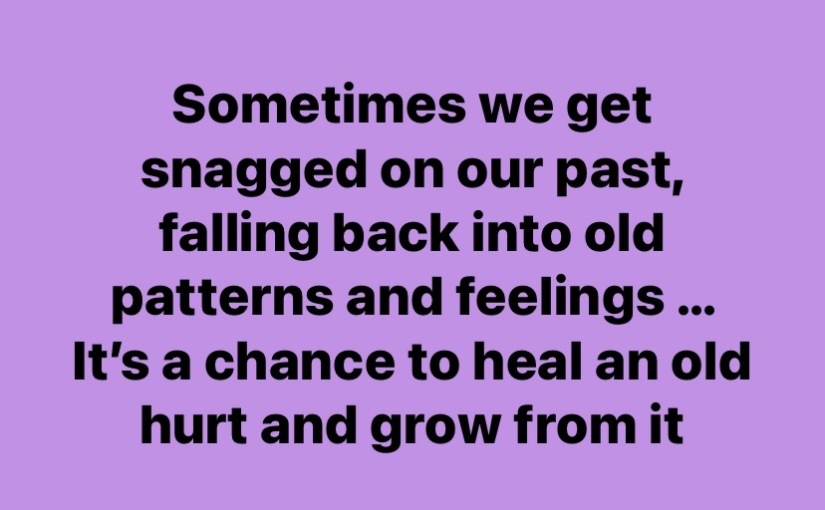
In my post yesterday, I shared how even experienced practitioners can get snagged on emotional baggage from their past. These deep emotional experiences can have very strong currents that pull on us when we are most vulnerable. So often, we then begin to sift through old memories and excavate other painful experiences. I have done this myself, stringing together a series of past events where I was alone, vulnerable, in struggle. It amplifies our emotions and can flood us to the point of overwhelment.

I have witnessed this happening to people I love. They ask questions I cannot answer and those questions reveal the unhealed parts of their life that still snag them.

This is why I am sharing such personal vignettes with you today. It has only been through a lot of inner work, with the help of a cherished friend, that I have been able to go back and process what needed to be faced and healed. I was dragging around of lot of old baggage for far too long and allowing it to hold me back. This is precisely why we need to help each other with non-judgment, kindness and an abundance of empathy.

Breaking the Chain

Over this past year, I gained a deeper understanding of the impact of childhood experiences from one generation to the next.

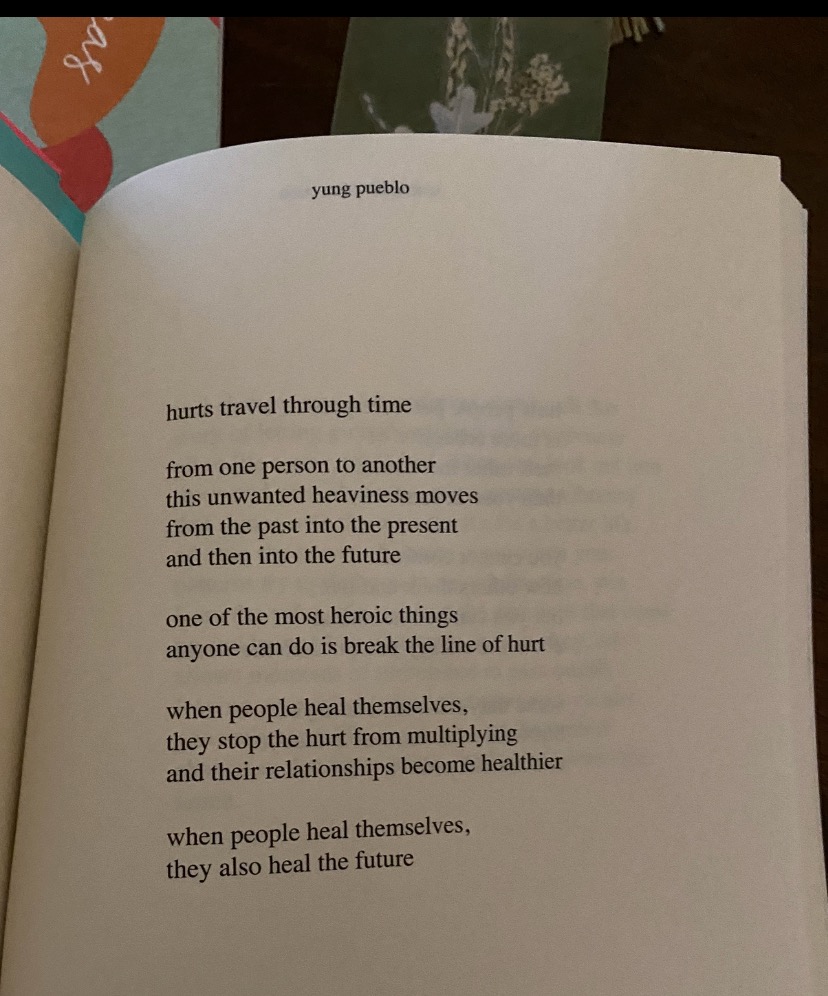
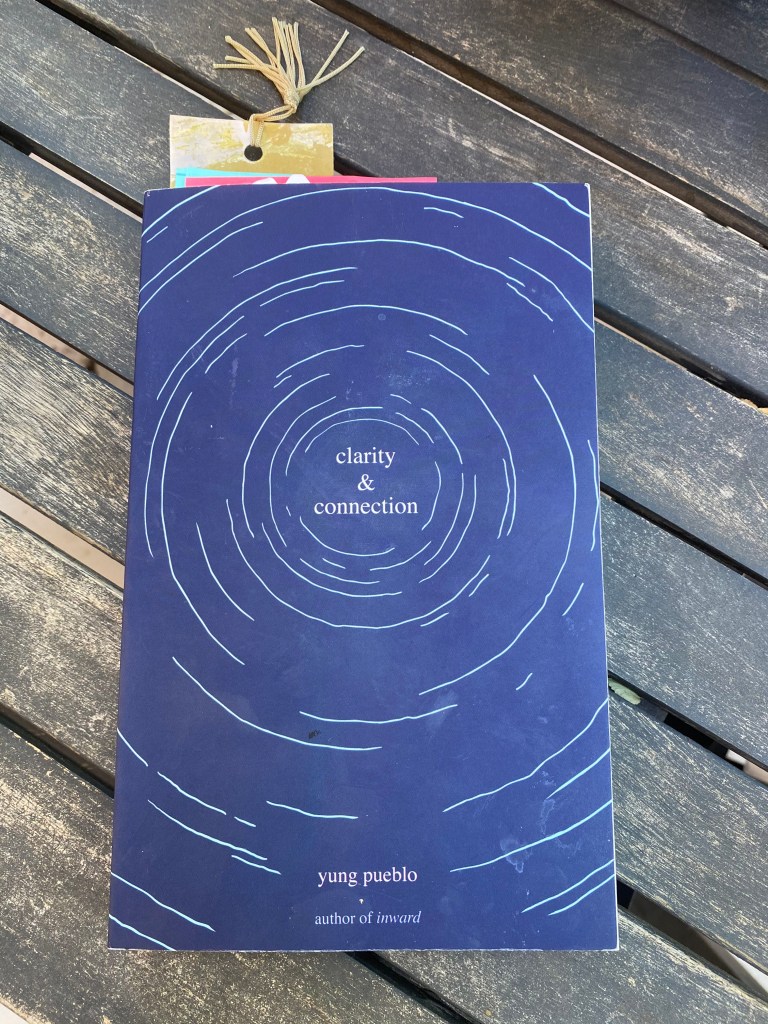
As I read this page from Clarity &. Connection by Yung Pueblo, I paused to reflect on just how true these words are. Often when I read a page in this book, I do find that I have lived exactly what Yung expresses.

I reflected on my mother whose parenting skills were sorely lacking and how that impacted me from a very young age. If you asked me at age 5 or 10 or even 15 what I wanted to be when I grew up my answer was always the same: “A good mother”.

Most people would just smile and think how sweet. However, a guidance counselor in middle school took it as a red flag. I spent more time in 7th grade in that counselor’s office than the classroom. I drew pictures of a house with a white picket fence, a big leafy tree with a tire swing, colorful flowers lining the path to the front door, three smiling kids and two happy parents, all holding hands. The guidance counselor would give me an odd smile that felt intrusive as he asked me vague questions and and gave me the ink blot test. Looking back, I am sure he knew I was leading a double life – the fantasy image that I drew on that paper and the harsh reality of a very dysfunctional family. He could also see my mother’s reaction when she stormed into his office to yank me out of there. I often wondered if he could hear her yelling at me when we got into the car. A few days later when I found myself back in his office, I was sure he did. Truth be told I was angry at him for putting me into this endless cycle of fearing the consequences of being back in his office while surreptitiously begging for his help, leaving clues on blank sheets of paper. Neither adult seemed to truly care about me. I was Olive Oyl between Popeye and Brutus. The tug of war was between them and my fate remained unchanged. A pattern that would play out in my life for decades.

So it was clear that from very early on I thought this whole mothering business could be handled much better. My framework for this was established with a long list of “what not to do” and it even included all the awful things my mother would repeatedly say that I vowed never to say to my own future children. Imagine my confused relief when I realized that other kids from seemingly functional homes had that same list. The big glitch in building a framework on “what not to do” is that it creates a very shaky foundation.

It set in motion a very complex webbing of reactive behavioral patterns intended to keep me and my brothers safe. I had an imaginary hope chest full of ideas on how to do things better when I was a mom. All those old reactive behavioral patterns became road blocks on my life journey. I can see that so clearly now — at 69 and on the other side of six years of self-discovery work.

Here’s the blueprint for all that generational heaviness that Yung Pueblo writes about — my mother had her own story. I know very little of it except that her own mother’s early death left her reeling and it must have happened shortly after I was born. She went to seances and fortune tellers, numbed her pain with alcohol, cigarettes and bad choices. My dad was overwhelmed by her and afraid of her. He was way out of his league in how to navigate it all. I remember being so angry with him for not protecting me and my brothers, but now I realize that he was every bit as frightened and stymied as we were. Both my parents were armoring up against their own fears and unprocessed trauma.

I grew up too fast, assuming adult responsibilities around the age of 10. Like many young kids, I believed I was the problem — that if I was better, we would somehow magically change into that happy family image I drew on paper for the guidance counselor. My behavioral patterns took root and I became a helper extraordinaire, a people pleaser and abundantly compliant. I took my lived experience, extracted the parts that hurt and vowed to do it differently. I began stuffing that imaginary hope chest with my own blueprint for being a good mom, wife and having a happy family.

I left home just a few days after graduating from high school. Actually, I bolted from home — in broad daylight, while my mom was at work. Packed my few belongings and moved into a third floor apartment on a peaceful street on the other side of town near a local college. I felt so free, in charge of my own destiny for the very first time. Just one little problem, I kept looking behind me (literally and figuratively) to see if trouble was looming. Like I said, it is very hard to build a solid foundation from shaky scaffolding. My mother gave me good reason to keep looking behind. She stole my car — my 1968 Mustang, in the middle of the night. I came out of my apartment in the morning to go to work and discovered my car was missing. She did this a few times, in spite of the fact that I thought I was so clever by parking it discreetly blocks away from my apartment. Those tentacles of childhood distrust just kept reaching out and tapping me on the shoulder.

At that time, I was working as a legal secretary in a law office for $70 a week. My boss was the most kind, sensible, empathic adult I’d met in a long while. He offered me a solution to the repeated stolen car dilemma, pro bono, and sent my mother some legal notice that put an end to her nonsense. It may have been the first time that I truly felt that someone had my back. I wonder if I conveyed to him just what that really meant to me.

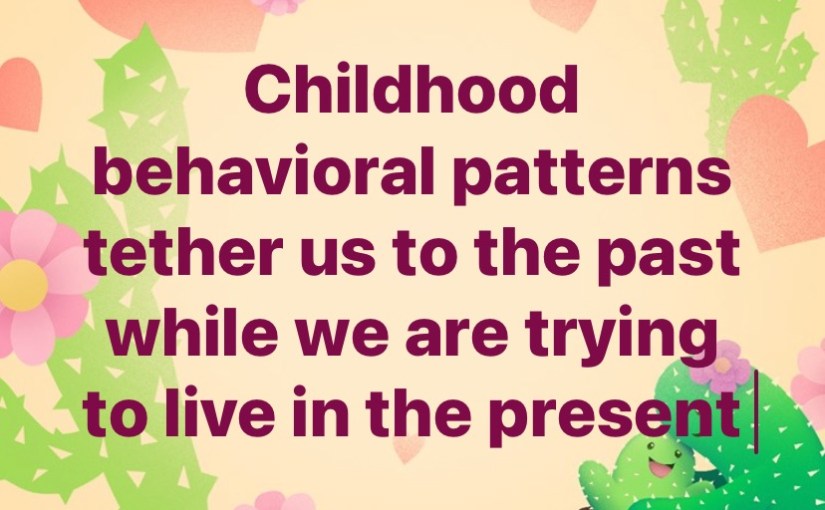
My hope chest blueprint was an attempt for me to be the exact opposite of my mother but because I was also looking over my shoulder, I could not really sink down deep into my own core values and fully embrace who I truly was. My learned behavioral patterns kept me tethered to a past full of uncertainty. I carried my parents armor and my own. There was no sure footing, no strong foundation.

That’s how many find ourselves moving forward into life, getting married and having kids — and bringing all our baggage into the new life we are trying to build. Even in the best of families, there are blind spots. I think my parents’ generation had a junk drawer and a skeleton closet. They hid discomfort, dysfunction and trauma. My generation was often taught to suppress our emotions –stop crying, get over it, pick yourself up by the bootstraps. Is it any wonder that generationally we struggle with emotional triggers?

When I married in my early 20’s, I naively believed that my “happily ever after” blueprint was destined to come to fruition. My first husband was the oldest of 5 in what surely looked like the TV version of family perfection. Dad dutifully off to work, while mom in a flowered apron baked and ironed, preening over her children and her gardens. It was only after we were married, and were living with his family for several months that I discovered there were serious cracks in this facade as well.

Looking back now, I can more clearly understand that many of our marital struggles were rooted in the behavioral patterns we both brought with us into a young marriage. Unfortunately, we doubled down on what once worked for us in times of stress. That in turn just entrenched the cycle of our pasts colliding creating that unwanted heaviness that Yung Pueblo describes. Naturally that meant that our three children were exposed to this newer version of the same old thing — and voila now they were developing their own reactive behavioral patterns. Three generations of armor getting heavier by the minute.

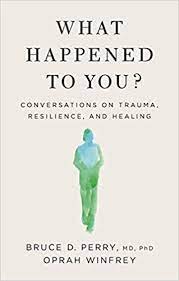
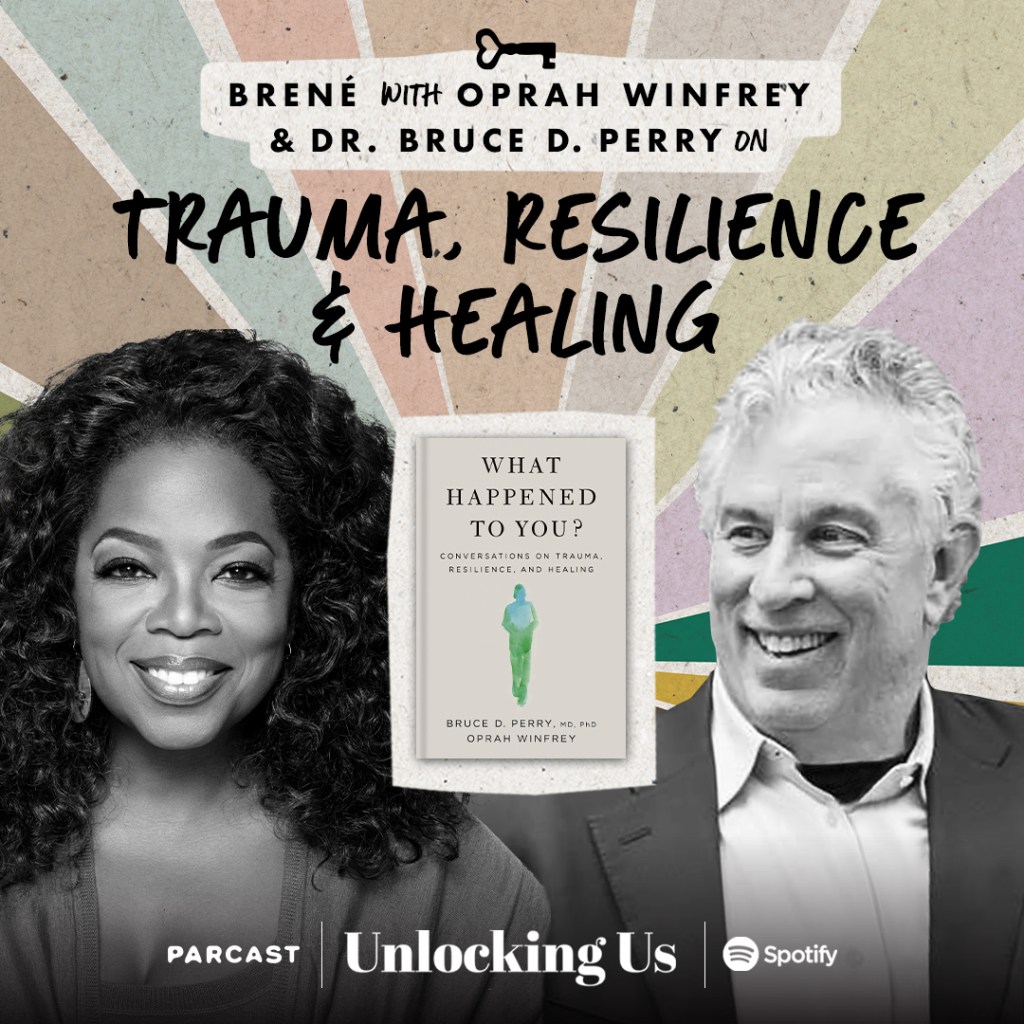
Over the past several years, I learned about the findings of Dr. Bruce Perry, a noted clinician, teacher and researcher in children’s mental health and neurosciences. His work on the impact of abuse, neglect and trauma on the developing brain has had meaningful impact around the globe. It became very evident to me that what happens to us in our early childhood years can have lifelong repercussions.

This is why I feel so strongly about the importance of caring for our mental health and emotional regulation. I wholeheartedly agree with Yung Pueblo that when people heal themselves, they heal the future.

Deep conversations with close friends has revealed that my story is not that remarkable. Many had similar experiences and have felt the effects of their learned childhood behavioral patterns throughout their adult lives. I’m hard-pressed to find a family tree that does not have entangled branches of dysfunction, depression, estrangement, insecurities and brokenness.

Take heart, however — We were also well-intentioned gardeners tending those family trees as best we could. We chose to do the opposite of what their parents did, we chose to love more deeply with an understanding it might hurt, we chose to soothe, comfort and nurture. The pendulum may have swung too far the other way. We burned ourselves out trying to do it all and keep everyone staying in the green on the happiness meter. We still lost our tempers, got resentful, exhausted and disconnected. We offered ice cream cones to our children when we should have pulled them in our laps and honored their feelings. We should have done the same for ourselves but we chose a glass of wine or a bag of chips.

My first marriage ended in divorce. We tried couples counseling before we threw in the towel, but like my guidance counselor experience I realize that we were unable to identify the root cause of our problems. So we just lobbed our resentments back and forth, paid the bill and went home to hit repeat. We did not break the cycle. I can look back now through clearer eyes and a wiser heart and see how our emotional armor and old behavioral patterns kept us entangled til we couldn’t actually live our best lives anymore. I also see how our three kids paid a dear price just as my personal counselor told me. She said that my kids might come back to me one day and ask why I did not leave sooner. When I made the decision to divorce, my sons were away at college and somewhat insulated from the months of anxious fallout, but my daughter was now Olive Oyl between Popeye and Brutus. Consider that my daughter was only 5 when I was diagnosed with breast cancer and 7 when she became my motivation to divorce to free us from a cycle of insecurities and unworthiness. Those events landed hard in the heart and mind of a young child.

Again, my story is not all unusual. And we have seen this play out throughout many generations. When my son was in the throes of his own divorce, I remember telling him that the long arduous decision making process had consequences for his young daughter and encouraged him and my daughter in law to co-parent from a space of awareness and love. I am relieved that they have done this well and continue to do so. For me personally, this is what Yung Pueblo means when he writes about healing the future. Learning from my mistakes, I share openly with my son and daughter in law. I am striving to help them navigate the challenges of raising a child in a co-parenting and ever-evolving family dynamic. No choosing sides and no ostracizing a child or making her feel “less than.” Raising a child is the hardest job we will ever do.

Embracing life’s realities and the brokenness that will inevitably occur in a caring, supportive, inclusive way is far better than saddling a child with our old emotional baggage. The best gift we can give a child is teaching them to honor their feelings. Holding them in our laps and listening, holding space for them to truly feel the depth of their emotions and feeling safe to do so. Teaching emotional awareness, emotional regulation and modeling it ourselves in daily life is how we heal the future. Do the work — in the present moment.

I had no idea when I dipped my toes into mindfulness 6 years ago what I would be gaining. While I was so focused on healing myself, I was then unaware how helpful it would be to my family and friends in the years to come. I knew that I wanted to get out of a situation that was draining me physically and emotionally so that I could be at my best for whatever life had in store for me in this last chapter of my life. That desire to be stronger, healthier and of clearer mind took me on a journey I could have never imagined. So often I told myself that I wished I had learned this all much earlier in my life, recognizing that it would have not only saved me a lot of heartache, but it may have also meant I did not inadvertently hurt others. There is a quote that says that life brings to you what you need the most — and what I needed the most was to heal from old trauma, drop the baggage and embrace equally my imperfections and my gifts. My discoveries and continued learning are supporting my efforts to help others learn this invaluable lesson much sooner in life.

I am so grateful that we live in a time where the stigma around mental health is falling away. I am so encouraged that counseling and therapies are taking a more holistic approach to mental health, bringing grounded research and more tools into the fold. I do believe that we need to be an advocate for our own mental health as much as we need to be advocates for our physical health.

I have looked back on my counseling sessions and see evidence where childhood experiences were begging to be brought out into the open, but were dismissed or simply missed. Had we all recognized that the warning signs were flashing, we could have done some of this meaningful healing work so much sooner. We may have saved good relationships that were tainted by our past.

Dr. Bruce Perry and Oprah recently released their book “What Happened to You?” If we each asked ourselves this question, and then took the time to go back and revisit our childhood with compassion and mature perspective, it would be an invaluable step in breaking the generational line of hurt.

OPRA

RECOMMENDED RESOURCES:

The chapters in this book offer a meaningful personal growth framework: Self-Awareness, Unbinding, The Love Between Us, Growing, A New Life