Gummies of Wisdom – Cultivating Awareness

Now that we are beginning to fully understand just how significant our emotional health is to our overall quality of life, we need to develop a game plan to attend to it, just as we do for our physical health, nutrition and sleep. Part of that plan should include daily maintenance for our emotional health. That is why I created my “daily gummies” of wisdom — a supplement to boost awareness for our emotional health.

My daily gummies of wisdom are simple little reminders to help keep our emotional health on our radar screen. In this post today, I’m sharing a few of those gummies that turn the spotlight on cultivating greater awareness throughout our busy days. We can really level up our emotional health game plan through both self-awareness and “other” awareness.

Before we dive in, here’s a little food for thought. Have you noticed how much easier it might be for you to “show up” as calm, thoughtful and clear-headed when you are at work or with friends than when you are at home with your loved ones? What is it that keeps us from having a meltdown, losing it or shutting down when we are in those settings? Ironic isn’t it that often our “best behavior” is doled out to those who have a lower priority in our relationship schema.

Are you fascinated by the fact that we actually do have this remarkable capacity to “show up” or “meet the moment” with a boatload of agency, but we are often unaware of it? Our unconscious auto-pilot rarely lets us screw up where our integrity and character matter at work or with peers. But somehow it fails us when we are with those we love the most.

Here’s the giant clue: It is all about awareness. At work, with friends, in public – we have a keen awareness of how we want to be presenting ourselves. We are instinctively anchored in our values and personal integrity. Simply put, we are anchored in our self-awareness.

But when we are at home, we want to get comfortable, to relax, to be our true selves and that means dialing down the bright spotlight of self awareness. We need a break from being on our best behavior – and we often rely on the foundation of our most meaningful relationships to just accept us as we are; unfiltered.

I will let you in on a game-changing secret. When we can learn to pivot and bring all that public persona awareness into our personal relationships, we will be leveling up our emotional health in dynamic and transformational ways. And yes, we can still relax at home, be at ease and be our true selves. In fact, our most valued relationships will become our treasured safe haven and major recharging station for life.

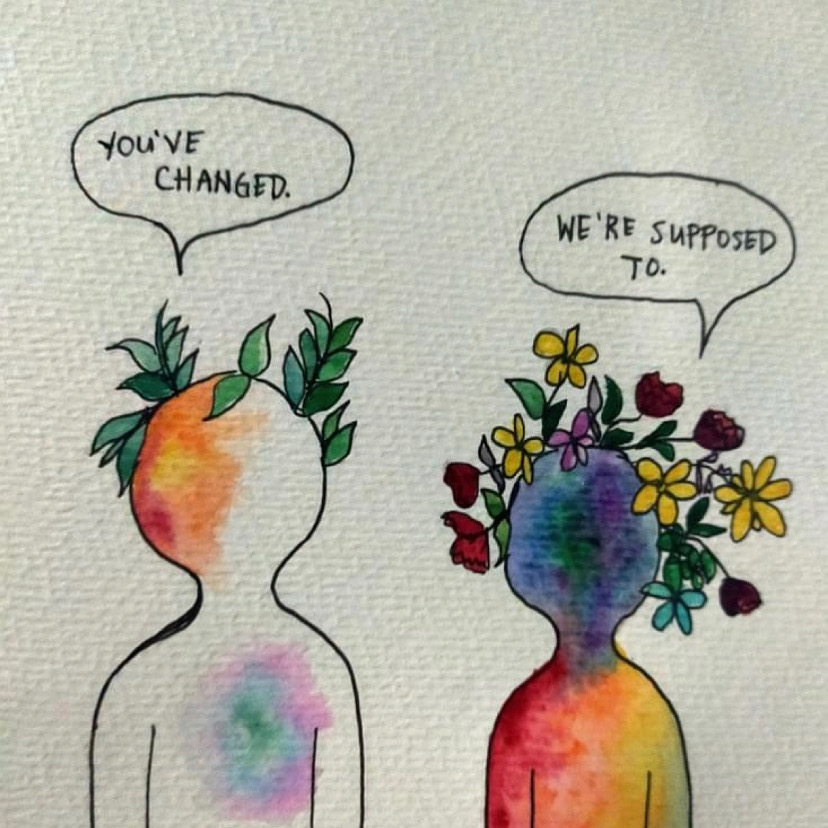
It is the “unfiltered” lack of awareness of both ourselves and our family members that is the problem. Change your filter, change your life. Keep your filters clean and working optimally.

As you read through my “gummies of wisdom” today, keep that distinction as the backdrop. Think about how you “show up” for a friend and how you “show up” for a spouse or child in a similar situation (or even how you show up for yourself).

My first gummy really sets the stage for amping up our awareness:
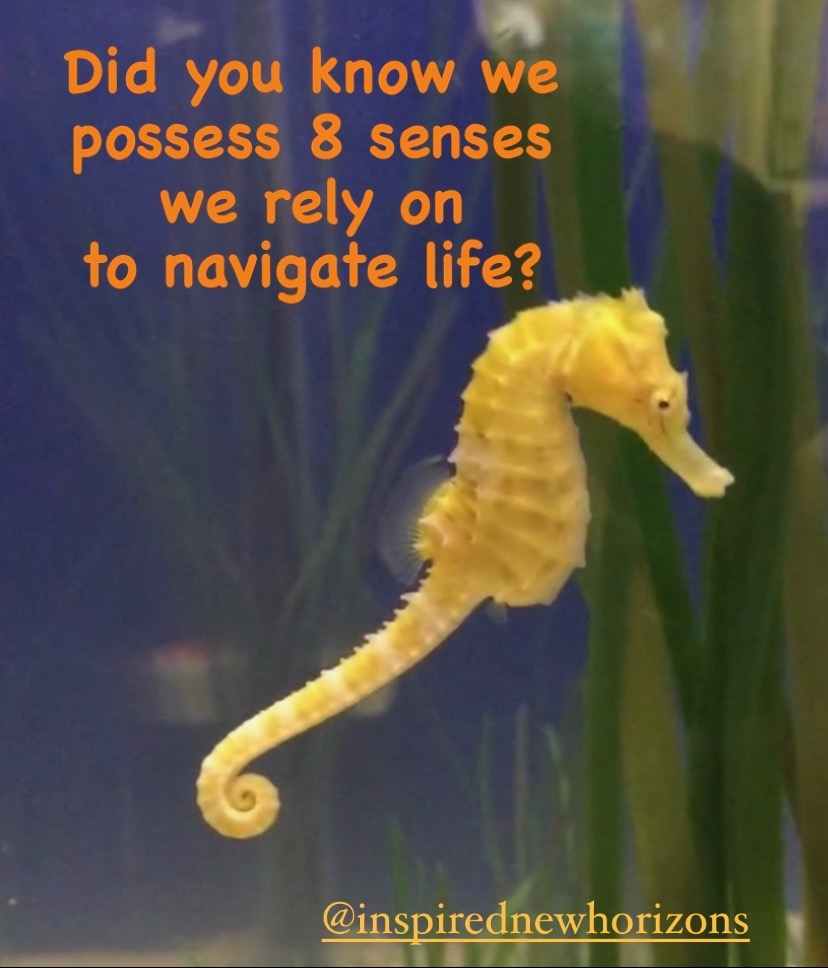
We human beings are truly marvelous creatures — we have a plethora of senses to help us navigate our lives — not just the 5 senses with which we are most familiar, but actually 8 senses!

We are all quite familiar with our first 5 senses: hearing, sight, smell, taste and touch.

Our 6th sense is is our interoception, the perception of our interior. Interoception is all the signals we get from our body — from our muscles, bones, hearts, lungs and intestines. These signals feel like a racing heart, tense shoulder muscles or a clenched jaw, butterflies in our stomach, or labored breathing.

(Think about how your body feels when you are having a major disagreement with your partner, or when your child is having a temper tantrum.)

Our 7th sense is our ability to be aware of mental activity — emotions, thoughts and memories. The real superpower we possess is not only the ability to be aware of our emotions, thoughts and memories but to choose how to engage with them.

We become much more discerning about how our mental activities are “informing” our behaviors and responses to life when we hone our “awareness” of emotions, thoughts and memories.

Our 8th sense is our “relational” sense – our sense of connection with people, pets, nature, the planet. This is the big distinctive pivot. This 8th sense is on high alert when we are at work, with friends, in public. But for some peculiar reason, it goes offline when we are with our loved ones.

Here is a personal story to shed more light on this very subject: My husband Skip and I were playing golf. He was a scratch golfer and loved the game, but on this particular Sunday afternoon, he was struggling. And the more he let those disgruntled feelings show, the worse he was playing and the less fun we were having together. I asked him if he would be behaving this way if he were playing with his work colleague, Charlene Davidson. He gave me a puzzled look and responded, “No, I would be on my best behavior.” I smiled at him and said “I deserve your best behavior.” You guessed it — it was an “aha” moment; and that pivot turned our day around in the most pleasant way.

This gummy about our 8 senses is a super supplement. It is that 8th sense of connection to others that jumpstarts a major awareness shift. Think about this the next time you are at home with your loved ones. Think about how hard you work to support, provide and care for them and about the sacrifices you are willing to make for them. Now enter that conversation, that disagreement or interaction from the portal of what that relationship truly means to you.

If we break apart the word “responsibility” it completes shifts our relationship with it. In the context that we often use the word “responsibility”, it can feel like a burden….something we must do (i.e. take responsibility). However, if we break the word apart and recognize its two distinct components, we can see clearly that our “ability” to chose our “responses” is rooted in our personal agency. We are not burdened, we are empowered.

Knee jerk reactions often leave us with consequences that aren’t reflective of our best selves. That’s why we feel guilt, shame or embarrassment. Knee jerk reactions set off a chain reaction that often involves our own personal discomfort, another’s hurt or discomfort, and accountability for rupture and repair. That’s a lot of time and energy that could have been used more productively.

“Response Ability” grounds us in our integrity and reminds us that we do have agency — that super power to choose. We not only choose to meet the moment calmly and more skillfully, we use our natural resources of time and energy wisely.

This gummy of wisdom fits like a puzzle piece with the first gummy about our 8 senses. Once again, it is another pivot that brings better results quickly. How we respond to a situation (rather than auto-pilot reacting) smooths out a lot of relationship bumps. Think of it like this — if we are paying attention to our driving when we are in heavy traffic, we ease on the brakes. If we are not paying attention, we may have to slam on the brakes suddenly. Our “response” ability is just like that.

With this gummy of wisdom, we are back to the “filters” we use. Think about filters like sunglasses or reading glasses. We slip them on when we want to protect our eyes or see something more clearly. It’s the same concept for the unconscious filters we are using for each situation and interaction we have.

So often, we are not consciously aware of all the filters we are using to take in a current situation. Our filters have been with us since childhood and they act just like water filtration systems to catch our 8 senses and our attention. If we haven’t cleaned those filters for decades, the old debris and outdated information that’s been accumulated traps the opportunity to take in new data.

Beginner”s mind is a concept often used in meditation, reminding us to be “unfiltered” and let all our thoughts flow — not to cling to them, or allow them to muddy up the waters of the present moment.

Beginner’s mind is also a tool we can use to hack our clogged filtering systems and begin to be with a current experience with a fresh clean slate.

There’s a bonus packed into this skill as well. The more we practice “beginner’s mind”, the cleaner and more current our unconscious filtering system becomes. Out with the old and in with the new!

Get into the habit of changing your inner filter and discover the magical difference it makes.
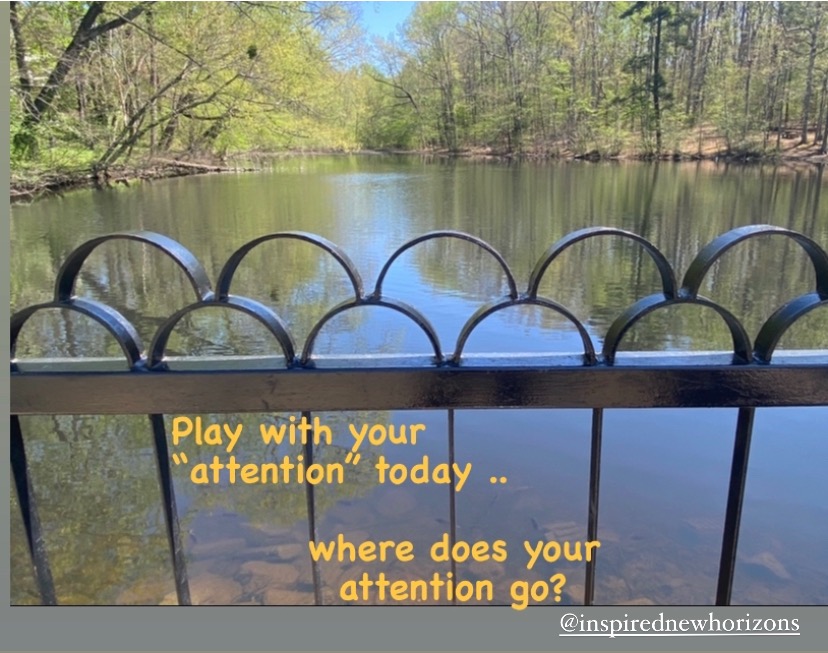
This last gummy is an invitation to spend a day discovering where you attention goes while you are busy engaged in life. We’ve all had that experience of pouring a cup of steaming hot coffee, and eagerly anticipating enjoying it fully. A few minutes later, our mug is empty and we don’t even remember drinking that coffee. Or we are driving to the grocery store and realize that our mind has wandered elsewhere and is not paying attention to the upcoming traffic jam.

The truth is that our attention is constantly activating our brain. We are “feeding” our brain all kinds of things throughout the day — and some of it is like junk food or junk mail. Do you want to be more discerning about what you activate in your brain?

If you answered yes, then start paying attention to your attention. In fact, play with your attention — it’s about the same experience as playing with a busy toddler who is always on the move. You wouldn’t let a toddler on their own for a day, but we often do just tat with our attention.

We let our attention run off and meander into all kinds of places while we are simultaneously driving a car, making dinner, playing a game with our kids, or talking on the phone with a friend. Start paying attention to your meandering attention. See if you can bring it back to the present moment. See if you can keep it focused for even a few minutes on the task at hand.

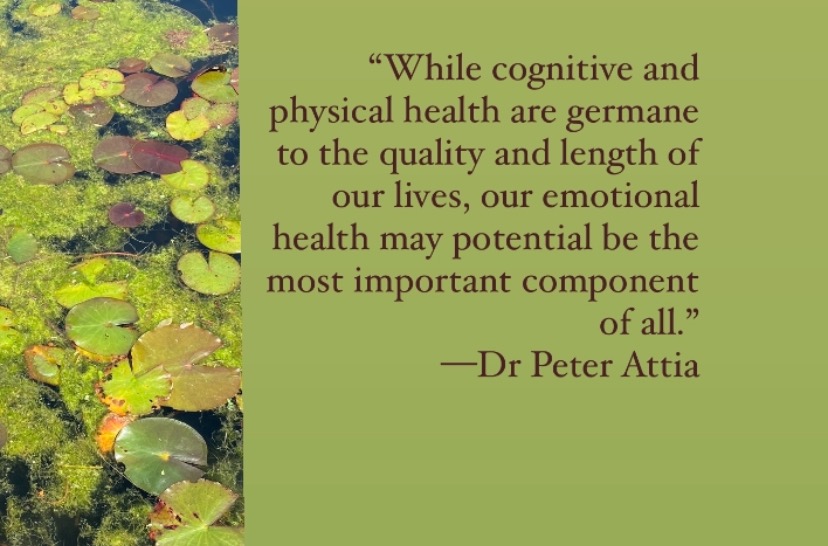
We can become very skillful at using our attention intentionally. This is so good for our brains and extremely helpful for our emotional health. Dr. Peter Attia, author of the longevity book, Outlive, reinforces the fact that we are most content and satisfied with our life – in the present moment.

Where attention goes, neural firing flows and neural connection grows. We are actually activating important parts of our brain with our focused attention. If we want to cultivate a growth mindset and keep our brains upgraded as often as we do our phones, we need to pay attention to how we are using and directing our attention.

By the way, there is a bonus feature to paying attention in our present moments. We become much more skillful at tapping in to all 8 of our senses. The salient qualities of our remarkable brains tend to come online and stay online in an integrated fashion.

The more we cultivate greater self-awareness, the more we are likely to equally grow our “other awareness”. This helps us tap into another awesome ability we have — the ability to “attune” to others. Think of this skill set like putting on your oxygen mask first. You attend to yourself and get grounded, calm and clear-minded. (A few deep breaths will fast track this practice). Then you attune to what your child or partner may be experiencing. We co-regulate each other, so if you can meet the moment with some empathy and understanding, chances are you will be offering what you instinctively know would feel helpful to you in a similar situation.

RECOMMENDED RESOURCES:
Be sure to follow me on Instagram @inspirednewhorizons to get your daily gummy of wisdom. I distill lots of research into short supplements for your personal growth

A Mindfulness Community

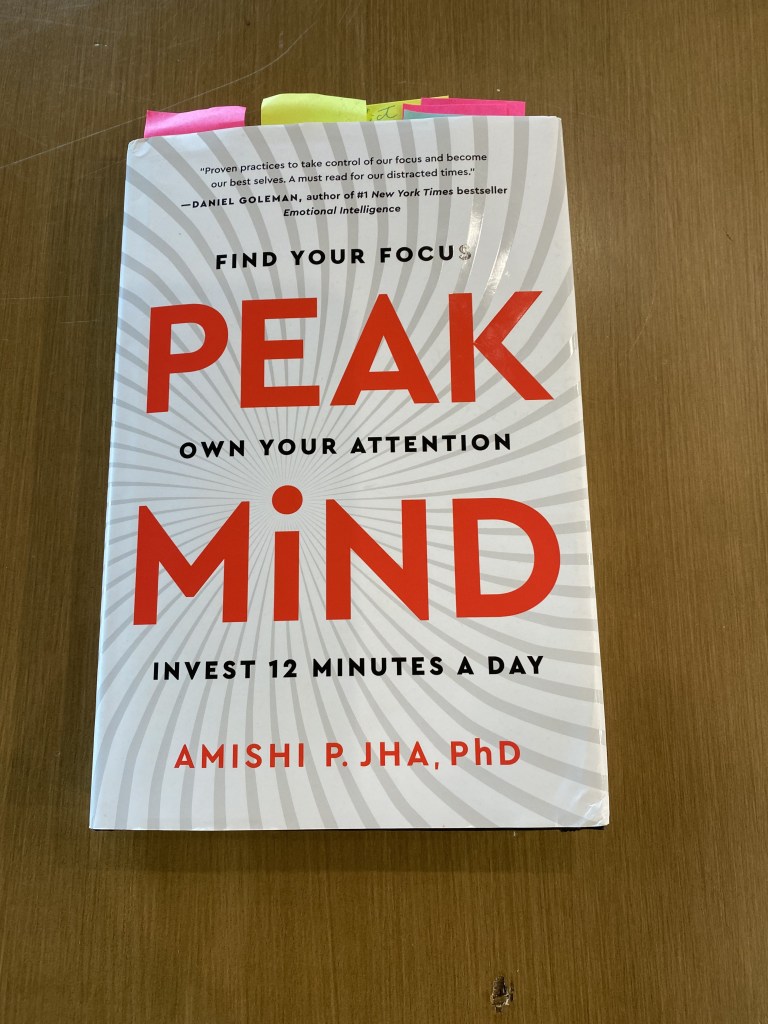
Sitting comfortably in my cozy chair in front of the warm glow of my crackling fireplace, I was curled up with a cup of tea and my newest favorite book, Peak Mind. Each page revealed such fascinating stories to support the research on mindfulness that neuroscientist Dr. Amishi Jha wrote about.

I knew from personal experience that mindfulness and meditation were game-changers for my own life over the past 5 years. Yet reading these compelling stories about the dynamic impact mindfulness practices had on military leaders, as well as medical and business professionals had fully captivated my attention.

My mind drifted (with my permission) to another book, The Four Pivots; Reimagining Justice, Reimagining Ourselves by Dr. Shawn Ginwright. The four transformative pivots are: Awareness, Connection, Vision and Presence. His book is grounded in cutting-edge research and Dr. Ginwright’s insight and lived experiences. He addresses the power of doing our own mirror work to help us uncover hidden biases and discover new perspectives. He stresses the importance of our need for connection with each other.

These same attributes are found in mindfulness – they are the very premise of Peak Mind. It was becoming more evident with each page of Peak Mind that “owning our attention” through mindfulness practices could bring about dramatic results not only in our personal lives, but also in our communities. Dr. Ginwright’s book and Dr. Jha’s book fit together like puzzle pieces for what is possible — and what is so urgently needed.

I allowed myself to “mind wander” imagining communities where skillful practitioners of mindfulness were woven into the fabric of our neighborhoods, schools, hospitals, businesses, law enforcement, etc.

I returned my full attention back to my book to make a most surprising discovery.

At the bottom of page 251 of Peak Mind, Dr. Jha begins to unfold the story of Sara Flitner, a strategy and communication consultant who decided to run for mayor in 2012 — in Jackson Hole, Wyoming. For those of you reading this who are not aware, I live on the other side of Jackson Hole, across the Grand Teton Pass, in Victor Idaho.

My curiosity went on high alert — what is Sara Flitner’s story? If she is featured in Dr. Jha’s book, mindfulness must be a key component of her story. Is it possible that someone running for mayor in a neighboring community had a transformational mindfulness experience embedded in her story? My full attention was captured. I read on.

Here’s the excerpt from Peak Mind that begins Sara’s story:

Sara Flitner enjoyed running her own company, and she loved applying her skills, like critical thinking and empathy, to solving complex problems. She saw a lot of issues in her community –Jackson Hole, Wyoming, which is adjacent to the tourist meccas of Grand Teton and Yellowstone National Parks. Jackson had one of the highest socioeconomic divides in the nation, and with that came issues of high rates of depression and substance abuse, homelessness, high stress and more. Sara thought she might be able to make a difference through her leadership and by influencing policy. She felt passionate about trying to move the needle from inside the system. Her goal, she says now, was to “infiltrate positions of power with compassion, civility, and basic decency and regard for fellow humans.” (Excerpted from Peak Mind)

I stopped reading to let all that wash over me. I allowed myself a little “mind wandering”…..

In my creative imagination, I conjured Sara Flitner calling Brene Brown at some point in the past and over coffee and a few hearty laughs, they brainstormed a new kind of leadership. While Brene Brown didn’t publish Dare to Lead; Brave Work, Tough Conversations, Whole Hearts until 2018, it certainly seems as though both Sara and Brene were on a similar wavelength about a growing need for a daring new approach to leadership.

Sara Flitner decided to test the waters with her mindfulness-based approach to leadership — and she won the Jackson Hole mayoral election in 2012.

When Dr. Jha was researching Sara’s story, she asked the pointed question — “how did it go?” Sarah laughed, “I walked right into the eye of the storm.” She discovered the reality of just how divisive politics are, even on a local level.

It seems evident that the community (the voters) wanted the same things that Sara offered in her platform. Perhaps they were using their own imaginations to envision something better for their community, their neighbors, their children. Maybe they did have a deeper realization of the interconnectedness of everyone that contributes to making Jackson Hole and Yellowstone a “bucket list” destination for the millions of tourists who visit every year. There may have been a growing awareness that socioeconomic disparities could no longer be ignored.

I’ll interject that when you live here, you come to personally know the young people who comprise a large percentage of those that make our successful tourism sector run so smoothly. These enthusiastic hard workers operate ski lifts, provide childcare, give ski and snowboard lessons, are the clerks, wait staff, maintenance and cleaning staff of stores, restaurants, hotels and more. In the summer months, they are outdoor activities guides and national park employees. We know from conversations that these young adults struggle with limited affordable housing, rising gas and food prices. Our interactions expand the awareness of the disparities right in front of our eyes within our communities.

In her book, Braving the Wilderness, Brene Brown urges us to move closer to each other and says that “people are hard to hate close up”. I’d add that people are hard to “ignore” close up. I’d like to think that this was happening organically here in Jackson Hole when Sara Flitner ran for mayor. That there was a growing awareness of how interdependent the entirety of the population was and how it was possible, even necessary, to do better.

Yet a big roadblock to implementing change was the impediment of politics. Does a loyalty to party and resistance to change create blindspots to common ground and civility? Or could it be that not using our incredible brains to their fullest potential is the real roadblock?

“It’s heartbreaking to see the kind of suffering we’ll lay on each other when we act like there’s some kind of budget for compassion or empathy. We have this attitude of “I’ll save my compassion for the people I like, not for you. It’s primitive brain reasoning, when we have — right here in our own heads — much more advanced technology available to us.” — Sara Flitner

Throughout her two year term as mayor, Sara relied heavily on her mindfulness practice to help her navigate through painful, difficult and disillusioning times. She shared with Dr. Jha that “her mindfulness practice threw her a “lifeline” because of the way that it helped her connect with others and get things done – especially when those interactions were adversarial and fraught with conflict.”

Sara Flitner was on to something big when she recognized that “primitive brain reasoning” was a major roadblock. This is profoundly true not only for the community challenges we face, it is emphatically true for us as individuals. We are often unconsciously “stuck” on the default mode of our most incredible brains.

To fully unpack the default mode of our brain and how our implicit biases get embedded in long term memory — and how quickly they get retrieved when we are in high stress situations — I urge you to read Peak Mind. Here are some key takeaways:

The brain is in “simulation mode” at all times. Simulation mode gives us the mental models that guide our thinking, decision making and actions. The key ingredients of simulation mode are memories of events of our past, fragments of those memories, plus everything else we have learned and remembered. Then we add our capacity to think, reason and forecast! All of this happens fast — in the moment as events are unfolding.

Dr. Jha explains that part of the reason our simulations (i.e stories) are so powerful is that they become a kind of shorthand for framing a current situation or problem. This shorthand efficiency frees up cognitive resources to do other things. BUT these simulations/stories constrain information processing. They capture and keep our attention locked onto a subset of data. The result? Our perceptions, our thinking and even our decisions are constrained.

Why does this matter? When our simulations/stories are wrong, then our resulting actions and decisions can be skewed wrong too — because of the way our simulations/stories interacts with our attention.

One final caveat — our simulations are so effective that we get fused and persuaded by them. If a key ingredient of our simulation is a stressful memory, our brains and bodies react as if it is a real and current event — and we will experience the release of stress hormones. We will actually begin to “feel” we are currently experiencing the simulated event.

If you let all of this sink in, you can comprehend how crucial it is for first responders, law enforcement, surgeons, military personnel, firefighters and others in high stress jobs to not get caught in “simulations.” The life-saving and life altering real life stories of these very types of professionals will have you on the edge of your seat when you read Peak Mind. One bad decision made because it is based on a wrong simulation can have devastating results.

It should be easy to comprehend how using our brains to their fullest potential — as the highly advanced technological operating system it actually is — would be a game-changer for our individual lives and for our collective problem solving.

The two biggest roadblocks to tapping into all the functions and features of our brains is (1) Being unconsciously stuck in default mode and (2) being unaware of how we are wasting our attention. It would be like having dynamic safety and navigational components in your new car and never using them.

The reality is that many of us are going through life on an outdated auto-pilot. Lots of tiny dysregulated emotional responses can erode our most valued relationship. They also spill out into our workplaces and communities.

As humans, we are hard-wired to co-regulate each other — and we are wired for connection. The key to getting us to operate at a higher and more rewarding efficiency level is to “upgrade” our most amazing brain. Neuroscience is providing us with the knowledge and the tools to install the upgrade. Mindfulness practices are the foundational core.

Over a year ago I blogged about how so many invaluable diversified resources were intersecting in the personal growth arena. It is becoming evident that those same resources are melding together to forge an evolving infrastructure for socioeconomic change as well.

I see this unfolding organically with my friends who are committed to personal growth, self-awareness and mindfulness. I’ve seen the positive impacts their inner work has had within their families, their careers, circles of friends and their community involvement.

It is also evident in the books and podcasts that feel like pieces of a bigger puzzle — each subject offering insights and knowledge that fit together with an improved framework for coming together to address complex, nuanced issues with clarity, compassion and creativity.

Right here, in my own community, there is yet another meaningful example of this positive change. Sara Flitner, former mayor of Jackson Hole, continues her mindfulness influence and outreach:

Sara founded Becoming Jackson Whole, an organization dedicated to training leaders across all arenas — community service, health, education, business, law enforcement and more – in the kinds of evidence-based mindfulness skills that help build resilience and enable people to thrive personally and accomplish more professionally. (excerpted from the book, Peak Mind)

The Becoming Jackson Whole website has a blue banner across the top that reads “We’re on a mission to make mindfulness second nature in Jackson Hole.”

A coordinating banner on the About Page shares this: “Helping our community respond to the challenges of our times with focus, compassion and resilience. Empowering leaders to create change.”

Guess who provided the training for these local community leaders? Dr. Amishi Jha, author of Peak Mind. I’ve come full circle with my story of how I discovered that a subject near and dear to me — mindfulness — was actually making a difference in my own community. It might explain why I’ve discovered so many people at the local book store and coffee shops who are reading similar books and who readily engage in the deeper conversations I thrive on. What I know for sure is that the more people become discerning about where they are placing their attention, and the more skilled they become at tapping into the full potential of their brains, the better for all of us.

RECOMMENDED RESOURCES:

Peak Mind will open your eyes to how you utilize your ATTENTION and how to take control of it.

The best primer I have found for revealing the incredible benefits of mindfulness and mindfulness practices.

The Four Pivots connects the dots between the personal growth work we do for ourselves and how it shifts our awareness and perspectives when thinking about — and engaging in — meaningful social changes

For anyone transitioning into a new chapter of their live, this insightful book will help you discover how purpose can be both a source of groundedness and fulfillment.

THIS IS PART OF MY LOCAL COMMUNITY — THE GRAND TETONS

Visit this Website – Becoming Jackson Whole https://becomingjacksonwhole.org/about-nav

May I Have Your Attention?

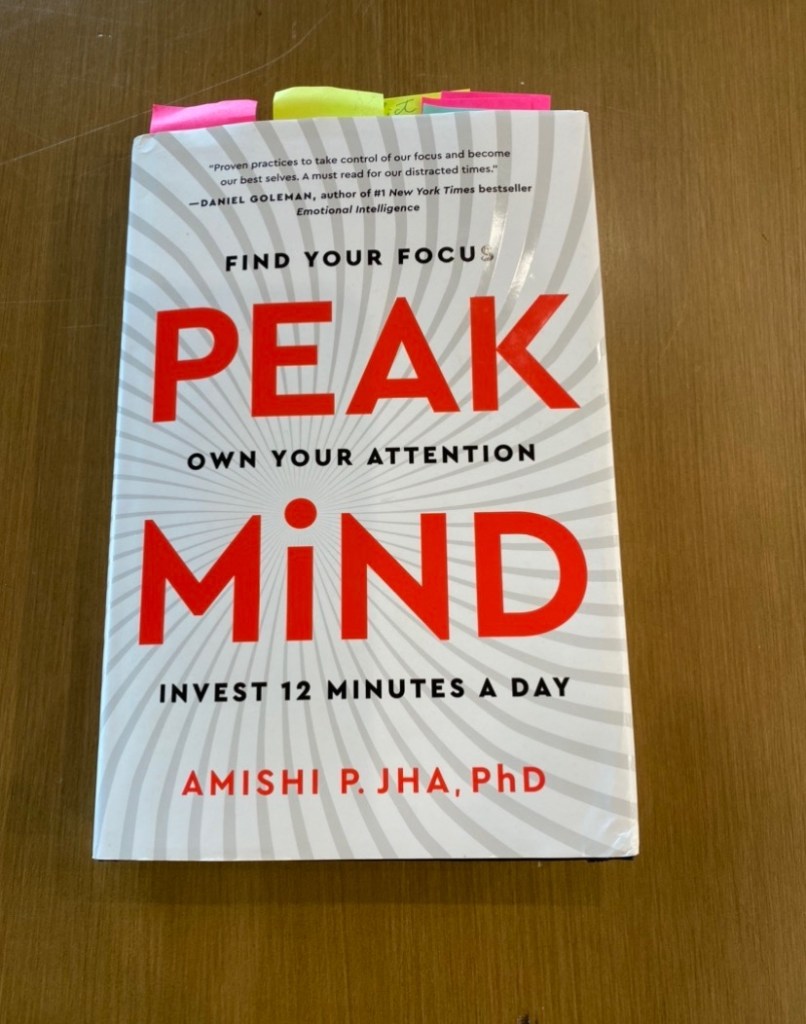
This morning, I was sitting in front of my fireplace with a cup of piping hot peppermint tea while a confetti snow fell over the mountains and canyon. In my hands, I held a book, a yellow highlighter and hot pink post-it notes. I heard the gentle sloshing of the water in the washing machine and the distant bark of the neighbor’s playful dog. I was practicing using my brain’s flashlight to focus my complete attention on each and every thing I have just described, one at a time.

The book I am reading is Peak Mind; Find Your Focus, Own Your Attention, Invest 12 Minutes a Day. I confess that I am so into this book that I find myself giggling, gasping and nodding in agreement with each and every page. This book with all its revelations about our brains and our attention has me captivated.

I stumbled into mindfulness and meditation six years ago in an attempt to cultivate self-awareness and an ability to stay in the present moment. I had a hard time articulating to others, in a succinct way, what I was discovering with both. I often used an analogy involving yoga or golf to attempt to explain how the small daily practices, done consistently over time, led to quite noticeable positive changes months later.

And now, in my hands, is the most incredible reference book I could ever dream of having — and it is so relatable, so captivating that I cannot imagine anyone not wanting to read it. Even if you have no interest whatsoever in mindfulness and meditation, the knowledge you will gain about your brain, and most importantly about your incredible superpower –ATTENTION — should be more than ample to spark your interest.

Your attention determines:

What you perceive, learn and remember;

how steady or how reactive you feel;

which decisions you make and actions you take;

how you interact with others;

and ultimately your sense of fulfillment and accomplishment. (Excerpted from page 4 of Peak Mind)

If that list isn’t enough to pique your interest, consider this: Your attention now has a commercial value. “If you aren’t paying for the product, you ARE the product.” As Dr. Amishi Jha states, more precisely it is your attention that is the product — a commodity that can be sold to the highest bidder. Did you know that we now have attention merchants and attention markets? And this forecasts the possibility of trading in human “attention futures” along with metals, oils, grains and currency.

I’m guessing that you might be paying more attention now…..

If our attention is so invaluable that it has become a commodity, perhaps that will be the wake up call that compels us to take control of what is rightfully ours and attend to it much like we would our physical health.

We tend to accept that, to improve our physical health, we need to engage in physical exercise. Somehow, we just don’t think the same way about psychological health or cognitive capacity. But we should! Just as specific types of physical training can strengthen certain muscles groups, this type of mental training can strengthen attention — if we do it. (Excerpted from page 15, the Chapter entitled A Mental Workout that Works, from the book Peak Mind)

Go back and re-read that list above in the blue background. Everything on that list is what we are striving for when we talk about personal development. It encompasses emotional regulation, self-awareness, good decision making, learning from past experiences, gaining knowledge and wisdom, changing behavioral patterns and cultivating gratitude. It all gets boiled down to one simple yet profound factor — attention.

Dr. Jha is a gifted writer who uses her personal experiences, decades of fascinating research and relatable metaphors to walk us through the operations manual of our complex brain, how attention gets hijacked, how we can de-clutter our minds and strengthen our focus so that we fully experience more of our lives.

“What you pay attention to is your life.” (Excerpted from page 26, Chapter entitled Attention is Your SuperPower, the book Peak Mind)

Just sit with that for a few minutes — What you pay attention to IS your life. Check your daily screen usage if you dare. Ponder that on average we have over 6,000 thoughts per day. Think about all the things you routinely juggle on a daily basis. Dr. Jha points out that the problem is not all the things that are vying for our attention every single day, it is that we lack internal cues about where our attention actually is — moment to moment. The solution? Pay attention to your attention.

Dr. Jha reveals that attention is both a superpower AND it is fragile. She identifies 3 main things that are “kryptonite” for our fragile attention: stress, threat and poor mood.

Stress: That perceived feeling of being overwhelmed can jettison us into time travel: rumination about the past or worry about the future. These only aggravate and accelerate the amount of stress we are experiencing.

“When you experience too much stress for too long, you get caught in the downward spiral of attention degradation; the worse attention gets, the less you are able to control it; the less you’re able to control it, the worse the stress gets.” (Excerpted from page 47, the chapter ….But There’s Kryptonite, the book Peak Mind)

Threat: Whether real or imagined, threat makes it nearly impossible to focus on any task at hand or even stay on track in a heated conversation. Our ability to direct our attention at will is gone. Threat vigilance increases (we are triggered to protect ourselves) and our attention become stimulus-driven (we are on keen lookout for anything that is threat-related.) No matter how hard we may try, the threat becomes the focal point of our attention. Think back on a disagreement you had where you felt that your integrity or intentions were under attack, and even now you may feel heat rising in your body. Was it hard to focus solely on the content of the disagreement?

“Even if you have the highest IQ on the block, here’s a truth about human brains: in some ways, they haven’t changed in thirty-five thousand years. If the brain believes it’s under threat, it’s going to reconfigure attention accordingly, regardless of whether what’s actually in front of you is a threat.” (Excerpted from page 50, chapter ….But There’s Kryptonite, the book Peak Mind)

Poor Mood: “Everything from chronic depression to how you feel after receiving bad news can constitute poor mood” explains Dr. Jha. No matter the source, the effect can send us into loops of repetitive negative thoughts. Performance of cognitive tasks that involve both attention and working memory worsen in the midst of poor mood. This worsening of attention and working memory affects accuracy, slows the speed at which the task is accomplished and inhibits varied responses to the task at hand.

Dr. Jha says that once we wrap our heads around the 3 components of kryptonite, might say — “ok, so, I’ll simply reduce my stress, be on the lookout for a bad mood and make sure I’m not feeling threatened by stuff that isn’t a real threat.”

There’s just one major problem – kryptonite is not only good at sabotaging our attention, it is SNEAKY!

“The fact is, we’re really bad at identifying forces that degrade attention, even when we’re immersed in them. We often aren’t able to recognize them for what they are. And further, without training to gain a stronger awareness of our own minds, we simply aren’t very cognizant of the effects. Excerpted from page 51, the chapter ….But There’s Kryptonite, the book Peak Mind).

Let’s stop right there for a moment and take in some good. Attention is our superpower and while it is fragile, it is also trainable! Did you just breathe a sigh of relief?

“It is possible to change the way our attention systems operate. This is a critical new discovery, not only because we ARE missing half our lives, but because the half we’re here for can feel like a constant struggle. (Excerpted from page 6, Introduction to the book, Peak Mind.

As I read Peak Mind, and share these insights with you in this post, I find myself feeling so incredibly grateful. I know beyond the shadow of a doubt that this book will change lives. This “critical new discovery” is combining the wisdom of centuries old meditative practices with groundbreaking neuroscience discoveries. It feels like the beginning of a new era of discoveries for mental health, Alzheimer’s, dementia, cognition, emotional intelligence and resilience.

In the past I did have a hard time conveying to others just how game-changing mindfulness and meditation can be. I’d talk about neuroscience and neuroplasticity and people would glaze over. I’d talk about being in the “present moment” and eyes would roll.

Even more challenging was being able to give someone a concrete plan for cultivating mindfulness and starting a daily meditation practice of their own. I’d suggest books or podcasts but in the end it really was a DIY approach.

Lastly, it was hardest still to really get across to others how transformational mindfulness and meditation had been in my day to day life: How I stopped ruminating and needless worrying, how I am able rather effortlessly to bring my full attention back to the present moment when I notice it drifting off. I am now able to be in the midst of a lot of negative energy and remain detached from it, rooted in my calm center and much more capable of observing with clarity. I have freed myself from old emotional triggers. I am more resilient, more rested, and definitely more relaxed. Even when I am dreaming, my mindfulness shows up! I am a strong testament for everything that Dr. Amisha Jha offers in her book, Peak Mind.

In her book, Dr. Jha offers the 12 minute daily exercise that will put you on a path to reclaiming your attention and all its superpowers. Over the course of just 5 short weeks, she will guide you through Core Training for the Brain. It’s the beginning of a daily and lifelong practice that will undoubtedly change the quality of your life in remarkable ways.

It’s exciting that a resource like Peak Mind is available. The more we know, the more we grow!

RECOMMENDED RESOURCES:

FINDING FOCUS & OWNING YOUR ATTENTION WITH DR. AMISHI JHA, PhD https://brenebrown.com/podcast/finding-focus-and-owning-your-attention/