Corks Rising

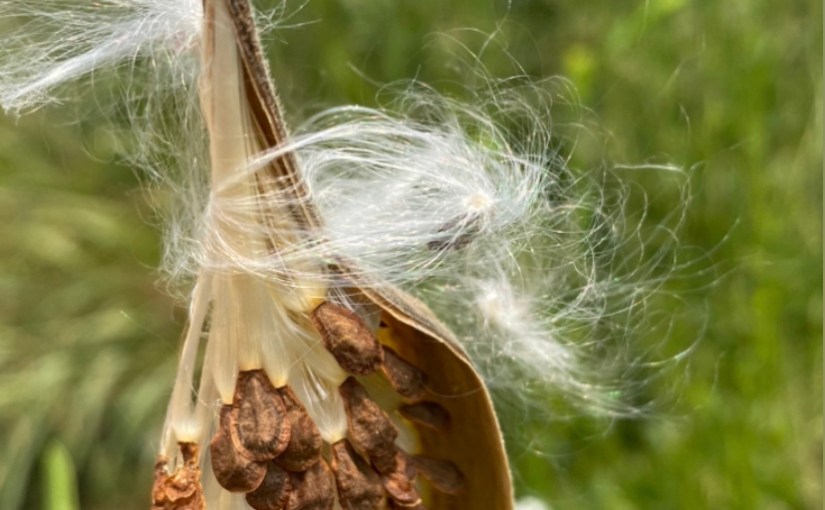
When I first started blogging about personal growth 8 years ago, I had a glass jar on my kitchen windowsill with a cork bobbing in water. It was my touchstone to remind myself that each of us plays an important role in lifting each other’s cork. We need help to stay afloat.

This morning, I read something in Hidden Potential by Adam Grant, that transported me back to that moment in time. It felt surreal and spine-tingling to be in two places at once. I was at the very beginning of my self discovery journey placing that cork in the jar –AND — I was also fully present in my apartment taking stock of just how far I have truly come on that personal growth journey. A smile stretched across my face as I took stock of how my own cork has risen over 8 years — and most importantly, how so many others’ corks have also risen.

At the onset of my personal growth journey, I felt alone in the work – one cork in a small glass jar. Today the massive ocean is full of corks and I am merely one of many. I could not be happier with the company I am keeping.

For over 20 years, Brene Brown has been planting seeds of the very work we are deeply steeped in today. She braved the wilderness back then, schlepping her first book from the trunk of her car and mustering courage to give a Ted Talk on shame and vulnerability. She did not have a crystal ball to guide her — she just followed her heart and her calling, blazing a path and planting seeds.

There is a Greek proverb that reminds us that wise men plant seeds of trees, the shade of which they will never sit under, bubbled up into my consciousness.

Brene Brown planted the seeds of human connection with an emphasis on vulnerability, the importance of our emotions, and the necessary healing work of addressing old generational patterns — and those seeds took root.

It has taken nearly two decades for the seeds to grow into the full awareness that we got a lot of things wrong about humanity, how the brain and body really work, and what is truly possible for our evolution on so many fronts.

I sat under the shade of the tree that Brene planted just yesterday. I listened to Scott Galloway and Rich Roll openly discuss vulnerability on Rich’s podcast. It was visceral to experience this refreshingly deep and honest conversation with two men in their fifties get real about their emotions and what they want for their sons and daughters.

Even more importantly, is the education and messaging that Rich Roll and Scott Galloway are collaborating on — the need for us all to take very seriously the crisis of loneliness, depression, social isolation and lack of human connection that is paralyzing our younger generations.

When I began my personal growth journey, I read Dr. Bruce Perry’s compelling book, Born for Love. In that book, he was sounding the alarm for our growing empathy poverty, but his voice was drowned out as our collective attention turned to the novelty of social media. We blatantly ignored the warning and gleefully plugged into social media and our devices, so certain that we’d find the connection we craved through technology.

Today, Jonathan Haidt draws a through line from the early 2010’s to today and holds up the reality of our human condition for us to see clearly. Our younger generations need to be unplugged and reconnected to reality. In his book, the Anxious Generation, he is carrying forward the message that Dr. Bruce Perry warned us of in Born for Love. Our growing lack of empathy, our self-imposed social isolation and addiction to devices, has created an epidemic of AI – artificial intimacy. It is Esther Perel who coined that term – Artificial Intimacy. She is the dynamic psychotherapist who fearlessly weeds out conflict between couples to help them discover that plot of ground begging for seeds of love, intimacy and connection to be planted.

We can no longer blatantly ignore what is hidden in plain sight. We must focus our attention, resources and real life support on our children.

Ask anyone who has ever hit rock bottom, and they will tell you that it was in their lowest place that they faced the truth that in order for meaningful change to happen, they had to dig deeper – and do the hard work of rebuilding.

This is where we all are today – collectively at rock bottom with an opportunity to nurture the seeds that have been planted over the past twenty years in psychology, behavioral science, neuroscience and modern medicine.

It is my strong belief that we have reached this breaking point because humans are hard-wired for connection and we do not thrive in continual chaos and uncertainty. If this dilemma were happening in the animal kingdom, our hearts would be breaking open as we watched adult animals leave their young unattended without teaching them any life skills. Their basic instincts would atrophy over time.

If you are familiar with epigenetics, then you may realize that for generations we have passed down unprocessed trauma and overloads of stress and anxiety. Dysfunctional generational patterns are the emotional inheritance that has never been unpacked. Old parenting models failed to install one of the key components of the human operating system — emotional intelligence. This combination is the one-two punch that delivers a compelling warning to us. Unpack the old emotional baggage, heal old traumas. The time has come. Our kids are on overload and they are drowning in cognitive dissonance.

The reality is that we have made this work of unpacking emotional baggage, healing old traumas and installing emotional intelligence so much harder than it needs to be. Psychology has shifted dramatically in the past decade with a focus on somatic healing and understanding how our brains actually work. Neuroscience fires up this better approach by highlighting the neuroplasticity of our brains and how we can re-wire healthier neural pathways in a relatively short amount of time.

As I wrote about in my last blog post, the creative coalescing of so many fields and modalities is helping us fast-track the triage that we need — and can no longer ignore. This creative coalescing is the little forest that has grown from the many seeds that have been planted over the past twenty years.

As many of you know, I am impassioned about teaching our kids all about their innate and integral emotional intelligence. I have a “Marie Kondo” approach to cleaning out generational baggage – let’s stop dragging it around, unpacked and continually weighing us down. Let’s travel more lightly through life and make new discoveries.

By the way, have you noticed how mainstreamed words like vulnerability, mindfulness, self-awareness and emotional intelligence have become? Little seeds have been planted over and over again by people like Brene Brown, Dr. Marc Brackett, Andrew Huberman, Kristin Neff, Dr. Lisa Feldman Barrett, Arthur C. Brooks, Dr. Becky Kennedy, Dr. Peter Attia — and a host of others. They are the corks that jumped into the sea of change and lifted us all up.

So many resources have cross-pollinated that little forest that began with a few seeds several decades ago. We are at the tipping point of a huge, positive human evolution. Just the other day, author Arthur C. Brooks told Ryan Holiday that we now have the neuroscience to prove all the wisdom of the ancient philosophers. His excitement and enthusiasm was contagious.

Here’s what I know — Brene Brown did not have a crystal ball twenty-five years ago, but she felt a nudge so strong she could not resist it. She poured herself into shame and vulnerability and stayed the course because it mattered. She networked the hell out of her platforms during Covid, lifting others up when we were most receptive to learning and discovering all kinds of new things – the missing parts we didn’t know we needed. Brene was planting seeds of awareness all throughout our dormant period.

I used to think that the law of attraction was mostly like wishful thinking — but through Brene I have learned that the law of attraction is sharing, networking and lifting each other up. That is the momentum that brings the changes and opportunities we want.

Michael O’Brien (@the.mindful.cyclist) was also a recent guest on the Rich Roll podcast. His recovery from a near-death cycling experience was the catalyst for his seminal shift that changed his perspective, mindset and actions. He expressed this profound wisdom:

“Things don’t happen for a reason. Things happen….and we give it meaning.” — Michael O’Brien

I am taking this profound wisdom to heart today. Things have been happening FOR us for nearly two decades and we can give it a transformational new meaning and pivotal new direction.

There has been a big clearing of the weeds that prevented us from seeing what was possible for us. Seeds were planted and cross pollinating was happening. mostly in the background.

The self help space got a little traction with mindfulness about a decade ago. It was a wake up call but we kept hitting the snooze button. We turned to devices and poor coping skills; social media was a siren call we falsely believed would bring us the connection we craved. Our attention became a commodity traded in futures markets.

Unfortunately our devices and social media stole our attention and mindfulness; it amplified our disconnection from real life. Highlight reels and filters gave us a very distorted picture of the beautiful complexity and realities of life.

What it also took from us was the fuel that runs our human engines – the neural energy and connectivity we get from being with each other. There is so much that neuroscience has to teach us about how the human brain and body works – how we jumpstart, co-regulate and scaffold each other. We know more about our incredible brains and how to care for them than we ever did before.

So, taking Michael O’Brien’s wisdom to heart, the meaning we can give to this moment is the discovery that we are better together, that human connectivity is integral to our physical, emotional and mental health, and our longevity.

We have the rare opportunity to lift up our kids out of their malaise with greater knowledge, tools and awareness than we have ever had before. We can have a dramatic, positive impact in short order if we meet this moment quite differently than we ever have before.

Do yourself a favor and click that link to read about Michael’s transformational life experience. Then listen to his deeper conversation with Rich on the Rich Roll Podcast.

Check out this episode of the Rich Roll Podcast with Prof G – Scott Galloway. At about 54 minutes in you will hear the 5 minute deep conversation about vulnerability and emotions. https://podcasts.apple.com/us/podcast/the-rich-roll-podcast/id582272991

Daily Gummy of Wisdom RoundUp

One of the most rewarding experiences I have is recognizing when there are a lot of synchronicities in play amongst a diverse community of people from whom I am learning all kinds of things. And this has been happening often in recent weeks. I hope you will enjoy this Daily Gummy Roundup that highlights what is top of mind for many right now:

This Daily Gummy of Wisdom was shared just yesterday, on September 3rd, 2023. Here is what I offered:

Just this morning, one of my favorite business and tech resources, Professor Scott Galloway, shared a Harvard Health review on the psychological benefits of crying — along with his personal insights that young men are even more afraid than older men to be seen crying. For the record, Scott is busy writing his next book on contemporary masculinity. This is a subject very near and dear to Scott’s heart as the father of two teenaged sons. Scott has long been a proponent of helping our young men integrate the full scope of their emotions into their developing bodies and brains, dropping old stereotypes and societal conditioning about men and their emotions, and the importance of having quality male role models especially for elementary and middle school aged boys. It is not at all unusual for Scott Galloway to push the envelope in the right direction, so it was no surprise (and every encouraging) that he would be promoting normalizing crying for men — especially younger men.

We can start this game-changing pivot by responding to our little boys and girls without any gender bias. They are simply small human beings with very few emotional resources and skills, yet — and their brains are not fully developed enough to support what we often expect of them. Let’s normalize crying for our boys with the understanding that their bodies and brains are supporting them in a very natural, normal and psychological healthy way. Let’s encourage men to cry too – and let’s not judge them for expressing deep emotions; let’s have a deep appreciation for their capacity to be that in touch with what matters most to them.

This Daily Gummy of Wisdom was shared on August 31st, 2023:

I wrote this Daily Gummy a few weeks ago and cued it up to post on August 31st. Imagine my surprise when listening to the Rich Roll podcast which dropped on August 28th, I heard Rich’s guest, Brad Stulberg talk about how we can spend far too much time peeling off the layers of our onion and never really get around to doing the actual work of healing and growing from what we are learning.

Wow – did that insight really resonate with me. The older we are, the more layers we have in our onion. Do this work earlier in life and there are hopefully fewer layers to peel back. Do it at 40 and live the next fifty years without fossilizing the layers.

But the real take away from this Rich Roll podcast entitled “Rugged Flexibility and the Neuroscience of Expectations” with author and coach, Brad Stulberg, is that at some point, you just need to do the work.

Over the past week or so, I have found myself completely captivated by a number of episodes in Esther Perel’s two podcast series. She hosts “Where Do We Begin” which is focused on personal relationships and “How’s Work?” where she tackles the complex issue of human behaviors and teamwork dynamics in the workplace. In both of these podcast series, it is very common for her to skillfully use “recategorization” to help people find more common ground than they realize they have.

Very often, once partners and colleagues begin to see each other through a shared identity, they soften in their strongly held positions and discover empathy and awareness they simply could not see previously. Esther Perel is a Belgian-American psychotherapist, with a global reputation for her transformational relationship counseling successes. She has a rare surgical precision to get to the root cause of the most delicate and complex relationships issues – and she does so with great empathy, compassion and kind candor.

It has been noteworthy that she often incorporates the reality that we all possess multiple identities and may have great difficulty shifting from one role to another with skillful ease. Esther suggests creating cues to help us refocus our attention to each relationship. Even if you work at home, changing from your pjs to work attire before you sit down at the kitchen table for a Zoom call, will help you and your brain make the distinction that you are a co-worker and teammate now. Changing at the end of the day into casual clothes and taking a walk outdoors can help you make a clear shift from work to home and family.

Esther most definitely leaves a lasting impression as you listen in on her counseling sessions through her two dynamic podcasts. It is very easy to see ourselves in the conversations and relationship issues that she unpacks with her clients. The big take-away from Esther Perel’s work is that there is so much more to all of us than meets the eye — AND – we have more in common that we realize.

I hope you enjoyed this Daily Gummy of Wisdom Roundup — and that you too will start to pay attention to the synchronicities that are showing up across all aspects of our lives. There is most definitely a growing awareness of the importance of our emotional health, the psychological benefits that we derive when we know more about the role of our emotions, and our basic human need for real connection.

If you like what you’re learning and want a daily supplement for your emotional health and self-discovery, sign up to get my Daily Gummy of Wisdom popped into your inbox. Here’s the sign up link: https://inspired-new-horizons.ck.page/3381cf137f

Check out Scott Galloway on his own podcast, the Prof G Podcast – and on the Pivot podcast with Kara Swisher. His most recent book is Adrift – America in 100 charts – a real eye opener. And check out his newsletter No Mercy/No Malice. https://www.profgalloway.com/

Discover the many resources that Rich Roll has to offer by checking out his website https://www.richroll.com and definitely check out his amazing Podcast:

If you aren’t familiar with Esther Perel, treat yourself and get to know her and her incredible work. Here’s the link to her website which is chock full of helpful resources: https://www.estherperel.com

Check out her two podcasts (and keep your eyes peeled for her to appear as a guest in other’s — she is really gaining traction and her work is relevant for this moment in time.

White Water Rapids of Life

When I was in my mid-40’s, I used to tell my friends that I was in the white water rapids of life without a paddle when my plate was too full. Life was coming at me fast and furious and I could barely catch my breath, let alone juggle it all.

It seemed, without fail, that after three or four months of pushing through, burning the candle at both ends, making endless sacrifices without discernment, I’d get sick or there would be one monumental family crisis that would grind the fast pace to a halt. At that moment, it would feel like my attempts to “shoot the rapids” left me stranded on the rocks, teetering precariously.

This pattern became so apparent that I’d find myself bracing for it. I could feel the tension mounting every 3 or four months and could feel it in my bones that we were heading for something cataclysmic. Looking back, I can see that bracing for it was also a lifelong pattern of mine. I could feel the ground trembling metaphorically and the only preventative action I took was to steel myself against the inevitable. I would harden up, silently willingly myself to take it — whatever “it” was.

If things were really out of control, I would embellish my story about the white water rapids of life — I would lament to my friends that this time I was in the white water rapids of life without a paddle AND life jackets. Clearly this was the graphic imagery that I used to declare to myself and others that I was in over my head.

This pattern dominated a few years in my mid-40’s – that time when we find ourselves doing some of the hardest life work ever. We are gaining traction in our careers, or deciding we want to change careers in the mid-stream of life. Our parenting has often moved into the more challenging waters of adolescence (maybe that is where I felt I had no life-jackets). Financially we find ourselves looking both backwards and forwards – what’s the balance on the mortgage and how we will fund college educations? No wonder I felt like I was in the white water rapids of life. There was in fact a lot of changes underfoot, all swirling around unseen obstacles as we headed into unchartered water.

When my book club friends and I share stories from that time in our lives, we discover that this is exactly how most of us were feeling during that stage of our lives. We all might describe it a little differently but the patterns bear much similarity.

We’d have these peaks and valleys that could literally be put onto a graph that resembled stock prices or an EKG. The troughs in those graphs were the times where we cried uncle and had no choice but to stop and catch our breath.

Those troughs were the brief respites we were forced to take due to illness, or the acknowledgement that we can’t control a lot that happens in life. They were times where we were so sick, we were mandated to stay in bed for a few days to regain our physical health. Or the times when we had to sit alone in the dark and reflect on what really mattered. Brene Brown aptly named this period of time in our lives as “the great unraveling”.

I recently revisited what Brene wrote in her 2018 blog post about this midlife unraveling and found myself holding my breath as I took in the magnitude and wisdom of her words:

Midlife is when the universe gently places her hands upon your shoulder, pulls you close and whispers in your ear: “I am not screwing around. All of this pretending and performing — these coping mechanisms that you’ve developed to protect yourself from feeling inadequate and getting hurt – has to go. Your armor is preventing you from growing into your gifts. I understand that you needed these protections when you were small. I understand that you believed your armor could help you secure all the things you needed to feel worthy and lovable, but you’re still searching and you’re more lost than ever. Time is growing short. There are unexplored adventures ahead of you. You can’t spend the rest of your life worrying about what other people think. You were born worthy of love and belonging. Courage and daring are coursing through your veins. You were made to live and love with your whole heart. It’s time to show up and be seen.” Brene Brown (see link to her blog at the end of this post.)

I often wonder if I had read a wisdom so profound in my mid-40’s how it might have landed on me. I’ll be honest, it’s highly doubtful that it would have resonated in the compelling way that it does today. When I close my eyes and sit with the feelings that emerge from reading it, I can transport myself back to what my own “white waters of life” were so earnestly trying to tell me.

Back then, I did not possess the knowledge and education that now underpins all that Brene imparted. In fact, when she gave us this pivotal message in 2018, we had not yet mainstreamed all that we were learning. Here we are 5 years later and that landscape has changed dramatically. Today it almost feel like a firehose has been turned on — and we are drenched in digestible neuroscience, engaging educational content as well as charismatic, dynamic leaders and teachers and endless resources. We are now fluent in emotional armor, childhood attachment styles and adaptive behavioral patterns. Emotional health has taken its rightful place at the top of the quality of life pyramid.

I couldn’t be happier that so many people of all ages are now absorbing this game-changing knowledge much earlier in their lives. Perhaps the mid-40’s and 50’s will no longer be the great “unraveling” but rather the “great transformation”. Imagine being able to shift gears in the mile markers of our life with vastly improved self-awareness and relationship skills. To be treating adolescence as the apprenticeship it truly is – and preparing our young people to go into the white water rapids of life with all the right tools, skills and burning desire to grow into their natural born gifts.

It is not longer just my wild imagination that envisions this phenomenal pivot, but the reality that we are already farther along on this transformational path than ever before.

There is rarely a day that I have a chat with someone where Dr. Andrew Huberman and his neuroscience podcast, the Huberman Lab are not mentioned. From neighbors to my dentist to seat mates on planes, Andrew Huberman has become a household name. Looking at the arc of his podcast popularity and the emerging topics he now discusses, we can create yet another graph that makes it clear that our trajectory for learning and the breakthroughs that are occurring are soaring.

I recently learned that Andrew Huberman started his highly successful podcast in 2021 because he wanted the general population to have the knowledge and tools they needed to support their physical and cognitive health through the pandemic. He was aware that we were not getting this invaluable information from our leadership and he wanted to educate people about the proactive steps they could be taking that were free, do-able and would have noticeable positive impact.

Think about this — Andrew Huberman saw a need and he stepped up to the plate. He has more than 3.5 million subscribed followers for his podcast launched in the midst of a pandemic. That’s 3.5 million people that have most likely changed their habits – like making consistent sleep a top priority, taking breaks from screens every 45 minutes, getting morning sunlight, changing their relationship with caffeine and alcohol, committing to varied exercise programs and understanding the impacts of their emotional health on their physical and cognitive health.

All of this happened one podcast episode at a time. Knowledge coming at a time of great need and receptivity; a willingness to put in the work and make changes; witnessing the positive effects of those changes and being motivated by all of it to learn more.

Andrew Huberman is throwing his net wide and bringing more diverse guests onto his podcast and for good reason. He is integrating teachings and research from other disciplines because they are all inter-connected to this bigger picture of current evolution. Breakthroughs are occurring fast right now and just like striking a match, they are catching fire quickly with those folks who are hungry to learn more.

The coalescing of personal growth, self development, mental health, emotional health with all the sciences was amplified during the pandemic. It was a collective moment – a tsunami in the white water rapids of our shared experience. It was a great unraveling. Go back now and re-read Brene’s insights for a mid-life unraveling and see if you can spot a similar message for our collective, complicated issues.

As each of us begins to do our own work, taking better care of ourselves and our families, with all that we learn from Andrew Huberman and others just like him, we are contributing to the greater good for everyone. Trust me, people are taking notice. Younger generations are looking at older generations and seeing the effects of ignoring our physical, cognitive and emotional health. Motivated by their desire for longer, healthier, and more satisfying lives, they are charting a new course with the improved knowledge, resources and tools so readily accessible.

Is it any wonder that there is a groundswell of keen interest in all that Andrew Huberman and others like him are enthusiastically sharing with us? Think about what happens when each of those 3.5 million followers shares what they have learned with just one workout buddy, one colleague, or one family member — now that is a powerful ripple effect in the right direction.

We are piecing together how old parenting models that created our armor and ineffective coping strategies also embedded a lot of fixed mindset and limiting belief impediments that hold us back from achieving our full potential and using our natural gifts. As we dig a little deeper on these topics, we are discovering vastly improved ways to educate our children to have a growth mindset, to foster resilience and determination through setbacks, and become critical thinkers.

We are doing this work together and it’s contagious in the best possible way.

Pay attention to the new books being published and the overlapping themes that fit like puzzle pieces. You’ll notice this on the colorful displays in your local bookstore. Check out guests that your favorite podcasters invite for meaningful conversations. Notice how personal stories take up a greater percentage of the discussion now – because that’s how we best integrate all this new information.

I’d be remiss if I didn’t confess that this blog post was inspired by my current read, TomorrowMind by Gabrielle Rosen Kellerman and Martin Seligman (who is often affectionately referred to as the father of positive psychology.). I think you’ll find my “connect the dots” story about Martin Seligman delightfully fascinating.

I began my curiosity about psychology about the same time that Dr. Seligman published his book Flourish in 2012. The subtitle of his book was “A Visionary New Understanding of Happiness and Well-being.” It focused a lot on how positive psychology could help us “preload” so that post traumatic growth might be possible rather than recurring PTSD. At the time I was in a relationship that puzzled me to no end. I could not understand the inability to “bounce back” from even minor setbacks. I was at a loss on how I could help so I was on the hunt for tools and education.

His book and his research set me on a path of self discovery and personal growth that I may have never otherwise considered. And I have never looked back. It’s eleven years later and my friends tease me that I have possibly earned an advanced degree or two. My passion for this learning has grown into my purpose, which is sharing what I am learning with others.

I have observed how often the topics I first read about have gone through a few transformations of their own over the past two decades, with scientific evidence debunking myths, depeening our initial understandings and bringing clarifying proof through neuroscience. For those reasons, I was intrigued to see what Dr. Seligman now had to share – in April 2023 in this brand new book.

I could barely put it down.

Had you been here with me as I began to read this book, you would have heard the resounding laughter that came from me when I read his words that had once been my own — Dr. Seligman uses the metaphor of the white water world of work! He talks about shooting the rapids, and navigating currents, obstacles and change. If he were here, I would hug him. I get the analogy – and I am deeply grateful. I am not at all surprised that we are now embarking on taking the work that we have been doing individually out into the big wide world.

The gear and the skills we need to navigate the white water rapids of life – at home and in the workplace are found in personal growth, self development and attending to our emotional health.

Listen to the July 24th episode of the Huberman Lab podcast with Dr. Maya Shankar on Shaping Your Identity and Goals. https://podcasts.apple.com/us/podcast/huberman-lab/id1545953110?i=1000622115223
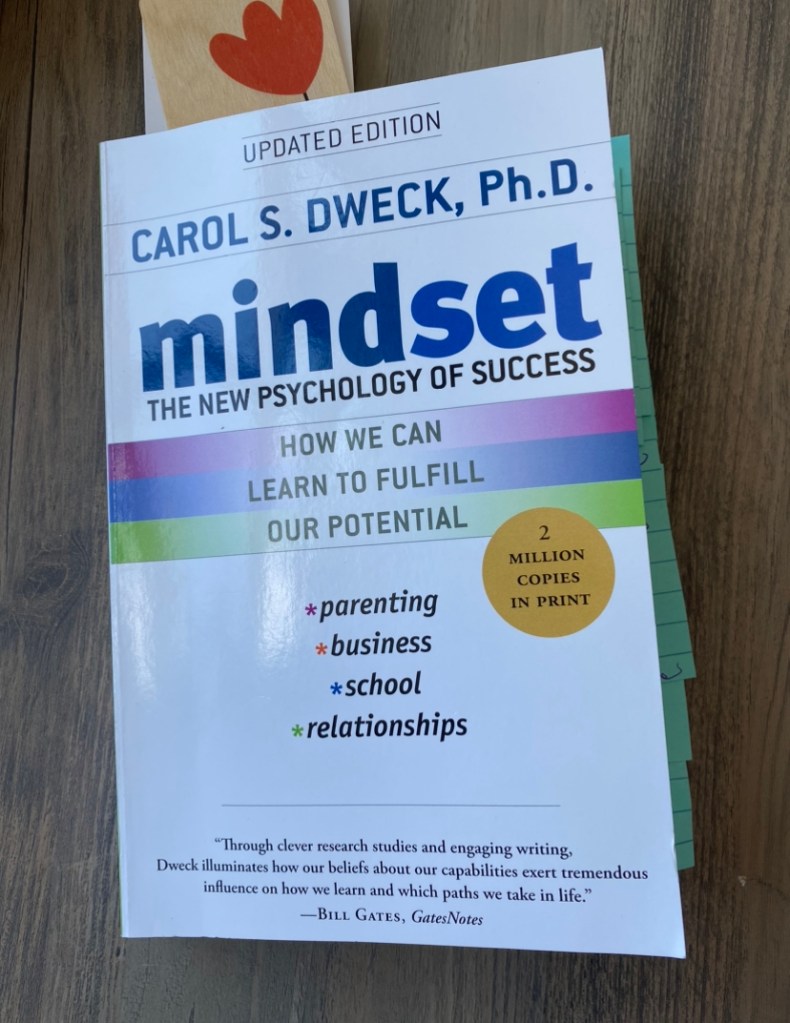
This July 17th episode is entitled Enhancing Performance & Learning By Applying a Growth Mindset. Dr. Carol Dewck, author Mindset, is an esteemed colleague of Dr. Huberman. https://podcasts.apple.com/us/podcast/huberman-lab/id1545953110?i=1000621365285

I have listened to Dr. Maya Shankar’s podcast for several years and am always inspired and uplifted by these incredible stories of people who overcame adversities that left them no choice but to reinvent themselves. Check out this episode with Dr, Kristin Neff on Self Compassion https://podcasts.apple.com/us/podcast/a-slight-change-of-plans/id1561860622?i=1000617332975
Buckle your seatbelt for this very real conversation with Terry Real, Author of US, and Peter Attia. Dr. Attia has been revelational in his message about the importance of our emotional health in his book, Outlive. He turned to Terry Real for the therapy he needed to work on his “Bobbie Knight” inner critic and the behavioral reactions he wanted to change.
https://www.youtube.com/watch?v=QbI4fm2cNz8
Read — or reread – Brene Brown’s blog post from 2018 on midlife unraveling. It’s aged well.
https://brenebrown.com/articles/2018/05/24/the-midlife-unraveling/