
I found a fascinating article the other day that intrigued me so much I spent an entire day making lists and creating graphs, pie charts and collages. Are you wondering what captivated me? It was about the person we will all be in 5 years.
Consider this: The person we will become in 5 years has a lot to do with the decisions we are making as the person we are today (and tomorrow….and so on). What shapes us? The books we read, the foods we eat, the workouts we do, the friends we meet, the sacrifices we make, the habits we build.
Those prompts really got me to thinking about who I am today for those very reasons. I thought about family and friends, and how the last five years have shaped them as well. Even if we would have had a crystal ball then, I doubt very much that any of us could have guessed how much we’ve changed; much of it intentionally and some of it due to things not in our control.
What if we could plot all this change, so we would have a visual for who we were 5 years ago, who we are today, and to project who we might be 5 years into the future. Wouldn’t it be amazing to have a chart of our self discovery and personal growth trajectory? I’d call it the “Growing Forward” chart.
It makes sense to step back and take a look at who we were in 2018. Nothing like a rear view mirror to help us see just how far we’ve come.
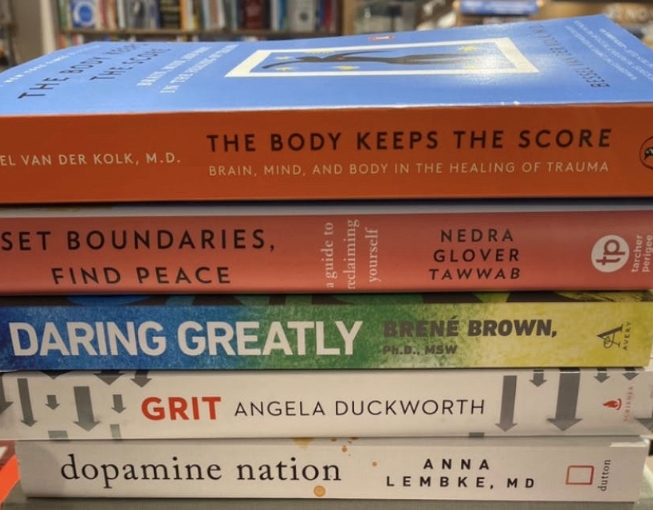
What books have you read over these past five years? What genres or subjects were you drawn to and what knowledge did you gain? How did you apply it to your life? Reading books, both fiction and non-fiction, deepens our empathy for others and helps us see ourselves in other’s stories. What did you discover about yourself and others through the books you read.
Think about new friendships you have formed and what drew you to these new people. How have they shaped who you are today? Did they introduce you to a new hobby or interest? What have you learned as you listened to their life stories? What did you learn about yourself that was reflected back to you in their experiences? How do these friends make you feel?
Are those habits that were so hard to implement in the beginning now a part of your normal daily routine? How have those improved habits changed your life? What is working so much better now?Are you more conscious of the choices you make that might derail your goals?
Have you discovered any new interests, taken up a new hobby or resumed an old one with a renewed passion? Are you spending less time on social media and more time being present with family and friends? Have you shifted your perspective on self care and recognize that you need to take good care of yourself so that you can be your best for others?
Are you amazed to discover just how much you really have changed over the past 5 years? Since so much of our change happens incrementally and definitely not in a linear way, it is quite surprising to take stock of these transformations, especially in 5 year increments. That’s when the real changes we’ve made become so apparent. That is where we see our “growing forward” trajectory.
I decided to look back on my blog posts from 2018 as part of this reflective exercise and while the topics are still relevant, the research and resources that have advanced our understanding about them have exploded into mainstream conversations. Back then, we still thought of meditation and mindfulness as something done on a cushion. Today many of us are more familiar with how our brains actually work than we ever did before thanks to neuroscience — and the podcasters and authors who break it down into layman’s terms for us and weave its value into our daily lives.
In 2018, there was still a major stigma associated with mental health and no one was talking about emotional health. We may have known there was a growing mental health crisis underfoot but all the pieces of the complex puzzle were not yet coming together. Personal growth was gaining a little more traction and life coaches were in high demand.
We could feel a sense that we were searching for something, but there wasn’t a lot of clarity and we were swimming in a sea of so many tempting distractions. Social media and the news cycles were addictive.
No matter what we were all individually doing that was shaping who we would be in five years, none of us could have predicted the major impact of a global pandemic. This would create changes we did not anticipate and yes, it would also shape who we’d become. The pandemic disrupted our “normal”. We’d been operating in our “normal” for so long that we had become unaware of how we were just going along with the pace and societal influences.
Change happens when our normal routines are disrupted. It is a basic principle for helping us stick to new habits or goals. Disruptions are the catalyst for reflection and redirection. Suddenly, we were all sent home to “think about it”. A collective disruption and a serious re-thinking of what matters most.
It is not at all surprising that the pandemic expedited the integration of modern medicine, neuroscience, psychology, cognitive and emotional health. There was no denying just how interconnected they all were. We started to pay attention to compromised immune systems. We could no longer deny the impacts of high levels of anxiety and extended periods of uncertainty. As humans, we just aren’t built for these long durations of stress and volatility. We need to return to baseline to rebuild our tolerance and resilience. We need breaks, we need quality sleep, we need to feel safe.
As we were washing our groceries, we started to think more consciously about what we were eating. We were learning to bake sourdough and create home-cooked meals.
Isolation and loneliness were amplified which proved just how much we need human connection for our health and well-being. Families needed each other to help with childcare and schooling. Grandparents moved from retirement communities to live closer to their adult children and grandchildren. We began to see the reality that we had missed before. How important safe and healthy childcare is, what needs to change in how we educate our children, What we miss when we cannot be together – to celebrate, to grieve, to scaffold, to comfort, to encourage, to challenge.
The perfect storm became the impetus for breakthroughs.
Our learning curve trajectory was on a rapid ascent. It was integrating with medical and science advancements that would deliver many missing pieces to our human puzzle.
We may not have realized that as we were accepting changes that we had no control over, we were in turn making changes of our own – based on meeting our needs and what mattered most to us. We were micro-dosing change as we found new ways to support ourselves and our families through the pandemic. It was definitely not linear, and we back-tracked more than a few times, but our trajectory has become evident.
It takes a lot of commitment, practice, dedication and perseverance to become an overnight sensation.
We think that rock stars and celebrities, inventors and AI blow onto the scene and create seismic shifts in an instant. But this is not the case. And it certainly has not been the case for medicine and science when it comes to the recent explosion of knowledge, tools and teachers for emotional health. It just feels like an aha moment. It has been a long time coming — and it arrived when we were most ready to soak it up.
As I looked through the past five years of my blog posts, I re-discovered the moments where I was seeing the integration of so many modalities for personal growth and self discovery. As a neuroscience geek, I was so excited. I had long wondered if there wasn’t a better, more enticing way to draw people into doing their own inner work. Why did we have to hit rock bottom or have our world fall apart to begin engaging in self improvement?
To be candid, if not for the pandemic, I may have thought my own personal growth work was done. I had a solid “starter kit” of improved self awareness and better life skills. I was handling myself much better than ever before.
But the real test and the real growth happens when we take our individual work into our relationships. The pandemic delivered a plethora of opportunities to put the new skills and practices to the test. Suddenly, there were a lot more people coming onboard with a keen interest in emotional health and personal growth.
As parents realized how their own childhoods had impacted them in unhealthy ways, they embraced the new parenting models that integrated emotions into the developing brains of their children. Again, there were so many emotions welling up in all of us that it was crystal clear we needed better skills so as not to compound an already complex problem.
We had poked holes in our awareness, seeds had been planted, some had sprouted and there was a growing demand for education, support and counseling. A huge pivot had occurred – the veil around mental health was lifted. Seeking therapy and counseling became normalized, just like hiring a fitness trainer or life coach. The demand for counseling was so high that there simply were not enough professionals to meet it. Just a few years prior, BetterHelp online therapy was only promoted on personal growth and wellness platforms. Today, BetterHelp is a sponsor for business and news podcasts, influencers and fitness gurus.
When neuroscience handed us the missing piece of our human puzzle — emotional health — all the other pieces that had been discarded or misunderstood, fell into place. Are you aware that we had tunnel vision for a very long time – and believed that all our troubles were lodged in psychology? Breakthroughs in neuroscience changed everything – and now we are treating PTSD and childhood trauma in much more beneficial ways, with remarkable lasting results.
The pandemic’s one major positive contribution is the shift from “treating” problems to “preventing” them. After all that we have been through both individually and collectively in the past five years, many people are embracing the truth that we can take better care of ourselves and each other.
The conversations that we are having today and the growing trends in preventative practices to improve our quality of life and our healthy longevity came about because of change. Today we understand that we need to take care of our brains first and foremost. We having a better working knowledge of how our brains operate, what they are capable of and how we can maximize the full capacities.
We are no longer ignoring the warning signs, no longer numbing the pain or putting a bandaid on it, no longer believing that suffering is the way we get to the path of healing. We are enthusiastically proactive.
Here is what I find so exciting about what might transpire for all of us in the next 5 years. As we begin to take better care of our brains and bodies, we will in turn take better care of our children. Our children will grow up with healthy attitudes, resilience and an overflowing toolkit of life and relationship skills. We will be leading by example.
Did you know that when we are overstressed, we are full of cortisol that keeps us in a heightened state of fight, flight or freeze….and when we are with others, they can sense that (especially kids). We end up pushing people away because of all that negative energy.
But when we are calm, emotionally regulated and resilient, we are full of oxytocin (the feel good hormone) and yes, others can sense that too — and guess what — it is like a magnet drawing people to us because it feels good.
As we are making these discoveries for ourselves, we are integrating it into our lives. We start making better choices and in turn those healthier decisions shape who we are becoming. In 5 years, just imagine the books being written right now that we will read in the future. Just imagine the friends you will be making – the ones that make you feel good and inspire you to discover all kinds of new things. Just imagine how your body will feel with 5 years of really good sleep, consistent hydration, regular exercise, healthy eating habits.
If you believe that all these positive, proactive and preventative measures will have a profound impact on your “growing forward” trajectory, you are right.
Take some time to reflect on what you have learned about yourself over the past five years and want you want for yourself and your family in the next five years. There has never been a better time to tap into incredible resources, education and mentors to help you achieve your goals.
RECOMMENDED RESOURCES:


https://podcasts.apple.com/us/podcast/being-well-with-forrest-hanson-and-dr-rick-hanson/id1120885936?i=1000625115529


This is a gre
LikeLike