

Some of the most fabricated stories we will ever hear are the ones we tell ourselves. They keep us spellbound — holding our attention so completely that we can barely focus on anything else.
If you have ever doubted that you possess a wild imagination and a flair for creative writing, look no further than the many stories that you tell yourself during the course of one normal day.
We are so skilled at crafting these stories that often we don’t even realize we’ve actually taken the time to pen them with invisible ink in our minds. Sometimes it even feels as though we’ve used permanent markers to write them. The stories we tell ourselves impact our lives in ways we can’t even imagine.
During the course of one ordinary day, we can tell ourselves more stories than a two year old demands at bedtime.
The alarm goes off and you hit the snooze button, telling yourself that 15 more minutes in bed won’t make a big difference. Later when you are frantically searching for your car keys, chugging coffee and yelling at everyone to hurry up and get in the car, you create another story. Now you tell yourself are undisciplined for hitting that snooze button yet again; when will you learn and why can’t you ever catch a break? Next thing you know, your car’s GPS announces there are traffic delays on your route and presto, your inner critic becomes a personal ghost writer. You can almost hear the melodramatic music accompanying the litany of ways you will be forever doomed to failure as your inner critics pounds those typewriter keys.

Those early morning story lines can become a snowball rolling down a hill. Let’s face it, once the inner critic takes over, the plot doesn’t change much and there is very little room for character development. The stories we tell ourselves can block us from the very change we so desperately want.
We are natural born storytellers, each and every one of us. Our brains and bodies are these phenomenal meaning making machines. It is a core function of our brains to make sense of the world by constructing narratives and understanding based on our past history and our unique perspectives. We tell ourselves the story we need to hear in order to process and integrate our lived experience.
When we are crafting those stories we tell ourselves, we can find ourselves rummaging through the old card catalog files in our brain’s database looking for the genre that matches how we feel. Picture a dimly lit basement in an old library with sections labeled “Scaredy Cat” “Underachiever” “Timid Wallflower” “Too Much” or “Born Loser”. (I hope that imagery makes you laugh – It’s intended to help you get the bigger picture.)
If we keep going back to the same old resources as the basis for the stories we tell ourselves, then our series is not going to evolve. And there will be little room for our own character development. This is how we get stuck in the stories of our own making.
How often have you read a book or heard a podcast where someone shares just how stuck they were in an old narrative? They let a strong identity from a past chapter of their life take the lead role in all their unfolding newer stories. Once an addict, always an addict. Once a lost soul, always a lost soul.
Take a few minutes right now to think about all those things you believed were true about who you were as a child – and how you have shattered those limiting beliefs by all that you have actually done and accomplished over the years. Were you told you weren’t athletic but now you run races, play competitive tennis or belong to a local hiking club? Were you told you weren’t very smart, yet you have earned a degree or certification in a field that fascinates you?
Those limiting narratives stored in our dimly lit library are so outdated. It is mindlessly going back to that old reference material that limits our ability to shift our narratives. Of course we have changed — and so should the script for the stories we tell ourselves.
The proof is in the pudding.
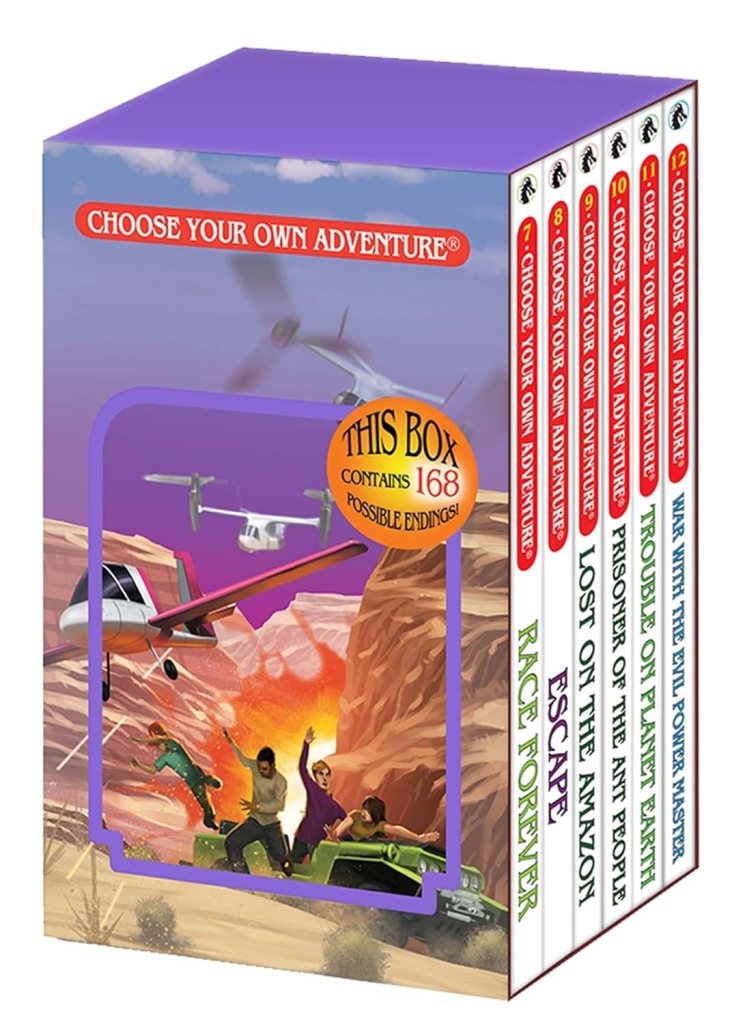
The very same set of circumstances on any given day will end up with strikingly different stories. Many of the stories we tell ourselves depend greatly on how we are feeling in the moment and our ability to effectively regulate our emotions. The stories we tell ourselves are rather like a “choose your own adventure” book. There are endless possibilities.
We go in search of data from our past. We simply copy, cut and paste all the old familiar plots into the present story we are creating.
We do our best to make sense of what is happening right now pulling from past experiences – and frequently without any editing or updated research.
We even let our inner critic tell the story without a single challenge. This is precisely how we let something from our past foreshadow what might happen in the future – by staying in an old narrative that was never revised.
You landed that dream job but you tell yourself you will likely be unsuccessful, just like the last dream job you had. You make a new friend but you predict that over time, this friendship will also fade away like so many others. You pursue a new hobby but you tell yourself you will never master it like the others.
Not only are our brains meaning making machines, they are also prediction machines — and these two go hand in hand. If we don’t update old narratives, then we also limit our ability to accurately make better predictions.
Even if we don’t intentionally go in and update our old databases, we are ever-changing. Each experience we have shapes us in some way. We are constantly taking in new information, expanding our inner libraries and making genuine progress in many areas of our lives. The reality is that we don’t often flip the switch and explore the newest additions to our database.
Just imagine what incredible material you might find there! Dr. Ellen Langer, author of the Mindful Body, tells us that when we stay current with all the changes and experiences we have, we vastly expand our inner library. We can make any decision the right decision, because we have viewfinders that are more like kaleidoscopes than microscopes.
Dr. Langer reminds us that we have no way of knowing which was the optimum decision – staying in the old job or pursuing the new dream job. The pivot is in making the decision the right one. Was there something we could have done differently in the old job that would have restimulated our passion for it? How we will go into this new job — with a better prediction for its outcome, supported with new approaches to the opportunity? Either choice then becomes right choice.
The best way to help yourself become better at telling yourself stories that support you in positive ways is update your inner library resources. It is two fold — you need to update those old narratives and limiting beliefs and you need to get more creative with your predictions.
There is one more thing that requires our attention — we can work toward getting more comfortable with uncertainty. None of us knows what the future holds. We can stay gridlocked in our fears about the unknown or we can reflect on just how much uncertainty we have already experienced. Not only did we survive uncertainty, we grew through it!
When we were kids we had no way of knowing what our adult lives would look like. When we became parents, we had no idea what our babies would teach us and how remarkably unique each child would be. We learned to drive cars without power steering and we used paper maps for road trips. Today we drive cars with more technology built in than we could have ever imagined. We once took paper checks to a brick and mortar bank to deposit and get cash. Today, our phones have replaced every aspect of cash transactions.
We are not afraid of change in so many aspects of our daily lives. The last frontier to be explored when it comes to change and uncertainty are in the stories we tell ourselves.
When we tell ourselves better stories — chock full of diverse, colorful and rich real life experiences in our well lit, expansive inner database, we will live with more self awareness and creativity. The possibilities will be endless.
NOTEWORTHY RESOURCES:


 Inspired New Horizons