
In my last post entitled “Turning Personal Growth on its Head”, I shared that in just one generation we can have dramatic positive impacts on quality of life, mental health and well being. Imagine “pre-loading” our children with a strong sense of self worth, reliable inner resources like resilience and emotional regulation, self-awareness, and empathy.
This profound pivot starts with parenting.
The old approaches to parenting predisposed us to lack the skills and inner resources we needed to successfully navigate life, relationships and adversities. Instead of teaching children the value of their emotions, good coping skills, self-awareness, empathy and relationship skills, we were “disciplined”. We weren’t being “taught”, we were “punished” — mostly for emotional reactions we were experiencing and over which we had very little control. Prior generations did not know about how a child’s brain develops and the vital role parents play in a lifelong integration process of all parts of our brains.
So instead of honing invaluable life skills from an early age, we came up with patterns of behavior in response to whatever our parents were doling out. We became conflict avoiders, people pleasers, bullies or wimps. Even if we were able to bust out of those constraints as we matured, our inner critic would often chime in to remind us of our insecurities.
Before we dive into this concept of Whole Brain Parenting, think about what we got right about our children’s physical development.
As parents, we instinctively know that our young children are physically incapable of crawling, walking, using a potty, riding a bike or learning to swim until they have achieved certain levels of their body’s natural development. We do not have unrealistic expectations about when our child will be able to stand on her own or feed herself with a spoon. In fact, we encourage, role model and celebrate these milestones.
Yet, we often lack the basic understanding of how our child’s complex brain is in a similar state of “ongoing development.” We may be asking more of them with regard to logic and reasoning than they are capable of accessing. Those executive functions of their young brain will not come online for several years.
To complicate matters, there are the hormones and chemicals that get released from strong emotional triggers into those little bodies such as cortisol, dopamine and adrenalin — and suddenly we are face to face with meltdowns, temper tantrums and a torrent of tears that is a swirl of confusion and chaos for our little ones.
We just can’t “punish” this stuff into submission. We have to teach our children what is happening in their bodies, and be the “assist” they need til their brains are developed enough to process what’s happening. (This might be a good place to stop and ask ourselves — how good are we as adults at dealing with big emotions, inner emotional chaos and confusion when we are angry, tired, annoyed or hurt?)
Parenting is hard. Unfortunately it’s been a lot harder than it truly needed to be…but we didn’t know that. As we are discovering, the real pivot for parenting is in moving from a mindset of having to “discipline” our children to the more skillful mindset of “teaching” our children.
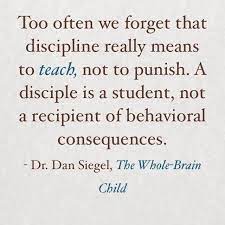
Did you know that the root of the word discipline comes from the Latin word disciplina, which means teaching, learning or instruction?
We often think of discipline as punishment and that belief was supported by old familiar parenting quotes: Spare the rod and spoil the child; children are to be seen and not heard; do as I say and not as I do. These old adages kept us trapped in a dysfunctional parenting paradigm that did not support helping our children integrate the full capacity of their brains in the same way we were fostering the integration of new physical milestones as their bodies grew and developed.
We put training wheels on our kids’ bikes to help them learn how to balance their bodies. We put flotation devices on those eager little bodies in the pool to keep them safe while they are having fun splashing. We use repetition and role plays to teach them words and identify familiar objects.
It turns out that we also need to put training wheels and flotation devices on our child’s emotional development until their brains are ready for the full installation of logic and reasoning.
In other words, we need to be their “executive function”– their emotional regulator — when they are young and unable to do this effectively for themselves.
The more we are able to support them with strong emotional scaffolding when they are young, the better they will be at emotional awareness, self-control, empathy and discernment between right and wrong when they are older — when we take off the “training wheels”. This is the “pre-loading” component that is a game-changer.
That old conventional approach to parenting bypassed an integral process to nurture and integrate the full capacities of our children’s developing brains.
The old conventional approaches often led to blocked integration of different parts of our brains. That blocked integration can linger with us far into adulthood, causing us to unconsciously rely on childhood behavioral patterns even when we should have outgrown them. It is also the reason we get emotionally triggered from something that occurred decades ago, have heightened anxieties or fears, and blind spots in our self-awareness.
What We Know Now…..That We Got Wrong Before:
We now have before us the most incredible neuroscience-based resources to seize this missed opportunity and support our children’s brain developments more skillfully than ever before. Our role as parents and caregivers is to “step in” and assist with the integrative process by providing the connection needed until a child’s developing brain is ready to take over on its own.
Two very important things are happening in this approach: (1) we are the scaffolding needed to ensure that a child feels safe, valued and connected and (2) we are preparing him to install that same foundation of his very own when he is older — when his brain has developed fully and he can now readily access the logic and reasoning part of his upper brain. Our children will grow up with reliable inner resources, a strong sense of self-worth, and healthy relationship skills.
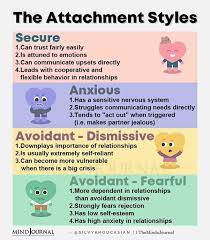
As you will learn a little later in this post, the Whole Brain Parenting approach creates a “secure” attachment style which is the most beneficial life foundation we can give to our children.
The Whole Brain Way to Calm the Chaos & Nurture A Child’s Developing Mind:
Dr. Dan Siegel and Dr. Tina Payne Bryson have been teaching their transformational new approach to parenting for over a decade. In their 2016 book, No Drama Discipline, they share very relatable stories that are commonplace for most parents. What makes this book so different however, is the time and attention they devote to teaching us about the child’s developing brain, what is happening in her nervous system, how her brain gets hijacked by emotional disregulation and her innate lack of capacity to deal with all of it. It is a real eye-opener about the complex inner world of our little ones.
It may be the very first time as parents that we get a clear picture of how we are asking for the impossible when we try reasoning, bribing or punishing to tame a temper tantrum or seemingly unreasonable meltdown.
This deeper understanding of a child’s developing brain should be the key motivation for most parents and caregivers to adopt a whole new approach to “disciplining” their children: The “No Drama Connection Cycle”.

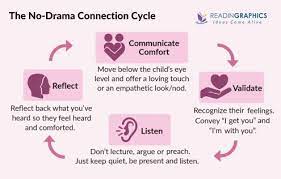
The operative word for this contemporary Whole Brain parenting approach is “connection”. Connection calms the nervous system, which soothes a child’s reactivity in the moment, and moves them toward a place where they can actually hear us, learn and even begin to make their own “whole brain” decisions.
When the emotional gauge gets turned up, connection is the modulator that keeps the feelings from getting too high. Without connection, emotions can continue to spiral out of control. — Excerpted from No Drama Discipline, page 74
Connection is essential for brain integration. This matters because the brain is complex; it has many parts, all of which have different jobs to do, including memory and pain regions. Did you know that the same areas of the brain get activated when people feel emotional pain as well as physical pain?
Think about that — we are so quick to attend to a scraped knee or swollen lip, but often impatient with an emotional outburst. To a child, the pain feels the same.
The old parenting approach also led us to believe that if we “coddled” a child every time they got physically hurt, they wouldn’t be resilient. Turns out that was wrong also. Acknowledging how they are feeling when they get hurt, calming them and attending to their injury teaches them how to care for themselves, promotes strong coping skills, resiliency and better discernment of the actual level of pain.
Why Connection and Integration Matter:
The responses we heard repeatedly in the old conventional approach to parenting sounded like these: “Get over it”; “Pull yourself together”; “You need to calm down”; “Go to your room until you can be nice”.
Dr. Siegel points out that these responses actually do the opposite of connection — they amplify negative states and increase internal distress, which perpetuates more acting out. Not only did this lead to an ongoing cycle of disconnection and lack of integration of all those complex brain parts, it predisposed us to develop an unhealthy attachment style.
Attachment styles are developed in early childhood based on our relationship with our primary caregivers and how they respond to our needs. Whole Brain Parenting will help parents provide the optimum “secure” attachment style for their children.

If you are thinking that Whole Brain Parenting takes a lot more time and energy than the old school approach, let’s dispel that. While it may take a little more skill on the parent’s part initially, over time with all that consistency of calm and connection, the lessons you want to impart to your child will actually start to stick. Parents won’t be exhausted from repeating themselves over and over, feeling defeated about gaining any traction in their parenting efforts. So many times, our well intentioned lessons are falling on deaf ears because kids are just so disregulated, they cannot possibly take in what we are saying…..especially if our tone of voice conveys our angering frustrations.
Let’s dispel another myth while we are at it — the myth of spoiling our kids. This is a question that Dr. Dan Siegel has answered many times – and it’s one that is based on a misunderstanding of what spoiling really is — and what it is not.
Connection defuses conflict, build’s a child’s brain and strengthens the parent-child relationship. Connecting during discipline is quite different from spoiling a child.
“Let’s start with what spoiling is not. Spoiling is not about how much love and time and attention you give your kids. You can’t spoil your children by giving them too much of yourself. In the same way, you can’t spoil a baby by holding her too much or responding to her needs each time she expresses them. Parenting authorities at one time told parents not to pick up their babies too much for fear of spoiling them. We now know better. Responding to and soothing a child does not spoil her — but NOT responding to or soothing her creates a child who is insecurely attached and anxious. Nurturing your relationship with your child and giving her the consistent experiences that form the basis of her accurate belief that she’s entitled to your love and affection is exactly what we SHOULD be doing. In other words, we need to let our kids know that they can count on getting their needs met.” – Excerpted from No Drama Discipline, page 89 (Chapter entitled from Tantrum to Tranquility)
“Spoiling on the other hand, occurs when parents or caregivers create their child’s world in such a way that the child feels a sense of entitlement about getting her way, about getting what she wants, exactly when she wants it, and that everything should come easily and be done for her. We want our kids to know that their “needs” can be consistently understood and met, but we don’t want our kids to expect that their “desires and whims” will always be met. Connecting when a child is upset or out of control is about meeting the child’s needs, not giving in to what she wants. — Excerpted from No Drama Discipline, page 90 (Chapter entitled From Tantrum to Tranquility)
The Big Impact that Whole Brain Parenting Can Have in the Long Run:
I recently participated in a week long seminar about the newer approaches being implemented in counseling and therapy treatments as a direct result of the breakthroughs in neuroscience about brain integration. The most effective protocols are focused on helping clients integrate all the parts of their brain and nervous system. Because of neuroplasticity, as adults we can actually rewire our brains and reconnect to “whole brain” living.
Even patients with a history of trauma and PTSD do not need to go through the arduous and often painful experiences of sharing their trauma stories. The faster, less painful and more effective approach is to focus on integration and being fully present in the current moment. This is a groundbreaking new approach for anyone who struggles with issues that stem from dysfunctional attachment styles and the lack of integration of the full capacities of our most amazing brains.
There is one old adage that rings truer than ever: An ounce of prevention is worth a pound of cure.
Imagine how empowering it will be for our children to be able to name, process and learn from their emotions; being taught reliable, healthy emotional regulation and coping skills; and gifting them with self confidence, self worth and strong inter-personal relationship skills. This will become a much better foundation for our younger generations to have as they enter adulthood.
In upcoming blog posts, I’ll be sharing more about what we are discovering through psychology and neuroscience that will be game changers for all of us. In the meantime, check out these resources to learn more about Whole Brain Parenting and No Drama Discipline:
RECOMMENDED RESOURCES:


These two books by Dr. Dan Siegel and Dr. Tina Payne Bryson are two of the most insightful Parenting Books you can read. They are easy to understand, relatable and refreshingly candid about the parenting issues we all face. Chock full of real life examples & reference guide.

Check out this brief and noteworthy clip from Dr. Andrew Huberman, about the role our childhood attachment styles play in choosing our life partners, and the impacts of our childhood attachment styles on our adult intimate relationships.
https://www.youtube.com/watch?v=TJ00Bd1zmdk

There is nothing like listening to Dr. Dan Siegel explain why Whole Brain Parenting can make such a dramatic difference for both you and your child.
Check out this short clip: Why Attachment Parenting Matters





 Inspired New Horizons