Growth Spurts

One of the things I have thoroughly enjoyed over these past six years, is recognizing when I have had a growth spurt. Not the kind that shows up on the number of candles on my birthday cake, or the way a favorite dress fits differently.   It’s the growth spurt that I feel — about who I am and about how I am showing up in my life — for myself and others.  

It has been quite the journey and I could not have done it without some remarkable support from my family and my most trusted long-time friend, Judy. I’ve recently come to the realization that there has indeed been a big transformation in me.  By turning my attention inward and pulling back all the layers that I have carried with me over my lifetime, I have shed old behavioral patterns like unwanted pounds and I do feel lighter, yet more grounded than I have ever been.

I can tell you what that actually feels like in the midst of most any situation now. 

It feels like I am being the person I always longed to be — calm, respectful, helpful and understanding.  I am untethered from old triggers, of feeling overwhelmed by others emotions or actions, of feeling helpless or hopeless.   I am finally really understanding what Brene Brown has been teaching for so long about how my “armor” got in the way of living my most authentic life.

If you haven’t been around me for a long time, you may not be able to discern this subtle but significant shift. It is true that in the past I put up a pretty effective “front”in the midst of crisis or conflict, but the truth was that I was just very skilled — and far too comfortable — with stuffing my emotions or powering through them.  It resulted in me being numb to my own feelings and needs or becoming a powder keg down the road.  

It has been a few years now since I have experienced either one of those former, very familiar uncomfortable outcomes.    What a relief it is to no longer find myself getting “pulled” into a situation and reacting from a place of bottled up old emotions because my “reservoir” was so low. To come away from a present day tense situation and recognize this positive change in myself is both a reward and an affirmation for a doing the “inside job” of self-awareness work. Awareness is the real key to my growth spurts which I will unravel for you now.

A counselor once told me that I was “too patient.”  At the time, I had no clue what she meant.  I thought being patient was a strength of mine.  However I have slowly come to understand what she meant — I accepted a lot of behaviors from others that I should not have.  She was encouraging me to discover and voice my personal boundaries.  I surely wish I had learned this lesson ten or twenty years ago. I did eventually get there though it was at a turtle’s pace.

Here’s the thing about boundaries that I had to understand. I often showed respect to others even when they didn’t necessarily deserve it, but I rarely respected myself enough to call someone out or to simply say no. I wanted to be sure I was operating from a place of my own integrity so I’d be generous with my respect of others. Somehow I had forgotten that my integrity also served me — as an anchor for self-respect. I had to learn to respect myself enough to pause when I would get that internal nudge and then choose to state my boundary. This is where Brene’s words “clear is kind” really came to life for me. Calmly stating my boundary clearly is the kindest thing I can offer to someone else. There is no mystery or guess work about what is important to me. I free myself to stand firmly in my ground without drama or long explanations. It puts the onus of respecting my boundary back on the other person.

This brings me to anger. Just typing that word can send shivers down my spine. For far too many years, I did not do “anger” well. Like most of us when we are pushed to the limit and anger flares, I’d raise my voice, say things I would quickly regret and be prone to slam a door on my way to anywhere other than where I was. Honestly I have been afraid of anger since I was a child. It seemed that nothing good ever came of it and that was the lesson I took to heart based on a lifetime of personal experiences. Anger might as well have been a lit stick of dynamite in my hands — I was terrified of it and instinctively reacted on that fear rather than what anger was actually trying to tell me.

So I had to change my understanding of anger and my relationship to it. Anger often showed up when I failed to set a boundary. So it served as my warning light to feel the anger and redirect my attention to the real issue — which often was boundaries. Did I make my boundaries clear? Were my boundaries ignored or dismissed? The answers to these questions quelled the anger and gave me footing for a better response.

Anger would also show up when I was overdoing the “helping” I can be prone to do. My exhaustion would be accompanied by my disappointment from the lack of positive results for all my well-intentioned efforts. Anger was telling me I was resentful of working so hard doing things that no one actually asked me to do. It would be the equivalent of showing up with six bags of groceries and two casseroles when a friend needs a plumber for a clogged drain. Yep, that is just how far off base things can get for us consummate “helpers.” Again, understanding that my feelings of anger were actually my own doing became a huge catalyst for meaningful change.

Once I began to understand that anger can be very healthy and that it does have a place in a well-rounded life, I relaxed a bit and even ventured so fas as to invite it in….just for coffee though. My safest place to explore anger these days is on these coffee dates, just the two of us. I find myself saying “tell me more” quite often. Turns out that anger is pretty wise and not nearly as volatile as I once believed. Anger reminds me that I am a woman who values fairness and accountability. Anger makes its case that many a good cause has a been fueled by a healthy dose of outrage. (Consider MADD – Mothers Against Drunk Drivers for starters).

I now have a very deep awareness that I cannot and should not attempt to fix everything that goes wrong in life, especially for others.   Where I once rushed in to clean up a mess, solve a problem or take someone else’s consequence on as my own, I have learned that my most meaningful response is to “hold space”  for others.   Others may need a shoulder to cry on or a safe, soft place to land when they are broken. They do not need or want me to fix things. I respect that now.

The Enneagram has been such a helpful resource for me by shining a big spotlight on how I often “rescue” others in an effort to feel valued and needed. I am learning the distinction between “I need help” and “I am needy”. When someone needs help and they ask for it, I am all in….but in a healthier way now. When someone is needy and just wants someone else to fix the problems they are creating, I am able to recognize it and back away.

The next logical step in this process of self-awareness is an invaluable one — it is simply “letting go”. Yet there is nothing simple about actually doing that. At least not when I was first striving to do it. But with a lot of practice over a few years, I have actually gotten so much better at this.

Early on in my mindfulness journey I learned about “not being attached to the outcome.” While I liked the sound of it in theory, I quickly discovered that I was quite often not only attached to an outcome but I was working pretty hard to get my own desired outcome. While I never considered myself a manipulating or controlling person, I began to see how my comments or actions felt like that to others. Letting go of expectations, letting go of wishful thinking, letting go of control — these are all incredibly hard to part with — and yet, it is so freeing to do so. It is quite simply accepting reality. It is accepting that other people may make choices that might be hard to swallow. Letting go often involves forgiveness, offering grace to others and trusting that they are doing the best they can, and embracing space for reflection and healing.

Letting go and not being attached to the outcome did require a lot of practice. Fortunately life never fails to provide ample opportunities for this needed practice. So I dipped my toes into this concept with minor matters, making the best decision I could in that moment with the information I had at hand, and letting go of any preconceived ideas I might have about the outcome. I found out that no matter what transpired, I could handle it. Often times the result was even better than I might have imagined. When it came to relationships and what I was hoping for, I found that letting out a little kite string was all that was really needed. If the relationship was genuinely mutual, our kite would soar. If the relationship was more one-sided, it was bound to hit the ground. Inspirational life quotes that have long resonated with me began to take on a much deeper meaning:

I began my focused personal growth journey by learning about, and embracing, mindfulness. Mindfulness led me to meditation. Meditation reignited my keen interest in neuroscience. Over these past six years, there has been growing overlap of personal growth tools and the teachers who guide us. And all of it is rooted in awareness.

Becoming skilled in awareness is the best practice of all. It provides a broad and fresh perspective to reframe things that literally are right in front of our eyes, but are often obscured by racing thoughts, rumination about the past, magical thinking, and dreaming of greener pastures.

Awareness of all the places where I was triggered by my past.

Awareness of my weariness or resentment growing to a boiling point.

Awareness of own value and strengths and not allowing others comments to diminish them.

Awareness of how others showed their love and respect for me. (hot tip — sometimes we are actually getting the love and respect we want but we fail to realize it because we want it in a certain way)

Awareness to offer myself grace and acknowledging I will always be a work in progress.

These are just a few of the many insights I gained from awareness. The self discovery journey has allowed me to get untangled and unstuck from experiences and emotions that clouded my vision, muffled what I was able to hear, and it opened my heart in ways I would have never thought possible. I found peace. A peace that I carry with me everywhere and one that I trust I can ground myself in when life gets turbulent.

I also found a deeper capacity for being aware of how others are feeling and reacting. Judgment has been replaced with a genuine interest and curiosity about what is beneath all of that. All of us have stratifications of the anxieties and vulnerabilities that we’ve accumulated over the years. I find myself understanding that about others and it serves me well as I hold space for them and listen fully. So often clues are embedded in those deep conversations. I now focus more on the other person. Its so much easier to do this now that I have cleared my own emotional landmines. My mind, my body and my heart isn’t competing for my attention. Instead, I can lean into what I have learned about myself and find greater compassion and encouragement for others.

My dear friend Judy and I have done a lot of this work together over the past few years, acting as confidantes and cheerleaders for each other. We were so fortunate to be able to compare similar life experiences and learned behavioral patterns we developed as coping mechanisms. We also shared a deep love of helping others and offering encouragement to those who are on a similar journey. What we have noticed in our improved energy levels, our discernment, and the people we are attracting into our lives is nothing short of miraculous.

Our family members and our friends have noticed our transformation and freely tell us all the positive attributes they are witnessing. They are experiencing how we show up differently in our own lives and in their lives too. This concrete evidence of the work we have been doing has become a guiding light for others in a much healthier way than our old approaches ever did.

When my daughter tells her friends that I am the most mindful person she knows, that goes straight to my heart. Who knows me better than her after all these years and who sees the consistency and continuity of all my positive changes?

RECOMMENDED RESOURCES:

Chopra Meditation Center – Getting Unstuck: Creating a Limitless Life (How limitless awareness can help you overcome all obstacles — 21 Day Meditation Program offered for free)

http://www.choprameditationcenter.com

Typology Podcasts with Ian Cron (available for free on YouTube) I’m sharing this episode with renowned Enneagram authority Beatrice Chestnut who is like me, an Enneagram 2.

https://www.youtube.com/watch?v=1T-fP4WMHIQ

Yung Pueblo – check out this youthful wisdom influencer on Facebook and Instagram: https://www.facebook.com/yungpueblo

Greater Good Magazine – The Right Way to Get Angry https://greatergood.berkeley.edu/article/item/the_right_way_to_get_angry
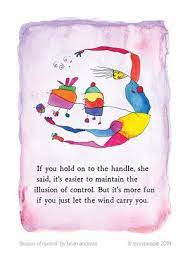
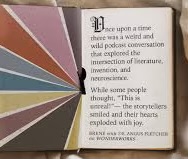
I am a longtime collector and affectionate of StoryPeople — and I bought this one over two decades ago. No matter how much I tried to maintain some sense of control over my busy complex life, balancing parenthood, career and marriage, there were more than a few times that I just enjoyed letting go of the “to do”list and the human “doing” and trust fall into a strong wind like a carefree child. I had no idea just how insightful these words would be to me later in life when I learned the liberating feeling of “letting go” of outcomes and expectations.

The Transformational Wonders of Story

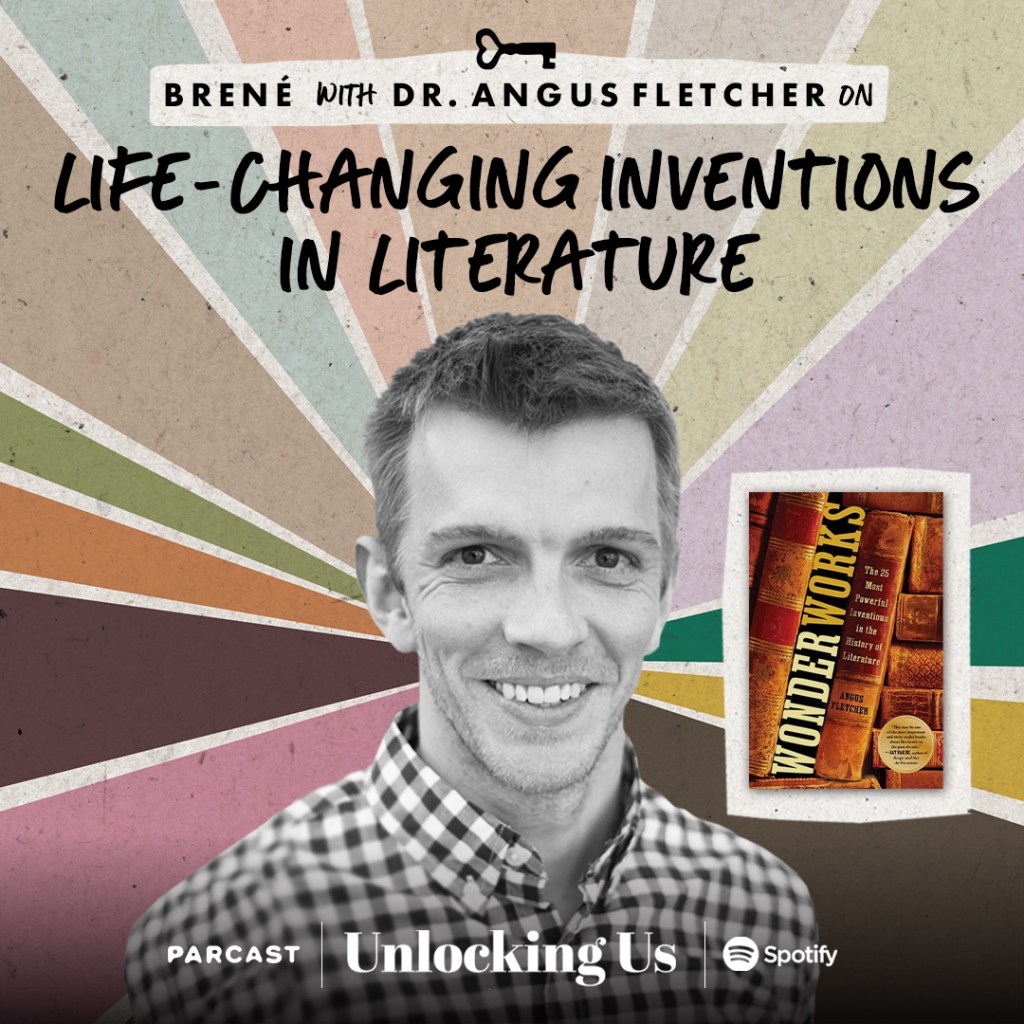
Imagine being able to find just what you need to build courage, heal from grief, or excite your curiosity from literature. What if the elements of story could unlock our imaginations, emotions and even our psyche to improve our quality of life and mental health? Dr. Angus Fletcher will rock your world with his research and insights on the power of story — steeped in both the mystery of human emotion and the logic of science. He was a recent guest on Brene Brown’s Unlocking Us podcast and his dynamic enthusiasm is contagious. He takes a deep dive into the inventions in literature, the technologies that were created to help us understand, unravel — and grow — from the human experience in his recently released book — Wonderworks: the 25 Most Powerful Inventions in the History of Literature:

A brilliant examination of literary inventions through the ages, from ancient Mesopotamia to Elena Ferrante, that shows how writers have created technical breakthroughs—rivaling any scientific inventions—and engineering enhancements to the human heart and mind. Literature is a technology like any other. –from Amazon.com

Dr, Angus Fletcher takes the blueprints for 25 literary inventions throughout history and explains how each can be viewed as both a narrative and scientific breakthrough. The result is a completely original deep dive through literary history—from Greek tragedy and Shakespeare to Virginia Woolf and Dr. Seuss—examining how each innovation provides us with distinct psychological benefits such as increasing creativity, alleviating trauma, boosting intelligence and elevating happiness. –– excerpted from the Show Notes, Brene Brown.com

As Dr. Fletcher so deftly explained to Brene, stories and especially memoirs, pull us into an intimate and safe space to explore our own complex emotions, perceptions and possibilities. He freely shared the books that had a meaningful impact in his own life and the transformational growth he tapped into as a result. Writers like Maya Angelou and Jane Austen offered insights and wisdoms that gave him agency to explore his own power to evolve in creative, engaging and entertaining ways.

Although I had never consciously thought about this, I found myself recalling the books, plays, movies and songs that made indelible impressions on me throughout my life. I can still vividly remember reading Shakespeare in my early teens, sitting cross-legged on my bed in a shabby second floor apartment we were living in temporarily. Sunlight was trying its best to peek through the dirty windows while downstairs neighbors were arguing. Yet I was oblivious to it all, having been transported far away to another space in time, captivated by the images those written words created in my mind and the characters who came to life page by page. Looking back, I can most definitely see how the books I read in my teen years informed me about life in ways that I otherwise would have never known. Without a healthy, solid family framework, books probably played a more meaningful role that I could have ever imagined.

As a young mother years later, another story touched me so profoundly that I named my middle son based on the main character of a heartwarming TV mini-series. I loved the core values and the affable, grounded demeanor of the lead male character who was always referred to by his last name, Damon. I could almost picture my infant son as a grown man possessing the same virtues. That is how my middle son got his first name, Damon.

There are countless other memories that I have been revisiting, looking for clues as to how stories told through music, plays, books, movies and TV shows contributed to my life now that Dr. Fletcher has illuminated these incredible transformational literary inventions.

Dr. Fletcher is a practitioner on story science with dual degrees in literature (PhD, Yale) and neuroscience (BS, University of Michigan). As you might imagine, my interest was really piqued when he and Brene discussed the neurobiological effects that literature can have on us because of my ongoing fascination with neuroscience. Dr. Fletcher’s research is devoted to exploring the psychological effects (cognitive, behavioral and therapeutic) of different narrative technologies.

The initial discovery of the psychological benefits of literature was made by the Greek philosopher, Aristotle, in 335 B.C The following excerpt from Smithsonian Magazine (March, 2021) succinctly captures Aristotle’s remarkable assessment:

Shortly after 335 B.C., within a newly built library tucked just east of Athens’ limestone city walls, a free-thinking Greek polymath by the name of Aristotle gathered up an armful of old theater scripts. As he pored over their delicate papyrus in the amber flicker of a sesame lamp, he was struck by a revolutionary idea: What if literature was an invention for making us happier and healthier? The idea made intuitive sense; when people felt bored, or unhappy, or at a loss for meaning, they frequently turned to plays or poetry. And afterwards, they often reported feeling better. But what could be the secret to literature’s feel-better power? What hidden nuts-and-bolts conveyed its psychological benefits?

After carefully investigating the matter, Aristotle inked a short treatise that became known as the Poetics. In it, he proposed that literature was more than a single invention; it was many inventions, each constructed from an innovative use of story. Story includes the countless varieties of plot and character—and it also includes the equally various narrators that give each literary work its distinct style or voice. Those story elements, Aristotle hypothesized, could plug into our imagination, our emotions, and other parts of our psyche, troubleshooting and even improving our mental function. https://www.smithsonianmag.com/innovation/eight-literatures-most-powerful-inventions-and-neuroscience-behind-how-they-work-180977168/

I have been so captivated by the revelations that Dr. Fletcher enthusiastically shared in the podcast with Brene, that I have listened to it three times. I also bought the book Wonderworks and am currently savoring every page, while simultaneously reading some really good fiction. Now I have a sort of three-D awareness of the connections I am making with the story and the characters. I’d describe it as an Imax theatre experience for books.

Each of the unique endorsements in Wonderworks will whet your appetite for the many intriguing aspects about to be revealed in this remarkable book. The one that really caught my attention was from Dr. Martin Seligman, the internationally esteemed psychologist. It was Dr. Seligman’s book, Flourish, that started me on my journey of mindfulness and self discovery in 2014. Dr. Seligman’s game changing work in positive psychology focused on raising the bar for the human condition through optimism, motivation and character. It was almost like reconnecting with an old trusted friend who was as excited as me about these new discoveries.

“Find one polymath. Take a profound knowledge of world literature. Add a deep knowledge of modern psychology and of neuroscience. Add a cupful of worldly wisdom. Stir in an enchanting prose style. Heat until bubbling. You have just baked unique, marvelous treat: Angus Fletcher’s Wonderworks.”Dr. Martin Seligman, Professor of Psychology and Director of the Positive Psychology Center, University of Delaware.

I will confess that the reason I just had to buy this book as soon as I heard this podcast was the fact that I was totally enchanted with the names that Dr. Fletcher had for these inventions. Here are just a few to tickle your imagination:

  • the invention of the sorrow resolver
  • the invention of the mind/eye opener
  • the invention of the butterfly immerser
  • the invention of the Valentine armor

Just to marinate your imagination in what each invention might offer, consider this. Dr. Fletcher shares that “valentine armor” was the technology invented by Jane Austen to help you bounce back from heartbreak and to also empower you to have friends that are different from yourself. If you find this tidbit fascinating, just wait til you listen to the podcast or dive into the book — or both! Prepare to be amazed. (If you just can’t wait, fast forward to about 48 minutes into the podcast and listen to Dr. Fletcher blow your mind with his fascinating learnings from Jane Austen.)

For all the modalities that are available to us for personal growth, how incredible to know that literature should most definitely be added to that list. Literature is such a unique teacher for both the experience and the emotion of it — a treasured opportunity to explore our own humanity in a rich and safe space. Dr. Fletcher uses Maya Angelou’s book, I Know Why the Caged Bird Sings as an extraordinary example of how it encourages us to align with our own core values, and find the agency to help ourselves do the work we need to grow, to give ourselves self-care. This makes us more flexible and resilient. By getting stronger in yourself, you unearth the gift that keeps on giving — because you in turn can offer meaningful, empathic help to others.

Dr. Fletcher offers this quote as the heart of his whole book: “For whatever the power of truth may be, literature’s own special power has always lain in fiction. That wonder we construct. It is the invention that unbreaks the heart and brings us into hope and peace and love.

I am thoroughly enjoying Wonderworks, reading it slowly and soaking in the history, the creativity and the sheer wonderment of all that can be learned, healed and transformed through literature, theatre, music. Brew some tea or pour some wine….treat yourself to some upbeat, uplifting inspiration from Dr. Angus Fletcher. Oh and by the way, if you aren’t already enamored with him, just know that his favorite TV show as a young man was Gilmore Girls and he is currently reading Nancy Drew to his daughter for bedtime stories.

RECOMMENDED RESOURCES:

When the Students Become Teachers

I’m pulling a thread from my last blog post about “evolving” and how I witness personal growth blossoming from one generation to the next. My inspiration comes from my daughter and the book she recently gave me entitled Inward by Yung Pueblo as well as the most endearing “present moment” comments from my 3 year old grandson.

My 3 year old grandson, Tank, was in his happy place — a dirt filled construction site with a small mountain of freshly turned soil, a Tonka dump truck and a bright yellow excavator assessing the big job. I overhead his conversation to himself. “You can do this Tank. You’ve got this.” I turned to my daughter who was nearby and said “wow, that is great self-talk.” At that point he looked at me and said — “I am just telling my brain, Gigi.” Out of the mouth of babes, right? It seems so natural and so easy — assess a challenge and feed your brain the positive messages to tackle it.

One day he was playing in the same construction sight, his little leg outstretched in the cool dirt. He was busy digging away, filling a truck with soil, when he looked at me and said “I love the warm sun on my skin, Gigi.” “You know, buddy, that is one of my favorite feelings too,” I replied. That moment really touched my heart since I often share my little present moment delights with him — the happy chatter of the birds, a welcome cool breeze on a hot afternoon, the rich colors of the sky at sunset. Perhaps I have nurtured his awareness of his own little present moment treats. I hope so, because it is the moments when we are not distracted but fully steeped in the experience that enrich our memories. Children seem to learn so much by osmosis — which is really just observing us and where we focus our attention.

My daughter discovered Yung Pueblo a few months ago and read his book Inward while she and her family were on the road for a few months. When we reunited recently, she handed me her copy of the book saying I think you might like this, mom. She was right — I loved it. Yung Pueblo offers wisdom that comes from his own personal growth journey, his activism and life experiences. You’d think he was my age but this remarkable inspirationalist is only 32 years old! For young people like my daughter, he is relatable — and he leads by example. I am so delighted that she has found her very own resource for inspiration and learning. Here are just a few of his insights shared on his Twitter account in recent weeks:

Maturity is realizing there is a big difference between what you think you want and what you actually want. Your cravings can twist your mind and make elaborate fantasies that seem good but in real life they aren’t worth all the trouble. Align with your goals, not your cravings. –Yung Pueblo

Are you being yourself or are you being your past? Immediate reactions are often old patterns. Real authenticity is removing the power away from the immediate reaction and giving it to the intentional behavior that aligns with how you actually want to show up in the world. — Yung Pueblo

Find a partner who realizes how their emotional history impacts the way they show up in your relationship. They don’t need to know themselves perfectly or be fully healed, they just need enough self-awareness to see when their past is getting in the way of loving you right. –Yung Pueblo

A few days ago, my daughter came home from running an errand, eager to tell me about a podcast she had just listened to with Yung Pueblo on “radical authenticity.” Just like the moment with my grandson and his awareness of the warm sun on his skin, I found myself soaking up this moment. I often listen to podcasts while running errands or out walking — and I am usually excited to share some nugget of incredible insight when I return. Now here I was — the benefactor of something remarkable my daughter was discovering through her own resources.

Little does she know, but that brief conversation we had about radical authenticity was such a gift to me. As a parent, I’ve strived to foster all the goodness and potential I see in my children even though they themselves may not fully see it. My 33 year old daughter is now both my child and a mother of her own children. Through her own parenting lens, she is exploring more fully all that she wants to instill in her own children.

Some of my greatest growth spurts happened during my 30’s and 40’s and they were borne of the desire to be at my best for my children. I wish that I had discovered a “Brene Brown” to help me back then. What I know for sure is that I often was not my “authentic self” as I navigated my marriage, parenthood and my career. It took me til my 60’s to realize that people pleasing, conflict avoidance and pushing myself to the point of exhaustion were some of the roadblocks to being my authentic self.

I am elated that my daughter is embracing radical authenticity and allowing that big-hearted personality of hers to shine. She strives to bring her best self to her children every day — the real and honest version of herself. The conversations that she has with her young children touch my heart in a very deep way. They do not shy away from hard conversations and the realities of life. (This past year of pandemic and quarantine made this a necessary part of life.). They honor feelings, no matter what they are. They explore these emotions and how best to respond to them in healthy ways. They work out problems together with respect and understanding. Often when the kids are playing alone, they naturally use these whole-hearted skills to solve an issue with a dispute over a toy. My daughter stays out of it and allows them the space to put into practice what they are all learning through their interactions with her.

I marvel at the self-awareness that my young grandchildren already possess at the tender ages of 3 and 5. They can describe very accurately their body’s responses to emotions and situations. They are being taught to trust their intuition and make choices that are best for them. They recognize their individual differences and are learning to just accept that what causes a strong emotional response in one simply doesn’t hit the radar screen in the other.

When they offer an apology, they also explain what they wanted and how they were feeling. Just this morning I heard my grandson tell his sister that he was sorry for pouring water on her. He explained he was upset because he was excluded from her tea party. She accepted his apology and said very plainly “There are better ways to get an invitation, Tank.” What I love about this interaction is the framework my daughter has given them for a sincere apology. They acknowledge their actions, explain their frustrations and respect how that affected their sibling. It’s often just a matter of minutes til they’ve resolved their issue and are enjoying each other’s company.

In my generation’s childhood, we were often dismissed or even punished for expressing our emotions. As a result, we developed coping mechanisms that were more problematic than helpful. Brene Brown has taught us that all this armor we use to protect ourselves just gets in the way of being our beautiful authentic selves. My generation’s parenting style evolved where we often tried to soothe hurts with ice cream, and rescue our children which often meant they didn’t get a chance to solve their own problems. I don’t think we fully understood that though our intentions were good, we were still impeding the process of living authentically.

My generation did not have the tremendous influence and social pressures of social media to contend with either. Constant comparisons and a high demand to portray a “perfect life” on Facebook and Instagram just create more pressure and roadblocks to being present in the moment and being your authentic self. Brene reminds us that living authentically means embracing all of life — the messy, complicated stuff as well as the happy, lighthearted share-worthy moments.

It is a source of great comfort and inspiration to me and my friends to watch our adult children evolving in their own lives and in their parenting skills. They are doing a better job than we did in many cases and it gives me great hope that future generations will not be bogged down with baggage, armor and ineffective coping skills. Imagine harnessing all their energy in creative, resourceful, compassionate and respectful ways. The future we all hope for begins in the home, with our family and what we teach each other.

Recommended Resources:

Let Your Inner Truth Shine: How the Children in our Lives are also our teachers: click the link below for this Mindful Magazine’s Weekly Wakeup:

https://mailchi.mp/bce14a1eee4d/fww9ui8d7t-169078?e=7cfa105635
Inward is a collection of poetry, quotes, and prose that explores the movement from self love to unconditional love, the power of letting go, and the wisdom that comes when we truly try to know ourselves. It serves as a reminder to the reader that healing, transformation, and freedom are possible.

Every parent knows the importance of equipping children with the intellectual skills they need to succeed in school and life. But children also need to master their emotions. Raising an Emotionally Intelligent Child is a guide to teaching children to understand and regulate their emotional world. And as acclaimed psychologist and researcher John Gottman shows, once they master this important life skill, emotionally intelligent children will enjoy increased self-confidence, greater physical health, better performance in school, and healthier social relationships. Yung

Evolving or Revolving?

There has been a golden thread running through my recent conversations with good friends that has really lifted my spirits in the most astounding way. What I am marveling at is this beautiful paradox of acceptance and awareness. As we reflect on our past, we recognize and accept that we were doing the best we could with what we had, or knew, in that moment in time. Now we possess better tools, wisdom borne from experience, and a reconnection with our most authentic selves.

The gift of old friendships is that we remind each other of the younger version of ourselves — and the magnetic attributes of our personality that became the bond of our lifelong friendship…..long before they got camoflaged or diluted by life. The treasure in new friendships is finding common ground through our life stories that help us see ourselves in others. In both cases, we can extend a helping hand and encouragement to help others evolve. As Maya Angelou so wisely expressed – “Forgive yourself for not knowing what you didn’t know before you learned it.”

I have long believed that those who have overcome adversities in life and became good role models for perseverance, resilience and positivity were such guiding lights to all of us. These beacons of hope are not just those who have attained celebrity status or reside in in our history books, they walk among us. They are our family and friends who are survivors and thrivers.

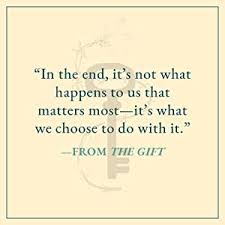
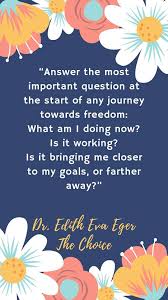
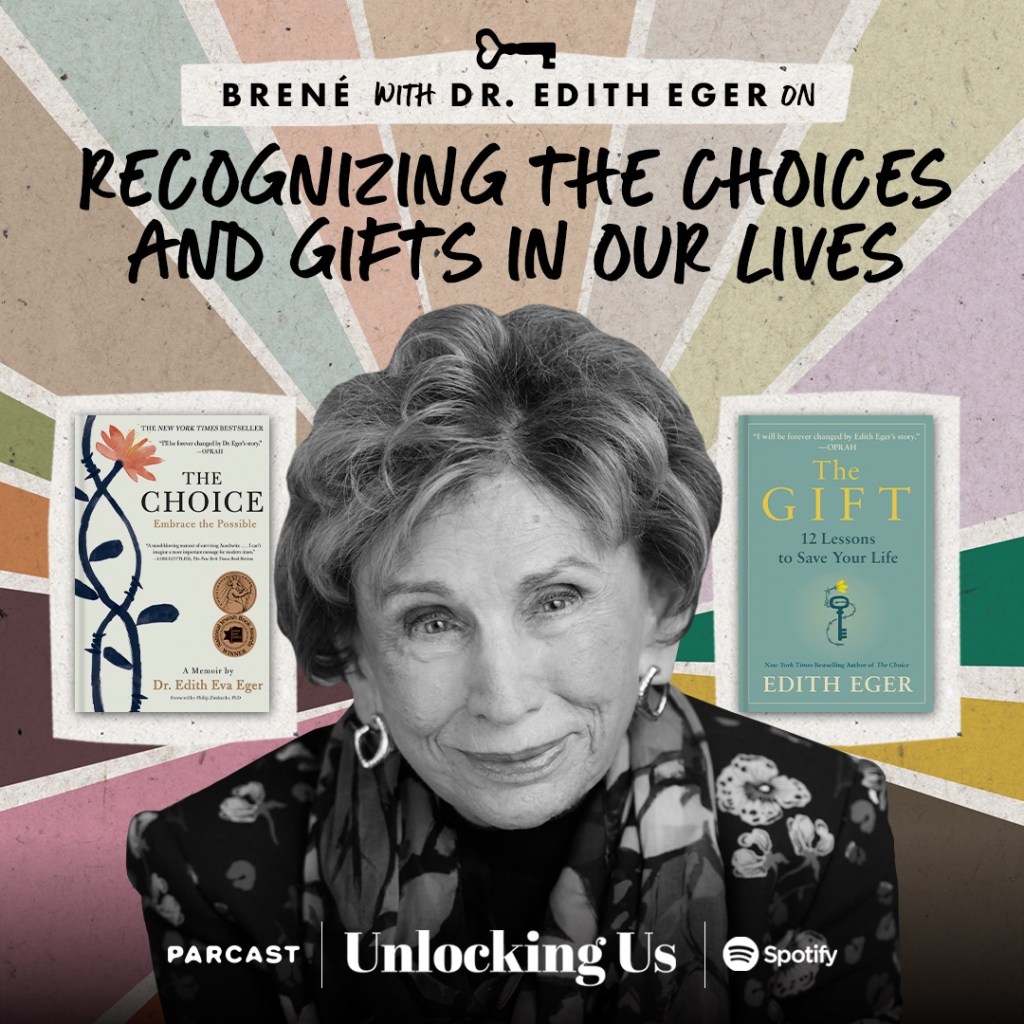
I recently listened to Brene Brown’s podcast with Dr. Edith Eger and found myself captivated by her observation that we are either “evolving” or “revolving”. Dr. Eger is a 93 year old inspirational dynamo, a Holocaust survivor, who drew on her personal life experiences in her career as a clinical psychologist to help others free themselves from the prison of their own minds. Just last fall, she published her latest book, The Gift: 12 Lessons to Save Your Life. What I love most about her short, yet oh so impactful book, are the questions she poses in each chapter that really stop you in your tracks and make you take a good hard look in the mirror. Questions like: “would you like to be married to you? You can’t heal what you can’t feel. Are you evolving or revolving?”

In her first book, The Choice, Dr. Eger wrote an inspirational book of overcoming the trauma of her Holocaust experience and healing the pain associated with it. She truly believes her purpose is to provide encouragement and support to help others overcome trauma and live a meaningful enriched life. In this second book, she expands on her message of healing and “provides a hands on guide that gently encourages us to change the thoughts and behaviors that keeps us imprisoned in the past.”

One silver lining that has arisen from the uncertainty and upheaval of 2020, is the deepening of friendships. My friends and I have leaned in, opened up and found so much help and hope amongst each other. Not surprisingly, it has unearthed a lot of the messaging we received from our past experiences that informs our decisions and lives as we go forward.

My friends and I are embracing an “evolving” mantra as we go forward in our lives. We take with us the hard-earned lessons that life has taught us and we are owning the blind spots and old reactive behavior patterns that no longer serve us well. We support each other in this evolution, because it does require a lot of hindsight, insight, hard work and new practices. Oddly enough, for many of my female friends it also requires getting very comfortable with setting boundaries. This is probably the one area where we offer to each other the greatest encouragement.

Dr. Edith Eger offers a touchstone for those of us who struggle with speaking our truth when someone crosses a boundary that is rooted in our core values. She teaches that freedom is having choices. We have the choice to say “no” and we have the choice to say “this response or behavior is not helpful to me”. We can free ourselves from the unconscious choice to ignore bad behavior or poor emotional regulation from others. Dr. Eger makes clear that we sacrifice and suffer when we accept the unacceptable. She encourages us to find our personal empowerment and break free. It is our choice. When she shared that fear and love cannot co-exist, it really resonated with me. We think of love as soft and mushy but it just the opposite– it is the super glue of life. Love is supported with accountability and trust. It forges a strong foundation for all our relationships. We shouldn’t be afraid to tell those who love us what we truly need to heal, to survive and to evolve.

Fear of repercussion kept me from holding boundaries many times in my life. But that fear also meant that I made a lot of sacrifices and suppressed my true self to either please others or avoid their disapproval. The path of least resistance was not the path to happiness or wholehearted, authentic living. How can we possibly be the best version of our true selves if we are operating from fear?

My friends and I have been having some really good discussions about fear and about the power of perspective and reframing things. As we hold ourselves in both awareness of our own behavioral patterns and a renewed accountability to change our responses, we realize that we have more empathy and clarity for others. I do believe that this is one of the greatest insights we gain from our own personal growth work. It truly enables us to “walk in another’s shoes”. We gain a better understanding of other’s “soft spots” and “trigger points”. We can respect that their history has created these bruises, not us. We can then choose to find a more caring approach for challenging discussions. Imagine how it would feel if someone took great care to understand the root cause of your deepest emotional wounds.

In her book, Dr. Eger offers some incredible real-life examples of people who have endured major adversities and chose to shift their perspective to see the silver linings and the gifts that can be found even in our darkest moments.

Here is Dr. Eger’s inspiration for shifting our perspectives:

What a beautiful reminder that the things that interrupt our lives, that stop us in our tracks, can also be catalysts for the emerging self, tools that show us a new way to be, that endow us with new vision. That is why I say that in every crisis, there is a transition. Awful things happen, and they hurt like hell. And these devastating experiences are also opportunities to regroup and decide what we want for our lives. When we choose to respond to what’s happened by moving forward and discovering our freedom to, we release ourselves from the prison of victimhood.” —From the Gift: 12 Lessons to Save Your Life

It’s been cathartic for my friends and I to share our personal stories and hard life experiences that helped us evolve and discover something new about ourselves. Many of us have had similar experiences such as the death of a beloved spouse, a divorce, a job loss, being single moms, and cancer.

It is in the shared stories of our grief and recovery that we find footholds for our own journeys in life. Over this past week, I have heard so many touching stories from friends about the words of encouragement that they have given to others, or the space that they held sacred for others in the deepest grief. They are offering to others what they themselves would have most appreciated in their dark moments. And they are doing it better than ever because of their conscious personal growth work.

A meaningful benefit of doing any self-discovery and personal growth work is that you will be a source of encouragement and hope for others who are also seeking to “evolve” through their all their life experiences. Life happens….how we respond is our choice and our strength.

Recommended Resources:

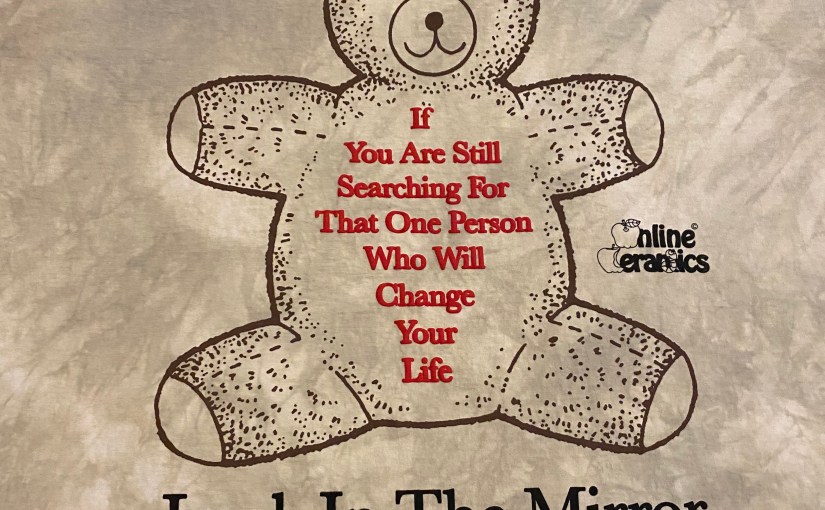
A special credit goes to my son in law, Ted Larsen, for the t-shirt image I used in this blog post today — when I saw him wearing this shirt recently, it brought a huge smile to my face.

Filled with empathy, insight, and humor, The Gift captures the vulnerability and common challenges we all face and provides encouragement and advice for breaking out of our personal prisons to find healing and enjoy life. (excerpted from Amazon.com)

https://brenebrown.com/podcast/brene-with-dr-edith-eger-on-recognizing-the-choices-and-gifts-in-our-lives/

Being Well Podcast with Dr. Rick Hanson and Forrest Hanson How To Change for Good https://www.facebook.com/rickhansonphd/posts/1869119006584107

A Meaningful Gardening Metaphor

Many who know me, know that I am an avid gardener. My love of gardening started early in life and has brought me so much joy over the years. One of my greatest pleasures is taking an overgrown jungle and turning it into a lush, textured and colorful retreat. Years ago, I nicknamed one of my shaded garden paths Nature’s Chapel for it was full of majestic Jack in the Pulpits and large-leafed variegated hostas that held raindrops like sparkling jewels. That graceful garden offered both calm and wonderment. Gardening has always been therapeutic for me. It brings me joy and a deep sense of satisfaction to transform an eyesore into a treasure for the senses.

Over the past few days, I have had to sit with some heavy emotions from my past. The images of my many gardens kept intertwining with my thoughts. Suddenly I realized that there was a meaningful metaphor emerging. I recalled a piece of raw land covered in thorny brambles and thick underbrush. At first sight, it looked like a daunting task to clear it all. But my vision of a lush garden with blushing pink bleeding hearts and emerald ferns spurred me on to tackle the clearing process. It took nearly a week of manual labor, blood (in spite of thick gloves), sweat and even a few exasperated tears. Eventually I was gazing at that thick rich composted soil, eager to plunge my fingers into it and inhale the promise of a dense flourishing garden.

I used this gardening metaphor as my anchoring point to revisit an old emotional wound. It has had a profound impact on my mindset to continue on — digging deep and clearing away thorny emotional brambles. I know that it will be hard work, but in the end I will have a clear, clean healthy space in my heart and life story.

Perhaps one of the most revelational transformations that happened during this clearing is that I am able to use tools I did not possess at the time of origination of the painful emotional trauma. It could have been one of many incidents in my childhood where a parent shred any hope of trust and protection through uncontrollable abusive responses. It could have been occasions when I was pleading for help for myself or my daughter and was completely ignored, even dismissed. It could be the innumerous times a former partner stripped me of self esteem and self-worth in spite of facts that proved otherwise. In those moments, I was not strong, lacked confidence and believed I was unworthy. Too young and insecure, too mired in dysfunctional circumstances others were unconsciously creating for me, for us.

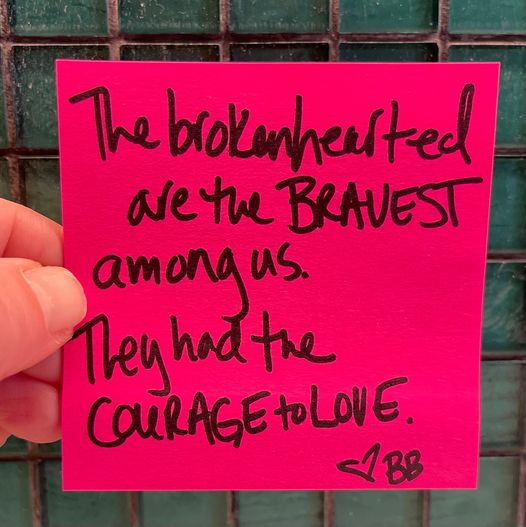
Today when I stand facing the thorny brambles of revisiting those old traumas, I am an older, wiser and more self-compassionate woman. My tools are knowing my own value and self-worth. I recognize that I have overcome some really painful, challenging life experiences and am still standing. I also know that in spite of mean, spiteful and deeply hurtful actions of others, my tender heart remains unchanged. My loving heart may be bruised, scarred and creviced, but it is capable of deep love and true warmth. In fact, I am certain that my brokenness is what allows more light and empathy into the deepest part of my very being. I have an innate understanding of the human condition precisely because of the pain I have endured.

In some ways, it is like having a crystal ball. I envision my crystal ball look as a snow globe. I can look at my young granddaughter as though she is in a delicate glass snowglobe, shake it and watch the fairy dust of snowy white sparkles drift over her. I can hear her laughter and I can wrap her in my arms when life hits her hard, offering comfort and assurance that she is loved, safe and protected. My wish for her, and all my grandchildren, is that this is their true foundation.

My improved self-awareness in my 60’s means that I am a better advocate for my innocent and vulnerable grandchildren. Of course, I will not be able to protect my grandchildren from life’s hardships, but I will hold space for them, I will honor their true feelings and I will be a source of comfort and strength. Awful things happen in life — how we show up for others in there hour of need is paramount. This is how we help our young people grow their character, their values and their resilience.

I am a crusader for my grandchildren. I will never watch silently as an adult carelessly and unconsciously strips a child of their worthiness or their need to feel safe and protected. While much of life’s challenges and heartbreaks cannot be changed, how we treat others is fully within our power. I have zero tolerance these days for adults who expect more from their young children than they do themselves. How can you expect a little one to have emotional regulation and patience if you are not role modeling that for them? Let’s face it, we are all imperfect and we will make mistakes but even then we have precious teaching moments and an opportunity to restore trust and worthiness. Our greatest tools in these moments are personal accountability and sincere apology.

These transformational tools must be used swiftly. I cannot stress this enough. We can circumvent serious emotional damage and development of unconscious protective behavioral patterns by owning our mistakes and hurtful actions and offering a sincere apology. Not just I am sorry, but a true commitment to change.

Imagine a fiesty preteen girl being told by her birth father that she’d be pregnant by the time she was 16. For three years she’d carry this in her heart like a heavy rock weighing her down. On what should be a very happy milestone 16th birthday, she bounds down the stairs and asks her mom if she should call him and tell him he was wrong — very wrong — about her on so many levels. It is caustic, toxic actions like this that plant the seeds of unworthiness in an innocent child. This young woman will carry this with her all her life – it is her emotional baggage packed and handed to her by a careless adult.

This is another example of a sliding door moment in life. That birth father could have realized what an awful thing he said to his daughter and he could have immediately apologized. Perhaps he was angry about something else and directed all that pain at his daughter. But years go by and he’s long forgotten he ever uttered those words to her. Yet she carries them buried in her heart and they will shape her through the years. She will always have a nagging inner voice telling her she is “less than” and there will be days she believes it. When people let her down, she will see it as proof of her own unworthiness. It will make recovery from life’s blows all the harder. When she becomes a mother, she will make every effort to ensure her own child feels completely loved and accepted, just as she is. It will take this woman years to undo the silent messaging that she is unworthy of love and belonging. And this is precisely why swift action is needed when we screw up.
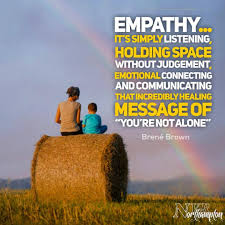
I do believe that each generation becomes better at parenting in a healthy way by learning from our own parents what we do not want to repeat. This has been a guiding principle for me and many of my friends, and we are seeing that unfold with our adult children as they raise their own families now. I am also grateful for the work that Brene Brown has done to bring out into the wide open just how these very real life experiences impact us emotionally and psychologically throughout our lives. Which is precisely why we need to do our own “clearing and excavating” work. In my viewpoint, Brene has been a leading catalyst for making very public the critical need for all of us to dive into self-discovery and to support each other in a wholehearted way when we find the courage to do so.

It is my hope that my gardening metaphor will become a strong visual for consideration should someone ask you to help them as they are pulling weeds and emotional brambles from their own stories.

Almost a year ago, my lifelong friend, Judy Chesters, told me that we still had a lot of deep diving to do into our work of “emotional excavation”. Admittedly she caught. me by surprise because she and I have worked so hard for over 5 years supporting each other through a lot of processing of archived traumas and self-discovery. All I can say now is that she must have had a crystal ball of her own — for after a year of pandemic and unprecedented uncertainties she was so very right. Both she and I have gone much deeper into our own stories. The healing and empowerment that we have gained is almost hard to explain but how we both feel is much more grounded, expansive and light. I shared with her one day that I describe it as “rare air, deep water.”

When I am in that space of “rare air and deep water”, I let my imagination run free and wild. I envision my grandchildren traveling through their incredible lives without emotional baggage and scarred hearts — no limitations on their creativity, worthiness and ability to live authentic wholehearted, free-spirited lives. I imagine a world where we give to each other an enriching environment and nurturing support to be our best selves. Amy Davis

Helpful Resources:

RISING STRONG by Brene Brown.

Check out this overview: https://www.meaningfulhq.com/rising-strong.html

RADICAL ACCEPTANCE by Tara Brach

Read this summary by GoodReads: https://www.goodreads.com/book/show/173666.Radical_Acceptance

Check out this recent Typology Podcast with Ian Morgan Cron for some personal insights on the value of doing your own “shadow work” and the rewarding personal evolvement that grows from doing that self-discovery work. https://www.typologypodcast.com/podcast/2021/11/02/episode04-034/audreyassad

My Coat with Many Pockets

When I was in my late teens, I heard Dolly Parton’s song, Coat of Many Colors and it landed softly on my heart. I was captivated by the message that it conveyed about the love that was woven into that patchwork coat and one’s perspective on life.

That song spurred my imagination and I conjured up a “Coat with Many Pockets.” It was an imaginary coat, pale pink in color and floor length. The coat was adorned with pockets of all shapes, sizes and colors inside and out and even on the sleeves and collar. Each pocket was intended to hold a memory or words of wisdom that would help guide me through life. Just creating this coat in my mind brought me a tremendous amount of comfort and hope. You see, I’d spent my childhood and teen years in constant turmoil and I sorely needed some reassurance that one day I would have a stable, happy life. I also had a very real awareness that I’d have to seek out the guideposts and encouragement that would help me achieve that. I was in search of good examples and worthy role models.

In a heart-shaped pocket on the inside of my coat, I placed warm memories of my beloved Aunt Betz. I chose to carry her close to my heart because she was the epitome of a loving mother in my eyes.

I was so blessed to have Aunt Betz in my life as I was growing up. Each visit to her home was like being in a fairy tale and a welcome reprieve from my childhood dysfunction. She would run a warm bath for me, scented with Calgon and leave me two big fluffy pink towels, a bathrobe and slippers. She’d make me tea and cinnamon toast cut into thin strips and play board games with me. She taught me to cook and bake and always had a cute apron at the ready. She is the one who instilled in me a love of word puzzles. She’d write Pennsylvania across the top of a sheet of paper and tell me to make as many words out of those letters as possible. All the while, she’d be preparing dinner and humming a tune. She would marvel at the long list of words I compiled and place shiny colored stars on the top. Once a year, I would get to stay with my aunt, uncle and their two sons at Rehoboth Beach for a whole week. It was the most magical vacation, full of love, laughter and sun-drenched days on the beach. This easy flow of a happy family became the image for my own future.

Throughout my twenties I tucked many words of encouragement and nuggets of wisdom into the pockets of my imaginary coat.

Harry Stacks, the editor of the Intelligencer Journal (local Lancaster County newspaper) and my first boss saw that I was capable of more than the minor secretarial duties he had for me. He offered me an opportunity to write articles for the women’s section of the daily newspaper. I never forgot his generosity in allowing me to explore my potential. I tucked that in a pocket of my coat and gave it a hearty pat.

Sometimes I would meet a person on the train from Lancaster to Philadelphia when I would take my infant son for his eye appointments at Children’s Hospital. That kind person would offer me some advice or assurance just when I needed it most. What anxious young mother doesn’t find comfort from an older mother offering hope and support? You bet — I tucked that in the very pocket I would warm my shaking hands in.

By now you can probably tell that my coat with many pockets is filled with love, encouragement, comfort and hope — random acts of kindness from people I have loved and from total strangers. Little did they know that they made a lasting impression on me. For many I am sure that they had no idea what I was facing in my life when they offered me their words of wisdom.

I met a Indian gentleman named Patel on a plane years ago that spent a generous hour sharing with me that “If you do good, you will get good. If you do bad, you will suffer.” He stressed that it was possible to meditate anywhere and to always be respectful of others.” I jotted down everything he said to me on the notes section of my iPhone and yes, tucked the memory of our time together in a pocket of my coat. It was at the onset of my mindfulness and meditation journey and his conversation felt like a nudge in the right direction. I remember a feeling of such peace as we chatted on that plane.

Once I was sitting alone having dinner on birthday and an older gentleman stopped by my table and told me I looked beautiful and to “keep care”. He had the same blue eyes that Skip had and I have never anyone other than Skip say “keep care.” That brief encounter touched my heart in a very tender way.

I’d been thinking a lot about my coat with many pockets recently and the comfort it has brought me over the years. People come in and out of our lives — some briefly and some much longer. If we are lucky, some leave an indelible impression that will carry us for a very long time.

Random acts of kindness may not be so “random” after all. Perhaps others can feel when we need a little life boost, or some emotional glue.

A few weeks ago, I shared this story of my coat with many pockets with a young woman I have befriended at my local grocery store. She was about to embark on an exciting new chapter of her life and was so happy to see me to share that news and to get some words of encouragement from me. It’s been our “thing” through the pandemic to offer each other inspiration and uplifting thoughts. Naturally she was a little nervous about taking this leap and following her heart to pursue her dreams. The image of my coat with all those pockets really resonated with her. As I reflect on it now, I think that my imaginary coat is a metaphor for being present, paying attention to others who have traveled life’s bumpy path and taking their words of encouragement to heart.

Happy Valentine’s Day to all. I hope you will tuck some of the love and joy of this day in your own pockets.

In loving memory of my buoyant, generous and sweet husband, Skip Davis, I share this, his favorite quote:

The Magic of Holding Space

Last year I was reading Alicia Keys book, More Myself, and found myself captivated as she described her husband “holding space for the magic” as they worked on music compositions together. It brought a smile to my face to think of the magic that unfolds in holding space — for ourselves and for others.

Holding space” was not a new phrase to me. I had come across it numerous times in mindfulness and meditation practices. A basic tool in these practices is to pause — to be aware of those racing thoughts and return to the present moment. For me, to pause was simply a reminder to stop. Holding space was introduced as a more expansive way of pausing. I learned that holding space is an invitation to not only stop but to create some space to fully be present with thoughts, emotions and circumstances.

When I hold space for myself, I get more in touch with specific emotions that arise in various situations. Now I am more able to discern what those emotions are trying to tell me. Over time, I discovered what I was feeling was not necessarily directly related to the situation at hand, but residue from my past. With patience and practice, I learned to acknowledge those emotions and let them go. Then I could more clearly focus on the current situation and respond in a healthier, calmer way. The magic occurs from paying attention to the messages our emotions are giving us. Brene Brown calls the body’s responses to our emotions our “warning indicators” much like you’d find in a car. It is so much healthier to deal with these emotions with awareness than to act on them unconsciously. Its is empowering to no longer be held captive by old patterns.

Holding space for myself when I am in a discussion with others means that I give myself a few moments to check in with myself before responding. If I feel I need more time to actually process a sticky problem, I will say so. Even my young grandchildren are learning to use this technique and will often go to their rooms to think things over when they are feeling overwhelmed. Just this little break can shift the energy in a positive way. Reframing things with a fresh perspective invariably leads to more creative problem resolution.

One major observation I have made is that the better I know and understand myself, the better I am in meeting others with greater empathy, understanding and acceptance. While hard conversations can’t be avoided, they can be more productive with mutual respect.

The most compelling place to “hold space” is when someone is in the throes of real struggle, when life is hard and the circumstances are heartbreaking. The best balm that we can offer to someone in their hour of greatest need is to hold a safe space for them. We create that safe space with non-judgment, empathy and a willingness to fully listen

Brene Brown defines it like this: “When we are looking for compassion, we need someone who is deeply rooted, is able to bend, and most of all, embraces us for our strengths and struggles.”

There have been times in the past when I was well intentioned, but lacked the knowledge to skillfully, compassionately help someone in great need by simply “holding space” for them — and with them. One of those examples was a few years ago when my daughter was overwhelmed. So many parts of her life were going sideways. Instead of sitting quietly with her and truly listening to her, I wrapped her in a momma bear hug and softly said, “Oh honey, you shouldn’t feel that way. Look at all these positives in your life.” The truth is, she was well aware of the positives in her life but they did not negate all that she was truly feeling. And in that moment, she was dealing with a lot of stress and a boatload of very real emotions. My attempts to diminish her pain dismissed all those raw emotions she was processing. This proved to be an invaluable lesson for me.

The lesson that I learned is to offer grace and space for others when they need some emotional glue. Everyone must deal with their emotions, pain and problems in their own unique way. Rarely do others want us to fix things for them. They just want to be acknowledged and valued. They want to know that they are not alone. They want to be able to just dump all the pieces of their puzzle out. It is both a release and relief to unburden themselves of all they are bearing. They need a soft place to land and a safe space to share.

As I reflect back on my own life, I can recall the times when I wish someone had “held space” for me. I realize now that I often pushed through pain when I should have stopped and processed it in the moment. That caused me to carry around a lot of old baggage and emotional scars. With this valuable insight in mind, I encourage others to hold space for themselves and others. This is where we find our strength, our resilience and our compassion — the magic that helps us recover from hardships and heartbreaks.

I’ve also come to have deep gratitude for those treasured friends whom I can count on unconditionally to be “my soft place to land and safe space to share“. In turn, I hope to also be that source of great comfort to others.

Recommended Resource:

The Enneagram Institute https://www.enneagraminstitute.com

If you enjoy taking personality tests or those fun quizzes on social media, you might find the Enneagram to be not only entertaining, but so insightful …. check it out to learn more through self discovery

Surrender in the Storm

A pond lies calm, basking in full sun, her waters crystal clear

She is at ease, peaceful and undisturbed

Unaware….maybe acutely aware…mindful that she is all she needs in this moment

To lie still and bask in warm sunlight

Storm clouds gather above turning warmth and light to dark, deep dark

A chilling wind blows hard stealing warmth from the air

Shifting winds swirl in opposing directions at once increasing in force

Debris pierces the calmness of the pond’s surface

Sinking to the bottom, exploding in thick wet sand

The once calm waters churn in turbulent winds, spilling tears over her banks

Swollen rain clouds release the torrents begging to join the tempest

Sediment, sentiment, stirs at the bottom stretching up into once clear waters

Waters turn as dark and cloudy as the sky above

A reflection of the chaos reigning in this moment

She is wise, lying still, observing the changes above and within, external and her own

She sits quietly, impatient at times, restless, recognizing discontent

Once she’d long for a return to her usual calmness, all things staying the same

Now she observes with curiosity, discovering

There is a forward movement in those swirling winds, inviting change and adventure

The chill in the air makes her more appreciative of the warm kiss of sunlight

The churning sediment lodged in her heart is freeing

It rises up …. a million particles dancing freely.

A new landscape being created in her heart

No longer flat and compacted

A vast and fascinating landscape, with contours and sandcastles, complex and simple

A veritable playground of a happy, contented life full of memories and promises anew

She smiles contentedly for the first time in quite a while as the winds wave goodbye

The first morning light turns the sky red, then pink

And oh so slowly….the warmth of the sun touches the surface

A calming touch, invoking acceptance

She rests, content to watch the gentle unfolding, rebuilding

A settling of her new enriched, enlightened life

—–written, April 2019

Big Dreams, Wild Imagination

I love discovering recurring themes that seem to bubble up as little nudges from the Universe. Over the past few days, the concept of “dreaming” has been weaving its way into my meditation, inspirational quotes, music and conversations. I have been sorting through a box of old keepsakes recently and found a brightly colored slip of paper with “Dream Big” scrawled across it. It brought back a flood of memories and the impetus to encourage myself to “dream big”.

It was a time of great struggle in my life. The dream I’d been living was now broken, a thousand jagged pieces scattered on the floor. My dear Skip had passed away so suddenly and I entered a year long fog that was thick, heavy and murky. I asked myself a million questions about what I was supposed to do with my life now. I’d lost my compass. As I slowly processed my grief, I found that I was also asking bigger questions about life than I had previously pondered.

Just before he died, I had confided to Skip that I was growing discontent with my banking career and he listened intently to my thoughts and feelings. He agreed that it was probably time for a change and said “whatever you decide to do, Amy, I will support you. Dream big.

I wrote DREAM BIG on a brightly colored piece of paper and placed it on my desk in the home office Skip and I shared. Skip’s desk was neatly organized with folders, tape dispenser, pens and cubbies full of small note pads, envelopes, stamps, bills to be paid. My desk had inspirational quotes of assorted shapes, colors and sizes randomly taped all over it. I had colorful journals, art supplies and a boxful of blank cards for all occasions. There was a small part of my desk that mirrored his, with tidy organization for serious things like work, bills and household to do lists. The “Dream Big” quote was smack dab in the middle of my desk.

A year after his passing, I found myself staring blankly at that quote and thinking mostly of a broken dream.

What I have learned about sitting on the floor with your broken life puzzle is that you often linger with more questions than answers. I believe this is a meaningful part of life and it must be done alone. I was attempting to put my life back together without pieces that were no longer a possibility. The questions that I found myself asking could only be answered by me. It was a leap of faith to follow what my heart was urging me to do. Oddly enough, what once scared me, or held me back, from taking action on a 15 year dream now seemed to be my saving grace. That dream was to have my own business.

I realized that all the fears I once had about the possibility of failing at my dream of having my own business paled next to facing the reality of both breast cancer at age 40 and the loss of my husband at age 50. It put fear in its place — the rearview mirror. I boldly took a leap of faith and I quit my 25 year career in financial services.

My business idea came from imagining a beautiful lingerie boutique for women who were facing breast cancer — a feminine, compassionate environment that was the polar opposite of the “impersonal and clinical feeling” medical equipment supply store that I had relied on for years. I had a bulging file full of ideas and a wild imagination for my vision of a better approach to help women ease into their “new normal” after breast cancer surgeries. Ironically enough, my timing for actually implementing my dream business was probably the best it could have been. I opened Annabella’s, a lingerie and breast care boutique, in Main Line, Philadelphia just when the local hospital systems were launching comprehensive breast care centers.

Dreaming big and imagination go hand in hand. Collectively hospital systems, business owners, medical teams and breast cancer patients had a bigger, better vision in mind for delivering holistic health care. Fifteen years after my own diagnosis, I witnessed a transformation in breast cancer care unfolding across the country. In my own community, I was able to be an active participant in the process. The opportunities I was given to both teach and learn far exceeded my wildest dreams.

This brings me back to this present moment, January 2021. My current meditation pack in Headspace has been encouraging a “dreamlike” quality to the meditation practice. A Toni Morrison quote turned up in an inspirational email. It read, “dream a little before you think.” As I walked the dogs in the morning, I listened to a song that was begging to be heard — Rainbow Connection sung so sweetly by Kermit the Frog. I found myself singing along about finding connection….the lovers, the dreamers and me. I was captivated by a study that revealed that small children are so much more innovative than adults about the plethora of ways a simple chair could be used for a variety of purposes. What might we learn from them when we give ourselves the freedom to DREAM BIG?

My answer to that question came while listening to Caroline Myss’ engaging presentation entitled “It’s Time to Imagine Something New”. Caroline is a New York Times best selling author and an internationally renowned speaker in the field of human consciousness, health, energy and a diverse array of personal development programs. Her discussion about our capacity to imagine was so enlightening and I found myself laughing as she pointed out that when it comes to negavity our imaginations know no bounds.

If you doubt that you possess a creative imagination, here’s some food for thought. Do you lie awake at night thinking about your worst fears? Do you come up with worse case scenarios for things that are happening in your life? Do you ever say “I cannot imagine having the courage to say or do that?” Caroline points out that some of our most creative and complex imagined scenarios come from the shadows of fear.

Rarely do people go over to the positive side of their imagination, she says. What if we could shift — and imagine the good, the better, the best – with the same wild abandon that we do for the worst? Imagination used this way sees what is possible. I was reminded of the phrase “the possibilities are endless”.

Caroline stressed that a lot of the problems we have in life require something new, something we have never thought about before. We often get stuck with only things that are familiar to us or limited by our worst case scenarios. This is true not only for our personal lives, but also for the larger complex problems that our communities and country are facing. The time is right for “out of the box” ideas that our most positive imaginations can conjure.

Brene Brown has been telling us for many years that the birthplace of creativity and invention is vulnerability.

Brene defines vulnerability as risk, uncertainty and courage. When I think of the people I most admire who are willing to risk for a good cause, who are unshakable in their integrity in the face of uncertainty and who show courage to face hard things, I think of them as fearless and brave. Maybe this is just what Brene is striving for — a reframing of what it means to be vulnerable.

Little children don’t limit their imaginations with negavity. They don’t consider risk, uncertainty and courage. They frame their adventures and innovations as opportunities, possibilities. They are fearless, inquisitive, playful. Caroline Myss points out that adults are the ones who place limitations on their imaginations and it is often out of fear. Fear blocks creativity.

Every day I witness evidence of the power of positive imagination, vulnerability giving birth to creativity and innovation, and a big dream of creating a better world. It unfolds before my eyes as I watch parents raising children in the midst of an ongoing pandemic. The creativity and patience they bring to a series of unique circumstances is heroic.

We can chose how we frame our problems. Consider a colorful, expansive frame that invites you to tap into your wildest imagination and see what is possible!

Dream Big. Imagine the world you want for your children and grandchildren. The possibilities are endless.

Recommended Resources:

Dream Big: Engineering Our World https://dreambigfilm.com

Caroline Myss, It’s Time to Imagine Something New https://www.myss.com/its-time-to-imagine-something-new/

Mental Reframing https://www.washingtonpost.com/health/worry-stress-and-mental-reframing/2021/01/22/b8b738d6-54fd-11eb-a931-5b162d0d033d_story.html

Rainbow Connection, by Kermit the Frog https://www.youtube.com/watch?v=awhyiBv-oQc

Greater Good Magazine – Purpose https://greatergood.berkeley.edu/topic/purpose

Love Letters

There are days I find myself yearning to have a conversation with the one person I could count on to offer comfort, wisdom, introspection and perspective — the love of my life, my late husband, Skip. He’s been gone for over 18 years and yet I can almost feel his hand slipping into mine, his long legs falling into lockstep with my own gait. I just want to look in those blue eyes and ask him my most pressing questions. I miss his ability to offer a safe space for complicated feelings. I miss his calming wisdom.

If you ever met my gregarious Skip, you would not have guessed that he had experienced a lot of heartache in his life. He was effervescent. His blue eyes would sparkle like that of a small boy about to stick his hand in the cookie jar. He used his voice like an instrument — tone and inflection combined with a few, but meaningful words could soothe and comfort, or stop you in your tracks. He would wink and smile at me as he offered “if you want someone’s attention, just whisper.

Since I cannot have anything more than a one-sided conversation with him now, I looked for some comfort and insight from the letters he wrote to me all throughout our years together.

Before I opened my treasured scrapbooks of his cards and letters, I reflected on recent conversations with friends who are awash in their own sea of mixed emotions and ongoing uncertainty. We are arriving at a place where we no longer have a lot of resistance to opening up and sharing our vulnerabilities. Perhaps the toll that this past year has taken on us has freed us to “let go” of our armor and just share the raw truth of our stories. The more I hear of others’ stories, the stronger the bond of our friendship has grown. Empathy and compassion become the emotional glue we need.

It dawned on me that this was the very reason Skip and I had the deepest, most trust-worthy relationship I had ever known — our shared respect for each other’s life stories and the inherent vulnerabilities imbedded in them. His handwritten letters to me are revealing the secrets and wisdom of a whole-hearted man who overcame his own trials and heartbreaks to become a role model and mentor for so many.

Many years ago, I came to trust the instinct to randomly open a book and read only the page that revealed itself to me. And so it was, that I opened my scrapbook to page 2 of a letter that Skip had written to me about a year into our relationship.

He wrote about how surprised he was to discover that I was a source of encouragement and strength to him. Though he treasured this, he was confused by it. “It wasn’t supposed to be this way,” he writes. “I am supposed to be stoic, not moved by sentiment.” He went on to share that he had usually worked out his own situations. “Despite my outward and buoyant personality believe me, beneath that veneer lies a man that has been hurt — often. You have allowed me openings to talk to you–and you have listened.”

I could not read another paragraph. I just sat with those written words, speaking directly to my heart, almost as though he were sitting beside me.

Please know that when I began writing this post, I was describing my effervescent Skip from my personal experience with him. I had not read this letter written to me over 20 years ago in a very long time. And yet, here was the confirmation in his own words. He chose an armor of “outward, buoyant personality” to hide his hurt and vulnerabilities. Skip was the kindest, most generous and encouraging human being I have ever known. Over our years together, I came to know that he was always giving to others what he himself needed the most.

What I did not consciously know so many years ago is the transformational power of owning our stories. Skip and I built our incredible relationship on a foundation of the truth of our life stories. Both of us had a lot of baggage and trauma from childhood on into adulthood. We had reached a point in our lives where we were bone weary from protecting ourselves from being hurt — again. So we spilled our broken parts out to each other and found that by being so vulnerable and real, we did not push each other away – but actually pulled each other closer. In fact, we often acknowledged it by saying to each other “two broken halves made a hell of a whole”.

Skip’s written words are resonating with me on deeper levels now. In part, it is due to conversations I’ve been having with friends about helping the men in their life (big and little) uncork their emotions and talk about their own life stories. For far too long, society has encouraged men to “tough it out” and “man up”. That was the stoic environment that Skip was raised in — both at home and in boarding school. But regardless of gender, this is unhealthy and often leads to over-reacting or numbing when emotions are suppressed for far too long. It blocks vulnerability and it blocks empathy — and both are cornerstones of trust.

The most revelational aspect about sharing our stories is the much-needed release from bottled up emotions and hurt. It lightens our emotional load, unpacks the baggage and frees up a lot of space in our life. I saw this in Skip and I know it to be true for me personally. We are no longer tethered to the past and old narratives.

What I have been observing over the recent weeks, is how many people can no longer carry their heavy loads of emotional baggage. I’ve witnessed it first hand in my book club and with my closest of friends. The safer we feel with each other, the more likely that our resistance will crumble and we are bound to open up. It has been much needed relief and an entry point for deeper connection.

And this brings me to the compelling advice that Brene Brown has been teaching to us for years. Trust is paramount when sharing our most personal stories:

“Our stories are not meant for everyone. Hearing them is a privilege, and we should always ask ourselves this before we share: “Who has earned the right to hear my story?” If we have one or two people in our lives who can sit with us and hold space for our shame stories, and love us for our strengths and struggles, we are incredibly lucky. If we have a friend, or small group of friends, or family who embraces our imperfections, vulnerabilities, and power, and fills us with a sense of belonging, we are incredibly lucky.” – Brene Brown

Over this past year, I have been fortunate enough to witness the release of pain and healing transformation that unfolds when we hold space for others to tell their stories, with courage to share their vulnerabilities. Sharing the broken parts of ourselves with someone we trust — and feeling safe, feeling heard and free of judgment is the best gift we can offer to another in need.

Looking back to the beginning of my relationship with Skip, I remember being so afraid to “trust” again. My trust in others had been broken so many times that I was leary to believe that it was real and solid. In fact I told him point blank that love was easy but trust was hard. So the day I told him that I trusted him was pure gold to him.

I think anyone who knew Skip would agree that he was a charismatic, emotionally aware, vulnerable yet incredibly strong, trustworthy man. There is no doubt in my mind that it was his ability to tap into his own narrative and find the common ground with others that created that deep vein of empathy in his heart.