Build a Sophisticated Toolshed

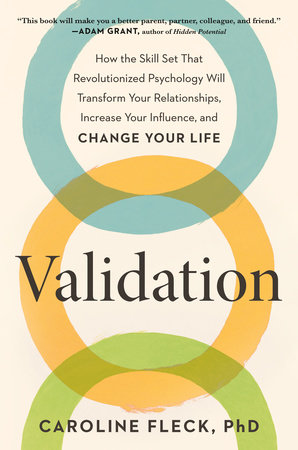
Imagine my surprise to hear a male guest on a podcast sharing that he and his wife are now using more “sophisticated” tools to navigate life. Wow — I love that impactful word and could even feel myself leaning into it and embracing the full scope of what it feels like.

It is remarkable how one word can shift us quickly into the next level of our personal growth — and do so in a way that feels amazing.

I could see it in the body language of this middle-aged man – he was owning how empowered he felt by proactively choosing a “sophisticated” way to support his wife deal with an emotional situation. There was a sense of pride and accomplishment.

His personal story was a sliding door experience for him — one where he could see how he used to handle situations like this that usually only made things worse; and how he attended to his wife’s needs now in a more mature and skillful way. Not only did his wife get what she needed most, their personal connection deepened.

The stark contrast of how his old ways of dealing with relationship struggles pulled them further apart – and how his new and improved ways, strengthened their relationship was undeniably magical. The “before” and “after” results of using “sophisticated” tools was proof positive that he was growing in the right direction.

He had handled a common relationship issue with aplomb.

Admittedly, he shared that he used to match her emotions and they’d get in an emotional tug of war. This could lead to a stand off and for the next few hours, they’d avoid each other or poke at each other’s shortcomings. Not fun.

His new and improved approach of validating her feelings and her experience, of listening to understand and co-regulating her by remaining calm, felt surprisingly good to him too. A simple shift in his approach was the fast-acting remedy that produced incredible results. They were hugging and smiling in just a few minutes. For hours afterwards, they could still feel the strong intimate connection they’d made.

That young man inspired me to see what is possible as we reframe personal growth and self discovery. Yes, of course — we want to be using sophisticated tools in skillful ways to build the life we want. To become better versions of ourselves over time and to support those we love in ways that build trust, resilience and self-confidence.

We can become master craftsmen and craftswomen with some simple, impactful shifts in our language and our awareness. Who wouldn’t want to become confident enough to use “power tools” in our most treasured relationships?

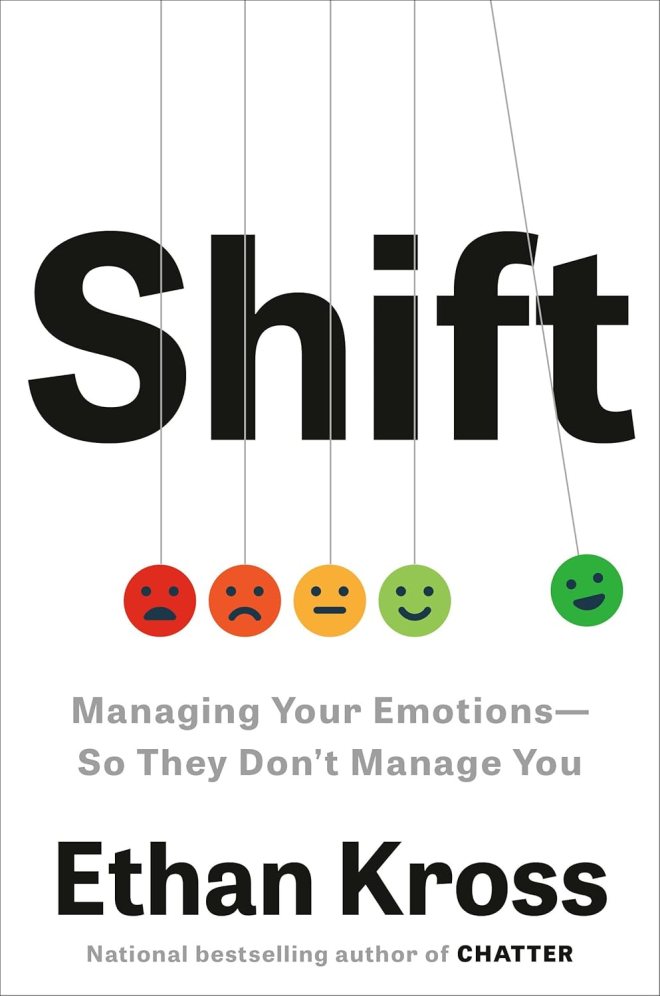
In his book, Shift, author and psychologist, Ethan Kross, reveals just how easy it is to step into using the “power tools” that proactively shift our mindsets, perspectives, emotions and perceived limitations. In fact, the concepts he details in his book could be the Starter Kit for building your own sophisticated toolshed.

These power tools are really pretty straightforward but we frequently get hijacked by the stimulus of a situation and just reach for a hammer.

It’s our natural human tendency to rely on familiar methods or tools, even when they are not the most appropriate for a situation.

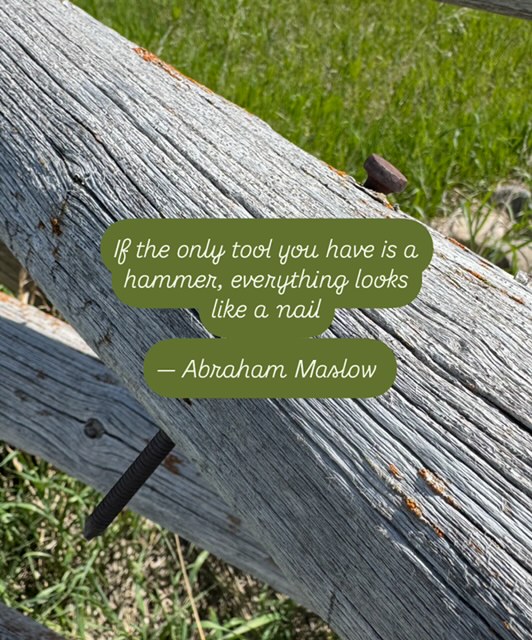
As Abraham Maslow reminded us: “If the only tool you have is a hammer, everything looks like a nail.”

It is precisely why Victor Frankl urges us to use the pause between stimulus and response to think about what is the best course of action in the long run.

Reminding ourselves that we want to be reaching for “sophisticated” power tools while we are taking that pivotal pause might be all that is needed to remind us to be more mature and intentional about our reactions. Drop the hammer and reach for the more contemporary, state of the art, power tools.

A Method and a Motto:

There is a method to stop the madness of using a hammer for everything that pops off in our lives and crops up in our relationships. It is recognizing that we human beings have a lot of variation in the way we show up day in and day out.

Some days we are far better resourced to handle blunders, mistakes and miscommunications. We can let things roll with grace and generosity.

Other days, not so much. We are irritable, easily distracted, have limited bandwidth and are running on fumes.

Even when we want to do our best, it may feel nearly impossible to pull that rabbit out of a hat.

Turns out, we unconsciously overweight and overrate what we can get in the short term. We make snap decisions and have knee jerk reactions to get satisfaction right away. We don’t like feeling uncomfortable, we want relief immediately. Winning a shouting match feels good.

But winning that shouting match only feels good for a hot minute.

That’s the unfortunate reality of overweighting what feels good in the heat of the moment. We unconsciously give too much weight to winning a fight or avoiding a conflict. We make a value calculation that is fleeting.

Dr. Falk reminds us that where we “place our attention” is the lever we can pull to override our tendency to overweight the value of a short term outcome. Play the long game. Turn attention to what matters most. Are you the kind of person who saves the day?

We aren’t little kids in a sandbox anymore. We are grown ups who calmly come in and help each other get along. We can clearly assess the situation and get back to having fun together.

In her book, What We Value, Dr. Emily Falk urges us to get intentional (especially in the heat of the moment) about shifting our attention to the long game. We will find it much easier to reach for our sophisticated relationship power tools when we focus on what we value most in the long term.

It may seem small and highly unlikely to be effective to “shift” to the long game – but it is an elevated form of delayed gratification. Do you want one marshmallow now or would you be willing to wait so that you get two marshmallows later?

Play the long game.

Turning our attention to think about what we are working towards in becoming a better person, in how we show up for others especially when it is challenging — that shifts our focus and puts more weight in the ‘value calculation” that drives our choices, behaviors and actions.

When we play the long game, we make the most of that pause between stimulus and response, by asking ourselves – “Wait a minute – let’s think about what I value most and make the better decision that aligns with my values.”

The method we can use to help us reach for power tools instead of a hammer is to shift our focus to playing the long game and matching our responses to our long term goals and core values.

The motto we create for ourselves becomes the lever we pull that opens our sophisticated tool shed. Something as simple as the golden rule can be a magical shifter in how we meet life’s moments.

When our kids are little, we give them those brightly colored plastic replicas of lawn mowers, weed whackers and leaf blowers. Many times our kids love to store their pint-sized imitation power tools right next to the real thing in the backyard toolshed.

We would never give our kids the real deal power tools until they are old enough and mature enough to use them with great care and skill. But we do plant the seeds that they will be quite capable to use the real tools in the future.

What we know now that is backed by advances in science and psychology is that for far too long is that most of us were only taught to use a hammer to fix just about everything. But a hammer and duct tape do not build strong relationship foundations and deep connections.

As we begin to incorporate more advanced relationship tools into our daily lives, we reinforce the positive benefits we reap – and we also teach by osmosis how effective sophisticated power tools truly are – in the long run.

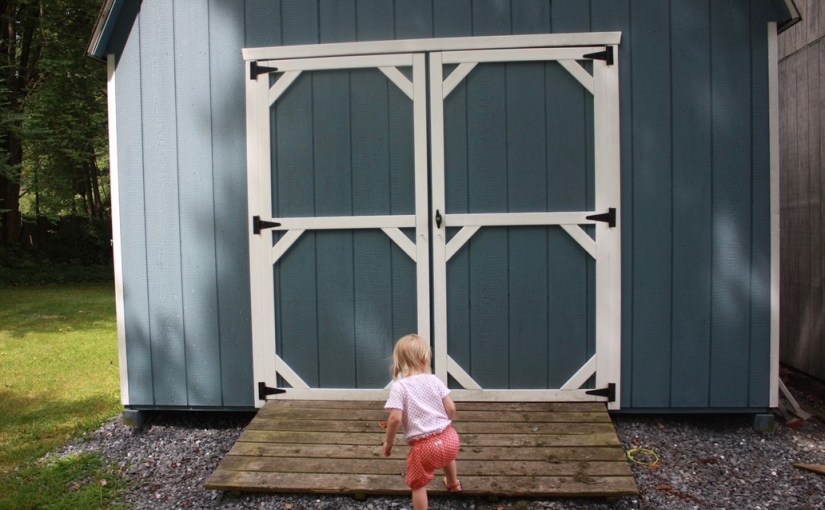
Think about using the mental image of a magical toolshed full of dynamic power tools that are fun to use and get the job done right the first time. We can all build that kind of toolshed, well equipped with sophisticated tools and skills easily accessed each and every day.

What motto would you put on the sign that hangs over the door of your sophisticated toolshed?

BREAK FREE FROM A VICTIM MINDSET: June 6th, 2025 episode with Scott Barry Kauffman. Prepare to be amazed at how often we get trapped in our own victim mindset. This dynamic conversation will shift you quickly to an “empowering mindset”

Better Scripts, Better Stories

What if we all had access to an incredible library of rich, engaging reference material for the stories we tell ourselves?

Instead of rummaging through old baggage accompanied by a judgmental inner critic telling ourselves stories that usually aren’t very helpful, we could flip the script.

We could build a dynamic database of reference material that could be repurposed time and again to write relevant stories that truly help us rather than restrict us.

Better scripts. Better stories.

If the stories we tell ourselves throughout our lives keep us trapped in small versions of ourselves, snagged on shards of shame, fear or insecurities, and limit us from seeing valuable context clues for building the life we want — we will miss the golden opportunities that are often right before our eyes.

If we are constantly second guessing ourselves and worried about other people’s opinions, we will never be able to fully tap into our own dynamic and unique character development. We will write ourselves as supporting cast members instead of taking the leading role we should have in our own personal development.

Knowing ourselves well and having access to our ever-evolving inner database of rich raw material cultivated from our experiences, emotions and mentors will be the giant transformational step in the better stories we tell ourselves all throughout our lives.

Ethan Kross, author of Chatter; The Voice In Our Heads and Why It Matters, recently shared that we are at a pivotal inflection point right now. His latest book, Shift, is an open invitation to embrace this transformational reframing of the voice in our heads and the database we all have in our bodies and brains as a resource not a roadblock.

How do we turn a centuries old paradigm on its head? The one that had us believing our inner library was just a dark, dusty basement full of stuff we’d rather forget?

We do a major renovation – that’s how. No more dimly lit basements or scary attics. We build greenhouse libraries instead!

Sit with that image for a few moments and feel just how inviting it would be to linger in that welcoming greenhouse — to explore your own personal growth in a warm, well lit, inviting environment with a vast library of inspiring stories of courage, creativity and curiosity.

No more inner critic curmudgeon constantly saying “I told you so” while opening the creaking lids of old baggage rummaging for proof that we’d never measure up. No more donning old protective armor or hand me down behavioral patterns.

Out with that crotchety inner critic stuck in the past who keeps us entangled in an unpruned past. In with an insightful, inspiring inner voice instead – one that continually reminds us how far we’ve come, what we are capable of and all our unexplored hidden potential yet to be discovered.

Our inner voice would be he head librarian and life coach of our personal greenhouse library — an effervescent mentor with a knack for using intuition and gut instincts as a guide for the best reference material suitable for our present day adventures and obstacles.

This is the major undertaking that we are all being encouraged to embrace thanks to neuroscience, psychology and vastly improved parenting models. This is the very inflection point that Ethan Kross tells us has arrived. We are long overdue for this healthy, space-clearing renovation and modern upgrade.

Each and everyone of us has the opportunity to write better stories that we tell ourselves. For many of us, it does mean that we have to clear out that metaphorical attic and basement in order to make room for the personal growth databases we can maintain in our greenhouse library.

For our younger generations, we can help them build their own greenhouse library from the get go. Tear down any shaky foundations currently under construction for that misguided inner critic and storing of unhealthy emotional baggage. Make room for a new tenant – a strong, flexible and resourceful inner coach and a vast, continuously updated library of worthy reference materials.

This is how we pivot from a harsh and unhelpful inner critic who restricts our growth to a dynamic personal life coach — an inner voice that is trustworthy, truthful and has been trained to help us set ourselves up for success.

The second major pivot is to reframe our past experiences, processed and unprocessed emotions and prior stories as history lessons, rich raw material and sources of inspiration and motivation. We can write and re-write better stories to tell ourselves when we view our internal database as an endless resource library for our lifelong personal growth.

Let’s get a sense of how it would feel to tap into an inviting database to explore creative new ways to tackle a problem or make the most of an unexpected opportunity.

In that old cob-webbed model, your crotchety inner critic would be jumping erratically on your shoulder playing the same old broken record on a loudspeaker – “you can’t do that or you don’t have what it takes.”

In the new updated and integrated model, your personal life coach and supportive mentor meets you where you are. Your inner voice takes your hand and validates that what you are experiencing is hard. Your calm inner voice asks you “what does help look like right now?” Your inner life coach reminds you that you can do hard things. That inner life coach can show you all the places from your past where you did overcome adversity, met challenges and set your sights high.

Are you beginning to “feel” the marked difference between a debilitating inner critic and a supportive inner coach?

Are you able to imagine that your backstory, lived experiences and knowledge you’ve gained along the way have created a dynamic personal reference library (and not a musty, dusty storage unit of things best forgotten).

The inflection point that Ethan Kross talks about is this pivotal shift from inner critic to inner life coach. Ethan encourages us to accept the invitation to shift our thinking and to use our emotions as data points they are for helping us live a balanced, rewarding and generative life.

Adam Grant, organizational psychologist, echoes what Ethan Kross is promoting — and he adds that one of the best ways to quickly integrate this transformational new way of using our inner voice is to teach it. In his recent conversation with Dr. Becky Kennedy, the parenting expert that has built her practice on this modern model of emotional integration, they both acknowledged that shifting into inner coaching is how we fast track ourselves and our kids into this better human operating system.

Dr. Becky points out that we can “re-parent” ourselves while we are teaching our kids all about emotional intelligence and emotional regulation. We help our kids build a massive emotional vocabulary and as we are doing that, we are updating and rebuilding our own.

As we teach our kids that emotions are not scary, not to be avoided and are actually incredible data points for getting to know ourselves well, we are also reinforcing this messaging for ourselves.

As we become more familiar with our inner greenhouse library reference material – and we let our inner voice guide us as a life coach would — we will naturally be role-modeling how easy it is to access helpful internal information. Now we get the benefit of osmosis to easily facilitate our kids building their own personalized internal resources.

What we once relegated to the dusty basement is the core operating system in our greenhouse library: Emotional Intelligence.

It is precisely why Ethan Kross entitled his newest book Shift: Managing Your Emotions So They Don’t Manage You.

It is also why Dr. Becky Kennedy tells us that punishments don’t work. We need to be teaching our kids how to process and manage their emotions. They cannot learn that and acquire the skills and tools they need for emotional intelligence by being punished. Punishments only result in the old baggage stored in dusty, dingy basements with the scolding inner critic.

If you don’t have kids or are not a grandparent, don’t feel that you are missing the boat of this transformational inflection point. We all have family members and friends to support. And Adam Grant’s principle applies here too: We can reinforce our own learning by teaching. As we integrate emotions, expand our emotional vocabulary and get betting at regulating our emotions, we can share what we are learning with others.

Let’s consider the impact we have on others when we rely on an inner critic, old baggage and unhelpful stories we tell ourselves.

When we are inconsistent in how we show up for our kids, our spouses, siblings or parents — we pour out a lot of mixed messages, confusing signals and big margins for error. Especially prediction errors. Our inconsistency in controlling our emotions and reacting to common everyday occurrences really messes with everyone’s ability to do the two things our brains are naturally hard-wired to do: make predictions and make sense of what is happening by finding meaning.

Did you know that psychologists point out that our inner critic is comprised of the voices and messages we heard most often in childhood. Parents, siblings, grandparents, caregivers and teachers contributed to that inner voice that helps us co-author the stories we tell ourselves.

Our inner critic has such a loud voice that it often drowns out what our inner self is trying to tell us. How can we trust our gut instincts and intuition if we can’t hear it?

When we put this into perspective, it helps us shift out of our reactive, driverless auto pilot. We become more cognizant that we are training those inner voices of our loved ones to hear better scripts. In turn, they will be able to tell themselves better stories. Just like AI, we are providing input to others that will either help or hinder them in the future. Do we want to develop a loud, harsh inner critic — or a dynamic, inspirational life coach?

Our most important roles in life are that of parent, partner, sibling and friend. We are real life coaches for each other in each of those roles. After all, our learning and growing is a lifelong process, not one that stops when we reach our full height or our brain has fully developed (which doesn’t occur til our mid-twenties). We all need life coaches to help us navigate life with healthy skills, tools, inner resources and strong support systems.

Just imagine if we all accepted the invitation to pivot as Ethan Kross suggests? We are at a major inflection point in our human evolution thanks to science-backed evidence of how our brains, our emotions and our inner voices are intended to work as an integrated team.

Wouldn’t you rather trust yourself to make the best decisions throughout your life than a harsh inner critic? Wouldn’t you love an inner voice who often sounded most like reassuring, encouraging and supportive parents who kept you safe? Wouldn’t you love an inner life coach that was an amalgamation of parents, grandparents, teachers, coaches and mentors who scaffolded you through some of your most remarkable life experiences?

Better resources, better skills and tools. Better stories we can tell ourselves.

P.S. I credit my young grandson for the image of a greenhouse library that he offered to me. He said he would build me one some day. He already has.

Ethan Kross not only explains why all that chatter in our heads is disruptive, he gives us great tools to harness it. A very informative and relatable read.
Ethan’s newest book comes out in early February, 2025. He has been promoting his latest book on podcasts. It was his conversation with Dr. Laurie Santos on the Happiness Lab that contributed greatly to this blog post.

Connective Tissue

A few years ago, I started to notice that the more I was really getting to know myself, the greater my curiosity about others. Even when I watched a Netflix series or read a compelling fiction book, I found that I was more empathetic with the characters and their backstories. Truth to be told, I discovered that I could see parts of my own life reflected back to me in their experiences and reactions. It was also easy to see the patterns of cause and effect that we messy human beings bring to our relationships.

It dawned on me that I was now engaging with books and shows on a deeper level and I loved it. I was able to feel and relate to so many characters almost as if I knew them personally. The story lines and plot twists of shows like This is Us or Parenthood were intimately familiar. Some felt like they had been pulled right out of my own family history. It was easy to readily identify with characters and events because I too “have been there”.

Conversations with some of my closest friends revealed that the same thing was happening for them. As they deepened their own self awareness, they too were more intrigued by the complexity of their favorite characters in a book or tv series. They could recognize blind spots and insecurities that contributed to missteps and bad decisions.

Discussing episodes of these shows with friends was much like being in book club with a fascinating twist — our focus was on the whole of the family dynamics and how one issue could cause a cascade of varying problems amongst the family members. We could clearly see the through line that ran from childhood experiences right into the adult lives of each family member.

These mini series became a classroom for recognizing familiar behavior patterns and coping mechanisms. We got a zoomed-out view of how complicated families are. We gained a deeper understanding of what drives people to make some of the choices they do; again, because in many cases, we too “had been there”.

While my friends and I laughed that it is easy to recognize the many fault lines in family dynamics when we simply watching a show, we did agree that we gained from observing the bigger picture. These programs give the viewer a different vantage point; we get an abundance of nuance and context from so many different perspectives and experiences. That is rarely the same lens we use in our own complex family dynamics.

Perhaps the biggest takeaway is that we rarely know our family members as well as we think we do.

Another is that we rarely know the “whole” of each other.

I titled this blog post “connective tissue” because that is what we are growing and strengthening when we become cycle breakers and agents of change.

I am a firm believer that replacing that tightly woven yet constantly unraveling fabric of complicated family dynamics with healthy “connective tissue” is the ultimate safety net for our families and relationships.

Dr. Michael Gervais (one of the world’s top high-performance psychologists) shares this wisdom with us: “To lay the foundation for a strong sense of self, the prime dictum is to not focus on the self. The way to do this is not to think less of yourself, but to think of yourself less often.”

The real value of personal growth and self discovery happens in relationship with others. When we truly get to know ourselves well and change how we show up, that’s where meaningful change occurs. When we take Dr. Gervais’ advice to heart, we build a strong foundation of who we are and who we wish to become. We pay attention to how we get unmoored from ourselves in our relationships with others.

This is a giant step in building healthy connective tissue. It’s sticking to our core values and getting more consistent in behaviors and skills that match who we want to be. We can cultivate greater self awareness about how we show up at work vs. how we behave at home, how we act with parents and siblings vs. our own kids and friends. It’s exhausting to shape shift and adapt to all these different relationships if we are constantly matching the environment instead of who we really are at the core.

So often in the self help space, we are told to shed outgrown behavioral patterns that we learned in childhood. Yet they are second nature to us and fit like our favorite pair of comfy jeans. Eventually a good friend or our spouse is going to tell us that it is time to ditch the well worn jeans — they look terrible, no longer fit the body we now have and surely don’t match who we are today.

The same is true with childhood coping skills and poor emotional regulation. They are just old jeans that need to be tossed and replaced with something that makes us feel like a million bucks when we put them on. And while the jeans become a staple in our wardrobe, we can dress them up or down depending on what we are stepping into. Our strong sense of self is that great pair of new jeans. The jacket, the hat, shoes or other accessories are all the skills and tools we use when stepping into relationships with others.

A strong sense of self is our core foundation for everything we do and all the relationships we are in. We become more consistent in how we show up whether we are at home, work or community. When people describe us to others, they capture the essence of who we really are — across all our relationships.

A core reason why family dynamics are the most challenging is that we have a long history of shape shifting, people pleasing, shrinking or puffing up to get our needs met and to also feel a sense of belonging. One false move and we become an outcast. Misunderstandings, rifts and estrangements are so commonplace for this very reason.

Remember that takeaway from the mini series I mentioned above — We have no idea of all the nuance and context of our family members unique emotions and experiences. If we don’t even know ourselves well, how could we possibly know others? And if we are all donning different behavioral patterns to “make things work”, it’s unlikely anything actually stands a chance of working.

A little perspective here: Even if your sibling is only two years older or younger than you, their childhood experiences can be remarkably different. First of all your parents were not the same that they were when you came into the world. They learned a lot from raising you and they adapted in a lot of new ways. What might have changed in your parent’s lives in that time span? Job change, relocation, loss of a parent, health issues, financial struggles? Life events have an impact on parents and kids. If there is a five year or greater age difference in siblings, then essentially it can be like being raised in two remarkably different families.

Healthy connective tissue for family dynamics has to replace the old tangled web we weave by losing ourselves in multiple identities. No wonder our relationships are so complicated.

Our sense of self, our identity, gets shaped and molded like Playdoh when we are growing up. By the time we reach adulthood, we’ve been cut, pounded, stretched and kneaded so many times that we have a hard time figuring out who we really are. It’s unfortunate that most of our self worth and self identity is under constant scrutiny and subject to change at any given moment throughout childhood.

“The world will ask you who you are, and if you don’t know, the world will tell you.” — Carl Jung

Being a change agent and breaking generational family cycles, starts with us. Once we free ourselves of behavioral patterns that keep us stuck, we have more wiggle room for self discovery — and to forge the identity we truly want. We can spend our energy on getting consistent with who we are, rather than exhausting ourselves to fit in.

We need to get very clear on our own identity and self worth. Again, this is a familiar refrain in psychology and the self help space, but it is not cheap talk. It is only when we know our worth and what is critically important to us that we can use a relationship tool like boundaries. Boundaries help others recognize how we want to be treated. Every time you set a boundary, you are getting clearer with yourself about your value and worth.

For the record, when we use boundaries in parenting instead of punishment or dismissive attitudes, we are leading by example. We teach our children not only how to treat us and be respectful, but also how to use this invaluable tool in their own lives (both when they are young and when they are adults).

The fear of other people’s opinions is yet another detriment to really getting to know ourselves intimately.

Most of us lived in this thick fog of other’s opinions all throughout childhood; especially with those old parenting models that did not integrate emotions into our experiences. Kids were told they were too much, too sensitive, too bossy, too timid. First and foremost, we were labeled by behaviors and those identifies stuck with us. — you’re a jerk, you’re a good girl, you’re perfect, you’ll never amount to anything. Secondly, we had to wrestle with these assessments of who we were while trying to figure that out for ourselves. Most of our childhood behavioral patterns and coping skills are rooted in the “fear of other’s opinions” – at home, in school and beyond.

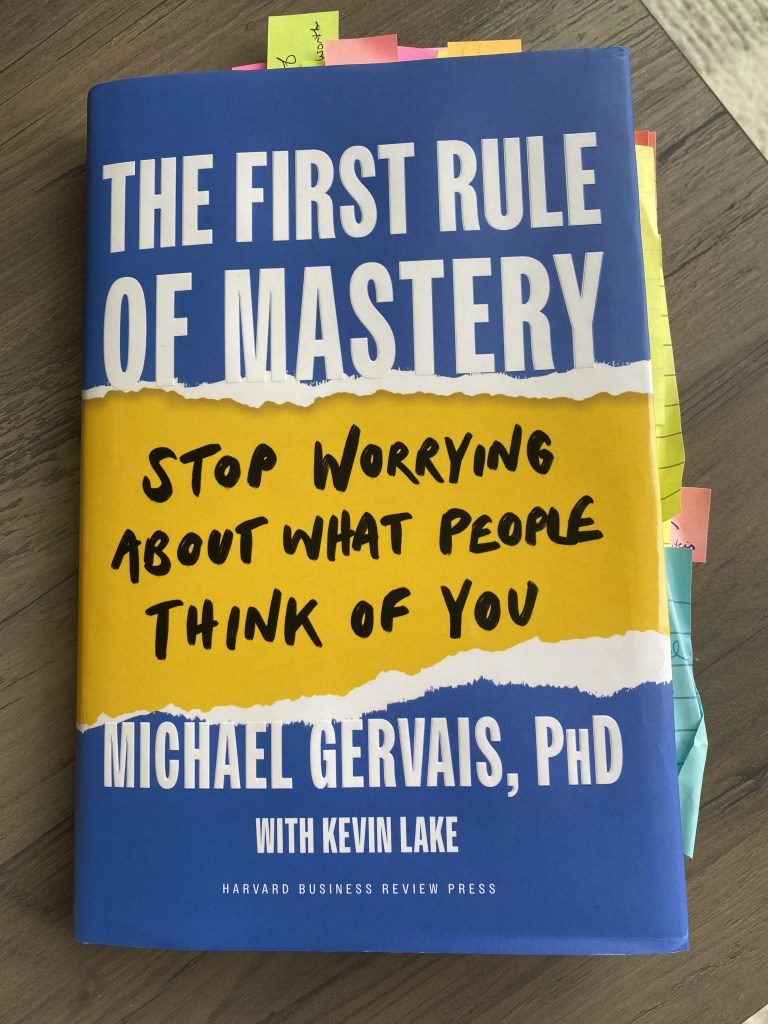
“Identity is our subjective sense of self built on our experiences, beliefs, values, memories and culture. It’s a set of physical and psychological characteristics that is not shared with anyone else. Often derived in relationship or comparison to others, our identity provides a framework to better understand our place in a complicated social world. “ — excerpted from the book The First Rule of Mastery by Dr. Michael Gervais.

“When we have fused ourselves to an identity that is not true to who we are, or to an identity that’s too narrow to contain the whole of who we are, or to an identity incapable of incorporating new information and growing, the opinion of another can feel like an assault where our survival is at stake.” – excerpted from The First Rule of Mastery by Dr. Michael Gervais.

When you let these two excerpts soak in, you can see why we get so confused about who we are. The first excerpt addresses how we make sense of the world when we are kids. It is a private internal narrative we create about who we are. We create it when we are young and powerless and that identify feels vulnerable and in need of protection even when we are older.

The second excerpt reveals why we develop coping skills and behavioral patterns. Our identity does leave us vulnerable to the slings and arrows of other’s opinions so we develop armor to protect who we believe we are.

It’s that armor that gets in the way of us really knowing who we are; and it gets very complicated by the fact that we keep returning to home base to figure it out. Yet, that identity we created at home when we were young no longer feels like it fits who we’ve become.

Without honest self-awareness, it is incredibly hard to see how we stay stuck in an identity we’ve long outgrown and how we stay trapped (especially in our families) in old limiting beliefs about who we are.

We are not the same person we were when we were 5, 10 or 15. We are works in progress throughout our entire lives. A pivotal shift in our mindset around our personal identity is to recognize and embrace this.

We change over time and that is a marvelous thing. We are not forever stuck in an old story, or shackled to a troubled childhood, or doomed to relive an old trauma like a recurring nightmare. We would never want this for our children. When we get clear about who we are, we can parent from our most authentic sense of self. It frees us from protecting our kids unnecessarily from the things that once had a big impact on us.

Just imagine the positive difference we are making for younger generations, when we steer them clear of the pitfalls that derailed us from building the life we wanted. Today we have better life skills and relationship tools to teach them. We have a much-improved parenting model and are integrating their emotions into their developing complex brains. We are validating each other’s emotions and experiences which is the preventative medicine for suppressed emotions and unprocessed trauma. We recognize that rupture and repair strengthens our relationships and builds enduring trust. In fact, we normalize the fact that ruptures happen in life and we have a responsibility to repair our most valued relationships. We are learning the integral role body budget plays in our daily lives and the importance of sleep for our brain health.

Most importantly, we can help our young people develop a strong sense of self and be the scaffolding they need through all the growth spurts and life changes they will surely have.

This is an extensive list of key components of “connective tissue” for our families. It’s so much more beneficial than what most of us experienced — because we don’t put each other in boxes, but rather we give each other room to grow – with a big safety net underneath. We encourage each other to explore, discover, stretch, try new things, experiment — with the confidence that they can express themselves honestly and will have the support and guidance they need and deserve.

Dr. Michael Gervais has a nugget of wisdom that he shares on his Finding Mastery podcast that serves as a core reminder for the changes we want to make: No one does it alone.

If you struggle with FOPO –the Fear of Other People’s Opinions, you will love this book. Check out Michael Gervais podcast too — Finding Mastery


LISTEN TO DR. ANDREW HUBERMAN’S CONVERSATION WITH PARENTING GURU, DR. BECKY KENNEDY, author of Good Inside This Episode is entitled Protocols for Excellent Parenting and Improving Relationships of All Kinds https://podcasts.apple.com/us/podcast/huberman-lab/id1545953110?i=1000646851810
If you are unfamiliar with Internal Family Systems, you might be surprised to learn that it is all about YOU not your whole family! Discover all the parts of you that have something to offer about what is most important to you and how to best take care of YOU!

Emotional Airbags

Just envision this for a moment: When we are emotionally triggered, it is like an airbag exploding to protect us. However, it catches us off guard – the impact so sudden and so strong that our brains send out high emergency alerts to our bodies. We get hijacked rather than assisted. We feel like we can’t breathe fully, our hearts are racing and our ability to see clearly is limited.

I’ve never experienced an airbag deploying in a car, but I can imagine that it feels more scary than protective when it happens. While we know that air bags are a safety feature designed to protect us from serious and even life-threatening injury, it is not something that we get to practice. We can only imagine what it might be like and we can mentally prepare for how we would hope we can respond in such a situation.

Our natural human response to an emotional trigger is the equivalent of airbags deploying. Our emotions are intended to protect and inform us but a strong emotional trigger can feel surprisingly overwhelming.

Our very first experiences with our internal emotional airbags occur in childhood and they have lasting impacts.

For many of us who are older, the cars our parents drove back in the day didn’t even seatbelts let alone airbags. Those safety features only came along when a critical mass of human beings realized that we could actually save life and limb by being proactive and installing numerous safeguards. It is this very same analogy with our emotional airbags; back in the day, our parents did know about the profound benefits of emotional intelligence and most importantly, skillful emotional regulation.

We are now at a very important tipping point — we are fast gaining critical mass in the awareness that emotional integration is the human operating system upgrade that should be modeled, taught and integrated into our children’s developing brains.

The challenge for many of us is how do we teach something we were never actually taught? The truth is that we have actually done just that in many areas of life. Just look how quickly we taught ourselves to embrace technology, electronic banking and Zoom meetings. If we stop resisting what appears to be harder and even unpleasant work, we might discover that life and our relationships actually get a lot easier and more fulfilling with emotional integration.

I recently learned that we can gain a lot of traction in our own emotional integration education by being around children. This makes so much sense because we can witness in real time what happens in childhood when kids are given tools and support to understand and handle their emotions. It’s a visual aid more engaging than a magic act.

When something new comes along such as an upgrade to our phones, our laptops and even our car’s technology, we can readily see how the improvements enhance our life and address a problem we may not even know we had. The same is true with emotional health. When we become keen observers of children and their interactions with their parents, siblings, teachers and friends, we witness firsthand how having meaningful emotional tools would have made a huge and dramatic difference for everyone — most especially for children who have very limited cognitive resources for making sense of a complex world.

In my prior blog posts in this multi-part series on Game-Changers for our emotional upgrade, you may have noticed that no matter who is leading the charge, or what modality or field they represent, everything points us directly back to childhood.

All the behavioral patterns, the protective armor, the coping mechanisms that we deploy have been handed down to us for generations, with no real advancements at all. In fact, what once seemed so complex about personal growth, trauma and self discovery have been boiled down to some pretty obvious truths: we really had a “one size fits all approach” and a small closet of possible options for navigating childhood. We were so handicapped for how we made sense of what was happening in our world.

A quick review of psychology, neuroscience, the enneagram, behavioral science, etc. reveals that our small closet of options held just a handful of “one size fits all” behavioral patterns and coping mechanisms. We are people pleasers or contrarians, we hide or we fight, we avoid conflict or we create conflict, we numb, we run, we freeze. Normal, child-sized responses to emotional airbags exploding in us, as well as members of our family and community without warning.

No wonder we ran for cover and struggled to make sense of the unpredictability and scariness of it all. We ducked into those little closets to find something that would soothe us and keep us safe from things we were feeling but did not understand.

Dr. Becky Kennedy explains this so beautifully when she reminds us that a small child who is overwhelmed with big emotions – and is throwing a tantrum or having a meltdown – lacks the skills he needs to manage that big emotional explosion. She tells us that we teach our children the skills they need to learn to swim, ride a bike or read. So why — she challenges us — would we expect them to be able to handle big, overwhelming emotions coursing through them — without some helpful tools?

I’m hoping that this brought you to a full stop.

Take a moment to think about how you are handling your own “sudden, big feeling moments” in real time today when your adult emotional airbags get deployed — especially in front of your kids.

We teach our children a lot by osmosis. What skills and tools are we reaching for when we are emotionally triggered, extremely tired, or overwhelmed by others or events? We not only need to role model and actively discuss how our emotions impact us, we really need to engage in the installation of emotional intelligence in our children. We need to teach emotional skills just as we teach them good hygiene and manners, how to share with others and how to use their words. In fact, when we install the emotional upgrades, all the other things we are attempting to teach them will be greatly enhanced in the most remarkable ways. Honestly, the parenting job is less exhausting and more productive with strong emotional skills and tools.

The reason for this is that our brains release adrenaline and cortisol when we are emotionally unmoored. Since we co-regulate each other, if we overreact when our kids’ emotional airbags have deployed, it is like double-dosing all those stress hormones. We would never double-dose our kids cough medicine or Tylenol – but losing our cool with emotionally distraught kids is like giving them an extra dose of stress hormones and throwing back some for ourselves.

Here’s what happens when our bodies get flooded with cortisol: Our heart rate and blood pressure go up; our bodies fight or flight response kicks in; our digestive system slows; our immune system weakens we become anxious, irritable and on edge. Chances are you are now realizing that this is the exact opposite of being a calming first responder when emotional airbags inflate.

We cannot be at our best as parents and emotional first responders when we are over-reacting to our child’s emotions and out of control with our own.

Take a moment to think back to an experience that you had as a kid when your parents or caregiver lost control — do you recall how it felt? It was probably pretty scary and you put a bookmark in your memory banks of how you might avoid that reaction in the future.

This is how our childhood emotional triggers begin. It is precisely why all the intersecting research points us back to childhood for the tap roots of our emotional triggers, inner critics and insecurities.

Old parenting models exacerbated the problem because emotions were treated as a bug and not a feature of our core operating system. Kids and parents were flooded with emotions and cortisol and the parenting rule of thumb was to send us to our room til we were able to be with others. We were often punished or dismissed for our outbursts, while our parents got to return to whatever they chose to do. No consequences for them. No repairs for the relationship rupture. We made a mental note of that too. We got a lot of mixed messaging to go along with our repressed and unprocessed emotional experiences. This double standard also created a lot of issues with our basic need for a secure attachment – and resulted in many of us having anxious, avoidant or disorganized attachment styles. Yet another clue from our childhood about why we might be having relationship issues in our adult lives.

Our brains are prediction machines. While we are not consciously aware of it, we have mental notes and bookmarks on a clunky old database that it still uses when we get hijacked and go offline. Our bodies and brains coordinate all their defense mechanisms very quickly when something feels oddly familiar and we need to be on high alert. Our emotional triggers are in those childhood databases.

The pivot is catching ourselves in the act. We have to catch ourselves in the act of being hit with our own emotional airbags and realizing that we are off-line, defaulting to that childhood database.

When we are operating our incredibly complex cars today at high speeds in heavy traffic, we have the ability to stay fully engaged with our current knowledge and awareness. We don’t default to how anxious and insecure we felt when we were first learning to drive. We have the awareness, dexterity and maturity to handle a frightening situation like airbags deploying in a car in the event of a collision. We most likely would act like the adults our kids need us to be in that circumstance. We can do hard things. In fact, we are pretty proud of ourselves when we handle a crisis like this with confidence.

We can do the same for our kids’ emotional airbags; we can become the trustworthy, grounded first responders they need and deserve.

I believe that the reason doing our own emotional integration work gets a lot of traction when we interact with kids is that we get a lot of opportunities to both observe and practice. As we pay attention to the common emotional triggers our children have, we can get equally more in touch with our own.

Kids haven’t changed; what has changed is knowing that emotional integration is an incredible feature of our brains and bodies — not a bug. Our children will have the same big overwhelming emotional responses that we did when we were little. They will get scared, angry, frustrated, confused, belligerent, shy, bossy, sensitive — the list is endless. But instead of leaving them to their own devices and that small closet of coping skills, we will be showing up as caring, comforting emotional mentors.

We can teach them or we can repeat the past. This is where real change takes place.

Each emotion our children feel is legitimate and is real for them. Acknowledging that is huge. It reassures them that they will be ok, that they are seen and heard and that we will help them manage their big feelings. They do not have to do that alone. In fact, they unable to do that alone because they do not yet have access to “top down” executive functions in those small developing brains.

We become the training wheels for our children’s emotional awareness, intelligence and regulation.

No overdosing on stress hormones for you or your child. Helping your child return to their baseline is how we teach them to “ride out” their emotional waves. As they grow older, they will then have a lot of experience with how emotions come on strong, and can subside with a little skillful assistance. We can teach our kids to label their emotions, to understand what they are trying to tell them and to process them in real time. This is how we help our kids get more skillful at their own emotional regulation. We teach them to tolerate a little short term discomfort and to learn from it. This is the preventative step we take to help them avoid numbing their pain.

It is also how we introduce them to the incredible benefits of self-compassion. Rather than our children growing up with harsh inner critics, fixed mindsets and limiting beliefs, we will be helping them build resilience, resourcefulness, confidence and growth mindsets.

We aren’t born afraid of our emotions. In fact, emotions are a baby’s first language and how they get their basic needs met. Rather than pulling the plug on emotions when our children learn to talk and express themselves with more context and complexity, we help them differentiate between self-identity and their behaviors. Telling a child they are bad, stupid or too much is the root cause of adults who struggle with their core identity, self-worth and lack of inner confidence. Label the behavior not the child. We have good kids and sometimes they have unacceptable behaviors.

We use boundaries as guardrails for our kids – to help them learn how to make good choices on their own later. Our boundaries teach kids more about the consequences of their behaviors more than any lecture ever will. And we want our children to become very skilled at holding boundaries when they are teenagers and adults so that they can clearly let others know what is acceptable behavior to be in relationship with them. Boundaries are a relationship tool that keeps us safe and in alignment with our core values.

Did you know that children have this same inquisitive nature about emotions? We are the ones who grew up with emotions being labeled as good or bad, positive or negative, even gender restricted. It’s time to peel those labels and reframe emotions as neutral, necessary, invaluable internal information. Emotions are a feature, not a bug of our core operating system.

Both our parental teaching experiences and our child’s learning experiences will be markedly changed for the better when we integrate emotional intelligence into everything else we introduce to our kids. Without all those airbags exploding, we will have more room to fully engage in the dual process in healthy, relaxed and mind-opening ways.

Just out of curiosity, check in with yourself to see how you actually plan for big emotional experiences for your kids on purpose. A surprise birthday celebration, those costumes they will be donning for Halloween, unveiling an upcoming family vacation — these are all intended to evoke great joy, delight and wonder. How do we support our kids when we have bad or sad news to impart — we lean in, comforting, soft and assuring.

Imagine yourself growing up without the impediments of limiting beliefs, false narratives or restrictive social conditioning. Imagine yourself understanding that your emotions are helpful information, normal and acceptable. If you are capable of imagining this, you may find yourself smiling, feeling free and adventurous, even child-like with wonder and curiosity. That feeling right there is what we are going for — that is what happens with emotional integration and giving our kids the skills and tools they need to make sense of the world in a healthy, growth-mind set, ever evolving kind of way.

Magic happens when we begin to take our own adult emotional integration seriously; when we teach and learn simultaneously with our kids. If you are a parent or grandparent, you have the best environment for this “on the job” training.

We all have the potential to contribute in a meaningful way to integrating emotional intelligence for kids and for each other. Bear this in mind with each interaction you have. We can be the scaffolding that we all need to come fully online with emotional intelligence.

Change-Makers Mapping the Way

Welcome back to my latest blog post series about the change-makers who are helping us take the next meaningful steps in the integration of emotional health into our lifestyles. In the first part of this series, I shared two dynamic change-makers for parenting and for couples. The common thread for both Dr. Becky Kennedy’s parenting model and Terry Real’s relational therapy is what we learned and experienced in childhood that impacts us still today.

Unfortunately a lot of what carries over from childhood into adulthood regarding our emotional health is often not so obvious to us. When we get emotionally triggered or over-stressed, we unconsciously react with patterns we have memorized for decades. We know them by heart.

This is the second post in this series pulls that common thread of childhood, inviting us to go back and revisit how we came to shape our world view but with an entirely different lens this time. Now we are archeologists, searching for the clues and examining artifacts.

A common metaphor that is being used to today across the spectrum of emotional health and personal growth is one of a map. This helpful metaphor tells us that we need to know our backstory and childhood history to clean out and update our beliefs and behaviors. This is the role of an emotional archeologist.

We are going to discover things that are still getting in our way when we retrace our steps. Let’s start by tossing out the chunky picture book with baby faces that express only happy, sad or mad. Most of the life mapping we did back then was based on a very limited emotional vocabulary. It’s nearly impossible to create a more nuanced map to navigate the complexities of real life with only three basic emotions. Yet that is what we did — and that is what we operate on unconsciously even decades later.

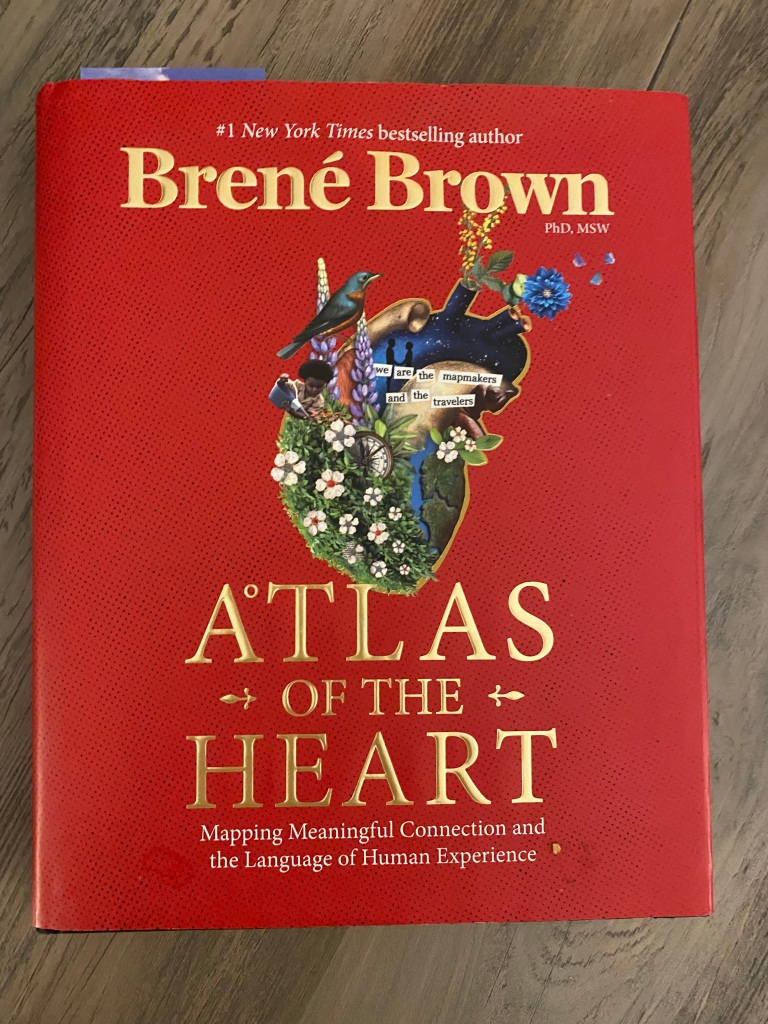
When Brene Brown introduced her book, Atlas of the Heart, in November 2021, she gave us a major upgrade to the chunky emotions picture book. She gave us language, definitions and real life examples of our emotions. She called it an atlas.

“I want this book to be an atlas for all of us, because I believe that with an adventurous heart and the right map, we can travel anywhere and never losing ourselves.” — Brene Brown

It was the first time for many of us to have an emotions reference guide; an atlas that helps us understand just how much our emotions are impacting how we navigate through life. Brene’s research supported the fact that most adults were still using only three basic emotions to express themselves – the same three that little kids use every day. Her extensive research was a reality check for how we’d gotten stuck and hampered in our adult lives with such a limited emotional vocabulary.

Brene not only offered us definitions for 87 common emotions and experienced, she provided common, real life examples of when these emotions were likely to show up. Brene’s book upgraded our emotional vocabulary from three core emotions — angry, sad and happy – to a much richer, contextual and expansive way to understand ourselves.

A bonus is that when we understand ourselves better, we become more skillful at understanding others – even (and especially) our own children.

The truth is that as we get to know our own emotions and experiences more clearly, the better we can show up in our relationships with more empathy and curiosity about how others are feeling. Rather than getting lost in each other’s emotions, we can become skillful travelers together.

In my last blog post, I highlighted the parenting movement that Dr. Becky Kennedy is championing. If you are a parent who follows Dr. Becky, you no doubt feel so seen and heard when you watch her videos. With a dollop of reality and a dash of humor, she skillfully shows us how we get hijacked by our kids’s behaviors and can quickly come down to their level with our own reactions and behaviors. Can we catch ourselves in the act of returning to child-sized tools for big emotions and scary experiences? Can we pivot and choose wisely to deploy more mature skills?

“Underneath bad behavior is always a good kid.” – Dr. Becky Kennedy, Founder of Good Inside

Underneath our own outgrown behaviors is that little kid we once were. What we learned and mapped out in childhood is what we need to investigate.

Let’s meet two more change-makers who did their own extensive emotional inner work — and then looked around and asked themselves how they could help others. They poured their hearts and energy into their respective fields and the creation of new approaches for becoming emotions archeologists. Then they took their work one step further. They are teaching us how to integrate our emotions and positively impact how we navigate life and map a better future.

These change-makers are paving the way to a major pivot in mental and emotional health: An ounce of prevention really is worth a pound of cure.

We now know that we do need to go back and look at our childhood to “back-map” why we react without thinking when we are emotionally charged. What happened in our childhood that contributed to our coping skills, unconscious behavioral patterns, emotional triggers and beliefs about ourselves?

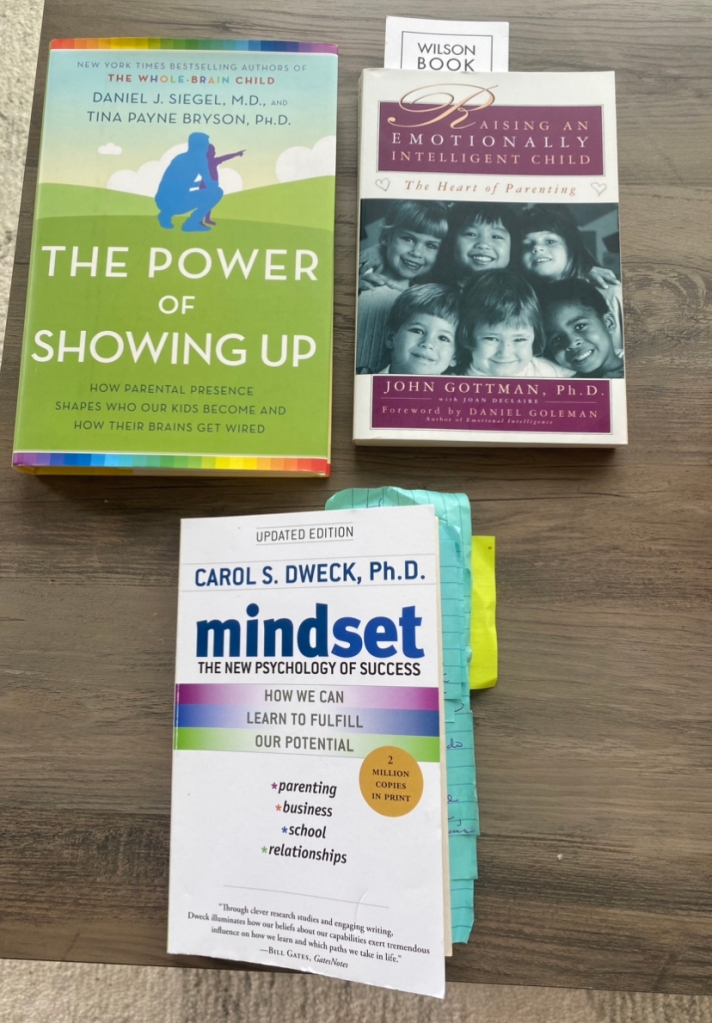
In a recent blog post, I shared that Dr. Dan Siegel, author of of Whole Brain Child, acknowledged that many people do not want to revisit their childhood experiences. There is a fear that revisiting old painful memories will take over our current lives and we’d rather not go there. But the truth of the matter is that unconsciously these things we keep stuffed down or locked up are literally showing up in our lives anyway. It’s not the monsters under the bed or the secrets in the closet that are the problem, it is the reality that they are taking up a lot of storage space — and they creep into our minds and behaviors unconsciously.

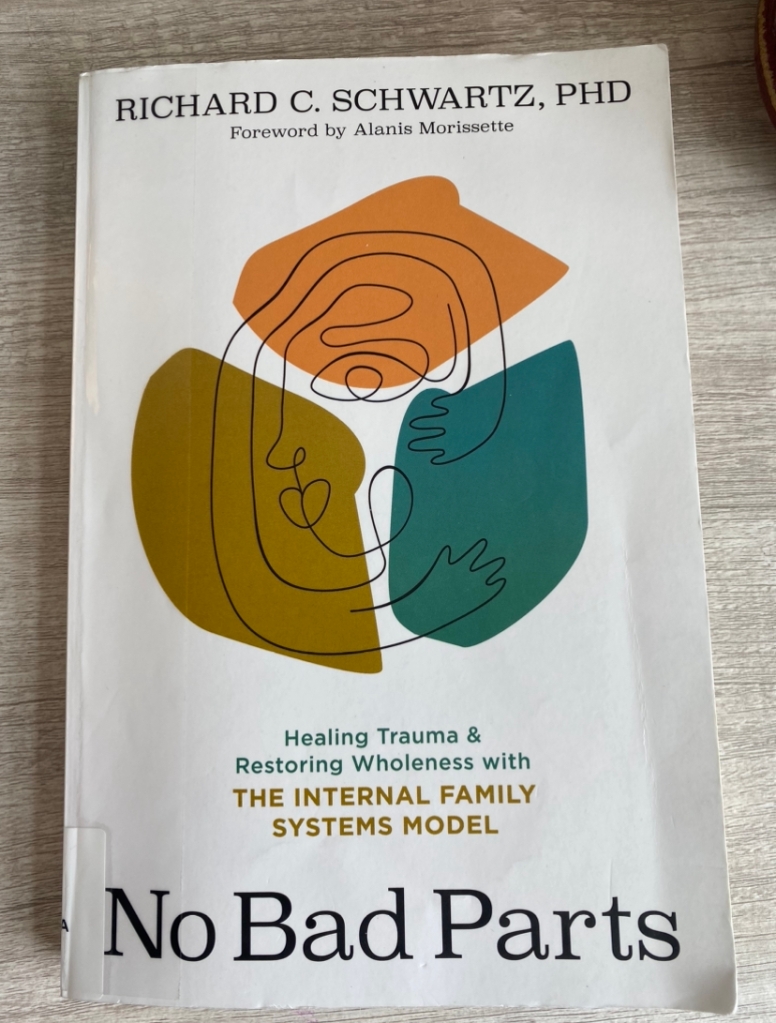
Meet Dr. Richard Schwartz, creator of a revolutionary form of therapy known as Internal Family Systems. He also uses the concept of a map to help us understand how all the parts of us show up when we are making our way in life.

If you are not familiar with the term Internal Family Systems, you may think that it is a discipline or field devoted to our family trees – which are often full of generational patterns, inherited traits and all kinds of dysfunction.

However, Internal Family Systems is actually a very useful evidence-based psychotherapy developed by Dr. Richard Schwarz in the 1980’s. In plain language, Internal Family Systems is all about us – the me, myself and I.

It is our unique, individual, inner family system comprised of all our sub-personalities. Each and everyone of our sub-personalities has its own viewpoint, qualities and roles it plays in our daily lives.

Before you shrug your shoulders and dismiss that IFS could be beneficial for you and all those you love, stop to think just how familiar you are with a few of your sub-personalities. How well do you know your Inner Critic? Do you have a steamroller in your personality that likes to run over any constructive feedback you might be offered? Are you a people pleaser who often gives to the point of exhaustion? Do you have a fierce warrior side of you — the big protector who prefers a fiery battle over calm conflict resolution? Do you have a stealth, hyper vigilant, guard who stands watch night and day to keep you safe?

If you’ve ever felt an internal tug of war, it’s quite likely one of your sub-personalities was engaged in a struggle. I’m guessing you may be now feeling a little more curious about Internal Family Systems.

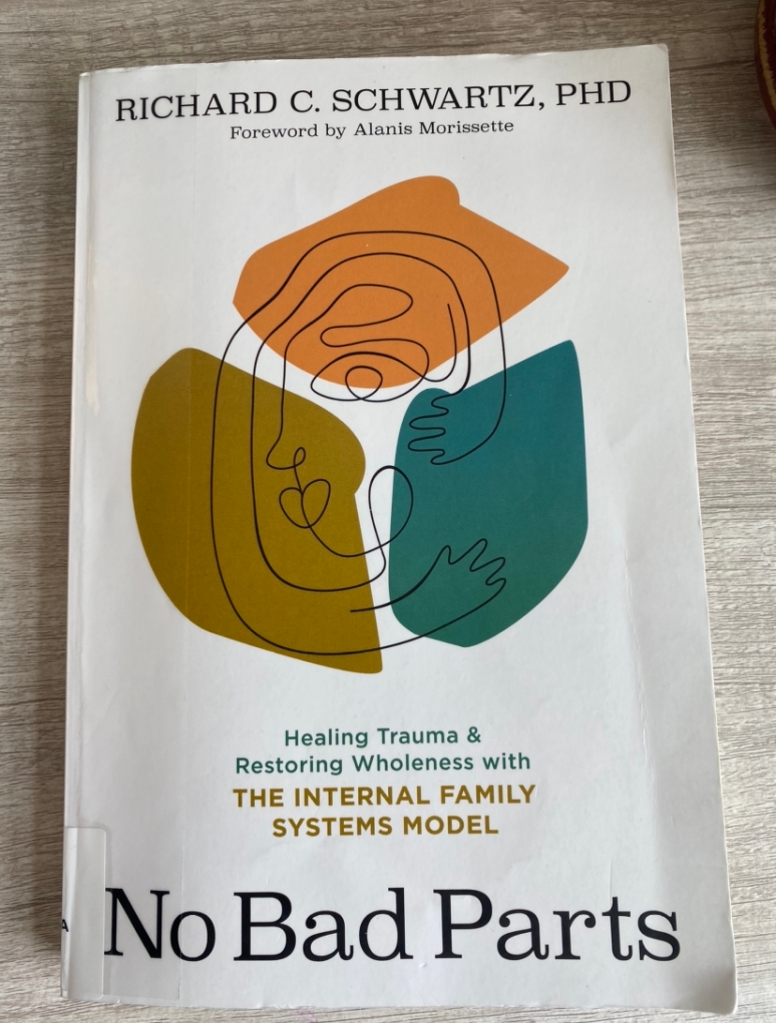
In his book, No Bad Parts; Healing Trauma and Restoring Wholeness with the Internal Family Systems Model, Dr. Richard Schwartz does not refer to our sub-personalities as “demons” as this pillow suggests, but rather a much more appropriate, relatable term — they are our “burdens.

If you ever get in your own way, then you can fully grasp how our sub-personalities are often the very cause of our self-inflicted problematic behavioral patterns. They do burden our lives; they make things harder than they have to be.

Dr. Richard Schwartz reflects on the work of childhood attachment theory pioneer, John Bowlby, to help us explore how and why we came to possess such intricate, complex sub-personalities. John Bowlby viewed our “childhood attachment styles” as our “internal working models”.

Many of us grew up with parents who were not emotionally available and often had a lot of problems of their own. The old parenting models punished us for our “bad” emotions, gave accolades for our “good” emotions; or worse yet, encouraged our ability to become cognitively dissonant and just power through our emotions.

As children with pint-sized developing brains and the inability to make sense of a very big, complex, confusing and contradictory world, we developed “maps” of what to expect from our caretakers and the world in general — and from all our subsequent close relationships. These “maps” we created also told us things about our own level of goodness (or lack thereof) and how much we deserve love and support (or how we weren’t worthy).

These individual “maps” get lodged in our bodies of our young parts and become very powerful – and unconscious – organizers of our lives. These are our personal burdens.

As if that isn’t even to contend with as we mature, we also carry internally another class of burdens — legacy burdens. These do not come from our direct life experiences, but we inherit them from our parents. Legacy burdens are the generational patterns, beliefs, and attitudes that get passed along rather organically. They too are very potent organizers of our lives. Think of all the societal conditioning, cultural beliefs and attitudes that are baked into our lives from birth. As Dr. Schwartz articulates “because we have absorbed these legacy burdens in our daily environments, we have marinated in them for a very long time; so it’s often harder to notice them. In this way, legacy burdens can be as prominent and unnoticed as water to a fish.”

Legacy burdens often show up as biases and prejudices that we may not be consciously aware that we possess. Intellectually we believe one thing, but instinctually and unconsciously we can act and feel quite differently when we are emotionally charged. High stress situations take our executive functions offline – and suddenly we are acting on the “baked in” legacy burdens, not from our current values.

Dr. Richard Schwartz invites us to become very fluent and familiar with our sub-personalities. Where we once believed it was better to use willpower to fight or resist them, he turns this theory inside out. One of the most transformational ways to really get to know ourselves well, and to do our our “inner work”, is to get up close and personal with our inner cast of characters, our sub-personalities. This is our very own “internal family system.”

We’ve often referred to personal growth work as peeling off the layers our onion, but Dr. Schwartz tells us that our sub-personalities are more like cloves of garlic. Each part is like a garlic head with individual cloves. The individual cloves developed from an event or experience, how we made sense of it, what we came to expect on a regular basis, and how we mapped it out. These parts have “blended” themselves to our perspectives, emotions, beliefs and impulses.

Our emotions, bodily sensations, thoughts, impulses, knee jerk reactions, limiting beliefs — they all are emanating from our internal parts. Dr. Schwartz refers to all of these as “trailheads“. He offers that when we focus on one, it is as if we are starting out on a trail that leads us to the part of us from which those feelings, reactions, impulses emanate.

What happens on this trail when we lean in with curiosity and a strong desire to learn our inner terrain? We open up to discovery about the parts of ourselves and our stories that have much wisdom to impart to us. And we often learn that all that messaging we got as children is not at all who we really are, who we have become and especially how we can continue to evolve into the best version of ourselves.

Can you picture yourself as a small child on that trail many decades ago? How different would the landscape look to you and how scary would it be to navigate it with limited resources all while fighting back tears and an onslaught of big emotions? Would you want to use the map that child created to help you navigate the trailhead today? Of course not. Today you have so much more knowledge, self awareness, agency and resources at your disposal.

Take a moment to think about grown adults that are still having meltdowns and explosive temper tantrums. Reflect on the emotional triggers you can spot in yourself and others that seem like a huge overreaction to current events. Do you see childish bullying tactics showing up with adults who frankly should know better?

With the Internal Family Systems model, Dr. Schwartz reframes our sub-personalities as our “parts”; as if each part were a person with a true purpose. Our inner “parts” are doing a lot of important jobs to help us get through life and be in relationships with others. The problem is not us — the problem is that our “parts” keep us stuck in the past.

The parts of us that throw temper tantrums are loudly announcing “please pay attention to my needs right now”. The parts of us that want to “numb out” are simply assuming the role of “pain reliever”. Very often it is deep emotional pain that causes the parts of us to step in as a protector (albeit one that now causes us more trouble than relief). The inner parts of us are the ones pulling our emotional triggers.

If you have ever been a sibling who tried to protect younger siblings from a parent’s unchecked anger, then you have a very clear, real-life example of the role that your “parts” are playing for you. Dr. Schwartz helps us understand that when we change our perspective on our parts and the roles they play, we can “unburden” those parts of us from outgrown, outsized fear and responsibility.

The Internal family systems model has become a big transformational pivot for how therapists and psychiatrists are treating trauma, addictions, depression and anxiety. It is similarly a meaningful pivot for individual and couples counseling and it is vastly improving our approach to parenting. We are shifting away from stigmatizing these issues, from blaming and shaming, and relying solely on abstinence or will power to solve the problem.

When we do this inner work and look at our “parts” and how they show up in our adult lives, what we discover with much clarity is how our own kids are doing the very same thing today. If your child or grandchild blurts out that they are “stupid or bad”, “too much trouble” or “not smart enough”, they are blending their behavior with their identity– they are creating their inner garlic clove.

Once we begin to explore our own childhood maps, we gain a lot of insight into what might be happening in our own children’s self identity. We can readily see when our children might be taking their behaviors – and our reactions to them – as labels for who they are. We can help them course correct in real time. Yes, an ounce of prevention will most definitely be worth a pound of cure.

Rather than waiting for these emotional and mental health issues to crop up and create big problems in our lives and relationships, we can become proactive in our emotional health lifestyle. The groundwork for this improved foundation for a long and meaningful life has been laid by Brene Brown’s two decades of research on shame and vulnerability, Kristin Neff’s work on self compassion and Dr. Carol Deck’s work on mindsets. It integrates seamlessly with all the research, studies and improved methodologies by Dr. Richard Schwartz, Bessel Van Der Kolk, Gabor Mate, Dr. Dan Siegel and Dr. Bruce Perry (just to name a few).

Counseling, therapy and life coaching are all changing in very beneficial ways due to breakthroughs in neuroscience, psychology and behavioral science. We are collectively moving to “prevention” rather than treating problems after the fact.

Dr. Schwartz’s book – No Bad Parts – and Dr. Becky Kennedy’s insights that we have good kids with problematic behaviors dovetail in a very impactful way. We can teach our kids an expanded emotional vocabulary, integrate their honest emotions with their experiences in healthy ways, and teach them invaluable emotional regulation skills.

Now let’s turn to a pioneer of this new emotion revolution – a man whose childhood life story became fuel for his passion to teach us all how to integrate our emotions to guide us rather than stunt our growth.

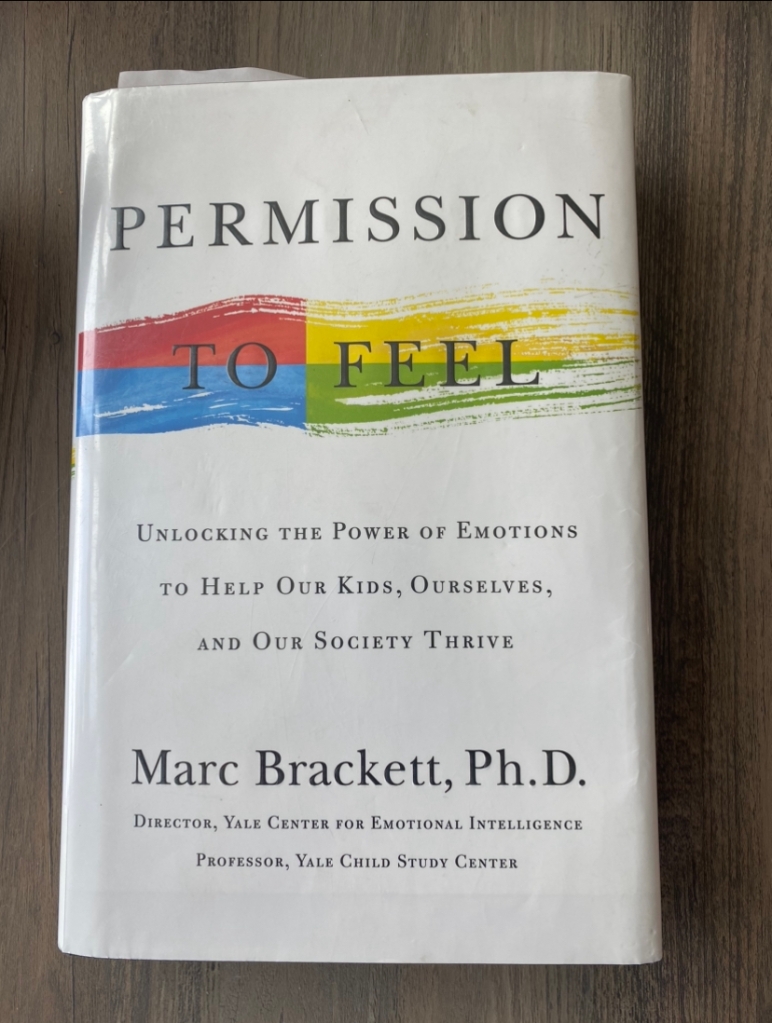
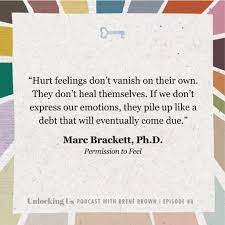
Dr. Marc Brackett stated the obvious in a recent online workshop based on his book, Permission to Feel: Emotion regulation is taught and modeled. Emotion regulation is goal oriented – it helps us achieve our goal in healthy ways, not adaptive ways. We cannot teach our kids what we ourselves do not know.

During this workshop, Dr. Brackett shared powerpoint slides of his global research that revealed that most adults offer that they were never taught emotional regulation at home or in school. This is not at all surprising evidence. We now know that old parenting models did not integrate emotions into our developing brains. We also know that the complexity of our personal burdens and our legacy burdens made our navigation of life harder than it needed to be.

Dr. Marc Brackett knows this intimately — and it was his own childhood experiences that set him on the path to change what we got wrong.

I first learned of Dr. Marc Brackett’s work on an Unlocking Us podcast with Brene Brown during the COVID pandemic. He had released his book, Permission to Feel in September, 2019. When the pandemic left us collectively struggling with ongoing uncertainty and big mood swings, Brene knew the time was right to talk about the many emotions we were all feeling. This podcast aired in April 2020 and the conversation was relatable and relevant. We were like sponges ready to absorb what we were hearing.

Marc brought a strong sense of humor to the challenging topic of emotions and shared with Brene that he often got a lot of pushback when he’d present his research to academia or school administrators. Emotions were thought of as the messy, sticky problems — certainly not solutions to behavioral issues.

But Marc had a compelling portal to break new ground on a brand new trail in the field of emotional intelligence. It was his life story. He told it – and those who once resisted – began to see how all the dots connected.

Marc’s personal childhood story is one that is sadly quite familiar; it will open your heart as you learn about the dysfunction, abuse and trauma he experienced as a young boy. He articulates so poignantly his troublesome outward behaviors and the dark inner secrets that caused him to be so out of control, angry and despondent.

Marc’s young life was full of inner struggle no one could see from the outside. Unprocessed emotions, dark secrets pushed down and his inner parts doing their best to protect him were the root cause of the outward unruly and difficult behaviors. Until his beloved Uncle Marvin showed up in his life in a profound way.

Marc’s Uncle Marvin gave him “permission to feel”. With Uncle Marvin as his emotional mentor, Marc was able to “unburden” himself by telling his story of abuse to his trusted uncle, without being shamed or blamed. He was believed. He was seen, valued, heard and deeply cared for by Uncle Marvin.

It is hard to hear Marc’s personal story and not find multiple points of connection. Any fellow academic or school administrator could see parts of their own stories embedded in his. They could easily overlay his story onto students, peers, and their own family members. Suddenly emotions were clearly not the problem and neither was problematic behavior. They were symptoms and warning signs for what happened in a child’s life.

Now he had their attention — and their buy-in — to support his work and most importantly, his outreach to educate others.

We need emotional scientists….not emotional judges. We also need emotion mentors.

We need to have people who will listen to understand and who will support us in getting the help we need when our “parts” and our behaviors are evidence that something needs to be addressed. These people are usually the ones who have done their own inner work. They have deep wells of empathy and compassion. They build trust and meaningful connection. They are a safe place to land.

Marc has spent more than 25 years researching and writing about emotions and talking to people all over the world about their feelings. He is an impassioned change-maker who knows firsthand the scars of childhood trauma, the importance of being able to express, feel, and process emotions as they are unfolding.

He knows that we cannot teach what we ourselves do not know.

We wouldn’t send our kids out on a hike without a buddy, gear, a trail map and a water bottle. Yet we often send our kids out into the world totally unprepared to navigate their emotions and those of others.

Dr. Marc Brackett is the Director of the Yale Center for Emotional Intelligence and he developed the RULER program that is being taught in classrooms and workplaces all around the globe. RULER is an evidence-based approach to social and emotional learning which teaches adults and students the value of our emotions and building the skills of emotional intelligence.

Yet another seismic shift and it is happening at school. Rather than focusing solely on problematic behaviors, adminstrators and teachers are being taught to become emotion scientists. What is the root cause of these uncontrolled behavioral outbursts? The RULER program starts by teaching adults what they need to learn. Then they take those new practices and understandings and teach them to children.

RULER is an acronym for this skills-based scientific approach:

R – Recognizing Emotion

U – Understanding Emotion

L – Labeling Emotion

E – Expressing Emotion

R – Regulating Emotion

Dr. Bruce Perry and Oprah Winfrey co-authored their book What Happened to You; Conversations on Trauma, Resilience and Healing in April, 2021. This insightful book opened us to learning the backstory of people, of gaining context and deeper understanding about childhood experiences that left scar tissue on how we view and navigate life. Dr. Brackett’s work takes a microphone to this collective human issue — he is using his incredible platform to advocate for “permission to feel”.

Rather than judging kids or their emotions, he is urging us to recognize that our emotions are chock full of valuable information about what is occurring in a child’s life and how they are mapping it. Children are not able to use their executive brain function to do this work, which is why we adults need to be their training wheels. Their brains are developing — slowly — but life experiences and big adult emotions are coming at them hard and fast. We need to become emotion scientists, not emotional judges. We need to be their training wheels to learn about emotions and how to use them effectively.

Recently Marc launched the Permission to Feel online book club as yet another avenue to educate people globally about emotional integration and regulation. It is a grassroots effort to foster the needed conversation about our emotional health. It feels like a support group for emotional integration as people share their past experiences and offer how they are learning and applying the RULER approach to their own lives, to parenting and in their relationships.

Marc and his team also unveiled an engaging new app to help us expand our emotional awareness and vocabulary — How We Feel. This colorful app is free, easy to use and contains 144 emotions! It’s designed to help us “check in” periodically throughout our day to see how we are feeling and to offer helpful tips and tools if we need some emotional support. This app can help us spot some of our “go to” emotional reactions and patterns.

Dr. Marc Brackett’s personal life story is a trailhead. It led him to discover how childhood shapes us, the importance of teaching and role-modeling emotional intelligence and regulation, and the invaluable scaffolding we can provide to others when we become skillful emotional mentors.

Brene Brown gave us an atlas – the reference guide we sorely needed to begin our emotions excavation work. Dr. Richard Schwartz gave us a whole new way to view our childhood experiences and emotions, without judgement and shame; without feeling like we have to wrestle with our emotions and blame them for our woes. His more positive approach encourages us to look at our own trailheads, investigating the roles our parts have played in the past and letting go of what no longer serves us well. He invites us to step into our mature agency and chose emotional regulation to help us navigate our lives more skillfully and successfully.

Dr. Marc Brackett gives us “permission to feel” and encourages us to become emotional scientists with ourselves and others. Drop the judgment and lean into curiosity. When we get comfortable and more agile with this new approach to our emotional landscape, we can become trail guides for our children and others. We can become emotions mentors.

In the upcoming 3rd part of the blog post series on change-makers, you’ll be meeting Dr. Andrew Huberman, Dr. Paul Conti and our Surgeon General, Dr. Vivek Murthy. Many of us are learning about our emotional and mental health from podcasts these days. I’ll do my best to distill and curate some of the most salient content that is having big impacts in our overall wellbeing. Not suprisingly, the turning point is “prevention”. We are no longer going to wait to treat problems when they occur; we are pivoting to preventing them as much as possible.

Here are links to the websites for Internal Family Systems and the RULER Program: