
This is the third part of my latest series of blog posts focused on all that we are learning about the integral importance of our emotional health — and how to proactively engage in a healthy emotional lifestyle.
The first two parts of this series focused on the breakthroughs in psychology, neuroscience and psychiatry that have created better parenting models, vastly improved therapy protocols and perhaps most importantly – destigmatized a lot of what we believed about “mental health.”
If you’ve followed along in this series, you’ll recognize the overarching theme of “mapping how we got where we are, and how we can better prepare for our future journeys through life with the firsthand knowledge we’ve gained from our past experiences, and the newer advancements and tools available to us now pertaining to emotional health.
In each of these posts, I am highlighting two influential change-makers who are instrumental in helping us navigate emotions more skillfully, both individually and within our relationships. You may already be familiar with the change-makers I share today — they are becoming household names- and for good reason. Both Dr. Andrew Huberman and Dr. Paul Conti are having meaningful impacts in our knowledge about preventative mental health care.
“Compassion, community and humanity are intertwined in that they exemplify the full expression of who we are as humans. Compassion enables us to care about other people, to relate to them with kindness, and to consider the world from their perspective. Community is the embodied acknowledgement of our interdependence with other people — our behaviors affect one another.” – Dr. Paul Conti.
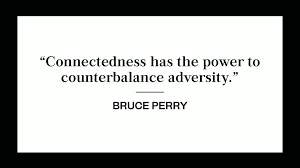
Back in 2010, Dr. Bruce Perry sounded the alarm on our escalating empathy poverty in his book Born for Love. It was almost as though he had a crystal ball and could see what our future would hold if we continued to operate without empathy for each other and especially for our most vulnerable – our children. He educated us about the need for relational webbing especially for children since their complex brains develop more slowly than any other species on the planet. He was dipping our toes in the realization that emotional integration was the missing piece in our internal GPS; and that we need to provide scaffolding for each other, especially during emotional duress. Empathy helps others feel seen, heard and believed. It can change lives; even save lives. Empathy is integral for healthy brains, to process and heal emotional trauma, and to be in stable relationships with others.
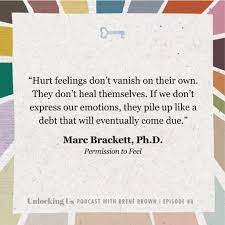
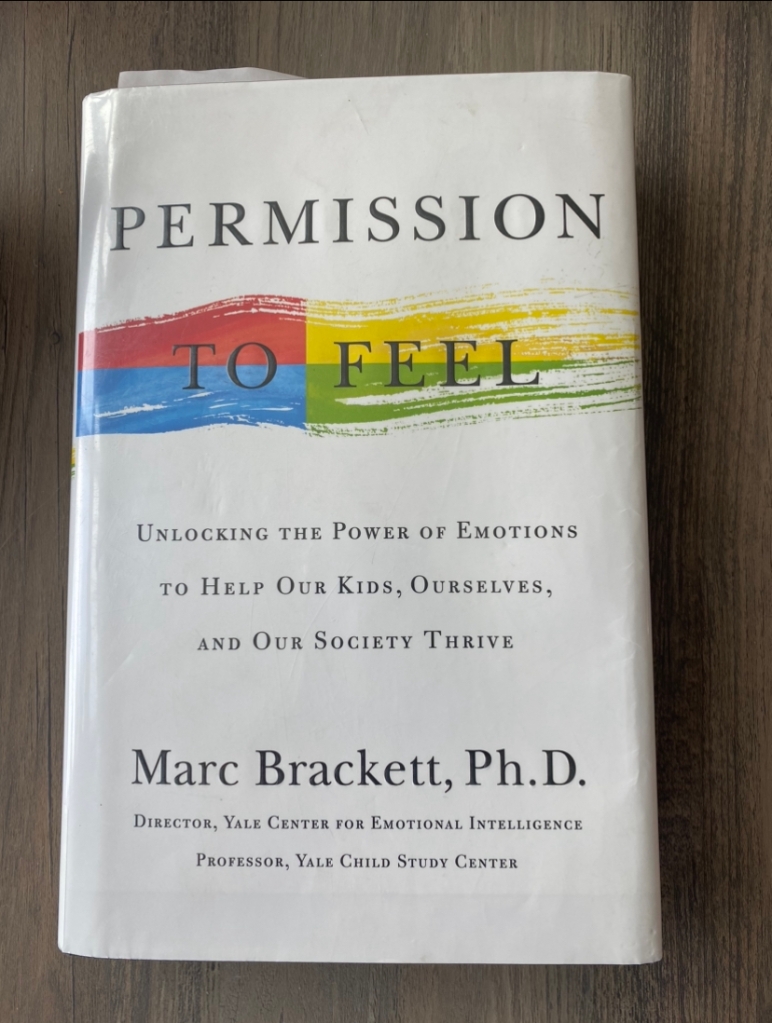
You’ll recall from my last blog post that this is exactly what Uncle Marvin did for Dr. Marc Brackett when he was just a young adolescent. Uncle Marvin listened to Marc’s stories with empathy and gave him “permission to feel.” It was the empathic support that Marc so desperately needed and it changed his life; it fuels his passion to teach us to become emotion scientists and to help children do the same.
It’s becoming more clear every day that when we know our own inner emotional landscape with greater clarity and understanding, we become more attuned to others’ emotions. We are less judgmental and more curious. Their stories matter to us because they give us valuable information to best support them. Simply put, we become more empathetic and compassionate with others. It has taken a very long time for us to heed Dr. Bruce Perry’s warning about empathy, but at long last we are now paying attention.
Empathy is becoming such a guiding principle that now it is even embedded in Artificial Intelligence and Large Language Models. Reid Hoffman, co-founder of Linked In and Inflection AI, has been instrumental in launching a pilot version of generative AI that is powered by a neural network model built on extensive data about human emotions and interactions. This new AI is Pi, the personal intelligence chat bot designed to respond to your inquiries in an emotionally intelligent manner. Imagine that, even artificial intelligence is being trained to be friendly, compassionate and empathetic.
We have the rare dynamic opportunity to show up more compassionately and empathetically in our personal relationships — and to be positive contributors to the growing data base for artificial intelligence that is also emotionally intelligent. That’s right, we can be part of the change we would like to see in the world — especially for our children — and believe me, our children will be using AI. Just check out Pi for yourself and you will see how young people are actively engaging with it right now — and how thoughtful and emotionally skillful the responses can be.

Today I’ll introduce you to two of my long time favorite change makers. They feel like friends to me because I soak up all that they teach through podcasts, books and interviews. They both have learned so much from each other’s fields of research, and they have supported each other through life’s challenges and healing personal growth work in large part due to their deep, connected friendship. It is not at all surprising that they recently teamed up to present a 4-part podcast series on “understanding and assessing our mental health”.
Dr. Andrew Huberman, Huberman Lab:
Andrew Huberman is a neuroscientist and the host of the #1 Health and Fitness Podcast on Apple Podcasts and Spotify. He is an associate professor of neurobiology at Stanford University School of Medicine. Dr. Huberman launched his highly popular podcast, Huberman Lab, in the midst of the pandemic because he wanted all of us to have access to the information we needed to take care of our health in a proactive way. Compelled by a strong desire to make a difference in a time of major crisis, he educated us about how our brains and bodies operate and how to optimally care for them especially during long periods of uncertainty and anxiety. Very few of us really knew just how important quality, consistent sleep is for our brains, bodies and immune systems – but over 4.2 million people do now thanks to the Huberman Lab podcast.
Andrew Huberman heeded his intuition’s call to action to help us learn more about our brains, the breakthroughs in neuroscience and how we can proactively improve our mental and physical health. His podcasts make this learning so accessible to all of us.
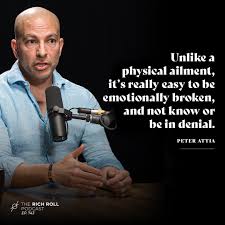
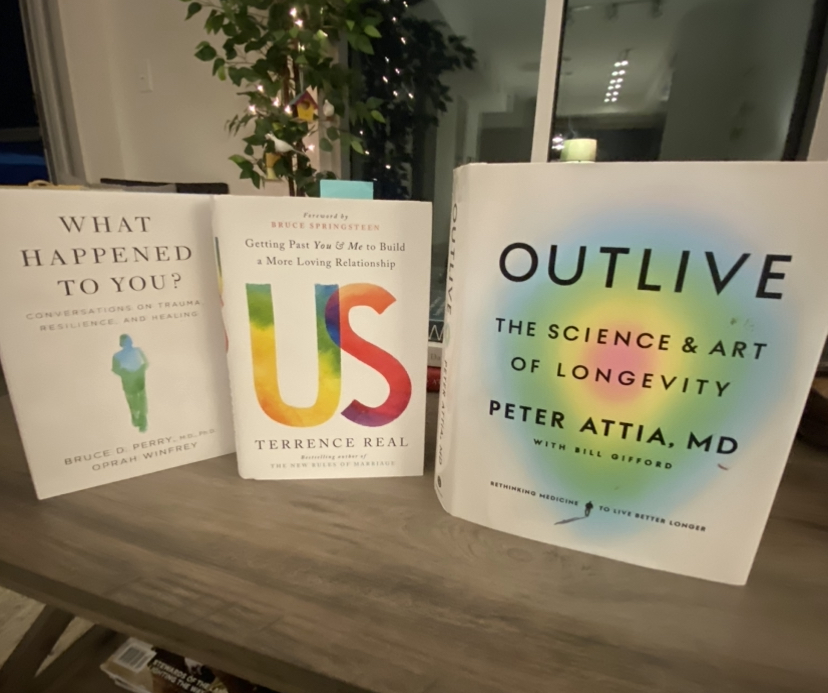
In the spring of 2023, Dr. Huberman invited Peter Attia onto his podcast to discuss his book Outlive. Dr. Attia, a Stanford/JohnHopkins/NIH trained physician, has devoted his medical career to enhancing our longevity; most notably our ability to live longer, with a vastly longer health span and much shorter disease span. It was during this podcast discussion that Dr. Peter Attia shared that our emotional health is the most integral part of longevity, health span, and a deeply satisfying life.
Dr. Peter Attia also shared personal stories about his own emotional health and his road to healing with the help of Dr. Paul Conti, Terry Real and Esther Perel. In my first blog post of this series, I highlighted Terry Real, founder of Relational Life Therapy and his ability to help his clients understand how the impacts of their childhood are causing great difficulties in their current lives.
Dr. Peter Attia knew this firsthand – because in spite of building the life he wanted that included a successful career, marriage and children – it was his unchecked emotions that put all of that in jeopardy. He opens up about these painful truths in his book – and he did the same in his podcast conversation with Andrew Huberman.
It is these honest stories about the struggles we all are quite familiar with, that open up the much needed conversations about how we address mental and emotional health, both individually and collectively. Once Dr. Attia shared his emotional outbursts and the collateral damage they were causing to his family and relationships, it made it easier for others to do the same. This is the power of empathy.
Dr. Peter Attia subsequently invited Andrew Huberman to be his guest on his own podcast, The Drive; and it was during that conversation that Andrew opened up about his own struggles in childhood due to family dysfunction and all the trouble he got into as a result of either running from or numbing to the situation. Another relatable story that mirrors so much of what Dr. Marc Brackett experienced in his youth. In Andrew Huberman’s case, it was Tony Hawk’s parents that gave him some much needed relationship scaffolding. They made a lasting impression on a young Andrew stranded in Northern California when they took him in for the night after a skateboarding competition, taking him out to dinner, being empathic and non-judgmental and providing empathy when it was needed most. They were the mentors and role models that Dr. Marc Brackett encourages us all to be.
Can you begin to see how empathy opens us up by reflecting on our own life stories and offering to others what we ourselves also need. We need to be the Uncle Marvin’s who listen to learn what is really going on and to give others permission to truly feel all their emotions.
As Dr. Bruce Perry wrote in his most recent book about empathy, aptly entitled What Happened to You, we need to understand how our childhood shaped us and our emotional mapping. When we hear these vulnerable childhood stories of struggle and disconnection, we see our own more clearly. In turn, we become more aware that everyone has stories about feeling like they didn’t belong, about trauma or abuse of some kind, bullying, body image issues, feelings of unworthiness or not being smart enough, of being too needy or too distant.
Dr. Andrew Huberman launched his podcast in the midst of a pandemic to provide a public service. He believed that if we only knew the simple, no-cost steps we could be doing to help our physical and mental health, we could build stronger immune systems and each be a part of the solution. Using his highly successful podcast platform, he is now turning our attention to emotional and mental health – for this very same reason.
The proof was in the pudding – three friends, former colleagues, all had adverse childhood experiences that lingered long into their adult lives. Andrew Huberman, Peter Attia and Paul Conti all entered the health field but pursued very diverse branches of expertise. Yet now, their fields are converging and they all point to our emotional and mental health. Both Andrew and Peter turned to Paul Conti, a psychiatrist, to help them with counseling and therapy. In the process, they learned his own story, deepened their friendship and began to see how their respective fields fit together to solve another big human problem.
If you look at the trajectory of their work and their platforms, you can plot very clearly that the pandemic was a pivot point for this deeper dive into the prevention and proactivity approach to our emotional and mental health. The proverbial silver lining in that dark cloud.
In recent months, Andrew Huberman has had a number of noteworthy guests on his podcast to discuss how emotions and social factors impact children’s learning; how to foster growth mindsets in ourselves and our children; how to work on behavioral changes; the impacts of social isolation; and how risk taking, innovation and artificial intelligence transform the human experience.
Just a few weeks ago, his guest was the surgeon general, Dr. Vivek Murthy, about the challenges we face with public health. Included in this extensive conversation were the impacts of social media and the growing epidemic of loneliness and isolation (especially in teens and seniors).
Dr. Andrew Huberman is most definitely a change-maker — and he has fast become a household name. He has successfully created a huge interest in learning about how our brains work. It is unlikely that any of us would sign up for an adult neuroscience class at the local college, and yet there are millions popping those earbuds in and tuning in to listen to Andrew and his guests teach us what we need to know about our personal data processor.
The best part is that his followers are implementing best practices to improve their mental, emotional and physical health. More sleep, less alcohol, more exercise, less doom scrolling, more empathy, less isolation.
Dr. Paul Conti, Psychiatrist, Consultant, Author:
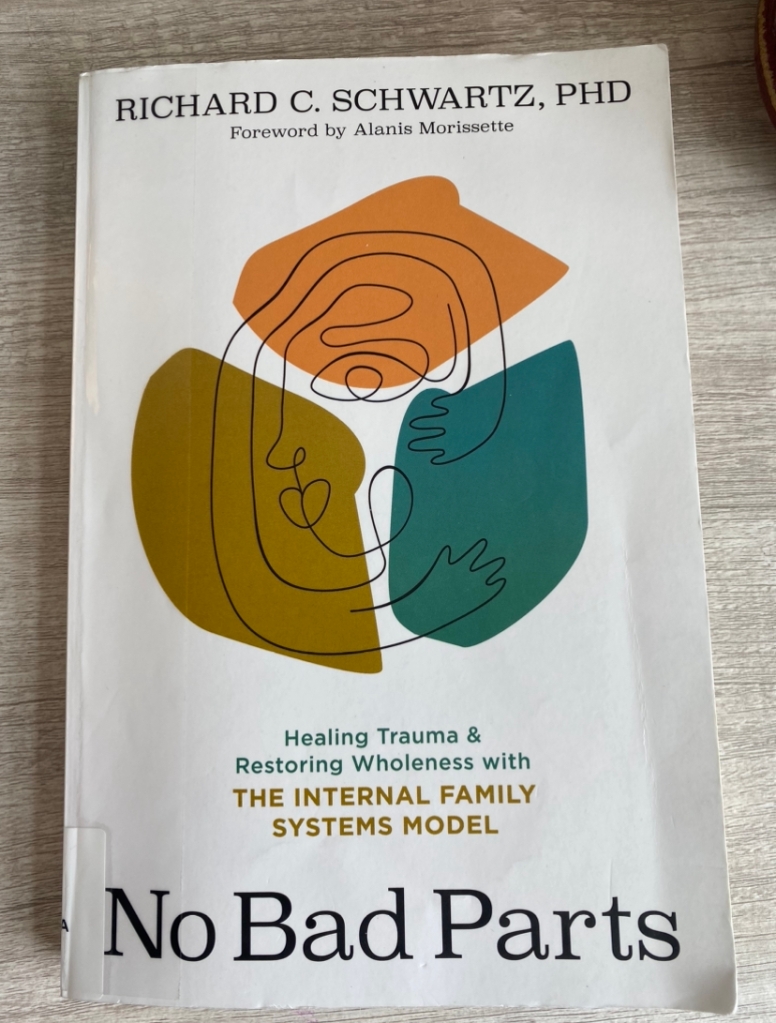
Dr. Paul Conti’s bio will tell you that he is adept at helping people untangle complex problems. He takes a holistic view of each client, to help them recognize the interconnedness of our past to our present, as well as our work lives and personal lives, of our individuality and our relationships. There is a very complex, integrated, inter-connected system at play in all of us. (Just as Dr. Richard Schwartz espouses with internal family systems and his book, No Bad Parts.)
In 2021, Dr. Conti published his revelational book, Trauma, the Invisible Epidemic. How remarkable that the COVID-19 pandemic would present an analogy that we could all viscerally wrap our heads around:
“A wise response to a viral pandemic is to become more closed until a vaccine becomes widely available. A wise response to a trauma pandemic is to become more open so that we ourselves become the vaccine.” — Dr. Paul Conti
Dr. Paul Conti was a recent guest on the Huberman Lab podcast and over a series of four episodes, he and Andrew Huberman provided an extraordinary public service about mental health. While this deep dive may seem unappealing and overwhelming, what you will discover is that Dr. Conti’s soft spoken demeanor, his humility and humanity, and his simple metaphors make a complex subject very accessible.
Here are highlights from each of the four segments. All of this content comes from Dr. Andrew Huberman’s show notes for each episode which aired throughout September, 2023.
Episode 1 – How to Understand and Assess Your Mental Health:
Dr. Conti defines mental health in actionable terms and describes the foundational elements of the self, including the structure and function of the unconscious and conscious mind, which give rise to all our thoughts, behaviors and emotions. He also explains how to explore and address the root causes of anxiety, low confidence, negative internal narratives, over-thinking and how our unconscious defense mechanisms operate. This episode provides a foundational roadmap to assess your sense of self and mental health. It offers tools to reshape negative emotions, thought patterns and behaviors — either through self-exploration or with a licensed professional.
Episode 2 – How to Improve Your Mental Health:
Dr. Conti explains specific tools for how to overcome life’s challenges using a framework of self-inquiry that explores all the key elements of self, including defense mechanisms, behaviors, self-awareness and attention. We also discuss our internal driving forces, how to align them and ultimately, how to cultivate a powerful “generative drive” of positive, aspirational pursuits. Dr. Conti also explains how to adjust your internal narratives, reduce self-limiting concepts, overcome intrusive thoughts, and how certain defense mechanisms, such as “acting out” or narcissism, show up in ourselves and others.
Episode 3 – How to Build and Maintain Healthy Relationships:
Dr. Conti explains how to find, develop and strengthen healthy relationships — including romantic relationships, work and colleague relationships, and friendships. He explains a roadmap of the conscious and unconscious mind that can allow anyone to navigate conflicts better and set healthy boundaries in relationships. We also discuss common features of unhealthy relationships and clinically supported tools for dealing with relationship insecurity, excessive anxiety, past traumas, manipulation and abuse. Dr. Conti explains how, in healthy relationships, there emerges a dynamic of the mutually generative “us” and how to continually improve that dynamic.
Episode 4 – Tools and Protocols for Mental Health:
Dr. Conti explains what true self-care is and how our mental health benefits from specific self-care and introspection practices — much in the same way that our physical health benefits from certain exercise and nutrition habits. He describes how the foundation of mental health is an understanding of one’s own mind and the specific questions to ask in order to explore the conscious and unconscious parts of ourselves. He describes how this process can be done either on our own, through journaling, meditation and structured thought, or in therapy with the help of a licensed professional. He also explains how unprocessed trauma can short-circuit the process and how to prevent that, and the role of friendships and other relational support systems in the journey of self-exploration for mental health. People of all ages and those with and without self-introspection and therapy experience ought to benefit from the information in this episode.
It is not necessary to listen to all four podcasts in the order in which they were presented to glean valuable insights that we can put into practice right away. However, each one does build on the foundational metaphor of an iceberg — our consciousness being the tip that juts out above the water; and the much larger unconscious part of us that drifts and drags underneath the surface. It is the unconsciousness that gets us into turbulent emotional waters. We’ve all heard this iceberg metaphor used often in personal growth and mindfulness arenas — but Dr. Conti’s explanation will crystalize what once seemed pretty murky.
Throughout the four part series, Dr. Conti anchors us to this important mental health work with two verbs — Agency and Gratitude. Again, we have often heard these two words bantered about a lot as though they are the fast track to personal growth and mindfulness. But they are not adjectives and they are not static.
In his book, No Bad Parts, Dr. Richard Schwartz describes “agency” as being “self-led”. We are adults now who have worked very hard to build the life we want. We are investing time and energy in our careers, we have chosen spouses and are raising our precious children. The catch is that we often self-sabotage our best intentions and hard work because it is the unconscious part of our iceberg that pulls us out of our agency and back into old habits and patterns. As Dr. Conti unpacks this for us, we come to have a greater appreciation for the value of pausing long enough when big emotions are hitting us to course correct. We can make conscious choices to respond more appropriately – and to be consistent with our emotional regulation in order to be good role models for our children; and to be better partners in our relationships.
As for gratitude, Dr. Conti reminds us that it is not just making a list at the end of each day. He stresses the importance of focusing on gratitude as a verb. Showing up in life with gratitude – for what we are able to do, for our diverse resources and tools, and for the people who support us.
We can be enthusiastically grateful for the breakthroughs in neuroscience and psychology that help us actively participate in shifting from old faulty models of parenting and relationships into healthier, integrated ones that break generational cycles.
Dr. Conti invites us to take a serious inventory of the places and times that our life gets out of balance. Are we able to stay more emotionally regulated at work or in public than we are at home and in our closest relationships? Do certain people trigger us and amplify strong emotions, while others seem to have a calming and uplifting influence on us?
Dr. Conti uses a cupboard metaphor as a compelling visual for this inventory. Take a peek inside your various cupboards and discover the different coping skills and self-regulation that you use ion different roles in your life. Investigate how you handle things when you are sleep-deprived, on overload, or feel resentful. What helps you get back to an emotional baseline when you are triggered? Sometimes our cupboards are bare; sometimes they have some expired items that are no longer working.
You will find the PDF’s that Dr. Conti provides in the Huberman podcast series to be very helpful guides for these metaphors and for the proactive, preventative mental health practices he espouses. The 4 part series is a worthwhile investment of your time if you want to gain real insight into a proactive, preventative approach to mental and emotional health.
SUMMARY:
Today, I pulled together a few critical pieces of our collective journey. We now know that Dr. Bruce Perry’s wisdom about our empathy poverty was spot on. Empathy plays a vital role in building the connections we all long for — and that science has proven — supports our most valuable relationships — those with our children and our partners. We live longer and healthier when we are deeply connected with each and supported by each other.
Friendship is often the engine of change and healing. We are not meant to do our inner work and emotional healing alone. It is far better done with others that we trust and who are good role models. We need emotion scientists and emotions mentors. We can become the relational web and scaffolding for our families and friends. It is especially good to have a buddy with whom to do some of this inner investigative work. Why? Because we are not alone — and we do see ourselves in each other’s stories. When we feel heard in a very meaningful way; we feel like we belong.
People who have done their inner work often pursue fields that take what they have learned to a whole new level. All three parts of this current blog post series on proactive and preventative emotional health have showcased such people. What these change-makers need are followers; they need others who take the courses, who soak up the knowledge, who put the practices into action. Then they need us to tell others our experiences with our own changes. When we give each other our personal examples of how this inner work and new tools, have dramatically improved our lives, we offer encouragement for others to try it out as well.
Do you know who the most excited little sponges are? Our children! When we begin to teach our children that they do have permission to feel their emotions and we start having calm, supportive, inquiring conversations about their feelings, we get tangible evidence of the power of empathy.
RECOMMENDED RESOURCES:

You can use this link to discover all the episodes of the Huberman Lab podcast. This link will take you to Andrew Huberman’s webpage: https://www.hubermanlab.com/all-episodes






















 Inspired New Horizons