Digging in & Getting to Work

The compelling metaphors of spring being a time of rebirth, new beginnings and growth are not lost on me. Every time I go for a walk in nature, I marvel at the seemingly slow process of a tiny bud pushing with all its might at the very tip of a fragile naked branch. Just a few days later, I discover that the tight bud has swelled and softened. And then later in the warmth of afternoon sunshine, voila — the bud has now unfurled and I see tiny green leaves.

Now the process begins again. The fragile pale green leaflets will grow over time and one day later this summer, they will actually provide shade for the ground cover that is the understory of this forest. In the fall, the seeds will drift downward and nestle into the soft compost beneath the understory – and next spring, those seeds will pop up and start the process anew.

I find myself wondering what has taken us so long to reframe our own personal growth in the same transformational way that we view springtime.

It is precisely why I have been encouraging us all to consider self discovery and personal growth in a dynamic new way. We are not only works in progress at every stage of our life, we are ever-growing, adapting and changing throughout our lifetimes. Much like the image of a majestic oak tree used to symbolize strength, stability, endurance and longevity, we too are ever growing.

Taking ownership of our personal growth over the course of our life changes everything. We no longer have to view our past history and adversities as impediments that uprooted us. We can more accurately see how the stories we have told ourselves about our lived experiences have often had a far greater impact on shaping us than the event itself.

As human beings, we are designed to make meaning out of the experiences in our lives. The root cause of our stunted personal growth is that we were only budding young authors during our most profound developmental stages – early childhood and adolescence.

We’ve heard it said over and over again: “change the narrative and it will change the way you see yourself.” This is one of the foundational principles that should be guiding our personal growth throughout our lifetimes. We need to become better storytellers and discerning meaning makers.

Many of the stories we tell ourselves have long roots going back to the first drafts we wrote when we were young. When we go back and revisit these stories with the intention of editing, updating and rewriting them, it is in essence pulling up the weeds and tangled vines — and revealing to ourselves just how much we’ve grown over time.

With a fresh perspective and a growth mindset, we can really dig in and get to work. We can become master gardeners for our self discovery and personal growth.

Re-imagining how we can repurpose what we have learned and discovered about ourselves over the years, helps us dig a little deeper into our raw material and use it wisely and with good intention.

Best selling authors frequently share that they “wrote the book they needed to read” or a well-known psychologist will confess that their “research” was actually “me-search.”

Taking a cue from these folks, we can begin to write the stories that shape us in the most transformational ways. We should not stay stuck in those old narratives that limit our potential.

When my kids were teenagers, I would often ask them “What have you learned from this experience?” They were not huge fans of this parenting tool, for it required them to stop and think about their choices and the subsequent outcomes. It felt like hard work and they much preferred to be grounded than breaking ground.

I didn’t realize it then — but what I was intuitively trying to do was get them to “think on their own” and be able to make better decisions in the future when faced with similar (but much more consequential) events.

What I knew from my own lived experiences as a 40 year old mom was that a lack of self-reflection usually led to breakdowns. What I wanted for my teenaged kids were more “break throughs” in their self awareness and sense of agency.

“What have you learned from this experience?” was a trowel; an invitation to dig a little deeper into what motivated them to make certain choices and to step back and see if the outcome matched their values. Did their choices and behaviors help them get where they wanted to go in life?

I have a confession – I did not see this simple question as the meaningful tool it truly is when I was a middle-aged mom of fast growing teenaged boys. I just knew they needed something from me that they could take into adulthood as a guidepost for building the life they wanted. The life I hoped they would have; one that was a little less bumpy than my own had been.

Finding our footing and being grounded in mid-life is a super power and not a punishment. But we can only be “grounded” in our values if we have in fact done some serious self-reflection.

For the record, grounding my teenaged boys would not have had the same impact as making them reflect on their own life lesson in real time – just ask Dr. Becky Kennedy.

Today, thanks to Arthur C. Brooks and his book “Build the Life You Want”, I now have a greater awareness of the incredible value of asking ourselves “what have we learned from this experience.” It is the trowel we need in our personal growth toolbox.

Arthur Brooks tells us that whenever something in your life has unraveled, pull out a journal and write down what’s happening and how you feel about it. Come back a week later and write down how you are feeling about it now after some time has passed. Are you able to see a silver lining yet? He tells us to revisit a breakdown in a month, in 6 months and even a year later. Was there a breakthrough?

That old adage “time will tell” rings very true when we take Arthur’s advice to heart. What have we learned from that one heartbreaking experience or major adversity that has enriched our life or opened our eyes in entirely new ways? How has it shaped us?

It is this self-reflection, done over time, that helps us with fundamental building blocks for building a life we truly want. We tell ourselves stories to make meaning of our experiences. But the first draft of our stories is often fraught with too many emotional cliff notes. These jagged first drafts keep us stuck in the painful parts of our stories.

We need time for each experience to fully develop, just like a photo taken with an instamatic camera. It is over time, with edits and re-writes that we grow into what life had to teach us through our experiences. Arthur’s simple journaling exercise is how we plot our changes and observe our development.

Personal growth and self discovery is a process. Of course the events in our life have impact and shape us in ways that we may not even realize. Some of our best lessons have a very long germination period. Getting curious about how we are growing is a fresh new perspective to adopt.

Anyone who loves gardening will tell you that patience is a virtue when it comes to planting seeds, nurturing them and providing the right environment for them to survive and then thrive. This organic growing process is the one we want to emulate for ourselves and our life experiences. We can be much more proactive and intentional about how life events impact our personal growth. It requires patience with ourselves as well as the process.

The beauty in this shift in how we approach our personal growth and self discovery is that we can begin at any time. We can start small and work our way deeper into our library of life experiences for more insight and enrichment later.

Choose just one recent event in your life that felt like you might be breaking ground for something new to emerge.

Maybe you stopped to realize that the same old approach to a recurring problem just isn’t working and you decided to change how you react and respond.

Were you facing a very difficult decision having to choose between two appealing opportunities? Were you able to feel your way intuitively into making the best choice for you at the time?

We get these little nudges for growth spurts almost daily. Anytime we can stop and do a little check-in about the stories we are telling ourselves, we are acting like skillful gardeners attending to our personal growth and self discovery.

Ethan Kross, author of Shift, encourages us to ask family members and friends to help us see ourselves through their eyes.

My younger brother does this often for me when we talk about our childhood experiences. Where I see myself as a frightened ten year old, he saw me as a strong and courageous big sister who protected him. This fresh perspective helps me go back and edit a childhood experience with more context and nuance than I had access to as a kid.

Over the years, with his help, I have been able to see the tender shoots of my strengths pushing hard through a few childhood experiences, just the that tight little bud on my favorite tree. I was emerging; I just didn’t see it.

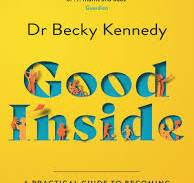
Dr. Becky Kennedy’s parenting book is also helpful in understanding what gets in our own way when it comes to relationships and emotions. All too often we believe what we were told as kids and have made behaviors part of our identity. This book will free you up to see all that is Good Inside of you too.
This book is a game-changer. Instead of telling someone that what they are feeling or experiencing is wrong or not appropriate (which leads to telling ourselves unhelpful stories), we simply validate their true experience.
What Marcus Learned from His Mother May 9, 2025 In this episode, Ryan Holiday shares insights from the global pandemic experience that reshaped his life in profound ways. It is the tail end of this episode where he asks thought provoking questions that will help you rewrite better stories for your own life. https://podcasts.apple.com/us/podcast/the-daily-stoic/id1430315931?i=1000706718469

The Stories We Tell Ourselves – Part 2

Grab some paper and a pen. Make a list of the many roles you have in your life. Start with an ordinary day — and then expand it out to a week, then a month. Be thorough and thoughtful about the many places you show up and play a part. Start with your immediate family then expand the lens to work and your community.

You may be a spouse and a parent, an employee or entrepreneur, a sibling, a grandparent, aunt or uncle, a best friend, a youth soccer coach, a golfer or triathlete, a musician in the local orchestra, a training buddy, a book club member, a podcaster, a creator, a caregiver, a community volunteer. Chances are the list is much longer than you think.

No wonder we are so complex, fascinating and mind-boggling all at once! We wear a lot of hats and juggle many responsibilities and have a host of hobbies and interests. But wait — there’s more!

Did you know that embedded in all the different roles we have, we also have a specific identity associated with each one. These multiple identities are like the unique blueprints we bring to the roles we play. There is a lot of nuance in these multiple identities because we draw on different characteristics of who we are to highlight the ones that best fit the role we are in.

Ryan Holiday tells us that a great tool for helping us show up as the best version of ourselves in any given situation is to ask: What is my role right now?

This simple question quickly crystallizes our responsibility and our strengths that we bring to the table in the role we now play. Our identity for that specific role becomes the template and the filter for how we show up. It is our unique blueprint.

Ryan’s poignant question grounds by reminding us of the identity we assume as a parent, a spouse, a work colleague, sibling or friend. When we connect with our role, we also connect with our goal. That identity we bring to each role becomes the framework and guardrails for how we show up.

If we fail to ask this question about the role we play in any given situation, we may unconsciously default to another of our roles and bring the wrong attributes to the table. We’ve all done this and in hindsight, we readily recognize we played a part in the clumsy, confusing way things unfolded.

Mel Robbins tells us that we all have an inner 8 year old that can show up unchecked, disregulated and unruly — and if we let that character step in to a role well beyond his or her job description and matching skills, that’s a recipe for disaster.

Most of us never stop to reflect on the many roles we have in our lives and the blueprint we have curated to help us do our best in each one. And here’s a surprising revelation – if we don’t consciously develop a strong job description for each role we play, we are going to default to the inner child quite often. This is often referred to as our “unconscious” self – and that’s where so many of the old stories we tell ourselves become the script for knee jerk reactions.

Knee jerk emotional reactions come from the past. Old stories we’ve told ourselves trap us in our amygdala; it links our current emotions to old memories. Which is precisely why we can act like an 8 year instead of a rational, mature adult. We viscerally feel our emotions and our amygdala supplies all the data we need to remind us of past times when we felt just like that — and underscores a feeling of helplessness (a lack of personal agency). When we were 8, we didn’t have skills and tools to help us understand and regulate our emotions. We only had the warning signs and basic reactions. We hadn’t yet developed our strong sense of self and built reliance on our own agency.

Ryan’s question prompts us to remember that we are no longer a helpless, overwhelmed kid. We have adult roles now and the ability to shift into the executive function of our brains. That one simple question flips the switch in our brain — and gets us running on the right track — our executive function. We can catch ourselves before we shrink ourselves to age 8 and pivot to our better equipped grown up self.

How does this dovetail with our roles and our identities? Well, we develop blueprints for how we want to show up in the various roles we have. We even start this process as kids — when we tell ourselves that when we grow up, we will parent differently or we will handle life’s challenges more responsibly. Those blueprints help us craft the identities we rely on for each role.

As we move through our lives, we update those identities much like we update our resumes. As we become more skilled in any of our roles, we add and subtract from the identity we’ve created for each role. We are always a “work in progress” and we thrive when we have a very strong sense of self and tap into our personal agency frequently. We get to choose how we conduct ourselves in each role — and we feel good when our emotions match our actions.

This is where we can pair Ryan’s question – “what is my role right now” with Arthur Brook’s question: “How do I want to be feeling right now?” This is how we sync up our roles with our identity blueprints and our emotional and behavioral responses. We play the “match” game.

We can cross-pollinate our identity blueprints that we use in the outside world to build stronger and more reliable identities for our family relationships. If you stop to think about it, you readily recognize how reliant you are on your identity at work or out in your community. That identity provides the guardrails that keep you from losing your cool, having a meltdown or curling into a ball. Your actions and responses match the identity you crafted.

Most of us are less clear about our identities in the roles we play within our families. We drop our guard at home with the people we love the most – and in that process, we drop the very guardrails that would help us bring our better selves to the most important roles we have.

Home and family is the one place where we should feel the safest, where we should feel seen, heard and valued. Yet our family relationships are the one place where we have most of our day to day conflicts. Could it be a simple mismatch between the role we play and the actions and behaviors we bring to that role?

Dr. Becky Kennedy has coined the phrase “sturdy leader” for the role of a parent. She uses the analogy of an airline pilot to give us a strong mental image of what a sturdy leader looks and acts like. A competent pilot does not come frantically racing out of the cockpit freaking out about turbulence. We expect a competent pilot to tell us the truth about what is happening, assure us that all efforts are being taken to keep us safe and offering the actions we can take to help the collective effort.

Is this how we show up in our family relationships — as sturdy leaders – those calm, competent pilots?

Are you laughing to yourself right now now? I think most of us can agree that is not our “go to” when we experience emotional turbulence in the kitchen cockpit.

What usually happens at home is a bad case of emotional contagion. We match the emotions of our kids, our spouses, our siblings or parents. We are playing the wrong match game.

The better match game is the adult version. The one where we can readily identify our role, how we “want” to be feeling and we match our responses, behaviors and actions to that blueprint. We become sturdy leaders at home just like we do at work or in public spaces.

The basic blueprint of sturdy leader is a great template for our roles at home. Who wouldn’t want to have a sturdy leader as a parent or a partner? Think of all the skills and personal attributes you bring to the workplace and repurpose them for your roles at home. Add them to your identity blueprint. Are you good in a crisis at work? Do you work well under pressure? Are you a wizard at time management and effective delegation? Can you rally the troops? Do you build a strong team by tapping into the key strengths of each person? Do you provide breaks to reset and recharge when others are on overload?

There is yet another emotional and psychological tool that can be utilized in meaningful ways when we are nailing down our identity blueprints for our family relationships. It is “distancing”. When we are able to zoom out and get a broader perspective, we see the bigger picture. Distancing is a great tool for helping us to pivot to sturdy leader. When we can step out of the fray and turn on our executive function, we often realize we already possess the very skills we need to bring our better selves home.

Distancing helps us see the calm and competent pilot we are at work or out in our community. We show up like this with ease – consistently. As James Clear, author of Atomic Habits, would tell us we have deployed the compounding effect of consistency and frequent practice in the workplace. We practice keeping our emotions in check and our responses mature – day in and day out, several times each day.

Now just think about the difference that would make in your roles at home. All this time, you have been missing the golden opportunity to put in countless reps every day to become a sturdy leader! Practice doesn’t make us perfect, but it surely makes us more skillful, resilient, reliable and easier to live with.

Give yourself a honest evaluation about how you show up at work – and how you show up at home. Are you matching other’s emotions or are you matching your role with your identity blueprint, your skills sets and the goal you have for that role?

Remember that your old emotional database can pull you back into outdated reference material. You want to be operating on better, current data with greater agency and a strong sense of self.

Want some extra motivation for crafting sturdy leader identities for the roles that you play in your life? Just imagine helping those you love amass an incredible library of reference material for the stories they tell themselves. Who wouldn’t want the people they love to immersed in possibility and potential instead of limiting stories about who they are and will become?

Check out Dr. Becky Kennedy’s book, website and app to discover science-backed parenting tools for raising emotionally intelligent, resilient and empowered kids
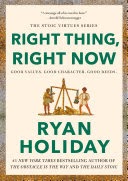
Check out Ryan Holiday’s collection of books . Right Thing, Right Now is his latest. The Obstacle is the Way is great for seeing opportunities where we blindly believe we forever stuck. If you are a parent — check out Daily Dad.

Mel Robbins’ latest book is quickly becoming a fast-track resource for letting go – and stepping into your own agency. Let others be thernselves, especially family, and Let You be your best self. This book is so relatable, you won’t be able to put it down.

If you want to fast track what is packed into Mel’s new book, take a listen to this We Can Do Hard Things podcast episode. Mel and host Glennon Doyle crack open the book, the theory and relatable real life stories. https://podcasts.apple.com/us/podcast/we-can-do-hard-things/id1564530722?i=1000682368717