

For centuries, philosophers, poets and psychologists have pondered the same human perplexities. There was an innate sense that unhelpful thoughts and unchecked emotions were both a natural part of the human experience – and often the cause of so many of our age-old problems. Were we destined to keep stumbling in the dark endlessly searching for answers to this paradox?
Over the past few decades, breakthroughs in neuroscience began shining bright light into new places to look for answers to the puzzling questions that were as old as time. Thanks to MRI’s and other neuroimaging, researchers could look more closely at our brains for the clues.
It has brought us to this incredible tipping point where we have living proof of how our brains and bodies are actually designed to work. We are learning not only how to care for our brains; we are understanding that due to our brain’s neuroplasticity we can retrain, rewire and update our brains.
Now we know, through brain imaging and intentional collaborative research, just how a child’s brain develops and how long that process actually takes. We no longer have only theories about a fixed or growth mindset — we have practical tools to access what holds us back or keeps us stuck in limiting beliefs.
We can pursue the changes we want in our life in more relatable, dynamic ways than ever before. Personal growth and emotional agility are now viewed as positive and proactive — not something we only seek when we have hit rock bottom or challenging adversity.
What we didn’t know is that we possess a lot of natural resources that would be so much more productive and rewarding than hand-me-down coping mechanisms and outgrown behavioral patterns we’ve come to rely on — with barely a second thought.
We have mostly been using the reptilian part of our brain in this modern age; that part of our brain is clunky, clumsy and limiting in today’s fast paced, ever-changing environment. We need to fully utilize our remarkable executive function of our brain so that we can meet today’s challenges with resilience, flexibility and emotional agility.
The executive function of our brains is an evolutionary gift. It is the part of our brain that is best suited to help us meet the demands of modern life. The reptilian part of our brain served our ancestors well. Now it is our turn to tap into the capabilities of our pre-frontal cortex and continue to make discoveries about what we humans can accomplish.
It’s ironic isn’t it? We are so quick to adapt to the latest technology on our phones or laptops. We love all the safety features and luxury conveniences in our cars like back-up cameras and heated seats. Yet we rarely pondered how we humans are so different now from our ancestors; how our brains have been adapting to keep up with a fast-paced, ever-changing environment. Would a caveman be able to function in today’s world with ease?
Does anyone recall the GEICO cavemen commercials that first aired in 2004? That should have been a clue about just how much our brains and bodies have evolved over thousands of years.
Why are we so incredibly astonished that our young children adapt so easily to technology, as if there was no major learning curve like we experienced just a decade ago? How did they skip that steep learning curve?
We are captivated by the evolutionary adaptions that animals and sea creatures make out of necessity to survive and thrive in ever-changing living environments. We should be equally captivated by our own evolutionary advancements.
The last twenty years has ushered in the proof we needed to see for ourselves so that we could embrace a huge shift in our understanding of human development and human nature. The pivotal breakthrough will be when more of us begin to use our natural resources of our brains and bodies to their fullest potential.
Out with the old and in with the new.
Out with coping mechanisms and childish behavioral patterns.
In with our natural resources of emotional intelligence, our ability to regulate and access clear thinking and mature responses to others and to life experiences; to be flexible, resilient and creative.
It all begins with emotional integration. This is the key evolutionary component that we got wrong. We can move from the prefrontal cortex (our reptilian brain that houses fight, flight, freeze or fawn) into the executive function of our brain (where we have access to emotional intelligence) and much more agency over our lives.
We bypassed this evolutionary upgrade when we stuffed our emotions, sent kids to their rooms alone, dismissed what we and others were truly feeling and labeled feelings right or wrong. We relegated the most resourceful part of our core operating system to the basement – packed away in boxes taped tightly shut. The emotional information that we needed to fully understand ourselves was not accessible.
Most of us don’t have to reflect for too long to realize that if we’d had that inner GPS of emotional intelligence, we wouldn’t have had such a tumultuous, bumpy ride through life. So much of what we wrestle with in our lives and our relationships has a lot to do with emotional dysregulation and unprocessed emotions that have accumulated over years. When the emotions cool off or dissipate, we frequently discover we are quite capable of solving problems, getting tasks completed and even bouncing back from adversity. It was our misunderstanding of the purpose of emotions that derailed us.
We failed to install a key component of the human operating system. Mystery solved at long last – we need the emotional data plugged in.
We cannot teach what we haven’t learned — and up until now, we didn’t realize the importance of emotional intelligence. This is why we simply passed behavioral patterns and problematic coping skills down from generation to generation. Now we are all learning together about the important role emotions have in our quality of life.
We can be learning and teaching at the same time. Adam Grant, organizational psychologist and author, reminds us that learning and then teaching what we are learning is one of the fastest ways to gain traction with new skills and knowledge.
The more we practice shifting into this more highly attuned part of our brain, the easier it gets. It’s just like shifting to a lower gear in our car when the driving conditions change. We shift gears to save our brakes, to control our speed, to preserve the integrity of the engine, and to operate our vehicle safely and efficiently.
Being able to move from our reptilian brain and its reactive reflexes (that are intended to keep us safe), into our prefrontal cortex (the executive function) enables us to downshift, so we can access important information from our emotions, regulate our emotional signals and respond more maturely. It keeps us from slamming on the brakes and enables us to more skillfully slow down and course correct. This is how we prevent accidents and collateral damage – whether we are driving or handling strong emotions.
Step 1 of “In with the New” is recognizing when our emotions are lodged in the reptilian part of our brain. When we feel like we want to fight, run away, become cognitively dissonant, or people please, that’s our cue to shift gears. We’ll become energy efficient when we do this too. Those reptilian reactions run on rocket fuel and they can drain our body budget fast.
Use a mental image of shifting gears in your brain, just like you would your car. Slow down, make an assessment of the information your emotions are providing before proceeding.
Step 2 of “In with the New” is validation. Validating our emotions and those of others is simply acknowledging what we are honestly feeling in the moment. We now understand that emotions are raw data full of invaluable information. They are not right or wrong; good or bad. No judgment, just validation.
Validation is magic. It is the exact opposite of sending a child to their room alone or dismissing someone as being overly sensitive. That old tactic is what caused us to bottle up, stuff and override our emotional intelligence. No wonder we got triggered and conflicted. No more overriding emotions. The short cut to executive function is paved with validation.
The magic in validation is being believed about what we are feeling. We can organically drop into a calmer space when we are not fighting so hard to be understood or resisting what feels so visceral to us.
Just watch a child’s body language when you validate their feelings. You can see their body and facial expressions relax. Take notice of this calming effect for yourself when you too are validated for what you feel in the moment.
Step 3 of “In with the New” is to be cognizant that we have control and agency. This is when we can tap into all that is available to us in the executive function part of our brain. We can be angry or upset and still choose to act in a calm, mature manner.
The important work of processing our emotions happens in the executive function part of our brains. We can take the information our emotions provide, assess it and distill it – and then draw on past experiences, psychological tools and self control to respond in a meaningful and appropriate way.
We can use psychological tools like deep breathing, grounding ourselves by feeling our feet on the floor, counting to 10 — to create that space between stimulus and response. This will help us shift into our master “control center” for emotional regulation and emotional agility.
Re-discovering our natural resources:
We possess so many natural resources that we take for granted. Cultivating more self awareness about our natural resources equips us to engage with people and life in much more relational and responsible ways.
Our emotions are one of our most integral natural resources for understanding what matters most to us. They are guideposts for what we need to feel safe, valued and heard. When we understand our own emotions more intimately, we develop greater empathy and understanding for others. Emotions are not obstacles – they actually are the way to stay in alignment with our core values and basic needs. Emotions guide us to better discernment, decisions and actions.
We possess invaluable natural resources to slow our heart rate and calm our anxious nervous systems. Deep cleansing breaths and movement do wonders to calm us. We can co-regulate each other; just watch a mother soothe a child – or notice how a soft tone of voice calms an adult. When we are more skilled in calming ourselves, we also become more effective in helping others learn techniques that work for them.
When we can’t think clearly or have trouble focusing, relaxing and accepting reality opens the aperture so we can tap into cognitive clarity and creativity. It is when we tense up and put up a lot of resistance that we narrow our ability to problem solve. Having this knowledge, we can recognize when others need support to tap into their own executive function.
A child’s brain and it’s development:
Now we have more knowledge about how a child’s brain develops and we can stop having unrealistic expectations about their emotional control. Before we had this education, we got so frustrated believing our kids were emotional train wrecks.
How ironic (once again) that we would never expect them to walk out of their crib at 2 months old or learn to read at 6 months. A child’s brain takes over two decades to fully develop. In fact, the pre-frontal cortex – the part of the brain that houses our executive functions – doesn’t fully mature til the mid to late 20’s. Step back for a moment and imagine asking your toddler to do something that was physically impossible at that age.
In a recent podcast episode, Dr. Andrew Huberman and Dr. Victor Carrion, spoke very clearly about our role in a child’s brain development. Again this is a pivotal shift in how we help our kids with emotional intelligence and a slowly developing brain. (Just remember, that all good things take time — and in this case, our remarkable young brains take their sweet time.).
Now we know what we did not know before – the importance of emotional intelligence AND how to help our children use their brain’s functions with greater ease. Validating their emotions integrates them. Teaching them to label and learn from their emotions build their emotional intelligence database. Teaching them about the two parts of their brain and being their training wheels for the prefrontal cortex gives them a strong mental picture and the practice they need to “shift gears”.
Instead of throwing out the most important piece of a child’s brain development, we install it — and we nurture emotional intelligence and how to regulate emotions. We actually help “wire” our child’s brain, so that the neural pathway to the prefrontal cortex grows stronger and is much easier to access.
We Can See Clearly Now:
This enormous missing piece of our human puzzle is bringing a cascade of new discoveries, new ways to help us all shift more easily into our prefrontal cortex and begin to engage in life with a complete operating system. Emotions are the plug in and the upgrade needed to expand the full capacities of our incredible brain.
Now that we can see so clearly what was missing, we can pivot with greater ease to better parenting models, to healthier and more productive ways to be in relationship with others. This is the dawn of a new age in our human evolution. It is exciting, revelational and intriguing.
Now that we know better, we can most certainly do better. The best part is — it is not nearly as hard and exhausting as we once believed.
The pivotal breakthrough will occur when more of us begin to use our natural resources of our brains and bodies. This is how we collectively break generational cycles.
RECOMMENDED RESOURCES:
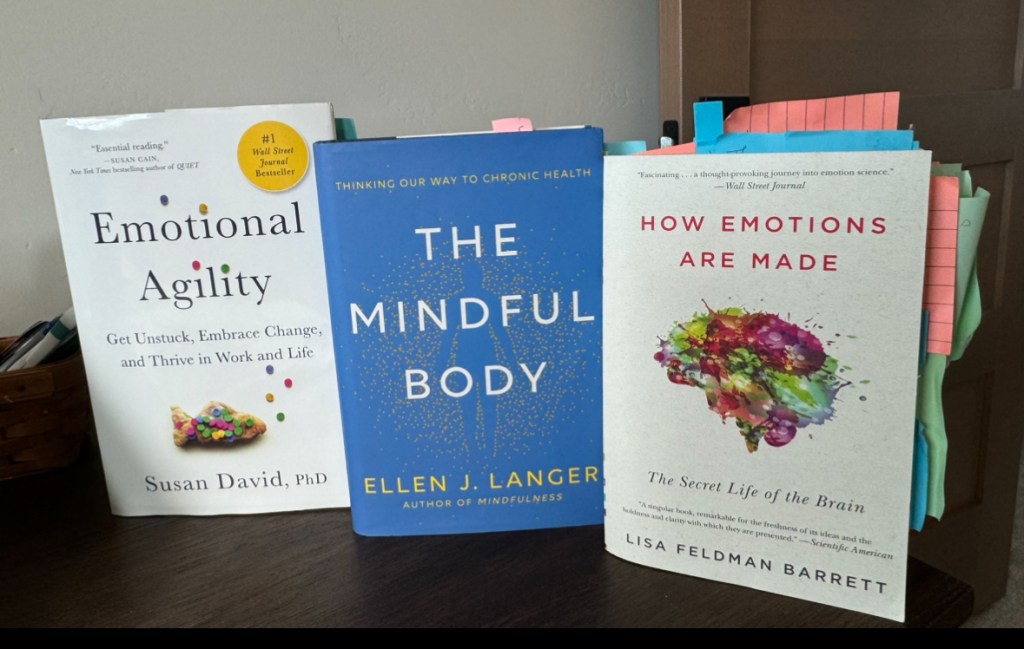

https://podcasts.apple.com/us/podcast/huberman-lab/id1545953110?i=1000670372425

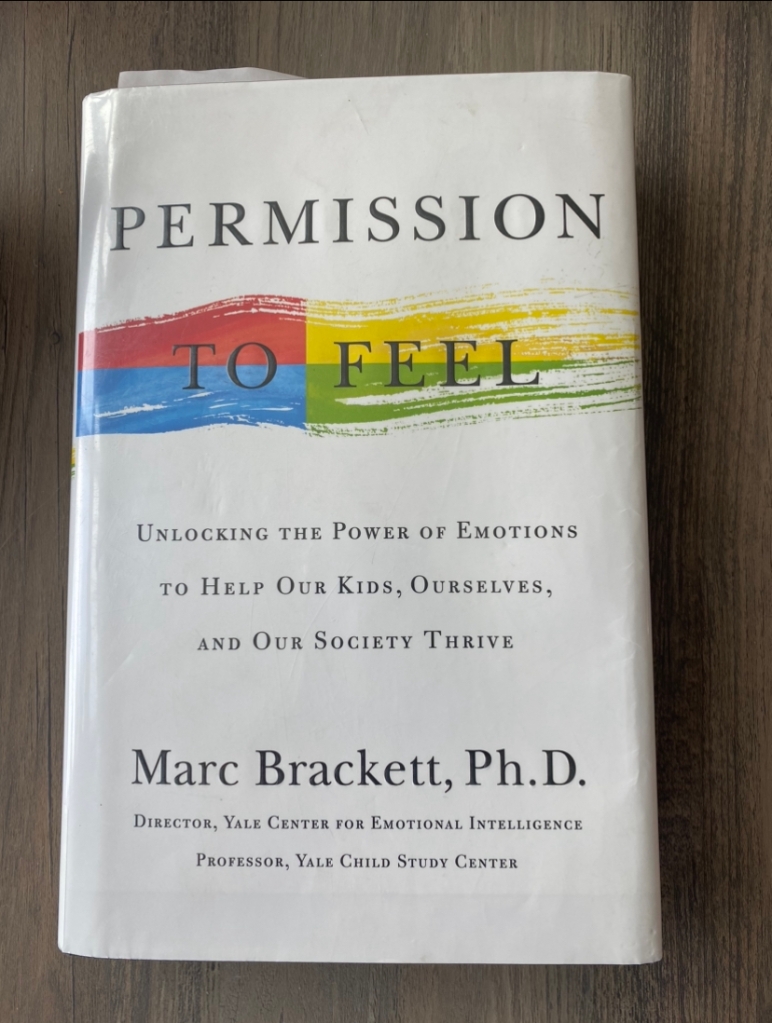
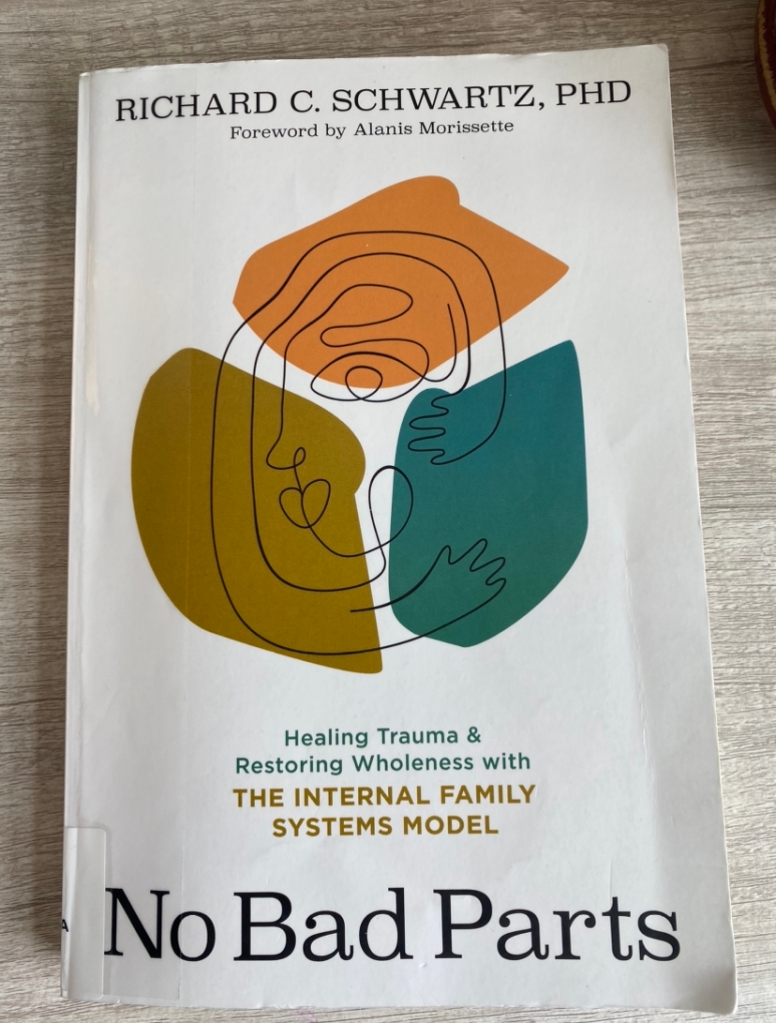
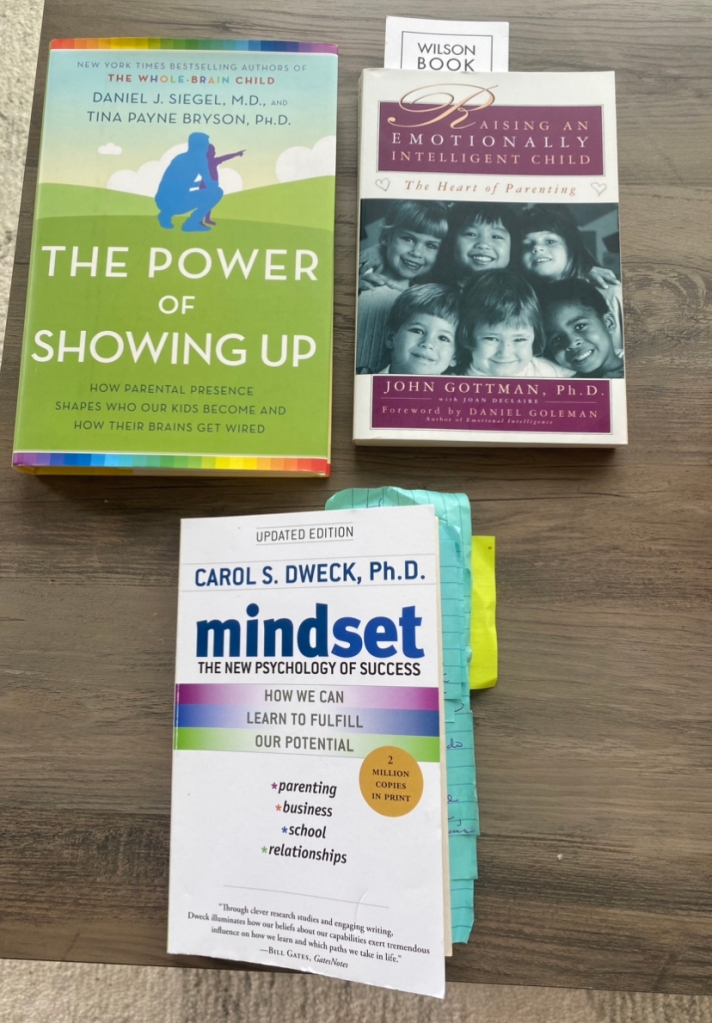




 Inspired New Horizons