Making a Splash

“There are going to be some changes around here” announced my 6 year old daughter, standing proudly in her blue Daisy Scout smock with several Boy Scout merit badge books tucked under arm. She was headed off to her very first experience in Girl Scouts but she clearly had some preconceived ideas about what it might be like. Her brothers were 10 and 11 years older than her and they already had quite a few Boy Scout merit badges sewn on their brown sashes that they wore to their meetings each week. My spunky young daughter was not here for monkey business. She wanted to learn real life skills, like how to pitch a tent and make a fire. Her suspicions that Daisy Scouts would be about making toothpick crafts motivated her to become an activist for change. I’ll be honest — I was incredibly proud of her.

In case you are wondering, my daughter did not last too long in Girl Scouts. This did not come as a surprise to me or her — or even her scout leaders who often felt challenged by her.  It’s just human nature to be resistant to change – and especially if it comes blazing in a pint-sized blonde haired, confident, feisty spokesperson. What could she possibly know?

Turns out that kids instinctively know a lot. Sometimes they are keenly aware that change is in order even when we ourselves can’t see it.

The image of my amazing little girl in her blue Daisy smock and those Boy Scout Merit Badge books is a touchstone for me. It also represents a pivot point for the direction of my blog in 2024 and it is all about change in action. I’ll be sharing real life examples of how game-changing it is to update our brains, embrace new parenting models and modernize our life skills backpacks.

So let’s dive in!

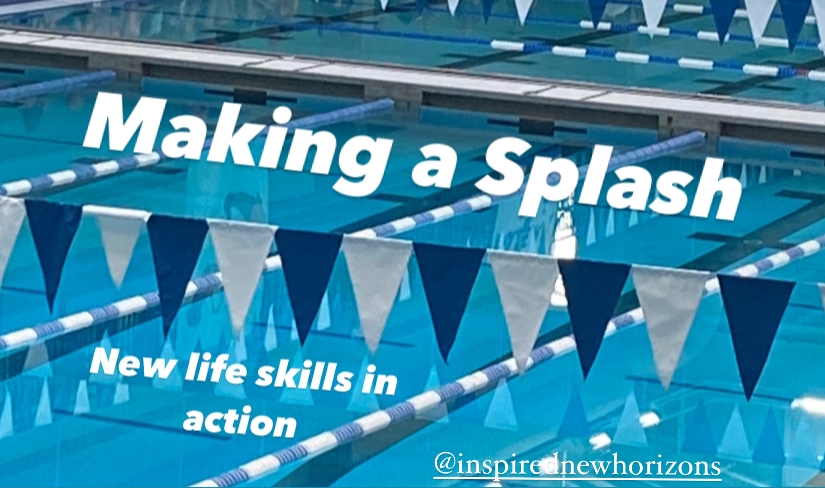
A few weeks ago, I was attending a swim meet for my grandddaughter. Four swim clubs coming together at the premier indoor community pool to compete for the season championship. You could feel the excitement in the air mingling with giggles, splashes and indecipherable loudspeaker announcements. Coaches were busy making last minute changes to their event line-ups when some of their swimmers were unable to attend for a variety of reasons. Anxious parents watched from the second floor gallery as their kids nodded in agreement with a coach or got into big discussions with other swimmers. 

During one of the 200 yard medley events, a young teenaged girl dove into the pool, the last leg of her team’s freestyle entry in the field. All the other teams had already finished this event when this teenager entered the water. She swam the first 25 yards but when she reached the end of the pool where she should have done a flip turn and continued on, she stopped and hung to the edge. An adult volunteer assigned to make certain that each lap was completed, leaned over to talk with the girl who was now shaking her head and visibly crying. Initially the volunteer urged her to finish but it was clear that this young teen had not only hit the pool wall, she had hit her emotional wall. She could not go on.

She was trembling all over as she gingerly climbed out of the pool. Her coach wrapped an arm around her shoulder and escorted her to a quiet spot on the poolside bench. Her coach stooped down in front of her, made eye contact and was talking with her. Her mother appeared and sat down beside her, wrapping her in a towel and a hug.

Meanwhile, up in the gallery, nosy spectators watched with deep interest and more judgment than curiosity. The comments that were made ranged from pity to criticism to shame. There were more strongly held opinions about how to handle such a situation than there banners hanging above the line lanes. 

I could not hold my tongue – the opening to plant a seed of change was too prime to ignore. “This is exactly what should be happening in a moment like this,” I stated loudly enough for those around me to hear. ”According to Dr. Dan Siegel the power of showing up and being present with a child when big emotions are consuming them validates their experience, builds resiliency and prevents shame and insecurities from taking root.”

In that moment, I felt just like my Daisy Scout daughter, speaking up when it mattered most. We don’t know what we don’t know. 

We don’t realize that our old parenting models were broken and they set us up for failure, for poor coping skills, limiting beliefs and a fixed mindset. 

Shame and embarrassment do not motivate us to try harder, begin again and learn from our failures. Criticism erodes trust – trust in ourselves and our potential as well as trust in others that they will do all they can to help us overcome obstacles.  Pity is the near enemy of compassion – and it puts a lot of distance between us and others (even in the face of a similar situation that we could easily find ourselves in). Pity just enables us to think we are so lucky because we are not having that experience.

But wait — what if it was OUR child having that experience? Would those in the gallery who were so judgmental when it was happening to someone else, do a complete 180 if it was their own child?

Even if it was only briefly, I could see that some people were taking a minute to reflect on my comments.  I knew that some parents were well aware that their own child had been asked to swim in a new event for this meet – and yes, they were anxious about the looming possible outcome.

None of us really know the full backstory for that young teenaged girl. Yet it was clearly evident that something much bigger than swimming another 25 yards was in play. Imagine for a moment that you were asked to swim 50 yards in a relay, to be the last leg of your team’s event. And you knew the moment you dove into the pool that your team was going to finish dead last because every other team had already completed the event. How would you be feeling? Defeated before you started? Why bother? What’s the point? Why me?

The more life experiences that we personally have, the greater our ability to tap into our empathy and compassion for others; the more likely we are to normalize moments like this for children and parents. Why would we ever deny another person the support they need the most in moments like this? 

What if this young girl was really struggling with all the hormonal imbalances of puberty? What if her parents had recently divorced or the family was newly relocated to this town? What if this was her first swim meet? What if this was her first Christmas without her beloved grandma? What if her teammates had taunted her and said she shouldn’t be in this event?

I left that swim meet that day thinking about that young girl, hopeful that her mom was skilled in offering her daughter the scaffolding she needed to fully process this experience and grow through it rather than unhealthily “going through it”.

The power of showing up and listening to a child’s full emotional experience is a game-changer. Validating their true feelings and helping them to name all the emotions they feel is how we become the training wheels for an expanded emotional vocabulary and healthy coping skills. 

This is how we build resilience and inner confidence in our kids.  They are more likely to try again and trust in their own potential. Kids are more open to trying new things that may seem hard and challenging. In fact, conquering their fears feels empowering to them.

All of us come into contact with children – and being knowledgeable about vastly improved parenting models is like having an ace up your sleeve. Parents, grandparents, aunts, uncles, teachers and coaches will all benefit from discovering brand new skills and tools for age old childhood emotional moments.

Dr. Becky is a mom first and foremost. She is a child psychologist by profession – and she is a shining example of putting her work into practice. 

If you follow her on social media, you will be highly entertained by her sense of humor and oh so relatable parenting moments. You’ll laugh, you’ll cry, you’ll commiserate and you find real support for real life.

MATT EICHELDINGER – check out this incredible teacher who has created the most heartfelt videos about his students over many years as an educator and caring human being. Life lessons from real life with kids that will stay with you and your kids.
https://matteicheldinger.com/

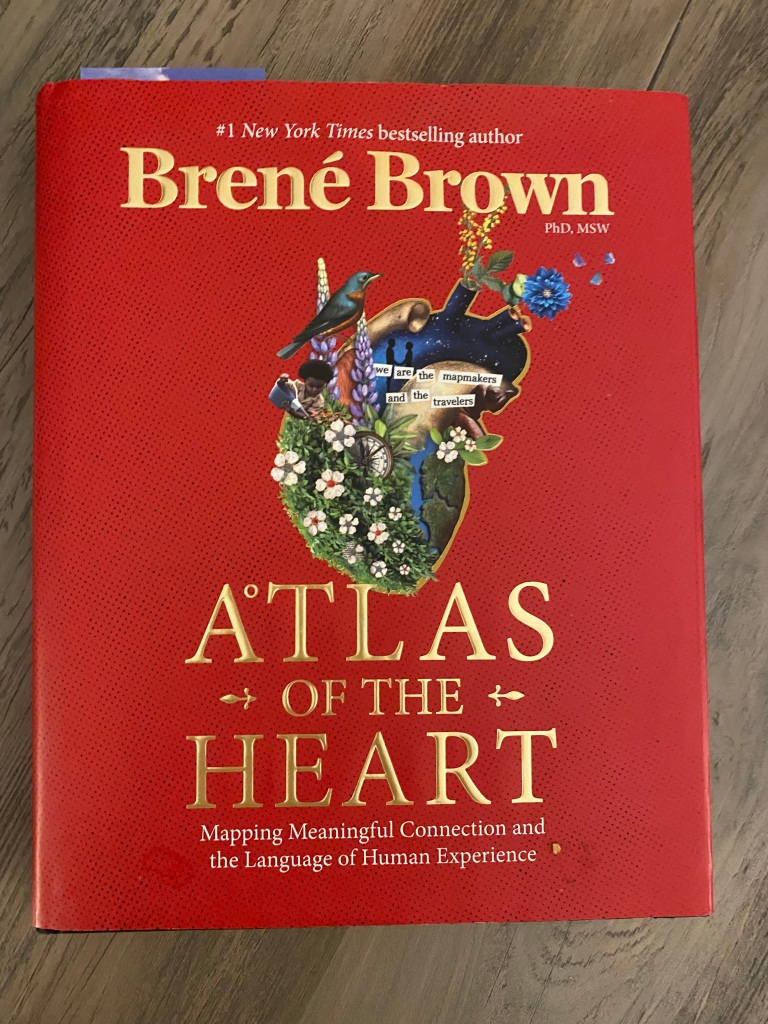
ATLAS OF THE HEART is a family reference guide that should be in every home. If you want to get serious about building your emotional vocabulary, this book is for you. Not only will you gain a working knowledge of 87 emotions and experiences, you will discover when those emotions are most likely to show up. 

Not a Workshop – It’s A Daily Practice

I’ve been blogging about my own personal growth and self-discovery journey for almost 8 years. Like most people, I probably believed in the early stages of this process, I would be able to identify the habits I needed to change and the skills I needed to acquire in order to check the self help box. Then I could move on into the next chapter of my life – happily ever after.

What I have come to more fully understand and appreciate is that personal growth, self-discovery and human evolution are in a constant state of change. As a direct result, we have to change our mindset about personal growth and self discovery.

The answers to our lifelong, puzzling questions about who we are and why we behave as we do are not to be found in a single book, podcast or workshop. We can’t earn a certification, degree or even a merit badge — and then move on as if our work is forever done.

Personal growth, self discovery, emotional health, relationship skills and mindful self-awareness are our life’s work. It is dynamic, integrated and evolving – because we are.

I’d understand if you were less excited, and more intimidated by this revelation, but take heart – it turns out that this work doesn’t have to be as hard and painful as we once made it. Thanks to neuroscience and the social sciences, we now possess evidence-based knowledge of how our brains work. The incredible discoveries that have been made in very recent years are helping us understand why all the old ways of addressing our behavioral, mental and emotional health were not working very well.

As we gain a greater understanding of how our brains actually work — and how our lifetime of emotions and experiences get created, stored and pulled out for reference — we can begin to see the evolving benefits of incorporating consistent emotional practices into our daily lives.

We don’t workout til we get the strength and flexibility we desire – and then stop. We maintain our physical health with daily commitments and practices. And now, we are learning that we must do the same with our emotional health.

Take a moment to think about the last time you lost your patience or your cool; or when you hit a trip wire and became so emotionally triggered by something pretty insignificant in hindsight. How might it feel to have greater muscle memory when it comes to emotional self control?

It’s the time of year when holidays are really amplifying the hard truth that we get tripped up a lot by unprocessed emotions and old family dynamics. Rather than cringing about having to deal with all this messy stuff, we can use it as an opportunity to become an emotions scientist – and to make some discoveries about how better emotional regulation would dramatically improve our quality of life and our relationships.

Let’s take a closer look at an emotion with which we are all familiar — good old fashioned envy. There’s no doubt that the holidays present us with more than our fair share of opportunities to compare ourselves to others in a whole host of ways. It’s human nature to find ourselves envious of others when we look around at the office party or family gathering, or scroll through the festive photos our friends post on social media.

We may feel that tinge of envy in our bodies as we compare and contemplate what others have that we don’t, or if we let FOMO (the fear of missing out) or FOPO (fear of other people’s opinions) take hold in our minds.

Envy is an emotion; we feel envy. Comparison is a noun and it is simply a consideration or estimate.

It’s not the comparing that gets us in trouble; it’s the unchecked, disregulated emotion of envy. When our emotions are super-charging us, we tend to lose our perspective and our quite often our self control. Whether it becomes a cycle of rumination or an emotional outburst, we get derailed from our own present moment and we rob ourselves of joy. Sometimes our behavioral actions even rob others of their joy. It’s the collateral damage of us getting caught up in emotions we would rather not be feeling.

Until very recently, we did not fully understand that we actually are capable of much more emotional intelligence and self regulation than we realize. For far too long, we believed that the only way to tame emotions was to use sheer will power or “fake it til you make it.” These old strategies did not pan out so well.

Have you ever witnessed your young child having an absolute meltdown about a toy or a treat that their sibling has — knowing full well that your wailing child doesn’t even like that toy or treat? That is a classic example of unregulated, impassioned envy. A young child’s developing brain does not have the capacity yet ….. to engage differently with their big emotions. As adults, we do have this capacity, but many just don’t know it.

As Adam Grant makes so obvious, it’s human nature to compare ourselves to others. The act of comparison is not likely to go away no matter how much we humans evolve. It’s when that comparison stirs up our envy that things actually do come apart at the seams. Now we “devolve” into the little kid who is melting down over something we may not even really want. We may have about as much success controlling our envy as a parent trying to reason with the toddler if we rely solely on sheer will power. We can’t arm wrestle our way out of big emotions any more than a child can.

What’s in that envy cocktail that we shake or stir? Resentment, disappointment, frustration, sadness, insecurity, anxiety – just to name a few.

Have you ever felt envious about a friend or family member but in reality you wouldn’t want to trade places with them in a heartbeat? We cannot make this distinction in the moment that envy has taken over – our brain’s negativity bias and the strong unchecked emotions make it nearly impossible.

If we stay stuck in envy, we become resentful, miserable, and angry; we may fall prey to bouts of superiority just to make ourselves feel better. We run the risk of projecting all we are feeling out onto others. This is the adult version of the toddler temper tantrum.

Adam Grant offers a tool to avoid envy robbing us of our joy: “A key to growth and happiness is focusing our comparisons on people who inspire us.” In other words, he is guiding us to become “discerning” about our comparisons. This makes so much sense because it keeps us grounded and helps us maintain perspective. Think of your inner GPS being your “inner adult”; the voice of reason.

Becoming “discerning” about who and what we are comparing ourselves to is similar to an effective distraction technique often used with young children to help them get out of an emotional spiral. We disrupt the brain’s runaway emotional train with a pause between stimulus and response, and then we use discernment to switch tracks. Simply put, we refocus where our attention is going.

There is another tool we can implement to super-charge self-regulation skills. We can “substitute” a better emotion, on purpose, and in real time.

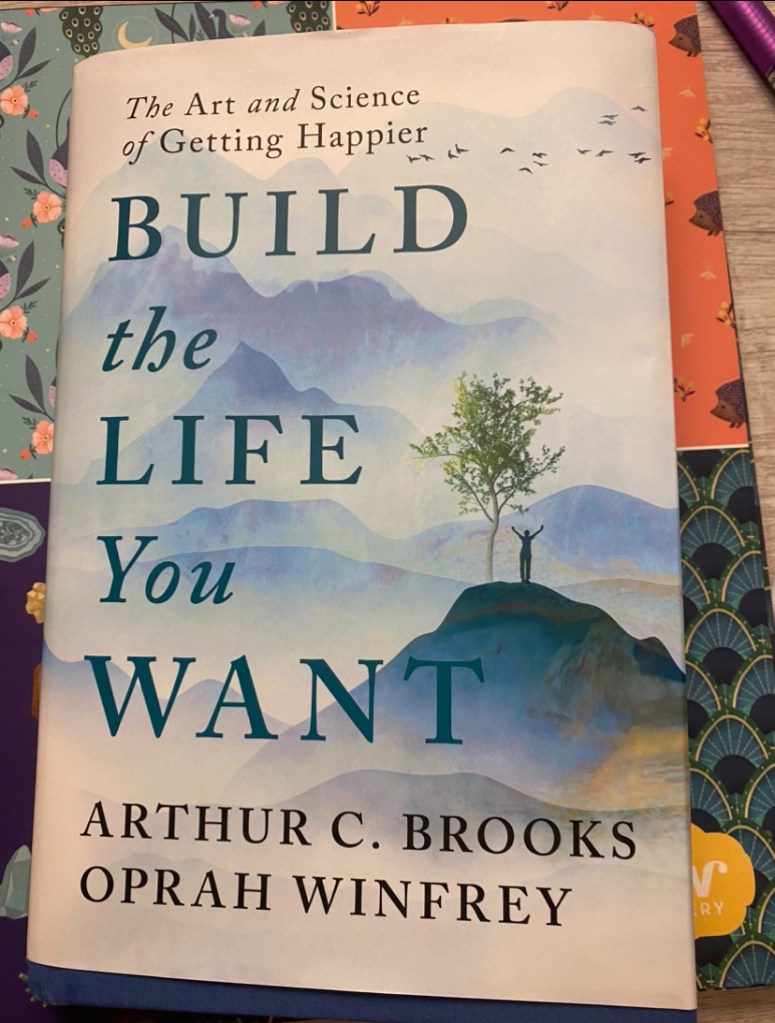
In his latest book, Build the Life You Want, happiness expert, Arthur Brooks, introduces this dynamic new emotional practice with a very relatable metaphor:

Most people use caffeine because they aren’t content with the way they feel naturally, and want better outcomes in mood and work. It does so through substitution of one molecule for another. Caffeine is a good metaphor for this principle of emotional self management: You don’t have to accept the emotion you feel first. Rather, you can substitute a better one that you want. ” — excerpted from Chapter 3, Build the Life You Want.

Think about what we are trying to accomplish as parents when our child is over-reacting. We want them to “substitute” a different emotion for the one they are currently feeling. In fact, we mindlessly offer this common refrain to our distressed child: “Oh honey, don’t feel that way” and then we offer them other choices. These choices are often rooted in gratitude — all the things they already have.

Are you surprised that you already possess this skill of “substituting” a different emotion — helping others to see that they can choose an emotion that is more constructive to “act” on? It’s so easy to employ this tactic with our child or friend — and one of the most challenging to rely on for ourselves.

Our labs will be well stocked with opportunities for us to practice the pause, discernment and substitution over the holidays. Our labs are our ourselves, our families and our interactions with others as we make celebratory preparations.

What might your hypothesis be about the tiny Petri dish that has no emotional regulation — yet.

What are your predictions about the middle sized Petri dish that ignites quickly and has only sheer will power to overcome the emotional wildfire?

What outcome might be revealed when the larger, more advanced Petri dish, uses a pause between stimulus and response, discernment to shift focus and attention, and emotional substitution — choosing the emotion they wish to act from rather than the emotion they initially feel.

Emotional intelligence and skillful emotional regulation are the natural next steps in our human evolution. Neuroscience and social sciences are giving us the proof positive that our brains have the capacity and neuroplasticy to create new, healthier neural networks, especially when it comes to the complexity of our emotions. With the advent of all these new discoveries, better skills and practices are replacing old paradigms for mental health, parenting, education, modern medicine and psychology.

An Emotional Skills Workshop may provide us with a diverse array of emotional tools like being mindful about where we place our attention and substituting a better emotion — but without consistent, regular practice, we will either forget about them or atrophy our ability to use them skillfully.

As Arthur Brooks underscores: “emotional substitution is a skill that takes practice, not just an insight. With practice and dedication, it can become quite automatic, and you will love the results.”

What really resonates with me about Arthur Brook’s wisdom, is that we are trying so hard to parent our kids to be in control of their emotions but for generations we have gone about it all wrong. Intuitively we sort of know what to do when we are trying to help them, but we were never taught how our brains and bodies work, the mechanics of emotional intelligence and regulation. It’s hard for us to teach what we ourselves don’t fully understand; what we ourselves are not consistently role modeling because we are not yet skillfully practiced.

That old adage “practice what you preach” is more relevant today than ever.

Modern day parents have so many ways to protect their children than we older generations had. Baby monitors, car seats, safety gear for sports, sunscreen, well baby checkups and preventative dental care are some powerful examples. Now they have at their fingertips, scientific breakthroughs about happiness and fulfillment — it is emotional integration.

We can install emotional integration in our young children and we can teach them how to use their innate emotional intelligence in ways that actually support and protect them. We are entering the age of “meta cognition” and it is a game-changer.

The reason that a single workshop will never be the answer for personal growth and self discovery is that we are literally changing every single day. Emotional intelligence and skillful emotional regulation is not a quick fix or a workshop — it is a life practice.

Emotions are here to stay – and for good reason. They are the guard rails, channel buoys and lighthouses for our quality of life and meaningful connections with others.

We take our emotional past into our present and we build our futures with our emotional responses in the present moment. We bump into each other every single day, with our emotions, ideas, perspectives and experiences. When we change, others change. We need better life navigational tools and skills to do this in a way that matters most to those we love.

If you don’t want to dive into this big read just yet, listen to Dr. Lisa Feldman Barrett discuss emotions in the Huberman Lab podcast shown here. You will discover how integral emotional intelligence is for our children especially.