
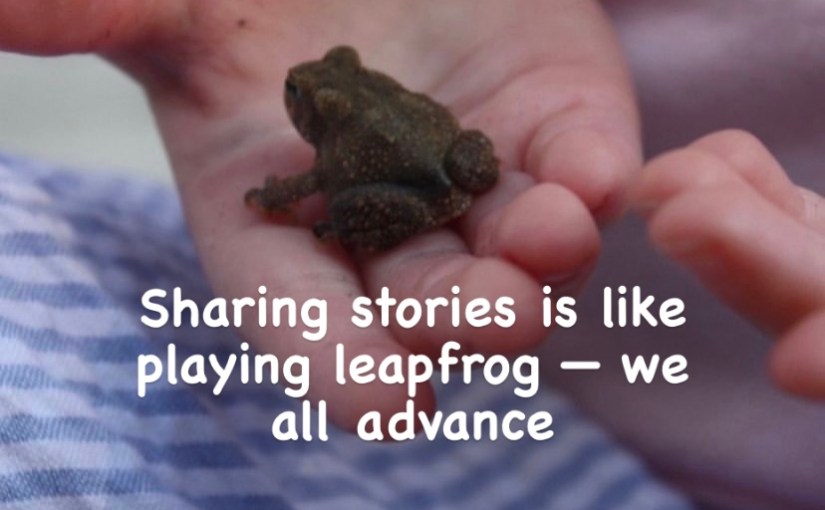
It is truly remarkable how much we can learn about others and ourselves through storytelling. When we share our life stories with each other, we often find unexpected common threads — and we make discoveries that support our own learning and growth.
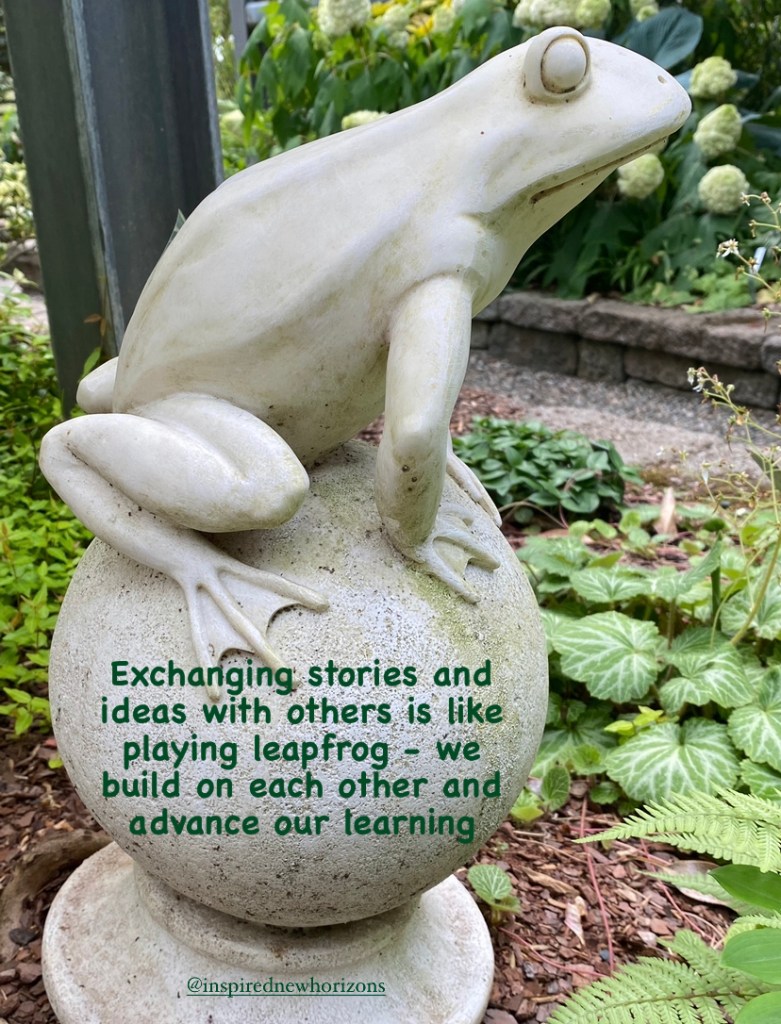
This is like playing leapfrog — where some part of our story or experience connects with someone else’s and our shared understanding gets ignited and amplified in the most enlightening ways.
We can each unpack the details of our experiences, the lessons learned, resources we found helpful, what our biggest challenges were and how we faced them.
Storytelling can turn strangers into friends in just one conversation or deepen a decades old relationship with revelational new insights. We come to understand that common, similar life events unfold for each of us and yet it is our personal experiences, resources, and interpretations that create the textured, contextualized unique stories of our lives.
The script doesn’t really change that much. What changes are our stories.
I recently sat with two strangers on a flight from Houston to Phoenix; an energetic, engaging young man probably in his late 30’s who is a husband, a father and an entrepreneur; and a soulful, inspiring woman in her 50’s who is an integral part of PacificHelps.org (a non profit organization founded by her husband to provide education and renewable energy to the Pacific Islands) Over the course of that flight, we talked and listened to each other’s stories with a sense of wonder and awe. So many similarities in our stories yet the backdrop, the cast of characters and the obstacles were vividly different. We connected through a working knowledge of the basic life plot — growing up, finding jobs, getting married, having children, marriage difficulties, divorce, remarriage, life threatening illnesses and financial challenges. So much common ground. We laughed, we empathized, we marveled. The human spirit really is undaunting.
The script and the plot doesn’t change much. But each of our stories were uniquely different at the same time. I viewed our stories through the lens of a 71 year old, excited for what the future holds for both of them because of what they have learned from their personal experiences and how they are proactively embracing their continual self discovery and personal growth.
In that young man, I can see my own grown children who are now in the throes of parenthood but so much better prepared and skillful than all the generations before them. At 71, I can look both ways now — I can look back at what we got wrong in old parenting models and I can also look forward to what is possible with vastly improved parenting and emotional skills.
The conversations and insights that the three of us shared about parenting and emotions would have never happened when I was in my late 30’s or early 40’s.
The ease with which we shared things about our own childhoods that shaped us and then later dropped us into our own self-discovery journey was nothing short of incredible. My generation stuffed our skeletons into closets. Today’s younger generation of enlightened parents are doing their personal growth work early to break generational chains of dysfunction and hand-me-down behavioral patterns.
We’ve come a long way since Dr. Spock. These parents are leaning on Brene Brown, neuroscience, whole brain parenting, the enneagram, Drs. Dan Siegel, Andrew Huberman and Peter Attia. Yes, I was in seventh heaven – both my seat mates were quite familiar with the same resources that I have discovered in the last decade. They are proactively putting into practice what they are learning — for themselves and for their children.
Moreover, they are incorporating greater relationship skills into their marriages, parenting and co-parenting. There has been a huge paradigm shift from unhealthy, contentious fallouts from divorce that often caused a lot of trauma for children, to an intentional focus on providing children of divorce the relational scaffolding they need and deserve. Joint custody is being anchored in healthy, respectful, cooperative co-parenting.
A few years ago, I had started to connect the dots about the intersecting of so many of my favorite resources for personal growth and self discovery — I blogged about it. Researchers, authors and podcasters began to reference each other in their books, and invited each other as guests on their podcasts. I noticed that the topics of the human need for connection, emotional regulation, parenting and relationship skills were being discussed even on tech, business and news platforms. I could feel that the very subjects I was passionate about were becoming mainstreamed.
And now, here I was, on a plane with two strangers and we were talking, laughing, sharing about all of it as easily as we once might have discussed the latest movie or hottest trend. It was one of those compelling “aha” moments that Dacher Keltner describes in his newest book, Awe. I got goosebumps – often. There were just so many similarities in parts of vastly different stories.
Do you know how it feels when you have a really great customer service experience? When you feel like someone has paid attention, gone the extra mile, and earnestly appreciated your business? Well that is exactly what this conversation felt like to me — it was a standout. The positive impact that personal growth work has on our ability to make meaningful connections was not lost on me.
I thought a lot about LeapFrog when I got off that plane. That remarkable two hour conversation had made lasting impressions on each of us. We each left with new resources to check out and inspiring stories to reflect on.
What struck me most was how much space we had created to really hear and engage with others by learning from our experiences. We were not so mired in our problems (and phones) that we missed this golden opportunity. Rich conversations like this are some of the best educational experiences we can get. We gain new perspectives and insights, are reinforced and encouraged about the path we are on, and we build good connections on common ground.
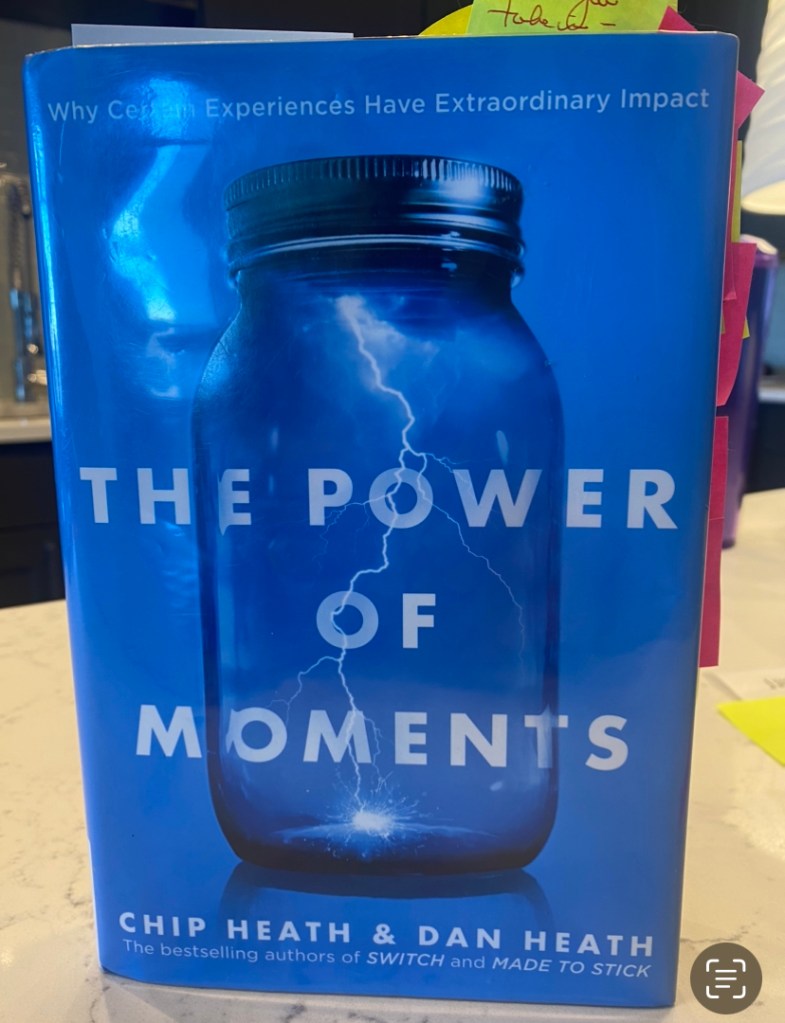
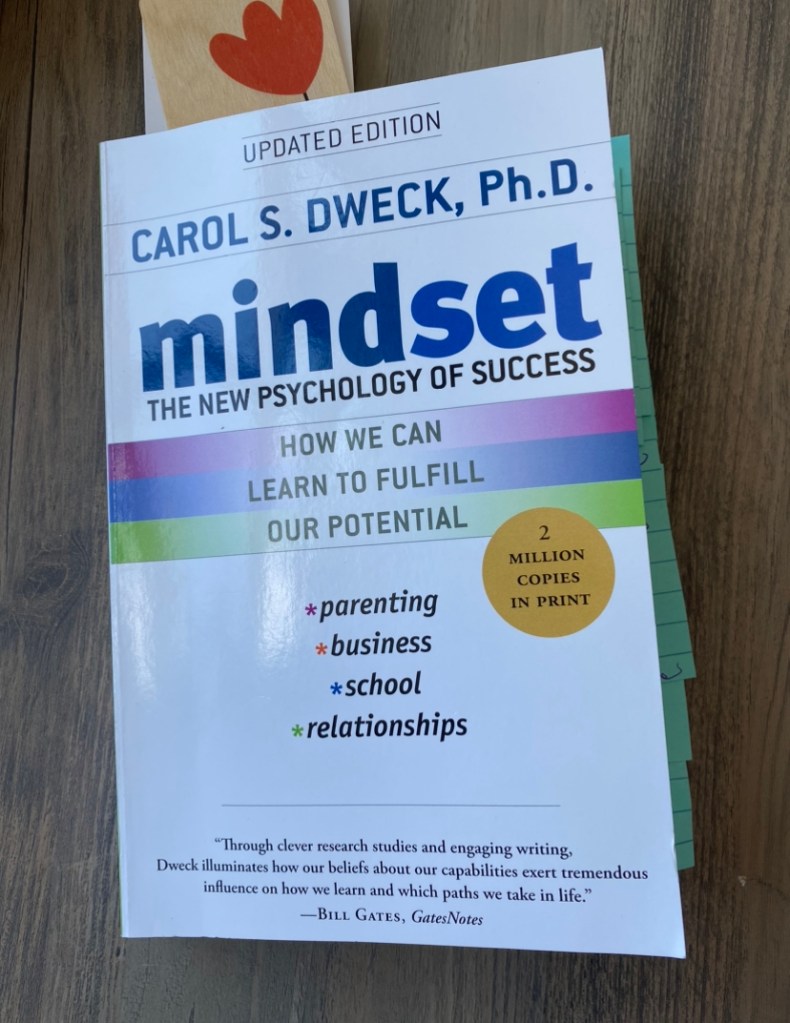
RECOMMENDED RESOURCES:


 Inspired New Horizons