A Slice of Life

Did you know that the phrase “a slice of life” is actually a storytelling technique? Who doesn’t love a good story? There’s magic in stories that we find so inviting and irresistible.

When someone walks in the front door and says “wait til you hear what just happened”, we drop what we are doing and are all ears. A good story captures our curiosity, interest and attention.

It is these little “slices of life” that we share with each other throughout the day that do wonders. When we hear these stories, we come to see how familiar and normal so much of daily life really is. Everyone has issues, makes mistakes, gets embarrassed, acts silly, falls short and rises to the occasion.

When we offer each other “a slice of life” we tap into our shared human experiences. We help each other make sense of things that currently aren’t making any sense. We offer lifelines, rays of hope and footholds to see us through our challenges. We celebrate the wins, the growth spurts and the mile markers.

Our shared stories help us normalize many of the common human experiences that unfold on a daily basis and help us feel less alone in what we are experiencing. It is all too easy to gaze out our windows into the lives of others and tell ourselves a story about how smooth their life seems to be going while ours is falling apart.

We shatter that false image though when we run into our neighbor at the grocery store and she shares a relatable story about being out of milk for the pancakes her kids were craving, even though she just went for groceries yesterday. Standing there with our arms full of bread, eggs and coffee cream, we laugh along with her because we are in a similar predicament. How unexpected to be offered a “slice of life” to go along with our purchases. What had been an exasperating quick trip to the local market had a silver lining. We leave a little better fortified for the rest of the day thanks to that simple exchange in the checkout line.

Ironic isn’t it – how we all feel like we are alone in the trials and tribulations of life? Yet a single, relatable story told to us by a stranger or a friend snaps us out of this hazy myth.

What the world needs now is more stories. Brene Brown told us this decades ago. She told us that data needs stories to bring it to life — otherwise it is just facts — charts and graphs. The real life stories add backstory, personal history and lived experiences to the sensationalized soundbites we get from the news. The raw facts come to life with stories. A slice of life beats a pie chart any day of the week.

I recall a lecture from an economics professor years ago who used slices of life to teach that statistics were not just numbers and graphs — they revealed insights into the people who drive (and are driven) by the economy. He told us to look behind the numbers for the human stories. His real life examples turned dry data into compelling relatable stories that made his teachings and our learning really stick. To this day, I still recall that lesson — and it is a big reason why Brene’s call for “more stories” really resonated with me.

Stories build bridges in a variety of ways. Stories can bridge the past and the present so that we can learn the lessons without having to go through it ourselves. Ryan Holiday, author of The Daily Stoic, is a strong proponent of learning from others through story – whether it is ancient or contemporary history, business wins and fails, or people who’ve overcome tragic adversity. Stories help us build a better framework for our own problems and opportunities. History that bridges the past and the present gives us a blueprint for the future.

Another way that stories build bridges is helping us to gain insight and understanding about societal norms that shaped prior generations beliefs, behaviors and actions. In his book, The Daily Laws, Robert Greene, puts a spotlight on this by reminding us that “People were experiencing their present moment within a context that made sense to them. You want to understand that from the inside out.

Robert Greene tells us that the optimum way to fully comprehend the past is to make it come to life, to re-create the spirit and conditions of the time, to tap into the subjective experience of the storyteller. We can use our imagination to take us back in time and feel what it might have been like to live in that time period. It’s quite likely that you will do this without a second thought when you watch a holiday movie such as A Christmas Carol, It’s A Wonderful Life, or even How the Grinch Stole Christmas.

When we are listening to a story, we are opening up our natural curiosity and our imagination. Without even being consciously aware, we are feeling parts of that story too. Storytelling shifts us from being judgmental and close minded to surrendering to the magic of story. We begin to make connections and discoveries through empathy, sensory perception and our own emotional responses.

Watch a grandparent telling a story to a grandchild and you will see this magic unfolding. Often the grandparent will get down on eye level with a child or draw them into their lap. The opening line is probably not “once upon a time”, but more like “let me tell you about a time I fell off my bike”.

There is an instantaneous connection over a common shared experience. When a grandparent tells a good story, they are weaving their own real life experience into that of their grandchild’s — and offering the wisdom that small child needs to feel better, to realize how common that bike fall really is, and to have faith that they’ll have a lifetime of skillful bike riding ahead of them. The loving grandparent has just offered a slice of life through the magic of a good story.

So what is this “magic” embedded in story? Why is storytelling such an effective technique for imparting wisdom, sharing life lessons and reframing age-old conundrums? The answer is that we humans are hard-wired for story. We use story to make sense of our experiences and to give those experiences meaning – and we do it from childhood all throughout our lifetime. The magic is how our brains get activated by a story.

When we listen to a story, multiple regions in our brains come online and light up. This allows us to “live” the story we are hearing through vivid imagery, emotional engagement and sensory perception. Hormones such as oxytocin are released so we become awash in empathy and relatability.

We also experience neural coupling, where our brain and that of the storyteller actually synchronize. This becomes the mirroring that we humans do for each other. Watch a mother and her baby and you see this neural coupling in action. We get the same mirroring effect during storytelling — we reflect back to each other what we are feeling and experiencing. It is a brain connection that also makes a heartfelt bodily connection.

Mirroring may sound like new-age neuroscience lingo — yet it is hardwired into us humans. It is a phenomenal tool for emotional regulation. A mother can up-regulate her fussy baby to a happy state using facial expressions and cheerful tone of voice. She can down-regulate her baby into a calm state before nap time with a soft-toned, soothing lullaby. We do this mirror processing without a conscious thought as we listen to the stories our children, spouses and friends tell us. It is a fluid process of reflecting back and forth, validating how someone feels and acknowledging that we understand. We might even share a similar story of our own. We create bonds of trust and acceptance through mirroring.

So now you know where the magic in storytelling is coming from — it is coming from our brains and bodies as we “synch” up and absorb the encompassing, rich context offered by the storyteller. It is a shared human experience.

Storytelling is one of the most effective ways to teach and learn. It is how ancestors passed knowledge about culture and heritage from one generation to the next. It is how wise sages impart wisdom through parables and fables — offering us a poignant “moral to the story”. Stories are how we preserve precious memories of loved ones we’ve lost and keep them alive in our hearts.

Perhaps most importantly, it is the small “slices of life” storytelling that really nourish us on a daily basis. When we are offered a slice of life, our brains get activated in the best possible ways. As we listen to our child tell the tale of a food fight in the school cafeteria, or our spouse unravel the details of tense work project – we are making neural connections and building bridges in our relationships. We are synching up! What an antidote to all the disconnect we get from having our faces in our devices.

We get micro doses of empathy, curiosity and fresh perspectives with each little “slice of life” we hear or tell. Our small stories help us see each other in all our technicolor glory — as we reflect back and forth, the normal realities we all face. Some days we are the windshield and some days we are the bug. Our colorful, animated, entertaining stories help us understand and relate to each other much better.

Brene Brown is right — we need more stories. We can bridge divides, build a better future and find acres of common ground through storytelling. Offer a slice of life to others whenever possible. And when someone offers you a slice of life, savor it!

NOTEWORTHY RESOURCES:
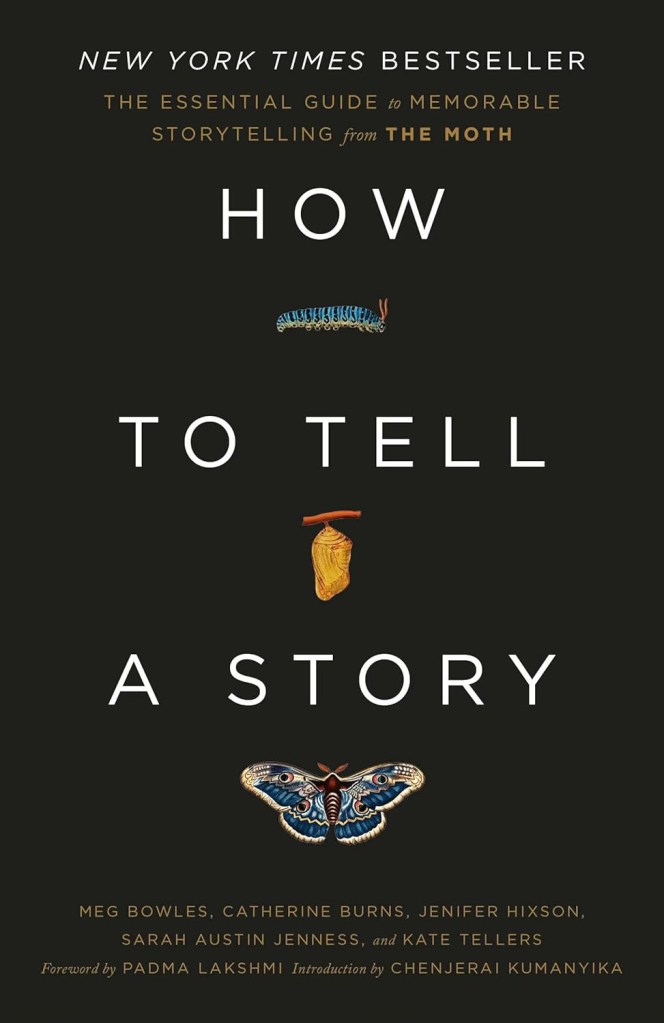
NEW YORK TIMES BESTSELLER • Now in paperback and featuring new material, the definitive guide to telling an unforgettable story in any setting, from the storytelling experts at The Moth

“From toasts to eulogies, from job interviews to social events, this book will help you with ideas, structure, delivery and more.”—CNN
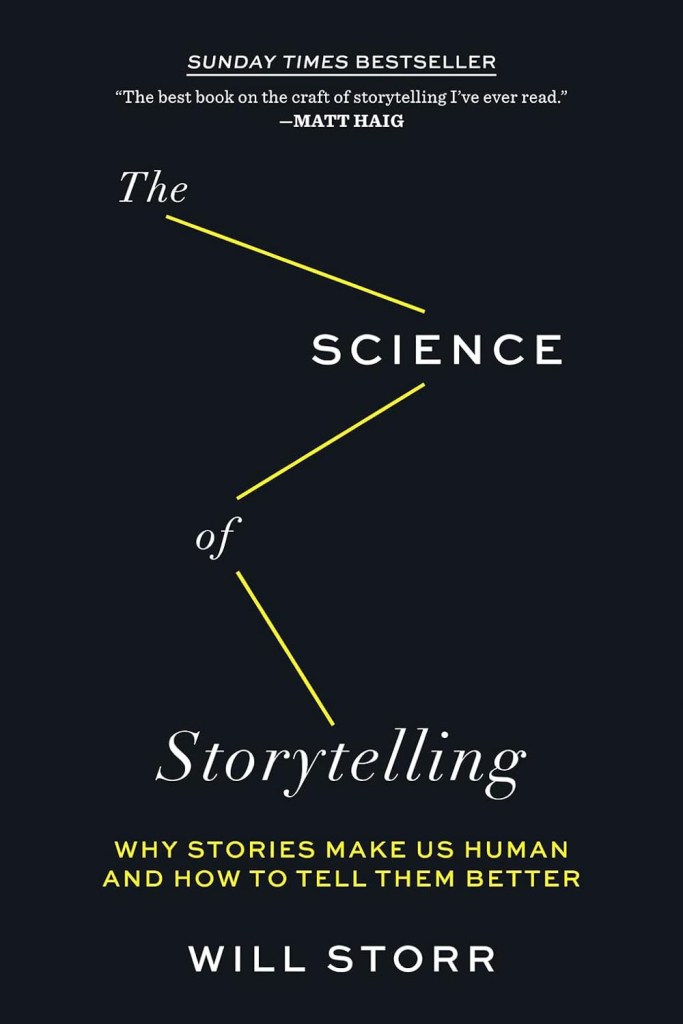
Award-winning writer and acclaimed teacher of creative writing Will Storr applies dazzling psychological research and cutting-edge neuroscience to our myths and archetypes to show how we can write better stories, revealing, among other things, how storytellers—and also our brains—create worlds by being attuned to moments of unexpected change.

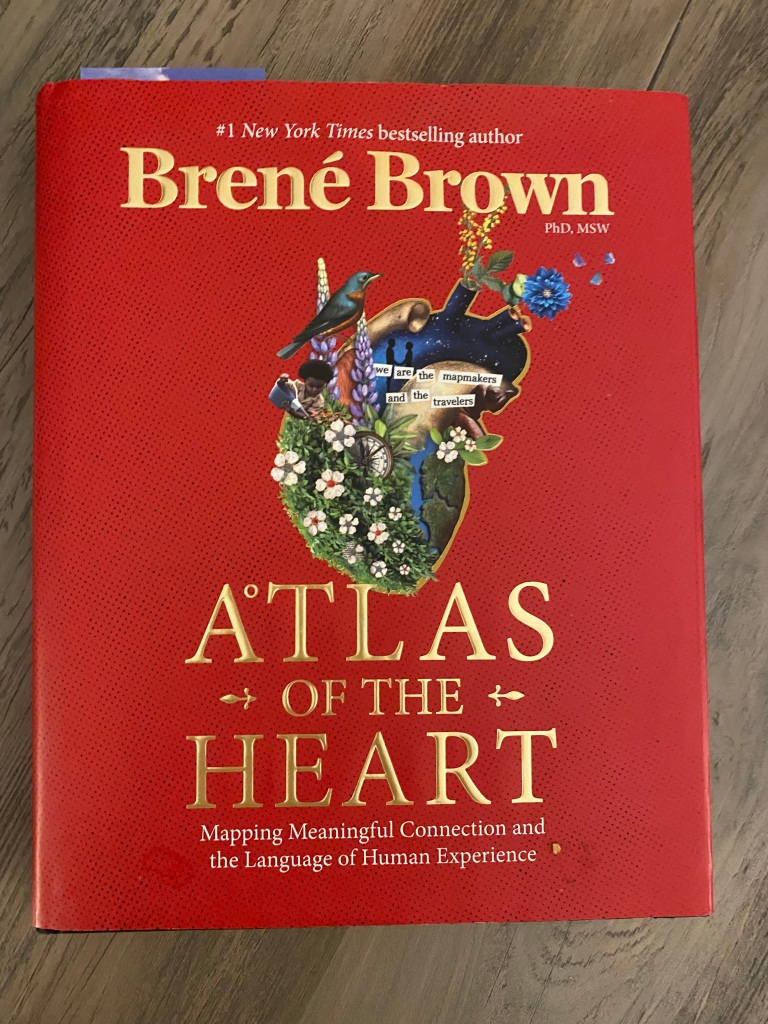
Brene Brown’s Reference book on 87 common emotions and experiences is the perfect resource for discovering “the places we go” and “the stories we tell ourselves” in everyday life.

Architects of our Experiences – Part 2

Are you fascinated by this new concept where we can actually become “architects of our emotions and experiences”? This new approach is much more “hands on” when it comes to navigating life and sets us up for greater success to meet its ever-changing challenges and opportunities. 

This is the 2nd in a three part series on becoming skillful architects of our experiences. Today we are going to learn about a multi-purpose diagnostic tool we can put into our architectural briefcase.  But before we dive into learning what this dynamic tool is and how to use it, let’s do a quick review of the basic foundational tool from part 1 — our body budget.

In my last post, I shared how our body budget significantly impacts how we experience life. When we are well resourced, things go more smoothly for us. When we are running on empty, we create a lot of emotional turbulence. Surely, this was both eye-opening and pretty obvious.

When we are getting consistent deep sleep, eating nutritious food, staying hydrated and getting regular exercise, our brains determine that we are “fuel efficient”. We have the necessary internal resources to meet the moments in our lives with clear heads and the ability to be emotionally balanced. All we really need to do is pay attention to our brains and bodies just like we do the battery charges and wifi connections on our phones.

Author Ryan Holiday recently shared the HALT acronym to help us remember that our first line of defense when it comes to dealing with emotional turbulence is to assess our human “check engine” lights. 

HALT stands for Hungry, Angry, Lonely or Tired. HALT is a simple and very effective tool to remind us that these four common conditions can derail our best efforts to stay in alignment with our values. When we are feeling emotional turbulence, a quick check in on our body budget can prevent us from getting in our own way.

For the record, this is also a great tool to share with children. When kids are acting out, we can pause to think about when they last ate, if they had a disrupted night of sleep or skipped a nap, or if they have been buzzing from one activity to the next without some quiet time or a brain break. Before we overreact to an unacceptable behavior, we can think about their “body budget” first and foremost. When we teach our kids to check in with themselves, we are equipping them with a foundational tool they can use for a lifetime. 

Now let’s add a versatile new tool to our architectural briefcase.  The multi-purpose tool that is a “must have” for skillful architects of experience is emotional granularity.  This term may seem a little foreign but it’s easier to grasp if we think of emotional granularity the same way we think about the fine-grained distinctions in wood, textiles and even sandpaper.

The reason that emotional granularity has such a strong impact on our emotional experiences is because the true essence of our experience is in the details. That’s right, details matter. 

We mistakenly believe that there is uniformity in common basic emotion such as happy, sad or mad. Nothing could be further from the truth — variation is the norm; not uniformity. 

Bear with me here for a minute — and think about your own varied experiences of mad. You can be mad at yourself, mad at a circumstance, mad at another. You might be really mad about running late one day and not care at all the next. Sometimes your body budget is in deficit and you get mad a lot during the course of a day; other days, you are well resourced and unflappable. Do I see your heading nodding in agreement that “variation is the norm?”

If we limit ourselves to the three most commonly identified emotions – happy, sad or mad, we also limit our deeper understanding of what we are really feeling in the moment. When we can tease apart the details that accompany happy, sad or mad — that is when we get to the heart of the matter. This is the gift of emotional granularity – the finely tailored emotions that best reveal the heart of our experience.

Emotional granularity is an exploratory multi-purpose tool. It’s actually easier to use than we might think. We just need more practice and a bigger emotional vocabulary.  

Start with why. Why are you mad? 

Is it because you are frustrated, anxious and annoyed? Now, dig a little deeper to get to the fine grains of greater detail. Are you frustrated that something you are attempting to accomplish is taking longer than expected? Are you anxious because it is the third time this week you tried to finish a project? Are you annoyed that others aren’t respecting your need for uninterrupted time to focus? 

Emotional granularity brings out the relevant details — in the accompanying emotions and the backstory of each.

The more finely-grained distinctions we can make, the more accurately we can parse what matters most, or recognize that there are multiple layers to one core issue. We may even be surprised to discover that we have competing emotions – and both are true. We can be happy for someone else and feel sad for ourselves; that’s paradox.

Emotional granularity moves us in the right direction for self awareness and effective problem solving with more clarity than we could ever access if we stop at “mad”. 

The reason emotional granularity is a dynamic multi-purpose tool is that it helps us accurately express our feelings and experiences — AND it makes it easier for others to support us in constructive, beneficial ways.

We often hear that emotional intelligence is a key component for building a good life and meaningful relationships. Emotional intelligence is defined as our capacity to be aware of and control our emotions; and to handle interpersonal relationships with empathy and non-judgment.  

Dr. Lisa Feldman Barrett emphasizes that the most invaluable asset for cultivating emotional intelligence is emotional granularity. The more finely tuned we can get about our emotions and experiences, the easier it is to regulate them and reframe our experiences. 

Not only does this support our efforts in achieving better emotional clarity and regulation in real time, it actually updates our internal database for the future. Remember that our brains are prediction machines. When we are able to reframe and reorganize our internal database by being more skillful with our emotional responses, we will vastly improve the accuracy of our future predictions. 

Yet another reason why emotional granularity is a dynamic, multi-purpose tool. It is a fast-tracked process of freeing us from old emotional triggers and outdated information from decades old past experiences. The better we get at using emotional granularity and becoming skillful architects of our experiences, the more traction we will have in building better habits and mature response patterns.

Emotional granularity helps us to level up. We get to know ourselves better through greater self-awareness. We become more skillful at unpacking multiple emotions that are interlaced with our current experiences. With this improved awareness and clarity, we don’t drain our body budget so quickly. We have greater access to self-compassion which turns on our parasympathetic nervous system which also positively supports our body budget. We get better at emotional regulation and it becomes easier to clearly express to others what we are experiencing and what we actually need in the moment. Not to mention the added bonus of automatically updating our brain’s complex interactive systems with invaluable, current and relevant data for future reference.

Have some fun with this new tool – explore the many emotions that you feel whenever you get that initial hit of a core emotion like mad, sad or happy. Become curious when you are with others when they are sad, mad or happy and ask questions to better understand all that they are feeling in the moment. Compare your findings with your friends and family. This is how we help ourselves and others super boost their emotional intelligence and become more skillful architects of their own experiences.

Quote from Dr. Lisa Feldman Barrett, author of How Emotions Are Made

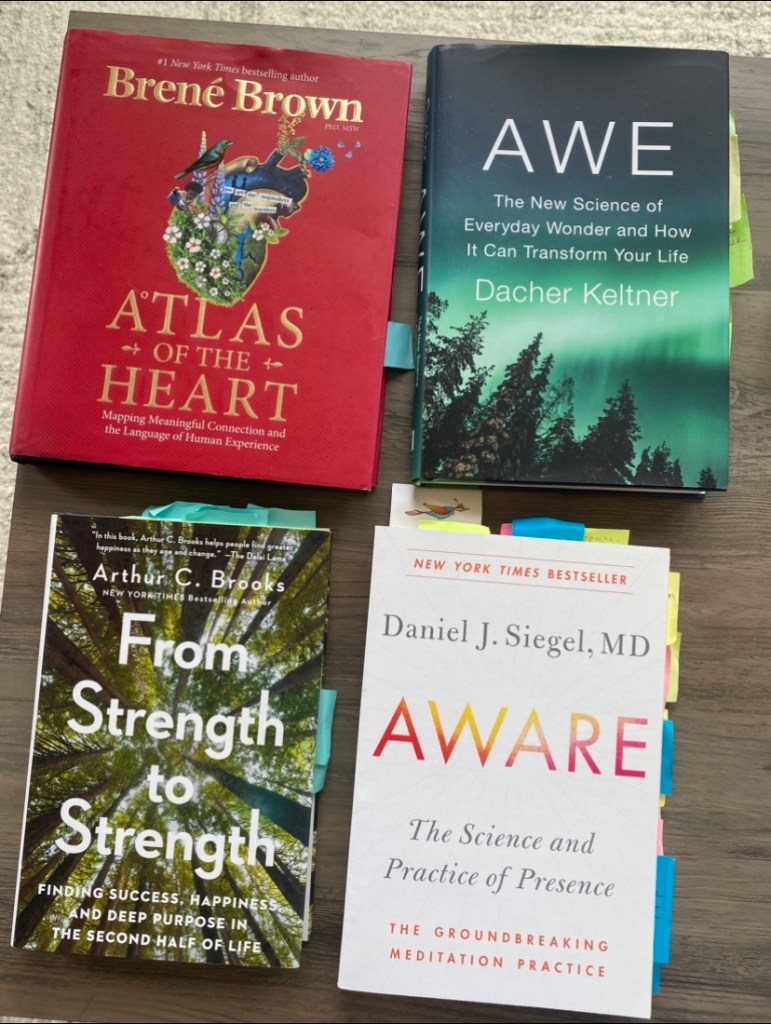
To help you expand your emotional vocabulary, read Brene Brown’s most recent book, Atlas of the Heart. Brene offers relatable stories and detailed definitions for 87 of our common emotions and experiences. Better yet, she has organized this invaluable resource by highlighting how we typically feel under certain circumstances. The chapters invite us step into “the places we go when….” When we compare, feel uncertain, when we are hurting or fall short.

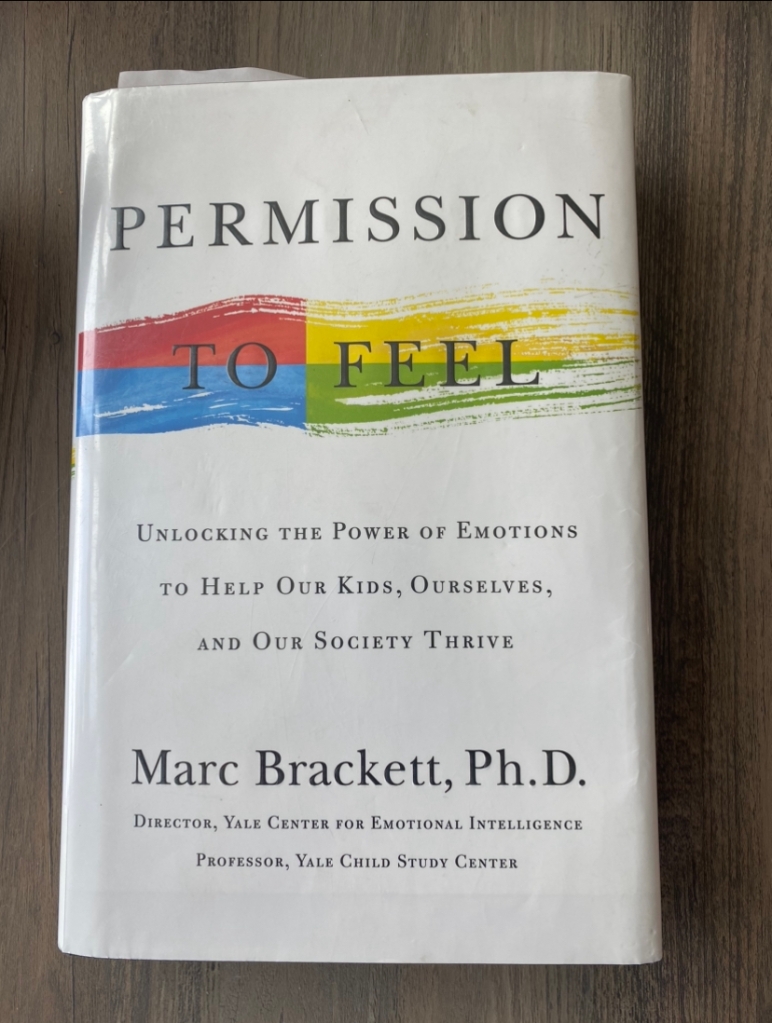
Check out Dr. Marc Brackett’s newest app How We Feel. Dr. Brackett is the Director of the Yale Center for Emotional Intelligence and author of Permission to Feel. There are over 200 emotions to explore in the How We Feel app!

Click this link to go to the website https://howwefeel.org and learn more about the app and how you can use it to help you build your emotional awareness and vocabulary in real time.

This quick, relatable read will stimulate your appetite to learn more about becoming an Architect of Your Experiences. Awesome insights into how our brains and bodies actually work.
If you are fascinated by neuroscience and love a deep dive into science and psychology, then treat yourself to How Emotions are Made. This book and Brene Brown’s Atlas of the Heart are reference books for our home libraries – the kind we will return to again and again!

White Water Rapids of Life

When I was in my mid-40’s, I used to tell my friends that I was in the white water rapids of life without a paddle when my plate was too full. Life was coming at me fast and furious and I could barely catch my breath, let alone juggle it all.

It seemed, without fail, that after three or four months of pushing through, burning the candle at both ends, making endless sacrifices without discernment, I’d get sick or there would be one monumental family crisis that would grind the fast pace to a halt. At that moment, it would feel like my attempts to “shoot the rapids” left me stranded on the rocks, teetering precariously.

This pattern became so apparent that I’d find myself bracing for it. I could feel the tension mounting every 3 or four months and could feel it in my bones that we were heading for something cataclysmic. Looking back, I can see that bracing for it was also a lifelong pattern of mine. I could feel the ground trembling metaphorically and the only preventative action I took was to steel myself against the inevitable. I would harden up, silently willingly myself to take it — whatever “it” was.

If things were really out of control, I would embellish my story about the white water rapids of life — I would lament to my friends that this time I was in the white water rapids of life without a paddle AND life jackets. Clearly this was the graphic imagery that I used to declare to myself and others that I was in over my head.

This pattern dominated a few years in my mid-40’s – that time when we find ourselves doing some of the hardest life work ever. We are gaining traction in our careers, or deciding we want to change careers in the mid-stream of life. Our parenting has often moved into the more challenging waters of adolescence (maybe that is where I felt I had no life-jackets). Financially we find ourselves looking both backwards and forwards – what’s the balance on the mortgage and how we will fund college educations? No wonder I felt like I was in the white water rapids of life. There was in fact a lot of changes underfoot, all swirling around unseen obstacles as we headed into unchartered water.

When my book club friends and I share stories from that time in our lives, we discover that this is exactly how most of us were feeling during that stage of our lives. We all might describe it a little differently but the patterns bear much similarity.

We’d have these peaks and valleys that could literally be put onto a graph that resembled stock prices or an EKG. The troughs in those graphs were the times where we cried uncle and had no choice but to stop and catch our breath.

Those troughs were the brief respites we were forced to take due to illness, or the acknowledgement that we can’t control a lot that happens in life. They were times where we were so sick, we were mandated to stay in bed for a few days to regain our physical health. Or the times when we had to sit alone in the dark and reflect on what really mattered. Brene Brown aptly named this period of time in our lives as “the great unraveling”.

I recently revisited what Brene wrote in her 2018 blog post about this midlife unraveling and found myself holding my breath as I took in the magnitude and wisdom of her words:

Midlife is when the universe gently places her hands upon your shoulder, pulls you close and whispers in your ear: “I am not screwing around. All of this pretending and performing — these coping mechanisms that you’ve developed to protect yourself from feeling inadequate and getting hurt – has to go. Your armor is preventing you from growing into your gifts. I understand that you needed these protections when you were small. I understand that you believed your armor could help you secure all the things you needed to feel worthy and lovable, but you’re still searching and you’re more lost than ever. Time is growing short. There are unexplored adventures ahead of you. You can’t spend the rest of your life worrying about what other people think. You were born worthy of love and belonging. Courage and daring are coursing through your veins. You were made to live and love with your whole heart. It’s time to show up and be seen.” Brene Brown (see link to her blog at the end of this post.)

I often wonder if I had read a wisdom so profound in my mid-40’s how it might have landed on me. I’ll be honest, it’s highly doubtful that it would have resonated in the compelling way that it does today. When I close my eyes and sit with the feelings that emerge from reading it, I can transport myself back to what my own “white waters of life” were so earnestly trying to tell me.

Back then, I did not possess the knowledge and education that now underpins all that Brene imparted. In fact, when she gave us this pivotal message in 2018, we had not yet mainstreamed all that we were learning. Here we are 5 years later and that landscape has changed dramatically. Today it almost feel like a firehose has been turned on — and we are drenched in digestible neuroscience, engaging educational content as well as charismatic, dynamic leaders and teachers and endless resources. We are now fluent in emotional armor, childhood attachment styles and adaptive behavioral patterns. Emotional health has taken its rightful place at the top of the quality of life pyramid.

I couldn’t be happier that so many people of all ages are now absorbing this game-changing knowledge much earlier in their lives. Perhaps the mid-40’s and 50’s will no longer be the great “unraveling” but rather the “great transformation”. Imagine being able to shift gears in the mile markers of our life with vastly improved self-awareness and relationship skills. To be treating adolescence as the apprenticeship it truly is – and preparing our young people to go into the white water rapids of life with all the right tools, skills and burning desire to grow into their natural born gifts.

It is not longer just my wild imagination that envisions this phenomenal pivot, but the reality that we are already farther along on this transformational path than ever before.

There is rarely a day that I have a chat with someone where Dr. Andrew Huberman and his neuroscience podcast, the Huberman Lab are not mentioned. From neighbors to my dentist to seat mates on planes, Andrew Huberman has become a household name. Looking at the arc of his podcast popularity and the emerging topics he now discusses, we can create yet another graph that makes it clear that our trajectory for learning and the breakthroughs that are occurring are soaring.

I recently learned that Andrew Huberman started his highly successful podcast in 2021 because he wanted the general population to have the knowledge and tools they needed to support their physical and cognitive health through the pandemic. He was aware that we were not getting this invaluable information from our leadership and he wanted to educate people about the proactive steps they could be taking that were free, do-able and would have noticeable positive impact.

Think about this — Andrew Huberman saw a need and he stepped up to the plate. He has more than 3.5 million subscribed followers for his podcast launched in the midst of a pandemic. That’s 3.5 million people that have most likely changed their habits – like making consistent sleep a top priority, taking breaks from screens every 45 minutes, getting morning sunlight, changing their relationship with caffeine and alcohol, committing to varied exercise programs and understanding the impacts of their emotional health on their physical and cognitive health.

All of this happened one podcast episode at a time. Knowledge coming at a time of great need and receptivity; a willingness to put in the work and make changes; witnessing the positive effects of those changes and being motivated by all of it to learn more.

Andrew Huberman is throwing his net wide and bringing more diverse guests onto his podcast and for good reason. He is integrating teachings and research from other disciplines because they are all inter-connected to this bigger picture of current evolution. Breakthroughs are occurring fast right now and just like striking a match, they are catching fire quickly with those folks who are hungry to learn more.

The coalescing of personal growth, self development, mental health, emotional health with all the sciences was amplified during the pandemic. It was a collective moment – a tsunami in the white water rapids of our shared experience. It was a great unraveling. Go back now and re-read Brene’s insights for a mid-life unraveling and see if you can spot a similar message for our collective, complicated issues.

As each of us begins to do our own work, taking better care of ourselves and our families, with all that we learn from Andrew Huberman and others just like him, we are contributing to the greater good for everyone. Trust me, people are taking notice. Younger generations are looking at older generations and seeing the effects of ignoring our physical, cognitive and emotional health. Motivated by their desire for longer, healthier, and more satisfying lives, they are charting a new course with the improved knowledge, resources and tools so readily accessible.

Is it any wonder that there is a groundswell of keen interest in all that Andrew Huberman and others like him are enthusiastically sharing with us? Think about what happens when each of those 3.5 million followers shares what they have learned with just one workout buddy, one colleague, or one family member — now that is a powerful ripple effect in the right direction.

We are piecing together how old parenting models that created our armor and ineffective coping strategies also embedded a lot of fixed mindset and limiting belief impediments that hold us back from achieving our full potential and using our natural gifts. As we dig a little deeper on these topics, we are discovering vastly improved ways to educate our children to have a growth mindset, to foster resilience and determination through setbacks, and become critical thinkers.

We are doing this work together and it’s contagious in the best possible way.

Pay attention to the new books being published and the overlapping themes that fit like puzzle pieces. You’ll notice this on the colorful displays in your local bookstore. Check out guests that your favorite podcasters invite for meaningful conversations. Notice how personal stories take up a greater percentage of the discussion now – because that’s how we best integrate all this new information.

I’d be remiss if I didn’t confess that this blog post was inspired by my current read, TomorrowMind by Gabrielle Rosen Kellerman and Martin Seligman (who is often affectionately referred to as the father of positive psychology.). I think you’ll find my “connect the dots” story about Martin Seligman delightfully fascinating.

I began my curiosity about psychology about the same time that Dr. Seligman published his book Flourish in 2012. The subtitle of his book was “A Visionary New Understanding of Happiness and Well-being.” It focused a lot on how positive psychology could help us “preload” so that post traumatic growth might be possible rather than recurring PTSD. At the time I was in a relationship that puzzled me to no end. I could not understand the inability to “bounce back” from even minor setbacks. I was at a loss on how I could help so I was on the hunt for tools and education.

His book and his research set me on a path of self discovery and personal growth that I may have never otherwise considered. And I have never looked back. It’s eleven years later and my friends tease me that I have possibly earned an advanced degree or two. My passion for this learning has grown into my purpose, which is sharing what I am learning with others.

I have observed how often the topics I first read about have gone through a few transformations of their own over the past two decades, with scientific evidence debunking myths, depeening our initial understandings and bringing clarifying proof through neuroscience. For those reasons, I was intrigued to see what Dr. Seligman now had to share – in April 2023 in this brand new book.

I could barely put it down.

Had you been here with me as I began to read this book, you would have heard the resounding laughter that came from me when I read his words that had once been my own — Dr. Seligman uses the metaphor of the white water world of work! He talks about shooting the rapids, and navigating currents, obstacles and change. If he were here, I would hug him. I get the analogy – and I am deeply grateful. I am not at all surprised that we are now embarking on taking the work that we have been doing individually out into the big wide world.

The gear and the skills we need to navigate the white water rapids of life – at home and in the workplace are found in personal growth, self development and attending to our emotional health.

Listen to the July 24th episode of the Huberman Lab podcast with Dr. Maya Shankar on Shaping Your Identity and Goals. https://podcasts.apple.com/us/podcast/huberman-lab/id1545953110?i=1000622115223
This July 17th episode is entitled Enhancing Performance & Learning By Applying a Growth Mindset. Dr. Carol Dewck, author Mindset, is an esteemed colleague of Dr. Huberman. https://podcasts.apple.com/us/podcast/huberman-lab/id1545953110?i=1000621365285

I have listened to Dr. Maya Shankar’s podcast for several years and am always inspired and uplifted by these incredible stories of people who overcame adversities that left them no choice but to reinvent themselves. Check out this episode with Dr, Kristin Neff on Self Compassion https://podcasts.apple.com/us/podcast/a-slight-change-of-plans/id1561860622?i=1000617332975
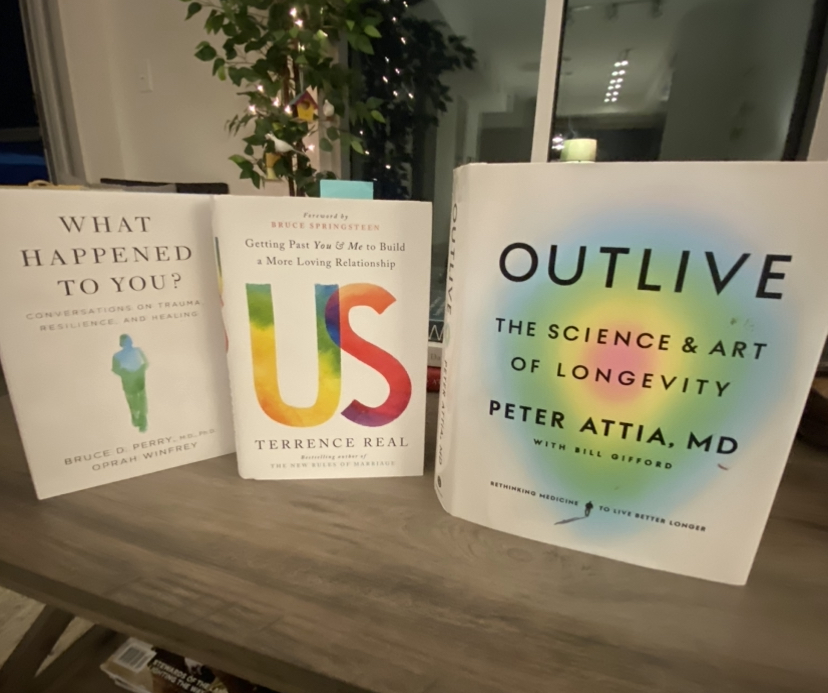
Buckle your seatbelt for this very real conversation with Terry Real, Author of US, and Peter Attia. Dr. Attia has been revelational in his message about the importance of our emotional health in his book, Outlive. He turned to Terry Real for the therapy he needed to work on his “Bobbie Knight” inner critic and the behavioral reactions he wanted to change.
https://www.youtube.com/watch?v=QbI4fm2cNz8
Read — or reread – Brene Brown’s blog post from 2018 on midlife unraveling. It’s aged well.
https://brenebrown.com/articles/2018/05/24/the-midlife-unraveling/

The More We Share, the More We Discover

I have been keenly observing how interactions and conversations have been shifting in profound ways over recent months. It is with great enthusiasm that I am sharing with friends, family and my book club about my experiences while traveling. From Uber drivers to seat mates on planes, hospitality staff, new neighbors and a helpful UPS business owner, more people are sincerely plugged in to self-awareness and personal development. It’s astounding how we’ve shifted from shallow “how’s the weather” conversations to more in-depth and meaningful ones where people are sharing their remarkable personal stories.

I can almost feel the needle and thread stitching together a new tapestry, weaving our own stories and experiences into the bigger picture of others. It feels good to have these rich conversations and to be learning so much.

Some of my most fascinating conversations have been occurring in the self help section of book stores. I’m drawn to book stores — whether it is my local independent one, Quail Ridge in Raleigh NC, or the one my family visited in Scottsdale on vacation, the Poisoned Pen. On a recently layover in Chicago, I hopped off the plane and went straight to Barbara’s Bookstore in the bustling terminal where I ended up having a 45 minute conversation about Outlive and Dr. Peter Attia.

If I had a nickel for every time someone mentioned Andrew Huberman and his podcast, I could fly across the country multiple times.

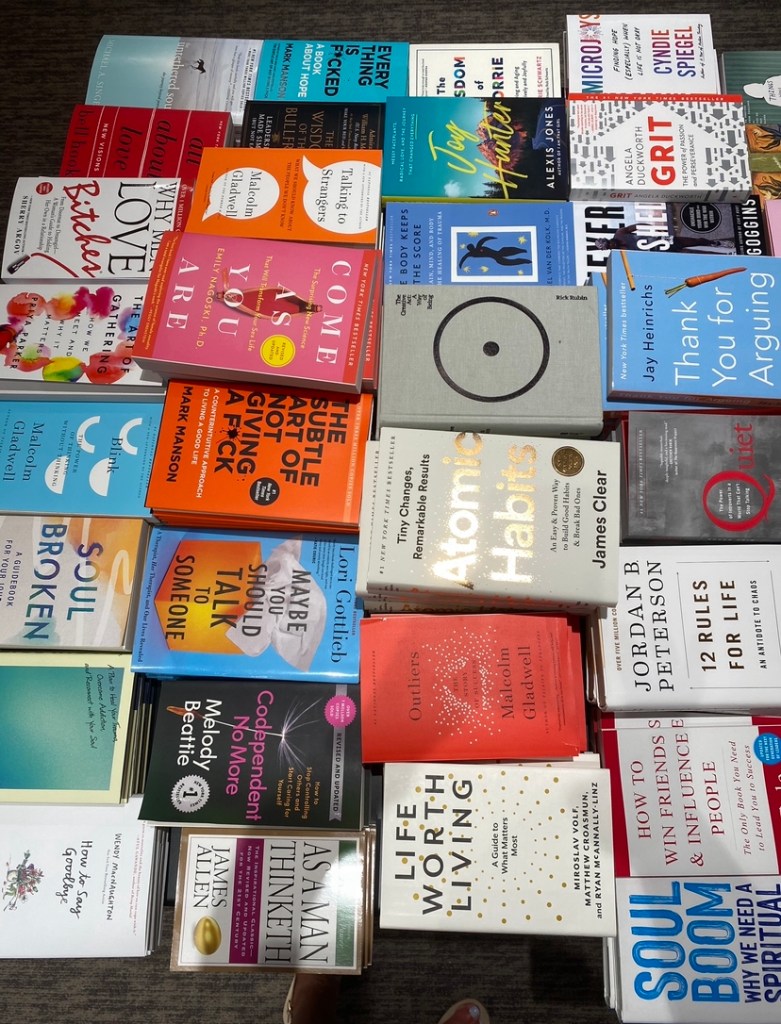
I confess that I make a beeline to the self help or parenting sections of book stores — eager to see if there is something new to learn and perhaps more enthused to see who is browsing those sections. It’s so uplifting to see young parents, grandparents, mid-lifers, couples and singles all choosing books to help them navigate wherever they are in life. A smile stretches across my face as I take in the transformation that has occurred in the self-help section of bookstores.

Inviting tables of colorful books with intriguing titles pull us in like magnets. To me, these books fit together like pieces of a complex, compelling puzzle. It is not at all surprising that subjects like parenting, mindset, awe, emotions, grief and longing, relationships, atomic habits, boundaries, longevity, purpose and neuroscience are all landing on the same table.

All of these varied subjects are intrinsically connected. We want better relationships — with our kids, our partners, our friends and extended family. We want to know ourselves better. Now we know that the work starts with us, that our emotional health is integral to our overall quality of life and that it needs the same attention as our physical health.

Just a few decades ago, many of these amazing books and resources were segregated; psychology, mental health, diets and exercise, how to guides, hard to understand neuroscience, Buddhist meditation. Then all these various modalities and fields began to intersect — and suddenly authors, researchers and podcasters were quoting each other’s work and having each other as guests. They began to “connect the dots” about our human need for connection. They began to see how all their independent work and findings were actually linked together.

It seems that “overnite” there has been a great convergence of all the individual pieces coming together to form one incredible, dynamic “big picture”.

The best part of our “overnite” awareness is that it is out in the open with all the personal growth and self discovery work that needs to be done. That is so evident in these amazing conversations I have been so fortunate to have with all kinds of people — in the bookstore, on the plane, at the coffee shop, in my writing classes and especially with my friends who are also on the journey.

I recall when I was struggling in my mid-40’s with what Brene Brown called the mid-life unraveling period, I would discreetly make my way to the self help section of Borders, scanning the book titles and the shoppers around me, tucking my book of choice under my arm. I would stand at the counter like a nervous adolescent girl buying tampons with an older teen boy as the checkout clerk. Judgment and shame washing over me. It felt like a public confessional that I did not have my life together.

Hooray for this major shift in acceptance that we all need help!

Today, the inviting and bulging self help section of bookstores often takes center stage. I listen to shoppers enthusiastically sharing with others what they’ve read, what they are working on with spouses, teens or toddlers and even themselves. We have normalized these conversations. Wow.

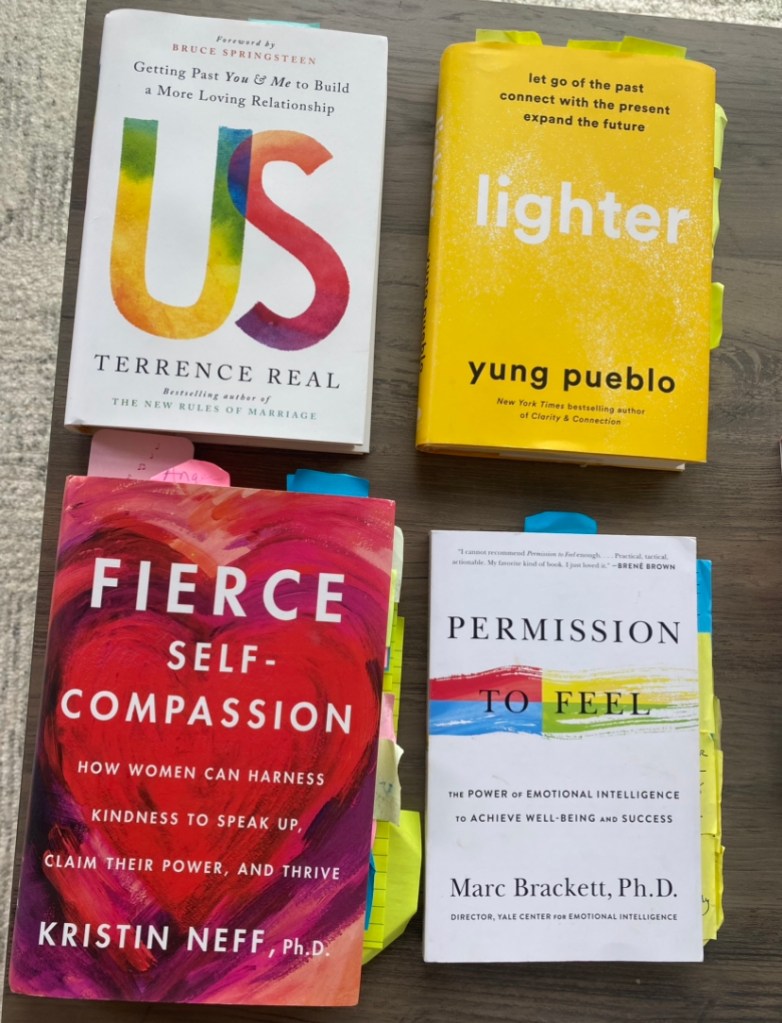
No one is slinking to the check out counter with their books, workbooks and journals discreetly tucked under their sweaters or shoulders. It’s almost a badge of honor to waltz up to the checkout line proudly displaying copies of Outlive by Dr. Peter Attia, Fierce Self Compassion by Kristin Neff, Lighter by yung pueblo or Set Boundaries, Find Peace by Nedra Tawwab. I’ve witnessed some of the most astounding conversations happening in the checkout line between customers as they swap stories, insights and book recommendations.

The seeds of our current emotion revolution and our emotional health have landed everywhere now. The subject comes up in business, leadership and innovation podcasts. It certainly comes up regularly for influencers like Adam Grant, Malcolm Gladwell, James Clear, Ryan Holiday, Dr. Peter Attia and Dr. Andrew Huberman. Yes, emotional health and doing our self-discovery work is now a mainstreamed topic of conversation. It is being folded in as the missing piece of our bigger puzzle.

The more we know, the more we grow.

When I first committed to a deep dive into my own personal growth, I was intrigued by Dr. Rick Hanson’s book Hardwiring Happiness, but I did have a hard time wrapping my head around understanding what he meant by “neurons that fire together, wire together.” While I loved the concept of neuroplasticity, I really didn’t have a solid foundation of understanding about the whole brain/body connection.

Today, we have ready access to understandable knowledge of how our brains and bodies operate, the role our nervous system plays and the importance of integrating our inner world of emotions and feelings with our executive functions of our brains. This core knowledge helps us parent better and teach our kids the emotional awareness and regulatory skills that we ourselves were never taught.

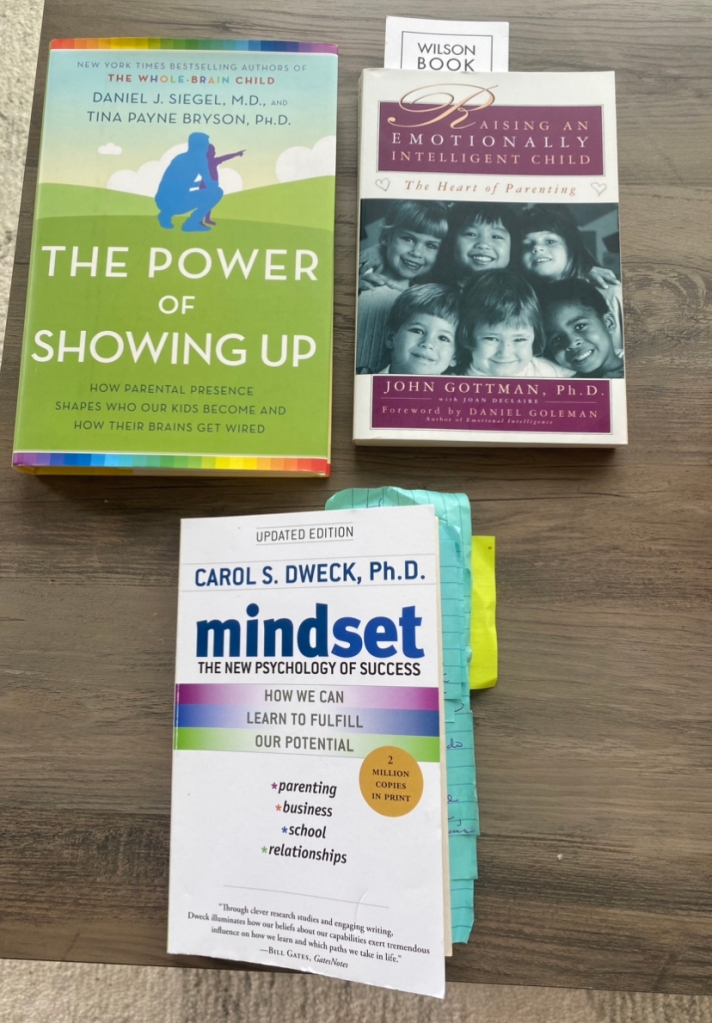
What we have before us is a collective effort to help us all live healthier, more satisfied, balanced lives. We are all playing an important role in this integral work when we are invested in our own emotional health and parenting with this upgraded, whole brain model. In her book, Mindset, Dr. Carol Dweck, shares with us that many of us grew up with a societal model of fixed mindset both at home and in school. Is it any wonder that we often then developed limiting beliefs about ourselves and became both the judged and the judgers. Dr. Dweck underscores that we can all work towards developing “growth” mindsets for ourselves and our children, but to recognize that we move toward a growth mindset by taking a journey.

As I travel and interact with others, it is very apparent that quite a few folks have decided to take that journey. We can help each other and in turn help ourselves by continuing to have these more connecting, meaningful conversations. By sharing our stories and experiences, we help others find common ground and encouragement. When we share our favorite resources with others, we help the researchers, authors, mentors and educators reach more people with their incredible work.

There is no denying that our emotional health is the cornerstone of our overall quality of life and meaningful connection with those we love. Unpacking our emotional baggage frees up a lot of space in our hearts and brains to move more fluidly through life, building resilience and enabling us to show up more authentically, more skillfully and much happier.

Let’s do this!

RECOMMENDED RESOURCES:

PODCASTS and BOOKS

Fantastic Podcast with renowned couples therapist Esther Perel, who supported Dr. Peter Attia through his own personal growth journey https://podcasts.apple.com/us/podcast/where-should-we-begin-with-esther-perel/id1237931798?i=1000618302924
Everyone is abuzz about Dr. Andrew Huberman – his neuroscience podcasts on relevant topics are chockfull of the knowledge we need about our brains. Check out the most recent episode about growth mindsets and beliefs
https://podcasts.apple.com/us/podcast/huberman-lab/id1545953110

Dr. Peter Arria, author of Outlive, is a dynamic resource for understanding why our Emotional Health matters. Listen to this short clip with Esther Perel https://www.youtube.com/watch?v=E6xc-WuROXY

The Being Well Podcast with Dr. Rick Hanson and his son Forrest Hanson is a perennial favorite of mine for years. Check out this recent mailbag episode on criticism, anxiety and dysfunctional family systems https://podcasts.apple.com/us/podcast/being-well-with-forrest-hanson-and-dr-rick-hanson/id1120885936?i=1000621375400

A Wholehearted Emotion Revolution

My last blog post was all about the importance of unpacking our family and emotional baggage — and the remarkable opportunity we have to involve four living generations in doing just that. This post is going to start by unpacking how we got here.

It is all about this moment in time where there is a growing, diverse community of people who are committed to personal growth and emotional health. Some are far along on their journey, others are just beginning and there are many smack dab in the middle. No matter where we are in our journey, we are all reaching both forward and backward – asking for more help and guidance AND offering encouragement and resources.

We did not get here by accident or all at once. We got here because of collective yearning and learning.

Over the past two decades social sciences handed off the baton to neuroscience to help us better understand what was really happening in our brains, in our nervous systems and neurobiology, and through epigenetics. Incredible discoveries were made that brought us tremendous breakthroughs in our understanding and treatment of trauma, cognitive and mental health disorders, the connection between stress and physical health and so much more. So many fields merged together to reverse engineer what we got wrong.

Ironically it was about this same time that Brene Brown started her deep diving research into shame and vulnerability. Imagine how serendipitous this was?

Of course, no one wanted to talk about shame and vulnerability – those subjects were taboo and cloaked in secrecy. That should have been our first clue she was really on to something. Brene told a hilarious story of how she could shut down a conversation with a seat mate on a plane in under 30 seconds by revealing she was a researcher – of shame and vulnerability.

Flash forward to today and those very topics open up a two hour stimulating conversation between three strangers on a plane, who share vulnerabilities as readily as Biscoff cookies, and become fast friends by the end of the flight, swapping contact information and favorite personal growth resources. (Read my recent blog post Leapfrog for that story)

That is just one shining example of how far we’ve come….and how long it has actually taken. Two decades, multidisciplines and a growing longing we were all feeling but couldn’t quite put our finger on.

Brene started her shame and vulnerability research in 2001, right before 9-11. As devastating as that massive tragedy was, there was an also a collective unity that emerged from it, at least for a while.

A decade later, in 2010, Dr. Bruce Perry published his book, Born for Love, where he warned us about our growing empathy poverty. He was shedding a light in the correlation between an infant’s environment in the first year of life and their ability to emotionally regulate in adulthood. He was sounding the alarm for where we were headed if we did not offer safety, comfort and stability for our children. If you were to go back and read that book today, you would be amazed at the amplified realities of his dire predictions for all of us, and especially for our youth. Back in 2010, we had no clue the negative impacts social media and our political polarization would be having on our mental health and empathy poverty.

Also in 2010, Brene Brown’s infamous Ted Talk on vulnerability went viral. It still stands as one of the most viewed Ted Talks in history. It turns out vulnerability wasn’t such a taboo subject after all. It just took Brene’s courage to put it all out there for us. We may not have recognized that this was a massive “me too” movement as well. It was evident that at a very grassroots level, we were longing for answers to questions no one was asking.

In August of 2010, Brene released her book “Gifts of Imperfection” and invited us to join that grassroots “wholehearted” revolution by finding the courage to tell our truth stories. Mostly she was encouraging us to stop saying (and believing) we were OK when in fact, we were not. She grounded her research in the truth that we were born worthy of love, connection and belonging.

The very same message that Dr. Bruce Perry was also telling us.

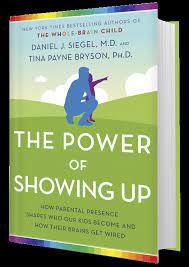
Over the coming years, Brene would publish more books including Rising Strong, Braving the Wilderness, Dare to Lead, and Atlas of the Heart. Dr. Bruce Perry co-authored What Happened to You? with Oprah Winfrey. Dr. Dan Siegel published Whole Brain Child, No Drama Discipline, Brainstorm: The Power and Purpose of the Teenage Brain and the Power of Showing Up(with Tina Payne Bryson and most recently he released Interconnected. Dr. Mark Brackett published Permission to Feel: Unlocking the Power of Emotions to Help Our kids, Ourselves and Our Society Thrive.

Rick Rubin, the renowned music producer and author of The Creative Act: A Way of Being, has a compelling way to make us stand up and take notice of what was happening in this grassroots wholehearted revolution. When an idea’s time has come, it will find a way to make itself known.

The seeds of this wholehearted, emotion revolution were scattered far and wide. They began to take hold not only in the research but within us. The self-help section of our favorite bookstores began to swell – from psychology and neuroscience, to the enneagram, to Untamed by Glennon Doyle and Clarity & Connection by yung pueblo (just to name a few).

Brene’s Netflix documentary, Call to Courage was released in April, 2019, where she invited us to choose courage over comfort in a present day culture that had us divided and disconnected. We should have buckled our seatbelts.

Less than a year later, just as Brene launched her two dynamic podcasts, Dare to Lead and Unlocking Us, the global pandemic was unfolding — and isolating us even more. Perhaps we were listening more intentionally to Brene’s guests and the deeper conversations because they were resonating on many levels.

What we had all been feeling individually for decades, was now also being felt collectively. It was becoming crystal clear that we are not only hard-wired for connection, we are inextricably inter-connected through school, the workplace, grocery store, supply chains etc.

Suddenly the topic of our emotional health was popping up everywhere. What once had only been discussed in the self-help and psychological arenas, was being mainstreamed into business podcasts, education, physical and cognitive medical fields. A magnifying glass was handed to us to see the impacts of emotional health on our children and teenagers; on all of us. Brene Brown confided in her sister series of her podcast that the pandemic puts strains on marriages and parenting we’d never experienced before. We were never meant to withstand long stretches of uncertainty without revealing our vulnerability and need for connection.

The wholehearted revolution that was afoot back win 2010, had been growing slowly. All revolutions take time to build momentum. Surely the global pandemic accelerated the swiftness of of this “wholehearted, emotion revolution.”

Dr. Mark Brackett, author of Permission to Feel, was one of Brene’s podcast guests and he shared so honestly what many already knew to be true: “The mental well being of our children and adults is shockingly poor. We have a crisis on our hands and its victims are our children.”

The warnings that Dr. Bruce Perry had offered in his 2010 book, Born for Love, stressed the importance of our community and relational scaffolding for our children. This wisdom could no longer be lost on us.

There has been a giant step forward and a big pivot in the right direction as we step back out into our new normal and begin reinventing ourselves from the inside out. The books and podcasts that are emerging now are speaking directly to the corrective actions we must take.

We must integrate our emotions in our brains and our experiences. We must unpack family and emotional baggage to stop the trauma cycles and give us space for better quality lives and health. We need to scaffold each other, especially our children, and cultivate growth mindsets. We need to shed the armor that we believed protected our vulnerability and discard outgrown behavioral patterns. We can build life skills, resource ourselves better, and rediscover our empathy and common humanity.

Brene Brown published Atlas of the Heart which helps us expand our understanding of 87 emotions and experiences. It is a family reference guide that supports us in helping our children and partners integrate their emotions.

Kristin Neff released Fierce Self Compassion (How Women can Harness Kindness to Speak Up, Claim Their Power and Thrive) which encourages us to treat ourselves as kindly and compassionately as we would a dear friend; and to break free from limiting gender stereotypes that has us all suppressing our emotions in harmful ways.

Dr. Gabor Mate published his phenomenal book, The Myth of Normal: Trauma, Illness and Healing in a Toxic Culture (a groundbreaking investigation into the causes of illness and a pathway to healing and better emotional health). His insights into how generational trauma get passed down through our family systems point directly to the need for us to unpack family and emotional baggage.

Dr. Peter Attia very recently released his incredible book Outlive, where he drives home the point that our emotional health is the most integral component of our lives. We can be physically health and emotionally unhealthy and we will be miserable. And in turn, we will make our families miserable. He unpacks the reasons why we’ve long heard the phrase “hurting people hurt people.”

Dacher Keltner, a renowned expert in emotional science, just released his book, Awe: the New Science of Everyday Wonder and How It Can Transform Your Life. It is the final chapter of his book, aptly entitled Epiphany, that really brings home the lessons that we have been learning over these past two decades. Dacher Keltner reflects on the work of Charles Darwin whose thinking about the evolutionary science of emotion was shaped as he cared for his 10-year old daughter Annie until her death. Dacher offers that we mimic nature as we move through our evolution (and emotional revolution); there is a decaying (shedding the old that no longer serves us), a composting (extracting the lessons and nutrients we need) and then a regrowth (which is where we are now).

We now possess better insights, research, tools and collective commitment than we have ever had before in this emotion revolution. Young people are hungry for mentors and author Arthur Brooks encourages the older generation to rediscover their purpose by stepping into that role. It is an exciting time to be alive — and be an active participant in such a healthy change.

RECOMMENDED RESOURCES:

The Baggage We Should Be Unpacking

It’s no surprise that we all have family and emotional baggage that has never been unpacked – mostly because it feels like opening Pandora’s box. Who would ever want to do that?

What if we were to reframe it as exploring a treasure chest instead? The clues to unanswered questions; the keys to unlock some of our hidden assets; a mystery solved; a weathered, yellowing journal of unknown and revelational history.

We are fearful of what we might discover in our family and emotional baggage. Many of us don’t care to relive the painful memories we stashed in there decades ago. But we are not the same as we were then – we are older, have had more life experiences under our belt and have more nuanced perspectives. Maybe we can unpack the baggage and clear up much needed space for a lighter way of being.

We are not alone when it comes to complex family histories and generational patterns. We are all in the midst of a big unraveling of old societal conditioning, gender stereotyping and poor parenting models. As Maya Angelou espouses “when you know better, you do better.” Thanks to the major breakthroughs in neuroscience, psychology and emotional science, we now have much better resources and tools available to us for personal growth, self-awareness, relationships and parenting.

In fact, it is these very breakthroughs that provide an entirely different framework for hard conversations and more productive dialogue about the elephant in the room –debilitating family dynamics.

If we wait until parents or grandparents pass away, we miss asking the questions we would like answered. Have you ever sifted through cardboard boxes of old photos and had no idea who the relatives were or the stories that went with each photographic memory? It is just like that with family baggage. So many secrets boxed up and sealed tight. If family members are courageous enough to enter into these challenging conversations with honesty and a desire to learn, it will jettison that cumbersome family baggage.

Just look around at all the complex family dynamics the next time you attend a graduation, wedding, family reunion or holiday gathering. You can readily spot familiar family patterns, passed down from one generation to the next, taking its toll on our younger generations; families dealing with the same adversities, just a different cast of characters.

The baggage may be invisible, but its impacts are as apparent as blue eyes, tall stature, the shape of a mouth or nose and even personality traits.

No generation is immune from common life events including genetic health issues, divorce, co-parenting, behavioral issues, co-dependency, estrangements, blended families, addiction, mental health issues and trauma. Hard things happen in life. We can, and must, stop making them harder than they need to be.

Today, we have the rare opportunity to involve four living generations — grandparents, parents, siblings and grandchildren — to do the work necessary to break generational trauma and address dysfunctional behavioral patterns. It may be the first time ever that we also have evidence and impetus to come together to do this multi-generational unpacking of emotional and behavioral baggage.

A good starting point would be to collectively acknowledge that the old ways of parenting and dealing with emotions are primary root causes of ongoing family dysfunction and our growing emotional health crisis. We got it wrong and now we need to be actively involved in turning the tide on that old paradigm. Just acknowledging this truth can lift the fog of shame, guilt and blame. These conversations are long overdue and we don’t want our grandchildren being burdened by the weight of unhealthy, unproductive family secrets. We can stop spreading harmful patterns and limiting beliefs from one generation to the next.

When we can overlay the new template for parenting and emotional health onto our past experiences, we gain clarity where once there was only murky confusion. There are a lot of stories embedded in our family history that are horribly inaccurate. Imagine discovering this and realizing that we’d been making incorrect assumptions and judging others when we really could have been showing up and offering each other support and emotional scaffolding.

Yes we are afraid to have those hard conversations, mostly because we are feeling very strong negative emotions arise in us each time we even think about it. It would be analogous to refusing to go to the doctor for a suspicious lump. We can no longer afford to let our fear and anxiety prevent us from learning and discovery.

The biggest challenge in having these hard conversations and unpacking family baggage together is the massive entanglement of old, unprocessed emotions, traumas and false narratives about each other. The only way we can do this work is to become very skillful in interpersonal and emotional skills.

If we are going to do a deep dive into the dark, deep waters of our generational family history, we want a seasoned, skillful dive master and tools to help us see clearly, cut those falsehoods that keep us tethered, and avoid getting re-snagged on past trauma. Emotional triggers, limiting beliefs, fixed mindsets and jagged remains of adversities are hard to navigate without compassion, empathy and powerful listening skills.

For the record, we may have attempted to do this in the past, but all we really had to guide us was “hindsight”. While hindsight can shine a light on our regrets and help us own the consequences and outcomes of our choices, it often leaves us at a dead end. Problem identified, but no meaningful path to healing and prevention.

In 2009, Dr. Dan Siegel introduced a new concept for personal growth and self-awareness. He was planting the seed of what would become “other awareness”. But there was no way for us to get to “other awarenesss” without knowing ourselves deeply. Dr. Siegel called his revolutionary personal transformation concept “mindsight”. Mindsight picks up where hindsight stopped. No more dead ends.

Dr. Siegel framed “mindsight” this way: It is a powerful lens through which we can understand our inner emotional lives with more clarity, integrate our brain and our emotions, and enhance our relationships with others.

Mindsight is how we put our own oxygen mask on first. There is no way that we can be of meaningful value in helping others on their emotional health journey if we ourselves haven’t done our own work. Full stop.

In my previous blog post, “Learning What We Need to Teach”, I shared the steps and the benefits of Dr. Siegel’s concept of mindsight and whole brain parenting. Doing the hard work and committing to a lifetime of personal growth is not for the faint of heart. But as we often say with physical fitness, “no pain, no gain”.

Dr. Siegel encourages us to use this “mindsight” lens to go back and look at our own childhood to discover how our experiences and our caregivers shaped us. Imagine being able to do this – AND have conversations with siblings, parents and grandparents about those experiences that would provide context and nuance, not to mention long overdue accountability and the possibility of repair.

Do you know what your emotional triggers are? Are you aware of the limiting beliefs that were baked into your inner critic when you were a child? Are you still having meltdowns like a two year old when big emotions consume you? Do you expect more emotional regulation and better coping skills from your partner, kids or friends than you can muster in stressful situations?

These are the warning signs of compromised emotional health. If we do not attend to our emotional health, two things will happen — (1) our physical health and quality of life will also be compromised and may even go into serious decline; (2) we will pass down to our children similar unhealthy emotional patterns. Ignoring our emotional health has perpetuated the multigenerational family dysfunction since the dawn of time.

When Dr. Dan Siegel introduced mindsight in 2009, he was an advance scout for what has now broken wide open into the mainstream of our lives. Over the past two decades, multi disciplines have merged and reverse engineered what we need to do in order to address our growing mental health crises.

We need to undo and unlearn all the things we got wrong about parenting, about emotions and about relationships.

It has taken several decades, a ton of research, and more family heartaches and brokenness than we can imagine to bring us to this moment in our collective evolution. We are now able to visibly see and feel why we need to commit to this work when we look at our children and grandchildren. Not only do they deserve better, we are motivated by our hearts to take this work seriously.

In the past, each generation entered adulthood and parenthood with a strong desire to do better than the prior generation. Good intentions, but faulty information and poor diagnostic tools. We labeled kids, rather than naming emotions. We unplugged their first love language (emotions) as soon as they learned to talk and express themselves. We had blindspots and blurred life maps. We unconsciously repeated the same old patterns and reactions from which we recoiled or hid from as kids. We numbed our pain rather than extracting it and healing.

The reverse engineering that neuroscience, psychology, epigenetics, neurobiology, emotional science and social sciences have done is now extending a call to action that cannot be ignored. This call to action is meant for all of us — all 4 generations to become involved. We need to do some serious excavation work on generational baggage.

We each need to make our own emotional health a priority. We need to plug it back into the core foundation of a meaningful, satisfying and rewarding life. We need to upgrade our default systems that were never integrated in childhood. Plug those emotions into our operating systems and get more skillful at regulating them, learning from them and growing because of them. We need to unpack emotional and family baggage that is putting more obstacles in our way than we realize.

We do not have to wait until we are at the master class level to dive into teaching our kids and helping our partners. We can learn together. In fact, our children and grandchildren are the best teachers in the world. If we can step back and ask ourselves, “what did I need when I was their age?” we will instinctively know how to meet the moment. Instead of asking “what’s the matter?” we can pivot and learn by asking them “What matters most?”

This blog post is the first of a new series I’ll be sharing about the life-changing benefits of personal growth and self-awareness not only for our own quality of life, but for all of our relationships. Let’s explore how we got here, what is fresh and new for our emotional health, what we are discovering about the connection between fixed mindsets and limiting beliefs, better ways to help kids through divorce and blended families how we can improve the education system from preschool to college and so much more.

There is an “emotion revolution” rising from the ashes of old parenting models, lack of emotional regulation into our human operating system, and the hard lessons learned through a global pandemic. Are you in?

RECOMMENDED RESOURCES:

DR. PETER ATTIA is the renowned resource on Longevity — and now he is the front-running force for this emotion revolution. Watch his relatable reels on Instagram, listen to his interviews on YouTube for his book launch. Read his book, Outlive to learn why our emotional health is the most integral component for our quality of life. Listen to his podcast, the Drive.

Gummies of Wisdom – Playing LeapFrog

It is truly remarkable how much we can learn about others and ourselves through storytelling. When we share our life stories with each other, we often find unexpected common threads — and we make discoveries that support our own learning and growth.

This is like playing leapfrog — where some part of our story or experience connects with someone else’s and our shared understanding gets ignited and amplified in the most enlightening ways.

We can each unpack the details of our experiences, the lessons learned, resources we found helpful, what our biggest challenges were and how we faced them.

Storytelling can turn strangers into friends in just one conversation or deepen a decades old relationship with revelational new insights. We come to understand that common, similar life events unfold for each of us and yet it is our personal experiences, resources, and interpretations that create the textured, contextualized unique stories of our lives.

The script doesn’t really change that much. What changes are our stories.

I recently sat with two strangers on a flight from Houston to Phoenix; an energetic, engaging young man probably in his late 30’s who is a husband, a father and an entrepreneur; and a soulful, inspiring woman in her 50’s who is an integral part of PacificHelps.org (a non profit organization founded by her husband to provide education and renewable energy to the Pacific Islands) Over the course of that flight, we talked and listened to each other’s stories with a sense of wonder and awe. So many similarities in our stories yet the backdrop, the cast of characters and the obstacles were vividly different. We connected through a working knowledge of the basic life plot — growing up, finding jobs, getting married, having children, marriage difficulties, divorce, remarriage, life threatening illnesses and financial challenges. So much common ground. We laughed, we empathized, we marveled. The human spirit really is undaunting.

The script and the plot doesn’t change much. But each of our stories were uniquely different at the same time. I viewed our stories through the lens of a 71 year old, excited for what the future holds for both of them because of what they have learned from their personal experiences and how they are proactively embracing their continual self discovery and personal growth.

In that young man, I can see my own grown children who are now in the throes of parenthood but so much better prepared and skillful than all the generations before them. At 71, I can look both ways now — I can look back at what we got wrong in old parenting models and I can also look forward to what is possible with vastly improved parenting and emotional skills.

The conversations and insights that the three of us shared about parenting and emotions would have never happened when I was in my late 30’s or early 40’s.

The ease with which we shared things about our own childhoods that shaped us and then later dropped us into our own self-discovery journey was nothing short of incredible. My generation stuffed our skeletons into closets. Today’s younger generation of enlightened parents are doing their personal growth work early to break generational chains of dysfunction and hand-me-down behavioral patterns.

We’ve come a long way since Dr. Spock. These parents are leaning on Brene Brown, neuroscience, whole brain parenting, the enneagram, Drs. Dan Siegel, Andrew Huberman and Peter Attia. Yes, I was in seventh heaven – both my seat mates were quite familiar with the same resources that I have discovered in the last decade. They are proactively putting into practice what they are learning — for themselves and for their children.

Moreover, they are incorporating greater relationship skills into their marriages, parenting and co-parenting. There has been a huge paradigm shift from unhealthy, contentious fallouts from divorce that often caused a lot of trauma for children, to an intentional focus on providing children of divorce the relational scaffolding they need and deserve. Joint custody is being anchored in healthy, respectful, cooperative co-parenting.

A few years ago, I had started to connect the dots about the intersecting of so many of my favorite resources for personal growth and self discovery — I blogged about it. Researchers, authors and podcasters began to reference each other in their books, and invited each other as guests on their podcasts. I noticed that the topics of the human need for connection, emotional regulation, parenting and relationship skills were being discussed even on tech, business and news platforms. I could feel that the very subjects I was passionate about were becoming mainstreamed.

And now, here I was, on a plane with two strangers and we were talking, laughing, sharing about all of it as easily as we once might have discussed the latest movie or hottest trend. It was one of those compelling “aha” moments that Dacher Keltner describes in his newest book, Awe. I got goosebumps – often. There were just so many similarities in parts of vastly different stories.

Do you know how it feels when you have a really great customer service experience? When you feel like someone has paid attention, gone the extra mile, and earnestly appreciated your business? Well that is exactly what this conversation felt like to me — it was a standout. The positive impact that personal growth work has on our ability to make meaningful connections was not lost on me.

I thought a lot about LeapFrog when I got off that plane. That remarkable two hour conversation had made lasting impressions on each of us. We each left with new resources to check out and inspiring stories to reflect on.

What struck me most was how much space we had created to really hear and engage with others by learning from our experiences. We were not so mired in our problems (and phones) that we missed this golden opportunity. Rich conversations like this are some of the best educational experiences we can get. We gain new perspectives and insights, are reinforced and encouraged about the path we are on, and we build good connections on common ground.

RECOMMENDED RESOURCES:

Better Out Than In

We have often heard the lament “hurting people hurt people”. That simple phrase resonates for many of us who have experienced being hurt deeply by the people we were trying to love; or whom we believed should unconditionally love us.

Where we become stymied is that we are not sure who to attend to — the hurting people or the hurt people. As a result, we haven’t effectively helped either. The problem just keeps perpetuating.

A few months ago, I wrote a Daily Gummy of Wisdom putting a twist on that old lament. It was “healing people heal people.” This insight came from personal experience as well as from stories I heard shared in my book club, with family and friends and most recently from strangers in a poetry writing class I am taking.

I do marvel at the healing that begins to take place when just one person makes space to listen to another’s story without judgement and most especially when they listen carefully enough to discover a knowing connection. This is precisely why support groups can have such a profound helping impact. There is a foundational promise that we can speak without interruption, that we can pour it all out — and that others will listen with all their human instincts. Everyone that is under that tent has had a similar life event that brought them in. The event is the catalyst for connection; for it is connection that heals.

Our stories and our hurts are better out than in.

I offered the metaphor of a splinter in my last post entitled Feeling Our Way Forward. If we ignore a splinter embedded in our skin, it never stops hurting. It can even fester and get infected as our body wants to eject this foreign object. We can go about our normal days, but every time we bump it, it is painful and serves as a reminder that we need to attend to it. It is the anticipatory pain of extraction that becomes an obstacle; and for some outrageous reason we think it will magically go away if we ignore it. We will not have to experience that brief extraction pain. But day in and day out, we come to discover that this is not true. And if someone else bumps our tender, painful finger, we blame them for their carelessness. That embedded splinter is also taking away our joy — even our ability to feel the softness of a consoling pet.

Eventually we face the truth — that splinter is indeed better out than in. Yes, the extraction does hurt. We may even feel some residual discomfort as though it is still embedded in our skin, but the healing is already starting. Our body is busy attending to the healing process and relieved that it is no longer doing a daily triage on something we refused to address.

A piercing splinter is an apt metaphor for our emotional wounds. Our emotions are better out than in.

In his book, Permission to Feel, emotional scientist Marc Brackett, makes this incredibly clear:

“The irony, though, is that when we ignore our feelings, or suppress them, they only become stronger. The really powerful emotions build up inside us, like a dark force that inevitably poisons everything we do, whether we like it or not. Hurt feelings don’t vanish on their own. They don’t heal themselves. If we don’t express our emotions, they pile up like a debt that will eventually come due.” – excepted from Permission to Feel, pg.13, Author – Marc Brackett, Ph.D.

Every single book I have read in recent months about emotional health, parenting, longevity and health span cites this one compelling factor: We got emotions all wrong and we only started to understand this in the 1980’s.

Just think about that — up until a few decades ago, we just kept ignoring and dismissing emotions all together. And even now, with more research, we are too slow to respond and integrate.

So let’s circle back to the lament that “hurting people hurt people” and take action to attend to both the hurting and the hurt. The escalating emotional and mental health crisis is proof positive that we can no longer ignore our emotional splinters. Everyone deserves to be attended with compassion, non-judgment and assistance to pull the hurting out.

We cannot address what we do not not know, yet there is growing evidence that not integrating our emotions was a huge mistake — a catacylsmic snowball rolling down debris-covered hill.

Remember when you were a kid and there was just a small dusting of snow on the ground, but you just had to make a snowman. You’d start with a tiny snowball and begin rolling it around the yard. As the fresh snow clung to that baseball sized snowball, it grew in size. It left behind a little swath cleared of snow, revealing green grass, brown decaying leaves and broken twigs. And that growing snowball — well it was mostly snow but it also had a lot of those decaying leaves and broken twigs projecting from it. That is what has been happening from one generation to the next with all our unprocessed emotions — they were the decaying leaves and broken twigs that got passed along with eye and skin color. The snowball full of emotional projectiles.

Unprocessed and unexpressed emotions have piled up; we are still carrying and paying the overdue debts of our ancestors.

I recently published a blog post “Learning What We Need to Teach.” That post was inspired by the work of Dr. Dan Siegel who wrote The Power of Showing Up, Whole Brain Parenting and No Drama Discipline. One of the fastest ways that we can implement real change is to teach our children that emotions are an integral part of who they are and how they learn about life. We need to teach them a vast and nuanced emotional vocabulary. We are the training wheels for this integration of big unwieldy and at times, scary, emotions for our children and their developing brains. But we cannot teach what we ourselves don’t know. It would be like us suddenly trying to teach our kids to speak a foreign language fluently. We might only know a few familiar phrases in Spanish or French. We are hardly skillful.

Can you imagine what it feels like for a small child to have big emotions wash all over her, out of the blue? My young granddaughter was standing in the bathtub, trembling with crocodile tears running down her cheeks. She was so angry at her brother and was yelling at him. She also had enough self awareness to recognize that her voice had changed and that scared her – what was happening? Her changing voice took precedence over her anger. In that moment, my granddaughter was feeling a natural and normal chain reaction that happens when emotions hit us.

That present moment is a teaching opportunity.

Her anger was simply an emotion that told her something wasn’t right. Her brother had not been respectful about her bathtub toys. Her anger was legitimate. Her anger caused her body and developing brain to react. Her heart was racing, the tears were flowing, her voice was amplified. All that happened in a split second. She was caught in an emotional vortex — angry at her brother and she was scaring herself with her own voice; one she didn’t recognize or like. “What is happening to me?” she asked me. “Why is my voice changing?”

Being the training wheels for these moments is a game-changer for everyone. It is how we integrate emotional awareness.

Step 1 of being the training wheels is to remain calm. We co-regulate each other and if we can show up calmly for our kids when they are overcome with emotions, it is soothing. Their heart rate will slow, their labored breathing will return to baseline, the tension in their tiny bodies will release. When we are initially learning how to be the “training wheels” this first step will seem like it takes an eternity. That’s just an illusion however. It actually takes much less time than we realize.

It is when we respond to our child’s normal and right-sized “out of control” emotional chain reaction with our abnormal, outsized adult emotional reaction that things escalate and can become unwieldy. Step one — stay calm. You are a first responder.

Step 2 is naming the emotions that our child is feeling. Name them to tame them. This is how we organically build our child’s emotional vocabulary. It not only helps them to have this valuable reference point for self-identification of their own emotions, it builds connection and empathy with others. If a sibling expresses “I am so angry right now” a child instinctively knows what anger feels like to them. They can relate.

At the risk of losing the flow of this lesson in “training wheels”, I will pull a strong thread from what we know is so helpful in support groups. It is empathy. It is being able to listen to someone’s story and have a basic human understanding of what they must feel like, using our experiences as the connector.

So when we help our children label their emotions, we are giving them context from their own emotional experience to be able to relate to others. They will intuitively know what anger or envy feels like. We are building their emotional vocabulary and cultivating their ability to help themselves and others in emotional discomfort.

I’m guessing that it is beginning to feel pretty obvious right now that if we had been raised this way, with a deep appreciation for our emotions and tools to help us express and manage them, our own lives would have been greatly improved. Stick with me — there’s more.

Back to training wheels – Step 3. Normalizing the emotions is powerful. Emotions are neither right nor wrong. They are simply a form of information. Anger is nothing more than a newsflash that something is important to us.

Even if that something important is just a few bathtub toys, it matters. It matters to my granddaughter who was very clear about what was important to her in advance. Anger was just a normal and appropriate reaction.

As for her voice changing, she just needed to be reassured that this too was natural. That our voice does change when we are angry and it won’t last. You should have seen the look of relief that washed over her precious face at that breaking news. Did you know that it feels very scary to small children when emotions are coursing through their little bodies. Of course they are worried that they are changing and just like imagining a monster under the bed, they are fearful that it is for real and forever.

Step 4 of being emotional integration training wheels for our children is helping them become aware that emotions often come packaged with other feelings. Anger can be accompanied by disappointment, confusion, envy, a sense of unfairness. Just as we would double check that there are no little fragments remaining from a splinter we removed, we should do the same for our emotions. Invite some exploration of the accompanying emotions. We are often deeply touched by what we learn when we really listen to our distressed child.

For the record, this is even more amplified for our teenagers. It is only when we become more skillful listeners that our adolescences open up to share what is under the surface. Be patient, don’t lecture or fix — just listen.

The bottom line is that so many of us grew up without an understanding of the integral role our emotions play in helping us build lives that are strong, healthy, supportive, connected, resilient and meaningful. We blamed emotions for getting in the way of our living a good life. If we could just ignore them, turn them off, shut them down, then we would be happy.

If we had only known that our emotions were the very first and most integral part of our human experience, we would not be awash in shame, blame, loneliness, judgment, dissatisfaction, addictions and estrangements. Emotions didn’t cause these issues — in fact, they are both the prevention and the cure.

I watch my grandchildren today – who are being raised with integration of their emotions into their developing brains and I marvel at their self-awareness, their growing confidence and resilience and most impressively their emotional navigational skills. They are so attuned to their emotions that they can anticipate when a situation might arise where they feel their “jealousy rising”. Rather than ignore it, they name and come up with a plan to address it. From birthday celebrations, to board game competitions, they can hold both their own feelings of envy and a stronger desire to pour joy on each other.

Just the other day, my granddaughter told me that sometimes she really prefers to stay in her mood for a while. She is not afraid to be with her strong emotions and to really feel how they show up in her body, and how long it takes for them to fade. Can you imagine having that much enlightened engagement with your feelings when you were a kid? She is processing her moods, her feelings in real time – without self criticism or parental judgment.

Can you imagine having an inner voice that was trained in curiosity, non-judgment and self compassion? That is precisely what is happening for my granddaughter when she sits with her feelings; she is training her inner voice to be a supportive internal best friend.

Hurting people hurt people – and usually this is unintentional. We simply were not taught and shown by example how to use our emotions in the positive ways they were intended. Our emotional health impacts our quality of life, our physical and cognitive health and our ability to care for ourselves and others in vastly beneficial ways.

We literally pushed away what we needed the most — emotional awareness and emotional intelligence.

RECOMMENDED RESOURCES:

LISTEN TO DOUG BOPST’S INCREDIBE PODCAST EPISODE WITH NEDRA GLVOER TAWWAB ABOUT PARENTING, FAMILY RELATIONSHIPS AND BOUNDARIES
https://podcasts.apple.com/us/podcast/the-adversity-advantage/id1496406333?i=1000613941394
LISTEN TO THE MAY 22, 2023, EPISODE OF THE HAPPINESS LAB WITH DR. LAURIE SANTOS & THE TEAM FROM SESAME STREET –INCLUDING ELMO — TO LEARN ABOUT HOW WE CAN HELP CHILDREN IDENTIFY & COPE WITH THEIR BIG EMOTIONS https://podcasts.apple.com/us/podcast/the-happiness-lab-with-dr-laurie-santos/id1474245040?i=1000613543742

Feeling Our Way Forward

When I was a teenager, I stood in my grandmother’s sunlit kitchen watching this tiny spry woman skimming cream from the top of a quart glass milk bottle. The bottle was as weathered as she was, no longer crystal clear glass, but almost opaque from the innumerable times it had been filled at a dairy, topped with a cardboard stopper, packed in a crate, delivered in a truck, placed in a metal silver box on the front door step, retrieved before the sun rose, its contents separated — cream for coffee and milk for oatmeal. My grandmother was about to turn 68 — for the 5th time according to my calculations. She preferred to stay lodged at 68 rather than admit to entering her 7th decade.

This confounded me. I marveled at the fact that someone could live to their mid-70’s or beyond. (Remember I was only a young teen and even 40 seemed old to me at that time,) Yet what transfixed me even more was all the changes that my grandmother had seen in her lifetime. I was so eager to hear her stories, to find it incredulous that her electric refrigerator had once been an icebox! Imagine having ice delivered to your doorstep just as the familiar milk was now delivered. She drove a big black Buick now, but what was her first car or mode of transportation? And that black and white TV that was the focal point of her tiny living room — what was it like to experience a TV for the very first time?

My grandmother rarely stopped her never-ending forward momentum to pause and reflect on these wonders. She’d wave her wrinkled hand at me as though swatting at a fly, smile and tell me to set the table for breakfast. I do believe my grandmother possessed a lot of wisdom from all that she had witnessed and experienced in her seven decades, but she was reluctant to reflect. What’s done is done was her motto.

Now I am the grandmother in her seventh decade. My six year old grandson held my gaze as he marveled “Gigi, it’s amazing that you lived in the olden days and you are living in the here days now.” Unlike my grandmother, I am equally in awe and I melt at my grandson’s observation. I will be an open book for any questions that my grandchildren have about all that I have witnessed and experienced in my life.

The truth is that I am so grateful to not only witness, but to be actively engaged in the profound changes unfolding in my lifetime that will be transformational for generations to come.

My own personal growth journey, started about 8 years ago, had me unpacking nearly 6 decades of emotional baggage, rummaging through long-forgotten but pivotal events that occurred not only in my life, but in the lives and experiences of my family’s prior generations.

As I was steeped in this personal development work, I began to notice correlations and coalescence of the sciences, psychology, modern medicine and mental health along with Brene Brown’s research on shame and vulnerability, Kristin Neff’s work on self-compassion, and Carol Dweck’s work on growth mindset and neuroplasticity. Suddenly things were beginning to feel very inter-connected and the common denominator was emotions.

Did you know that we never really studied emotions until the late 1980’s? This startling revelation blew my mind.

For all the discoveries, advancements, inventions and societal changes we have witnessed for centuries, the most transformational evolutionary breakthroughs are happening in this very moment – and it has everything to do with integrating our emotions into our human operating system. Nothing could be more impactful for all of mankind.

My grandmother’s generation, like those that came before her, knew next to nothing about the integral value of our emotions. “Psychological science was firmly entrenched in a “cognitive revolution” reveals Dacher Keltner in his latest book, Awe.

“Within this framework (of cognitive science), every human experience, from moral condemnation to prejudice against people of color, originates in how our minds, like computer programs, process units of information in passionless ways. What was missing from this understanding of human nature was emotion. Passion, Gut Feeling. What Scottish philosopher David Hume famously called “the master of reason” and Nobel Prize winner Daniel Kahneman termed “System 1” thinking. — excerpted from Chapter 1 of Awe by Dasher Kellner (renowned expert in the science of human emotion)

That old saying that “hindsight is 20/20” really rings true as I reflect back on how emotions were banished from one generation to the next. Old parenting models reinforced that “cognitive revolution” so we just kept stuffing our skeletons in the closet, and filling our human basements and attics with old baggage and unhealed emotional wounds.

We compounded the problem when we banished emotions from our human operating system. All those unprocessed emotions and related traumas got passed along from one generation to the next into our genes. So not only did we grow up witnessing and then modeling dysfunctional behavioral patterns, we actually carried generational emotional baggage in our genes. We were predisposed to perpetuate dysfunctional patterns. Here are salient pivot points that we are learning about our genes and their generational impact:

Epigenetics is the study of how your behaviors and environment can cause changes that affect the way your genes work.

Unlike genetic changes, epigenetic changes are reversible and do not change your DNA sequence. But they can change how your body reads a DNA sequence.

Consider this: The first human disease to be linked to epigenetics was cancer, in 1983.

We are witnessing the big reveal right now — as our emotional health has hit the charts in revelatory ways. In just a little over three decades, we have advanced the ball on human evolution by recognizing that we got emotions all wrong.

Human beings are hard-wired for connection. The critical component of our motherboard that facilitates and integrates that lifelong need for connection is emotions.

Without this integral component, we have faulty, dysfunctional operating systems. Our immune systems malfunction and we get physically and cognitive sick. We have poor emotional regulation because we never got an owner’s manual. We struggle to make and keep relationships healthy and strong. We cannot teach our kids because we don’t know what we don’t know. They mirror us and we get mad, frustrated, discouraged and weary.

It should not be surprising at all that our teens are struggling with loneliness and depression. Imagine how many generations of unresolved emotions and trauma they are carrying in their genes. Technology and social media has exacerbated the problem as we become more socially disconnected while staring at our addictive screens instead of each other.

The bottom line is that we can all participate in this emotion revolution by embracing the need for integration of our emotions into our human operating system. We don’t think twice about upgrading our phones or devices. And when we get our children their first phone, we are not giving them a wall mounted rotary dial model. Why then would we have them operating on a partially installed top shelf brain/body/nervous system?

In prior blog posts, I have shared how inspirational it is to have prominent, respected younger men and women taking the lead by being so real and vulnerable in their podcasts, books, Ted Talks and social media platforms about their own emotional health journeys. There is a lot of generational baggage being unpacked these days to make room for a much healthier and more connected way of living.

Yes, it is incredibly sad to hear about the traumas and dysfunctional emotional underpinnings that people have endured. It is also not surprising to discover that these stories are not as uncommon as we think and have been the root cause of addictions, broken relationships, chronic and life threatening health issues and poor quality of life.

What I do know is that this is exactly how the healing begins and the evolution takes root. Unpacking unprocessed emotions is like having a splinter. We know it’s there. We can ignore it, but we will feel the pain every time we bump up against it…and over time it just might get infected. When we pull that splinter, we may still feel a little residual pain, but the reality is that the healing has already begun.

When my grandson tells me that it is amazing that I lived in the old days and I am here now, living in these present days, I can look at him and see him growing up in a world where he is a fully integrated human being, experiencing life with emotional meta vision and a self awareness that simply was not possible before. Oh yes, I have seen and experienced a lot in my lifetime, but just you wait — the best is yet to come.

RECOMMENDED RESOURCES:

LISTEN TO THIS MARCH 3rd 2023 EPISODE WITH LEWISHOWES – Prepare to be amazed at what you learn from Lewis about the profound benefits of unpacking emotional baggage and trauma – and then helping others do the same. https://podcasts.apple.com/us/podcast/the-peter-attia-drive/id1400828889?i=1000602927831