Architects of our Experiences – Part 2

Are you fascinated by this new concept where we can actually become “architects of our emotions and experiences”? This new approach is much more “hands on” when it comes to navigating life and sets us up for greater success to meet its ever-changing challenges and opportunities. 

This is the 2nd in a three part series on becoming skillful architects of our experiences. Today we are going to learn about a multi-purpose diagnostic tool we can put into our architectural briefcase.  But before we dive into learning what this dynamic tool is and how to use it, let’s do a quick review of the basic foundational tool from part 1 — our body budget.

In my last post, I shared how our body budget significantly impacts how we experience life. When we are well resourced, things go more smoothly for us. When we are running on empty, we create a lot of emotional turbulence. Surely, this was both eye-opening and pretty obvious.

When we are getting consistent deep sleep, eating nutritious food, staying hydrated and getting regular exercise, our brains determine that we are “fuel efficient”. We have the necessary internal resources to meet the moments in our lives with clear heads and the ability to be emotionally balanced. All we really need to do is pay attention to our brains and bodies just like we do the battery charges and wifi connections on our phones.

Author Ryan Holiday recently shared the HALT acronym to help us remember that our first line of defense when it comes to dealing with emotional turbulence is to assess our human “check engine” lights. 

HALT stands for Hungry, Angry, Lonely or Tired. HALT is a simple and very effective tool to remind us that these four common conditions can derail our best efforts to stay in alignment with our values. When we are feeling emotional turbulence, a quick check in on our body budget can prevent us from getting in our own way.

For the record, this is also a great tool to share with children. When kids are acting out, we can pause to think about when they last ate, if they had a disrupted night of sleep or skipped a nap, or if they have been buzzing from one activity to the next without some quiet time or a brain break. Before we overreact to an unacceptable behavior, we can think about their “body budget” first and foremost. When we teach our kids to check in with themselves, we are equipping them with a foundational tool they can use for a lifetime. 

Now let’s add a versatile new tool to our architectural briefcase.  The multi-purpose tool that is a “must have” for skillful architects of experience is emotional granularity.  This term may seem a little foreign but it’s easier to grasp if we think of emotional granularity the same way we think about the fine-grained distinctions in wood, textiles and even sandpaper.

The reason that emotional granularity has such a strong impact on our emotional experiences is because the true essence of our experience is in the details. That’s right, details matter. 

We mistakenly believe that there is uniformity in common basic emotion such as happy, sad or mad. Nothing could be further from the truth — variation is the norm; not uniformity. 

Bear with me here for a minute — and think about your own varied experiences of mad. You can be mad at yourself, mad at a circumstance, mad at another. You might be really mad about running late one day and not care at all the next. Sometimes your body budget is in deficit and you get mad a lot during the course of a day; other days, you are well resourced and unflappable. Do I see your heading nodding in agreement that “variation is the norm?”

If we limit ourselves to the three most commonly identified emotions – happy, sad or mad, we also limit our deeper understanding of what we are really feeling in the moment. When we can tease apart the details that accompany happy, sad or mad — that is when we get to the heart of the matter. This is the gift of emotional granularity – the finely tailored emotions that best reveal the heart of our experience.

Emotional granularity is an exploratory multi-purpose tool. It’s actually easier to use than we might think. We just need more practice and a bigger emotional vocabulary.  

Start with why. Why are you mad? 

Is it because you are frustrated, anxious and annoyed? Now, dig a little deeper to get to the fine grains of greater detail. Are you frustrated that something you are attempting to accomplish is taking longer than expected? Are you anxious because it is the third time this week you tried to finish a project? Are you annoyed that others aren’t respecting your need for uninterrupted time to focus? 

Emotional granularity brings out the relevant details — in the accompanying emotions and the backstory of each.

The more finely-grained distinctions we can make, the more accurately we can parse what matters most, or recognize that there are multiple layers to one core issue. We may even be surprised to discover that we have competing emotions – and both are true. We can be happy for someone else and feel sad for ourselves; that’s paradox.

Emotional granularity moves us in the right direction for self awareness and effective problem solving with more clarity than we could ever access if we stop at “mad”. 

The reason emotional granularity is a dynamic multi-purpose tool is that it helps us accurately express our feelings and experiences — AND it makes it easier for others to support us in constructive, beneficial ways.

We often hear that emotional intelligence is a key component for building a good life and meaningful relationships. Emotional intelligence is defined as our capacity to be aware of and control our emotions; and to handle interpersonal relationships with empathy and non-judgment.  

Dr. Lisa Feldman Barrett emphasizes that the most invaluable asset for cultivating emotional intelligence is emotional granularity. The more finely tuned we can get about our emotions and experiences, the easier it is to regulate them and reframe our experiences. 

Not only does this support our efforts in achieving better emotional clarity and regulation in real time, it actually updates our internal database for the future. Remember that our brains are prediction machines. When we are able to reframe and reorganize our internal database by being more skillful with our emotional responses, we will vastly improve the accuracy of our future predictions. 

Yet another reason why emotional granularity is a dynamic, multi-purpose tool. It is a fast-tracked process of freeing us from old emotional triggers and outdated information from decades old past experiences. The better we get at using emotional granularity and becoming skillful architects of our experiences, the more traction we will have in building better habits and mature response patterns.

Emotional granularity helps us to level up. We get to know ourselves better through greater self-awareness. We become more skillful at unpacking multiple emotions that are interlaced with our current experiences. With this improved awareness and clarity, we don’t drain our body budget so quickly. We have greater access to self-compassion which turns on our parasympathetic nervous system which also positively supports our body budget. We get better at emotional regulation and it becomes easier to clearly express to others what we are experiencing and what we actually need in the moment. Not to mention the added bonus of automatically updating our brain’s complex interactive systems with invaluable, current and relevant data for future reference.

Have some fun with this new tool – explore the many emotions that you feel whenever you get that initial hit of a core emotion like mad, sad or happy. Become curious when you are with others when they are sad, mad or happy and ask questions to better understand all that they are feeling in the moment. Compare your findings with your friends and family. This is how we help ourselves and others super boost their emotional intelligence and become more skillful architects of their own experiences.

Quote from Dr. Lisa Feldman Barrett, author of How Emotions Are Made

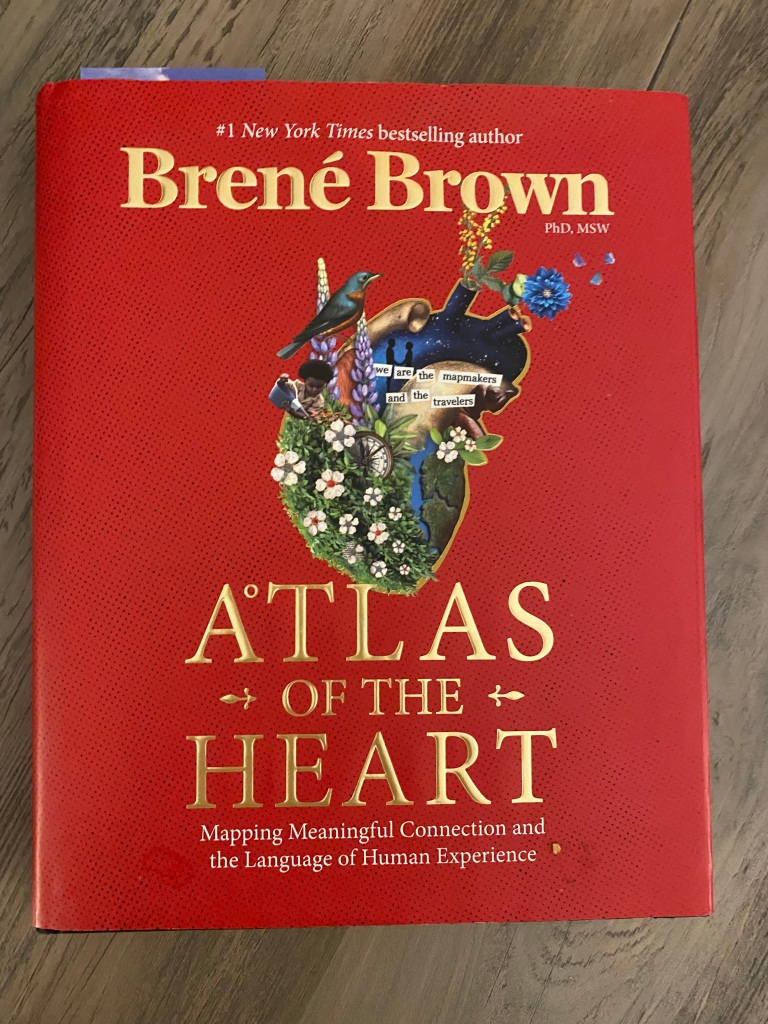
To help you expand your emotional vocabulary, read Brene Brown’s most recent book, Atlas of the Heart. Brene offers relatable stories and detailed definitions for 87 of our common emotions and experiences. Better yet, she has organized this invaluable resource by highlighting how we typically feel under certain circumstances. The chapters invite us step into “the places we go when….” When we compare, feel uncertain, when we are hurting or fall short.
Check out Dr. Marc Brackett’s newest app How We Feel. Dr. Brackett is the Director of the Yale Center for Emotional Intelligence and author of Permission to Feel. There are over 200 emotions to explore in the How We Feel app!

Click this link to go to the website https://howwefeel.org and learn more about the app and how you can use it to help you build your emotional awareness and vocabulary in real time.
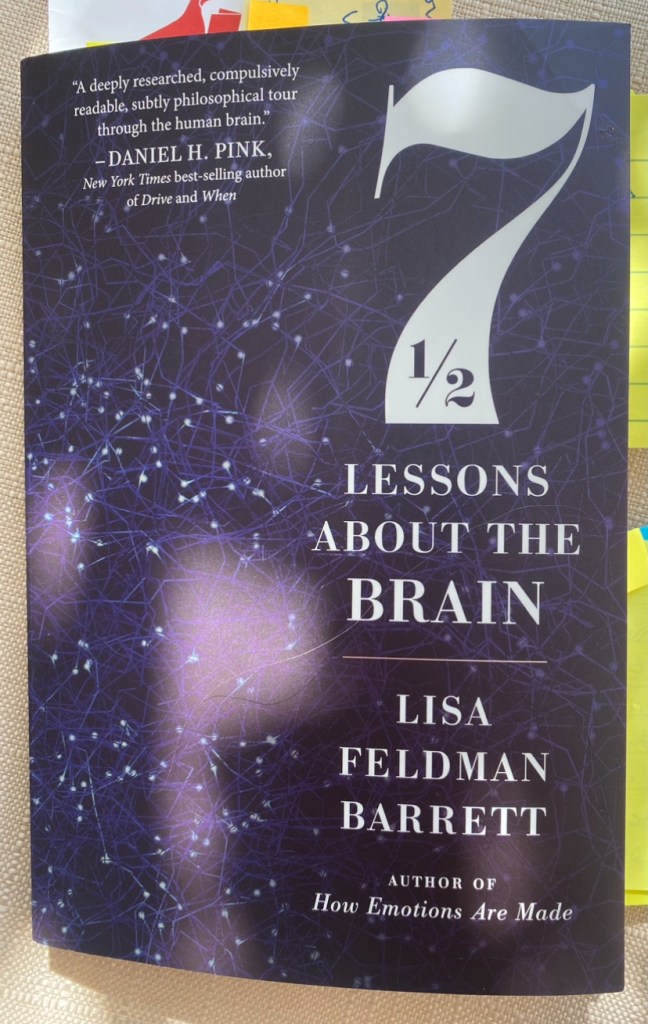
This quick, relatable read will stimulate your appetite to learn more about becoming an Architect of Your Experiences. Awesome insights into how our brains and bodies actually work.
If you are fascinated by neuroscience and love a deep dive into science and psychology, then treat yourself to How Emotions are Made. This book and Brene Brown’s Atlas of the Heart are reference books for our home libraries – the kind we will return to again and again!

When the Student Becomes The Teacher

Many months ago, my young granddaughter was scared. As she described her experience to me, I could fully understand why she was frightened. She felt as though she was having some kind of out of body experience – something that was not at all like her – and yes, it was scary to think she might be changing and had very little control over it. My granddaughter was angry; not plain vanilla angry – she was infuriated. Along with that infuriating anger was a fear that she would forever become an angry person – and that was scary – because she didn’t want to change who she was.

We’ve all been there haven’t we? We reach a breaking point and suddenly we too have an out of body experience and act way out of character. We have a jolting knee jerk reaction that surprises even us — or our simmering kettle of stuffed emotions boils over at the most inconvenient moment and we regret it the moment it happens (even though it is too late). In hindsight, we have said or done things that we’d never dream of in a much more rational moment. 

The distinction between us adults and my young granddaughter is that we know we will not stay stuck forever in this “out of character” form; we will return to our emotional baseline and be back to feeling like our normal, “true to character” selves again. Sometimes we can even do that BEFORE we overreact – and other times, we have the wisdom to make those necessary repairs; we apologize and put in real effort to do better in the future.

Little did I know that my granddaughter was giving me a golden opportunity to understand the benefits of emotional granularity. Simply put, emotional granularity is when we are able to identify all the emotions that we are experiencing in any given moment. There are always more ingredients in our emotional experiences than simply happy, sad or mad. But we often hit the brakes as soon as we identify those 3 core emotions and we stop a profoundly important process. Angry, sad or happy are just the headlines; we need to understand “the rest of the story,”

In my granddaughter’s case, the anger was ginormous in this moment. She’d been patient with her younger brother all day long, but now she was tired and hungry, which served to amplify the slow build of her frustration. We could all understand and empathize with her feeling angry. That was normal and justifiable, especially at the end of a busy day.

The anger problem could be remediated by both validating her feelings and giving her a break from her energetic, fun loving, free flowing brother. But my granddaughter had more to share – she was also feeling afraid that she’d stay stuck in anger — and she did not like the way that felt to her. 

Even without a textbook or podcast, she knew instinctively that there was more going on than just the anger.  Thank goodness I did have some working knowledge of emotional granularity. I silently expressed my gratitude to Brene Brown and Dr. Dan Siegel for this education and proceeded to help my granddaughter. I asked her to describe to me what anger was making her feel like. For the record, kids are much better at articulating this than most of us adults. No wonder she was fearful of staying stuck in that feeling — it’s downright icky. I assured her that strong emotions don’t have a long shelf life, that they do fade and we return to feeling like our normal selves in short order. I wish you could have seen the relief that washed over that precious face. A big warm hug and a reassuring smile soon had us both laughing. Astonishingly she could even reframe her brother’s prior annoyance as just his silly antics – the very same antics and playfulness that she loves so much about him. 

What a rebound! This is the magic of emotional granularity; we can hold both sides of an experience and keep them in balance. 

My young granddaughter recognized that her brother can bring her great joy and he can also annoy her. Both are true. 

Emotional granularity keeps us from getting stuck in a single core emotion. It helps us discover many pieces of our experiences puzzle. Nuance and context are key ingredients for how we “feel” in any given moment. For example, earlier in the day when my granddaughter was fresh from a good night’s sleep, had a full tummy of her favorite breakfast and a full tank of patience and energy, her brother’s antics were light-hearted, fun and tolerated. It was only later in the day, when her tank was running low that she felt quite differently. 

Take a moment to think about that for your own daily interactions. When you are well resourced with sleep, nourishment and bandwidth, you most likely flow pretty easily with other’s moods as well as the diversity of tasks and demands you are juggling. When you are running low on fuel, it gets harder and your mood and emotional state shifts.  Emotional granularity helps us parse out the underpinnings of happy, sad and mad.

More recently, this same granddaughter was having an off day. She wasn’t her usually bubbly self and she wasn’t keen on all the suggestions we were offering to snap her out of it. Not sparkling water, her favorite breakfast or a fun craft was moving the needle. She announced that she wasn’t in a hurry to get out of this mood and she was going to go be alone with it for a while. When she rejoined the family activities later, she was in good spirits and all in on the fun stuff we were doing.

It wasn’t until later that day that my granddaughter told me that the reason she likes to stay in her moods is that she knows what I told her is very true. Emotions and feelings fade faster than we realize – and she doesn’t want to miss a chance to explore hers before they drift off. In that moment, the student became the teacher.

I am a firm believer in the advice that ogre Shrek offered years ago — “Better out than in.” It is better to get our emotions out where we can examine them than stuff them away in cold storage. My granddaughter is living proof that doing this sooner rather than later is precisely how we extract the most wisdom from what our emotions are trying to tell us. 

Doing this emotional awareness processing in real time is when we have the sharpest clarity to fully appreciate and understand what our emotions have to tell us.  If we postpone sitting with our emotions, they will change and shift – just like clouds in the sky. We will end up blurring or diluting them. We may even stuff them so far down that we completely ignore them and their valid warning signs. 

Processing our emotions in real time is the best preventative measure we can take for cultivating our self-awareness and vastly improving our ability to skillfully regulate our emotions. We now have science to support this. 

In her book, How Emotions Are Made, neuroscientist Lisa Feldman Barrett teaches us that emotional granularity is the integral key to keeping our internal “emotions and experiences” data base updated. Our brain and body are our uniquely personal information processors. They are prediction machines that rely on the data we store. The greater our ability to identify and process the multiple emotions we experience in any given situation, the better our “prediction machines” will operate in the future. 

It should be pretty self evident by now that the lack of full emotional integration when we were children is the major cause of so many “prediction errors” in the way we are able to regulate and understand our emotional triggers in adulthood. When we are getting in our own way and making life more difficult than it needs to be, chances are that our “prediction machines” are feeding us old, outdated data. Emotional baggage is like the fruits and veggies growing moldy in the fridge. We never took the nutrients out of our emotions and experiences when they were fresh. Yet we still have to deal with all that mushy mess when we clean out the fridge.

There is another compelling reason that we need to get much better at processing our emotions in real time — it is because our current mood greatly impacts how we experiencing life. If we are overly tired or famished, there is a greater likelihood that we will feel more negative about what is happening. In other words, we can skew our emotions, file them away without any self reflection, and end up with an internal database full of misinformation. Talk about an algorithm that feeds us more of what we really don’t need, but that feels oh so affirming.

Let’s go back to the story of my granddaughter’s emotion of big anger. She was experiencing this giant-sized anger more intensely because it was the end of the day; she was both hungry for dinner and ready for bed. She just didn’t have a lot of bandwidth to cope with her brother’s antics. Earlier in the day, his silliness made her laugh and her delighted responses encouraged him all the more. As the day wore on, her tank was ever so slowing draining. On the other hand, her brother may have had a nap and ate more snacks, so he was still going strong. My granddaughter’s context had changed and my grandson’s had stayed the same. 

Two opposing things were true here — my granddaughter loves her brother’s zest for life AND she also needed a break. My grandson believes his antics are adorable and valued no matter how tired others are.

This very scenario plays out in our adult lives all the time but we are mostly unaware of it. We do ebb and flow in our moods all throughout the day. When we feel rested, nourished and energized, we have greater coping skills and better judgement. When we hit the wall, all bets are off.

When we hit the brakes when one of the 3 core emotions jumps out – and then step on the gas and barrel through, we actually stay stuck in happy, sad or mad. Imagine if we were in our cars, hit the brakes to avoid hitting a small child, and then while our heart was racing and our nervous system was on high alert, we hit the gas pedal and were doing 80 mph in 10 seconds. We would not be at our best to reflexively respond to another potential accident – in fact, we might cause an accident.

We know that it is encouraged for us to take that meaningful pause between stimulus and response when we are feeling strong emotions washing over us. Far better to take a few deep breaths and calm ourselves before we “react without reflection”. When we are working on developing better emotional regulation, we want to ground ourselves and consciously “respond” in a calmer way.

Yet there is one more beneficial skill that we would be wise to cultivate: Stop, look and listen.

Pretend you hit the brakes at a railroad crossing. The flashing lights and the gate that lowers are big emotions trying to get your attention. Stop, look around at the current circumstances and how well resourced you are to make good decisions. Listen to all that those accompanying emotions have to tell you. They are the messengers of the context and nuance needed to proceed with caution. 

If an 8 year old can do this, so can we. 

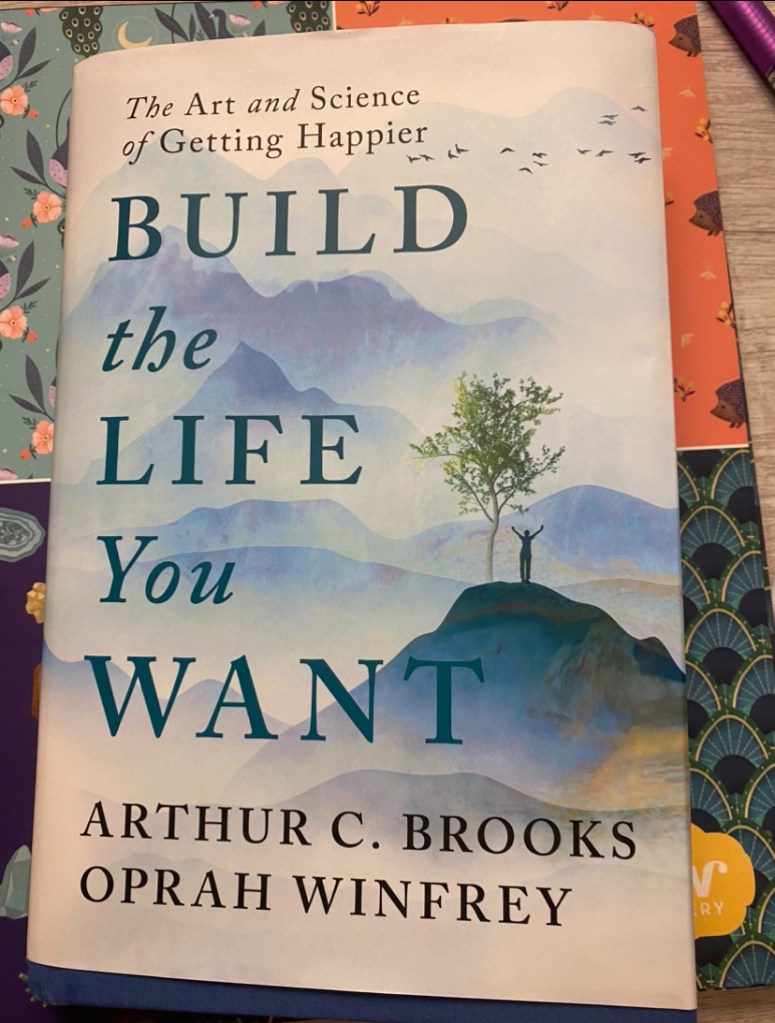
Chapter 2 of Arthur Brooks newest book is entitled the Power of Metacognition. If you only read this chapter in his book, you will have a much better understanding of how we can proactively choose better emotions to enrich our experiences. A worthy read.
Listen to this short YouTube video with Lisa Feldman Barrett about how past experiences and emotions impact how we respond to current experiences. You’ll be inspired to get more skillful at processing your emotions and experiences in real time, so that you are operating from a fresh and updated data base rather than old, outdated and clunky information
https://www.youtube.com/watch?v=ZYAEh3T5a80&t=31s

Lisa Feldman Barrett was a recent guest on the HUBERMANLAB PODCAST. This episode will give you a foundational understanding of how we could be vastly improving how we teach our children — at home and in school — with a more updated understanding of how emotions impact us. https://www.youtube.com/watch?v=FeRgqJVALMQ&t=318s