The More We Share, the More We Discover

I have been keenly observing how interactions and conversations have been shifting in profound ways over recent months. It is with great enthusiasm that I am sharing with friends, family and my book club about my experiences while traveling. From Uber drivers to seat mates on planes, hospitality staff, new neighbors and a helpful UPS business owner, more people are sincerely plugged in to self-awareness and personal development. It’s astounding how we’ve shifted from shallow “how’s the weather” conversations to more in-depth and meaningful ones where people are sharing their remarkable personal stories.

I can almost feel the needle and thread stitching together a new tapestry, weaving our own stories and experiences into the bigger picture of others. It feels good to have these rich conversations and to be learning so much.

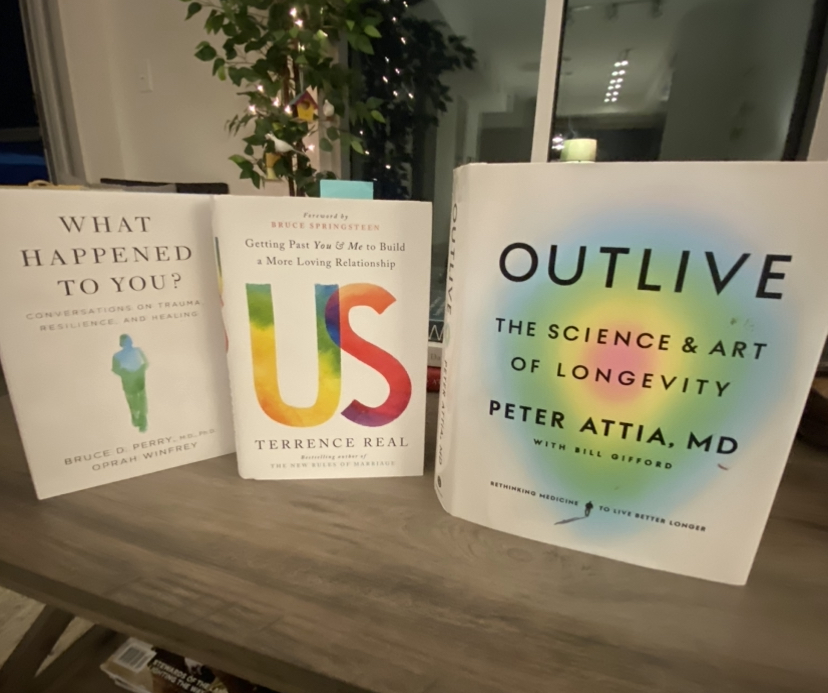
Some of my most fascinating conversations have been occurring in the self help section of book stores. I’m drawn to book stores — whether it is my local independent one, Quail Ridge in Raleigh NC, or the one my family visited in Scottsdale on vacation, the Poisoned Pen. On a recently layover in Chicago, I hopped off the plane and went straight to Barbara’s Bookstore in the bustling terminal where I ended up having a 45 minute conversation about Outlive and Dr. Peter Attia.

If I had a nickel for every time someone mentioned Andrew Huberman and his podcast, I could fly across the country multiple times.

I confess that I make a beeline to the self help or parenting sections of book stores — eager to see if there is something new to learn and perhaps more enthused to see who is browsing those sections. It’s so uplifting to see young parents, grandparents, mid-lifers, couples and singles all choosing books to help them navigate wherever they are in life. A smile stretches across my face as I take in the transformation that has occurred in the self-help section of bookstores.

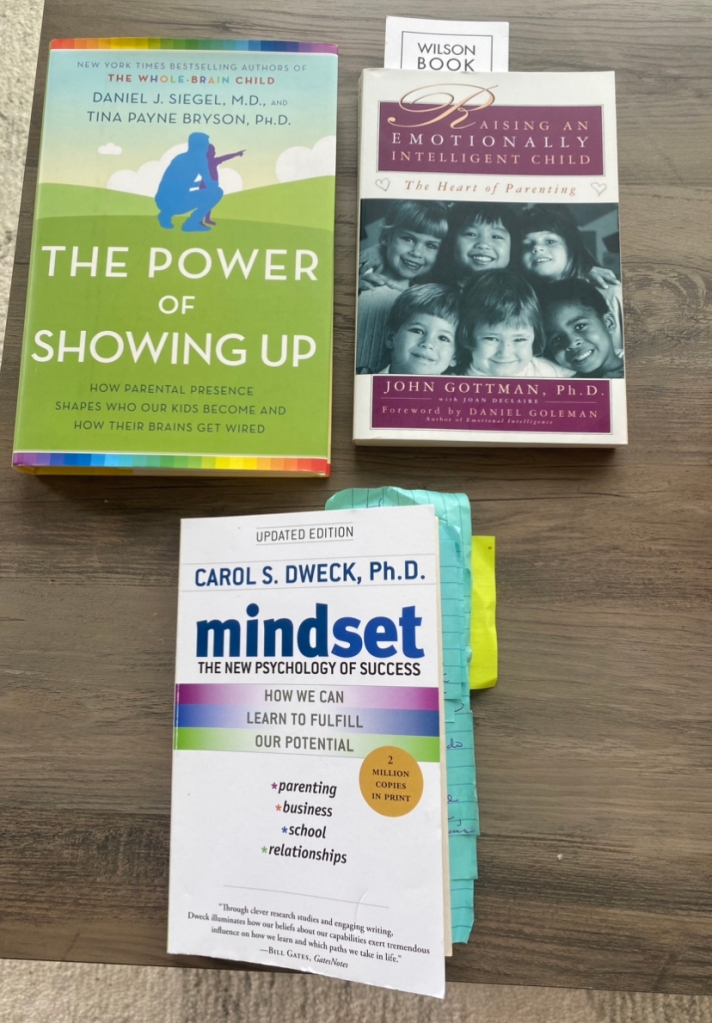
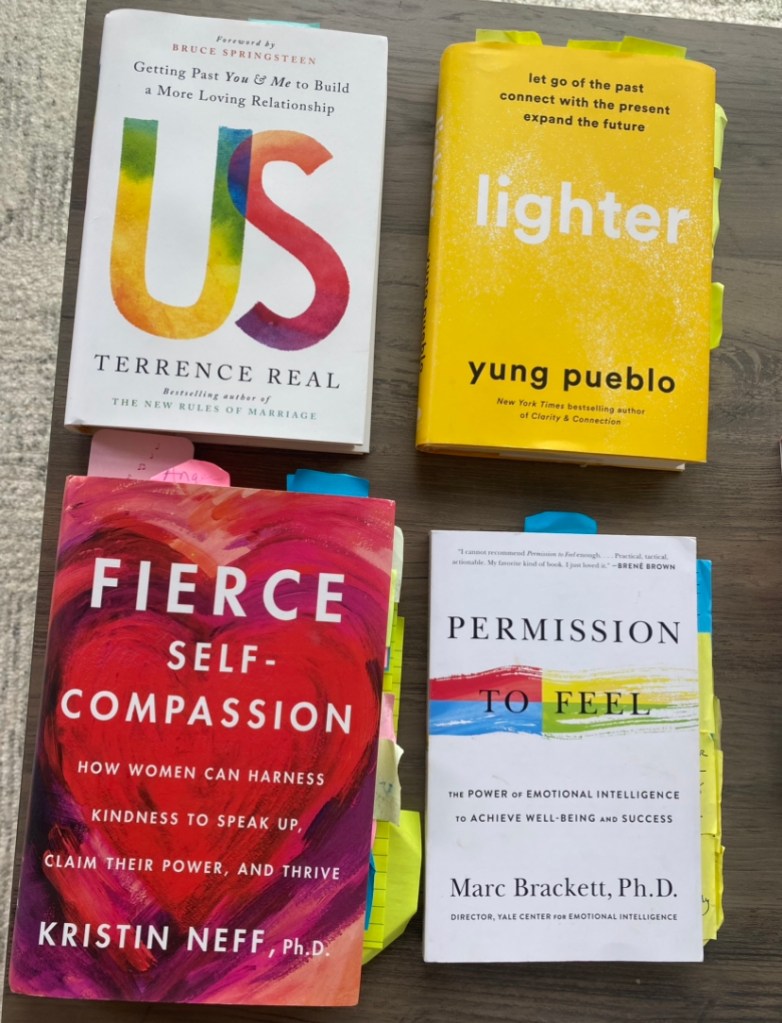
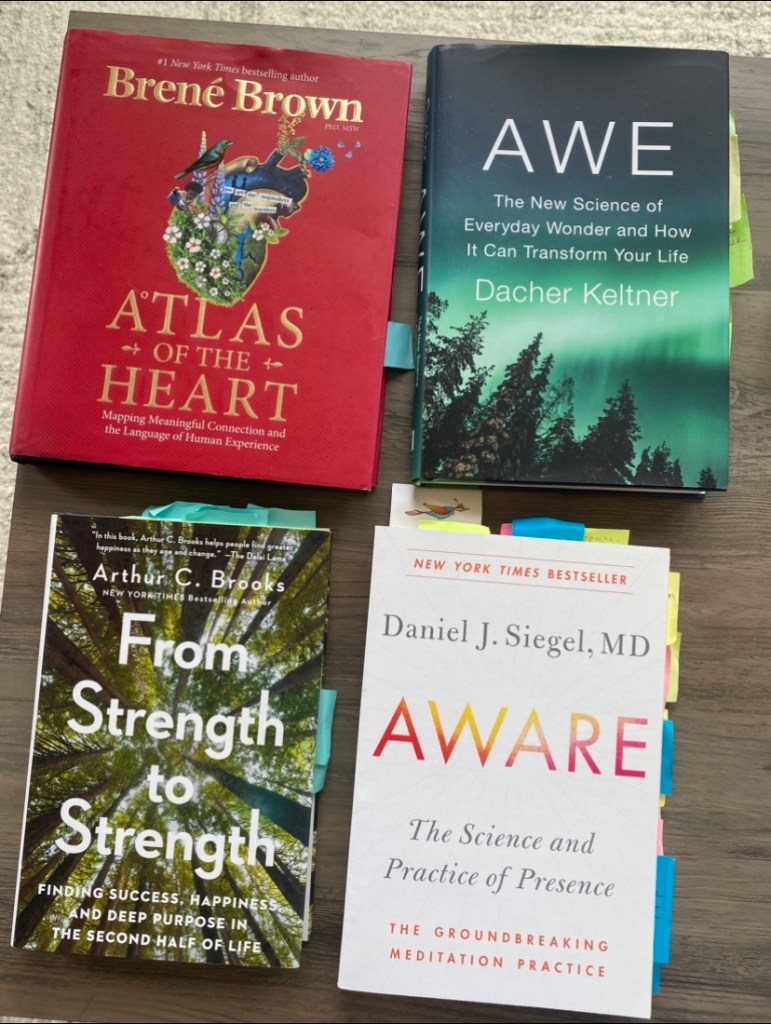
Inviting tables of colorful books with intriguing titles pull us in like magnets. To me, these books fit together like pieces of a complex, compelling puzzle. It is not at all surprising that subjects like parenting, mindset, awe, emotions, grief and longing, relationships, atomic habits, boundaries, longevity, purpose and neuroscience are all landing on the same table.
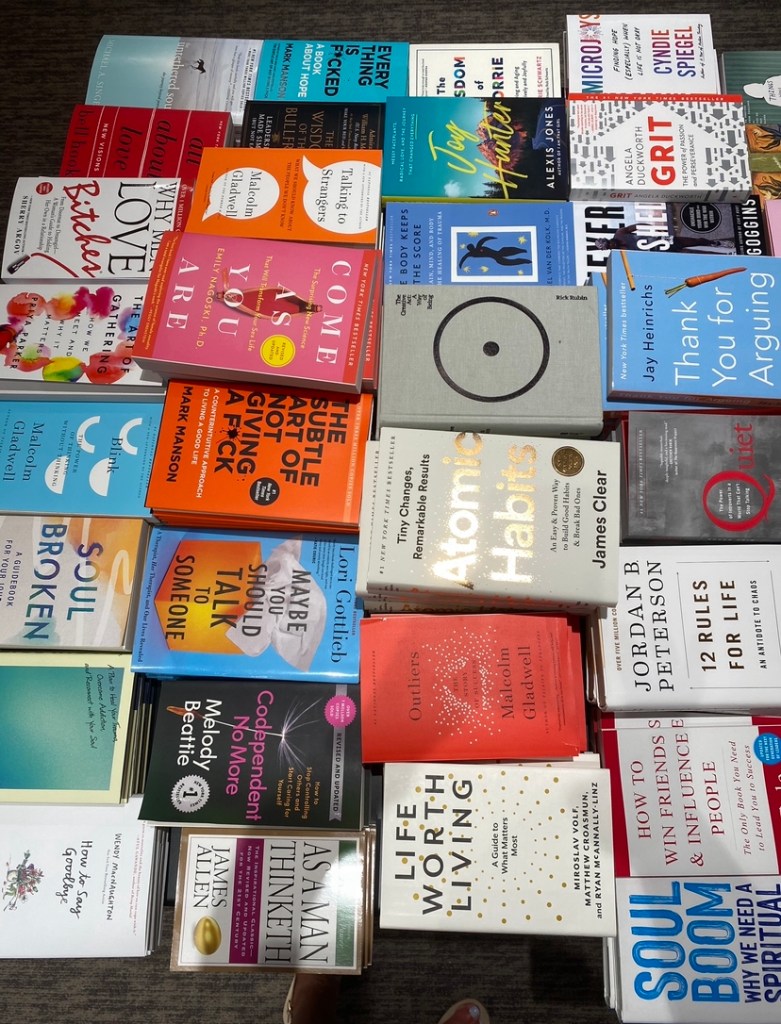
All of these varied subjects are intrinsically connected. We want better relationships — with our kids, our partners, our friends and extended family. We want to know ourselves better. Now we know that the work starts with us, that our emotional health is integral to our overall quality of life and that it needs the same attention as our physical health.

Just a few decades ago, many of these amazing books and resources were segregated; psychology, mental health, diets and exercise, how to guides, hard to understand neuroscience, Buddhist meditation. Then all these various modalities and fields began to intersect — and suddenly authors, researchers and podcasters were quoting each other’s work and having each other as guests. They began to “connect the dots” about our human need for connection. They began to see how all their independent work and findings were actually linked together.

It seems that “overnite” there has been a great convergence of all the individual pieces coming together to form one incredible, dynamic “big picture”.

The best part of our “overnite” awareness is that it is out in the open with all the personal growth and self discovery work that needs to be done. That is so evident in these amazing conversations I have been so fortunate to have with all kinds of people — in the bookstore, on the plane, at the coffee shop, in my writing classes and especially with my friends who are also on the journey.

I recall when I was struggling in my mid-40’s with what Brene Brown called the mid-life unraveling period, I would discreetly make my way to the self help section of Borders, scanning the book titles and the shoppers around me, tucking my book of choice under my arm. I would stand at the counter like a nervous adolescent girl buying tampons with an older teen boy as the checkout clerk. Judgment and shame washing over me. It felt like a public confessional that I did not have my life together.

Hooray for this major shift in acceptance that we all need help!

Today, the inviting and bulging self help section of bookstores often takes center stage. I listen to shoppers enthusiastically sharing with others what they’ve read, what they are working on with spouses, teens or toddlers and even themselves. We have normalized these conversations. Wow.

No one is slinking to the check out counter with their books, workbooks and journals discreetly tucked under their sweaters or shoulders. It’s almost a badge of honor to waltz up to the checkout line proudly displaying copies of Outlive by Dr. Peter Attia, Fierce Self Compassion by Kristin Neff, Lighter by yung pueblo or Set Boundaries, Find Peace by Nedra Tawwab. I’ve witnessed some of the most astounding conversations happening in the checkout line between customers as they swap stories, insights and book recommendations.

The seeds of our current emotion revolution and our emotional health have landed everywhere now. The subject comes up in business, leadership and innovation podcasts. It certainly comes up regularly for influencers like Adam Grant, Malcolm Gladwell, James Clear, Ryan Holiday, Dr. Peter Attia and Dr. Andrew Huberman. Yes, emotional health and doing our self-discovery work is now a mainstreamed topic of conversation. It is being folded in as the missing piece of our bigger puzzle.

The more we know, the more we grow.

When I first committed to a deep dive into my own personal growth, I was intrigued by Dr. Rick Hanson’s book Hardwiring Happiness, but I did have a hard time wrapping my head around understanding what he meant by “neurons that fire together, wire together.” While I loved the concept of neuroplasticity, I really didn’t have a solid foundation of understanding about the whole brain/body connection.

Today, we have ready access to understandable knowledge of how our brains and bodies operate, the role our nervous system plays and the importance of integrating our inner world of emotions and feelings with our executive functions of our brains. This core knowledge helps us parent better and teach our kids the emotional awareness and regulatory skills that we ourselves were never taught.

What we have before us is a collective effort to help us all live healthier, more satisfied, balanced lives. We are all playing an important role in this integral work when we are invested in our own emotional health and parenting with this upgraded, whole brain model. In her book, Mindset, Dr. Carol Dweck, shares with us that many of us grew up with a societal model of fixed mindset both at home and in school. Is it any wonder that we often then developed limiting beliefs about ourselves and became both the judged and the judgers. Dr. Dweck underscores that we can all work towards developing “growth” mindsets for ourselves and our children, but to recognize that we move toward a growth mindset by taking a journey.

As I travel and interact with others, it is very apparent that quite a few folks have decided to take that journey. We can help each other and in turn help ourselves by continuing to have these more connecting, meaningful conversations. By sharing our stories and experiences, we help others find common ground and encouragement. When we share our favorite resources with others, we help the researchers, authors, mentors and educators reach more people with their incredible work.

There is no denying that our emotional health is the cornerstone of our overall quality of life and meaningful connection with those we love. Unpacking our emotional baggage frees up a lot of space in our hearts and brains to move more fluidly through life, building resilience and enabling us to show up more authentically, more skillfully and much happier.

Let’s do this!

RECOMMENDED RESOURCES:

PODCASTS and BOOKS

Fantastic Podcast with renowned couples therapist Esther Perel, who supported Dr. Peter Attia through his own personal growth journey https://podcasts.apple.com/us/podcast/where-should-we-begin-with-esther-perel/id1237931798?i=1000618302924
Everyone is abuzz about Dr. Andrew Huberman – his neuroscience podcasts on relevant topics are chockfull of the knowledge we need about our brains. Check out the most recent episode about growth mindsets and beliefs
https://podcasts.apple.com/us/podcast/huberman-lab/id1545953110

Dr. Peter Arria, author of Outlive, is a dynamic resource for understanding why our Emotional Health matters. Listen to this short clip with Esther Perel https://www.youtube.com/watch?v=E6xc-WuROXY

The Being Well Podcast with Dr. Rick Hanson and his son Forrest Hanson is a perennial favorite of mine for years. Check out this recent mailbag episode on criticism, anxiety and dysfunctional family systems https://podcasts.apple.com/us/podcast/being-well-with-forrest-hanson-and-dr-rick-hanson/id1120885936?i=1000621375400

Pop a Daily Gummy of Wisdom Supplement

I am so excited to announce the launch of a brand new initiative to support our emotional health and overall wellbeing. My Daily Gummy of Wisdom is intended to be an awareness supplement to help us all maintain our emotional fitness.

We take vitamins and supplements to support our physical and cognitive health, so why not have a little daily boost for our emotional health and overall quality of life?

If you are a regular follower of my blog, Inspired New Horizons, then you might really enjoy getting these small, and potent, daily supplements to help you stay in shape as you develop better life skills and emotional regulation.

My Daily Gummies of Wisdom incorporate my love of photography with my passion for sharing information about personal growth, awareness, parenting, life skills and emotional health.

Here’s a sample of today’s Daily Gummy of Wisdom:

Daily Gummy of Wisdom – Monday, May 8, 2023

Create a little buffer zone between you and your different roles and varied experiences throughout your day. It is a simple little practice that can make a big difference.

Think about all the hats your wear in a day – parent, spouse, child, co-worker, friend, customer, neighbor — the list is endless.

We often just jump from one role to the other without a reset or refresh. When this happens, we drag some residue from each role or experience into the new one. That residue might be sticky — like a strong unsettling emotion that adheres to everyone and everything we touch.

We wouldn’t let our child run around the house, into the car or out into the neighborhood with sticky hands. We’d take a minute or two to wash those little hands that are capable of leaving gooey fingerprints all over the place.

This is what a brief buffer zone can do for you — it’s a little hand washing for your emotional and experiential residue as you transition from one role to another, or from one task to a new one.

It doesn’t take much time to do this — and the benefits are enormous.

Before you leave the house in the morning, as you close the front door, take a deep breath and let go. You’ve done as much as you could and how you are off to work, taking the kids to school, or heading to an appointment. Let go and look forward. Howe do you want to enter the new experience and greet those you meet there?

When you return home, as you close your car door and make your way to the front door, repeat that process. Let go. You’ve done all you could out and about today. You are home now. You may have pressing things you want to share with your family, but pause before barging in. You have no idea how their own day unfolded. Mentally wash your sticky residue so can listen with good intention and focus when you are reunited with your family.

If your emotional or experiential residue hacks some of your attention, you. may miss the smallest yet most rewarding moments of your day. That absolute delight on your child’s face to see you, that “there’s no place like home” feeling that washes over you.

When we give ourselves a little transition “hand washing”, we are more attentive and less reactionary. We treat ourselves to being more fully present and organically take in more of the good we often miss in life.

HERE’S THE CALL TO ACTION: Sign up below to get my Daily Gummy of Wisdom popped right into your inbox each morning. It only takes a minute or two to read….is great food for thought and has a lovely slow release factor all day long. The Daily Gummy will increase your awareness, help you stay in alignment with your core values and foster all those better life skills you are honing.

We read a lot of worthless brain junk food in our social media feeds throughout the day. Why not trade a little of that mindless scrolling for one high quality daily supplement for your emotional fitness and overall wellbeing?

Sign up right here: Click this link: https://inspired-nehorizons.ck.page/3381cf137f

We Are the Change Agents

I’d like to give an enormous hat tip to Dr. Peter Attia for championing the integral role our emotional health plays in the overall quality and length of our life. He is shining a beacon on the many ways that our emotional health impacts our physical and cognitive health, our most treasured personal relationships and maybe most importantly — how well we actually know ourselves.

From the outside looking in, Dr. Peter Attia certainly seems to be a shining example of living the good life. He has a hugely successful career in medicine, is a renowned authority on the subject of longevity and good health, is in great physical and cognitive shape, and is married with three children. He practices what he preaches. In other words, he has checked all the boxes for a successful, happy life.

Yet in recent years, while writing his newest book, Outlive, Dr. Peter Attia became acutely aware that there was a gaping hole in the complete picture of longevity and quality of life — emotional health. What good is checking all the boxes that outwardly give the impression of success and happiness, if in fact inwardly we are miserable?

Yes, we can be physically and cognitively very healthy; we can be proactive with preventive measures and early detection to ensure we live longer — and possibly longer without illness, disease or cognitive decline. But if we are unhappy, discontent and lack emotional regulation, we will continue to be miserable no matter how physically fit or mentally sharp we are; no matter how many measurements of success we seem to have achieved.

This is a true fact for so many of us. We have a very big blind spot about how our emotional health has taken its toll on us and our families, all while we have been actively checking off the boxes.

We can be so unaware of the impacts of our emotional health that we will unconsciously sabotage ourselves over and over again. Dr. Peter Attia uses the metaphor of Formula One racing to help us grasp the magnitude of ignoring our emotional health:

Just a few short decades ago, Formula One racing had a very high rate of death among its drivers because of the risk factors. The cars were engineered for performance not safety. Today that risk factor for death and serious injury has been dramatically reduced. What changed? The cars are now engineered for safety first and performance second. Minimize risk.

As Dr. Attia points out, we use risk factors all the time to help us minimize the risk to our physical and cognitive health. We intervene early to prevent infection, illness and disease. Yet we have been ignoring emotional health all the while.

No one asks the questions — “What is your risk for poor emotional health and what are we doing about it?

It has become very clear over the past decade or two that it behooves us all to reflect on how the old parenting models impacted us — and especially our emotional health. The risk factors for our emotional health are imbedded in those old parenting paradigms that disconnected us from understanding and effectively utilizing our emotions. Our emotions are an integral part of our brain/body connection and we are long overdue for a major upgrade to our human operating system.

Just look at all the advances that we have made in modern medicine to fight genetically inheritable diseases. We have been blind to the generational inheritances of poor emotional health. And now our eyes have been opened – we have a brand new pathway to addressing the quality of our emotional health.

Not only are we able to intervene early for our own emotional health, we can begin to ensure that our children get a head start on a lifetime of good emotional health.

We are the change agents; the ones that will break the cycles of dysfunction that got passed unconsciously from one generation to the next. We will advance human evolution by proactively integrating our emotions with our complex, developing brains.

Dr. Peter Attia shared with Dr. Andrew Huberman in a recent podcast that for most of his life he got really good at drywall repair – because he was dealing with an unconscious inner rage from trauma in his childhood – and that anger often had him punching a hole in the wall. In fact, it was that same anger and strong urge to punch a guy in a parking lot that made him realize he had to get help for his emotional disregulation. He realized in that moment that he could have lost everything he had spent his whole life building — his reputation, his career, his marriage and family – because of unchecked emotional health.

I just have to say that Dr. Attia still packs a punch — a positive and very healthy one. He punched a big hole in our blindspots when it comes to emotional health and the integral role it plays in the overall quality of our life.

As I was reading Dr. Attia’s book, Outlive, I was delightfully surprised to discover that he had turned to two of my favorite resources to help him in his search and recovery process for emotional health — Esther Perel and Terry Real. I have long followed their work, participated in their seminars and read their books. It was Terry Real’s relationship summit in May, 2022 that prompted my blog post “Whatever He Has, I Want It” featuring Hugh Jackman’s journey with personal growth and emotional awareness.

Little holes have been being poked into our need to focus on emotional health from a diverse array of sources for several decades. Neuroscience has been paving the way as we make tremendous breakthroughs in understanding how our brains, bodies and emotions need integration in order to function optimally.

Changes are happening at a very fast pace now. Old methods once used for parenting, for treating trauma and mental health issues are being tossed out and replaced with protocols that focus on integration of emotions. Dr. Bessel van der Kolk even emphasizes that it is not necessary to go back and revisit all the re-traumatizing details of a childhood event. Instead, the focus and therapy becomes on how a person is feeling today, what they are experiencing in the present moment – and integrating that into more manageable responses to current experiences.

Dr. Attia explains that we can reframe this work as an “invitation to view our own young experiences through the eyes of our own child”. I wouldn’t be surprised if he learned that from Terry Real, who often says that the best motivation in the world for personal change is our children. Terry says that we might not change for our partners or ourselves, but we rarely resist change if we know it will help our kids.

Our emotional health is rooted in our childhoods. There is no doubt about that. It is crystal clear that we will be the change agents for breaking generational patterns of poor coping skills, unhealthy attachment styles, maladaptive patterns of behavior and lifelong poor emotional health.

Dr. Attia would encourage each of us to view our emotional health and its risk factors the same way that we view our physical and cognitive health. Dig into our family history, intervene early, develop healthier approaches and incorporate a daily maintenance program to support an ongoing healthy trajectory.

RECOMMENDED RESOURCES:

Develop a list of podcasts that become your “go to” playlist to support your emotional health. Here are a few of my favorites: