Build a Sophisticated Toolshed

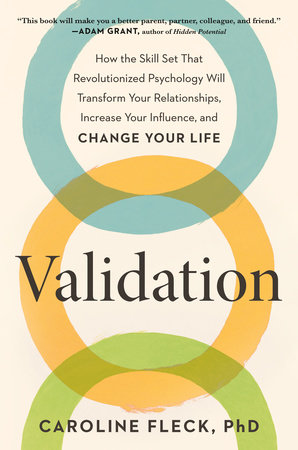
Imagine my surprise to hear a male guest on a podcast sharing that he and his wife are now using more “sophisticated” tools to navigate life. Wow — I love that impactful word and could even feel myself leaning into it and embracing the full scope of what it feels like.

It is remarkable how one word can shift us quickly into the next level of our personal growth — and do so in a way that feels amazing.

I could see it in the body language of this middle-aged man – he was owning how empowered he felt by proactively choosing a “sophisticated” way to support his wife deal with an emotional situation. There was a sense of pride and accomplishment.

His personal story was a sliding door experience for him — one where he could see how he used to handle situations like this that usually only made things worse; and how he attended to his wife’s needs now in a more mature and skillful way. Not only did his wife get what she needed most, their personal connection deepened.

The stark contrast of how his old ways of dealing with relationship struggles pulled them further apart – and how his new and improved ways, strengthened their relationship was undeniably magical. The “before” and “after” results of using “sophisticated” tools was proof positive that he was growing in the right direction.

He had handled a common relationship issue with aplomb.

Admittedly, he shared that he used to match her emotions and they’d get in an emotional tug of war. This could lead to a stand off and for the next few hours, they’d avoid each other or poke at each other’s shortcomings. Not fun.

His new and improved approach of validating her feelings and her experience, of listening to understand and co-regulating her by remaining calm, felt surprisingly good to him too. A simple shift in his approach was the fast-acting remedy that produced incredible results. They were hugging and smiling in just a few minutes. For hours afterwards, they could still feel the strong intimate connection they’d made.

That young man inspired me to see what is possible as we reframe personal growth and self discovery. Yes, of course — we want to be using sophisticated tools in skillful ways to build the life we want. To become better versions of ourselves over time and to support those we love in ways that build trust, resilience and self-confidence.

We can become master craftsmen and craftswomen with some simple, impactful shifts in our language and our awareness. Who wouldn’t want to become confident enough to use “power tools” in our most treasured relationships?

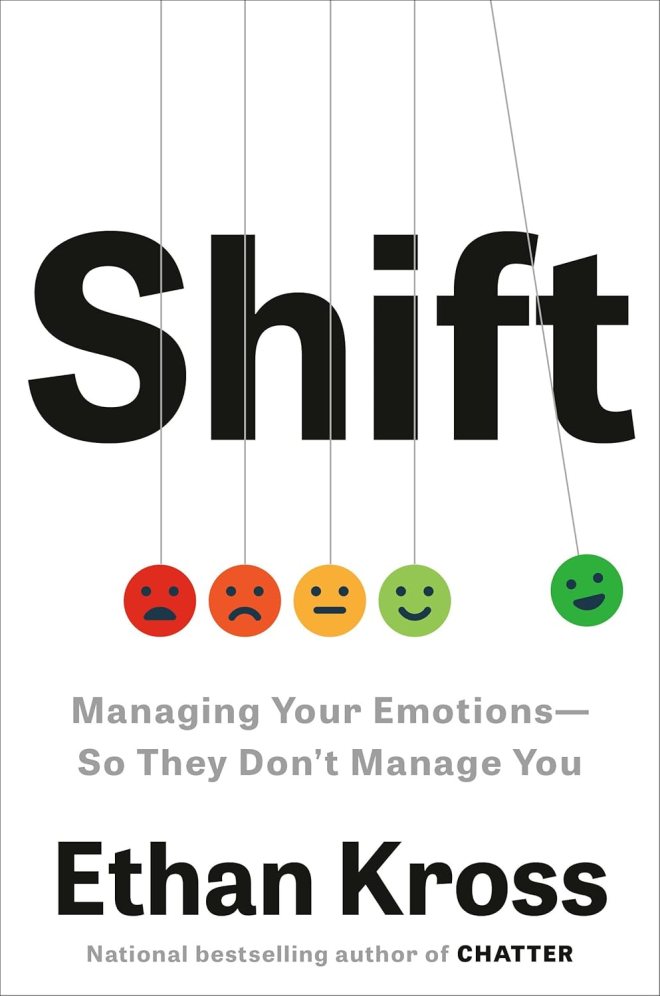
In his book, Shift, author and psychologist, Ethan Kross, reveals just how easy it is to step into using the “power tools” that proactively shift our mindsets, perspectives, emotions and perceived limitations. In fact, the concepts he details in his book could be the Starter Kit for building your own sophisticated toolshed.
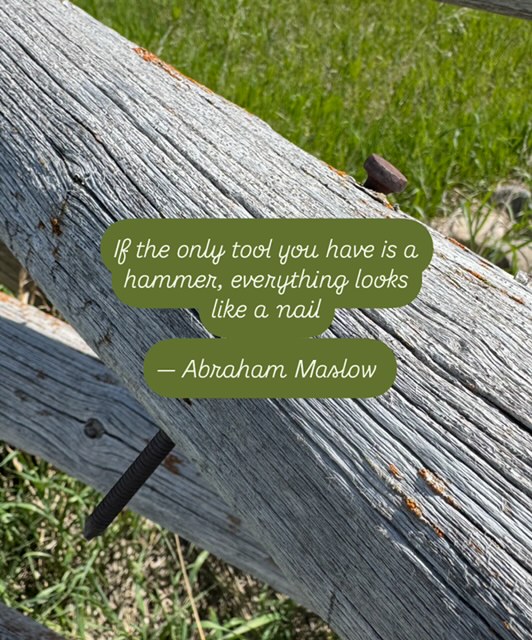
These power tools are really pretty straightforward but we frequently get hijacked by the stimulus of a situation and just reach for a hammer.

It’s our natural human tendency to rely on familiar methods or tools, even when they are not the most appropriate for a situation.

As Abraham Maslow reminded us: “If the only tool you have is a hammer, everything looks like a nail.”

It is precisely why Victor Frankl urges us to use the pause between stimulus and response to think about what is the best course of action in the long run.

Reminding ourselves that we want to be reaching for “sophisticated” power tools while we are taking that pivotal pause might be all that is needed to remind us to be more mature and intentional about our reactions. Drop the hammer and reach for the more contemporary, state of the art, power tools.

A Method and a Motto:

There is a method to stop the madness of using a hammer for everything that pops off in our lives and crops up in our relationships. It is recognizing that we human beings have a lot of variation in the way we show up day in and day out.

Some days we are far better resourced to handle blunders, mistakes and miscommunications. We can let things roll with grace and generosity.

Other days, not so much. We are irritable, easily distracted, have limited bandwidth and are running on fumes.

Even when we want to do our best, it may feel nearly impossible to pull that rabbit out of a hat.

Turns out, we unconsciously overweight and overrate what we can get in the short term. We make snap decisions and have knee jerk reactions to get satisfaction right away. We don’t like feeling uncomfortable, we want relief immediately. Winning a shouting match feels good.

But winning that shouting match only feels good for a hot minute.

That’s the unfortunate reality of overweighting what feels good in the heat of the moment. We unconsciously give too much weight to winning a fight or avoiding a conflict. We make a value calculation that is fleeting.

Dr. Falk reminds us that where we “place our attention” is the lever we can pull to override our tendency to overweight the value of a short term outcome. Play the long game. Turn attention to what matters most. Are you the kind of person who saves the day?

We aren’t little kids in a sandbox anymore. We are grown ups who calmly come in and help each other get along. We can clearly assess the situation and get back to having fun together.

In her book, What We Value, Dr. Emily Falk urges us to get intentional (especially in the heat of the moment) about shifting our attention to the long game. We will find it much easier to reach for our sophisticated relationship power tools when we focus on what we value most in the long term.

It may seem small and highly unlikely to be effective to “shift” to the long game – but it is an elevated form of delayed gratification. Do you want one marshmallow now or would you be willing to wait so that you get two marshmallows later?

Play the long game.

Turning our attention to think about what we are working towards in becoming a better person, in how we show up for others especially when it is challenging — that shifts our focus and puts more weight in the ‘value calculation” that drives our choices, behaviors and actions.

When we play the long game, we make the most of that pause between stimulus and response, by asking ourselves – “Wait a minute – let’s think about what I value most and make the better decision that aligns with my values.”

The method we can use to help us reach for power tools instead of a hammer is to shift our focus to playing the long game and matching our responses to our long term goals and core values.

The motto we create for ourselves becomes the lever we pull that opens our sophisticated tool shed. Something as simple as the golden rule can be a magical shifter in how we meet life’s moments.

When our kids are little, we give them those brightly colored plastic replicas of lawn mowers, weed whackers and leaf blowers. Many times our kids love to store their pint-sized imitation power tools right next to the real thing in the backyard toolshed.

We would never give our kids the real deal power tools until they are old enough and mature enough to use them with great care and skill. But we do plant the seeds that they will be quite capable to use the real tools in the future.

What we know now that is backed by advances in science and psychology is that for far too long is that most of us were only taught to use a hammer to fix just about everything. But a hammer and duct tape do not build strong relationship foundations and deep connections.

As we begin to incorporate more advanced relationship tools into our daily lives, we reinforce the positive benefits we reap – and we also teach by osmosis how effective sophisticated power tools truly are – in the long run.

Think about using the mental image of a magical toolshed full of dynamic power tools that are fun to use and get the job done right the first time. We can all build that kind of toolshed, well equipped with sophisticated tools and skills easily accessed each and every day.

What motto would you put on the sign that hangs over the door of your sophisticated toolshed?

BREAK FREE FROM A VICTIM MINDSET: June 6th, 2025 episode with Scott Barry Kauffman. Prepare to be amazed at how often we get trapped in our own victim mindset. This dynamic conversation will shift you quickly to an “empowering mindset”

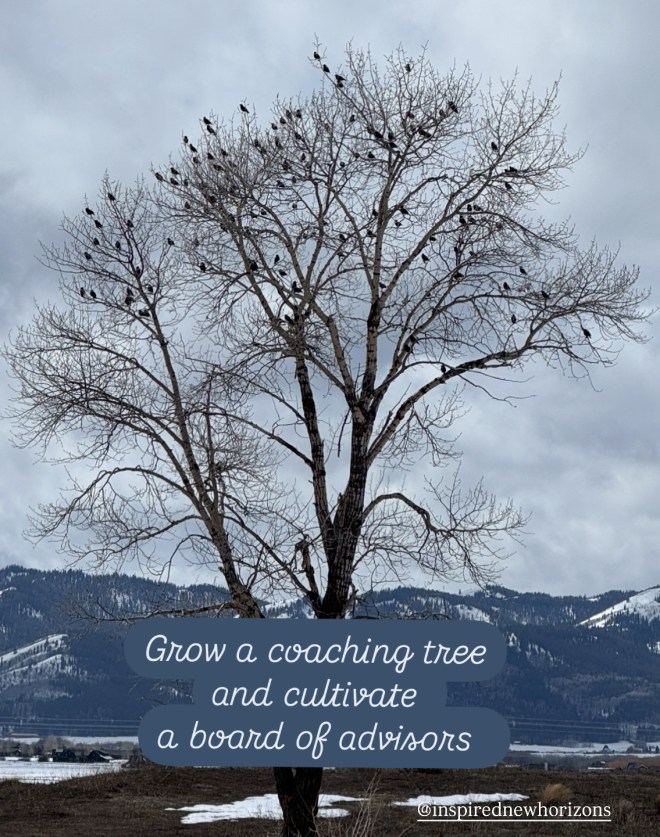
A Coaching Tree & Board of Advisors

Have you shifted the image of your past experiences and lessons learned into that of your personal greenhouse library, chock full of invaluable reference material?

If so, you are ready to add a Coaching Tree and a Board of Advisors.

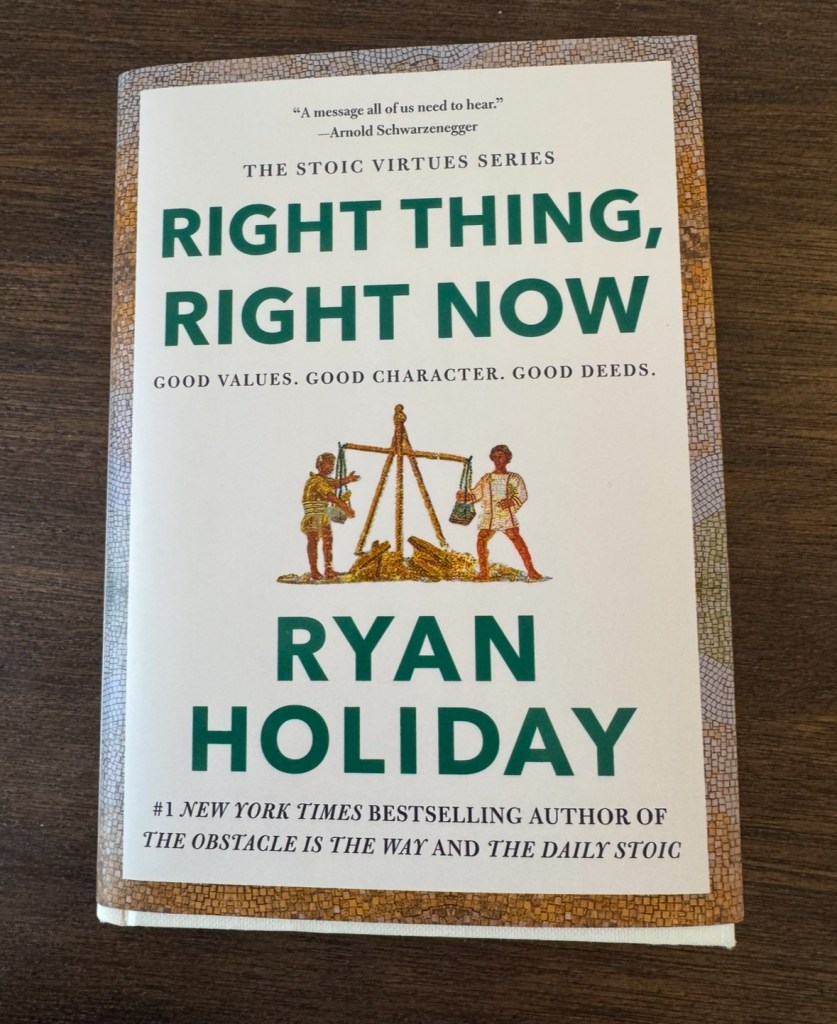
Ryan Holiday, author of the Daily Stoic, has long been a strong proponent of a coaching tree. In fact, he dedicates a chapter in his latest book, Right Thing, Right Now to this very concept. Ryan takes a powerful working model for a coaching tree from professional sports teams and adapts it for our personal use.

It is so easy for us to visualize all the branches of support that professional athletes have to help them be their best. We see them on the sidelines on game day – the head coach, assistant coaches, trainers and teammates. We may be less cognizant of the many others who support the athletes, but they have an integral role too. Physical therapists, nutritionists, sports psychologists and family members are all part of the coaching team that provides daily support to bring out a player’s best.

Professional coaches and athletes depend upon coaching trees to foster growth and excellence. The benefits go both ways — a good coach not only offers guidance and guardrails, he also learns from each player, their unique talents and potential and how they integrate what he teaches. These insights deepen his knowledge and hone his skills for working with other players.

Think of the coach as the roots of a tree, growing deeper and stronger with each athlete and assistant coach he is developing. Then visualize how each player and assistant coach takes the knowledge, wisdom and discipline from the coach and branches out on their own. Now you have the concept and visuals image for a coaching tree.

Ryan Holiday recognizes the invaluable interplay that comes from a student/teacher relationship: learning and discovery go both ways. Adam Grant also knows this to be true — that the best way to learn something is to teach it.

When we create our own personal coaching tree, we amplify our potential for fast-tracking self discovery and personal growth. We practice our life and relationship skills, putting in the daily reps in diverse ways. We keep our core operating systems (our brains and bodies) well maintained and updated. Personal growth and self discovery are not a once and done process, but rather a continual lifetime of learning and growing — just like a tree.

Who has been a rock solid role model for you? Someone who actually practices what they preach, who leads by example?

Who have you turned to when you needed help with a specific situation — someone that you know has had a similar experience and somehow came through it stronger and more authentic as a result?

Who do you wish you could be more like – that one person that possesses signature strengths that you wish you had?

When we ask ourselves these types of questions, we begin to see that we are naturally drawn to certain people for specific attributes that we want to foster in our own lives. Just like pro athletes, we become an amalgamation of the people we admire and who inspire us. We become a well-rounded person by drawing on the diverse strengths of our favorite mentors, coaches and role models.

Ryan Holiday emphasizes that a coaching tree becomes an evergreen “give and take” organic process for personal growth and paying it forward. We take what we need from our role models and personalize it for us. We just don’t “copy and paste” what they do — we make it our own. As we become more skilled and practiced with these new attributes, others will come to us — and ask us for help. We pass on not only what we have learned from our mentors – but also how we personalized it. We “take” what we need for self improvement and we “give” tips and tools to others discover what works best for them.

Here’s a real life example and one that you will find relatable: A friend called me when she had some very difficult personal decisions to make for her spouse with a very serious health issue. She knew I had some real life experience with tough choices that require a delicate balance between practicality and big emotions. I became her sounding board, a grounded friend who could help her sort out the pieces and make the best decision for both herself and her husband’s long term special needs. This didn’t happen in a day — it was months and even years of long conversations, of listening and learning, of being honest about doubts and second guesses and lots of empathy, validation and reassurance that each choice was a building block for her making the right decisions each step of the way.

My friend grew in remarkable ways through this very difficult life challenge. She not only handled one of life’s most emotionally tender realities with grace, compassion and love, she learned a lot about herself along the way. She survived — and she thrived. Today she leads support groups, she offers wise, personalized counsel to others facing similar long term care situations, and she has championed changes in memory care facilities in her community.

Guess what she does for me and has been for years — she forwards my Daily Gummy of Wisdom to a her big circle of friends every single day, along with her own insights. She is paying it forward and causing a ripple effect that is making a meaningful difference for more people than we can ever know.

Spend some time reflecting on the people who have shaped your life, especially during times when you faced adversity, golden opportunities and pivotal moments. Who provided encouragement, saw your inner strengths and hidden potential; who listened, validated and reminded you of just how far you’ve come? These are prime examples of those you want perched in your coaching tree.

Be intentional and discerning as you grow your coaching tree.

The coaching tree image helps us to see with greater clarity the work we have to do alone, the scaffolding we get from others to help us in this process — and how we can return the favor by helping others.

This is not always viewed as positive however. People like us to stay the same because they believe they can accurately predict how we will behave and react – and they can make contingency plans to cope with what they have come to expect. These contingency plans are coping skills, protective armor and behavioral modifications.

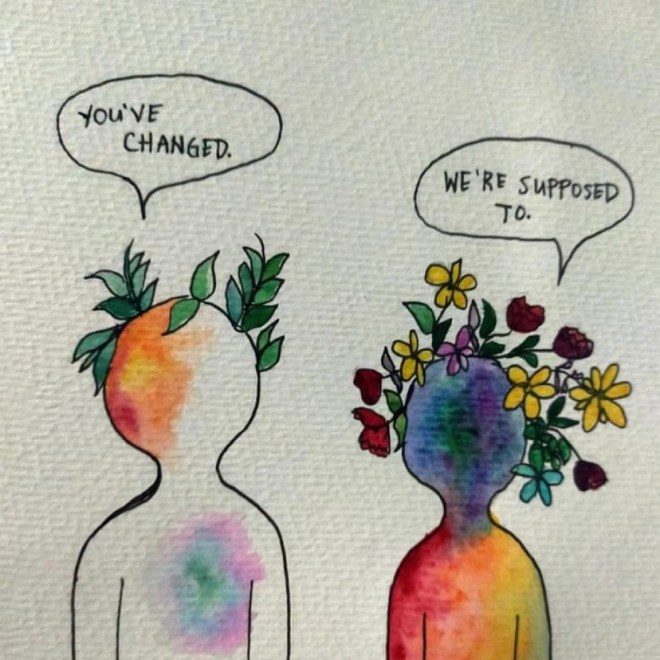
As a result, when we change and make significant self improvements, others have to change their predictions about us. All those old tricks of the trade people once relied on to “meet you where you were” are no longer needed. In fact, others who still resort to shape shifting, conflict avoidance or cognitive dissonance may stunt the very growth we are pursuing.

Even when our self improvement changes make us easier to live with, it takes a long while for others to trust it. There’s a big gap between the old you and this new & improved version of you. It takes a leap of faith to bridge it — and yes, it requires other people to make some changes too.

This is precisely why we shouldn’t do this work in the dark.

We need all the help we can get when we are fostering personal growth and self awareness. Just as a young tree needs rich soil, sunlight, water and wind, we too need a few scoops of miracle grow and some scaffolding to help us get grounded and sprouted.

When we embark on self improvement and self discovery plans, we should tell our family and friends so it is not a secret. After all, we’d tell them if we were trying to cut back on daily desserts or wanted to stop drinking alcohol. Being open up our commitment to change, helps others support us in meaningful ways. It also helps them re-program their predictions about us. That’s a win-win.

When we proactively seek help with the changes we want to make, we bring our intentions out into the light of day. Just like a tree cannot grow with the right conditions and nutrients, the same is true for us. We need a good support system. Ethan Kross, author of Shift, encourages us to create a board of advisors.

Just like a board of directors for a company or non-profit, we need some diversity in our personal board of advisors. While it is very helpful to have like-minded folks who are also committed to personal growth, Ethan reminds us there is no “one size fits all approach”. There are a plethora of resources, tools and modalities that can be personalized to match what works best for us — just like a physical fitness plan.

In a recent Happiness Lab podcast conversation with Dr. Laurie Santos, Ethan Kross shared the importance of having a personal board of directors to help us when we get stuck, noting that strong emotions and self doubts can derail us.

We need friends and family members who can help us get a fresh perspective, pull us out of a rumination cycle and reframe our situation. These are the folks that should be on our personal board of directors.

Who are you going to call? Not ghostbusters! You are going to call an emotional advisory board member.

We all get emotionally triggered – and sometimes in a very big way. It keeps us stuck and pulls us back into old reactionary patterns of behavior. Having that one friend who understands and validates us when we are triggered is the first line of defense. It takes a long time and lots of practice to lessen the tug of emotional triggers and it is also some of the most freeing work you’ll ever do. Enlist someone who has done this work and has great success. Put that person on your board of directors.

All too often, we get stuck in some one-track thinking. We know we need a different vantage point, but our own strong emotions or self doubts, just keep us gridlocked. Do you have a friend who is really good at reframing your current situation and helping you see what you are missing? Someone who flips a situation from negative to positive as though she had a magic wand? People who have deliberately worked on breaking free from the auto-pilot of our brain’s negative default mode are the best advisors for reframing and fresh perspectives. Who do you know readily views a situation from many different points of view? That’s person is a great candidate for your board of directors.

Have you ever asked yourself “What am I missing?” There are times when we are exhausted from all the effort we put in, but we come to the realization that we are not making any progress. In these situations, we may have a big blindspot and an accompanying lack of self awareness. So we find ourselves asking — “why does this keep happening to me or why can’t I catch a break?” Adam Grant offers sound advice for times like this: recruit a “disagreeable giver” for your board of directors.

A “disagreeable giver” is our challenge friend. Chances are you already have one of these people in your life — but you haven’t tapped into the gifts they offer. You may even find yourself resisting the good points they make.

“Disagreeable givers” respectfully and thoughtfully challenge our ideas and opinions – even (and especially) when it might be uncomfortable. Their goal is to help us see our blind spots and move us to better decision making. A caring challenge friend wants the best for us; they are often tired of seeing us so exhausted from our hamster wheel. Challenge friends are not afraid of having hard conversations; they know your life will get easier once you have a breakthrough. Fill that spot on your board of directors with a trustworthy challenge friend.

There will be times when we need a specialist for whatever life has thrown at us. Someone who has had a similar experience and is on the other side of it. It might be a health crisis, a divorce, the loss of a loved one or dealing with family estrangements. This is when we need someone on our board of advisors who has a working knowledge of the many complexities of a shared experience. What we get from people who “have been there” is what we would find in a support group. Yet it is even better because it is personalized empathy, care and healing.

When life hands you a deeply emotional adversity, be intentional about who can best help you. Recognize that you are fragile, your thinking is clouded, and you don’t have deep inner resources to draw on. You need someone who can go deep with you and not drown in your emotions. Who can help you weather this storm and keep you afloat til you are able to do it alone. That’s the specialist you want on your advisory board in the hard times.

There’s one more advisory board member you most definitely want to add — someone who makes you laugh, who loves to play, who brings a lightness and freshness with ease. Who brings out your inner child? Who is that one friend that makes you feel like a 7 year old – running with arms outstretched towards each other laughing with pure delight? Give that person a special seat on your advisory board. Call them often, go on adventures and collect joy.

This may be the first time in our human evolution that we become intentional about the lifelong process of learning and growing. Over the past twenty years, bits and pieces of knowledge and wisdom were floating around, but hadn’t yet congealed into the solid, science-backed insights we now have.

Now we know that emotional intelligence is a uniquely human feature. But we didn’t know that it was a foundational component of our human operating system, so we didn’t integrate it. We floundered for far too long, misguided because our core GPS wasn’t installed. Emotions are data – they point us in the right direction and help us get more out of life.

We are now in a fascinating experimental stage – where we get to play around with the full installation of emotional intelligence and make incredible discoveries about ourselves and others.

Rather than fumbling around and feeling unsure about our growth spurts, our hidden potential and how we stunt our growth – we can build a coaching program. We will get the most out of these new science-based breakthroughs by growing a strong coaching tree and developing a personalized board of advisors.

We will fast track our new knowledge, tools and skills by learning from each other and building on each other’s insights.

By getting very intentional about the 5 people we spend the most time with and how we show up with each other, we can shift our families and circles of friends into a lifetime of healthier, more meaningful personal growth and self discovery.

Ryan Holiday’s blog post This Is The Accomplishment That Matters Most:
https://ryanholiday.net/this-is-the-accomplishment-that-matters-most/
Check out this short video from Adam Grant about having a challenge network:
https://www.youtube.com/watch?v=8T79PZvUUd4&t=69s
Check out this episode with Ethan Kross: Harnessing the People Around Us to Feel Happier https://podcasts.apple.com/us/podcast/the-happiness-lab-with-dr-laurie-santos/id1474245040?i=1000697654175

Character Development

Have you ever considered just how much the stories that we tell ourselves shape and mold our lives? Not just on a daily basis but throughout our lifespan.

Our stories impact how we meet pivotal moments that can shift the trajectory of our lives. They can become stumbling blocks or lighted pathways, cautionary tales or calls to adventure, footholds or landslides.

This is a compelling reason why we are so drawn to movies and books based on Joseph Campbell’s “hero’s journey” framework: the protagonists sets out, has transformative adventures and returns home a better person for it all. Our own lives are a continual unfolding of many experiences that do transform us. How many times have you reinvented yourself? How many times did a life event change you?

The stories we tell ourselves when we are facing opportunities and challenges can open doors or slam them shut. If we can be more proactive and empowered in how we meet these transforming moments in our life, we will create an ever emerging main character in the stories we tell ourselves.

We evolve just like our favorite characters in a long running book or movie series. Take a few moments to realize how much Harry Potter or Dorothy from the Wizard of Oz grow in character development over the years of a continual book series or multiple remakes of a classic.

A writer spends an inordinate amount of time on character development. The story arc provides the framework for the character to face challenges, make important self discoveries and grow through the experience.

However the stories we usually tell ourselves do the opposite — they keep us gridlocked in limiting beliefs about ourselves. We reinforce old narratives rather than re-writing the script to encourage our own character development.

We have rich resource material that we can readily access to better support our life-long character development. We’ve just been looking at it and applying it in all the wrong ways for centuries. In my last blog post entitled “Better Scripts, Better Stories” I offered a strong visual image of a greenhouse library to fast-track a dynamic new way to think about our inner database of life lessons and lived experiences.

A powerful visual image can psychologically shift us faster than any written or spoken words. Don’t you feel this shift in your mind and body when you imagine wandering through a greenhouse library? Exploring our very own reference material in this new light shifts us from dread about rummaging through the past, to one of eagerness and curiosity instead.

Brene Brown has written for over two decades about how much we have armored up to go out and do battle with the world, defending and protecting ourselves at great personal cost. I like to think of her as one of our most courageous pioneers who was willing to do the really hard work of blazing a new trail for all of us – by cutting down the strangling vines and overgrown weeds that prevented us from accessing our own “secret garden” — our personal greenhouse library.

The fact that Brene touched a collective nerve with her viral Ted Talk decades ago about shame and vulnerability was a clear indication that we were all feeling weighted down by our protective armor and exhausted from dragging around emotional baggage.

The deeper Brene went into the weeds, the more it became evident that the root cause was a complete misunderstanding of the integral role our emotions play in the stories we tell ourselves. We’d been protecting ourselves from emotions instead of engaging them. It would be analogous to spending our whole lives wearing our outgrown clothes inside out.

Additionally, many of us get trapped in old stories because of the identity labels that were stuck to us. We were scaredy-cats, wallflowers, natural born athletes or brainiacs, winners or losers. When we were kids, it was a common mistake to apply the fundamental attribution error to “who we were”.

Fundamental attribution error is a cognitive bias that causes people to over-emphasize personality traits and under-estimate situational factors. As a result, a kid that runs late gets labeled as “lazy”, a child who struggles with emotional control gets labeled “too sensitive, unruly or bad”.

If ever we needed to “stop judging a book by its cover” — it is now. We are all prone to apply the fundamental attribution error to others and label them, which limits them in their character development. We even label ourselves — we identify as perfectionists, people pleasers, procrastinators, worry warts and air heads.

In our “greenhouse library”, we can stop judging a book by its cover and peel a limiting label. We can read between the lines of our old narratives and discover lessons we may have missed.

If Brene Brown was the one who pulled the weeds and unearthed the tap roots of our limiting stories, Ethan Kross just might be the one who takes us by the hand and helps us reframe the integral role emotions play in the stories we tell ourselves to shift us toward proactive character development.

Ethan Kross has titled his newest book “Shift” for good reason. He proclaims that we are at a collective inflection point – where integrating emotions is the transformational pivot we need most. Emotions are not something to be avoided and to guard against. Emotions are our internal guidance system — invaluable data points and highly personal information that are the drivers of good decisions and building blocks for our character development.

Emotions are not a bug or human design flaw. Emotions are a uniquely human, dynamic operating feature.

All this time we have been treating emotional intelligence as a pesky infestation – when in reality our emotions are pollinators.

Our emotions, combined with our backstories, lived experiences and life lessons become the “care instructions” for our individual personal growth. We can provide ourselves the right environment and nutrients to thrive and flourish.

Picture those little tags tucked into the soil of potted plant that tell you just what a particular plant needs in order to thrive. How much sunlight, a preferred temperature range, water, and room to grow so clearly defined on a tiny plastic instruction card.

Aren’t we all just like plants? Ask any parent of more than one child and they will quickly confirm that each child requires something a little different in order to be their most authentic selves.

Ethan Kross reveals to us in his book Shift that our beliefs are often what limits us from growing. We hold steadfast to beliefs that were planted in our minds as kids. But just like a greenhouse plant, we grew in spite of the pot we were in or an environment not suited to our needs. Most of our discomfort comes from being rootbound, starved for nutrients and improved conditions that match our unique requirements to thrive.

If you’ve ever weeded an overgrown garden or rescued a sad looking plant from the sale rack of your local nursery, then you are already quite familiar with just how rewarding and satisfying this work can be. This is the shift we want to make for ourselves too. Personal growth and self discovery work is similarly rewarding and doesn’t have to be so pain-staking.

In a recent podcast conversation, Dr. Marc Brackett and Dacher Keltner, actively discussed the old mindset that we all had around emotions — we labeled them as good or bad, positive or negative. This made it even harder to change our belief system about the intrinsic value of every single one of our emotions. Dacher Keltner, a psychology professor at Berkley, is a phenomenal resource for shifting our beliefs about emotions like grief and sadness. He assures us that there is beauty and comfort in sadness. Dacher tells us that it is okay to feel embarrassed and angry. We have so much to learn from these rich emotions that connect us in a very deep way to what is most important.

Dacher Keltner wrote his inspirational book “Awe” when he was steeped in grief over the death of his beloved brother. It is a testament to all that he teaches about those emotions we once believed were better left alone and ignored. Dacher was also the scientific consultant for both “Inside Out” movies helping to teach us about biological and evolutionary origins of compassion, awe, love, empathy and emotional expression.

Once again, we are learning that our societal belief systems about emotions were rooted in labels and misunderstandings. We doubled down both individually and collectively — giving emotions a bad rap.

Are you game for a transformational shift in the way you think about personal growth and self discovery? Can you imagine your backstory, past and present experiences, and life lessons as your personal “greenhouse library” of highly personalized reference material? Will you train your inner voice to be your compassionate, encouraging life coach (more like a best friend than inner critic)?

Most importantly, will you begin to use your emotional intelligence as your core operating system for navigating life? Treat your emotions as though they were the latest, greatest technological upgrade you could possibly download and install.

No more armor and emotional baggage weighting us down and limiting our character development.

We can tell ourselves much better stories – the kind we often read as kids that helped us dream bigger, imagine a life of our own design, and continuously, curiously making new discoveries about ourselves and the world around us.

RECOMMENDED RESOURCES:

Read SHIFT by Ethan Kross to learn about this inflection point for integrating our emotions and using them to drive our lives in the best directions for us. We let our emotions be the driver for too long — they are actually meant to provide signals and directions not drive the car.
Check out this YouTube podcast episode with Dr. Marc Brackett and Dacher Keltner.
https://www.youtube.com/watch?v=Q1ObQdCYY6I
Check out the HOW WE FEEL app, developed by Dr. Marc Brackett at the Yale Center for Emotional Intelligence. It’s free and it’s fun to use. Kids love it too! Andrew Huberman recommends this app on his podcast

Better Scripts, Better Stories

What if we all had access to an incredible library of rich, engaging reference material for the stories we tell ourselves?

Instead of rummaging through old baggage accompanied by a judgmental inner critic telling ourselves stories that usually aren’t very helpful, we could flip the script.

We could build a dynamic database of reference material that could be repurposed time and again to write relevant stories that truly help us rather than restrict us.

Better scripts. Better stories.

If the stories we tell ourselves throughout our lives keep us trapped in small versions of ourselves, snagged on shards of shame, fear or insecurities, and limit us from seeing valuable context clues for building the life we want — we will miss the golden opportunities that are often right before our eyes.

If we are constantly second guessing ourselves and worried about other people’s opinions, we will never be able to fully tap into our own dynamic and unique character development. We will write ourselves as supporting cast members instead of taking the leading role we should have in our own personal development.

Knowing ourselves well and having access to our ever-evolving inner database of rich raw material cultivated from our experiences, emotions and mentors will be the giant transformational step in the better stories we tell ourselves all throughout our lives.

Ethan Kross, author of Chatter; The Voice In Our Heads and Why It Matters, recently shared that we are at a pivotal inflection point right now. His latest book, Shift, is an open invitation to embrace this transformational reframing of the voice in our heads and the database we all have in our bodies and brains as a resource not a roadblock.

How do we turn a centuries old paradigm on its head? The one that had us believing our inner library was just a dark, dusty basement full of stuff we’d rather forget?

We do a major renovation – that’s how. No more dimly lit basements or scary attics. We build greenhouse libraries instead!

Sit with that image for a few moments and feel just how inviting it would be to linger in that welcoming greenhouse — to explore your own personal growth in a warm, well lit, inviting environment with a vast library of inspiring stories of courage, creativity and curiosity.

No more inner critic curmudgeon constantly saying “I told you so” while opening the creaking lids of old baggage rummaging for proof that we’d never measure up. No more donning old protective armor or hand me down behavioral patterns.

Out with that crotchety inner critic stuck in the past who keeps us entangled in an unpruned past. In with an insightful, inspiring inner voice instead – one that continually reminds us how far we’ve come, what we are capable of and all our unexplored hidden potential yet to be discovered.

Our inner voice would be he head librarian and life coach of our personal greenhouse library — an effervescent mentor with a knack for using intuition and gut instincts as a guide for the best reference material suitable for our present day adventures and obstacles.

This is the major undertaking that we are all being encouraged to embrace thanks to neuroscience, psychology and vastly improved parenting models. This is the very inflection point that Ethan Kross tells us has arrived. We are long overdue for this healthy, space-clearing renovation and modern upgrade.

Each and everyone of us has the opportunity to write better stories that we tell ourselves. For many of us, it does mean that we have to clear out that metaphorical attic and basement in order to make room for the personal growth databases we can maintain in our greenhouse library.

For our younger generations, we can help them build their own greenhouse library from the get go. Tear down any shaky foundations currently under construction for that misguided inner critic and storing of unhealthy emotional baggage. Make room for a new tenant – a strong, flexible and resourceful inner coach and a vast, continuously updated library of worthy reference materials.

This is how we pivot from a harsh and unhelpful inner critic who restricts our growth to a dynamic personal life coach — an inner voice that is trustworthy, truthful and has been trained to help us set ourselves up for success.

The second major pivot is to reframe our past experiences, processed and unprocessed emotions and prior stories as history lessons, rich raw material and sources of inspiration and motivation. We can write and re-write better stories to tell ourselves when we view our internal database as an endless resource library for our lifelong personal growth.

Let’s get a sense of how it would feel to tap into an inviting database to explore creative new ways to tackle a problem or make the most of an unexpected opportunity.

In that old cob-webbed model, your crotchety inner critic would be jumping erratically on your shoulder playing the same old broken record on a loudspeaker – “you can’t do that or you don’t have what it takes.”

In the new updated and integrated model, your personal life coach and supportive mentor meets you where you are. Your inner voice takes your hand and validates that what you are experiencing is hard. Your calm inner voice asks you “what does help look like right now?” Your inner life coach reminds you that you can do hard things. That inner life coach can show you all the places from your past where you did overcome adversity, met challenges and set your sights high.

Are you beginning to “feel” the marked difference between a debilitating inner critic and a supportive inner coach?

Are you able to imagine that your backstory, lived experiences and knowledge you’ve gained along the way have created a dynamic personal reference library (and not a musty, dusty storage unit of things best forgotten).

The inflection point that Ethan Kross talks about is this pivotal shift from inner critic to inner life coach. Ethan encourages us to accept the invitation to shift our thinking and to use our emotions as data points they are for helping us live a balanced, rewarding and generative life.

Adam Grant, organizational psychologist, echoes what Ethan Kross is promoting — and he adds that one of the best ways to quickly integrate this transformational new way of using our inner voice is to teach it. In his recent conversation with Dr. Becky Kennedy, the parenting expert that has built her practice on this modern model of emotional integration, they both acknowledged that shifting into inner coaching is how we fast track ourselves and our kids into this better human operating system.

Dr. Becky points out that we can “re-parent” ourselves while we are teaching our kids all about emotional intelligence and emotional regulation. We help our kids build a massive emotional vocabulary and as we are doing that, we are updating and rebuilding our own.

As we teach our kids that emotions are not scary, not to be avoided and are actually incredible data points for getting to know ourselves well, we are also reinforcing this messaging for ourselves.

As we become more familiar with our inner greenhouse library reference material – and we let our inner voice guide us as a life coach would — we will naturally be role-modeling how easy it is to access helpful internal information. Now we get the benefit of osmosis to easily facilitate our kids building their own personalized internal resources.

What we once relegated to the dusty basement is the core operating system in our greenhouse library: Emotional Intelligence.

It is precisely why Ethan Kross entitled his newest book Shift: Managing Your Emotions So They Don’t Manage You.

It is also why Dr. Becky Kennedy tells us that punishments don’t work. We need to be teaching our kids how to process and manage their emotions. They cannot learn that and acquire the skills and tools they need for emotional intelligence by being punished. Punishments only result in the old baggage stored in dusty, dingy basements with the scolding inner critic.

If you don’t have kids or are not a grandparent, don’t feel that you are missing the boat of this transformational inflection point. We all have family members and friends to support. And Adam Grant’s principle applies here too: We can reinforce our own learning by teaching. As we integrate emotions, expand our emotional vocabulary and get betting at regulating our emotions, we can share what we are learning with others.

Let’s consider the impact we have on others when we rely on an inner critic, old baggage and unhelpful stories we tell ourselves.

When we are inconsistent in how we show up for our kids, our spouses, siblings or parents — we pour out a lot of mixed messages, confusing signals and big margins for error. Especially prediction errors. Our inconsistency in controlling our emotions and reacting to common everyday occurrences really messes with everyone’s ability to do the two things our brains are naturally hard-wired to do: make predictions and make sense of what is happening by finding meaning.

Did you know that psychologists point out that our inner critic is comprised of the voices and messages we heard most often in childhood. Parents, siblings, grandparents, caregivers and teachers contributed to that inner voice that helps us co-author the stories we tell ourselves.

Our inner critic has such a loud voice that it often drowns out what our inner self is trying to tell us. How can we trust our gut instincts and intuition if we can’t hear it?

When we put this into perspective, it helps us shift out of our reactive, driverless auto pilot. We become more cognizant that we are training those inner voices of our loved ones to hear better scripts. In turn, they will be able to tell themselves better stories. Just like AI, we are providing input to others that will either help or hinder them in the future. Do we want to develop a loud, harsh inner critic — or a dynamic, inspirational life coach?

Our most important roles in life are that of parent, partner, sibling and friend. We are real life coaches for each other in each of those roles. After all, our learning and growing is a lifelong process, not one that stops when we reach our full height or our brain has fully developed (which doesn’t occur til our mid-twenties). We all need life coaches to help us navigate life with healthy skills, tools, inner resources and strong support systems.

Just imagine if we all accepted the invitation to pivot as Ethan Kross suggests? We are at a major inflection point in our human evolution thanks to science-backed evidence of how our brains, our emotions and our inner voices are intended to work as an integrated team.

Wouldn’t you rather trust yourself to make the best decisions throughout your life than a harsh inner critic? Wouldn’t you love an inner voice who often sounded most like reassuring, encouraging and supportive parents who kept you safe? Wouldn’t you love an inner life coach that was an amalgamation of parents, grandparents, teachers, coaches and mentors who scaffolded you through some of your most remarkable life experiences?

Better resources, better skills and tools. Better stories we can tell ourselves.

P.S. I credit my young grandson for the image of a greenhouse library that he offered to me. He said he would build me one some day. He already has.

Ethan Kross not only explains why all that chatter in our heads is disruptive, he gives us great tools to harness it. A very informative and relatable read.
Ethan’s newest book comes out in early February, 2025. He has been promoting his latest book on podcasts. It was his conversation with Dr. Laurie Santos on the Happiness Lab that contributed greatly to this blog post.

The Stories We Tell Ourselves

Some of the most fabricated stories we will ever hear are the ones we tell ourselves. They keep us spellbound — holding our attention so completely that we can barely focus on anything else.

If you have ever doubted that you possess a wild imagination and a flair for creative writing, look no further than the many stories that you tell yourself during the course of one normal day.

We are so skilled at crafting these stories that often we don’t even realize we’ve actually taken the time to pen them with invisible ink in our minds. Sometimes it even feels as though we’ve used permanent markers to write them. The stories we tell ourselves impact our lives in ways we can’t even imagine.

During the course of one ordinary day, we can tell ourselves more stories than a two year old demands at bedtime.

The alarm goes off and you hit the snooze button, telling yourself that 15 more minutes in bed won’t make a big difference. Later when you are frantically searching for your car keys, chugging coffee and yelling at everyone to hurry up and get in the car, you create another story. Now you tell yourself are undisciplined for hitting that snooze button yet again; when will you learn and why can’t you ever catch a break? Next thing you know, your car’s GPS announces there are traffic delays on your route and presto, your inner critic becomes a personal ghost writer. You can almost hear the melodramatic music accompanying the litany of ways you will be forever doomed to failure as your inner critics pounds those typewriter keys.

Those early morning story lines can become a snowball rolling down a hill. Let’s face it, once the inner critic takes over, the plot doesn’t change much and there is very little room for character development. The stories we tell ourselves can block us from the very change we so desperately want.

We are natural born storytellers, each and every one of us. Our brains and bodies are these phenomenal meaning making machines. It is a core function of our brains to make sense of the world by constructing narratives and understanding based on our past history and our unique perspectives. We tell ourselves the story we need to hear in order to process and integrate our lived experience.

When we are crafting those stories we tell ourselves, we can find ourselves rummaging through the old card catalog files in our brain’s database looking for the genre that matches how we feel. Picture a dimly lit basement in an old library with sections labeled “Scaredy Cat” “Underachiever” “Timid Wallflower” “Too Much” or “Born Loser”. (I hope that imagery makes you laugh – It’s intended to help you get the bigger picture.)

If we keep going back to the same old resources as the basis for the stories we tell ourselves, then our series is not going to evolve. And there will be little room for our own character development. This is how we get stuck in the stories of our own making.

How often have you read a book or heard a podcast where someone shares just how stuck they were in an old narrative? They let a strong identity from a past chapter of their life take the lead role in all their unfolding newer stories. Once an addict, always an addict. Once a lost soul, always a lost soul.

Take a few minutes right now to think about all those things you believed were true about who you were as a child – and how you have shattered those limiting beliefs by all that you have actually done and accomplished over the years. Were you told you weren’t athletic but now you run races, play competitive tennis or belong to a local hiking club? Were you told you weren’t very smart, yet you have earned a degree or certification in a field that fascinates you?

Those limiting narratives stored in our dimly lit library are so outdated. It is mindlessly going back to that old reference material that limits our ability to shift our narratives. Of course we have changed — and so should the script for the stories we tell ourselves.

The proof is in the pudding.

The very same set of circumstances on any given day will end up with strikingly different stories. Many of the stories we tell ourselves depend greatly on how we are feeling in the moment and our ability to effectively regulate our emotions. The stories we tell ourselves are rather like a “choose your own adventure” book. There are endless possibilities.

We go in search of data from our past. We simply copy, cut and paste all the old familiar plots into the present story we are creating.

We do our best to make sense of what is happening right now pulling from past experiences – and frequently without any editing or updated research.

We even let our inner critic tell the story without a single challenge. This is precisely how we let something from our past foreshadow what might happen in the future – by staying in an old narrative that was never revised.

You landed that dream job but you tell yourself you will likely be unsuccessful, just like the last dream job you had. You make a new friend but you predict that over time, this friendship will also fade away like so many others. You pursue a new hobby but you tell yourself you will never master it like the others.

Not only are our brains meaning making machines, they are also prediction machines — and these two go hand in hand. If we don’t update old narratives, then we also limit our ability to accurately make better predictions.

Even if we don’t intentionally go in and update our old databases, we are ever-changing. Each experience we have shapes us in some way. We are constantly taking in new information, expanding our inner libraries and making genuine progress in many areas of our lives. The reality is that we don’t often flip the switch and explore the newest additions to our database.

Just imagine what incredible material you might find there! Dr. Ellen Langer, author of the Mindful Body, tells us that when we stay current with all the changes and experiences we have, we vastly expand our inner library. We can make any decision the right decision, because we have viewfinders that are more like kaleidoscopes than microscopes.

Dr. Langer reminds us that we have no way of knowing which was the optimum decision – staying in the old job or pursuing the new dream job. The pivot is in making the decision the right one. Was there something we could have done differently in the old job that would have restimulated our passion for it? How we will go into this new job — with a better prediction for its outcome, supported with new approaches to the opportunity? Either choice then becomes right choice.

The best way to help yourself become better at telling yourself stories that support you in positive ways is update your inner library resources. It is two fold — you need to update those old narratives and limiting beliefs and you need to get more creative with your predictions.

There is one more thing that requires our attention — we can work toward getting more comfortable with uncertainty. None of us knows what the future holds. We can stay gridlocked in our fears about the unknown or we can reflect on just how much uncertainty we have already experienced. Not only did we survive uncertainty, we grew through it!

When we were kids we had no way of knowing what our adult lives would look like. When we became parents, we had no idea what our babies would teach us and how remarkably unique each child would be. We learned to drive cars without power steering and we used paper maps for road trips. Today we drive cars with more technology built in than we could have ever imagined. We once took paper checks to a brick and mortar bank to deposit and get cash. Today, our phones have replaced every aspect of cash transactions.

We are not afraid of change in so many aspects of our daily lives. The last frontier to be explored when it comes to change and uncertainty are in the stories we tell ourselves.

When we tell ourselves better stories — chock full of diverse, colorful and rich real life experiences in our well lit, expansive inner database, we will live with more self awareness and creativity. The possibilities will be endless.

Dr. Ellen Langer is an engaging and dynamic person who views life through a kaleidoscope lens. She opens us up to how remarkable it is to live life in a constant state of curiosity.
Get out of your head and into your life by harnessing that inner voice/inner critic that blindsides us time and again. You can also listen to Ethan Kross discuss his book on the Huberman Lab podcast.
Check out this Podcast episode with Dr. Marc Brackett and Dr. Becky Kennedy. Even if you aren’t a parent, what they discuss will expand your knowledge of emotional integration and regulation for the stories you tell yourself. https://www.youtube.com/watch?v=c6KYwizMW94