The Stories We Tell Ourselves – Part 2

Grab some paper and a pen. Make a list of the many roles you have in your life. Start with an ordinary day — and then expand it out to a week, then a month. Be thorough and thoughtful about the many places you show up and play a part. Start with your immediate family then expand the lens to work and your community.

You may be a spouse and a parent, an employee or entrepreneur, a sibling, a grandparent, aunt or uncle, a best friend, a youth soccer coach, a golfer or triathlete, a musician in the local orchestra, a training buddy, a book club member, a podcaster, a creator, a caregiver, a community volunteer. Chances are the list is much longer than you think.

No wonder we are so complex, fascinating and mind-boggling all at once! We wear a lot of hats and juggle many responsibilities and have a host of hobbies and interests. But wait — there’s more!

Did you know that embedded in all the different roles we have, we also have a specific identity associated with each one. These multiple identities are like the unique blueprints we bring to the roles we play. There is a lot of nuance in these multiple identities because we draw on different characteristics of who we are to highlight the ones that best fit the role we are in.

Ryan Holiday tells us that a great tool for helping us show up as the best version of ourselves in any given situation is to ask: What is my role right now?

This simple question quickly crystallizes our responsibility and our strengths that we bring to the table in the role we now play. Our identity for that specific role becomes the template and the filter for how we show up. It is our unique blueprint.

Ryan’s poignant question grounds by reminding us of the identity we assume as a parent, a spouse, a work colleague, sibling or friend. When we connect with our role, we also connect with our goal. That identity we bring to each role becomes the framework and guardrails for how we show up.

If we fail to ask this question about the role we play in any given situation, we may unconsciously default to another of our roles and bring the wrong attributes to the table. We’ve all done this and in hindsight, we readily recognize we played a part in the clumsy, confusing way things unfolded.

Mel Robbins tells us that we all have an inner 8 year old that can show up unchecked, disregulated and unruly — and if we let that character step in to a role well beyond his or her job description and matching skills, that’s a recipe for disaster.

Most of us never stop to reflect on the many roles we have in our lives and the blueprint we have curated to help us do our best in each one. And here’s a surprising revelation – if we don’t consciously develop a strong job description for each role we play, we are going to default to the inner child quite often. This is often referred to as our “unconscious” self – and that’s where so many of the old stories we tell ourselves become the script for knee jerk reactions.

Knee jerk emotional reactions come from the past. Old stories we’ve told ourselves trap us in our amygdala; it links our current emotions to old memories. Which is precisely why we can act like an 8 year instead of a rational, mature adult. We viscerally feel our emotions and our amygdala supplies all the data we need to remind us of past times when we felt just like that — and underscores a feeling of helplessness (a lack of personal agency). When we were 8, we didn’t have skills and tools to help us understand and regulate our emotions. We only had the warning signs and basic reactions. We hadn’t yet developed our strong sense of self and built reliance on our own agency.

Ryan’s question prompts us to remember that we are no longer a helpless, overwhelmed kid. We have adult roles now and the ability to shift into the executive function of our brains. That one simple question flips the switch in our brain — and gets us running on the right track — our executive function. We can catch ourselves before we shrink ourselves to age 8 and pivot to our better equipped grown up self.

How does this dovetail with our roles and our identities? Well, we develop blueprints for how we want to show up in the various roles we have. We even start this process as kids — when we tell ourselves that when we grow up, we will parent differently or we will handle life’s challenges more responsibly. Those blueprints help us craft the identities we rely on for each role.

As we move through our lives, we update those identities much like we update our resumes. As we become more skilled in any of our roles, we add and subtract from the identity we’ve created for each role. We are always a “work in progress” and we thrive when we have a very strong sense of self and tap into our personal agency frequently. We get to choose how we conduct ourselves in each role — and we feel good when our emotions match our actions.

This is where we can pair Ryan’s question – “what is my role right now” with Arthur Brook’s question: “How do I want to be feeling right now?” This is how we sync up our roles with our identity blueprints and our emotional and behavioral responses. We play the “match” game.

We can cross-pollinate our identity blueprints that we use in the outside world to build stronger and more reliable identities for our family relationships. If you stop to think about it, you readily recognize how reliant you are on your identity at work or out in your community. That identity provides the guardrails that keep you from losing your cool, having a meltdown or curling into a ball. Your actions and responses match the identity you crafted.

Most of us are less clear about our identities in the roles we play within our families. We drop our guard at home with the people we love the most – and in that process, we drop the very guardrails that would help us bring our better selves to the most important roles we have.

Home and family is the one place where we should feel the safest, where we should feel seen, heard and valued. Yet our family relationships are the one place where we have most of our day to day conflicts. Could it be a simple mismatch between the role we play and the actions and behaviors we bring to that role?

Dr. Becky Kennedy has coined the phrase “sturdy leader” for the role of a parent. She uses the analogy of an airline pilot to give us a strong mental image of what a sturdy leader looks and acts like. A competent pilot does not come frantically racing out of the cockpit freaking out about turbulence. We expect a competent pilot to tell us the truth about what is happening, assure us that all efforts are being taken to keep us safe and offering the actions we can take to help the collective effort.

Is this how we show up in our family relationships — as sturdy leaders – those calm, competent pilots?

Are you laughing to yourself right now now? I think most of us can agree that is not our “go to” when we experience emotional turbulence in the kitchen cockpit.

What usually happens at home is a bad case of emotional contagion. We match the emotions of our kids, our spouses, our siblings or parents. We are playing the wrong match game.

The better match game is the adult version. The one where we can readily identify our role, how we “want” to be feeling and we match our responses, behaviors and actions to that blueprint. We become sturdy leaders at home just like we do at work or in public spaces.

The basic blueprint of sturdy leader is a great template for our roles at home. Who wouldn’t want to have a sturdy leader as a parent or a partner? Think of all the skills and personal attributes you bring to the workplace and repurpose them for your roles at home. Add them to your identity blueprint. Are you good in a crisis at work? Do you work well under pressure? Are you a wizard at time management and effective delegation? Can you rally the troops? Do you build a strong team by tapping into the key strengths of each person? Do you provide breaks to reset and recharge when others are on overload?

There is yet another emotional and psychological tool that can be utilized in meaningful ways when we are nailing down our identity blueprints for our family relationships. It is “distancing”. When we are able to zoom out and get a broader perspective, we see the bigger picture. Distancing is a great tool for helping us to pivot to sturdy leader. When we can step out of the fray and turn on our executive function, we often realize we already possess the very skills we need to bring our better selves home.

Distancing helps us see the calm and competent pilot we are at work or out in our community. We show up like this with ease – consistently. As James Clear, author of Atomic Habits, would tell us we have deployed the compounding effect of consistency and frequent practice in the workplace. We practice keeping our emotions in check and our responses mature – day in and day out, several times each day.

Now just think about the difference that would make in your roles at home. All this time, you have been missing the golden opportunity to put in countless reps every day to become a sturdy leader! Practice doesn’t make us perfect, but it surely makes us more skillful, resilient, reliable and easier to live with.

Give yourself a honest evaluation about how you show up at work – and how you show up at home. Are you matching other’s emotions or are you matching your role with your identity blueprint, your skills sets and the goal you have for that role?

Remember that your old emotional database can pull you back into outdated reference material. You want to be operating on better, current data with greater agency and a strong sense of self.

Want some extra motivation for crafting sturdy leader identities for the roles that you play in your life? Just imagine helping those you love amass an incredible library of reference material for the stories they tell themselves. Who wouldn’t want the people they love to immersed in possibility and potential instead of limiting stories about who they are and will become?

Check out Dr. Becky Kennedy’s book, website and app to discover science-backed parenting tools for raising emotionally intelligent, resilient and empowered kids
Check out Ryan Holiday’s collection of books . Right Thing, Right Now is his latest. The Obstacle is the Way is great for seeing opportunities where we blindly believe we forever stuck. If you are a parent — check out Daily Dad.

Mel Robbins’ latest book is quickly becoming a fast-track resource for letting go – and stepping into your own agency. Let others be thernselves, especially family, and Let You be your best self. This book is so relatable, you won’t be able to put it down.

If you want to fast track what is packed into Mel’s new book, take a listen to this We Can Do Hard Things podcast episode. Mel and host Glennon Doyle crack open the book, the theory and relatable real life stories. https://podcasts.apple.com/us/podcast/we-can-do-hard-things/id1564530722?i=1000682368717

Our Natural Resources

For centuries, philosophers, poets and psychologists have pondered the same human perplexities. There was an innate sense that unhelpful thoughts and unchecked emotions were both a natural part of the human experience – and often the cause of so many of our age-old problems. Were we destined to keep stumbling in the dark endlessly searching for answers to this paradox?

Over the past few decades, breakthroughs in neuroscience began shining bright light into new places to look for answers to the puzzling questions that were as old as time. Thanks to MRI’s and other neuroimaging, researchers could look more closely at our brains for the clues.

It has brought us to this incredible tipping point where we have living proof of how our brains and bodies are actually designed to work. We are learning not only how to care for our brains; we are understanding that due to our brain’s neuroplasticity we can retrain, rewire and update our brains.

Now we know, through brain imaging and intentional collaborative research, just how a child’s brain develops and how long that process actually takes. We no longer have only theories about a fixed or growth mindset — we have practical tools to access what holds us back or keeps us stuck in limiting beliefs.

We can pursue the changes we want in our life in more relatable, dynamic ways than ever before. Personal growth and emotional agility are now viewed as positive and proactive — not something we only seek when we have hit rock bottom or challenging adversity.

What we didn’t know is that we possess a lot of natural resources that would be so much more productive and rewarding than hand-me-down coping mechanisms and outgrown behavioral patterns we’ve come to rely on — with barely a second thought.

We have mostly been using the reptilian part of our brain in this modern age; that part of our brain is clunky, clumsy and limiting in today’s fast paced, ever-changing environment. We need to fully utilize our remarkable executive function of our brain so that we can meet today’s challenges with resilience, flexibility and emotional agility.

The executive function of our brains is an evolutionary gift. It is the part of our brain that is best suited to help us meet the demands of modern life. The reptilian part of our brain served our ancestors well. Now it is our turn to tap into the capabilities of our pre-frontal cortex and continue to make discoveries about what we humans can accomplish.

It’s ironic isn’t it? We are so quick to adapt to the latest technology on our phones or laptops. We love all the safety features and luxury conveniences in our cars like back-up cameras and heated seats. Yet we rarely pondered how we humans are so different now from our ancestors; how our brains have been adapting to keep up with a fast-paced, ever-changing environment. Would a caveman be able to function in today’s world with ease?

Does anyone recall the GEICO cavemen commercials that first aired in 2004? That should have been a clue about just how much our brains and bodies have evolved over thousands of years.

Why are we so incredibly astonished that our young children adapt so easily to technology, as if there was no major learning curve like we experienced just a decade ago? How did they skip that steep learning curve?

We are captivated by the evolutionary adaptions that animals and sea creatures make out of necessity to survive and thrive in ever-changing living environments. We should be equally captivated by our own evolutionary advancements.

The last twenty years has ushered in the proof we needed to see for ourselves so that we could embrace a huge shift in our understanding of human development and human nature. The pivotal breakthrough will be when more of us begin to use our natural resources of our brains and bodies to their fullest potential.

Out with the old and in with the new.

Out with coping mechanisms and childish behavioral patterns.

In with our natural resources of emotional intelligence, our ability to regulate and access clear thinking and mature responses to others and to life experiences; to be flexible, resilient and creative.

It all begins with emotional integration. This is the key evolutionary component that we got wrong. We can move from the prefrontal cortex (our reptilian brain that houses fight, flight, freeze or fawn) into the executive function of our brain (where we have access to emotional intelligence) and much more agency over our lives.

We bypassed this evolutionary upgrade when we stuffed our emotions, sent kids to their rooms alone, dismissed what we and others were truly feeling and labeled feelings right or wrong. We relegated the most resourceful part of our core operating system to the basement – packed away in boxes taped tightly shut. The emotional information that we needed to fully understand ourselves was not accessible.

Most of us don’t have to reflect for too long to realize that if we’d had that inner GPS of emotional intelligence, we wouldn’t have had such a tumultuous, bumpy ride through life. So much of what we wrestle with in our lives and our relationships has a lot to do with emotional dysregulation and unprocessed emotions that have accumulated over years. When the emotions cool off or dissipate, we frequently discover we are quite capable of solving problems, getting tasks completed and even bouncing back from adversity. It was our misunderstanding of the purpose of emotions that derailed us.

We failed to install a key component of the human operating system. Mystery solved at long last – we need the emotional data plugged in.

We cannot teach what we haven’t learned — and up until now, we didn’t realize the importance of emotional intelligence. This is why we simply passed behavioral patterns and problematic coping skills down from generation to generation. Now we are all learning together about the important role emotions have in our quality of life.

We can be learning and teaching at the same time. Adam Grant, organizational psychologist and author, reminds us that learning and then teaching what we are learning is one of the fastest ways to gain traction with new skills and knowledge.

The more we practice shifting into this more highly attuned part of our brain, the easier it gets. It’s just like shifting to a lower gear in our car when the driving conditions change. We shift gears to save our brakes, to control our speed, to preserve the integrity of the engine, and to operate our vehicle safely and efficiently.

Being able to move from our reptilian brain and its reactive reflexes (that are intended to keep us safe), into our prefrontal cortex (the executive function) enables us to downshift, so we can access important information from our emotions, regulate our emotional signals and respond more maturely. It keeps us from slamming on the brakes and enables us to more skillfully slow down and course correct. This is how we prevent accidents and collateral damage – whether we are driving or handling strong emotions.

Step 1 of “In with the New” is recognizing when our emotions are lodged in the reptilian part of our brain. When we feel like we want to fight, run away, become cognitively dissonant, or people please, that’s our cue to shift gears. We’ll become energy efficient when we do this too. Those reptilian reactions run on rocket fuel and they can drain our body budget fast.

Use a mental image of shifting gears in your brain, just like you would your car. Slow down, make an assessment of the information your emotions are providing before proceeding.

Step 2 of “In with the New” is validation. Validating our emotions and those of others is simply acknowledging what we are honestly feeling in the moment. We now understand that emotions are raw data full of invaluable information. They are not right or wrong; good or bad. No judgment, just validation.

Validation is magic. It is the exact opposite of sending a child to their room alone or dismissing someone as being overly sensitive. That old tactic is what caused us to bottle up, stuff and override our emotional intelligence. No wonder we got triggered and conflicted. No more overriding emotions. The short cut to executive function is paved with validation.

The magic in validation is being believed about what we are feeling. We can organically drop into a calmer space when we are not fighting so hard to be understood or resisting what feels so visceral to us.

Just watch a child’s body language when you validate their feelings. You can see their body and facial expressions relax. Take notice of this calming effect for yourself when you too are validated for what you feel in the moment.

Step 3 of “In with the New” is to be cognizant that we have control and agency. This is when we can tap into all that is available to us in the executive function part of our brain. We can be angry or upset and still choose to act in a calm, mature manner.

The important work of processing our emotions happens in the executive function part of our brains. We can take the information our emotions provide, assess it and distill it – and then draw on past experiences, psychological tools and self control to respond in a meaningful and appropriate way.

We can use psychological tools like deep breathing, grounding ourselves by feeling our feet on the floor, counting to 10 — to create that space between stimulus and response. This will help us shift into our master “control center” for emotional regulation and emotional agility.

We possess so many natural resources that we take for granted. Cultivating more self awareness about our natural resources equips us to engage with people and life in much more relational and responsible ways.

Our emotions are one of our most integral natural resources for understanding what matters most to us. They are guideposts for what we need to feel safe, valued and heard. When we understand our own emotions more intimately, we develop greater empathy and understanding for others. Emotions are not obstacles – they actually are the way to stay in alignment with our core values and basic needs. Emotions guide us to better discernment, decisions and actions.

We possess invaluable natural resources to slow our heart rate and calm our anxious nervous systems. Deep cleansing breaths and movement do wonders to calm us. We can co-regulate each other; just watch a mother soothe a child – or notice how a soft tone of voice calms an adult. When we are more skilled in calming ourselves, we also become more effective in helping others learn techniques that work for them.

When we can’t think clearly or have trouble focusing, relaxing and accepting reality opens the aperture so we can tap into cognitive clarity and creativity. It is when we tense up and put up a lot of resistance that we narrow our ability to problem solve. Having this knowledge, we can recognize when others need support to tap into their own executive function.

Now we have more knowledge about how a child’s brain develops and we can stop having unrealistic expectations about their emotional control. Before we had this education, we got so frustrated believing our kids were emotional train wrecks.

How ironic (once again) that we would never expect them to walk out of their crib at 2 months old or learn to read at 6 months. A child’s brain takes over two decades to fully develop. In fact, the pre-frontal cortex – the part of the brain that houses our executive functions – doesn’t fully mature til the mid to late 20’s. Step back for a moment and imagine asking your toddler to do something that was physically impossible at that age.

In a recent podcast episode, Dr. Andrew Huberman and Dr. Victor Carrion, spoke very clearly about our role in a child’s brain development. Again this is a pivotal shift in how we help our kids with emotional intelligence and a slowly developing brain. (Just remember, that all good things take time — and in this case, our remarkable young brains take their sweet time.).

Now we know what we did not know before – the importance of emotional intelligence AND how to help our children use their brain’s functions with greater ease. Validating their emotions integrates them. Teaching them to label and learn from their emotions build their emotional intelligence database. Teaching them about the two parts of their brain and being their training wheels for the prefrontal cortex gives them a strong mental picture and the practice they need to “shift gears”.

Instead of throwing out the most important piece of a child’s brain development, we install it — and we nurture emotional intelligence and how to regulate emotions. We actually help “wire” our child’s brain, so that the neural pathway to the prefrontal cortex grows stronger and is much easier to access.

This enormous missing piece of our human puzzle is bringing a cascade of new discoveries, new ways to help us all shift more easily into our prefrontal cortex and begin to engage in life with a complete operating system. Emotions are the plug in and the upgrade needed to expand the full capacities of our incredible brain.

Now that we can see so clearly what was missing, we can pivot with greater ease to better parenting models, to healthier and more productive ways to be in relationship with others. This is the dawn of a new age in our human evolution. It is exciting, revelational and intriguing.

Now that we know better, we can most certainly do better. The best part is — it is not nearly as hard and exhausting as we once believed.

The pivotal breakthrough will occur when more of us begin to use our natural resources of our brains and bodies. This is how we collectively break generational cycles.

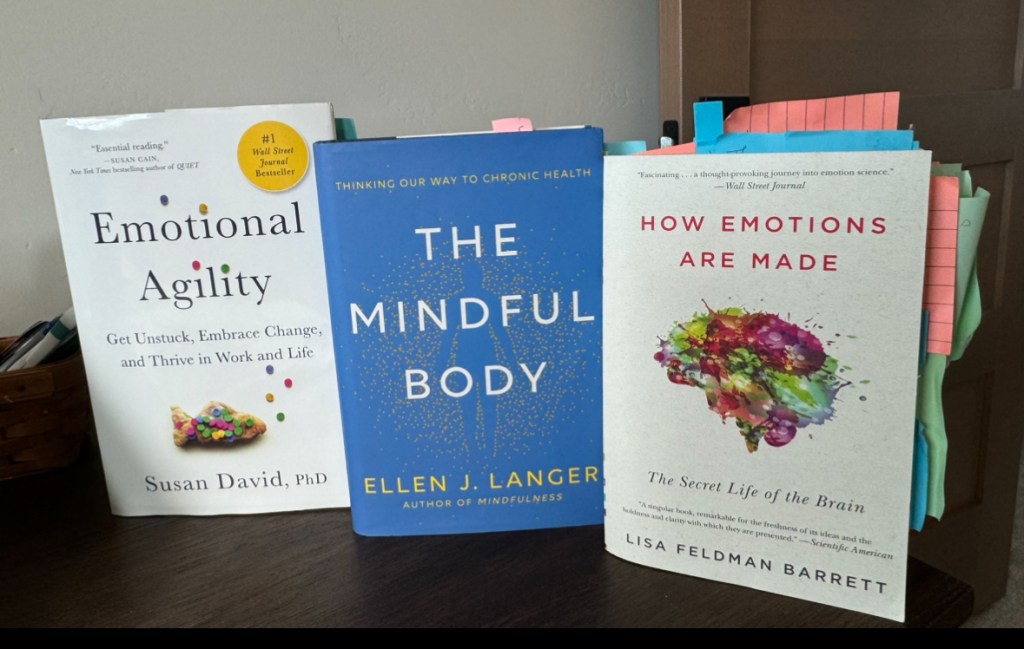
These are sone of my favorite books for learning about the integral role our emotions play in the quality of our lives and relationships. Be sure to check out YouTube videos featuring these authors if you prefer to watch, listen and learn.
PLEASE LISTEN TO THIS HUBERMAN LAB PODCAST EPISODE WITH DR. VICTOR CARRION. Don’t let the title fool you, they discuss all kinds of things that we each experience daily.
https://podcasts.apple.com/us/podcast/huberman-lab/id1545953110?i=1000670372425

Connective Tissue

A few years ago, I started to notice that the more I was really getting to know myself, the greater my curiosity about others. Even when I watched a Netflix series or read a compelling fiction book, I found that I was more empathetic with the characters and their backstories. Truth to be told, I discovered that I could see parts of my own life reflected back to me in their experiences and reactions. It was also easy to see the patterns of cause and effect that we messy human beings bring to our relationships.

It dawned on me that I was now engaging with books and shows on a deeper level and I loved it. I was able to feel and relate to so many characters almost as if I knew them personally. The story lines and plot twists of shows like This is Us or Parenthood were intimately familiar. Some felt like they had been pulled right out of my own family history. It was easy to readily identify with characters and events because I too “have been there”.

Conversations with some of my closest friends revealed that the same thing was happening for them. As they deepened their own self awareness, they too were more intrigued by the complexity of their favorite characters in a book or tv series. They could recognize blind spots and insecurities that contributed to missteps and bad decisions.

Discussing episodes of these shows with friends was much like being in book club with a fascinating twist — our focus was on the whole of the family dynamics and how one issue could cause a cascade of varying problems amongst the family members. We could clearly see the through line that ran from childhood experiences right into the adult lives of each family member.

These mini series became a classroom for recognizing familiar behavior patterns and coping mechanisms. We got a zoomed-out view of how complicated families are. We gained a deeper understanding of what drives people to make some of the choices they do; again, because in many cases, we too “had been there”.

While my friends and I laughed that it is easy to recognize the many fault lines in family dynamics when we simply watching a show, we did agree that we gained from observing the bigger picture. These programs give the viewer a different vantage point; we get an abundance of nuance and context from so many different perspectives and experiences. That is rarely the same lens we use in our own complex family dynamics.

Perhaps the biggest takeaway is that we rarely know our family members as well as we think we do.

Another is that we rarely know the “whole” of each other.

I titled this blog post “connective tissue” because that is what we are growing and strengthening when we become cycle breakers and agents of change.

I am a firm believer that replacing that tightly woven yet constantly unraveling fabric of complicated family dynamics with healthy “connective tissue” is the ultimate safety net for our families and relationships.

Dr. Michael Gervais (one of the world’s top high-performance psychologists) shares this wisdom with us: “To lay the foundation for a strong sense of self, the prime dictum is to not focus on the self. The way to do this is not to think less of yourself, but to think of yourself less often.”

The real value of personal growth and self discovery happens in relationship with others. When we truly get to know ourselves well and change how we show up, that’s where meaningful change occurs. When we take Dr. Gervais’ advice to heart, we build a strong foundation of who we are and who we wish to become. We pay attention to how we get unmoored from ourselves in our relationships with others.

This is a giant step in building healthy connective tissue. It’s sticking to our core values and getting more consistent in behaviors and skills that match who we want to be. We can cultivate greater self awareness about how we show up at work vs. how we behave at home, how we act with parents and siblings vs. our own kids and friends. It’s exhausting to shape shift and adapt to all these different relationships if we are constantly matching the environment instead of who we really are at the core.

So often in the self help space, we are told to shed outgrown behavioral patterns that we learned in childhood. Yet they are second nature to us and fit like our favorite pair of comfy jeans. Eventually a good friend or our spouse is going to tell us that it is time to ditch the well worn jeans — they look terrible, no longer fit the body we now have and surely don’t match who we are today.

The same is true with childhood coping skills and poor emotional regulation. They are just old jeans that need to be tossed and replaced with something that makes us feel like a million bucks when we put them on. And while the jeans become a staple in our wardrobe, we can dress them up or down depending on what we are stepping into. Our strong sense of self is that great pair of new jeans. The jacket, the hat, shoes or other accessories are all the skills and tools we use when stepping into relationships with others.

A strong sense of self is our core foundation for everything we do and all the relationships we are in. We become more consistent in how we show up whether we are at home, work or community. When people describe us to others, they capture the essence of who we really are — across all our relationships.

A core reason why family dynamics are the most challenging is that we have a long history of shape shifting, people pleasing, shrinking or puffing up to get our needs met and to also feel a sense of belonging. One false move and we become an outcast. Misunderstandings, rifts and estrangements are so commonplace for this very reason.

Remember that takeaway from the mini series I mentioned above — We have no idea of all the nuance and context of our family members unique emotions and experiences. If we don’t even know ourselves well, how could we possibly know others? And if we are all donning different behavioral patterns to “make things work”, it’s unlikely anything actually stands a chance of working.

A little perspective here: Even if your sibling is only two years older or younger than you, their childhood experiences can be remarkably different. First of all your parents were not the same that they were when you came into the world. They learned a lot from raising you and they adapted in a lot of new ways. What might have changed in your parent’s lives in that time span? Job change, relocation, loss of a parent, health issues, financial struggles? Life events have an impact on parents and kids. If there is a five year or greater age difference in siblings, then essentially it can be like being raised in two remarkably different families.

Healthy connective tissue for family dynamics has to replace the old tangled web we weave by losing ourselves in multiple identities. No wonder our relationships are so complicated.

Our sense of self, our identity, gets shaped and molded like Playdoh when we are growing up. By the time we reach adulthood, we’ve been cut, pounded, stretched and kneaded so many times that we have a hard time figuring out who we really are. It’s unfortunate that most of our self worth and self identity is under constant scrutiny and subject to change at any given moment throughout childhood.

“The world will ask you who you are, and if you don’t know, the world will tell you.” — Carl Jung

Being a change agent and breaking generational family cycles, starts with us. Once we free ourselves of behavioral patterns that keep us stuck, we have more wiggle room for self discovery — and to forge the identity we truly want. We can spend our energy on getting consistent with who we are, rather than exhausting ourselves to fit in.

We need to get very clear on our own identity and self worth. Again, this is a familiar refrain in psychology and the self help space, but it is not cheap talk. It is only when we know our worth and what is critically important to us that we can use a relationship tool like boundaries. Boundaries help others recognize how we want to be treated. Every time you set a boundary, you are getting clearer with yourself about your value and worth.

For the record, when we use boundaries in parenting instead of punishment or dismissive attitudes, we are leading by example. We teach our children not only how to treat us and be respectful, but also how to use this invaluable tool in their own lives (both when they are young and when they are adults).

The fear of other people’s opinions is yet another detriment to really getting to know ourselves intimately.

Most of us lived in this thick fog of other’s opinions all throughout childhood; especially with those old parenting models that did not integrate emotions into our experiences. Kids were told they were too much, too sensitive, too bossy, too timid. First and foremost, we were labeled by behaviors and those identifies stuck with us. — you’re a jerk, you’re a good girl, you’re perfect, you’ll never amount to anything. Secondly, we had to wrestle with these assessments of who we were while trying to figure that out for ourselves. Most of our childhood behavioral patterns and coping skills are rooted in the “fear of other’s opinions” – at home, in school and beyond.

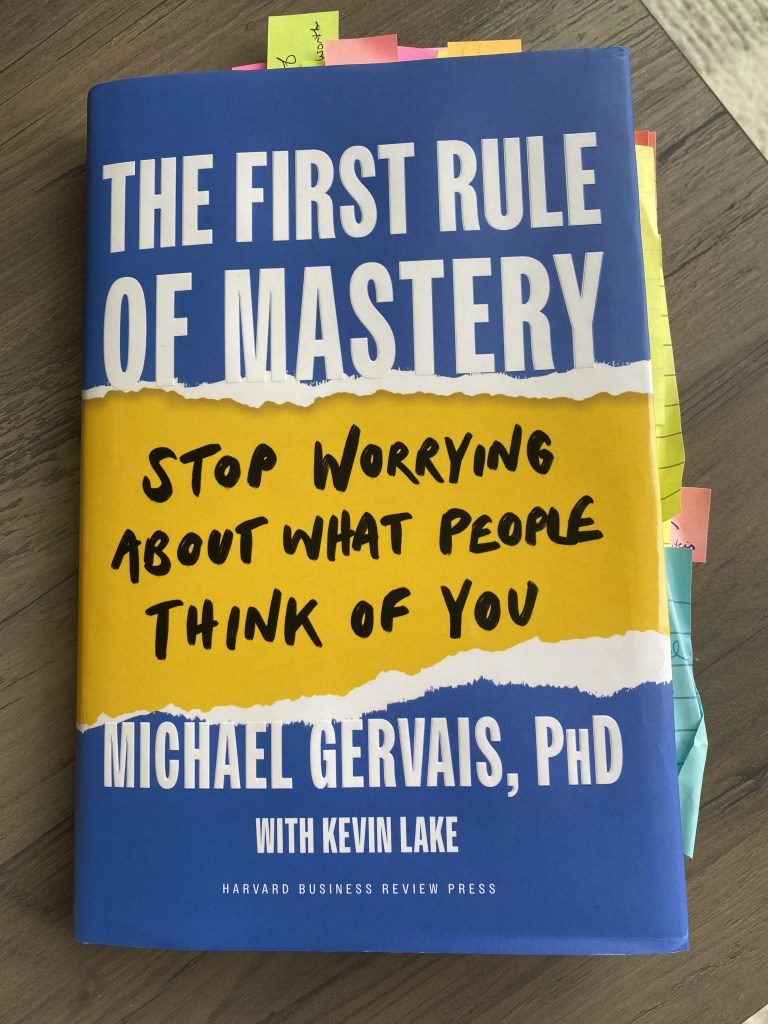
“Identity is our subjective sense of self built on our experiences, beliefs, values, memories and culture. It’s a set of physical and psychological characteristics that is not shared with anyone else. Often derived in relationship or comparison to others, our identity provides a framework to better understand our place in a complicated social world. “ — excerpted from the book The First Rule of Mastery by Dr. Michael Gervais.

“When we have fused ourselves to an identity that is not true to who we are, or to an identity that’s too narrow to contain the whole of who we are, or to an identity incapable of incorporating new information and growing, the opinion of another can feel like an assault where our survival is at stake.” – excerpted from The First Rule of Mastery by Dr. Michael Gervais.

When you let these two excerpts soak in, you can see why we get so confused about who we are. The first excerpt addresses how we make sense of the world when we are kids. It is a private internal narrative we create about who we are. We create it when we are young and powerless and that identify feels vulnerable and in need of protection even when we are older.

The second excerpt reveals why we develop coping skills and behavioral patterns. Our identity does leave us vulnerable to the slings and arrows of other’s opinions so we develop armor to protect who we believe we are.

It’s that armor that gets in the way of us really knowing who we are; and it gets very complicated by the fact that we keep returning to home base to figure it out. Yet, that identity we created at home when we were young no longer feels like it fits who we’ve become.

Without honest self-awareness, it is incredibly hard to see how we stay stuck in an identity we’ve long outgrown and how we stay trapped (especially in our families) in old limiting beliefs about who we are.

We are not the same person we were when we were 5, 10 or 15. We are works in progress throughout our entire lives. A pivotal shift in our mindset around our personal identity is to recognize and embrace this.

We change over time and that is a marvelous thing. We are not forever stuck in an old story, or shackled to a troubled childhood, or doomed to relive an old trauma like a recurring nightmare. We would never want this for our children. When we get clear about who we are, we can parent from our most authentic sense of self. It frees us from protecting our kids unnecessarily from the things that once had a big impact on us.

Just imagine the positive difference we are making for younger generations, when we steer them clear of the pitfalls that derailed us from building the life we wanted. Today we have better life skills and relationship tools to teach them. We have a much-improved parenting model and are integrating their emotions into their developing complex brains. We are validating each other’s emotions and experiences which is the preventative medicine for suppressed emotions and unprocessed trauma. We recognize that rupture and repair strengthens our relationships and builds enduring trust. In fact, we normalize the fact that ruptures happen in life and we have a responsibility to repair our most valued relationships. We are learning the integral role body budget plays in our daily lives and the importance of sleep for our brain health.

Most importantly, we can help our young people develop a strong sense of self and be the scaffolding they need through all the growth spurts and life changes they will surely have.

This is an extensive list of key components of “connective tissue” for our families. It’s so much more beneficial than what most of us experienced — because we don’t put each other in boxes, but rather we give each other room to grow – with a big safety net underneath. We encourage each other to explore, discover, stretch, try new things, experiment — with the confidence that they can express themselves honestly and will have the support and guidance they need and deserve.

Dr. Michael Gervais has a nugget of wisdom that he shares on his Finding Mastery podcast that serves as a core reminder for the changes we want to make: No one does it alone.

If you struggle with FOPO –the Fear of Other People’s Opinions, you will love this book. Check out Michael Gervais podcast too — Finding Mastery


LISTEN TO DR. ANDREW HUBERMAN’S CONVERSATION WITH PARENTING GURU, DR. BECKY KENNEDY, author of Good Inside This Episode is entitled Protocols for Excellent Parenting and Improving Relationships of All Kinds https://podcasts.apple.com/us/podcast/huberman-lab/id1545953110?i=1000646851810
If you are unfamiliar with Internal Family Systems, you might be surprised to learn that it is all about YOU not your whole family! Discover all the parts of you that have something to offer about what is most important to you and how to best take care of YOU!

Making a Splash

“There are going to be some changes around here” announced my 6 year old daughter, standing proudly in her blue Daisy Scout smock with several Boy Scout merit badge books tucked under arm. She was headed off to her very first experience in Girl Scouts but she clearly had some preconceived ideas about what it might be like. Her brothers were 10 and 11 years older than her and they already had quite a few Boy Scout merit badges sewn on their brown sashes that they wore to their meetings each week. My spunky young daughter was not here for monkey business. She wanted to learn real life skills, like how to pitch a tent and make a fire. Her suspicions that Daisy Scouts would be about making toothpick crafts motivated her to become an activist for change. I’ll be honest — I was incredibly proud of her.

In case you are wondering, my daughter did not last too long in Girl Scouts. This did not come as a surprise to me or her — or even her scout leaders who often felt challenged by her.  It’s just human nature to be resistant to change – and especially if it comes blazing in a pint-sized blonde haired, confident, feisty spokesperson. What could she possibly know?

Turns out that kids instinctively know a lot. Sometimes they are keenly aware that change is in order even when we ourselves can’t see it.

The image of my amazing little girl in her blue Daisy smock and those Boy Scout Merit Badge books is a touchstone for me. It also represents a pivot point for the direction of my blog in 2024 and it is all about change in action. I’ll be sharing real life examples of how game-changing it is to update our brains, embrace new parenting models and modernize our life skills backpacks.

So let’s dive in!

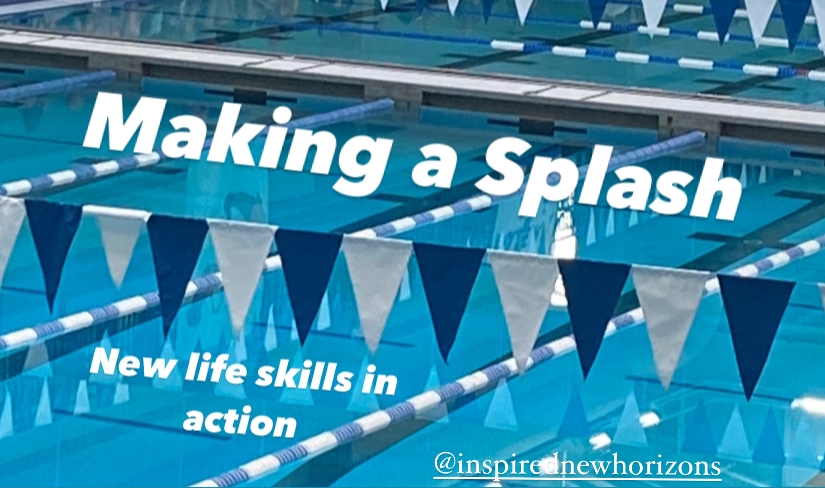
A few weeks ago, I was attending a swim meet for my grandddaughter. Four swim clubs coming together at the premier indoor community pool to compete for the season championship. You could feel the excitement in the air mingling with giggles, splashes and indecipherable loudspeaker announcements. Coaches were busy making last minute changes to their event line-ups when some of their swimmers were unable to attend for a variety of reasons. Anxious parents watched from the second floor gallery as their kids nodded in agreement with a coach or got into big discussions with other swimmers. 

During one of the 200 yard medley events, a young teenaged girl dove into the pool, the last leg of her team’s freestyle entry in the field. All the other teams had already finished this event when this teenager entered the water. She swam the first 25 yards but when she reached the end of the pool where she should have done a flip turn and continued on, she stopped and hung to the edge. An adult volunteer assigned to make certain that each lap was completed, leaned over to talk with the girl who was now shaking her head and visibly crying. Initially the volunteer urged her to finish but it was clear that this young teen had not only hit the pool wall, she had hit her emotional wall. She could not go on.

She was trembling all over as she gingerly climbed out of the pool. Her coach wrapped an arm around her shoulder and escorted her to a quiet spot on the poolside bench. Her coach stooped down in front of her, made eye contact and was talking with her. Her mother appeared and sat down beside her, wrapping her in a towel and a hug.

Meanwhile, up in the gallery, nosy spectators watched with deep interest and more judgment than curiosity. The comments that were made ranged from pity to criticism to shame. There were more strongly held opinions about how to handle such a situation than there banners hanging above the line lanes. 

I could not hold my tongue – the opening to plant a seed of change was too prime to ignore. “This is exactly what should be happening in a moment like this,” I stated loudly enough for those around me to hear. ”According to Dr. Dan Siegel the power of showing up and being present with a child when big emotions are consuming them validates their experience, builds resiliency and prevents shame and insecurities from taking root.”

In that moment, I felt just like my Daisy Scout daughter, speaking up when it mattered most. We don’t know what we don’t know. 

We don’t realize that our old parenting models were broken and they set us up for failure, for poor coping skills, limiting beliefs and a fixed mindset. 

Shame and embarrassment do not motivate us to try harder, begin again and learn from our failures. Criticism erodes trust – trust in ourselves and our potential as well as trust in others that they will do all they can to help us overcome obstacles.  Pity is the near enemy of compassion – and it puts a lot of distance between us and others (even in the face of a similar situation that we could easily find ourselves in). Pity just enables us to think we are so lucky because we are not having that experience.

But wait — what if it was OUR child having that experience? Would those in the gallery who were so judgmental when it was happening to someone else, do a complete 180 if it was their own child?

Even if it was only briefly, I could see that some people were taking a minute to reflect on my comments.  I knew that some parents were well aware that their own child had been asked to swim in a new event for this meet – and yes, they were anxious about the looming possible outcome.

None of us really know the full backstory for that young teenaged girl. Yet it was clearly evident that something much bigger than swimming another 25 yards was in play. Imagine for a moment that you were asked to swim 50 yards in a relay, to be the last leg of your team’s event. And you knew the moment you dove into the pool that your team was going to finish dead last because every other team had already completed the event. How would you be feeling? Defeated before you started? Why bother? What’s the point? Why me?

The more life experiences that we personally have, the greater our ability to tap into our empathy and compassion for others; the more likely we are to normalize moments like this for children and parents. Why would we ever deny another person the support they need the most in moments like this? 

What if this young girl was really struggling with all the hormonal imbalances of puberty? What if her parents had recently divorced or the family was newly relocated to this town? What if this was her first swim meet? What if this was her first Christmas without her beloved grandma? What if her teammates had taunted her and said she shouldn’t be in this event?

I left that swim meet that day thinking about that young girl, hopeful that her mom was skilled in offering her daughter the scaffolding she needed to fully process this experience and grow through it rather than unhealthily “going through it”.

The power of showing up and listening to a child’s full emotional experience is a game-changer. Validating their true feelings and helping them to name all the emotions they feel is how we become the training wheels for an expanded emotional vocabulary and healthy coping skills. 

This is how we build resilience and inner confidence in our kids.  They are more likely to try again and trust in their own potential. Kids are more open to trying new things that may seem hard and challenging. In fact, conquering their fears feels empowering to them.

All of us come into contact with children – and being knowledgeable about vastly improved parenting models is like having an ace up your sleeve. Parents, grandparents, aunts, uncles, teachers and coaches will all benefit from discovering brand new skills and tools for age old childhood emotional moments.

Dr. Becky is a mom first and foremost. She is a child psychologist by profession – and she is a shining example of putting her work into practice. 

If you follow her on social media, you will be highly entertained by her sense of humor and oh so relatable parenting moments. You’ll laugh, you’ll cry, you’ll commiserate and you find real support for real life.

MATT EICHELDINGER – check out this incredible teacher who has created the most heartfelt videos about his students over many years as an educator and caring human being. Life lessons from real life with kids that will stay with you and your kids.
https://matteicheldinger.com/

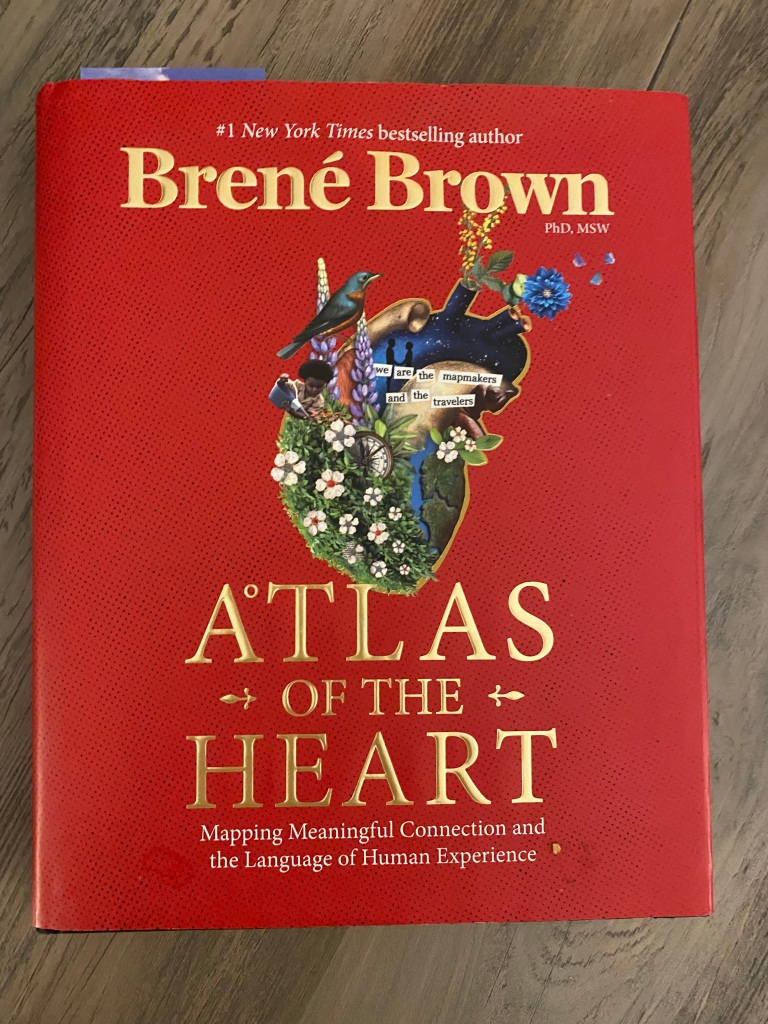
ATLAS OF THE HEART is a family reference guide that should be in every home. If you want to get serious about building your emotional vocabulary, this book is for you. Not only will you gain a working knowledge of 87 emotions and experiences, you will discover when those emotions are most likely to show up.