Build a Sophisticated Toolshed

Imagine my surprise to hear a male guest on a podcast sharing that he and his wife are now using more “sophisticated” tools to navigate life. Wow — I love that impactful word and could even feel myself leaning into it and embracing the full scope of what it feels like.

It is remarkable how one word can shift us quickly into the next level of our personal growth — and do so in a way that feels amazing.

I could see it in the body language of this middle-aged man – he was owning how empowered he felt by proactively choosing a “sophisticated” way to support his wife deal with an emotional situation. There was a sense of pride and accomplishment.

His personal story was a sliding door experience for him — one where he could see how he used to handle situations like this that usually only made things worse; and how he attended to his wife’s needs now in a more mature and skillful way. Not only did his wife get what she needed most, their personal connection deepened.

The stark contrast of how his old ways of dealing with relationship struggles pulled them further apart – and how his new and improved ways, strengthened their relationship was undeniably magical. The “before” and “after” results of using “sophisticated” tools was proof positive that he was growing in the right direction.

He had handled a common relationship issue with aplomb.

Admittedly, he shared that he used to match her emotions and they’d get in an emotional tug of war. This could lead to a stand off and for the next few hours, they’d avoid each other or poke at each other’s shortcomings. Not fun.

His new and improved approach of validating her feelings and her experience, of listening to understand and co-regulating her by remaining calm, felt surprisingly good to him too. A simple shift in his approach was the fast-acting remedy that produced incredible results. They were hugging and smiling in just a few minutes. For hours afterwards, they could still feel the strong intimate connection they’d made.

That young man inspired me to see what is possible as we reframe personal growth and self discovery. Yes, of course — we want to be using sophisticated tools in skillful ways to build the life we want. To become better versions of ourselves over time and to support those we love in ways that build trust, resilience and self-confidence.

We can become master craftsmen and craftswomen with some simple, impactful shifts in our language and our awareness. Who wouldn’t want to become confident enough to use “power tools” in our most treasured relationships?

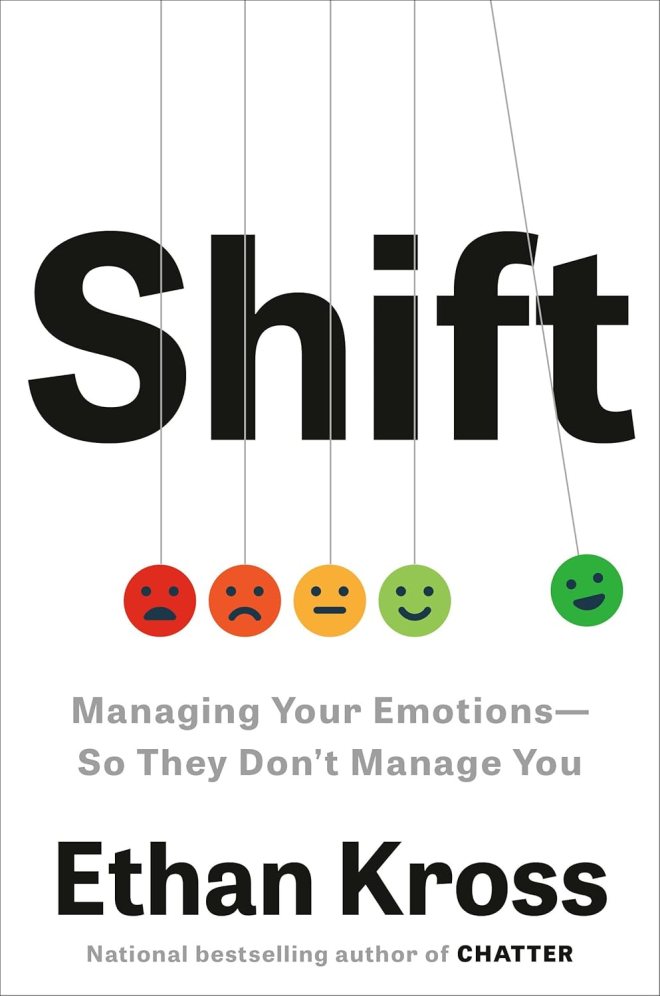
In his book, Shift, author and psychologist, Ethan Kross, reveals just how easy it is to step into using the “power tools” that proactively shift our mindsets, perspectives, emotions and perceived limitations. In fact, the concepts he details in his book could be the Starter Kit for building your own sophisticated toolshed.
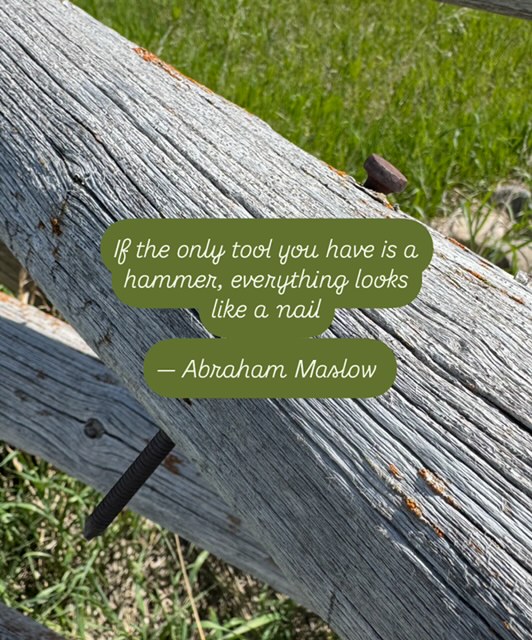
These power tools are really pretty straightforward but we frequently get hijacked by the stimulus of a situation and just reach for a hammer.

It’s our natural human tendency to rely on familiar methods or tools, even when they are not the most appropriate for a situation.

As Abraham Maslow reminded us: “If the only tool you have is a hammer, everything looks like a nail.”

It is precisely why Victor Frankl urges us to use the pause between stimulus and response to think about what is the best course of action in the long run.

Reminding ourselves that we want to be reaching for “sophisticated” power tools while we are taking that pivotal pause might be all that is needed to remind us to be more mature and intentional about our reactions. Drop the hammer and reach for the more contemporary, state of the art, power tools.

A Method and a Motto:

There is a method to stop the madness of using a hammer for everything that pops off in our lives and crops up in our relationships. It is recognizing that we human beings have a lot of variation in the way we show up day in and day out.

Some days we are far better resourced to handle blunders, mistakes and miscommunications. We can let things roll with grace and generosity.

Other days, not so much. We are irritable, easily distracted, have limited bandwidth and are running on fumes.

Even when we want to do our best, it may feel nearly impossible to pull that rabbit out of a hat.

Turns out, we unconsciously overweight and overrate what we can get in the short term. We make snap decisions and have knee jerk reactions to get satisfaction right away. We don’t like feeling uncomfortable, we want relief immediately. Winning a shouting match feels good.

But winning that shouting match only feels good for a hot minute.

That’s the unfortunate reality of overweighting what feels good in the heat of the moment. We unconsciously give too much weight to winning a fight or avoiding a conflict. We make a value calculation that is fleeting.

Dr. Falk reminds us that where we “place our attention” is the lever we can pull to override our tendency to overweight the value of a short term outcome. Play the long game. Turn attention to what matters most. Are you the kind of person who saves the day?

We aren’t little kids in a sandbox anymore. We are grown ups who calmly come in and help each other get along. We can clearly assess the situation and get back to having fun together.

In her book, What We Value, Dr. Emily Falk urges us to get intentional (especially in the heat of the moment) about shifting our attention to the long game. We will find it much easier to reach for our sophisticated relationship power tools when we focus on what we value most in the long term.

It may seem small and highly unlikely to be effective to “shift” to the long game – but it is an elevated form of delayed gratification. Do you want one marshmallow now or would you be willing to wait so that you get two marshmallows later?

Play the long game.

Turning our attention to think about what we are working towards in becoming a better person, in how we show up for others especially when it is challenging — that shifts our focus and puts more weight in the ‘value calculation” that drives our choices, behaviors and actions.

When we play the long game, we make the most of that pause between stimulus and response, by asking ourselves – “Wait a minute – let’s think about what I value most and make the better decision that aligns with my values.”

The method we can use to help us reach for power tools instead of a hammer is to shift our focus to playing the long game and matching our responses to our long term goals and core values.

The motto we create for ourselves becomes the lever we pull that opens our sophisticated tool shed. Something as simple as the golden rule can be a magical shifter in how we meet life’s moments.

When our kids are little, we give them those brightly colored plastic replicas of lawn mowers, weed whackers and leaf blowers. Many times our kids love to store their pint-sized imitation power tools right next to the real thing in the backyard toolshed.

We would never give our kids the real deal power tools until they are old enough and mature enough to use them with great care and skill. But we do plant the seeds that they will be quite capable to use the real tools in the future.

What we know now that is backed by advances in science and psychology is that for far too long is that most of us were only taught to use a hammer to fix just about everything. But a hammer and duct tape do not build strong relationship foundations and deep connections.

As we begin to incorporate more advanced relationship tools into our daily lives, we reinforce the positive benefits we reap – and we also teach by osmosis how effective sophisticated power tools truly are – in the long run.

Think about using the mental image of a magical toolshed full of dynamic power tools that are fun to use and get the job done right the first time. We can all build that kind of toolshed, well equipped with sophisticated tools and skills easily accessed each and every day.

What motto would you put on the sign that hangs over the door of your sophisticated toolshed?

BREAK FREE FROM A VICTIM MINDSET: June 6th, 2025 episode with Scott Barry Kauffman. Prepare to be amazed at how often we get trapped in our own victim mindset. This dynamic conversation will shift you quickly to an “empowering mindset”

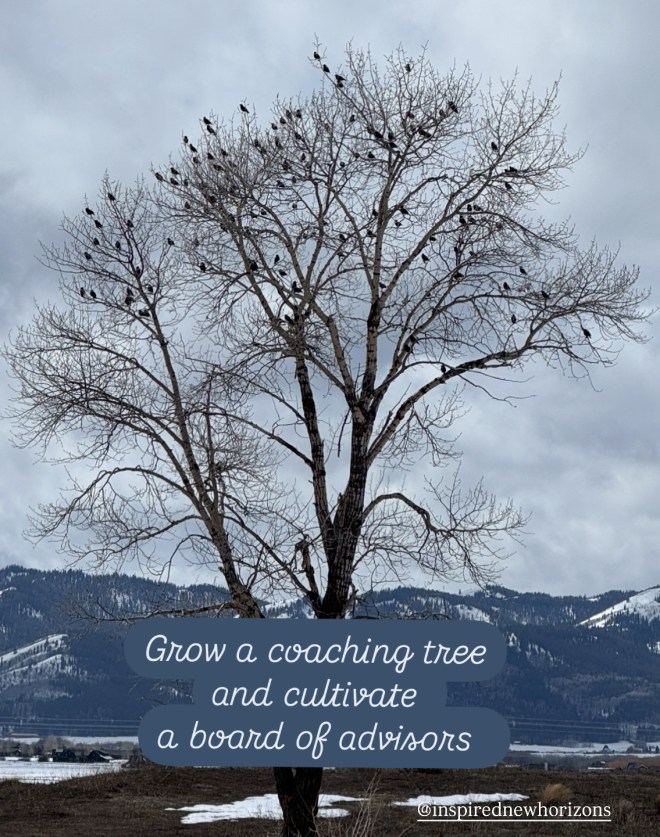
A Coaching Tree & Board of Advisors

Have you shifted the image of your past experiences and lessons learned into that of your personal greenhouse library, chock full of invaluable reference material?

If so, you are ready to add a Coaching Tree and a Board of Advisors.

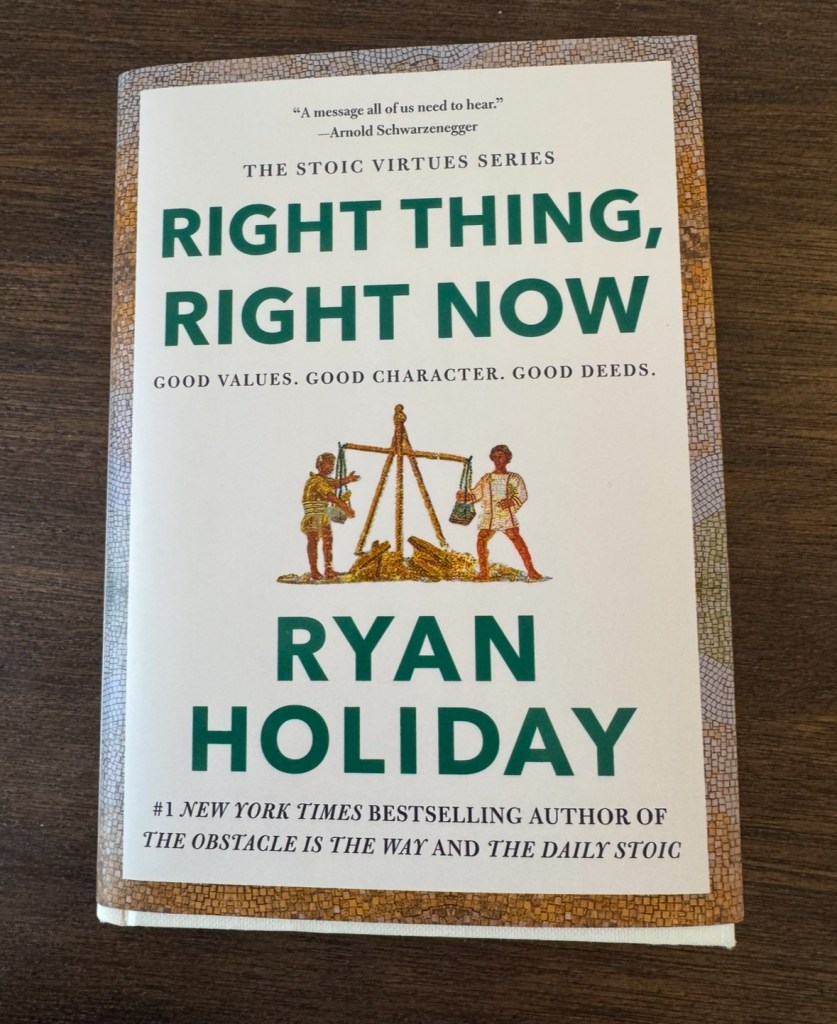
Ryan Holiday, author of the Daily Stoic, has long been a strong proponent of a coaching tree. In fact, he dedicates a chapter in his latest book, Right Thing, Right Now to this very concept. Ryan takes a powerful working model for a coaching tree from professional sports teams and adapts it for our personal use.

It is so easy for us to visualize all the branches of support that professional athletes have to help them be their best. We see them on the sidelines on game day – the head coach, assistant coaches, trainers and teammates. We may be less cognizant of the many others who support the athletes, but they have an integral role too. Physical therapists, nutritionists, sports psychologists and family members are all part of the coaching team that provides daily support to bring out a player’s best.

Professional coaches and athletes depend upon coaching trees to foster growth and excellence. The benefits go both ways — a good coach not only offers guidance and guardrails, he also learns from each player, their unique talents and potential and how they integrate what he teaches. These insights deepen his knowledge and hone his skills for working with other players.

Think of the coach as the roots of a tree, growing deeper and stronger with each athlete and assistant coach he is developing. Then visualize how each player and assistant coach takes the knowledge, wisdom and discipline from the coach and branches out on their own. Now you have the concept and visuals image for a coaching tree.

Ryan Holiday recognizes the invaluable interplay that comes from a student/teacher relationship: learning and discovery go both ways. Adam Grant also knows this to be true — that the best way to learn something is to teach it.

When we create our own personal coaching tree, we amplify our potential for fast-tracking self discovery and personal growth. We practice our life and relationship skills, putting in the daily reps in diverse ways. We keep our core operating systems (our brains and bodies) well maintained and updated. Personal growth and self discovery are not a once and done process, but rather a continual lifetime of learning and growing — just like a tree.

Who has been a rock solid role model for you? Someone who actually practices what they preach, who leads by example?

Who have you turned to when you needed help with a specific situation — someone that you know has had a similar experience and somehow came through it stronger and more authentic as a result?

Who do you wish you could be more like – that one person that possesses signature strengths that you wish you had?

When we ask ourselves these types of questions, we begin to see that we are naturally drawn to certain people for specific attributes that we want to foster in our own lives. Just like pro athletes, we become an amalgamation of the people we admire and who inspire us. We become a well-rounded person by drawing on the diverse strengths of our favorite mentors, coaches and role models.

Ryan Holiday emphasizes that a coaching tree becomes an evergreen “give and take” organic process for personal growth and paying it forward. We take what we need from our role models and personalize it for us. We just don’t “copy and paste” what they do — we make it our own. As we become more skilled and practiced with these new attributes, others will come to us — and ask us for help. We pass on not only what we have learned from our mentors – but also how we personalized it. We “take” what we need for self improvement and we “give” tips and tools to others discover what works best for them.

Here’s a real life example and one that you will find relatable: A friend called me when she had some very difficult personal decisions to make for her spouse with a very serious health issue. She knew I had some real life experience with tough choices that require a delicate balance between practicality and big emotions. I became her sounding board, a grounded friend who could help her sort out the pieces and make the best decision for both herself and her husband’s long term special needs. This didn’t happen in a day — it was months and even years of long conversations, of listening and learning, of being honest about doubts and second guesses and lots of empathy, validation and reassurance that each choice was a building block for her making the right decisions each step of the way.

My friend grew in remarkable ways through this very difficult life challenge. She not only handled one of life’s most emotionally tender realities with grace, compassion and love, she learned a lot about herself along the way. She survived — and she thrived. Today she leads support groups, she offers wise, personalized counsel to others facing similar long term care situations, and she has championed changes in memory care facilities in her community.

Guess what she does for me and has been for years — she forwards my Daily Gummy of Wisdom to a her big circle of friends every single day, along with her own insights. She is paying it forward and causing a ripple effect that is making a meaningful difference for more people than we can ever know.

Spend some time reflecting on the people who have shaped your life, especially during times when you faced adversity, golden opportunities and pivotal moments. Who provided encouragement, saw your inner strengths and hidden potential; who listened, validated and reminded you of just how far you’ve come? These are prime examples of those you want perched in your coaching tree.

Be intentional and discerning as you grow your coaching tree.

The coaching tree image helps us to see with greater clarity the work we have to do alone, the scaffolding we get from others to help us in this process — and how we can return the favor by helping others.

This is not always viewed as positive however. People like us to stay the same because they believe they can accurately predict how we will behave and react – and they can make contingency plans to cope with what they have come to expect. These contingency plans are coping skills, protective armor and behavioral modifications.

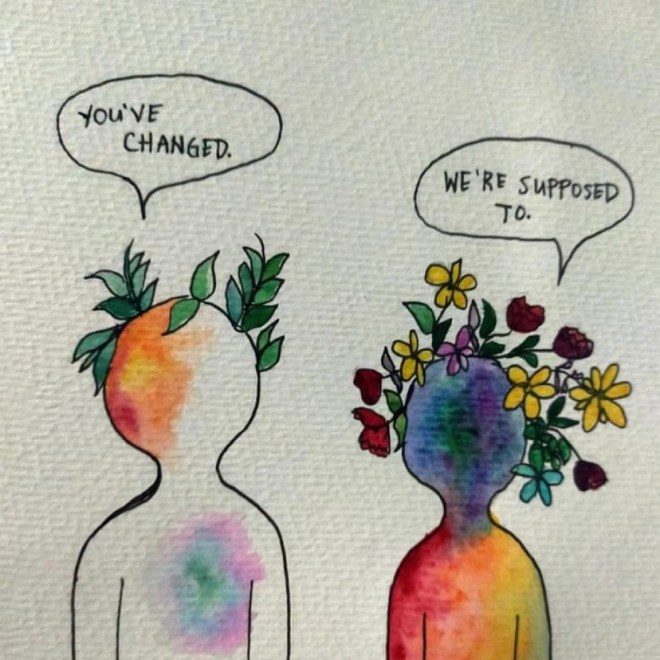
As a result, when we change and make significant self improvements, others have to change their predictions about us. All those old tricks of the trade people once relied on to “meet you where you were” are no longer needed. In fact, others who still resort to shape shifting, conflict avoidance or cognitive dissonance may stunt the very growth we are pursuing.

Even when our self improvement changes make us easier to live with, it takes a long while for others to trust it. There’s a big gap between the old you and this new & improved version of you. It takes a leap of faith to bridge it — and yes, it requires other people to make some changes too.

This is precisely why we shouldn’t do this work in the dark.

We need all the help we can get when we are fostering personal growth and self awareness. Just as a young tree needs rich soil, sunlight, water and wind, we too need a few scoops of miracle grow and some scaffolding to help us get grounded and sprouted.

When we embark on self improvement and self discovery plans, we should tell our family and friends so it is not a secret. After all, we’d tell them if we were trying to cut back on daily desserts or wanted to stop drinking alcohol. Being open up our commitment to change, helps others support us in meaningful ways. It also helps them re-program their predictions about us. That’s a win-win.

When we proactively seek help with the changes we want to make, we bring our intentions out into the light of day. Just like a tree cannot grow with the right conditions and nutrients, the same is true for us. We need a good support system. Ethan Kross, author of Shift, encourages us to create a board of advisors.

Just like a board of directors for a company or non-profit, we need some diversity in our personal board of advisors. While it is very helpful to have like-minded folks who are also committed to personal growth, Ethan reminds us there is no “one size fits all approach”. There are a plethora of resources, tools and modalities that can be personalized to match what works best for us — just like a physical fitness plan.

In a recent Happiness Lab podcast conversation with Dr. Laurie Santos, Ethan Kross shared the importance of having a personal board of directors to help us when we get stuck, noting that strong emotions and self doubts can derail us.

We need friends and family members who can help us get a fresh perspective, pull us out of a rumination cycle and reframe our situation. These are the folks that should be on our personal board of directors.

Who are you going to call? Not ghostbusters! You are going to call an emotional advisory board member.

We all get emotionally triggered – and sometimes in a very big way. It keeps us stuck and pulls us back into old reactionary patterns of behavior. Having that one friend who understands and validates us when we are triggered is the first line of defense. It takes a long time and lots of practice to lessen the tug of emotional triggers and it is also some of the most freeing work you’ll ever do. Enlist someone who has done this work and has great success. Put that person on your board of directors.

All too often, we get stuck in some one-track thinking. We know we need a different vantage point, but our own strong emotions or self doubts, just keep us gridlocked. Do you have a friend who is really good at reframing your current situation and helping you see what you are missing? Someone who flips a situation from negative to positive as though she had a magic wand? People who have deliberately worked on breaking free from the auto-pilot of our brain’s negative default mode are the best advisors for reframing and fresh perspectives. Who do you know readily views a situation from many different points of view? That’s person is a great candidate for your board of directors.

Have you ever asked yourself “What am I missing?” There are times when we are exhausted from all the effort we put in, but we come to the realization that we are not making any progress. In these situations, we may have a big blindspot and an accompanying lack of self awareness. So we find ourselves asking — “why does this keep happening to me or why can’t I catch a break?” Adam Grant offers sound advice for times like this: recruit a “disagreeable giver” for your board of directors.

A “disagreeable giver” is our challenge friend. Chances are you already have one of these people in your life — but you haven’t tapped into the gifts they offer. You may even find yourself resisting the good points they make.

“Disagreeable givers” respectfully and thoughtfully challenge our ideas and opinions – even (and especially) when it might be uncomfortable. Their goal is to help us see our blind spots and move us to better decision making. A caring challenge friend wants the best for us; they are often tired of seeing us so exhausted from our hamster wheel. Challenge friends are not afraid of having hard conversations; they know your life will get easier once you have a breakthrough. Fill that spot on your board of directors with a trustworthy challenge friend.

There will be times when we need a specialist for whatever life has thrown at us. Someone who has had a similar experience and is on the other side of it. It might be a health crisis, a divorce, the loss of a loved one or dealing with family estrangements. This is when we need someone on our board of advisors who has a working knowledge of the many complexities of a shared experience. What we get from people who “have been there” is what we would find in a support group. Yet it is even better because it is personalized empathy, care and healing.

When life hands you a deeply emotional adversity, be intentional about who can best help you. Recognize that you are fragile, your thinking is clouded, and you don’t have deep inner resources to draw on. You need someone who can go deep with you and not drown in your emotions. Who can help you weather this storm and keep you afloat til you are able to do it alone. That’s the specialist you want on your advisory board in the hard times.

There’s one more advisory board member you most definitely want to add — someone who makes you laugh, who loves to play, who brings a lightness and freshness with ease. Who brings out your inner child? Who is that one friend that makes you feel like a 7 year old – running with arms outstretched towards each other laughing with pure delight? Give that person a special seat on your advisory board. Call them often, go on adventures and collect joy.

This may be the first time in our human evolution that we become intentional about the lifelong process of learning and growing. Over the past twenty years, bits and pieces of knowledge and wisdom were floating around, but hadn’t yet congealed into the solid, science-backed insights we now have.

Now we know that emotional intelligence is a uniquely human feature. But we didn’t know that it was a foundational component of our human operating system, so we didn’t integrate it. We floundered for far too long, misguided because our core GPS wasn’t installed. Emotions are data – they point us in the right direction and help us get more out of life.

We are now in a fascinating experimental stage – where we get to play around with the full installation of emotional intelligence and make incredible discoveries about ourselves and others.

Rather than fumbling around and feeling unsure about our growth spurts, our hidden potential and how we stunt our growth – we can build a coaching program. We will get the most out of these new science-based breakthroughs by growing a strong coaching tree and developing a personalized board of advisors.

We will fast track our new knowledge, tools and skills by learning from each other and building on each other’s insights.

By getting very intentional about the 5 people we spend the most time with and how we show up with each other, we can shift our families and circles of friends into a lifetime of healthier, more meaningful personal growth and self discovery.

Ryan Holiday’s blog post This Is The Accomplishment That Matters Most:
https://ryanholiday.net/this-is-the-accomplishment-that-matters-most/
Check out this short video from Adam Grant about having a challenge network:
https://www.youtube.com/watch?v=8T79PZvUUd4&t=69s
Check out this episode with Ethan Kross: Harnessing the People Around Us to Feel Happier https://podcasts.apple.com/us/podcast/the-happiness-lab-with-dr-laurie-santos/id1474245040?i=1000697654175

The Stories We Tell Ourselves – Part 2

Grab some paper and a pen. Make a list of the many roles you have in your life. Start with an ordinary day — and then expand it out to a week, then a month. Be thorough and thoughtful about the many places you show up and play a part. Start with your immediate family then expand the lens to work and your community.

You may be a spouse and a parent, an employee or entrepreneur, a sibling, a grandparent, aunt or uncle, a best friend, a youth soccer coach, a golfer or triathlete, a musician in the local orchestra, a training buddy, a book club member, a podcaster, a creator, a caregiver, a community volunteer. Chances are the list is much longer than you think.

No wonder we are so complex, fascinating and mind-boggling all at once! We wear a lot of hats and juggle many responsibilities and have a host of hobbies and interests. But wait — there’s more!

Did you know that embedded in all the different roles we have, we also have a specific identity associated with each one. These multiple identities are like the unique blueprints we bring to the roles we play. There is a lot of nuance in these multiple identities because we draw on different characteristics of who we are to highlight the ones that best fit the role we are in.

Ryan Holiday tells us that a great tool for helping us show up as the best version of ourselves in any given situation is to ask: What is my role right now?

This simple question quickly crystallizes our responsibility and our strengths that we bring to the table in the role we now play. Our identity for that specific role becomes the template and the filter for how we show up. It is our unique blueprint.

Ryan’s poignant question grounds by reminding us of the identity we assume as a parent, a spouse, a work colleague, sibling or friend. When we connect with our role, we also connect with our goal. That identity we bring to each role becomes the framework and guardrails for how we show up.

If we fail to ask this question about the role we play in any given situation, we may unconsciously default to another of our roles and bring the wrong attributes to the table. We’ve all done this and in hindsight, we readily recognize we played a part in the clumsy, confusing way things unfolded.

Mel Robbins tells us that we all have an inner 8 year old that can show up unchecked, disregulated and unruly — and if we let that character step in to a role well beyond his or her job description and matching skills, that’s a recipe for disaster.

Most of us never stop to reflect on the many roles we have in our lives and the blueprint we have curated to help us do our best in each one. And here’s a surprising revelation – if we don’t consciously develop a strong job description for each role we play, we are going to default to the inner child quite often. This is often referred to as our “unconscious” self – and that’s where so many of the old stories we tell ourselves become the script for knee jerk reactions.

Knee jerk emotional reactions come from the past. Old stories we’ve told ourselves trap us in our amygdala; it links our current emotions to old memories. Which is precisely why we can act like an 8 year instead of a rational, mature adult. We viscerally feel our emotions and our amygdala supplies all the data we need to remind us of past times when we felt just like that — and underscores a feeling of helplessness (a lack of personal agency). When we were 8, we didn’t have skills and tools to help us understand and regulate our emotions. We only had the warning signs and basic reactions. We hadn’t yet developed our strong sense of self and built reliance on our own agency.

Ryan’s question prompts us to remember that we are no longer a helpless, overwhelmed kid. We have adult roles now and the ability to shift into the executive function of our brains. That one simple question flips the switch in our brain — and gets us running on the right track — our executive function. We can catch ourselves before we shrink ourselves to age 8 and pivot to our better equipped grown up self.

How does this dovetail with our roles and our identities? Well, we develop blueprints for how we want to show up in the various roles we have. We even start this process as kids — when we tell ourselves that when we grow up, we will parent differently or we will handle life’s challenges more responsibly. Those blueprints help us craft the identities we rely on for each role.

As we move through our lives, we update those identities much like we update our resumes. As we become more skilled in any of our roles, we add and subtract from the identity we’ve created for each role. We are always a “work in progress” and we thrive when we have a very strong sense of self and tap into our personal agency frequently. We get to choose how we conduct ourselves in each role — and we feel good when our emotions match our actions.

This is where we can pair Ryan’s question – “what is my role right now” with Arthur Brook’s question: “How do I want to be feeling right now?” This is how we sync up our roles with our identity blueprints and our emotional and behavioral responses. We play the “match” game.

We can cross-pollinate our identity blueprints that we use in the outside world to build stronger and more reliable identities for our family relationships. If you stop to think about it, you readily recognize how reliant you are on your identity at work or out in your community. That identity provides the guardrails that keep you from losing your cool, having a meltdown or curling into a ball. Your actions and responses match the identity you crafted.

Most of us are less clear about our identities in the roles we play within our families. We drop our guard at home with the people we love the most – and in that process, we drop the very guardrails that would help us bring our better selves to the most important roles we have.

Home and family is the one place where we should feel the safest, where we should feel seen, heard and valued. Yet our family relationships are the one place where we have most of our day to day conflicts. Could it be a simple mismatch between the role we play and the actions and behaviors we bring to that role?

Dr. Becky Kennedy has coined the phrase “sturdy leader” for the role of a parent. She uses the analogy of an airline pilot to give us a strong mental image of what a sturdy leader looks and acts like. A competent pilot does not come frantically racing out of the cockpit freaking out about turbulence. We expect a competent pilot to tell us the truth about what is happening, assure us that all efforts are being taken to keep us safe and offering the actions we can take to help the collective effort.

Is this how we show up in our family relationships — as sturdy leaders – those calm, competent pilots?

Are you laughing to yourself right now now? I think most of us can agree that is not our “go to” when we experience emotional turbulence in the kitchen cockpit.

What usually happens at home is a bad case of emotional contagion. We match the emotions of our kids, our spouses, our siblings or parents. We are playing the wrong match game.

The better match game is the adult version. The one where we can readily identify our role, how we “want” to be feeling and we match our responses, behaviors and actions to that blueprint. We become sturdy leaders at home just like we do at work or in public spaces.

The basic blueprint of sturdy leader is a great template for our roles at home. Who wouldn’t want to have a sturdy leader as a parent or a partner? Think of all the skills and personal attributes you bring to the workplace and repurpose them for your roles at home. Add them to your identity blueprint. Are you good in a crisis at work? Do you work well under pressure? Are you a wizard at time management and effective delegation? Can you rally the troops? Do you build a strong team by tapping into the key strengths of each person? Do you provide breaks to reset and recharge when others are on overload?

There is yet another emotional and psychological tool that can be utilized in meaningful ways when we are nailing down our identity blueprints for our family relationships. It is “distancing”. When we are able to zoom out and get a broader perspective, we see the bigger picture. Distancing is a great tool for helping us to pivot to sturdy leader. When we can step out of the fray and turn on our executive function, we often realize we already possess the very skills we need to bring our better selves home.

Distancing helps us see the calm and competent pilot we are at work or out in our community. We show up like this with ease – consistently. As James Clear, author of Atomic Habits, would tell us we have deployed the compounding effect of consistency and frequent practice in the workplace. We practice keeping our emotions in check and our responses mature – day in and day out, several times each day.

Now just think about the difference that would make in your roles at home. All this time, you have been missing the golden opportunity to put in countless reps every day to become a sturdy leader! Practice doesn’t make us perfect, but it surely makes us more skillful, resilient, reliable and easier to live with.

Give yourself a honest evaluation about how you show up at work – and how you show up at home. Are you matching other’s emotions or are you matching your role with your identity blueprint, your skills sets and the goal you have for that role?

Remember that your old emotional database can pull you back into outdated reference material. You want to be operating on better, current data with greater agency and a strong sense of self.

Want some extra motivation for crafting sturdy leader identities for the roles that you play in your life? Just imagine helping those you love amass an incredible library of reference material for the stories they tell themselves. Who wouldn’t want the people they love to immersed in possibility and potential instead of limiting stories about who they are and will become?

Check out Dr. Becky Kennedy’s book, website and app to discover science-backed parenting tools for raising emotionally intelligent, resilient and empowered kids
Check out Ryan Holiday’s collection of books . Right Thing, Right Now is his latest. The Obstacle is the Way is great for seeing opportunities where we blindly believe we forever stuck. If you are a parent — check out Daily Dad.

Mel Robbins’ latest book is quickly becoming a fast-track resource for letting go – and stepping into your own agency. Let others be thernselves, especially family, and Let You be your best self. This book is so relatable, you won’t be able to put it down.

If you want to fast track what is packed into Mel’s new book, take a listen to this We Can Do Hard Things podcast episode. Mel and host Glennon Doyle crack open the book, the theory and relatable real life stories. https://podcasts.apple.com/us/podcast/we-can-do-hard-things/id1564530722?i=1000682368717

When the Student Becomes The Teacher

Many months ago, my young granddaughter was scared. As she described her experience to me, I could fully understand why she was frightened. She felt as though she was having some kind of out of body experience – something that was not at all like her – and yes, it was scary to think she might be changing and had very little control over it. My granddaughter was angry; not plain vanilla angry – she was infuriated. Along with that infuriating anger was a fear that she would forever become an angry person – and that was scary – because she didn’t want to change who she was.

We’ve all been there haven’t we? We reach a breaking point and suddenly we too have an out of body experience and act way out of character. We have a jolting knee jerk reaction that surprises even us — or our simmering kettle of stuffed emotions boils over at the most inconvenient moment and we regret it the moment it happens (even though it is too late). In hindsight, we have said or done things that we’d never dream of in a much more rational moment. 

The distinction between us adults and my young granddaughter is that we know we will not stay stuck forever in this “out of character” form; we will return to our emotional baseline and be back to feeling like our normal, “true to character” selves again. Sometimes we can even do that BEFORE we overreact – and other times, we have the wisdom to make those necessary repairs; we apologize and put in real effort to do better in the future.

Little did I know that my granddaughter was giving me a golden opportunity to understand the benefits of emotional granularity. Simply put, emotional granularity is when we are able to identify all the emotions that we are experiencing in any given moment. There are always more ingredients in our emotional experiences than simply happy, sad or mad. But we often hit the brakes as soon as we identify those 3 core emotions and we stop a profoundly important process. Angry, sad or happy are just the headlines; we need to understand “the rest of the story,”

In my granddaughter’s case, the anger was ginormous in this moment. She’d been patient with her younger brother all day long, but now she was tired and hungry, which served to amplify the slow build of her frustration. We could all understand and empathize with her feeling angry. That was normal and justifiable, especially at the end of a busy day.

The anger problem could be remediated by both validating her feelings and giving her a break from her energetic, fun loving, free flowing brother. But my granddaughter had more to share – she was also feeling afraid that she’d stay stuck in anger — and she did not like the way that felt to her. 

Even without a textbook or podcast, she knew instinctively that there was more going on than just the anger.  Thank goodness I did have some working knowledge of emotional granularity. I silently expressed my gratitude to Brene Brown and Dr. Dan Siegel for this education and proceeded to help my granddaughter. I asked her to describe to me what anger was making her feel like. For the record, kids are much better at articulating this than most of us adults. No wonder she was fearful of staying stuck in that feeling — it’s downright icky. I assured her that strong emotions don’t have a long shelf life, that they do fade and we return to feeling like our normal selves in short order. I wish you could have seen the relief that washed over that precious face. A big warm hug and a reassuring smile soon had us both laughing. Astonishingly she could even reframe her brother’s prior annoyance as just his silly antics – the very same antics and playfulness that she loves so much about him. 

What a rebound! This is the magic of emotional granularity; we can hold both sides of an experience and keep them in balance. 

My young granddaughter recognized that her brother can bring her great joy and he can also annoy her. Both are true. 

Emotional granularity keeps us from getting stuck in a single core emotion. It helps us discover many pieces of our experiences puzzle. Nuance and context are key ingredients for how we “feel” in any given moment. For example, earlier in the day when my granddaughter was fresh from a good night’s sleep, had a full tummy of her favorite breakfast and a full tank of patience and energy, her brother’s antics were light-hearted, fun and tolerated. It was only later in the day, when her tank was running low that she felt quite differently. 

Take a moment to think about that for your own daily interactions. When you are well resourced with sleep, nourishment and bandwidth, you most likely flow pretty easily with other’s moods as well as the diversity of tasks and demands you are juggling. When you are running low on fuel, it gets harder and your mood and emotional state shifts.  Emotional granularity helps us parse out the underpinnings of happy, sad and mad.

More recently, this same granddaughter was having an off day. She wasn’t her usually bubbly self and she wasn’t keen on all the suggestions we were offering to snap her out of it. Not sparkling water, her favorite breakfast or a fun craft was moving the needle. She announced that she wasn’t in a hurry to get out of this mood and she was going to go be alone with it for a while. When she rejoined the family activities later, she was in good spirits and all in on the fun stuff we were doing.

It wasn’t until later that day that my granddaughter told me that the reason she likes to stay in her moods is that she knows what I told her is very true. Emotions and feelings fade faster than we realize – and she doesn’t want to miss a chance to explore hers before they drift off. In that moment, the student became the teacher.

I am a firm believer in the advice that ogre Shrek offered years ago — “Better out than in.” It is better to get our emotions out where we can examine them than stuff them away in cold storage. My granddaughter is living proof that doing this sooner rather than later is precisely how we extract the most wisdom from what our emotions are trying to tell us. 

Doing this emotional awareness processing in real time is when we have the sharpest clarity to fully appreciate and understand what our emotions have to tell us.  If we postpone sitting with our emotions, they will change and shift – just like clouds in the sky. We will end up blurring or diluting them. We may even stuff them so far down that we completely ignore them and their valid warning signs. 

Processing our emotions in real time is the best preventative measure we can take for cultivating our self-awareness and vastly improving our ability to skillfully regulate our emotions. We now have science to support this. 

In her book, How Emotions Are Made, neuroscientist Lisa Feldman Barrett teaches us that emotional granularity is the integral key to keeping our internal “emotions and experiences” data base updated. Our brain and body are our uniquely personal information processors. They are prediction machines that rely on the data we store. The greater our ability to identify and process the multiple emotions we experience in any given situation, the better our “prediction machines” will operate in the future. 

It should be pretty self evident by now that the lack of full emotional integration when we were children is the major cause of so many “prediction errors” in the way we are able to regulate and understand our emotional triggers in adulthood. When we are getting in our own way and making life more difficult than it needs to be, chances are that our “prediction machines” are feeding us old, outdated data. Emotional baggage is like the fruits and veggies growing moldy in the fridge. We never took the nutrients out of our emotions and experiences when they were fresh. Yet we still have to deal with all that mushy mess when we clean out the fridge.

There is another compelling reason that we need to get much better at processing our emotions in real time — it is because our current mood greatly impacts how we experiencing life. If we are overly tired or famished, there is a greater likelihood that we will feel more negative about what is happening. In other words, we can skew our emotions, file them away without any self reflection, and end up with an internal database full of misinformation. Talk about an algorithm that feeds us more of what we really don’t need, but that feels oh so affirming.

Let’s go back to the story of my granddaughter’s emotion of big anger. She was experiencing this giant-sized anger more intensely because it was the end of the day; she was both hungry for dinner and ready for bed. She just didn’t have a lot of bandwidth to cope with her brother’s antics. Earlier in the day, his silliness made her laugh and her delighted responses encouraged him all the more. As the day wore on, her tank was ever so slowing draining. On the other hand, her brother may have had a nap and ate more snacks, so he was still going strong. My granddaughter’s context had changed and my grandson’s had stayed the same. 

Two opposing things were true here — my granddaughter loves her brother’s zest for life AND she also needed a break. My grandson believes his antics are adorable and valued no matter how tired others are.

This very scenario plays out in our adult lives all the time but we are mostly unaware of it. We do ebb and flow in our moods all throughout the day. When we feel rested, nourished and energized, we have greater coping skills and better judgement. When we hit the wall, all bets are off.

When we hit the brakes when one of the 3 core emotions jumps out – and then step on the gas and barrel through, we actually stay stuck in happy, sad or mad. Imagine if we were in our cars, hit the brakes to avoid hitting a small child, and then while our heart was racing and our nervous system was on high alert, we hit the gas pedal and were doing 80 mph in 10 seconds. We would not be at our best to reflexively respond to another potential accident – in fact, we might cause an accident.

We know that it is encouraged for us to take that meaningful pause between stimulus and response when we are feeling strong emotions washing over us. Far better to take a few deep breaths and calm ourselves before we “react without reflection”. When we are working on developing better emotional regulation, we want to ground ourselves and consciously “respond” in a calmer way.

Yet there is one more beneficial skill that we would be wise to cultivate: Stop, look and listen.

Pretend you hit the brakes at a railroad crossing. The flashing lights and the gate that lowers are big emotions trying to get your attention. Stop, look around at the current circumstances and how well resourced you are to make good decisions. Listen to all that those accompanying emotions have to tell you. They are the messengers of the context and nuance needed to proceed with caution. 

If an 8 year old can do this, so can we. 

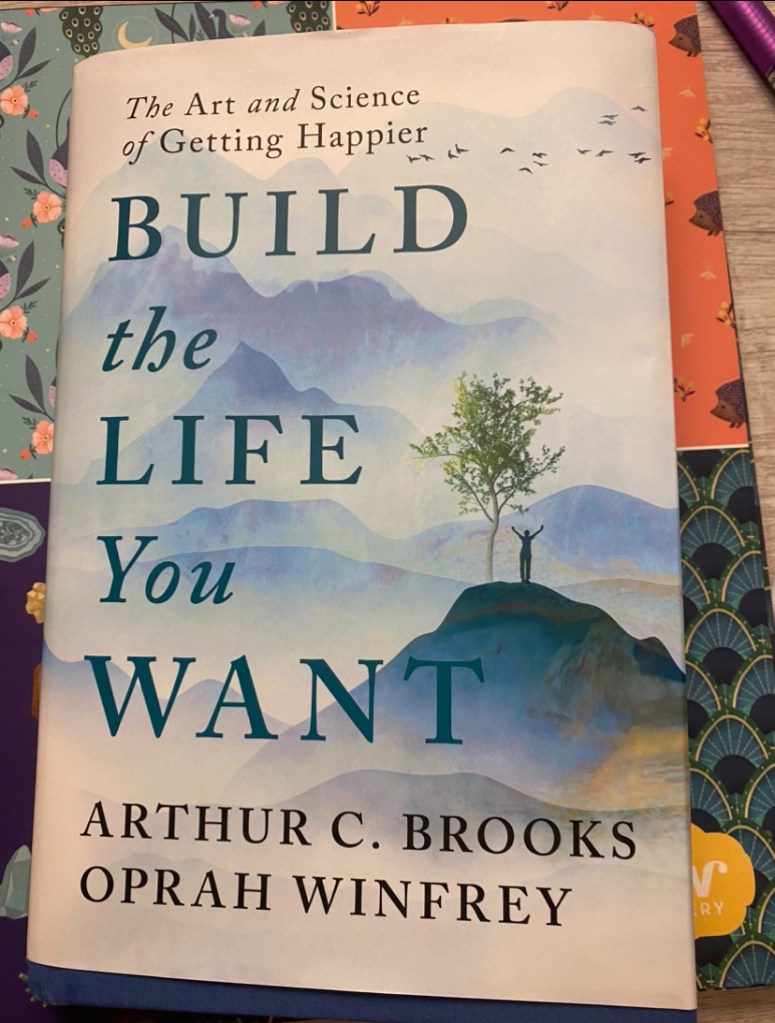
Chapter 2 of Arthur Brooks newest book is entitled the Power of Metacognition. If you only read this chapter in his book, you will have a much better understanding of how we can proactively choose better emotions to enrich our experiences. A worthy read.
Listen to this short YouTube video with Lisa Feldman Barrett about how past experiences and emotions impact how we respond to current experiences. You’ll be inspired to get more skillful at processing your emotions and experiences in real time, so that you are operating from a fresh and updated data base rather than old, outdated and clunky information
https://www.youtube.com/watch?v=ZYAEh3T5a80&t=31s

Lisa Feldman Barrett was a recent guest on the HUBERMANLAB PODCAST. This episode will give you a foundational understanding of how we could be vastly improving how we teach our children — at home and in school — with a more updated understanding of how emotions impact us. https://www.youtube.com/watch?v=FeRgqJVALMQ&t=318s