Better Scripts, Better Stories

What if we all had access to an incredible library of rich, engaging reference material for the stories we tell ourselves?

Instead of rummaging through old baggage accompanied by a judgmental inner critic telling ourselves stories that usually aren’t very helpful, we could flip the script.

We could build a dynamic database of reference material that could be repurposed time and again to write relevant stories that truly help us rather than restrict us.

Better scripts. Better stories.

If the stories we tell ourselves throughout our lives keep us trapped in small versions of ourselves, snagged on shards of shame, fear or insecurities, and limit us from seeing valuable context clues for building the life we want — we will miss the golden opportunities that are often right before our eyes.

If we are constantly second guessing ourselves and worried about other people’s opinions, we will never be able to fully tap into our own dynamic and unique character development. We will write ourselves as supporting cast members instead of taking the leading role we should have in our own personal development.

Knowing ourselves well and having access to our ever-evolving inner database of rich raw material cultivated from our experiences, emotions and mentors will be the giant transformational step in the better stories we tell ourselves all throughout our lives.

Ethan Kross, author of Chatter; The Voice In Our Heads and Why It Matters, recently shared that we are at a pivotal inflection point right now. His latest book, Shift, is an open invitation to embrace this transformational reframing of the voice in our heads and the database we all have in our bodies and brains as a resource not a roadblock.

How do we turn a centuries old paradigm on its head? The one that had us believing our inner library was just a dark, dusty basement full of stuff we’d rather forget?

We do a major renovation – that’s how. No more dimly lit basements or scary attics. We build greenhouse libraries instead!

Sit with that image for a few moments and feel just how inviting it would be to linger in that welcoming greenhouse — to explore your own personal growth in a warm, well lit, inviting environment with a vast library of inspiring stories of courage, creativity and curiosity.

No more inner critic curmudgeon constantly saying “I told you so” while opening the creaking lids of old baggage rummaging for proof that we’d never measure up. No more donning old protective armor or hand me down behavioral patterns.

Out with that crotchety inner critic stuck in the past who keeps us entangled in an unpruned past. In with an insightful, inspiring inner voice instead – one that continually reminds us how far we’ve come, what we are capable of and all our unexplored hidden potential yet to be discovered.

Our inner voice would be he head librarian and life coach of our personal greenhouse library — an effervescent mentor with a knack for using intuition and gut instincts as a guide for the best reference material suitable for our present day adventures and obstacles.

This is the major undertaking that we are all being encouraged to embrace thanks to neuroscience, psychology and vastly improved parenting models. This is the very inflection point that Ethan Kross tells us has arrived. We are long overdue for this healthy, space-clearing renovation and modern upgrade.

Each and everyone of us has the opportunity to write better stories that we tell ourselves. For many of us, it does mean that we have to clear out that metaphorical attic and basement in order to make room for the personal growth databases we can maintain in our greenhouse library.

For our younger generations, we can help them build their own greenhouse library from the get go. Tear down any shaky foundations currently under construction for that misguided inner critic and storing of unhealthy emotional baggage. Make room for a new tenant – a strong, flexible and resourceful inner coach and a vast, continuously updated library of worthy reference materials.

This is how we pivot from a harsh and unhelpful inner critic who restricts our growth to a dynamic personal life coach — an inner voice that is trustworthy, truthful and has been trained to help us set ourselves up for success.

The second major pivot is to reframe our past experiences, processed and unprocessed emotions and prior stories as history lessons, rich raw material and sources of inspiration and motivation. We can write and re-write better stories to tell ourselves when we view our internal database as an endless resource library for our lifelong personal growth.

Let’s get a sense of how it would feel to tap into an inviting database to explore creative new ways to tackle a problem or make the most of an unexpected opportunity.

In that old cob-webbed model, your crotchety inner critic would be jumping erratically on your shoulder playing the same old broken record on a loudspeaker – “you can’t do that or you don’t have what it takes.”

In the new updated and integrated model, your personal life coach and supportive mentor meets you where you are. Your inner voice takes your hand and validates that what you are experiencing is hard. Your calm inner voice asks you “what does help look like right now?” Your inner life coach reminds you that you can do hard things. That inner life coach can show you all the places from your past where you did overcome adversity, met challenges and set your sights high.

Are you beginning to “feel” the marked difference between a debilitating inner critic and a supportive inner coach?

Are you able to imagine that your backstory, lived experiences and knowledge you’ve gained along the way have created a dynamic personal reference library (and not a musty, dusty storage unit of things best forgotten).

The inflection point that Ethan Kross talks about is this pivotal shift from inner critic to inner life coach. Ethan encourages us to accept the invitation to shift our thinking and to use our emotions as data points they are for helping us live a balanced, rewarding and generative life.

Adam Grant, organizational psychologist, echoes what Ethan Kross is promoting — and he adds that one of the best ways to quickly integrate this transformational new way of using our inner voice is to teach it. In his recent conversation with Dr. Becky Kennedy, the parenting expert that has built her practice on this modern model of emotional integration, they both acknowledged that shifting into inner coaching is how we fast track ourselves and our kids into this better human operating system.

Dr. Becky points out that we can “re-parent” ourselves while we are teaching our kids all about emotional intelligence and emotional regulation. We help our kids build a massive emotional vocabulary and as we are doing that, we are updating and rebuilding our own.

As we teach our kids that emotions are not scary, not to be avoided and are actually incredible data points for getting to know ourselves well, we are also reinforcing this messaging for ourselves.

As we become more familiar with our inner greenhouse library reference material – and we let our inner voice guide us as a life coach would — we will naturally be role-modeling how easy it is to access helpful internal information. Now we get the benefit of osmosis to easily facilitate our kids building their own personalized internal resources.

What we once relegated to the dusty basement is the core operating system in our greenhouse library: Emotional Intelligence.

It is precisely why Ethan Kross entitled his newest book Shift: Managing Your Emotions So They Don’t Manage You.

It is also why Dr. Becky Kennedy tells us that punishments don’t work. We need to be teaching our kids how to process and manage their emotions. They cannot learn that and acquire the skills and tools they need for emotional intelligence by being punished. Punishments only result in the old baggage stored in dusty, dingy basements with the scolding inner critic.

If you don’t have kids or are not a grandparent, don’t feel that you are missing the boat of this transformational inflection point. We all have family members and friends to support. And Adam Grant’s principle applies here too: We can reinforce our own learning by teaching. As we integrate emotions, expand our emotional vocabulary and get betting at regulating our emotions, we can share what we are learning with others.

Let’s consider the impact we have on others when we rely on an inner critic, old baggage and unhelpful stories we tell ourselves.

When we are inconsistent in how we show up for our kids, our spouses, siblings or parents — we pour out a lot of mixed messages, confusing signals and big margins for error. Especially prediction errors. Our inconsistency in controlling our emotions and reacting to common everyday occurrences really messes with everyone’s ability to do the two things our brains are naturally hard-wired to do: make predictions and make sense of what is happening by finding meaning.

Did you know that psychologists point out that our inner critic is comprised of the voices and messages we heard most often in childhood. Parents, siblings, grandparents, caregivers and teachers contributed to that inner voice that helps us co-author the stories we tell ourselves.

Our inner critic has such a loud voice that it often drowns out what our inner self is trying to tell us. How can we trust our gut instincts and intuition if we can’t hear it?

When we put this into perspective, it helps us shift out of our reactive, driverless auto pilot. We become more cognizant that we are training those inner voices of our loved ones to hear better scripts. In turn, they will be able to tell themselves better stories. Just like AI, we are providing input to others that will either help or hinder them in the future. Do we want to develop a loud, harsh inner critic — or a dynamic, inspirational life coach?

Our most important roles in life are that of parent, partner, sibling and friend. We are real life coaches for each other in each of those roles. After all, our learning and growing is a lifelong process, not one that stops when we reach our full height or our brain has fully developed (which doesn’t occur til our mid-twenties). We all need life coaches to help us navigate life with healthy skills, tools, inner resources and strong support systems.

Just imagine if we all accepted the invitation to pivot as Ethan Kross suggests? We are at a major inflection point in our human evolution thanks to science-backed evidence of how our brains, our emotions and our inner voices are intended to work as an integrated team.

Wouldn’t you rather trust yourself to make the best decisions throughout your life than a harsh inner critic? Wouldn’t you love an inner voice who often sounded most like reassuring, encouraging and supportive parents who kept you safe? Wouldn’t you love an inner life coach that was an amalgamation of parents, grandparents, teachers, coaches and mentors who scaffolded you through some of your most remarkable life experiences?

Better resources, better skills and tools. Better stories we can tell ourselves.

P.S. I credit my young grandson for the image of a greenhouse library that he offered to me. He said he would build me one some day. He already has.

Ethan Kross not only explains why all that chatter in our heads is disruptive, he gives us great tools to harness it. A very informative and relatable read.
Ethan’s newest book comes out in early February, 2025. He has been promoting his latest book on podcasts. It was his conversation with Dr. Laurie Santos on the Happiness Lab that contributed greatly to this blog post.

Architects of our Experiences

Surely you recall that childhood pleasure of a rainy day when mom or dad would drape blankets over couches and chairs, then stand back prepared to be amazed at what their creative little geniuses would do next. An ordinary living room suddenly transformed into a sensory wonderland that started with a simple blanket fort.

I came upon this sight a few days ago and marveled at the ingenuity of the little architects who began with a pint-sized castle that just kept morphing into something even grander with each “lightbulb” moment and the addition of another toy bin. 

As the plans grew in size and complexity, there was a lot of trial and error. Shrieks of joyful delight filled the room as the framework collapsed and a new idea took shape from the rubble. 

What a lesson to be learned from two small children actively engaged in an organic, evolving, complex and creative process. They were little architects of their playful experience.

Are you aware that we adults can become skillful architects of our own experiences? 

It’s true — and the beauty of it is, we can tap into the creativity and positive outcomes that comes so easily to kids, by using our brains and bodies in a powerful new way.

Just imagine being able to construct experiences and supporting emotions that more consistently align with your goals and big aspirations. Fewer self-made obstacles, more smooth sailing.

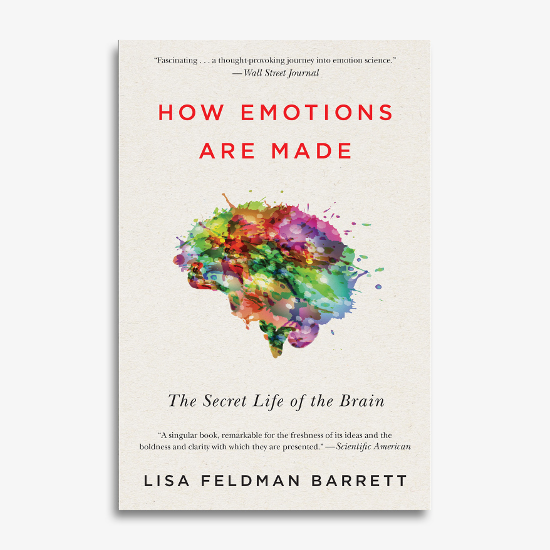
Dr. Lisa Feldman Barrett is breaking new ground in the science of emotion – overturning long-standing beliefs that our emotions are universal, automatic and hard-wired in different regions of the brain. Instead, we actually “construct” an instance of emotion through a remarkable interplay of our brain, body and our culture. 

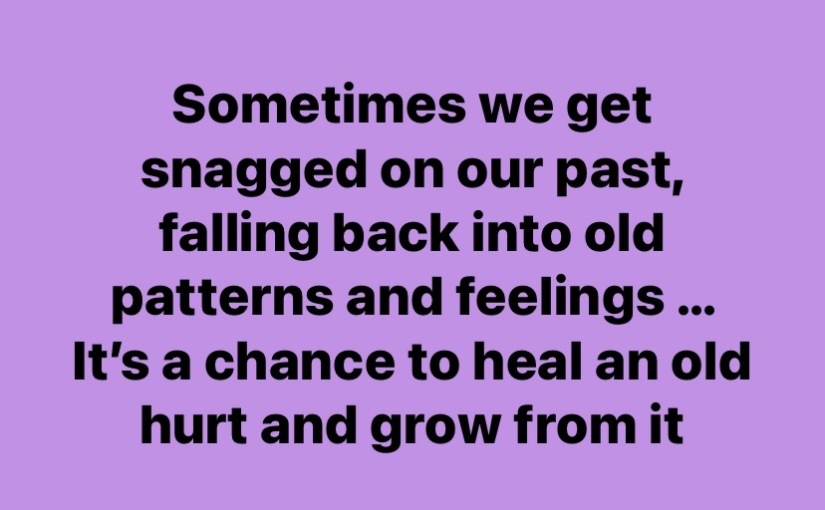
Anyone who has ever experienced a strong emotional trigger from an event that happened decades ago, has some appreciation for how quickly this remarkable interplay coalesces. It’s no wonder we believe it’s automatic and has become hard-wired into our systems. 

And yet, we also know that it is possible to “re-wire” our brains and release old emotional triggers – freeing us from being snagged by that old experience over and over again. The neuroplasticity of our brains enables us to re-organize our old connections in new and improved ways. 

This rewiring process is analogous to children reorganizing their fort framework to become something more useful for an even more incredible structural masterpiece.

It turns out that becoming “architects of our emotions and experiences” it is not as big a stretch that we once believed. How remarkable is that?

Dr. Lisa Feldman Barrett is gifted at making this new concept readily accessible to all of us. There are three key components that we need to know more about when it comes to curating our architectural tool bag: body budget, emotional granularity and cultivating more current, diverse experiences.

Today’s post is the first in a three part series about becoming skillful architects of our experiences. Prepare to be amazed at the role our body budget plays in our emotional reactions to life. 

A major part of becoming skilled architects of our experiences involves mastering our emotions. We erroneously believe that our emotions that are the first system to get activated — and we have to “manage” those strong emotions in order to respond effectively to our circumstances.  But this is not the case.

What actually happens first is that our brains are estimating what’s in our tank and predicting how much of our inner resources are going to be required to meet the present moment. It would be analogous to us hopping in our car for a big road trip and looking at the gas gauge to determine how far we can get before refueling.

Our brains are only 2% of our body weight, but they use 20% of the oxygen we consume and 20% of the energy we consume. What our brains and bodies need in order to have a balanced body budget are consistent quality sleep, hydration, good nutrition and movement, i.e. regular exercise. 

We are learning so much more than we ever knew about the importance of consistent quality sleep for our optimum brain health. Even while we are sleeping, our brain is storing and categorizing information, cleaning and purging, updating and rejuvenating. We are even cognizant of the disruption that caffeine and alcohol has on our sleep cycles and the integral neural processes that occur only during sleep. 

The benefits of good nutrition, hydration and regular exercise are irrefutable. But while we know these components are needed, we often forget that we are also draining our resources throughout the day and should pay attention to when we need a break, should take a walk, or grab a healthy snack. How often are we literally running on fumes?

Let’s just pause here for a minute and think about the amount of time we devote to charging our phones, making sure we have 5g network and cooling it off if we get a heat warning. What if we were to become as knowledgeable about our brains which are operating 24/7 for us – and often without any awareness of the drain on our inner resources?

All this time that we believed we were at the mercy of our emotions, we may simply be attempting to function optimally on an empty fuel tank. Very often what we are “feeling” is not an emotion, but rather an indicator that our body budget is out of balance. 

Since our brains are lightening fast at the estimation and prediction process, they get our body ready for a response that might include an increased heart rate, shallow breathing, or release of chemicals and hormones such as adrenaline or cortisol. We “feel” these sensations and “assign” an emotion to it. We might tell ourselves we feel scared, angry, anxious, uncertain, elated or surprised.

We’ve been doing this for most of our lives without a second thought, so it has become second nature to associate an emotion with whatever we are sensing in our bodies. Once we assign an emotion, we are off to the races – and often unconsciously,

Since our brains are prediction machines, it will quickly run through our historical database to find past events that simulate what we are feeling in the present moment. This complex retrieval system is on auto pilot most of the time; we are unconsciously running an algorithm that reviews our personal history looking for matches.

After the match is made, our amazing brain has one more remarkable feature — it runs a prediction error model. This is the brain’s way of giving us the opportunity to discard old data and replace it with newer, more appropriate data that suits the current situation. 

For the record, we often bypass or override this integral prediction error process. If it “feels” like a past experience, we pull the “all systems go” switch. This is how we’ve forged our “go to” behavioral patterns and protective armor. Without a moment’s hesitation, we assign an emotion, recall a past similar experience and jump into a memorized and familiar reactive pattern.

When we are pivoting to becoming architects of our experiences, we can start to pay more attention to both predictions and prediction errors. We can take the time to see if we are simply relying on an old database that no longer serves us well. This is how we “re-wire” those old outgrown behavioral patterns and replace them with new responses better suited to our lives today.

If the first brain system to get activated is simply an assessment of internal resources that are needed for the present situation, then we can start paying attention to body budget first and emotional responses second. This is a game-changing pivot in both mindfulness and self awareness. Think of this as a little “self check-in”. Are you resourced internally? Have you assigned an emotion and if so, does it feel appropriate to the current situation?

If we can make the distinction that our body budget is actually causing us to be under-resourced and not some big emotional reactions, we can begin to dis-engage from strong emotional triggers and respond with more cognitive skills. 

We think that emotional regulation is really hard and that changing our old behavioral patterns is even harder, but Dr. Barrett’s research is showing us that we just might have been making things much more challenging for ourselves all along by not understanding the role body budget plays. 

It is the very reason that we have “variation” in our moods, emotional states and our ability to think clearly. Dr. Barrett offers us a welcome sigh of relief — it turns out that “variation” is the norm.  

There are times when we do feel in control, cognitively and emotionally. We meet even the most stressful moments calmly, with a good sense of humor, a healthy acceptance of reality. We can even help others calm down and self-regulate when we feel this way.

Then there are times when we are short-tempered, can overreact to the smallest of events, or work ourselves into a state of frenzy. We set off a chain reaction of emotional reactions in others and things can escalate quickly.

Variation is the norm. And now we know what might be the real cause — a body budget deficit.

We get notifications throughout our busy day from our brains and bodies about what is needed to keep us running optimally. We even have terms we’ve created to diagnose our body budget deficits – such as hangry, brain fog, getting on our last nerve and no bandwidth. But unlike the ding of a notification from our phone, we often ignore the alerts we are getting from our brain about our own energy drain. 

We frequently overlook the small investments we can be making all throughout the day to keep our body budget in balance.  We may start with a full tank in the morning after a good night’s rest, a tall glass of water and a healthy breakfast; but we are going to begin to drain our body budget resources as the day goes on. Exercising, staying hydrated, making healthy choices for snacks and meals, taking breaks, getting outdoors, and unplugging from our devices are just a few of the multitude of ways we can restock our inner resources.

The biggest paradigm shift in understanding how we “make our emotions” is coming from a deep understanding of the role our body budget plays in our daily lives. 

Dr. Lisa Feldman Barrett is a pioneer in her fields of neuroscience and psychology – and she is helping us to get very savvy about our incredible, complex brain and body systems. If we take better care of ourselves, and pay attention to our body budget, this whole business of emotional regulation might just get a whole lot easier.

Dr. Lisa Feldman Barrett will captivate you with her compelling Ted Talk about how emotions are made. Click this link to listen
https://www.youtube.com/watch?v=0gks6ceq4eQ&t=140s

Check out this episode of the Huberman Lab podcast where Dr Lisa Feldman Barrett is Andrew’s guest to discuss How to Understand Emotions https://podcasts.apple.com/us/podcast/huberman-lab/id1545953110?i=1000631446646

Broken Spirits…..Part 2

After much reflection and filling half a journal, I have peeled off a few more layers of understanding about the impact that our protective armor can have on our spirits. I actually had a really big AHA moment this morning, which is the reason for this addendum to yesterday’s post.

What started this search was an explanation of how I fell back into old childhood patterns so late in my life. The clues were hidden in the fibers of my life story. I have often said that I lost my compass after Skip died in October, 2002. Now I can see more clearly just how incredibly true this was. But there’s some backstory that also deserves attention.

In September of 2001, my daughter Brelana was just beginning high school at Virginia Episcopal School in Lynchburg, Virginia. This was her decision and anyone that knows my strong-headed girl can appreciate that she was all-in for this empowering decision she’d made for herself. Her devoted step-dad Skip was a graduate of VES and it was evident that she embraced this fresh start for herself as a chance to “belong” in ways that made her feel worthy and valued — by association, being the “daughter” of a respected, congenial graduate of this boarding school. While I supported her decision, my heart was aching because I knew I would miss her terribly. I knew all the reasons she’d made this decision, which is a story for another time. Just know that she was desirous of a clean break from a confusing pattern with her dad as a result of our divorce. While I would not have been able to articulate it at the time, I now know that I was very angry at having to pay the price of being separated from my daughter because of my ex-husband’s behaviors and choices. This pattern of paying the price for someone else’s actions has a very long thread in my life story and those origins lie in my childhood.

Skip urged me to go with him to Scottsdale Arizona where he was conducting an international banking conference for a week. He thought the distraction would be good for me. Bless his heart — he hated to see me sad and he could tell that I was struggling with emotion about my baby girl being so far away from me for months at a time.

Skip knew the bond that Bre and I have – he often told me that Helen Reddy’s Song, “You and Me Against the World” reminded him of the two of us. Each time he passed a bubbling water fountain in the Philadelphia plaza near his office, he would toss two pennies in it as a symbol of his pact with God to protect us.

Perhaps if I had stayed home, I could have processed all my emotions. The anger about who and what had prompted such a decision, the gratitude for Skip and the role model that he was for my daughter, the sadness about being apart from her and not having conversations over cookies after school.

But as often happens in life, that big life event got swept under the carpet very quickly. While the banking conference had indeed been fun and a distraction, it came to an abrupt and tragic halt on the morning of 9-11. Just typing 9-11, I can feel so many strong emotions coursing through me, the memory of that morning returning with such clarity that I can feel it in my bones. Skip’s adult children were scattered across the country, as were my three children. Phones were jammed as we frantically tried to make contact with loved ones. Bre’s classmates at VES had parents who worked at the Pentagon. The VES faculty were scrambling to keep kids safe and address their fears. In a split second, our world had changed so dramatically. Collectively we all felt fragile, vulnerable, scared.

Skip was a hero in my eyes with how he conducted himself at that conference, being a source of comfort and resilience to so many. Again, the full scope of his efforts are a story for another time. I have shared some of it in an earlier post. We got home, to a small apartment in the suburbs of Philadelphia. It wasn’t really home. It was a temporary place for us to live while our house was being built. Home for me was our cute townhouse back in Millersville, full of happy memories, familiar furniture, treasured keepsakes.

Ironically Skip had to leave shortly after our return for an international business trip. Flights had resumed and although there was much uneasiness in the day to day life routines, everyone was trying to get back to some sense of normal. That is, all while keeping a watchful eye out for suspicious white vans or shady activity. So I was home alone, in an apartment, where I did not know any neighbors. I’d go to work each day at PNC Advisors, grateful for friends and something to do to pass the hours. But things were changing rapidly at work due to the terrorist attack and safety precautions being instituted to protect clients and financial affairs. It was overwhelming to process it all especially with a healthy dose of fear added to the mix.

Cell phones did not get good reception in those days. We had not yet gotten a land line installed in the apartment, so I would go to a payphone outside the apartment complex gym to call Brelana or await a call from Skip. A few weeks of standing in the dark, talking on a pay phone hoping that I sounded cheerful, calm, and comforting.

Just one month later, my mother died suddenly. A blood clot from a surgery I did not even know she was having. Now my mother and I did not have a really good relationship, but we had been trying to get it back on track. Oddly enough I had heard some church bells ringing in the distance while walking our small dog at the very moment she passed. As I realized that coincidence, I took a little comfort from it. A sign that in the end, we were ok.

In 2002, I had high hopes for the pendulum to swing back to more positive experiences. The house Skip and I were building was a source of joy for both of us. But only two months after we had moved in, my beloved Skip passed away in my arms…..having just returned from a 2-1/2 week business trip in Cairo. My world went dark….and extremely quiet. So did I. There was just not an ounce of grit and determination left in me. I was beyond worn out. For a very long time, I felt numb. I think it is the body and soul’s way of protecting us — cocooning us when things seem so unbearable.

I know this story of mine is beginning to sound surreal — so many big, impactful life events all unfolding like dominos….one right after the other, without a moment to catch a breath, cry it out, start to heal.

Yet I am sure that if you look around, you will see similar stories that are unfolding right now — through this current collective event of a global pandemic. It is the impetus for me sharing all of this. To open your eyes and hearts to the many events and experiences that are breaking spirits of others.

A key similarity to my life experience and the pandemic is isolation. When Skip died, I was all alone. We had moved from my hometown to the Philadelphia suburbs. No family, no friends yet. Too much isolation during my darkest hours.

I believe that it was that isolation — that long lonely recovery period of grieving — that really put me in a tailspin and sent me spiraling backward into unconscious behavioral patterns.

In my post yesterday, I shared how even experienced practitioners can get snagged on emotional baggage from their past. These deep emotional experiences can have very strong currents that pull on us when we are most vulnerable. So often, we then begin to sift through old memories and excavate other painful experiences. I have done this myself, stringing together a series of past events where I was alone, vulnerable, in struggle. It amplifies our emotions and can flood us to the point of overwhelment.

I have witnessed this happening to people I love. They ask questions I cannot answer and those questions reveal the unhealed parts of their life that still snag them.

This is why I am sharing such personal vignettes with you today. It has only been through a lot of inner work, with the help of a cherished friend, that I have been able to go back and process what needed to be faced and healed. I was dragging around of lot of old baggage for far too long and allowing it to hold me back. This is precisely why we need to help each other with non-judgment, kindness and an abundance of empathy.

A Meaningful Gardening Metaphor

Many who know me, know that I am an avid gardener. My love of gardening started early in life and has brought me so much joy over the years. One of my greatest pleasures is taking an overgrown jungle and turning it into a lush, textured and colorful retreat. Years ago, I nicknamed one of my shaded garden paths Nature’s Chapel for it was full of majestic Jack in the Pulpits and large-leafed variegated hostas that held raindrops like sparkling jewels. That graceful garden offered both calm and wonderment. Gardening has always been therapeutic for me. It brings me joy and a deep sense of satisfaction to transform an eyesore into a treasure for the senses.

Over the past few days, I have had to sit with some heavy emotions from my past. The images of my many gardens kept intertwining with my thoughts. Suddenly I realized that there was a meaningful metaphor emerging. I recalled a piece of raw land covered in thorny brambles and thick underbrush. At first sight, it looked like a daunting task to clear it all. But my vision of a lush garden with blushing pink bleeding hearts and emerald ferns spurred me on to tackle the clearing process. It took nearly a week of manual labor, blood (in spite of thick gloves), sweat and even a few exasperated tears. Eventually I was gazing at that thick rich composted soil, eager to plunge my fingers into it and inhale the promise of a dense flourishing garden.

I used this gardening metaphor as my anchoring point to revisit an old emotional wound. It has had a profound impact on my mindset to continue on — digging deep and clearing away thorny emotional brambles. I know that it will be hard work, but in the end I will have a clear, clean healthy space in my heart and life story.

Perhaps one of the most revelational transformations that happened during this clearing is that I am able to use tools I did not possess at the time of origination of the painful emotional trauma. It could have been one of many incidents in my childhood where a parent shred any hope of trust and protection through uncontrollable abusive responses. It could have been occasions when I was pleading for help for myself or my daughter and was completely ignored, even dismissed. It could be the innumerous times a former partner stripped me of self esteem and self-worth in spite of facts that proved otherwise. In those moments, I was not strong, lacked confidence and believed I was unworthy. Too young and insecure, too mired in dysfunctional circumstances others were unconsciously creating for me, for us.

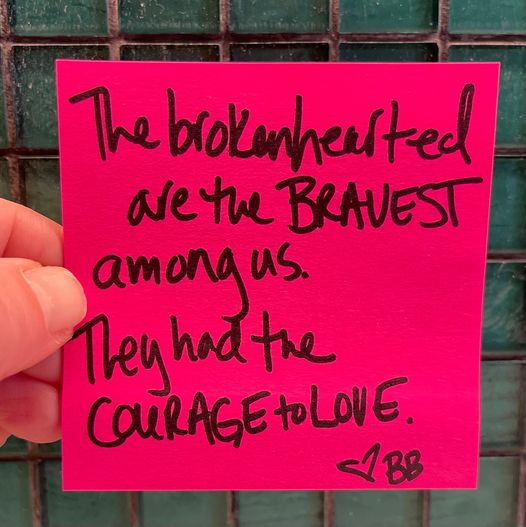
Today when I stand facing the thorny brambles of revisiting those old traumas, I am an older, wiser and more self-compassionate woman. My tools are knowing my own value and self-worth. I recognize that I have overcome some really painful, challenging life experiences and am still standing. I also know that in spite of mean, spiteful and deeply hurtful actions of others, my tender heart remains unchanged. My loving heart may be bruised, scarred and creviced, but it is capable of deep love and true warmth. In fact, I am certain that my brokenness is what allows more light and empathy into the deepest part of my very being. I have an innate understanding of the human condition precisely because of the pain I have endured.

In some ways, it is like having a crystal ball. I envision my crystal ball look as a snow globe. I can look at my young granddaughter as though she is in a delicate glass snowglobe, shake it and watch the fairy dust of snowy white sparkles drift over her. I can hear her laughter and I can wrap her in my arms when life hits her hard, offering comfort and assurance that she is loved, safe and protected. My wish for her, and all my grandchildren, is that this is their true foundation.

My improved self-awareness in my 60’s means that I am a better advocate for my innocent and vulnerable grandchildren. Of course, I will not be able to protect my grandchildren from life’s hardships, but I will hold space for them, I will honor their true feelings and I will be a source of comfort and strength. Awful things happen in life — how we show up for others in there hour of need is paramount. This is how we help our young people grow their character, their values and their resilience.

I am a crusader for my grandchildren. I will never watch silently as an adult carelessly and unconsciously strips a child of their worthiness or their need to feel safe and protected. While much of life’s challenges and heartbreaks cannot be changed, how we treat others is fully within our power. I have zero tolerance these days for adults who expect more from their young children than they do themselves. How can you expect a little one to have emotional regulation and patience if you are not role modeling that for them? Let’s face it, we are all imperfect and we will make mistakes but even then we have precious teaching moments and an opportunity to restore trust and worthiness. Our greatest tools in these moments are personal accountability and sincere apology.

These transformational tools must be used swiftly. I cannot stress this enough. We can circumvent serious emotional damage and development of unconscious protective behavioral patterns by owning our mistakes and hurtful actions and offering a sincere apology. Not just I am sorry, but a true commitment to change.

Imagine a fiesty preteen girl being told by her birth father that she’d be pregnant by the time she was 16. For three years she’d carry this in her heart like a heavy rock weighing her down. On what should be a very happy milestone 16th birthday, she bounds down the stairs and asks her mom if she should call him and tell him he was wrong — very wrong — about her on so many levels. It is caustic, toxic actions like this that plant the seeds of unworthiness in an innocent child. This young woman will carry this with her all her life – it is her emotional baggage packed and handed to her by a careless adult.

This is another example of a sliding door moment in life. That birth father could have realized what an awful thing he said to his daughter and he could have immediately apologized. Perhaps he was angry about something else and directed all that pain at his daughter. But years go by and he’s long forgotten he ever uttered those words to her. Yet she carries them buried in her heart and they will shape her through the years. She will always have a nagging inner voice telling her she is “less than” and there will be days she believes it. When people let her down, she will see it as proof of her own unworthiness. It will make recovery from life’s blows all the harder. When she becomes a mother, she will make every effort to ensure her own child feels completely loved and accepted, just as she is. It will take this woman years to undo the silent messaging that she is unworthy of love and belonging. And this is precisely why swift action is needed when we screw up.

I do believe that each generation becomes better at parenting in a healthy way by learning from our own parents what we do not want to repeat. This has been a guiding principle for me and many of my friends, and we are seeing that unfold with our adult children as they raise their own families now. I am also grateful for the work that Brene Brown has done to bring out into the wide open just how these very real life experiences impact us emotionally and psychologically throughout our lives. Which is precisely why we need to do our own “clearing and excavating” work. In my viewpoint, Brene has been a leading catalyst for making very public the critical need for all of us to dive into self-discovery and to support each other in a wholehearted way when we find the courage to do so.

It is my hope that my gardening metaphor will become a strong visual for consideration should someone ask you to help them as they are pulling weeds and emotional brambles from their own stories.

Almost a year ago, my lifelong friend, Judy Chesters, told me that we still had a lot of deep diving to do into our work of “emotional excavation”. Admittedly she caught. me by surprise because she and I have worked so hard for over 5 years supporting each other through a lot of processing of archived traumas and self-discovery. All I can say now is that she must have had a crystal ball of her own — for after a year of pandemic and unprecedented uncertainties she was so very right. Both she and I have gone much deeper into our own stories. The healing and empowerment that we have gained is almost hard to explain but how we both feel is much more grounded, expansive and light. I shared with her one day that I describe it as “rare air, deep water.”

When I am in that space of “rare air and deep water”, I let my imagination run free and wild. I envision my grandchildren traveling through their incredible lives without emotional baggage and scarred hearts — no limitations on their creativity, worthiness and ability to live authentic wholehearted, free-spirited lives. I imagine a world where we give to each other an enriching environment and nurturing support to be our best selves. Amy Davis

Helpful Resources:

RISING STRONG by Brene Brown.

Check out this overview: https://www.meaningfulhq.com/rising-strong.html

RADICAL ACCEPTANCE by Tara Brach

Read this summary by GoodReads: https://www.goodreads.com/book/show/173666.Radical_Acceptance

Check out this recent Typology Podcast with Ian Morgan Cron for some personal insights on the value of doing your own “shadow work” and the rewarding personal evolvement that grows from doing that self-discovery work. https://www.typologypodcast.com/podcast/2021/11/02/episode04-034/audreyassad