A Slice of Life

Did you know that the phrase “a slice of life” is actually a storytelling technique? Who doesn’t love a good story? There’s magic in stories that we find so inviting and irresistible.

When someone walks in the front door and says “wait til you hear what just happened”, we drop what we are doing and are all ears. A good story captures our curiosity, interest and attention.

It is these little “slices of life” that we share with each other throughout the day that do wonders. When we hear these stories, we come to see how familiar and normal so much of daily life really is. Everyone has issues, makes mistakes, gets embarrassed, acts silly, falls short and rises to the occasion.

When we offer each other “a slice of life” we tap into our shared human experiences. We help each other make sense of things that currently aren’t making any sense. We offer lifelines, rays of hope and footholds to see us through our challenges. We celebrate the wins, the growth spurts and the mile markers.

Our shared stories help us normalize many of the common human experiences that unfold on a daily basis and help us feel less alone in what we are experiencing. It is all too easy to gaze out our windows into the lives of others and tell ourselves a story about how smooth their life seems to be going while ours is falling apart.

We shatter that false image though when we run into our neighbor at the grocery store and she shares a relatable story about being out of milk for the pancakes her kids were craving, even though she just went for groceries yesterday. Standing there with our arms full of bread, eggs and coffee cream, we laugh along with her because we are in a similar predicament. How unexpected to be offered a “slice of life” to go along with our purchases. What had been an exasperating quick trip to the local market had a silver lining. We leave a little better fortified for the rest of the day thanks to that simple exchange in the checkout line.

Ironic isn’t it – how we all feel like we are alone in the trials and tribulations of life? Yet a single, relatable story told to us by a stranger or a friend snaps us out of this hazy myth.

What the world needs now is more stories. Brene Brown told us this decades ago. She told us that data needs stories to bring it to life — otherwise it is just facts — charts and graphs. The real life stories add backstory, personal history and lived experiences to the sensationalized soundbites we get from the news. The raw facts come to life with stories. A slice of life beats a pie chart any day of the week.

I recall a lecture from an economics professor years ago who used slices of life to teach that statistics were not just numbers and graphs — they revealed insights into the people who drive (and are driven) by the economy. He told us to look behind the numbers for the human stories. His real life examples turned dry data into compelling relatable stories that made his teachings and our learning really stick. To this day, I still recall that lesson — and it is a big reason why Brene’s call for “more stories” really resonated with me.

Stories build bridges in a variety of ways. Stories can bridge the past and the present so that we can learn the lessons without having to go through it ourselves. Ryan Holiday, author of The Daily Stoic, is a strong proponent of learning from others through story – whether it is ancient or contemporary history, business wins and fails, or people who’ve overcome tragic adversity. Stories help us build a better framework for our own problems and opportunities. History that bridges the past and the present gives us a blueprint for the future.

Another way that stories build bridges is helping us to gain insight and understanding about societal norms that shaped prior generations beliefs, behaviors and actions. In his book, The Daily Laws, Robert Greene, puts a spotlight on this by reminding us that “People were experiencing their present moment within a context that made sense to them. You want to understand that from the inside out.

Robert Greene tells us that the optimum way to fully comprehend the past is to make it come to life, to re-create the spirit and conditions of the time, to tap into the subjective experience of the storyteller. We can use our imagination to take us back in time and feel what it might have been like to live in that time period. It’s quite likely that you will do this without a second thought when you watch a holiday movie such as A Christmas Carol, It’s A Wonderful Life, or even How the Grinch Stole Christmas.

When we are listening to a story, we are opening up our natural curiosity and our imagination. Without even being consciously aware, we are feeling parts of that story too. Storytelling shifts us from being judgmental and close minded to surrendering to the magic of story. We begin to make connections and discoveries through empathy, sensory perception and our own emotional responses.

Watch a grandparent telling a story to a grandchild and you will see this magic unfolding. Often the grandparent will get down on eye level with a child or draw them into their lap. The opening line is probably not “once upon a time”, but more like “let me tell you about a time I fell off my bike”.

There is an instantaneous connection over a common shared experience. When a grandparent tells a good story, they are weaving their own real life experience into that of their grandchild’s — and offering the wisdom that small child needs to feel better, to realize how common that bike fall really is, and to have faith that they’ll have a lifetime of skillful bike riding ahead of them. The loving grandparent has just offered a slice of life through the magic of a good story.

So what is this “magic” embedded in story? Why is storytelling such an effective technique for imparting wisdom, sharing life lessons and reframing age-old conundrums? The answer is that we humans are hard-wired for story. We use story to make sense of our experiences and to give those experiences meaning – and we do it from childhood all throughout our lifetime. The magic is how our brains get activated by a story.

When we listen to a story, multiple regions in our brains come online and light up. This allows us to “live” the story we are hearing through vivid imagery, emotional engagement and sensory perception. Hormones such as oxytocin are released so we become awash in empathy and relatability.

We also experience neural coupling, where our brain and that of the storyteller actually synchronize. This becomes the mirroring that we humans do for each other. Watch a mother and her baby and you see this neural coupling in action. We get the same mirroring effect during storytelling — we reflect back to each other what we are feeling and experiencing. It is a brain connection that also makes a heartfelt bodily connection.

Mirroring may sound like new-age neuroscience lingo — yet it is hardwired into us humans. It is a phenomenal tool for emotional regulation. A mother can up-regulate her fussy baby to a happy state using facial expressions and cheerful tone of voice. She can down-regulate her baby into a calm state before nap time with a soft-toned, soothing lullaby. We do this mirror processing without a conscious thought as we listen to the stories our children, spouses and friends tell us. It is a fluid process of reflecting back and forth, validating how someone feels and acknowledging that we understand. We might even share a similar story of our own. We create bonds of trust and acceptance through mirroring.

So now you know where the magic in storytelling is coming from — it is coming from our brains and bodies as we “synch” up and absorb the encompassing, rich context offered by the storyteller. It is a shared human experience.

Storytelling is one of the most effective ways to teach and learn. It is how ancestors passed knowledge about culture and heritage from one generation to the next. It is how wise sages impart wisdom through parables and fables — offering us a poignant “moral to the story”. Stories are how we preserve precious memories of loved ones we’ve lost and keep them alive in our hearts.

Perhaps most importantly, it is the small “slices of life” storytelling that really nourish us on a daily basis. When we are offered a slice of life, our brains get activated in the best possible ways. As we listen to our child tell the tale of a food fight in the school cafeteria, or our spouse unravel the details of tense work project – we are making neural connections and building bridges in our relationships. We are synching up! What an antidote to all the disconnect we get from having our faces in our devices.

We get micro doses of empathy, curiosity and fresh perspectives with each little “slice of life” we hear or tell. Our small stories help us see each other in all our technicolor glory — as we reflect back and forth, the normal realities we all face. Some days we are the windshield and some days we are the bug. Our colorful, animated, entertaining stories help us understand and relate to each other much better.

Brene Brown is right — we need more stories. We can bridge divides, build a better future and find acres of common ground through storytelling. Offer a slice of life to others whenever possible. And when someone offers you a slice of life, savor it!

NOTEWORTHY RESOURCES:
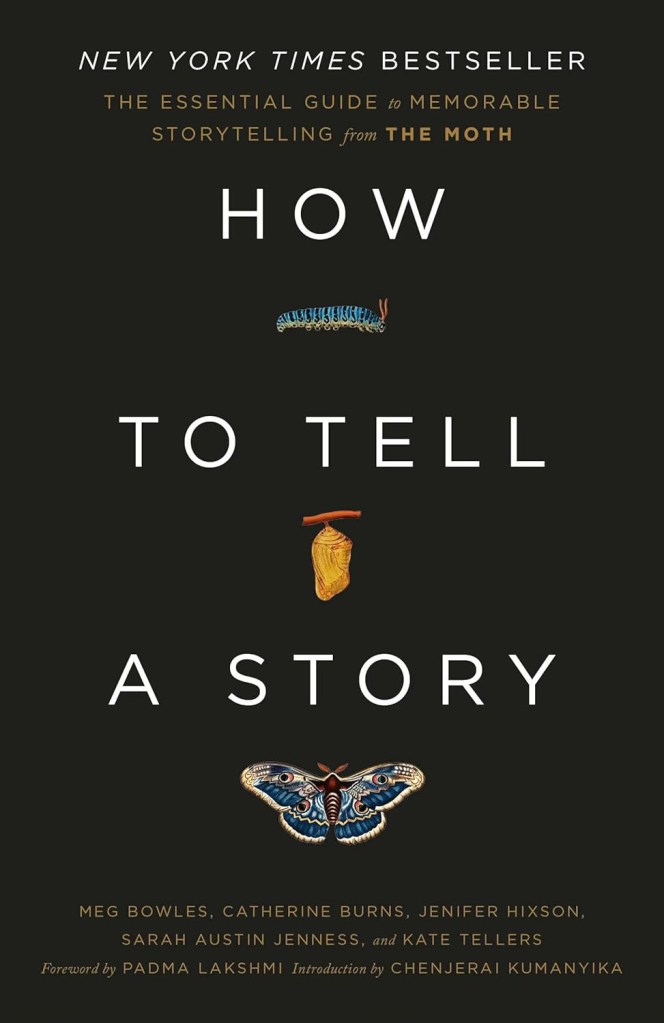
NEW YORK TIMES BESTSELLER • Now in paperback and featuring new material, the definitive guide to telling an unforgettable story in any setting, from the storytelling experts at The Moth

“From toasts to eulogies, from job interviews to social events, this book will help you with ideas, structure, delivery and more.”—CNN
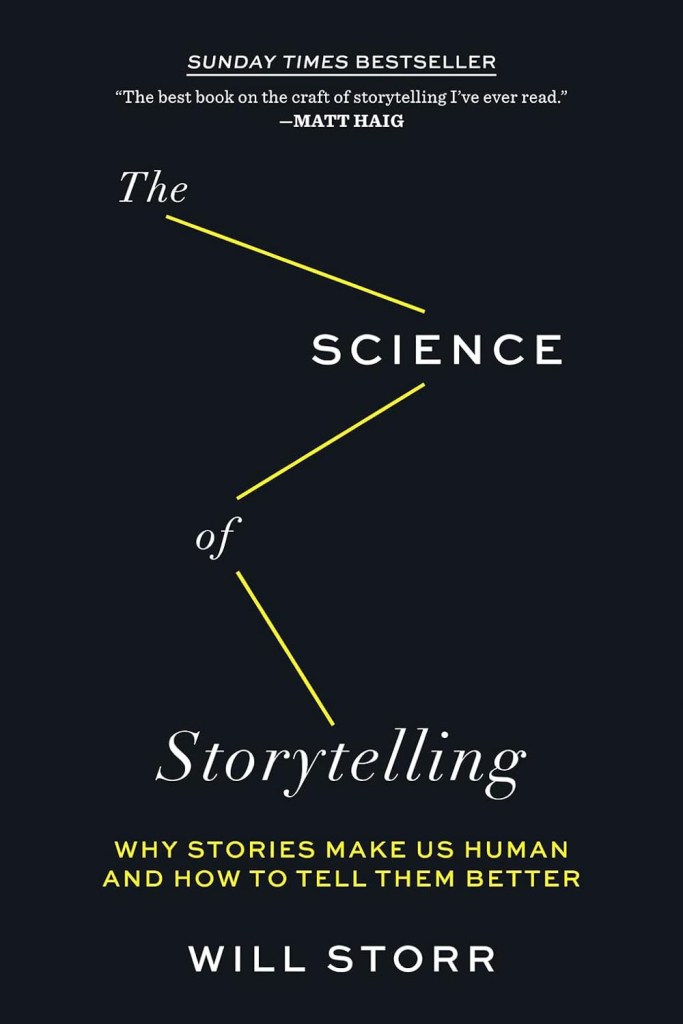
Award-winning writer and acclaimed teacher of creative writing Will Storr applies dazzling psychological research and cutting-edge neuroscience to our myths and archetypes to show how we can write better stories, revealing, among other things, how storytellers—and also our brains—create worlds by being attuned to moments of unexpected change.

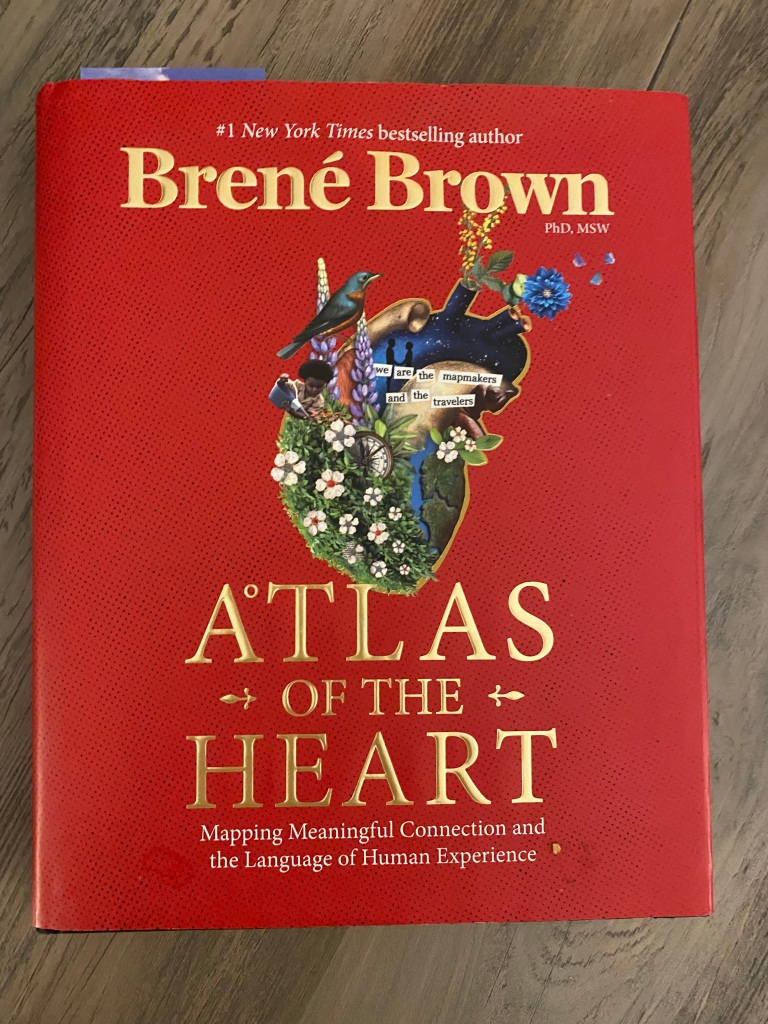
Brene Brown’s Reference book on 87 common emotions and experiences is the perfect resource for discovering “the places we go” and “the stories we tell ourselves” in everyday life.

Emotional Airbags

Just envision this for a moment: When we are emotionally triggered, it is like an airbag exploding to protect us. However, it catches us off guard – the impact so sudden and so strong that our brains send out high emergency alerts to our bodies. We get hijacked rather than assisted. We feel like we can’t breathe fully, our hearts are racing and our ability to see clearly is limited.

I’ve never experienced an airbag deploying in a car, but I can imagine that it feels more scary than protective when it happens. While we know that air bags are a safety feature designed to protect us from serious and even life-threatening injury, it is not something that we get to practice. We can only imagine what it might be like and we can mentally prepare for how we would hope we can respond in such a situation.

Our natural human response to an emotional trigger is the equivalent of airbags deploying. Our emotions are intended to protect and inform us but a strong emotional trigger can feel surprisingly overwhelming.

Our very first experiences with our internal emotional airbags occur in childhood and they have lasting impacts.

For many of us who are older, the cars our parents drove back in the day didn’t even seatbelts let alone airbags. Those safety features only came along when a critical mass of human beings realized that we could actually save life and limb by being proactive and installing numerous safeguards. It is this very same analogy with our emotional airbags; back in the day, our parents did know about the profound benefits of emotional intelligence and most importantly, skillful emotional regulation.

We are now at a very important tipping point — we are fast gaining critical mass in the awareness that emotional integration is the human operating system upgrade that should be modeled, taught and integrated into our children’s developing brains.

The challenge for many of us is how do we teach something we were never actually taught? The truth is that we have actually done just that in many areas of life. Just look how quickly we taught ourselves to embrace technology, electronic banking and Zoom meetings. If we stop resisting what appears to be harder and even unpleasant work, we might discover that life and our relationships actually get a lot easier and more fulfilling with emotional integration.

I recently learned that we can gain a lot of traction in our own emotional integration education by being around children. This makes so much sense because we can witness in real time what happens in childhood when kids are given tools and support to understand and handle their emotions. It’s a visual aid more engaging than a magic act.

When something new comes along such as an upgrade to our phones, our laptops and even our car’s technology, we can readily see how the improvements enhance our life and address a problem we may not even know we had. The same is true with emotional health. When we become keen observers of children and their interactions with their parents, siblings, teachers and friends, we witness firsthand how having meaningful emotional tools would have made a huge and dramatic difference for everyone — most especially for children who have very limited cognitive resources for making sense of a complex world.

In my prior blog posts in this multi-part series on Game-Changers for our emotional upgrade, you may have noticed that no matter who is leading the charge, or what modality or field they represent, everything points us directly back to childhood.

All the behavioral patterns, the protective armor, the coping mechanisms that we deploy have been handed down to us for generations, with no real advancements at all. In fact, what once seemed so complex about personal growth, trauma and self discovery have been boiled down to some pretty obvious truths: we really had a “one size fits all approach” and a small closet of possible options for navigating childhood. We were so handicapped for how we made sense of what was happening in our world.

A quick review of psychology, neuroscience, the enneagram, behavioral science, etc. reveals that our small closet of options held just a handful of “one size fits all” behavioral patterns and coping mechanisms. We are people pleasers or contrarians, we hide or we fight, we avoid conflict or we create conflict, we numb, we run, we freeze. Normal, child-sized responses to emotional airbags exploding in us, as well as members of our family and community without warning.

No wonder we ran for cover and struggled to make sense of the unpredictability and scariness of it all. We ducked into those little closets to find something that would soothe us and keep us safe from things we were feeling but did not understand.

Dr. Becky Kennedy explains this so beautifully when she reminds us that a small child who is overwhelmed with big emotions – and is throwing a tantrum or having a meltdown – lacks the skills he needs to manage that big emotional explosion. She tells us that we teach our children the skills they need to learn to swim, ride a bike or read. So why — she challenges us — would we expect them to be able to handle big, overwhelming emotions coursing through them — without some helpful tools?

I’m hoping that this brought you to a full stop.

Take a moment to think about how you are handling your own “sudden, big feeling moments” in real time today when your adult emotional airbags get deployed — especially in front of your kids.

We teach our children a lot by osmosis. What skills and tools are we reaching for when we are emotionally triggered, extremely tired, or overwhelmed by others or events? We not only need to role model and actively discuss how our emotions impact us, we really need to engage in the installation of emotional intelligence in our children. We need to teach emotional skills just as we teach them good hygiene and manners, how to share with others and how to use their words. In fact, when we install the emotional upgrades, all the other things we are attempting to teach them will be greatly enhanced in the most remarkable ways. Honestly, the parenting job is less exhausting and more productive with strong emotional skills and tools.

The reason for this is that our brains release adrenaline and cortisol when we are emotionally unmoored. Since we co-regulate each other, if we overreact when our kids’ emotional airbags have deployed, it is like double-dosing all those stress hormones. We would never double-dose our kids cough medicine or Tylenol – but losing our cool with emotionally distraught kids is like giving them an extra dose of stress hormones and throwing back some for ourselves.

Here’s what happens when our bodies get flooded with cortisol: Our heart rate and blood pressure go up; our bodies fight or flight response kicks in; our digestive system slows; our immune system weakens we become anxious, irritable and on edge. Chances are you are now realizing that this is the exact opposite of being a calming first responder when emotional airbags inflate.

We cannot be at our best as parents and emotional first responders when we are over-reacting to our child’s emotions and out of control with our own.

Take a moment to think back to an experience that you had as a kid when your parents or caregiver lost control — do you recall how it felt? It was probably pretty scary and you put a bookmark in your memory banks of how you might avoid that reaction in the future.

This is how our childhood emotional triggers begin. It is precisely why all the intersecting research points us back to childhood for the tap roots of our emotional triggers, inner critics and insecurities.

Old parenting models exacerbated the problem because emotions were treated as a bug and not a feature of our core operating system. Kids and parents were flooded with emotions and cortisol and the parenting rule of thumb was to send us to our room til we were able to be with others. We were often punished or dismissed for our outbursts, while our parents got to return to whatever they chose to do. No consequences for them. No repairs for the relationship rupture. We made a mental note of that too. We got a lot of mixed messaging to go along with our repressed and unprocessed emotional experiences. This double standard also created a lot of issues with our basic need for a secure attachment – and resulted in many of us having anxious, avoidant or disorganized attachment styles. Yet another clue from our childhood about why we might be having relationship issues in our adult lives.

Our brains are prediction machines. While we are not consciously aware of it, we have mental notes and bookmarks on a clunky old database that it still uses when we get hijacked and go offline. Our bodies and brains coordinate all their defense mechanisms very quickly when something feels oddly familiar and we need to be on high alert. Our emotional triggers are in those childhood databases.

The pivot is catching ourselves in the act. We have to catch ourselves in the act of being hit with our own emotional airbags and realizing that we are off-line, defaulting to that childhood database.

When we are operating our incredibly complex cars today at high speeds in heavy traffic, we have the ability to stay fully engaged with our current knowledge and awareness. We don’t default to how anxious and insecure we felt when we were first learning to drive. We have the awareness, dexterity and maturity to handle a frightening situation like airbags deploying in a car in the event of a collision. We most likely would act like the adults our kids need us to be in that circumstance. We can do hard things. In fact, we are pretty proud of ourselves when we handle a crisis like this with confidence.

We can do the same for our kids’ emotional airbags; we can become the trustworthy, grounded first responders they need and deserve.

I believe that the reason doing our own emotional integration work gets a lot of traction when we interact with kids is that we get a lot of opportunities to both observe and practice. As we pay attention to the common emotional triggers our children have, we can get equally more in touch with our own.

Kids haven’t changed; what has changed is knowing that emotional integration is an incredible feature of our brains and bodies — not a bug. Our children will have the same big overwhelming emotional responses that we did when we were little. They will get scared, angry, frustrated, confused, belligerent, shy, bossy, sensitive — the list is endless. But instead of leaving them to their own devices and that small closet of coping skills, we will be showing up as caring, comforting emotional mentors.

We can teach them or we can repeat the past. This is where real change takes place.

Each emotion our children feel is legitimate and is real for them. Acknowledging that is huge. It reassures them that they will be ok, that they are seen and heard and that we will help them manage their big feelings. They do not have to do that alone. In fact, they unable to do that alone because they do not yet have access to “top down” executive functions in those small developing brains.

We become the training wheels for our children’s emotional awareness, intelligence and regulation.

No overdosing on stress hormones for you or your child. Helping your child return to their baseline is how we teach them to “ride out” their emotional waves. As they grow older, they will then have a lot of experience with how emotions come on strong, and can subside with a little skillful assistance. We can teach our kids to label their emotions, to understand what they are trying to tell them and to process them in real time. This is how we help our kids get more skillful at their own emotional regulation. We teach them to tolerate a little short term discomfort and to learn from it. This is the preventative step we take to help them avoid numbing their pain.

It is also how we introduce them to the incredible benefits of self-compassion. Rather than our children growing up with harsh inner critics, fixed mindsets and limiting beliefs, we will be helping them build resilience, resourcefulness, confidence and growth mindsets.

We aren’t born afraid of our emotions. In fact, emotions are a baby’s first language and how they get their basic needs met. Rather than pulling the plug on emotions when our children learn to talk and express themselves with more context and complexity, we help them differentiate between self-identity and their behaviors. Telling a child they are bad, stupid or too much is the root cause of adults who struggle with their core identity, self-worth and lack of inner confidence. Label the behavior not the child. We have good kids and sometimes they have unacceptable behaviors.

We use boundaries as guardrails for our kids – to help them learn how to make good choices on their own later. Our boundaries teach kids more about the consequences of their behaviors more than any lecture ever will. And we want our children to become very skilled at holding boundaries when they are teenagers and adults so that they can clearly let others know what is acceptable behavior to be in relationship with them. Boundaries are a relationship tool that keeps us safe and in alignment with our core values.

Did you know that children have this same inquisitive nature about emotions? We are the ones who grew up with emotions being labeled as good or bad, positive or negative, even gender restricted. It’s time to peel those labels and reframe emotions as neutral, necessary, invaluable internal information. Emotions are a feature, not a bug of our core operating system.

Both our parental teaching experiences and our child’s learning experiences will be markedly changed for the better when we integrate emotional intelligence into everything else we introduce to our kids. Without all those airbags exploding, we will have more room to fully engage in the dual process in healthy, relaxed and mind-opening ways.

Just out of curiosity, check in with yourself to see how you actually plan for big emotional experiences for your kids on purpose. A surprise birthday celebration, those costumes they will be donning for Halloween, unveiling an upcoming family vacation — these are all intended to evoke great joy, delight and wonder. How do we support our kids when we have bad or sad news to impart — we lean in, comforting, soft and assuring.

Imagine yourself growing up without the impediments of limiting beliefs, false narratives or restrictive social conditioning. Imagine yourself understanding that your emotions are helpful information, normal and acceptable. If you are capable of imagining this, you may find yourself smiling, feeling free and adventurous, even child-like with wonder and curiosity. That feeling right there is what we are going for — that is what happens with emotional integration and giving our kids the skills and tools they need to make sense of the world in a healthy, growth-mind set, ever evolving kind of way.

Magic happens when we begin to take our own adult emotional integration seriously; when we teach and learn simultaneously with our kids. If you are a parent or grandparent, you have the best environment for this “on the job” training.

We all have the potential to contribute in a meaningful way to integrating emotional intelligence for kids and for each other. Bear this in mind with each interaction you have. We can be the scaffolding that we all need to come fully online with emotional intelligence.

The Natural Next Steps

When I began my personal growth journey, the buzzword that was catching on was “mindfulness”. Time Magazine touted mindfulness as the new science of health and happiness in 2016. The message was clear — we are time travelers, often letting our minds wander to the past or future. We were being urged to find our balance and be more fully present in the moment.

It became very evident that in addition to time travel, our monkey minds were filled with an inordinate amount of chatter. So, meditation was introduced as the tool to help us stay more present in the moment. The internet was abuzz with “how to” practices and new meditation apps were hitting the market with a fury.

We were being reacquainted with something we take for granted — the power of our breath to regulate us. We were told to pay attention to our breathing and to use it as a grounding tool when we felt distracted or emotionally overwhelmed.

At the time, I recalled how I was taught the Lamaze method of breathing in my early twenties to help me through the labor and delivery process of my first baby. The seed had been planted that a few deep breaths could help keep me stay calm under pressure. Over the course of many decades and a lot of high stress parenting moments, I often told myself – and my kids – to take three calming breaths. I remember my dentist laughing when I shared with him that I used the Lamaze method more often in his office than when I was delivering my babies.

So, I had a lot of “buy-in” and actual experience when it came to the “breathing” component of meditation; but like most, I struggled with the traffic jam of racing, competing thoughts whenever I attempted to “meditate”. I could use my breath to slow my heart rate and calm my body. The next big step was learning how to manage the 60,000 thoughts create so much distraction every day.

That’s where mindfulness played a key role in what was touted in 2016 as the new science of health and happiness. Mindfulness was the buzzword and the trend that shifted our awareness. We began to cultivate greater “self” awareness.

Self-awareness helped us recognize when our minds had wandered off on a trip to the past or the future while we were playing a game with our kids, or enjoying a delicious meal with our family. Meditation practices helped us hone our focus and attention muscles. The goal was never to eradicate our 60,000 thoughts a day; it was to become more discerning about the ones we actively engaged with and to help us stay in the present moment with greater frequency.

The new science behind mindfulness was helping us to understand that time travel to the past often put us in negative ruminative loops and time travel to the future could make us worry and become anxious. We were missing out on gathering up and storing all the positives that were occurring in the present moment. The benefits of being present in the moment was being able to steep ourselves in moments of pure joy, delight and strong feelings of happiness. It was being more keenly attuned to gratitude – both giving and receiving it. It was also the recognition that this present moment may be the very one we had worked so hard to make come true. The science was telling us that our happiness is most salient when we live in the “now.”

Meditation was the term and the tool introduced to us to help us better understand all that our amazing brains are capable of doing when we choose to be consciously engaged in all its features. It became the gateway for learning about neuroplasticity and how neurons that fire together wire together; in other words, how we can create new neural networks throughout most of our lives. Our interest in meditation greased the wheels for us to take a deeper dive into learning how to care for our complex and incredible brains.

It was the Mindfulness trend in 2016 that put us on the path of greater access to the knowledge, tools and resources we have to do a much better job of caring for our brains and improving the quality of our lives as a direct result. Change-makers are coming onto the scene with relatable content, using layman’s terms and helpful metaphors to teach, getting us engaged and excited about all sorts of new approaches to parenting, relationships, education, counseling and therapy.

It is now the fall of 2023 – and the natural next giant step in the science of health and happiness has crystallized into mental health and emotional health. We now know, beyond the shadow of a doubt, that if we want to live longer, happier and healthier lives, we need to integrate emotions into our operating system and we need to take brain health and hygiene seriously.

Where we once believed that only those with very disregulated, dysfunctional families were predisposed to mental health issues, we now know better. We also know that being well resourced both physically and emotionally is how we build resilience, courage and flexibility for the inevitable challenges of life. Furthermore, we are just beginning to fully grasp the negative effects of disconnection and loneliness, especially in our teens and elders.

Let’s take a look at some of these change-makers:

Scroll through your favorite social media platform today for parenting tips and you will most likely discover Dr. Becky Kennedy, a children’s clinical psychologist who made a big pivot from old school parenting and psychology to a vastly improved integrated approach to help children struggling with their big emotions and problematic behaviors. She transformed her practice when she and her colleague launched “Good Inside” in 2020. If you are a parent, grandparent or child caregiver, you will find Dr. Becky’s teachings invaluable; and you will be leveling up your parenting skills in a whole new way.

On her website, Good Inside, Dr. Becky offers insights about herself and her professional practice. It is proof positive that all that we have been learning about childhood development, our brains and bodies, and our emotional health are shifting how we approach age-old problems.

Dr. Becky introduces herself as a clinical psychologist, mom of three and founder of Good Inside. When she first started her career, she practiced a popular “behavior-first” “reward-and-punishment model” of parent coaching. She shares that “after a while, something struck her — “those methods feel awful for kids and parents.” She got to work, taking everything she knew about attachment, mindfulness, emotional regulation and internal family systems theory– and translated those ideas into a new method for working with parents.

By focusing on the parent behind the parenting, and the child behind the behavior, we help families heal — bringing out the good inside everyone. ” (Excerpted from her Good Inside website)

What Dr. Becky came to realize as she transformed her methods and her professional practice is that we cannot teach what we do not know or skillfully use ourselves. Since none of us were taught about how the brain works or emotional integration and regulation, we were simply using the same parenting practices that keep perpetuating behavioral problems.

This is precisely why we reached a tipping point in our need to change our understanding and approach to mental and emotional health. Generation after generation had just continued down the same path, passing the baton of problems, dysfunction and disregulation to our children, until it reached a collective crisis level that could no longer be ignored. The children of each generation were surrounded by adults who did not know better. Parents, teachers, coaches, mentors, grandparents, siblings and friends — and even well intentioned counselors — were all coming at behavioral problems and addictions with the same outdated, unhealthy approach and model.

As the mental health industry began to recognize that many of the root causes of behavioral issues and addictions could be traced back to childhood, it became evident that the old parenting model and lack of emotional integration into developing brains and bodies were the core sources of our collective human problem.

We should be breathing a collective sigh of relief.

We can move forward from here with greater understanding and deeper empathy for ourselves, our parents and each other. No one is alone in doing the work that will help us live better, healthier and with greater inner resources.

Now you know why Dr. Becky’s following is growing exponentially. She has over 3.1 million followers and that number will surely swell with the recent release of her Ted Talk “The Single Most Important Parenting Strategy”. Today’s enlightened parents are clamoring for the improved skills and tools to raise their kids in emotionally healthy ways.

Dr. Becky is a change-maker for a growing parenting movement.

A few short years ago, I participated in a Relationship Summit with Terry Real, the highly regarded family therapist and author of I Don’t Want to Talk About It and his newest book, Us: Getting Past You and Me to Build A More Loving Relationship. During the Relationship Summit, Terry would often share real life examples from his couples counseling sessions. He made the keen observation that few spouses were willing to make any changes for their partners even when their marriages were on the brink of failure. However, when he asked a troubled partner about their relationship with own their children, everything shifted. As he helped his clients see their offsprings’s experiences through the lens of their own childhood, most parents were broken open. Spouses might not change for each other, but they can be deeply motivated to change for the sake of their children.

As Terry so wisely counsels — we need to care for our inner child and we need to reparent ourselves. This is part of that “healing process” that Dr. Becky promotes as well. It shifts us into raising our kids with the safety, security, acceptance, trust, guidance and respect we wished we had received. This is how we break disregulated generational cycles and shake off societal conditioning that negatively impacts our most cherished relationships. Many of us grew up believing that emotions were either good or bad; that anger was only ok for boys to show; that behavioral problems in a child should be punished. None of this is true.

Marriages are saved and strengthened when we no longer show up with all that childhood baggage and child-sized emotional behavioral patterns. Spouses who go for couples counseling often discover that the root cause of their marital issues came from their childhood experiences of marriage and family.

Here is where Dr. Becky’s work with children, and Terry Real’s work with couples really synch. Both are addressing childhood attachment styles, parental behavioral patterns, emotional triggers, poor coping skills and the long lasting impacts of internal family systems.

Couples who take this work to heart often find a lot of common ground in how they want to be parenting their children in a healthy and unified way. They can also find more common ground in their marriages and help each other in their own “reparenting process”. The places where we are most sensitive, needy and emotionally disregulated become opportunities for deeper connection and not the barriers to a healthy, happy and fulfilling marriage.

The truth is that we can do our inner work at the same time we are teaching it. It is a win-win situation since children give us such rich opportunities for real time, real life practice in dealing with a wide range of ever-changing emotions. Now that we know that our spoken and implied messages to our kids become their inner voice, we can be pre-load their inner voice to be an encouraging best friend, not a harsh judgmental critic. We can “re-parent” ourselves while we are teaching our children using this better parenting model. We can actually “feel” this loving, trusting reparenting occurring in our own bodies, when we are caring for our children as we had wished to be cared for when we were little.

In the recent Huberman Lab podcast series dedicated to mental health, Dr. Paul Conti, explained why we succumb so easily to auto-pilot for habitual, problematic behavioral patterns. When we were kids, we learned what patterns kept us safe and connected. We memorized these patterns for years. Anytime we feel those old familiar feelings, we replay the memorized pattern. It’s our “go to” move when we feel vulnerable. We unconsciously repeat our habitual patterns even though we now have agency to change them. This is the very reason that our emotional triggers from childhood can still have such strong impact even decades later.

With the new parenting model, and the science that helps us understand the “mechanics” of changing our brain’s memorized patterns, we will stop resisting the need to change our outgrown childhood behavioral patterns.

Terry Real is a dynamic change-maker, especially for older adults, who not only are saddled with outgrown childhood behavioral patterns, but are also constrained by old gender stereotypes and societal conditioning.

There are multiple “movements” that are gaining traction as a direct result of the newest science of health and happiness because of breakthroughs in mental health and emotional health. In upcoming posts, I will be shining a light on these movements and the dynamic change-makers who are making these movements dynamic, relatable and impactful.

In the meantime, click the links below and get to know Dr. Becky and Terry Real.

RECOMMENDED RESOURCES:

Dr. Becky Kennedy was featured in Time Magazine in 2021 at the Millennial Parenting Whisperer
https://time.com/6075434/dr-becky-millennial-parenting/

Check out Dr. Becky’s GOOD INSIDE website — and be sure to sign up for her newletter. https://www.goodinside.com

Follow Dr. Becky on your favorite social media platform, including Instagram and Threads. Her short reels offer a daily dose of parenting reality with humor, relatability and a nugget of helpful advice.

Click this link to watch Dr. Becky’s TED Talk on the single most important parenting strategy https://www.ted.com/talks/becky_kennedy_the_single_most_important_parenting_strategy

Terry Real is a family therapist and founder of Relational Life Therapy- a revolutionary new approach to couples and individual counseling. Old counseling models kept us stuck in looking only at surface problems and not the root cause of our disharmonies. Click this link to go to Terry’s website and discover the plethora of resources he offers to help you build deeper, more rewarding relationships. https://terryreal.com/relationship-online-courses/

“Nothing is more important in our lives than our relationships. A great relationship boosts your immune system, opens your heart and keeps you vital and creative.” –– Terry Real

Daily Gummy of Wisdom RoundUp

One of the most rewarding experiences I have is recognizing when there are a lot of synchronicities in play amongst a diverse community of people from whom I am learning all kinds of things. And this has been happening often in recent weeks. I hope you will enjoy this Daily Gummy Roundup that highlights what is top of mind for many right now:

This Daily Gummy of Wisdom was shared just yesterday, on September 3rd, 2023. Here is what I offered:

Just this morning, one of my favorite business and tech resources, Professor Scott Galloway, shared a Harvard Health review on the psychological benefits of crying — along with his personal insights that young men are even more afraid than older men to be seen crying. For the record, Scott is busy writing his next book on contemporary masculinity. This is a subject very near and dear to Scott’s heart as the father of two teenaged sons. Scott has long been a proponent of helping our young men integrate the full scope of their emotions into their developing bodies and brains, dropping old stereotypes and societal conditioning about men and their emotions, and the importance of having quality male role models especially for elementary and middle school aged boys. It is not at all unusual for Scott Galloway to push the envelope in the right direction, so it was no surprise (and every encouraging) that he would be promoting normalizing crying for men — especially younger men.

We can start this game-changing pivot by responding to our little boys and girls without any gender bias. They are simply small human beings with very few emotional resources and skills, yet — and their brains are not fully developed enough to support what we often expect of them. Let’s normalize crying for our boys with the understanding that their bodies and brains are supporting them in a very natural, normal and psychological healthy way. Let’s encourage men to cry too – and let’s not judge them for expressing deep emotions; let’s have a deep appreciation for their capacity to be that in touch with what matters most to them.

This Daily Gummy of Wisdom was shared on August 31st, 2023:

I wrote this Daily Gummy a few weeks ago and cued it up to post on August 31st. Imagine my surprise when listening to the Rich Roll podcast which dropped on August 28th, I heard Rich’s guest, Brad Stulberg talk about how we can spend far too much time peeling off the layers of our onion and never really get around to doing the actual work of healing and growing from what we are learning.

Wow – did that insight really resonate with me. The older we are, the more layers we have in our onion. Do this work earlier in life and there are hopefully fewer layers to peel back. Do it at 40 and live the next fifty years without fossilizing the layers.

But the real take away from this Rich Roll podcast entitled “Rugged Flexibility and the Neuroscience of Expectations” with author and coach, Brad Stulberg, is that at some point, you just need to do the work.

Over the past week or so, I have found myself completely captivated by a number of episodes in Esther Perel’s two podcast series. She hosts “Where Do We Begin” which is focused on personal relationships and “How’s Work?” where she tackles the complex issue of human behaviors and teamwork dynamics in the workplace. In both of these podcast series, it is very common for her to skillfully use “recategorization” to help people find more common ground than they realize they have.

Very often, once partners and colleagues begin to see each other through a shared identity, they soften in their strongly held positions and discover empathy and awareness they simply could not see previously. Esther Perel is a Belgian-American psychotherapist, with a global reputation for her transformational relationship counseling successes. She has a rare surgical precision to get to the root cause of the most delicate and complex relationships issues – and she does so with great empathy, compassion and kind candor.

It has been noteworthy that she often incorporates the reality that we all possess multiple identities and may have great difficulty shifting from one role to another with skillful ease. Esther suggests creating cues to help us refocus our attention to each relationship. Even if you work at home, changing from your pjs to work attire before you sit down at the kitchen table for a Zoom call, will help you and your brain make the distinction that you are a co-worker and teammate now. Changing at the end of the day into casual clothes and taking a walk outdoors can help you make a clear shift from work to home and family.

Esther most definitely leaves a lasting impression as you listen in on her counseling sessions through her two dynamic podcasts. It is very easy to see ourselves in the conversations and relationship issues that she unpacks with her clients. The big take-away from Esther Perel’s work is that there is so much more to all of us than meets the eye — AND – we have more in common that we realize.

I hope you enjoyed this Daily Gummy of Wisdom Roundup — and that you too will start to pay attention to the synchronicities that are showing up across all aspects of our lives. There is most definitely a growing awareness of the importance of our emotional health, the psychological benefits that we derive when we know more about the role of our emotions, and our basic human need for real connection.

If you like what you’re learning and want a daily supplement for your emotional health and self-discovery, sign up to get my Daily Gummy of Wisdom popped into your inbox. Here’s the sign up link: https://inspired-new-horizons.ck.page/3381cf137f

Check out Scott Galloway on his own podcast, the Prof G Podcast – and on the Pivot podcast with Kara Swisher. His most recent book is Adrift – America in 100 charts – a real eye opener. And check out his newsletter No Mercy/No Malice. https://www.profgalloway.com/

Discover the many resources that Rich Roll has to offer by checking out his website https://www.richroll.com and definitely check out his amazing Podcast:

If you aren’t familiar with Esther Perel, treat yourself and get to know her and her incredible work. Here’s the link to her website which is chock full of helpful resources: https://www.estherperel.com

Check out her two podcasts (and keep your eyes peeled for her to appear as a guest in other’s — she is really gaining traction and her work is relevant for this moment in time.

Gummies of Wisdom – Cultivating Awareness

Now that we are beginning to fully understand just how significant our emotional health is to our overall quality of life, we need to develop a game plan to attend to it, just as we do for our physical health, nutrition and sleep. Part of that plan should include daily maintenance for our emotional health. That is why I created my “daily gummies” of wisdom — a supplement to boost awareness for our emotional health.

My daily gummies of wisdom are simple little reminders to help keep our emotional health on our radar screen. In this post today, I’m sharing a few of those gummies that turn the spotlight on cultivating greater awareness throughout our busy days. We can really level up our emotional health game plan through both self-awareness and “other” awareness.

Before we dive in, here’s a little food for thought. Have you noticed how much easier it might be for you to “show up” as calm, thoughtful and clear-headed when you are at work or with friends than when you are at home with your loved ones? What is it that keeps us from having a meltdown, losing it or shutting down when we are in those settings? Ironic isn’t it that often our “best behavior” is doled out to those who have a lower priority in our relationship schema.

Are you fascinated by the fact that we actually do have this remarkable capacity to “show up” or “meet the moment” with a boatload of agency, but we are often unaware of it? Our unconscious auto-pilot rarely lets us screw up where our integrity and character matter at work or with peers. But somehow it fails us when we are with those we love the most.

Here’s the giant clue: It is all about awareness. At work, with friends, in public – we have a keen awareness of how we want to be presenting ourselves. We are instinctively anchored in our values and personal integrity. Simply put, we are anchored in our self-awareness.

But when we are at home, we want to get comfortable, to relax, to be our true selves and that means dialing down the bright spotlight of self awareness. We need a break from being on our best behavior – and we often rely on the foundation of our most meaningful relationships to just accept us as we are; unfiltered.

I will let you in on a game-changing secret. When we can learn to pivot and bring all that public persona awareness into our personal relationships, we will be leveling up our emotional health in dynamic and transformational ways. And yes, we can still relax at home, be at ease and be our true selves. In fact, our most valued relationships will become our treasured safe haven and major recharging station for life.

It is the “unfiltered” lack of awareness of both ourselves and our family members that is the problem. Change your filter, change your life. Keep your filters clean and working optimally.

As you read through my “gummies of wisdom” today, keep that distinction as the backdrop. Think about how you “show up” for a friend and how you “show up” for a spouse or child in a similar situation (or even how you show up for yourself).

My first gummy really sets the stage for amping up our awareness:

We human beings are truly marvelous creatures — we have a plethora of senses to help us navigate our lives — not just the 5 senses with which we are most familiar, but actually 8 senses!

We are all quite familiar with our first 5 senses: hearing, sight, smell, taste and touch.

Our 6th sense is is our interoception, the perception of our interior. Interoception is all the signals we get from our body — from our muscles, bones, hearts, lungs and intestines. These signals feel like a racing heart, tense shoulder muscles or a clenched jaw, butterflies in our stomach, or labored breathing.

(Think about how your body feels when you are having a major disagreement with your partner, or when your child is having a temper tantrum.)

Our 7th sense is our ability to be aware of mental activity — emotions, thoughts and memories. The real superpower we possess is not only the ability to be aware of our emotions, thoughts and memories but to choose how to engage with them.

We become much more discerning about how our mental activities are “informing” our behaviors and responses to life when we hone our “awareness” of emotions, thoughts and memories.

Our 8th sense is our “relational” sense – our sense of connection with people, pets, nature, the planet. This is the big distinctive pivot. This 8th sense is on high alert when we are at work, with friends, in public. But for some peculiar reason, it goes offline when we are with our loved ones.

Here is a personal story to shed more light on this very subject: My husband Skip and I were playing golf. He was a scratch golfer and loved the game, but on this particular Sunday afternoon, he was struggling. And the more he let those disgruntled feelings show, the worse he was playing and the less fun we were having together. I asked him if he would be behaving this way if he were playing with his work colleague, Charlene Davidson. He gave me a puzzled look and responded, “No, I would be on my best behavior.” I smiled at him and said “I deserve your best behavior.” You guessed it — it was an “aha” moment; and that pivot turned our day around in the most pleasant way.

This gummy about our 8 senses is a super supplement. It is that 8th sense of connection to others that jumpstarts a major awareness shift. Think about this the next time you are at home with your loved ones. Think about how hard you work to support, provide and care for them and about the sacrifices you are willing to make for them. Now enter that conversation, that disagreement or interaction from the portal of what that relationship truly means to you.

If we break apart the word “responsibility” it completes shifts our relationship with it. In the context that we often use the word “responsibility”, it can feel like a burden….something we must do (i.e. take responsibility). However, if we break the word apart and recognize its two distinct components, we can see clearly that our “ability” to chose our “responses” is rooted in our personal agency. We are not burdened, we are empowered.

Knee jerk reactions often leave us with consequences that aren’t reflective of our best selves. That’s why we feel guilt, shame or embarrassment. Knee jerk reactions set off a chain reaction that often involves our own personal discomfort, another’s hurt or discomfort, and accountability for rupture and repair. That’s a lot of time and energy that could have been used more productively.

“Response Ability” grounds us in our integrity and reminds us that we do have agency — that super power to choose. We not only choose to meet the moment calmly and more skillfully, we use our natural resources of time and energy wisely.

This gummy of wisdom fits like a puzzle piece with the first gummy about our 8 senses. Once again, it is another pivot that brings better results quickly. How we respond to a situation (rather than auto-pilot reacting) smooths out a lot of relationship bumps. Think of it like this — if we are paying attention to our driving when we are in heavy traffic, we ease on the brakes. If we are not paying attention, we may have to slam on the brakes suddenly. Our “response” ability is just like that.

With this gummy of wisdom, we are back to the “filters” we use. Think about filters like sunglasses or reading glasses. We slip them on when we want to protect our eyes or see something more clearly. It’s the same concept for the unconscious filters we are using for each situation and interaction we have.

So often, we are not consciously aware of all the filters we are using to take in a current situation. Our filters have been with us since childhood and they act just like water filtration systems to catch our 8 senses and our attention. If we haven’t cleaned those filters for decades, the old debris and outdated information that’s been accumulated traps the opportunity to take in new data.

Beginner”s mind is a concept often used in meditation, reminding us to be “unfiltered” and let all our thoughts flow — not to cling to them, or allow them to muddy up the waters of the present moment.

Beginner’s mind is also a tool we can use to hack our clogged filtering systems and begin to be with a current experience with a fresh clean slate.

There’s a bonus packed into this skill as well. The more we practice “beginner’s mind”, the cleaner and more current our unconscious filtering system becomes. Out with the old and in with the new!

Get into the habit of changing your inner filter and discover the magical difference it makes.

This last gummy is an invitation to spend a day discovering where you attention goes while you are busy engaged in life. We’ve all had that experience of pouring a cup of steaming hot coffee, and eagerly anticipating enjoying it fully. A few minutes later, our mug is empty and we don’t even remember drinking that coffee. Or we are driving to the grocery store and realize that our mind has wandered elsewhere and is not paying attention to the upcoming traffic jam.

The truth is that our attention is constantly activating our brain. We are “feeding” our brain all kinds of things throughout the day — and some of it is like junk food or junk mail. Do you want to be more discerning about what you activate in your brain?

If you answered yes, then start paying attention to your attention. In fact, play with your attention — it’s about the same experience as playing with a busy toddler who is always on the move. You wouldn’t let a toddler on their own for a day, but we often do just tat with our attention.

We let our attention run off and meander into all kinds of places while we are simultaneously driving a car, making dinner, playing a game with our kids, or talking on the phone with a friend. Start paying attention to your meandering attention. See if you can bring it back to the present moment. See if you can keep it focused for even a few minutes on the task at hand.

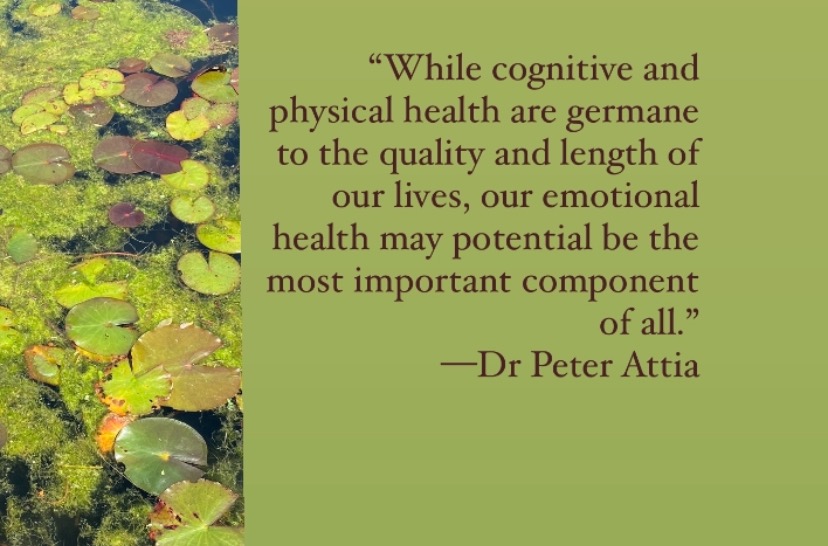
We can become very skillful at using our attention intentionally. This is so good for our brains and extremely helpful for our emotional health. Dr. Peter Attia, author of the longevity book, Outlive, reinforces the fact that we are most content and satisfied with our life – in the present moment.

Where attention goes, neural firing flows and neural connection grows. We are actually activating important parts of our brain with our focused attention. If we want to cultivate a growth mindset and keep our brains upgraded as often as we do our phones, we need to pay attention to how we are using and directing our attention.

By the way, there is a bonus feature to paying attention in our present moments. We become much more skillful at tapping in to all 8 of our senses. The salient qualities of our remarkable brains tend to come online and stay online in an integrated fashion.

The more we cultivate greater self-awareness, the more we are likely to equally grow our “other awareness”. This helps us tap into another awesome ability we have — the ability to “attune” to others. Think of this skill set like putting on your oxygen mask first. You attend to yourself and get grounded, calm and clear-minded. (A few deep breaths will fast track this practice). Then you attune to what your child or partner may be experiencing. We co-regulate each other, so if you can meet the moment with some empathy and understanding, chances are you will be offering what you instinctively know would feel helpful to you in a similar situation.

RECOMMENDED RESOURCES:

Be sure to follow me on Instagram @inspirednewhorizons to get your daily gummy of wisdom. I distill lots of research into short supplements for your personal growth

External Roadblocks Matter Too…

So much of our personal growth work encourages us to get to know ourselves better, to take a long hard introspective view of our internal world. Yet there is another component to our personal development that is equally important:

The external roadblocks that can derail even our best intentions.

We can become fairly unaware of external obstacles that prevent us from gaining traction in our personal growth work. Our attention gets pulled in a lot of directions throughout the day and we lose track of our time and our good intentions. James Clear teaches us that consistent small investments of time and effort is the best pathway to developing new habits and skills. The one thing we really need to cultivate to help us gain traction with short and long term goals, with developing better habits and with improving our relationships is — self awareness.

A major external obstacle to cultivating greater self awareness is often in the palm of our hand…..our phone.

Let’s be candid about this. We do have a growing crisis with regard to our phones. We observe how so many people are walking down the street, their eyes fixated on their screens and not their surroundings. Parents at playgrounds are watching their phones and not their children. Families and friends in restaurants all sit with heads down, fingers flying across flat keyboards not engaging with each other or even the waitstaff. Standing in line at the grocery store or sitting at a red light in our cars seems to be an open invitation to check our phone. No one is immune from this. It is a habit that slowly seeped into our daily lives over time.

I’m old enough to remember a time when we did not have mobile phones on our bodies at all times. It makes me wonder what it might be like to measure the quality of our memories that were created more with our five senses than a camera roll of countless photos. I’m not being judgmental here, for I love the ease with which I can capture the moment on my thin phone too. I just wonder if we saw a chart or graph that could visibly show us the distinction of “being fully present in a moment” vs. “freezing a moment in time” would it help us want to moderate our phone usage?

While we may not have such a graph, we are learning through neuroscience about how we can enrich our present experiences and “store” them in our brains with all the sensory details to help override the brain’s default negativity bias. But in order to do this, we have to be aware of how we are letting our attention and our focus slip away.

BEING FULLY PRESENT: (even briefly…but a few times a day)

Dr. Rick Hanson has a brief and effective tip to help us capture more present moments. He calls it “taking the in the good”. Rather than reaching for your phone to take a photo, simply steep yourself in the full experience in real time. All it takes is 15-30 seconds to take it in — and imprint in your brain an incredible memory. Add sounds to your experience — listen to a child’s laugher as you watch her run through a pile of crunchy autumn leaves. Be aware of the sounds the crunchy leaves make and use your eyes to take in the rich autumn color palette. Gaze at the floating fluffy white clouds against a cerulean blue sky. For 15-30 seconds you are the creator and director of an internal movie memory; set it to music, imbue it with scents, enrich it with details.

Just doing this a few times each day will help in training our brains that we are in charge of our attention. We can resist the temptation to look at our phones and choose to fully be in the present moment. For fun, keep a little journal about your “fully present” moments each day for a week or two. It is a game-changer for cultivating greater self awareness and harvesting all the good that is showing up in our lives each day. Things we often miss…..because we are staring at our phones.

POSTURE AND SITUATIONAL AWARENESS:

Are you aware that our posture has been impacted by our phones? Dr. Andrew Huberman, neurobiologist at Stamford, recently referred to this as our “C” posture. Just look around today at the posture of others who are on their phones — do you see the “C” — forward neck position, slouched and rounded shoulders?

Many people are dealing with chronic pain in their necks, shoulders and spine as a direct result of spending a good portion of their day in this awkward “C” posture position. The tension we are adding to our bodies from our phone posture gets added to the stressors of our daily busy lives.

Do your own research as you go about your daily routine today: How many people do you observe with this “C” posture? How many missed opportunities to say “hello” or ask someone how their day is going? How many people do you see in the coffee shop or restaurant who are engaging with their phones and not their friends and families? Are people walking to their cars unaware of the traffic around them, heads down staring at their screens?

RESTORATIVE, RECHARGING BENEFITS OF SLEEP:

An essential way to care for our dynamic, powerful, personal processors — yes, I am describing our brains that way.….is to get consistently good sleep. There are simple things we can do to help us achieve the beneficial brain attributes of sleep. The easiest and most impactful is to not look at our phones first thing in the morning and last thing at night.

Instead, first thing in the morning take in 10-20 minutes of natural sunlight if you can. That will set your circadian rhythm. While it might seem silly, doing this in the morning actually helps you fall asleep at night. If you can’t get sunlight first thing, turn on the lights in your home and let your eyes take in that light. It is the blue light emission from our phones that inhibits the production of melatonin. The hot tip here is go “old school” and get an alarm clock if you need one to wake up, avoid looking at your phone for the first 30 minutes of your morning, and get some natural sunlight if possible. Just a few days of this new routine will make a noticeable positive difference in sleep patterns.

Of course, that blue light emission from our phones at night is also not helpful if we want to get a deep, recharging night of sleep. Best to put your phone on a charger and then do the same for yourself. Establish a simple nightly bedtime routine with reduced exposure to light, trying meditation or light reading to relax your busy brain and implementing some cues that work for you to signal that it is bedtime.

Neuroscience is proving that we need consistent quality sleep in order to operate a maximum efficiency for our cognitive and emotional well being. A key factor in our mental health wellness is deep, restorative, brain rewiring and rejuvenating sleep.

SOLVING THE CASE OF DISAPPEARING TIME AND ATTENTION:

Want to discover where so much of your time and attention has gone at the end of a day? Take a look at your average weekly screen time. That will be the biggest clue to solve your case of “disappearing time and attention”. All of can easily fall into the trance of mindless scrolling, or hopscotching from looking up a recipe to reading the latest scoop on a celebrity.

Even the most skilled practitioners of mindfulness, the best educated neuroscientists and the gurus of meditation will confess to using the password lock feature, turning their phone off completely for a set amount of time, locking their phone in a safe, giving it to a colleague or partner while they are working, or keeping the phone in a different room. So don’t feel too bad — you are not alone with regard to our attachment to our phones.

WHAT WE CAN’T GET BACK: (our time and out attention)

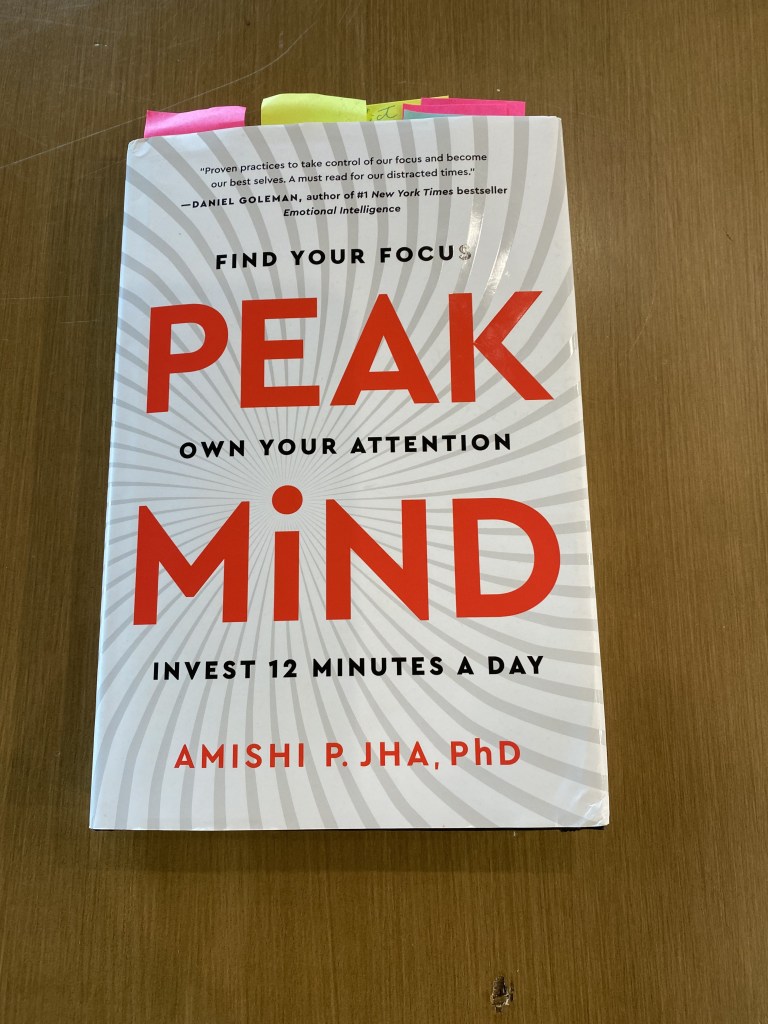
Dr. Amishi Jha wrote about how we are unconsciously giving away one of our most precious commodities — our attention — in her book Peak Mind. This won’t surprise you, but our attention is now a marketable commodity and there is even trading in futures for our attention. Now that is mind-blowing, isn’t it?

It is precisely because we are giving away our attention to our devices that we are also giving away time that could be better spent on things that really matter to us. f we could put our phones away for even 30 minutes a day, we could read 10 pages in a book, we could try a new recipe, we could chat with another person, we could take a walk and be awed by nature. Just for fun, challenge yourself to come up with a wish list of 3 thirty minute fun things to do in the coming week; then put your phone away for 30 minutes for 3 of the 7 days in that week….and do those fun things!

Maybe you can make your own chart or graph about how you are feeling about your time management, your attention and your happiness at the end of that one week challenge.

BUILDING BETTER CONNECTIONS:

It’s very evident that while social media was once touted as a great way for us to be connected to each other….it actually has had the opposite effect. We are heads down, eyes diverted and fully engaged with a device and all its mesmerizing content….and all the while our most incredible life is unfolding without us being aware.

When we shift our eyes from the screen to those people we are hanging out with all day long, something magical happens. Our amazing brains help us take in so much more than just the words they might be saying. We see facial expressions, body language, we make eye contact and we co-regulate each other with our emotions and energy. As Brene Brown would say — we feel seen, heard and valued. And all that happens by averting our eyes from the phone to the face.

FOOD FOR THOUGHT:

Dr. Amishi Jha tells us to “pay attention to where we are turning our attention”. All we need to do to cultivate greater awareness is to check in with ourselves in an honest way about where we might be leaking out our time and attention. Just commandeering a few short chunks of time each day for some dedicated “present moment” experiences will no doubt produce some pretty remarkable results for your overall quality of life. Are you willing to give it a try?

RECOMMENDED RESOURCES:

Follow Dr. Andrew Huberman on YouTube and Instagram for short clips on his insights and teachings about neuroscience, our bodies and brains. Check out the full length Huberman Lab podcasts and his website if you want to do the deep dive into his teachings.

https://hubermanlab.com/focus-toolkit-tools-to-improve-your-focus-and-concentration/

Read this amazing book by Dr. Amishi Jha to learn from her own experiences, real life stories from her research about the incredible importance of our focus and attention for our quality of life and some of our most demanding decisions we make under tough circumstances. This book also offers a guide to a simple 12 minute daily meditation practice that will help you train your brain for better attention and focusing skills.

Read this article from the Wall Street Journal to gain some fresh insight on how our phones are impacting our kids, their educations and their interactions with teachers, friends, coaches and mentors.

THIS SCHOOL TOOK AWAY SMARTPHONES. THE KIDS DON’T MIND: https://apple.news/AgX2ev7f7SKCNtVqY0aLmyA