A Tipping Point for Our Lifestyle

There was a time when physical fitness wasn’t such a compelling component of our daily lives. Many of us were “weekend workout warriors”. That’s when we would carve out the time to go for a run, take a long bike ride or hike through the local woods. It was in the early 1980’s that a growing awareness of the importance of regular physical exercise intersected with the invention of the Nordic Track and commercial gym memberships expanding to a broader audience. The Nordic Track became a highly popular Christmas gift that held a prominent space in the living room or bedroom for a few glorious weeks. It wasn’t long til there was a lot of humor being shared about the Nordic Track becoming an ingenuous clothing rack by the end of January. While that Nordic Track might not have “fast-tracked” us to include physical fitness into our daily routines, there was in fact an upward trend in the growing awareness of the long term benefits of regular exercise.

Here we are decades later, and most of us have fully integrated some form of physical exercise into our daily routines. We wear fitness trackers to count our steps and measure our heart rate. We speak the lingo with ease – resistance training, VO2 max, zone 2 cardio, grip strength and core balance.

How did we get from weekend workout warriors and Nordic Tracks that morphed into clothes racks to this whole new lifestyle that includes consistent physical fitness? It was that upward trend catching big momentum – for all the right reasons.

And here we are now – at the tipping point of yet another upward trend — proactively attending to our mental and emotional health. It’s going to transform how we integrate tools and practices to support our mental and emotional health into our daily lifestyle. It’s going to dovetail with our commitment to our physical health because they go together like hand in glove.

Just a few short years ago, this would have seemed highly unlikely.

When it came to our mental health, the focus had always been on the pathology. No wonder we had so much stigma associated with mental health. We waited until there was a serious issue and then asked “what’s wrong?” or “who has some diagnosis of a mental health problem?” Treatments were often bandaid solutions to ease anxiety, but not uncover the root cause of the anxiety and fear. Health professionals were treating the symptoms and not the core problems. Because of the stigma associated with mental health, many people tried to power through their emotional and mental health struggles on their own.

We wouldn’t ignore a concerning physical health problem indefinitely. The same is now true for our emotional and mental health. Early intervention, paying attention to the warning signs and getting the support we need is now viewed as normal, healthy and empowering.

We are normalizing what we once kept hidden and that is shifting us to investigate why we react to life as we do. We are beginning to understand how our brains work and what they need to function optimally. We took our brains for granted – and yet they are running our daily lives. With all this groundbreaking knowledge, we now have an invested interest in being proactive about brain health.

We are learning why sleep is key for optimal brain function and health. We are also learning the importance of hydration throughout the day for our brains; and the effects of caffeine, sugar and alcohol on our brains and sleep cycles. We are getting morning sunlight to set our circadian rhythm and dimming our lights an hour before bed.

This upward trend of weaving mental health into our lifestyle is already showing up in our daily lives. Our fitness devices track our sleep cycles and we are now sleeping in darker, cooler bedrooms. Mattresses and comforters are featuring temperature controls to cool our bodies down to proper sleeping temperature and then warm us up just before waking. We take “sleep stack” supplements before bed just as we take probiotics and vitamin supplements in the morning.

There’s nothing like a few new products to really nudge us along on that upward trend; that’s how the momentum builds for our new integrated approach to mental health. Our children will be learning about their brains in this brand new way, all while also implementing healthy brain hygiene. This is how our human evolution advances us – one generation at a time, adapting and adopting what we are learning.

Knowledge is empowerment.

Where we once believed we had no agency over how we were “wired”, we are now learning that the neuroplasticity of our brains allows us to proactively create new neural pathways to help us build — and maintain — positive, meaningful changes in our mental and emotional health.

Just like the previous upward trend that spurred us on to take our physical health seriously and to be proactive in maintaining healthy physical bodies throughout our lifetime, we are now at a tipping point for positive brain health integration.

In a recent Huberman Lab podcast, Dr. Paul Conti (Stanford University graduate, psychiatrist and author), pointed out that most of us know an incredible amount of information about our physical body and anatomy. It is also very complex, with many moving parts that integrate rather seamlessly. We can readily self-diagnose when something about our physical body hurts, is not working well, has a bug or virus. Dr. Conti believes that we can also learn about our brains and mental health in the same way.

We can start by taking better care of our brains through sleep, hydration, self-awareness, healthy coping skills and improved emotional regulation. as the foundational building blocks for proactive positive brain health.

Once we have laid this foundation, we will be more receptive to taking the next transformation steps. It is analogous to taking better care of our physical bodies with rest and proper nutrition — and then easing into a diverse, and sometimes challenging fitness regimen. Just like we build muscle strength and endurance in our bodies, we can be building better neural networks and muscle memory for our emotional and mental health.

Mental and emotional health has taken a giant step forward.

Although our brains and emotions drive much of how we show up in life, they were often relegated to the back seat. Think about that — our premier operating system was a back seat driver that we usually ignored.

Now we know more and we know better how to care for children’s developing brains and how to take care of our own adult brains and install valuable upgrades. We are realizing that emotions are a feature not a bug and we need them to help us make decisions about what is most important to us. In fact, emotions are are core ingredient to our overall happiness and fulfillment in life. All those emotions that we stuffed and suppressed were roadmaps for life. Is it any wonder we got so lost and misdirected?

We have been operating on a very outdated autopilot for far too long. We have ignored the lessons and guidance from our back seat drivers. Our unconscious mind is a like a five year old in the driver’s seat, stretching up to see out the windshield while straining to reach the gas pedal.

Over the next few weeks, Andrew Huberman and his guest, Dr. Paul Conti, will be offering a four part podcast series entitled “How to Understand and Assess Your Mental Health.” I have found Dr. Cont’s insights to be revelational and eye-opening.

I will be distilling this four-part series into blog posts over the coming weeks with great enthusiasm. If you are also fascinated by this upward trend that is rapidly gaining a lot of momentum, take some time to listen to the podcast series and check back for future posts about the healthier trajectory of our mental and emotional lifestyle.

Just imagine how incredible it will be to know as much about your amazing brain and mind as you do about your physical body!

September 6, 2023 Episode: How to Understand & Assess Your Mental Health with guest, Dr. Paul Conti https://podcasts.apple.com/us/podcast/huberman-lab/id1545953110?i=100062692001

Growing Forward

I found a fascinating article the other day that intrigued me so much I spent an entire day making lists and creating graphs, pie charts and collages. Are you wondering what captivated me? It was about the person we will all be in 5 years.

Consider this: The person we will become in 5 years has a lot to do with the decisions we are making as the person we are today (and tomorrow….and so on). What shapes us? The books we read, the foods we eat, the workouts we do, the friends we meet, the sacrifices we make, the habits we build.

Those prompts really got me to thinking about who I am today for those very reasons. I thought about family and friends, and how the last five years have shaped them as well. Even if we would have had a crystal ball then, I doubt very much that any of us could have guessed how much we’ve changed; much of it intentionally and some of it due to things not in our control.

What if we could plot all this change, so we would have a visual for who we were 5 years ago, who we are today, and to project who we might be 5 years into the future. Wouldn’t it be amazing to have a chart of our self discovery and personal growth trajectory? I’d call it the “Growing Forward” chart.

It makes sense to step back and take a look at who we were in 2018. Nothing like a rear view mirror to help us see just how far we’ve come.

What books have you read over these past five years? What genres or subjects were you drawn to and what knowledge did you gain? How did you apply it to your life? Reading books, both fiction and non-fiction, deepens our empathy for others and helps us see ourselves in other’s stories. What did you discover about yourself and others through the books you read.

Think about new friendships you have formed and what drew you to these new people. How have they shaped who you are today? Did they introduce you to a new hobby or interest? What have you learned as you listened to their life stories? What did you learn about yourself that was reflected back to you in their experiences? How do these friends make you feel?

Are those habits that were so hard to implement in the beginning now a part of your normal daily routine? How have those improved habits changed your life? What is working so much better now?Are you more conscious of the choices you make that might derail your goals?

Have you discovered any new interests, taken up a new hobby or resumed an old one with a renewed passion? Are you spending less time on social media and more time being present with family and friends? Have you shifted your perspective on self care and recognize that you need to take good care of yourself so that you can be your best for others?

Are you amazed to discover just how much you really have changed over the past 5 years? Since so much of our change happens incrementally and definitely not in a linear way, it is quite surprising to take stock of these transformations, especially in 5 year increments. That’s when the real changes we’ve made become so apparent. That is where we see our “growing forward” trajectory.

I decided to look back on my blog posts from 2018 as part of this reflective exercise and while the topics are still relevant, the research and resources that have advanced our understanding about them have exploded into mainstream conversations. Back then, we still thought of meditation and mindfulness as something done on a cushion. Today many of us are more familiar with how our brains actually work than we ever did before thanks to neuroscience — and the podcasters and authors who break it down into layman’s terms for us and weave its value into our daily lives.

In 2018, there was still a major stigma associated with mental health and no one was talking about emotional health. We may have known there was a growing mental health crisis underfoot but all the pieces of the complex puzzle were not yet coming together. Personal growth was gaining a little more traction and life coaches were in high demand.

We could feel a sense that we were searching for something, but there wasn’t a lot of clarity and we were swimming in a sea of so many tempting distractions. Social media and the news cycles were addictive.

No matter what we were all individually doing that was shaping who we would be in five years, none of us could have predicted the major impact of a global pandemic. This would create changes we did not anticipate and yes, it would also shape who we’d become. The pandemic disrupted our “normal”. We’d been operating in our “normal” for so long that we had become unaware of how we were just going along with the pace and societal influences.

Change happens when our normal routines are disrupted. It is a basic principle for helping us stick to new habits or goals. Disruptions are the catalyst for reflection and redirection. Suddenly, we were all sent home to “think about it”. A collective disruption and a serious re-thinking of what matters most.

It is not at all surprising that the pandemic expedited the integration of modern medicine, neuroscience, psychology, cognitive and emotional health. There was no denying just how interconnected they all were. We started to pay attention to compromised immune systems. We could no longer deny the impacts of high levels of anxiety and extended periods of uncertainty. As humans, we just aren’t built for these long durations of stress and volatility. We need to return to baseline to rebuild our tolerance and resilience. We need breaks, we need quality sleep, we need to feel safe.

As we were washing our groceries, we started to think more consciously about what we were eating. We were learning to bake sourdough and create home-cooked meals.

Isolation and loneliness were amplified which proved just how much we need human connection for our health and well-being. Families needed each other to help with childcare and schooling. Grandparents moved from retirement communities to live closer to their adult children and grandchildren. We began to see the reality that we had missed before. How important safe and healthy childcare is, what needs to change in how we educate our children, What we miss when we cannot be together – to celebrate, to grieve, to scaffold, to comfort, to encourage, to challenge.

The perfect storm became the impetus for breakthroughs.

Our learning curve trajectory was on a rapid ascent. It was integrating with medical and science advancements that would deliver many missing pieces to our human puzzle.

We may not have realized that as we were accepting changes that we had no control over, we were in turn making changes of our own – based on meeting our needs and what mattered most to us. We were micro-dosing change as we found new ways to support ourselves and our families through the pandemic. It was definitely not linear, and we back-tracked more than a few times, but our trajectory has become evident.

It takes a lot of commitment, practice, dedication and perseverance to become an overnight sensation.

We think that rock stars and celebrities, inventors and AI blow onto the scene and create seismic shifts in an instant. But this is not the case. And it certainly has not been the case for medicine and science when it comes to the recent explosion of knowledge, tools and teachers for emotional health. It just feels like an aha moment. It has been a long time coming — and it arrived when we were most ready to soak it up.

As I looked through the past five years of my blog posts, I re-discovered the moments where I was seeing the integration of so many modalities for personal growth and self discovery. As a neuroscience geek, I was so excited. I had long wondered if there wasn’t a better, more enticing way to draw people into doing their own inner work. Why did we have to hit rock bottom or have our world fall apart to begin engaging in self improvement?

To be candid, if not for the pandemic, I may have thought my own personal growth work was done. I had a solid “starter kit” of improved self awareness and better life skills. I was handling myself much better than ever before.

But the real test and the real growth happens when we take our individual work into our relationships. The pandemic delivered a plethora of opportunities to put the new skills and practices to the test. Suddenly, there were a lot more people coming onboard with a keen interest in emotional health and personal growth.

As parents realized how their own childhoods had impacted them in unhealthy ways, they embraced the new parenting models that integrated emotions into the developing brains of their children. Again, there were so many emotions welling up in all of us that it was crystal clear we needed better skills so as not to compound an already complex problem.

We had poked holes in our awareness, seeds had been planted, some had sprouted and there was a growing demand for education, support and counseling. A huge pivot had occurred – the veil around mental health was lifted. Seeking therapy and counseling became normalized, just like hiring a fitness trainer or life coach. The demand for counseling was so high that there simply were not enough professionals to meet it. Just a few years prior, BetterHelp online therapy was only promoted on personal growth and wellness platforms. Today, BetterHelp is a sponsor for business and news podcasts, influencers and fitness gurus.

When neuroscience handed us the missing piece of our human puzzle — emotional health — all the other pieces that had been discarded or misunderstood, fell into place. Are you aware that we had tunnel vision for a very long time – and believed that all our troubles were lodged in psychology? Breakthroughs in neuroscience changed everything – and now we are treating PTSD and childhood trauma in much more beneficial ways, with remarkable lasting results.

The pandemic’s one major positive contribution is the shift from “treating” problems to “preventing” them. After all that we have been through both individually and collectively in the past five years, many people are embracing the truth that we can take better care of ourselves and each other.

The conversations that we are having today and the growing trends in preventative practices to improve our quality of life and our healthy longevity came about because of change. Today we understand that we need to take care of our brains first and foremost. We having a better working knowledge of how our brains operate, what they are capable of and how we can maximize the full capacities.

We are no longer ignoring the warning signs, no longer numbing the pain or putting a bandaid on it, no longer believing that suffering is the way we get to the path of healing. We are enthusiastically proactive.

Here is what I find so exciting about what might transpire for all of us in the next 5 years. As we begin to take better care of our brains and bodies, we will in turn take better care of our children. Our children will grow up with healthy attitudes, resilience and an overflowing toolkit of life and relationship skills. We will be leading by example.

Did you know that when we are overstressed, we are full of cortisol that keeps us in a heightened state of fight, flight or freeze….and when we are with others, they can sense that (especially kids). We end up pushing people away because of all that negative energy.

But when we are calm, emotionally regulated and resilient, we are full of oxytocin (the feel good hormone) and yes, others can sense that too — and guess what — it is like a magnet drawing people to us because it feels good.

As we are making these discoveries for ourselves, we are integrating it into our lives. We start making better choices and in turn those healthier decisions shape who we are becoming. In 5 years, just imagine the books being written right now that we will read in the future. Just imagine the friends you will be making – the ones that make you feel good and inspire you to discover all kinds of new things. Just imagine how your body will feel with 5 years of really good sleep, consistent hydration, regular exercise, healthy eating habits.

If you believe that all these positive, proactive and preventative measures will have a profound impact on your “growing forward” trajectory, you are right.

Take some time to reflect on what you have learned about yourself over the past five years and want you want for yourself and your family in the next five years. There has never been a better time to tap into incredible resources, education and mentors to help you achieve your goals.

Ryan Dusick, founding drummer of Maroon 5, talks with Doug Boost about losing everything, finding recovery and rebuilding his life https://podcasts.apple.com/us/podcast/the-adversity-advantage-with-doug-bopst/id1496406333?i=1000624725432
Metabolism, Brain Energy & Mental Health with Dr. Chris Palmer. Discover how we are evolving in our treatments for mental health issues that can negatively impact our quality of life.
https://podcasts.apple.com/us/podcast/being-well-with-forrest-hanson-and-dr-rick-hanson/id1120885936?i=1000625115529
Dr. Martin Seligman is often referred to as the father of Positive Psychology. He wrote about post traumatic growth in his book Flourish in 2012.. Now 11 years later, he offers his insights with both psychology and neuroscience to help us prepare to live in a new normal of rapid change
Dr Peter Attia is leading the charge for a long overdue pivot in modern medicine. It is time to become proactive turning our attention to presentation rather than just treatment. Have a longer health span, and better quality of life. Emotional health is the cornerstone.

White Water Rapids of Life

When I was in my mid-40’s, I used to tell my friends that I was in the white water rapids of life without a paddle when my plate was too full. Life was coming at me fast and furious and I could barely catch my breath, let alone juggle it all.

It seemed, without fail, that after three or four months of pushing through, burning the candle at both ends, making endless sacrifices without discernment, I’d get sick or there would be one monumental family crisis that would grind the fast pace to a halt. At that moment, it would feel like my attempts to “shoot the rapids” left me stranded on the rocks, teetering precariously.

This pattern became so apparent that I’d find myself bracing for it. I could feel the tension mounting every 3 or four months and could feel it in my bones that we were heading for something cataclysmic. Looking back, I can see that bracing for it was also a lifelong pattern of mine. I could feel the ground trembling metaphorically and the only preventative action I took was to steel myself against the inevitable. I would harden up, silently willingly myself to take it — whatever “it” was.

If things were really out of control, I would embellish my story about the white water rapids of life — I would lament to my friends that this time I was in the white water rapids of life without a paddle AND life jackets. Clearly this was the graphic imagery that I used to declare to myself and others that I was in over my head.

This pattern dominated a few years in my mid-40’s – that time when we find ourselves doing some of the hardest life work ever. We are gaining traction in our careers, or deciding we want to change careers in the mid-stream of life. Our parenting has often moved into the more challenging waters of adolescence (maybe that is where I felt I had no life-jackets). Financially we find ourselves looking both backwards and forwards – what’s the balance on the mortgage and how we will fund college educations? No wonder I felt like I was in the white water rapids of life. There was in fact a lot of changes underfoot, all swirling around unseen obstacles as we headed into unchartered water.

When my book club friends and I share stories from that time in our lives, we discover that this is exactly how most of us were feeling during that stage of our lives. We all might describe it a little differently but the patterns bear much similarity.

We’d have these peaks and valleys that could literally be put onto a graph that resembled stock prices or an EKG. The troughs in those graphs were the times where we cried uncle and had no choice but to stop and catch our breath.

Those troughs were the brief respites we were forced to take due to illness, or the acknowledgement that we can’t control a lot that happens in life. They were times where we were so sick, we were mandated to stay in bed for a few days to regain our physical health. Or the times when we had to sit alone in the dark and reflect on what really mattered. Brene Brown aptly named this period of time in our lives as “the great unraveling”.

I recently revisited what Brene wrote in her 2018 blog post about this midlife unraveling and found myself holding my breath as I took in the magnitude and wisdom of her words:

Midlife is when the universe gently places her hands upon your shoulder, pulls you close and whispers in your ear: “I am not screwing around. All of this pretending and performing — these coping mechanisms that you’ve developed to protect yourself from feeling inadequate and getting hurt – has to go. Your armor is preventing you from growing into your gifts. I understand that you needed these protections when you were small. I understand that you believed your armor could help you secure all the things you needed to feel worthy and lovable, but you’re still searching and you’re more lost than ever. Time is growing short. There are unexplored adventures ahead of you. You can’t spend the rest of your life worrying about what other people think. You were born worthy of love and belonging. Courage and daring are coursing through your veins. You were made to live and love with your whole heart. It’s time to show up and be seen.” Brene Brown (see link to her blog at the end of this post.)

I often wonder if I had read a wisdom so profound in my mid-40’s how it might have landed on me. I’ll be honest, it’s highly doubtful that it would have resonated in the compelling way that it does today. When I close my eyes and sit with the feelings that emerge from reading it, I can transport myself back to what my own “white waters of life” were so earnestly trying to tell me.

Back then, I did not possess the knowledge and education that now underpins all that Brene imparted. In fact, when she gave us this pivotal message in 2018, we had not yet mainstreamed all that we were learning. Here we are 5 years later and that landscape has changed dramatically. Today it almost feel like a firehose has been turned on — and we are drenched in digestible neuroscience, engaging educational content as well as charismatic, dynamic leaders and teachers and endless resources. We are now fluent in emotional armor, childhood attachment styles and adaptive behavioral patterns. Emotional health has taken its rightful place at the top of the quality of life pyramid.

I couldn’t be happier that so many people of all ages are now absorbing this game-changing knowledge much earlier in their lives. Perhaps the mid-40’s and 50’s will no longer be the great “unraveling” but rather the “great transformation”. Imagine being able to shift gears in the mile markers of our life with vastly improved self-awareness and relationship skills. To be treating adolescence as the apprenticeship it truly is – and preparing our young people to go into the white water rapids of life with all the right tools, skills and burning desire to grow into their natural born gifts.

It is not longer just my wild imagination that envisions this phenomenal pivot, but the reality that we are already farther along on this transformational path than ever before.

There is rarely a day that I have a chat with someone where Dr. Andrew Huberman and his neuroscience podcast, the Huberman Lab are not mentioned. From neighbors to my dentist to seat mates on planes, Andrew Huberman has become a household name. Looking at the arc of his podcast popularity and the emerging topics he now discusses, we can create yet another graph that makes it clear that our trajectory for learning and the breakthroughs that are occurring are soaring.

I recently learned that Andrew Huberman started his highly successful podcast in 2021 because he wanted the general population to have the knowledge and tools they needed to support their physical and cognitive health through the pandemic. He was aware that we were not getting this invaluable information from our leadership and he wanted to educate people about the proactive steps they could be taking that were free, do-able and would have noticeable positive impact.

Think about this — Andrew Huberman saw a need and he stepped up to the plate. He has more than 3.5 million subscribed followers for his podcast launched in the midst of a pandemic. That’s 3.5 million people that have most likely changed their habits – like making consistent sleep a top priority, taking breaks from screens every 45 minutes, getting morning sunlight, changing their relationship with caffeine and alcohol, committing to varied exercise programs and understanding the impacts of their emotional health on their physical and cognitive health.

All of this happened one podcast episode at a time. Knowledge coming at a time of great need and receptivity; a willingness to put in the work and make changes; witnessing the positive effects of those changes and being motivated by all of it to learn more.

Andrew Huberman is throwing his net wide and bringing more diverse guests onto his podcast and for good reason. He is integrating teachings and research from other disciplines because they are all inter-connected to this bigger picture of current evolution. Breakthroughs are occurring fast right now and just like striking a match, they are catching fire quickly with those folks who are hungry to learn more.

The coalescing of personal growth, self development, mental health, emotional health with all the sciences was amplified during the pandemic. It was a collective moment – a tsunami in the white water rapids of our shared experience. It was a great unraveling. Go back now and re-read Brene’s insights for a mid-life unraveling and see if you can spot a similar message for our collective, complicated issues.

As each of us begins to do our own work, taking better care of ourselves and our families, with all that we learn from Andrew Huberman and others just like him, we are contributing to the greater good for everyone. Trust me, people are taking notice. Younger generations are looking at older generations and seeing the effects of ignoring our physical, cognitive and emotional health. Motivated by their desire for longer, healthier, and more satisfying lives, they are charting a new course with the improved knowledge, resources and tools so readily accessible.

Is it any wonder that there is a groundswell of keen interest in all that Andrew Huberman and others like him are enthusiastically sharing with us? Think about what happens when each of those 3.5 million followers shares what they have learned with just one workout buddy, one colleague, or one family member — now that is a powerful ripple effect in the right direction.

We are piecing together how old parenting models that created our armor and ineffective coping strategies also embedded a lot of fixed mindset and limiting belief impediments that hold us back from achieving our full potential and using our natural gifts. As we dig a little deeper on these topics, we are discovering vastly improved ways to educate our children to have a growth mindset, to foster resilience and determination through setbacks, and become critical thinkers.

We are doing this work together and it’s contagious in the best possible way.

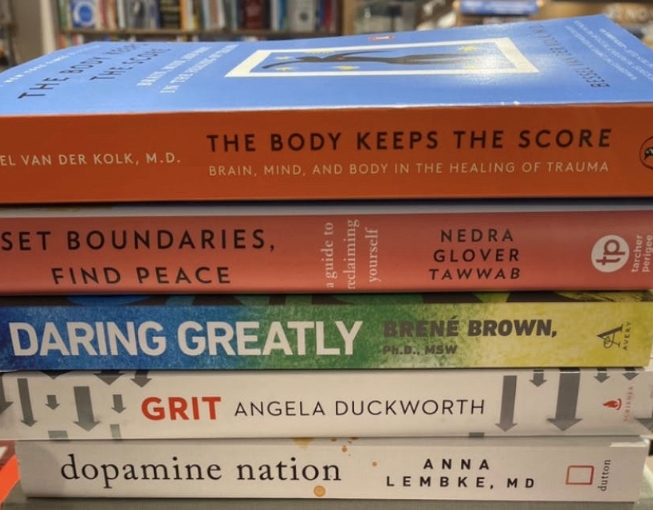
Pay attention to the new books being published and the overlapping themes that fit like puzzle pieces. You’ll notice this on the colorful displays in your local bookstore. Check out guests that your favorite podcasters invite for meaningful conversations. Notice how personal stories take up a greater percentage of the discussion now – because that’s how we best integrate all this new information.

I’d be remiss if I didn’t confess that this blog post was inspired by my current read, TomorrowMind by Gabrielle Rosen Kellerman and Martin Seligman (who is often affectionately referred to as the father of positive psychology.). I think you’ll find my “connect the dots” story about Martin Seligman delightfully fascinating.

I began my curiosity about psychology about the same time that Dr. Seligman published his book Flourish in 2012. The subtitle of his book was “A Visionary New Understanding of Happiness and Well-being.” It focused a lot on how positive psychology could help us “preload” so that post traumatic growth might be possible rather than recurring PTSD. At the time I was in a relationship that puzzled me to no end. I could not understand the inability to “bounce back” from even minor setbacks. I was at a loss on how I could help so I was on the hunt for tools and education.

His book and his research set me on a path of self discovery and personal growth that I may have never otherwise considered. And I have never looked back. It’s eleven years later and my friends tease me that I have possibly earned an advanced degree or two. My passion for this learning has grown into my purpose, which is sharing what I am learning with others.

I have observed how often the topics I first read about have gone through a few transformations of their own over the past two decades, with scientific evidence debunking myths, depeening our initial understandings and bringing clarifying proof through neuroscience. For those reasons, I was intrigued to see what Dr. Seligman now had to share – in April 2023 in this brand new book.

I could barely put it down.

Had you been here with me as I began to read this book, you would have heard the resounding laughter that came from me when I read his words that had once been my own — Dr. Seligman uses the metaphor of the white water world of work! He talks about shooting the rapids, and navigating currents, obstacles and change. If he were here, I would hug him. I get the analogy – and I am deeply grateful. I am not at all surprised that we are now embarking on taking the work that we have been doing individually out into the big wide world.

The gear and the skills we need to navigate the white water rapids of life – at home and in the workplace are found in personal growth, self development and attending to our emotional health.

Listen to the July 24th episode of the Huberman Lab podcast with Dr. Maya Shankar on Shaping Your Identity and Goals. https://podcasts.apple.com/us/podcast/huberman-lab/id1545953110?i=1000622115223
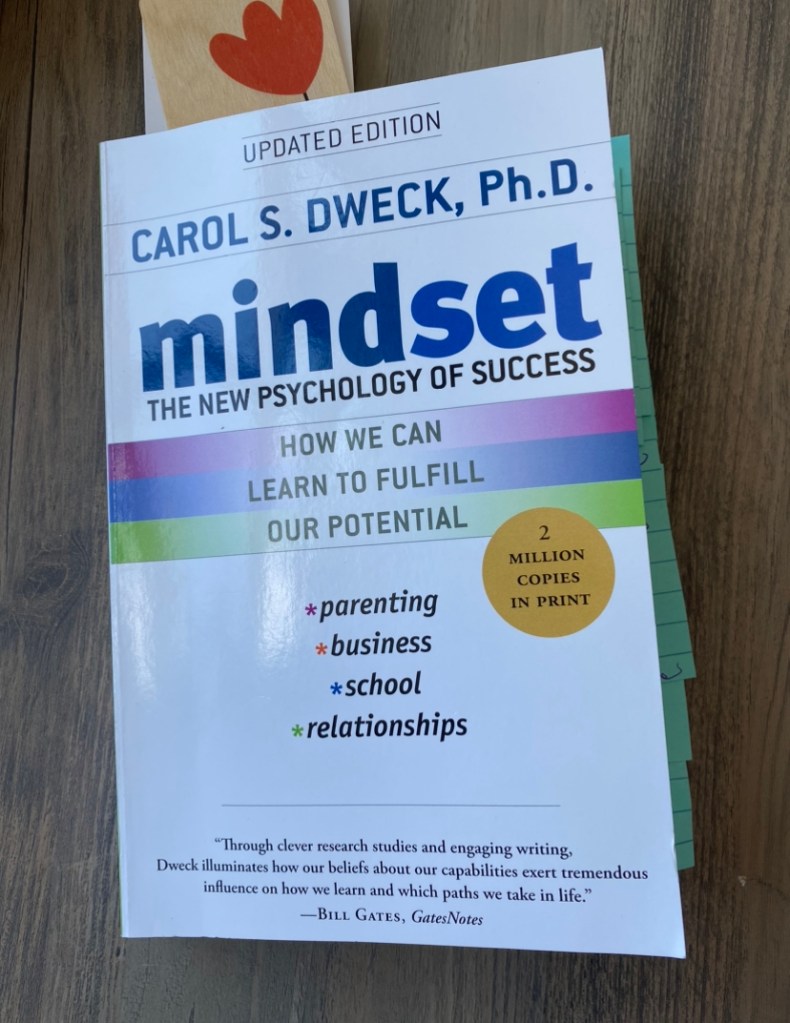
This July 17th episode is entitled Enhancing Performance & Learning By Applying a Growth Mindset. Dr. Carol Dewck, author Mindset, is an esteemed colleague of Dr. Huberman. https://podcasts.apple.com/us/podcast/huberman-lab/id1545953110?i=1000621365285

I have listened to Dr. Maya Shankar’s podcast for several years and am always inspired and uplifted by these incredible stories of people who overcame adversities that left them no choice but to reinvent themselves. Check out this episode with Dr, Kristin Neff on Self Compassion https://podcasts.apple.com/us/podcast/a-slight-change-of-plans/id1561860622?i=1000617332975
Buckle your seatbelt for this very real conversation with Terry Real, Author of US, and Peter Attia. Dr. Attia has been revelational in his message about the importance of our emotional health in his book, Outlive. He turned to Terry Real for the therapy he needed to work on his “Bobbie Knight” inner critic and the behavioral reactions he wanted to change.
https://www.youtube.com/watch?v=QbI4fm2cNz8
Read — or reread – Brene Brown’s blog post from 2018 on midlife unraveling. It’s aged well.
https://brenebrown.com/articles/2018/05/24/the-midlife-unraveling/