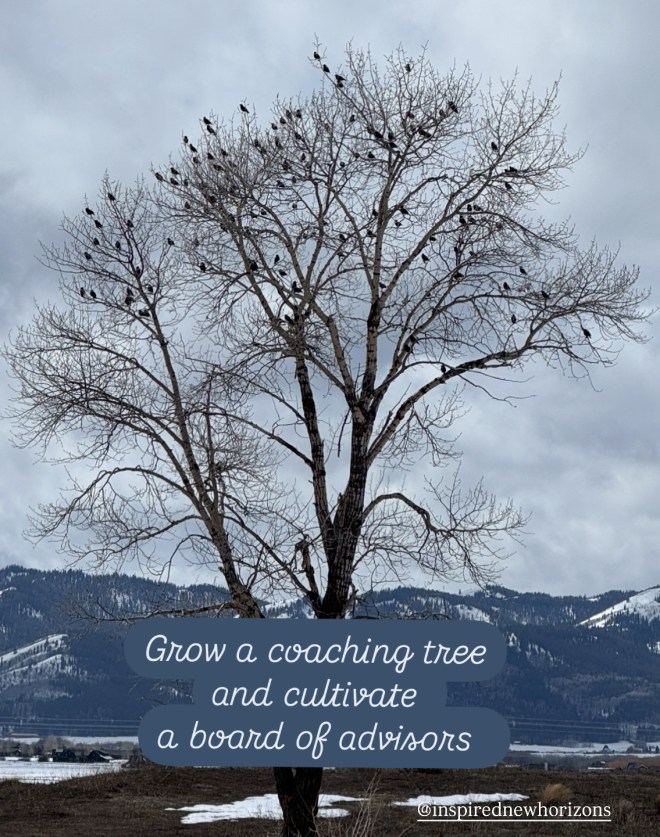
A Coaching Tree & Board of Advisors

Have you shifted the image of your past experiences and lessons learned into that of your personal greenhouse library, chock full of invaluable reference material?

If so, you are ready to add a Coaching Tree and a Board of Advisors.

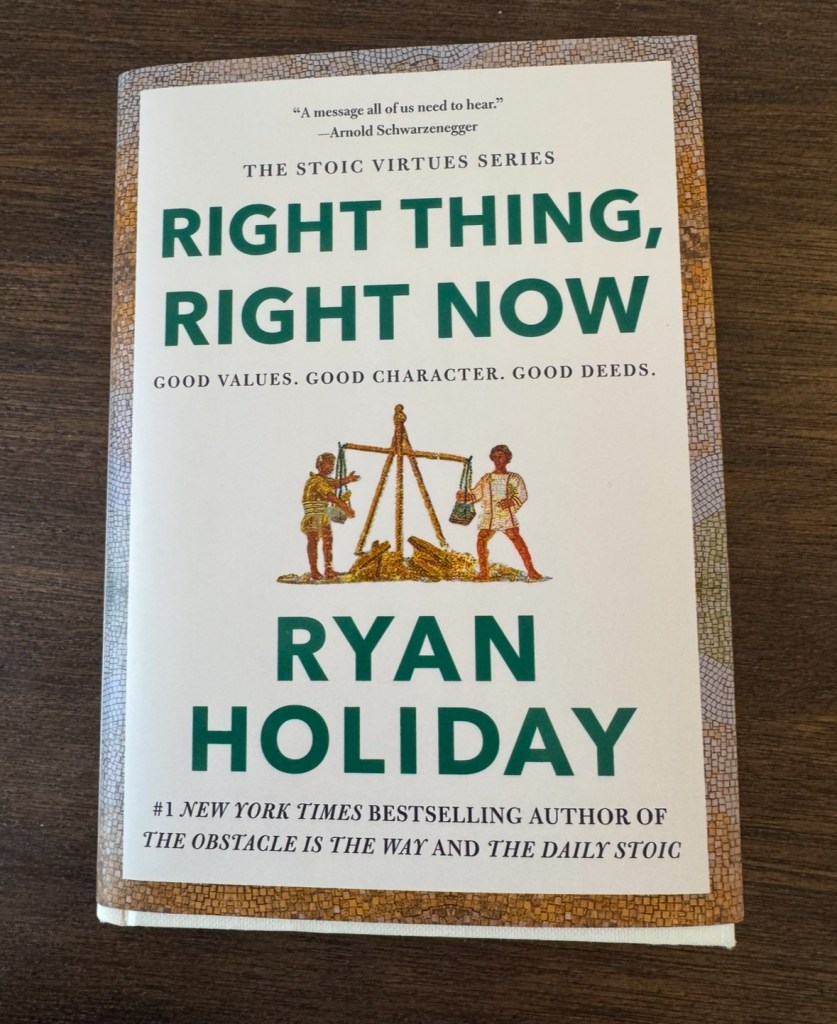
Ryan Holiday, author of the Daily Stoic, has long been a strong proponent of a coaching tree. In fact, he dedicates a chapter in his latest book, Right Thing, Right Now to this very concept. Ryan takes a powerful working model for a coaching tree from professional sports teams and adapts it for our personal use.

It is so easy for us to visualize all the branches of support that professional athletes have to help them be their best. We see them on the sidelines on game day – the head coach, assistant coaches, trainers and teammates. We may be less cognizant of the many others who support the athletes, but they have an integral role too. Physical therapists, nutritionists, sports psychologists and family members are all part of the coaching team that provides daily support to bring out a player’s best.

Professional coaches and athletes depend upon coaching trees to foster growth and excellence. The benefits go both ways — a good coach not only offers guidance and guardrails, he also learns from each player, their unique talents and potential and how they integrate what he teaches. These insights deepen his knowledge and hone his skills for working with other players.

Think of the coach as the roots of a tree, growing deeper and stronger with each athlete and assistant coach he is developing. Then visualize how each player and assistant coach takes the knowledge, wisdom and discipline from the coach and branches out on their own. Now you have the concept and visuals image for a coaching tree.

Ryan Holiday recognizes the invaluable interplay that comes from a student/teacher relationship: learning and discovery go both ways. Adam Grant also knows this to be true — that the best way to learn something is to teach it.

When we create our own personal coaching tree, we amplify our potential for fast-tracking self discovery and personal growth. We practice our life and relationship skills, putting in the daily reps in diverse ways. We keep our core operating systems (our brains and bodies) well maintained and updated. Personal growth and self discovery are not a once and done process, but rather a continual lifetime of learning and growing — just like a tree.

Who has been a rock solid role model for you? Someone who actually practices what they preach, who leads by example?

Who have you turned to when you needed help with a specific situation — someone that you know has had a similar experience and somehow came through it stronger and more authentic as a result?

Who do you wish you could be more like – that one person that possesses signature strengths that you wish you had?

When we ask ourselves these types of questions, we begin to see that we are naturally drawn to certain people for specific attributes that we want to foster in our own lives. Just like pro athletes, we become an amalgamation of the people we admire and who inspire us. We become a well-rounded person by drawing on the diverse strengths of our favorite mentors, coaches and role models.

Ryan Holiday emphasizes that a coaching tree becomes an evergreen “give and take” organic process for personal growth and paying it forward. We take what we need from our role models and personalize it for us. We just don’t “copy and paste” what they do — we make it our own. As we become more skilled and practiced with these new attributes, others will come to us — and ask us for help. We pass on not only what we have learned from our mentors – but also how we personalized it. We “take” what we need for self improvement and we “give” tips and tools to others discover what works best for them.

Here’s a real life example and one that you will find relatable: A friend called me when she had some very difficult personal decisions to make for her spouse with a very serious health issue. She knew I had some real life experience with tough choices that require a delicate balance between practicality and big emotions. I became her sounding board, a grounded friend who could help her sort out the pieces and make the best decision for both herself and her husband’s long term special needs. This didn’t happen in a day — it was months and even years of long conversations, of listening and learning, of being honest about doubts and second guesses and lots of empathy, validation and reassurance that each choice was a building block for her making the right decisions each step of the way.

My friend grew in remarkable ways through this very difficult life challenge. She not only handled one of life’s most emotionally tender realities with grace, compassion and love, she learned a lot about herself along the way. She survived — and she thrived. Today she leads support groups, she offers wise, personalized counsel to others facing similar long term care situations, and she has championed changes in memory care facilities in her community.

Guess what she does for me and has been for years — she forwards my Daily Gummy of Wisdom to a her big circle of friends every single day, along with her own insights. She is paying it forward and causing a ripple effect that is making a meaningful difference for more people than we can ever know.

Spend some time reflecting on the people who have shaped your life, especially during times when you faced adversity, golden opportunities and pivotal moments. Who provided encouragement, saw your inner strengths and hidden potential; who listened, validated and reminded you of just how far you’ve come? These are prime examples of those you want perched in your coaching tree.

Be intentional and discerning as you grow your coaching tree.

The coaching tree image helps us to see with greater clarity the work we have to do alone, the scaffolding we get from others to help us in this process — and how we can return the favor by helping others.

This is not always viewed as positive however. People like us to stay the same because they believe they can accurately predict how we will behave and react – and they can make contingency plans to cope with what they have come to expect. These contingency plans are coping skills, protective armor and behavioral modifications.

As a result, when we change and make significant self improvements, others have to change their predictions about us. All those old tricks of the trade people once relied on to “meet you where you were” are no longer needed. In fact, others who still resort to shape shifting, conflict avoidance or cognitive dissonance may stunt the very growth we are pursuing.

Even when our self improvement changes make us easier to live with, it takes a long while for others to trust it. There’s a big gap between the old you and this new & improved version of you. It takes a leap of faith to bridge it — and yes, it requires other people to make some changes too.

This is precisely why we shouldn’t do this work in the dark.

We need all the help we can get when we are fostering personal growth and self awareness. Just as a young tree needs rich soil, sunlight, water and wind, we too need a few scoops of miracle grow and some scaffolding to help us get grounded and sprouted.

When we embark on self improvement and self discovery plans, we should tell our family and friends so it is not a secret. After all, we’d tell them if we were trying to cut back on daily desserts or wanted to stop drinking alcohol. Being open up our commitment to change, helps others support us in meaningful ways. It also helps them re-program their predictions about us. That’s a win-win.

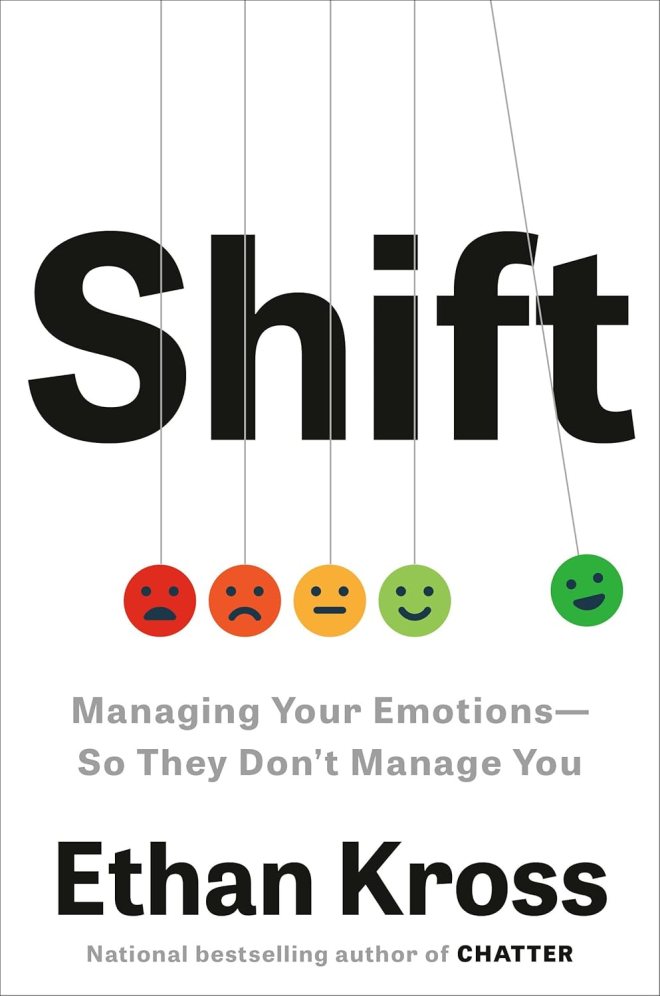
When we proactively seek help with the changes we want to make, we bring our intentions out into the light of day. Just like a tree cannot grow with the right conditions and nutrients, the same is true for us. We need a good support system. Ethan Kross, author of Shift, encourages us to create a board of advisors.

Just like a board of directors for a company or non-profit, we need some diversity in our personal board of advisors. While it is very helpful to have like-minded folks who are also committed to personal growth, Ethan reminds us there is no “one size fits all approach”. There are a plethora of resources, tools and modalities that can be personalized to match what works best for us — just like a physical fitness plan.

In a recent Happiness Lab podcast conversation with Dr. Laurie Santos, Ethan Kross shared the importance of having a personal board of directors to help us when we get stuck, noting that strong emotions and self doubts can derail us.

We need friends and family members who can help us get a fresh perspective, pull us out of a rumination cycle and reframe our situation. These are the folks that should be on our personal board of directors.

Who are you going to call? Not ghostbusters! You are going to call an emotional advisory board member.

We all get emotionally triggered – and sometimes in a very big way. It keeps us stuck and pulls us back into old reactionary patterns of behavior. Having that one friend who understands and validates us when we are triggered is the first line of defense. It takes a long time and lots of practice to lessen the tug of emotional triggers and it is also some of the most freeing work you’ll ever do. Enlist someone who has done this work and has great success. Put that person on your board of directors.

All too often, we get stuck in some one-track thinking. We know we need a different vantage point, but our own strong emotions or self doubts, just keep us gridlocked. Do you have a friend who is really good at reframing your current situation and helping you see what you are missing? Someone who flips a situation from negative to positive as though she had a magic wand? People who have deliberately worked on breaking free from the auto-pilot of our brain’s negative default mode are the best advisors for reframing and fresh perspectives. Who do you know readily views a situation from many different points of view? That’s person is a great candidate for your board of directors.

Have you ever asked yourself “What am I missing?” There are times when we are exhausted from all the effort we put in, but we come to the realization that we are not making any progress. In these situations, we may have a big blindspot and an accompanying lack of self awareness. So we find ourselves asking — “why does this keep happening to me or why can’t I catch a break?” Adam Grant offers sound advice for times like this: recruit a “disagreeable giver” for your board of directors.

A “disagreeable giver” is our challenge friend. Chances are you already have one of these people in your life — but you haven’t tapped into the gifts they offer. You may even find yourself resisting the good points they make.

“Disagreeable givers” respectfully and thoughtfully challenge our ideas and opinions – even (and especially) when it might be uncomfortable. Their goal is to help us see our blind spots and move us to better decision making. A caring challenge friend wants the best for us; they are often tired of seeing us so exhausted from our hamster wheel. Challenge friends are not afraid of having hard conversations; they know your life will get easier once you have a breakthrough. Fill that spot on your board of directors with a trustworthy challenge friend.

There will be times when we need a specialist for whatever life has thrown at us. Someone who has had a similar experience and is on the other side of it. It might be a health crisis, a divorce, the loss of a loved one or dealing with family estrangements. This is when we need someone on our board of advisors who has a working knowledge of the many complexities of a shared experience. What we get from people who “have been there” is what we would find in a support group. Yet it is even better because it is personalized empathy, care and healing.

When life hands you a deeply emotional adversity, be intentional about who can best help you. Recognize that you are fragile, your thinking is clouded, and you don’t have deep inner resources to draw on. You need someone who can go deep with you and not drown in your emotions. Who can help you weather this storm and keep you afloat til you are able to do it alone. That’s the specialist you want on your advisory board in the hard times.

There’s one more advisory board member you most definitely want to add — someone who makes you laugh, who loves to play, who brings a lightness and freshness with ease. Who brings out your inner child? Who is that one friend that makes you feel like a 7 year old – running with arms outstretched towards each other laughing with pure delight? Give that person a special seat on your advisory board. Call them often, go on adventures and collect joy.

This may be the first time in our human evolution that we become intentional about the lifelong process of learning and growing. Over the past twenty years, bits and pieces of knowledge and wisdom were floating around, but hadn’t yet congealed into the solid, science-backed insights we now have.

Now we know that emotional intelligence is a uniquely human feature. But we didn’t know that it was a foundational component of our human operating system, so we didn’t integrate it. We floundered for far too long, misguided because our core GPS wasn’t installed. Emotions are data – they point us in the right direction and help us get more out of life.

We are now in a fascinating experimental stage – where we get to play around with the full installation of emotional intelligence and make incredible discoveries about ourselves and others.

Rather than fumbling around and feeling unsure about our growth spurts, our hidden potential and how we stunt our growth – we can build a coaching program. We will get the most out of these new science-based breakthroughs by growing a strong coaching tree and developing a personalized board of advisors.

We will fast track our new knowledge, tools and skills by learning from each other and building on each other’s insights.

By getting very intentional about the 5 people we spend the most time with and how we show up with each other, we can shift our families and circles of friends into a lifetime of healthier, more meaningful personal growth and self discovery.
Ryan Holiday’s blog post This Is The Accomplishment That Matters Most:
https://ryanholiday.net/this-is-the-accomplishment-that-matters-most/
Check out this short video from Adam Grant about having a challenge network:
https://www.youtube.com/watch?v=8T79PZvUUd4&t=69s
Check out this episode with Ethan Kross: Harnessing the People Around Us to Feel Happier https://podcasts.apple.com/us/podcast/the-happiness-lab-with-dr-laurie-santos/id1474245040?i=1000697654175

Character Development

Have you ever considered just how much the stories that we tell ourselves shape and mold our lives? Not just on a daily basis but throughout our lifespan.

Our stories impact how we meet pivotal moments that can shift the trajectory of our lives. They can become stumbling blocks or lighted pathways, cautionary tales or calls to adventure, footholds or landslides.

This is a compelling reason why we are so drawn to movies and books based on Joseph Campbell’s “hero’s journey” framework: the protagonists sets out, has transformative adventures and returns home a better person for it all. Our own lives are a continual unfolding of many experiences that do transform us. How many times have you reinvented yourself? How many times did a life event change you?

The stories we tell ourselves when we are facing opportunities and challenges can open doors or slam them shut. If we can be more proactive and empowered in how we meet these transforming moments in our life, we will create an ever emerging main character in the stories we tell ourselves.

We evolve just like our favorite characters in a long running book or movie series. Take a few moments to realize how much Harry Potter or Dorothy from the Wizard of Oz grow in character development over the years of a continual book series or multiple remakes of a classic.

A writer spends an inordinate amount of time on character development. The story arc provides the framework for the character to face challenges, make important self discoveries and grow through the experience.

However the stories we usually tell ourselves do the opposite — they keep us gridlocked in limiting beliefs about ourselves. We reinforce old narratives rather than re-writing the script to encourage our own character development.

We have rich resource material that we can readily access to better support our life-long character development. We’ve just been looking at it and applying it in all the wrong ways for centuries. In my last blog post entitled “Better Scripts, Better Stories” I offered a strong visual image of a greenhouse library to fast-track a dynamic new way to think about our inner database of life lessons and lived experiences.

A powerful visual image can psychologically shift us faster than any written or spoken words. Don’t you feel this shift in your mind and body when you imagine wandering through a greenhouse library? Exploring our very own reference material in this new light shifts us from dread about rummaging through the past, to one of eagerness and curiosity instead.

Brene Brown has written for over two decades about how much we have armored up to go out and do battle with the world, defending and protecting ourselves at great personal cost. I like to think of her as one of our most courageous pioneers who was willing to do the really hard work of blazing a new trail for all of us – by cutting down the strangling vines and overgrown weeds that prevented us from accessing our own “secret garden” — our personal greenhouse library.

The fact that Brene touched a collective nerve with her viral Ted Talk decades ago about shame and vulnerability was a clear indication that we were all feeling weighted down by our protective armor and exhausted from dragging around emotional baggage.

The deeper Brene went into the weeds, the more it became evident that the root cause was a complete misunderstanding of the integral role our emotions play in the stories we tell ourselves. We’d been protecting ourselves from emotions instead of engaging them. It would be analogous to spending our whole lives wearing our outgrown clothes inside out.

Additionally, many of us get trapped in old stories because of the identity labels that were stuck to us. We were scaredy-cats, wallflowers, natural born athletes or brainiacs, winners or losers. When we were kids, it was a common mistake to apply the fundamental attribution error to “who we were”.

Fundamental attribution error is a cognitive bias that causes people to over-emphasize personality traits and under-estimate situational factors. As a result, a kid that runs late gets labeled as “lazy”, a child who struggles with emotional control gets labeled “too sensitive, unruly or bad”.

If ever we needed to “stop judging a book by its cover” — it is now. We are all prone to apply the fundamental attribution error to others and label them, which limits them in their character development. We even label ourselves — we identify as perfectionists, people pleasers, procrastinators, worry warts and air heads.

In our “greenhouse library”, we can stop judging a book by its cover and peel a limiting label. We can read between the lines of our old narratives and discover lessons we may have missed.

If Brene Brown was the one who pulled the weeds and unearthed the tap roots of our limiting stories, Ethan Kross just might be the one who takes us by the hand and helps us reframe the integral role emotions play in the stories we tell ourselves to shift us toward proactive character development.

Ethan Kross has titled his newest book “Shift” for good reason. He proclaims that we are at a collective inflection point – where integrating emotions is the transformational pivot we need most. Emotions are not something to be avoided and to guard against. Emotions are our internal guidance system — invaluable data points and highly personal information that are the drivers of good decisions and building blocks for our character development.

Emotions are not a bug or human design flaw. Emotions are a uniquely human, dynamic operating feature.

All this time we have been treating emotional intelligence as a pesky infestation – when in reality our emotions are pollinators.

Our emotions, combined with our backstories, lived experiences and life lessons become the “care instructions” for our individual personal growth. We can provide ourselves the right environment and nutrients to thrive and flourish.

Picture those little tags tucked into the soil of potted plant that tell you just what a particular plant needs in order to thrive. How much sunlight, a preferred temperature range, water, and room to grow so clearly defined on a tiny plastic instruction card.

Aren’t we all just like plants? Ask any parent of more than one child and they will quickly confirm that each child requires something a little different in order to be their most authentic selves.

Ethan Kross reveals to us in his book Shift that our beliefs are often what limits us from growing. We hold steadfast to beliefs that were planted in our minds as kids. But just like a greenhouse plant, we grew in spite of the pot we were in or an environment not suited to our needs. Most of our discomfort comes from being rootbound, starved for nutrients and improved conditions that match our unique requirements to thrive.

If you’ve ever weeded an overgrown garden or rescued a sad looking plant from the sale rack of your local nursery, then you are already quite familiar with just how rewarding and satisfying this work can be. This is the shift we want to make for ourselves too. Personal growth and self discovery work is similarly rewarding and doesn’t have to be so pain-staking.

In a recent podcast conversation, Dr. Marc Brackett and Dacher Keltner, actively discussed the old mindset that we all had around emotions — we labeled them as good or bad, positive or negative. This made it even harder to change our belief system about the intrinsic value of every single one of our emotions. Dacher Keltner, a psychology professor at Berkley, is a phenomenal resource for shifting our beliefs about emotions like grief and sadness. He assures us that there is beauty and comfort in sadness. Dacher tells us that it is okay to feel embarrassed and angry. We have so much to learn from these rich emotions that connect us in a very deep way to what is most important.

Dacher Keltner wrote his inspirational book “Awe” when he was steeped in grief over the death of his beloved brother. It is a testament to all that he teaches about those emotions we once believed were better left alone and ignored. Dacher was also the scientific consultant for both “Inside Out” movies helping to teach us about biological and evolutionary origins of compassion, awe, love, empathy and emotional expression.

Once again, we are learning that our societal belief systems about emotions were rooted in labels and misunderstandings. We doubled down both individually and collectively — giving emotions a bad rap.

Are you game for a transformational shift in the way you think about personal growth and self discovery? Can you imagine your backstory, past and present experiences, and life lessons as your personal “greenhouse library” of highly personalized reference material? Will you train your inner voice to be your compassionate, encouraging life coach (more like a best friend than inner critic)?

Most importantly, will you begin to use your emotional intelligence as your core operating system for navigating life? Treat your emotions as though they were the latest, greatest technological upgrade you could possibly download and install.

No more armor and emotional baggage weighting us down and limiting our character development.

We can tell ourselves much better stories – the kind we often read as kids that helped us dream bigger, imagine a life of our own design, and continuously, curiously making new discoveries about ourselves and the world around us.

RECOMMENDED RESOURCES:

Read SHIFT by Ethan Kross to learn about this inflection point for integrating our emotions and using them to drive our lives in the best directions for us. We let our emotions be the driver for too long — they are actually meant to provide signals and directions not drive the car.
Check out this YouTube podcast episode with Dr. Marc Brackett and Dacher Keltner.
https://www.youtube.com/watch?v=Q1ObQdCYY6I
Check out the HOW WE FEEL app, developed by Dr. Marc Brackett at the Yale Center for Emotional Intelligence. It’s free and it’s fun to use. Kids love it too! Andrew Huberman recommends this app on his podcast

Better Scripts, Better Stories

What if we all had access to an incredible library of rich, engaging reference material for the stories we tell ourselves?

Instead of rummaging through old baggage accompanied by a judgmental inner critic telling ourselves stories that usually aren’t very helpful, we could flip the script.

We could build a dynamic database of reference material that could be repurposed time and again to write relevant stories that truly help us rather than restrict us.

Better scripts. Better stories.

If the stories we tell ourselves throughout our lives keep us trapped in small versions of ourselves, snagged on shards of shame, fear or insecurities, and limit us from seeing valuable context clues for building the life we want — we will miss the golden opportunities that are often right before our eyes.

If we are constantly second guessing ourselves and worried about other people’s opinions, we will never be able to fully tap into our own dynamic and unique character development. We will write ourselves as supporting cast members instead of taking the leading role we should have in our own personal development.

Knowing ourselves well and having access to our ever-evolving inner database of rich raw material cultivated from our experiences, emotions and mentors will be the giant transformational step in the better stories we tell ourselves all throughout our lives.

Ethan Kross, author of Chatter; The Voice In Our Heads and Why It Matters, recently shared that we are at a pivotal inflection point right now. His latest book, Shift, is an open invitation to embrace this transformational reframing of the voice in our heads and the database we all have in our bodies and brains as a resource not a roadblock.

How do we turn a centuries old paradigm on its head? The one that had us believing our inner library was just a dark, dusty basement full of stuff we’d rather forget?

We do a major renovation – that’s how. No more dimly lit basements or scary attics. We build greenhouse libraries instead!

Sit with that image for a few moments and feel just how inviting it would be to linger in that welcoming greenhouse — to explore your own personal growth in a warm, well lit, inviting environment with a vast library of inspiring stories of courage, creativity and curiosity.

No more inner critic curmudgeon constantly saying “I told you so” while opening the creaking lids of old baggage rummaging for proof that we’d never measure up. No more donning old protective armor or hand me down behavioral patterns.

Out with that crotchety inner critic stuck in the past who keeps us entangled in an unpruned past. In with an insightful, inspiring inner voice instead – one that continually reminds us how far we’ve come, what we are capable of and all our unexplored hidden potential yet to be discovered.

Our inner voice would be he head librarian and life coach of our personal greenhouse library — an effervescent mentor with a knack for using intuition and gut instincts as a guide for the best reference material suitable for our present day adventures and obstacles.

This is the major undertaking that we are all being encouraged to embrace thanks to neuroscience, psychology and vastly improved parenting models. This is the very inflection point that Ethan Kross tells us has arrived. We are long overdue for this healthy, space-clearing renovation and modern upgrade.

Each and everyone of us has the opportunity to write better stories that we tell ourselves. For many of us, it does mean that we have to clear out that metaphorical attic and basement in order to make room for the personal growth databases we can maintain in our greenhouse library.

For our younger generations, we can help them build their own greenhouse library from the get go. Tear down any shaky foundations currently under construction for that misguided inner critic and storing of unhealthy emotional baggage. Make room for a new tenant – a strong, flexible and resourceful inner coach and a vast, continuously updated library of worthy reference materials.

This is how we pivot from a harsh and unhelpful inner critic who restricts our growth to a dynamic personal life coach — an inner voice that is trustworthy, truthful and has been trained to help us set ourselves up for success.

The second major pivot is to reframe our past experiences, processed and unprocessed emotions and prior stories as history lessons, rich raw material and sources of inspiration and motivation. We can write and re-write better stories to tell ourselves when we view our internal database as an endless resource library for our lifelong personal growth.

Let’s get a sense of how it would feel to tap into an inviting database to explore creative new ways to tackle a problem or make the most of an unexpected opportunity.

In that old cob-webbed model, your crotchety inner critic would be jumping erratically on your shoulder playing the same old broken record on a loudspeaker – “you can’t do that or you don’t have what it takes.”

In the new updated and integrated model, your personal life coach and supportive mentor meets you where you are. Your inner voice takes your hand and validates that what you are experiencing is hard. Your calm inner voice asks you “what does help look like right now?” Your inner life coach reminds you that you can do hard things. That inner life coach can show you all the places from your past where you did overcome adversity, met challenges and set your sights high.

Are you beginning to “feel” the marked difference between a debilitating inner critic and a supportive inner coach?

Are you able to imagine that your backstory, lived experiences and knowledge you’ve gained along the way have created a dynamic personal reference library (and not a musty, dusty storage unit of things best forgotten).

The inflection point that Ethan Kross talks about is this pivotal shift from inner critic to inner life coach. Ethan encourages us to accept the invitation to shift our thinking and to use our emotions as data points they are for helping us live a balanced, rewarding and generative life.

Adam Grant, organizational psychologist, echoes what Ethan Kross is promoting — and he adds that one of the best ways to quickly integrate this transformational new way of using our inner voice is to teach it. In his recent conversation with Dr. Becky Kennedy, the parenting expert that has built her practice on this modern model of emotional integration, they both acknowledged that shifting into inner coaching is how we fast track ourselves and our kids into this better human operating system.

Dr. Becky points out that we can “re-parent” ourselves while we are teaching our kids all about emotional intelligence and emotional regulation. We help our kids build a massive emotional vocabulary and as we are doing that, we are updating and rebuilding our own.

As we teach our kids that emotions are not scary, not to be avoided and are actually incredible data points for getting to know ourselves well, we are also reinforcing this messaging for ourselves.

As we become more familiar with our inner greenhouse library reference material – and we let our inner voice guide us as a life coach would — we will naturally be role-modeling how easy it is to access helpful internal information. Now we get the benefit of osmosis to easily facilitate our kids building their own personalized internal resources.

What we once relegated to the dusty basement is the core operating system in our greenhouse library: Emotional Intelligence.

It is precisely why Ethan Kross entitled his newest book Shift: Managing Your Emotions So They Don’t Manage You.

It is also why Dr. Becky Kennedy tells us that punishments don’t work. We need to be teaching our kids how to process and manage their emotions. They cannot learn that and acquire the skills and tools they need for emotional intelligence by being punished. Punishments only result in the old baggage stored in dusty, dingy basements with the scolding inner critic.

If you don’t have kids or are not a grandparent, don’t feel that you are missing the boat of this transformational inflection point. We all have family members and friends to support. And Adam Grant’s principle applies here too: We can reinforce our own learning by teaching. As we integrate emotions, expand our emotional vocabulary and get betting at regulating our emotions, we can share what we are learning with others.

Let’s consider the impact we have on others when we rely on an inner critic, old baggage and unhelpful stories we tell ourselves.

When we are inconsistent in how we show up for our kids, our spouses, siblings or parents — we pour out a lot of mixed messages, confusing signals and big margins for error. Especially prediction errors. Our inconsistency in controlling our emotions and reacting to common everyday occurrences really messes with everyone’s ability to do the two things our brains are naturally hard-wired to do: make predictions and make sense of what is happening by finding meaning.

Did you know that psychologists point out that our inner critic is comprised of the voices and messages we heard most often in childhood. Parents, siblings, grandparents, caregivers and teachers contributed to that inner voice that helps us co-author the stories we tell ourselves.

Our inner critic has such a loud voice that it often drowns out what our inner self is trying to tell us. How can we trust our gut instincts and intuition if we can’t hear it?

When we put this into perspective, it helps us shift out of our reactive, driverless auto pilot. We become more cognizant that we are training those inner voices of our loved ones to hear better scripts. In turn, they will be able to tell themselves better stories. Just like AI, we are providing input to others that will either help or hinder them in the future. Do we want to develop a loud, harsh inner critic — or a dynamic, inspirational life coach?

Our most important roles in life are that of parent, partner, sibling and friend. We are real life coaches for each other in each of those roles. After all, our learning and growing is a lifelong process, not one that stops when we reach our full height or our brain has fully developed (which doesn’t occur til our mid-twenties). We all need life coaches to help us navigate life with healthy skills, tools, inner resources and strong support systems.

Just imagine if we all accepted the invitation to pivot as Ethan Kross suggests? We are at a major inflection point in our human evolution thanks to science-backed evidence of how our brains, our emotions and our inner voices are intended to work as an integrated team.

Wouldn’t you rather trust yourself to make the best decisions throughout your life than a harsh inner critic? Wouldn’t you love an inner voice who often sounded most like reassuring, encouraging and supportive parents who kept you safe? Wouldn’t you love an inner life coach that was an amalgamation of parents, grandparents, teachers, coaches and mentors who scaffolded you through some of your most remarkable life experiences?

Better resources, better skills and tools. Better stories we can tell ourselves.

P.S. I credit my young grandson for the image of a greenhouse library that he offered to me. He said he would build me one some day. He already has.

Ethan Kross not only explains why all that chatter in our heads is disruptive, he gives us great tools to harness it. A very informative and relatable read.
Ethan’s newest book comes out in early February, 2025. He has been promoting his latest book on podcasts. It was his conversation with Dr. Laurie Santos on the Happiness Lab that contributed greatly to this blog post.

Creative Coalescing

A couple of years ago, I blogged about how excited I was to be discovering that so many diverse fields and modalities were beginning to intersect. Many of my favorite resources for personal growth and self development were referencing each other in their books and research papers. It was becoming evident that a lot of dots were being connected as neuroscience, psychology, parenting and emotional health began to swap knowledge and findings.

So many of the profound breakthroughs would have been worthy enough on their own, and yet it was putting all the pieces together that revealed a much bigger, more dynamic picture about our human evolution. What is currently underfoot is a creative coalescing of an all-encompassing understanding of how our brains and bodies actually work – and how this changes everything we once believed about the human experience.

We not only have more pieces of the puzzle — we actually have a much bigger picture.

Since the dawn of time, we human beings have been so busy “doing” the same things over and over, getting the life lessons repeatedly, but not really making genuine progress in a meaningful way. In fact, we have been making things much harder than they have to be for thousands of years. This is precisely why the philosophy and life lessons from the Stoics still resonate so deeply with us. Little has changed about the human experience, regardless of the time period we live in.

What is changing is our knowledge and understanding of the human body, brain and mind. We are now in the midst of a human evolutionary transition. Futurist Amy Webb recently shared with Brene Brown that fifty years from now, people will look back on this time period with great wonderment – we are Generation Transition.

I imagine my grandchildren who range in ages from 6 to 11, being in their mid-life fifty years from now – having had the benefit of better skills, tools, knowledge about their brains and bodies than all the generations before them — and how their lives will have been shaped in healthier, positive and meaningful ways.

It is impossible not to get excited and enthusiastic about ushering them into this new era of our evolution, armed with emotional integration, healthy psychological tools, and an understandable owner’s manual for their own body and brain.

Talk about being generational cycle breakers – no wonder we are Generation Transition. Maya Angelou has always told us that when we know better, we do better — and now we most definitely know better about how our brains work – and how to care for them.

This moment in our human evolution is one for the record books. How we meet the moments of our human experience is what is shifting — we are going to become proactive rather than reactive. We are going to be better equipped to deal with change and uncertainty with resiliency, acceptance, flexibility and curiosity. We will not be armoring up to protect ourselves, we will be gearing up for meeting the moment in profoundly healthier ways.

We are shifting in tandem across many disciplines to become proactive users of better skills and tools for ourselves, our relationships, for parenting, for our physical and mental health and overall quality of life. All of these pieces of our human puzzle were meant to work in harmony, yet we kept them compartmentalized. Now we know better.

We know that emotional integration is the missing link we got so wrong. As we are plugging this key component into our human operating system, so many other fascinating parts of our brain/body unity are lighting up and coming online.

The creative coalescing that I am seeing today is showing up in podcasts. In fact, podcasts may be the very alchemy that we need to keep up with the rapid pace of our collective growth period.

What makes podcasts so impactful is that they are real life conversations that engage us more viscerally — we almost feel that we are part of the discussion as we listen, nod, agree, push back and take in new information. The interplay of the podcaster and guest invites us to learn and integrate almost spontaneously. These rich conversations remind us that we are not alone. There is an instantaneous recognition that the vast majority of us are all grappling with many of the same life issues. We are collectively normalizing and demystifying the recurring problems and opportunities that humans have faced since the dawn of time.

Ryan Holiday recently shared in one of his Daily Stoic podcasts that we don’t have to learn all of life’s lessons the hard way. We can learn from other’s stories and experiences — and most importantly from their hindsight, insight and wisdom. This underscores the dynamic learning environment unique to podcasting. The creative coalescing is happening in real time on a continual basis as podcasters dive into deep conversations with very diverse guests and find common ground in what was once perceived as unrelated subject matter.

Let me share a few delightful examples of this creative coalescing. These are some of my favorite podcasts that support my own insatiable desire to learn and stay current.

Rich Roll is an ultra endurance athlete and full-time wellness advocate. In a very relatable story, Rich hit rock bottom in his 40’s with his longtime struggle with drugs, alcohol and unhealthy living. He turned his life around and then turned to extend a helping hand to others who found themselves with similar struggles. Rich started his podcast in 2013 and often interviewed high profile athletes who shared similar life experiences.

On February 12, 2024, Rich Roll’s guest was renowned psychology professor at Harvard, Dr. Ellen Langer. They took a deep dive into her newest book, The Mindful Body: Thinking Our Way to Chronic Health. Dr. Langer is the most delightful and engaging guest for an inquisitive podcaster. She has the unfiltered curiosity of a three year old and a sense of humor to match.

Dr. Langer’s approach to mindfulness is not about sitting on a cushion meditating – it is about proactively living each and every moment steeped in mindful curiosity. She offered the most insightful nugget early on: “Everybody’s behaviors make sense to them; otherwise they wouldn’t do them.”

Rather than judging, hand-wringing or rushing to rescue when someone’s behaviors seem out of alignment, she challenges us to be open-minded and inquire — “what was your intention?

This simple pivot moves us from being stuck in age-old patterns that feel like a tug of war and shifts us into becoming curious explorers. We not only change our “go-to” judgmental and knee jerk responses to others, we build a bridge to helping others become more “mindful” and self aware of how they get in their own way and may be negatively impacting their relationships.

When we change how we meet others and the events in our life, we facilitate collective change.

I loved this episode so much that I ran right out and bought her book, gifted a few copies and have been having the best conversations about it ever since. This is how the word is spread. How many other listeners have done the same and are bringing positive changes to their friends and families?

Since Rich Roll had Dr. Ellen Langer on his program, he has also had the following guests join him for more diverse yet inter-connected conversations:

  • February 22 – Charles Duhigg, Author of SuperCommunicators, discussing how to unlock the secret language of connection.
  • March 4 – Cal Newport, Author of Deep Work and Slow Productivity, talking about how to escape burnout, do your best work and achieve more by doing less.
  • April 1 – Dr. Daniel Amen, world renowned psychiatrist and author of Change Your Brain Everyday where they discussed all things brain health, dementia, Alzheimers and ADHD.
  • April 15 -Scott Galloway, co-host of the popular tech and business podcast PIVOT and author of the Algebra of Money, to talk about why vulnerability is power, healthy masculinity and financial security.
  • April 22 – Jonathan Haidt, author of the Anxious Generation and The Coddling of the American Mind, to unpack how social media is rewiring childhood.

Just look at that guest and topic list — this is the creative coalescing that I have been observing. Rich Roll is facilitating the coalescing by having so many diverse guests discuss their areas of expertise. It’s easy to connect the dots and see how insights from one conversation dovetail into another.

Wharton organizational psychologist, Adam Grant, kicked off 2024 with a podcast episode on parenting. Imagine that – parenting!

On January 2nd, Dr. Becky Kennedy, one of today’s foremost authorities on a brand new model for parenting, had an awesome conversation with Adam Grant about bringing out the good in kids and parents. Dr. Becky’s parenting model focuses on integrating emotional intelligence so that our children get a complete operating system and the training wheels they need to understand it. This parenting model is a total 180 from the old one that did not integrate emotions and subsequently is the root cause of so much emotional misunderstanding and disregulation.

I have been a huge fan of Dr. Becky for quite a long time and I learned that Adam Grant and his wife are too. They have been following and implementing Dr. Becky’s parenting advice with their own kids. The positive impacts are evident for both parents and kids as Adam pointed out with some of his personal stories.

Dr. Becky shares short videos with her social media followers that are relatable, common and “spot on”– many of them created as she takes a break in her closet, or walking the busy streets of New York. She draws from her own parenting experiences, from her private practice and workshops. Every parent and grandparent will get something of real value from her clips – and often the practical advice she offers are good emotional tools for kids and grown ups alike. The reality is that since most of us did not learn about the meaningful role emotions actually play in our lives, we have to “unlearn” before we can teach this new and improved way of using our emotional intelligence.

It became very evident that the subject of parenting and Dr. Becky were becoming mainstreamed when Dr. Andrew Huberman also had her on his podcast on February 26th with the title “Protocols for Excellent Parenting & Improving Relationships of All Kinds. Just as I had observed in my own life, when we parent with better practices and tools, we also gain positive benefits for all other relationships. Yes, I did get goosebumps.

I found myself laughing out loud recently when during a recap of the Daily Show with Jordan Klepper, even he mentioned Dr. Becky’s rule of thumb for emotional distress. Once again, we see how the seeds of positive change are popping up everywhere.

Here’s another intriguing list of the diversity of subjects and experts in Adam Grant’s podcast lineup:

  • January 16 – Dr. Lisa Feldman Barrett, psychologist and neuroscientist at Northwestern and Harvard – You have more control over your emotions than you think
  • January 23 – Susan David, psychologist at Harvard Medical School – overcoming toxic positivity
  • March 5 – Cal Newport (who was also on with Rich Roll) – How to be productive without burning out
  • March 26 – Charan Ranganath, psychologist and neuroscientist – the science of memory
  • April 16 – Anne Lamott, renowned author of 20 books and Adam’s favorite writer – her thoughts on love, writing and being judgy
  • April 23 – Kara Swisher, journalist, author and co-host of the Pivot Podcast with Scott Galloway (who was also Rich Roll’s guest) – on speaking truth to power.

I couldn’t resist sharing these compelling lists of topics and guests for two of my favorite podcast series. There is a lot of crossover and intersecting occurring – rather like a blurring of once solid lines between diverse fields. It is proof positive of futurist Amy Webb’s observation — we are all a part of Generation Transition.

Historian Ken Burns has noted that change happens at the edges. It made me think of Brene Brown who began her research on shame and vulnerability 25 years ago, just before 9-11. Her first Ted Talk on that very subject became an overnight sensation and rates as one of the most highly viewed Ted Talks ever. Brene wasn’t so sure that we were ready for discussions about emotions, vulnerability and human connection. Perhaps we were ready – or sensed that we needed to get ready.

Ready or not, we are at a tipping point in our human evolution with so much incredible new knowledge and insights to support the process. It is the first time that we have so much creative coalescing bubbling it all up to the surface. It is readily accessible, highly relatable, makes for engaging conversations and has positive benefits across all aspects of our health and well being.

What will you share about this moment in time – 50 years from now?

HUBERMAN LAB PODCAST
(science and science-based tools)
with Dr. Andrew Huberman
FINDING MASTERY PODCAST
(high performance psychology)
with Dr. Michael Gervais
RE:THINKING
(great minds don’t think alike)
with Adam Grant

UNLOCKING US
(conversations to unlock the deeply human part of who we are)
with Brene Brown
TETRAGRAMMATON (inspiration engine)
with Music Producer Rick Rubin

THE DRIVE (health and longevity)
with Peter Attia

WHERE SHOULD WE BEGIN
(step into the office of psychotherapist and learn from client sessions)
with Esther Perel

BEING WELL
(practical science of well being)
with Forrest and Dr. Rick Hanson
PIVOT
(all things tech and business)
with Kara Swisher & Scott Galloway

Architects of Our Experiences – Part 3

Are you starting to realize just how much control you really do have to shape your life and experiences in remarkably beneficial ways? If you have read my last two blog posts about becoming Architects of our Experiences, you may already be discovering some changes in how you “meet the moments” in your life and in your relationships.

The more we know about how our brains and bodies really work – especially how they impact our wide range of emotions – the easier it is to get a little traction implementing better skills and tools for emotional regulation.

My guess is that now that you have learned a little about “body budget”, you are consciously and even unconsciously doing a little check in from time to time to look at your own “battery life”. You may even be catching yourself when you are “hangry” and choosing to be a little more emotionally in control than you would normally do. Congratulations…you are becoming an architect of your experiences!

It shouldn’t come as a big surprise that a balanced body budget is the foundational key to any self improvement initiative we might have. It’s just that we didn’t know about this connection until recently.

Think about how much harder we make things for ourselves in large part because we simply don’t have the energy or power; how often do we push through or burn the midnight oil? No wonder we get in our own way so often. Our best intentions are not enough to integrate real changes in our emotional regulation, relationship skills or healthy habit initiatives. We need a balanced body budget…..full stop.

This reality is bubbling up everywhere now, most notably in modern medicine, psychology and mental health. Although it is basic common sense, we overlooked this foundational principle for far too long. The intake process at the doctor’s, trainer’s or therapist’s office now includes an assessment of how well we are sleeping, eating, exercising and hydrating. In many cases, we are also asked how we are coping with life and navigating our relationships. It’s become evident that our emotional health can have a major impact on our physical and mental health.

Better intake, expanded assessment of our health and well being = more accurate and effective diagnosis and treatments. As Dr. Andrew Huberman has been promoting since the onset of COVID, there are so many no-cost steps we can proactively take to improve our physical and mental health as well as the overall quality of our lives.

The fundamental foundation for becoming skillful architects of our emotions and experiences is a balanced body budget. Sleep is the bedrock of this foundation.

In my most recent blog post about becoming architects of our experiences, I shared the versatile, multi-purpose tool of emotional granularity. Having this tool at our disposable means that we will become much more agile when it comes to emotional regulation. With a balanced body budget and emotional granularity, we are setting ourselves up for much greater success in all areas of our lives. We will be meeting the moments in our life better resourced than ever before.

Just imagine feeling grounded and clear-minded throughout most of your day. What would it feel like to know that you were not at the mercy of an emotional sandstorm that could blow in at any moment? This is what it means to be an architect of your experiences and emotions. You feel in control, you can more accurately assess a situation and more skillfully deal with it and others.

Emotional granularity is analogous to that intake process in the doctor’s office. If all that we can tell the doctor is that we have a pain in our mid-section, the doctor will probe for more clues. A physician always starts with foundational clues like heart rate, lung capacity and blood pressure. She gets more granular by asking about the level of pain, its frequency, any pattern when it flares. We might also go through a battery of tests for deeper investigation.

We can begin a similar “intake process” when we feel a core emotion like anger. If we are angry, it is just a warning light to get our attention. We need the details to clarify what we are angry about. We need emotional granularity to help us find context clues. Just like that investigation in the doctor’s office, we want to explore so we are treating the right problem.

Can you see the distinction? An unskillful “do-it-yourselfer” might run into a heated situation with a hammer and an accelerated heart rate. A skillful architect does a quick assessment of body budget, then reaches for that versatile multi-purpose tool and calmly assesses what the real problem is. A skillful architect develops a viable plan to solve the right problem with the right tools.

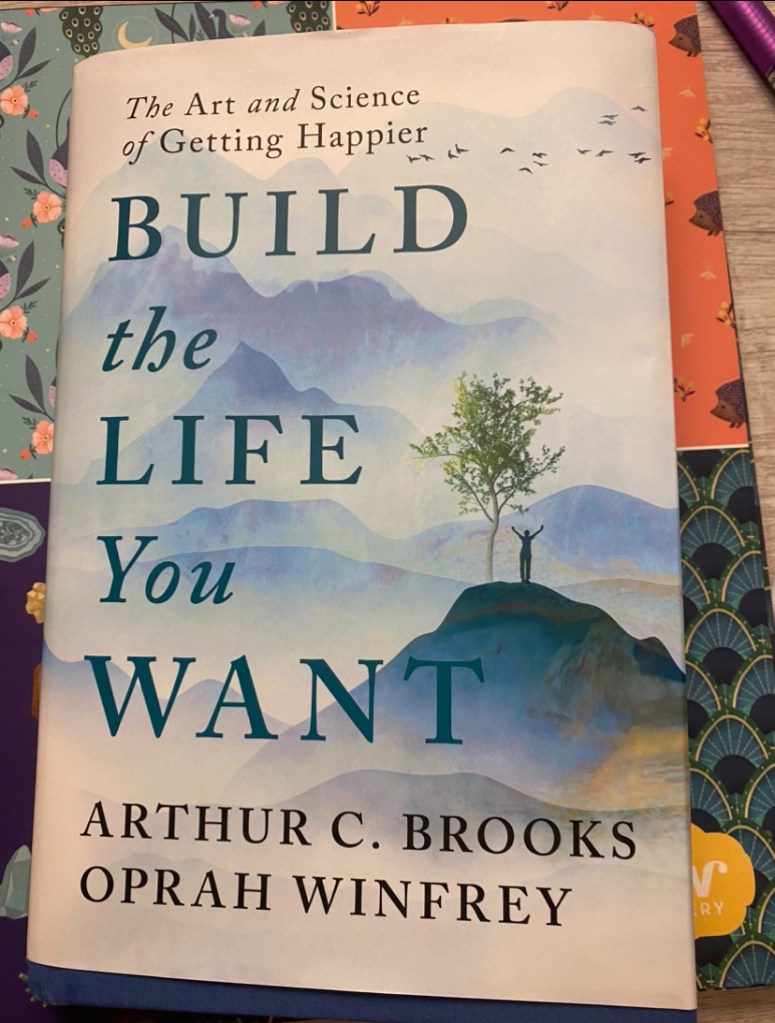
Happiness expert, author Arthur C. Brooks taps into this architectural approach by suggesting that we try “substituting” a better emotion for the one that doesn’t feel so good. Just like we choose the healthier option of an apple for dessert versus the cake, we can choose an emotion that will get us a better outcome. In the book, Build the Life You Want, Arthur even uses architectural language:

“Sometimes you want to replace some of your negative emotions with something that fits and is more constructive, leading you to act the way you want to, not the way you feel.” (excerpted from Chapter 3: Choose a Better Emotion in the book Build the Life You Want)

Ok, so let’s just pause here for a moment and really take in just how empowering it would feel to be able to pull this off a few times each day. Simply by paying attention to body budget and choosing emotions that better align with who we want to be, we would proactively practicing becoming an “architect of our experiences and emotions.”

And now, let’s add just one more component that will dramatically enhance your architectural prowess. Drum roll, please…..

Our brains are prediction machines, not reaction makers. Yet another thing that we got wrong, especially about emotions but also about how we engage with our experiences. Scientists have long believed that brain neurons were dormant until stimulated by something from our outside world. But thanks to major breakthroughs in neuroscience, we now know that this is not the case.

The neurons in our brains are firing constantly, stimulating one another as well as different regions in our complex brain systems. It is this very brain activity that represents the millions of predictions that our brains will make about what we will encounter next — all based on our lifetime of past experience.

This all happens so fast and so automatically that we usually aren’t even aware of it. We might even refer to it as our “unconscious”. The irony is that we can be very conscious of our past experiences –especially when we get emotionally triggered.

Anyone who has ever attempted to free themselves from an old emotional trigger or an overreactive behavioral pattern knows firsthand that it feels like a labyrinth. We even use metaphors in the self help space to talk about how hard this process can be: it’s a journey searching for clues on a jagged, rocky path through the thick entangled forest of our past. The definition of a labyrinth is a complicated, irregular network of passages or paths in which it is difficult to find one’s way. Sounds exactly how we describe self-discovery and behavioral pattern change.

Again, we have made this work so much harder than it has to be – because we misunderstood how our prediction machines work. If we want to vastly improve our predictions, we have to update and upgrade our internal data base. We do this by loading new content; adding richer, nuanced context; and curating a diversity of new experiences.

When we proactively update our inner database — our brains can make predictions that more closely match what we really want our lives to be and feel like and not reruns of unhelpful, old experiences. If we are trapped in the past with old emotional triggers and dizzying rumination loops, it is our brain retrieving old files to make predictions.

Your brain predicts and prepares your actions based on past experiences. Mental distress, anxiety and even old trauma arise from flawed predictions. Of course, these inaccurate predictions don’t feel good or correct in our present moment – they do not accurately fit our current situation. We get caught in a trap of outdated information that produces outdated, ill-fitting, unchecked reactions.

Think about all the ways that we have rather seamlessly updated how we do daily life. We are no longer tethered to land line phones or hanging laundry outdoors on a rope to dry. We aren’t using multi-folded, printed paper maps to navigate from one city to the next. We shop, transfer money, take photos and send emails on our phones all while waiting in a check out line.

We’ve got this — We already know how to update and upgrade our lives – and we have done it rather effortlessly — on the outside.

Now we need to do the same — on the inside.

We simply have to get intentional and proactive about upgrading and updating our internal database for much improved predictions. The bonus is that once we begin to integrate newer, more relevant information and experiences into our brain’s predictive database, we set ourselves up for greater success with each and every subsequent experience and interaction we have.

We begin to operate more fluidly and efficiently from a fresh, current database – not a relic from the past.

We know that our limiting beliefs, outgrown behavioral patterns and childhood social conditioning can be fossilized in our internal database. Because we misunderstood how our brains truly function, we just reinforced that old science too. We simply reinforced the old science by repeating our personal history – over and over again.

We are learning that neurons that fire together, wire together. By getting stuck in the past, we literally were dropping our needle on the same spot and creating a well worn groove for repetitive, familiar predictions. This is what we did with our old vinyl music records back in the day. No wonder those records would skip, slide past the next song or get stuck.

Now we have this groundbreaking neuroscience about how our complex brain circuitry really works. We now know that our brains are prediction machines not reactivity makers – and we are beginning to understand how neuroplasticity helps us to rewire our brains in healthy, optimal new ways. We can actually build new neural networks that operate more seamlessly like streaming music.

Here is an easy example to help us grasp the concept of neuroplasticity — of neurons that fire together wiring together. If we want to break an old habit, we are given all kinds of tips that actually disrupt the related neural pattern: don’t buy the potato chips, take a walk when you get a craving, replace the potato chips with almonds, etc. This is the equivalent of pulling that needle up and off the old groove; that habitual pattern of reaching for the bag of salty chips without much thought. Each time we disrupt the pattern, we tap into our brain’s neuroplasticity and create a fresh, new neural network. As it becomes easier to resist the chips, it is a clear indicator that different neurons are firing and wiring together – making us much more successful at resisting the urge to binge on chips.

For the record, it doesn’t mean that we won’t ever binge on chips in the future. But we will have greater awareness because of the new neural pathway and we might catch ourselves before we consume a whole bag. If we do fall off the wagon and succumb to the whole bag, when we renew our pledge to do better tomorrow, we are starting from a much improved baseline and not square one.

See the difference?

This is precisely what we also want to begin doing with our emotions and experiences. Disrupt the old outdated brain prediction that makes us feel reactive and out of control. Replace it with an emotion and response that feels better and more in line with how we want to show up in life. Create new and improved neural networks that strengthen over time. Toss out the rusty, dusty old files in our internal experience and emotion database – and update them with something fresh, that more closely matches how we want to feel and act, and is much more beneficial for our present moments.

There are two key ways that we can deliberately become proactive in housecleaning and updating our internal database: reframing and adding new concepts.

Reframing is simply getting a fresh perspective on an old familiar situation. Cognitive reframing is a major tool used in psychology for identifying and shifting how events, emotions, beliefs and old narratives are viewed. Reframing also serves to disrupt those well-grooved old stories and ruminative patterns.

When we reframe a situation, we not only get a fresh perspective, we are reorganizing our internal database. Reorganizing an old story or limiting belief, helps our predictive brain to use valuable take-aways from our experiences in more productive ways. This is how we can extract important lessons from our life experiences and learn from them rather than having the same lesson get repeated over and over without any real progress.

The second way to dramatically improve our predictions is by keeping our brains well stocked with new experiences, new concepts, new words and definitions. It turns out that being open-minded, curious and engaged in learning, is the portal for updating our prediction database.

See how we were making our lives, experiences and relationships so much harder than they have to be?

There are very simple things we can be doing on a daily basis to keep our prediction database fresh, updated, repurposed and creative:

  • Read – read a real book; reading from left to right stimulates the brain, engages learning and builds empathy. Read fiction and try a variety of authors and genres. Read non-fiction to engage learning something new and challenging.
  • Learn new words – words seed your concepts, concepts drive your predictions, predictions regulate your body budget and your body budget determines how you feel. The more finely-grained your vocabulary, the more precisely your brain calibrates your body budget (excerpted from How Emotions are Made by Lisa Feldman Barrett).
  • Watch movies or listen to thought-provoking audio content — this will broaden your perspectives and shake you free from old social conditioning. This is a great way to break out of echo chambers where we simple engrain over and over what we once believed or were taught. Often, we are unaware that we unconsciously do this — stay in our comfort zones and look for confirmation for our opinions and beliefs. Think of this like pouring a little water on a very dry sponge….you are just creating softness and the ability to absorb some new, possibly contradictory, concepts.
  • Be open to paradox — two opposing things can be true at the same time. Begin to notice how paradox shows up in nature, in our families and friendships. What one person finds thrilling, another finds scary (amusement park rides, movies and crazy drivers). Building a repertoire of paradoxical examples, stimulates our brain’s ability to be more creative, relaxed and receptive to contrasts.

If you can reach back and change how you feel about your past, your brain would predict differently – and you might act differently, and experience the world differently, as a result. Your actions today become your brain’s predictions for tomorrow. and those predictions automatically drive your future actions. (excerpted from 7-1/2 Lessons About the Brain by Dr. Lisa Feldman Barrett)

I hope you are amazed by the new path forward for our emotional intelligence and emotional health. No wonder we have struggled in every sense of the word to live more authentically. We’ve been working so hard to grow, to heal, to understand ourselves and each other – and we’ve been doing it with stale, constrictive, outdated information all while we were attempting to blaze more spacious and engaging new trails.

The springboard for building the life we want and living it with greater fulfillment, is taking care of our brain and body. This is the missing puzzle piece that we have been searching for. Go have some fun implementing these new tools and concepts. Discover the difference it makes today — and how it better prepares you to be flexible, resilient and creative tomorrow.

Check out this resource to get some impactful highlights about your brain’s predictions – and dive into some of the resources suggested to learn more: Predicting Better. org https://predictingbetter.org

Check out this timely episode on the Huberman Lab podcast with Dr. Mark D’Esposito: How to Optimize Cognitive Function & Brain Health https://podcasts.apple.com/us/podcast/huberman-lab/id1545953110?i=1000645842679

Architects of our Experiences – Part 2

Are you fascinated by this new concept where we can actually become “architects of our emotions and experiences”? This new approach is much more “hands on” when it comes to navigating life and sets us up for greater success to meet its ever-changing challenges and opportunities. 

This is the 2nd in a three part series on becoming skillful architects of our experiences. Today we are going to learn about a multi-purpose diagnostic tool we can put into our architectural briefcase.  But before we dive into learning what this dynamic tool is and how to use it, let’s do a quick review of the basic foundational tool from part 1 — our body budget.

In my last post, I shared how our body budget significantly impacts how we experience life. When we are well resourced, things go more smoothly for us. When we are running on empty, we create a lot of emotional turbulence. Surely, this was both eye-opening and pretty obvious.

When we are getting consistent deep sleep, eating nutritious food, staying hydrated and getting regular exercise, our brains determine that we are “fuel efficient”. We have the necessary internal resources to meet the moments in our lives with clear heads and the ability to be emotionally balanced. All we really need to do is pay attention to our brains and bodies just like we do the battery charges and wifi connections on our phones.

Author Ryan Holiday recently shared the HALT acronym to help us remember that our first line of defense when it comes to dealing with emotional turbulence is to assess our human “check engine” lights. 

HALT stands for Hungry, Angry, Lonely or Tired. HALT is a simple and very effective tool to remind us that these four common conditions can derail our best efforts to stay in alignment with our values. When we are feeling emotional turbulence, a quick check in on our body budget can prevent us from getting in our own way.

For the record, this is also a great tool to share with children. When kids are acting out, we can pause to think about when they last ate, if they had a disrupted night of sleep or skipped a nap, or if they have been buzzing from one activity to the next without some quiet time or a brain break. Before we overreact to an unacceptable behavior, we can think about their “body budget” first and foremost. When we teach our kids to check in with themselves, we are equipping them with a foundational tool they can use for a lifetime. 

Now let’s add a versatile new tool to our architectural briefcase.  The multi-purpose tool that is a “must have” for skillful architects of experience is emotional granularity.  This term may seem a little foreign but it’s easier to grasp if we think of emotional granularity the same way we think about the fine-grained distinctions in wood, textiles and even sandpaper.

The reason that emotional granularity has such a strong impact on our emotional experiences is because the true essence of our experience is in the details. That’s right, details matter. 

We mistakenly believe that there is uniformity in common basic emotion such as happy, sad or mad. Nothing could be further from the truth — variation is the norm; not uniformity. 

Bear with me here for a minute — and think about your own varied experiences of mad. You can be mad at yourself, mad at a circumstance, mad at another. You might be really mad about running late one day and not care at all the next. Sometimes your body budget is in deficit and you get mad a lot during the course of a day; other days, you are well resourced and unflappable. Do I see your heading nodding in agreement that “variation is the norm?”

If we limit ourselves to the three most commonly identified emotions – happy, sad or mad, we also limit our deeper understanding of what we are really feeling in the moment. When we can tease apart the details that accompany happy, sad or mad — that is when we get to the heart of the matter. This is the gift of emotional granularity – the finely tailored emotions that best reveal the heart of our experience.

Emotional granularity is an exploratory multi-purpose tool. It’s actually easier to use than we might think. We just need more practice and a bigger emotional vocabulary.  

Start with why. Why are you mad? 

Is it because you are frustrated, anxious and annoyed? Now, dig a little deeper to get to the fine grains of greater detail. Are you frustrated that something you are attempting to accomplish is taking longer than expected? Are you anxious because it is the third time this week you tried to finish a project? Are you annoyed that others aren’t respecting your need for uninterrupted time to focus? 

Emotional granularity brings out the relevant details — in the accompanying emotions and the backstory of each.

The more finely-grained distinctions we can make, the more accurately we can parse what matters most, or recognize that there are multiple layers to one core issue. We may even be surprised to discover that we have competing emotions – and both are true. We can be happy for someone else and feel sad for ourselves; that’s paradox.

Emotional granularity moves us in the right direction for self awareness and effective problem solving with more clarity than we could ever access if we stop at “mad”. 

The reason emotional granularity is a dynamic multi-purpose tool is that it helps us accurately express our feelings and experiences — AND it makes it easier for others to support us in constructive, beneficial ways.

We often hear that emotional intelligence is a key component for building a good life and meaningful relationships. Emotional intelligence is defined as our capacity to be aware of and control our emotions; and to handle interpersonal relationships with empathy and non-judgment.  

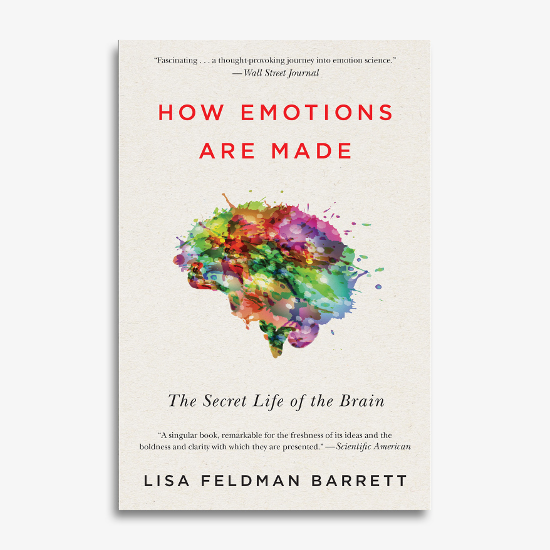
Dr. Lisa Feldman Barrett emphasizes that the most invaluable asset for cultivating emotional intelligence is emotional granularity. The more finely tuned we can get about our emotions and experiences, the easier it is to regulate them and reframe our experiences. 

Not only does this support our efforts in achieving better emotional clarity and regulation in real time, it actually updates our internal database for the future. Remember that our brains are prediction machines. When we are able to reframe and reorganize our internal database by being more skillful with our emotional responses, we will vastly improve the accuracy of our future predictions. 

Yet another reason why emotional granularity is a dynamic, multi-purpose tool. It is a fast-tracked process of freeing us from old emotional triggers and outdated information from decades old past experiences. The better we get at using emotional granularity and becoming skillful architects of our experiences, the more traction we will have in building better habits and mature response patterns.

Emotional granularity helps us to level up. We get to know ourselves better through greater self-awareness. We become more skillful at unpacking multiple emotions that are interlaced with our current experiences. With this improved awareness and clarity, we don’t drain our body budget so quickly. We have greater access to self-compassion which turns on our parasympathetic nervous system which also positively supports our body budget. We get better at emotional regulation and it becomes easier to clearly express to others what we are experiencing and what we actually need in the moment. Not to mention the added bonus of automatically updating our brain’s complex interactive systems with invaluable, current and relevant data for future reference.

Have some fun with this new tool – explore the many emotions that you feel whenever you get that initial hit of a core emotion like mad, sad or happy. Become curious when you are with others when they are sad, mad or happy and ask questions to better understand all that they are feeling in the moment. Compare your findings with your friends and family. This is how we help ourselves and others super boost their emotional intelligence and become more skillful architects of their own experiences.

Quote from Dr. Lisa Feldman Barrett, author of How Emotions Are Made

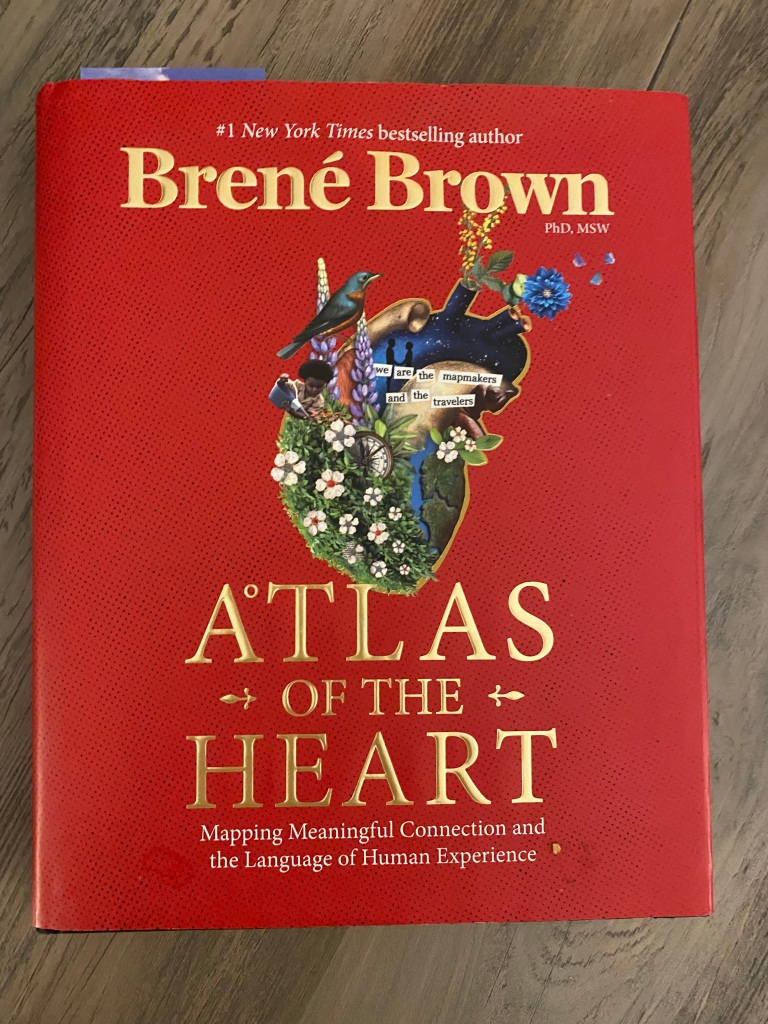
To help you expand your emotional vocabulary, read Brene Brown’s most recent book, Atlas of the Heart. Brene offers relatable stories and detailed definitions for 87 of our common emotions and experiences. Better yet, she has organized this invaluable resource by highlighting how we typically feel under certain circumstances. The chapters invite us step into “the places we go when….” When we compare, feel uncertain, when we are hurting or fall short.

Check out Dr. Marc Brackett’s newest app How We Feel. Dr. Brackett is the Director of the Yale Center for Emotional Intelligence and author of Permission to Feel. There are over 200 emotions to explore in the How We Feel app!

Click this link to go to the website https://howwefeel.org and learn more about the app and how you can use it to help you build your emotional awareness and vocabulary in real time.

This quick, relatable read will stimulate your appetite to learn more about becoming an Architect of Your Experiences. Awesome insights into how our brains and bodies actually work.
If you are fascinated by neuroscience and love a deep dive into science and psychology, then treat yourself to How Emotions are Made. This book and Brene Brown’s Atlas of the Heart are reference books for our home libraries – the kind we will return to again and again!

Architects of our Experiences

Surely you recall that childhood pleasure of a rainy day when mom or dad would drape blankets over couches and chairs, then stand back prepared to be amazed at what their creative little geniuses would do next. An ordinary living room suddenly transformed into a sensory wonderland that started with a simple blanket fort.

I came upon this sight a few days ago and marveled at the ingenuity of the little architects who began with a pint-sized castle that just kept morphing into something even grander with each “lightbulb” moment and the addition of another toy bin. 

As the plans grew in size and complexity, there was a lot of trial and error. Shrieks of joyful delight filled the room as the framework collapsed and a new idea took shape from the rubble. 

What a lesson to be learned from two small children actively engaged in an organic, evolving, complex and creative process. They were little architects of their playful experience.

Are you aware that we adults can become skillful architects of our own experiences? 

It’s true — and the beauty of it is, we can tap into the creativity and positive outcomes that comes so easily to kids, by using our brains and bodies in a powerful new way.

Just imagine being able to construct experiences and supporting emotions that more consistently align with your goals and big aspirations. Fewer self-made obstacles, more smooth sailing.

Dr. Lisa Feldman Barrett is breaking new ground in the science of emotion – overturning long-standing beliefs that our emotions are universal, automatic and hard-wired in different regions of the brain. Instead, we actually “construct” an instance of emotion through a remarkable interplay of our brain, body and our culture. 

Anyone who has ever experienced a strong emotional trigger from an event that happened decades ago, has some appreciation for how quickly this remarkable interplay coalesces. It’s no wonder we believe it’s automatic and has become hard-wired into our systems. 

And yet, we also know that it is possible to “re-wire” our brains and release old emotional triggers – freeing us from being snagged by that old experience over and over again. The neuroplasticity of our brains enables us to re-organize our old connections in new and improved ways. 

This rewiring process is analogous to children reorganizing their fort framework to become something more useful for an even more incredible structural masterpiece.

It turns out that becoming “architects of our emotions and experiences” it is not as big a stretch that we once believed. How remarkable is that?

Dr. Lisa Feldman Barrett is gifted at making this new concept readily accessible to all of us. There are three key components that we need to know more about when it comes to curating our architectural tool bag: body budget, emotional granularity and cultivating more current, diverse experiences.

Today’s post is the first in a three part series about becoming skillful architects of our experiences. Prepare to be amazed at the role our body budget plays in our emotional reactions to life. 

A major part of becoming skilled architects of our experiences involves mastering our emotions. We erroneously believe that our emotions that are the first system to get activated — and we have to “manage” those strong emotions in order to respond effectively to our circumstances.  But this is not the case.

What actually happens first is that our brains are estimating what’s in our tank and predicting how much of our inner resources are going to be required to meet the present moment. It would be analogous to us hopping in our car for a big road trip and looking at the gas gauge to determine how far we can get before refueling.

Our brains are only 2% of our body weight, but they use 20% of the oxygen we consume and 20% of the energy we consume. What our brains and bodies need in order to have a balanced body budget are consistent quality sleep, hydration, good nutrition and movement, i.e. regular exercise. 

We are learning so much more than we ever knew about the importance of consistent quality sleep for our optimum brain health. Even while we are sleeping, our brain is storing and categorizing information, cleaning and purging, updating and rejuvenating. We are even cognizant of the disruption that caffeine and alcohol has on our sleep cycles and the integral neural processes that occur only during sleep. 

The benefits of good nutrition, hydration and regular exercise are irrefutable. But while we know these components are needed, we often forget that we are also draining our resources throughout the day and should pay attention to when we need a break, should take a walk, or grab a healthy snack. How often are we literally running on fumes?

Let’s just pause here for a minute and think about the amount of time we devote to charging our phones, making sure we have 5g network and cooling it off if we get a heat warning. What if we were to become as knowledgeable about our brains which are operating 24/7 for us – and often without any awareness of the drain on our inner resources?

All this time that we believed we were at the mercy of our emotions, we may simply be attempting to function optimally on an empty fuel tank. Very often what we are “feeling” is not an emotion, but rather an indicator that our body budget is out of balance. 

Since our brains are lightening fast at the estimation and prediction process, they get our body ready for a response that might include an increased heart rate, shallow breathing, or release of chemicals and hormones such as adrenaline or cortisol. We “feel” these sensations and “assign” an emotion to it. We might tell ourselves we feel scared, angry, anxious, uncertain, elated or surprised.

We’ve been doing this for most of our lives without a second thought, so it has become second nature to associate an emotion with whatever we are sensing in our bodies. Once we assign an emotion, we are off to the races – and often unconsciously,

Since our brains are prediction machines, it will quickly run through our historical database to find past events that simulate what we are feeling in the present moment. This complex retrieval system is on auto pilot most of the time; we are unconsciously running an algorithm that reviews our personal history looking for matches.

After the match is made, our amazing brain has one more remarkable feature — it runs a prediction error model. This is the brain’s way of giving us the opportunity to discard old data and replace it with newer, more appropriate data that suits the current situation. 

For the record, we often bypass or override this integral prediction error process. If it “feels” like a past experience, we pull the “all systems go” switch. This is how we’ve forged our “go to” behavioral patterns and protective armor. Without a moment’s hesitation, we assign an emotion, recall a past similar experience and jump into a memorized and familiar reactive pattern.

When we are pivoting to becoming architects of our experiences, we can start to pay more attention to both predictions and prediction errors. We can take the time to see if we are simply relying on an old database that no longer serves us well. This is how we “re-wire” those old outgrown behavioral patterns and replace them with new responses better suited to our lives today.

If the first brain system to get activated is simply an assessment of internal resources that are needed for the present situation, then we can start paying attention to body budget first and emotional responses second. This is a game-changing pivot in both mindfulness and self awareness. Think of this as a little “self check-in”. Are you resourced internally? Have you assigned an emotion and if so, does it feel appropriate to the current situation?

If we can make the distinction that our body budget is actually causing us to be under-resourced and not some big emotional reactions, we can begin to dis-engage from strong emotional triggers and respond with more cognitive skills. 

We think that emotional regulation is really hard and that changing our old behavioral patterns is even harder, but Dr. Barrett’s research is showing us that we just might have been making things much more challenging for ourselves all along by not understanding the role body budget plays. 

It is the very reason that we have “variation” in our moods, emotional states and our ability to think clearly. Dr. Barrett offers us a welcome sigh of relief — it turns out that “variation” is the norm.  

There are times when we do feel in control, cognitively and emotionally. We meet even the most stressful moments calmly, with a good sense of humor, a healthy acceptance of reality. We can even help others calm down and self-regulate when we feel this way.

Then there are times when we are short-tempered, can overreact to the smallest of events, or work ourselves into a state of frenzy. We set off a chain reaction of emotional reactions in others and things can escalate quickly.

Variation is the norm. And now we know what might be the real cause — a body budget deficit.

We get notifications throughout our busy day from our brains and bodies about what is needed to keep us running optimally. We even have terms we’ve created to diagnose our body budget deficits – such as hangry, brain fog, getting on our last nerve and no bandwidth. But unlike the ding of a notification from our phone, we often ignore the alerts we are getting from our brain about our own energy drain. 

We frequently overlook the small investments we can be making all throughout the day to keep our body budget in balance.  We may start with a full tank in the morning after a good night’s rest, a tall glass of water and a healthy breakfast; but we are going to begin to drain our body budget resources as the day goes on. Exercising, staying hydrated, making healthy choices for snacks and meals, taking breaks, getting outdoors, and unplugging from our devices are just a few of the multitude of ways we can restock our inner resources.

The biggest paradigm shift in understanding how we “make our emotions” is coming from a deep understanding of the role our body budget plays in our daily lives. 

Dr. Lisa Feldman Barrett is a pioneer in her fields of neuroscience and psychology – and she is helping us to get very savvy about our incredible, complex brain and body systems. If we take better care of ourselves, and pay attention to our body budget, this whole business of emotional regulation might just get a whole lot easier.

Dr. Lisa Feldman Barrett will captivate you with her compelling Ted Talk about how emotions are made. Click this link to listen
https://www.youtube.com/watch?v=0gks6ceq4eQ&t=140s

Check out this episode of the Huberman Lab podcast where Dr Lisa Feldman Barrett is Andrew’s guest to discuss How to Understand Emotions https://podcasts.apple.com/us/podcast/huberman-lab/id1545953110?i=1000631446646

When the Student Becomes The Teacher

Many months ago, my young granddaughter was scared. As she described her experience to me, I could fully understand why she was frightened. She felt as though she was having some kind of out of body experience – something that was not at all like her – and yes, it was scary to think she might be changing and had very little control over it. My granddaughter was angry; not plain vanilla angry – she was infuriated. Along with that infuriating anger was a fear that she would forever become an angry person – and that was scary – because she didn’t want to change who she was.

We’ve all been there haven’t we? We reach a breaking point and suddenly we too have an out of body experience and act way out of character. We have a jolting knee jerk reaction that surprises even us — or our simmering kettle of stuffed emotions boils over at the most inconvenient moment and we regret it the moment it happens (even though it is too late). In hindsight, we have said or done things that we’d never dream of in a much more rational moment. 

The distinction between us adults and my young granddaughter is that we know we will not stay stuck forever in this “out of character” form; we will return to our emotional baseline and be back to feeling like our normal, “true to character” selves again. Sometimes we can even do that BEFORE we overreact – and other times, we have the wisdom to make those necessary repairs; we apologize and put in real effort to do better in the future.

Little did I know that my granddaughter was giving me a golden opportunity to understand the benefits of emotional granularity. Simply put, emotional granularity is when we are able to identify all the emotions that we are experiencing in any given moment. There are always more ingredients in our emotional experiences than simply happy, sad or mad. But we often hit the brakes as soon as we identify those 3 core emotions and we stop a profoundly important process. Angry, sad or happy are just the headlines; we need to understand “the rest of the story,”

In my granddaughter’s case, the anger was ginormous in this moment. She’d been patient with her younger brother all day long, but now she was tired and hungry, which served to amplify the slow build of her frustration. We could all understand and empathize with her feeling angry. That was normal and justifiable, especially at the end of a busy day.

The anger problem could be remediated by both validating her feelings and giving her a break from her energetic, fun loving, free flowing brother. But my granddaughter had more to share – she was also feeling afraid that she’d stay stuck in anger — and she did not like the way that felt to her. 

Even without a textbook or podcast, she knew instinctively that there was more going on than just the anger.  Thank goodness I did have some working knowledge of emotional granularity. I silently expressed my gratitude to Brene Brown and Dr. Dan Siegel for this education and proceeded to help my granddaughter. I asked her to describe to me what anger was making her feel like. For the record, kids are much better at articulating this than most of us adults. No wonder she was fearful of staying stuck in that feeling — it’s downright icky. I assured her that strong emotions don’t have a long shelf life, that they do fade and we return to feeling like our normal selves in short order. I wish you could have seen the relief that washed over that precious face. A big warm hug and a reassuring smile soon had us both laughing. Astonishingly she could even reframe her brother’s prior annoyance as just his silly antics – the very same antics and playfulness that she loves so much about him. 

What a rebound! This is the magic of emotional granularity; we can hold both sides of an experience and keep them in balance. 

My young granddaughter recognized that her brother can bring her great joy and he can also annoy her. Both are true. 

Emotional granularity keeps us from getting stuck in a single core emotion. It helps us discover many pieces of our experiences puzzle. Nuance and context are key ingredients for how we “feel” in any given moment. For example, earlier in the day when my granddaughter was fresh from a good night’s sleep, had a full tummy of her favorite breakfast and a full tank of patience and energy, her brother’s antics were light-hearted, fun and tolerated. It was only later in the day, when her tank was running low that she felt quite differently. 

Take a moment to think about that for your own daily interactions. When you are well resourced with sleep, nourishment and bandwidth, you most likely flow pretty easily with other’s moods as well as the diversity of tasks and demands you are juggling. When you are running low on fuel, it gets harder and your mood and emotional state shifts.  Emotional granularity helps us parse out the underpinnings of happy, sad and mad.

More recently, this same granddaughter was having an off day. She wasn’t her usually bubbly self and she wasn’t keen on all the suggestions we were offering to snap her out of it. Not sparkling water, her favorite breakfast or a fun craft was moving the needle. She announced that she wasn’t in a hurry to get out of this mood and she was going to go be alone with it for a while. When she rejoined the family activities later, she was in good spirits and all in on the fun stuff we were doing.

It wasn’t until later that day that my granddaughter told me that the reason she likes to stay in her moods is that she knows what I told her is very true. Emotions and feelings fade faster than we realize – and she doesn’t want to miss a chance to explore hers before they drift off. In that moment, the student became the teacher.

I am a firm believer in the advice that ogre Shrek offered years ago — “Better out than in.” It is better to get our emotions out where we can examine them than stuff them away in cold storage. My granddaughter is living proof that doing this sooner rather than later is precisely how we extract the most wisdom from what our emotions are trying to tell us. 

Doing this emotional awareness processing in real time is when we have the sharpest clarity to fully appreciate and understand what our emotions have to tell us.  If we postpone sitting with our emotions, they will change and shift – just like clouds in the sky. We will end up blurring or diluting them. We may even stuff them so far down that we completely ignore them and their valid warning signs. 

Processing our emotions in real time is the best preventative measure we can take for cultivating our self-awareness and vastly improving our ability to skillfully regulate our emotions. We now have science to support this. 

In her book, How Emotions Are Made, neuroscientist Lisa Feldman Barrett teaches us that emotional granularity is the integral key to keeping our internal “emotions and experiences” data base updated. Our brain and body are our uniquely personal information processors. They are prediction machines that rely on the data we store. The greater our ability to identify and process the multiple emotions we experience in any given situation, the better our “prediction machines” will operate in the future. 

It should be pretty self evident by now that the lack of full emotional integration when we were children is the major cause of so many “prediction errors” in the way we are able to regulate and understand our emotional triggers in adulthood. When we are getting in our own way and making life more difficult than it needs to be, chances are that our “prediction machines” are feeding us old, outdated data. Emotional baggage is like the fruits and veggies growing moldy in the fridge. We never took the nutrients out of our emotions and experiences when they were fresh. Yet we still have to deal with all that mushy mess when we clean out the fridge.

There is another compelling reason that we need to get much better at processing our emotions in real time — it is because our current mood greatly impacts how we experiencing life. If we are overly tired or famished, there is a greater likelihood that we will feel more negative about what is happening. In other words, we can skew our emotions, file them away without any self reflection, and end up with an internal database full of misinformation. Talk about an algorithm that feeds us more of what we really don’t need, but that feels oh so affirming.

Let’s go back to the story of my granddaughter’s emotion of big anger. She was experiencing this giant-sized anger more intensely because it was the end of the day; she was both hungry for dinner and ready for bed. She just didn’t have a lot of bandwidth to cope with her brother’s antics. Earlier in the day, his silliness made her laugh and her delighted responses encouraged him all the more. As the day wore on, her tank was ever so slowing draining. On the other hand, her brother may have had a nap and ate more snacks, so he was still going strong. My granddaughter’s context had changed and my grandson’s had stayed the same. 

Two opposing things were true here — my granddaughter loves her brother’s zest for life AND she also needed a break. My grandson believes his antics are adorable and valued no matter how tired others are.

This very scenario plays out in our adult lives all the time but we are mostly unaware of it. We do ebb and flow in our moods all throughout the day. When we feel rested, nourished and energized, we have greater coping skills and better judgement. When we hit the wall, all bets are off.

When we hit the brakes when one of the 3 core emotions jumps out – and then step on the gas and barrel through, we actually stay stuck in happy, sad or mad. Imagine if we were in our cars, hit the brakes to avoid hitting a small child, and then while our heart was racing and our nervous system was on high alert, we hit the gas pedal and were doing 80 mph in 10 seconds. We would not be at our best to reflexively respond to another potential accident – in fact, we might cause an accident.

We know that it is encouraged for us to take that meaningful pause between stimulus and response when we are feeling strong emotions washing over us. Far better to take a few deep breaths and calm ourselves before we “react without reflection”. When we are working on developing better emotional regulation, we want to ground ourselves and consciously “respond” in a calmer way.

Yet there is one more beneficial skill that we would be wise to cultivate: Stop, look and listen.

Pretend you hit the brakes at a railroad crossing. The flashing lights and the gate that lowers are big emotions trying to get your attention. Stop, look around at the current circumstances and how well resourced you are to make good decisions. Listen to all that those accompanying emotions have to tell you. They are the messengers of the context and nuance needed to proceed with caution. 

If an 8 year old can do this, so can we. 

Chapter 2 of Arthur Brooks newest book is entitled the Power of Metacognition. If you only read this chapter in his book, you will have a much better understanding of how we can proactively choose better emotions to enrich our experiences. A worthy read.
Listen to this short YouTube video with Lisa Feldman Barrett about how past experiences and emotions impact how we respond to current experiences. You’ll be inspired to get more skillful at processing your emotions and experiences in real time, so that you are operating from a fresh and updated data base rather than old, outdated and clunky information
https://www.youtube.com/watch?v=ZYAEh3T5a80&t=31s

Lisa Feldman Barrett was a recent guest on the HUBERMANLAB PODCAST. This episode will give you a foundational understanding of how we could be vastly improving how we teach our children — at home and in school — with a more updated understanding of how emotions impact us. https://www.youtube.com/watch?v=FeRgqJVALMQ&t=318s