Build a Sophisticated Toolshed

Imagine my surprise to hear a male guest on a podcast sharing that he and his wife are now using more “sophisticated” tools to navigate life. Wow — I love that impactful word and could even feel myself leaning into it and embracing the full scope of what it feels like.

It is remarkable how one word can shift us quickly into the next level of our personal growth — and do so in a way that feels amazing.

I could see it in the body language of this middle-aged man – he was owning how empowered he felt by proactively choosing a “sophisticated” way to support his wife deal with an emotional situation. There was a sense of pride and accomplishment.

His personal story was a sliding door experience for him — one where he could see how he used to handle situations like this that usually only made things worse; and how he attended to his wife’s needs now in a more mature and skillful way. Not only did his wife get what she needed most, their personal connection deepened.

The stark contrast of how his old ways of dealing with relationship struggles pulled them further apart – and how his new and improved ways, strengthened their relationship was undeniably magical. The “before” and “after” results of using “sophisticated” tools was proof positive that he was growing in the right direction.

He had handled a common relationship issue with aplomb.

Admittedly, he shared that he used to match her emotions and they’d get in an emotional tug of war. This could lead to a stand off and for the next few hours, they’d avoid each other or poke at each other’s shortcomings. Not fun.

His new and improved approach of validating her feelings and her experience, of listening to understand and co-regulating her by remaining calm, felt surprisingly good to him too. A simple shift in his approach was the fast-acting remedy that produced incredible results. They were hugging and smiling in just a few minutes. For hours afterwards, they could still feel the strong intimate connection they’d made.

That young man inspired me to see what is possible as we reframe personal growth and self discovery. Yes, of course — we want to be using sophisticated tools in skillful ways to build the life we want. To become better versions of ourselves over time and to support those we love in ways that build trust, resilience and self-confidence.

We can become master craftsmen and craftswomen with some simple, impactful shifts in our language and our awareness. Who wouldn’t want to become confident enough to use “power tools” in our most treasured relationships?

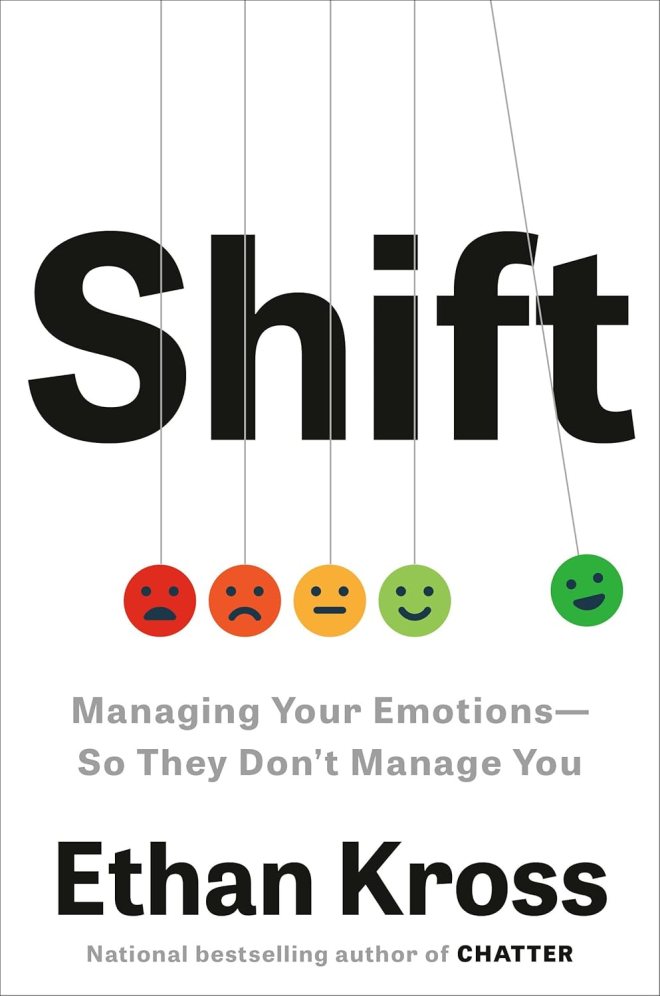
In his book, Shift, author and psychologist, Ethan Kross, reveals just how easy it is to step into using the “power tools” that proactively shift our mindsets, perspectives, emotions and perceived limitations. In fact, the concepts he details in his book could be the Starter Kit for building your own sophisticated toolshed.
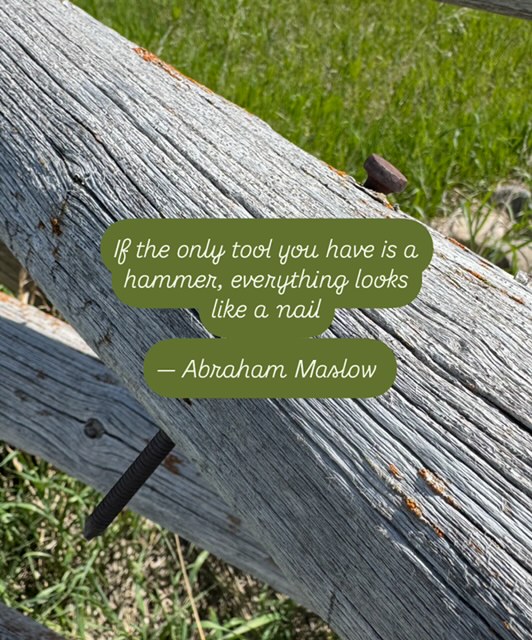
These power tools are really pretty straightforward but we frequently get hijacked by the stimulus of a situation and just reach for a hammer.

It’s our natural human tendency to rely on familiar methods or tools, even when they are not the most appropriate for a situation.

As Abraham Maslow reminded us: “If the only tool you have is a hammer, everything looks like a nail.”

It is precisely why Victor Frankl urges us to use the pause between stimulus and response to think about what is the best course of action in the long run.

Reminding ourselves that we want to be reaching for “sophisticated” power tools while we are taking that pivotal pause might be all that is needed to remind us to be more mature and intentional about our reactions. Drop the hammer and reach for the more contemporary, state of the art, power tools.

A Method and a Motto:

There is a method to stop the madness of using a hammer for everything that pops off in our lives and crops up in our relationships. It is recognizing that we human beings have a lot of variation in the way we show up day in and day out.

Some days we are far better resourced to handle blunders, mistakes and miscommunications. We can let things roll with grace and generosity.

Other days, not so much. We are irritable, easily distracted, have limited bandwidth and are running on fumes.

Even when we want to do our best, it may feel nearly impossible to pull that rabbit out of a hat.

Turns out, we unconsciously overweight and overrate what we can get in the short term. We make snap decisions and have knee jerk reactions to get satisfaction right away. We don’t like feeling uncomfortable, we want relief immediately. Winning a shouting match feels good.

But winning that shouting match only feels good for a hot minute.

That’s the unfortunate reality of overweighting what feels good in the heat of the moment. We unconsciously give too much weight to winning a fight or avoiding a conflict. We make a value calculation that is fleeting.

Dr. Falk reminds us that where we “place our attention” is the lever we can pull to override our tendency to overweight the value of a short term outcome. Play the long game. Turn attention to what matters most. Are you the kind of person who saves the day?

We aren’t little kids in a sandbox anymore. We are grown ups who calmly come in and help each other get along. We can clearly assess the situation and get back to having fun together.

In her book, What We Value, Dr. Emily Falk urges us to get intentional (especially in the heat of the moment) about shifting our attention to the long game. We will find it much easier to reach for our sophisticated relationship power tools when we focus on what we value most in the long term.

It may seem small and highly unlikely to be effective to “shift” to the long game – but it is an elevated form of delayed gratification. Do you want one marshmallow now or would you be willing to wait so that you get two marshmallows later?

Play the long game.

Turning our attention to think about what we are working towards in becoming a better person, in how we show up for others especially when it is challenging — that shifts our focus and puts more weight in the ‘value calculation” that drives our choices, behaviors and actions.

When we play the long game, we make the most of that pause between stimulus and response, by asking ourselves – “Wait a minute – let’s think about what I value most and make the better decision that aligns with my values.”

The method we can use to help us reach for power tools instead of a hammer is to shift our focus to playing the long game and matching our responses to our long term goals and core values.

The motto we create for ourselves becomes the lever we pull that opens our sophisticated tool shed. Something as simple as the golden rule can be a magical shifter in how we meet life’s moments.

When our kids are little, we give them those brightly colored plastic replicas of lawn mowers, weed whackers and leaf blowers. Many times our kids love to store their pint-sized imitation power tools right next to the real thing in the backyard toolshed.

We would never give our kids the real deal power tools until they are old enough and mature enough to use them with great care and skill. But we do plant the seeds that they will be quite capable to use the real tools in the future.

What we know now that is backed by advances in science and psychology is that for far too long is that most of us were only taught to use a hammer to fix just about everything. But a hammer and duct tape do not build strong relationship foundations and deep connections.

As we begin to incorporate more advanced relationship tools into our daily lives, we reinforce the positive benefits we reap – and we also teach by osmosis how effective sophisticated power tools truly are – in the long run.

Think about using the mental image of a magical toolshed full of dynamic power tools that are fun to use and get the job done right the first time. We can all build that kind of toolshed, well equipped with sophisticated tools and skills easily accessed each and every day.

What motto would you put on the sign that hangs over the door of your sophisticated toolshed?

BREAK FREE FROM A VICTIM MINDSET: June 6th, 2025 episode with Scott Barry Kauffman. Prepare to be amazed at how often we get trapped in our own victim mindset. This dynamic conversation will shift you quickly to an “empowering mindset”

Better Scripts, Better Stories

What if we all had access to an incredible library of rich, engaging reference material for the stories we tell ourselves?

Instead of rummaging through old baggage accompanied by a judgmental inner critic telling ourselves stories that usually aren’t very helpful, we could flip the script.

We could build a dynamic database of reference material that could be repurposed time and again to write relevant stories that truly help us rather than restrict us.

Better scripts. Better stories.

If the stories we tell ourselves throughout our lives keep us trapped in small versions of ourselves, snagged on shards of shame, fear or insecurities, and limit us from seeing valuable context clues for building the life we want — we will miss the golden opportunities that are often right before our eyes.

If we are constantly second guessing ourselves and worried about other people’s opinions, we will never be able to fully tap into our own dynamic and unique character development. We will write ourselves as supporting cast members instead of taking the leading role we should have in our own personal development.

Knowing ourselves well and having access to our ever-evolving inner database of rich raw material cultivated from our experiences, emotions and mentors will be the giant transformational step in the better stories we tell ourselves all throughout our lives.

Ethan Kross, author of Chatter; The Voice In Our Heads and Why It Matters, recently shared that we are at a pivotal inflection point right now. His latest book, Shift, is an open invitation to embrace this transformational reframing of the voice in our heads and the database we all have in our bodies and brains as a resource not a roadblock.

How do we turn a centuries old paradigm on its head? The one that had us believing our inner library was just a dark, dusty basement full of stuff we’d rather forget?

We do a major renovation – that’s how. No more dimly lit basements or scary attics. We build greenhouse libraries instead!

Sit with that image for a few moments and feel just how inviting it would be to linger in that welcoming greenhouse — to explore your own personal growth in a warm, well lit, inviting environment with a vast library of inspiring stories of courage, creativity and curiosity.

No more inner critic curmudgeon constantly saying “I told you so” while opening the creaking lids of old baggage rummaging for proof that we’d never measure up. No more donning old protective armor or hand me down behavioral patterns.

Out with that crotchety inner critic stuck in the past who keeps us entangled in an unpruned past. In with an insightful, inspiring inner voice instead – one that continually reminds us how far we’ve come, what we are capable of and all our unexplored hidden potential yet to be discovered.

Our inner voice would be he head librarian and life coach of our personal greenhouse library — an effervescent mentor with a knack for using intuition and gut instincts as a guide for the best reference material suitable for our present day adventures and obstacles.

This is the major undertaking that we are all being encouraged to embrace thanks to neuroscience, psychology and vastly improved parenting models. This is the very inflection point that Ethan Kross tells us has arrived. We are long overdue for this healthy, space-clearing renovation and modern upgrade.

Each and everyone of us has the opportunity to write better stories that we tell ourselves. For many of us, it does mean that we have to clear out that metaphorical attic and basement in order to make room for the personal growth databases we can maintain in our greenhouse library.

For our younger generations, we can help them build their own greenhouse library from the get go. Tear down any shaky foundations currently under construction for that misguided inner critic and storing of unhealthy emotional baggage. Make room for a new tenant – a strong, flexible and resourceful inner coach and a vast, continuously updated library of worthy reference materials.

This is how we pivot from a harsh and unhelpful inner critic who restricts our growth to a dynamic personal life coach — an inner voice that is trustworthy, truthful and has been trained to help us set ourselves up for success.

The second major pivot is to reframe our past experiences, processed and unprocessed emotions and prior stories as history lessons, rich raw material and sources of inspiration and motivation. We can write and re-write better stories to tell ourselves when we view our internal database as an endless resource library for our lifelong personal growth.

Let’s get a sense of how it would feel to tap into an inviting database to explore creative new ways to tackle a problem or make the most of an unexpected opportunity.

In that old cob-webbed model, your crotchety inner critic would be jumping erratically on your shoulder playing the same old broken record on a loudspeaker – “you can’t do that or you don’t have what it takes.”

In the new updated and integrated model, your personal life coach and supportive mentor meets you where you are. Your inner voice takes your hand and validates that what you are experiencing is hard. Your calm inner voice asks you “what does help look like right now?” Your inner life coach reminds you that you can do hard things. That inner life coach can show you all the places from your past where you did overcome adversity, met challenges and set your sights high.

Are you beginning to “feel” the marked difference between a debilitating inner critic and a supportive inner coach?

Are you able to imagine that your backstory, lived experiences and knowledge you’ve gained along the way have created a dynamic personal reference library (and not a musty, dusty storage unit of things best forgotten).

The inflection point that Ethan Kross talks about is this pivotal shift from inner critic to inner life coach. Ethan encourages us to accept the invitation to shift our thinking and to use our emotions as data points they are for helping us live a balanced, rewarding and generative life.

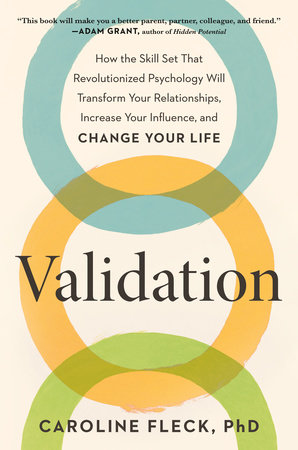
Adam Grant, organizational psychologist, echoes what Ethan Kross is promoting — and he adds that one of the best ways to quickly integrate this transformational new way of using our inner voice is to teach it. In his recent conversation with Dr. Becky Kennedy, the parenting expert that has built her practice on this modern model of emotional integration, they both acknowledged that shifting into inner coaching is how we fast track ourselves and our kids into this better human operating system.

Dr. Becky points out that we can “re-parent” ourselves while we are teaching our kids all about emotional intelligence and emotional regulation. We help our kids build a massive emotional vocabulary and as we are doing that, we are updating and rebuilding our own.

As we teach our kids that emotions are not scary, not to be avoided and are actually incredible data points for getting to know ourselves well, we are also reinforcing this messaging for ourselves.

As we become more familiar with our inner greenhouse library reference material – and we let our inner voice guide us as a life coach would — we will naturally be role-modeling how easy it is to access helpful internal information. Now we get the benefit of osmosis to easily facilitate our kids building their own personalized internal resources.

What we once relegated to the dusty basement is the core operating system in our greenhouse library: Emotional Intelligence.

It is precisely why Ethan Kross entitled his newest book Shift: Managing Your Emotions So They Don’t Manage You.

It is also why Dr. Becky Kennedy tells us that punishments don’t work. We need to be teaching our kids how to process and manage their emotions. They cannot learn that and acquire the skills and tools they need for emotional intelligence by being punished. Punishments only result in the old baggage stored in dusty, dingy basements with the scolding inner critic.

If you don’t have kids or are not a grandparent, don’t feel that you are missing the boat of this transformational inflection point. We all have family members and friends to support. And Adam Grant’s principle applies here too: We can reinforce our own learning by teaching. As we integrate emotions, expand our emotional vocabulary and get betting at regulating our emotions, we can share what we are learning with others.

Let’s consider the impact we have on others when we rely on an inner critic, old baggage and unhelpful stories we tell ourselves.

When we are inconsistent in how we show up for our kids, our spouses, siblings or parents — we pour out a lot of mixed messages, confusing signals and big margins for error. Especially prediction errors. Our inconsistency in controlling our emotions and reacting to common everyday occurrences really messes with everyone’s ability to do the two things our brains are naturally hard-wired to do: make predictions and make sense of what is happening by finding meaning.

Did you know that psychologists point out that our inner critic is comprised of the voices and messages we heard most often in childhood. Parents, siblings, grandparents, caregivers and teachers contributed to that inner voice that helps us co-author the stories we tell ourselves.

Our inner critic has such a loud voice that it often drowns out what our inner self is trying to tell us. How can we trust our gut instincts and intuition if we can’t hear it?

When we put this into perspective, it helps us shift out of our reactive, driverless auto pilot. We become more cognizant that we are training those inner voices of our loved ones to hear better scripts. In turn, they will be able to tell themselves better stories. Just like AI, we are providing input to others that will either help or hinder them in the future. Do we want to develop a loud, harsh inner critic — or a dynamic, inspirational life coach?

Our most important roles in life are that of parent, partner, sibling and friend. We are real life coaches for each other in each of those roles. After all, our learning and growing is a lifelong process, not one that stops when we reach our full height or our brain has fully developed (which doesn’t occur til our mid-twenties). We all need life coaches to help us navigate life with healthy skills, tools, inner resources and strong support systems.

Just imagine if we all accepted the invitation to pivot as Ethan Kross suggests? We are at a major inflection point in our human evolution thanks to science-backed evidence of how our brains, our emotions and our inner voices are intended to work as an integrated team.

Wouldn’t you rather trust yourself to make the best decisions throughout your life than a harsh inner critic? Wouldn’t you love an inner voice who often sounded most like reassuring, encouraging and supportive parents who kept you safe? Wouldn’t you love an inner life coach that was an amalgamation of parents, grandparents, teachers, coaches and mentors who scaffolded you through some of your most remarkable life experiences?

Better resources, better skills and tools. Better stories we can tell ourselves.

P.S. I credit my young grandson for the image of a greenhouse library that he offered to me. He said he would build me one some day. He already has.

Ethan Kross not only explains why all that chatter in our heads is disruptive, he gives us great tools to harness it. A very informative and relatable read.
Ethan’s newest book comes out in early February, 2025. He has been promoting his latest book on podcasts. It was his conversation with Dr. Laurie Santos on the Happiness Lab that contributed greatly to this blog post.

Self-Discovery & Sturdy Leadership

It was a handwritten note in an unexpected thank you card that opened my eyes. As I read what was written just for me, I had a realization that how my family member saw me and how I saw myself were one and the same. I was completely caught off guard by this moment. It was a graduation day for me too. Eight years of investing in self discovery and personal growth culminated in this moment where someone on the outside saw who I am on the inside.

How often do we reach a major milestone in our lives — get that diploma or promotion — and fail to synthesize how all that hard work, discovery and new information truly shapes us? To “synthesize” something means to “combine a number of things into a coherent whole.”

Perhaps that is the ultimate goal of self discovery and personal growth work – to take apart and rebuild a better framework and foundation for ourselves. The kind of framework that enables us to be consistent in who we are and how we show up regardless of the role we play or the company we are keeping.

Modern lingo calls this “being our authentic self” which sounds just a little too woo-woo and gauzy; a bit like having a fairy godmother wave a magic wand and we are instantly transformed. No wonder people get the big idea that it just means showing up unfiltered and fearless about being our raw selves. Children are authentically themselves and we all know the challenges that both kids and parents face.

We use the word “work” in association with personal growth, self-development and emotional regulation because it is work. We do have to learn how to use tools and skills instead of defenses and coping mechanisms. We have to practice these new tools in all kinds of situations in order to become skillful in all our human interactions.

It’s time we reframe self-discovery and personal growth as a fundamental stage in our adult development. It is a pivotal time to step back from the memorized patterns of behavior we learned in childhood and swap them out for fluid, flexible and healthier responses to life. A key aspect that is often overlooked and under-discussed is that we can “synthesize” what we learn about ourselves while we fold in better skills and tools.

Have you ever wondered why friends or colleagues see you so differently than your family members? Get your pick axe out and chip away at the obvious: Are you more “you” with them than you are at home? At home, do you feel like you have to make others happy, keep the peace and not speak up when you really want to? Are you more at ease with friends or at work in having hard conversations and speaking your truth?

In the self discovery process, we often find that we are more our “authentic” selves with some meaningful and mature filters when we are at work or with friends. Clearly we can do this — show up as our better selves and work harmoniously together.

The graduate level of self discovery and personal growth work comes when we start to practice our self-awareness and better skills in our most sacred relationships. This is not for the faint of heart.

We’ve all heard the profound wisdom that the only person we can truly change is ourselves. Yet bringing a changed version of ourselves into our family units is scary business. Each member of our family is quite familiar and even comfortable with how we are, how we show up. They are comfortable with our “unfiltered” self even if it makes them very uncomfortable. Our brains are prediction machines and our bodies are well trained to respond to familiar behavioral patterns. We memorize the patterns of anger, frustration, fear and dis-regulation of our family members and we rely on fight, flight, freeze or fawn to help us cope. It’s a comfort zone when we are in discomfort.

Think of this whole delicate dance like a game of Parcheesi — we just want to get to “safety” as quick as possible — and to allow our nervous systems to calm down. It is in this supposedly safe space that we make up a story to make sense of what just happened. It is also where we confirm (and memorize for future use) what worked.

When a child experiences a dis-regulated parent, they quickly learn what works to calm that parent. Feeling safe with the one person who is supposed to take care of them becomes paramount. The root cause of our unhealthy coping skills and dysfunctional behavioral patterns is from daily exposure and experiences of adult emotional dis-regulation. We humans co-regulate each other. But we should not be expecting our children to do the heavy lift of managing our adult unchecked emotions.

Take note of the reactions and behavioral patterns that you unconsciously fall into with your family members; and contrast that with how you respond in a similar situation with a stranger. Where are you most in control of your emotions and skillful in your responses? Most of us will agree that we act with more calmness and clarity when we are NOT emotionally triggered or intimately invested.

Our family members give us the greatest challenges and the biggest rewards when we are working on self-discovery and personal growth. It is the truest test of our ability to shift into a “sturdy leader” role for the people we love unconditionally. Like parenting, it is the hardest job we will ever do — and the most rewarding when we meet with success.

Remember though that our family members are very familiar with our old ways of reacting and behaving, so when we change and try new skills and tools — we have to be prepared for some pushback. It is not just our own pattern of reactive behavior that we are changing. It is also how that change messes up the memorized prediction process of our family members.

We don’t have a fairy godmother for this dichotomy either. We have to remain steadfast in our self control and courage. We are in this for the long game – and it will take tenacity and practice to stay the course.

This is why I like the term “sturdy leader” so much better than “authentic self”.

Ryan Holiday, author of the Daily Stoic, grounds us in this concept by reminding us to ask one big question before we react: “Given my current role, how can I contribute in a positive way?”

When we are at work or with our best friend, this happens so automatically that we don’t even need to think about it. We intuitively know that our role in these moments is to help others be successful. We offer support, scaffolding, empathy and calmness with remarkably fluid ease. We are not just authentically ourselves — we are sturdy leaders.

Dr. Becky Kennedy uses the term “sturdy leader” as a substitute for “parent”. Again, she uses a term that grounds us immediately in our current role. As a parent, we are incredibly careful to make sure our child receives the best environment to be successful when we choose a babysitter, a coach, a teacher or a camp experience. Dr. Becky reminds us that we have young children with developing brains that simply aren’t capable of emotional regulation yet. We are the training wheels for those little developing brains. Yet so often, we are not scaffolding our kids with some training wheels — we are simply showing them that we lack discernment and control too.

Imagine a set of cookie cutters handed down from one generation to the next. Patterns, if you will, that have worked for centuries to handle emotional outbursts and dysfunction. They are now rusty and misshapen, but we still use them. Doesn’t anyone want to get more creative with a dynamic new cookie shooter? We have better tools and resources available today for parenting (i.e. sturdy leadership) based in psychology and neuroscience. They are safer, healthier and more productive (just like car seats and bike helmets).

The goal of self-discovery and personal growth work is to become a consistent, sturdy leader. To synthesize who we truly are in all aspects of our life – and most importantly, in our relationships.

To synthesize means to combine and make a coherent whole. When we are invested in doing our personal growth “work” we are combining the best attributes of ourselves with healthy relationship skills and tools. Yes, we are our authentic self – but with diplomacy, integrity and values as guardrails. We are more grounded in who we are becoming – a consistent and sturdy leader.

When we can be more fluid stepping into our various roles — without shape shifting, people pleasing, and negotiating for our value — we strengthen the parts of us that we love the most. We bring the best parts of ourselves to the foreground. We are anchored in emotional integrity. This is how we become practiced in showing up consistently no matter our role and who we are with at the time.

Like anything worth pursuing, self discovery and personal growth require discipline, courage and daily practice. Too often we shy away from the opportunities to test our progress that is presented to us every day with the people we love the most.

Imagine what might happen if we had a family meeting and mapped out a fresh approach to helping each other with self discovery and personal growth? Even the kids would welcome this change. We can all be sturdy leaders for each other — and especially in families, because we get to practice taking turns doing just that. Some days we are better equipped to be the sturdy leader than others. Every family member gets opportunities to participate and practice new skills and tools. Rather than memorizing and mimicking old cookie cutter behavioral patterns, we get front line practice in meaningful life skills in the safety of our own home with the people who love us. This is the better framework and foundation we want to be giving each other. Sturdy leadership for every role we have in our ever-changing lives no matter the stage of life we are in. A nugget of wisdom here: teachers and students learn from each other; it is miracle grow for better responses to life.

Most of the trusted resources that I turn to for self discovery and personal growth work, will openly confess that this a lifelong process and one that only atrophies if we aren’t putting in the daily practice. Ryan Holiday says that parenting is one of the richest environments to test our mettle. In fact, he has Dr. Becky Kennedy’s book, Good Inside, at the top of his recommended reading list in his own bookstore, The Painted Porch.

It turns out that this “work” is as beneficial and rewarding as the workouts we do to stay physically fit. We know that we are up to the challenge when we are physically fit — whether that challenge is competing in a 10K or running across a busy street to grab our child chasing a ball.

Ryan Holiday urges us to be proactive and be at the ready when it comes to how we handle life and our relationships. Do the work — every day, he advises. Make self discovery and personal growth a priority so that you can be the sturdy leader your family, friends and colleagues every single day, in a variety of situations.

This brings me back to that handwritten card. The reason that it opened my eyes to the dividends that come from doing the “work” and putting in the daily reps, is that it felt like validation. The work is having positive impacts and is bringing me closer to being my true self no matter who I am with and the experiences we share.

I want this incredible feeling for everyone – a consistent and steady ease of being ourselves and being a sturdy leader for others.

The Daily Stoic – Ryan Holiday https://dailystoic.com/podcast/

Dr. Becky Kennedy hosts her own podcast, has authored this book, Good Insider and has recently launched the Good Inside App. Her work and all her resources are changing how we parent and become sturdy leaders in all our relationshipshttps://www.goodinside.com
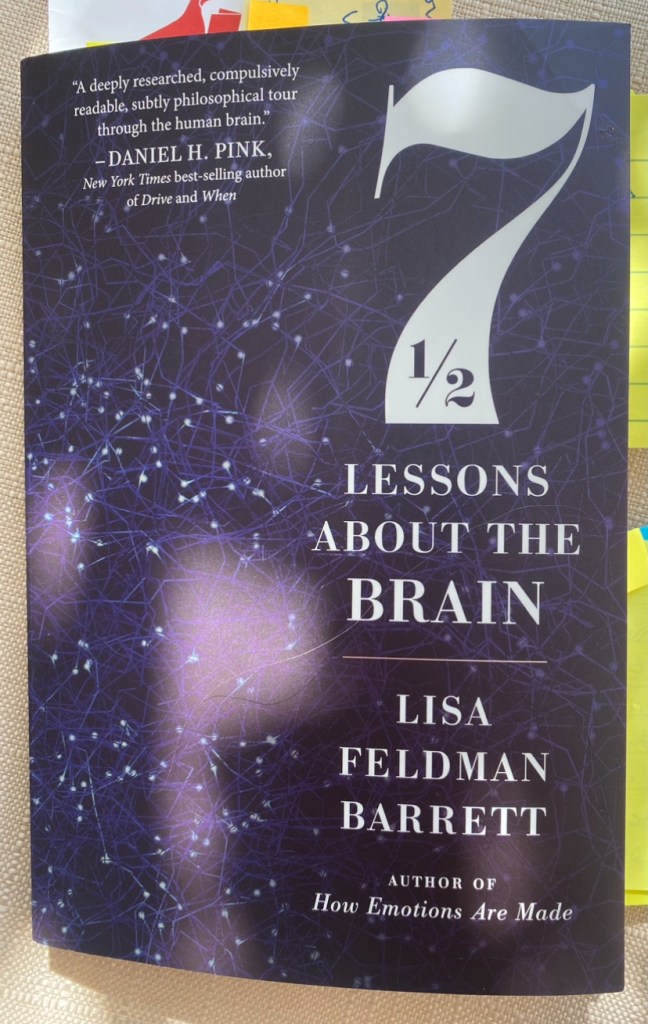
Dr. Lisa Feldman Barrett gives us this quick read that explains all about our brain’s prediction processand how to vastly improve it.

Architects of our Experiences – Part 2

Are you fascinated by this new concept where we can actually become “architects of our emotions and experiences”? This new approach is much more “hands on” when it comes to navigating life and sets us up for greater success to meet its ever-changing challenges and opportunities. 

This is the 2nd in a three part series on becoming skillful architects of our experiences. Today we are going to learn about a multi-purpose diagnostic tool we can put into our architectural briefcase.  But before we dive into learning what this dynamic tool is and how to use it, let’s do a quick review of the basic foundational tool from part 1 — our body budget.

In my last post, I shared how our body budget significantly impacts how we experience life. When we are well resourced, things go more smoothly for us. When we are running on empty, we create a lot of emotional turbulence. Surely, this was both eye-opening and pretty obvious.

When we are getting consistent deep sleep, eating nutritious food, staying hydrated and getting regular exercise, our brains determine that we are “fuel efficient”. We have the necessary internal resources to meet the moments in our lives with clear heads and the ability to be emotionally balanced. All we really need to do is pay attention to our brains and bodies just like we do the battery charges and wifi connections on our phones.

Author Ryan Holiday recently shared the HALT acronym to help us remember that our first line of defense when it comes to dealing with emotional turbulence is to assess our human “check engine” lights. 

HALT stands for Hungry, Angry, Lonely or Tired. HALT is a simple and very effective tool to remind us that these four common conditions can derail our best efforts to stay in alignment with our values. When we are feeling emotional turbulence, a quick check in on our body budget can prevent us from getting in our own way.

For the record, this is also a great tool to share with children. When kids are acting out, we can pause to think about when they last ate, if they had a disrupted night of sleep or skipped a nap, or if they have been buzzing from one activity to the next without some quiet time or a brain break. Before we overreact to an unacceptable behavior, we can think about their “body budget” first and foremost. When we teach our kids to check in with themselves, we are equipping them with a foundational tool they can use for a lifetime. 

Now let’s add a versatile new tool to our architectural briefcase.  The multi-purpose tool that is a “must have” for skillful architects of experience is emotional granularity.  This term may seem a little foreign but it’s easier to grasp if we think of emotional granularity the same way we think about the fine-grained distinctions in wood, textiles and even sandpaper.

The reason that emotional granularity has such a strong impact on our emotional experiences is because the true essence of our experience is in the details. That’s right, details matter. 

We mistakenly believe that there is uniformity in common basic emotion such as happy, sad or mad. Nothing could be further from the truth — variation is the norm; not uniformity. 

Bear with me here for a minute — and think about your own varied experiences of mad. You can be mad at yourself, mad at a circumstance, mad at another. You might be really mad about running late one day and not care at all the next. Sometimes your body budget is in deficit and you get mad a lot during the course of a day; other days, you are well resourced and unflappable. Do I see your heading nodding in agreement that “variation is the norm?”

If we limit ourselves to the three most commonly identified emotions – happy, sad or mad, we also limit our deeper understanding of what we are really feeling in the moment. When we can tease apart the details that accompany happy, sad or mad — that is when we get to the heart of the matter. This is the gift of emotional granularity – the finely tailored emotions that best reveal the heart of our experience.

Emotional granularity is an exploratory multi-purpose tool. It’s actually easier to use than we might think. We just need more practice and a bigger emotional vocabulary.  

Start with why. Why are you mad? 

Is it because you are frustrated, anxious and annoyed? Now, dig a little deeper to get to the fine grains of greater detail. Are you frustrated that something you are attempting to accomplish is taking longer than expected? Are you anxious because it is the third time this week you tried to finish a project? Are you annoyed that others aren’t respecting your need for uninterrupted time to focus? 

Emotional granularity brings out the relevant details — in the accompanying emotions and the backstory of each.

The more finely-grained distinctions we can make, the more accurately we can parse what matters most, or recognize that there are multiple layers to one core issue. We may even be surprised to discover that we have competing emotions – and both are true. We can be happy for someone else and feel sad for ourselves; that’s paradox.

Emotional granularity moves us in the right direction for self awareness and effective problem solving with more clarity than we could ever access if we stop at “mad”. 

The reason emotional granularity is a dynamic multi-purpose tool is that it helps us accurately express our feelings and experiences — AND it makes it easier for others to support us in constructive, beneficial ways.

We often hear that emotional intelligence is a key component for building a good life and meaningful relationships. Emotional intelligence is defined as our capacity to be aware of and control our emotions; and to handle interpersonal relationships with empathy and non-judgment.  

Dr. Lisa Feldman Barrett emphasizes that the most invaluable asset for cultivating emotional intelligence is emotional granularity. The more finely tuned we can get about our emotions and experiences, the easier it is to regulate them and reframe our experiences. 

Not only does this support our efforts in achieving better emotional clarity and regulation in real time, it actually updates our internal database for the future. Remember that our brains are prediction machines. When we are able to reframe and reorganize our internal database by being more skillful with our emotional responses, we will vastly improve the accuracy of our future predictions. 

Yet another reason why emotional granularity is a dynamic, multi-purpose tool. It is a fast-tracked process of freeing us from old emotional triggers and outdated information from decades old past experiences. The better we get at using emotional granularity and becoming skillful architects of our experiences, the more traction we will have in building better habits and mature response patterns.

Emotional granularity helps us to level up. We get to know ourselves better through greater self-awareness. We become more skillful at unpacking multiple emotions that are interlaced with our current experiences. With this improved awareness and clarity, we don’t drain our body budget so quickly. We have greater access to self-compassion which turns on our parasympathetic nervous system which also positively supports our body budget. We get better at emotional regulation and it becomes easier to clearly express to others what we are experiencing and what we actually need in the moment. Not to mention the added bonus of automatically updating our brain’s complex interactive systems with invaluable, current and relevant data for future reference.

Have some fun with this new tool – explore the many emotions that you feel whenever you get that initial hit of a core emotion like mad, sad or happy. Become curious when you are with others when they are sad, mad or happy and ask questions to better understand all that they are feeling in the moment. Compare your findings with your friends and family. This is how we help ourselves and others super boost their emotional intelligence and become more skillful architects of their own experiences.

Quote from Dr. Lisa Feldman Barrett, author of How Emotions Are Made

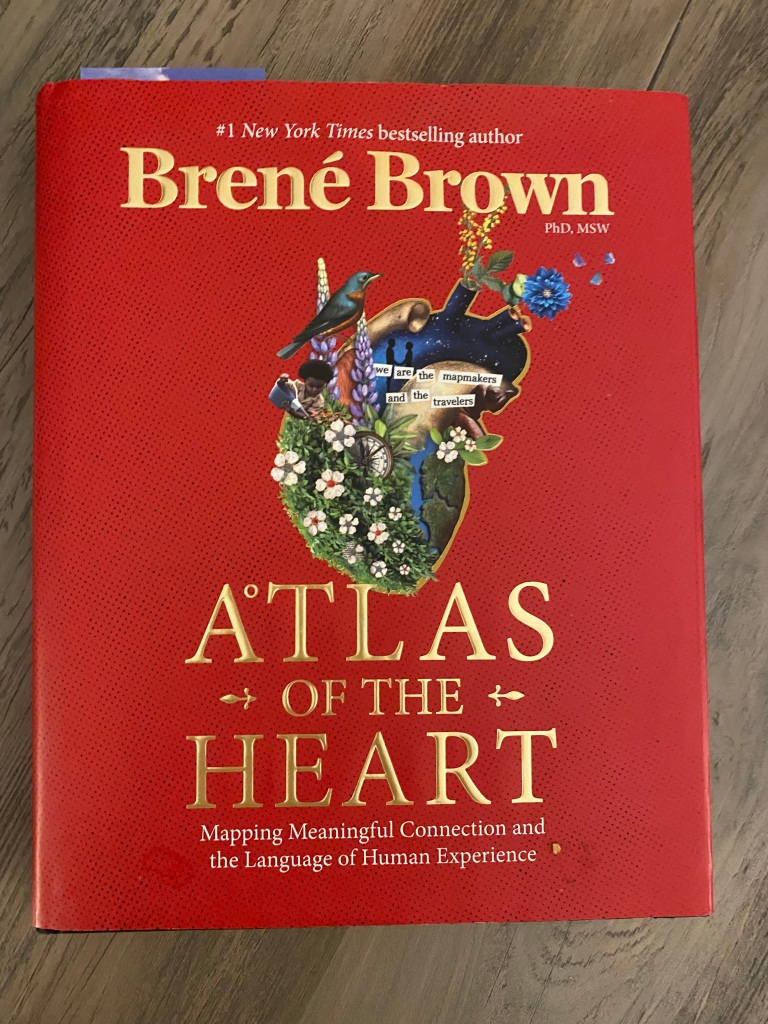
To help you expand your emotional vocabulary, read Brene Brown’s most recent book, Atlas of the Heart. Brene offers relatable stories and detailed definitions for 87 of our common emotions and experiences. Better yet, she has organized this invaluable resource by highlighting how we typically feel under certain circumstances. The chapters invite us step into “the places we go when….” When we compare, feel uncertain, when we are hurting or fall short.

Check out Dr. Marc Brackett’s newest app How We Feel. Dr. Brackett is the Director of the Yale Center for Emotional Intelligence and author of Permission to Feel. There are over 200 emotions to explore in the How We Feel app!

Click this link to go to the website https://howwefeel.org and learn more about the app and how you can use it to help you build your emotional awareness and vocabulary in real time.

This quick, relatable read will stimulate your appetite to learn more about becoming an Architect of Your Experiences. Awesome insights into how our brains and bodies actually work.
If you are fascinated by neuroscience and love a deep dive into science and psychology, then treat yourself to How Emotions are Made. This book and Brene Brown’s Atlas of the Heart are reference books for our home libraries – the kind we will return to again and again!

Life Lessons from the Sea

My teenaged daughter and I were aboard a dive boat anchored in the Caribbean blue waters of St. Thomas. As we double checked each other’s scuba gear, our fellow divers were clamoring to jump overboard, creating a frenzy of commotion and noisy, disruptive entry splashes we’d been advised not to make. Two compelling thoughts raced through my daughter’s head and she urged me to hurry up. A fear of missing out by not being first — and a concern about not being part of the bigger group — had snagged her attention.

One of our seasoned dive masters was assessing the chaos that had unnecessarily disturbed the calm beauty of this idyllic setting with chagrined disappointment. As I caught his eye, I turned to my daughter and said “Just wait. It will be more than worth it.”

Some divers descended to the ocean floor quickly while others bobbed on the surface, fighting small waves and themselves, making it harder to deflate their lungs and their buoyancy control vests so that they could calmly drift down by the anchor line. Too many people making too many unskillful moves causing silt and debris to cloud the once-clear ocean waters. 

Paired diving buddies got separated, visibility was obscured, and the dive masters were diverted from their preferred role of ocean exploring tour guides.  Now they had to pivot to become search and recovery teams for disoriented divers and missing gear.

My daughter and I waited a bit longer and then we quietly entered the crystal blue waters just as we had been instructed. As we ever so slowly descended into the ocean, we watched the silt do the same, sinking slowly back to the sandy bottom. We marveled at the rays of sunlight dancing through the now clearer waters illuminating the rich diversity of the coral reef and extensive array of colors in the parrotfish, spotted butterfly, tangs and angelfish. 

By this time, the other divers were nearly out of sight, just a fading trail of fins and bubbles off in the distance. Being patient paid off. My daughter and I explored in leisurely, pure delight as the wonders of this mystical undersea world poked their heads back out and returned to their daily routines now that the coast was clear.

We took our time, investigating nooks and crannies, paying attention to the tiniest of sea creatures and intricate textures of coral reef vegetation.  Our dive guide coaxed small neon violet and lemon yellow Royal Gramma fish from tube-shaped sponge coral.  I could hear my daughter giggling through her regulator.

Our dive guide taught us how to navigate through the reef using our lungs instead of relying solely on our compressed air tanks. We learned to gently rise and descend by using our own inhales and exhales, skillfully navigating without disturbing sand or sea life.  We even had a hovering contest to see who could get closest to the ocean floor without actually touching it.

When we returned to the dive boat, my daughter and I discovered that we actually had a longer dive than the rest and surprisingly, we also had the most air remaining in our tanks. The dive master explained to the group that we conserved the compressed air in our tanks by controlling our own breathing.  He made a point of telling them that their overly excited and sometimes frantic reactions at the start of their dive predisposed them to erratic breathing; so they relied more heavily on their air tanks than their lungs. 

Ironically, we were the last to enter the water, yet we had a longer dive time. However, it wasn’t just more time that made our dive experience so rich – it was being calm and fully present that drew us into discovery and expanded exploration. 

When all the divers were safely back on the boat, the dive masters invited everyone to share their experience and use a laminated chart to identify the colorful fish they had seen. As we listened, my daughter had a big realization. By hanging back and being patient, we hadn’t missed out at all. In fact, we had one of our most incredible diving experiences after all the dust had settled. She gave me a sly little wink.  There were so many life lessons embedded in this one magical, awe-filled deep sea dive.  

The first lesson that really stands out is how hard it is put into practice the actual training and skills in the “heat of the moment”. All the divers on that boat had to be open water certified in order to even participate in this excursion. They had passed both a written and under water test to earn their dive card. In addition, the charismatic dive masters reviewed in great detail the proper protocol for each dive before anyone entered the water. Nonetheless, all bets were off when the anchor was tossed overboard. Excitement, anxiousness and the strong desire to be first superseded the training and instructions.

This very same experience happens to most of us when we are put to the real life test of using better emotional regulation and relationship skills in the “heat of the moment”. It’s one thing to learn about new tools and quite another to remember to use them.  Ironic isn’t it? We have a strong desire to employ better tools and skills when we take a dive into those murky waters of emotional disregulation, disagreement or overwhelm but we can override our best intentions in a heartbeat.

The metaphorical lesson learned from the dive boat experience is that losing control and forgetting our skills can actually create more confusion and muddy up any chance of clearly understanding what is going on. It can also make things more challenging for others than they need to be as we cause unnecessary and distracting disturbances.

The neuroscience lesson is that when we get excited, anxious or overly stimulated, our brains decide we need energy to match the moment. We got a shot of cortisol in anticipation of what is about to go down. Our hearts race, our muscles twitch and before we know it, we are jumping into the ocean or a confrontation, completely disregarding both our knowledge and our intention to use it.

When a diver prepares to enter the water, he or she fills their buoyancy vest with a few puffs of air from their compression tank, so they can initially stay afloat and get their bearings before beginning a descent. 

The metaphorical lesson from this skill is that taking in a deep breath and then slowly exhaling is the equivalent of filling ourselves with the buoyancy we need to be present in the moment, and to get our bearings before we respond or engage.

The neuroscience lesson is that taking that deep breath is how we check in with our body’s inner workings; easing it from autopilot and the default mode to our own agency and self regulation. That simple calming breath slows our heart rate and clears ambiguous messaging in our brains so that we have more clarity.

Just like the divers on that boat, we are all at different levels of awareness and skills when it comes to putting better relationship tools and emotional self regulation into practice. 

A few of the divers may have been newly certified while others may have had 10 to 20 dives under their belt. Since each dive is uniquely different, those people had numerous opportunities to practice their skills in varied conditions and environments. Some divers may be quick studies and are able to easily integrate their education and training into their real life experience of a deep sea exploration. They may be able to relax and enjoy the ocean’s currents quite naturally. Others may be a little unsure, feel tense and have some resistance when the current sways them in a different direction. 

The metaphorical lesson is that we need to put our knowledge and tools into practice through real life experiences. The rubber hits the road when we take our training from a predictable indoor swimming pool to the ever-changing eco system of the sea. Practice does not necessarily make perfect, but it vastly improves our confidence in our ability to skillfully use our knowledge and tools in a variety of circumstances and conditions. 

The neuroscience lesson is that we actually create new neural networks in our brains when we begin to use new skills and tools. It is the consistent practice that moves the needle. We can practice in low stakes situations to gain more confidence with setting boundaries, staying calmer, listening to understand, and not getting attached to the outcome. As we become more skillful with these tools, we will feel better resourced to use them effectively in our most valued relationships.

When I was first learning to scuba dive, I always felt safest with a seasoned diver as my dive buddy. Being with others who have more experience and are highly skillful is how we learn through osmosis and real life role plays.  We pay close attention and keenly observe their actions and choices and most importantly, the subsequent outcomes.

Later, when I had earned my certification and my kids wanted to learn to scuba dive, my role shifted from student to teacher. My attention was now on demonstrating and explaining things in a way they would understand. I also felt a strong sense of responsibility, much like we do when we teach our kids to drive a car. Staying calm while exchanging our dive gear on a platform 60 feet deep in a cold quarry was paramount. 

The metaphorical lesson is that we are teaching others, and most especially our kids, how to navigate life and relationships using the skills and tools we’ve honed.  Our own practices, coping skills and experiences influence how and what we teach. We wouldn’t put our kids behind the steering wheel of our SUV and employ the same teaching strategies that we often unconsciously resort to with temper tantrums, whining and confrontation. Parenting guru, Dr. Becky Kennedy, refers to our parental role in teaching life skills and emotional integration as “sturdy leadership.” Sturdy leadership is what a dive master provides. When we are sturdy leaders for our kids and for others, we help them feel safe, find calm and develop skills for emotional regulation and resilience.

The neuroscience lesson is that we co-regulate and co-create with each other. One cool, calm, collected sturdy leader helps others return to their emotional baseline faster. Then with clear heads and more emotional regulation, we can co-create a better situation and outcome. 

Those affable and charismatic dive masters created a sense of camaraderie, fun and curiosity with a group of strangers on a dive boat. They delivered their instructions for each dive with warm smiles, a little humor and attention to detail. Their goal was to keep us safe and set us up for the best experience possible.

Setting a positive intention provides the framework and guardrails for what might be considered two opposing truths: Being and feeling safe – and exploring uncharted territory.

The metaphorical lesson is when we have to engage in a hard conversation, deal with a difficult situation or person, we can also lead with a statement of positive intention. Brene Brown has long taught us that clear is kind; that we can be generous in believing that others are doing the best they can in the moment when we stay in our integrity and set boundaries about acceptable language and behaviors. 

A statement of positive intention is how we enter these challenging conversations. We state clearly and genuinely that we care deeply about a person and our relationship with them. It is our “why” for a desire to resolve our differences or a misunderstanding. A statement of positive intention can diffuse the tension and resistance that often prevents us from having these hard conversations. We offer kindness, compassion and respect – the ingredients to feel safe enough to be vulnerable and truthful. Reframe these hard conversations as a “search and recovery” opportunity.

The neuroscience lesson is that we often get in our own way when it comes to conflict resolution because of the stories we have told ourselves to make sense of things that happened in the past. Our brains are prediction machines relying on a historical database. In our efforts to protect ourselves from being hurt or disappointed yet again, we resist opening up to gaining helpful context, nuance and perspective. When we are open to “listening to gain understanding”, we are in essence installing an “update” to our data base. Taking in new information with context we may not have been aware is how we free ourselves from craggy old beliefs and narratives that snag and entangle us.

When my teenaged children were learning to scuba dive, I had a lot of friends who chided me for letting them do something so risky. At the time, I shared with those concerned friends that we also teach our kids to drive, which is equally risky and something we all do nearly every day. Kids take driver’s ed, they study and pass exams to get a learner’s permit and we parents take them out to practice in parking lots and less traveled rural roads. We give them the tools and the practice they need to earn that driver’s license and we celebrate the milestone of turning over the car keys and letting them venture out on their first solo drive. 

How remarkable is it then that we really don’t give much serious contemplation to the emotional and relational skills we need the most and that we will use every single day for the rest of our lives?

We need sturdy leaders to teach us how to self-regulate, to learn from our internal dashboard of emotions and experiences, to use self-awareness, healthy coping skills and relationship tools to navigate all parts of life.

Today, we are fortunate to have incredible new science-based insights and knowledge about the importance of emotional integration, the inter-connectedness of our brain and body systems, and a plethora of resources to support better ways of showing up for ourselves and others.

Find the “dive masters” that are the sturdy leaders that resonate with you. Study and learn from them.  Acquire some new and improved relationship skills and play around with them. Start with low stakes situations to build confidence. 

Find some seasoned “dive buddies” to help you hone your ability to use more effective tools. Friends, family members and mentors can become these dive buddies for you. Seek their wisdom, ask questions and ask for help. Swap stories and experiences to deepen your understanding.

Don’t forget to put all that education and study hours into actual practice. Use that calming breath to fill your life vest with some air, get your bearings and then enter an interaction grounded and calm. Remember to use the new skills you are learning. Put them to the test with some patience and compassion for yourself and others.

After each new “dive experience”, take some time to reflect on how it went. How did you feel and what did you learn? Were you able to listen to understand, validate someone else’s experience or perspective, find some common ground? Did you feel more emotionally balanced and recognize that this helped others calm down faster?  Taking the time to do a thoughtful de-briefing reinforces your learning and hones your new skills.

Imagine all the positive changes that are sure to come when we collectively begin to acquire and use better emotional and relationship skills. These new tools and skills will be transferrable to all aspects of our life; fewer self-made obstacles and less complicated relationship entanglements.

After all, look how many of us can competently drive a variety of vehicles on a busy highway or skillfully navigate a crowded parking lot. 

We can teach each other complex navigational skills.

Healing Cycles of Trauma with Mariel Buque — if you find yourself telling others they are too sensitive or overreacting, then you will find this episode so insightful https://podcasts.apple.com/us/podcast/being-well-with-forrest-hanson-and-dr-rick-hanson/id1120885936?i=1000640891293

One of the Best Parenting Resources for our time — Dr. Becky Kennedy. Check her out on Instagram and her YouTube Ted Talk

Check out this HubermanLab podcast episode featuring Adam Grant discussing his newest book Hidden Potential. How often do we limit our own potential and that of others without even being aware? https://podcasts.apple.com/us/podcast/huberman-lab/id1545953110?i=1000636628726
Midlife is a Chrysalis, not a Crisis: Life Gets Better with Age. This dynamic conversation with Chip Conley will have a big impact on anyone who is reassessing what they want out of a new chapter of their life. https://podcasts.apple.com/us/podcast/the-rich-roll-podcast/id582272991?i=1000641285807

Daily Gummies of Wisdom – Year End Insights

For those of you who follow my blog regularly, you may recall that I created a new feature during 2023 — occasional blog posts that featured a short collection of my Daily Gummies of Wisdom — with some expanded thoughts and reflections.

My Daily Gummies are nourishing food for thought to jumpstart your day and are intended as meaningful supplement for emotional health, self-awareness and self discovery. I launched the Daily Gummies of Wisdom email program in the spring of this year with the hope that the insight I shared might really resonate with every day life situations we all encounter.  

The biggest surprise for me personally was hearing back from so many people all across the country who found the gummies to be worthwhile, thought-provoking, motivating and inspirational. Sometimes the Daily Gummy was printed and stuck on the refrigerator for the family to see; some were forwarded to a friend dealing with the very issue that the gummy addressed; some were incorporated into sermons, support group discussions or a counseling session. A few people have shared with me that reading the Daily Gummy is now an integral part of their regular morning routine. I was deeply touched and overjoyed by the stories I’ve heard about the impacts of my Daily Gummies of Wisdom. What a gift for me — to be learning from others how they digested, metabolized and incorporated the insights into their own experiences. 

What I am learning is that real life examples do a lot to help us integrate better skills and tools in our daily lives. What could be more beneficial than hearing a true story about showing up differently changed an old relationship dynamic, solved a parenting problem, empowered others to become more true to themselves? That’s what I will be sharing more of in 2024 — the exciting changes that occur when personal growth and self discovery are visibly in action in our daily lives.

To jumpstart 2024, here is a recent Daily Gummy of Wisdom and the backstory that inspired it:

This gummy about our personal power was shared on December 11, 2023. It was inspired by two fascinating podcast conversations that unpacked “power” in a whole new way.  We hear a lot about “power” and we often have a negative association with it, such as power over, strong arming another or “disempowering” someone.

But what if we reframed it and saw power as our engine of change; how we shift from being stuck to making improvements?

The first podcast conversation that reframed my thinking about power was with Esther Perel, the renowned couples therapist and best selling author. Esther is such a compassionate. empathic and skillful couples counselor. She has a bedside manner that would be the envy of any medical professional. She possesses a rare, surgical precision to extract a couple’s key issue and open them up to seeing the deeper, loving relationship that is possible for them. Her ability to pull this out without inflicting more pain while simultaneously guiding a couple to healing, healthy connection is astounding. In a single couples session, she can remove a long-standing impediment and shift a couple from fighting WITH each other to fighting together FOR their partnership. 

Esther offers a unique perspective on power by reframing a common relationship power dynamic – the kind where one partner is strongly supported in pursuing their goals and the other partner makes a lot of sacrifice to accommodate them. Esther reminds the “accommodator” that he or she actually has tremendous power in the relationship.  If the “accommodator” stopped offering support, picking up the slack or doing more to keep the home life balanced, the other person would likely struggle to meet their goals or pursue their dreams. 

This reframing shifts the power dynamic perspective for both partners. Suddenly the accommodator clearly sees his or her own value, impact and contributions in a meaningful light. And the one who is the benefactor of all these accommodations gains a healthy awareness of all that is being offered on a daily basis to pursue a long term goal.  Esther gives the accommodator the gift of seeing his or her “agency” and the benefactor the gift of “gratitude” for the other’s contributions and sacrifices. 

Charisse Cooke, author and attachment-based psychotherapist, recently offered this tool for accommodators who are growing resentful: “match the behavior”. If you are hyper-functioning, overdoing and overextending but not getting anything in return, dial back on the energy, effort and contributions you are making to match the behavior and responses of your partner. This is a great way to correct an imbalance in the relationship dynamic.

We can restore a healthy balance in the “give and take” of our relationships when we recognize how we often give away our power and then feel unappreciated and resentful. 

I learned even more about power from a recent Huberman Lab podcast featuring Robert Greene, author of six international bestsellers. 

Robert Greene believes there is too much negative focus given to power, when in fact it has remarkable positive benefits. He shares that exercising self control is a SuperPower – especially when we are able to skillfully regulate our emotions and respond to life with calmness, clarity and objectivity. 

We give away our power unintentionally when we have knee jerk emotional reactions. We are well aware of this — often instantly regretting that we displayed such an immature response in front of our kids, friends, family or publicly. In a split second, we acted out of character and embarrassed ourselves. 

Think about a time when you witnessed an adult having a childlike meltdown and you lost a little respect for that person or it tarnished the image you once held for that person. This is how we diminish our power. 

Arthur Brooks, happiness expert and another great author, recently revealed that our grandmothers gave us really good advice when they told us to “count to 10” when we were little and emotionally out of control. But now, we have science-based evidence that we really need to count to 30 – because that is how long it takes to move us from the limbic system in our brains to the pre-frontal cortex. In other words, the limbic system is where the strong emotional reactions come from — and using a 30 second pause moves us into our super-power of self-control and emotional regulation (the executive functions found in our pre-frontal cortex.)

Robert Greene urges us to not give away our personal power, but rather to own it as a super-power. Emotional self-control puts us in the driver’s seat and facilitates us showing up in life with our character, integrity and values intact. We actually have greater negotiation and strategy skills at our disposable when we show up cool, calm and collected.

FIND THE HUBERMAN LAB PODCAST on your favorite platform, including YouTube, and scroll through the episodes for the latest science on a topic that interests you.
FIND ESTHER PEREL’S PODCAST on your favorite platform — and listen in on counseling sessions to gain new insights on relationships