Corks Rising

When I first started blogging about personal growth 8 years ago, I had a glass jar on my kitchen windowsill with a cork bobbing in water. It was my touchstone to remind myself that each of us plays an important role in lifting each other’s cork. We need help to stay afloat.

This morning, I read something in Hidden Potential by Adam Grant, that transported me back to that moment in time. It felt surreal and spine-tingling to be in two places at once. I was at the very beginning of my self discovery journey placing that cork in the jar –AND — I was also fully present in my apartment taking stock of just how far I have truly come on that personal growth journey. A smile stretched across my face as I took stock of how my own cork has risen over 8 years — and most importantly, how so many others’ corks have also risen.

At the onset of my personal growth journey, I felt alone in the work – one cork in a small glass jar. Today the massive ocean is full of corks and I am merely one of many. I could not be happier with the company I am keeping.

For over 20 years, Brene Brown has been planting seeds of the very work we are deeply steeped in today. She braved the wilderness back then, schlepping her first book from the trunk of her car and mustering courage to give a Ted Talk on shame and vulnerability. She did not have a crystal ball to guide her — she just followed her heart and her calling, blazing a path and planting seeds.

There is a Greek proverb that reminds us that wise men plant seeds of trees, the shade of which they will never sit under, bubbled up into my consciousness.

Brene Brown planted the seeds of human connection with an emphasis on vulnerability, the importance of our emotions, and the necessary healing work of addressing old generational patterns — and those seeds took root.

It has taken nearly two decades for the seeds to grow into the full awareness that we got a lot of things wrong about humanity, how the brain and body really work, and what is truly possible for our evolution on so many fronts.

I sat under the shade of the tree that Brene planted just yesterday. I listened to Scott Galloway and Rich Roll openly discuss vulnerability on Rich’s podcast. It was visceral to experience this refreshingly deep and honest conversation with two men in their fifties get real about their emotions and what they want for their sons and daughters.

Even more importantly, is the education and messaging that Rich Roll and Scott Galloway are collaborating on — the need for us all to take very seriously the crisis of loneliness, depression, social isolation and lack of human connection that is paralyzing our younger generations.

When I began my personal growth journey, I read Dr. Bruce Perry’s compelling book, Born for Love. In that book, he was sounding the alarm for our growing empathy poverty, but his voice was drowned out as our collective attention turned to the novelty of social media. We blatantly ignored the warning and gleefully plugged into social media and our devices, so certain that we’d find the connection we craved through technology.

Today, Jonathan Haidt draws a through line from the early 2010’s to today and holds up the reality of our human condition for us to see clearly. Our younger generations need to be unplugged and reconnected to reality. In his book, the Anxious Generation, he is carrying forward the message that Dr. Bruce Perry warned us of in Born for Love. Our growing lack of empathy, our self-imposed social isolation and addiction to devices, has created an epidemic of AI – artificial intimacy. It is Esther Perel who coined that term – Artificial Intimacy. She is the dynamic psychotherapist who fearlessly weeds out conflict between couples to help them discover that plot of ground begging for seeds of love, intimacy and connection to be planted.

We can no longer blatantly ignore what is hidden in plain sight. We must focus our attention, resources and real life support on our children.

Ask anyone who has ever hit rock bottom, and they will tell you that it was in their lowest place that they faced the truth that in order for meaningful change to happen, they had to dig deeper – and do the hard work of rebuilding.

This is where we all are today – collectively at rock bottom with an opportunity to nurture the seeds that have been planted over the past twenty years in psychology, behavioral science, neuroscience and modern medicine.

It is my strong belief that we have reached this breaking point because humans are hard-wired for connection and we do not thrive in continual chaos and uncertainty. If this dilemma were happening in the animal kingdom, our hearts would be breaking open as we watched adult animals leave their young unattended without teaching them any life skills. Their basic instincts would atrophy over time.

If you are familiar with epigenetics, then you may realize that for generations we have passed down unprocessed trauma and overloads of stress and anxiety. Dysfunctional generational patterns are the emotional inheritance that has never been unpacked. Old parenting models failed to install one of the key components of the human operating system — emotional intelligence. This combination is the one-two punch that delivers a compelling warning to us. Unpack the old emotional baggage, heal old traumas. The time has come. Our kids are on overload and they are drowning in cognitive dissonance.

The reality is that we have made this work of unpacking emotional baggage, healing old traumas and installing emotional intelligence so much harder than it needs to be. Psychology has shifted dramatically in the past decade with a focus on somatic healing and understanding how our brains actually work. Neuroscience fires up this better approach by highlighting the neuroplasticity of our brains and how we can re-wire healthier neural pathways in a relatively short amount of time.

As I wrote about in my last blog post, the creative coalescing of so many fields and modalities is helping us fast-track the triage that we need — and can no longer ignore. This creative coalescing is the little forest that has grown from the many seeds that have been planted over the past twenty years.

As many of you know, I am impassioned about teaching our kids all about their innate and integral emotional intelligence. I have a “Marie Kondo” approach to cleaning out generational baggage – let’s stop dragging it around, unpacked and continually weighing us down. Let’s travel more lightly through life and make new discoveries.

By the way, have you noticed how mainstreamed words like vulnerability, mindfulness, self-awareness and emotional intelligence have become? Little seeds have been planted over and over again by people like Brene Brown, Dr. Marc Brackett, Andrew Huberman, Kristin Neff, Dr. Lisa Feldman Barrett, Arthur C. Brooks, Dr. Becky Kennedy, Dr. Peter Attia — and a host of others. They are the corks that jumped into the sea of change and lifted us all up.

So many resources have cross-pollinated that little forest that began with a few seeds several decades ago. We are at the tipping point of a huge, positive human evolution. Just the other day, author Arthur C. Brooks told Ryan Holiday that we now have the neuroscience to prove all the wisdom of the ancient philosophers. His excitement and enthusiasm was contagious.

Here’s what I know — Brene Brown did not have a crystal ball twenty-five years ago, but she felt a nudge so strong she could not resist it. She poured herself into shame and vulnerability and stayed the course because it mattered. She networked the hell out of her platforms during Covid, lifting others up when we were most receptive to learning and discovering all kinds of new things – the missing parts we didn’t know we needed. Brene was planting seeds of awareness all throughout our dormant period.

I used to think that the law of attraction was mostly like wishful thinking — but through Brene I have learned that the law of attraction is sharing, networking and lifting each other up. That is the momentum that brings the changes and opportunities we want.

Michael O’Brien (@the.mindful.cyclist) was also a recent guest on the Rich Roll podcast. His recovery from a near-death cycling experience was the catalyst for his seminal shift that changed his perspective, mindset and actions. He expressed this profound wisdom:

“Things don’t happen for a reason. Things happen….and we give it meaning.” — Michael O’Brien

I am taking this profound wisdom to heart today. Things have been happening FOR us for nearly two decades and we can give it a transformational new meaning and pivotal new direction.

There has been a big clearing of the weeds that prevented us from seeing what was possible for us. Seeds were planted and cross pollinating was happening. mostly in the background.

The self help space got a little traction with mindfulness about a decade ago. It was a wake up call but we kept hitting the snooze button. We turned to devices and poor coping skills; social media was a siren call we falsely believed would bring us the connection we craved. Our attention became a commodity traded in futures markets.

Unfortunately our devices and social media stole our attention and mindfulness; it amplified our disconnection from real life. Highlight reels and filters gave us a very distorted picture of the beautiful complexity and realities of life.

What it also took from us was the fuel that runs our human engines – the neural energy and connectivity we get from being with each other. There is so much that neuroscience has to teach us about how the human brain and body works – how we jumpstart, co-regulate and scaffold each other. We know more about our incredible brains and how to care for them than we ever did before.

So, taking Michael O’Brien’s wisdom to heart, the meaning we can give to this moment is the discovery that we are better together, that human connectivity is integral to our physical, emotional and mental health, and our longevity.

We have the rare opportunity to lift up our kids out of their malaise with greater knowledge, tools and awareness than we have ever had before. We can have a dramatic, positive impact in short order if we meet this moment quite differently than we ever have before.

Do yourself a favor and click that link to read about Michael’s transformational life experience. Then listen to his deeper conversation with Rich on the Rich Roll Podcast.


Check out this episode of the Rich Roll Podcast with Prof G – Scott Galloway. At about 54 minutes in you will hear the 5 minute deep conversation about vulnerability and emotions. https://podcasts.apple.com/us/podcast/the-rich-roll-podcast/id582272991

Architects of Our Experiences – Part 3

Are you starting to realize just how much control you really do have to shape your life and experiences in remarkably beneficial ways? If you have read my last two blog posts about becoming Architects of our Experiences, you may already be discovering some changes in how you “meet the moments” in your life and in your relationships.

The more we know about how our brains and bodies really work – especially how they impact our wide range of emotions – the easier it is to get a little traction implementing better skills and tools for emotional regulation.

My guess is that now that you have learned a little about “body budget”, you are consciously and even unconsciously doing a little check in from time to time to look at your own “battery life”. You may even be catching yourself when you are “hangry” and choosing to be a little more emotionally in control than you would normally do. Congratulations…you are becoming an architect of your experiences!

It shouldn’t come as a big surprise that a balanced body budget is the foundational key to any self improvement initiative we might have. It’s just that we didn’t know about this connection until recently.

Think about how much harder we make things for ourselves in large part because we simply don’t have the energy or power; how often do we push through or burn the midnight oil? No wonder we get in our own way so often. Our best intentions are not enough to integrate real changes in our emotional regulation, relationship skills or healthy habit initiatives. We need a balanced body budget…..full stop.

This reality is bubbling up everywhere now, most notably in modern medicine, psychology and mental health. Although it is basic common sense, we overlooked this foundational principle for far too long. The intake process at the doctor’s, trainer’s or therapist’s office now includes an assessment of how well we are sleeping, eating, exercising and hydrating. In many cases, we are also asked how we are coping with life and navigating our relationships. It’s become evident that our emotional health can have a major impact on our physical and mental health.

Better intake, expanded assessment of our health and well being = more accurate and effective diagnosis and treatments. As Dr. Andrew Huberman has been promoting since the onset of COVID, there are so many no-cost steps we can proactively take to improve our physical and mental health as well as the overall quality of our lives.

The fundamental foundation for becoming skillful architects of our emotions and experiences is a balanced body budget. Sleep is the bedrock of this foundation.

In my most recent blog post about becoming architects of our experiences, I shared the versatile, multi-purpose tool of emotional granularity. Having this tool at our disposable means that we will become much more agile when it comes to emotional regulation. With a balanced body budget and emotional granularity, we are setting ourselves up for much greater success in all areas of our lives. We will be meeting the moments in our life better resourced than ever before.

Just imagine feeling grounded and clear-minded throughout most of your day. What would it feel like to know that you were not at the mercy of an emotional sandstorm that could blow in at any moment? This is what it means to be an architect of your experiences and emotions. You feel in control, you can more accurately assess a situation and more skillfully deal with it and others.

Emotional granularity is analogous to that intake process in the doctor’s office. If all that we can tell the doctor is that we have a pain in our mid-section, the doctor will probe for more clues. A physician always starts with foundational clues like heart rate, lung capacity and blood pressure. She gets more granular by asking about the level of pain, its frequency, any pattern when it flares. We might also go through a battery of tests for deeper investigation.

We can begin a similar “intake process” when we feel a core emotion like anger. If we are angry, it is just a warning light to get our attention. We need the details to clarify what we are angry about. We need emotional granularity to help us find context clues. Just like that investigation in the doctor’s office, we want to explore so we are treating the right problem.

Can you see the distinction? An unskillful “do-it-yourselfer” might run into a heated situation with a hammer and an accelerated heart rate. A skillful architect does a quick assessment of body budget, then reaches for that versatile multi-purpose tool and calmly assesses what the real problem is. A skillful architect develops a viable plan to solve the right problem with the right tools.

Happiness expert, author Arthur C. Brooks taps into this architectural approach by suggesting that we try “substituting” a better emotion for the one that doesn’t feel so good. Just like we choose the healthier option of an apple for dessert versus the cake, we can choose an emotion that will get us a better outcome. In the book, Build the Life You Want, Arthur even uses architectural language:

“Sometimes you want to replace some of your negative emotions with something that fits and is more constructive, leading you to act the way you want to, not the way you feel.” (excerpted from Chapter 3: Choose a Better Emotion in the book Build the Life You Want)

Ok, so let’s just pause here for a moment and really take in just how empowering it would feel to be able to pull this off a few times each day. Simply by paying attention to body budget and choosing emotions that better align with who we want to be, we would proactively practicing becoming an “architect of our experiences and emotions.”

And now, let’s add just one more component that will dramatically enhance your architectural prowess. Drum roll, please…..

Our brains are prediction machines, not reaction makers. Yet another thing that we got wrong, especially about emotions but also about how we engage with our experiences. Scientists have long believed that brain neurons were dormant until stimulated by something from our outside world. But thanks to major breakthroughs in neuroscience, we now know that this is not the case.

The neurons in our brains are firing constantly, stimulating one another as well as different regions in our complex brain systems. It is this very brain activity that represents the millions of predictions that our brains will make about what we will encounter next — all based on our lifetime of past experience.

This all happens so fast and so automatically that we usually aren’t even aware of it. We might even refer to it as our “unconscious”. The irony is that we can be very conscious of our past experiences –especially when we get emotionally triggered.

Anyone who has ever attempted to free themselves from an old emotional trigger or an overreactive behavioral pattern knows firsthand that it feels like a labyrinth. We even use metaphors in the self help space to talk about how hard this process can be: it’s a journey searching for clues on a jagged, rocky path through the thick entangled forest of our past. The definition of a labyrinth is a complicated, irregular network of passages or paths in which it is difficult to find one’s way. Sounds exactly how we describe self-discovery and behavioral pattern change.
Again, we have made this work so much harder than it has to be – because we misunderstood how our prediction machines work. If we want to vastly improve our predictions, we have to update and upgrade our internal data base. We do this by loading new content; adding richer, nuanced context; and curating a diversity of new experiences.

When we proactively update our inner database — our brains can make predictions that more closely match what we really want our lives to be and feel like and not reruns of unhelpful, old experiences. If we are trapped in the past with old emotional triggers and dizzying rumination loops, it is our brain retrieving old files to make predictions.

Your brain predicts and prepares your actions based on past experiences. Mental distress, anxiety and even old trauma arise from flawed predictions. Of course, these inaccurate predictions don’t feel good or correct in our present moment – they do not accurately fit our current situation. We get caught in a trap of outdated information that produces outdated, ill-fitting, unchecked reactions.

Think about all the ways that we have rather seamlessly updated how we do daily life. We are no longer tethered to land line phones or hanging laundry outdoors on a rope to dry. We aren’t using multi-folded, printed paper maps to navigate from one city to the next. We shop, transfer money, take photos and send emails on our phones all while waiting in a check out line.

We’ve got this — We already know how to update and upgrade our lives – and we have done it rather effortlessly — on the outside.

Now we need to do the same — on the inside.

We simply have to get intentional and proactive about upgrading and updating our internal database for much improved predictions. The bonus is that once we begin to integrate newer, more relevant information and experiences into our brain’s predictive database, we set ourselves up for greater success with each and every subsequent experience and interaction we have.

We begin to operate more fluidly and efficiently from a fresh, current database – not a relic from the past.
We know that our limiting beliefs, outgrown behavioral patterns and childhood social conditioning can be fossilized in our internal database. Because we misunderstood how our brains truly function, we just reinforced that old science too. We simply reinforced the old science by repeating our personal history – over and over again.

We are learning that neurons that fire together, wire together. By getting stuck in the past, we literally were dropping our needle on the same spot and creating a well worn groove for repetitive, familiar predictions. This is what we did with our old vinyl music records back in the day. No wonder those records would skip, slide past the next song or get stuck.

Now we have this groundbreaking neuroscience about how our complex brain circuitry really works. We now know that our brains are prediction machines not reactivity makers – and we are beginning to understand how neuroplasticity helps us to rewire our brains in healthy, optimal new ways. We can actually build new neural networks that operate more seamlessly like streaming music.

Here is an easy example to help us grasp the concept of neuroplasticity — of neurons that fire together wiring together. If we want to break an old habit, we are given all kinds of tips that actually disrupt the related neural pattern: don’t buy the potato chips, take a walk when you get a craving, replace the potato chips with almonds, etc. This is the equivalent of pulling that needle up and off the old groove; that habitual pattern of reaching for the bag of salty chips without much thought. Each time we disrupt the pattern, we tap into our brain’s neuroplasticity and create a fresh, new neural network. As it becomes easier to resist the chips, it is a clear indicator that different neurons are firing and wiring together – making us much more successful at resisting the urge to binge on chips.

For the record, it doesn’t mean that we won’t ever binge on chips in the future. But we will have greater awareness because of the new neural pathway and we might catch ourselves before we consume a whole bag. If we do fall off the wagon and succumb to the whole bag, when we renew our pledge to do better tomorrow, we are starting from a much improved baseline and not square one.

See the difference?

This is precisely what we also want to begin doing with our emotions and experiences. Disrupt the old outdated brain prediction that makes us feel reactive and out of control. Replace it with an emotion and response that feels better and more in line with how we want to show up in life. Create new and improved neural networks that strengthen over time. Toss out the rusty, dusty old files in our internal experience and emotion database – and update them with something fresh, that more closely matches how we want to feel and act, and is much more beneficial for our present moments.

There are two key ways that we can deliberately become proactive in housecleaning and updating our internal database: reframing and adding new concepts.

Reframing is simply getting a fresh perspective on an old familiar situation. Cognitive reframing is a major tool used in psychology for identifying and shifting how events, emotions, beliefs and old narratives are viewed. Reframing also serves to disrupt those well-grooved old stories and ruminative patterns.

When we reframe a situation, we not only get a fresh perspective, we are reorganizing our internal database. Reorganizing an old story or limiting belief, helps our predictive brain to use valuable take-aways from our experiences in more productive ways. This is how we can extract important lessons from our life experiences and learn from them rather than having the same lesson get repeated over and over without any real progress.

The second way to dramatically improve our predictions is by keeping our brains well stocked with new experiences, new concepts, new words and definitions. It turns out that being open-minded, curious and engaged in learning, is the portal for updating our prediction database.

See how we were making our lives, experiences and relationships so much harder than they have to be?

There are very simple things we can be doing on a daily basis to keep our prediction database fresh, updated, repurposed and creative:

  • Read – read a real book; reading from left to right stimulates the brain, engages learning and builds empathy. Read fiction and try a variety of authors and genres. Read non-fiction to engage learning something new and challenging.
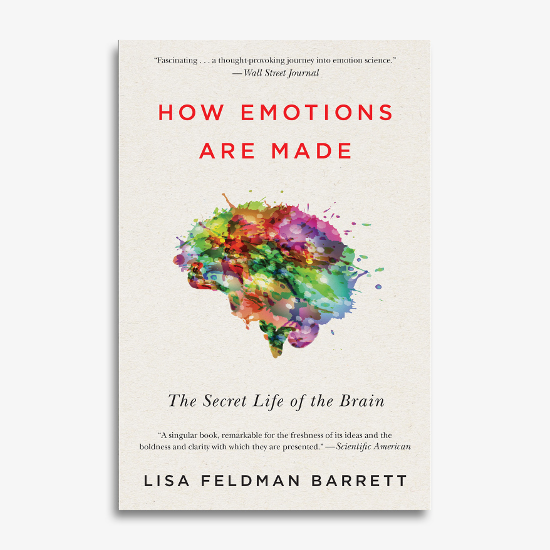
  • Learn new words – words seed your concepts, concepts drive your predictions, predictions regulate your body budget and your body budget determines how you feel. The more finely-grained your vocabulary, the more precisely your brain calibrates your body budget (excerpted from How Emotions are Made by Lisa Feldman Barrett).
  • Watch movies or listen to thought-provoking audio content — this will broaden your perspectives and shake you free from old social conditioning. This is a great way to break out of echo chambers where we simple engrain over and over what we once believed or were taught. Often, we are unaware that we unconsciously do this — stay in our comfort zones and look for confirmation for our opinions and beliefs. Think of this like pouring a little water on a very dry sponge….you are just creating softness and the ability to absorb some new, possibly contradictory, concepts.
  • Be open to paradox — two opposing things can be true at the same time. Begin to notice how paradox shows up in nature, in our families and friendships. What one person finds thrilling, another finds scary (amusement park rides, movies and crazy drivers). Building a repertoire of paradoxical examples, stimulates our brain’s ability to be more creative, relaxed and receptive to contrasts.

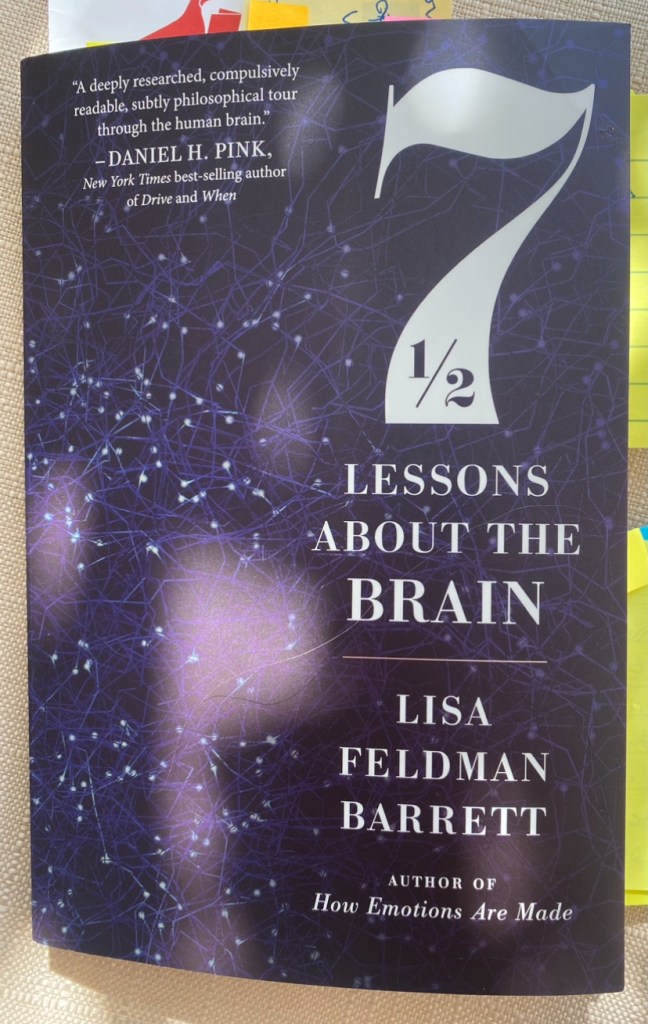
If you can reach back and change how you feel about your past, your brain would predict differently – and you might act differently, and experience the world differently, as a result. Your actions today become your brain’s predictions for tomorrow. and those predictions automatically drive your future actions. (excerpted from 7-1/2 Lessons About the Brain by Dr. Lisa Feldman Barrett)

I hope you are amazed by the new path forward for our emotional intelligence and emotional health. No wonder we have struggled in every sense of the word to live more authentically. We’ve been working so hard to grow, to heal, to understand ourselves and each other – and we’ve been doing it with stale, constrictive, outdated information all while we were attempting to blaze more spacious and engaging new trails.

The springboard for building the life we want and living it with greater fulfillment, is taking care of our brain and body. This is the missing puzzle piece that we have been searching for. Go have some fun implementing these new tools and concepts. Discover the difference it makes today — and how it better prepares you to be flexible, resilient and creative tomorrow.

Check out this resource to get some impactful highlights about your brain’s predictions – and dive into some of the resources suggested to learn more: Predicting Better. org https://predictingbetter.org

Check out this timely episode on the Huberman Lab podcast with Dr. Mark D’Esposito: How to Optimize Cognitive Function & Brain Health https://podcasts.apple.com/us/podcast/huberman-lab/id1545953110?i=1000645842679

Architects of our Experiences – Part 2

Are you fascinated by this new concept where we can actually become “architects of our emotions and experiences”? This new approach is much more “hands on” when it comes to navigating life and sets us up for greater success to meet its ever-changing challenges and opportunities. 

This is the 2nd in a three part series on becoming skillful architects of our experiences. Today we are going to learn about a multi-purpose diagnostic tool we can put into our architectural briefcase.  But before we dive into learning what this dynamic tool is and how to use it, let’s do a quick review of the basic foundational tool from part 1 — our body budget.

In my last post, I shared how our body budget significantly impacts how we experience life. When we are well resourced, things go more smoothly for us. When we are running on empty, we create a lot of emotional turbulence. Surely, this was both eye-opening and pretty obvious.

When we are getting consistent deep sleep, eating nutritious food, staying hydrated and getting regular exercise, our brains determine that we are “fuel efficient”. We have the necessary internal resources to meet the moments in our lives with clear heads and the ability to be emotionally balanced. All we really need to do is pay attention to our brains and bodies just like we do the battery charges and wifi connections on our phones.

Author Ryan Holiday recently shared the HALT acronym to help us remember that our first line of defense when it comes to dealing with emotional turbulence is to assess our human “check engine” lights. 

HALT stands for Hungry, Angry, Lonely or Tired. HALT is a simple and very effective tool to remind us that these four common conditions can derail our best efforts to stay in alignment with our values. When we are feeling emotional turbulence, a quick check in on our body budget can prevent us from getting in our own way.

For the record, this is also a great tool to share with children. When kids are acting out, we can pause to think about when they last ate, if they had a disrupted night of sleep or skipped a nap, or if they have been buzzing from one activity to the next without some quiet time or a brain break. Before we overreact to an unacceptable behavior, we can think about their “body budget” first and foremost. When we teach our kids to check in with themselves, we are equipping them with a foundational tool they can use for a lifetime. 

Now let’s add a versatile new tool to our architectural briefcase.  The multi-purpose tool that is a “must have” for skillful architects of experience is emotional granularity.  This term may seem a little foreign but it’s easier to grasp if we think of emotional granularity the same way we think about the fine-grained distinctions in wood, textiles and even sandpaper.

The reason that emotional granularity has such a strong impact on our emotional experiences is because the true essence of our experience is in the details. That’s right, details matter. 

We mistakenly believe that there is uniformity in common basic emotion such as happy, sad or mad. Nothing could be further from the truth — variation is the norm; not uniformity. 

Bear with me here for a minute — and think about your own varied experiences of mad. You can be mad at yourself, mad at a circumstance, mad at another. You might be really mad about running late one day and not care at all the next. Sometimes your body budget is in deficit and you get mad a lot during the course of a day; other days, you are well resourced and unflappable. Do I see your heading nodding in agreement that “variation is the norm?”

If we limit ourselves to the three most commonly identified emotions – happy, sad or mad, we also limit our deeper understanding of what we are really feeling in the moment. When we can tease apart the details that accompany happy, sad or mad — that is when we get to the heart of the matter. This is the gift of emotional granularity – the finely tailored emotions that best reveal the heart of our experience.

Emotional granularity is an exploratory multi-purpose tool. It’s actually easier to use than we might think. We just need more practice and a bigger emotional vocabulary.  

Start with why. Why are you mad? 

Is it because you are frustrated, anxious and annoyed? Now, dig a little deeper to get to the fine grains of greater detail. Are you frustrated that something you are attempting to accomplish is taking longer than expected? Are you anxious because it is the third time this week you tried to finish a project? Are you annoyed that others aren’t respecting your need for uninterrupted time to focus? 

Emotional granularity brings out the relevant details — in the accompanying emotions and the backstory of each.

The more finely-grained distinctions we can make, the more accurately we can parse what matters most, or recognize that there are multiple layers to one core issue. We may even be surprised to discover that we have competing emotions – and both are true. We can be happy for someone else and feel sad for ourselves; that’s paradox.

Emotional granularity moves us in the right direction for self awareness and effective problem solving with more clarity than we could ever access if we stop at “mad”. 

The reason emotional granularity is a dynamic multi-purpose tool is that it helps us accurately express our feelings and experiences — AND it makes it easier for others to support us in constructive, beneficial ways.

We often hear that emotional intelligence is a key component for building a good life and meaningful relationships. Emotional intelligence is defined as our capacity to be aware of and control our emotions; and to handle interpersonal relationships with empathy and non-judgment.  

Dr. Lisa Feldman Barrett emphasizes that the most invaluable asset for cultivating emotional intelligence is emotional granularity. The more finely tuned we can get about our emotions and experiences, the easier it is to regulate them and reframe our experiences. 

Not only does this support our efforts in achieving better emotional clarity and regulation in real time, it actually updates our internal database for the future. Remember that our brains are prediction machines. When we are able to reframe and reorganize our internal database by being more skillful with our emotional responses, we will vastly improve the accuracy of our future predictions. 

Yet another reason why emotional granularity is a dynamic, multi-purpose tool. It is a fast-tracked process of freeing us from old emotional triggers and outdated information from decades old past experiences. The better we get at using emotional granularity and becoming skillful architects of our experiences, the more traction we will have in building better habits and mature response patterns.

Emotional granularity helps us to level up. We get to know ourselves better through greater self-awareness. We become more skillful at unpacking multiple emotions that are interlaced with our current experiences. With this improved awareness and clarity, we don’t drain our body budget so quickly. We have greater access to self-compassion which turns on our parasympathetic nervous system which also positively supports our body budget. We get better at emotional regulation and it becomes easier to clearly express to others what we are experiencing and what we actually need in the moment. Not to mention the added bonus of automatically updating our brain’s complex interactive systems with invaluable, current and relevant data for future reference.

Have some fun with this new tool – explore the many emotions that you feel whenever you get that initial hit of a core emotion like mad, sad or happy. Become curious when you are with others when they are sad, mad or happy and ask questions to better understand all that they are feeling in the moment. Compare your findings with your friends and family. This is how we help ourselves and others super boost their emotional intelligence and become more skillful architects of their own experiences.

Quote from Dr. Lisa Feldman Barrett, author of How Emotions Are Made

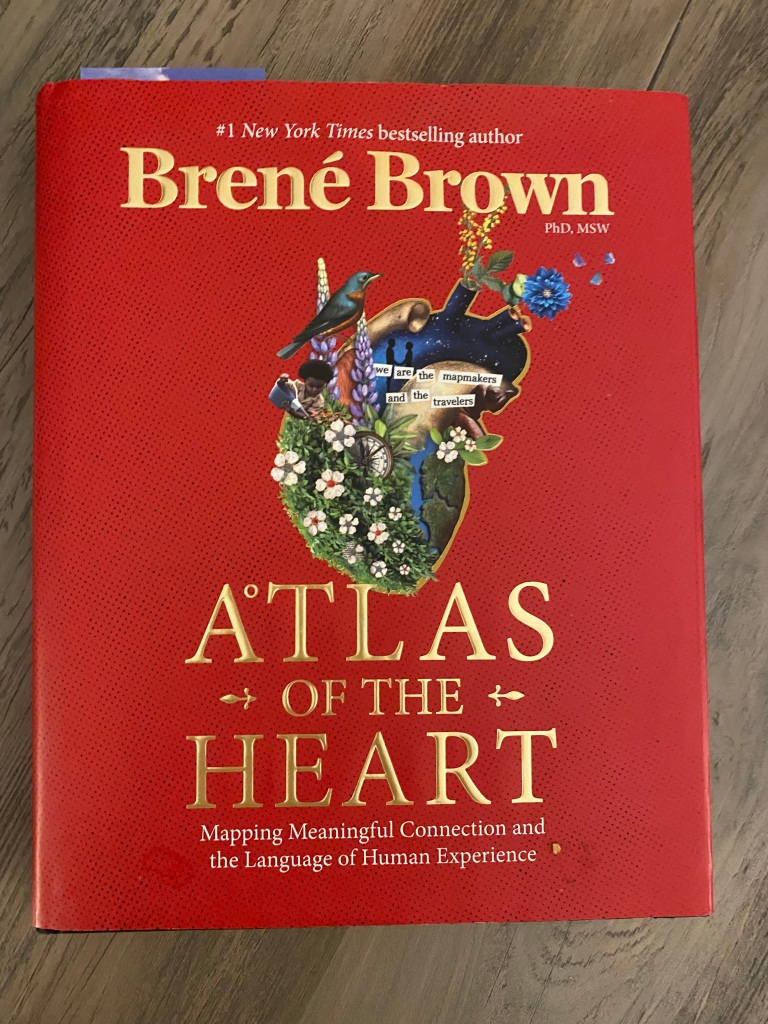
To help you expand your emotional vocabulary, read Brene Brown’s most recent book, Atlas of the Heart. Brene offers relatable stories and detailed definitions for 87 of our common emotions and experiences. Better yet, she has organized this invaluable resource by highlighting how we typically feel under certain circumstances. The chapters invite us step into “the places we go when….” When we compare, feel uncertain, when we are hurting or fall short.

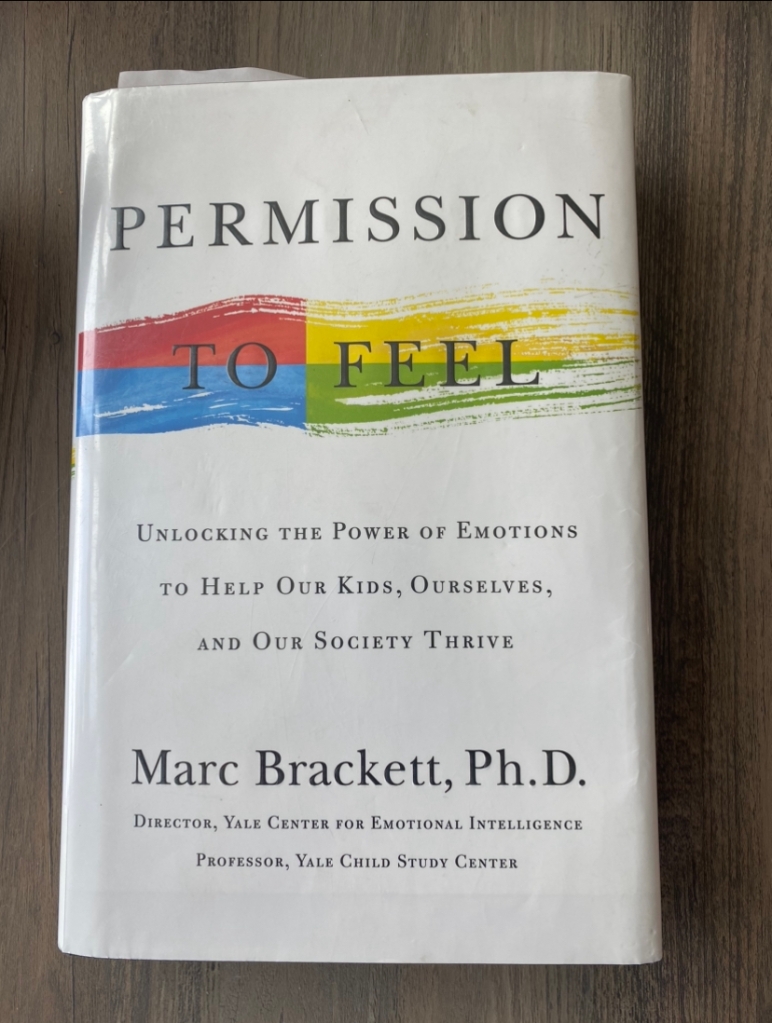
Check out Dr. Marc Brackett’s newest app How We Feel. Dr. Brackett is the Director of the Yale Center for Emotional Intelligence and author of Permission to Feel. There are over 200 emotions to explore in the How We Feel app!

Click this link to go to the website https://howwefeel.org and learn more about the app and how you can use it to help you build your emotional awareness and vocabulary in real time.

This quick, relatable read will stimulate your appetite to learn more about becoming an Architect of Your Experiences. Awesome insights into how our brains and bodies actually work.
If you are fascinated by neuroscience and love a deep dive into science and psychology, then treat yourself to How Emotions are Made. This book and Brene Brown’s Atlas of the Heart are reference books for our home libraries – the kind we will return to again and again!

Architects of our Experiences

Surely you recall that childhood pleasure of a rainy day when mom or dad would drape blankets over couches and chairs, then stand back prepared to be amazed at what their creative little geniuses would do next. An ordinary living room suddenly transformed into a sensory wonderland that started with a simple blanket fort.

I came upon this sight a few days ago and marveled at the ingenuity of the little architects who began with a pint-sized castle that just kept morphing into something even grander with each “lightbulb” moment and the addition of another toy bin. 

As the plans grew in size and complexity, there was a lot of trial and error. Shrieks of joyful delight filled the room as the framework collapsed and a new idea took shape from the rubble. 

What a lesson to be learned from two small children actively engaged in an organic, evolving, complex and creative process. They were little architects of their playful experience.

Are you aware that we adults can become skillful architects of our own experiences? 

It’s true — and the beauty of it is, we can tap into the creativity and positive outcomes that comes so easily to kids, by using our brains and bodies in a powerful new way.

Just imagine being able to construct experiences and supporting emotions that more consistently align with your goals and big aspirations. Fewer self-made obstacles, more smooth sailing.

Dr. Lisa Feldman Barrett is breaking new ground in the science of emotion – overturning long-standing beliefs that our emotions are universal, automatic and hard-wired in different regions of the brain. Instead, we actually “construct” an instance of emotion through a remarkable interplay of our brain, body and our culture. 

Anyone who has ever experienced a strong emotional trigger from an event that happened decades ago, has some appreciation for how quickly this remarkable interplay coalesces. It’s no wonder we believe it’s automatic and has become hard-wired into our systems. 

And yet, we also know that it is possible to “re-wire” our brains and release old emotional triggers – freeing us from being snagged by that old experience over and over again. The neuroplasticity of our brains enables us to re-organize our old connections in new and improved ways. 

This rewiring process is analogous to children reorganizing their fort framework to become something more useful for an even more incredible structural masterpiece.

It turns out that becoming “architects of our emotions and experiences” it is not as big a stretch that we once believed. How remarkable is that?

Dr. Lisa Feldman Barrett is gifted at making this new concept readily accessible to all of us. There are three key components that we need to know more about when it comes to curating our architectural tool bag: body budget, emotional granularity and cultivating more current, diverse experiences.

Today’s post is the first in a three part series about becoming skillful architects of our experiences. Prepare to be amazed at the role our body budget plays in our emotional reactions to life. 

A major part of becoming skilled architects of our experiences involves mastering our emotions. We erroneously believe that our emotions that are the first system to get activated — and we have to “manage” those strong emotions in order to respond effectively to our circumstances.  But this is not the case.

What actually happens first is that our brains are estimating what’s in our tank and predicting how much of our inner resources are going to be required to meet the present moment. It would be analogous to us hopping in our car for a big road trip and looking at the gas gauge to determine how far we can get before refueling.

Our brains are only 2% of our body weight, but they use 20% of the oxygen we consume and 20% of the energy we consume. What our brains and bodies need in order to have a balanced body budget are consistent quality sleep, hydration, good nutrition and movement, i.e. regular exercise. 

We are learning so much more than we ever knew about the importance of consistent quality sleep for our optimum brain health. Even while we are sleeping, our brain is storing and categorizing information, cleaning and purging, updating and rejuvenating. We are even cognizant of the disruption that caffeine and alcohol has on our sleep cycles and the integral neural processes that occur only during sleep. 

The benefits of good nutrition, hydration and regular exercise are irrefutable. But while we know these components are needed, we often forget that we are also draining our resources throughout the day and should pay attention to when we need a break, should take a walk, or grab a healthy snack. How often are we literally running on fumes?

Let’s just pause here for a minute and think about the amount of time we devote to charging our phones, making sure we have 5g network and cooling it off if we get a heat warning. What if we were to become as knowledgeable about our brains which are operating 24/7 for us – and often without any awareness of the drain on our inner resources?

All this time that we believed we were at the mercy of our emotions, we may simply be attempting to function optimally on an empty fuel tank. Very often what we are “feeling” is not an emotion, but rather an indicator that our body budget is out of balance. 

Since our brains are lightening fast at the estimation and prediction process, they get our body ready for a response that might include an increased heart rate, shallow breathing, or release of chemicals and hormones such as adrenaline or cortisol. We “feel” these sensations and “assign” an emotion to it. We might tell ourselves we feel scared, angry, anxious, uncertain, elated or surprised.

We’ve been doing this for most of our lives without a second thought, so it has become second nature to associate an emotion with whatever we are sensing in our bodies. Once we assign an emotion, we are off to the races – and often unconsciously,

Since our brains are prediction machines, it will quickly run through our historical database to find past events that simulate what we are feeling in the present moment. This complex retrieval system is on auto pilot most of the time; we are unconsciously running an algorithm that reviews our personal history looking for matches.

After the match is made, our amazing brain has one more remarkable feature — it runs a prediction error model. This is the brain’s way of giving us the opportunity to discard old data and replace it with newer, more appropriate data that suits the current situation. 

For the record, we often bypass or override this integral prediction error process. If it “feels” like a past experience, we pull the “all systems go” switch. This is how we’ve forged our “go to” behavioral patterns and protective armor. Without a moment’s hesitation, we assign an emotion, recall a past similar experience and jump into a memorized and familiar reactive pattern.

When we are pivoting to becoming architects of our experiences, we can start to pay more attention to both predictions and prediction errors. We can take the time to see if we are simply relying on an old database that no longer serves us well. This is how we “re-wire” those old outgrown behavioral patterns and replace them with new responses better suited to our lives today.

If the first brain system to get activated is simply an assessment of internal resources that are needed for the present situation, then we can start paying attention to body budget first and emotional responses second. This is a game-changing pivot in both mindfulness and self awareness. Think of this as a little “self check-in”. Are you resourced internally? Have you assigned an emotion and if so, does it feel appropriate to the current situation?

If we can make the distinction that our body budget is actually causing us to be under-resourced and not some big emotional reactions, we can begin to dis-engage from strong emotional triggers and respond with more cognitive skills. 

We think that emotional regulation is really hard and that changing our old behavioral patterns is even harder, but Dr. Barrett’s research is showing us that we just might have been making things much more challenging for ourselves all along by not understanding the role body budget plays. 

It is the very reason that we have “variation” in our moods, emotional states and our ability to think clearly. Dr. Barrett offers us a welcome sigh of relief — it turns out that “variation” is the norm.  

There are times when we do feel in control, cognitively and emotionally. We meet even the most stressful moments calmly, with a good sense of humor, a healthy acceptance of reality. We can even help others calm down and self-regulate when we feel this way.

Then there are times when we are short-tempered, can overreact to the smallest of events, or work ourselves into a state of frenzy. We set off a chain reaction of emotional reactions in others and things can escalate quickly.

Variation is the norm. And now we know what might be the real cause — a body budget deficit.

We get notifications throughout our busy day from our brains and bodies about what is needed to keep us running optimally. We even have terms we’ve created to diagnose our body budget deficits – such as hangry, brain fog, getting on our last nerve and no bandwidth. But unlike the ding of a notification from our phone, we often ignore the alerts we are getting from our brain about our own energy drain. 

We frequently overlook the small investments we can be making all throughout the day to keep our body budget in balance.  We may start with a full tank in the morning after a good night’s rest, a tall glass of water and a healthy breakfast; but we are going to begin to drain our body budget resources as the day goes on. Exercising, staying hydrated, making healthy choices for snacks and meals, taking breaks, getting outdoors, and unplugging from our devices are just a few of the multitude of ways we can restock our inner resources.

The biggest paradigm shift in understanding how we “make our emotions” is coming from a deep understanding of the role our body budget plays in our daily lives. 

Dr. Lisa Feldman Barrett is a pioneer in her fields of neuroscience and psychology – and she is helping us to get very savvy about our incredible, complex brain and body systems. If we take better care of ourselves, and pay attention to our body budget, this whole business of emotional regulation might just get a whole lot easier.

Dr. Lisa Feldman Barrett will captivate you with her compelling Ted Talk about how emotions are made. Click this link to listen
https://www.youtube.com/watch?v=0gks6ceq4eQ&t=140s

Check out this episode of the Huberman Lab podcast where Dr Lisa Feldman Barrett is Andrew’s guest to discuss How to Understand Emotions https://podcasts.apple.com/us/podcast/huberman-lab/id1545953110?i=1000631446646

Who Really Pulls the Emotional Trigger?

I’m guessing that you know exactly how it feels when you’re emotionally triggered by something — it seemingly comes out of nowhere, sparks intense negative feelings and abruptly makes you defensive.

We get flooded with adrenaline and cortisol when we are triggered which only amplifies what we are feeling. The conundrum with emotional triggers is that they pull us back into the past while we are also experiencing the very present moment. It’s no wonder we are completely off-kilter when we are emotionally triggered.

It’s human nature to blame someone else for pulling our emotional trigger but the truth of the matter is that our emotional triggers are internal; they are ours alone. No one else is pulling that trigger. Most of the time, no one else even knows that we have a strong emotional trigger that has just been engaged. What they do imagine is that we are over-reacting, have lost control or lost our minds.

Many of our emotional triggers are rooted in our childhood, when we had very little agency. Unbeknownst to us, those strong negative emotions that we felt as kids (but were not acknowledged by our parents and caregivers) got lodged into our brains and imprinted with readily accessible information. So when we “feel” a similar experience even as an adult, our brain pulls out that file and reminds us we aren’t feeling safe. An emotional trigger is a red alert warning.

Give some thought to experiences that cause you to become emotionally triggered. What are you really feeling when a strong, uncomfortable, emotional reaction grabs you? Are you feeling misunderstood, abandoned, unwanted, unloveable, or treated unfairly?

These are all very common feelings for young children, especially if we were punished or banished for expressing them. Those experiences got bookmarked in our brains and we developed a sensitivity to be on the lookout for repeated events like this in the future. We were our most vulnerable when we imprinted these experiences. So it stands to reason, that we will become emotionally triggered when we are feeling vulnerable, insecure or irrelevant as adults.

An emotional trigger is defined as having a strong, uncomfortable reaction to a stimulus that wouldn’t ordinarily cause that response. With this framework, it is easy to see that when we are feeling emotionally balanced, a snarky comment or a misunderstanding doesn’t cause us a problem. We aren’t triggered because we have our emotional act together; we can remain flexible and resilient.

Now give some thought to past adult experiences where you were emotionally triggered — and see if you can recognize that you were feeling pretty vulnerable in those moments. Were you overly tired, consumed by anxiety or overwhelm; were you feeling invisible, under-appreciated? We are most prone to getting triggered when our emotional reserves are low. It’s really no different than our being more susceptible to catching a cold when we are physically run down.

The best defense is a good offense. This is a very good strategy to employ for both handling and overcoming emotional triggers. In his book, Permission to Feel, Dr. Mark Brackett explains that when it comes to being triggered by our emotions, we have to “take responsibility for our actions rather than shift the blame elsewhere. ”

“It may not feel like a choice, but it surely is — we decide how we will respond to life’s provocations. Don’t want to explode in rage when your child is disrespectful? Come up with a better way to respond. Clearly the old way, matching nastiness for nastiness, doesn’t work.” –Dr. Mark Brackett, author of Permission to Feel

We don’t judge ourselves when we are physically run down and know we might be more likely to catch a cold. We make a mental note to get more sleep, stay hydrated and wash our hands more often. The best defense is a good offense.

We can take this same approach when we are emotionally depleted. We can make a mental note that we will be more susceptible to knee jerk reactions than skillful responses. We might even make an announcement to our family members that we just don’t have the emotional bandwidth to deal with unnecessary drama. Again, the best defense is a good offense.

We should be normalizing the fact that regardless of our age, we are all humans with similar emotional needs and changing emotional capacities. This is really invaluable to be teaching our children. Dr. Brackett shares that when we try to shield our children from this reality, it has an unintended result. Children will have a hard time acknowledging adults’ feelings, let alone respecting them.

Emotional triggers are an integral part of our self discovery process. They help us identify what is most important to us and what our current needs are. Once identified, we can free ourselves from the “strong, uncomfortable emotional reaction” to something that really shouldn’t set us off. Instead, we can be more skillful with our emotional regulation and more clear about our needs.

If we are on overload because we have been caregiving on steroids all day, one unintended disrespectful remark from a friend or family member is likely to cause us a twitching trigger finger. Dr. Brackett reminds us that we can take preventive measures for moments like this.

When we offer ourselves some self-compassion, we are acknowledging that we are on overload and are susceptible to losing our cool. We can remind ourselves that if we weren’t so physically and emotionally drained, we would not overreact to an insensitive comment. If we weren’t so worried out, we might even have the dexterity to banter about it.

Does the comment hurt? Of course it does. Let’s not dismiss that either.

But here’s the pivot. An emotional trigger never really addresses our true needs. It gets in the way of expressing ourselves in a way that can be heard and taken to heart. Others just react to our “overreaction” and our basic need is lost in the smokescreen. It’s hard to hear a whispered “I could use a little help here” when there’s a lot of yelling or threatening going on.

Have you ever noticed that emotional triggers can also set off a chain reaction? It is not unusual to hear phrases like “you never listen” or “you always do this”. A lot of baggage is often attached to our emotional triggers, so it’s easy to tap into all those previous experiences and dredge up old grievances. Whatever small incident has set off the emotional trigger now cascades into something much bigger.

Instead of being able to focus and attend to one small and manageable issue, we are now knee deep in triage for a major emotional pileup. It’s hard to assess which issue was the catalyst and which one requires immediate attention. All too often, the one small incident that set off an emotional trigger gets lost and never addressed. But it does get baked into that old imprint of the childhood emotional trigger; logged as yet another example in the bulging file.

In a recent blog post entitled Learning What We Need to Teach, I shared how important it is for us parents and grandparents to be the emotional “training wheels” for our children. The best preventative measures for our children is to integrate their emotions into their experiences; to help them name and process them as they are unfolding. The more we are able to do this in real time with our children, the less likely it is that they will enter adulthood with a lot of challenging emotional triggers of their own.

By now, you probably don’t really need a bigger impetus to get serious about attending to your own emotional triggers, but there is something important that you should bear in mind. Our children’s developing brains take a long time to fully develop and integrate. We protect those little noggins with helmets, but we often overlook the impact our emotional reactions are having. Dr. Mark Brackett writes extensively about this in his book Permission to Feel. In the chapter entitled “Emotions at Home” he devotes a lot of time to emotional triggers; and especially how parents get triggered by their kids’ reactions and behaviors.

He reminds us that when we get “triggered” by our kids, our compassion switch gets turned off. We’ve all experienced this – and we’ve often quickly regretted how we did not show up so great in those moments. We can take comfort in Dr. Dan Siegel’s teachings that “rupture and repair” is normal in human relationships and can actually strengthen our bonds with our children, as long as we apologize quickly and sincerely; with a promise to do better in the future.

Which is why Dr. Mark Brackett urges us to get serious about attending to our emotional triggers before they become a chronic reality. Extreme emotional reactions, over the course of time, can actually alter the brain structure of our children. The effects of frequent extreme emotional reactions can cause our children to have emotional regulation issues of their own and a lot of complexities in their adult relationships and quality of life.

A child’s brain is still plastic, meaning that the structure is always changing. The minute parents start regulating their emotions better, their children’s brains will change to reflect that. If parents start regulating their emotions now, and help their children to regulate theirs, then there’s hope.” — Dr. Mark Brackett, Author of Permission to Feel.

Emotional triggers are a by-product of the old parenting models that did not integrate our emotions into our developing brains when we were kids. When we do our own self-discovery work and identify why and how we get triggered, we are detangling ourselves from the past and owning our agency as adults. We accept that we have choices in how we respond to the things in life that provoke us.

The stuff that initially provokes us is usually pretty minor in the bigger scheme of things. But we can make a mountain out of a molehill with our over-sized reactions. We can meet these moments with greater emotional regulation and dexterity. It will be so much healthier for all our brains — and so much more beneficial for our families.

RECOMMENDED RESOURCES:

Feeling Our Way Forward

When I was a teenager, I stood in my grandmother’s sunlit kitchen watching this tiny spry woman skimming cream from the top of a quart glass milk bottle. The bottle was as weathered as she was, no longer crystal clear glass, but almost opaque from the innumerable times it had been filled at a dairy, topped with a cardboard stopper, packed in a crate, delivered in a truck, placed in a metal silver box on the front door step, retrieved before the sun rose, its contents separated — cream for coffee and milk for oatmeal. My grandmother was about to turn 68 — for the 5th time according to my calculations. She preferred to stay lodged at 68 rather than admit to entering her 7th decade.

This confounded me. I marveled at the fact that someone could live to their mid-70’s or beyond. (Remember I was only a young teen and even 40 seemed old to me at that time,) Yet what transfixed me even more was all the changes that my grandmother had seen in her lifetime. I was so eager to hear her stories, to find it incredulous that her electric refrigerator had once been an icebox! Imagine having ice delivered to your doorstep just as the familiar milk was now delivered. She drove a big black Buick now, but what was her first car or mode of transportation? And that black and white TV that was the focal point of her tiny living room — what was it like to experience a TV for the very first time?

My grandmother rarely stopped her never-ending forward momentum to pause and reflect on these wonders. She’d wave her wrinkled hand at me as though swatting at a fly, smile and tell me to set the table for breakfast. I do believe my grandmother possessed a lot of wisdom from all that she had witnessed and experienced in her seven decades, but she was reluctant to reflect. What’s done is done was her motto.

Now I am the grandmother in her seventh decade. My six year old grandson held my gaze as he marveled “Gigi, it’s amazing that you lived in the olden days and you are living in the here days now.” Unlike my grandmother, I am equally in awe and I melt at my grandson’s observation. I will be an open book for any questions that my grandchildren have about all that I have witnessed and experienced in my life.

The truth is that I am so grateful to not only witness, but to be actively engaged in the profound changes unfolding in my lifetime that will be transformational for generations to come.

My own personal growth journey, started about 8 years ago, had me unpacking nearly 6 decades of emotional baggage, rummaging through long-forgotten but pivotal events that occurred not only in my life, but in the lives and experiences of my family’s prior generations.

As I was steeped in this personal development work, I began to notice correlations and coalescence of the sciences, psychology, modern medicine and mental health along with Brene Brown’s research on shame and vulnerability, Kristin Neff’s work on self-compassion, and Carol Dweck’s work on growth mindset and neuroplasticity. Suddenly things were beginning to feel very inter-connected and the common denominator was emotions.

Did you know that we never really studied emotions until the late 1980’s? This startling revelation blew my mind.

For all the discoveries, advancements, inventions and societal changes we have witnessed for centuries, the most transformational evolutionary breakthroughs are happening in this very moment – and it has everything to do with integrating our emotions into our human operating system. Nothing could be more impactful for all of mankind.

My grandmother’s generation, like those that came before her, knew next to nothing about the integral value of our emotions. “Psychological science was firmly entrenched in a “cognitive revolution” reveals Dacher Keltner in his latest book, Awe.

“Within this framework (of cognitive science), every human experience, from moral condemnation to prejudice against people of color, originates in how our minds, like computer programs, process units of information in passionless ways. What was missing from this understanding of human nature was emotion. Passion, Gut Feeling. What Scottish philosopher David Hume famously called “the master of reason” and Nobel Prize winner Daniel Kahneman termed “System 1” thinking. — excerpted from Chapter 1 of Awe by Dasher Kellner (renowned expert in the science of human emotion)

That old saying that “hindsight is 20/20” really rings true as I reflect back on how emotions were banished from one generation to the next. Old parenting models reinforced that “cognitive revolution” so we just kept stuffing our skeletons in the closet, and filling our human basements and attics with old baggage and unhealed emotional wounds.

We compounded the problem when we banished emotions from our human operating system. All those unprocessed emotions and related traumas got passed along from one generation to the next into our genes. So not only did we grow up witnessing and then modeling dysfunctional behavioral patterns, we actually carried generational emotional baggage in our genes. We were predisposed to perpetuate dysfunctional patterns. Here are salient pivot points that we are learning about our genes and their generational impact:

Epigenetics is the study of how your behaviors and environment can cause changes that affect the way your genes work.

Unlike genetic changes, epigenetic changes are reversible and do not change your DNA sequence. But they can change how your body reads a DNA sequence.

Consider this: The first human disease to be linked to epigenetics was cancer, in 1983.

We are witnessing the big reveal right now — as our emotional health has hit the charts in revelatory ways. In just a little over three decades, we have advanced the ball on human evolution by recognizing that we got emotions all wrong.

Human beings are hard-wired for connection. The critical component of our motherboard that facilitates and integrates that lifelong need for connection is emotions.

Without this integral component, we have faulty, dysfunctional operating systems. Our immune systems malfunction and we get physically and cognitive sick. We have poor emotional regulation because we never got an owner’s manual. We struggle to make and keep relationships healthy and strong. We cannot teach our kids because we don’t know what we don’t know. They mirror us and we get mad, frustrated, discouraged and weary.

It should not be surprising at all that our teens are struggling with loneliness and depression. Imagine how many generations of unresolved emotions and trauma they are carrying in their genes. Technology and social media has exacerbated the problem as we become more socially disconnected while staring at our addictive screens instead of each other.

The bottom line is that we can all participate in this emotion revolution by embracing the need for integration of our emotions into our human operating system. We don’t think twice about upgrading our phones or devices. And when we get our children their first phone, we are not giving them a wall mounted rotary dial model. Why then would we have them operating on a partially installed top shelf brain/body/nervous system?

In prior blog posts, I have shared how inspirational it is to have prominent, respected younger men and women taking the lead by being so real and vulnerable in their podcasts, books, Ted Talks and social media platforms about their own emotional health journeys. There is a lot of generational baggage being unpacked these days to make room for a much healthier and more connected way of living.

Yes, it is incredibly sad to hear about the traumas and dysfunctional emotional underpinnings that people have endured. It is also not surprising to discover that these stories are not as uncommon as we think and have been the root cause of addictions, broken relationships, chronic and life threatening health issues and poor quality of life.

What I do know is that this is exactly how the healing begins and the evolution takes root. Unpacking unprocessed emotions is like having a splinter. We know it’s there. We can ignore it, but we will feel the pain every time we bump up against it…and over time it just might get infected. When we pull that splinter, we may still feel a little residual pain, but the reality is that the healing has already begun.

When my grandson tells me that it is amazing that I lived in the old days and I am here now, living in these present days, I can look at him and see him growing up in a world where he is a fully integrated human being, experiencing life with emotional meta vision and a self awareness that simply was not possible before. Oh yes, I have seen and experienced a lot in my lifetime, but just you wait — the best is yet to come.

RECOMMENDED RESOURCES:

LISTEN TO THIS MARCH 3rd 2023 EPISODE WITH LEWISHOWES – Prepare to be amazed at what you learn from Lewis about the profound benefits of unpacking emotional baggage and trauma – and then helping others do the same. https://podcasts.apple.com/us/podcast/the-peter-attia-drive/id1400828889?i=1000602927831

Pop a Daily Gummy of Wisdom Supplement

I am so excited to announce the launch of a brand new initiative to support our emotional health and overall wellbeing. My Daily Gummy of Wisdom is intended to be an awareness supplement to help us all maintain our emotional fitness.

We take vitamins and supplements to support our physical and cognitive health, so why not have a little daily boost for our emotional health and overall quality of life?

If you are a regular follower of my blog, Inspired New Horizons, then you might really enjoy getting these small, and potent, daily supplements to help you stay in shape as you develop better life skills and emotional regulation.

My Daily Gummies of Wisdom incorporate my love of photography with my passion for sharing information about personal growth, awareness, parenting, life skills and emotional health.

Here’s a sample of today’s Daily Gummy of Wisdom:

Daily Gummy of Wisdom – Monday, May 8, 2023

Create a little buffer zone between you and your different roles and varied experiences throughout your day. It is a simple little practice that can make a big difference.

Think about all the hats your wear in a day – parent, spouse, child, co-worker, friend, customer, neighbor — the list is endless.

We often just jump from one role to the other without a reset or refresh. When this happens, we drag some residue from each role or experience into the new one. That residue might be sticky — like a strong unsettling emotion that adheres to everyone and everything we touch.

We wouldn’t let our child run around the house, into the car or out into the neighborhood with sticky hands. We’d take a minute or two to wash those little hands that are capable of leaving gooey fingerprints all over the place.

This is what a brief buffer zone can do for you — it’s a little hand washing for your emotional and experiential residue as you transition from one role to another, or from one task to a new one.

It doesn’t take much time to do this — and the benefits are enormous.

Before you leave the house in the morning, as you close the front door, take a deep breath and let go. You’ve done as much as you could and how you are off to work, taking the kids to school, or heading to an appointment. Let go and look forward. Howe do you want to enter the new experience and greet those you meet there?

When you return home, as you close your car door and make your way to the front door, repeat that process. Let go. You’ve done all you could out and about today. You are home now. You may have pressing things you want to share with your family, but pause before barging in. You have no idea how their own day unfolded. Mentally wash your sticky residue so can listen with good intention and focus when you are reunited with your family.

If your emotional or experiential residue hacks some of your attention, you. may miss the smallest yet most rewarding moments of your day. That absolute delight on your child’s face to see you, that “there’s no place like home” feeling that washes over you.

When we give ourselves a little transition “hand washing”, we are more attentive and less reactionary. We treat ourselves to being more fully present and organically take in more of the good we often miss in life.

HERE’S THE CALL TO ACTION: Sign up below to get my Daily Gummy of Wisdom popped right into your inbox each morning. It only takes a minute or two to read….is great food for thought and has a lovely slow release factor all day long. The Daily Gummy will increase your awareness, help you stay in alignment with your core values and foster all those better life skills you are honing.

We read a lot of worthless brain junk food in our social media feeds throughout the day. Why not trade a little of that mindless scrolling for one high quality daily supplement for your emotional fitness and overall wellbeing?

Sign up right here: Click this link: https://inspired-nehorizons.ck.page/3381cf137f

People Don’t Change….Right?

We hear this myth all the time — “people don’t change” or “you can’t make someone change” but quite honestly, this could not be further from the truth. None of us are the same person we were last week, last month or last year. All this phenomenal change is happening with very little awareness on our part. Our brain and its remarkable process of neuroplasticity are literally changing us every single day.

Neuro means brain; Plasticity refers to the fact that the brain is always transforming itself. When you meet someone new, or learn a new fact, your brain changes its structure and function. The environment can change our brains even if we are not aware of it. Some events change the way brain cells communicate with one another, by strengthening or weakening this communication. Other events will change how the brain interprets things. All these changes end up modifying our behaviors. — excerpted from Frontiers’ article, “Neuroplasticity: The Brain Changes Over Time” 1/12/2020

Now we can see that in reality we are actually changing at all times. It is hard-wired into us and proof positive that we not only CAN change, we have been doing it all along.

What is most intriguing is that we can become an integral and proactive part of this process. Rather than resisting change, we can embrace and even empower this human superpower.

Let me reframe this in a way that will shift your perspective about “growth mindset”.

What if we thought about our ever-evolving life changes as our CV: Curriculum Vitae (which ironically is Latin for “course of life”).

What would we put on our personal life resume that is directly correlated to the changes we’ve experienced – both unconsciously through neuroplasticity and very consciously through the effort we put in to effect change?

As you are reflecting on this, ponder why we always ask older people “What would you tell your 20 year old self?”

How often do we mutter to ourselves “if I knew then what I know now?” as we reflect back on our life history and realize that we could have made much better decisions and seized opportunities we let slip through our fingers?

Let’s put that on our life resume — the things we learned later in life that often came from repeated trial and error. A little hindsight with a healthy dash of knowledge is how we acquire wisdom.

So many of our life experiences have helped us develop a whole host of skills sets we often take for granted. From parenting to career changes, to marriages and health issues, the loss of loved ones — each and every one probably revealed something we did not previously know about ourselves.

For some time now, I have been thinking that one of the best entry points for self discovery and personal growth is through understanding how our brains operate. If we learned this, we could become proactive in setting ourselves up for better life skills and fewer problems.

It is incredibly hard to “do the work” of meaningful change when we have 40, 50, or 60+ years in which we have fossilized bad habits, dysfunctional behavioral patterns, and unhealed emotional wounds.

We could be doing all the “work” in real time, when it has the biggest impact and the greatest opportunity to transform us in healthy ways. By being proactive in the “change” process, we could actually be preventing getting “stuck” in outgrown or dysfunctional responses to life. We would simply be more prepared and skillful at navigating life. We would be in a continual state of building inner resources to support ourselves in evolving positive ways.

Neuroscience is revealing to us that we can do much better at “resourcing” ourselves with good coping skills, healthy emotional responses and emotional regulation as well as the resilience, resourcefulness and capacity we get from lessons we glean from our learned experiences. Without these inner resources, we can struggle to integrate our thoughts, emotions and body when faced with challenging circumstances or trauma.

Integration is the core foundational block for us to be able to deal with our experiences in healthy ways — and for us to learn from those experiences and build a strong neural network to tap into for future reference. We need to integrate our thoughts, our emotions and our bodies if we want to be better “resourced” for handling life’s difficulties.

If we think of our behavioral patterns as “memorizations”, we can get a clear picture of how we learned as kids to respond to anger, blame, hurt or fear. Often it was not only our own emotions we grappled with, but those of our caregivers. So we “memorized” what would bring us safety, relief, a return to connection. Our little developing brains did not yet have all the executive function to reason. In fact, our brains and bodies were flooded with cortisol and adrenaline — urging us to take quick action and seeking safety ASAP. We “memorized” what the fastest track would be to return us and our caregivers back to baseline.

We really don’t learn much from memorization. It’s just a steady “rinse, repeat” pattern of responding to similar situations. A better pathway to healthy co-regulation and growing core inner resources is to really engage with our own emotions, be informed about what they are telling us, calming ourselves so we can reconnect with our executive functions and then make rational, healthy choices about how to respond. Sounds simple enough, right?

Well, it can be — but not without an understanding of what is happening simultaneously in our bodies, with our thoughts and emotions. When we are young, it would be the equivalent of trying to recite the alphabet backwards while the grade school band was all warming up! Too much distraction, too much noise — just too much.

If we have a clearer understanding of how a child’s brain develops, then we can reset our expectations about what they are actually able to process when emotions and experiences get big and bumpy. We can “meet them where they are” and save us all a lot of angst. We shouldn’t want our kids to “memorize” how to navigate life; we want to teach them how to be captains of their ship, with a breadth of knowledge, skills and resources so they can face opportunities and obstacles in healthy, dynamic ways.

As neuroscience, psychology and psychiatry all intersected to address our growing mental health crises, many phenomenal discoveries have been made. Dr. Dan Siegel recently remarked that he would have never thought 15 years ago that we would have such concrete evidence of how our brains and bodies are functioning (or not functioning). It is revelational and game-changing for every one of us.

Breakththroughs lead us right back to the root problem — and that is where real change occurs. We can proactively and meaningfully begin to implement bold new ways to teach ourselves – and especially our children – how to process emotions as they are occurring; how to get back to baseline when our emotions hijack our ability to reason and think clearly; how we co-regulate each other (the hot tip here is that we can de-escalate a situation as fast as we can escalate an already emotionally charged situation); and how to learn from our experiences in ways that “resource” us for the future.

Imagine if we re-framed our attitudes about personal growth and the need to change in a whole new way. If we truly understood how our brains, bodies, thoughts and emotions all were working to support us in such astounding positive ways, we would be approaching how we parent, how we engage in life and how we support each other in transformational and empowering new ways.

Food for thought: Can you imagine learning to drive a car without understanding how all those moving parts actually synch up and work together? Did you learn how to take care of a car when you learned to drive (about oil and gas and windshield washer fluid, about engine warning lights?). Can you imagine teaching your child to drive if you didn’t know how to drive or maintain a car? Could it be that we actually understand more about the complexities of how our cars operate and even more about awareness and skills needed to navigate traffic than we do how our very own brains, bodies, thoughts and emotions are all working to support us?

I recently listened to a thought-provoking podcast with Adam Grant and Carla Harris about becoming great mentors and sponsors. During the conversation, Carla pointed out that so many folks returned to the workplace after coming through the challenges of a global pandemic with many new skills, strengths and inner resources. She was so insightful when she noted that we should always be on the lookout for ways that we are growing through our challenging experiences. She also noted that we all have changed as a direct result of that collective experience. There are opportunities we never saw before that are now being revealed to us.

Change is a good thing….and it is the only thing that is constant. We actually can change!

RECOMMENDED RESOURCES:

Dr. Dan Siegel is one of all-time favorite resources for learning how a child’s brain develops, how our parent/child attachment styles impact our adult relationships and how we can transform all the chaos is our bodies and brains to an integrated, more healthy approach to life’s challenges. Any YouTube video featuring Dr. Siegel is sure to enlighten and inform.

https://www.youtube.com/watch?v=fwmtgrWKQrY

Dr. Andrew Huberman is my “go to” resource for all things neuroscience. He offers deep dives into so many diverse topics in this ever evolving field of research on his Huberman Lab podcasts. For smaller doses of his worthy insights, check him out on YouTube where he offers bite-sized segments from his in-depth podcasts.

This episode is definitely worthwhile for parents especially — but as always, we have to put our oxygen mask on first…so learning this information for ourselves and then applying it to our parenting skills is invaluable.

Check it out: The Science of Emotions and Relationships:

https://podcasts.apple.com/us/podcast/huberman-lab/id1545953110?i=1000514835897

When I suggest a groundbreaking parenting book, I love the added benefit that comes with it — the opportunity for us adults to revisit our childhoods through the lens of more knowledge that comes from both the book and our own lived experiences. This is hindsight infused with real life experiences and new, improved skills and learnings. My deep dive into personal growth brought me to parenting time and again.

External Roadblocks Matter Too…

So much of our personal growth work encourages us to get to know ourselves better, to take a long hard introspective view of our internal world. Yet there is another component to our personal development that is equally important:

The external roadblocks that can derail even our best intentions.

We can become fairly unaware of external obstacles that prevent us from gaining traction in our personal growth work. Our attention gets pulled in a lot of directions throughout the day and we lose track of our time and our good intentions. James Clear teaches us that consistent small investments of time and effort is the best pathway to developing new habits and skills. The one thing we really need to cultivate to help us gain traction with short and long term goals, with developing better habits and with improving our relationships is — self awareness.

A major external obstacle to cultivating greater self awareness is often in the palm of our hand…..our phone.

Let’s be candid about this. We do have a growing crisis with regard to our phones. We observe how so many people are walking down the street, their eyes fixated on their screens and not their surroundings. Parents at playgrounds are watching their phones and not their children. Families and friends in restaurants all sit with heads down, fingers flying across flat keyboards not engaging with each other or even the waitstaff. Standing in line at the grocery store or sitting at a red light in our cars seems to be an open invitation to check our phone. No one is immune from this. It is a habit that slowly seeped into our daily lives over time.

I’m old enough to remember a time when we did not have mobile phones on our bodies at all times. It makes me wonder what it might be like to measure the quality of our memories that were created more with our five senses than a camera roll of countless photos. I’m not being judgmental here, for I love the ease with which I can capture the moment on my thin phone too. I just wonder if we saw a chart or graph that could visibly show us the distinction of “being fully present in a moment” vs. “freezing a moment in time” would it help us want to moderate our phone usage?

While we may not have such a graph, we are learning through neuroscience about how we can enrich our present experiences and “store” them in our brains with all the sensory details to help override the brain’s default negativity bias. But in order to do this, we have to be aware of how we are letting our attention and our focus slip away.

BEING FULLY PRESENT: (even briefly…but a few times a day)

Dr. Rick Hanson has a brief and effective tip to help us capture more present moments. He calls it “taking the in the good”. Rather than reaching for your phone to take a photo, simply steep yourself in the full experience in real time. All it takes is 15-30 seconds to take it in — and imprint in your brain an incredible memory. Add sounds to your experience — listen to a child’s laugher as you watch her run through a pile of crunchy autumn leaves. Be aware of the sounds the crunchy leaves make and use your eyes to take in the rich autumn color palette. Gaze at the floating fluffy white clouds against a cerulean blue sky. For 15-30 seconds you are the creator and director of an internal movie memory; set it to music, imbue it with scents, enrich it with details.

Just doing this a few times each day will help in training our brains that we are in charge of our attention. We can resist the temptation to look at our phones and choose to fully be in the present moment. For fun, keep a little journal about your “fully present” moments each day for a week or two. It is a game-changer for cultivating greater self awareness and harvesting all the good that is showing up in our lives each day. Things we often miss…..because we are staring at our phones.

POSTURE AND SITUATIONAL AWARENESS:

Are you aware that our posture has been impacted by our phones? Dr. Andrew Huberman, neurobiologist at Stamford, recently referred to this as our “C” posture. Just look around today at the posture of others who are on their phones — do you see the “C” — forward neck position, slouched and rounded shoulders?

Many people are dealing with chronic pain in their necks, shoulders and spine as a direct result of spending a good portion of their day in this awkward “C” posture position. The tension we are adding to our bodies from our phone posture gets added to the stressors of our daily busy lives.

Do your own research as you go about your daily routine today: How many people do you observe with this “C” posture? How many missed opportunities to say “hello” or ask someone how their day is going? How many people do you see in the coffee shop or restaurant who are engaging with their phones and not their friends and families? Are people walking to their cars unaware of the traffic around them, heads down staring at their screens?

RESTORATIVE, RECHARGING BENEFITS OF SLEEP:

An essential way to care for our dynamic, powerful, personal processors — yes, I am describing our brains that way.….is to get consistently good sleep. There are simple things we can do to help us achieve the beneficial brain attributes of sleep. The easiest and most impactful is to not look at our phones first thing in the morning and last thing at night.

Instead, first thing in the morning take in 10-20 minutes of natural sunlight if you can. That will set your circadian rhythm. While it might seem silly, doing this in the morning actually helps you fall asleep at night. If you can’t get sunlight first thing, turn on the lights in your home and let your eyes take in that light. It is the blue light emission from our phones that inhibits the production of melatonin. The hot tip here is go “old school” and get an alarm clock if you need one to wake up, avoid looking at your phone for the first 30 minutes of your morning, and get some natural sunlight if possible. Just a few days of this new routine will make a noticeable positive difference in sleep patterns.

Of course, that blue light emission from our phones at night is also not helpful if we want to get a deep, recharging night of sleep. Best to put your phone on a charger and then do the same for yourself. Establish a simple nightly bedtime routine with reduced exposure to light, trying meditation or light reading to relax your busy brain and implementing some cues that work for you to signal that it is bedtime.

Neuroscience is proving that we need consistent quality sleep in order to operate a maximum efficiency for our cognitive and emotional well being. A key factor in our mental health wellness is deep, restorative, brain rewiring and rejuvenating sleep.

SOLVING THE CASE OF DISAPPEARING TIME AND ATTENTION:

Want to discover where so much of your time and attention has gone at the end of a day? Take a look at your average weekly screen time. That will be the biggest clue to solve your case of “disappearing time and attention”. All of can easily fall into the trance of mindless scrolling, or hopscotching from looking up a recipe to reading the latest scoop on a celebrity.

Even the most skilled practitioners of mindfulness, the best educated neuroscientists and the gurus of meditation will confess to using the password lock feature, turning their phone off completely for a set amount of time, locking their phone in a safe, giving it to a colleague or partner while they are working, or keeping the phone in a different room. So don’t feel too bad — you are not alone with regard to our attachment to our phones.

WHAT WE CAN’T GET BACK: (our time and out attention)

Dr. Amishi Jha wrote about how we are unconsciously giving away one of our most precious commodities — our attention — in her book Peak Mind. This won’t surprise you, but our attention is now a marketable commodity and there is even trading in futures for our attention. Now that is mind-blowing, isn’t it?

It is precisely because we are giving away our attention to our devices that we are also giving away time that could be better spent on things that really matter to us. f we could put our phones away for even 30 minutes a day, we could read 10 pages in a book, we could try a new recipe, we could chat with another person, we could take a walk and be awed by nature. Just for fun, challenge yourself to come up with a wish list of 3 thirty minute fun things to do in the coming week; then put your phone away for 30 minutes for 3 of the 7 days in that week….and do those fun things!

Maybe you can make your own chart or graph about how you are feeling about your time management, your attention and your happiness at the end of that one week challenge.

BUILDING BETTER CONNECTIONS:

It’s very evident that while social media was once touted as a great way for us to be connected to each other….it actually has had the opposite effect. We are heads down, eyes diverted and fully engaged with a device and all its mesmerizing content….and all the while our most incredible life is unfolding without us being aware.

When we shift our eyes from the screen to those people we are hanging out with all day long, something magical happens. Our amazing brains help us take in so much more than just the words they might be saying. We see facial expressions, body language, we make eye contact and we co-regulate each other with our emotions and energy. As Brene Brown would say — we feel seen, heard and valued. And all that happens by averting our eyes from the phone to the face.

FOOD FOR THOUGHT:

Dr. Amishi Jha tells us to “pay attention to where we are turning our attention”. All we need to do to cultivate greater awareness is to check in with ourselves in an honest way about where we might be leaking out our time and attention. Just commandeering a few short chunks of time each day for some dedicated “present moment” experiences will no doubt produce some pretty remarkable results for your overall quality of life. Are you willing to give it a try?

RECOMMENDED RESOURCES:

Follow Dr. Andrew Huberman on YouTube and Instagram for short clips on his insights and teachings about neuroscience, our bodies and brains. Check out the full length Huberman Lab podcasts and his website if you want to do the deep dive into his teachings.

https://hubermanlab.com/focus-toolkit-tools-to-improve-your-focus-and-concentration/

Read this amazing book by Dr. Amishi Jha to learn from her own experiences, real life stories from her research about the incredible importance of our focus and attention for our quality of life and some of our most demanding decisions we make under tough circumstances. This book also offers a guide to a simple 12 minute daily meditation practice that will help you train your brain for better attention and focusing skills.

Read this article from the Wall Street Journal to gain some fresh insight on how our phones are impacting our kids, their educations and their interactions with teachers, friends, coaches and mentors.

THIS SCHOOL TOOK AWAY SMARTPHONES. THE KIDS DON’T MIND: https://apple.news/AgX2ev7f7SKCNtVqY0aLmyA

Growth Spurts

One of the things I have thoroughly enjoyed over these past six years, is recognizing when I have had a growth spurt. Not the kind that shows up on the number of candles on my birthday cake, or the way a favorite dress fits differently.   It’s the growth spurt that I feel — about who I am and about how I am showing up in my life — for myself and others.  

It has been quite the journey and I could not have done it without some remarkable support from my family and my most trusted long-time friend, Judy. I’ve recently come to the realization that there has indeed been a big transformation in me.  By turning my attention inward and pulling back all the layers that I have carried with me over my lifetime, I have shed old behavioral patterns like unwanted pounds and I do feel lighter, yet more grounded than I have ever been.

I can tell you what that actually feels like in the midst of most any situation now. 

It feels like I am being the person I always longed to be — calm, respectful, helpful and understanding.  I am untethered from old triggers, of feeling overwhelmed by others emotions or actions, of feeling helpless or hopeless.   I am finally really understanding what Brene Brown has been teaching for so long about how my “armor” got in the way of living my most authentic life.

If you haven’t been around me for a long time, you may not be able to discern this subtle but significant shift. It is true that in the past I put up a pretty effective “front”in the midst of crisis or conflict, but the truth was that I was just very skilled — and far too comfortable — with stuffing my emotions or powering through them.  It resulted in me being numb to my own feelings and needs or becoming a powder keg down the road.  

It has been a few years now since I have experienced either one of those former, very familiar uncomfortable outcomes.    What a relief it is to no longer find myself getting “pulled” into a situation and reacting from a place of bottled up old emotions because my “reservoir” was so low. To come away from a present day tense situation and recognize this positive change in myself is both a reward and an affirmation for a doing the “inside job” of self-awareness work. Awareness is the real key to my growth spurts which I will unravel for you now.

A counselor once told me that I was “too patient.”  At the time, I had no clue what she meant.  I thought being patient was a strength of mine.  However I have slowly come to understand what she meant — I accepted a lot of behaviors from others that I should not have.  She was encouraging me to discover and voice my personal boundaries.  I surely wish I had learned this lesson ten or twenty years ago. I did eventually get there though it was at a turtle’s pace.

Here’s the thing about boundaries that I had to understand. I often showed respect to others even when they didn’t necessarily deserve it, but I rarely respected myself enough to call someone out or to simply say no. I wanted to be sure I was operating from a place of my own integrity so I’d be generous with my respect of others. Somehow I had forgotten that my integrity also served me — as an anchor for self-respect. I had to learn to respect myself enough to pause when I would get that internal nudge and then choose to state my boundary. This is where Brene’s words “clear is kind” really came to life for me. Calmly stating my boundary clearly is the kindest thing I can offer to someone else. There is no mystery or guess work about what is important to me. I free myself to stand firmly in my ground without drama or long explanations. It puts the onus of respecting my boundary back on the other person.

This brings me to anger. Just typing that word can send shivers down my spine. For far too many years, I did not do “anger” well. Like most of us when we are pushed to the limit and anger flares, I’d raise my voice, say things I would quickly regret and be prone to slam a door on my way to anywhere other than where I was. Honestly I have been afraid of anger since I was a child. It seemed that nothing good ever came of it and that was the lesson I took to heart based on a lifetime of personal experiences. Anger might as well have been a lit stick of dynamite in my hands — I was terrified of it and instinctively reacted on that fear rather than what anger was actually trying to tell me.

So I had to change my understanding of anger and my relationship to it. Anger often showed up when I failed to set a boundary. So it served as my warning light to feel the anger and redirect my attention to the real issue — which often was boundaries. Did I make my boundaries clear? Were my boundaries ignored or dismissed? The answers to these questions quelled the anger and gave me footing for a better response.

Anger would also show up when I was overdoing the “helping” I can be prone to do. My exhaustion would be accompanied by my disappointment from the lack of positive results for all my well-intentioned efforts. Anger was telling me I was resentful of working so hard doing things that no one actually asked me to do. It would be the equivalent of showing up with six bags of groceries and two casseroles when a friend needs a plumber for a clogged drain. Yep, that is just how far off base things can get for us consummate “helpers.” Again, understanding that my feelings of anger were actually my own doing became a huge catalyst for meaningful change.

Once I began to understand that anger can be very healthy and that it does have a place in a well-rounded life, I relaxed a bit and even ventured so fas as to invite it in….just for coffee though. My safest place to explore anger these days is on these coffee dates, just the two of us. I find myself saying “tell me more” quite often. Turns out that anger is pretty wise and not nearly as volatile as I once believed. Anger reminds me that I am a woman who values fairness and accountability. Anger makes its case that many a good cause has a been fueled by a healthy dose of outrage. (Consider MADD – Mothers Against Drunk Drivers for starters).

I now have a very deep awareness that I cannot and should not attempt to fix everything that goes wrong in life, especially for others.   Where I once rushed in to clean up a mess, solve a problem or take someone else’s consequence on as my own, I have learned that my most meaningful response is to “hold space”  for others.   Others may need a shoulder to cry on or a safe, soft place to land when they are broken. They do not need or want me to fix things. I respect that now.

The Enneagram has been such a helpful resource for me by shining a big spotlight on how I often “rescue” others in an effort to feel valued and needed. I am learning the distinction between “I need help” and “I am needy”. When someone needs help and they ask for it, I am all in….but in a healthier way now. When someone is needy and just wants someone else to fix the problems they are creating, I am able to recognize it and back away.

The next logical step in this process of self-awareness is an invaluable one — it is simply “letting go”. Yet there is nothing simple about actually doing that. At least not when I was first striving to do it. But with a lot of practice over a few years, I have actually gotten so much better at this.

Early on in my mindfulness journey I learned about “not being attached to the outcome.” While I liked the sound of it in theory, I quickly discovered that I was quite often not only attached to an outcome but I was working pretty hard to get my own desired outcome. While I never considered myself a manipulating or controlling person, I began to see how my comments or actions felt like that to others. Letting go of expectations, letting go of wishful thinking, letting go of control — these are all incredibly hard to part with — and yet, it is so freeing to do so. It is quite simply accepting reality. It is accepting that other people may make choices that might be hard to swallow. Letting go often involves forgiveness, offering grace to others and trusting that they are doing the best they can, and embracing space for reflection and healing.

Letting go and not being attached to the outcome did require a lot of practice. Fortunately life never fails to provide ample opportunities for this needed practice. So I dipped my toes into this concept with minor matters, making the best decision I could in that moment with the information I had at hand, and letting go of any preconceived ideas I might have about the outcome. I found out that no matter what transpired, I could handle it. Often times the result was even better than I might have imagined. When it came to relationships and what I was hoping for, I found that letting out a little kite string was all that was really needed. If the relationship was genuinely mutual, our kite would soar. If the relationship was more one-sided, it was bound to hit the ground. Inspirational life quotes that have long resonated with me began to take on a much deeper meaning:

I began my focused personal growth journey by learning about, and embracing, mindfulness. Mindfulness led me to meditation. Meditation reignited my keen interest in neuroscience. Over these past six years, there has been growing overlap of personal growth tools and the teachers who guide us. And all of it is rooted in awareness.

Becoming skilled in awareness is the best practice of all. It provides a broad and fresh perspective to reframe things that literally are right in front of our eyes, but are often obscured by racing thoughts, rumination about the past, magical thinking, and dreaming of greener pastures.

Awareness of all the places where I was triggered by my past.

Awareness of my weariness or resentment growing to a boiling point.

Awareness of own value and strengths and not allowing others comments to diminish them.

Awareness of how others showed their love and respect for me. (hot tip — sometimes we are actually getting the love and respect we want but we fail to realize it because we want it in a certain way)

Awareness to offer myself grace and acknowledging I will always be a work in progress.

These are just a few of the many insights I gained from awareness. The self discovery journey has allowed me to get untangled and unstuck from experiences and emotions that clouded my vision, muffled what I was able to hear, and it opened my heart in ways I would have never thought possible. I found peace. A peace that I carry with me everywhere and one that I trust I can ground myself in when life gets turbulent.

I also found a deeper capacity for being aware of how others are feeling and reacting. Judgment has been replaced with a genuine interest and curiosity about what is beneath all of that. All of us have stratifications of the anxieties and vulnerabilities that we’ve accumulated over the years. I find myself understanding that about others and it serves me well as I hold space for them and listen fully. So often clues are embedded in those deep conversations. I now focus more on the other person. Its so much easier to do this now that I have cleared my own emotional landmines. My mind, my body and my heart isn’t competing for my attention. Instead, I can lean into what I have learned about myself and find greater compassion and encouragement for others.

My dear friend Judy and I have done a lot of this work together over the past few years, acting as confidantes and cheerleaders for each other. We were so fortunate to be able to compare similar life experiences and learned behavioral patterns we developed as coping mechanisms. We also shared a deep love of helping others and offering encouragement to those who are on a similar journey. What we have noticed in our improved energy levels, our discernment, and the people we are attracting into our lives is nothing short of miraculous.

Our family members and our friends have noticed our transformation and freely tell us all the positive attributes they are witnessing. They are experiencing how we show up differently in our own lives and in their lives too. This concrete evidence of the work we have been doing has become a guiding light for others in a much healthier way than our old approaches ever did.

When my daughter tells her friends that I am the most mindful person she knows, that goes straight to my heart. Who knows me better than her after all these years and who sees the consistency and continuity of all my positive changes?

RECOMMENDED RESOURCES:

Chopra Meditation Center – Getting Unstuck: Creating a Limitless Life (How limitless awareness can help you overcome all obstacles — 21 Day Meditation Program offered for free)

http://www.choprameditationcenter.com

Typology Podcasts with Ian Cron (available for free on YouTube) I’m sharing this episode with renowned Enneagram authority Beatrice Chestnut who is like me, an Enneagram 2.

https://www.youtube.com/watch?v=1T-fP4WMHIQ

Yung Pueblo – check out this youthful wisdom influencer on Facebook and Instagram: https://www.facebook.com/yungpueblo

Greater Good Magazine – The Right Way to Get Angry https://greatergood.berkeley.edu/article/item/the_right_way_to_get_angry

I am a longtime collector and affectionate of StoryPeople — and I bought this one over two decades ago. No matter how much I tried to maintain some sense of control over my busy complex life, balancing parenthood, career and marriage, there were more than a few times that I just enjoyed letting go of the “to do”list and the human “doing” and trust fall into a strong wind like a carefree child. I had no idea just how insightful these words would be to me later in life when I learned the liberating feeling of “letting go” of outcomes and expectations.