New Year, New Skills

Can you feel that little updraft in inner drive and determination that comes from a brand new year? There’s nothing like a brand new calendar, clean and pristine, to let our imaginations run wild with big dreams of how well organized and productive we will be. This psychological phenomenon is called the “fresh start effect”. It marks a clear delineation for our “out the old and in with the new” mindset. A brand new year is when we get to double dip in this fresh start effect — it’s not just a new month – it is a brand new year. 

I confess that I love a Happy New Year fresh start and I prepare for it as eagerly as I do for Christmas. My desk has stacks of colorful, inspiring blank journals and brand new chunky, spiral-bound idea notebooks; along with an assortment of gel pens and varied sizes of neon post-it notes. And the real gem is that pristine 2024 planner. Thanks to my grandkids who gave me a generous gift card to Quail Ridge, I also have an inviting stack of new books I cannot wait to read. There is a rush of pure joy and an eager excitement every time I look at the endless possibilities that will manifest when I actually use all these tools.

It was in that moment, that it dawned on me that this was the direction I wanted to take my blog in 2024. This year, my blog posts and Daily Gummies of Wisdom, are going to become more relatable and digestible. This is the year where the “rubber hits the road”. I want to share more real life stories, examples and experiences that reveal how beneficial it is to be using better tools and becoming more skillful with them. 

This is the year that I want my blog to help others stock their desks, toolboxes and backpacks with diversified resources for building the life they want and showing up more often as their best selves. It is an exciting time to be alive because thanks to science, we have taken a lot of the mystery out of old paradigms about emotional and mental health, parenting and relationships – and yes, even personal growth. 

I love diving into groundbreaking and ever-evolving data. I also love distilling it in a way that is easy to understand and implement in real time. I’ve become a bit of a “reverse engineer” with 7 decades of life experiences to draw on. By sharing familiar and relatable real life stories, I can teach and role model how and why these much-improved relationship and life tools are meaningful game-changers.

There is another confession that I have to make: I am over the moon thrilled that it no longer feels necessary to keep self discovery and personal growth under wraps. The proof of this is in our current overuse of the word “normalize”. We toss that word out like a disclaimer reminding us that no one is immune to “feeling” their way through life.

No more cloak of secrecy when it comes to mental and emotional health — it is now fully mainstreamed! And, it is not only mainstreamed, we are making genuine progress in connecting the dots between our physical health and our emotional health. Our eyes are being opened to the many no-cost and low-cost steps we can take to proactively improve both.

The pivot I will be making with my ever-evolving blog will mirror the pivot that is being made in modern medicine, psychology and neuroscience. There is a shift from problem solving to prevention. Many fields, modalities and people are taking proactive steps to improve their physical, mental and emotional health to safeguard against future health and relationship issues. An ounce of prevention really is worth a pound of cure.

THE RICH ROLL PODCAST: Treat yourself to a new podcast in 2024 – and check out the diversity and dynamics of Rich Roll and his inspiring guests.

Making a Splash

“There are going to be some changes around here” announced my 6 year old daughter, standing proudly in her blue Daisy Scout smock with several Boy Scout merit badge books tucked under arm. She was headed off to her very first experience in Girl Scouts but she clearly had some preconceived ideas about what it might be like. Her brothers were 10 and 11 years older than her and they already had quite a few Boy Scout merit badges sewn on their brown sashes that they wore to their meetings each week. My spunky young daughter was not here for monkey business. She wanted to learn real life skills, like how to pitch a tent and make a fire. Her suspicions that Daisy Scouts would be about making toothpick crafts motivated her to become an activist for change. I’ll be honest — I was incredibly proud of her.

In case you are wondering, my daughter did not last too long in Girl Scouts. This did not come as a surprise to me or her — or even her scout leaders who often felt challenged by her.  It’s just human nature to be resistant to change – and especially if it comes blazing in a pint-sized blonde haired, confident, feisty spokesperson. What could she possibly know?

Turns out that kids instinctively know a lot. Sometimes they are keenly aware that change is in order even when we ourselves can’t see it.

The image of my amazing little girl in her blue Daisy smock and those Boy Scout Merit Badge books is a touchstone for me. It also represents a pivot point for the direction of my blog in 2024 and it is all about change in action. I’ll be sharing real life examples of how game-changing it is to update our brains, embrace new parenting models and modernize our life skills backpacks.

So let’s dive in!

A few weeks ago, I was attending a swim meet for my grandddaughter. Four swim clubs coming together at the premier indoor community pool to compete for the season championship. You could feel the excitement in the air mingling with giggles, splashes and indecipherable loudspeaker announcements. Coaches were busy making last minute changes to their event line-ups when some of their swimmers were unable to attend for a variety of reasons. Anxious parents watched from the second floor gallery as their kids nodded in agreement with a coach or got into big discussions with other swimmers. 

During one of the 200 yard medley events, a young teenaged girl dove into the pool, the last leg of her team’s freestyle entry in the field. All the other teams had already finished this event when this teenager entered the water. She swam the first 25 yards but when she reached the end of the pool where she should have done a flip turn and continued on, she stopped and hung to the edge. An adult volunteer assigned to make certain that each lap was completed, leaned over to talk with the girl who was now shaking her head and visibly crying. Initially the volunteer urged her to finish but it was clear that this young teen had not only hit the pool wall, she had hit her emotional wall. She could not go on.

She was trembling all over as she gingerly climbed out of the pool. Her coach wrapped an arm around her shoulder and escorted her to a quiet spot on the poolside bench. Her coach stooped down in front of her, made eye contact and was talking with her. Her mother appeared and sat down beside her, wrapping her in a towel and a hug.

Meanwhile, up in the gallery, nosy spectators watched with deep interest and more judgment than curiosity. The comments that were made ranged from pity to criticism to shame. There were more strongly held opinions about how to handle such a situation than there banners hanging above the line lanes. 

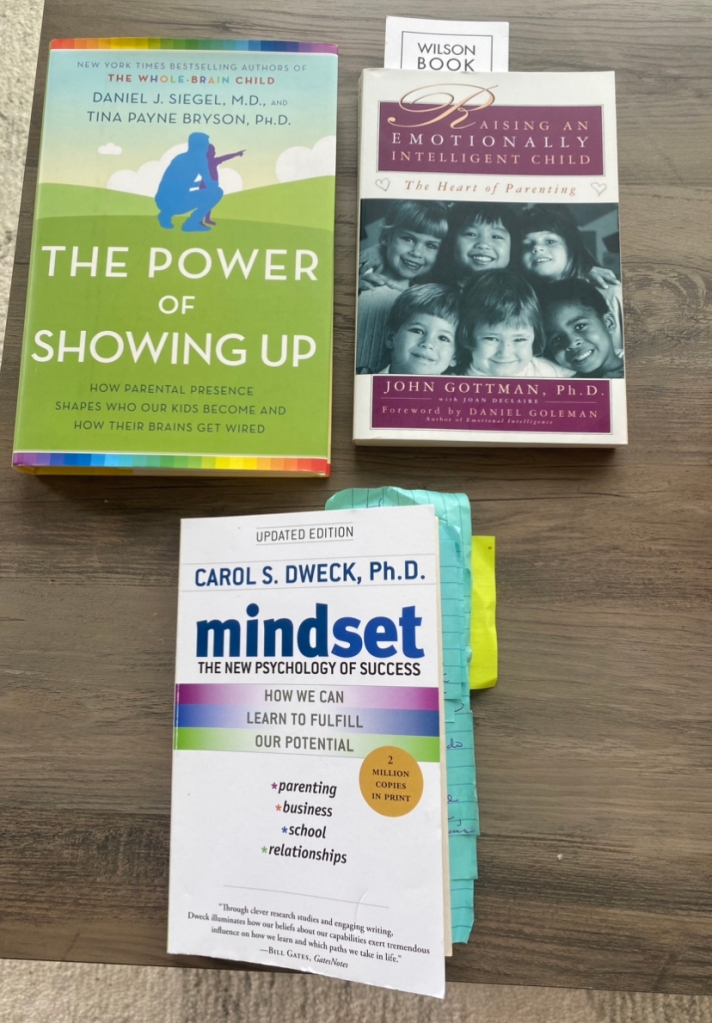
I could not hold my tongue – the opening to plant a seed of change was too prime to ignore. “This is exactly what should be happening in a moment like this,” I stated loudly enough for those around me to hear. ”According to Dr. Dan Siegel the power of showing up and being present with a child when big emotions are consuming them validates their experience, builds resiliency and prevents shame and insecurities from taking root.”

In that moment, I felt just like my Daisy Scout daughter, speaking up when it mattered most. We don’t know what we don’t know. 

We don’t realize that our old parenting models were broken and they set us up for failure, for poor coping skills, limiting beliefs and a fixed mindset. 

Shame and embarrassment do not motivate us to try harder, begin again and learn from our failures. Criticism erodes trust – trust in ourselves and our potential as well as trust in others that they will do all they can to help us overcome obstacles.  Pity is the near enemy of compassion – and it puts a lot of distance between us and others (even in the face of a similar situation that we could easily find ourselves in). Pity just enables us to think we are so lucky because we are not having that experience.

But wait — what if it was OUR child having that experience? Would those in the gallery who were so judgmental when it was happening to someone else, do a complete 180 if it was their own child?

Even if it was only briefly, I could see that some people were taking a minute to reflect on my comments.  I knew that some parents were well aware that their own child had been asked to swim in a new event for this meet – and yes, they were anxious about the looming possible outcome.

None of us really know the full backstory for that young teenaged girl. Yet it was clearly evident that something much bigger than swimming another 25 yards was in play. Imagine for a moment that you were asked to swim 50 yards in a relay, to be the last leg of your team’s event. And you knew the moment you dove into the pool that your team was going to finish dead last because every other team had already completed the event. How would you be feeling? Defeated before you started? Why bother? What’s the point? Why me?

The more life experiences that we personally have, the greater our ability to tap into our empathy and compassion for others; the more likely we are to normalize moments like this for children and parents. Why would we ever deny another person the support they need the most in moments like this? 

What if this young girl was really struggling with all the hormonal imbalances of puberty? What if her parents had recently divorced or the family was newly relocated to this town? What if this was her first swim meet? What if this was her first Christmas without her beloved grandma? What if her teammates had taunted her and said she shouldn’t be in this event?

I left that swim meet that day thinking about that young girl, hopeful that her mom was skilled in offering her daughter the scaffolding she needed to fully process this experience and grow through it rather than unhealthily “going through it”.

The power of showing up and listening to a child’s full emotional experience is a game-changer. Validating their true feelings and helping them to name all the emotions they feel is how we become the training wheels for an expanded emotional vocabulary and healthy coping skills. 

This is how we build resilience and inner confidence in our kids.  They are more likely to try again and trust in their own potential. Kids are more open to trying new things that may seem hard and challenging. In fact, conquering their fears feels empowering to them.

All of us come into contact with children – and being knowledgeable about vastly improved parenting models is like having an ace up your sleeve. Parents, grandparents, aunts, uncles, teachers and coaches will all benefit from discovering brand new skills and tools for age old childhood emotional moments.

Dr. Becky is a mom first and foremost. She is a child psychologist by profession – and she is a shining example of putting her work into practice. 

If you follow her on social media, you will be highly entertained by her sense of humor and oh so relatable parenting moments. You’ll laugh, you’ll cry, you’ll commiserate and you find real support for real life.

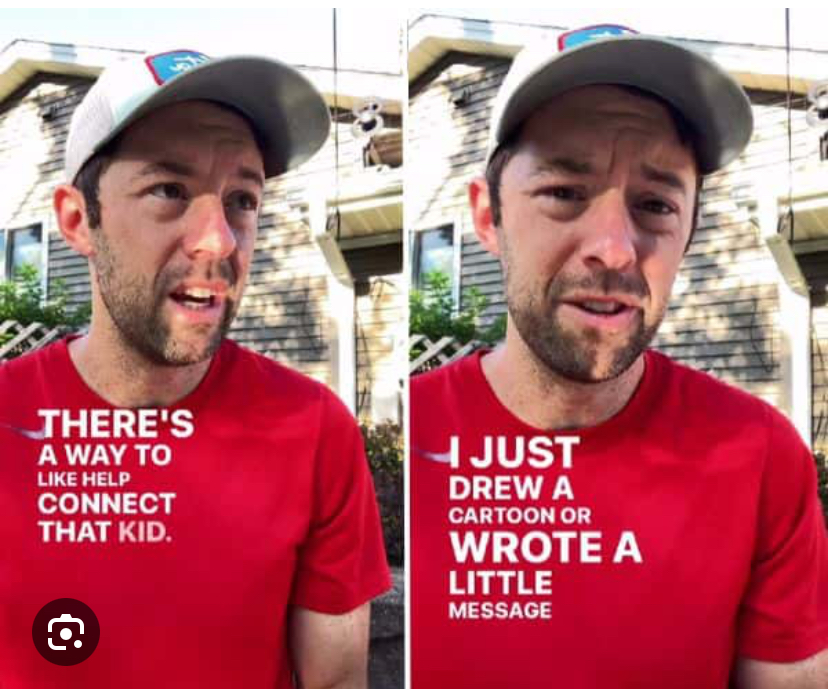
MATT EICHELDINGER – check out this incredible teacher who has created the most heartfelt videos about his students over many years as an educator and caring human being. Life lessons from real life with kids that will stay with you and your kids.
https://matteicheldinger.com/
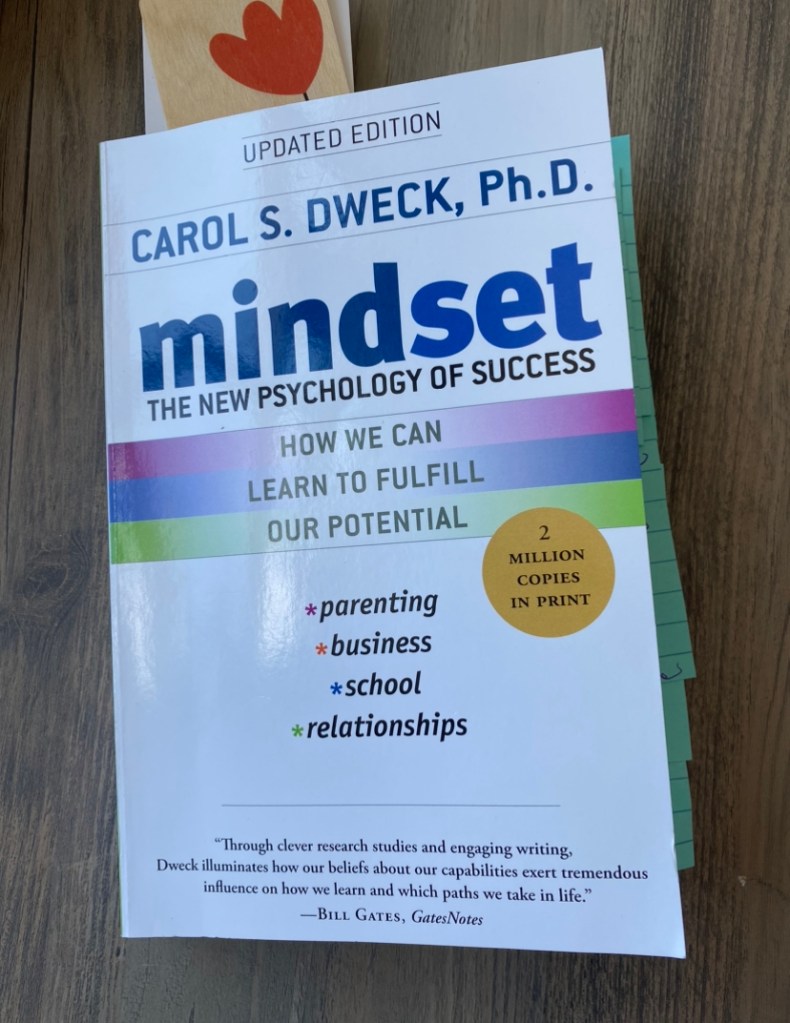
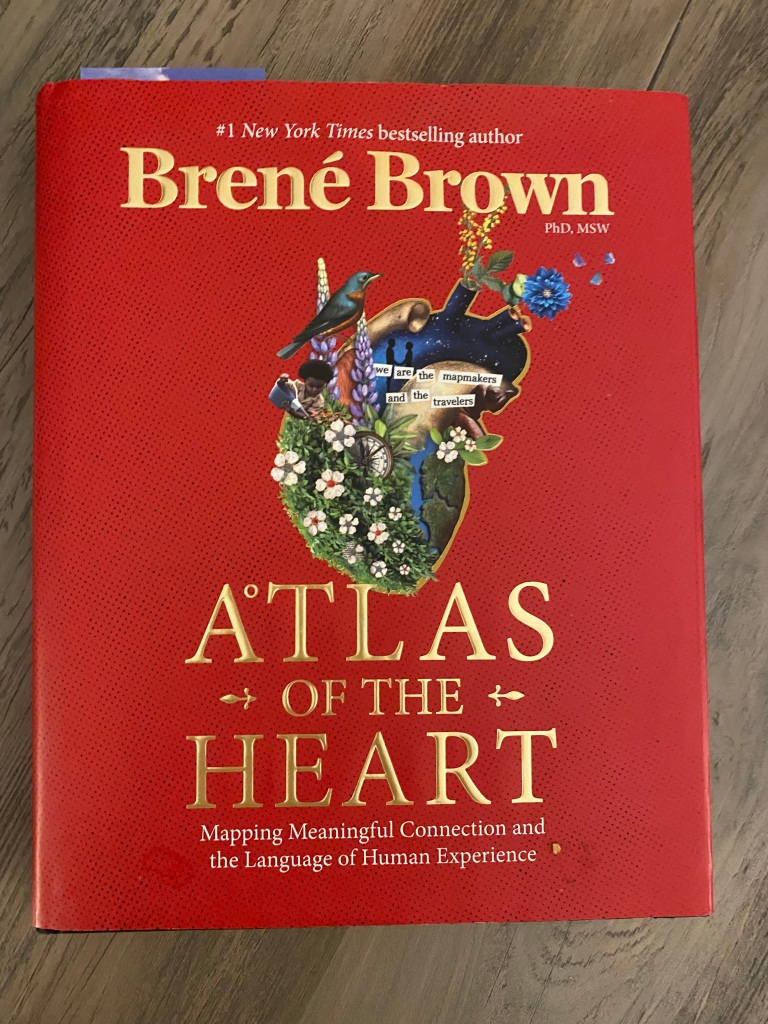
ATLAS OF THE HEART is a family reference guide that should be in every home. If you want to get serious about building your emotional vocabulary, this book is for you. Not only will you gain a working knowledge of 87 emotions and experiences, you will discover when those emotions are most likely to show up. 

Daily Gummies of Wisdom – Year End Insights

For those of you who follow my blog regularly, you may recall that I created a new feature during 2023 — occasional blog posts that featured a short collection of my Daily Gummies of Wisdom — with some expanded thoughts and reflections.

My Daily Gummies are nourishing food for thought to jumpstart your day and are intended as meaningful supplement for emotional health, self-awareness and self discovery. I launched the Daily Gummies of Wisdom email program in the spring of this year with the hope that the insight I shared might really resonate with every day life situations we all encounter.  

The biggest surprise for me personally was hearing back from so many people all across the country who found the gummies to be worthwhile, thought-provoking, motivating and inspirational. Sometimes the Daily Gummy was printed and stuck on the refrigerator for the family to see; some were forwarded to a friend dealing with the very issue that the gummy addressed; some were incorporated into sermons, support group discussions or a counseling session. A few people have shared with me that reading the Daily Gummy is now an integral part of their regular morning routine. I was deeply touched and overjoyed by the stories I’ve heard about the impacts of my Daily Gummies of Wisdom. What a gift for me — to be learning from others how they digested, metabolized and incorporated the insights into their own experiences. 

What I am learning is that real life examples do a lot to help us integrate better skills and tools in our daily lives. What could be more beneficial than hearing a true story about showing up differently changed an old relationship dynamic, solved a parenting problem, empowered others to become more true to themselves? That’s what I will be sharing more of in 2024 — the exciting changes that occur when personal growth and self discovery are visibly in action in our daily lives.

To jumpstart 2024, here is a recent Daily Gummy of Wisdom and the backstory that inspired it:

This gummy about our personal power was shared on December 11, 2023. It was inspired by two fascinating podcast conversations that unpacked “power” in a whole new way.  We hear a lot about “power” and we often have a negative association with it, such as power over, strong arming another or “disempowering” someone.

But what if we reframed it and saw power as our engine of change; how we shift from being stuck to making improvements?

The first podcast conversation that reframed my thinking about power was with Esther Perel, the renowned couples therapist and best selling author. Esther is such a compassionate. empathic and skillful couples counselor. She has a bedside manner that would be the envy of any medical professional. She possesses a rare, surgical precision to extract a couple’s key issue and open them up to seeing the deeper, loving relationship that is possible for them. Her ability to pull this out without inflicting more pain while simultaneously guiding a couple to healing, healthy connection is astounding. In a single couples session, she can remove a long-standing impediment and shift a couple from fighting WITH each other to fighting together FOR their partnership. 

Esther offers a unique perspective on power by reframing a common relationship power dynamic – the kind where one partner is strongly supported in pursuing their goals and the other partner makes a lot of sacrifice to accommodate them. Esther reminds the “accommodator” that he or she actually has tremendous power in the relationship.  If the “accommodator” stopped offering support, picking up the slack or doing more to keep the home life balanced, the other person would likely struggle to meet their goals or pursue their dreams. 

This reframing shifts the power dynamic perspective for both partners. Suddenly the accommodator clearly sees his or her own value, impact and contributions in a meaningful light. And the one who is the benefactor of all these accommodations gains a healthy awareness of all that is being offered on a daily basis to pursue a long term goal.  Esther gives the accommodator the gift of seeing his or her “agency” and the benefactor the gift of “gratitude” for the other’s contributions and sacrifices. 

Charisse Cooke, author and attachment-based psychotherapist, recently offered this tool for accommodators who are growing resentful: “match the behavior”. If you are hyper-functioning, overdoing and overextending but not getting anything in return, dial back on the energy, effort and contributions you are making to match the behavior and responses of your partner. This is a great way to correct an imbalance in the relationship dynamic.

We can restore a healthy balance in the “give and take” of our relationships when we recognize how we often give away our power and then feel unappreciated and resentful. 

I learned even more about power from a recent Huberman Lab podcast featuring Robert Greene, author of six international bestsellers. 

Robert Greene believes there is too much negative focus given to power, when in fact it has remarkable positive benefits. He shares that exercising self control is a SuperPower – especially when we are able to skillfully regulate our emotions and respond to life with calmness, clarity and objectivity. 

We give away our power unintentionally when we have knee jerk emotional reactions. We are well aware of this — often instantly regretting that we displayed such an immature response in front of our kids, friends, family or publicly. In a split second, we acted out of character and embarrassed ourselves. 

Think about a time when you witnessed an adult having a childlike meltdown and you lost a little respect for that person or it tarnished the image you once held for that person. This is how we diminish our power. 

Arthur Brooks, happiness expert and another great author, recently revealed that our grandmothers gave us really good advice when they told us to “count to 10” when we were little and emotionally out of control. But now, we have science-based evidence that we really need to count to 30 – because that is how long it takes to move us from the limbic system in our brains to the pre-frontal cortex. In other words, the limbic system is where the strong emotional reactions come from — and using a 30 second pause moves us into our super-power of self-control and emotional regulation (the executive functions found in our pre-frontal cortex.)

Robert Greene urges us to not give away our personal power, but rather to own it as a super-power. Emotional self-control puts us in the driver’s seat and facilitates us showing up in life with our character, integrity and values intact. We actually have greater negotiation and strategy skills at our disposable when we show up cool, calm and collected.

FIND THE HUBERMAN LAB PODCAST on your favorite platform, including YouTube, and scroll through the episodes for the latest science on a topic that interests you.
FIND ESTHER PEREL’S PODCAST on your favorite platform — and listen in on counseling sessions to gain new insights on relationships

Not a Workshop – It’s A Daily Practice

I’ve been blogging about my own personal growth and self-discovery journey for almost 8 years. Like most people, I probably believed in the early stages of this process, I would be able to identify the habits I needed to change and the skills I needed to acquire in order to check the self help box. Then I could move on into the next chapter of my life – happily ever after.

What I have come to more fully understand and appreciate is that personal growth, self-discovery and human evolution are in a constant state of change. As a direct result, we have to change our mindset about personal growth and self discovery.

The answers to our lifelong, puzzling questions about who we are and why we behave as we do are not to be found in a single book, podcast or workshop. We can’t earn a certification, degree or even a merit badge — and then move on as if our work is forever done.

Personal growth, self discovery, emotional health, relationship skills and mindful self-awareness are our life’s work. It is dynamic, integrated and evolving – because we are.

I’d understand if you were less excited, and more intimidated by this revelation, but take heart – it turns out that this work doesn’t have to be as hard and painful as we once made it. Thanks to neuroscience and the social sciences, we now possess evidence-based knowledge of how our brains work. The incredible discoveries that have been made in very recent years are helping us understand why all the old ways of addressing our behavioral, mental and emotional health were not working very well.

As we gain a greater understanding of how our brains actually work — and how our lifetime of emotions and experiences get created, stored and pulled out for reference — we can begin to see the evolving benefits of incorporating consistent emotional practices into our daily lives.

We don’t workout til we get the strength and flexibility we desire – and then stop. We maintain our physical health with daily commitments and practices. And now, we are learning that we must do the same with our emotional health.

Take a moment to think about the last time you lost your patience or your cool; or when you hit a trip wire and became so emotionally triggered by something pretty insignificant in hindsight. How might it feel to have greater muscle memory when it comes to emotional self control?

It’s the time of year when holidays are really amplifying the hard truth that we get tripped up a lot by unprocessed emotions and old family dynamics. Rather than cringing about having to deal with all this messy stuff, we can use it as an opportunity to become an emotions scientist – and to make some discoveries about how better emotional regulation would dramatically improve our quality of life and our relationships.

Let’s take a closer look at an emotion with which we are all familiar — good old fashioned envy. There’s no doubt that the holidays present us with more than our fair share of opportunities to compare ourselves to others in a whole host of ways. It’s human nature to find ourselves envious of others when we look around at the office party or family gathering, or scroll through the festive photos our friends post on social media.

We may feel that tinge of envy in our bodies as we compare and contemplate what others have that we don’t, or if we let FOMO (the fear of missing out) or FOPO (fear of other people’s opinions) take hold in our minds.

Envy is an emotion; we feel envy. Comparison is a noun and it is simply a consideration or estimate.

It’s not the comparing that gets us in trouble; it’s the unchecked, disregulated emotion of envy. When our emotions are super-charging us, we tend to lose our perspective and our quite often our self control. Whether it becomes a cycle of rumination or an emotional outburst, we get derailed from our own present moment and we rob ourselves of joy. Sometimes our behavioral actions even rob others of their joy. It’s the collateral damage of us getting caught up in emotions we would rather not be feeling.

Until very recently, we did not fully understand that we actually are capable of much more emotional intelligence and self regulation than we realize. For far too long, we believed that the only way to tame emotions was to use sheer will power or “fake it til you make it.” These old strategies did not pan out so well.

Have you ever witnessed your young child having an absolute meltdown about a toy or a treat that their sibling has — knowing full well that your wailing child doesn’t even like that toy or treat? That is a classic example of unregulated, impassioned envy. A young child’s developing brain does not have the capacity yet ….. to engage differently with their big emotions. As adults, we do have this capacity, but many just don’t know it.

As Adam Grant makes so obvious, it’s human nature to compare ourselves to others. The act of comparison is not likely to go away no matter how much we humans evolve. It’s when that comparison stirs up our envy that things actually do come apart at the seams. Now we “devolve” into the little kid who is melting down over something we may not even really want. We may have about as much success controlling our envy as a parent trying to reason with the toddler if we rely solely on sheer will power. We can’t arm wrestle our way out of big emotions any more than a child can.

What’s in that envy cocktail that we shake or stir? Resentment, disappointment, frustration, sadness, insecurity, anxiety – just to name a few.

Have you ever felt envious about a friend or family member but in reality you wouldn’t want to trade places with them in a heartbeat? We cannot make this distinction in the moment that envy has taken over – our brain’s negativity bias and the strong unchecked emotions make it nearly impossible.

If we stay stuck in envy, we become resentful, miserable, and angry; we may fall prey to bouts of superiority just to make ourselves feel better. We run the risk of projecting all we are feeling out onto others. This is the adult version of the toddler temper tantrum.

Adam Grant offers a tool to avoid envy robbing us of our joy: “A key to growth and happiness is focusing our comparisons on people who inspire us.” In other words, he is guiding us to become “discerning” about our comparisons. This makes so much sense because it keeps us grounded and helps us maintain perspective. Think of your inner GPS being your “inner adult”; the voice of reason.

Becoming “discerning” about who and what we are comparing ourselves to is similar to an effective distraction technique often used with young children to help them get out of an emotional spiral. We disrupt the brain’s runaway emotional train with a pause between stimulus and response, and then we use discernment to switch tracks. Simply put, we refocus where our attention is going.

There is another tool we can implement to super-charge self-regulation skills. We can “substitute” a better emotion, on purpose, and in real time.

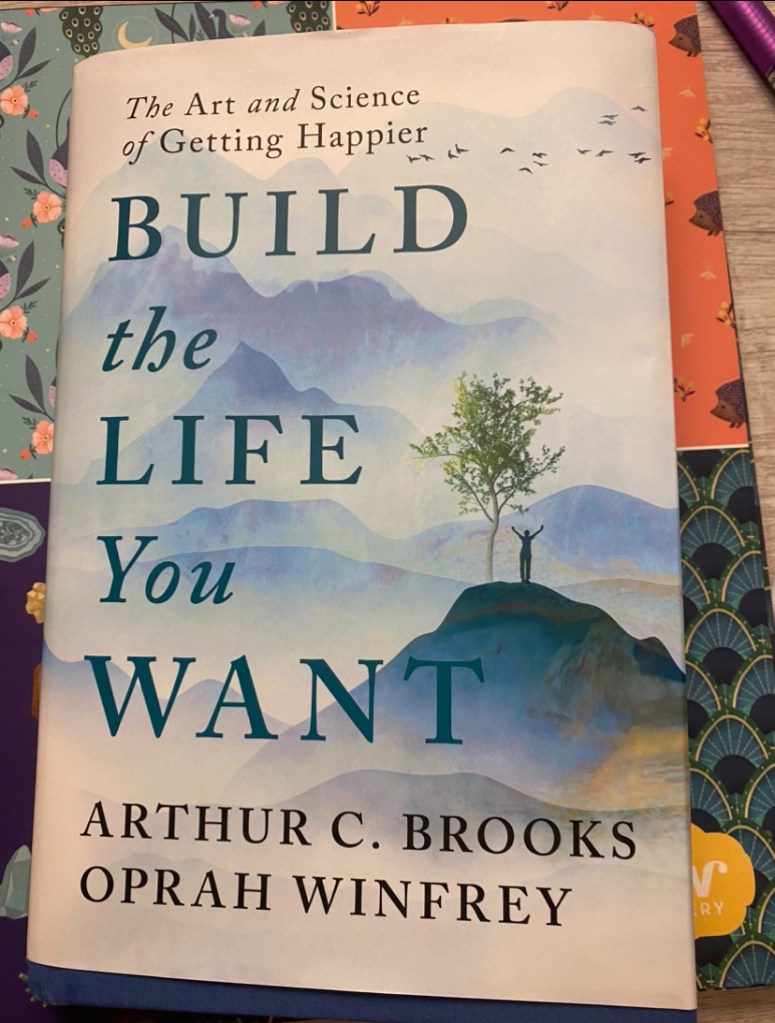
In his latest book, Build the Life You Want, happiness expert, Arthur Brooks, introduces this dynamic new emotional practice with a very relatable metaphor:

Most people use caffeine because they aren’t content with the way they feel naturally, and want better outcomes in mood and work. It does so through substitution of one molecule for another. Caffeine is a good metaphor for this principle of emotional self management: You don’t have to accept the emotion you feel first. Rather, you can substitute a better one that you want. ” — excerpted from Chapter 3, Build the Life You Want.

Think about what we are trying to accomplish as parents when our child is over-reacting. We want them to “substitute” a different emotion for the one they are currently feeling. In fact, we mindlessly offer this common refrain to our distressed child: “Oh honey, don’t feel that way” and then we offer them other choices. These choices are often rooted in gratitude — all the things they already have.

Are you surprised that you already possess this skill of “substituting” a different emotion — helping others to see that they can choose an emotion that is more constructive to “act” on? It’s so easy to employ this tactic with our child or friend — and one of the most challenging to rely on for ourselves.

Our labs will be well stocked with opportunities for us to practice the pause, discernment and substitution over the holidays. Our labs are our ourselves, our families and our interactions with others as we make celebratory preparations.

What might your hypothesis be about the tiny Petri dish that has no emotional regulation — yet.

What are your predictions about the middle sized Petri dish that ignites quickly and has only sheer will power to overcome the emotional wildfire?

What outcome might be revealed when the larger, more advanced Petri dish, uses a pause between stimulus and response, discernment to shift focus and attention, and emotional substitution — choosing the emotion they wish to act from rather than the emotion they initially feel.

Emotional intelligence and skillful emotional regulation are the natural next steps in our human evolution. Neuroscience and social sciences are giving us the proof positive that our brains have the capacity and neuroplasticy to create new, healthier neural networks, especially when it comes to the complexity of our emotions. With the advent of all these new discoveries, better skills and practices are replacing old paradigms for mental health, parenting, education, modern medicine and psychology.

An Emotional Skills Workshop may provide us with a diverse array of emotional tools like being mindful about where we place our attention and substituting a better emotion — but without consistent, regular practice, we will either forget about them or atrophy our ability to use them skillfully.

As Arthur Brooks underscores: “emotional substitution is a skill that takes practice, not just an insight. With practice and dedication, it can become quite automatic, and you will love the results.”

What really resonates with me about Arthur Brook’s wisdom, is that we are trying so hard to parent our kids to be in control of their emotions but for generations we have gone about it all wrong. Intuitively we sort of know what to do when we are trying to help them, but we were never taught how our brains and bodies work, the mechanics of emotional intelligence and regulation. It’s hard for us to teach what we ourselves don’t fully understand; what we ourselves are not consistently role modeling because we are not yet skillfully practiced.

That old adage “practice what you preach” is more relevant today than ever.

Modern day parents have so many ways to protect their children than we older generations had. Baby monitors, car seats, safety gear for sports, sunscreen, well baby checkups and preventative dental care are some powerful examples. Now they have at their fingertips, scientific breakthroughs about happiness and fulfillment — it is emotional integration.

We can install emotional integration in our young children and we can teach them how to use their innate emotional intelligence in ways that actually support and protect them. We are entering the age of “meta cognition” and it is a game-changer.

The reason that a single workshop will never be the answer for personal growth and self discovery is that we are literally changing every single day. Emotional intelligence and skillful emotional regulation is not a quick fix or a workshop — it is a life practice.

Emotions are here to stay – and for good reason. They are the guard rails, channel buoys and lighthouses for our quality of life and meaningful connections with others.

We take our emotional past into our present and we build our futures with our emotional responses in the present moment. We bump into each other every single day, with our emotions, ideas, perspectives and experiences. When we change, others change. We need better life navigational tools and skills to do this in a way that matters most to those we love.

If you don’t want to dive into this big read just yet, listen to Dr. Lisa Feldman Barrett discuss emotions in the Huberman Lab podcast shown here. You will discover how integral emotional intelligence is for our children especially.

Emotional Airbags

Just envision this for a moment: When we are emotionally triggered, it is like an airbag exploding to protect us. However, it catches us off guard – the impact so sudden and so strong that our brains send out high emergency alerts to our bodies. We get hijacked rather than assisted. We feel like we can’t breathe fully, our hearts are racing and our ability to see clearly is limited.

I’ve never experienced an airbag deploying in a car, but I can imagine that it feels more scary than protective when it happens. While we know that air bags are a safety feature designed to protect us from serious and even life-threatening injury, it is not something that we get to practice. We can only imagine what it might be like and we can mentally prepare for how we would hope we can respond in such a situation.

Our natural human response to an emotional trigger is the equivalent of airbags deploying. Our emotions are intended to protect and inform us but a strong emotional trigger can feel surprisingly overwhelming.

Our very first experiences with our internal emotional airbags occur in childhood and they have lasting impacts.

For many of us who are older, the cars our parents drove back in the day didn’t even seatbelts let alone airbags. Those safety features only came along when a critical mass of human beings realized that we could actually save life and limb by being proactive and installing numerous safeguards. It is this very same analogy with our emotional airbags; back in the day, our parents did know about the profound benefits of emotional intelligence and most importantly, skillful emotional regulation.

We are now at a very important tipping point — we are fast gaining critical mass in the awareness that emotional integration is the human operating system upgrade that should be modeled, taught and integrated into our children’s developing brains.

The challenge for many of us is how do we teach something we were never actually taught? The truth is that we have actually done just that in many areas of life. Just look how quickly we taught ourselves to embrace technology, electronic banking and Zoom meetings. If we stop resisting what appears to be harder and even unpleasant work, we might discover that life and our relationships actually get a lot easier and more fulfilling with emotional integration.

I recently learned that we can gain a lot of traction in our own emotional integration education by being around children. This makes so much sense because we can witness in real time what happens in childhood when kids are given tools and support to understand and handle their emotions. It’s a visual aid more engaging than a magic act.

When something new comes along such as an upgrade to our phones, our laptops and even our car’s technology, we can readily see how the improvements enhance our life and address a problem we may not even know we had. The same is true with emotional health. When we become keen observers of children and their interactions with their parents, siblings, teachers and friends, we witness firsthand how having meaningful emotional tools would have made a huge and dramatic difference for everyone — most especially for children who have very limited cognitive resources for making sense of a complex world.

In my prior blog posts in this multi-part series on Game-Changers for our emotional upgrade, you may have noticed that no matter who is leading the charge, or what modality or field they represent, everything points us directly back to childhood.

All the behavioral patterns, the protective armor, the coping mechanisms that we deploy have been handed down to us for generations, with no real advancements at all. In fact, what once seemed so complex about personal growth, trauma and self discovery have been boiled down to some pretty obvious truths: we really had a “one size fits all approach” and a small closet of possible options for navigating childhood. We were so handicapped for how we made sense of what was happening in our world.

A quick review of psychology, neuroscience, the enneagram, behavioral science, etc. reveals that our small closet of options held just a handful of “one size fits all” behavioral patterns and coping mechanisms. We are people pleasers or contrarians, we hide or we fight, we avoid conflict or we create conflict, we numb, we run, we freeze. Normal, child-sized responses to emotional airbags exploding in us, as well as members of our family and community without warning.

No wonder we ran for cover and struggled to make sense of the unpredictability and scariness of it all. We ducked into those little closets to find something that would soothe us and keep us safe from things we were feeling but did not understand.

Dr. Becky Kennedy explains this so beautifully when she reminds us that a small child who is overwhelmed with big emotions – and is throwing a tantrum or having a meltdown – lacks the skills he needs to manage that big emotional explosion. She tells us that we teach our children the skills they need to learn to swim, ride a bike or read. So why — she challenges us — would we expect them to be able to handle big, overwhelming emotions coursing through them — without some helpful tools?

I’m hoping that this brought you to a full stop.

Take a moment to think about how you are handling your own “sudden, big feeling moments” in real time today when your adult emotional airbags get deployed — especially in front of your kids.

We teach our children a lot by osmosis. What skills and tools are we reaching for when we are emotionally triggered, extremely tired, or overwhelmed by others or events? We not only need to role model and actively discuss how our emotions impact us, we really need to engage in the installation of emotional intelligence in our children. We need to teach emotional skills just as we teach them good hygiene and manners, how to share with others and how to use their words. In fact, when we install the emotional upgrades, all the other things we are attempting to teach them will be greatly enhanced in the most remarkable ways. Honestly, the parenting job is less exhausting and more productive with strong emotional skills and tools.

The reason for this is that our brains release adrenaline and cortisol when we are emotionally unmoored. Since we co-regulate each other, if we overreact when our kids’ emotional airbags have deployed, it is like double-dosing all those stress hormones. We would never double-dose our kids cough medicine or Tylenol – but losing our cool with emotionally distraught kids is like giving them an extra dose of stress hormones and throwing back some for ourselves.

Here’s what happens when our bodies get flooded with cortisol: Our heart rate and blood pressure go up; our bodies fight or flight response kicks in; our digestive system slows; our immune system weakens we become anxious, irritable and on edge. Chances are you are now realizing that this is the exact opposite of being a calming first responder when emotional airbags inflate.

We cannot be at our best as parents and emotional first responders when we are over-reacting to our child’s emotions and out of control with our own.

Take a moment to think back to an experience that you had as a kid when your parents or caregiver lost control — do you recall how it felt? It was probably pretty scary and you put a bookmark in your memory banks of how you might avoid that reaction in the future.

This is how our childhood emotional triggers begin. It is precisely why all the intersecting research points us back to childhood for the tap roots of our emotional triggers, inner critics and insecurities.

Old parenting models exacerbated the problem because emotions were treated as a bug and not a feature of our core operating system. Kids and parents were flooded with emotions and cortisol and the parenting rule of thumb was to send us to our room til we were able to be with others. We were often punished or dismissed for our outbursts, while our parents got to return to whatever they chose to do. No consequences for them. No repairs for the relationship rupture. We made a mental note of that too. We got a lot of mixed messaging to go along with our repressed and unprocessed emotional experiences. This double standard also created a lot of issues with our basic need for a secure attachment – and resulted in many of us having anxious, avoidant or disorganized attachment styles. Yet another clue from our childhood about why we might be having relationship issues in our adult lives.

Our brains are prediction machines. While we are not consciously aware of it, we have mental notes and bookmarks on a clunky old database that it still uses when we get hijacked and go offline. Our bodies and brains coordinate all their defense mechanisms very quickly when something feels oddly familiar and we need to be on high alert. Our emotional triggers are in those childhood databases.

The pivot is catching ourselves in the act. We have to catch ourselves in the act of being hit with our own emotional airbags and realizing that we are off-line, defaulting to that childhood database.

When we are operating our incredibly complex cars today at high speeds in heavy traffic, we have the ability to stay fully engaged with our current knowledge and awareness. We don’t default to how anxious and insecure we felt when we were first learning to drive. We have the awareness, dexterity and maturity to handle a frightening situation like airbags deploying in a car in the event of a collision. We most likely would act like the adults our kids need us to be in that circumstance. We can do hard things. In fact, we are pretty proud of ourselves when we handle a crisis like this with confidence.

We can do the same for our kids’ emotional airbags; we can become the trustworthy, grounded first responders they need and deserve.

I believe that the reason doing our own emotional integration work gets a lot of traction when we interact with kids is that we get a lot of opportunities to both observe and practice. As we pay attention to the common emotional triggers our children have, we can get equally more in touch with our own.

Kids haven’t changed; what has changed is knowing that emotional integration is an incredible feature of our brains and bodies — not a bug. Our children will have the same big overwhelming emotional responses that we did when we were little. They will get scared, angry, frustrated, confused, belligerent, shy, bossy, sensitive — the list is endless. But instead of leaving them to their own devices and that small closet of coping skills, we will be showing up as caring, comforting emotional mentors.

We can teach them or we can repeat the past. This is where real change takes place.

Each emotion our children feel is legitimate and is real for them. Acknowledging that is huge. It reassures them that they will be ok, that they are seen and heard and that we will help them manage their big feelings. They do not have to do that alone. In fact, they unable to do that alone because they do not yet have access to “top down” executive functions in those small developing brains.

We become the training wheels for our children’s emotional awareness, intelligence and regulation.

No overdosing on stress hormones for you or your child. Helping your child return to their baseline is how we teach them to “ride out” their emotional waves. As they grow older, they will then have a lot of experience with how emotions come on strong, and can subside with a little skillful assistance. We can teach our kids to label their emotions, to understand what they are trying to tell them and to process them in real time. This is how we help our kids get more skillful at their own emotional regulation. We teach them to tolerate a little short term discomfort and to learn from it. This is the preventative step we take to help them avoid numbing their pain.

It is also how we introduce them to the incredible benefits of self-compassion. Rather than our children growing up with harsh inner critics, fixed mindsets and limiting beliefs, we will be helping them build resilience, resourcefulness, confidence and growth mindsets.

We aren’t born afraid of our emotions. In fact, emotions are a baby’s first language and how they get their basic needs met. Rather than pulling the plug on emotions when our children learn to talk and express themselves with more context and complexity, we help them differentiate between self-identity and their behaviors. Telling a child they are bad, stupid or too much is the root cause of adults who struggle with their core identity, self-worth and lack of inner confidence. Label the behavior not the child. We have good kids and sometimes they have unacceptable behaviors.

We use boundaries as guardrails for our kids – to help them learn how to make good choices on their own later. Our boundaries teach kids more about the consequences of their behaviors more than any lecture ever will. And we want our children to become very skilled at holding boundaries when they are teenagers and adults so that they can clearly let others know what is acceptable behavior to be in relationship with them. Boundaries are a relationship tool that keeps us safe and in alignment with our core values.

Did you know that children have this same inquisitive nature about emotions? We are the ones who grew up with emotions being labeled as good or bad, positive or negative, even gender restricted. It’s time to peel those labels and reframe emotions as neutral, necessary, invaluable internal information. Emotions are a feature, not a bug of our core operating system.

Both our parental teaching experiences and our child’s learning experiences will be markedly changed for the better when we integrate emotional intelligence into everything else we introduce to our kids. Without all those airbags exploding, we will have more room to fully engage in the dual process in healthy, relaxed and mind-opening ways.

Just out of curiosity, check in with yourself to see how you actually plan for big emotional experiences for your kids on purpose. A surprise birthday celebration, those costumes they will be donning for Halloween, unveiling an upcoming family vacation — these are all intended to evoke great joy, delight and wonder. How do we support our kids when we have bad or sad news to impart — we lean in, comforting, soft and assuring.

Imagine yourself growing up without the impediments of limiting beliefs, false narratives or restrictive social conditioning. Imagine yourself understanding that your emotions are helpful information, normal and acceptable. If you are capable of imagining this, you may find yourself smiling, feeling free and adventurous, even child-like with wonder and curiosity. That feeling right there is what we are going for — that is what happens with emotional integration and giving our kids the skills and tools they need to make sense of the world in a healthy, growth-mind set, ever evolving kind of way.

Magic happens when we begin to take our own adult emotional integration seriously; when we teach and learn simultaneously with our kids. If you are a parent or grandparent, you have the best environment for this “on the job” training.

We all have the potential to contribute in a meaningful way to integrating emotional intelligence for kids and for each other. Bear this in mind with each interaction you have. We can be the scaffolding that we all need to come fully online with emotional intelligence.

Change-Makers Mapping the Way

Welcome back to my latest blog post series about the change-makers who are helping us take the next meaningful steps in the integration of emotional health into our lifestyles. In the first part of this series, I shared two dynamic change-makers for parenting and for couples. The common thread for both Dr. Becky Kennedy’s parenting model and Terry Real’s relational therapy is what we learned and experienced in childhood that impacts us still today.

Unfortunately a lot of what carries over from childhood into adulthood regarding our emotional health is often not so obvious to us. When we get emotionally triggered or over-stressed, we unconsciously react with patterns we have memorized for decades. We know them by heart.

This is the second post in this series pulls that common thread of childhood, inviting us to go back and revisit how we came to shape our world view but with an entirely different lens this time. Now we are archeologists, searching for the clues and examining artifacts.

A common metaphor that is being used to today across the spectrum of emotional health and personal growth is one of a map. This helpful metaphor tells us that we need to know our backstory and childhood history to clean out and update our beliefs and behaviors. This is the role of an emotional archeologist.

We are going to discover things that are still getting in our way when we retrace our steps. Let’s start by tossing out the chunky picture book with baby faces that express only happy, sad or mad. Most of the life mapping we did back then was based on a very limited emotional vocabulary. It’s nearly impossible to create a more nuanced map to navigate the complexities of real life with only three basic emotions. Yet that is what we did — and that is what we operate on unconsciously even decades later.

When Brene Brown introduced her book, Atlas of the Heart, in November 2021, she gave us a major upgrade to the chunky emotions picture book. She gave us language, definitions and real life examples of our emotions. She called it an atlas.

“I want this book to be an atlas for all of us, because I believe that with an adventurous heart and the right map, we can travel anywhere and never losing ourselves.” — Brene Brown

It was the first time for many of us to have an emotions reference guide; an atlas that helps us understand just how much our emotions are impacting how we navigate through life. Brene’s research supported the fact that most adults were still using only three basic emotions to express themselves – the same three that little kids use every day. Her extensive research was a reality check for how we’d gotten stuck and hampered in our adult lives with such a limited emotional vocabulary.

Brene not only offered us definitions for 87 common emotions and experienced, she provided common, real life examples of when these emotions were likely to show up. Brene’s book upgraded our emotional vocabulary from three core emotions — angry, sad and happy – to a much richer, contextual and expansive way to understand ourselves.

A bonus is that when we understand ourselves better, we become more skillful at understanding others – even (and especially) our own children.

The truth is that as we get to know our own emotions and experiences more clearly, the better we can show up in our relationships with more empathy and curiosity about how others are feeling. Rather than getting lost in each other’s emotions, we can become skillful travelers together.

In my last blog post, I highlighted the parenting movement that Dr. Becky Kennedy is championing. If you are a parent who follows Dr. Becky, you no doubt feel so seen and heard when you watch her videos. With a dollop of reality and a dash of humor, she skillfully shows us how we get hijacked by our kids’s behaviors and can quickly come down to their level with our own reactions and behaviors. Can we catch ourselves in the act of returning to child-sized tools for big emotions and scary experiences? Can we pivot and choose wisely to deploy more mature skills?

“Underneath bad behavior is always a good kid.” – Dr. Becky Kennedy, Founder of Good Inside

Underneath our own outgrown behaviors is that little kid we once were. What we learned and mapped out in childhood is what we need to investigate.

Let’s meet two more change-makers who did their own extensive emotional inner work — and then looked around and asked themselves how they could help others. They poured their hearts and energy into their respective fields and the creation of new approaches for becoming emotions archeologists. Then they took their work one step further. They are teaching us how to integrate our emotions and positively impact how we navigate life and map a better future.

These change-makers are paving the way to a major pivot in mental and emotional health: An ounce of prevention really is worth a pound of cure.

We now know that we do need to go back and look at our childhood to “back-map” why we react without thinking when we are emotionally charged. What happened in our childhood that contributed to our coping skills, unconscious behavioral patterns, emotional triggers and beliefs about ourselves?

In a recent blog post, I shared that Dr. Dan Siegel, author of of Whole Brain Child, acknowledged that many people do not want to revisit their childhood experiences. There is a fear that revisiting old painful memories will take over our current lives and we’d rather not go there. But the truth of the matter is that unconsciously these things we keep stuffed down or locked up are literally showing up in our lives anyway. It’s not the monsters under the bed or the secrets in the closet that are the problem, it is the reality that they are taking up a lot of storage space — and they creep into our minds and behaviors unconsciously.

Meet Dr. Richard Schwartz, creator of a revolutionary form of therapy known as Internal Family Systems. He also uses the concept of a map to help us understand how all the parts of us show up when we are making our way in life.

If you are not familiar with the term Internal Family Systems, you may think that it is a discipline or field devoted to our family trees – which are often full of generational patterns, inherited traits and all kinds of dysfunction.

However, Internal Family Systems is actually a very useful evidence-based psychotherapy developed by Dr. Richard Schwarz in the 1980’s. In plain language, Internal Family Systems is all about us – the me, myself and I.

It is our unique, individual, inner family system comprised of all our sub-personalities. Each and everyone of our sub-personalities has its own viewpoint, qualities and roles it plays in our daily lives.

Before you shrug your shoulders and dismiss that IFS could be beneficial for you and all those you love, stop to think just how familiar you are with a few of your sub-personalities. How well do you know your Inner Critic? Do you have a steamroller in your personality that likes to run over any constructive feedback you might be offered? Are you a people pleaser who often gives to the point of exhaustion? Do you have a fierce warrior side of you — the big protector who prefers a fiery battle over calm conflict resolution? Do you have a stealth, hyper vigilant, guard who stands watch night and day to keep you safe?

If you’ve ever felt an internal tug of war, it’s quite likely one of your sub-personalities was engaged in a struggle. I’m guessing you may be now feeling a little more curious about Internal Family Systems.

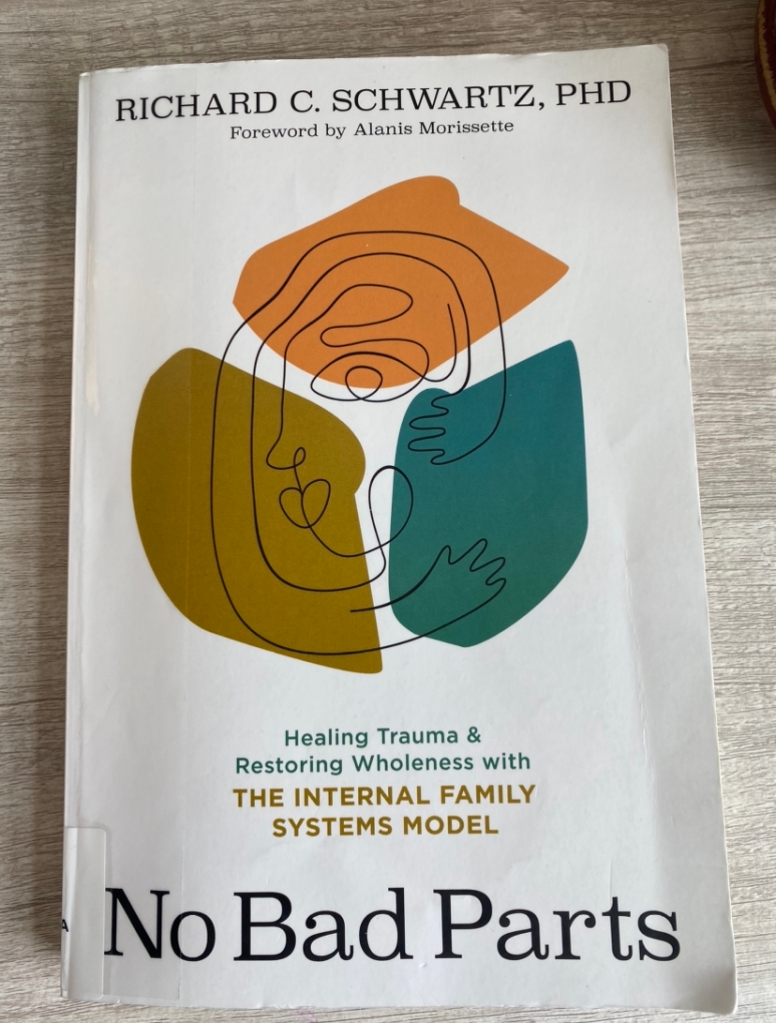
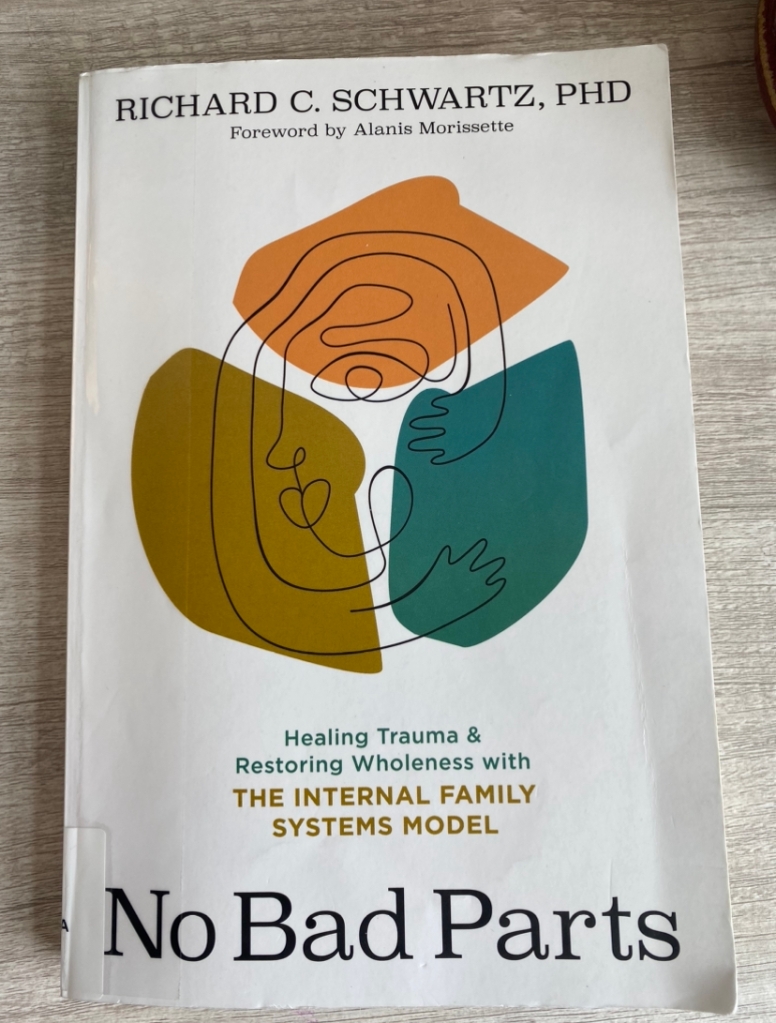
In his book, No Bad Parts; Healing Trauma and Restoring Wholeness with the Internal Family Systems Model, Dr. Richard Schwartz does not refer to our sub-personalities as “demons” as this pillow suggests, but rather a much more appropriate, relatable term — they are our “burdens.

If you ever get in your own way, then you can fully grasp how our sub-personalities are often the very cause of our self-inflicted problematic behavioral patterns. They do burden our lives; they make things harder than they have to be.

Dr. Richard Schwartz reflects on the work of childhood attachment theory pioneer, John Bowlby, to help us explore how and why we came to possess such intricate, complex sub-personalities. John Bowlby viewed our “childhood attachment styles” as our “internal working models”.

Many of us grew up with parents who were not emotionally available and often had a lot of problems of their own. The old parenting models punished us for our “bad” emotions, gave accolades for our “good” emotions; or worse yet, encouraged our ability to become cognitively dissonant and just power through our emotions.

As children with pint-sized developing brains and the inability to make sense of a very big, complex, confusing and contradictory world, we developed “maps” of what to expect from our caretakers and the world in general — and from all our subsequent close relationships. These “maps” we created also told us things about our own level of goodness (or lack thereof) and how much we deserve love and support (or how we weren’t worthy).

These individual “maps” get lodged in our bodies of our young parts and become very powerful – and unconscious – organizers of our lives. These are our personal burdens.

As if that isn’t even to contend with as we mature, we also carry internally another class of burdens — legacy burdens. These do not come from our direct life experiences, but we inherit them from our parents. Legacy burdens are the generational patterns, beliefs, and attitudes that get passed along rather organically. They too are very potent organizers of our lives. Think of all the societal conditioning, cultural beliefs and attitudes that are baked into our lives from birth. As Dr. Schwartz articulates “because we have absorbed these legacy burdens in our daily environments, we have marinated in them for a very long time; so it’s often harder to notice them. In this way, legacy burdens can be as prominent and unnoticed as water to a fish.”

Legacy burdens often show up as biases and prejudices that we may not be consciously aware that we possess. Intellectually we believe one thing, but instinctually and unconsciously we can act and feel quite differently when we are emotionally charged. High stress situations take our executive functions offline – and suddenly we are acting on the “baked in” legacy burdens, not from our current values.

Dr. Richard Schwartz invites us to become very fluent and familiar with our sub-personalities. Where we once believed it was better to use willpower to fight or resist them, he turns this theory inside out. One of the most transformational ways to really get to know ourselves well, and to do our our “inner work”, is to get up close and personal with our inner cast of characters, our sub-personalities. This is our very own “internal family system.”

We’ve often referred to personal growth work as peeling off the layers our onion, but Dr. Schwartz tells us that our sub-personalities are more like cloves of garlic. Each part is like a garlic head with individual cloves. The individual cloves developed from an event or experience, how we made sense of it, what we came to expect on a regular basis, and how we mapped it out. These parts have “blended” themselves to our perspectives, emotions, beliefs and impulses.

Our emotions, bodily sensations, thoughts, impulses, knee jerk reactions, limiting beliefs — they all are emanating from our internal parts. Dr. Schwartz refers to all of these as “trailheads“. He offers that when we focus on one, it is as if we are starting out on a trail that leads us to the part of us from which those feelings, reactions, impulses emanate.

What happens on this trail when we lean in with curiosity and a strong desire to learn our inner terrain? We open up to discovery about the parts of ourselves and our stories that have much wisdom to impart to us. And we often learn that all that messaging we got as children is not at all who we really are, who we have become and especially how we can continue to evolve into the best version of ourselves.

Can you picture yourself as a small child on that trail many decades ago? How different would the landscape look to you and how scary would it be to navigate it with limited resources all while fighting back tears and an onslaught of big emotions? Would you want to use the map that child created to help you navigate the trailhead today? Of course not. Today you have so much more knowledge, self awareness, agency and resources at your disposal.

Take a moment to think about grown adults that are still having meltdowns and explosive temper tantrums. Reflect on the emotional triggers you can spot in yourself and others that seem like a huge overreaction to current events. Do you see childish bullying tactics showing up with adults who frankly should know better?

With the Internal Family Systems model, Dr. Schwartz reframes our sub-personalities as our “parts”; as if each part were a person with a true purpose. Our inner “parts” are doing a lot of important jobs to help us get through life and be in relationships with others. The problem is not us — the problem is that our “parts” keep us stuck in the past.

The parts of us that throw temper tantrums are loudly announcing “please pay attention to my needs right now”. The parts of us that want to “numb out” are simply assuming the role of “pain reliever”. Very often it is deep emotional pain that causes the parts of us to step in as a protector (albeit one that now causes us more trouble than relief). The inner parts of us are the ones pulling our emotional triggers.

If you have ever been a sibling who tried to protect younger siblings from a parent’s unchecked anger, then you have a very clear, real-life example of the role that your “parts” are playing for you. Dr. Schwartz helps us understand that when we change our perspective on our parts and the roles they play, we can “unburden” those parts of us from outgrown, outsized fear and responsibility.

The Internal family systems model has become a big transformational pivot for how therapists and psychiatrists are treating trauma, addictions, depression and anxiety. It is similarly a meaningful pivot for individual and couples counseling and it is vastly improving our approach to parenting. We are shifting away from stigmatizing these issues, from blaming and shaming, and relying solely on abstinence or will power to solve the problem.

When we do this inner work and look at our “parts” and how they show up in our adult lives, what we discover with much clarity is how our own kids are doing the very same thing today. If your child or grandchild blurts out that they are “stupid or bad”, “too much trouble” or “not smart enough”, they are blending their behavior with their identity– they are creating their inner garlic clove.

Once we begin to explore our own childhood maps, we gain a lot of insight into what might be happening in our own children’s self identity. We can readily see when our children might be taking their behaviors – and our reactions to them – as labels for who they are. We can help them course correct in real time. Yes, an ounce of prevention will most definitely be worth a pound of cure.

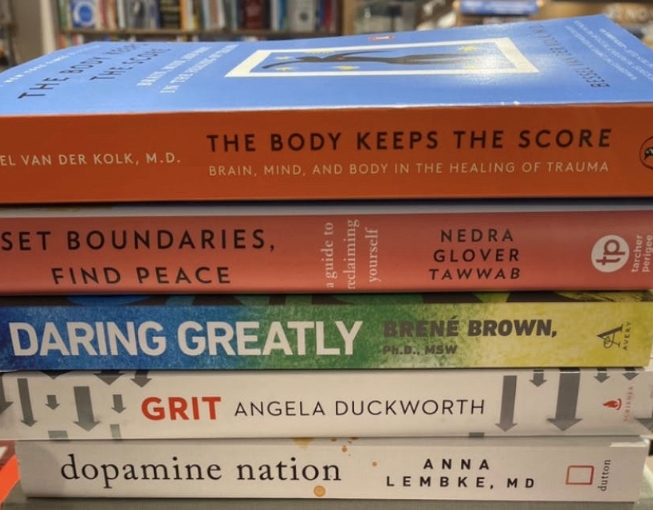
Rather than waiting for these emotional and mental health issues to crop up and create big problems in our lives and relationships, we can become proactive in our emotional health lifestyle. The groundwork for this improved foundation for a long and meaningful life has been laid by Brene Brown’s two decades of research on shame and vulnerability, Kristin Neff’s work on self compassion and Dr. Carol Deck’s work on mindsets. It integrates seamlessly with all the research, studies and improved methodologies by Dr. Richard Schwartz, Bessel Van Der Kolk, Gabor Mate, Dr. Dan Siegel and Dr. Bruce Perry (just to name a few).

Counseling, therapy and life coaching are all changing in very beneficial ways due to breakthroughs in neuroscience, psychology and behavioral science. We are collectively moving to “prevention” rather than treating problems after the fact.

Dr. Schwartz’s book – No Bad Parts – and Dr. Becky Kennedy’s insights that we have good kids with problematic behaviors dovetail in a very impactful way. We can teach our kids an expanded emotional vocabulary, integrate their honest emotions with their experiences in healthy ways, and teach them invaluable emotional regulation skills.

Now let’s turn to a pioneer of this new emotion revolution – a man whose childhood life story became fuel for his passion to teach us all how to integrate our emotions to guide us rather than stunt our growth.

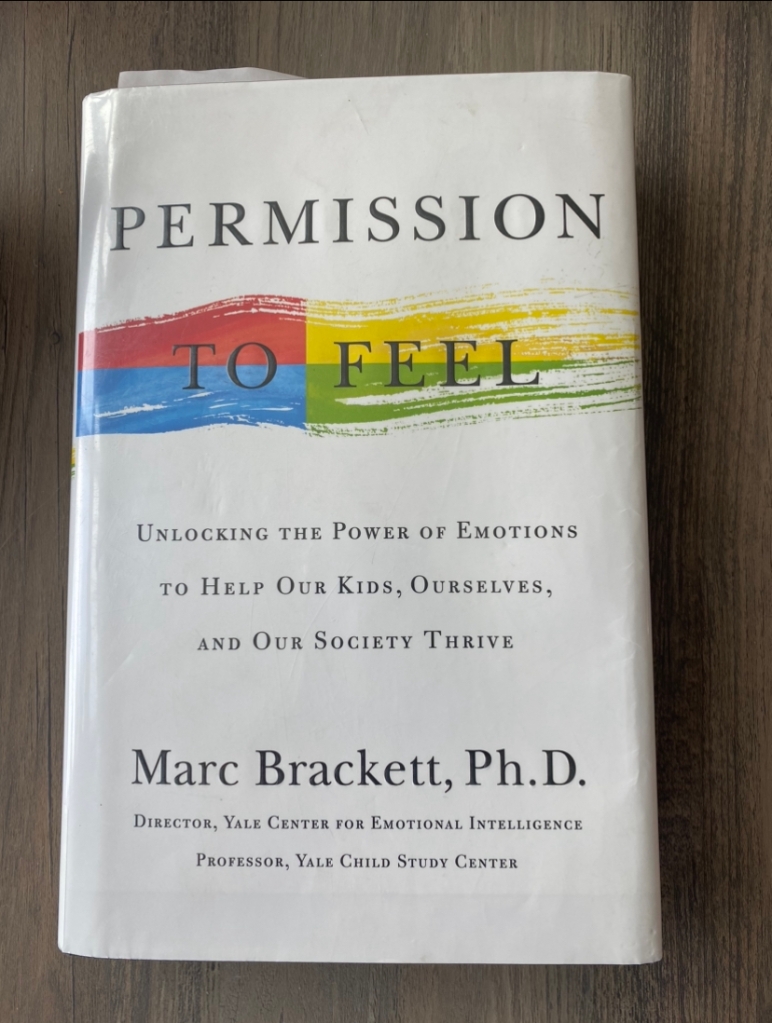
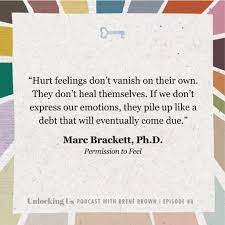
Dr. Marc Brackett stated the obvious in a recent online workshop based on his book, Permission to Feel: Emotion regulation is taught and modeled. Emotion regulation is goal oriented – it helps us achieve our goal in healthy ways, not adaptive ways. We cannot teach our kids what we ourselves do not know.

During this workshop, Dr. Brackett shared powerpoint slides of his global research that revealed that most adults offer that they were never taught emotional regulation at home or in school. This is not at all surprising evidence. We now know that old parenting models did not integrate emotions into our developing brains. We also know that the complexity of our personal burdens and our legacy burdens made our navigation of life harder than it needed to be.

Dr. Marc Brackett knows this intimately — and it was his own childhood experiences that set him on the path to change what we got wrong.

I first learned of Dr. Marc Brackett’s work on an Unlocking Us podcast with Brene Brown during the COVID pandemic. He had released his book, Permission to Feel in September, 2019. When the pandemic left us collectively struggling with ongoing uncertainty and big mood swings, Brene knew the time was right to talk about the many emotions we were all feeling. This podcast aired in April 2020 and the conversation was relatable and relevant. We were like sponges ready to absorb what we were hearing.

Marc brought a strong sense of humor to the challenging topic of emotions and shared with Brene that he often got a lot of pushback when he’d present his research to academia or school administrators. Emotions were thought of as the messy, sticky problems — certainly not solutions to behavioral issues.

But Marc had a compelling portal to break new ground on a brand new trail in the field of emotional intelligence. It was his life story. He told it – and those who once resisted – began to see how all the dots connected.

Marc’s personal childhood story is one that is sadly quite familiar; it will open your heart as you learn about the dysfunction, abuse and trauma he experienced as a young boy. He articulates so poignantly his troublesome outward behaviors and the dark inner secrets that caused him to be so out of control, angry and despondent.

Marc’s young life was full of inner struggle no one could see from the outside. Unprocessed emotions, dark secrets pushed down and his inner parts doing their best to protect him were the root cause of the outward unruly and difficult behaviors. Until his beloved Uncle Marvin showed up in his life in a profound way.

Marc’s Uncle Marvin gave him “permission to feel”. With Uncle Marvin as his emotional mentor, Marc was able to “unburden” himself by telling his story of abuse to his trusted uncle, without being shamed or blamed. He was believed. He was seen, valued, heard and deeply cared for by Uncle Marvin.

It is hard to hear Marc’s personal story and not find multiple points of connection. Any fellow academic or school administrator could see parts of their own stories embedded in his. They could easily overlay his story onto students, peers, and their own family members. Suddenly emotions were clearly not the problem and neither was problematic behavior. They were symptoms and warning signs for what happened in a child’s life.

Now he had their attention — and their buy-in — to support his work and most importantly, his outreach to educate others.

We need emotional scientists….not emotional judges. We also need emotion mentors.

We need to have people who will listen to understand and who will support us in getting the help we need when our “parts” and our behaviors are evidence that something needs to be addressed. These people are usually the ones who have done their own inner work. They have deep wells of empathy and compassion. They build trust and meaningful connection. They are a safe place to land.

Marc has spent more than 25 years researching and writing about emotions and talking to people all over the world about their feelings. He is an impassioned change-maker who knows firsthand the scars of childhood trauma, the importance of being able to express, feel, and process emotions as they are unfolding.

He knows that we cannot teach what we ourselves do not know.

We wouldn’t send our kids out on a hike without a buddy, gear, a trail map and a water bottle. Yet we often send our kids out into the world totally unprepared to navigate their emotions and those of others.

Dr. Marc Brackett is the Director of the Yale Center for Emotional Intelligence and he developed the RULER program that is being taught in classrooms and workplaces all around the globe. RULER is an evidence-based approach to social and emotional learning which teaches adults and students the value of our emotions and building the skills of emotional intelligence.

Yet another seismic shift and it is happening at school. Rather than focusing solely on problematic behaviors, adminstrators and teachers are being taught to become emotion scientists. What is the root cause of these uncontrolled behavioral outbursts? The RULER program starts by teaching adults what they need to learn. Then they take those new practices and understandings and teach them to children.

RULER is an acronym for this skills-based scientific approach:

R – Recognizing Emotion

U – Understanding Emotion

L – Labeling Emotion

E – Expressing Emotion

R – Regulating Emotion

Dr. Bruce Perry and Oprah Winfrey co-authored their book What Happened to You; Conversations on Trauma, Resilience and Healing in April, 2021. This insightful book opened us to learning the backstory of people, of gaining context and deeper understanding about childhood experiences that left scar tissue on how we view and navigate life. Dr. Brackett’s work takes a microphone to this collective human issue — he is using his incredible platform to advocate for “permission to feel”.

Rather than judging kids or their emotions, he is urging us to recognize that our emotions are chock full of valuable information about what is occurring in a child’s life and how they are mapping it. Children are not able to use their executive brain function to do this work, which is why we adults need to be their training wheels. Their brains are developing — slowly — but life experiences and big adult emotions are coming at them hard and fast. We need to become emotion scientists, not emotional judges. We need to be their training wheels to learn about emotions and how to use them effectively.

Recently Marc launched the Permission to Feel online book club as yet another avenue to educate people globally about emotional integration and regulation. It is a grassroots effort to foster the needed conversation about our emotional health. It feels like a support group for emotional integration as people share their past experiences and offer how they are learning and applying the RULER approach to their own lives, to parenting and in their relationships.

Marc and his team also unveiled an engaging new app to help us expand our emotional awareness and vocabulary — How We Feel. This colorful app is free, easy to use and contains 144 emotions! It’s designed to help us “check in” periodically throughout our day to see how we are feeling and to offer helpful tips and tools if we need some emotional support. This app can help us spot some of our “go to” emotional reactions and patterns.

Dr. Marc Brackett’s personal life story is a trailhead. It led him to discover how childhood shapes us, the importance of teaching and role-modeling emotional intelligence and regulation, and the invaluable scaffolding we can provide to others when we become skillful emotional mentors.

Brene Brown gave us an atlas – the reference guide we sorely needed to begin our emotions excavation work. Dr. Richard Schwartz gave us a whole new way to view our childhood experiences and emotions, without judgement and shame; without feeling like we have to wrestle with our emotions and blame them for our woes. His more positive approach encourages us to look at our own trailheads, investigating the roles our parts have played in the past and letting go of what no longer serves us well. He invites us to step into our mature agency and chose emotional regulation to help us navigate our lives more skillfully and successfully.

Dr. Marc Brackett gives us “permission to feel” and encourages us to become emotional scientists with ourselves and others. Drop the judgment and lean into curiosity. When we get comfortable and more agile with this new approach to our emotional landscape, we can become trail guides for our children and others. We can become emotions mentors.

In the upcoming 3rd part of the blog post series on change-makers, you’ll be meeting Dr. Andrew Huberman, Dr. Paul Conti and our Surgeon General, Dr. Vivek Murthy. Many of us are learning about our emotional and mental health from podcasts these days. I’ll do my best to distill and curate some of the most salient content that is having big impacts in our overall wellbeing. Not suprisingly, the turning point is “prevention”. We are no longer going to wait to treat problems when they occur; we are pivoting to preventing them as much as possible.

Here are links to the websites for Internal Family Systems and the RULER Program:

The Natural Next Steps

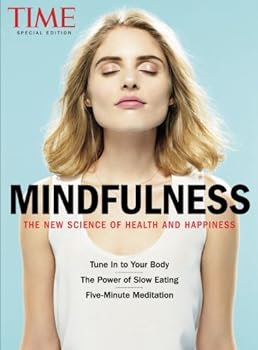
When I began my personal growth journey, the buzzword that was catching on was “mindfulness”. Time Magazine touted mindfulness as the new science of health and happiness in 2016. The message was clear — we are time travelers, often letting our minds wander to the past or future. We were being urged to find our balance and be more fully present in the moment.

It became very evident that in addition to time travel, our monkey minds were filled with an inordinate amount of chatter. So, meditation was introduced as the tool to help us stay more present in the moment. The internet was abuzz with “how to” practices and new meditation apps were hitting the market with a fury.

We were being reacquainted with something we take for granted — the power of our breath to regulate us. We were told to pay attention to our breathing and to use it as a grounding tool when we felt distracted or emotionally overwhelmed.

At the time, I recalled how I was taught the Lamaze method of breathing in my early twenties to help me through the labor and delivery process of my first baby. The seed had been planted that a few deep breaths could help keep me stay calm under pressure. Over the course of many decades and a lot of high stress parenting moments, I often told myself – and my kids – to take three calming breaths. I remember my dentist laughing when I shared with him that I used the Lamaze method more often in his office than when I was delivering my babies.

So, I had a lot of “buy-in” and actual experience when it came to the “breathing” component of meditation; but like most, I struggled with the traffic jam of racing, competing thoughts whenever I attempted to “meditate”. I could use my breath to slow my heart rate and calm my body. The next big step was learning how to manage the 60,000 thoughts create so much distraction every day.

That’s where mindfulness played a key role in what was touted in 2016 as the new science of health and happiness. Mindfulness was the buzzword and the trend that shifted our awareness. We began to cultivate greater “self” awareness.

Self-awareness helped us recognize when our minds had wandered off on a trip to the past or the future while we were playing a game with our kids, or enjoying a delicious meal with our family. Meditation practices helped us hone our focus and attention muscles. The goal was never to eradicate our 60,000 thoughts a day; it was to become more discerning about the ones we actively engaged with and to help us stay in the present moment with greater frequency.

The new science behind mindfulness was helping us to understand that time travel to the past often put us in negative ruminative loops and time travel to the future could make us worry and become anxious. We were missing out on gathering up and storing all the positives that were occurring in the present moment. The benefits of being present in the moment was being able to steep ourselves in moments of pure joy, delight and strong feelings of happiness. It was being more keenly attuned to gratitude – both giving and receiving it. It was also the recognition that this present moment may be the very one we had worked so hard to make come true. The science was telling us that our happiness is most salient when we live in the “now.”

Meditation was the term and the tool introduced to us to help us better understand all that our amazing brains are capable of doing when we choose to be consciously engaged in all its features. It became the gateway for learning about neuroplasticity and how neurons that fire together wire together; in other words, how we can create new neural networks throughout most of our lives. Our interest in meditation greased the wheels for us to take a deeper dive into learning how to care for our complex and incredible brains.

It was the Mindfulness trend in 2016 that put us on the path of greater access to the knowledge, tools and resources we have to do a much better job of caring for our brains and improving the quality of our lives as a direct result. Change-makers are coming onto the scene with relatable content, using layman’s terms and helpful metaphors to teach, getting us engaged and excited about all sorts of new approaches to parenting, relationships, education, counseling and therapy.

It is now the fall of 2023 – and the natural next giant step in the science of health and happiness has crystallized into mental health and emotional health. We now know, beyond the shadow of a doubt, that if we want to live longer, happier and healthier lives, we need to integrate emotions into our operating system and we need to take brain health and hygiene seriously.

Where we once believed that only those with very disregulated, dysfunctional families were predisposed to mental health issues, we now know better. We also know that being well resourced both physically and emotionally is how we build resilience, courage and flexibility for the inevitable challenges of life. Furthermore, we are just beginning to fully grasp the negative effects of disconnection and loneliness, especially in our teens and elders.

Let’s take a look at some of these change-makers:

Scroll through your favorite social media platform today for parenting tips and you will most likely discover Dr. Becky Kennedy, a children’s clinical psychologist who made a big pivot from old school parenting and psychology to a vastly improved integrated approach to help children struggling with their big emotions and problematic behaviors. She transformed her practice when she and her colleague launched “Good Inside” in 2020. If you are a parent, grandparent or child caregiver, you will find Dr. Becky’s teachings invaluable; and you will be leveling up your parenting skills in a whole new way.

On her website, Good Inside, Dr. Becky offers insights about herself and her professional practice. It is proof positive that all that we have been learning about childhood development, our brains and bodies, and our emotional health are shifting how we approach age-old problems.

Dr. Becky introduces herself as a clinical psychologist, mom of three and founder of Good Inside. When she first started her career, she practiced a popular “behavior-first” “reward-and-punishment model” of parent coaching. She shares that “after a while, something struck her — “those methods feel awful for kids and parents.” She got to work, taking everything she knew about attachment, mindfulness, emotional regulation and internal family systems theory– and translated those ideas into a new method for working with parents.

By focusing on the parent behind the parenting, and the child behind the behavior, we help families heal — bringing out the good inside everyone. ” (Excerpted from her Good Inside website)

What Dr. Becky came to realize as she transformed her methods and her professional practice is that we cannot teach what we do not know or skillfully use ourselves. Since none of us were taught about how the brain works or emotional integration and regulation, we were simply using the same parenting practices that keep perpetuating behavioral problems.

This is precisely why we reached a tipping point in our need to change our understanding and approach to mental and emotional health. Generation after generation had just continued down the same path, passing the baton of problems, dysfunction and disregulation to our children, until it reached a collective crisis level that could no longer be ignored. The children of each generation were surrounded by adults who did not know better. Parents, teachers, coaches, mentors, grandparents, siblings and friends — and even well intentioned counselors — were all coming at behavioral problems and addictions with the same outdated, unhealthy approach and model.

As the mental health industry began to recognize that many of the root causes of behavioral issues and addictions could be traced back to childhood, it became evident that the old parenting model and lack of emotional integration into developing brains and bodies were the core sources of our collective human problem.

We should be breathing a collective sigh of relief.

We can move forward from here with greater understanding and deeper empathy for ourselves, our parents and each other. No one is alone in doing the work that will help us live better, healthier and with greater inner resources.

Now you know why Dr. Becky’s following is growing exponentially. She has over 3.1 million followers and that number will surely swell with the recent release of her Ted Talk “The Single Most Important Parenting Strategy”. Today’s enlightened parents are clamoring for the improved skills and tools to raise their kids in emotionally healthy ways.

Dr. Becky is a change-maker for a growing parenting movement.

A few short years ago, I participated in a Relationship Summit with Terry Real, the highly regarded family therapist and author of I Don’t Want to Talk About It and his newest book, Us: Getting Past You and Me to Build A More Loving Relationship. During the Relationship Summit, Terry would often share real life examples from his couples counseling sessions. He made the keen observation that few spouses were willing to make any changes for their partners even when their marriages were on the brink of failure. However, when he asked a troubled partner about their relationship with own their children, everything shifted. As he helped his clients see their offsprings’s experiences through the lens of their own childhood, most parents were broken open. Spouses might not change for each other, but they can be deeply motivated to change for the sake of their children.

As Terry so wisely counsels — we need to care for our inner child and we need to reparent ourselves. This is part of that “healing process” that Dr. Becky promotes as well. It shifts us into raising our kids with the safety, security, acceptance, trust, guidance and respect we wished we had received. This is how we break disregulated generational cycles and shake off societal conditioning that negatively impacts our most cherished relationships. Many of us grew up believing that emotions were either good or bad; that anger was only ok for boys to show; that behavioral problems in a child should be punished. None of this is true.

Marriages are saved and strengthened when we no longer show up with all that childhood baggage and child-sized emotional behavioral patterns. Spouses who go for couples counseling often discover that the root cause of their marital issues came from their childhood experiences of marriage and family.

Here is where Dr. Becky’s work with children, and Terry Real’s work with couples really synch. Both are addressing childhood attachment styles, parental behavioral patterns, emotional triggers, poor coping skills and the long lasting impacts of internal family systems.

Couples who take this work to heart often find a lot of common ground in how they want to be parenting their children in a healthy and unified way. They can also find more common ground in their marriages and help each other in their own “reparenting process”. The places where we are most sensitive, needy and emotionally disregulated become opportunities for deeper connection and not the barriers to a healthy, happy and fulfilling marriage.

The truth is that we can do our inner work at the same time we are teaching it. It is a win-win situation since children give us such rich opportunities for real time, real life practice in dealing with a wide range of ever-changing emotions. Now that we know that our spoken and implied messages to our kids become their inner voice, we can be pre-load their inner voice to be an encouraging best friend, not a harsh judgmental critic. We can “re-parent” ourselves while we are teaching our children using this better parenting model. We can actually “feel” this loving, trusting reparenting occurring in our own bodies, when we are caring for our children as we had wished to be cared for when we were little.

In the recent Huberman Lab podcast series dedicated to mental health, Dr. Paul Conti, explained why we succumb so easily to auto-pilot for habitual, problematic behavioral patterns. When we were kids, we learned what patterns kept us safe and connected. We memorized these patterns for years. Anytime we feel those old familiar feelings, we replay the memorized pattern. It’s our “go to” move when we feel vulnerable. We unconsciously repeat our habitual patterns even though we now have agency to change them. This is the very reason that our emotional triggers from childhood can still have such strong impact even decades later.

With the new parenting model, and the science that helps us understand the “mechanics” of changing our brain’s memorized patterns, we will stop resisting the need to change our outgrown childhood behavioral patterns.

Terry Real is a dynamic change-maker, especially for older adults, who not only are saddled with outgrown childhood behavioral patterns, but are also constrained by old gender stereotypes and societal conditioning.

There are multiple “movements” that are gaining traction as a direct result of the newest science of health and happiness because of breakthroughs in mental health and emotional health. In upcoming posts, I will be shining a light on these movements and the dynamic change-makers who are making these movements dynamic, relatable and impactful.

In the meantime, click the links below and get to know Dr. Becky and Terry Real.

RECOMMENDED RESOURCES:

Dr. Becky Kennedy was featured in Time Magazine in 2021 at the Millennial Parenting Whisperer
https://time.com/6075434/dr-becky-millennial-parenting/

Check out Dr. Becky’s GOOD INSIDE website — and be sure to sign up for her newletter. https://www.goodinside.com

Follow Dr. Becky on your favorite social media platform, including Instagram and Threads. Her short reels offer a daily dose of parenting reality with humor, relatability and a nugget of helpful advice.

Click this link to watch Dr. Becky’s TED Talk on the single most important parenting strategy https://www.ted.com/talks/becky_kennedy_the_single_most_important_parenting_strategy

Terry Real is a family therapist and founder of Relational Life Therapy- a revolutionary new approach to couples and individual counseling. Old counseling models kept us stuck in looking only at surface problems and not the root cause of our disharmonies. Click this link to go to Terry’s website and discover the plethora of resources he offers to help you build deeper, more rewarding relationships. https://terryreal.com/relationship-online-courses/

“Nothing is more important in our lives than our relationships. A great relationship boosts your immune system, opens your heart and keeps you vital and creative.” –– Terry Real

Growing Forward

I found a fascinating article the other day that intrigued me so much I spent an entire day making lists and creating graphs, pie charts and collages. Are you wondering what captivated me? It was about the person we will all be in 5 years.

Consider this: The person we will become in 5 years has a lot to do with the decisions we are making as the person we are today (and tomorrow….and so on). What shapes us? The books we read, the foods we eat, the workouts we do, the friends we meet, the sacrifices we make, the habits we build.

Those prompts really got me to thinking about who I am today for those very reasons. I thought about family and friends, and how the last five years have shaped them as well. Even if we would have had a crystal ball then, I doubt very much that any of us could have guessed how much we’ve changed; much of it intentionally and some of it due to things not in our control.

What if we could plot all this change, so we would have a visual for who we were 5 years ago, who we are today, and to project who we might be 5 years into the future. Wouldn’t it be amazing to have a chart of our self discovery and personal growth trajectory? I’d call it the “Growing Forward” chart.

It makes sense to step back and take a look at who we were in 2018. Nothing like a rear view mirror to help us see just how far we’ve come.

What books have you read over these past five years? What genres or subjects were you drawn to and what knowledge did you gain? How did you apply it to your life? Reading books, both fiction and non-fiction, deepens our empathy for others and helps us see ourselves in other’s stories. What did you discover about yourself and others through the books you read.

Think about new friendships you have formed and what drew you to these new people. How have they shaped who you are today? Did they introduce you to a new hobby or interest? What have you learned as you listened to their life stories? What did you learn about yourself that was reflected back to you in their experiences? How do these friends make you feel?

Are those habits that were so hard to implement in the beginning now a part of your normal daily routine? How have those improved habits changed your life? What is working so much better now?Are you more conscious of the choices you make that might derail your goals?

Have you discovered any new interests, taken up a new hobby or resumed an old one with a renewed passion? Are you spending less time on social media and more time being present with family and friends? Have you shifted your perspective on self care and recognize that you need to take good care of yourself so that you can be your best for others?

Are you amazed to discover just how much you really have changed over the past 5 years? Since so much of our change happens incrementally and definitely not in a linear way, it is quite surprising to take stock of these transformations, especially in 5 year increments. That’s when the real changes we’ve made become so apparent. That is where we see our “growing forward” trajectory.

I decided to look back on my blog posts from 2018 as part of this reflective exercise and while the topics are still relevant, the research and resources that have advanced our understanding about them have exploded into mainstream conversations. Back then, we still thought of meditation and mindfulness as something done on a cushion. Today many of us are more familiar with how our brains actually work than we ever did before thanks to neuroscience — and the podcasters and authors who break it down into layman’s terms for us and weave its value into our daily lives.

In 2018, there was still a major stigma associated with mental health and no one was talking about emotional health. We may have known there was a growing mental health crisis underfoot but all the pieces of the complex puzzle were not yet coming together. Personal growth was gaining a little more traction and life coaches were in high demand.

We could feel a sense that we were searching for something, but there wasn’t a lot of clarity and we were swimming in a sea of so many tempting distractions. Social media and the news cycles were addictive.

No matter what we were all individually doing that was shaping who we would be in five years, none of us could have predicted the major impact of a global pandemic. This would create changes we did not anticipate and yes, it would also shape who we’d become. The pandemic disrupted our “normal”. We’d been operating in our “normal” for so long that we had become unaware of how we were just going along with the pace and societal influences.

Change happens when our normal routines are disrupted. It is a basic principle for helping us stick to new habits or goals. Disruptions are the catalyst for reflection and redirection. Suddenly, we were all sent home to “think about it”. A collective disruption and a serious re-thinking of what matters most.

It is not at all surprising that the pandemic expedited the integration of modern medicine, neuroscience, psychology, cognitive and emotional health. There was no denying just how interconnected they all were. We started to pay attention to compromised immune systems. We could no longer deny the impacts of high levels of anxiety and extended periods of uncertainty. As humans, we just aren’t built for these long durations of stress and volatility. We need to return to baseline to rebuild our tolerance and resilience. We need breaks, we need quality sleep, we need to feel safe.

As we were washing our groceries, we started to think more consciously about what we were eating. We were learning to bake sourdough and create home-cooked meals.

Isolation and loneliness were amplified which proved just how much we need human connection for our health and well-being. Families needed each other to help with childcare and schooling. Grandparents moved from retirement communities to live closer to their adult children and grandchildren. We began to see the reality that we had missed before. How important safe and healthy childcare is, what needs to change in how we educate our children, What we miss when we cannot be together – to celebrate, to grieve, to scaffold, to comfort, to encourage, to challenge.

The perfect storm became the impetus for breakthroughs.

Our learning curve trajectory was on a rapid ascent. It was integrating with medical and science advancements that would deliver many missing pieces to our human puzzle.

We may not have realized that as we were accepting changes that we had no control over, we were in turn making changes of our own – based on meeting our needs and what mattered most to us. We were micro-dosing change as we found new ways to support ourselves and our families through the pandemic. It was definitely not linear, and we back-tracked more than a few times, but our trajectory has become evident.

It takes a lot of commitment, practice, dedication and perseverance to become an overnight sensation.

We think that rock stars and celebrities, inventors and AI blow onto the scene and create seismic shifts in an instant. But this is not the case. And it certainly has not been the case for medicine and science when it comes to the recent explosion of knowledge, tools and teachers for emotional health. It just feels like an aha moment. It has been a long time coming — and it arrived when we were most ready to soak it up.

As I looked through the past five years of my blog posts, I re-discovered the moments where I was seeing the integration of so many modalities for personal growth and self discovery. As a neuroscience geek, I was so excited. I had long wondered if there wasn’t a better, more enticing way to draw people into doing their own inner work. Why did we have to hit rock bottom or have our world fall apart to begin engaging in self improvement?

To be candid, if not for the pandemic, I may have thought my own personal growth work was done. I had a solid “starter kit” of improved self awareness and better life skills. I was handling myself much better than ever before.

But the real test and the real growth happens when we take our individual work into our relationships. The pandemic delivered a plethora of opportunities to put the new skills and practices to the test. Suddenly, there were a lot more people coming onboard with a keen interest in emotional health and personal growth.

As parents realized how their own childhoods had impacted them in unhealthy ways, they embraced the new parenting models that integrated emotions into the developing brains of their children. Again, there were so many emotions welling up in all of us that it was crystal clear we needed better skills so as not to compound an already complex problem.

We had poked holes in our awareness, seeds had been planted, some had sprouted and there was a growing demand for education, support and counseling. A huge pivot had occurred – the veil around mental health was lifted. Seeking therapy and counseling became normalized, just like hiring a fitness trainer or life coach. The demand for counseling was so high that there simply were not enough professionals to meet it. Just a few years prior, BetterHelp online therapy was only promoted on personal growth and wellness platforms. Today, BetterHelp is a sponsor for business and news podcasts, influencers and fitness gurus.

When neuroscience handed us the missing piece of our human puzzle — emotional health — all the other pieces that had been discarded or misunderstood, fell into place. Are you aware that we had tunnel vision for a very long time – and believed that all our troubles were lodged in psychology? Breakthroughs in neuroscience changed everything – and now we are treating PTSD and childhood trauma in much more beneficial ways, with remarkable lasting results.

The pandemic’s one major positive contribution is the shift from “treating” problems to “preventing” them. After all that we have been through both individually and collectively in the past five years, many people are embracing the truth that we can take better care of ourselves and each other.

The conversations that we are having today and the growing trends in preventative practices to improve our quality of life and our healthy longevity came about because of change. Today we understand that we need to take care of our brains first and foremost. We having a better working knowledge of how our brains operate, what they are capable of and how we can maximize the full capacities.

We are no longer ignoring the warning signs, no longer numbing the pain or putting a bandaid on it, no longer believing that suffering is the way we get to the path of healing. We are enthusiastically proactive.

Here is what I find so exciting about what might transpire for all of us in the next 5 years. As we begin to take better care of our brains and bodies, we will in turn take better care of our children. Our children will grow up with healthy attitudes, resilience and an overflowing toolkit of life and relationship skills. We will be leading by example.

Did you know that when we are overstressed, we are full of cortisol that keeps us in a heightened state of fight, flight or freeze….and when we are with others, they can sense that (especially kids). We end up pushing people away because of all that negative energy.

But when we are calm, emotionally regulated and resilient, we are full of oxytocin (the feel good hormone) and yes, others can sense that too — and guess what — it is like a magnet drawing people to us because it feels good.

As we are making these discoveries for ourselves, we are integrating it into our lives. We start making better choices and in turn those healthier decisions shape who we are becoming. In 5 years, just imagine the books being written right now that we will read in the future. Just imagine the friends you will be making – the ones that make you feel good and inspire you to discover all kinds of new things. Just imagine how your body will feel with 5 years of really good sleep, consistent hydration, regular exercise, healthy eating habits.

If you believe that all these positive, proactive and preventative measures will have a profound impact on your “growing forward” trajectory, you are right.

Take some time to reflect on what you have learned about yourself over the past five years and want you want for yourself and your family in the next five years. There has never been a better time to tap into incredible resources, education and mentors to help you achieve your goals.

Ryan Dusick, founding drummer of Maroon 5, talks with Doug Boost about losing everything, finding recovery and rebuilding his life https://podcasts.apple.com/us/podcast/the-adversity-advantage-with-doug-bopst/id1496406333?i=1000624725432
Metabolism, Brain Energy & Mental Health with Dr. Chris Palmer. Discover how we are evolving in our treatments for mental health issues that can negatively impact our quality of life.
https://podcasts.apple.com/us/podcast/being-well-with-forrest-hanson-and-dr-rick-hanson/id1120885936?i=1000625115529
Dr. Martin Seligman is often referred to as the father of Positive Psychology. He wrote about post traumatic growth in his book Flourish in 2012.. Now 11 years later, he offers his insights with both psychology and neuroscience to help us prepare to live in a new normal of rapid change
Dr Peter Attia is leading the charge for a long overdue pivot in modern medicine. It is time to become proactive turning our attention to presentation rather than just treatment. Have a longer health span, and better quality of life. Emotional health is the cornerstone.

White Water Rapids of Life

When I was in my mid-40’s, I used to tell my friends that I was in the white water rapids of life without a paddle when my plate was too full. Life was coming at me fast and furious and I could barely catch my breath, let alone juggle it all.

It seemed, without fail, that after three or four months of pushing through, burning the candle at both ends, making endless sacrifices without discernment, I’d get sick or there would be one monumental family crisis that would grind the fast pace to a halt. At that moment, it would feel like my attempts to “shoot the rapids” left me stranded on the rocks, teetering precariously.

This pattern became so apparent that I’d find myself bracing for it. I could feel the tension mounting every 3 or four months and could feel it in my bones that we were heading for something cataclysmic. Looking back, I can see that bracing for it was also a lifelong pattern of mine. I could feel the ground trembling metaphorically and the only preventative action I took was to steel myself against the inevitable. I would harden up, silently willingly myself to take it — whatever “it” was.

If things were really out of control, I would embellish my story about the white water rapids of life — I would lament to my friends that this time I was in the white water rapids of life without a paddle AND life jackets. Clearly this was the graphic imagery that I used to declare to myself and others that I was in over my head.

This pattern dominated a few years in my mid-40’s – that time when we find ourselves doing some of the hardest life work ever. We are gaining traction in our careers, or deciding we want to change careers in the mid-stream of life. Our parenting has often moved into the more challenging waters of adolescence (maybe that is where I felt I had no life-jackets). Financially we find ourselves looking both backwards and forwards – what’s the balance on the mortgage and how we will fund college educations? No wonder I felt like I was in the white water rapids of life. There was in fact a lot of changes underfoot, all swirling around unseen obstacles as we headed into unchartered water.

When my book club friends and I share stories from that time in our lives, we discover that this is exactly how most of us were feeling during that stage of our lives. We all might describe it a little differently but the patterns bear much similarity.

We’d have these peaks and valleys that could literally be put onto a graph that resembled stock prices or an EKG. The troughs in those graphs were the times where we cried uncle and had no choice but to stop and catch our breath.

Those troughs were the brief respites we were forced to take due to illness, or the acknowledgement that we can’t control a lot that happens in life. They were times where we were so sick, we were mandated to stay in bed for a few days to regain our physical health. Or the times when we had to sit alone in the dark and reflect on what really mattered. Brene Brown aptly named this period of time in our lives as “the great unraveling”.

I recently revisited what Brene wrote in her 2018 blog post about this midlife unraveling and found myself holding my breath as I took in the magnitude and wisdom of her words:

Midlife is when the universe gently places her hands upon your shoulder, pulls you close and whispers in your ear: “I am not screwing around. All of this pretending and performing — these coping mechanisms that you’ve developed to protect yourself from feeling inadequate and getting hurt – has to go. Your armor is preventing you from growing into your gifts. I understand that you needed these protections when you were small. I understand that you believed your armor could help you secure all the things you needed to feel worthy and lovable, but you’re still searching and you’re more lost than ever. Time is growing short. There are unexplored adventures ahead of you. You can’t spend the rest of your life worrying about what other people think. You were born worthy of love and belonging. Courage and daring are coursing through your veins. You were made to live and love with your whole heart. It’s time to show up and be seen.” Brene Brown (see link to her blog at the end of this post.)

I often wonder if I had read a wisdom so profound in my mid-40’s how it might have landed on me. I’ll be honest, it’s highly doubtful that it would have resonated in the compelling way that it does today. When I close my eyes and sit with the feelings that emerge from reading it, I can transport myself back to what my own “white waters of life” were so earnestly trying to tell me.

Back then, I did not possess the knowledge and education that now underpins all that Brene imparted. In fact, when she gave us this pivotal message in 2018, we had not yet mainstreamed all that we were learning. Here we are 5 years later and that landscape has changed dramatically. Today it almost feel like a firehose has been turned on — and we are drenched in digestible neuroscience, engaging educational content as well as charismatic, dynamic leaders and teachers and endless resources. We are now fluent in emotional armor, childhood attachment styles and adaptive behavioral patterns. Emotional health has taken its rightful place at the top of the quality of life pyramid.

I couldn’t be happier that so many people of all ages are now absorbing this game-changing knowledge much earlier in their lives. Perhaps the mid-40’s and 50’s will no longer be the great “unraveling” but rather the “great transformation”. Imagine being able to shift gears in the mile markers of our life with vastly improved self-awareness and relationship skills. To be treating adolescence as the apprenticeship it truly is – and preparing our young people to go into the white water rapids of life with all the right tools, skills and burning desire to grow into their natural born gifts.

It is not longer just my wild imagination that envisions this phenomenal pivot, but the reality that we are already farther along on this transformational path than ever before.

There is rarely a day that I have a chat with someone where Dr. Andrew Huberman and his neuroscience podcast, the Huberman Lab are not mentioned. From neighbors to my dentist to seat mates on planes, Andrew Huberman has become a household name. Looking at the arc of his podcast popularity and the emerging topics he now discusses, we can create yet another graph that makes it clear that our trajectory for learning and the breakthroughs that are occurring are soaring.

I recently learned that Andrew Huberman started his highly successful podcast in 2021 because he wanted the general population to have the knowledge and tools they needed to support their physical and cognitive health through the pandemic. He was aware that we were not getting this invaluable information from our leadership and he wanted to educate people about the proactive steps they could be taking that were free, do-able and would have noticeable positive impact.

Think about this — Andrew Huberman saw a need and he stepped up to the plate. He has more than 3.5 million subscribed followers for his podcast launched in the midst of a pandemic. That’s 3.5 million people that have most likely changed their habits – like making consistent sleep a top priority, taking breaks from screens every 45 minutes, getting morning sunlight, changing their relationship with caffeine and alcohol, committing to varied exercise programs and understanding the impacts of their emotional health on their physical and cognitive health.

All of this happened one podcast episode at a time. Knowledge coming at a time of great need and receptivity; a willingness to put in the work and make changes; witnessing the positive effects of those changes and being motivated by all of it to learn more.

Andrew Huberman is throwing his net wide and bringing more diverse guests onto his podcast and for good reason. He is integrating teachings and research from other disciplines because they are all inter-connected to this bigger picture of current evolution. Breakthroughs are occurring fast right now and just like striking a match, they are catching fire quickly with those folks who are hungry to learn more.

The coalescing of personal growth, self development, mental health, emotional health with all the sciences was amplified during the pandemic. It was a collective moment – a tsunami in the white water rapids of our shared experience. It was a great unraveling. Go back now and re-read Brene’s insights for a mid-life unraveling and see if you can spot a similar message for our collective, complicated issues.

As each of us begins to do our own work, taking better care of ourselves and our families, with all that we learn from Andrew Huberman and others just like him, we are contributing to the greater good for everyone. Trust me, people are taking notice. Younger generations are looking at older generations and seeing the effects of ignoring our physical, cognitive and emotional health. Motivated by their desire for longer, healthier, and more satisfying lives, they are charting a new course with the improved knowledge, resources and tools so readily accessible.

Is it any wonder that there is a groundswell of keen interest in all that Andrew Huberman and others like him are enthusiastically sharing with us? Think about what happens when each of those 3.5 million followers shares what they have learned with just one workout buddy, one colleague, or one family member — now that is a powerful ripple effect in the right direction.

We are piecing together how old parenting models that created our armor and ineffective coping strategies also embedded a lot of fixed mindset and limiting belief impediments that hold us back from achieving our full potential and using our natural gifts. As we dig a little deeper on these topics, we are discovering vastly improved ways to educate our children to have a growth mindset, to foster resilience and determination through setbacks, and become critical thinkers.

We are doing this work together and it’s contagious in the best possible way.

Pay attention to the new books being published and the overlapping themes that fit like puzzle pieces. You’ll notice this on the colorful displays in your local bookstore. Check out guests that your favorite podcasters invite for meaningful conversations. Notice how personal stories take up a greater percentage of the discussion now – because that’s how we best integrate all this new information.

I’d be remiss if I didn’t confess that this blog post was inspired by my current read, TomorrowMind by Gabrielle Rosen Kellerman and Martin Seligman (who is often affectionately referred to as the father of positive psychology.). I think you’ll find my “connect the dots” story about Martin Seligman delightfully fascinating.

I began my curiosity about psychology about the same time that Dr. Seligman published his book Flourish in 2012. The subtitle of his book was “A Visionary New Understanding of Happiness and Well-being.” It focused a lot on how positive psychology could help us “preload” so that post traumatic growth might be possible rather than recurring PTSD. At the time I was in a relationship that puzzled me to no end. I could not understand the inability to “bounce back” from even minor setbacks. I was at a loss on how I could help so I was on the hunt for tools and education.

His book and his research set me on a path of self discovery and personal growth that I may have never otherwise considered. And I have never looked back. It’s eleven years later and my friends tease me that I have possibly earned an advanced degree or two. My passion for this learning has grown into my purpose, which is sharing what I am learning with others.

I have observed how often the topics I first read about have gone through a few transformations of their own over the past two decades, with scientific evidence debunking myths, depeening our initial understandings and bringing clarifying proof through neuroscience. For those reasons, I was intrigued to see what Dr. Seligman now had to share – in April 2023 in this brand new book.

I could barely put it down.

Had you been here with me as I began to read this book, you would have heard the resounding laughter that came from me when I read his words that had once been my own — Dr. Seligman uses the metaphor of the white water world of work! He talks about shooting the rapids, and navigating currents, obstacles and change. If he were here, I would hug him. I get the analogy – and I am deeply grateful. I am not at all surprised that we are now embarking on taking the work that we have been doing individually out into the big wide world.

The gear and the skills we need to navigate the white water rapids of life – at home and in the workplace are found in personal growth, self development and attending to our emotional health.

Listen to the July 24th episode of the Huberman Lab podcast with Dr. Maya Shankar on Shaping Your Identity and Goals. https://podcasts.apple.com/us/podcast/huberman-lab/id1545953110?i=1000622115223
This July 17th episode is entitled Enhancing Performance & Learning By Applying a Growth Mindset. Dr. Carol Dewck, author Mindset, is an esteemed colleague of Dr. Huberman. https://podcasts.apple.com/us/podcast/huberman-lab/id1545953110?i=1000621365285

I have listened to Dr. Maya Shankar’s podcast for several years and am always inspired and uplifted by these incredible stories of people who overcame adversities that left them no choice but to reinvent themselves. Check out this episode with Dr, Kristin Neff on Self Compassion https://podcasts.apple.com/us/podcast/a-slight-change-of-plans/id1561860622?i=1000617332975
Buckle your seatbelt for this very real conversation with Terry Real, Author of US, and Peter Attia. Dr. Attia has been revelational in his message about the importance of our emotional health in his book, Outlive. He turned to Terry Real for the therapy he needed to work on his “Bobbie Knight” inner critic and the behavioral reactions he wanted to change.
https://www.youtube.com/watch?v=QbI4fm2cNz8
Read — or reread – Brene Brown’s blog post from 2018 on midlife unraveling. It’s aged well.
https://brenebrown.com/articles/2018/05/24/the-midlife-unraveling/

A Wholehearted Emotion Revolution

My last blog post was all about the importance of unpacking our family and emotional baggage — and the remarkable opportunity we have to involve four living generations in doing just that. This post is going to start by unpacking how we got here.

It is all about this moment in time where there is a growing, diverse community of people who are committed to personal growth and emotional health. Some are far along on their journey, others are just beginning and there are many smack dab in the middle. No matter where we are in our journey, we are all reaching both forward and backward – asking for more help and guidance AND offering encouragement and resources.

We did not get here by accident or all at once. We got here because of collective yearning and learning.

Over the past two decades social sciences handed off the baton to neuroscience to help us better understand what was really happening in our brains, in our nervous systems and neurobiology, and through epigenetics. Incredible discoveries were made that brought us tremendous breakthroughs in our understanding and treatment of trauma, cognitive and mental health disorders, the connection between stress and physical health and so much more. So many fields merged together to reverse engineer what we got wrong.

Ironically it was about this same time that Brene Brown started her deep diving research into shame and vulnerability. Imagine how serendipitous this was?

Of course, no one wanted to talk about shame and vulnerability – those subjects were taboo and cloaked in secrecy. That should have been our first clue she was really on to something. Brene told a hilarious story of how she could shut down a conversation with a seat mate on a plane in under 30 seconds by revealing she was a researcher – of shame and vulnerability.

Flash forward to today and those very topics open up a two hour stimulating conversation between three strangers on a plane, who share vulnerabilities as readily as Biscoff cookies, and become fast friends by the end of the flight, swapping contact information and favorite personal growth resources. (Read my recent blog post Leapfrog for that story)

That is just one shining example of how far we’ve come….and how long it has actually taken. Two decades, multidisciplines and a growing longing we were all feeling but couldn’t quite put our finger on.

Brene started her shame and vulnerability research in 2001, right before 9-11. As devastating as that massive tragedy was, there was an also a collective unity that emerged from it, at least for a while.

A decade later, in 2010, Dr. Bruce Perry published his book, Born for Love, where he warned us about our growing empathy poverty. He was shedding a light in the correlation between an infant’s environment in the first year of life and their ability to emotionally regulate in adulthood. He was sounding the alarm for where we were headed if we did not offer safety, comfort and stability for our children. If you were to go back and read that book today, you would be amazed at the amplified realities of his dire predictions for all of us, and especially for our youth. Back in 2010, we had no clue the negative impacts social media and our political polarization would be having on our mental health and empathy poverty.

Also in 2010, Brene Brown’s infamous Ted Talk on vulnerability went viral. It still stands as one of the most viewed Ted Talks in history. It turns out vulnerability wasn’t such a taboo subject after all. It just took Brene’s courage to put it all out there for us. We may not have recognized that this was a massive “me too” movement as well. It was evident that at a very grassroots level, we were longing for answers to questions no one was asking.

In August of 2010, Brene released her book “Gifts of Imperfection” and invited us to join that grassroots “wholehearted” revolution by finding the courage to tell our truth stories. Mostly she was encouraging us to stop saying (and believing) we were OK when in fact, we were not. She grounded her research in the truth that we were born worthy of love, connection and belonging.

The very same message that Dr. Bruce Perry was also telling us.

Over the coming years, Brene would publish more books including Rising Strong, Braving the Wilderness, Dare to Lead, and Atlas of the Heart. Dr. Bruce Perry co-authored What Happened to You? with Oprah Winfrey. Dr. Dan Siegel published Whole Brain Child, No Drama Discipline, Brainstorm: The Power and Purpose of the Teenage Brain and the Power of Showing Up(with Tina Payne Bryson and most recently he released Interconnected. Dr. Mark Brackett published Permission to Feel: Unlocking the Power of Emotions to Help Our kids, Ourselves and Our Society Thrive.

Rick Rubin, the renowned music producer and author of The Creative Act: A Way of Being, has a compelling way to make us stand up and take notice of what was happening in this grassroots wholehearted revolution. When an idea’s time has come, it will find a way to make itself known.

The seeds of this wholehearted, emotion revolution were scattered far and wide. They began to take hold not only in the research but within us. The self-help section of our favorite bookstores began to swell – from psychology and neuroscience, to the enneagram, to Untamed by Glennon Doyle and Clarity & Connection by yung pueblo (just to name a few).

Brene’s Netflix documentary, Call to Courage was released in April, 2019, where she invited us to choose courage over comfort in a present day culture that had us divided and disconnected. We should have buckled our seatbelts.

Less than a year later, just as Brene launched her two dynamic podcasts, Dare to Lead and Unlocking Us, the global pandemic was unfolding — and isolating us even more. Perhaps we were listening more intentionally to Brene’s guests and the deeper conversations because they were resonating on many levels.

What we had all been feeling individually for decades, was now also being felt collectively. It was becoming crystal clear that we are not only hard-wired for connection, we are inextricably inter-connected through school, the workplace, grocery store, supply chains etc.

Suddenly the topic of our emotional health was popping up everywhere. What once had only been discussed in the self-help and psychological arenas, was being mainstreamed into business podcasts, education, physical and cognitive medical fields. A magnifying glass was handed to us to see the impacts of emotional health on our children and teenagers; on all of us. Brene Brown confided in her sister series of her podcast that the pandemic puts strains on marriages and parenting we’d never experienced before. We were never meant to withstand long stretches of uncertainty without revealing our vulnerability and need for connection.

The wholehearted revolution that was afoot back win 2010, had been growing slowly. All revolutions take time to build momentum. Surely the global pandemic accelerated the swiftness of of this “wholehearted, emotion revolution.”

Dr. Mark Brackett, author of Permission to Feel, was one of Brene’s podcast guests and he shared so honestly what many already knew to be true: “The mental well being of our children and adults is shockingly poor. We have a crisis on our hands and its victims are our children.”

The warnings that Dr. Bruce Perry had offered in his 2010 book, Born for Love, stressed the importance of our community and relational scaffolding for our children. This wisdom could no longer be lost on us.

There has been a giant step forward and a big pivot in the right direction as we step back out into our new normal and begin reinventing ourselves from the inside out. The books and podcasts that are emerging now are speaking directly to the corrective actions we must take.

We must integrate our emotions in our brains and our experiences. We must unpack family and emotional baggage to stop the trauma cycles and give us space for better quality lives and health. We need to scaffold each other, especially our children, and cultivate growth mindsets. We need to shed the armor that we believed protected our vulnerability and discard outgrown behavioral patterns. We can build life skills, resource ourselves better, and rediscover our empathy and common humanity.

Brene Brown published Atlas of the Heart which helps us expand our understanding of 87 emotions and experiences. It is a family reference guide that supports us in helping our children and partners integrate their emotions.

Kristin Neff released Fierce Self Compassion (How Women can Harness Kindness to Speak Up, Claim Their Power and Thrive) which encourages us to treat ourselves as kindly and compassionately as we would a dear friend; and to break free from limiting gender stereotypes that has us all suppressing our emotions in harmful ways.

Dr. Gabor Mate published his phenomenal book, The Myth of Normal: Trauma, Illness and Healing in a Toxic Culture (a groundbreaking investigation into the causes of illness and a pathway to healing and better emotional health). His insights into how generational trauma get passed down through our family systems point directly to the need for us to unpack family and emotional baggage.

Dr. Peter Attia very recently released his incredible book Outlive, where he drives home the point that our emotional health is the most integral component of our lives. We can be physically health and emotionally unhealthy and we will be miserable. And in turn, we will make our families miserable. He unpacks the reasons why we’ve long heard the phrase “hurting people hurt people.”

Dacher Keltner, a renowned expert in emotional science, just released his book, Awe: the New Science of Everyday Wonder and How It Can Transform Your Life. It is the final chapter of his book, aptly entitled Epiphany, that really brings home the lessons that we have been learning over these past two decades. Dacher Keltner reflects on the work of Charles Darwin whose thinking about the evolutionary science of emotion was shaped as he cared for his 10-year old daughter Annie until her death. Dacher offers that we mimic nature as we move through our evolution (and emotional revolution); there is a decaying (shedding the old that no longer serves us), a composting (extracting the lessons and nutrients we need) and then a regrowth (which is where we are now).

We now possess better insights, research, tools and collective commitment than we have ever had before in this emotion revolution. Young people are hungry for mentors and author Arthur Brooks encourages the older generation to rediscover their purpose by stepping into that role. It is an exciting time to be alive — and be an active participant in such a healthy change.

RECOMMENDED RESOURCES: