Creative Coalescing

A couple of years ago, I blogged about how excited I was to be discovering that so many diverse fields and modalities were beginning to intersect. Many of my favorite resources for personal growth and self development were referencing each other in their books and research papers. It was becoming evident that a lot of dots were being connected as neuroscience, psychology, parenting and emotional health began to swap knowledge and findings.

So many of the profound breakthroughs would have been worthy enough on their own, and yet it was putting all the pieces together that revealed a much bigger, more dynamic picture about our human evolution. What is currently underfoot is a creative coalescing of an all-encompassing understanding of how our brains and bodies actually work – and how this changes everything we once believed about the human experience.

We not only have more pieces of the puzzle — we actually have a much bigger picture.

Since the dawn of time, we human beings have been so busy “doing” the same things over and over, getting the life lessons repeatedly, but not really making genuine progress in a meaningful way. In fact, we have been making things much harder than they have to be for thousands of years. This is precisely why the philosophy and life lessons from the Stoics still resonate so deeply with us. Little has changed about the human experience, regardless of the time period we live in.

What is changing is our knowledge and understanding of the human body, brain and mind. We are now in the midst of a human evolutionary transition. Futurist Amy Webb recently shared with Brene Brown that fifty years from now, people will look back on this time period with great wonderment – we are Generation Transition.

I imagine my grandchildren who range in ages from 6 to 11, being in their mid-life fifty years from now – having had the benefit of better skills, tools, knowledge about their brains and bodies than all the generations before them — and how their lives will have been shaped in healthier, positive and meaningful ways.

It is impossible not to get excited and enthusiastic about ushering them into this new era of our evolution, armed with emotional integration, healthy psychological tools, and an understandable owner’s manual for their own body and brain.

Talk about being generational cycle breakers – no wonder we are Generation Transition. Maya Angelou has always told us that when we know better, we do better — and now we most definitely know better about how our brains work – and how to care for them.

This moment in our human evolution is one for the record books. How we meet the moments of our human experience is what is shifting — we are going to become proactive rather than reactive. We are going to be better equipped to deal with change and uncertainty with resiliency, acceptance, flexibility and curiosity. We will not be armoring up to protect ourselves, we will be gearing up for meeting the moment in profoundly healthier ways.

We are shifting in tandem across many disciplines to become proactive users of better skills and tools for ourselves, our relationships, for parenting, for our physical and mental health and overall quality of life. All of these pieces of our human puzzle were meant to work in harmony, yet we kept them compartmentalized. Now we know better.

We know that emotional integration is the missing link we got so wrong. As we are plugging this key component into our human operating system, so many other fascinating parts of our brain/body unity are lighting up and coming online.

The creative coalescing that I am seeing today is showing up in podcasts. In fact, podcasts may be the very alchemy that we need to keep up with the rapid pace of our collective growth period.

What makes podcasts so impactful is that they are real life conversations that engage us more viscerally — we almost feel that we are part of the discussion as we listen, nod, agree, push back and take in new information. The interplay of the podcaster and guest invites us to learn and integrate almost spontaneously. These rich conversations remind us that we are not alone. There is an instantaneous recognition that the vast majority of us are all grappling with many of the same life issues. We are collectively normalizing and demystifying the recurring problems and opportunities that humans have faced since the dawn of time.

Ryan Holiday recently shared in one of his Daily Stoic podcasts that we don’t have to learn all of life’s lessons the hard way. We can learn from other’s stories and experiences — and most importantly from their hindsight, insight and wisdom. This underscores the dynamic learning environment unique to podcasting. The creative coalescing is happening in real time on a continual basis as podcasters dive into deep conversations with very diverse guests and find common ground in what was once perceived as unrelated subject matter.

Let me share a few delightful examples of this creative coalescing. These are some of my favorite podcasts that support my own insatiable desire to learn and stay current.

Rich Roll is an ultra endurance athlete and full-time wellness advocate. In a very relatable story, Rich hit rock bottom in his 40’s with his longtime struggle with drugs, alcohol and unhealthy living. He turned his life around and then turned to extend a helping hand to others who found themselves with similar struggles. Rich started his podcast in 2013 and often interviewed high profile athletes who shared similar life experiences.

On February 12, 2024, Rich Roll’s guest was renowned psychology professor at Harvard, Dr. Ellen Langer. They took a deep dive into her newest book, The Mindful Body: Thinking Our Way to Chronic Health. Dr. Langer is the most delightful and engaging guest for an inquisitive podcaster. She has the unfiltered curiosity of a three year old and a sense of humor to match.

Dr. Langer’s approach to mindfulness is not about sitting on a cushion meditating – it is about proactively living each and every moment steeped in mindful curiosity. She offered the most insightful nugget early on: “Everybody’s behaviors make sense to them; otherwise they wouldn’t do them.”

Rather than judging, hand-wringing or rushing to rescue when someone’s behaviors seem out of alignment, she challenges us to be open-minded and inquire — “what was your intention?

This simple pivot moves us from being stuck in age-old patterns that feel like a tug of war and shifts us into becoming curious explorers. We not only change our “go-to” judgmental and knee jerk responses to others, we build a bridge to helping others become more “mindful” and self aware of how they get in their own way and may be negatively impacting their relationships.

When we change how we meet others and the events in our life, we facilitate collective change.

I loved this episode so much that I ran right out and bought her book, gifted a few copies and have been having the best conversations about it ever since. This is how the word is spread. How many other listeners have done the same and are bringing positive changes to their friends and families?

Since Rich Roll had Dr. Ellen Langer on his program, he has also had the following guests join him for more diverse yet inter-connected conversations:

  • February 22 – Charles Duhigg, Author of SuperCommunicators, discussing how to unlock the secret language of connection.
  • March 4 – Cal Newport, Author of Deep Work and Slow Productivity, talking about how to escape burnout, do your best work and achieve more by doing less.
  • April 1 – Dr. Daniel Amen, world renowned psychiatrist and author of Change Your Brain Everyday where they discussed all things brain health, dementia, Alzheimers and ADHD.
  • April 15 -Scott Galloway, co-host of the popular tech and business podcast PIVOT and author of the Algebra of Money, to talk about why vulnerability is power, healthy masculinity and financial security.
  • April 22 – Jonathan Haidt, author of the Anxious Generation and The Coddling of the American Mind, to unpack how social media is rewiring childhood.

Just look at that guest and topic list — this is the creative coalescing that I have been observing. Rich Roll is facilitating the coalescing by having so many diverse guests discuss their areas of expertise. It’s easy to connect the dots and see how insights from one conversation dovetail into another.

Wharton organizational psychologist, Adam Grant, kicked off 2024 with a podcast episode on parenting. Imagine that – parenting!

On January 2nd, Dr. Becky Kennedy, one of today’s foremost authorities on a brand new model for parenting, had an awesome conversation with Adam Grant about bringing out the good in kids and parents. Dr. Becky’s parenting model focuses on integrating emotional intelligence so that our children get a complete operating system and the training wheels they need to understand it. This parenting model is a total 180 from the old one that did not integrate emotions and subsequently is the root cause of so much emotional misunderstanding and disregulation.

I have been a huge fan of Dr. Becky for quite a long time and I learned that Adam Grant and his wife are too. They have been following and implementing Dr. Becky’s parenting advice with their own kids. The positive impacts are evident for both parents and kids as Adam pointed out with some of his personal stories.

Dr. Becky shares short videos with her social media followers that are relatable, common and “spot on”– many of them created as she takes a break in her closet, or walking the busy streets of New York. She draws from her own parenting experiences, from her private practice and workshops. Every parent and grandparent will get something of real value from her clips – and often the practical advice she offers are good emotional tools for kids and grown ups alike. The reality is that since most of us did not learn about the meaningful role emotions actually play in our lives, we have to “unlearn” before we can teach this new and improved way of using our emotional intelligence.

It became very evident that the subject of parenting and Dr. Becky were becoming mainstreamed when Dr. Andrew Huberman also had her on his podcast on February 26th with the title “Protocols for Excellent Parenting & Improving Relationships of All Kinds. Just as I had observed in my own life, when we parent with better practices and tools, we also gain positive benefits for all other relationships. Yes, I did get goosebumps.

I found myself laughing out loud recently when during a recap of the Daily Show with Jordan Klepper, even he mentioned Dr. Becky’s rule of thumb for emotional distress. Once again, we see how the seeds of positive change are popping up everywhere.

Here’s another intriguing list of the diversity of subjects and experts in Adam Grant’s podcast lineup:

  • January 16 – Dr. Lisa Feldman Barrett, psychologist and neuroscientist at Northwestern and Harvard – You have more control over your emotions than you think
  • January 23 – Susan David, psychologist at Harvard Medical School – overcoming toxic positivity
  • March 5 – Cal Newport (who was also on with Rich Roll) – How to be productive without burning out
  • March 26 – Charan Ranganath, psychologist and neuroscientist – the science of memory
  • April 16 – Anne Lamott, renowned author of 20 books and Adam’s favorite writer – her thoughts on love, writing and being judgy
  • April 23 – Kara Swisher, journalist, author and co-host of the Pivot Podcast with Scott Galloway (who was also Rich Roll’s guest) – on speaking truth to power.

I couldn’t resist sharing these compelling lists of topics and guests for two of my favorite podcast series. There is a lot of crossover and intersecting occurring – rather like a blurring of once solid lines between diverse fields. It is proof positive of futurist Amy Webb’s observation — we are all a part of Generation Transition.

Historian Ken Burns has noted that change happens at the edges. It made me think of Brene Brown who began her research on shame and vulnerability 25 years ago, just before 9-11. Her first Ted Talk on that very subject became an overnight sensation and rates as one of the most highly viewed Ted Talks ever. Brene wasn’t so sure that we were ready for discussions about emotions, vulnerability and human connection. Perhaps we were ready – or sensed that we needed to get ready.

Ready or not, we are at a tipping point in our human evolution with so much incredible new knowledge and insights to support the process. It is the first time that we have so much creative coalescing bubbling it all up to the surface. It is readily accessible, highly relatable, makes for engaging conversations and has positive benefits across all aspects of our health and well being.

What will you share about this moment in time – 50 years from now?

HUBERMAN LAB PODCAST
(science and science-based tools)
with Dr. Andrew Huberman
FINDING MASTERY PODCAST
(high performance psychology)
with Dr. Michael Gervais
RE:THINKING
(great minds don’t think alike)
with Adam Grant
UNLOCKING US
(conversations to unlock the deeply human part of who we are)
with Brene Brown
TETRAGRAMMATON (inspiration engine)
with Music Producer Rick Rubin

THE DRIVE (health and longevity)
with Peter Attia

WHERE SHOULD WE BEGIN
(step into the office of psychotherapist and learn from client sessions)
with Esther Perel

BEING WELL
(practical science of well being)
with Forrest and Dr. Rick Hanson
PIVOT
(all things tech and business)
with Kara Swisher & Scott Galloway

Connective Tissue

A few years ago, I started to notice that the more I was really getting to know myself, the greater my curiosity about others. Even when I watched a Netflix series or read a compelling fiction book, I found that I was more empathetic with the characters and their backstories. Truth to be told, I discovered that I could see parts of my own life reflected back to me in their experiences and reactions. It was also easy to see the patterns of cause and effect that we messy human beings bring to our relationships.

It dawned on me that I was now engaging with books and shows on a deeper level and I loved it. I was able to feel and relate to so many characters almost as if I knew them personally. The story lines and plot twists of shows like This is Us or Parenthood were intimately familiar. Some felt like they had been pulled right out of my own family history. It was easy to readily identify with characters and events because I too “have been there”.

Conversations with some of my closest friends revealed that the same thing was happening for them. As they deepened their own self awareness, they too were more intrigued by the complexity of their favorite characters in a book or tv series. They could recognize blind spots and insecurities that contributed to missteps and bad decisions.

Discussing episodes of these shows with friends was much like being in book club with a fascinating twist — our focus was on the whole of the family dynamics and how one issue could cause a cascade of varying problems amongst the family members. We could clearly see the through line that ran from childhood experiences right into the adult lives of each family member.

These mini series became a classroom for recognizing familiar behavior patterns and coping mechanisms. We got a zoomed-out view of how complicated families are. We gained a deeper understanding of what drives people to make some of the choices they do; again, because in many cases, we too “had been there”.

While my friends and I laughed that it is easy to recognize the many fault lines in family dynamics when we simply watching a show, we did agree that we gained from observing the bigger picture. These programs give the viewer a different vantage point; we get an abundance of nuance and context from so many different perspectives and experiences. That is rarely the same lens we use in our own complex family dynamics.

Perhaps the biggest takeaway is that we rarely know our family members as well as we think we do.

Another is that we rarely know the “whole” of each other.

I titled this blog post “connective tissue” because that is what we are growing and strengthening when we become cycle breakers and agents of change.

I am a firm believer that replacing that tightly woven yet constantly unraveling fabric of complicated family dynamics with healthy “connective tissue” is the ultimate safety net for our families and relationships.

Dr. Michael Gervais (one of the world’s top high-performance psychologists) shares this wisdom with us: “To lay the foundation for a strong sense of self, the prime dictum is to not focus on the self. The way to do this is not to think less of yourself, but to think of yourself less often.”

The real value of personal growth and self discovery happens in relationship with others. When we truly get to know ourselves well and change how we show up, that’s where meaningful change occurs. When we take Dr. Gervais’ advice to heart, we build a strong foundation of who we are and who we wish to become. We pay attention to how we get unmoored from ourselves in our relationships with others.

This is a giant step in building healthy connective tissue. It’s sticking to our core values and getting more consistent in behaviors and skills that match who we want to be. We can cultivate greater self awareness about how we show up at work vs. how we behave at home, how we act with parents and siblings vs. our own kids and friends. It’s exhausting to shape shift and adapt to all these different relationships if we are constantly matching the environment instead of who we really are at the core.

So often in the self help space, we are told to shed outgrown behavioral patterns that we learned in childhood. Yet they are second nature to us and fit like our favorite pair of comfy jeans. Eventually a good friend or our spouse is going to tell us that it is time to ditch the well worn jeans — they look terrible, no longer fit the body we now have and surely don’t match who we are today.

The same is true with childhood coping skills and poor emotional regulation. They are just old jeans that need to be tossed and replaced with something that makes us feel like a million bucks when we put them on. And while the jeans become a staple in our wardrobe, we can dress them up or down depending on what we are stepping into. Our strong sense of self is that great pair of new jeans. The jacket, the hat, shoes or other accessories are all the skills and tools we use when stepping into relationships with others.

A strong sense of self is our core foundation for everything we do and all the relationships we are in. We become more consistent in how we show up whether we are at home, work or community. When people describe us to others, they capture the essence of who we really are — across all our relationships.

A core reason why family dynamics are the most challenging is that we have a long history of shape shifting, people pleasing, shrinking or puffing up to get our needs met and to also feel a sense of belonging. One false move and we become an outcast. Misunderstandings, rifts and estrangements are so commonplace for this very reason.

Remember that takeaway from the mini series I mentioned above — We have no idea of all the nuance and context of our family members unique emotions and experiences. If we don’t even know ourselves well, how could we possibly know others? And if we are all donning different behavioral patterns to “make things work”, it’s unlikely anything actually stands a chance of working.

A little perspective here: Even if your sibling is only two years older or younger than you, their childhood experiences can be remarkably different. First of all your parents were not the same that they were when you came into the world. They learned a lot from raising you and they adapted in a lot of new ways. What might have changed in your parent’s lives in that time span? Job change, relocation, loss of a parent, health issues, financial struggles? Life events have an impact on parents and kids. If there is a five year or greater age difference in siblings, then essentially it can be like being raised in two remarkably different families.

Healthy connective tissue for family dynamics has to replace the old tangled web we weave by losing ourselves in multiple identities. No wonder our relationships are so complicated.

Our sense of self, our identity, gets shaped and molded like Playdoh when we are growing up. By the time we reach adulthood, we’ve been cut, pounded, stretched and kneaded so many times that we have a hard time figuring out who we really are. It’s unfortunate that most of our self worth and self identity is under constant scrutiny and subject to change at any given moment throughout childhood.

“The world will ask you who you are, and if you don’t know, the world will tell you.” — Carl Jung

Being a change agent and breaking generational family cycles, starts with us. Once we free ourselves of behavioral patterns that keep us stuck, we have more wiggle room for self discovery — and to forge the identity we truly want. We can spend our energy on getting consistent with who we are, rather than exhausting ourselves to fit in.

We need to get very clear on our own identity and self worth. Again, this is a familiar refrain in psychology and the self help space, but it is not cheap talk. It is only when we know our worth and what is critically important to us that we can use a relationship tool like boundaries. Boundaries help others recognize how we want to be treated. Every time you set a boundary, you are getting clearer with yourself about your value and worth.

For the record, when we use boundaries in parenting instead of punishment or dismissive attitudes, we are leading by example. We teach our children not only how to treat us and be respectful, but also how to use this invaluable tool in their own lives (both when they are young and when they are adults).

The fear of other people’s opinions is yet another detriment to really getting to know ourselves intimately.

Most of us lived in this thick fog of other’s opinions all throughout childhood; especially with those old parenting models that did not integrate emotions into our experiences. Kids were told they were too much, too sensitive, too bossy, too timid. First and foremost, we were labeled by behaviors and those identifies stuck with us. — you’re a jerk, you’re a good girl, you’re perfect, you’ll never amount to anything. Secondly, we had to wrestle with these assessments of who we were while trying to figure that out for ourselves. Most of our childhood behavioral patterns and coping skills are rooted in the “fear of other’s opinions” – at home, in school and beyond.

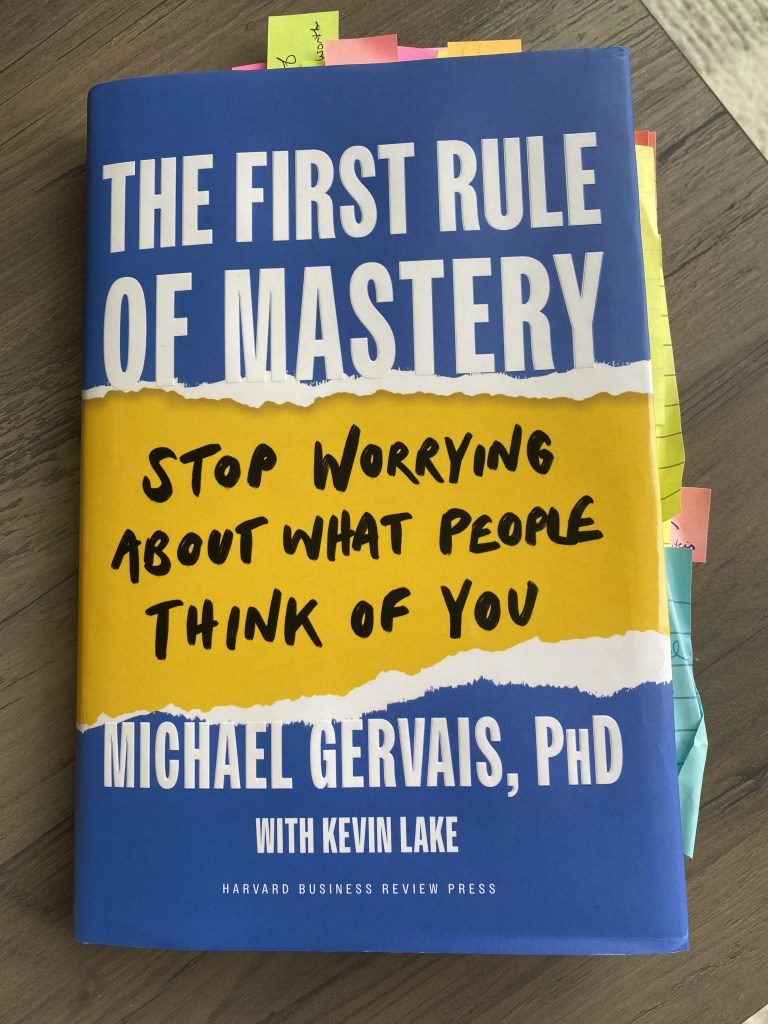
“Identity is our subjective sense of self built on our experiences, beliefs, values, memories and culture. It’s a set of physical and psychological characteristics that is not shared with anyone else. Often derived in relationship or comparison to others, our identity provides a framework to better understand our place in a complicated social world. “ — excerpted from the book The First Rule of Mastery by Dr. Michael Gervais.

“When we have fused ourselves to an identity that is not true to who we are, or to an identity that’s too narrow to contain the whole of who we are, or to an identity incapable of incorporating new information and growing, the opinion of another can feel like an assault where our survival is at stake.” – excerpted from The First Rule of Mastery by Dr. Michael Gervais.

When you let these two excerpts soak in, you can see why we get so confused about who we are. The first excerpt addresses how we make sense of the world when we are kids. It is a private internal narrative we create about who we are. We create it when we are young and powerless and that identify feels vulnerable and in need of protection even when we are older.

The second excerpt reveals why we develop coping skills and behavioral patterns. Our identity does leave us vulnerable to the slings and arrows of other’s opinions so we develop armor to protect who we believe we are.

It’s that armor that gets in the way of us really knowing who we are; and it gets very complicated by the fact that we keep returning to home base to figure it out. Yet, that identity we created at home when we were young no longer feels like it fits who we’ve become.

Without honest self-awareness, it is incredibly hard to see how we stay stuck in an identity we’ve long outgrown and how we stay trapped (especially in our families) in old limiting beliefs about who we are.

We are not the same person we were when we were 5, 10 or 15. We are works in progress throughout our entire lives. A pivotal shift in our mindset around our personal identity is to recognize and embrace this.

We change over time and that is a marvelous thing. We are not forever stuck in an old story, or shackled to a troubled childhood, or doomed to relive an old trauma like a recurring nightmare. We would never want this for our children. When we get clear about who we are, we can parent from our most authentic sense of self. It frees us from protecting our kids unnecessarily from the things that once had a big impact on us.

Just imagine the positive difference we are making for younger generations, when we steer them clear of the pitfalls that derailed us from building the life we wanted. Today we have better life skills and relationship tools to teach them. We have a much-improved parenting model and are integrating their emotions into their developing complex brains. We are validating each other’s emotions and experiences which is the preventative medicine for suppressed emotions and unprocessed trauma. We recognize that rupture and repair strengthens our relationships and builds enduring trust. In fact, we normalize the fact that ruptures happen in life and we have a responsibility to repair our most valued relationships. We are learning the integral role body budget plays in our daily lives and the importance of sleep for our brain health.

Most importantly, we can help our young people develop a strong sense of self and be the scaffolding they need through all the growth spurts and life changes they will surely have.

This is an extensive list of key components of “connective tissue” for our families. It’s so much more beneficial than what most of us experienced — because we don’t put each other in boxes, but rather we give each other room to grow – with a big safety net underneath. We encourage each other to explore, discover, stretch, try new things, experiment — with the confidence that they can express themselves honestly and will have the support and guidance they need and deserve.

Dr. Michael Gervais has a nugget of wisdom that he shares on his Finding Mastery podcast that serves as a core reminder for the changes we want to make: No one does it alone.

If you struggle with FOPO –the Fear of Other People’s Opinions, you will love this book. Check out Michael Gervais podcast too — Finding Mastery


LISTEN TO DR. ANDREW HUBERMAN’S CONVERSATION WITH PARENTING GURU, DR. BECKY KENNEDY, author of Good Inside This Episode is entitled Protocols for Excellent Parenting and Improving Relationships of All Kinds https://podcasts.apple.com/us/podcast/huberman-lab/id1545953110?i=1000646851810
If you are unfamiliar with Internal Family Systems, you might be surprised to learn that it is all about YOU not your whole family! Discover all the parts of you that have something to offer about what is most important to you and how to best take care of YOU!

Architects of Our Experiences – Part 3

Are you starting to realize just how much control you really do have to shape your life and experiences in remarkably beneficial ways? If you have read my last two blog posts about becoming Architects of our Experiences, you may already be discovering some changes in how you “meet the moments” in your life and in your relationships.

The more we know about how our brains and bodies really work – especially how they impact our wide range of emotions – the easier it is to get a little traction implementing better skills and tools for emotional regulation.

My guess is that now that you have learned a little about “body budget”, you are consciously and even unconsciously doing a little check in from time to time to look at your own “battery life”. You may even be catching yourself when you are “hangry” and choosing to be a little more emotionally in control than you would normally do. Congratulations…you are becoming an architect of your experiences!

It shouldn’t come as a big surprise that a balanced body budget is the foundational key to any self improvement initiative we might have. It’s just that we didn’t know about this connection until recently.

Think about how much harder we make things for ourselves in large part because we simply don’t have the energy or power; how often do we push through or burn the midnight oil? No wonder we get in our own way so often. Our best intentions are not enough to integrate real changes in our emotional regulation, relationship skills or healthy habit initiatives. We need a balanced body budget…..full stop.

This reality is bubbling up everywhere now, most notably in modern medicine, psychology and mental health. Although it is basic common sense, we overlooked this foundational principle for far too long. The intake process at the doctor’s, trainer’s or therapist’s office now includes an assessment of how well we are sleeping, eating, exercising and hydrating. In many cases, we are also asked how we are coping with life and navigating our relationships. It’s become evident that our emotional health can have a major impact on our physical and mental health.

Better intake, expanded assessment of our health and well being = more accurate and effective diagnosis and treatments. As Dr. Andrew Huberman has been promoting since the onset of COVID, there are so many no-cost steps we can proactively take to improve our physical and mental health as well as the overall quality of our lives.

The fundamental foundation for becoming skillful architects of our emotions and experiences is a balanced body budget. Sleep is the bedrock of this foundation.

In my most recent blog post about becoming architects of our experiences, I shared the versatile, multi-purpose tool of emotional granularity. Having this tool at our disposable means that we will become much more agile when it comes to emotional regulation. With a balanced body budget and emotional granularity, we are setting ourselves up for much greater success in all areas of our lives. We will be meeting the moments in our life better resourced than ever before.

Just imagine feeling grounded and clear-minded throughout most of your day. What would it feel like to know that you were not at the mercy of an emotional sandstorm that could blow in at any moment? This is what it means to be an architect of your experiences and emotions. You feel in control, you can more accurately assess a situation and more skillfully deal with it and others.

Emotional granularity is analogous to that intake process in the doctor’s office. If all that we can tell the doctor is that we have a pain in our mid-section, the doctor will probe for more clues. A physician always starts with foundational clues like heart rate, lung capacity and blood pressure. She gets more granular by asking about the level of pain, its frequency, any pattern when it flares. We might also go through a battery of tests for deeper investigation.

We can begin a similar “intake process” when we feel a core emotion like anger. If we are angry, it is just a warning light to get our attention. We need the details to clarify what we are angry about. We need emotional granularity to help us find context clues. Just like that investigation in the doctor’s office, we want to explore so we are treating the right problem.

Can you see the distinction? An unskillful “do-it-yourselfer” might run into a heated situation with a hammer and an accelerated heart rate. A skillful architect does a quick assessment of body budget, then reaches for that versatile multi-purpose tool and calmly assesses what the real problem is. A skillful architect develops a viable plan to solve the right problem with the right tools.

Happiness expert, author Arthur C. Brooks taps into this architectural approach by suggesting that we try “substituting” a better emotion for the one that doesn’t feel so good. Just like we choose the healthier option of an apple for dessert versus the cake, we can choose an emotion that will get us a better outcome. In the book, Build the Life You Want, Arthur even uses architectural language:

“Sometimes you want to replace some of your negative emotions with something that fits and is more constructive, leading you to act the way you want to, not the way you feel.” (excerpted from Chapter 3: Choose a Better Emotion in the book Build the Life You Want)

Ok, so let’s just pause here for a moment and really take in just how empowering it would feel to be able to pull this off a few times each day. Simply by paying attention to body budget and choosing emotions that better align with who we want to be, we would proactively practicing becoming an “architect of our experiences and emotions.”

And now, let’s add just one more component that will dramatically enhance your architectural prowess. Drum roll, please…..

Our brains are prediction machines, not reaction makers. Yet another thing that we got wrong, especially about emotions but also about how we engage with our experiences. Scientists have long believed that brain neurons were dormant until stimulated by something from our outside world. But thanks to major breakthroughs in neuroscience, we now know that this is not the case.

The neurons in our brains are firing constantly, stimulating one another as well as different regions in our complex brain systems. It is this very brain activity that represents the millions of predictions that our brains will make about what we will encounter next — all based on our lifetime of past experience.

This all happens so fast and so automatically that we usually aren’t even aware of it. We might even refer to it as our “unconscious”. The irony is that we can be very conscious of our past experiences –especially when we get emotionally triggered.

Anyone who has ever attempted to free themselves from an old emotional trigger or an overreactive behavioral pattern knows firsthand that it feels like a labyrinth. We even use metaphors in the self help space to talk about how hard this process can be: it’s a journey searching for clues on a jagged, rocky path through the thick entangled forest of our past. The definition of a labyrinth is a complicated, irregular network of passages or paths in which it is difficult to find one’s way. Sounds exactly how we describe self-discovery and behavioral pattern change.

Again, we have made this work so much harder than it has to be – because we misunderstood how our prediction machines work. If we want to vastly improve our predictions, we have to update and upgrade our internal data base. We do this by loading new content; adding richer, nuanced context; and curating a diversity of new experiences.

When we proactively update our inner database — our brains can make predictions that more closely match what we really want our lives to be and feel like and not reruns of unhelpful, old experiences. If we are trapped in the past with old emotional triggers and dizzying rumination loops, it is our brain retrieving old files to make predictions.

Your brain predicts and prepares your actions based on past experiences. Mental distress, anxiety and even old trauma arise from flawed predictions. Of course, these inaccurate predictions don’t feel good or correct in our present moment – they do not accurately fit our current situation. We get caught in a trap of outdated information that produces outdated, ill-fitting, unchecked reactions.

Think about all the ways that we have rather seamlessly updated how we do daily life. We are no longer tethered to land line phones or hanging laundry outdoors on a rope to dry. We aren’t using multi-folded, printed paper maps to navigate from one city to the next. We shop, transfer money, take photos and send emails on our phones all while waiting in a check out line.

We’ve got this — We already know how to update and upgrade our lives – and we have done it rather effortlessly — on the outside.

Now we need to do the same — on the inside.

We simply have to get intentional and proactive about upgrading and updating our internal database for much improved predictions. The bonus is that once we begin to integrate newer, more relevant information and experiences into our brain’s predictive database, we set ourselves up for greater success with each and every subsequent experience and interaction we have.

We begin to operate more fluidly and efficiently from a fresh, current database – not a relic from the past.

We know that our limiting beliefs, outgrown behavioral patterns and childhood social conditioning can be fossilized in our internal database. Because we misunderstood how our brains truly function, we just reinforced that old science too. We simply reinforced the old science by repeating our personal history – over and over again.

We are learning that neurons that fire together, wire together. By getting stuck in the past, we literally were dropping our needle on the same spot and creating a well worn groove for repetitive, familiar predictions. This is what we did with our old vinyl music records back in the day. No wonder those records would skip, slide past the next song or get stuck.

Now we have this groundbreaking neuroscience about how our complex brain circuitry really works. We now know that our brains are prediction machines not reactivity makers – and we are beginning to understand how neuroplasticity helps us to rewire our brains in healthy, optimal new ways. We can actually build new neural networks that operate more seamlessly like streaming music.

Here is an easy example to help us grasp the concept of neuroplasticity — of neurons that fire together wiring together. If we want to break an old habit, we are given all kinds of tips that actually disrupt the related neural pattern: don’t buy the potato chips, take a walk when you get a craving, replace the potato chips with almonds, etc. This is the equivalent of pulling that needle up and off the old groove; that habitual pattern of reaching for the bag of salty chips without much thought. Each time we disrupt the pattern, we tap into our brain’s neuroplasticity and create a fresh, new neural network. As it becomes easier to resist the chips, it is a clear indicator that different neurons are firing and wiring together – making us much more successful at resisting the urge to binge on chips.

For the record, it doesn’t mean that we won’t ever binge on chips in the future. But we will have greater awareness because of the new neural pathway and we might catch ourselves before we consume a whole bag. If we do fall off the wagon and succumb to the whole bag, when we renew our pledge to do better tomorrow, we are starting from a much improved baseline and not square one.

See the difference?

This is precisely what we also want to begin doing with our emotions and experiences. Disrupt the old outdated brain prediction that makes us feel reactive and out of control. Replace it with an emotion and response that feels better and more in line with how we want to show up in life. Create new and improved neural networks that strengthen over time. Toss out the rusty, dusty old files in our internal experience and emotion database – and update them with something fresh, that more closely matches how we want to feel and act, and is much more beneficial for our present moments.

There are two key ways that we can deliberately become proactive in housecleaning and updating our internal database: reframing and adding new concepts.

Reframing is simply getting a fresh perspective on an old familiar situation. Cognitive reframing is a major tool used in psychology for identifying and shifting how events, emotions, beliefs and old narratives are viewed. Reframing also serves to disrupt those well-grooved old stories and ruminative patterns.

When we reframe a situation, we not only get a fresh perspective, we are reorganizing our internal database. Reorganizing an old story or limiting belief, helps our predictive brain to use valuable take-aways from our experiences in more productive ways. This is how we can extract important lessons from our life experiences and learn from them rather than having the same lesson get repeated over and over without any real progress.

The second way to dramatically improve our predictions is by keeping our brains well stocked with new experiences, new concepts, new words and definitions. It turns out that being open-minded, curious and engaged in learning, is the portal for updating our prediction database.

See how we were making our lives, experiences and relationships so much harder than they have to be?

There are very simple things we can be doing on a daily basis to keep our prediction database fresh, updated, repurposed and creative:

  • Read – read a real book; reading from left to right stimulates the brain, engages learning and builds empathy. Read fiction and try a variety of authors and genres. Read non-fiction to engage learning something new and challenging.
  • Learn new words – words seed your concepts, concepts drive your predictions, predictions regulate your body budget and your body budget determines how you feel. The more finely-grained your vocabulary, the more precisely your brain calibrates your body budget (excerpted from How Emotions are Made by Lisa Feldman Barrett).
  • Watch movies or listen to thought-provoking audio content — this will broaden your perspectives and shake you free from old social conditioning. This is a great way to break out of echo chambers where we simple engrain over and over what we once believed or were taught. Often, we are unaware that we unconsciously do this — stay in our comfort zones and look for confirmation for our opinions and beliefs. Think of this like pouring a little water on a very dry sponge….you are just creating softness and the ability to absorb some new, possibly contradictory, concepts.
  • Be open to paradox — two opposing things can be true at the same time. Begin to notice how paradox shows up in nature, in our families and friendships. What one person finds thrilling, another finds scary (amusement park rides, movies and crazy drivers). Building a repertoire of paradoxical examples, stimulates our brain’s ability to be more creative, relaxed and receptive to contrasts.

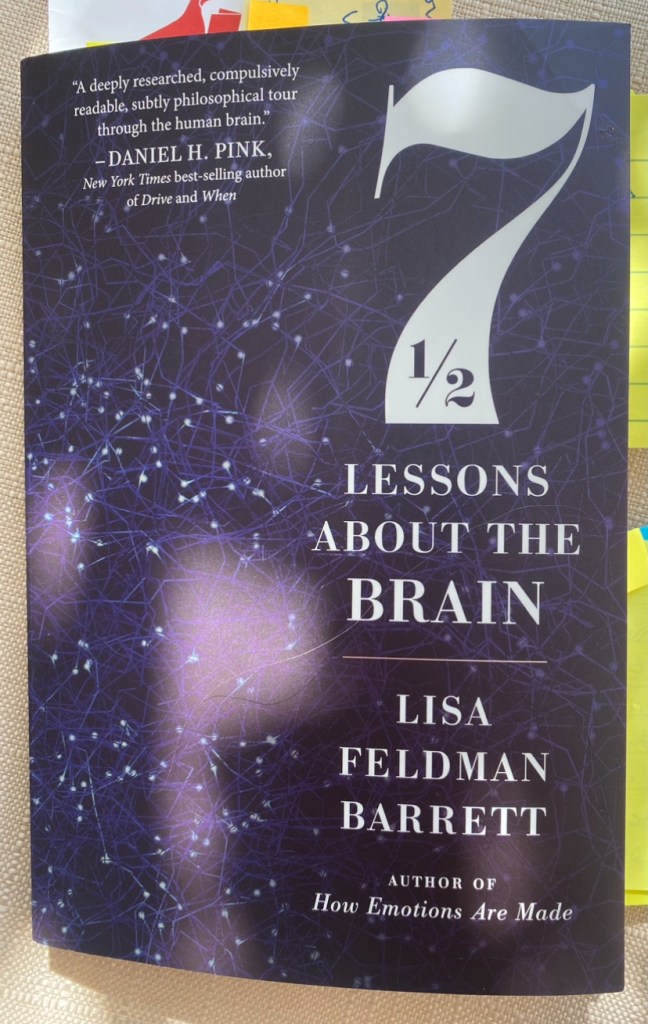
If you can reach back and change how you feel about your past, your brain would predict differently – and you might act differently, and experience the world differently, as a result. Your actions today become your brain’s predictions for tomorrow. and those predictions automatically drive your future actions. (excerpted from 7-1/2 Lessons About the Brain by Dr. Lisa Feldman Barrett)

I hope you are amazed by the new path forward for our emotional intelligence and emotional health. No wonder we have struggled in every sense of the word to live more authentically. We’ve been working so hard to grow, to heal, to understand ourselves and each other – and we’ve been doing it with stale, constrictive, outdated information all while we were attempting to blaze more spacious and engaging new trails.

The springboard for building the life we want and living it with greater fulfillment, is taking care of our brain and body. This is the missing puzzle piece that we have been searching for. Go have some fun implementing these new tools and concepts. Discover the difference it makes today — and how it better prepares you to be flexible, resilient and creative tomorrow.

Check out this resource to get some impactful highlights about your brain’s predictions – and dive into some of the resources suggested to learn more: Predicting Better. org https://predictingbetter.org

Check out this timely episode on the Huberman Lab podcast with Dr. Mark D’Esposito: How to Optimize Cognitive Function & Brain Health https://podcasts.apple.com/us/podcast/huberman-lab/id1545953110?i=1000645842679

Architects of our Experiences

Surely you recall that childhood pleasure of a rainy day when mom or dad would drape blankets over couches and chairs, then stand back prepared to be amazed at what their creative little geniuses would do next. An ordinary living room suddenly transformed into a sensory wonderland that started with a simple blanket fort.

I came upon this sight a few days ago and marveled at the ingenuity of the little architects who began with a pint-sized castle that just kept morphing into something even grander with each “lightbulb” moment and the addition of another toy bin. 

As the plans grew in size and complexity, there was a lot of trial and error. Shrieks of joyful delight filled the room as the framework collapsed and a new idea took shape from the rubble. 

What a lesson to be learned from two small children actively engaged in an organic, evolving, complex and creative process. They were little architects of their playful experience.

Are you aware that we adults can become skillful architects of our own experiences? 

It’s true — and the beauty of it is, we can tap into the creativity and positive outcomes that comes so easily to kids, by using our brains and bodies in a powerful new way.

Just imagine being able to construct experiences and supporting emotions that more consistently align with your goals and big aspirations. Fewer self-made obstacles, more smooth sailing.

Dr. Lisa Feldman Barrett is breaking new ground in the science of emotion – overturning long-standing beliefs that our emotions are universal, automatic and hard-wired in different regions of the brain. Instead, we actually “construct” an instance of emotion through a remarkable interplay of our brain, body and our culture. 

Anyone who has ever experienced a strong emotional trigger from an event that happened decades ago, has some appreciation for how quickly this remarkable interplay coalesces. It’s no wonder we believe it’s automatic and has become hard-wired into our systems. 

And yet, we also know that it is possible to “re-wire” our brains and release old emotional triggers – freeing us from being snagged by that old experience over and over again. The neuroplasticity of our brains enables us to re-organize our old connections in new and improved ways. 

This rewiring process is analogous to children reorganizing their fort framework to become something more useful for an even more incredible structural masterpiece.

It turns out that becoming “architects of our emotions and experiences” it is not as big a stretch that we once believed. How remarkable is that?

Dr. Lisa Feldman Barrett is gifted at making this new concept readily accessible to all of us. There are three key components that we need to know more about when it comes to curating our architectural tool bag: body budget, emotional granularity and cultivating more current, diverse experiences.

Today’s post is the first in a three part series about becoming skillful architects of our experiences. Prepare to be amazed at the role our body budget plays in our emotional reactions to life. 

A major part of becoming skilled architects of our experiences involves mastering our emotions. We erroneously believe that our emotions that are the first system to get activated — and we have to “manage” those strong emotions in order to respond effectively to our circumstances.  But this is not the case.

What actually happens first is that our brains are estimating what’s in our tank and predicting how much of our inner resources are going to be required to meet the present moment. It would be analogous to us hopping in our car for a big road trip and looking at the gas gauge to determine how far we can get before refueling.

Our brains are only 2% of our body weight, but they use 20% of the oxygen we consume and 20% of the energy we consume. What our brains and bodies need in order to have a balanced body budget are consistent quality sleep, hydration, good nutrition and movement, i.e. regular exercise. 

We are learning so much more than we ever knew about the importance of consistent quality sleep for our optimum brain health. Even while we are sleeping, our brain is storing and categorizing information, cleaning and purging, updating and rejuvenating. We are even cognizant of the disruption that caffeine and alcohol has on our sleep cycles and the integral neural processes that occur only during sleep. 

The benefits of good nutrition, hydration and regular exercise are irrefutable. But while we know these components are needed, we often forget that we are also draining our resources throughout the day and should pay attention to when we need a break, should take a walk, or grab a healthy snack. How often are we literally running on fumes?

Let’s just pause here for a minute and think about the amount of time we devote to charging our phones, making sure we have 5g network and cooling it off if we get a heat warning. What if we were to become as knowledgeable about our brains which are operating 24/7 for us – and often without any awareness of the drain on our inner resources?

All this time that we believed we were at the mercy of our emotions, we may simply be attempting to function optimally on an empty fuel tank. Very often what we are “feeling” is not an emotion, but rather an indicator that our body budget is out of balance. 

Since our brains are lightening fast at the estimation and prediction process, they get our body ready for a response that might include an increased heart rate, shallow breathing, or release of chemicals and hormones such as adrenaline or cortisol. We “feel” these sensations and “assign” an emotion to it. We might tell ourselves we feel scared, angry, anxious, uncertain, elated or surprised.

We’ve been doing this for most of our lives without a second thought, so it has become second nature to associate an emotion with whatever we are sensing in our bodies. Once we assign an emotion, we are off to the races – and often unconsciously,

Since our brains are prediction machines, it will quickly run through our historical database to find past events that simulate what we are feeling in the present moment. This complex retrieval system is on auto pilot most of the time; we are unconsciously running an algorithm that reviews our personal history looking for matches.

After the match is made, our amazing brain has one more remarkable feature — it runs a prediction error model. This is the brain’s way of giving us the opportunity to discard old data and replace it with newer, more appropriate data that suits the current situation. 

For the record, we often bypass or override this integral prediction error process. If it “feels” like a past experience, we pull the “all systems go” switch. This is how we’ve forged our “go to” behavioral patterns and protective armor. Without a moment’s hesitation, we assign an emotion, recall a past similar experience and jump into a memorized and familiar reactive pattern.

When we are pivoting to becoming architects of our experiences, we can start to pay more attention to both predictions and prediction errors. We can take the time to see if we are simply relying on an old database that no longer serves us well. This is how we “re-wire” those old outgrown behavioral patterns and replace them with new responses better suited to our lives today.

If the first brain system to get activated is simply an assessment of internal resources that are needed for the present situation, then we can start paying attention to body budget first and emotional responses second. This is a game-changing pivot in both mindfulness and self awareness. Think of this as a little “self check-in”. Are you resourced internally? Have you assigned an emotion and if so, does it feel appropriate to the current situation?

If we can make the distinction that our body budget is actually causing us to be under-resourced and not some big emotional reactions, we can begin to dis-engage from strong emotional triggers and respond with more cognitive skills. 

We think that emotional regulation is really hard and that changing our old behavioral patterns is even harder, but Dr. Barrett’s research is showing us that we just might have been making things much more challenging for ourselves all along by not understanding the role body budget plays. 

It is the very reason that we have “variation” in our moods, emotional states and our ability to think clearly. Dr. Barrett offers us a welcome sigh of relief — it turns out that “variation” is the norm.  

There are times when we do feel in control, cognitively and emotionally. We meet even the most stressful moments calmly, with a good sense of humor, a healthy acceptance of reality. We can even help others calm down and self-regulate when we feel this way.

Then there are times when we are short-tempered, can overreact to the smallest of events, or work ourselves into a state of frenzy. We set off a chain reaction of emotional reactions in others and things can escalate quickly.

Variation is the norm. And now we know what might be the real cause — a body budget deficit.

We get notifications throughout our busy day from our brains and bodies about what is needed to keep us running optimally. We even have terms we’ve created to diagnose our body budget deficits – such as hangry, brain fog, getting on our last nerve and no bandwidth. But unlike the ding of a notification from our phone, we often ignore the alerts we are getting from our brain about our own energy drain. 

We frequently overlook the small investments we can be making all throughout the day to keep our body budget in balance.  We may start with a full tank in the morning after a good night’s rest, a tall glass of water and a healthy breakfast; but we are going to begin to drain our body budget resources as the day goes on. Exercising, staying hydrated, making healthy choices for snacks and meals, taking breaks, getting outdoors, and unplugging from our devices are just a few of the multitude of ways we can restock our inner resources.

The biggest paradigm shift in understanding how we “make our emotions” is coming from a deep understanding of the role our body budget plays in our daily lives. 

Dr. Lisa Feldman Barrett is a pioneer in her fields of neuroscience and psychology – and she is helping us to get very savvy about our incredible, complex brain and body systems. If we take better care of ourselves, and pay attention to our body budget, this whole business of emotional regulation might just get a whole lot easier.

Dr. Lisa Feldman Barrett will captivate you with her compelling Ted Talk about how emotions are made. Click this link to listen
https://www.youtube.com/watch?v=0gks6ceq4eQ&t=140s

Check out this episode of the Huberman Lab podcast where Dr Lisa Feldman Barrett is Andrew’s guest to discuss How to Understand Emotions https://podcasts.apple.com/us/podcast/huberman-lab/id1545953110?i=1000631446646