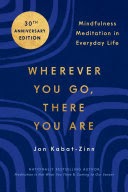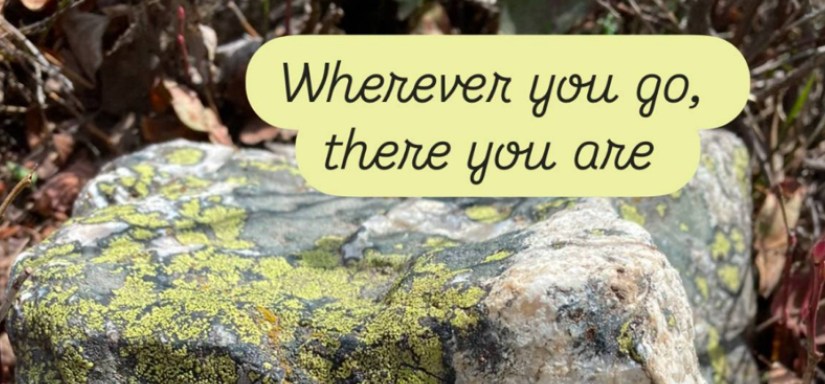
Wherever You Go, There You Are

Take some time to think about the many times in your life when you set out in search of something new, something better, something you’d wanted or worked for your whole life.

Chances are you felt highly energized and incredibly enthusiastic. You tapped into the power of visualization to picture yourself living your dream — and it felt amazing! Maybe it was the dream job you landed, or a new relationship; perhaps you relocated to a bustling city or a different climate.

How did things pan out over time? Was it all that you had hoped for and dreamed that it could be?

If you didn’t intentionally take a new and improved version of yourself into this golden opportunity, did you find yourself backtracking?

In my last blog post, I offered the image of a “greenhouse library” to reframe our personal reference material and internal data base. We can gain so much insight from spending time to learn from our past experiences. This becomes an intentional shift to pivot from old behavioral patterns, lack of self awareness and outgrown emotional reactions BEFORE we enter our new opportunities.

Isn’t it ironic that we often are pushed to our limits, know that we want something better for ourselves, and purposefully make big life changes (like moving, finding a new partner or more rewarding job), but we never stop to think about how we ourselves must change in order to make the most out of these pivotal moments in our lives?

We should conduct an “exit interview” with our inner coach (our inner voice) when we are moving on from something that we’ve outgrown or that is no longer working for us. We should be asking ourselves “what have I learned from my past experiences”?

It is not just what we learned from life’s challenges and golden opportunities but most importantly what we learned about ourselves as we met these moments.

In that exit interview, there should be a page with the heading “Wherever you go, there you are”. A review of your habitual patterns of behavior, emotional triggers and blind spots becomes the launchpad for taking a new and improved version of yourself into the change you are purposefully seeking.

You may want to elicit a little help with your “exit interview”.

Consider just how much your parents, grandparents and teachers helped you gain a deeper understanding of yourself as you were growing up. Their perspective on how you typically showed up in life educated your intuition and inner voice. They are often the ones we hear whispering in our ears when we are making both big and small decisions.

Do you remember that major milestone of getting your driver’s license?

You couldn’t wait to get in that car all by yourself and take off. Your first taste of freedom to drive yourself wherever you wanted to go, taking any route that pleased you, listening to your favorite music at whatever volume you chose.

It does not take a big stretch of the imagination to recognize that your parents trusted that wherever you decided to go, you would show up as the teenager they knew well. You were going to be you.

As mom or dad tossed you the car keys, it is quite likely they also tossed you some cautionary reminders about making good decisions. “Don’t drive too fast or tailgate. Don’t text or fiddle with the touchscreen. Keep your eyes on the road and stay vigilant about other drivers. A yellow light means be cautious, not hit the gas and gun it.”

Your parents knew that “wherever you go, there you are.”

Your parents had 16 years of observing, experiencing and predicting who you were, what mattered most to you, how you made decisions. They had to trust that all those years they invested in teaching and guiding you would prepare you for this independence. It was their past history with you that became the very reason they offered you personalized reminders of potential hazards. Not only road hazards, but the very ones that you yourself might create.

Those words of wisdom that your parents offered in exchange for those car keys was a form of an “exit interview’. Venturing out on your own, they offered some pointers to keep you aware of your natural tendencies. Subtle reminders to pay attention to your habits, behaviors and impulses that could be potential roadblocks.

Sticking with this driving metaphor, think about how many times you actually updated your driving skills over your lifetime. As you “practiced” driving solo, you became more confident, were able to judge traffic more intuitively, merging with ease and avoiding potholes. You learned how to drive in bad weather, take unexpected detours and fix a flat tire. You probably accommodated your fellow passengers when you were the designated driver, stepping up and accepting more responsibility. When you became a parent, it is quite likely you became a much more cautious driver all while honing your time management skills and planning for unexpected small human emergencies. You may have learned to drive stick shift, a van or truck; learned how to tow a trailer. When you bought a newer model car, chances are great that you had to learn how to use computer functions that didn’t even exist when you first learned to drive.

Take a few minutes to remember your sixteen year old self and that first solo drive. Compare that to the driver you are today. Give yourself a few gold stars for just how far you’ve come.

There is remarkable value in doing this same type of comparison whenever we are making changes in other areas of our life. We may not always be attuned to just how much we have changed and the many invaluable life lessons we bring with us into new chapters of our life or reinventions of ourselves.

An “exit interview” is a fresh reframing for self-reflection and pulling threads from our life lessons. If we comb through our old files of life experiences, we are likely to find important clues about why some of our big dreams or golden opportunities didn’t pan out like we’d hoped.

We can move to a new job, new location, into a new house or apartment, but that alone is not going to be the magic that brings about the real change we seek. If we bring our same old self to something new, nothing really changes.

Dan Pink, author of The Power of Regret, tells us that a little self reflection on things we regret is a powerful way to help us remember what we value most. If we ask ourselves “why” we are pursuing a change, we will bubble to the surface the very things that matter most.

While there is an implied promise to ourselves that what we really want the most can be found in this new place, job or relationship — we have to bring what we have learned from past experiences into these new opportunities in order to set ourselves up for success. If we bring our same old self, we will surely find the same old problems cropping up. Wherever you go, there you are.

Old behavioral patterns have a way of repeating themselves. We can change our environment or relationships, but if we rely on the same old behavioral responses like people pleasing, conflict avoiding and passive aggressive tactics, the end result will be the same — just in a different place or with different people.

James Clear, author of Atomic Habits, points out that we don’t naturally “rise to the level of our goals, we fall to the level of our systems.” This advice is a springboard for meaningful life changes. Build better systems to make the most of new opportunities.

A huge component of a meaningful “systems” change is changing the way we show up in life. Awareness of our non-productive, habitual behavioral patterns becomes the gateway for real changes in our brains — and subsequently how we “show up”.

Take your personal growth into those new opportunities. Let the self-discovery process inform you about the places where you can now stretch and flex. Use the “fresh start” effect of a new job, new location or new relationship to strengthen your commitment to showing up as a new and improved version of yourself.

There is a huge benefit in taking stock of where we have been and where we are going whenever we undertake a major change in our lives. If we aren’t intentional about this, we wander rather aimlessly into the new chapter or reinvention of ourselves. We might fail to see that our core values evolve over time and are even subject to revision.

Consider this timeless question: What would you tell your younger self?

When we take time to reflect on what we have learned from our past experiences, we gain real clarity about our current values — the “what matters most” part that is driving our strong desire for change. We are able to put some more meat on the bones of our values. Maybe it is a job that not only pays well but is also in alignment with our real interests, one that feels personally rewarding. Perhaps it is a relationship that feels less like a tug of war and more like a highly functioning partnership. Maybe it is not just a change of scenery; it might be better access to community, nature, arts and activities we enjoy.

In other words, we don’t just check a box, we look at the contents and see if that box is really meeting our needs and values.

Another timeless question: What is the one life lesson you have to keep learning over and over?

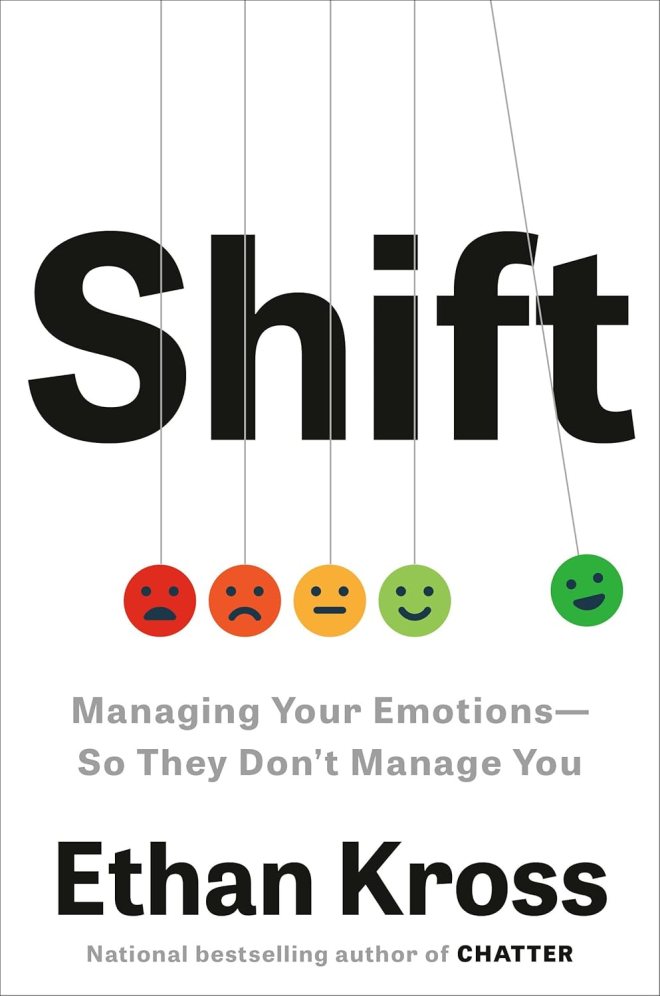
In his book, Shift, author Ethan Kross reminds us that most learning typically requires many experiences. When we acknowledge this reality, we can look more closely at the earlier chapters of our lives to find that one life lesson that we do in fact have to keep learning over and over.

In many cases, the lesson we need to learn repeatedly is to stop getting in our own way. We do make things harder for ourselves than they need to be. Being stuck in our old ways while we are trying to move forward in life is that one lesson that life keeps offering to us. The same lesson can be repurposed and repackaged in a lot of creative ways. What is that one life lesson that you have to keep re-learning?

If we want to truly evolve as we move through chapters and stages of our lives, then it is wise to take stock of where we have been and be clear about where we are headed.

James Clear, author of Atomic Habits, uses the image of our “future” self as a way to visualize how we will look, feel and act when we grow forward into changes we proactively pursue. He reminds us that it is our consistent, small efforts toward these bigger changes that are rock solid “votes” for our future self.

Remembering that our past experiences are not old baggage, better left forgotten – but a vast, rich reference library for our personal growth is a great reframe for self-discovery. All too often we forget just how far we’ve come, how many adversities we have faced and the inner strength, confidence and resilient we’ve stockpiled.

The purpose of an exit interview is to understand why we are leaving something behind and pursuing change. It is also to get honest feedback and fresh perspectives. Self-reflection is a key part of doing our own “exit interview.” Being candid with ourselves about any regrets we might have helps us get crystal clear about what matters most. It gets to the heart of why we are seeking change.

When we are very clear about who we are, how we are showing up in our life and who we are working on becoming, we take the guesswork out of changing for the better.

We can grow forward by looking at what we have learned from our past. We already have more footholds and skill sets than we realize.

This is the 5th blog post in a series about the stories we tell ourselves, creating better scripts for our stories, and working on our character development. The next post will be all about creating a “coaching tree” to support your personal growth. Ryan Holiday is the inspiration for planting a “coaching tree” in your greenhouse library.

The most recent book from Ethan Kross is a guidebook for emotional regulation. We can learn to turn the volume up or down on our emotions to help us navigate our lives in the best way possible. This book is a game changer for self awareness and emotional agility.
January 27, 2025 episode –
James Clear on the Science of Building Habits That Last – this conversation with Dr Michael Gervais, elite sports psychologist and James Clear will supercharge your efforts to make sustainable changes for personal growth. https://podcasts.apple.com/us/podcast/finding-mastery-with-dr-michael-gervais/id1025326955?i=1000685599922
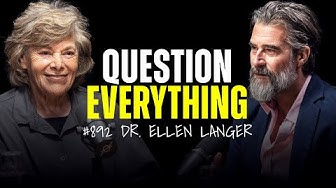
This is one podcast so worthy of your time. Dr. Ellen Langer sees the world through kaleidoscope lenses. Once you listen to her, you will never see the world the same — and that is the best thing that can happen FOR you. https://podcasts.apple.com/us/podcast/the-rich-roll-podcast/id582272991?i=1000695494416

A Slice of Life

Did you know that the phrase “a slice of life” is actually a storytelling technique? Who doesn’t love a good story? There’s magic in stories that we find so inviting and irresistible.

When someone walks in the front door and says “wait til you hear what just happened”, we drop what we are doing and are all ears. A good story captures our curiosity, interest and attention.

It is these little “slices of life” that we share with each other throughout the day that do wonders. When we hear these stories, we come to see how familiar and normal so much of daily life really is. Everyone has issues, makes mistakes, gets embarrassed, acts silly, falls short and rises to the occasion.

When we offer each other “a slice of life” we tap into our shared human experiences. We help each other make sense of things that currently aren’t making any sense. We offer lifelines, rays of hope and footholds to see us through our challenges. We celebrate the wins, the growth spurts and the mile markers.

Our shared stories help us normalize many of the common human experiences that unfold on a daily basis and help us feel less alone in what we are experiencing. It is all too easy to gaze out our windows into the lives of others and tell ourselves a story about how smooth their life seems to be going while ours is falling apart.

We shatter that false image though when we run into our neighbor at the grocery store and she shares a relatable story about being out of milk for the pancakes her kids were craving, even though she just went for groceries yesterday. Standing there with our arms full of bread, eggs and coffee cream, we laugh along with her because we are in a similar predicament. How unexpected to be offered a “slice of life” to go along with our purchases. What had been an exasperating quick trip to the local market had a silver lining. We leave a little better fortified for the rest of the day thanks to that simple exchange in the checkout line.

Ironic isn’t it – how we all feel like we are alone in the trials and tribulations of life? Yet a single, relatable story told to us by a stranger or a friend snaps us out of this hazy myth.

What the world needs now is more stories. Brene Brown told us this decades ago. She told us that data needs stories to bring it to life — otherwise it is just facts — charts and graphs. The real life stories add backstory, personal history and lived experiences to the sensationalized soundbites we get from the news. The raw facts come to life with stories. A slice of life beats a pie chart any day of the week.

I recall a lecture from an economics professor years ago who used slices of life to teach that statistics were not just numbers and graphs — they revealed insights into the people who drive (and are driven) by the economy. He told us to look behind the numbers for the human stories. His real life examples turned dry data into compelling relatable stories that made his teachings and our learning really stick. To this day, I still recall that lesson — and it is a big reason why Brene’s call for “more stories” really resonated with me.

Stories build bridges in a variety of ways. Stories can bridge the past and the present so that we can learn the lessons without having to go through it ourselves. Ryan Holiday, author of The Daily Stoic, is a strong proponent of learning from others through story – whether it is ancient or contemporary history, business wins and fails, or people who’ve overcome tragic adversity. Stories help us build a better framework for our own problems and opportunities. History that bridges the past and the present gives us a blueprint for the future.

Another way that stories build bridges is helping us to gain insight and understanding about societal norms that shaped prior generations beliefs, behaviors and actions. In his book, The Daily Laws, Robert Greene, puts a spotlight on this by reminding us that “People were experiencing their present moment within a context that made sense to them. You want to understand that from the inside out.

Robert Greene tells us that the optimum way to fully comprehend the past is to make it come to life, to re-create the spirit and conditions of the time, to tap into the subjective experience of the storyteller. We can use our imagination to take us back in time and feel what it might have been like to live in that time period. It’s quite likely that you will do this without a second thought when you watch a holiday movie such as A Christmas Carol, It’s A Wonderful Life, or even How the Grinch Stole Christmas.

When we are listening to a story, we are opening up our natural curiosity and our imagination. Without even being consciously aware, we are feeling parts of that story too. Storytelling shifts us from being judgmental and close minded to surrendering to the magic of story. We begin to make connections and discoveries through empathy, sensory perception and our own emotional responses.

Watch a grandparent telling a story to a grandchild and you will see this magic unfolding. Often the grandparent will get down on eye level with a child or draw them into their lap. The opening line is probably not “once upon a time”, but more like “let me tell you about a time I fell off my bike”.

There is an instantaneous connection over a common shared experience. When a grandparent tells a good story, they are weaving their own real life experience into that of their grandchild’s — and offering the wisdom that small child needs to feel better, to realize how common that bike fall really is, and to have faith that they’ll have a lifetime of skillful bike riding ahead of them. The loving grandparent has just offered a slice of life through the magic of a good story.

So what is this “magic” embedded in story? Why is storytelling such an effective technique for imparting wisdom, sharing life lessons and reframing age-old conundrums? The answer is that we humans are hard-wired for story. We use story to make sense of our experiences and to give those experiences meaning – and we do it from childhood all throughout our lifetime. The magic is how our brains get activated by a story.

When we listen to a story, multiple regions in our brains come online and light up. This allows us to “live” the story we are hearing through vivid imagery, emotional engagement and sensory perception. Hormones such as oxytocin are released so we become awash in empathy and relatability.

We also experience neural coupling, where our brain and that of the storyteller actually synchronize. This becomes the mirroring that we humans do for each other. Watch a mother and her baby and you see this neural coupling in action. We get the same mirroring effect during storytelling — we reflect back to each other what we are feeling and experiencing. It is a brain connection that also makes a heartfelt bodily connection.

Mirroring may sound like new-age neuroscience lingo — yet it is hardwired into us humans. It is a phenomenal tool for emotional regulation. A mother can up-regulate her fussy baby to a happy state using facial expressions and cheerful tone of voice. She can down-regulate her baby into a calm state before nap time with a soft-toned, soothing lullaby. We do this mirror processing without a conscious thought as we listen to the stories our children, spouses and friends tell us. It is a fluid process of reflecting back and forth, validating how someone feels and acknowledging that we understand. We might even share a similar story of our own. We create bonds of trust and acceptance through mirroring.

So now you know where the magic in storytelling is coming from — it is coming from our brains and bodies as we “synch” up and absorb the encompassing, rich context offered by the storyteller. It is a shared human experience.

Storytelling is one of the most effective ways to teach and learn. It is how ancestors passed knowledge about culture and heritage from one generation to the next. It is how wise sages impart wisdom through parables and fables — offering us a poignant “moral to the story”. Stories are how we preserve precious memories of loved ones we’ve lost and keep them alive in our hearts.

Perhaps most importantly, it is the small “slices of life” storytelling that really nourish us on a daily basis. When we are offered a slice of life, our brains get activated in the best possible ways. As we listen to our child tell the tale of a food fight in the school cafeteria, or our spouse unravel the details of tense work project – we are making neural connections and building bridges in our relationships. We are synching up! What an antidote to all the disconnect we get from having our faces in our devices.

We get micro doses of empathy, curiosity and fresh perspectives with each little “slice of life” we hear or tell. Our small stories help us see each other in all our technicolor glory — as we reflect back and forth, the normal realities we all face. Some days we are the windshield and some days we are the bug. Our colorful, animated, entertaining stories help us understand and relate to each other much better.

Brene Brown is right — we need more stories. We can bridge divides, build a better future and find acres of common ground through storytelling. Offer a slice of life to others whenever possible. And when someone offers you a slice of life, savor it!

NOTEWORTHY RESOURCES:

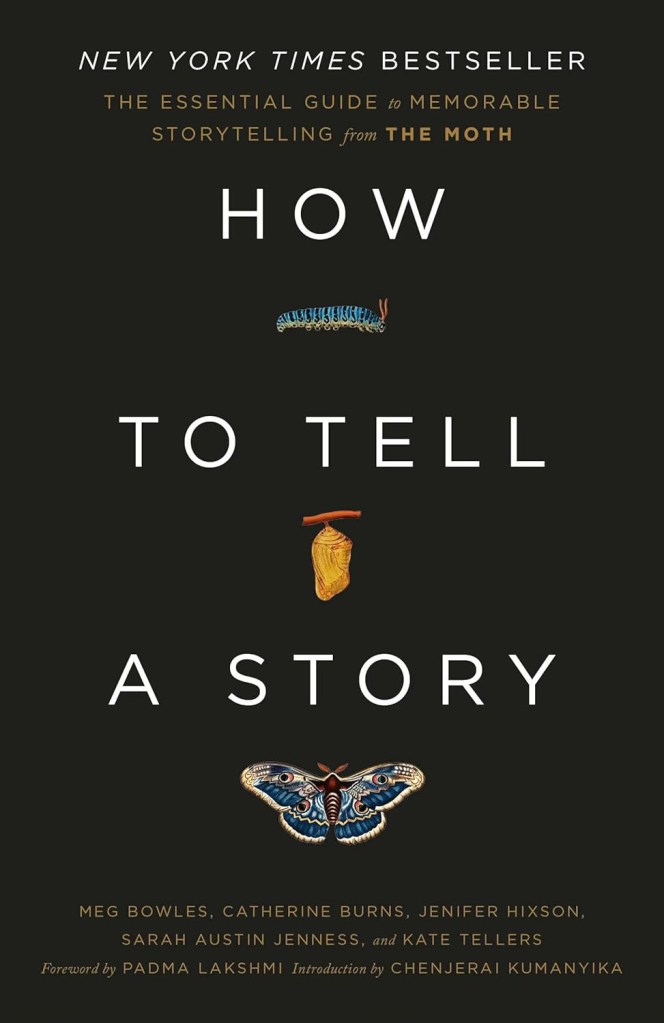
NEW YORK TIMES BESTSELLER • Now in paperback and featuring new material, the definitive guide to telling an unforgettable story in any setting, from the storytelling experts at The Moth

“From toasts to eulogies, from job interviews to social events, this book will help you with ideas, structure, delivery and more.”—CNN
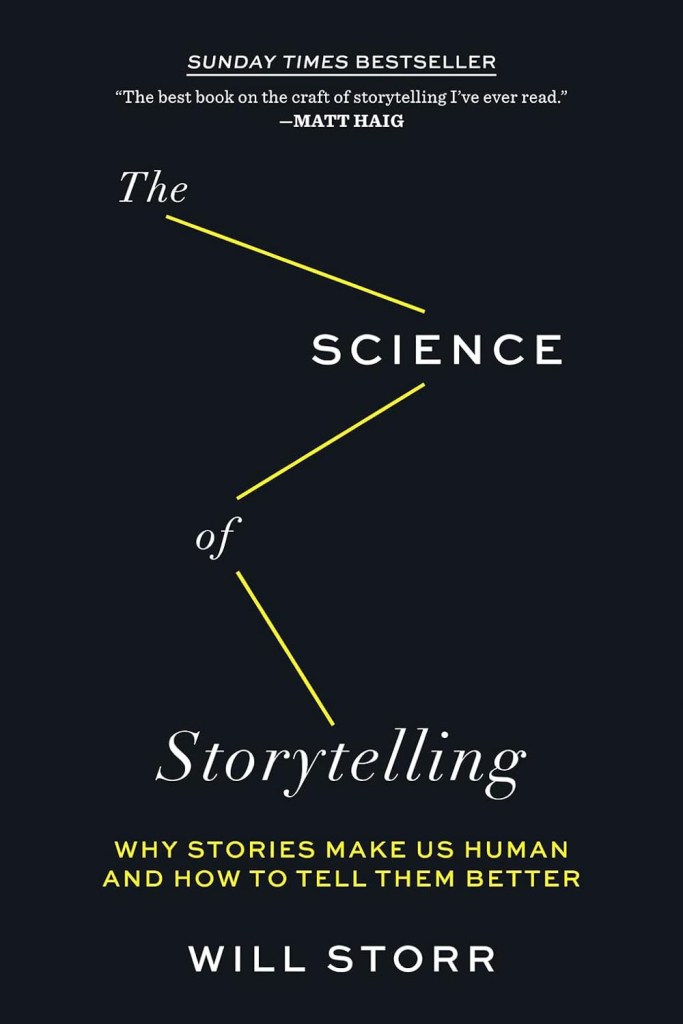
Award-winning writer and acclaimed teacher of creative writing Will Storr applies dazzling psychological research and cutting-edge neuroscience to our myths and archetypes to show how we can write better stories, revealing, among other things, how storytellers—and also our brains—create worlds by being attuned to moments of unexpected change.

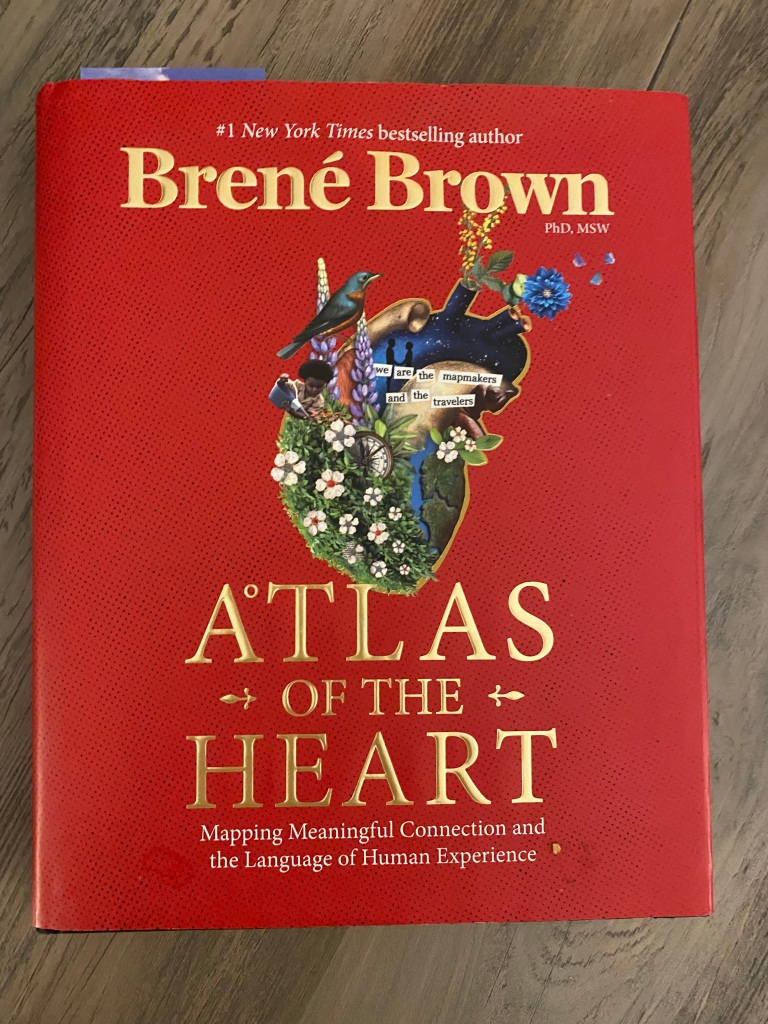
Brene Brown’s Reference book on 87 common emotions and experiences is the perfect resource for discovering “the places we go” and “the stories we tell ourselves” in everyday life.

Daily Supplements Make a Difference

Do you take daily supplements to support your physical health? Most of us do and we know that they make a meaningful contribution to overall wellbeing. It’s nearly impossible to get all of our vitamins and minerals from our food alone; thank goodness for supplements and the ease with which we can give our bodies and brains the boost they need.

The same is true for supplements that support our psychological, emotional, cognitive and relationship health — which is why I launched my Daily Gummy of Wisdom over a year ago. My commitment to publishing a Daily Gummy everyday was recently refueled by Ryan Holiday, author of the Daily Stoic. Ryan shared that reading a “page-a-day” book is an invaluable source of encouragement and support for our ongoing personal growth and self discovery.

Having that daily practice of reading a “page a day” of words of wisdom, insight and inspiration helps us to get our day off on the right foot – and can serve as a reminder of our intention to do a little better than we did the day before.

As James Clear, author of Atomic Habits, reminds us – it is the small, consistent practices we commit to each day that compound over time and yield remarkable transformational benefits. I can attest to the fact that reading several “page a day” books over the past few years has had a big impact on me in the most positive ways.

Over the past year, I have been delightfully surprised by the number of times that a reader would reach out to me and share how a Daily Gummy of Wisdom landed at just the right time for them. I have marveled at how many of the Daily Gummies were forwarded with personal commentary revealing just how relatable they are.

Today I am going to unpack what I am discovering as I put in to “daily practice” what I am deriving from my daily gummies of wisdom and insight.

A Daily Gummy About Boundaries:

I surely wish that I had learned about the many benefits of boundaries decades ago. What an indispensable tool for navigating relationships and experiences in a safe and practical way. Boundaries are just like the guardrails on a highway — they help us all navigate safely.

My “go to” approach in the past was to sugarcoat or disguise the fact that someone had crossed a line in our relationship. If I had been disrespected or a behavior was unacceptable, instead of addressing it directly, I would tell a story about a friend who was struggling with a similar issue. My blind hope was that the person who had overstepped a personal boundary with me would see themselves in that story and self-correct. Not only was this approach totally ineffective, it merely created a detour around an important issue. No one saw themselves in those stories. It was the equivalent of building an off ramp to nowhere.

The big pivot in setting and holding boundaries came to me when I learned that boundaries do not require the other person to do anything. I had been going about it all wrong. A boundary is the easiest way to let another person know what is acceptable to us and how we wish to be treated.

When others are having trouble being respectful or controlling their behavior, a boundary is how we say “I see you are having difficulty navigating this, let me help you with that.”

Brene Brown reminds us that “clear is kind”. Reframing a boundary as a clear and kind guardrail for relationships is a game changer. Being clear about unacceptable behavior and the action we will take if it occurs, puts us in the driver’s seat. We can navigate to a safer place and safeguard what matters most to us. It does not require the other person to do anything — but it does provide an on-ramp if they choose to take it.

Very few of us grew up learning about this invaluable tool. We were given ultimatums, threatened with a punishment, or told to go sit in isolation and figure things out by ourselves. Even today, many people believe that these outdated approaches are boundaries, but they are merely off ramps to nowhere. No one makes forward progress.

Boundaries are how we help ourselves and others build healthy relationships with mutual respect and clarity in how we communicate with each other. Clear is kind and consistency is strong reinforcement. That’s the materials that build healthy boundaries.

This Daily Gummy reinforces the ease with which we can help others navigate our relationships safely. Using clear and consistent boundaries is a much more productive way than skirting the real issue. Look for this Daily Gummy in your inbox on July 31, 2024.

A Daily Gummy about Perceived Weaknesses:

Anyone who is familiar with the Enneagram or a skills assessment personality test, will attest to the fact that we often view our weaknesses as fatal flaws. Imagine my relief when Adam Grant, author of Think Again, recently shared that we should “rethink” our attitude towards weaknesses. Adam’s research reveals that our weaknesses are often just overused strengths.

As a reformed people pleaser, I confess that my weakness was in fact a much over-used strength; one I learned very well in childhood. I was always told to “be the helper”. I was an over-achiever in the helper category, and by all means “over-used” the strength. The problem with helping too much is we make others feel incapable, can contribute to a chronic condition of learned helpless, or become enablers. It was through Ian Cron and his Typology podcast series that I discovered we can turn our weaknesses into strengths with healthy reframing. Reformed helpers can become coaches, mentors, cheerleaders and field guides for others.

Take some time to reflect on what you perceive as a “weakness” and see if you too can recognize that it might be an overused strength. If you are hyper-vigilant, you may take all the fun of spontaneity by doing a deep dive into risk assessment. If you are prone to perfection, you might wear yourself and others out with your attention to detail – when “good enough” might actually be perfect. If you perceive yourself as a fierce protector, you might actually be going to battle for someone who prefers to handle things on their own.

Some additional food for thought: It is not uncommon for us to assume that what appears to be a strength in others must be a weakness in us. We look around at others and compare ourselves — often wishing we could be a little more like a friend who seems forever fearless and takes big risks; or the one who is highly educated and speaks with authority in their field. Yet the reality is that our own perceived “weaknesses” might be hidden strengths in a variety of circumstances.

For most of my life, I was envious of friends who held very strong opinions and spoke with authority about those opinions. I believed that my inability to put a stake in a strong opinion was a weakness of mine. It was only in recent years that I came to appreciate the gift of being open-minded and innately curious. I thought my lack of ability to form and hold a strong opinion was a weakness; Malcolm Gladwell and Dr. Ellen Langer showed me a different perspective.

Malcolm Gladwell has long been a proponent of holding our opinions loosely. While he is comfortable with having an opinion he always adds the disclaimer — “for now” or “subject to change”. Malcolm has reflected on his own lived experiences as well as our collective ones and stands at the ready to pivot and re-assess — because change is the only constant. He often shares colorful stories of the many reasons he has changed his opinions or theories on things. He’s actually made a career out of it.

Dr. Ellen Langer, Harvard professor of psychology, and lifelong researcher of mindfulness, fully embraces her natural curiosity and ability to curate a plethora of opinions on any subject. In fact, she encourages us to greatly expand our own capacity to do the same. She considers this an update to our incredible brains and wants us to tap into its full creative capabilities. She invites us to practice becoming more open-minded by steeping ourselves in a variety of new experiences, having deep conversations with people who are different from us, read a new genre, discover new music or artists and challenge our own long-held opinions. I often envision Dr. Langer using a kaleidoscope as her lens on life.

So my takeaway from both Malcolm Gladwell and Dr. Ellen Langer was that my nature is not to form strong opinions – and that is more than okay. Viewing my “weakness” as a strength now enables me to engage in richer conversations with others who do hold strong opinions – for I have much to learn from listening to understand. Instead of being envious, I am now embracing curiosity and leaning in so as to cultivate the raw data my brain craves.

Watch for this Daily Gummy on weaknesses as overused strengths to drop on August 14, 2024.

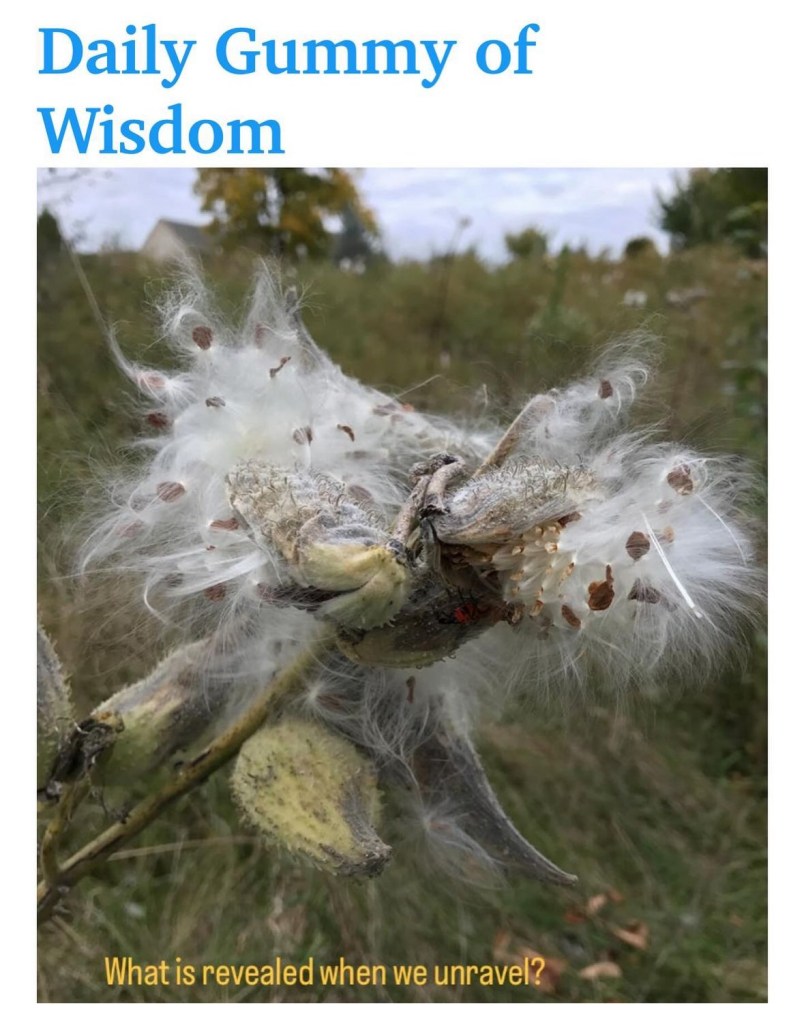
We all unravel — sometimes it is a mid-life unraveling and other times it is a small, everyday of unraveling where we can’t seem to catch a break.

The unraveling that naturally occurs in life is yet another example of “I wish I knew then what I know now.” How different we might approach an unraveling if we were taught to pay attention to wear and tear in our lives, just as we are with our cars, our appliances, our clothes.

What if we were to reframe “unraveling” as a “revealing”? When we hit a breaking point or rock bottom, we take stock of what isn’t working in a much more realistic and accepting way. We can no longer ignore the places where we are coming apart at the seams. It becomes the time to mend our ways.

Perhaps one of the most transformational pivots about the psychological tool of reframing is how quickly it changes our perspective and allows us to see what had been long hidden in plain sight. What does the unraveling reveal to us? Now unraveling becomes a reset opportunity,

When we view an unraveling as a revealing exercise, we are able to meet these moments in our lives with greater courage; with more curiosity and less fear or shame. We can see the “wear and tear” we are putting on ourselves and our relationships with more honesty and clarity through the lens of self-reflection.

When we unravel, we do open up. Like it or not, it is the opening up to both reality AND possibility; it is as natural as this milkweed breaking open to reveal its seeds. Our own seeds of awareness move us toward acceptance of the places where we have room to grow or need improvement. We may need to ask some hard questions, but it is far better to do that than blindly wait for hard times.

We can become better at reevaluating our “unraveling” moments as a chance to discover what is being revealed to us when we recognize signs of wear and tear. We can also become more skillful at supporting others in their moments of unraveling. We can use the tool of reframing “coming apart at the seams or hitting rock bottom” to help others explore what is being revealed to them. We can become good listeners and strong support systems — for ourselves and each other.

This unraveling Daily Gummy was published on June 28, 2024. I heard from several friends how helpful this reframing concept was at that very moment. This is how the seeds of change not only get spread around – they get planted and watered as they are passed along.

Click this link to get the Daily Gummy delivered to your inbox:https://inspired-new-horizons.ck.page/3381cf137f

Corks Rising

When I first started blogging about personal growth 8 years ago, I had a glass jar on my kitchen windowsill with a cork bobbing in water. It was my touchstone to remind myself that each of us plays an important role in lifting each other’s cork. We need help to stay afloat.

This morning, I read something in Hidden Potential by Adam Grant, that transported me back to that moment in time. It felt surreal and spine-tingling to be in two places at once. I was at the very beginning of my self discovery journey placing that cork in the jar –AND — I was also fully present in my apartment taking stock of just how far I have truly come on that personal growth journey. A smile stretched across my face as I took stock of how my own cork has risen over 8 years — and most importantly, how so many others’ corks have also risen.

At the onset of my personal growth journey, I felt alone in the work – one cork in a small glass jar. Today the massive ocean is full of corks and I am merely one of many. I could not be happier with the company I am keeping.

For over 20 years, Brene Brown has been planting seeds of the very work we are deeply steeped in today. She braved the wilderness back then, schlepping her first book from the trunk of her car and mustering courage to give a Ted Talk on shame and vulnerability. She did not have a crystal ball to guide her — she just followed her heart and her calling, blazing a path and planting seeds.

There is a Greek proverb that reminds us that wise men plant seeds of trees, the shade of which they will never sit under, bubbled up into my consciousness.

Brene Brown planted the seeds of human connection with an emphasis on vulnerability, the importance of our emotions, and the necessary healing work of addressing old generational patterns — and those seeds took root.

It has taken nearly two decades for the seeds to grow into the full awareness that we got a lot of things wrong about humanity, how the brain and body really work, and what is truly possible for our evolution on so many fronts.

I sat under the shade of the tree that Brene planted just yesterday. I listened to Scott Galloway and Rich Roll openly discuss vulnerability on Rich’s podcast. It was visceral to experience this refreshingly deep and honest conversation with two men in their fifties get real about their emotions and what they want for their sons and daughters.

Even more importantly, is the education and messaging that Rich Roll and Scott Galloway are collaborating on — the need for us all to take very seriously the crisis of loneliness, depression, social isolation and lack of human connection that is paralyzing our younger generations.

When I began my personal growth journey, I read Dr. Bruce Perry’s compelling book, Born for Love. In that book, he was sounding the alarm for our growing empathy poverty, but his voice was drowned out as our collective attention turned to the novelty of social media. We blatantly ignored the warning and gleefully plugged into social media and our devices, so certain that we’d find the connection we craved through technology.

Today, Jonathan Haidt draws a through line from the early 2010’s to today and holds up the reality of our human condition for us to see clearly. Our younger generations need to be unplugged and reconnected to reality. In his book, the Anxious Generation, he is carrying forward the message that Dr. Bruce Perry warned us of in Born for Love. Our growing lack of empathy, our self-imposed social isolation and addiction to devices, has created an epidemic of AI – artificial intimacy. It is Esther Perel who coined that term – Artificial Intimacy. She is the dynamic psychotherapist who fearlessly weeds out conflict between couples to help them discover that plot of ground begging for seeds of love, intimacy and connection to be planted.

We can no longer blatantly ignore what is hidden in plain sight. We must focus our attention, resources and real life support on our children.

Ask anyone who has ever hit rock bottom, and they will tell you that it was in their lowest place that they faced the truth that in order for meaningful change to happen, they had to dig deeper – and do the hard work of rebuilding.

This is where we all are today – collectively at rock bottom with an opportunity to nurture the seeds that have been planted over the past twenty years in psychology, behavioral science, neuroscience and modern medicine.

It is my strong belief that we have reached this breaking point because humans are hard-wired for connection and we do not thrive in continual chaos and uncertainty. If this dilemma were happening in the animal kingdom, our hearts would be breaking open as we watched adult animals leave their young unattended without teaching them any life skills. Their basic instincts would atrophy over time.

If you are familiar with epigenetics, then you may realize that for generations we have passed down unprocessed trauma and overloads of stress and anxiety. Dysfunctional generational patterns are the emotional inheritance that has never been unpacked. Old parenting models failed to install one of the key components of the human operating system — emotional intelligence. This combination is the one-two punch that delivers a compelling warning to us. Unpack the old emotional baggage, heal old traumas. The time has come. Our kids are on overload and they are drowning in cognitive dissonance.

The reality is that we have made this work of unpacking emotional baggage, healing old traumas and installing emotional intelligence so much harder than it needs to be. Psychology has shifted dramatically in the past decade with a focus on somatic healing and understanding how our brains actually work. Neuroscience fires up this better approach by highlighting the neuroplasticity of our brains and how we can re-wire healthier neural pathways in a relatively short amount of time.

As I wrote about in my last blog post, the creative coalescing of so many fields and modalities is helping us fast-track the triage that we need — and can no longer ignore. This creative coalescing is the little forest that has grown from the many seeds that have been planted over the past twenty years.

As many of you know, I am impassioned about teaching our kids all about their innate and integral emotional intelligence. I have a “Marie Kondo” approach to cleaning out generational baggage – let’s stop dragging it around, unpacked and continually weighing us down. Let’s travel more lightly through life and make new discoveries.

By the way, have you noticed how mainstreamed words like vulnerability, mindfulness, self-awareness and emotional intelligence have become? Little seeds have been planted over and over again by people like Brene Brown, Dr. Marc Brackett, Andrew Huberman, Kristin Neff, Dr. Lisa Feldman Barrett, Arthur C. Brooks, Dr. Becky Kennedy, Dr. Peter Attia — and a host of others. They are the corks that jumped into the sea of change and lifted us all up.

So many resources have cross-pollinated that little forest that began with a few seeds several decades ago. We are at the tipping point of a huge, positive human evolution. Just the other day, author Arthur C. Brooks told Ryan Holiday that we now have the neuroscience to prove all the wisdom of the ancient philosophers. His excitement and enthusiasm was contagious.

Here’s what I know — Brene Brown did not have a crystal ball twenty-five years ago, but she felt a nudge so strong she could not resist it. She poured herself into shame and vulnerability and stayed the course because it mattered. She networked the hell out of her platforms during Covid, lifting others up when we were most receptive to learning and discovering all kinds of new things – the missing parts we didn’t know we needed. Brene was planting seeds of awareness all throughout our dormant period.

I used to think that the law of attraction was mostly like wishful thinking — but through Brene I have learned that the law of attraction is sharing, networking and lifting each other up. That is the momentum that brings the changes and opportunities we want.

Michael O’Brien (@the.mindful.cyclist) was also a recent guest on the Rich Roll podcast. His recovery from a near-death cycling experience was the catalyst for his seminal shift that changed his perspective, mindset and actions. He expressed this profound wisdom:

“Things don’t happen for a reason. Things happen….and we give it meaning.” — Michael O’Brien

I am taking this profound wisdom to heart today. Things have been happening FOR us for nearly two decades and we can give it a transformational new meaning and pivotal new direction.

There has been a big clearing of the weeds that prevented us from seeing what was possible for us. Seeds were planted and cross pollinating was happening. mostly in the background.

The self help space got a little traction with mindfulness about a decade ago. It was a wake up call but we kept hitting the snooze button. We turned to devices and poor coping skills; social media was a siren call we falsely believed would bring us the connection we craved. Our attention became a commodity traded in futures markets.

Unfortunately our devices and social media stole our attention and mindfulness; it amplified our disconnection from real life. Highlight reels and filters gave us a very distorted picture of the beautiful complexity and realities of life.

What it also took from us was the fuel that runs our human engines – the neural energy and connectivity we get from being with each other. There is so much that neuroscience has to teach us about how the human brain and body works – how we jumpstart, co-regulate and scaffold each other. We know more about our incredible brains and how to care for them than we ever did before.

So, taking Michael O’Brien’s wisdom to heart, the meaning we can give to this moment is the discovery that we are better together, that human connectivity is integral to our physical, emotional and mental health, and our longevity.

We have the rare opportunity to lift up our kids out of their malaise with greater knowledge, tools and awareness than we have ever had before. We can have a dramatic, positive impact in short order if we meet this moment quite differently than we ever have before.

Do yourself a favor and click that link to read about Michael’s transformational life experience. Then listen to his deeper conversation with Rich on the Rich Roll Podcast.

Check out this episode of the Rich Roll Podcast with Prof G – Scott Galloway. At about 54 minutes in you will hear the 5 minute deep conversation about vulnerability and emotions. https://podcasts.apple.com/us/podcast/the-rich-roll-podcast/id582272991

Connective Tissue

A few years ago, I started to notice that the more I was really getting to know myself, the greater my curiosity about others. Even when I watched a Netflix series or read a compelling fiction book, I found that I was more empathetic with the characters and their backstories. Truth to be told, I discovered that I could see parts of my own life reflected back to me in their experiences and reactions. It was also easy to see the patterns of cause and effect that we messy human beings bring to our relationships.

It dawned on me that I was now engaging with books and shows on a deeper level and I loved it. I was able to feel and relate to so many characters almost as if I knew them personally. The story lines and plot twists of shows like This is Us or Parenthood were intimately familiar. Some felt like they had been pulled right out of my own family history. It was easy to readily identify with characters and events because I too “have been there”.

Conversations with some of my closest friends revealed that the same thing was happening for them. As they deepened their own self awareness, they too were more intrigued by the complexity of their favorite characters in a book or tv series. They could recognize blind spots and insecurities that contributed to missteps and bad decisions.

Discussing episodes of these shows with friends was much like being in book club with a fascinating twist — our focus was on the whole of the family dynamics and how one issue could cause a cascade of varying problems amongst the family members. We could clearly see the through line that ran from childhood experiences right into the adult lives of each family member.

These mini series became a classroom for recognizing familiar behavior patterns and coping mechanisms. We got a zoomed-out view of how complicated families are. We gained a deeper understanding of what drives people to make some of the choices they do; again, because in many cases, we too “had been there”.

While my friends and I laughed that it is easy to recognize the many fault lines in family dynamics when we simply watching a show, we did agree that we gained from observing the bigger picture. These programs give the viewer a different vantage point; we get an abundance of nuance and context from so many different perspectives and experiences. That is rarely the same lens we use in our own complex family dynamics.

Perhaps the biggest takeaway is that we rarely know our family members as well as we think we do.

Another is that we rarely know the “whole” of each other.

I titled this blog post “connective tissue” because that is what we are growing and strengthening when we become cycle breakers and agents of change.

I am a firm believer that replacing that tightly woven yet constantly unraveling fabric of complicated family dynamics with healthy “connective tissue” is the ultimate safety net for our families and relationships.

Dr. Michael Gervais (one of the world’s top high-performance psychologists) shares this wisdom with us: “To lay the foundation for a strong sense of self, the prime dictum is to not focus on the self. The way to do this is not to think less of yourself, but to think of yourself less often.”

The real value of personal growth and self discovery happens in relationship with others. When we truly get to know ourselves well and change how we show up, that’s where meaningful change occurs. When we take Dr. Gervais’ advice to heart, we build a strong foundation of who we are and who we wish to become. We pay attention to how we get unmoored from ourselves in our relationships with others.

This is a giant step in building healthy connective tissue. It’s sticking to our core values and getting more consistent in behaviors and skills that match who we want to be. We can cultivate greater self awareness about how we show up at work vs. how we behave at home, how we act with parents and siblings vs. our own kids and friends. It’s exhausting to shape shift and adapt to all these different relationships if we are constantly matching the environment instead of who we really are at the core.

So often in the self help space, we are told to shed outgrown behavioral patterns that we learned in childhood. Yet they are second nature to us and fit like our favorite pair of comfy jeans. Eventually a good friend or our spouse is going to tell us that it is time to ditch the well worn jeans — they look terrible, no longer fit the body we now have and surely don’t match who we are today.

The same is true with childhood coping skills and poor emotional regulation. They are just old jeans that need to be tossed and replaced with something that makes us feel like a million bucks when we put them on. And while the jeans become a staple in our wardrobe, we can dress them up or down depending on what we are stepping into. Our strong sense of self is that great pair of new jeans. The jacket, the hat, shoes or other accessories are all the skills and tools we use when stepping into relationships with others.

A strong sense of self is our core foundation for everything we do and all the relationships we are in. We become more consistent in how we show up whether we are at home, work or community. When people describe us to others, they capture the essence of who we really are — across all our relationships.

A core reason why family dynamics are the most challenging is that we have a long history of shape shifting, people pleasing, shrinking or puffing up to get our needs met and to also feel a sense of belonging. One false move and we become an outcast. Misunderstandings, rifts and estrangements are so commonplace for this very reason.

Remember that takeaway from the mini series I mentioned above — We have no idea of all the nuance and context of our family members unique emotions and experiences. If we don’t even know ourselves well, how could we possibly know others? And if we are all donning different behavioral patterns to “make things work”, it’s unlikely anything actually stands a chance of working.

A little perspective here: Even if your sibling is only two years older or younger than you, their childhood experiences can be remarkably different. First of all your parents were not the same that they were when you came into the world. They learned a lot from raising you and they adapted in a lot of new ways. What might have changed in your parent’s lives in that time span? Job change, relocation, loss of a parent, health issues, financial struggles? Life events have an impact on parents and kids. If there is a five year or greater age difference in siblings, then essentially it can be like being raised in two remarkably different families.

Healthy connective tissue for family dynamics has to replace the old tangled web we weave by losing ourselves in multiple identities. No wonder our relationships are so complicated.

Our sense of self, our identity, gets shaped and molded like Playdoh when we are growing up. By the time we reach adulthood, we’ve been cut, pounded, stretched and kneaded so many times that we have a hard time figuring out who we really are. It’s unfortunate that most of our self worth and self identity is under constant scrutiny and subject to change at any given moment throughout childhood.

“The world will ask you who you are, and if you don’t know, the world will tell you.” — Carl Jung

Being a change agent and breaking generational family cycles, starts with us. Once we free ourselves of behavioral patterns that keep us stuck, we have more wiggle room for self discovery — and to forge the identity we truly want. We can spend our energy on getting consistent with who we are, rather than exhausting ourselves to fit in.

We need to get very clear on our own identity and self worth. Again, this is a familiar refrain in psychology and the self help space, but it is not cheap talk. It is only when we know our worth and what is critically important to us that we can use a relationship tool like boundaries. Boundaries help others recognize how we want to be treated. Every time you set a boundary, you are getting clearer with yourself about your value and worth.

For the record, when we use boundaries in parenting instead of punishment or dismissive attitudes, we are leading by example. We teach our children not only how to treat us and be respectful, but also how to use this invaluable tool in their own lives (both when they are young and when they are adults).

The fear of other people’s opinions is yet another detriment to really getting to know ourselves intimately.

Most of us lived in this thick fog of other’s opinions all throughout childhood; especially with those old parenting models that did not integrate emotions into our experiences. Kids were told they were too much, too sensitive, too bossy, too timid. First and foremost, we were labeled by behaviors and those identifies stuck with us. — you’re a jerk, you’re a good girl, you’re perfect, you’ll never amount to anything. Secondly, we had to wrestle with these assessments of who we were while trying to figure that out for ourselves. Most of our childhood behavioral patterns and coping skills are rooted in the “fear of other’s opinions” – at home, in school and beyond.

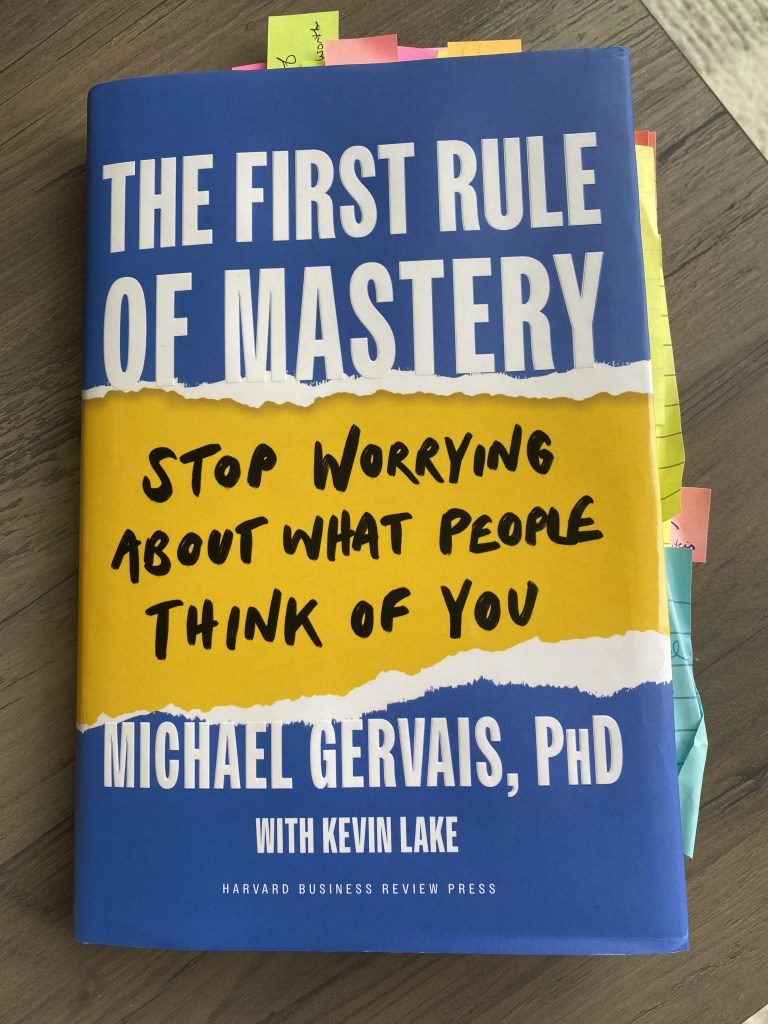
“Identity is our subjective sense of self built on our experiences, beliefs, values, memories and culture. It’s a set of physical and psychological characteristics that is not shared with anyone else. Often derived in relationship or comparison to others, our identity provides a framework to better understand our place in a complicated social world. “ — excerpted from the book The First Rule of Mastery by Dr. Michael Gervais.

“When we have fused ourselves to an identity that is not true to who we are, or to an identity that’s too narrow to contain the whole of who we are, or to an identity incapable of incorporating new information and growing, the opinion of another can feel like an assault where our survival is at stake.” – excerpted from The First Rule of Mastery by Dr. Michael Gervais.

When you let these two excerpts soak in, you can see why we get so confused about who we are. The first excerpt addresses how we make sense of the world when we are kids. It is a private internal narrative we create about who we are. We create it when we are young and powerless and that identify feels vulnerable and in need of protection even when we are older.

The second excerpt reveals why we develop coping skills and behavioral patterns. Our identity does leave us vulnerable to the slings and arrows of other’s opinions so we develop armor to protect who we believe we are.

It’s that armor that gets in the way of us really knowing who we are; and it gets very complicated by the fact that we keep returning to home base to figure it out. Yet, that identity we created at home when we were young no longer feels like it fits who we’ve become.

Without honest self-awareness, it is incredibly hard to see how we stay stuck in an identity we’ve long outgrown and how we stay trapped (especially in our families) in old limiting beliefs about who we are.

We are not the same person we were when we were 5, 10 or 15. We are works in progress throughout our entire lives. A pivotal shift in our mindset around our personal identity is to recognize and embrace this.

We change over time and that is a marvelous thing. We are not forever stuck in an old story, or shackled to a troubled childhood, or doomed to relive an old trauma like a recurring nightmare. We would never want this for our children. When we get clear about who we are, we can parent from our most authentic sense of self. It frees us from protecting our kids unnecessarily from the things that once had a big impact on us.

Just imagine the positive difference we are making for younger generations, when we steer them clear of the pitfalls that derailed us from building the life we wanted. Today we have better life skills and relationship tools to teach them. We have a much-improved parenting model and are integrating their emotions into their developing complex brains. We are validating each other’s emotions and experiences which is the preventative medicine for suppressed emotions and unprocessed trauma. We recognize that rupture and repair strengthens our relationships and builds enduring trust. In fact, we normalize the fact that ruptures happen in life and we have a responsibility to repair our most valued relationships. We are learning the integral role body budget plays in our daily lives and the importance of sleep for our brain health.

Most importantly, we can help our young people develop a strong sense of self and be the scaffolding they need through all the growth spurts and life changes they will surely have.

This is an extensive list of key components of “connective tissue” for our families. It’s so much more beneficial than what most of us experienced — because we don’t put each other in boxes, but rather we give each other room to grow – with a big safety net underneath. We encourage each other to explore, discover, stretch, try new things, experiment — with the confidence that they can express themselves honestly and will have the support and guidance they need and deserve.

Dr. Michael Gervais has a nugget of wisdom that he shares on his Finding Mastery podcast that serves as a core reminder for the changes we want to make: No one does it alone.

If you struggle with FOPO –the Fear of Other People’s Opinions, you will love this book. Check out Michael Gervais podcast too — Finding Mastery


LISTEN TO DR. ANDREW HUBERMAN’S CONVERSATION WITH PARENTING GURU, DR. BECKY KENNEDY, author of Good Inside This Episode is entitled Protocols for Excellent Parenting and Improving Relationships of All Kinds https://podcasts.apple.com/us/podcast/huberman-lab/id1545953110?i=1000646851810
If you are unfamiliar with Internal Family Systems, you might be surprised to learn that it is all about YOU not your whole family! Discover all the parts of you that have something to offer about what is most important to you and how to best take care of YOU!

New Year, New Skills

Can you feel that little updraft in inner drive and determination that comes from a brand new year? There’s nothing like a brand new calendar, clean and pristine, to let our imaginations run wild with big dreams of how well organized and productive we will be. This psychological phenomenon is called the “fresh start effect”. It marks a clear delineation for our “out the old and in with the new” mindset. A brand new year is when we get to double dip in this fresh start effect — it’s not just a new month – it is a brand new year. 

I confess that I love a Happy New Year fresh start and I prepare for it as eagerly as I do for Christmas. My desk has stacks of colorful, inspiring blank journals and brand new chunky, spiral-bound idea notebooks; along with an assortment of gel pens and varied sizes of neon post-it notes. And the real gem is that pristine 2024 planner. Thanks to my grandkids who gave me a generous gift card to Quail Ridge, I also have an inviting stack of new books I cannot wait to read. There is a rush of pure joy and an eager excitement every time I look at the endless possibilities that will manifest when I actually use all these tools.

It was in that moment, that it dawned on me that this was the direction I wanted to take my blog in 2024. This year, my blog posts and Daily Gummies of Wisdom, are going to become more relatable and digestible. This is the year where the “rubber hits the road”. I want to share more real life stories, examples and experiences that reveal how beneficial it is to be using better tools and becoming more skillful with them. 

This is the year that I want my blog to help others stock their desks, toolboxes and backpacks with diversified resources for building the life they want and showing up more often as their best selves. It is an exciting time to be alive because thanks to science, we have taken a lot of the mystery out of old paradigms about emotional and mental health, parenting and relationships – and yes, even personal growth. 

I love diving into groundbreaking and ever-evolving data. I also love distilling it in a way that is easy to understand and implement in real time. I’ve become a bit of a “reverse engineer” with 7 decades of life experiences to draw on. By sharing familiar and relatable real life stories, I can teach and role model how and why these much-improved relationship and life tools are meaningful game-changers.

There is another confession that I have to make: I am over the moon thrilled that it no longer feels necessary to keep self discovery and personal growth under wraps. The proof of this is in our current overuse of the word “normalize”. We toss that word out like a disclaimer reminding us that no one is immune to “feeling” their way through life.

No more cloak of secrecy when it comes to mental and emotional health — it is now fully mainstreamed! And, it is not only mainstreamed, we are making genuine progress in connecting the dots between our physical health and our emotional health. Our eyes are being opened to the many no-cost and low-cost steps we can take to proactively improve both.

The pivot I will be making with my ever-evolving blog will mirror the pivot that is being made in modern medicine, psychology and neuroscience. There is a shift from problem solving to prevention. Many fields, modalities and people are taking proactive steps to improve their physical, mental and emotional health to safeguard against future health and relationship issues. An ounce of prevention really is worth a pound of cure.

THE RICH ROLL PODCAST: Treat yourself to a new podcast in 2024 – and check out the diversity and dynamics of Rich Roll and his inspiring guests.

Making a Splash

“There are going to be some changes around here” announced my 6 year old daughter, standing proudly in her blue Daisy Scout smock with several Boy Scout merit badge books tucked under arm. She was headed off to her very first experience in Girl Scouts but she clearly had some preconceived ideas about what it might be like. Her brothers were 10 and 11 years older than her and they already had quite a few Boy Scout merit badges sewn on their brown sashes that they wore to their meetings each week. My spunky young daughter was not here for monkey business. She wanted to learn real life skills, like how to pitch a tent and make a fire. Her suspicions that Daisy Scouts would be about making toothpick crafts motivated her to become an activist for change. I’ll be honest — I was incredibly proud of her.

In case you are wondering, my daughter did not last too long in Girl Scouts. This did not come as a surprise to me or her — or even her scout leaders who often felt challenged by her.  It’s just human nature to be resistant to change – and especially if it comes blazing in a pint-sized blonde haired, confident, feisty spokesperson. What could she possibly know?

Turns out that kids instinctively know a lot. Sometimes they are keenly aware that change is in order even when we ourselves can’t see it.

The image of my amazing little girl in her blue Daisy smock and those Boy Scout Merit Badge books is a touchstone for me. It also represents a pivot point for the direction of my blog in 2024 and it is all about change in action. I’ll be sharing real life examples of how game-changing it is to update our brains, embrace new parenting models and modernize our life skills backpacks.

So let’s dive in!

A few weeks ago, I was attending a swim meet for my grandddaughter. Four swim clubs coming together at the premier indoor community pool to compete for the season championship. You could feel the excitement in the air mingling with giggles, splashes and indecipherable loudspeaker announcements. Coaches were busy making last minute changes to their event line-ups when some of their swimmers were unable to attend for a variety of reasons. Anxious parents watched from the second floor gallery as their kids nodded in agreement with a coach or got into big discussions with other swimmers. 

During one of the 200 yard medley events, a young teenaged girl dove into the pool, the last leg of her team’s freestyle entry in the field. All the other teams had already finished this event when this teenager entered the water. She swam the first 25 yards but when she reached the end of the pool where she should have done a flip turn and continued on, she stopped and hung to the edge. An adult volunteer assigned to make certain that each lap was completed, leaned over to talk with the girl who was now shaking her head and visibly crying. Initially the volunteer urged her to finish but it was clear that this young teen had not only hit the pool wall, she had hit her emotional wall. She could not go on.

She was trembling all over as she gingerly climbed out of the pool. Her coach wrapped an arm around her shoulder and escorted her to a quiet spot on the poolside bench. Her coach stooped down in front of her, made eye contact and was talking with her. Her mother appeared and sat down beside her, wrapping her in a towel and a hug.

Meanwhile, up in the gallery, nosy spectators watched with deep interest and more judgment than curiosity. The comments that were made ranged from pity to criticism to shame. There were more strongly held opinions about how to handle such a situation than there banners hanging above the line lanes. 

I could not hold my tongue – the opening to plant a seed of change was too prime to ignore. “This is exactly what should be happening in a moment like this,” I stated loudly enough for those around me to hear. ”According to Dr. Dan Siegel the power of showing up and being present with a child when big emotions are consuming them validates their experience, builds resiliency and prevents shame and insecurities from taking root.”

In that moment, I felt just like my Daisy Scout daughter, speaking up when it mattered most. We don’t know what we don’t know. 

We don’t realize that our old parenting models were broken and they set us up for failure, for poor coping skills, limiting beliefs and a fixed mindset. 

Shame and embarrassment do not motivate us to try harder, begin again and learn from our failures. Criticism erodes trust – trust in ourselves and our potential as well as trust in others that they will do all they can to help us overcome obstacles.  Pity is the near enemy of compassion – and it puts a lot of distance between us and others (even in the face of a similar situation that we could easily find ourselves in). Pity just enables us to think we are so lucky because we are not having that experience.

But wait — what if it was OUR child having that experience? Would those in the gallery who were so judgmental when it was happening to someone else, do a complete 180 if it was their own child?

Even if it was only briefly, I could see that some people were taking a minute to reflect on my comments.  I knew that some parents were well aware that their own child had been asked to swim in a new event for this meet – and yes, they were anxious about the looming possible outcome.

None of us really know the full backstory for that young teenaged girl. Yet it was clearly evident that something much bigger than swimming another 25 yards was in play. Imagine for a moment that you were asked to swim 50 yards in a relay, to be the last leg of your team’s event. And you knew the moment you dove into the pool that your team was going to finish dead last because every other team had already completed the event. How would you be feeling? Defeated before you started? Why bother? What’s the point? Why me?

The more life experiences that we personally have, the greater our ability to tap into our empathy and compassion for others; the more likely we are to normalize moments like this for children and parents. Why would we ever deny another person the support they need the most in moments like this? 

What if this young girl was really struggling with all the hormonal imbalances of puberty? What if her parents had recently divorced or the family was newly relocated to this town? What if this was her first swim meet? What if this was her first Christmas without her beloved grandma? What if her teammates had taunted her and said she shouldn’t be in this event?

I left that swim meet that day thinking about that young girl, hopeful that her mom was skilled in offering her daughter the scaffolding she needed to fully process this experience and grow through it rather than unhealthily “going through it”.

The power of showing up and listening to a child’s full emotional experience is a game-changer. Validating their true feelings and helping them to name all the emotions they feel is how we become the training wheels for an expanded emotional vocabulary and healthy coping skills. 

This is how we build resilience and inner confidence in our kids.  They are more likely to try again and trust in their own potential. Kids are more open to trying new things that may seem hard and challenging. In fact, conquering their fears feels empowering to them.

All of us come into contact with children – and being knowledgeable about vastly improved parenting models is like having an ace up your sleeve. Parents, grandparents, aunts, uncles, teachers and coaches will all benefit from discovering brand new skills and tools for age old childhood emotional moments.

Dr. Becky is a mom first and foremost. She is a child psychologist by profession – and she is a shining example of putting her work into practice. 

If you follow her on social media, you will be highly entertained by her sense of humor and oh so relatable parenting moments. You’ll laugh, you’ll cry, you’ll commiserate and you find real support for real life.

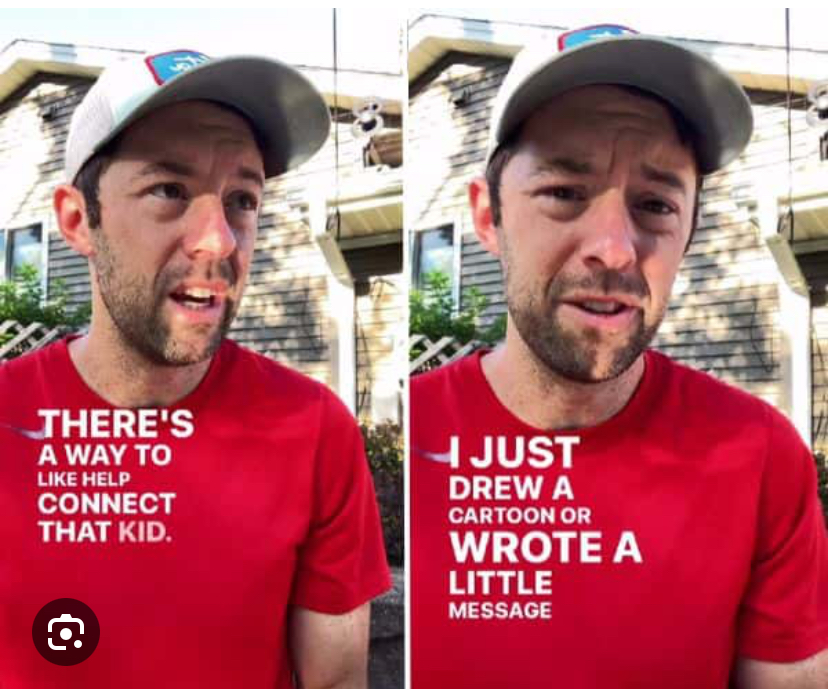
MATT EICHELDINGER – check out this incredible teacher who has created the most heartfelt videos about his students over many years as an educator and caring human being. Life lessons from real life with kids that will stay with you and your kids.
https://matteicheldinger.com/

ATLAS OF THE HEART is a family reference guide that should be in every home. If you want to get serious about building your emotional vocabulary, this book is for you. Not only will you gain a working knowledge of 87 emotions and experiences, you will discover when those emotions are most likely to show up. 

Entangled Behavioral Patterns

Each of us has a set of behavioral patterns that we bring into all our relationships. Our patterns and those of others get enmeshed and we actually create a third dynamic behavioral pattern unique to each relationship. This actually explains why some of our relationships flow so smoothly and others are so challenging. Have you ever wondered why you seem to be such a great communicator in some relationships and completely unable to be understood clearly in others? Could it be that the relationship behavioral pattern dynamic is getting in the way?

If you regularly follow my blog, you know I am a big fan of the enneagram for cultivating awareness of our unconscious behavioral patterns. Being “aware” of our own behavioral patterns is the first key step in understanding how they are impacting our lives — and our relationships. Then, the second step is assessing what is working for us — and what isn’t.

Using the enneagram is one of the “fast track” tools for personal growth. The real gift of the enneagram is that it not only helps us diagnose what isn’t working anymore, it offers us the framework to step out of outgrown, unnecessary patterns and into healthier, more enriching ways to engage in our lives and relationships.

Many of our unconscious behavioral patterns originated in our childhood. The same is true of our values, how we view the world, and how we choose our friends and life partners.

Here’s the distinction however — as we grow and mature, as we gain more knowledge and life experiences, we organically re-assess our values. Our world view expands as we finish high school or college, start a job or career, build a life of our own. We find ourselves learning a lot from our friendships and our marriages. We are in a constant state of change. These change prompt us to re-assess our values, our goals, our impact on others and our overall contentment (or discontentment).

Yet while we are in a constant state of change, accumulating more knowledge and information that informs us about the trajectory of our lives — we are dragging around with us all those childhood behavioral patterns. We actually are using child-like navigational tools in our adult world. Ironically, we often strive hard to build an adult life for ourselves that is quite different from our childhood experiences. Yet our unconscious behavioral patterns can become our biggest hurdles to successfully achieving those goals.

As Ian Morgan Cron states so profoundly in this latest enneagram book, The Story of You, those childhood patterns work well — until they don’t.

I found the enneagram to be just the tool I needed to realize the protective armor of my childhood and the patterns that held that armor in place were no longer needed.

Hindsight truly is 20/20 — Just revisiting a few old memories and events with this awareness brought to light the way I would “help” too much, deny my own needs and harmonize when I should have stood my ground. Even with the best of intentions, the downside of my childhood patterns kept me from growing into a healthier version of my best self. My most uplifting discovery was that a healthy enneagram Type 2 often becomes a “helper” in the most incredible ways — by mentoring and resourcing others in their own journeys of self discovery and personal growth. That was the big push that I needed to address my personal roadblocks.

A very simple and effective tool for starting this needed change is to do the opposite of what you would normally do. Sounds so easy, doesn’t it? It’s not. A lifelong helper almost has to tie her hands behind her back and slowly exit a room when the intense urge to jump in and rescue, fix or resolve an issue arises! It takes a Herculean effort for a helper to actually ask for help — or say no, when she’s overextended.

My friends who are also Type 2’s have become a support group for this purging process. We laugh a lot, we hold each other accountable, and we cheer wildly when we tell stories of how we “responded in a much healthier way” to a familiar event that once pulled us back into childhood patterns.

What I love about the inner work that we can all benefit from doing, is that it frees us up and creates so much space in our hearts, minds and lives. A mindfulness tool that I’d been trying to implement was “not to take things personally.” As I read about each of the nine types, it became the knowledge base I needed to lean hard into this practice. The more I learned how each of the nine types often “show up” in life, the greater was my awareness of how other’s childhood patterns were impacting their adult lives. Not only did that free me from “taking things personally”, it also increased my empathy for others on several levels. (The seeds of my becoming a more effective “helper” were nurtured in this process.)

This brings me back to recognizing just how entangled we can get in each other’s behavioral patterns. If you feel like you keep buying a ticket to the same “merry go round” when it comes to relationship issues, this just might be an insightful starting point.

Let’s take a look at what might transpire when our old unconscious behavioral patterns get enmeshed with someone else’s.

If a peace-maker and a challenger forge a relationship, you can bet that some friction and fireworks are quickly invited along for the ride. The “challenger” who loves a heated, feisty argument in order to work things out will become a steamroller for the “conflict avoider” who just wants harmony and peace above all else.

It’s likely that the conflict avoider will not speak up and will choose to acquiesce to the needs of the challenger. This will feel like the path of least resistance to a peace-maker. Meanwhile the challenger might get bored and frustrated by that approach. A challenger thrives on high energy, some conflict and a good, heated discussion.

If both of those people double down on their old patterns, a conflict avoider may withdraw and stuff their emotions. A blind spot is not acknowledging and expressing their needs. The challenger might be perceived as nagging and controlling. The challenger is likely to keep bringing up the issue at hand, making more points, turning up the heat, refusing to back off. A blind spot is not recognizing that this approach pushes away the connection and understanding they are seeking. The peace-maker might be perceived as insensitive, unsupportive and dis-engaged.

Can you begin to see how these old patterns get in the way of building a strong, fluid and trusting relationship?

It often isn’t the person we care about that is the problem. It’s outgrown, unhealthy behavioral patterns that prevent us from really getting to know each other, what we need and how best to support each other. We may have common interests, shared core values and similar hopes and dreams, but without peeling back some of our history, we may have a hard time getting on the same page and building a strong relational foundation.

By the way, this is true for all our relationships — be it parent, sibling, partner or friend. If you spend some time reading about all nine types of the enneagram, you will discover deeper insights into the people you think you know pretty well. At the very least, it will create a little more awareness about behavioral patterns and how they show up in our responses to life. A great primer for this can be found at The Enneagram Institute online (https://www.enneagraminstitute.com)

Under the “Learn” tab you can read descriptions of each of the nine types. I especially find the “Levels of Development” section for each type to be so helpful for anyone that wants to shed the childhood navigational system and upgrade to a more mature, self-aware version.

Also under the “Learn” tab, you will find “The Enneagram Type Combinations.” This is one of my favorite resources for cultivating more awareness about how different types interact with each other. You can click on any combination of types and learn what each type brings to that relationship combo as well as learn about potential troublespots. This invaluable resource is the equivalent of having a detailed nautical chart, channel buoys, and a lighthouse to skillfully navigate our relationships with others.

Cultivating more self-awareness helps us discover the places where we get snagged by our outdated, outgrown navigational system. It is an invitation to take a long hard look at how our childhood armor and the behavioral patterns that hold that armor in place just might be the reasons we are having such a difficult time showing up as our best selves in the meaningful lives we are working so hard to build.

RECOMMENDED RESOURCES:

Elizabeth Earnshaw is a Gottman certified therapist and an outstanding resource for couples who are committed to a thriving and fulfilling relationship.

Follow Liz on Instagram for more insights like this: @lizlistens

A primer for the Enneagram by Ian Morgan Cron
Ian’s most recent book – Helping you “re-write” your childhood story into a more evolved one for your adult life.