

The compelling metaphors of spring being a time of rebirth, new beginnings and growth are not lost on me. Every time I go for a walk in nature, I marvel at the seemingly slow process of a tiny bud pushing with all its might at the very tip of a fragile naked branch. Just a few days later, I discover that the tight bud has swelled and softened. And then later in the warmth of afternoon sunshine, voila — the bud has now unfurled and I see tiny green leaves.
Now the process begins again. The fragile pale green leaflets will grow over time and one day later this summer, they will actually provide shade for the ground cover that is the understory of this forest. In the fall, the seeds will drift downward and nestle into the soft compost beneath the understory – and next spring, those seeds will pop up and start the process anew.
I find myself wondering what has taken us so long to reframe our own personal growth in the same transformational way that we view springtime.
It is precisely why I have been encouraging us all to consider self discovery and personal growth in a dynamic new way. We are not only works in progress at every stage of our life, we are ever-growing, adapting and changing throughout our lifetimes. Much like the image of a majestic oak tree used to symbolize strength, stability, endurance and longevity, we too are ever growing.
Taking ownership of our personal growth over the course of our life changes everything. We no longer have to view our past history and adversities as impediments that uprooted us. We can more accurately see how the stories we have told ourselves about our lived experiences have often had a far greater impact on shaping us than the event itself.
As human beings, we are designed to make meaning out of the experiences in our lives. The root cause of our stunted personal growth is that we were only budding young authors during our most profound developmental stages – early childhood and adolescence.
We’ve heard it said over and over again: “change the narrative and it will change the way you see yourself.” This is one of the foundational principles that should be guiding our personal growth throughout our lifetimes. We need to become better storytellers and discerning meaning makers.
Many of the stories we tell ourselves have long roots going back to the first drafts we wrote when we were young. When we go back and revisit these stories with the intention of editing, updating and rewriting them, it is in essence pulling up the weeds and tangled vines — and revealing to ourselves just how much we’ve grown over time.
With a fresh perspective and a growth mindset, we can really dig in and get to work. We can become master gardeners for our self discovery and personal growth.
Re-imagining how we can repurpose what we have learned and discovered about ourselves over the years, helps us dig a little deeper into our raw material and use it wisely and with good intention.
Best selling authors frequently share that they “wrote the book they needed to read” or a well-known psychologist will confess that their “research” was actually “me-search.”
Taking a cue from these folks, we can begin to write the stories that shape us in the most transformational ways. We should not stay stuck in those old narratives that limit our potential.

A Trowel and a Notebook:
When my kids were teenagers, I would often ask them “What have you learned from this experience?” They were not huge fans of this parenting tool, for it required them to stop and think about their choices and the subsequent outcomes. It felt like hard work and they much preferred to be grounded than breaking ground.
I didn’t realize it then — but what I was intuitively trying to do was get them to “think on their own” and be able to make better decisions in the future when faced with similar (but much more consequential) events.
What I knew from my own lived experiences as a 40 year old mom was that a lack of self-reflection usually led to breakdowns. What I wanted for my teenaged kids were more “break throughs” in their self awareness and sense of agency.
“What have you learned from this experience?” was a trowel; an invitation to dig a little deeper into what motivated them to make certain choices and to step back and see if the outcome matched their values. Did their choices and behaviors help them get where they wanted to go in life?
I have a confession – I did not see this simple question as the meaningful tool it truly is when I was a middle-aged mom of fast growing teenaged boys. I just knew they needed something from me that they could take into adulthood as a guidepost for building the life they wanted. The life I hoped they would have; one that was a little less bumpy than my own had been.
Finding our footing and being grounded in mid-life is a super power and not a punishment. But we can only be “grounded” in our values if we have in fact done some serious self-reflection.
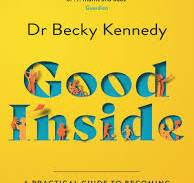
For the record, grounding my teenaged boys would not have had the same impact as making them reflect on their own life lesson in real time – just ask Dr. Becky Kennedy.
Today, thanks to Arthur C. Brooks and his book “Build the Life You Want”, I now have a greater awareness of the incredible value of asking ourselves “what have we learned from this experience.” It is the trowel we need in our personal growth toolbox.
Arthur Brooks tells us that whenever something in your life has unraveled, pull out a journal and write down what’s happening and how you feel about it. Come back a week later and write down how you are feeling about it now after some time has passed. Are you able to see a silver lining yet? He tells us to revisit a breakdown in a month, in 6 months and even a year later. Was there a breakthrough?
That old adage “time will tell” rings very true when we take Arthur’s advice to heart. What have we learned from that one heartbreaking experience or major adversity that has enriched our life or opened our eyes in entirely new ways? How has it shaped us?
It is this self-reflection, done over time, that helps us with fundamental building blocks for building a life we truly want. We tell ourselves stories to make meaning of our experiences. But the first draft of our stories is often fraught with too many emotional cliff notes. These jagged first drafts keep us stuck in the painful parts of our stories.
We need time for each experience to fully develop, just like a photo taken with an instamatic camera. It is over time, with edits and re-writes that we grow into what life had to teach us through our experiences. Arthur’s simple journaling exercise is how we plot our changes and observe our development.
Personal growth and self discovery is a process. Of course the events in our life have impact and shape us in ways that we may not even realize. Some of our best lessons have a very long germination period. Getting curious about how we are growing is a fresh new perspective to adopt.
Anyone who loves gardening will tell you that patience is a virtue when it comes to planting seeds, nurturing them and providing the right environment for them to survive and then thrive. This organic growing process is the one we want to emulate for ourselves and our life experiences. We can be much more proactive and intentional about how life events impact our personal growth. It requires patience with ourselves as well as the process.
The beauty in this shift in how we approach our personal growth and self discovery is that we can begin at any time. We can start small and work our way deeper into our library of life experiences for more insight and enrichment later.
Choose just one recent event in your life that felt like you might be breaking ground for something new to emerge.
Did a friend offer you a reframing for a struggle you are having and suddenly you saw a whole new path forward?
Maybe you stopped to realize that the same old approach to a recurring problem just isn’t working and you decided to change how you react and respond.
Were you facing a very difficult decision having to choose between two appealing opportunities? Were you able to feel your way intuitively into making the best choice for you at the time?
We get these little nudges for growth spurts almost daily. Anytime we can stop and do a little check-in about the stories we are telling ourselves, we are acting like skillful gardeners attending to our personal growth and self discovery.
Give This Some Thought:
Take some time to think about how telling yourself a different story would have impacted your emotions and experience over time by reflecting on a meaningful event in your life.
Ethan Kross, author of Shift, encourages us to ask family members and friends to help us see ourselves through their eyes.
My younger brother does this often for me when we talk about our childhood experiences. Where I see myself as a frightened ten year old, he saw me as a strong and courageous big sister who protected him. This fresh perspective helps me go back and edit a childhood experience with more context and nuance than I had access to as a kid.
Over the years, with his help, I have been able to see the tender shoots of my strengths pushing hard through a few childhood experiences, just the that tight little bud on my favorite tree. I was emerging; I just didn’t see it.

RECOMMENDED RESOURCES:









 Inspired New Horizons