A Tipping Point for Our Lifestyle

There was a time when physical fitness wasn’t such a compelling component of our daily lives. Many of us were “weekend workout warriors”. That’s when we would carve out the time to go for a run, take a long bike ride or hike through the local woods. It was in the early 1980’s that a growing awareness of the importance of regular physical exercise intersected with the invention of the Nordic Track and commercial gym memberships expanding to a broader audience. The Nordic Track became a highly popular Christmas gift that held a prominent space in the living room or bedroom for a few glorious weeks. It wasn’t long til there was a lot of humor being shared about the Nordic Track becoming an ingenuous clothing rack by the end of January. While that Nordic Track might not have “fast-tracked” us to include physical fitness into our daily routines, there was in fact an upward trend in the growing awareness of the long term benefits of regular exercise.

Here we are decades later, and most of us have fully integrated some form of physical exercise into our daily routines. We wear fitness trackers to count our steps and measure our heart rate. We speak the lingo with ease – resistance training, VO2 max, zone 2 cardio, grip strength and core balance.

How did we get from weekend workout warriors and Nordic Tracks that morphed into clothes racks to this whole new lifestyle that includes consistent physical fitness? It was that upward trend catching big momentum – for all the right reasons.

And here we are now – at the tipping point of yet another upward trend — proactively attending to our mental and emotional health. It’s going to transform how we integrate tools and practices to support our mental and emotional health into our daily lifestyle. It’s going to dovetail with our commitment to our physical health because they go together like hand in glove.

Just a few short years ago, this would have seemed highly unlikely.

When it came to our mental health, the focus had always been on the pathology. No wonder we had so much stigma associated with mental health. We waited until there was a serious issue and then asked “what’s wrong?” or “who has some diagnosis of a mental health problem?” Treatments were often bandaid solutions to ease anxiety, but not uncover the root cause of the anxiety and fear. Health professionals were treating the symptoms and not the core problems. Because of the stigma associated with mental health, many people tried to power through their emotional and mental health struggles on their own.

We wouldn’t ignore a concerning physical health problem indefinitely. The same is now true for our emotional and mental health. Early intervention, paying attention to the warning signs and getting the support we need is now viewed as normal, healthy and empowering.

We are normalizing what we once kept hidden and that is shifting us to investigate why we react to life as we do. We are beginning to understand how our brains work and what they need to function optimally. We took our brains for granted – and yet they are running our daily lives. With all this groundbreaking knowledge, we now have an invested interest in being proactive about brain health.

We are learning why sleep is key for optimal brain function and health. We are also learning the importance of hydration throughout the day for our brains; and the effects of caffeine, sugar and alcohol on our brains and sleep cycles. We are getting morning sunlight to set our circadian rhythm and dimming our lights an hour before bed.

This upward trend of weaving mental health into our lifestyle is already showing up in our daily lives. Our fitness devices track our sleep cycles and we are now sleeping in darker, cooler bedrooms. Mattresses and comforters are featuring temperature controls to cool our bodies down to proper sleeping temperature and then warm us up just before waking. We take “sleep stack” supplements before bed just as we take probiotics and vitamin supplements in the morning.

There’s nothing like a few new products to really nudge us along on that upward trend; that’s how the momentum builds for our new integrated approach to mental health. Our children will be learning about their brains in this brand new way, all while also implementing healthy brain hygiene. This is how our human evolution advances us – one generation at a time, adapting and adopting what we are learning.

Knowledge is empowerment.

Where we once believed we had no agency over how we were “wired”, we are now learning that the neuroplasticity of our brains allows us to proactively create new neural pathways to help us build — and maintain — positive, meaningful changes in our mental and emotional health.

Just like the previous upward trend that spurred us on to take our physical health seriously and to be proactive in maintaining healthy physical bodies throughout our lifetime, we are now at a tipping point for positive brain health integration.

In a recent Huberman Lab podcast, Dr. Paul Conti (Stanford University graduate, psychiatrist and author), pointed out that most of us know an incredible amount of information about our physical body and anatomy. It is also very complex, with many moving parts that integrate rather seamlessly. We can readily self-diagnose when something about our physical body hurts, is not working well, has a bug or virus. Dr. Conti believes that we can also learn about our brains and mental health in the same way.

We can start by taking better care of our brains through sleep, hydration, self-awareness, healthy coping skills and improved emotional regulation. as the foundational building blocks for proactive positive brain health.

Once we have laid this foundation, we will be more receptive to taking the next transformation steps. It is analogous to taking better care of our physical bodies with rest and proper nutrition — and then easing into a diverse, and sometimes challenging fitness regimen. Just like we build muscle strength and endurance in our bodies, we can be building better neural networks and muscle memory for our emotional and mental health.

Mental and emotional health has taken a giant step forward.

Although our brains and emotions drive much of how we show up in life, they were often relegated to the back seat. Think about that — our premier operating system was a back seat driver that we usually ignored.

Now we know more and we know better how to care for children’s developing brains and how to take care of our own adult brains and install valuable upgrades. We are realizing that emotions are a feature not a bug and we need them to help us make decisions about what is most important to us. In fact, emotions are are core ingredient to our overall happiness and fulfillment in life. All those emotions that we stuffed and suppressed were roadmaps for life. Is it any wonder we got so lost and misdirected?

We have been operating on a very outdated autopilot for far too long. We have ignored the lessons and guidance from our back seat drivers. Our unconscious mind is a like a five year old in the driver’s seat, stretching up to see out the windshield while straining to reach the gas pedal.

Over the next few weeks, Andrew Huberman and his guest, Dr. Paul Conti, will be offering a four part podcast series entitled “How to Understand and Assess Your Mental Health.” I have found Dr. Cont’s insights to be revelational and eye-opening.

I will be distilling this four-part series into blog posts over the coming weeks with great enthusiasm. If you are also fascinated by this upward trend that is rapidly gaining a lot of momentum, take some time to listen to the podcast series and check back for future posts about the healthier trajectory of our mental and emotional lifestyle.

Just imagine how incredible it will be to know as much about your amazing brain and mind as you do about your physical body!

September 6, 2023 Episode: How to Understand & Assess Your Mental Health with guest, Dr. Paul Conti https://podcasts.apple.com/us/podcast/huberman-lab/id1545953110?i=100062692001

White Water Rapids of Life

When I was in my mid-40’s, I used to tell my friends that I was in the white water rapids of life without a paddle when my plate was too full. Life was coming at me fast and furious and I could barely catch my breath, let alone juggle it all.

It seemed, without fail, that after three or four months of pushing through, burning the candle at both ends, making endless sacrifices without discernment, I’d get sick or there would be one monumental family crisis that would grind the fast pace to a halt. At that moment, it would feel like my attempts to “shoot the rapids” left me stranded on the rocks, teetering precariously.

This pattern became so apparent that I’d find myself bracing for it. I could feel the tension mounting every 3 or four months and could feel it in my bones that we were heading for something cataclysmic. Looking back, I can see that bracing for it was also a lifelong pattern of mine. I could feel the ground trembling metaphorically and the only preventative action I took was to steel myself against the inevitable. I would harden up, silently willingly myself to take it — whatever “it” was.

If things were really out of control, I would embellish my story about the white water rapids of life — I would lament to my friends that this time I was in the white water rapids of life without a paddle AND life jackets. Clearly this was the graphic imagery that I used to declare to myself and others that I was in over my head.

This pattern dominated a few years in my mid-40’s – that time when we find ourselves doing some of the hardest life work ever. We are gaining traction in our careers, or deciding we want to change careers in the mid-stream of life. Our parenting has often moved into the more challenging waters of adolescence (maybe that is where I felt I had no life-jackets). Financially we find ourselves looking both backwards and forwards – what’s the balance on the mortgage and how we will fund college educations? No wonder I felt like I was in the white water rapids of life. There was in fact a lot of changes underfoot, all swirling around unseen obstacles as we headed into unchartered water.

When my book club friends and I share stories from that time in our lives, we discover that this is exactly how most of us were feeling during that stage of our lives. We all might describe it a little differently but the patterns bear much similarity.

We’d have these peaks and valleys that could literally be put onto a graph that resembled stock prices or an EKG. The troughs in those graphs were the times where we cried uncle and had no choice but to stop and catch our breath.

Those troughs were the brief respites we were forced to take due to illness, or the acknowledgement that we can’t control a lot that happens in life. They were times where we were so sick, we were mandated to stay in bed for a few days to regain our physical health. Or the times when we had to sit alone in the dark and reflect on what really mattered. Brene Brown aptly named this period of time in our lives as “the great unraveling”.

I recently revisited what Brene wrote in her 2018 blog post about this midlife unraveling and found myself holding my breath as I took in the magnitude and wisdom of her words:

Midlife is when the universe gently places her hands upon your shoulder, pulls you close and whispers in your ear: “I am not screwing around. All of this pretending and performing — these coping mechanisms that you’ve developed to protect yourself from feeling inadequate and getting hurt – has to go. Your armor is preventing you from growing into your gifts. I understand that you needed these protections when you were small. I understand that you believed your armor could help you secure all the things you needed to feel worthy and lovable, but you’re still searching and you’re more lost than ever. Time is growing short. There are unexplored adventures ahead of you. You can’t spend the rest of your life worrying about what other people think. You were born worthy of love and belonging. Courage and daring are coursing through your veins. You were made to live and love with your whole heart. It’s time to show up and be seen.” Brene Brown (see link to her blog at the end of this post.)

I often wonder if I had read a wisdom so profound in my mid-40’s how it might have landed on me. I’ll be honest, it’s highly doubtful that it would have resonated in the compelling way that it does today. When I close my eyes and sit with the feelings that emerge from reading it, I can transport myself back to what my own “white waters of life” were so earnestly trying to tell me.

Back then, I did not possess the knowledge and education that now underpins all that Brene imparted. In fact, when she gave us this pivotal message in 2018, we had not yet mainstreamed all that we were learning. Here we are 5 years later and that landscape has changed dramatically. Today it almost feel like a firehose has been turned on — and we are drenched in digestible neuroscience, engaging educational content as well as charismatic, dynamic leaders and teachers and endless resources. We are now fluent in emotional armor, childhood attachment styles and adaptive behavioral patterns. Emotional health has taken its rightful place at the top of the quality of life pyramid.

I couldn’t be happier that so many people of all ages are now absorbing this game-changing knowledge much earlier in their lives. Perhaps the mid-40’s and 50’s will no longer be the great “unraveling” but rather the “great transformation”. Imagine being able to shift gears in the mile markers of our life with vastly improved self-awareness and relationship skills. To be treating adolescence as the apprenticeship it truly is – and preparing our young people to go into the white water rapids of life with all the right tools, skills and burning desire to grow into their natural born gifts.

It is not longer just my wild imagination that envisions this phenomenal pivot, but the reality that we are already farther along on this transformational path than ever before.

There is rarely a day that I have a chat with someone where Dr. Andrew Huberman and his neuroscience podcast, the Huberman Lab are not mentioned. From neighbors to my dentist to seat mates on planes, Andrew Huberman has become a household name. Looking at the arc of his podcast popularity and the emerging topics he now discusses, we can create yet another graph that makes it clear that our trajectory for learning and the breakthroughs that are occurring are soaring.

I recently learned that Andrew Huberman started his highly successful podcast in 2021 because he wanted the general population to have the knowledge and tools they needed to support their physical and cognitive health through the pandemic. He was aware that we were not getting this invaluable information from our leadership and he wanted to educate people about the proactive steps they could be taking that were free, do-able and would have noticeable positive impact.

Think about this — Andrew Huberman saw a need and he stepped up to the plate. He has more than 3.5 million subscribed followers for his podcast launched in the midst of a pandemic. That’s 3.5 million people that have most likely changed their habits – like making consistent sleep a top priority, taking breaks from screens every 45 minutes, getting morning sunlight, changing their relationship with caffeine and alcohol, committing to varied exercise programs and understanding the impacts of their emotional health on their physical and cognitive health.

All of this happened one podcast episode at a time. Knowledge coming at a time of great need and receptivity; a willingness to put in the work and make changes; witnessing the positive effects of those changes and being motivated by all of it to learn more.

Andrew Huberman is throwing his net wide and bringing more diverse guests onto his podcast and for good reason. He is integrating teachings and research from other disciplines because they are all inter-connected to this bigger picture of current evolution. Breakthroughs are occurring fast right now and just like striking a match, they are catching fire quickly with those folks who are hungry to learn more.

The coalescing of personal growth, self development, mental health, emotional health with all the sciences was amplified during the pandemic. It was a collective moment – a tsunami in the white water rapids of our shared experience. It was a great unraveling. Go back now and re-read Brene’s insights for a mid-life unraveling and see if you can spot a similar message for our collective, complicated issues.

As each of us begins to do our own work, taking better care of ourselves and our families, with all that we learn from Andrew Huberman and others just like him, we are contributing to the greater good for everyone. Trust me, people are taking notice. Younger generations are looking at older generations and seeing the effects of ignoring our physical, cognitive and emotional health. Motivated by their desire for longer, healthier, and more satisfying lives, they are charting a new course with the improved knowledge, resources and tools so readily accessible.

Is it any wonder that there is a groundswell of keen interest in all that Andrew Huberman and others like him are enthusiastically sharing with us? Think about what happens when each of those 3.5 million followers shares what they have learned with just one workout buddy, one colleague, or one family member — now that is a powerful ripple effect in the right direction.

We are piecing together how old parenting models that created our armor and ineffective coping strategies also embedded a lot of fixed mindset and limiting belief impediments that hold us back from achieving our full potential and using our natural gifts. As we dig a little deeper on these topics, we are discovering vastly improved ways to educate our children to have a growth mindset, to foster resilience and determination through setbacks, and become critical thinkers.

We are doing this work together and it’s contagious in the best possible way.

Pay attention to the new books being published and the overlapping themes that fit like puzzle pieces. You’ll notice this on the colorful displays in your local bookstore. Check out guests that your favorite podcasters invite for meaningful conversations. Notice how personal stories take up a greater percentage of the discussion now – because that’s how we best integrate all this new information.

I’d be remiss if I didn’t confess that this blog post was inspired by my current read, TomorrowMind by Gabrielle Rosen Kellerman and Martin Seligman (who is often affectionately referred to as the father of positive psychology.). I think you’ll find my “connect the dots” story about Martin Seligman delightfully fascinating.

I began my curiosity about psychology about the same time that Dr. Seligman published his book Flourish in 2012. The subtitle of his book was “A Visionary New Understanding of Happiness and Well-being.” It focused a lot on how positive psychology could help us “preload” so that post traumatic growth might be possible rather than recurring PTSD. At the time I was in a relationship that puzzled me to no end. I could not understand the inability to “bounce back” from even minor setbacks. I was at a loss on how I could help so I was on the hunt for tools and education.

His book and his research set me on a path of self discovery and personal growth that I may have never otherwise considered. And I have never looked back. It’s eleven years later and my friends tease me that I have possibly earned an advanced degree or two. My passion for this learning has grown into my purpose, which is sharing what I am learning with others.

I have observed how often the topics I first read about have gone through a few transformations of their own over the past two decades, with scientific evidence debunking myths, depeening our initial understandings and bringing clarifying proof through neuroscience. For those reasons, I was intrigued to see what Dr. Seligman now had to share – in April 2023 in this brand new book.

I could barely put it down.

Had you been here with me as I began to read this book, you would have heard the resounding laughter that came from me when I read his words that had once been my own — Dr. Seligman uses the metaphor of the white water world of work! He talks about shooting the rapids, and navigating currents, obstacles and change. If he were here, I would hug him. I get the analogy – and I am deeply grateful. I am not at all surprised that we are now embarking on taking the work that we have been doing individually out into the big wide world.

The gear and the skills we need to navigate the white water rapids of life – at home and in the workplace are found in personal growth, self development and attending to our emotional health.

Listen to the July 24th episode of the Huberman Lab podcast with Dr. Maya Shankar on Shaping Your Identity and Goals. https://podcasts.apple.com/us/podcast/huberman-lab/id1545953110?i=1000622115223
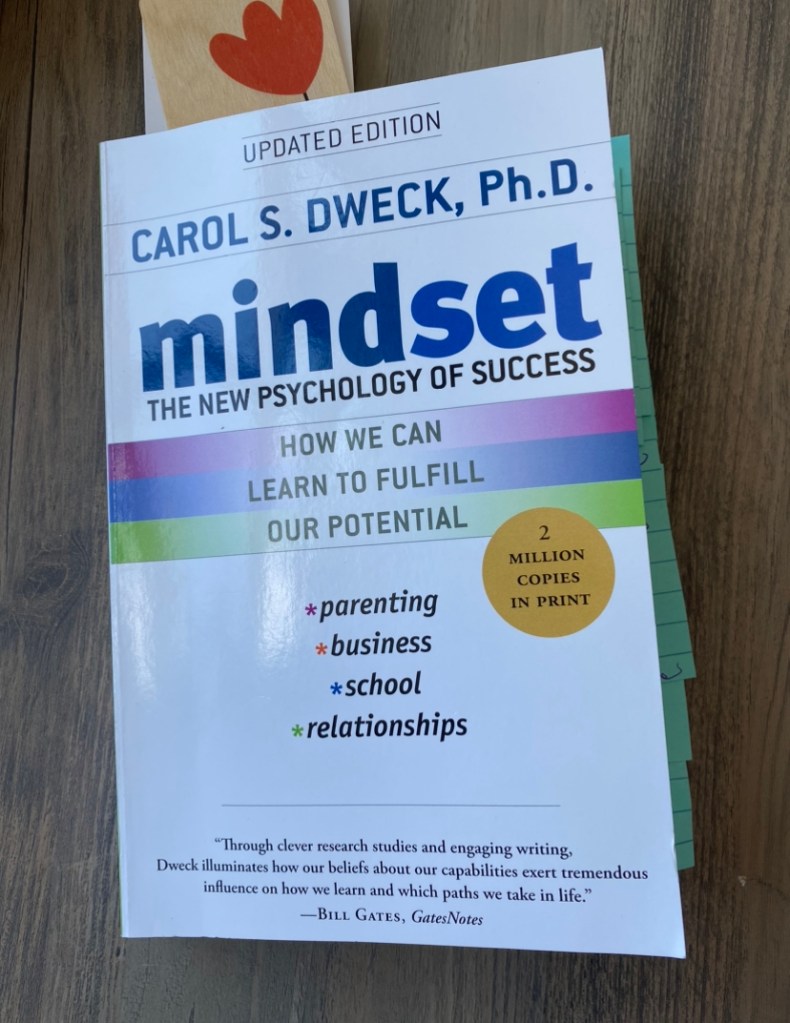
This July 17th episode is entitled Enhancing Performance & Learning By Applying a Growth Mindset. Dr. Carol Dewck, author Mindset, is an esteemed colleague of Dr. Huberman. https://podcasts.apple.com/us/podcast/huberman-lab/id1545953110?i=1000621365285

I have listened to Dr. Maya Shankar’s podcast for several years and am always inspired and uplifted by these incredible stories of people who overcame adversities that left them no choice but to reinvent themselves. Check out this episode with Dr, Kristin Neff on Self Compassion https://podcasts.apple.com/us/podcast/a-slight-change-of-plans/id1561860622?i=1000617332975
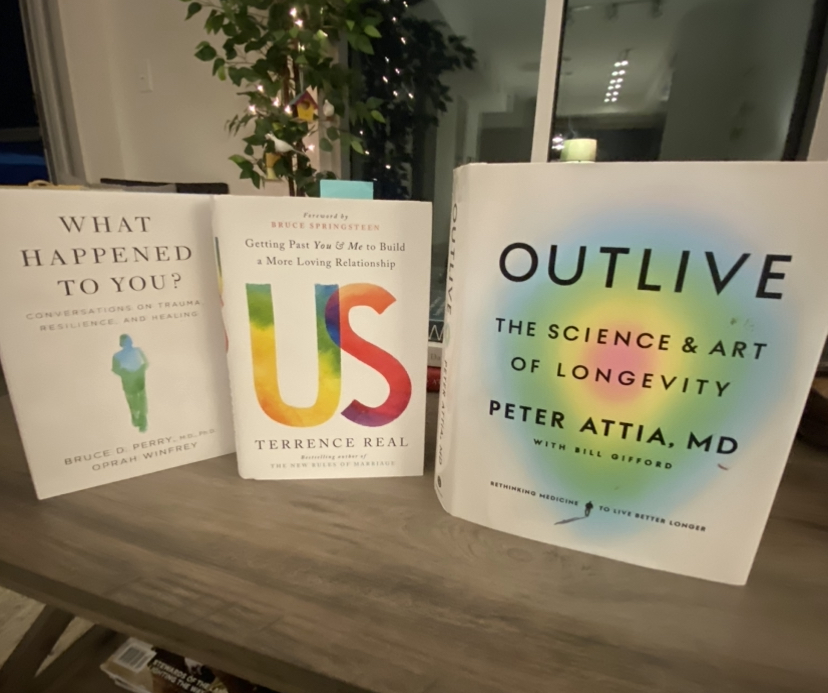
Buckle your seatbelt for this very real conversation with Terry Real, Author of US, and Peter Attia. Dr. Attia has been revelational in his message about the importance of our emotional health in his book, Outlive. He turned to Terry Real for the therapy he needed to work on his “Bobbie Knight” inner critic and the behavioral reactions he wanted to change.
https://www.youtube.com/watch?v=QbI4fm2cNz8
Read — or reread – Brene Brown’s blog post from 2018 on midlife unraveling. It’s aged well.
https://brenebrown.com/articles/2018/05/24/the-midlife-unraveling/

The Baggage We Should Be Unpacking

It’s no surprise that we all have family and emotional baggage that has never been unpacked – mostly because it feels like opening Pandora’s box. Who would ever want to do that?

What if we were to reframe it as exploring a treasure chest instead? The clues to unanswered questions; the keys to unlock some of our hidden assets; a mystery solved; a weathered, yellowing journal of unknown and revelational history.

We are fearful of what we might discover in our family and emotional baggage. Many of us don’t care to relive the painful memories we stashed in there decades ago. But we are not the same as we were then – we are older, have had more life experiences under our belt and have more nuanced perspectives. Maybe we can unpack the baggage and clear up much needed space for a lighter way of being.

We are not alone when it comes to complex family histories and generational patterns. We are all in the midst of a big unraveling of old societal conditioning, gender stereotyping and poor parenting models. As Maya Angelou espouses “when you know better, you do better.” Thanks to the major breakthroughs in neuroscience, psychology and emotional science, we now have much better resources and tools available to us for personal growth, self-awareness, relationships and parenting.

In fact, it is these very breakthroughs that provide an entirely different framework for hard conversations and more productive dialogue about the elephant in the room –debilitating family dynamics.

If we wait until parents or grandparents pass away, we miss asking the questions we would like answered. Have you ever sifted through cardboard boxes of old photos and had no idea who the relatives were or the stories that went with each photographic memory? It is just like that with family baggage. So many secrets boxed up and sealed tight. If family members are courageous enough to enter into these challenging conversations with honesty and a desire to learn, it will jettison that cumbersome family baggage.

Just look around at all the complex family dynamics the next time you attend a graduation, wedding, family reunion or holiday gathering. You can readily spot familiar family patterns, passed down from one generation to the next, taking its toll on our younger generations; families dealing with the same adversities, just a different cast of characters.

The baggage may be invisible, but its impacts are as apparent as blue eyes, tall stature, the shape of a mouth or nose and even personality traits.

No generation is immune from common life events including genetic health issues, divorce, co-parenting, behavioral issues, co-dependency, estrangements, blended families, addiction, mental health issues and trauma. Hard things happen in life. We can, and must, stop making them harder than they need to be.

Today, we have the rare opportunity to involve four living generations — grandparents, parents, siblings and grandchildren — to do the work necessary to break generational trauma and address dysfunctional behavioral patterns. It may be the first time ever that we also have evidence and impetus to come together to do this multi-generational unpacking of emotional and behavioral baggage.

A good starting point would be to collectively acknowledge that the old ways of parenting and dealing with emotions are primary root causes of ongoing family dysfunction and our growing emotional health crisis. We got it wrong and now we need to be actively involved in turning the tide on that old paradigm. Just acknowledging this truth can lift the fog of shame, guilt and blame. These conversations are long overdue and we don’t want our grandchildren being burdened by the weight of unhealthy, unproductive family secrets. We can stop spreading harmful patterns and limiting beliefs from one generation to the next.

When we can overlay the new template for parenting and emotional health onto our past experiences, we gain clarity where once there was only murky confusion. There are a lot of stories embedded in our family history that are horribly inaccurate. Imagine discovering this and realizing that we’d been making incorrect assumptions and judging others when we really could have been showing up and offering each other support and emotional scaffolding.

Yes we are afraid to have those hard conversations, mostly because we are feeling very strong negative emotions arise in us each time we even think about it. It would be analogous to refusing to go to the doctor for a suspicious lump. We can no longer afford to let our fear and anxiety prevent us from learning and discovery.

The biggest challenge in having these hard conversations and unpacking family baggage together is the massive entanglement of old, unprocessed emotions, traumas and false narratives about each other. The only way we can do this work is to become very skillful in interpersonal and emotional skills.

If we are going to do a deep dive into the dark, deep waters of our generational family history, we want a seasoned, skillful dive master and tools to help us see clearly, cut those falsehoods that keep us tethered, and avoid getting re-snagged on past trauma. Emotional triggers, limiting beliefs, fixed mindsets and jagged remains of adversities are hard to navigate without compassion, empathy and powerful listening skills.

For the record, we may have attempted to do this in the past, but all we really had to guide us was “hindsight”. While hindsight can shine a light on our regrets and help us own the consequences and outcomes of our choices, it often leaves us at a dead end. Problem identified, but no meaningful path to healing and prevention.

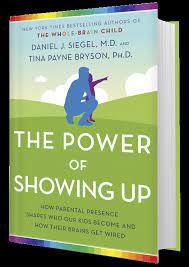
In 2009, Dr. Dan Siegel introduced a new concept for personal growth and self-awareness. He was planting the seed of what would become “other awareness”. But there was no way for us to get to “other awarenesss” without knowing ourselves deeply. Dr. Siegel called his revolutionary personal transformation concept “mindsight”. Mindsight picks up where hindsight stopped. No more dead ends.

Dr. Siegel framed “mindsight” this way: It is a powerful lens through which we can understand our inner emotional lives with more clarity, integrate our brain and our emotions, and enhance our relationships with others.

Mindsight is how we put our own oxygen mask on first. There is no way that we can be of meaningful value in helping others on their emotional health journey if we ourselves haven’t done our own work. Full stop.

In my previous blog post, “Learning What We Need to Teach”, I shared the steps and the benefits of Dr. Siegel’s concept of mindsight and whole brain parenting. Doing the hard work and committing to a lifetime of personal growth is not for the faint of heart. But as we often say with physical fitness, “no pain, no gain”.

Dr. Siegel encourages us to use this “mindsight” lens to go back and look at our own childhood to discover how our experiences and our caregivers shaped us. Imagine being able to do this – AND have conversations with siblings, parents and grandparents about those experiences that would provide context and nuance, not to mention long overdue accountability and the possibility of repair.

Do you know what your emotional triggers are? Are you aware of the limiting beliefs that were baked into your inner critic when you were a child? Are you still having meltdowns like a two year old when big emotions consume you? Do you expect more emotional regulation and better coping skills from your partner, kids or friends than you can muster in stressful situations?

These are the warning signs of compromised emotional health. If we do not attend to our emotional health, two things will happen — (1) our physical health and quality of life will also be compromised and may even go into serious decline; (2) we will pass down to our children similar unhealthy emotional patterns. Ignoring our emotional health has perpetuated the multigenerational family dysfunction since the dawn of time.

When Dr. Dan Siegel introduced mindsight in 2009, he was an advance scout for what has now broken wide open into the mainstream of our lives. Over the past two decades, multi disciplines have merged and reverse engineered what we need to do in order to address our growing mental health crises.

We need to undo and unlearn all the things we got wrong about parenting, about emotions and about relationships.

It has taken several decades, a ton of research, and more family heartaches and brokenness than we can imagine to bring us to this moment in our collective evolution. We are now able to visibly see and feel why we need to commit to this work when we look at our children and grandchildren. Not only do they deserve better, we are motivated by our hearts to take this work seriously.

In the past, each generation entered adulthood and parenthood with a strong desire to do better than the prior generation. Good intentions, but faulty information and poor diagnostic tools. We labeled kids, rather than naming emotions. We unplugged their first love language (emotions) as soon as they learned to talk and express themselves. We had blindspots and blurred life maps. We unconsciously repeated the same old patterns and reactions from which we recoiled or hid from as kids. We numbed our pain rather than extracting it and healing.

The reverse engineering that neuroscience, psychology, epigenetics, neurobiology, emotional science and social sciences have done is now extending a call to action that cannot be ignored. This call to action is meant for all of us — all 4 generations to become involved. We need to do some serious excavation work on generational baggage.

We each need to make our own emotional health a priority. We need to plug it back into the core foundation of a meaningful, satisfying and rewarding life. We need to upgrade our default systems that were never integrated in childhood. Plug those emotions into our operating systems and get more skillful at regulating them, learning from them and growing because of them. We need to unpack emotional and family baggage that is putting more obstacles in our way than we realize.

We do not have to wait until we are at the master class level to dive into teaching our kids and helping our partners. We can learn together. In fact, our children and grandchildren are the best teachers in the world. If we can step back and ask ourselves, “what did I need when I was their age?” we will instinctively know how to meet the moment. Instead of asking “what’s the matter?” we can pivot and learn by asking them “What matters most?”

This blog post is the first of a new series I’ll be sharing about the life-changing benefits of personal growth and self-awareness not only for our own quality of life, but for all of our relationships. Let’s explore how we got here, what is fresh and new for our emotional health, what we are discovering about the connection between fixed mindsets and limiting beliefs, better ways to help kids through divorce and blended families how we can improve the education system from preschool to college and so much more.

There is an “emotion revolution” rising from the ashes of old parenting models, lack of emotional regulation into our human operating system, and the hard lessons learned through a global pandemic. Are you in?

RECOMMENDED RESOURCES:

DR. PETER ATTIA is the renowned resource on Longevity — and now he is the front-running force for this emotion revolution. Watch his relatable reels on Instagram, listen to his interviews on YouTube for his book launch. Read his book, Outlive to learn why our emotional health is the most integral component for our quality of life. Listen to his podcast, the Drive.

Emotional Health

Imagine my surprise when I recently discovered that emotional health is fast becoming a foundational pillar for the length and quality of our lifespan. A subject that was once relegated to the self-help and personal growth space is now being integrated into a healthspan revolution.

Healthspan is not just living longer, it is about living longer without chronic and major health issues, living with vitality, strong cognitive and physical abilities and strong emotional health.

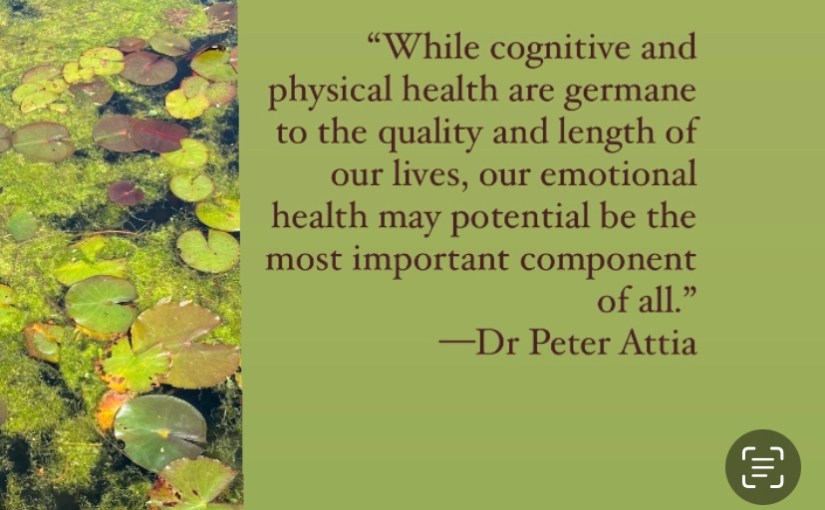
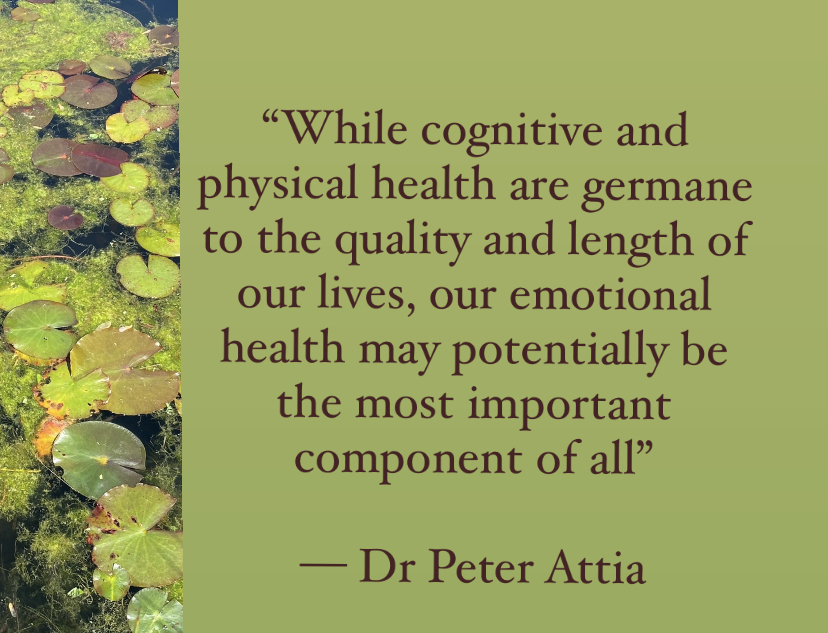
Dr. Peter Attia, host of the very popular podcast, The Drive, and author of “Outlive: The Science & Art of Longevity” emphasizes that while cognitive and physical health are germane to the quality and length of our lives, our emotional health may potentially be the most important component of all. “After all, what good is a long life if you are miserable?”

“Emotional health encompasses happiness, emotional resilience and distress tolerance, mindfulness, stillness and fulfillment, among others. It touches on our sense of individual purpose, as well as our ability to engage in meaningful and supportive relationships with those we love.” — From the Mental & Emotional Health Archives of Dr. Peter Attia (https://peterattiamd.com/category/mental-health/)

While listening to Dr. Attia discuss his new book Outlive with Dr. Andrew Huberman, I found myself completely captivated by the last 48 minutes of that podcast conversation. What he shared so openly about his own emotional health journey fit like a puzzle piece into my recent series of blog posts about the negative impacts of old parenting models. His personal story is so relatable on many levels – and proof positive that it behooves us all to take our emotional health as seriously as our exercise, nutrition and sleep.

From the outside, most of us would just assume that Dr. Peter Attia was living a happy, successful life. A Stanford/John Hopkins/NIH trained physical, he has built a thriving medical career focusing on the applied science of longevity. He has won prestigious awards, was the first person to make the round trip swim from Maui and Lanai, and has a huge following for his extremely popular podcast about longevity. He’s married and has three kids. Sure seems like he checked all the boxes for a good life.

Yet he shared both in his book and in the Huberman Lab podcast that he was driven to be a perfectionist and his inner critic was harsh and unrelenting. He also admits to becoming very skilled at drywall because he was prone to break a lot of things — both when he was younger and into his adult life. It took not one, but two, rock bottom moments in recent years to motivate him to get serious about his emotional health. The root causes of his core emotional issues were in his childhood — unprocessed trauma, lack of emotional language and lack of skillful emotional regulation.

Boom – there it is — the inescapable fact that what has happened in our childhood gets carried right into adulthood — and even when we work hard to build a successful life and check all the boxes, we still can get tripped up by our own unconscious obstacles.

In my recent blog post “Learning What We Need to Teach”, I shared that Dr. Dan Siegel recommends going back and examining our childhood so we can understand our relationship attachment style, how our parents influenced our development and how we made sense of what happened to us.

While Dr. Siegel readily acknowledges that most people are very resistant to revisiting a painful or dysfunctional childhood, it is a clear path to addressing the behavioral patterns and limiting beliefs that become our unconscious obstacles. Dr. Attia would likely frame this examination of our childhood an early intervention for our adult emotional health — and that framework comes from his personal experience and his scientific approach to longevity.

It was just a few years ago, as that second “rock bottom” was hitting hard for him, that Dr. Peter Attia’s good friend pulled him aside and told him he really needed this intervention. His good friend knew firsthand why unpacking family dysfunction and childhood trauma is of paramount importance for a good life. He is none other than Dr. Paul Conti, also a Stanford/Harvard grad, who is a psychiatrist and author of Trauma: The Invisible Epidemic; How Trauma Works and How We Can Heal From It.

The synchronicity of Dr. Paul Conti being a psychiatrist whose focus is on healing trauma and Dr. Attia being a medical doctor whose focus is on longevity and quality of life is not lost me. I have been witnessing the emerging integration of multiple disciplines and modalities for several years. So many significant neuroscience breakthroughs are deeply connected to the mind/body connection; the very integration of emotions with the lower and upper parts of developing brains for which Dr. Dan Siegel advocates the whole brain parenting approach.

We got emotions wrong for generations. Full stop. Emotions are the very first part of our human programming that needs to be installed. Emotions are how we learn to care for, and meet the needs of a precious baby. It is second nature for us to respond appropriately to an infant’s cries or their engaging laughter. How could we have been so blind to the obvious? The old parenting models actually had us overriding the most integral software component of being a human being. This is precisely why we have so many interpersonal difficulties, why our inner critic is so debilitating, and why we perpetuate problems from one generation to the next.

Peter Attia took Paul Conti’s sage advice. He did a deep-dive into this healing work in a 3 week program in Arizona, where he discovered a lot about his childhood that provided answers and insights. He learned tools and practices to help him pivot to the healthy end of his emotional health spectrum.

I was not at all surprised to learn that Dr. Attia was able to go back and look at blocked memories from childhood through the lens of an adult, who is now a parent himself, and discover deep compassion for a little boy who had no way of processing what he was experiencing; a little boy who strived to be “perfect” in order to feel safe and loved. His inner critic who was so hard on him when he missed the mark of “perfection” was parental message playing over and over….for 5 decades of his life.

This transformational experience was an enormous pivot for Dr. Peter Attia. He came to fully comprehend that all the work he was doing to help people live longer, without disease, chronic or major health issues, to ensure they stayed physically active and cognitively healthy was missing one compelling component — emotional health. In his mind, there could be nothing worse than living a very long life and being miserable, discontent and emotionally disregulated throughout it all.

As I listened to Dr. Attia convey all of this to his longtime friend and colleague, Dr. Andrew Huberman, I thought about a very familiar story that really brings this message home — Scrooge in the Christmas Carol. Past, present, future. See how our past influences our present….and where our present blindspots predict our future. We have instinctively known this for generations.

As he was going through what he calls his “rehab and recovery”, Dr. Attia was also deeply entrenched in writing his book, Outlive. There was no way he could not include his profound discovery about emotional health and it’s direct impacts on the quality of our lives — and although his editors and publisher thought it belonged in a separate book, he strongly disagreed. Integration of emotional health was essential to the pillars of longevity and quality of life.

This is so profoundly important, I am going to share it again:

Integration of emotional health is essential for our longevity, physical and cognitive health and the overall quality of our life.

Dr. Attia likes to create a dashboard for his patients as part of his comprehensive approach to mitigating health problems in the future. Not only does he seek to improve the length of their lifespan, he also wants to increase the length of their “healthspan” and shorten the length of “diseasespan.” He acknowledges that we have many ways to predict future possible health consequences by taking into account family history, genetics and using the wide array of medical tools (blood work, MRI’s, bone density, colonoscopy, mammograms, EKG, etc). There are many tools available for pre-screeening and preventive actions for our physical health; and a plethora of ways to measure and mitigate risk.

The same cannot be said for emotional health. There are no clearly defined ways of measuring it. As Dr. Andrew Huberman acknowledged, measuring emotional health is tricky — and language is our dissection tool. If we have a very limited emotional vocabulary and equally limited understanding of our inner emotional world, it would be like trying to do a biopsy with a blindfold on.

Not having a concise way to measure emotional health does not preclude Dr. Attia from adding it to the longevity dashboard for his patients however. He firmly believes that like cognitive and physical health issues, intervening early is key.

Can you imagine the positive and transforming impacts that are on the horizon for our mental health crises if there is a major pivot to include emotional health in comprehensive medical care? And it doesn’t stop there — we have growing evidence that stress and anxiety, unprocessed trauma, dysfunctional environments as well as generational trauma and addictions (epigenetics) contribute significantly to our physical health. Could it be that early intervention on our emotional health be the gateway to solving some of our most perplexing medical issues, including cancer, ALS, dementia and more. I firmly believe that it will.

For the record, Dr. Andrew Huberman was recently a guest on The Drive (Dr. Peter Attia’s podcast) and in that episode, Andrew really opened up about his own childhood, his parent’s contentious divorce and the debilitating impacts that it had on him for a great part of his adult life.

The candor and vulnerability that both of these dynamic, successful young men shared on each other’s podcasts is proof positive that we are witnessing a game-changing breakthrough that is long overdue. The skeletons are coming out of the closets! No more sweeping emotional health under the carpet.

Dr. Attia did not hesitate to point out that the top priority on his personal longevity dashboard is emotional health. He shared that “it is the easiest to get out of balance, the hardest to manage and the one that creates the most pain in his life.

When Dr. Andrew Huberman pressed his friend for a definition of emotional health, Peter told him that it’s hard to specifically define it, and perhaps more relevant to recognize the components that make up strong, positive emotional health. The following is excerpted from his conversation in the HubermanLab podcast:

Connectivity with others just seems to be an inescapable part of this (emotional health), so the ability to maintain healthy relationships and attachments to others; having a sense of purpose; being able to regulate your emotions; experiencing fulfillment; experiencing satisfaction — all of these things matter. And, if we take an honest appraisal of ourselves, we will notice that we have deficits is these areas.”

Being “present” — which may have been less of an issue a hundred years ago than it is today — Being present is very difficult; thoughts about the future, not being satisfied with what is happening in the moment. I have to work hard to overcome those things. When you are present, you generally are in a much better frame of mind.” –Dr. Peter Attia

Connecting the Dots:

When Brene Brown began her research on shame and vulnerability back in 2001, she was an instrumental part of the necessary paleontologist team to excavate our human emotions. There were so many fossilized clues embedded in the stratifications of unprocessed emotions and traumas passed from one generation to the next over centuries.

When Dr. Bruce Perry published his book Born for Love in 2010, he unearthed what happens to infants whose basic needs and emotional pleas are not addressed in calm, loving and supportive ways. He was helping us grasp that there was a serious problem and he sounded an alarm for our growing empathy poverty. It was even more than a disconnect from our shared humanity and empathy – it was a snowball rolling down the hill toward our individual and collective declining emotional health — because we were not fully installing our basic emotional programming.

Also in 2010, Dr. Dan Siegel introduce us to his developing concept of “mindsight”- the newest science of personal transformation made possible through integration of the various parts of brain and mind/body connection. For more than a decade, Dr. Siegel continues to expand on his research and has introduced the most profound contemporary parenting model – The Whole Brain Child. Dr. Siegel is leading the charge for this dynamic pivot that “integrates” our fundamental emotional GPS system with all the parts of a child’s brain, slowly over time, as the child’s brain develops along with their physical bodies. Future generations who are nurtured with a whole brain parenting approach will most certainly be more “emotionally healthy” as adults and in turn, more physical and cognitively healthy as well.

This single pivot will have dramatic and positive impacts on our epigenetics and has the potential to stop generational cycles of inherited health issues, addictions, trauma and dysfunction in its tracks.

Stealing a line from Hamilton – “Look around. Look around at how lucky we are to be alive right now.”

We can all be participating in this evolutionary pivot. We start by attending to our own emotional health and then we teach and model this integration for younger generations – for our children, grandchildren and our grandchildren’s babies.

Take advantage of all the resources that are integrating and cross-pollinating to help us live longer, live healthier both physically and cognitively — and most importantly to live a well-balanced, emotionally well-regulated, purpose-filled, satisfying, deeply rewarding life.

Recommended Resources:

Outlive – a well founded, strategic and tactical approach to extending lifespan while also improving our physical, cognitive and emotional health. Learn why ignoring emotional health could be the ultimate curse of all.

“I can say with certainty that this man saved my life. He. made life worth living. But most importantly, he empowered me to find and reclaim myself again.” Lady Gaga.

Do the work to heal yourself and find a path through trauma. Trauma is everywhere and so many of us are silently affected by it.
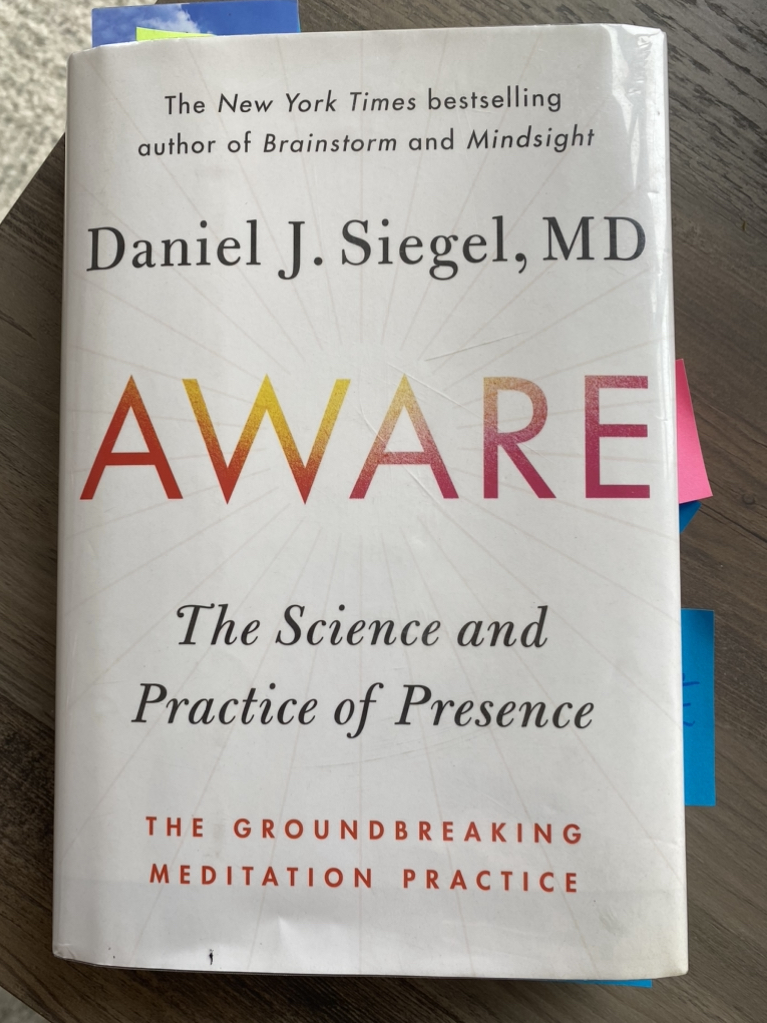
Practical instruction for mastering the “Wheel of Awareness”, a life-changing tool for cultivating more focus, presence and peace in one’s day to day life

March 20 Episode with Dr. Peter Attia: Improve Vitality, Emotional & Physical Health and Lifespan (Fast forward to the last 48 minutes of the podcast if you want to hear Dr. Peter Attia share his personal experiences with emotional health intervention and recovery) https://www.youtube.com/watch?v=ufsIA5NARIo&t=15s