Life Lessons from the Sea

My teenaged daughter and I were aboard a dive boat anchored in the Caribbean blue waters of St. Thomas. As we double checked each other’s scuba gear, our fellow divers were clamoring to jump overboard, creating a frenzy of commotion and noisy, disruptive entry splashes we’d been advised not to make. Two compelling thoughts raced through my daughter’s head and she urged me to hurry up. A fear of missing out by not being first — and a concern about not being part of the bigger group — had snagged her attention.

One of our seasoned dive masters was assessing the chaos that had unnecessarily disturbed the calm beauty of this idyllic setting with chagrined disappointment. As I caught his eye, I turned to my daughter and said “Just wait. It will be more than worth it.”

Some divers descended to the ocean floor quickly while others bobbed on the surface, fighting small waves and themselves, making it harder to deflate their lungs and their buoyancy control vests so that they could calmly drift down by the anchor line. Too many people making too many unskillful moves causing silt and debris to cloud the once-clear ocean waters. 

Paired diving buddies got separated, visibility was obscured, and the dive masters were diverted from their preferred role of ocean exploring tour guides.  Now they had to pivot to become search and recovery teams for disoriented divers and missing gear.

My daughter and I waited a bit longer and then we quietly entered the crystal blue waters just as we had been instructed. As we ever so slowly descended into the ocean, we watched the silt do the same, sinking slowly back to the sandy bottom. We marveled at the rays of sunlight dancing through the now clearer waters illuminating the rich diversity of the coral reef and extensive array of colors in the parrotfish, spotted butterfly, tangs and angelfish. 

By this time, the other divers were nearly out of sight, just a fading trail of fins and bubbles off in the distance. Being patient paid off. My daughter and I explored in leisurely, pure delight as the wonders of this mystical undersea world poked their heads back out and returned to their daily routines now that the coast was clear.

We took our time, investigating nooks and crannies, paying attention to the tiniest of sea creatures and intricate textures of coral reef vegetation.  Our dive guide coaxed small neon violet and lemon yellow Royal Gramma fish from tube-shaped sponge coral.  I could hear my daughter giggling through her regulator.

Our dive guide taught us how to navigate through the reef using our lungs instead of relying solely on our compressed air tanks. We learned to gently rise and descend by using our own inhales and exhales, skillfully navigating without disturbing sand or sea life.  We even had a hovering contest to see who could get closest to the ocean floor without actually touching it.

When we returned to the dive boat, my daughter and I discovered that we actually had a longer dive than the rest and surprisingly, we also had the most air remaining in our tanks. The dive master explained to the group that we conserved the compressed air in our tanks by controlling our own breathing.  He made a point of telling them that their overly excited and sometimes frantic reactions at the start of their dive predisposed them to erratic breathing; so they relied more heavily on their air tanks than their lungs. 

Ironically, we were the last to enter the water, yet we had a longer dive time. However, it wasn’t just more time that made our dive experience so rich – it was being calm and fully present that drew us into discovery and expanded exploration. 

When all the divers were safely back on the boat, the dive masters invited everyone to share their experience and use a laminated chart to identify the colorful fish they had seen. As we listened, my daughter had a big realization. By hanging back and being patient, we hadn’t missed out at all. In fact, we had one of our most incredible diving experiences after all the dust had settled. She gave me a sly little wink.  There were so many life lessons embedded in this one magical, awe-filled deep sea dive.  

The first lesson that really stands out is how hard it is put into practice the actual training and skills in the “heat of the moment”. All the divers on that boat had to be open water certified in order to even participate in this excursion. They had passed both a written and under water test to earn their dive card. In addition, the charismatic dive masters reviewed in great detail the proper protocol for each dive before anyone entered the water. Nonetheless, all bets were off when the anchor was tossed overboard. Excitement, anxiousness and the strong desire to be first superseded the training and instructions.

This very same experience happens to most of us when we are put to the real life test of using better emotional regulation and relationship skills in the “heat of the moment”. It’s one thing to learn about new tools and quite another to remember to use them.  Ironic isn’t it? We have a strong desire to employ better tools and skills when we take a dive into those murky waters of emotional disregulation, disagreement or overwhelm but we can override our best intentions in a heartbeat.

The metaphorical lesson learned from the dive boat experience is that losing control and forgetting our skills can actually create more confusion and muddy up any chance of clearly understanding what is going on. It can also make things more challenging for others than they need to be as we cause unnecessary and distracting disturbances.

The neuroscience lesson is that when we get excited, anxious or overly stimulated, our brains decide we need energy to match the moment. We got a shot of cortisol in anticipation of what is about to go down. Our hearts race, our muscles twitch and before we know it, we are jumping into the ocean or a confrontation, completely disregarding both our knowledge and our intention to use it.

When a diver prepares to enter the water, he or she fills their buoyancy vest with a few puffs of air from their compression tank, so they can initially stay afloat and get their bearings before beginning a descent. 

The metaphorical lesson from this skill is that taking in a deep breath and then slowly exhaling is the equivalent of filling ourselves with the buoyancy we need to be present in the moment, and to get our bearings before we respond or engage.

The neuroscience lesson is that taking that deep breath is how we check in with our body’s inner workings; easing it from autopilot and the default mode to our own agency and self regulation. That simple calming breath slows our heart rate and clears ambiguous messaging in our brains so that we have more clarity.

Just like the divers on that boat, we are all at different levels of awareness and skills when it comes to putting better relationship tools and emotional self regulation into practice. 

A few of the divers may have been newly certified while others may have had 10 to 20 dives under their belt. Since each dive is uniquely different, those people had numerous opportunities to practice their skills in varied conditions and environments. Some divers may be quick studies and are able to easily integrate their education and training into their real life experience of a deep sea exploration. They may be able to relax and enjoy the ocean’s currents quite naturally. Others may be a little unsure, feel tense and have some resistance when the current sways them in a different direction. 

The metaphorical lesson is that we need to put our knowledge and tools into practice through real life experiences. The rubber hits the road when we take our training from a predictable indoor swimming pool to the ever-changing eco system of the sea. Practice does not necessarily make perfect, but it vastly improves our confidence in our ability to skillfully use our knowledge and tools in a variety of circumstances and conditions. 

The neuroscience lesson is that we actually create new neural networks in our brains when we begin to use new skills and tools. It is the consistent practice that moves the needle. We can practice in low stakes situations to gain more confidence with setting boundaries, staying calmer, listening to understand, and not getting attached to the outcome. As we become more skillful with these tools, we will feel better resourced to use them effectively in our most valued relationships.

When I was first learning to scuba dive, I always felt safest with a seasoned diver as my dive buddy. Being with others who have more experience and are highly skillful is how we learn through osmosis and real life role plays.  We pay close attention and keenly observe their actions and choices and most importantly, the subsequent outcomes.

Later, when I had earned my certification and my kids wanted to learn to scuba dive, my role shifted from student to teacher. My attention was now on demonstrating and explaining things in a way they would understand. I also felt a strong sense of responsibility, much like we do when we teach our kids to drive a car. Staying calm while exchanging our dive gear on a platform 60 feet deep in a cold quarry was paramount. 

The metaphorical lesson is that we are teaching others, and most especially our kids, how to navigate life and relationships using the skills and tools we’ve honed.  Our own practices, coping skills and experiences influence how and what we teach. We wouldn’t put our kids behind the steering wheel of our SUV and employ the same teaching strategies that we often unconsciously resort to with temper tantrums, whining and confrontation. Parenting guru, Dr. Becky Kennedy, refers to our parental role in teaching life skills and emotional integration as “sturdy leadership.” Sturdy leadership is what a dive master provides. When we are sturdy leaders for our kids and for others, we help them feel safe, find calm and develop skills for emotional regulation and resilience.

The neuroscience lesson is that we co-regulate and co-create with each other. One cool, calm, collected sturdy leader helps others return to their emotional baseline faster. Then with clear heads and more emotional regulation, we can co-create a better situation and outcome. 

Those affable and charismatic dive masters created a sense of camaraderie, fun and curiosity with a group of strangers on a dive boat. They delivered their instructions for each dive with warm smiles, a little humor and attention to detail. Their goal was to keep us safe and set us up for the best experience possible.

Setting a positive intention provides the framework and guardrails for what might be considered two opposing truths: Being and feeling safe – and exploring uncharted territory.

The metaphorical lesson is when we have to engage in a hard conversation, deal with a difficult situation or person, we can also lead with a statement of positive intention. Brene Brown has long taught us that clear is kind; that we can be generous in believing that others are doing the best they can in the moment when we stay in our integrity and set boundaries about acceptable language and behaviors. 

A statement of positive intention is how we enter these challenging conversations. We state clearly and genuinely that we care deeply about a person and our relationship with them. It is our “why” for a desire to resolve our differences or a misunderstanding. A statement of positive intention can diffuse the tension and resistance that often prevents us from having these hard conversations. We offer kindness, compassion and respect – the ingredients to feel safe enough to be vulnerable and truthful. Reframe these hard conversations as a “search and recovery” opportunity.

The neuroscience lesson is that we often get in our own way when it comes to conflict resolution because of the stories we have told ourselves to make sense of things that happened in the past. Our brains are prediction machines relying on a historical database. In our efforts to protect ourselves from being hurt or disappointed yet again, we resist opening up to gaining helpful context, nuance and perspective. When we are open to “listening to gain understanding”, we are in essence installing an “update” to our data base. Taking in new information with context we may not have been aware is how we free ourselves from craggy old beliefs and narratives that snag and entangle us.

When my teenaged children were learning to scuba dive, I had a lot of friends who chided me for letting them do something so risky. At the time, I shared with those concerned friends that we also teach our kids to drive, which is equally risky and something we all do nearly every day. Kids take driver’s ed, they study and pass exams to get a learner’s permit and we parents take them out to practice in parking lots and less traveled rural roads. We give them the tools and the practice they need to earn that driver’s license and we celebrate the milestone of turning over the car keys and letting them venture out on their first solo drive. 

How remarkable is it then that we really don’t give much serious contemplation to the emotional and relational skills we need the most and that we will use every single day for the rest of our lives?

We need sturdy leaders to teach us how to self-regulate, to learn from our internal dashboard of emotions and experiences, to use self-awareness, healthy coping skills and relationship tools to navigate all parts of life.

Today, we are fortunate to have incredible new science-based insights and knowledge about the importance of emotional integration, the inter-connectedness of our brain and body systems, and a plethora of resources to support better ways of showing up for ourselves and others.

Find the “dive masters” that are the sturdy leaders that resonate with you. Study and learn from them.  Acquire some new and improved relationship skills and play around with them. Start with low stakes situations to build confidence. 

Find some seasoned “dive buddies” to help you hone your ability to use more effective tools. Friends, family members and mentors can become these dive buddies for you. Seek their wisdom, ask questions and ask for help. Swap stories and experiences to deepen your understanding.

Don’t forget to put all that education and study hours into actual practice. Use that calming breath to fill your life vest with some air, get your bearings and then enter an interaction grounded and calm. Remember to use the new skills you are learning. Put them to the test with some patience and compassion for yourself and others.

After each new “dive experience”, take some time to reflect on how it went. How did you feel and what did you learn? Were you able to listen to understand, validate someone else’s experience or perspective, find some common ground? Did you feel more emotionally balanced and recognize that this helped others calm down faster?  Taking the time to do a thoughtful de-briefing reinforces your learning and hones your new skills.

Imagine all the positive changes that are sure to come when we collectively begin to acquire and use better emotional and relationship skills. These new tools and skills will be transferrable to all aspects of our life; fewer self-made obstacles and less complicated relationship entanglements.

After all, look how many of us can competently drive a variety of vehicles on a busy highway or skillfully navigate a crowded parking lot. 

We can teach each other complex navigational skills.

Healing Cycles of Trauma with Mariel Buque — if you find yourself telling others they are too sensitive or overreacting, then you will find this episode so insightful https://podcasts.apple.com/us/podcast/being-well-with-forrest-hanson-and-dr-rick-hanson/id1120885936?i=1000640891293

One of the Best Parenting Resources for our time — Dr. Becky Kennedy. Check her out on Instagram and her YouTube Ted Talk

Check out this HubermanLab podcast episode featuring Adam Grant discussing his newest book Hidden Potential. How often do we limit our own potential and that of others without even being aware? https://podcasts.apple.com/us/podcast/huberman-lab/id1545953110?i=1000636628726
Midlife is a Chrysalis, not a Crisis: Life Gets Better with Age. This dynamic conversation with Chip Conley will have a big impact on anyone who is reassessing what they want out of a new chapter of their life. https://podcasts.apple.com/us/podcast/the-rich-roll-podcast/id582272991?i=1000641285807

Pivot Points

Dr. Dan Siegel invites us to go back and revisit our childhood memories to liberate ourselves from old narratives. I have found this process to be incredibly cathartic. Today, I pull the curtain back to learn what happened in a poignant scene written and produced by the much younger version of me. And then, I pivot….and discover the transforming benefits of accepting Dr. Seigel’s invitation.

The Bully in the Sandbox:

When I was just four years old, I attended a pre-school that was across the street from the second floor apartment my mom, dad and I lived in. I loved pre-school with a colorful round rug for story time or show and tell, the long table full of textured arts and crafts supplies, white school paste and fat waxy crayons. I especially loved the sandbox full of sand pails and assorted plastic scoops. I’d skip the swings and the merry go round at recess and head straight for that sandbox. I had an affinity for scoops (and I still do today).

There was a rough and tumble boy in our class, who was bigger in size than most of us and he didn’t mind letting us know he had the power to take whatever he wanted. For some reason, what he wanted most nearly every day for two weeks was the one colorful plastic scoop that I had chosen. He didn’t want to play with it; he simply wanted to disrupt my fun. Day in and day out, he’d grab my scoop and run away with it, laughing at my tears I was trying so hard to stop. (I never understood why the teacher did not put a stop to this, but I will assume she had her hands full blowing noses, pushing kids on swings and catching the the dizzy ones as they dismounted the merry go round).

One day, I could not longer tolerate the bullying or the volcanic eruption of my big emotions that had been pushed down for far too long. As that boy grabbed my bright red scoop, I jumped up from the sandbox, trembling and sobbing uncontrollably. I ran across the street and up the stairs to our apartment.

I did not find the refuge I was seeking at home or the comfort I needed from my mother. My mom was outraged that I had run away from school and she punished me. She made me sit alone on the stairs in the dark attic, the place in our house that scared me the most. Afraid, afraid to cry, silenced but needing to tell my full story — and all occurring in the dark — all by myself.

At the tender age of 4, the story I told myself was fairly complex which I will credit in part to my wild, creative imagination: keep your strong emotions to yourself, things can most definitely get worse, don’t ask for help, don’t rat out the bullies, take care of yourself, keep your needs and feelings in the dark.

This scenario is not at all unusual with the old parenting model in vogue at that time. As I revisit this childhood memory, now more informed and educated about a vastly improved parenting model, I am able to witness this scenario with compassion for both me — and my mom.

I never expected to discover that compassion would take the place of the anger and confusion I once had; an anger and confusion that lingered like a heavy fog between me and my mother for most of my life. That’s the reality of unhealthy attachment styles from childhood — they become a lifelong tug of war, longing for our needs to be met and afraid to express them.

This revelation became a profound pivot from a broken childhood narrative, to a place of deeper understanding, with more context, awareness and compassion. It is precisely why Dr. Dan Siegel wants us to do this work.

The healing, transformational value in this Pivot Point cannot be underestimated. I wish I had done it decades ago.

This storyline I created from the infamous “bully in a sandbox vignette” played out time and time again in my childhood and family dynamics; even more so when my two younger brothers came along. This how I became a shy but responsible “helper”, a fixer of other’s problems, stubborn (the popular nomenclature for the independent, never-ask for help type) and an enabler in a multi-layered, codependent family dynamic.

As Dr. Rick Hanson espouses “what helped us get through childhood often gets in the way in adulthood.” Those adaptive childhood patterns often looked like worthwhile attributes: reliable and dependable, independent and not needy, capable and hardworking, a resourceful problem solver. The problem was they came with side effects: resentment, feeling unappreciated or devalued, confused over a lack of reciprocity of all my efforts, frequent bouts of exhaustion and anxiety, distrustfulness.

A little sidenote here: the one I distrusted the most was me because I didn’t believe that my needs were important; in fact, most of the time I didn’t even know what my needs were. So I disregarded warning signs and many times blindly trusted others who were not looking out for my best interests. No wonder internally I felt so jumpy and uneasy. I just didn’t understand what those valid feelings were trying to tell me.

Ian Morgan Cron, a well-known expert on the enneagram wrote his book, The Story of You; An Enneagram Journey to Becoming the Real You inspired by his own real life transformation that came from examining his childhood. His pivot point for doing this work came when he was in the 12-step program and had just finished sharing his life story during an AA meeting. A recovered and wise elder pulled him aside afterward and asked him if it was possible that he was “living in the wrong story.” This became the impetus for Ian to fully examine his childhood experiences and learn what was holding him back; even getting in the way of what he truly wanted out of life. Not only did Ian craft a better story for himself, he became a best-selling author, psychotherapist, enneagram teacher and host of the wildly successful Typology podcast series.

Many people who are now renowned experts in their fields have similar stories. Peter Levine, Ph.D, says that research is “me-search”. Dr. Levine is the developer of Somatic Experiencing, a naturalistic and neurobiological approach to healing trauma, which he has developed over the last 50 years. Brene Brown has had a 20+ year career studying shame, vulnerability, authenticity and connection. She originally published her book, The Gifts of Imperfection in August 2010 and in 2020 she re-published it as the 10th anniversary edition. The sub-title of The Gifts of Imperfection is yet another invitation to liberate ourselves from childhood narratives: “Let Go of Who You Think You are Supposed To Be And Embrace Who You Are”

The reason we have a $13 billion self help industry today is rooted in that old dysfunctional parenting model. It stunted our personal growth. We became rootbound by unconscious limitations.

Pivot Point – Overlaying the Better Parenting Template on that childhood memory:

I found that a valuable step in this revisiting exercise is to overlay the whole brain parenting template over the same “bully in the sandbox” scene and reimagine it. This step really opened my eyes and heart. It is precisely what led me to feeling genuine compassion for both me and my mom. I had a much greater understanding of the dysfunctional dynamics and how we got so derailed.

I imagined my 4 year old self being comforted by my mother, my big emotions validated, and resting in the comforting safety of her warm lap til I was calm. I pictured us walking hand in hand back to my pre-school to discuss the bullying incident with my teacher and having a meaningful discussion; possibly even getting an apology from the boy and to learning why he might be behaving poorly. Is it possible that he needed attention and lacked the skills to play nicely with others? Was his home life also stunting his personal growth?

I imagined my mother reflecting at day’s end on the whole experience, feeling really good about herself and how she showed up – for me, herself, my classmate and our teacher.

Here are a few relevant takeaways from overlaying this new parenting template on old childhood memories:

One: This is how we can “reparent” ourselves and unhook from the emotional baggage of our past. Terry Real, founder of Relational Life Therapy, uses this effective “reparenting” skill when he is working with his clients to help release their painful past so they can effectively work on their present relationships with a marital partner and their own children. It is a remarkable experience to release old painful, fossilized emotions from childhood memories that we’ve held onto for far too long; and that often prevent us from seeing what’s right in front of us today.

Two: We readily recognize how much more skillful and grounded we would have been had we been “pre-loaded and practiced” in what healthy attachment styles look and feel like. This is a bit like having a crystal ball that allows us to see how these better relationship skills and tools would have positive impacts on our friendships, our work colleagues, our marriages and our own parenting. Most importantly, we would know ourselves well, and have strong core values to guide us.

Three: We become acutely aware of the valid role our emotions play in our lives. That old parenting model bypassed one of our most vital human operational systems — and the very one we needed most as young children. Our emotional operating system is the foundational component for our developing, complex brains. Being fully integrated with our emotions – being able to name them, to know how they feel in our bodies, to understand their relationship to meeting our core needs, to get the support we needed to be with our emotions — would be a lifetime game-changer.

Four: We can apply some reverse engineering to reconnecting with our most authentic self. While finding our “authentic self” seems like a cliche, the reality is that if our childhood needs for attachment were imperiled by our authenticity (our connection to what we truly feel), then naturally we “closed off” parts of our most genuine self. Perfectionism, rigid role identification, hyper vigilance, people pleasing, harmonizing, defensiveness — they all come from the tension between our need for attachment and our true authenticity. How many times have you wrestled with mixed emotions trying to determine which one was truly your inner GPS? Did you chose the path of least resistance (harmonizing or going along with something) even though inside you did not want to participate? When we gain greater clarity about our true and most authentic self, we become more at ease with ourselves and have greater emotional regulation dexterity and discernment.

The enneagram can be a valuable resource to help us reconnect to our authentic self and rediscover our unique gifts in healthy and productive ways. That tension between attachment and authenticity moved us to the unhealthy end of our enneagram spectrum. The uniquely best parts of ourself contorted into armor and obstacles, often taking us farther away from what we need and want the most. We can reclaim our natural born gifts and begin to use them as they were intended — to enrich our lives, to give us meaning and purpose.

The Launchpad for More Pivots:

Once I pulled the curtain back on that “origin” story of many of my adaptive behavioral patterns, I was curious about other parts of my adult history that might have played out quite differently with the whole brain parenting model. There were many.

I know that it is a familiar refrain to say that “what doesn’t kill you makes you stronger” or to say that “we wouldn’t be who we are today without all the choices and events that got us here” but I’d like to offer a different frame for those old platitudes.

What would our world would look and feel like today if so many of us had not been hiding our gifts and authenticity? If we had been skillful enough to use our emotional navigation to stand up for ourselves and others, one sandbox incident at a time. What if our emotions had been accepted as basic human programming and nurtured rather than labeled good or bad, right or wrong, male or female.

You know that familiar refrain that sends us straight to the self help section of our local bookstore: “hurting people hurt people” ? We hurt each other and ourselves all the time because we are so disconnected from our authentic self and we lack the awareness to see that we project our hurt onto others. We could stop this cycle in its tracks if we took the time to go back and reevaluate our childhood experiences and reclaim our authenticity.

Instead of “projecting” our pain, we can learn to “reflect” our similitaries and realities of being flawed, messy, deeply feeling, remarkable, amazing, complex human beings. No more judging or comparing; simply reflecting and sharing.

This pivot would be a game-changer.

Would we have less anxiety, pain and suffering, addictions, physical and mental health issues?

Would we be using our gifts, our time and energy in ways that give us great satisfaction, energize us, foster our resilience and help us see possibilities where we once saw only problems?

Here is an observation so noteworthy I don’t know how we have missed it: Have you noticed the vastly improved energy level of people who have freed themselves from their old stories? People who once were mired in their pain, sadness, limiting beliefs and even addiction are now some of our most dynamic motivational speakers. They energize us! They make us laugh, raise our spirits, help us see our potential, they listen to learn, empathize, normalize and encourage.

That is the tangible transformational magic of all this work.

Pay attention and you will discover that the people who have done this inner work are now using all their authenticity and natural born gifts in empowering, energetic and life enriching ways. Not just for themselves….but for everyone with whom they interact.

If you lean in a little closer, you will also discover that the continual learning and discovery process is amplified — both the teacher and the student sharing insights, experiences and emotions that perpetuate even deeper wisdoms.

Learning from a Master:

One of my most delightful experiences is to discover someone who has integrated all this practical, pragmatic data into a well-lived, well-loved, inspiring story of their own life. Not a psychologist or neuroscientist, not a trauma expert or shame researcher. It is in the magic of someone full of creativity, who followed their bliss and found success doing what they love.

Without further ado, I share with you someone who epitomizes the magic of living life most authentically — the legendary music producer, Rick Rubin, a savant of creativity. How remarkable is it that Rick Rubin let his love of magic tricks as a young boy infused his life journey with the endless wonders of possibility? He believes in that magic.

Rick Rubin has helped generations of musical artists discover their own unique gifts because he was patient, deeply sensitive and keenly attentive to being open to possibilities. He confesses to being somewhat exhaustive about endless possibilities.) His extensive list of clients include Johnny Cash, Tom Petty, Adele, Red Hot Chili Peppers, the Dixie Chicks and the Beastie Boys.

Rick recently published his first book entitled The Creative Act: A Way of Being. Here is a successful man, in his 60’s, who spent the past 7 to 8 years reflecting on his life, experiences, clients and creativity to write this book. He sums it all up this way:

“I set out to write a book about what to do to make a great work of art. Instead, it revealed itself to be a book on how to be.”

I’ve curated a few of Rick’s profound wisdoms from three podcasts where he was a recent guest. The fact that Rick was interviewed on three very diverse podcast platforms is a testimony to the fact that there is more integration in our lives than we realize. Rick was a guest of Andrew Huberman on The Huberman Lab (the neuroscience of creativity), of Malcolm Gladwell on Revisionist History (generating creative authenticity and finding your voice) and of Krista Tippet’s on the OnBeing Podcast (conversations on what it means to be human and finding meaning in life).

What I love about Rick’s insights is what he says he learned from writing his book — he declares he didn’t know all of this, he noticed it. He noticed the very things that are now being actively taught to us by neuroscience, social science, behavioral science and psychology — the whole ball of wax of self help modalities.

See if you can relate to what Rick noticed:

“We come into our lives as a blank slate. What we take in over the course of our lives is all that we are filled with. Our memories, emotions and subconscious are acting at all times. We never know where it is coming from (our reaction) and it doesn’t always make sense.”

We need to get out of our own heads, what we were told, what we were taught — being free to experiment, to have fun and experiment and find a new way of doing something. Embrace it instead of thinking we are doing it the wrong way.”

“The fact is that man’s own baggage of beliefs — of thinking we know best — is what was holding man back. There is so much that we think we know that we don’t know. We need to remove the distracting information that we hold true – that is stopping us.”

“I think when you really listen to someone, they act differently. Most people are not used to being heard.”

“Music lets out our inner emotional life. Music has an emotional base to it – even without the words. We feel this energy. You can channel the energy and emotion you have.”

His insights on meditation: “Your life off the cushion changes — because you are building a new reality within yourself — an emotional musculature. You are more in tune with the present as you are experiencing it in this moment — and not the distractions that the world is bombarding us with….but a wider more open, and generous curation — we see more and take in more.”

What’s Ahead:

There’s so much overlap and integration happening in diverse fields and modalities for supporting our overall health, well being and authenticity. My upcoming blog posts will focus on connecting the dots on this ever evolving frontier.

RECOMMENDED RESOURCES:

Rick Rubin: Magic, Everyday Mystery & Getting Creative, March 16, 2023 https://podcasts.apple.com/us/podcast/on-being-with-krista-tippett/id150892556?i=1000604535563

Check out the music of Patrick Droney and check out this recent YouTube video on his take on re-pair by going back in time to his childhood https://www.youtube.com/watch?v=runDxbTdQxQ

THE CREATIVE ACT: THE ART OF BEING by Rick Rubin

Deconstructing Patience

Years ago, I was told by a family counselor that I was “too patient”. Admittedly, that really threw me for a loop. “Too patient” — was that even a thing?

You see, my generation grew up being told that patience was a virtue and the definition of a virtue is: behavior showing high moral standards. Back in the day, being patient as a child mean being quiet and well behaved. I can chuckle now in hindsight with greater awareness that our youthful “patience” was really a test of will power — and a fear of the consequences if we failed. It had very little to do with high moral standards.

That counselor’s insight led me to reflect on my relationship with patience. I’d always been proud of being such a patient person, but I began to unpack all the ways that having too much patience might be causing some problems.

The tap root of my relationship with patience was silence. I’d developed a very common strategy of hiding and stuffing my emotions as a child. Better to be quiet than to give voice to what I was feeling. There were severe consequences for emotional outbursts and there were words of praise for keeping it together. So this strategy was reinforced time and again as the working model for success. I constructed a framework for my understanding of patience with a foundation of silence.

This is how the stratification of our childhood patterns begins. My motivation was to avoid negative consequences and keep the peace. This is not how to teach children about values and high moral standards. But my parents’ generation did not know better and was simply perpetuating the old Freudian practices of child-rearing.

As the oldest sister with two feisty younger brothers, I often felt an overwhelming sense of responsibility to protect them. I wanted to protect them from not having patience and I wanted to ensure overall family harmony. A nearly impossible challenge for an 8 year old old. Not only that, my brothers were developing strategies of their own quite different from mine. In fact, I’m pretty confident that my youngest brother employed the “squeaky wheel gets the grease” strategy which he fueled with unchecked, tsunami sized emotions and outlandish behaviors. Attempting to achieve any sustainable peace was like herding cats.

It’s only been with a lot of reflection that I can see now how yet another strategy became part of my framework for patience. I began to put other’s needs ahead of my own. The sacrifice seemed noble when I was young. But it created a big disconnect for me over the years as I lost touch with what was most important for me. As a steadfast harmonizer, my motivation turned to keeping the peace and avoiding conflict. I barely spent any time giving consideration to what I truly needed to foster my talents, to feel safe and to explore my potential.

There was yet another discovery as I deconstructed what patience actually looked and felt like to me — I became a control freak.

Yikes…I did not like facing this truth.

While it was wrapped up in good intentions, my need to “control” the situation was masked as helpful, supportive and even kind. I’d swoop in without being asked to fix, resolve and correct anything for anybody. The sooner a crisis was resolved, the safer I felt. I rarely took the time to consider that what I was doing was overriding what someone else really needed or wanted.

When I was younger, this part of me felt like I was some sort of incredible fairy, possessing a magic wand and skipping merrily into chaos and shifting dark energy to glittery light and sugary joy. As an adult, I altered the image to be more realistic — a competent problem solver or organizer. True confession, I still held tight to the image of a magic wand. I just didn’t show it to anyone.

What I have learned about the unhealthy part of being an avid helper is that inadvertently we are robbing others of their agency, their growth spurts and their consequences. We aren’t helping at all – just overstepping our bounds – and dismissing the needs and desires of others.

Let’s take a step back and look at what I have unpacked about my concept of patience which I developed in childhood and carried into my adult life, mostly unconsciously. These were my blind spots:

I learned to be silent. I did not express my emotions externally and I did not process my emotions internally. I hoarded them. This lead to a many layers of unprocessed emotions and a lot of confusion in my heart and mind.

I became a harmonizing people pleaser and disconnected from an important aspect of myself — my own true needs. Brene Brown writes about how we hustle for validation of our worthiness. I was trying to find that sense of love and belonging by “doing” rather than “being”. I’d wear myself out to the point of exhaustion helping others and forget to take care of myself. The biggest discovery was that this became the root cause of my tug of war with resentment. So much internal conflict between wanting to help others and feeling resentful for not being appreciated or reciprocated.

My gift of being a helper got clouded and I became a controller. I rarely asked for help I truly needed. Pride got the best of me — I had to prove I could handle anything on my own but deep inside I was crushed that no one was reciprocating all the help I’d given. I hid my own vulnerabilities. Brene Brown has emphasized that vulnerability is the birthplace of connection, trust, love and belonging. By hiding my vulnerability, I disconnected myself from my own self-worth and from the stronger, lasting connections that were possible with others when we let our guard down and lead with empathy. We are not here to fix or rescue. We are here to support, encourage and witness each other’s journey.

Deconstructing patience was a meaningful exercise for me and it totally transformed my framework for this quality that I still find worthwhile. In fact, I value my patience today more than ever because the framework and the components of it have shifted. This pivot came from close examination of “motivation”.

I found the enneagram to be an incredibly useful tool for this work. Beatrice Chestnut, author of the Complete Enneagram, describes it as a personal owner’s manual for how we make sense of life. So many of our concepts, beliefs and narratives about who we are were formed in childhood. Our “motivations” in childhood are to make sense of the families and the world we live in. We develop coping strategies and use stories to get our needs met. Our core motivations in childhood pre-dispose us to construct frameworks we carry with us into our adult lives. But the big caveat is that our motivations change as we mature, as does our environment, our autonomy and agency. We often enter adulthood eager to change a lot of things but we use the old framework to build the new…..and we end up re-creating the past.

If I was operating on an old framework of patience that included being silent, not processing emotions as they occurred, not honoring my own needs, over-helping and controlling others, then I could be assured that my being “too patient” was the root cause of so much of my own internal unhappiness.

The starting point was redefining my motivation for cultivating patience.

I wanted to feel calm and grounded regardless of what was going on around me. As an adult, I knew that I cannot control how others react or respond in any given moment. What I can control is me and my responses.

I wanted to feel a strong unwavering self-worth. How I feel about me, my gifts, my contribution to others has to come from within. This required unabashed acceptance, self-compassion and a recommitment to my own self-confidence in my core values and a big nod to the fact that I too have needs.

I wanted to be a compassionate, empathic teacher/inspirer/role model for others. No more fixing or rescuing. Much more listening, holding space and asking questions only others could answer for themselves.

Revisiting my core motivations and upgrading them to be in alignment with the vision of the adult I’d always hoped to be was just the catalyst I need to tear down the old framework and rebuild with my new and improved definition of patience.

The “too patient” framework was unhealthy, full of insecurities and flawed coping strategies. The healthy and empowering framework for my patience has a strong foundation of grounded confidence. The scaffolding of my patience framework is a steady work in progress, flexible and resilient, and always evolving. I am no longer silent; I have found my voice and more discernment about when and how to use it. I know myself better and honor my own emotions, set boundaries and am clear about my needs and my values. I heed resentment if I start to feel it — it’s my warning light that I might be overstepping my boundaries in the helping department. I have replaced “let me do that for you” with “what does support or help look like for you?”

I’d like to think that deconstruction of the old “too patient” framework has been a Goldilocks process for me — and that I have moved to the “just right” place to be with my core value of healthy patience.

The biggest and most rewarding benefit to this entire process of deconstructing our old frameworks of motivation and values has been to witness how parenting is evolving. Children are being taught patience in a whole new way. Mindful parents are proactively teaching their children emotional agility and self control in empowering, healthy new ways. No more dismissing or stuffing a child’s emotions. It takes only a few minutes to help a child name and honor what they are feeling. Parents are helping children make better choices once they are somewhat disengaged from big, strong emotional tugs. Children are learning that they are not defined by their big emotions or their ever-changing behavioral patterns, they are actually learning from them.

The big pivot in changing how we parent and grandparent with emotional agility, healthy patience and greater self-awareness is that our children will get a consistent, supportive framework for who they are, what their natural talents and gifts are, and toolkit of healthy tools for navigating friendships, family and life.

RECOMMENDED RESOURCES:

This conversation with Andrew Chapman, psychotherapist and meditation teacher is so worthwhile if you want to learn how the enneagram can support your self awareness and self observation skills.

CHECK OUT THIS 11/17/2022 EPISODE: Unlocked: Mindfulness and the Enneagram https://podcasts.apple.com/us/podcast/typology/id1254061093?i=1000586586066

Here are two of my favorite books for reading more about each of the nine types of the enneagram. Such insightful guides for understanding what our core motivations are in life:

Greater Good Magazine: Four Reasons to Cultivate Patience

https://greatergood.berkeley.edu/article/item/four_reasons_to_cultivate_patience

Broken Spirits

I have often shared how it was a broken heart that put me on the path of personal growth. The truth is that I also suffered from a broken spirit, one that was decades in the making. It was my fragile, broken spirit that needed to be healed first. I just did not know that at the time.

This morning I was reflecting on those first few weeks of being on my own after that painful breakup — how I wrote in my journal that I wanted peace, to feel safe and to be free to be myself. Ironically I thought that living alone was the best way for me to achieve those three things. What I should have been asking myself is “why were you not finding these things within your relationship?”

An inventory of both past and present relationships might have revealed some truths that required further investigation. It dawned on me that when I am behaving and feeling most authentically myself, then I am both at peace and feeling safe — both alone and within my relationships. No one else is responsible for ensuring those core values are ever present but me.

What became very evident was that I need to untangle myself from a complex combination of childhood trauma, learned behavioral patterns, exhaustion from hustling for my worth, and a heavy trunk of unprocessed emotions. It was this complex combination that had been breaking my spirit, slowly and consistently over time. I was completely unaware of the toll it was taking — on me, on how I showed up, how I reacted, on the dynamics of my most cherished relationships.

One thing became crystal clear to me. Those times in my life when I felt most at peace, safe and my buoyant, resilient self was when I was with people who saw past my flaws, who recognized my potential and who mentored me through role modeling and coaching.

My young broken spirit was often mended by my beloved Aunt Betz, my church choir director, a high school teacher, a cherished friend. These are the marble jar people that Brene Brown talks about — those who are so trustworthy that we feel safe to take refuge in their care. These earth angels give us little footholds to help us tap into our innate worthiness and foster our growth. I don’t think that I would have been able to cope with all the chaos in my family’s dysfunction without the help of these incredible people. They not only gave me a safe place to land for a while, they gave me wings to fly a little higher than my circumstances. When I was young, they were helping to untangle me from the baggage that was breaking my spirit.

As I dug deeper into personal growth work, two things really began to gel for me. One was that it is our responsibility as adults to do the work of untangling ourselves from outgrown narratives and old baggage. The second was that even the most dedicated practitioners also get snagged on their past, and fall into unconscious, unhealthy patterns from time to time. It is often in times of high stress, great loss or adversity that trigger us to fall back.

Much as I would like to pretend that this did not happen to me in my 60’s, it did. I fell back into old uncomfortable but very familiar pattern reminiscent of my childhood without even being aware of it. I slipped into the role of helper extraordinare and then followed that unhealthy path down a rabbit hole into enabler and co-dependent. Completely unaware of my blind spots, I became the one who was instrumental in breaking my own spirit. The warning signs of resentment, stuffing my emotions, and feeling so uneasy that I was jumping out of my skin at sudden noises only fed an old story line that I was not good enough, not worthy, falling short –again. Unbeknownst to me, I had drifted into the very unhealthy end of my enneagram spectrum. I was in a strange and complex paradox of trying to get my needs met while accepting behaviors that were in direct conflict with those needs.

To add to my confusion, while I was falling so short in that relationship, my friends and family members saw me as an easy going, cooperative, optimistic and encouraging person. How was it that others could see those good parts of me but my partner could not? This paradigm is common actually — as I discovered through long conversations with friends. Could the answer be in how we “show up” differently without so many deep rooted emotional entanglements clouding the waters. If so, what is it about ourselves that we do differently in our closest relationships that contribute to this conundrum?

For me, it was the fear of making things worse by bringing up something important to me. The tap root of my unwavering need for trust that was broken repeatedly in my childhood. So often when I would speak up for me and my brothers, the consequences were far worse than the initial event.

This pattern began to appear in my relationship and I got hooked on old insecurities. Trust unraveled and my spirit took a hit. I did try to explain this to my partner once but I was clumsy about it. It is a textbook example of why we need to get skilled at having hard conversations — both in the way that we articulate our truth and how we listen to learn.

The better we understand ourselves as well as our basic needs and desires, the healthier our relationships can be. I only wish that I had been introduced to the enneagram earlier in my healing journey. You see, the enneagram sheds a lot of light on childhood roots of learned behavioral patterns and what it is that we each need in order to feel fulfilled, loved, valued and safe. The enneagram is truly one of the most valuable self-awareness and self-discovery tools we can access. A companion resource for the enneagram is Brene Brown’s powerhouse book, The Gifts of Imperfection. This book illustrates so well the armor that we choose to protect ourselves from the core motivations and fears that the enneagram reveals to us.

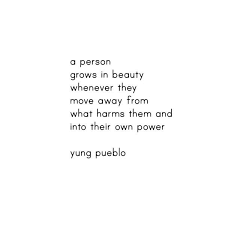
Check out Yung’s deeper explanation of this wisdom in the Recommended Resources at the end of this post.

As I was working on my draft of this blog post, the above quote from Yung Pueblo landed in my inbox. It was so timely and his accompanying insights dovetailed with my own experience and the wisdom I’m striving to impart. While Yung Pueblo leans heavily into his meditation practice to peel back the layers of his patterns, I turn to the enneagram for course correction. When I find myself feeling off kilter, I know I am drifting into the unhealthy end of my spectrum. I heed the warning signs of resentment or feeling unappreciated as cues that I have overcommitted myself or failed to set a boundary.

These examples really just scratch the surface of all that you can learn from the enneagram. Perhaps one of the greatest gifts is helping us to see others in a whole new light. When we understand that each of the nine types has a dominant way of showing up in life, it releases us from taking things so personally. That creates a bridge to understanding and empathy. We can begin to recognize the bids for connection that others are making even when they might be clumsy about it.

When I reached the point of being able to trust myself enough to know what I needed to feel at peace, safe and valued, I knew that I was making meaningful strides in my goal of being my authentic self. Admittedly this was hard work and requires ongoing practice. Shedding the armor of being a people pleaser or shape shifter to feel like I fit in or was liked has been the equivalent of shedding unwanted pounds. It is easier to express my emotions and my needs now without all those old entanglements getting in the way.

This brings me back to broken spirits and broken hearts. Everyone experiences broken spirits and broken hearts in their lives — and sometimes that brokenness takes a very long time to heal. So often we do not realize just how much another is hurting, in need of empathy, compassion and trust. Sometimes we project our pain onto others because we lack self awareness. Sometimes we take things too personally because we ourselves are fragile. When we are not skilled at having hard conversations, we can inadvertently shame or blame others. This is why I believe Brene Brown’s work on vulnerability is crucially important. Self-awareness and vulnerability are two of the strongest gifts we can give to ourselves and each other. Deeper, more fulfilling relationships are cultivated in these rich spaces of trust, honesty, acceptance and understanding.

RECOMMENDED RESOURCES:

Yung Pueblo — Author of Clarity and Connection. Follow him on Instagram and Facebook for daily insights on personal growth, maturity and growth mindset partnerships.

Being Well Podcast with Dr. Rick Hanson and his son, Forrest Hanson

https://www.rickhanson.net/being-well-podcast-how-to-create-a-relationship-that-lasts/

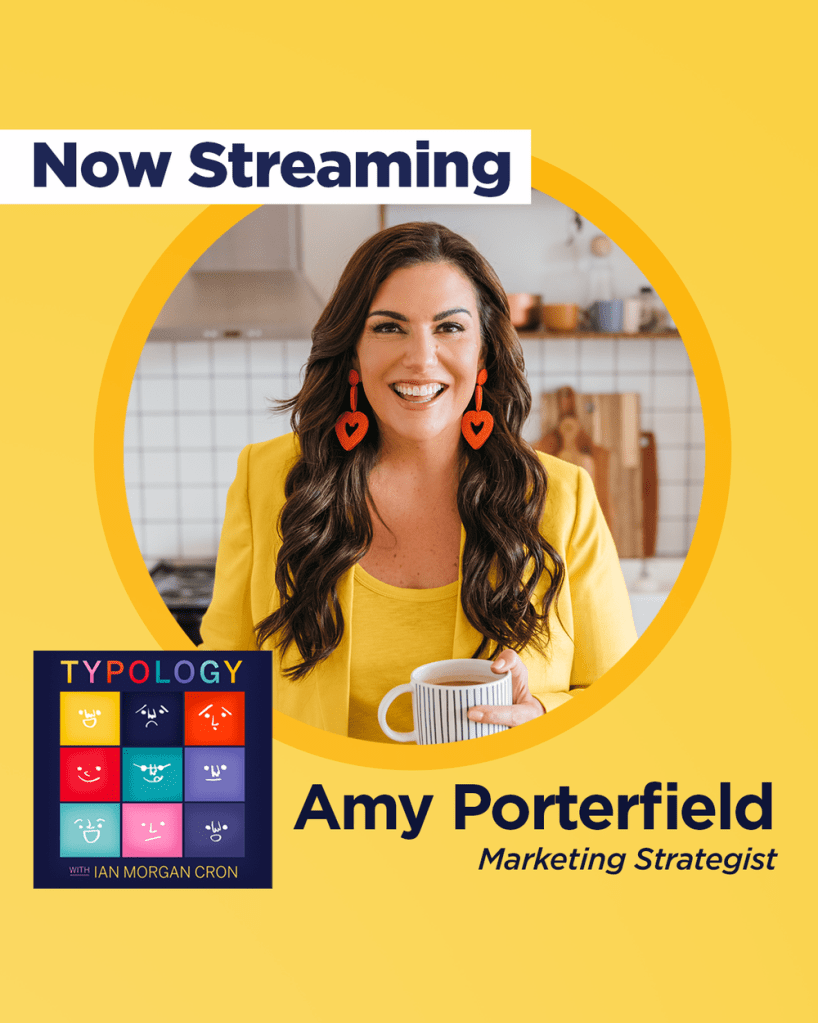
Sharing this episode from the Typology Podcast with Ian Morgan Cron about the Gifts of Self-Awareness. Spoiler Alert: Amy Porterfield not only shares my name, but my enneagram Type 2 also! https://www.typologypodcast.com/podcast/2021/07/10/amyporterfield