There was a time when physical fitness wasn’t such a compelling component of our daily lives. Many of us were “weekend workout warriors”. That’s when we would carve out the time to go for a run, take a long bike ride or hike through the local woods. It was in the early 1980’s that a growing awareness of the importance of regular physical exercise intersected with the invention of the Nordic Track and commercial gym memberships expanding to a broader audience. The Nordic Track became a highly popular Christmas gift that held a prominent space in the living room or bedroom for a few glorious weeks. It wasn’t long til there was a lot of humor being shared about the Nordic Track becoming an ingenuous clothing rack by the end of January. While that Nordic Track might not have “fast-tracked” us to include physical fitness into our daily routines, there was in fact an upward trend in the growing awareness of the long term benefits of regular exercise.
Here we are decades later, and most of us have fully integrated some form of physical exercise into our daily routines. We wear fitness trackers to count our steps and measure our heart rate. We speak the lingo with ease – resistance training, VO2 max, zone 2 cardio, grip strength and core balance.
How did we get from weekend workout warriors and Nordic Tracks that morphed into clothes racks to this whole new lifestyle that includes consistent physical fitness? It was that upward trend catching big momentum – for all the right reasons.
And here we are now – at the tipping point of yet another upward trend — proactively attending to our mental and emotional health. It’s going to transform how we integrate tools and practices to support our mental and emotional health into our daily lifestyle. It’s going to dovetail with our commitment to our physical health because they go together like hand in glove.
Just a few short years ago, this would have seemed highly unlikely.
When it came to our mental health, the focus had always been on the pathology. No wonder we had so much stigma associated with mental health. We waited until there was a serious issue and then asked “what’s wrong?” or “who has some diagnosis of a mental health problem?” Treatments were often bandaid solutions to ease anxiety, but not uncover the root cause of the anxiety and fear. Health professionals were treating the symptoms and not the core problems. Because of the stigma associated with mental health, many people tried to power through their emotional and mental health struggles on their own.
We wouldn’t ignore a concerning physical health problem indefinitely. The same is now true for our emotional and mental health. Early intervention, paying attention to the warning signs and getting the support we need is now viewed as normal, healthy and empowering.
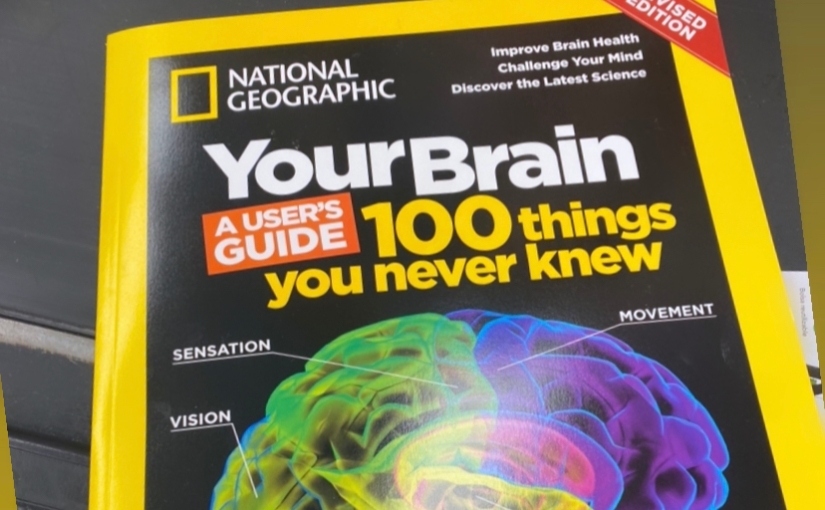
We are normalizing what we once kept hidden and that is shifting us to investigate why we react to life as we do. We are beginning to understand how our brains work and what they need to function optimally. We took our brains for granted – and yet they are running our daily lives. With all this groundbreaking knowledge, we now have an invested interest in being proactive about brain health.
We are learning why sleep is key for optimal brain function and health. We are also learning the importance of hydration throughout the day for our brains; and the effects of caffeine, sugar and alcohol on our brains and sleep cycles. We are getting morning sunlight to set our circadian rhythm and dimming our lights an hour before bed.
This upward trend of weaving mental health into our lifestyle is already showing up in our daily lives. Our fitness devices track our sleep cycles and we are now sleeping in darker, cooler bedrooms. Mattresses and comforters are featuring temperature controls to cool our bodies down to proper sleeping temperature and then warm us up just before waking. We take “sleep stack” supplements before bed just as we take probiotics and vitamin supplements in the morning.
There’s nothing like a few new products to really nudge us along on that upward trend; that’s how the momentum builds for our new integrated approach to mental health. Our children will be learning about their brains in this brand new way, all while also implementing healthy brain hygiene. This is how our human evolution advances us – one generation at a time, adapting and adopting what we are learning.
Knowledge is empowerment.
Where we once believed we had no agency over how we were “wired”, we are now learning that the neuroplasticity of our brains allows us to proactively create new neural pathways to help us build — and maintain — positive, meaningful changes in our mental and emotional health.
Just like the previous upward trend that spurred us on to take our physical health seriously and to be proactive in maintaining healthy physical bodies throughout our lifetime, we are now at a tipping point for positive brain health integration.
In a recent Huberman Lab podcast, Dr. Paul Conti (Stanford University graduate, psychiatrist and author), pointed out that most of us know an incredible amount of information about our physical body and anatomy. It is also very complex, with many moving parts that integrate rather seamlessly. We can readily self-diagnose when something about our physical body hurts, is not working well, has a bug or virus. Dr. Conti believes that we can also learn about our brains and mental health in the same way.
We can start by taking better care of our brains through sleep, hydration, self-awareness, healthy coping skills and improved emotional regulation. as the foundational building blocks for proactive positive brain health.
Once we have laid this foundation, we will be more receptive to taking the next transformation steps. It is analogous to taking better care of our physical bodies with rest and proper nutrition — and then easing into a diverse, and sometimes challenging fitness regimen. Just like we build muscle strength and endurance in our bodies, we can be building better neural networks and muscle memory for our emotional and mental health.
Mental and emotional health has taken a giant step forward.
Although our brains and emotions drive much of how we show up in life, they were often relegated to the back seat. Think about that — our premier operating system was a back seat driver that we usually ignored.
Now we know more and we know better how to care for children’s developing brains and how to take care of our own adult brains and install valuable upgrades. We are realizing that emotions are a feature not a bug and we need them to help us make decisions about what is most important to us. In fact, emotions are are core ingredient to our overall happiness and fulfillment in life. All those emotions that we stuffed and suppressed were roadmaps for life. Is it any wonder we got so lost and misdirected?
We have been operating on a very outdated autopilot for far too long. We have ignored the lessons and guidance from our back seat drivers. Our unconscious mind is a like a five year old in the driver’s seat, stretching up to see out the windshield while straining to reach the gas pedal.
Over the next few weeks, Andrew Huberman and his guest, Dr. Paul Conti, will be offering a four part podcast series entitled “How to Understand and Assess Your Mental Health.” I have found Dr. Cont’s insights to be revelational and eye-opening.
I will be distilling this four-part series into blog posts over the coming weeks with great enthusiasm. If you are also fascinated by this upward trend that is rapidly gaining a lot of momentum, take some time to listen to the podcast series and check back for future posts about the healthier trajectory of our mental and emotional lifestyle.
Just imagine how incredible it will be to know as much about your amazing brain and mind as you do about your physical body!
I have been keenly observing how interactions and conversations have been shifting in profound ways over recent months. It is with great enthusiasm that I am sharing with friends, family and my book club about my experiences while traveling. From Uber drivers to seat mates on planes, hospitality staff, new neighbors and a helpful UPS business owner, more people are sincerely plugged in to self-awareness and personal development. It’s astounding how we’ve shifted from shallow “how’s the weather” conversations to more in-depth and meaningful ones where people are sharing their remarkable personal stories.
I can almost feel the needle and thread stitching together a new tapestry, weaving our own stories and experiences into the bigger picture of others. It feels good to have these rich conversations and to be learning so much.
Some of my most fascinating conversations have been occurring in the self help section of book stores. I’m drawn to book stores — whether it is my local independent one, Quail Ridge in Raleigh NC, or the one my family visited in Scottsdale on vacation, the Poisoned Pen. On a recently layover in Chicago, I hopped off the plane and went straight to Barbara’s Bookstore in the bustling terminal where I ended up having a 45 minute conversation about Outlive and Dr. Peter Attia.
If I had a nickel for every time someone mentioned Andrew Huberman and his podcast, I could fly across the country multiple times.
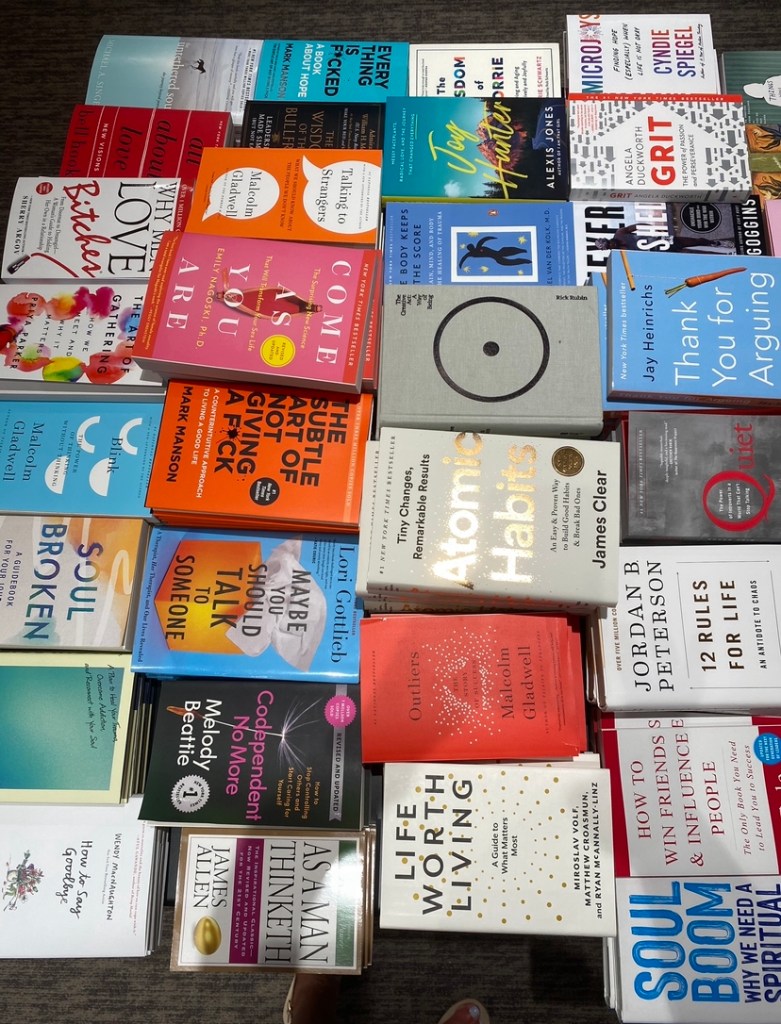
I confess that I make a beeline to the self help or parenting sections of book stores — eager to see if there is something new to learn and perhaps more enthused to see who is browsing those sections. It’s so uplifting to see young parents, grandparents, mid-lifers, couples and singles all choosing books to help them navigate wherever they are in life. A smile stretches across my face as I take in the transformation that has occurred in the self-help section of bookstores.
Inviting tables of colorful books with intriguing titles pull us in like magnets. To me, these books fit together like pieces of a complex, compelling puzzle. It is not at all surprising that subjects like parenting, mindset, awe, emotions, grief and longing, relationships, atomic habits, boundaries, longevity, purpose and neuroscience are all landing on the same table.
All of these varied subjects are intrinsically connected. We want better relationships — with our kids, our partners, our friends and extended family. We want to know ourselves better. Now we know that the work starts with us, that our emotional health is integral to our overall quality of life and that it needs the same attention as our physical health.
Just a few decades ago, many of these amazing books and resources were segregated; psychology, mental health, diets and exercise, how to guides, hard to understand neuroscience, Buddhist meditation. Then all these various modalities and fields began to intersect — and suddenly authors, researchers and podcasters were quoting each other’s work and having each other as guests. They began to “connect the dots” about our human need for connection. They began to see how all their independent work and findings were actually linked together.
It seems that “overnite” there has been a great convergence of all the individual pieces coming together to form one incredible, dynamic “big picture”.
The best part of our “overnite” awareness is that it is out in the open with all the personal growth and self discovery work that needs to be done. That is so evident in these amazing conversations I have been so fortunate to have with all kinds of people — in the bookstore, on the plane, at the coffee shop, in my writing classes and especially with my friends who are also on the journey.
I recall when I was struggling in my mid-40’s with what Brene Brown called the mid-life unraveling period, I would discreetly make my way to the self help section of Borders, scanning the book titles and the shoppers around me, tucking my book of choice under my arm. I would stand at the counter like a nervous adolescent girl buying tampons with an older teen boy as the checkout clerk. Judgment and shame washing over me. It felt like a public confessional that I did not have my life together.
Hooray for this major shift in acceptance that we all need help!
Today, the inviting and bulging self help section of bookstores often takes center stage. I listen to shoppers enthusiastically sharing with others what they’ve read, what they are working on with spouses, teens or toddlers and even themselves. We have normalized these conversations. Wow.
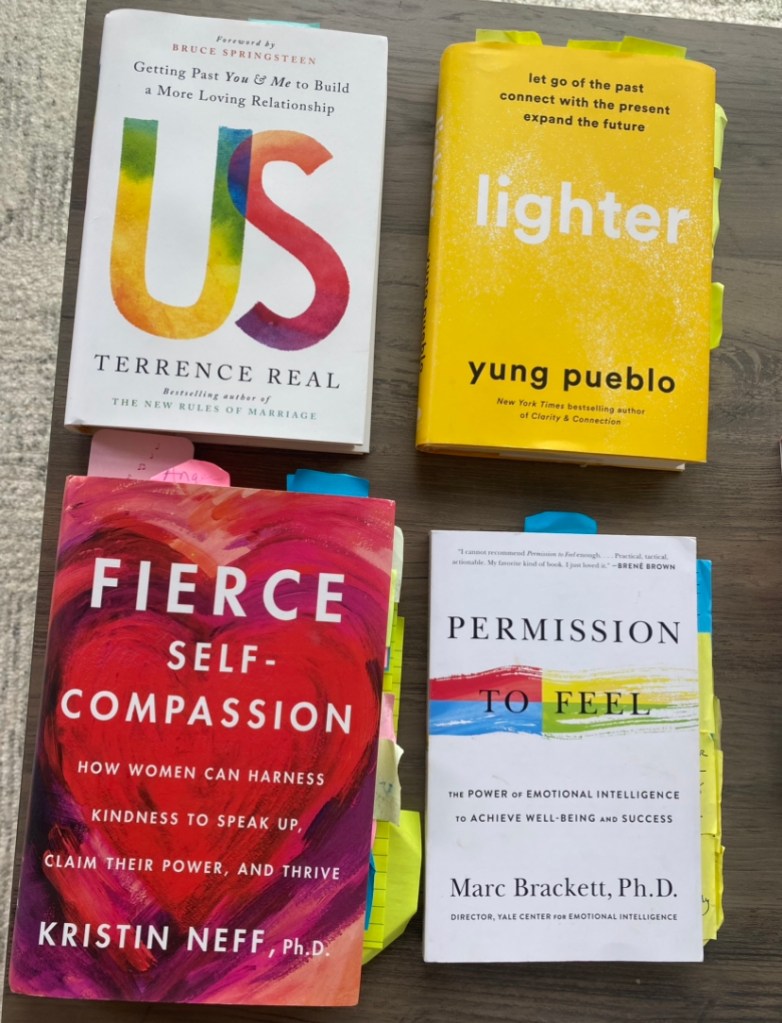
No one is slinking to the check out counter with their books, workbooks and journals discreetly tucked under their sweaters or shoulders. It’s almost a badge of honor to waltz up to the checkout line proudly displaying copies of Outlive by Dr. Peter Attia, Fierce Self Compassion by Kristin Neff, Lighter by yung pueblo or Set Boundaries, Find Peace by Nedra Tawwab. I’ve witnessed some of the most astounding conversations happening in the checkout line between customers as they swap stories, insights and book recommendations.
The seeds of our current emotion revolution and our emotional health have landed everywhere now. The subject comes up in business, leadership and innovation podcasts. It certainly comes up regularly for influencers like Adam Grant, Malcolm Gladwell, James Clear, Ryan Holiday, Dr. Peter Attia and Dr. Andrew Huberman. Yes, emotional health and doing our self-discovery work is now a mainstreamed topic of conversation. It is being folded in as the missing piece of our bigger puzzle.
The more we know, the more we grow.
When I first committed to a deep dive into my own personal growth, I was intrigued by Dr. Rick Hanson’s book Hardwiring Happiness, but I did have a hard time wrapping my head around understanding what he meant by “neurons that fire together, wire together.” While I loved the concept of neuroplasticity, I really didn’t have a solid foundation of understanding about the whole brain/body connection.
Today, we have ready access to understandable knowledge of how our brains and bodies operate, the role our nervous system plays and the importance of integrating our inner world of emotions and feelings with our executive functions of our brains. This core knowledge helps us parent better and teach our kids the emotional awareness and regulatory skills that we ourselves were never taught.
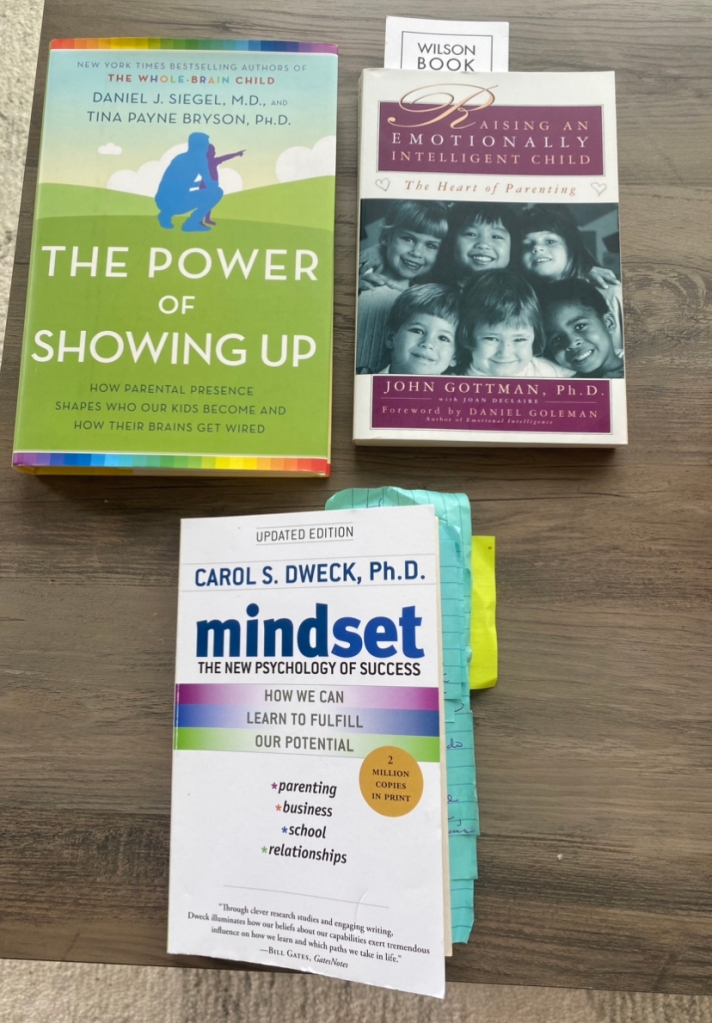
What we have before us is a collective effort to help us all live healthier, more satisfied, balanced lives. We are all playing an important role in this integral work when we are invested in our own emotional health and parenting with this upgraded, whole brain model. In her book, Mindset, Dr. Carol Dweck, shares with us that many of us grew up with a societal model of fixed mindset both at home and in school. Is it any wonder that we often then developed limiting beliefs about ourselves and became both the judged and the judgers. Dr. Dweck underscores that we can all work towards developing “growth” mindsets for ourselves and our children, but to recognize that we move toward a growth mindset by taking a journey.
As I travel and interact with others, it is very apparent that quite a few folks have decided to take that journey. We can help each other and in turn help ourselves by continuing to have these more connecting, meaningful conversations. By sharing our stories and experiences, we help others find common ground and encouragement. When we share our favorite resources with others, we help the researchers, authors, mentors and educators reach more people with their incredible work.
There is no denying that our emotional health is the cornerstone of our overall quality of life and meaningful connection with those we love. Unpacking our emotional baggage frees up a lot of space in our hearts and brains to move more fluidly through life, building resilience and enabling us to show up more authentically, more skillfully and much happier.
Everyone is abuzz about Dr. Andrew Huberman – his neuroscience podcasts on relevant topics are chockfull of the knowledge we need about our brains. Check out the most recent episode about growth mindsets and beliefs https://podcasts.apple.com/us/podcast/huberman-lab/id1545953110
Dr. Peter Arria, author of Outlive, is a dynamic resource for understanding why our Emotional Health matters. Listen to this short clip with Esther Perel https://www.youtube.com/watch?v=E6xc-WuROXY
Dr. Dan Siegel invites us to go back and revisit our childhood memories to liberate ourselves from old narratives. I have found this process to be incredibly cathartic. Today, I pull the curtain back to learn what happened in a poignant scene written and produced by the much younger version of me. And then, I pivot….and discover the transforming benefits of accepting Dr. Seigel’s invitation.
The Bully in the Sandbox:
When I was just four years old, I attended a pre-school that was across the street from the second floor apartment my mom, dad and I lived in. I loved pre-school with a colorful round rug for story time or show and tell, the long table full of textured arts and crafts supplies, white school paste and fat waxy crayons. I especially loved the sandbox full of sand pails and assorted plastic scoops. I’d skip the swings and the merry go round at recess and head straight for that sandbox. I had an affinity for scoops (and I still do today).
There was a rough and tumble boy in our class, who was bigger in size than most of us and he didn’t mind letting us know he had the power to take whatever he wanted. For some reason, what he wanted most nearly every day for two weeks was the one colorful plastic scoop that I had chosen. He didn’t want to play with it; he simply wanted to disrupt my fun. Day in and day out, he’d grab my scoop and run away with it, laughing at my tears I was trying so hard to stop. (I never understood why the teacher did not put a stop to this, but I will assume she had her hands full blowing noses, pushing kids on swings and catching the the dizzy ones as they dismounted the merry go round).
One day, I could not longer tolerate the bullying or the volcanic eruption of my big emotions that had been pushed down for far too long. As that boy grabbed my bright red scoop, I jumped up from the sandbox, trembling and sobbing uncontrollably. I ran across the street and up the stairs to our apartment.
I did not find the refuge I was seeking at home or the comfort I needed from my mother. My mom was outraged that I had run away from school and she punished me. She made me sit alone on the stairs in the dark attic, the place in our house that scared me the most. Afraid, afraid to cry, silenced but needing to tell my full story — and all occurring in the dark — all by myself.
At the tender age of 4, the story I told myself was fairly complex which I will credit in part to my wild, creative imagination: keep your strong emotions to yourself, things can most definitely get worse, don’t ask for help, don’t rat out the bullies, take care of yourself, keep your needs and feelings in the dark.
This scenario is not at all unusual with the old parenting model in vogue at that time. As I revisit this childhood memory, now more informed and educated about a vastly improved parenting model, I am able to witness this scenario with compassion for both me — and my mom.
I never expected to discover that compassion would take the place of the anger and confusion I once had; an anger and confusion that lingered like a heavy fog between me and my mother for most of my life. That’s the reality of unhealthy attachment styles from childhood — they become a lifelong tug of war, longing for our needs to be met and afraid to express them.
This revelation became a profound pivot from a broken childhood narrative, to a place of deeper understanding, with more context, awareness and compassion. It is precisely why Dr. Dan Siegel wants us to do this work.
The healing, transformational value in this Pivot Point cannot be underestimated. I wish I had done it decades ago.
This storyline I created from the infamous “bully in a sandbox vignette” played out time and time again in my childhood and family dynamics; even more so when my two younger brothers came along. This how I became a shy but responsible “helper”, a fixer of other’s problems, stubborn (the popular nomenclature for the independent, never-ask for help type) and an enabler in a multi-layered, codependent family dynamic.
As Dr. Rick Hanson espouses “what helped us get through childhood often gets in the way in adulthood.” Those adaptive childhood patterns often looked like worthwhile attributes: reliable and dependable, independent and not needy, capable and hardworking, a resourceful problem solver. The problem was they came with side effects: resentment, feeling unappreciated or devalued, confused over a lack of reciprocity of all my efforts, frequent bouts of exhaustion and anxiety, distrustfulness.
A little sidenote here: the one I distrusted the most was me because I didn’t believe that my needs were important; in fact, most of the time I didn’t even know what my needs were. So I disregarded warning signs and many times blindly trusted others who were not looking out for my best interests. No wonder internally I felt so jumpy and uneasy. I just didn’t understand what those valid feelings were trying to tell me.
Ian Morgan Cron, a well-known expert on the enneagram wrote his book, The Story of You; An Enneagram Journey to Becoming the Real You inspired by his own real life transformation that came from examining his childhood. His pivot point for doing this work came when he was in the 12-step program and had just finished sharing his life story during an AA meeting. A recovered and wise elder pulled him aside afterward and asked him if it was possible that he was “living in the wrong story.” This became the impetus for Ian to fully examine his childhood experiences and learn what was holding him back; even getting in the way of what he truly wanted out of life. Not only did Ian craft a better story for himself, he became a best-selling author, psychotherapist, enneagram teacher and host of the wildly successful Typology podcast series.
Many people who are now renowned experts in their fields have similar stories. Peter Levine, Ph.D, says that research is “me-search”. Dr. Levine is the developer of Somatic Experiencing, a naturalistic and neurobiological approach to healing trauma, which he has developed over the last 50 years. Brene Brown has had a 20+ year career studying shame, vulnerability, authenticity and connection. She originally published her book, The Gifts of Imperfection in August 2010 and in 2020 she re-published it as the 10th anniversary edition. The sub-title of The Gifts of Imperfection is yet another invitation to liberate ourselves from childhood narratives: “Let Go of Who You Think You are Supposed To Be And Embrace Who You Are”
The reason we have a $13 billion self help industry today is rooted in that old dysfunctional parenting model. It stunted our personal growth. We became rootbound by unconscious limitations.
Pivot Point – Overlaying the Better Parenting Template on that childhood memory:
I found that a valuable step in this revisiting exercise is to overlay the whole brain parenting template over the same “bully in the sandbox” scene and reimagine it. This step really opened my eyes and heart. It is precisely what led me to feeling genuine compassion for both me and my mom. I had a much greater understanding of the dysfunctional dynamics and how we got so derailed.
I imagined my 4 year old self being comforted by my mother, my big emotions validated, and resting in the comforting safety of her warm lap til I was calm. I pictured us walking hand in hand back to my pre-school to discuss the bullying incident with my teacher and having a meaningful discussion; possibly even getting an apology from the boy and to learning why he might be behaving poorly. Is it possible that he needed attention and lacked the skills to play nicely with others? Was his home life also stunting his personal growth?
I imagined my mother reflecting at day’s end on the whole experience, feeling really good about herself and how she showed up – for me, herself, my classmate and our teacher.
Here are a few relevant takeaways from overlaying this new parenting template on old childhood memories:
One: This is how we can “reparent” ourselves and unhook from the emotional baggage of our past. Terry Real, founder of Relational Life Therapy, uses this effective “reparenting” skill when he is working with his clients to help release their painful past so they can effectively work on their present relationships with a marital partner and their own children. It is a remarkable experience to release old painful, fossilized emotions from childhood memories that we’ve held onto for far too long; and that often prevent us from seeing what’s right in front of us today.
Two: We readily recognize how much more skillful and grounded we would have been had we been “pre-loaded and practiced” in what healthy attachment styles look and feel like. This is a bit like having a crystal ball that allows us to see how these better relationship skills and tools would have positive impacts on our friendships, our work colleagues, our marriages and our own parenting. Most importantly, we would know ourselves well, and have strong core values to guide us.
Three: We become acutely aware of the valid role our emotions play in our lives. That old parenting model bypassed one of our most vital human operational systems — and the very one we needed most as young children. Our emotional operating system is the foundational component for our developing, complex brains. Being fully integrated with our emotions – being able to name them, to know how they feel in our bodies, to understand their relationship to meeting our core needs, to get the support we needed to be with our emotions — would be a lifetime game-changer.
Four: We can apply some reverse engineering to reconnecting with our most authentic self. While finding our “authentic self” seems like a cliche, the reality is that if our childhood needs for attachment were imperiled by our authenticity (our connection to what we truly feel), then naturally we “closed off” parts of our most genuine self. Perfectionism, rigid role identification, hyper vigilance, people pleasing, harmonizing, defensiveness — they all come from the tension between our need for attachment and our true authenticity. How many times have you wrestled with mixed emotions trying to determine which one was truly your inner GPS? Did you chose the path of least resistance (harmonizing or going along with something) even though inside you did not want to participate? When we gain greater clarity about our true and most authentic self, we become more at ease with ourselves and have greater emotional regulation dexterity and discernment.
The enneagram can be a valuable resource to help us reconnect to our authentic self and rediscover our unique gifts in healthy and productive ways. That tension between attachment and authenticity moved us to the unhealthy end of our enneagram spectrum. The uniquely best parts of ourself contorted into armor and obstacles, often taking us farther away from what we need and want the most. We can reclaim our natural born gifts and begin to use them as they were intended — to enrich our lives, to give us meaning and purpose.
The Launchpad for More Pivots:
Once I pulled the curtain back on that “origin” story of many of my adaptive behavioral patterns, I was curious about other parts of my adult history that might have played out quite differently with the whole brain parenting model. There were many.
I know that it is a familiar refrain to say that “what doesn’t kill you makes you stronger” or to say that “we wouldn’t be who we are today without all the choices and events that got us here” but I’d like to offer a different frame for those old platitudes.
What would our world would look and feel like today if so many of us had not been hiding our gifts and authenticity? If we had been skillful enough to use our emotional navigation to stand up for ourselves and others, one sandbox incident at a time. What if our emotions had been accepted as basic human programming and nurtured rather than labeled good or bad, right or wrong, male or female.
You know that familiar refrain that sends us straight to the self help section of our local bookstore: “hurting people hurt people” ? We hurt each other and ourselves all the time because we are so disconnected from our authentic self and we lack the awareness to see that we project our hurt onto others. We could stop this cycle in its tracks if we took the time to go back and reevaluate our childhood experiences and reclaim our authenticity.
Instead of “projecting” our pain, we can learn to “reflect” our similitaries and realities of being flawed, messy, deeply feeling, remarkable, amazing, complex human beings. No more judging or comparing; simply reflecting and sharing.
This pivot would be a game-changer.
Would we have less anxiety, pain and suffering, addictions, physical and mental health issues?
Would we be using our gifts, our time and energy in ways that give us great satisfaction, energize us, foster our resilience and help us see possibilities where we once saw only problems?
Here is an observation so noteworthy I don’t know how we have missed it: Have you noticed the vastly improved energy level of people who have freed themselves from their old stories? People who once were mired in their pain, sadness, limiting beliefs and even addiction are now some of our most dynamic motivational speakers. They energize us! They make us laugh, raise our spirits, help us see our potential, they listen to learn, empathize, normalize and encourage.
That is the tangible transformational magic of all this work.
Pay attention and you will discover that the people who have done this inner work are now using all their authenticity and natural born gifts in empowering, energetic and life enriching ways. Not just for themselves….but for everyone with whom they interact.
If you lean in a little closer, you will also discover that the continual learning and discovery process is amplified — both the teacher and the student sharing insights, experiences and emotions that perpetuate even deeper wisdoms.
Learning from a Master:
One of my most delightful experiences is to discover someone who has integrated all this practical, pragmatic data into a well-lived, well-loved, inspiring story of their own life. Not a psychologist or neuroscientist, not a trauma expert or shame researcher. It is in the magic of someone full of creativity, who followed their bliss and found success doing what they love.
Without further ado, I share with you someone who epitomizes the magic of living life most authentically — the legendary music producer, Rick Rubin, a savant of creativity. How remarkable is it that Rick Rubin let his love of magic tricks as a young boy infused his life journey with the endless wonders of possibility? He believes in that magic.
Rick Rubin has helped generations of musical artists discover their own unique gifts because he was patient, deeply sensitive and keenly attentive to being open to possibilities. He confesses to being somewhat exhaustive about endless possibilities.) His extensive list of clients include Johnny Cash, Tom Petty, Adele, Red Hot Chili Peppers, the Dixie Chicks and the Beastie Boys.
Rick recently published his first book entitled The Creative Act: A Way of Being. Here is a successful man, in his 60’s, who spent the past 7 to 8 years reflecting on his life, experiences, clients and creativity to write this book. He sums it all up this way:
“I set out to write a book about what to do to make a great work of art. Instead, it revealed itself to be a book on how to be.”
I’ve curated a few of Rick’s profound wisdoms from three podcasts where he was a recent guest. The fact that Rick was interviewed on three very diverse podcast platforms is a testimony to the fact that there is more integration in our lives than we realize. Rick was a guest of Andrew Huberman on The Huberman Lab (the neuroscience of creativity), of Malcolm Gladwell on Revisionist History (generating creative authenticity and finding your voice) and of Krista Tippet’s on the OnBeing Podcast (conversations on what it means to be human and finding meaning in life).
What I love about Rick’s insights is what he says he learned from writing his book — he declares he didn’t know all of this, he noticed it. He noticed the very things that are now being actively taught to us by neuroscience, social science, behavioral science and psychology — the whole ball of wax of self help modalities.
See if you can relate to what Rick noticed:
“We come into our lives as a blank slate. What we take in over the course of our lives is all that we are filled with.Our memories, emotions and subconscious are acting at all times. We never know where it is coming from (our reaction) and it doesn’t always make sense.”
“We need to get out of our own heads, what we were told, what we were taught — being free to experiment, to have fun and experiment and find a new way of doing something. Embrace it instead of thinking we are doing it the wrong way.”
“The fact is that man’s own baggage of beliefs — of thinking we know best — is what was holding man back. There is so much that we think we know that we don’t know. We need to remove the distracting information that we hold true – that is stopping us.”
“I think when you really listen to someone, they act differently. Most people are not used to being heard.”
“Music lets out our inner emotional life. Music has an emotional base to it – even without the words. We feel this energy. You can channel the energy and emotion you have.”
His insights on meditation: “Your life off the cushion changes — because you are building a new reality within yourself — an emotional musculature. You are more in tune with the present as you are experiencing it in this moment — and not the distractions that the world is bombarding us with….but a wider more open, and generous curation — we see more and take in more.”
What’s Ahead:
There’s so much overlap and integration happening in diverse fields and modalities for supporting our overall health, well being and authenticity. My upcoming blog posts will focus on connecting the dots on this ever evolving frontier.
Check out the music of Patrick Droney and check out this recent YouTube video on his take on re-pair by going back in time to his childhood https://www.youtube.com/watch?v=runDxbTdQxQ
In my last post entitled “Turning Personal Growth on its Head”, I shared that in just one generation we can have dramatic positive impacts on quality of life, mental health and well being. Imagine “pre-loading” our children with a strong sense of self worth, reliable inner resources like resilience and emotional regulation, self-awareness, and empathy.
This profound pivot starts with parenting.
The old approaches to parenting predisposed us to lack the skills and inner resources we needed to successfully navigate life, relationships and adversities. Instead of teaching children the value of their emotions, good coping skills, self-awareness, empathy and relationship skills, we were “disciplined”. We weren’t being “taught”, we were “punished” — mostly for emotional reactions we were experiencing and over which we had very little control. Prior generations did not know about how a child’s brain develops and the vital role parents play in a lifelong integration process of all parts of our brains.
So instead of honing invaluable life skills from an early age, we came up with patterns of behavior in response to whatever our parents were doling out. We became conflict avoiders, people pleasers, bullies or wimps. Even if we were able to bust out of those constraints as we matured, our inner critic would often chime in to remind us of our insecurities.
Before we dive into this concept of Whole Brain Parenting, think about what we got right about our children’s physical development.
As parents, we instinctively know that our young children are physically incapable of crawling, walking, using a potty, riding a bike or learning to swim until they have achieved certain levels of their body’s natural development. We do not have unrealistic expectations about when our child will be able to stand on her own or feed herself with a spoon. In fact, we encourage, role model and celebrate these milestones.
Yet, we often lack the basic understanding of how our child’s complex brain is in a similar state of “ongoing development.” We may be asking more of them with regard to logic and reasoning than they are capable of accessing. Those executive functions of their young brain will not come online for several years.
To complicate matters, there are the hormones and chemicals that get released from strong emotional triggers into those little bodies such as cortisol, dopamine and adrenalin — and suddenly we are face to face with meltdowns, temper tantrums and a torrent of tears that is a swirl of confusion and chaos for our little ones.
We just can’t “punish” this stuff into submission. We have to teach our children what is happening in their bodies, and be the “assist” they need til their brains are developed enough to process what’s happening. (This might be a good place to stop and ask ourselves — how good are we as adults at dealing with big emotions, inner emotional chaos and confusion when we are angry, tired, annoyed or hurt?)
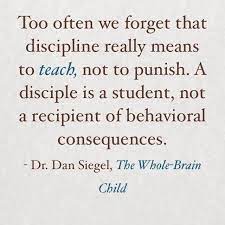
Parenting is hard. Unfortunately it’s been a lot harder than it truly needed to be…but we didn’t know that. As we are discovering, the real pivot for parenting is in moving from a mindset of having to “discipline” our children to the more skillful mindset of “teaching” our children.
Did you know that the root of the word discipline comes from the Latin word disciplina, which means teaching, learning or instruction?
We often think of discipline as punishment and that belief was supported by old familiar parenting quotes: Spare the rod and spoil the child; children are to be seen and not heard; do as I say and not as I do. These old adages kept us trapped in a dysfunctional parenting paradigm that did not support helping our children integrate the full capacity of their brains in the same way we were fostering the integration of new physical milestones as their bodies grew and developed.
We put training wheels on our kids’ bikes to help them learn how to balance their bodies. We put flotation devices on those eager little bodies in the pool to keep them safe while they are having fun splashing. We use repetition and role plays to teach them words and identify familiar objects.
It turns out that we also need to put training wheels and flotation devices on our child’s emotional development until their brains are ready for the full installation of logic and reasoning.
In other words, we need to be their “executive function”– their emotional regulator — when they are young and unable to do this effectively for themselves.
The more we are able to support them with strong emotional scaffolding when they are young, the better they will be at emotional awareness, self-control, empathy and discernment between right and wrong when they are older — when we take off the “training wheels”. This is the “pre-loading” component that is a game-changer.
That old conventional approach to parenting bypassed an integral process to nurture and integrate the full capacities of our children’s developing brains.
The old conventional approaches often led to blocked integration of different parts of our brains. That blocked integration can linger with us far into adulthood, causing us to unconsciously rely on childhood behavioral patterns even when we should have outgrown them. It is also the reason we get emotionally triggered from something that occurred decades ago, have heightened anxieties or fears, and blind spots in our self-awareness.
What We Know Now…..That We Got Wrong Before:
We now have before us the most incredible neuroscience-based resources to seize this missed opportunity and support our children’s brain developments more skillfully than ever before. Our role as parents and caregivers is to “step in” and assist with the integrative process by providing the connection needed until a child’s developing brain is ready to take over on its own.
Two very important things are happening in this approach: (1) we are the scaffolding needed to ensure that a child feels safe, valued and connected and (2) we are preparing him to install that same foundation of his very own when he is older — when his brain has developed fully and he can now readily access the logic and reasoning part of his upper brain. Our children will grow up with reliable inner resources, a strong sense of self-worth, and healthy relationship skills.
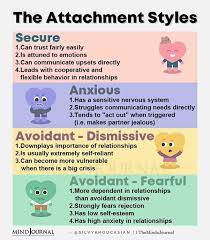
As you will learn a little later in this post, the Whole Brain Parenting approach creates a “secure” attachment style which is the most beneficial life foundation we can give to our children.
The Whole Brain Way to Calm the Chaos & Nurture A Child’s Developing Mind:
Dr. Dan Siegel and Dr. Tina Payne Bryson have been teaching their transformational new approach to parenting for over a decade. In their 2016 book, No DramaDiscipline, they share very relatable stories that are commonplace for most parents. What makes this book so different however, is the time and attention they devote to teaching us about the child’s developing brain, what is happening in her nervous system, how her brain gets hijacked by emotional disregulation and her innate lack of capacity to deal with all of it. It is a real eye-opener about the complex inner world of our little ones.
It may be the very first time as parents that we get a clear picture of how we are asking for the impossible when we try reasoning, bribing or punishing to tame a temper tantrum or seemingly unreasonable meltdown.
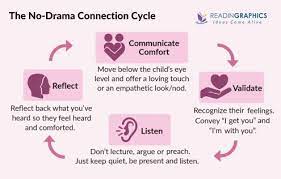
This deeper understanding of a child’s developing brain should be the key motivation for most parents and caregivers to adopt a whole new approach to “disciplining” their children: The “No Drama Connection Cycle”.
The operative word for this contemporary Whole Brain parenting approach is “connection”. Connection calms the nervous system, which soothes a child’s reactivity in the moment, and moves them toward a place where they can actually hear us, learn and even begin to make their own “whole brain” decisions.
When the emotional gauge gets turned up, connection is the modulator that keeps the feelings from getting too high. Without connection, emotions can continue to spiral out of control. — Excerpted from No Drama Discipline, page 74
Connection is essential for brain integration. This matters because the brain is complex; it has many parts, all of which have different jobs to do, including memory and pain regions. Did you know that the same areas of the brain get activated when people feel emotional pain as well as physical pain?
Think about that — we are so quick to attend to a scraped knee or swollen lip, but often impatient with an emotional outburst. To a child, the pain feels the same.
The old parenting approach also led us to believe that if we “coddled” a child every time they got physically hurt, they wouldn’t be resilient. Turns out that was wrong also. Acknowledging how they are feeling when they get hurt, calming them and attending to their injury teaches them how to care for themselves, promotes strong coping skills, resiliency and better discernment of the actual level of pain.
Why Connection and Integration Matter:
The responses we heard repeatedly in the old conventional approach to parenting sounded like these: “Get over it”; “Pull yourself together”; “You need to calm down”; “Go to your room until you can be nice”.
Dr. Siegel points out that these responses actually do the opposite of connection — they amplify negative states and increase internal distress, which perpetuates more acting out. Not only did this lead to an ongoing cycle of disconnection and lack of integration of all those complex brain parts, it predisposed us to develop an unhealthy attachment style.
Attachment styles are developed in early childhood based on our relationship with our primary caregivers and how they respond to our needs. Whole Brain Parenting will help parents provide the optimum “secure” attachment style for their children.
If you are thinking that Whole Brain Parenting takes a lot more time and energy than the old school approach, let’s dispel that. While it may take a little more skill on the parent’s part initially, over time with all that consistency of calm and connection, the lessons you want to impart to your child will actually start to stick. Parents won’t be exhausted from repeating themselves over and over, feeling defeated about gaining any traction in their parenting efforts. So many times, our well intentioned lessons are falling on deaf ears because kids are just so disregulated, they cannot possibly take in what we are saying…..especially if our tone of voice conveys our angering frustrations.
Let’s dispel another myth while we are at it — the myth of spoiling our kids. This is a question that Dr. Dan Siegel has answered many times – and it’s one that is based on a misunderstanding of what spoiling really is — and what it is not.
Connection defuses conflict, build’s a child’s brain and strengthens the parent-child relationship. Connecting during discipline is quite different from spoiling a child.
“Let’s start with what spoiling is not. Spoiling is not about how much love and time and attention you give your kids. You can’t spoil your children by giving them too much of yourself. In the same way, you can’t spoil a baby by holding her too much or responding to her needs each time she expresses them. Parenting authorities at one time told parents not to pick up their babies too much for fear of spoiling them. We now know better. Responding to and soothing a child does not spoil her — but NOT responding to or soothing her creates a child who is insecurely attached and anxious. Nurturing your relationship with your child and giving her the consistent experiences that form the basis of her accurate belief that she’s entitled to your love and affection is exactly what we SHOULD be doing. In other words, we need to let our kids know that they can count on getting their needs met.” – Excerpted from No Drama Discipline, page 89 (Chapter entitled from Tantrum to Tranquility)
“Spoiling on the other hand, occurs when parents or caregivers create their child’s world in such a way that the child feels a sense of entitlement about getting her way, about getting what she wants, exactly when she wants it, and that everything should come easily and be done for her. We want our kids to know that their “needs” can be consistently understood and met, but we don’t want our kids to expect that their “desires and whims” will always be met. Connecting when a child is upset or out of control is about meeting the child’s needs, not giving in to what she wants. — Excerpted from No Drama Discipline, page 90 (Chapter entitled From Tantrum to Tranquility)
The Big Impact that Whole Brain Parenting Can Have in the Long Run:
I recently participated in a week long seminar about the newer approaches being implemented in counseling and therapy treatments as a direct result of the breakthroughs in neuroscience about brain integration. The most effective protocols are focused on helping clients integrate all the parts of their brain and nervous system. Because of neuroplasticity, as adults we can actually rewire our brains and reconnect to “whole brain” living.
Even patients with a history of trauma and PTSD do not need to go through the arduous and often painful experiences of sharing their trauma stories. The faster, less painful and more effective approach is to focus on integration and being fully present in the current moment. This is a groundbreaking new approach for anyone who struggles with issues that stem from dysfunctional attachment styles and the lack of integration of the full capacities of our most amazing brains.
There is one old adage that rings truer than ever: An ounce of prevention is worth a pound of cure.
Imagine how empowering it will be for our children to be able to name, process and learn from their emotions; being taught reliable, healthy emotional regulation and coping skills; and gifting them with self confidence, self worth and strong inter-personal relationship skills. This will become a much better foundation for our younger generations to have as they enter adulthood.
In upcoming blog posts, I’ll be sharing more about what we are discovering through psychology and neuroscience that will be game changers for all of us. In the meantime, check out these resources to learn more about Whole Brain Parenting and No Drama Discipline:
RECOMMENDED RESOURCES:
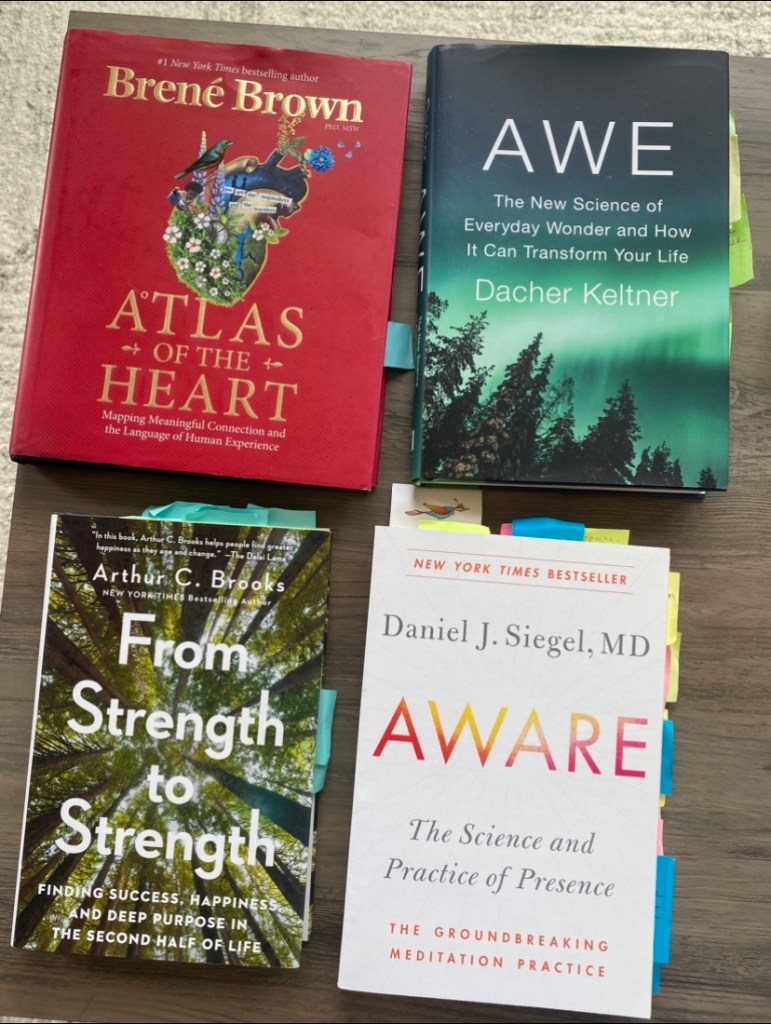
These two books by Dr. Dan Siegel and Dr. Tina Payne Bryson are two of the most insightful Parenting Books you can read. They are easy to understand, relatable and refreshingly candid about the parenting issues we all face. Chock full of real life examples & reference guide.
Check out this brief and noteworthy clip from Dr. Andrew Huberman, about the role our childhood attachment styles play in choosing our life partners, and the impacts of our childhood attachment styles on our adult intimate relationships.













 Inspired New Horizons