Better Scripts, Better Stories

What if we all had access to an incredible library of rich, engaging reference material for the stories we tell ourselves?

Instead of rummaging through old baggage accompanied by a judgmental inner critic telling ourselves stories that usually aren’t very helpful, we could flip the script.

We could build a dynamic database of reference material that could be repurposed time and again to write relevant stories that truly help us rather than restrict us.

Better scripts. Better stories.

If the stories we tell ourselves throughout our lives keep us trapped in small versions of ourselves, snagged on shards of shame, fear or insecurities, and limit us from seeing valuable context clues for building the life we want — we will miss the golden opportunities that are often right before our eyes.

If we are constantly second guessing ourselves and worried about other people’s opinions, we will never be able to fully tap into our own dynamic and unique character development. We will write ourselves as supporting cast members instead of taking the leading role we should have in our own personal development.

Knowing ourselves well and having access to our ever-evolving inner database of rich raw material cultivated from our experiences, emotions and mentors will be the giant transformational step in the better stories we tell ourselves all throughout our lives.

Ethan Kross, author of Chatter; The Voice In Our Heads and Why It Matters, recently shared that we are at a pivotal inflection point right now. His latest book, Shift, is an open invitation to embrace this transformational reframing of the voice in our heads and the database we all have in our bodies and brains as a resource not a roadblock.

How do we turn a centuries old paradigm on its head? The one that had us believing our inner library was just a dark, dusty basement full of stuff we’d rather forget?

We do a major renovation – that’s how. No more dimly lit basements or scary attics. We build greenhouse libraries instead!

Sit with that image for a few moments and feel just how inviting it would be to linger in that welcoming greenhouse — to explore your own personal growth in a warm, well lit, inviting environment with a vast library of inspiring stories of courage, creativity and curiosity.

No more inner critic curmudgeon constantly saying “I told you so” while opening the creaking lids of old baggage rummaging for proof that we’d never measure up. No more donning old protective armor or hand me down behavioral patterns.

Out with that crotchety inner critic stuck in the past who keeps us entangled in an unpruned past. In with an insightful, inspiring inner voice instead – one that continually reminds us how far we’ve come, what we are capable of and all our unexplored hidden potential yet to be discovered.

Our inner voice would be he head librarian and life coach of our personal greenhouse library — an effervescent mentor with a knack for using intuition and gut instincts as a guide for the best reference material suitable for our present day adventures and obstacles.

This is the major undertaking that we are all being encouraged to embrace thanks to neuroscience, psychology and vastly improved parenting models. This is the very inflection point that Ethan Kross tells us has arrived. We are long overdue for this healthy, space-clearing renovation and modern upgrade.

Each and everyone of us has the opportunity to write better stories that we tell ourselves. For many of us, it does mean that we have to clear out that metaphorical attic and basement in order to make room for the personal growth databases we can maintain in our greenhouse library.

For our younger generations, we can help them build their own greenhouse library from the get go. Tear down any shaky foundations currently under construction for that misguided inner critic and storing of unhealthy emotional baggage. Make room for a new tenant – a strong, flexible and resourceful inner coach and a vast, continuously updated library of worthy reference materials.

This is how we pivot from a harsh and unhelpful inner critic who restricts our growth to a dynamic personal life coach — an inner voice that is trustworthy, truthful and has been trained to help us set ourselves up for success.

The second major pivot is to reframe our past experiences, processed and unprocessed emotions and prior stories as history lessons, rich raw material and sources of inspiration and motivation. We can write and re-write better stories to tell ourselves when we view our internal database as an endless resource library for our lifelong personal growth.

Let’s get a sense of how it would feel to tap into an inviting database to explore creative new ways to tackle a problem or make the most of an unexpected opportunity.

In that old cob-webbed model, your crotchety inner critic would be jumping erratically on your shoulder playing the same old broken record on a loudspeaker – “you can’t do that or you don’t have what it takes.”

In the new updated and integrated model, your personal life coach and supportive mentor meets you where you are. Your inner voice takes your hand and validates that what you are experiencing is hard. Your calm inner voice asks you “what does help look like right now?” Your inner life coach reminds you that you can do hard things. That inner life coach can show you all the places from your past where you did overcome adversity, met challenges and set your sights high.

Are you beginning to “feel” the marked difference between a debilitating inner critic and a supportive inner coach?

Are you able to imagine that your backstory, lived experiences and knowledge you’ve gained along the way have created a dynamic personal reference library (and not a musty, dusty storage unit of things best forgotten).

The inflection point that Ethan Kross talks about is this pivotal shift from inner critic to inner life coach. Ethan encourages us to accept the invitation to shift our thinking and to use our emotions as data points they are for helping us live a balanced, rewarding and generative life.

Adam Grant, organizational psychologist, echoes what Ethan Kross is promoting — and he adds that one of the best ways to quickly integrate this transformational new way of using our inner voice is to teach it. In his recent conversation with Dr. Becky Kennedy, the parenting expert that has built her practice on this modern model of emotional integration, they both acknowledged that shifting into inner coaching is how we fast track ourselves and our kids into this better human operating system.

Dr. Becky points out that we can “re-parent” ourselves while we are teaching our kids all about emotional intelligence and emotional regulation. We help our kids build a massive emotional vocabulary and as we are doing that, we are updating and rebuilding our own.

As we teach our kids that emotions are not scary, not to be avoided and are actually incredible data points for getting to know ourselves well, we are also reinforcing this messaging for ourselves.

As we become more familiar with our inner greenhouse library reference material – and we let our inner voice guide us as a life coach would — we will naturally be role-modeling how easy it is to access helpful internal information. Now we get the benefit of osmosis to easily facilitate our kids building their own personalized internal resources.

What we once relegated to the dusty basement is the core operating system in our greenhouse library: Emotional Intelligence.

It is precisely why Ethan Kross entitled his newest book Shift: Managing Your Emotions So They Don’t Manage You.

It is also why Dr. Becky Kennedy tells us that punishments don’t work. We need to be teaching our kids how to process and manage their emotions. They cannot learn that and acquire the skills and tools they need for emotional intelligence by being punished. Punishments only result in the old baggage stored in dusty, dingy basements with the scolding inner critic.

If you don’t have kids or are not a grandparent, don’t feel that you are missing the boat of this transformational inflection point. We all have family members and friends to support. And Adam Grant’s principle applies here too: We can reinforce our own learning by teaching. As we integrate emotions, expand our emotional vocabulary and get betting at regulating our emotions, we can share what we are learning with others.

Let’s consider the impact we have on others when we rely on an inner critic, old baggage and unhelpful stories we tell ourselves.

When we are inconsistent in how we show up for our kids, our spouses, siblings or parents — we pour out a lot of mixed messages, confusing signals and big margins for error. Especially prediction errors. Our inconsistency in controlling our emotions and reacting to common everyday occurrences really messes with everyone’s ability to do the two things our brains are naturally hard-wired to do: make predictions and make sense of what is happening by finding meaning.

Did you know that psychologists point out that our inner critic is comprised of the voices and messages we heard most often in childhood. Parents, siblings, grandparents, caregivers and teachers contributed to that inner voice that helps us co-author the stories we tell ourselves.

Our inner critic has such a loud voice that it often drowns out what our inner self is trying to tell us. How can we trust our gut instincts and intuition if we can’t hear it?

When we put this into perspective, it helps us shift out of our reactive, driverless auto pilot. We become more cognizant that we are training those inner voices of our loved ones to hear better scripts. In turn, they will be able to tell themselves better stories. Just like AI, we are providing input to others that will either help or hinder them in the future. Do we want to develop a loud, harsh inner critic — or a dynamic, inspirational life coach?

Our most important roles in life are that of parent, partner, sibling and friend. We are real life coaches for each other in each of those roles. After all, our learning and growing is a lifelong process, not one that stops when we reach our full height or our brain has fully developed (which doesn’t occur til our mid-twenties). We all need life coaches to help us navigate life with healthy skills, tools, inner resources and strong support systems.

Just imagine if we all accepted the invitation to pivot as Ethan Kross suggests? We are at a major inflection point in our human evolution thanks to science-backed evidence of how our brains, our emotions and our inner voices are intended to work as an integrated team.

Wouldn’t you rather trust yourself to make the best decisions throughout your life than a harsh inner critic? Wouldn’t you love an inner voice who often sounded most like reassuring, encouraging and supportive parents who kept you safe? Wouldn’t you love an inner life coach that was an amalgamation of parents, grandparents, teachers, coaches and mentors who scaffolded you through some of your most remarkable life experiences?

Better resources, better skills and tools. Better stories we can tell ourselves.

P.S. I credit my young grandson for the image of a greenhouse library that he offered to me. He said he would build me one some day. He already has.

Ethan Kross not only explains why all that chatter in our heads is disruptive, he gives us great tools to harness it. A very informative and relatable read.
Ethan’s newest book comes out in early February, 2025. He has been promoting his latest book on podcasts. It was his conversation with Dr. Laurie Santos on the Happiness Lab that contributed greatly to this blog post.

The Stories We Tell Ourselves – Part 2

Grab some paper and a pen. Make a list of the many roles you have in your life. Start with an ordinary day — and then expand it out to a week, then a month. Be thorough and thoughtful about the many places you show up and play a part. Start with your immediate family then expand the lens to work and your community.

You may be a spouse and a parent, an employee or entrepreneur, a sibling, a grandparent, aunt or uncle, a best friend, a youth soccer coach, a golfer or triathlete, a musician in the local orchestra, a training buddy, a book club member, a podcaster, a creator, a caregiver, a community volunteer. Chances are the list is much longer than you think.

No wonder we are so complex, fascinating and mind-boggling all at once! We wear a lot of hats and juggle many responsibilities and have a host of hobbies and interests. But wait — there’s more!

Did you know that embedded in all the different roles we have, we also have a specific identity associated with each one. These multiple identities are like the unique blueprints we bring to the roles we play. There is a lot of nuance in these multiple identities because we draw on different characteristics of who we are to highlight the ones that best fit the role we are in.

Ryan Holiday tells us that a great tool for helping us show up as the best version of ourselves in any given situation is to ask: What is my role right now?

This simple question quickly crystallizes our responsibility and our strengths that we bring to the table in the role we now play. Our identity for that specific role becomes the template and the filter for how we show up. It is our unique blueprint.

Ryan’s poignant question grounds by reminding us of the identity we assume as a parent, a spouse, a work colleague, sibling or friend. When we connect with our role, we also connect with our goal. That identity we bring to each role becomes the framework and guardrails for how we show up.

If we fail to ask this question about the role we play in any given situation, we may unconsciously default to another of our roles and bring the wrong attributes to the table. We’ve all done this and in hindsight, we readily recognize we played a part in the clumsy, confusing way things unfolded.

Mel Robbins tells us that we all have an inner 8 year old that can show up unchecked, disregulated and unruly — and if we let that character step in to a role well beyond his or her job description and matching skills, that’s a recipe for disaster.

Most of us never stop to reflect on the many roles we have in our lives and the blueprint we have curated to help us do our best in each one. And here’s a surprising revelation – if we don’t consciously develop a strong job description for each role we play, we are going to default to the inner child quite often. This is often referred to as our “unconscious” self – and that’s where so many of the old stories we tell ourselves become the script for knee jerk reactions.

Knee jerk emotional reactions come from the past. Old stories we’ve told ourselves trap us in our amygdala; it links our current emotions to old memories. Which is precisely why we can act like an 8 year instead of a rational, mature adult. We viscerally feel our emotions and our amygdala supplies all the data we need to remind us of past times when we felt just like that — and underscores a feeling of helplessness (a lack of personal agency). When we were 8, we didn’t have skills and tools to help us understand and regulate our emotions. We only had the warning signs and basic reactions. We hadn’t yet developed our strong sense of self and built reliance on our own agency.

Ryan’s question prompts us to remember that we are no longer a helpless, overwhelmed kid. We have adult roles now and the ability to shift into the executive function of our brains. That one simple question flips the switch in our brain — and gets us running on the right track — our executive function. We can catch ourselves before we shrink ourselves to age 8 and pivot to our better equipped grown up self.

How does this dovetail with our roles and our identities? Well, we develop blueprints for how we want to show up in the various roles we have. We even start this process as kids — when we tell ourselves that when we grow up, we will parent differently or we will handle life’s challenges more responsibly. Those blueprints help us craft the identities we rely on for each role.

As we move through our lives, we update those identities much like we update our resumes. As we become more skilled in any of our roles, we add and subtract from the identity we’ve created for each role. We are always a “work in progress” and we thrive when we have a very strong sense of self and tap into our personal agency frequently. We get to choose how we conduct ourselves in each role — and we feel good when our emotions match our actions.

This is where we can pair Ryan’s question – “what is my role right now” with Arthur Brook’s question: “How do I want to be feeling right now?” This is how we sync up our roles with our identity blueprints and our emotional and behavioral responses. We play the “match” game.

We can cross-pollinate our identity blueprints that we use in the outside world to build stronger and more reliable identities for our family relationships. If you stop to think about it, you readily recognize how reliant you are on your identity at work or out in your community. That identity provides the guardrails that keep you from losing your cool, having a meltdown or curling into a ball. Your actions and responses match the identity you crafted.

Most of us are less clear about our identities in the roles we play within our families. We drop our guard at home with the people we love the most – and in that process, we drop the very guardrails that would help us bring our better selves to the most important roles we have.

Home and family is the one place where we should feel the safest, where we should feel seen, heard and valued. Yet our family relationships are the one place where we have most of our day to day conflicts. Could it be a simple mismatch between the role we play and the actions and behaviors we bring to that role?

Dr. Becky Kennedy has coined the phrase “sturdy leader” for the role of a parent. She uses the analogy of an airline pilot to give us a strong mental image of what a sturdy leader looks and acts like. A competent pilot does not come frantically racing out of the cockpit freaking out about turbulence. We expect a competent pilot to tell us the truth about what is happening, assure us that all efforts are being taken to keep us safe and offering the actions we can take to help the collective effort.

Is this how we show up in our family relationships — as sturdy leaders – those calm, competent pilots?

Are you laughing to yourself right now now? I think most of us can agree that is not our “go to” when we experience emotional turbulence in the kitchen cockpit.

What usually happens at home is a bad case of emotional contagion. We match the emotions of our kids, our spouses, our siblings or parents. We are playing the wrong match game.

The better match game is the adult version. The one where we can readily identify our role, how we “want” to be feeling and we match our responses, behaviors and actions to that blueprint. We become sturdy leaders at home just like we do at work or in public spaces.

The basic blueprint of sturdy leader is a great template for our roles at home. Who wouldn’t want to have a sturdy leader as a parent or a partner? Think of all the skills and personal attributes you bring to the workplace and repurpose them for your roles at home. Add them to your identity blueprint. Are you good in a crisis at work? Do you work well under pressure? Are you a wizard at time management and effective delegation? Can you rally the troops? Do you build a strong team by tapping into the key strengths of each person? Do you provide breaks to reset and recharge when others are on overload?

There is yet another emotional and psychological tool that can be utilized in meaningful ways when we are nailing down our identity blueprints for our family relationships. It is “distancing”. When we are able to zoom out and get a broader perspective, we see the bigger picture. Distancing is a great tool for helping us to pivot to sturdy leader. When we can step out of the fray and turn on our executive function, we often realize we already possess the very skills we need to bring our better selves home.

Distancing helps us see the calm and competent pilot we are at work or out in our community. We show up like this with ease – consistently. As James Clear, author of Atomic Habits, would tell us we have deployed the compounding effect of consistency and frequent practice in the workplace. We practice keeping our emotions in check and our responses mature – day in and day out, several times each day.

Now just think about the difference that would make in your roles at home. All this time, you have been missing the golden opportunity to put in countless reps every day to become a sturdy leader! Practice doesn’t make us perfect, but it surely makes us more skillful, resilient, reliable and easier to live with.

Give yourself a honest evaluation about how you show up at work – and how you show up at home. Are you matching other’s emotions or are you matching your role with your identity blueprint, your skills sets and the goal you have for that role?

Remember that your old emotional database can pull you back into outdated reference material. You want to be operating on better, current data with greater agency and a strong sense of self.

Want some extra motivation for crafting sturdy leader identities for the roles that you play in your life? Just imagine helping those you love amass an incredible library of reference material for the stories they tell themselves. Who wouldn’t want the people they love to immersed in possibility and potential instead of limiting stories about who they are and will become?

Check out Dr. Becky Kennedy’s book, website and app to discover science-backed parenting tools for raising emotionally intelligent, resilient and empowered kids
Check out Ryan Holiday’s collection of books . Right Thing, Right Now is his latest. The Obstacle is the Way is great for seeing opportunities where we blindly believe we forever stuck. If you are a parent — check out Daily Dad.

Mel Robbins’ latest book is quickly becoming a fast-track resource for letting go – and stepping into your own agency. Let others be thernselves, especially family, and Let You be your best self. This book is so relatable, you won’t be able to put it down.

If you want to fast track what is packed into Mel’s new book, take a listen to this We Can Do Hard Things podcast episode. Mel and host Glennon Doyle crack open the book, the theory and relatable real life stories. https://podcasts.apple.com/us/podcast/we-can-do-hard-things/id1564530722?i=1000682368717

Corks Rising

When I first started blogging about personal growth 8 years ago, I had a glass jar on my kitchen windowsill with a cork bobbing in water. It was my touchstone to remind myself that each of us plays an important role in lifting each other’s cork. We need help to stay afloat.

This morning, I read something in Hidden Potential by Adam Grant, that transported me back to that moment in time. It felt surreal and spine-tingling to be in two places at once. I was at the very beginning of my self discovery journey placing that cork in the jar –AND — I was also fully present in my apartment taking stock of just how far I have truly come on that personal growth journey. A smile stretched across my face as I took stock of how my own cork has risen over 8 years — and most importantly, how so many others’ corks have also risen.

At the onset of my personal growth journey, I felt alone in the work – one cork in a small glass jar. Today the massive ocean is full of corks and I am merely one of many. I could not be happier with the company I am keeping.

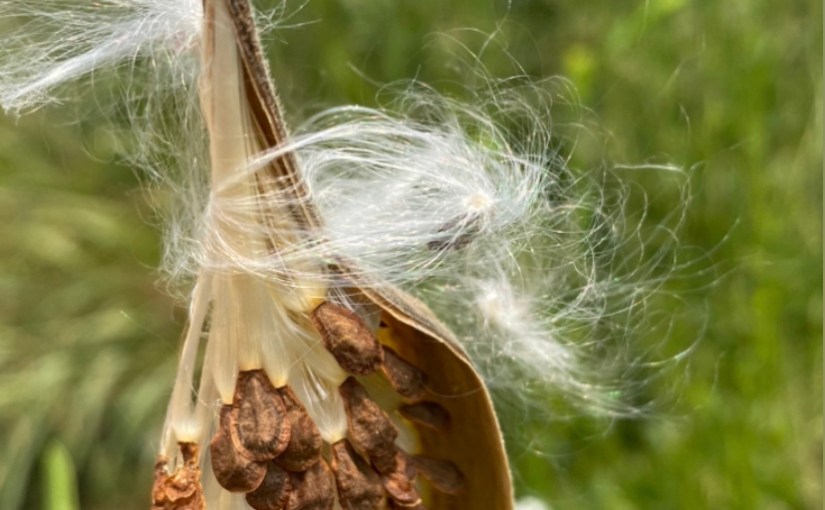
For over 20 years, Brene Brown has been planting seeds of the very work we are deeply steeped in today. She braved the wilderness back then, schlepping her first book from the trunk of her car and mustering courage to give a Ted Talk on shame and vulnerability. She did not have a crystal ball to guide her — she just followed her heart and her calling, blazing a path and planting seeds.

There is a Greek proverb that reminds us that wise men plant seeds of trees, the shade of which they will never sit under, bubbled up into my consciousness.

Brene Brown planted the seeds of human connection with an emphasis on vulnerability, the importance of our emotions, and the necessary healing work of addressing old generational patterns — and those seeds took root.

It has taken nearly two decades for the seeds to grow into the full awareness that we got a lot of things wrong about humanity, how the brain and body really work, and what is truly possible for our evolution on so many fronts.

I sat under the shade of the tree that Brene planted just yesterday. I listened to Scott Galloway and Rich Roll openly discuss vulnerability on Rich’s podcast. It was visceral to experience this refreshingly deep and honest conversation with two men in their fifties get real about their emotions and what they want for their sons and daughters.

Even more importantly, is the education and messaging that Rich Roll and Scott Galloway are collaborating on — the need for us all to take very seriously the crisis of loneliness, depression, social isolation and lack of human connection that is paralyzing our younger generations.

When I began my personal growth journey, I read Dr. Bruce Perry’s compelling book, Born for Love. In that book, he was sounding the alarm for our growing empathy poverty, but his voice was drowned out as our collective attention turned to the novelty of social media. We blatantly ignored the warning and gleefully plugged into social media and our devices, so certain that we’d find the connection we craved through technology.

Today, Jonathan Haidt draws a through line from the early 2010’s to today and holds up the reality of our human condition for us to see clearly. Our younger generations need to be unplugged and reconnected to reality. In his book, the Anxious Generation, he is carrying forward the message that Dr. Bruce Perry warned us of in Born for Love. Our growing lack of empathy, our self-imposed social isolation and addiction to devices, has created an epidemic of AI – artificial intimacy. It is Esther Perel who coined that term – Artificial Intimacy. She is the dynamic psychotherapist who fearlessly weeds out conflict between couples to help them discover that plot of ground begging for seeds of love, intimacy and connection to be planted.

We can no longer blatantly ignore what is hidden in plain sight. We must focus our attention, resources and real life support on our children.

Ask anyone who has ever hit rock bottom, and they will tell you that it was in their lowest place that they faced the truth that in order for meaningful change to happen, they had to dig deeper – and do the hard work of rebuilding.

This is where we all are today – collectively at rock bottom with an opportunity to nurture the seeds that have been planted over the past twenty years in psychology, behavioral science, neuroscience and modern medicine.

It is my strong belief that we have reached this breaking point because humans are hard-wired for connection and we do not thrive in continual chaos and uncertainty. If this dilemma were happening in the animal kingdom, our hearts would be breaking open as we watched adult animals leave their young unattended without teaching them any life skills. Their basic instincts would atrophy over time.

If you are familiar with epigenetics, then you may realize that for generations we have passed down unprocessed trauma and overloads of stress and anxiety. Dysfunctional generational patterns are the emotional inheritance that has never been unpacked. Old parenting models failed to install one of the key components of the human operating system — emotional intelligence. This combination is the one-two punch that delivers a compelling warning to us. Unpack the old emotional baggage, heal old traumas. The time has come. Our kids are on overload and they are drowning in cognitive dissonance.

The reality is that we have made this work of unpacking emotional baggage, healing old traumas and installing emotional intelligence so much harder than it needs to be. Psychology has shifted dramatically in the past decade with a focus on somatic healing and understanding how our brains actually work. Neuroscience fires up this better approach by highlighting the neuroplasticity of our brains and how we can re-wire healthier neural pathways in a relatively short amount of time.

As I wrote about in my last blog post, the creative coalescing of so many fields and modalities is helping us fast-track the triage that we need — and can no longer ignore. This creative coalescing is the little forest that has grown from the many seeds that have been planted over the past twenty years.

As many of you know, I am impassioned about teaching our kids all about their innate and integral emotional intelligence. I have a “Marie Kondo” approach to cleaning out generational baggage – let’s stop dragging it around, unpacked and continually weighing us down. Let’s travel more lightly through life and make new discoveries.

By the way, have you noticed how mainstreamed words like vulnerability, mindfulness, self-awareness and emotional intelligence have become? Little seeds have been planted over and over again by people like Brene Brown, Dr. Marc Brackett, Andrew Huberman, Kristin Neff, Dr. Lisa Feldman Barrett, Arthur C. Brooks, Dr. Becky Kennedy, Dr. Peter Attia — and a host of others. They are the corks that jumped into the sea of change and lifted us all up.

So many resources have cross-pollinated that little forest that began with a few seeds several decades ago. We are at the tipping point of a huge, positive human evolution. Just the other day, author Arthur C. Brooks told Ryan Holiday that we now have the neuroscience to prove all the wisdom of the ancient philosophers. His excitement and enthusiasm was contagious.

Here’s what I know — Brene Brown did not have a crystal ball twenty-five years ago, but she felt a nudge so strong she could not resist it. She poured herself into shame and vulnerability and stayed the course because it mattered. She networked the hell out of her platforms during Covid, lifting others up when we were most receptive to learning and discovering all kinds of new things – the missing parts we didn’t know we needed. Brene was planting seeds of awareness all throughout our dormant period.

I used to think that the law of attraction was mostly like wishful thinking — but through Brene I have learned that the law of attraction is sharing, networking and lifting each other up. That is the momentum that brings the changes and opportunities we want.

Michael O’Brien (@the.mindful.cyclist) was also a recent guest on the Rich Roll podcast. His recovery from a near-death cycling experience was the catalyst for his seminal shift that changed his perspective, mindset and actions. He expressed this profound wisdom:

“Things don’t happen for a reason. Things happen….and we give it meaning.” — Michael O’Brien

I am taking this profound wisdom to heart today. Things have been happening FOR us for nearly two decades and we can give it a transformational new meaning and pivotal new direction.

There has been a big clearing of the weeds that prevented us from seeing what was possible for us. Seeds were planted and cross pollinating was happening. mostly in the background.

The self help space got a little traction with mindfulness about a decade ago. It was a wake up call but we kept hitting the snooze button. We turned to devices and poor coping skills; social media was a siren call we falsely believed would bring us the connection we craved. Our attention became a commodity traded in futures markets.

Unfortunately our devices and social media stole our attention and mindfulness; it amplified our disconnection from real life. Highlight reels and filters gave us a very distorted picture of the beautiful complexity and realities of life.

What it also took from us was the fuel that runs our human engines – the neural energy and connectivity we get from being with each other. There is so much that neuroscience has to teach us about how the human brain and body works – how we jumpstart, co-regulate and scaffold each other. We know more about our incredible brains and how to care for them than we ever did before.

So, taking Michael O’Brien’s wisdom to heart, the meaning we can give to this moment is the discovery that we are better together, that human connectivity is integral to our physical, emotional and mental health, and our longevity.

We have the rare opportunity to lift up our kids out of their malaise with greater knowledge, tools and awareness than we have ever had before. We can have a dramatic, positive impact in short order if we meet this moment quite differently than we ever have before.

Do yourself a favor and click that link to read about Michael’s transformational life experience. Then listen to his deeper conversation with Rich on the Rich Roll Podcast.

Check out this episode of the Rich Roll Podcast with Prof G – Scott Galloway. At about 54 minutes in you will hear the 5 minute deep conversation about vulnerability and emotions. https://podcasts.apple.com/us/podcast/the-rich-roll-podcast/id582272991

Creative Coalescing

A couple of years ago, I blogged about how excited I was to be discovering that so many diverse fields and modalities were beginning to intersect. Many of my favorite resources for personal growth and self development were referencing each other in their books and research papers. It was becoming evident that a lot of dots were being connected as neuroscience, psychology, parenting and emotional health began to swap knowledge and findings.

So many of the profound breakthroughs would have been worthy enough on their own, and yet it was putting all the pieces together that revealed a much bigger, more dynamic picture about our human evolution. What is currently underfoot is a creative coalescing of an all-encompassing understanding of how our brains and bodies actually work – and how this changes everything we once believed about the human experience.

We not only have more pieces of the puzzle — we actually have a much bigger picture.

Since the dawn of time, we human beings have been so busy “doing” the same things over and over, getting the life lessons repeatedly, but not really making genuine progress in a meaningful way. In fact, we have been making things much harder than they have to be for thousands of years. This is precisely why the philosophy and life lessons from the Stoics still resonate so deeply with us. Little has changed about the human experience, regardless of the time period we live in.

What is changing is our knowledge and understanding of the human body, brain and mind. We are now in the midst of a human evolutionary transition. Futurist Amy Webb recently shared with Brene Brown that fifty years from now, people will look back on this time period with great wonderment – we are Generation Transition.

I imagine my grandchildren who range in ages from 6 to 11, being in their mid-life fifty years from now – having had the benefit of better skills, tools, knowledge about their brains and bodies than all the generations before them — and how their lives will have been shaped in healthier, positive and meaningful ways.

It is impossible not to get excited and enthusiastic about ushering them into this new era of our evolution, armed with emotional integration, healthy psychological tools, and an understandable owner’s manual for their own body and brain.

Talk about being generational cycle breakers – no wonder we are Generation Transition. Maya Angelou has always told us that when we know better, we do better — and now we most definitely know better about how our brains work – and how to care for them.

This moment in our human evolution is one for the record books. How we meet the moments of our human experience is what is shifting — we are going to become proactive rather than reactive. We are going to be better equipped to deal with change and uncertainty with resiliency, acceptance, flexibility and curiosity. We will not be armoring up to protect ourselves, we will be gearing up for meeting the moment in profoundly healthier ways.

We are shifting in tandem across many disciplines to become proactive users of better skills and tools for ourselves, our relationships, for parenting, for our physical and mental health and overall quality of life. All of these pieces of our human puzzle were meant to work in harmony, yet we kept them compartmentalized. Now we know better.

We know that emotional integration is the missing link we got so wrong. As we are plugging this key component into our human operating system, so many other fascinating parts of our brain/body unity are lighting up and coming online.

The creative coalescing that I am seeing today is showing up in podcasts. In fact, podcasts may be the very alchemy that we need to keep up with the rapid pace of our collective growth period.

What makes podcasts so impactful is that they are real life conversations that engage us more viscerally — we almost feel that we are part of the discussion as we listen, nod, agree, push back and take in new information. The interplay of the podcaster and guest invites us to learn and integrate almost spontaneously. These rich conversations remind us that we are not alone. There is an instantaneous recognition that the vast majority of us are all grappling with many of the same life issues. We are collectively normalizing and demystifying the recurring problems and opportunities that humans have faced since the dawn of time.

Ryan Holiday recently shared in one of his Daily Stoic podcasts that we don’t have to learn all of life’s lessons the hard way. We can learn from other’s stories and experiences — and most importantly from their hindsight, insight and wisdom. This underscores the dynamic learning environment unique to podcasting. The creative coalescing is happening in real time on a continual basis as podcasters dive into deep conversations with very diverse guests and find common ground in what was once perceived as unrelated subject matter.

Let me share a few delightful examples of this creative coalescing. These are some of my favorite podcasts that support my own insatiable desire to learn and stay current.

Rich Roll is an ultra endurance athlete and full-time wellness advocate. In a very relatable story, Rich hit rock bottom in his 40’s with his longtime struggle with drugs, alcohol and unhealthy living. He turned his life around and then turned to extend a helping hand to others who found themselves with similar struggles. Rich started his podcast in 2013 and often interviewed high profile athletes who shared similar life experiences.

On February 12, 2024, Rich Roll’s guest was renowned psychology professor at Harvard, Dr. Ellen Langer. They took a deep dive into her newest book, The Mindful Body: Thinking Our Way to Chronic Health. Dr. Langer is the most delightful and engaging guest for an inquisitive podcaster. She has the unfiltered curiosity of a three year old and a sense of humor to match.

Dr. Langer’s approach to mindfulness is not about sitting on a cushion meditating – it is about proactively living each and every moment steeped in mindful curiosity. She offered the most insightful nugget early on: “Everybody’s behaviors make sense to them; otherwise they wouldn’t do them.”

Rather than judging, hand-wringing or rushing to rescue when someone’s behaviors seem out of alignment, she challenges us to be open-minded and inquire — “what was your intention?

This simple pivot moves us from being stuck in age-old patterns that feel like a tug of war and shifts us into becoming curious explorers. We not only change our “go-to” judgmental and knee jerk responses to others, we build a bridge to helping others become more “mindful” and self aware of how they get in their own way and may be negatively impacting their relationships.

When we change how we meet others and the events in our life, we facilitate collective change.

I loved this episode so much that I ran right out and bought her book, gifted a few copies and have been having the best conversations about it ever since. This is how the word is spread. How many other listeners have done the same and are bringing positive changes to their friends and families?

Since Rich Roll had Dr. Ellen Langer on his program, he has also had the following guests join him for more diverse yet inter-connected conversations:

  • February 22 – Charles Duhigg, Author of SuperCommunicators, discussing how to unlock the secret language of connection.
  • March 4 – Cal Newport, Author of Deep Work and Slow Productivity, talking about how to escape burnout, do your best work and achieve more by doing less.
  • April 1 – Dr. Daniel Amen, world renowned psychiatrist and author of Change Your Brain Everyday where they discussed all things brain health, dementia, Alzheimers and ADHD.
  • April 15 -Scott Galloway, co-host of the popular tech and business podcast PIVOT and author of the Algebra of Money, to talk about why vulnerability is power, healthy masculinity and financial security.
  • April 22 – Jonathan Haidt, author of the Anxious Generation and The Coddling of the American Mind, to unpack how social media is rewiring childhood.

Just look at that guest and topic list — this is the creative coalescing that I have been observing. Rich Roll is facilitating the coalescing by having so many diverse guests discuss their areas of expertise. It’s easy to connect the dots and see how insights from one conversation dovetail into another.

Wharton organizational psychologist, Adam Grant, kicked off 2024 with a podcast episode on parenting. Imagine that – parenting!

On January 2nd, Dr. Becky Kennedy, one of today’s foremost authorities on a brand new model for parenting, had an awesome conversation with Adam Grant about bringing out the good in kids and parents. Dr. Becky’s parenting model focuses on integrating emotional intelligence so that our children get a complete operating system and the training wheels they need to understand it. This parenting model is a total 180 from the old one that did not integrate emotions and subsequently is the root cause of so much emotional misunderstanding and disregulation.

I have been a huge fan of Dr. Becky for quite a long time and I learned that Adam Grant and his wife are too. They have been following and implementing Dr. Becky’s parenting advice with their own kids. The positive impacts are evident for both parents and kids as Adam pointed out with some of his personal stories.

Dr. Becky shares short videos with her social media followers that are relatable, common and “spot on”– many of them created as she takes a break in her closet, or walking the busy streets of New York. She draws from her own parenting experiences, from her private practice and workshops. Every parent and grandparent will get something of real value from her clips – and often the practical advice she offers are good emotional tools for kids and grown ups alike. The reality is that since most of us did not learn about the meaningful role emotions actually play in our lives, we have to “unlearn” before we can teach this new and improved way of using our emotional intelligence.

It became very evident that the subject of parenting and Dr. Becky were becoming mainstreamed when Dr. Andrew Huberman also had her on his podcast on February 26th with the title “Protocols for Excellent Parenting & Improving Relationships of All Kinds. Just as I had observed in my own life, when we parent with better practices and tools, we also gain positive benefits for all other relationships. Yes, I did get goosebumps.

I found myself laughing out loud recently when during a recap of the Daily Show with Jordan Klepper, even he mentioned Dr. Becky’s rule of thumb for emotional distress. Once again, we see how the seeds of positive change are popping up everywhere.

Here’s another intriguing list of the diversity of subjects and experts in Adam Grant’s podcast lineup:

  • January 16 – Dr. Lisa Feldman Barrett, psychologist and neuroscientist at Northwestern and Harvard – You have more control over your emotions than you think
  • January 23 – Susan David, psychologist at Harvard Medical School – overcoming toxic positivity
  • March 5 – Cal Newport (who was also on with Rich Roll) – How to be productive without burning out
  • March 26 – Charan Ranganath, psychologist and neuroscientist – the science of memory
  • April 16 – Anne Lamott, renowned author of 20 books and Adam’s favorite writer – her thoughts on love, writing and being judgy
  • April 23 – Kara Swisher, journalist, author and co-host of the Pivot Podcast with Scott Galloway (who was also Rich Roll’s guest) – on speaking truth to power.

I couldn’t resist sharing these compelling lists of topics and guests for two of my favorite podcast series. There is a lot of crossover and intersecting occurring – rather like a blurring of once solid lines between diverse fields. It is proof positive of futurist Amy Webb’s observation — we are all a part of Generation Transition.

Historian Ken Burns has noted that change happens at the edges. It made me think of Brene Brown who began her research on shame and vulnerability 25 years ago, just before 9-11. Her first Ted Talk on that very subject became an overnight sensation and rates as one of the most highly viewed Ted Talks ever. Brene wasn’t so sure that we were ready for discussions about emotions, vulnerability and human connection. Perhaps we were ready – or sensed that we needed to get ready.

Ready or not, we are at a tipping point in our human evolution with so much incredible new knowledge and insights to support the process. It is the first time that we have so much creative coalescing bubbling it all up to the surface. It is readily accessible, highly relatable, makes for engaging conversations and has positive benefits across all aspects of our health and well being.

What will you share about this moment in time – 50 years from now?

HUBERMAN LAB PODCAST
(science and science-based tools)
with Dr. Andrew Huberman
FINDING MASTERY PODCAST
(high performance psychology)
with Dr. Michael Gervais
RE:THINKING
(great minds don’t think alike)
with Adam Grant

UNLOCKING US
(conversations to unlock the deeply human part of who we are)
with Brene Brown
TETRAGRAMMATON (inspiration engine)
with Music Producer Rick Rubin

THE DRIVE (health and longevity)
with Peter Attia

WHERE SHOULD WE BEGIN
(step into the office of psychotherapist and learn from client sessions)
with Esther Perel

BEING WELL
(practical science of well being)
with Forrest and Dr. Rick Hanson
PIVOT
(all things tech and business)
with Kara Swisher & Scott Galloway

Surrender in the Storm

A pond lies calm, basking in full sun, her waters crystal clear

She is at ease, peaceful and undisturbed

Unaware….maybe acutely aware…mindful that she is all she needs in this moment

To lie still and bask in warm sunlight

Storm clouds gather above turning warmth and light to dark, deep dark

A chilling wind blows hard stealing warmth from the air

Shifting winds swirl in opposing directions at once increasing in force

Debris pierces the calmness of the pond’s surface

Sinking to the bottom, exploding in thick wet sand

The once calm waters churn in turbulent winds, spilling tears over her banks

Swollen rain clouds release the torrents begging to join the tempest

Sediment, sentiment, stirs at the bottom stretching up into once clear waters

Waters turn as dark and cloudy as the sky above

A reflection of the chaos reigning in this moment

She is wise, lying still, observing the changes above and within, external and her own

She sits quietly, impatient at times, restless, recognizing discontent

Once she’d long for a return to her usual calmness, all things staying the same

Now she observes with curiosity, discovering

There is a forward movement in those swirling winds, inviting change and adventure

The chill in the air makes her more appreciative of the warm kiss of sunlight

The churning sediment lodged in her heart is freeing

It rises up …. a million particles dancing freely.

A new landscape being created in her heart

No longer flat and compacted

A vast and fascinating landscape, with contours and sandcastles, complex and simple

A veritable playground of a happy, contented life full of memories and promises anew

She smiles contentedly for the first time in quite a while as the winds wave goodbye

The first morning light turns the sky red, then pink

And oh so slowly….the warmth of the sun touches the surface

A calming touch, invoking acceptance

She rests, content to watch the gentle unfolding, rebuilding

A settling of her new enriched, enlightened life

—–written, April 2019

Slow Riser

A peaceful morning unfolds slowly

Morning sky softly lightens to the palest of blues

A slight band of yellow clings gently to the horizon

Palms flutter soft as a whisper in a tender breeze

Morning takes her own sweet time to fully awaken

Ever mindful of each gift at dawn

Lightness in her heart

Stretching limbs and mind, exploring endlessly

At the horizon, the centering, grounding point

A promise of the universal connection

written December 20 ,2015